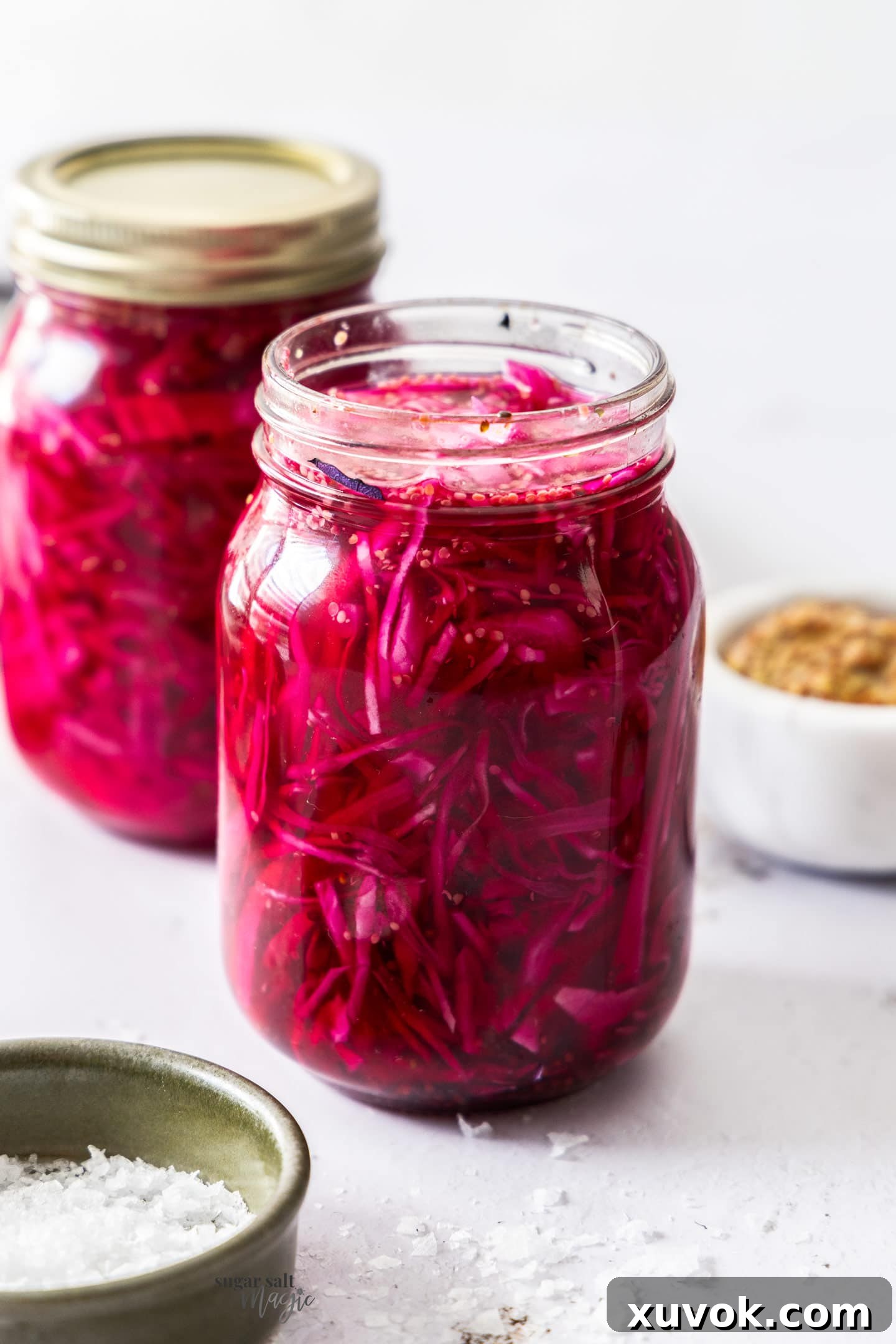
Quick and Easy Pickled Red Cabbage: A Burst of Tangy Flavor for Every Meal
Are you searching for a simple yet transformative ingredient to elevate your everyday meals? Look no further than quick pickled red cabbage. This vibrant condiment offers a delightful crunch and a tangy-sweet flavor profile that can turn a mundane dish into a culinary masterpiece. It’s not just a garnish; it’s a versatile, flavor-packed addition that will become a staple in your kitchen.
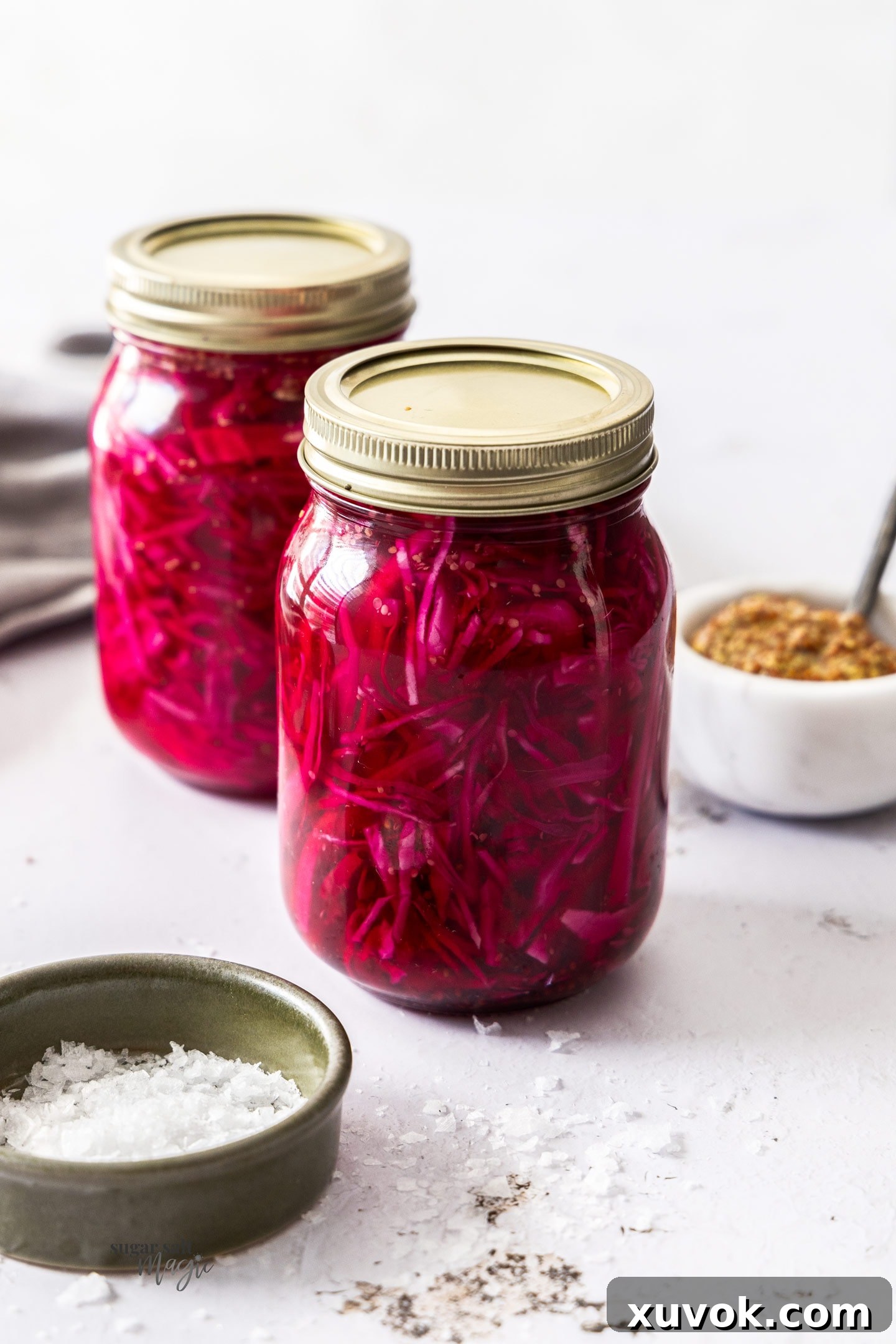
Table of Contents
- Why You’ll Love This Easy Pickled Red Cabbage Recipe
- Essential Ingredients for Your Homemade Pickled Cabbage
- How to Pickle Red Cabbage (Step-by-Step Guide)
- Creative Ways to Enjoy Pickled Red Cabbage
- Expert Tips and Tricks for the Best Pickled Cabbage
- Storage and Shelf Life of Pickled Red Cabbage
- Frequently Asked Questions About Pickling Cabbage
- More Flavorful Condiment Recipes You’ll Love
Never Miss a Recipe!
Get the latest recipes straight to your inbox and discover new ways to tantalize your taste buds!
Why You’ll Love This Easy Pickled Red Cabbage Recipe
Preparing pickled red cabbage at home is surprisingly simple and incredibly rewarding. It offers a multitude of benefits that make it an instant favorite for home cooks and food enthusiasts alike:
- Irresistible Flavor & Texture: This quick pickle process transforms ordinary cabbage into a vibrant, zingy delight with a perfect balance of tanginess and a hint of sweetness. The cabbage softens slightly while retaining a satisfying crunch, making it an ideal textural contrast in many dishes.
- Remarkable Versatility: Beyond being a simple condiment, pickled red cabbage is a versatile ingredient. It can elevate everything from hearty meat dishes to light salads, add intrigue to sandwiches, or become a colorful component of a grazing board. Its bright flavor cuts through richness, balancing and enhancing other ingredients.
- Waste Reduction & Cost-Effectiveness: Have half a head of cabbage sitting in your fridge? Pickling is an excellent way to use up leftover cabbage, whether red or green, extending its shelf life and preventing food waste. It’s a budget-friendly way to add gourmet flair to your meals.
- Effortless Preparation: This recipe is truly a “quick pickle,” requiring minimal hands-on time. In just about 10 minutes, you can slice the cabbage, mix your pickling liquid, and combine them. It’s perfect for busy weeknights or when you need a last-minute flavor boost.
- Instant Gratification & Lasting Freshness: You don’t have to wait long to enjoy your creation! Pickled red cabbage can be savored after just one hour of infusing in the brine. For those who like to plan ahead, it stores beautifully in the refrigerator for up to 2-3 weeks, with flavors deepening over time.
- Nutritional Benefits: Red cabbage is a powerhouse of vitamins and antioxidants, particularly Vitamin C and K. While pickling changes some nutrient profiles, it can also aid digestion and add beneficial acidity to your diet.
Imagine serving this jewel-toned condiment with hearty dishes like succulent sausages, perfectly oven-baked pork chops, melt-in-your-mouth short ribs, or your favorite tacos. It’s akin to the refreshing bite of pickled red onions but with its own unique charm. I recently enjoyed it with my lamb kofta wraps, and the combination was simply divine!
Essential Ingredients for Your Homemade Pickled Cabbage
Crafting delicious pickled red cabbage requires only a few pantry staples. Each ingredient plays a crucial role in developing that signature tangy-sweet flavor and preserving the cabbage. You’ll be amazed at how quickly these simple components come together to create something extraordinary.
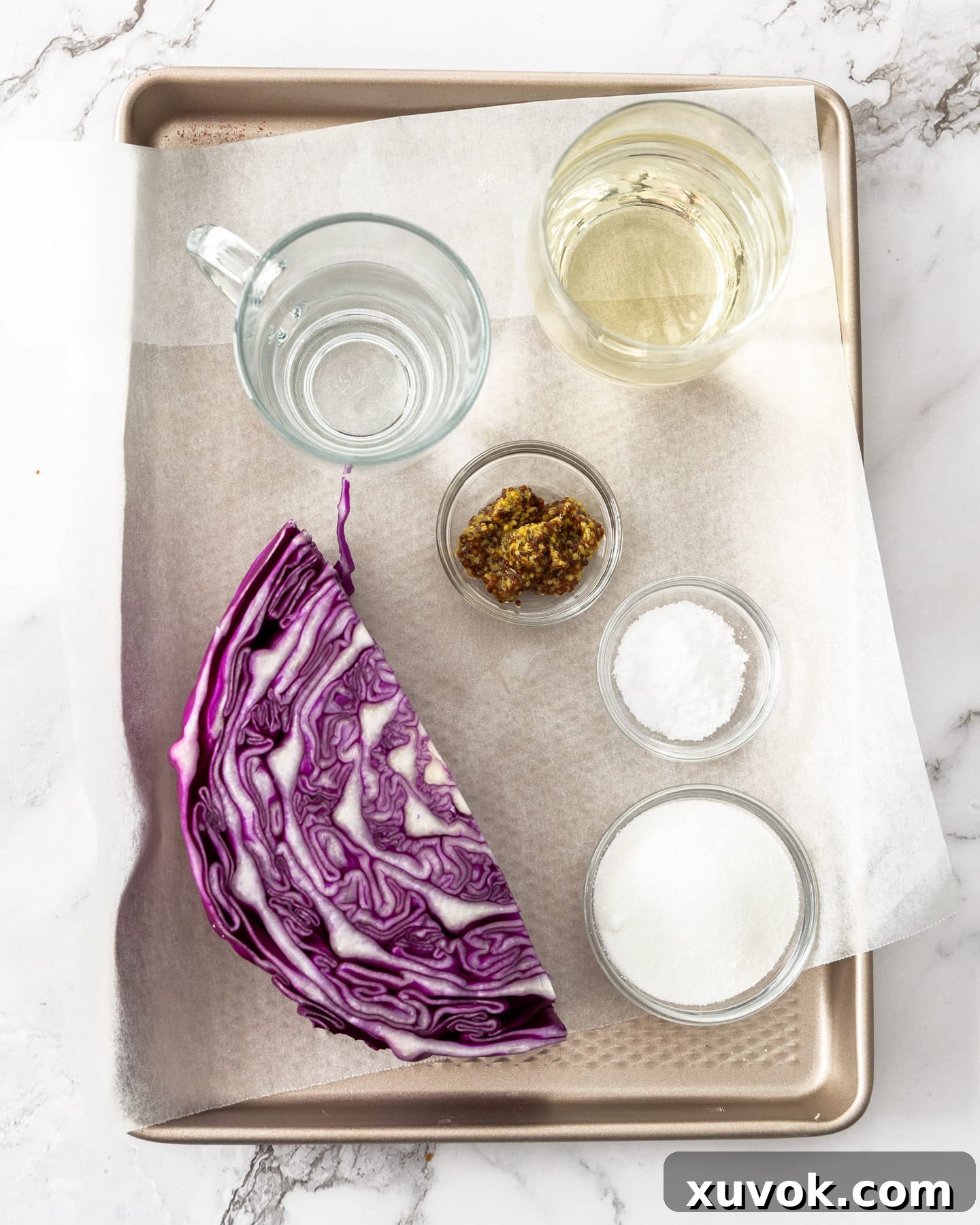
For detailed quantities and step-by-step instructions, please refer to the recipe card below.
- Red Cabbage: The star of our show! While red cabbage offers a stunning visual appeal and a slightly more robust flavor, this recipe is equally delicious with green cabbage. The pickling process softens the cabbage, yet a fresh head will maintain a delightful crunch. If you’re using cabbage that’s been in the crisper for a few days, it will still work beautifully, though the final product might be a touch softer. Always opt for cabbage that is firm and free of significant discoloration or signs of rot for the best results.
- Rice Wine Vinegar: This forms the essential base of our pickling liquid, or brine. As an acid, vinegar is key to softening the cabbage’s texture and infusing it with that signature tangy flavor. Its acetic acid component is also a natural preservative, inhibiting bacterial growth. While rice wine vinegar provides a mild, slightly sweet tang, you can experiment with alternatives like red wine vinegar, white wine vinegar, or apple cider vinegar. Apple cider vinegar, in particular, will lend a sweeter, fruitier undertone to your pickled cabbage.
- Caster Sugar (Superfine Sugar): Sugar is not just for sweetness; it plays a vital role in balancing the sharp acidity of the vinegar. This ensures your pickled cabbage isn’t overwhelmingly tart but has a harmonious sweet and sour profile. Caster sugar, being superfine, dissolves quickly and easily into the pickling liquid without the need for heating, streamlining the preparation process.
- Salt: A fundamental component in any pickling recipe. Salt not only enhances the overall savory flavor of the cabbage but is also critical for food preservation. It draws out moisture from the cabbage and creates an environment where harmful bacteria struggle to thrive, contributing to the extended shelf life of your quick pickle.
- Wholegrain Mustard: This ingredient adds an extra layer of zing and a subtle, earthy depth to the pickled red cabbage. The texture of the whole mustard seeds also provides a pleasant visual and textural element. You can adjust the amount to your preference or even experiment with other mustard varieties like Dijon or ground mustard seed.
Pickling is a fantastic culinary art for experimenting with flavors. Don’t hesitate to add other aromatic spices to your brine! Consider tossing in a few black peppercorns, a pinch of coriander seeds, a bay leaf, or some caraway seeds for nuanced notes. A couple of fresh garlic cloves, thinly sliced or smashed, will also infuse a wonderful savory dimension. Explore more customization ideas in the “Tips and Tricks” section below.
How to Pickle Red Cabbage (Step-by-Step Guide)
Creating your own batch of delicious pickled red cabbage is a quick and straightforward process. Follow these simple steps, and you’ll have a vibrant, tangy condiment ready to enhance your meals in no time.
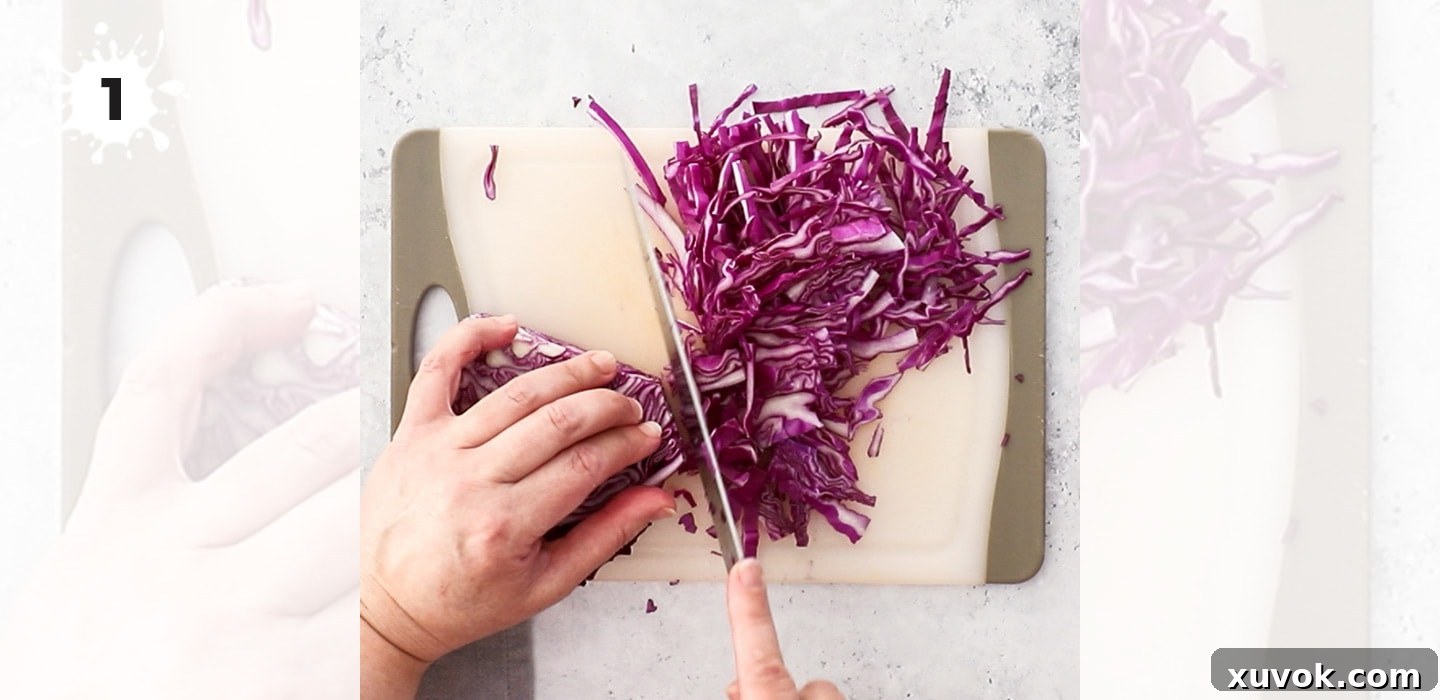
For precise measurements and detailed notes, consult the recipe card at the end of this article.
- Prepare the Cabbage: Start by carefully removing the tough outer leaves of the red cabbage and then cut out the core. Once cored, slice the cabbage into very fine, thin strips. The thinner the slices, the quicker and more effectively the cabbage will absorb the pickling liquid, resulting in a more tender and flavorful pickle. A mandoline slicer can achieve consistent, super-fine cuts, but always use it with extreme caution and protective gloves. A sharp chef’s knife works perfectly well too – just take your time for even slices.
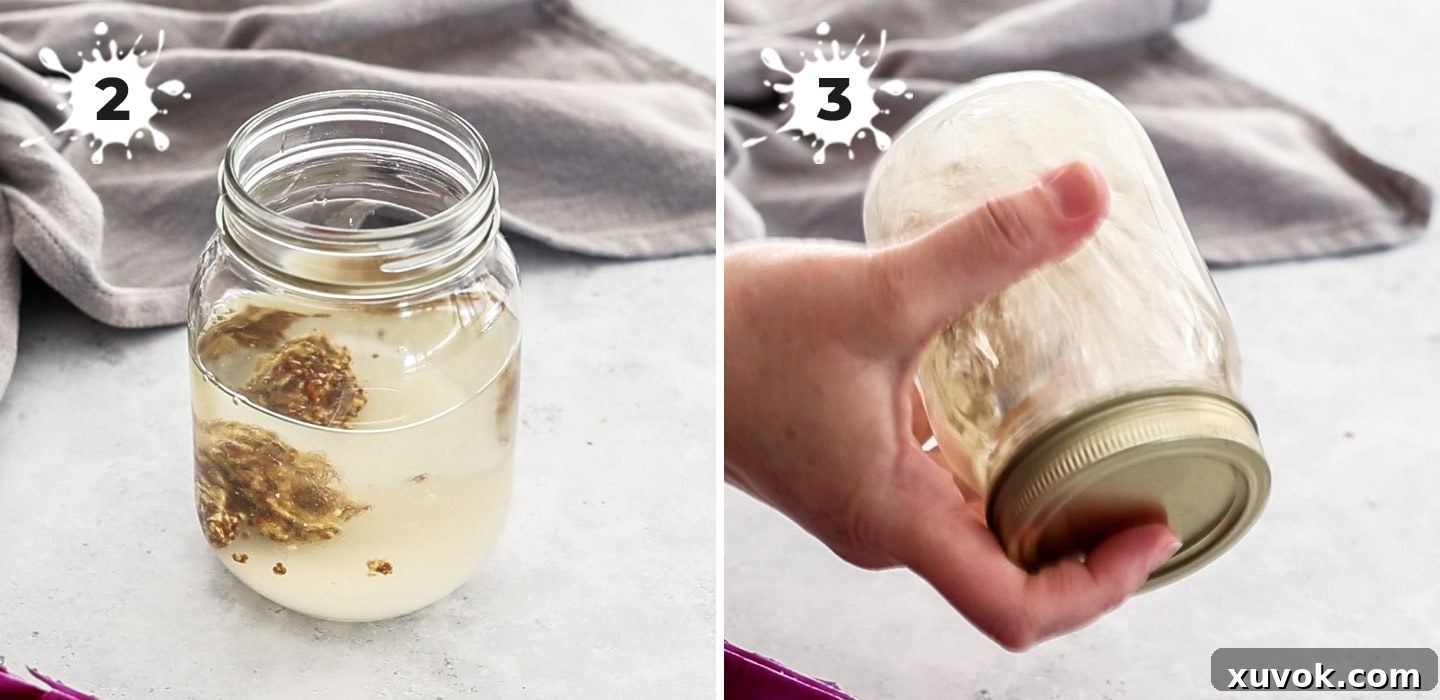
- Create the Pickling Liquid (Brine): In a clean, approximately 500ml (2 cup) preserve or Mason jar, combine the rice wine vinegar, water, caster sugar, salt, and wholegrain mustard. If you’re adding any optional spices like peppercorns, coriander seeds, or garlic, now is the time to include them.
- Shake to Dissolve: Secure the lid tightly onto the jar. Vigorously shake the jar for about 30 seconds to a minute. This ensures that the sugar and salt completely dissolve into the liquid, creating a perfectly balanced brine. You want to see no granules remaining at the bottom of the jar.
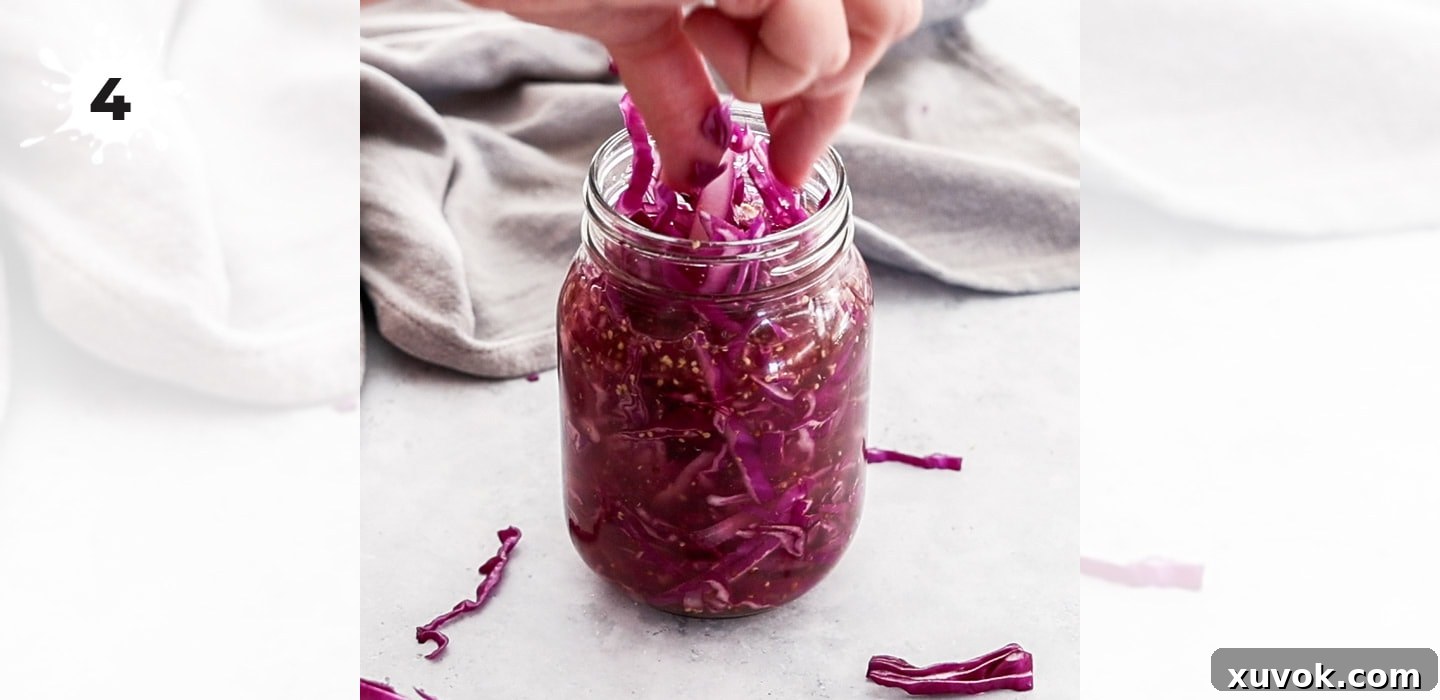
- Add the Cabbage to the Jar: Remove the lid from the jar. Begin to carefully pack the finely sliced cabbage into the jar, pushing it down firmly as you go. It’s crucial that all the cabbage is completely submerged under the pickling liquid. You can use the back of a spoon or a small weight (like a clean, food-grade fermentation weight if you have one) to keep the cabbage pressed down. If any cabbage remains exposed to air, it may not pickle properly or could spoil.
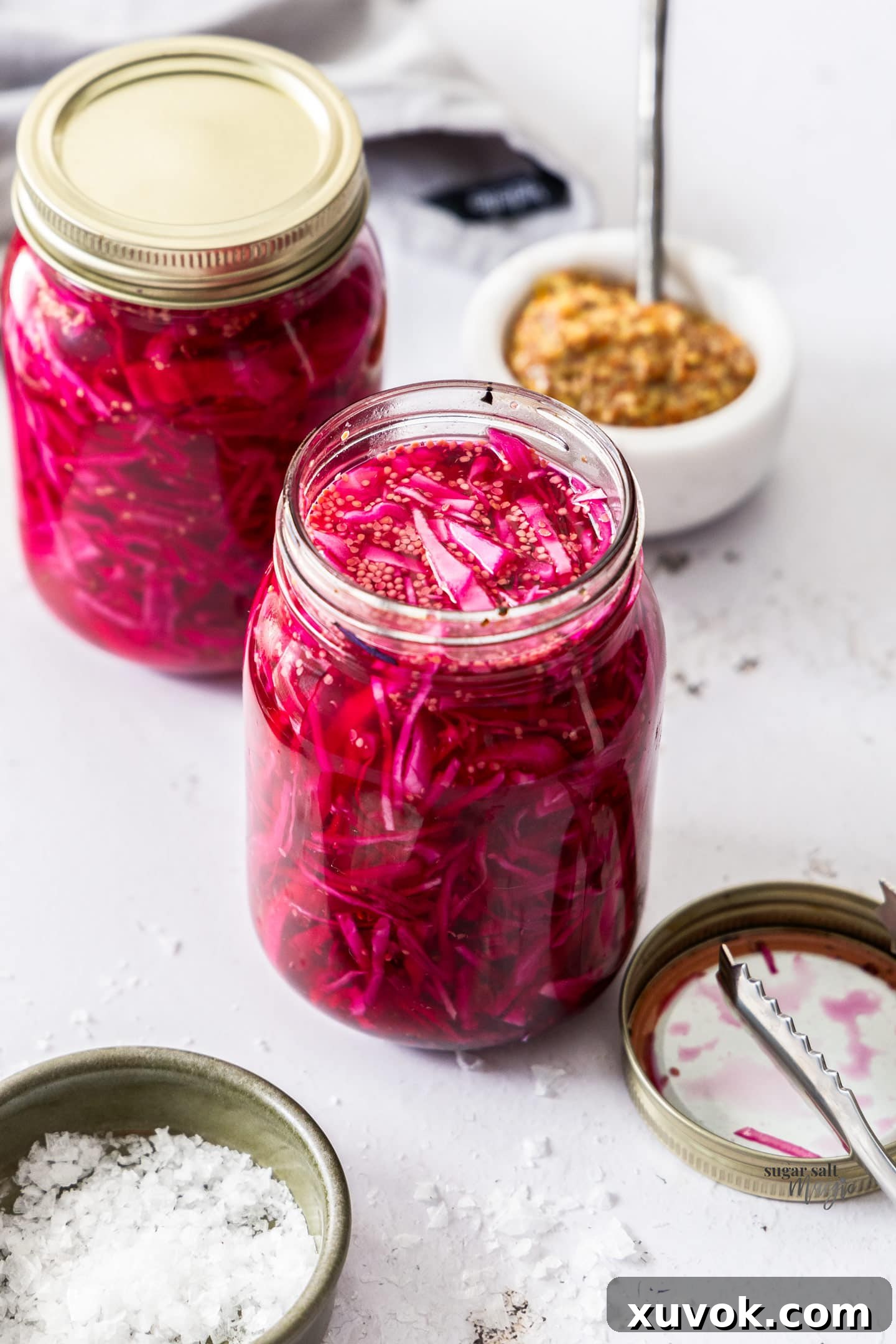
- Chill and Enjoy: Once all the cabbage is submerged, replace the lid securely. Give the jar a few gentle turns or inversions to ensure the liquid and spices are evenly distributed around the cabbage. Place the jar in the refrigerator to chill for at least one hour before serving. While it’s delicious after an hour, the flavors will meld and deepen further over the next few days.
Creative Ways to Enjoy Pickled Red Cabbage
The beauty of quick pickled red cabbage lies in its incredible versatility. Its bright acidity and satisfying crunch make it a fantastic accompaniment to a wide range of dishes, cutting through richness and adding a refreshing counterpoint. Here are some inspiring ideas to incorporate this vibrant condiment into your meals:
- Alongside Rich Meats: Pickled red cabbage is particularly exceptional with rich or fatty proteins. Think about serving it with succulent roast pork, tender beef short ribs, savory lamb, or gamey venison. Its tanginess provides a much-needed balance, cleansing the palate and enhancing the overall dining experience.
- Tacos and Burgers: Elevate your favorite handhelds! Pile it high on tacos, burritos, hot dogs, or burgers. The vibrant color and texture add visual appeal and a refreshing bite that complements creamy sauces and grilled meats.
- Salads and Bowls: Introduce a burst of flavor and a delightful crunch to your salads. It works wonderfully in grain bowls, Buddha bowls, or even a simple green salad. A unique trick is to use a little of the leftover pickling liquid, mixed with some olive oil, a touch of honey, and salt to taste, as an instant tangy salad dressing.
- Sandwiches and Wraps: Transform a simple sandwich or wrap into something special. Add it to turkey sandwiches, pulled pork sliders, or grilled cheese for an unexpected kick. Its vibrant color makes any lunch look more appealing.
- Cheese Boards and Appetizers: Include pickled red cabbage as a colorful and tangy element on your next cheese or charcuterie board. It pairs beautifully with various cheeses, cold cuts, and crackers, offering a refreshing contrast to richer flavors.
- Eggs and Breakfast Dishes: Don’t limit it to lunch and dinner! A small spoonful can brighten up scrambled eggs, avocado toast, or even a breakfast burrito.
Expert Tips and Tricks for the Best Pickled Cabbage
Achieving perfectly pickled red cabbage is simple, but a few expert tips can take your homemade batch from good to outstanding. These insights will help you customize flavors, ensure longevity, and master the art of quick pickling.
- Ensure Thorough Dissolution: When mixing your pickling liquid, vigorously shake the jar until the sugar and salt are completely dissolved. If you prefer, you can gently heat the pickling liquid on the stovetop over low heat, stirring continuously until the sugar and salt have melted. There’s no need to boil the liquid; just warm it enough to aid dissolution. This ensures a consistent flavor profile throughout your pickled cabbage.
- Experiment with Flavor Enhancers: Pickling is an excellent canvas for culinary creativity. Don’t hesitate to add other aromatic ingredients to your brine for unique flavor variations:
- Spices: Whole black peppercorns, dried mustard seeds (can replace wholegrain mustard for a smoother texture), red pepper flakes (dried chili flakes) for a touch of heat, a bay leaf, or a few caraway seeds can all add wonderful depth.
- Herbs: Fresh dill sprigs or thyme can infuse an herbal note.
- Garlic: A couple of whole cloves of garlic (smashed or thinly sliced) will add a pungent, savory layer.
- Sweeteners: While caster sugar is recommended, you can swap it for honey or maple syrup for a different kind of sweetness. Adjust quantities to taste, as these might be sweeter than granulated sugar.
- Sterilize Your Jars for Optimal Freshness: While quick pickles don’t strictly require sterilization for immediate consumption, it’s a best practice, especially if you plan to store your pickled cabbage for the full 2-3 weeks. Sterilizing helps eliminate any existing bacteria or mold spores, ensuring your jar is perfectly clean and extending the shelf life of your pickle.
To sterilize: Wash your Mason jar and lid thoroughly in hot, soapy water. Rinse well. Place the jar and lid (without the rubber seal if it has one, as high heat can damage it) upside down on a baking tray. Place it in a preheated oven at 120°C (250°F) for 10-15 minutes, or until completely dry. Allow them to cool slightly before filling. - Ensure Complete Submersion: This is a critical step for successful pickling. All the cabbage must be fully submerged in the pickling liquid. Any pieces exposed to air will not pickle properly and could potentially spoil. If necessary, use a small, clean, food-grade weight or a smaller, inverted jar lid to keep the cabbage pressed down below the brine.
Storage and Shelf Life of Pickled Red Cabbage
Once prepared, your homemade quick pickled red cabbage should be stored in the refrigerator. This ensures its freshness, preserves its crisp texture, and maintains food safety. Aim to consume it within 2 to 3 weeks for the best flavor and quality.
While this pickled cabbage can be enjoyed after a mere hour of chilling, its flavor profile will significantly deepen and mature over time. The cabbage will also continue to soften slightly, absorbing more of the tangy brine, making it even more delicious on subsequent days. Always use a clean utensil when removing portions to avoid introducing contaminants that could shorten its shelf life. If you notice any signs of mold, unusual discoloration, or off-odors, it’s best to discard the batch.
Frequently Asked Questions About Pickling Cabbage
Pickling cabbage serves multiple purposes. Firstly, it’s a fantastic preservation method, extending the shelf life of fresh cabbage by several weeks and helping to prevent food waste. Secondly, and perhaps most importantly, it dramatically transforms and enhances the cabbage’s flavor and texture. The pickling process infuses the cabbage with a delightful tanginess and a hint of sweetness, softening its raw crunch into a more tender, yet still firm, bite. This makes it an incredibly versatile ingredient, condiment, or side dish that adds a vibrant pop of color and flavor to many meals.
Not at all! You don’t need highly specialized equipment for this quick pickled red cabbage recipe. The most crucial item is a clean preserve or Mason jar, ideally around 500ml (2 cups) in capacity, with a tight-fitting lid. While not strictly necessary, sterilizing the jar before you begin is a good practice to ensure maximum cleanliness and prolong the shelf life of your pickle. A mandoline can be helpful for achieving uniformly thin slices of cabbage, but a sharp chef’s knife and a steady hand will work perfectly fine. You likely already have everything you need in your kitchen!
While using cabbage that is slightly wilted isn’t inherently dangerous (provided it shows no signs of mold, rot, or significant discoloration), for the best results, it’s always recommended to use the freshest possible cabbage. Cabbage that is crisp and firm will yield a superior texture and a more vibrant end product after pickling. Wilted cabbage may result in a softer pickle with less of that satisfying crunch. Always avoid any cabbage that appears withered, has soft spots, smells off, or shows any signs of spoilage.
Absolutely! This quick pickling recipe works wonderfully with both red and green cabbage. While red cabbage offers a stunning, vibrant color that intensifies with pickling, green cabbage will deliver the same delicious tangy-sweet flavor and satisfying crunch. Feel free to use whichever variety you have on hand or prefer, or even a mix of both for a colorful blend.
This recipe uses a “quick pickling” method, also known as refrigerator pickling. This involves submerging food (like cabbage) in a hot or cold vinegar-based brine and then storing it in the refrigerator. The acidity of the vinegar is the primary preservative, and the pickles are ready to eat in a short amount of time (often within hours). Traditional pickling and fermentation, on the other hand, rely on lactic acid fermentation, where beneficial bacteria convert sugars into lactic acid, creating probiotics and distinct flavors over a longer period, often without the need for vinegar. Quick pickles are not fermented and do not offer the same probiotic benefits, but they are faster, easier, and still incredibly delicious.
More Flavorful Condiment Recipes You’ll Love
- Fresh Jalapeno Relish
- Pesto Butter
- Jalapeno Mayo
- Pickled Red Onions
- Olive Pesto
- Tomato Chilli Jam
Did you try this pickled red cabbage recipe?
Leaving a rating and comment below the recipe is so helpful!
Hungry for more? Subscribe to the newsletter for free recipes straight to your inbox. Also, follow along on Facebook, Pinterest and Instagram.
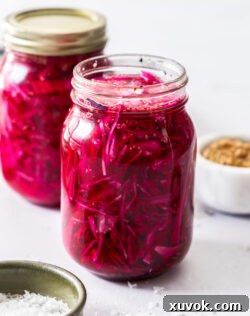
Pickled Red Cabbage
Yield: 12 serves
Prep Time: 10 minutes
Cook Time: 0 minutes
Resting time: 1 hour
Total Time: 1 hour 10 minutes
Pickled red cabbage is super quick and easy to make and is the perfect tangy crunch to add to just about anything. Try it on burgers, tacos, hotdogs, roast meats or in salads!
Rate This Recipe
Pin Recipe
Ingredients
- ¼ red cabbage
- ¾ cup rice wine vinegar (or white wine vinegar)
- ½ cup water
- 2 tablespoon caster sugar (superfine sugar) (note 1)
- 1 teaspoon salt
- 1 ½ teaspoons wholegrain mustard
For best results, always weigh ingredients where a weight is provided
Equipment
- 1 Mason jar (500ml / 2 cups)
- chopping board
- Sharp knife
Instructions
- Remove the core and finely slice the cabbage.
- Add the vinegar, water, sugar, salt and mustard to a clean preserve jar, screw on the lid and shake really well to dissolve the sugar and salt.
- Add the sliced cabbage, pushing it in until you can’t submerge any more under the liquid. Make sure it’s all submerged.
- Screw the lid on and give a few good turns to get that pickling liquid and mustard seeds evenly throughout.
- Chill for at least an hour before using. Store in the refrigerator for up to 2-3 weeks.
- Please take a moment to leave a comment & rating. It’s appreciated and so helpful.
Notes
- Tablespoons: I use a standard Australian 20ml tablespoon (equal to 4 teaspoons). Check yours before measuring.
MORE CONDIMENTS AND SAUCES!
Calories: 16 kcal
Author: Marie Roffey
Course: Condiment
Cuisine: American, Australian, British, World
Have you tried this recipe?Don’t forget to leave a rating and comment below and let me know how it was! I love hearing from you. Nutrition information is approximate and derived from an online calculator. The brands you use may cause variations.
Calories from Fat 1