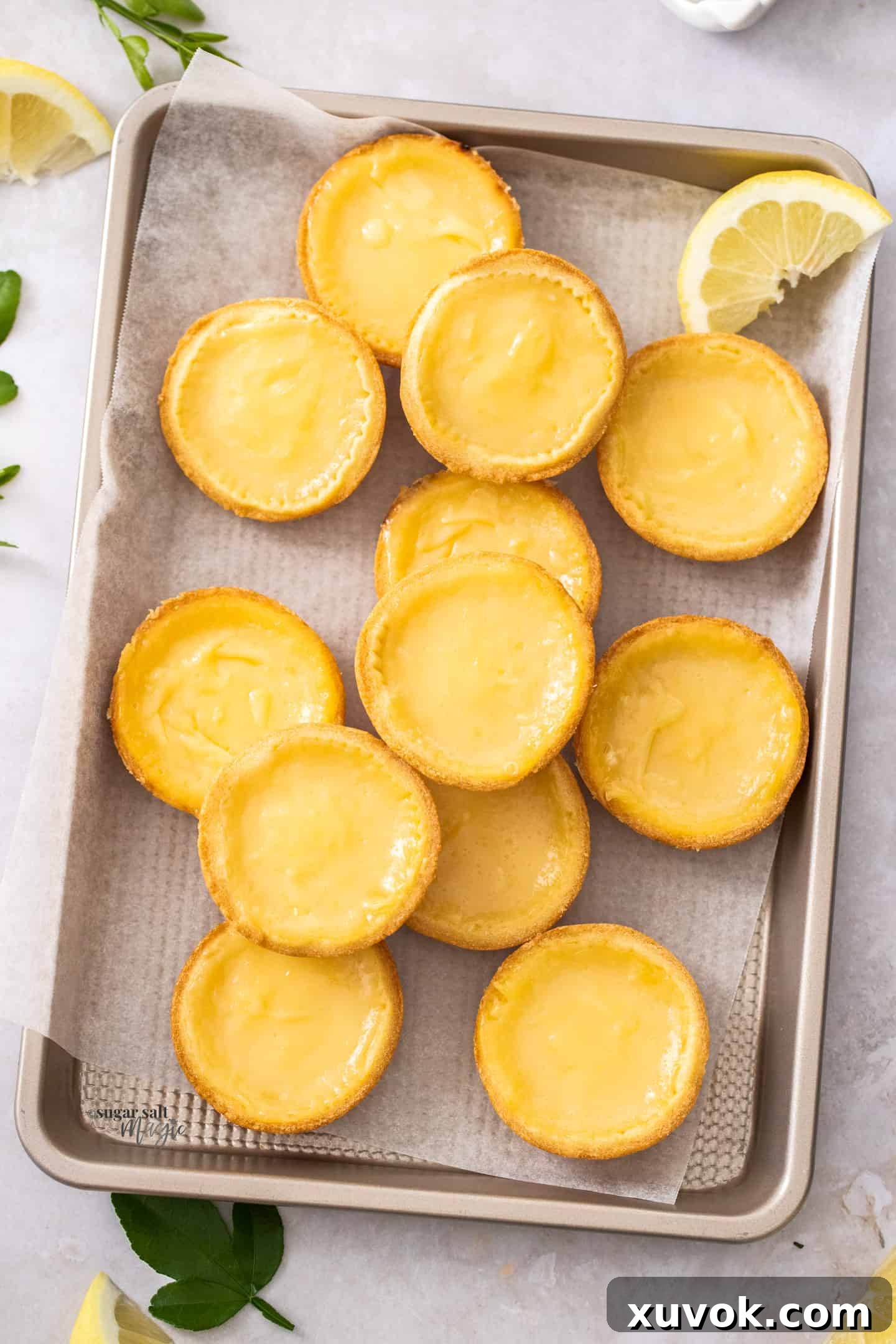
Prepare to delight your taste buds with these exquisite lemon tartlets – a perfect symphony of buttery, crisp pastry and a lusciously soft, sweet, and wonderfully tangy lemon curd filling. These mini lemon tarts are more than just a dessert; they’re a vibrant culinary experience, promising a delightful pucker with every bite.
If your heart beats for lemon-infused treats, you absolutely must explore our equally delightful lemon Danish pastries and our refreshing coconut lemon slice, both offering unique takes on this beloved citrus flavor.
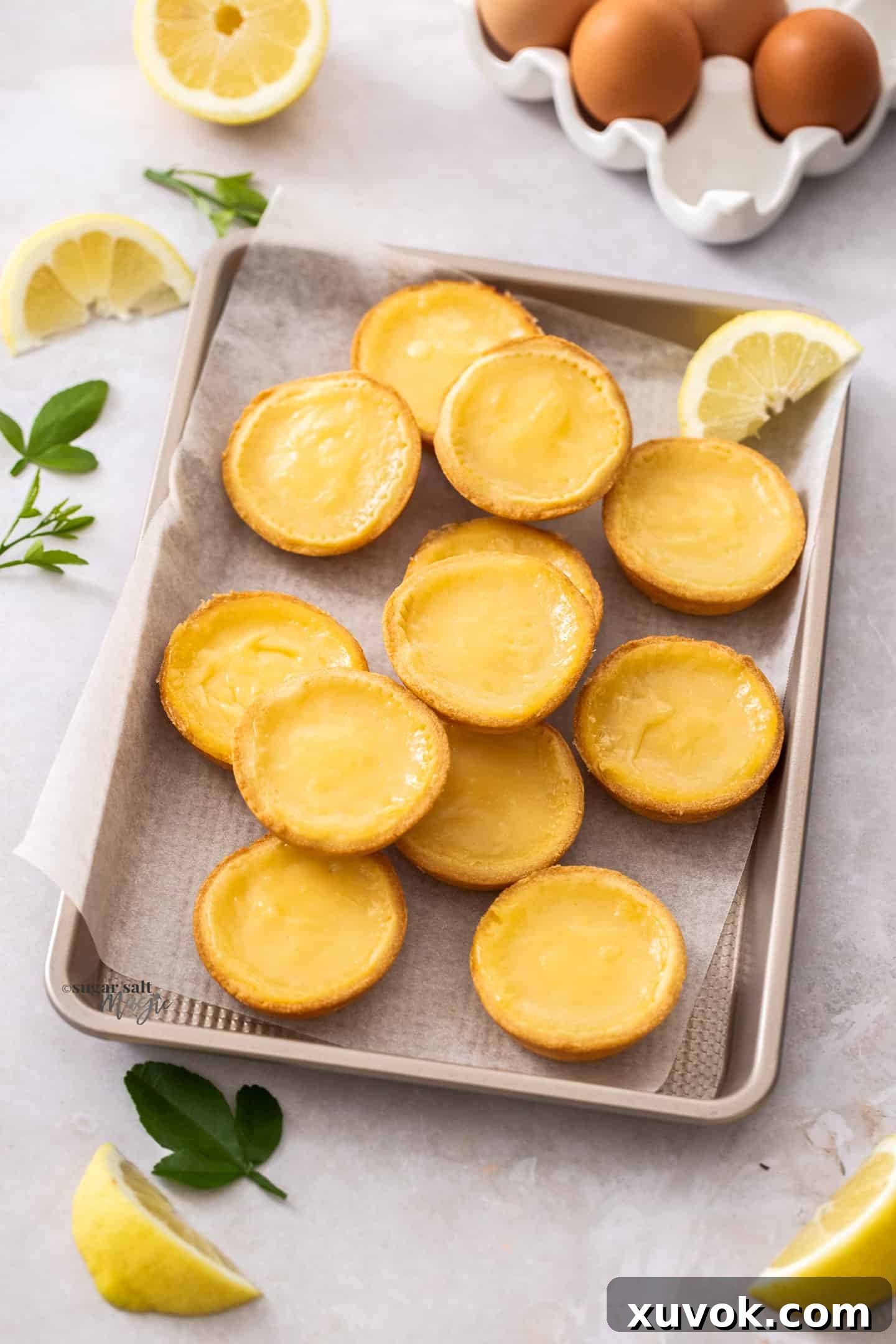
Table of Contents
- Why You’ll Love These Lemon Tartlets
- Essential Ingredients for Perfect Lemon Tarts
- Step-by-Step Guide to Making Lemon Tartlets
- Pro Tips and Tricks for Baking Success
- Preparing Lemon Tartlets Ahead for Ultimate Freshness
- Creative Variations to Customize Your Tarts
- Proper Storage for Your Lemon Tartlets
- More Delicious Recipes to Explore
Why You’ll Love These Lemon Tartlets
Beyond their undeniable charm and utterly adorable size, these mini lemon curd tarts offer an unparalleled baking experience that’s far simpler than you might imagine. They are perfectly portioned, making them an ideal treat for individual enjoyment or elegant serving at any gathering. Each tartlet delivers a burst of sunshine, guaranteed to brighten any day.
The star of the show is, of course, the lemon curd filling. It’s not just soft; it’s incredibly **luscious, richly flavored, and boasts an intense tanginess** that true lemon aficionados crave. While you can certainly adjust the amount of lemon zest to mellow the tang if you prefer, we believe that a truly magnificent lemon tart should make your lips pucker with delightful zest. This homemade curd elevates the tartlets from mere dessert to a memorable culinary highlight, offering a fresh, vibrant contrast to the rich pastry.
And let’s not forget the **shortcrust pastry** – a cornerstone of these magnificent tartlets. This recipe yields a pastry that is impeccably buttery, subtly sweet, and wonderfully crisp, providing the perfect textural counterpoint to the smooth curd. It’s robust enough to cradle the generous filling without becoming soggy, yet delicate enough to offer a slight flakiness with every bite. Crafted from a variation of our perfect tartlet shells recipe, this pastry truly sets these lemon tartlets apart, promising a homemade taste and texture that store-bought alternatives simply cannot match.
Essential Ingredients for Perfect Lemon Tarts
It’s truly remarkable how a dessert so exquisite and made entirely from scratch, both pastry and filling, requires only a handful of fundamental ingredients. The magic lies in the quality of these components and how they come together to create such a harmonious flavor profile.
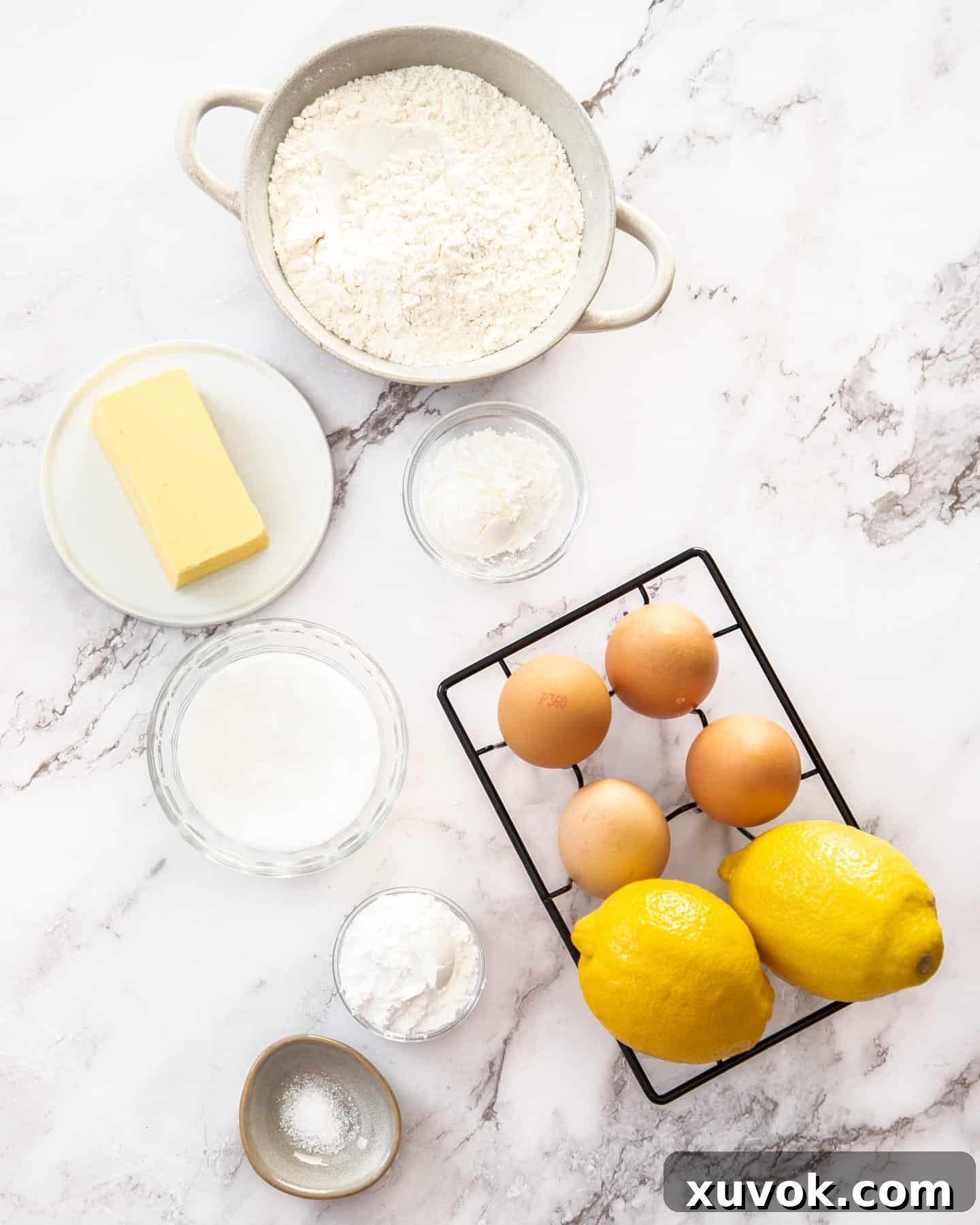
For detailed quantities and step-by-step instructions, please refer to the comprehensive recipe card below.
- Lemons: The undeniable hero of this recipe. Fresh lemons are non-negotiable for their vibrant zest and potent juice. You’ll typically need 2-3 medium-sized lemons. Always choose unwaxed lemons if possible, and ensure they are thoroughly washed and dried before zesting to release their purest aroma and flavor.
- Flour: Standard plain flour (or all-purpose flour) is the foundation of our crisp pastry shells. Its gluten content provides the necessary structure and tenderness.
- Butter: Unsalted butter is crucial for both the pastry and the curd. Using unsalted allows you complete control over the salt balance in your recipe, ensuring the flavors are perfectly harmonized. Keep it very cold for the pastry.
- Icing Sugar: Also known as powdered sugar or confectioners’ sugar, this finely milled sugar contributes to the delicate sweetness and distinct crispness of the pastry. Its fine texture helps create a tender crumb.
- Eggs: We use large eggs throughout this recipe. Opt for free-range eggs whenever possible; they not only support ethical farming practices but also often boast richer yolks, contributing to a better flavor and color in your curd. You’ll need egg yolks for both the pastry and the filling.
- Granulated Sugar: Regular white granulated sugar or superfine caster sugar is used in the lemon curd. It provides sweetness and helps to thicken the curd to its desired luscious consistency.
- Cornflour / Cornstarch: This essential thickener is what transforms the liquid lemon mixture into a beautifully set, velvety curd. It ensures your filling has the perfect texture without being too runny.
- Salt: A small pinch of salt in both the pastry and the curd is a flavor enhancer, balancing the sweetness and acidity and making all the other flavors sing.
This versatile recipe **adapts beautifully to other citrus fruits**. Should you find yourself with an abundance of oranges, mandarins, or limes, feel free to substitute them for lemons to create delightful variations.
Step-by-Step Guide to Making Lemon Tartlets
Creating these elegant lemon tarts is a rewarding process, made surprisingly simple by the straightforward nature of both the homemade pastry and the quick-to-prepare lemon filling. Follow these steps for an enjoyable baking journey and perfectly delicious results.
For precise measurements and detailed cooking times, consult the full recipe card below.
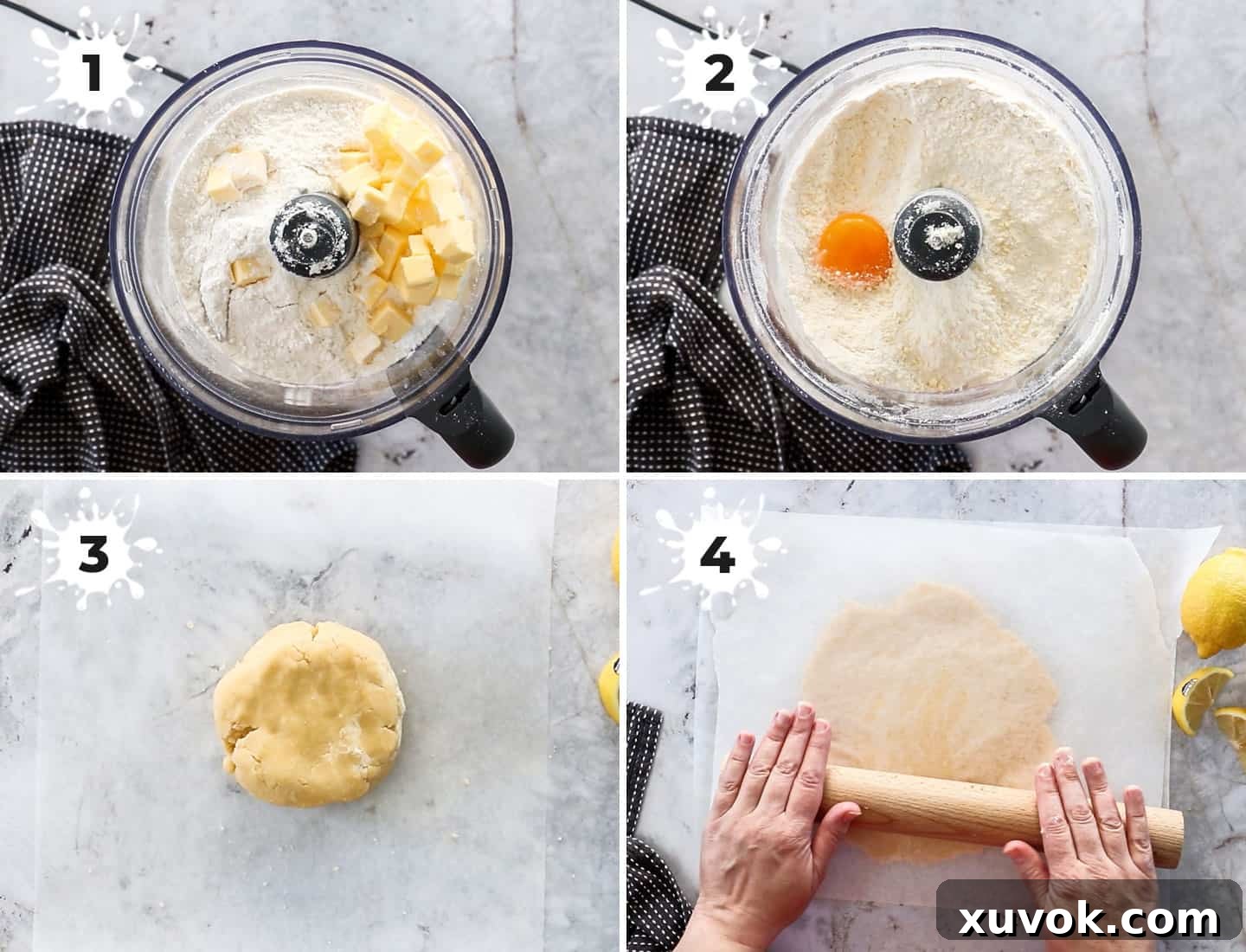
- Prepare the Shortcrust Pastry: In the bowl of a food processor, combine the plain flour, icing sugar, and cubes of very cold, grated butter (photo 1). Pulse the mixture until it resembles coarse breadcrumbs, with visible but very small pieces of butter, no larger than a grain of rice. Add the egg yolk (photo 2) and pulse again to incorporate. Then, with the processor running, slowly drizzle in 1-2 tablespoons of cold water until the mixture just begins to clump together and form a dough. Be careful not to add too much water.
- Roll and Chill the Pastry Dough: Gently gather the dough and form it into a smooth, flat disk (photo 3), avoiding excessive kneading, which can warm the butter and overdevelop the gluten. Place the dough between two sheets of baking paper and roll it out evenly to a thickness of approximately 3-4mm (photo 4). Transfer the rolled dough (still between the paper) to a baking tray and chill in the refrigerator for at least 30 minutes. This chilling step is vital for a crisp, tender pastry.
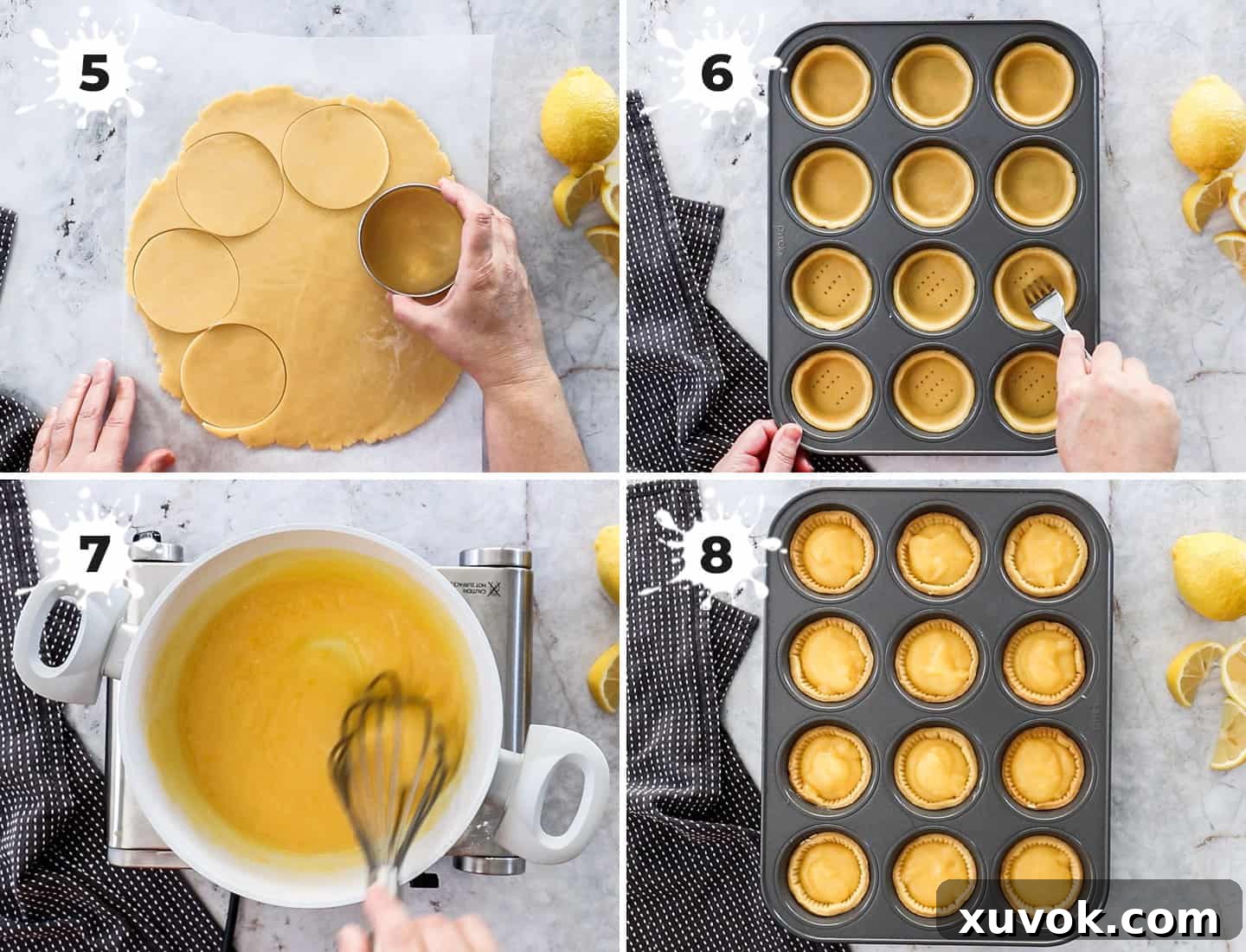
- Shape and Blind Bake the Tart Shells: Using a round cookie cutter, cut circles from the chilled dough, ensuring they are about 1cm wider than the openings of your 12-hole muffin tin. Carefully press each dough circle into the muffin tin holes (photo 5), making sure to gently press into the corners to achieve neat edges. A clever trick is to use the flat end of a rolling pin or a small, flat-bottomed glass for this. If the dough becomes too soft to handle, return it to the fridge to firm up. Prick the bases of the shaped shells with a fork (photo 6) and chill again for another 30 minutes. Preheat your oven to 180°C (350°F). Line each tartlet shell with a cupcake case or small piece of parchment paper, pressing it down, then fill with baking weights, dry rice, or dried beans. Bake for 15 minutes, then carefully remove the weights and paper, and continue baking for another 5 minutes, or until the shells are lightly golden and dry to the touch. Let them cool slightly in the tin while you prepare the filling.
- Prepare the Luscious Lemon Curd: In a medium saucepan, whisk together the granulated sugar, cornflour, and a pinch of salt. Pour in the fresh lemon juice and water, whisking continuously until smooth. Heat this mixture over medium heat, stirring frequently to prevent lumps, until it thickens into a translucent, gel-like consistency with large bubbles breaking the surface. Remove the saucepan from the heat and stir in the chopped unsalted butter and finely grated lemon zest until the butter is completely melted and incorporated. Now, this next step is crucial for smooth curd: while vigorously whisking the hot mixture, gradually pour in the egg yolks (photo 7). Whisk continuously and quickly to temper the yolks and prevent them from scrambling. Return the saucepan to very low-medium heat and cook for just one more minute, whisking constantly, until the curd is visibly thicker and coats the back of a spoon. Pour the warm lemon curd evenly into the blind-baked tart shells, filling them almost to the brim (photo 8). Bake the filled tartlets for an additional 5-8 minutes, or until the lemon curd just begins to gently bubble around the edges and sets to a smooth, level surface.
- Cool and Serve: Allow the baked lemon tartlets to cool in the muffin tin for about 15 minutes. This cooling period helps them set further and makes removal easier. To remove them, give each tartlet a gentle twist to loosen it, then press down slightly on one side to lift the other, allowing you to easily transfer them to a wire rack to cool completely. These tartlets are delightful served at room temperature or chilled, offering slightly different textural experiences.
Pro Tips and Tricks for Baking Success
While making these lemon tartlets is quite approachable, a few expert tips can elevate your results from good to absolutely perfect. Pay attention to these details for truly exquisite tartlets.
- Embrace the Cold: The secret to a perfectly crisp and tender pastry lies in keeping all ingredients, and the dough itself, as cold as possible. Use very cold butter (grating it and then briefly freezing it while you gather other ingredients is an excellent technique), iced water, and a cold egg yolk. Cold ingredients prevent the butter from melting prematurely, ensuring a flaky texture.
- Avoid Overworking the Dough: For the same reasons mentioned above, resist the urge to knead the pastry dough extensively. Excessive handling generates warmth, which can melt the butter, and also overdevelops the gluten. This leads to a tough, less flaky pastry. Mix just until the dough comes together.
- Prioritize Chilling Time: Do not skip the recommended chilling times for the dough. This serves a dual purpose: it keeps the butter solid, contributing to flakiness, and it allows the gluten in the flour to relax. A relaxed dough is easier to handle, less prone to shrinking during baking, and retains its shape beautifully.
- Handle Softening Dough with Care: If you notice the dough becoming too soft and difficult to handle while cutting circles or pressing them into the muffin tin, immediately return it to the refrigerator for a short period. The dough should be pliable enough to mold, but firm enough to hold its shape without distorting.
- Monitor Baking Times: Every oven is unique, so baking times are always approximate. For the tart shells, look for a delicate golden color and a dry-to-the-touch surface. For the filled tartlets, the curd should just begin to bubble around the edges and appear set. Trust your senses more than the clock.
- The “Easy” Lemon Curd Technique: Our lemon curd recipe is designed for simplicity. While technically the curd is cooked and set once you remove it from the stovetop, baking it for an additional few minutes in the tart shells serves two wonderful purposes. Firstly, it develops a slightly jammy, more concentrated texture in the curd, enhancing its richness. Secondly, it gives the pastry a final crisping boost, ensuring a delightful crunch against the creamy filling.
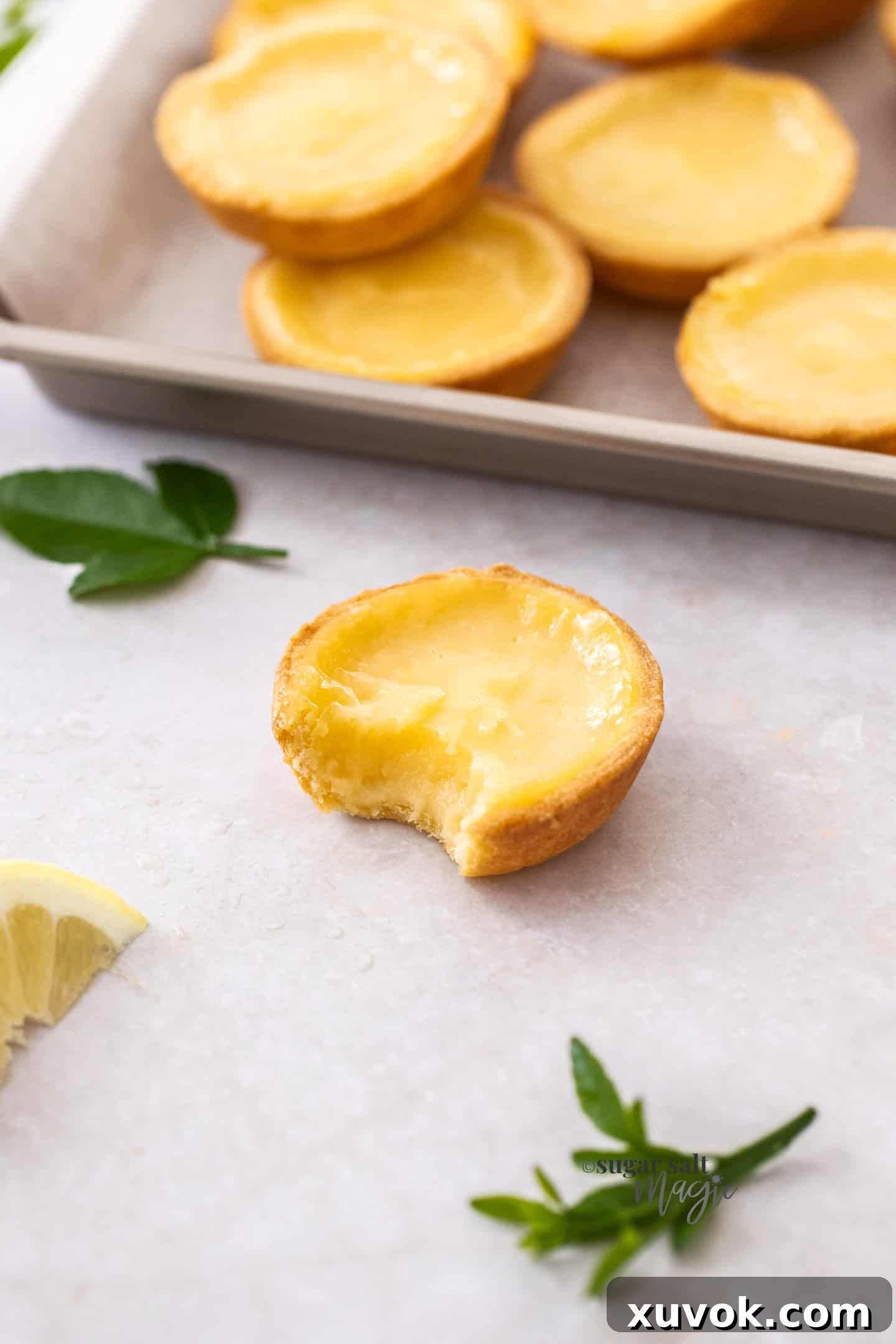
Preparing Lemon Tartlets Ahead for Ultimate Freshness
These delightful lemon tartlets are wonderfully adaptable for making ahead, allowing you to enjoy fresh-ttasting desserts without last-minute stress. For the freshest possible experience, especially when serving at parties or special occasions, consider preparing the pastry and lemon curd components in advance, then assemble and bake closer to serving time.
- The Pastry Dough: The unbaked pastry dough is remarkably freezer-friendly. You can prepare the dough, shape it into a disk, wrap it tightly in plastic wrap, and store it in the refrigerator for 1-2 days, or freeze it for up to 2 months. Alternatively, after pressing the dough into the muffin tin holes, you can freeze the unbaked tart shells directly in the tin; once frozen solid, pop them out and store them in an airtight container or freezer bag, ready to be blind-baked later.
- Baked Tart Shells: If you prefer to get a head start, you can fully blind-bake the tart shells ahead of time. Once completely cooled, store the crisp, empty shells in an airtight container at room temperature for up to 1-2 days. This provides a convenient base ready for filling and a quick final bake.
- The Lemon Curd: Our vibrant lemon curd can also be made in advance. Once cooked and cooled, transfer it to an airtight container and refrigerate for 2-3 days. Before filling your tart shells and baking, gently warm the chilled curd slightly on the stovetop or in the microwave. This will make it more fluid and easier to pour evenly into the shells, ensuring a smooth, level finish.
Our lemon curd is a close cousin to the one used in our biscuit base lemon meringue pie, though you could also opt for our slightly different homemade lemon curd recipe if you prefer. For an extra touch of elegance, consider topping these tartlets with a delicate swirl of meringue, similar to our enchanting mini lemon meringue tarts.
Creative Variations to Customize Your Tarts
While the classic lemon tartlet is a masterpiece in itself, this recipe provides a fantastic canvas for your culinary creativity. Don’t hesitate to experiment with different flavors and presentations to make these tarts uniquely your own.
- Explore Other Citrus: As mentioned, the curd base works beautifully with other citrus fruits. Swap out lemons for the bright notes of **oranges**, the zesty kick of **limes**, the subtle sweetness of **mandarins**, or even the sophisticated bitterness of **grapefruit** for a unique twist.
- A Hint of Vanilla: For a more rounded and slightly sweeter flavor profile, consider adding up to 1 teaspoon of pure vanilla extract to your lemon curd during the final stages of cooking. It beautifully complements the tart lemon.
- Adjusting Tanginess: If you prefer a less intense tang, a simple trick is to strain the lemon zest out of the curd before pouring it into the tartlet shells. The zest provides a significant portion of the lemon’s robust flavor, so its removal will result in a milder, smoother taste.
- Speedy Alternatives: In a pinch, feel free to use high-quality store-bought lemon curd to save time. Alternatively, these mini tart shells are incredibly versatile and make a wonderful vessel for your favorite **fruit jams** or preserves. Imagine raspberry, apricot, or cherry jam for a quick and delightful treat!
- Garnishes: Elevate your tartlets with simple garnishes. A dusting of powdered sugar, a dollop of whipped cream, fresh berries (especially raspberries or blueberries), or candied lemon peel can add both visual appeal and complementary flavors.
Proper Storage for Your Lemon Tartlets
To enjoy these lemon tartlets at their peak, it’s generally best to serve them as fresh as possible. The pastry is at its crispiest right after cooling. While they remain delicious, the pastry will naturally soften over time due to the moisture from the filling. This doesn’t affect their edibility, merely their texture.
- Finished Tartlets: Store any leftover baked and cooled lemon tartlets in a cool, dry place for up to 24 hours to maintain maximum crispness. For longer storage, transfer them to an airtight container and keep them in the refrigerator for an additional 3-4 days. Allow them to come to room temperature or gently warm them for a few minutes before serving for the best flavor.
- Pastry Dough: Unbaked pastry dough is quite forgiving. It can be made ahead and kept well-wrapped in plastic wrap in the refrigerator for 1-2 days. For longer-term storage, the dough freezes beautifully for up to 2 months. Thaw in the refrigerator before rolling and shaping.
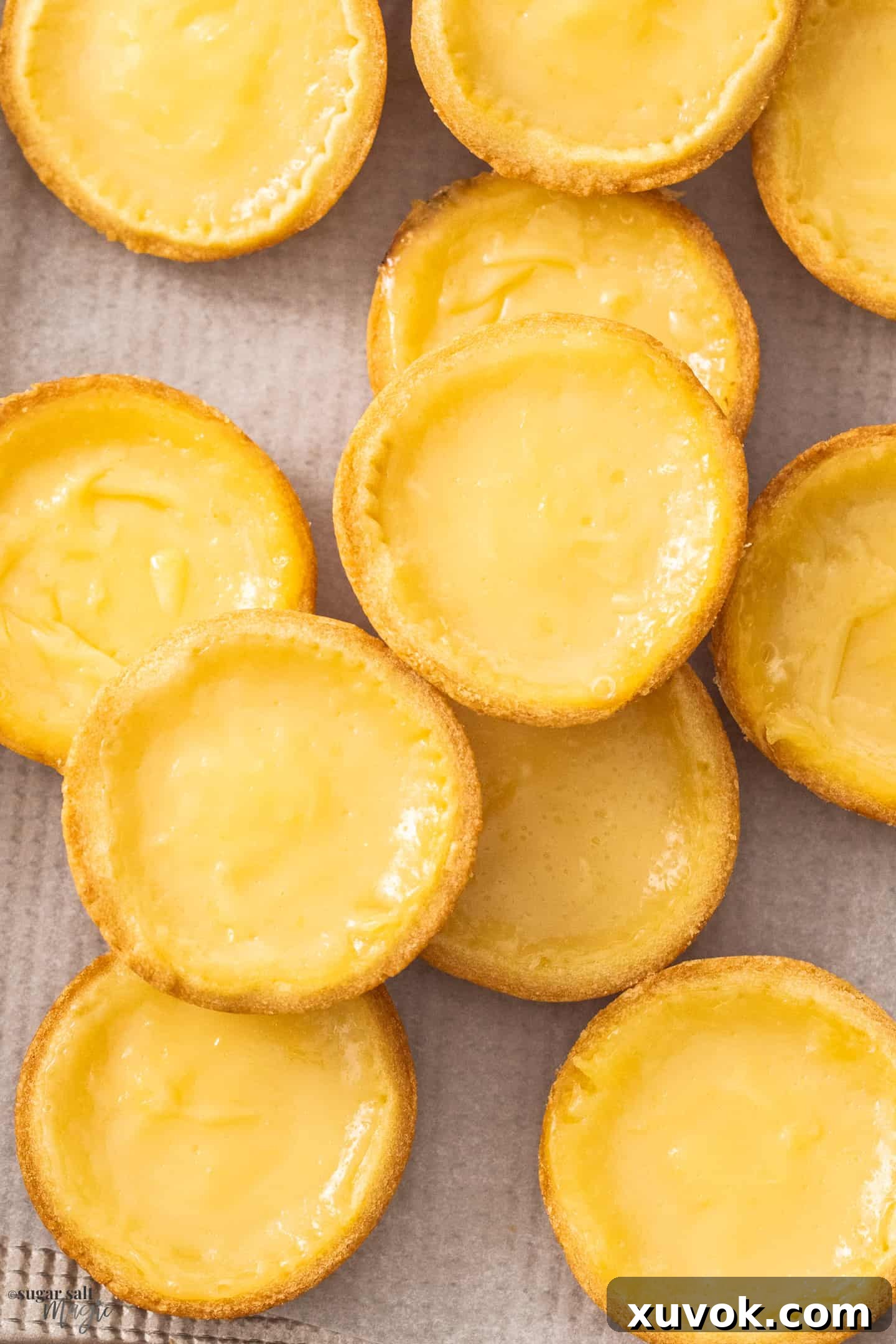
If this lemon tartlets recipe inspires your next baking adventure, please consider taking a moment to **leave a rating and comment below**. Your feedback is invaluable, not only do we love hearing about your creations, but it also helps other home bakers discover and enjoy these recipes!
More Delicious Recipes to Explore
- Easy Jam Tarts
- Pistachio Tartlets
- Lemon Curd Cookies
- No Bake Lemon Meringue Cheesecake
- Lemon Crumble Slice
- Passionfruit Tartlets
- Lemon Danish Pastry
- Tartlet Shells
Never Miss a Recipe!
Get the latest recipes straight to your inbox and never miss a sweet, salty, or magical creation again!
Subscribe to our newsletter for exclusive recipes and baking tips.
Lemon Tartlets
Yield: 12 tartlets
Prep Time: 30 minutes
Cook Time: 30 minutes
Chilling Time: 1 hour
Total Time: 2 hours
Average Rating: 5 out of 10 ratings
These little lemon tartlets are a testament to homemade goodness: perfectly sweet and tangy, surprisingly easy to craft from scratch. Each boasts a crisp, buttery pastry shell cradling a simple yet sublime lemon curd, making them the ultimate indulgence for any true lemon enthusiast.
Rate Recipe
Pin Recipe
Ingredients
FOR THE PASTRY SHELL
- 195 g plain (all-purpose) flour (1 1/2 cups / 6.9oz)
- 2 ½ tablespoons icing (powdered) sugar (25g / 0.9oz)
- 113 g unsalted butter, cubed & chilled (¾ stick / 3oz)
- 1 egg yolk, from a large egg
- 1 – 2 tablespoons cold / iced water
FOR THE LEMON FILLING
- ½ cup white granulated sugar (100g / 3.5oz)
- 2 tablespoons cornflour (cornstarch) (25g / 0.9oz)
- pinch of salt
- ½ cup lemon juice (125ml)
- ⅔ cup water (160ml)
- 28 g unsalted butter, chopped (2 tablespoons / 1oz)
- finely grated zest of 1 large lemon (2-3 teaspoons)
- 3 egg yolks, from large eggs
For best results, always weigh ingredients where a weight is provided.
Equipment
- Food processor
- 12-hole muffin tin
- Cupcake liners
- Rolling Pin
- Circle cookie cutters
Instructions
FOR THE SHORTCRUST PASTRY
- Place the flour, icing sugar, and chilled butter into the bowl of a food processor. Pulse until it reaches a crumb-like texture. Small pieces of butter should still be visible, but smaller than a grain of rice.
- Add the egg yolk and pulse again until thoroughly combined.
- With the processor running, slowly drizzle in the cold water, adding just enough until the mixture begins to clump together. Be careful not to over-process or add too much water.
- Gently gather the pastry dough into a smooth ball (avoid kneading extensively). Roll it out between two sheets of baking paper to a thickness of approximately 3mm. Transfer the rolled dough (still between the paper) onto a tray and chill in the refrigerator for at least 30 minutes. This chilling step is essential for a crisp pastry.
- Have a 12-hole muffin tin ready and prepared.
- Using a circle cookie cutter that is about 1cm larger than the opening of your muffin tin holes, cut out circles of dough. Carefully press each dough circle down into the muffin tin holes, gently pushing it into the corners to form neat shells. If the dough becomes too soft at any point, return it to the fridge to firm up. Chill the shaped tart shells for another 30 minutes.
- Preheat your oven to 180°C / 350°F / 160°C fan forced.
- Prick the bases of the tartlet shells a few times with a fork. Place a cupcake case or a small piece of baking paper into each shell, pressing it against the bottom, and fill with baking weights, dry rice, or pie weights.
- Transfer the muffin tin to the preheated oven and bake for 15 minutes. After this time, carefully remove the cupcake cases and weights, and bake for a further 5 minutes, or until the shells are lightly golden and dry. Set aside to cool slightly.
FOR THE LEMON CURD
- Combine the granulated sugar, cornflour, and salt in a saucepan. Pour in the lemon juice and water, whisking vigorously until well combined and smooth. Cook this mixture over medium heat, whisking regularly to prevent lumps, until it thickens into a thick gel with large bubbles popping on the surface.
- Remove the saucepan from the heat. Add the chopped butter and lemon zest, stirring until the butter is completely melted and fully incorporated into the mixture.
- While vigorously whisking the hot mixture, gradually tip in the egg yolks. Continue to whisk quickly and thoroughly until the yolks are fully combined and tempered, ensuring they don’t scramble.
- Return the saucepan to low-medium heat and cook for just one more minute, whisking frequently, until the curd is noticeably thicker and smooth.
- Divide the warm lemon curd evenly among the pre-baked tart shells, filling each almost to the top. Bake the filled tartlets for an additional 5-8 minutes, or until the curd appears level and just begins to gently bubble around the edges.
- Allow the tartlets to cool in the muffin tin for 15 minutes. Then, gently twist each one to loosen and carefully lift it out. Transfer them to a wire rack to cool completely. They can be enjoyed at room temperature or chilled.
- Store any leftover tarts in a cool, dry place for up to 24 hours, or in an airtight container in the fridge for up to 2 days.
Notes
- I use a standard Australian 20ml tablespoon, which is equivalent to 4 teaspoons.
- For consistent and accurate baking results, it is always recommended to **weigh ingredients like flour and sugar** using kitchen scales. If you do not have scales, use the spoon and level method (gently spoon flour into the measuring cup and level with a straight edge, rather than scooping directly from the bag).
- **All ovens vary:** The precise baking time for the tart shells will depend on your specific oven. They are ready when they achieve a light golden color and feel dry to the touch.
- **Do not over-knead the pastry:** Avoid excessive handling or kneading of the pastry dough. The warmth from your hands can melt the butter, which will compromise the desired slightly flaky and crisp texture.
- **Chilling time is crucial:** Do not skip the chilling steps mentioned in the recipe. Chilling serves two important functions: it keeps the butter in the dough cold, which is vital for a flaky crust, and it allows the gluten in the dough to relax, preventing shrinkage during baking and helping the pastry maintain its shape.
- **If the dough softens:** While cutting circles and placing them into the muffin tin, if you notice the dough becoming too soft and difficult to manage, simply place it back into the refrigerator for a few minutes. The dough should be pliable enough to press into the tin but firm enough to hold its form.
EXPLORE MORE PIES AND TARTS!
Calories: 208kcal
Author: Marie Roffey
Course: Dessert
Cuisine: French
Have you tried this recipe?
Don’t forget to leave a rating and comment below and let me know how it was! Your feedback is incredibly valuable. Nutrition information is an approximate estimate derived from an online calculator and may vary depending on the specific brands and ingredients you use.