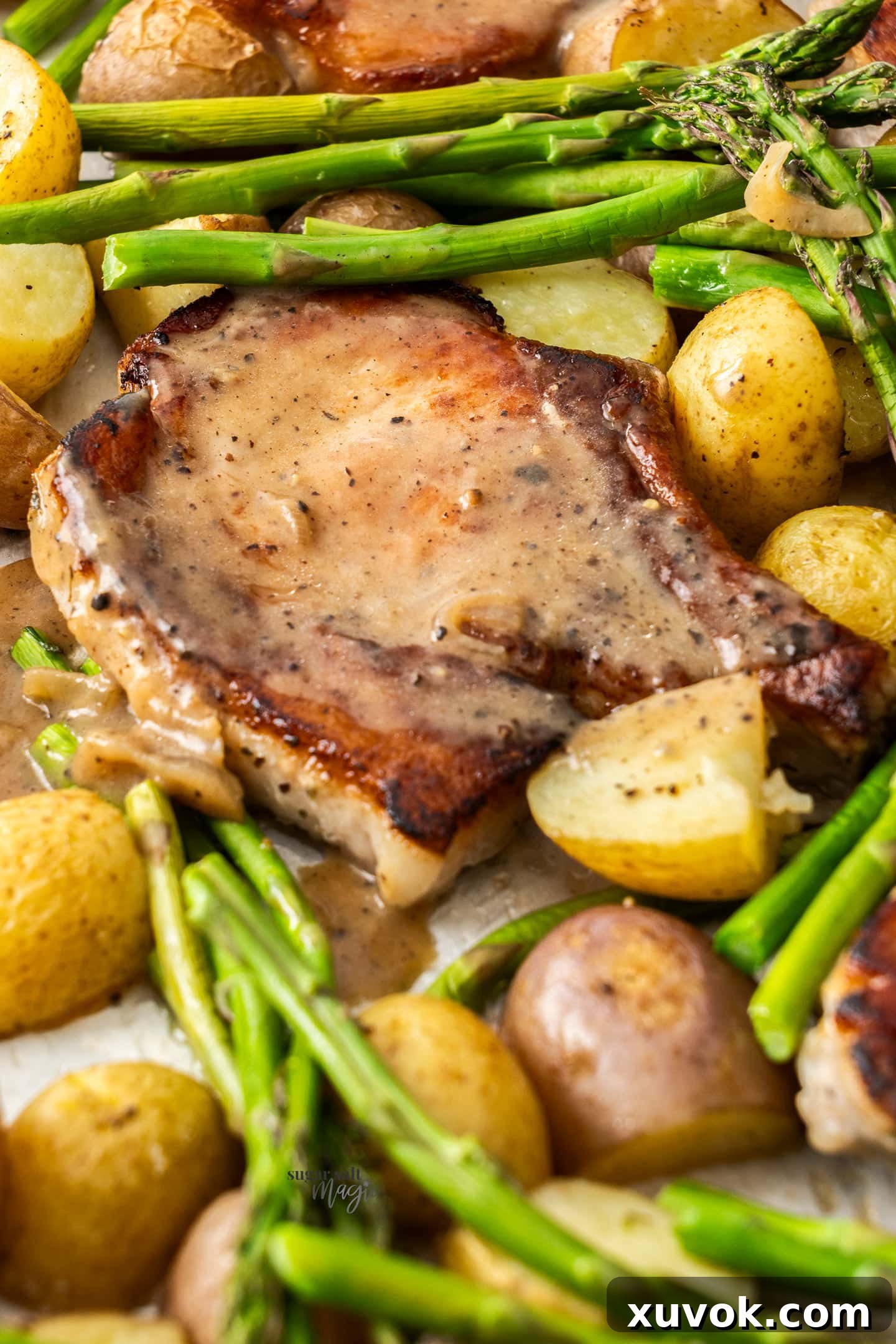
The Ultimate Sheet Pan Pork Chops and Potatoes with Sage-Shallot Sauce
Transform your weeknight dinner routine with these incredibly easy and unbelievably flavorful **Sheet Pan Pork Chops and Potatoes**. This recipe delivers succulent, tender pork chops boasting a magnificent golden crust, perfectly roasted alongside tender potatoes and crisp asparagus. The magic doesn’t stop there; while your meal bakes, whip up a quick, rich, and buttery sage-shallot sauce in the very same pan you used to sear the pork. It’s a complete, healthy, and hearty family meal that comes together with minimal fuss and maximum flavor.
Imagine sinking your teeth into a perfectly cooked pork chop, so juicy it practically melts in your mouth, complemented by robust potatoes and vibrant green asparagus. All of this, finished with an aromatic sauce that elevates the entire dish. This isn’t just a meal; it’s a culinary experience designed for efficiency and deliciousness. You’ll only need a skillet, a sheet pan, and about 30 minutes of active cooking time to create this impressive spread.
For an unparalleled level of moisture and flavor, I enthusiastically recommend brining your pork chops beforehand. It’s a simple step that takes little effort but yields significant rewards, ensuring your pork remains incredibly juicy. Even a short 30-minute brine can make a remarkable difference, infusing the meat with seasoning and locking in moisture.
If you enjoy simple yet impressive pork dishes, you might also love this crispy oven-roasted pork belly or for another fantastic one-pan option, try this Italian chicken tray bake.
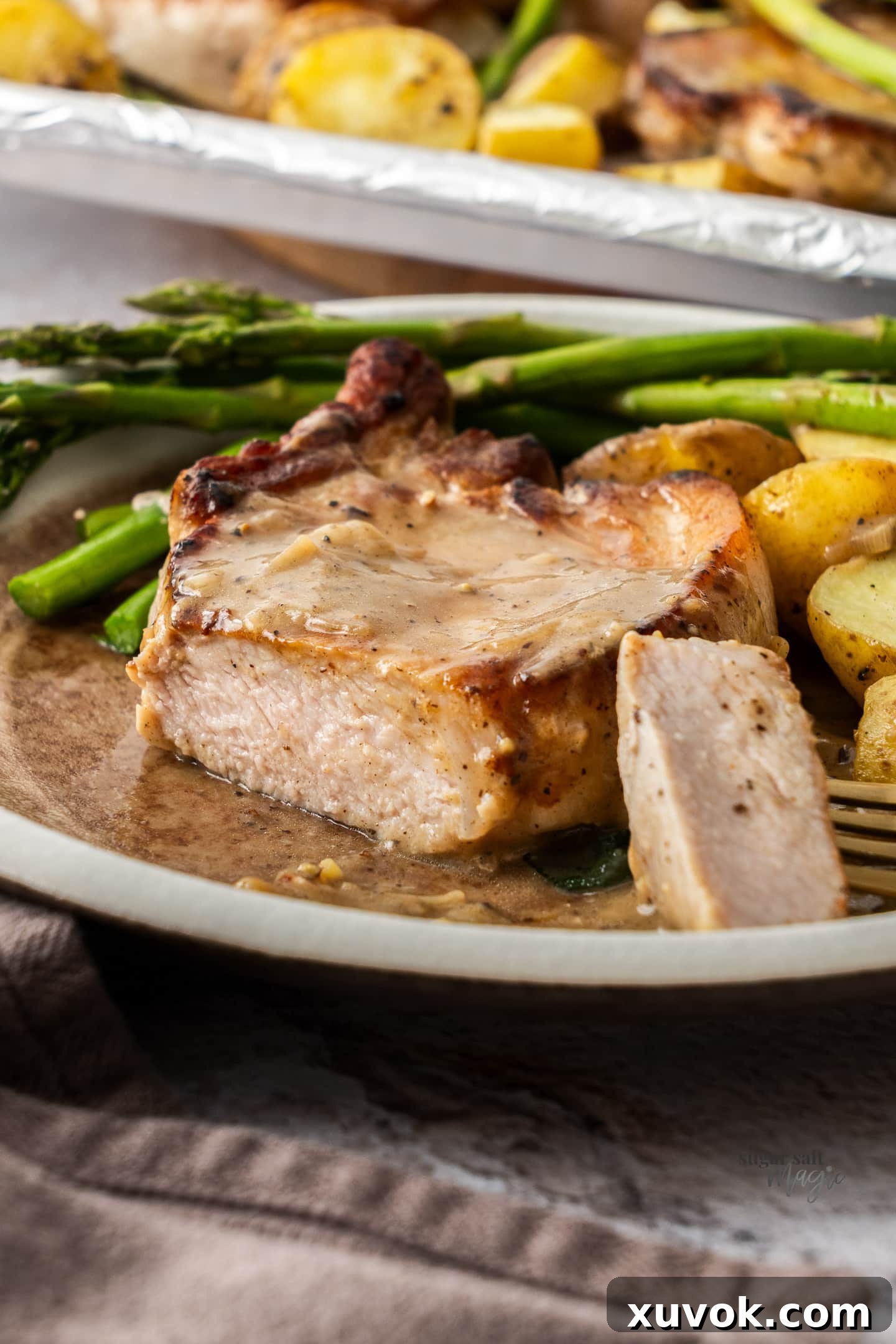
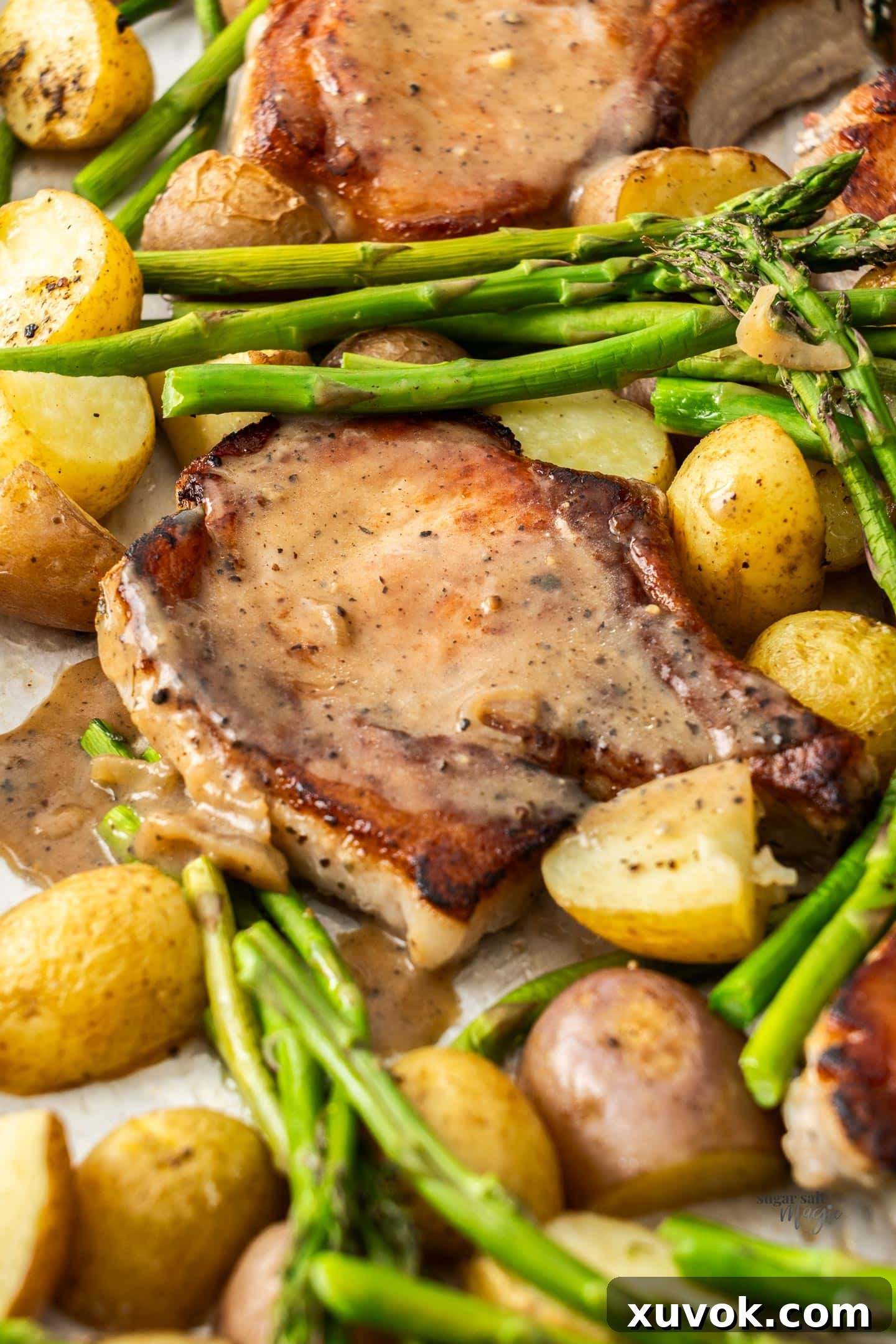
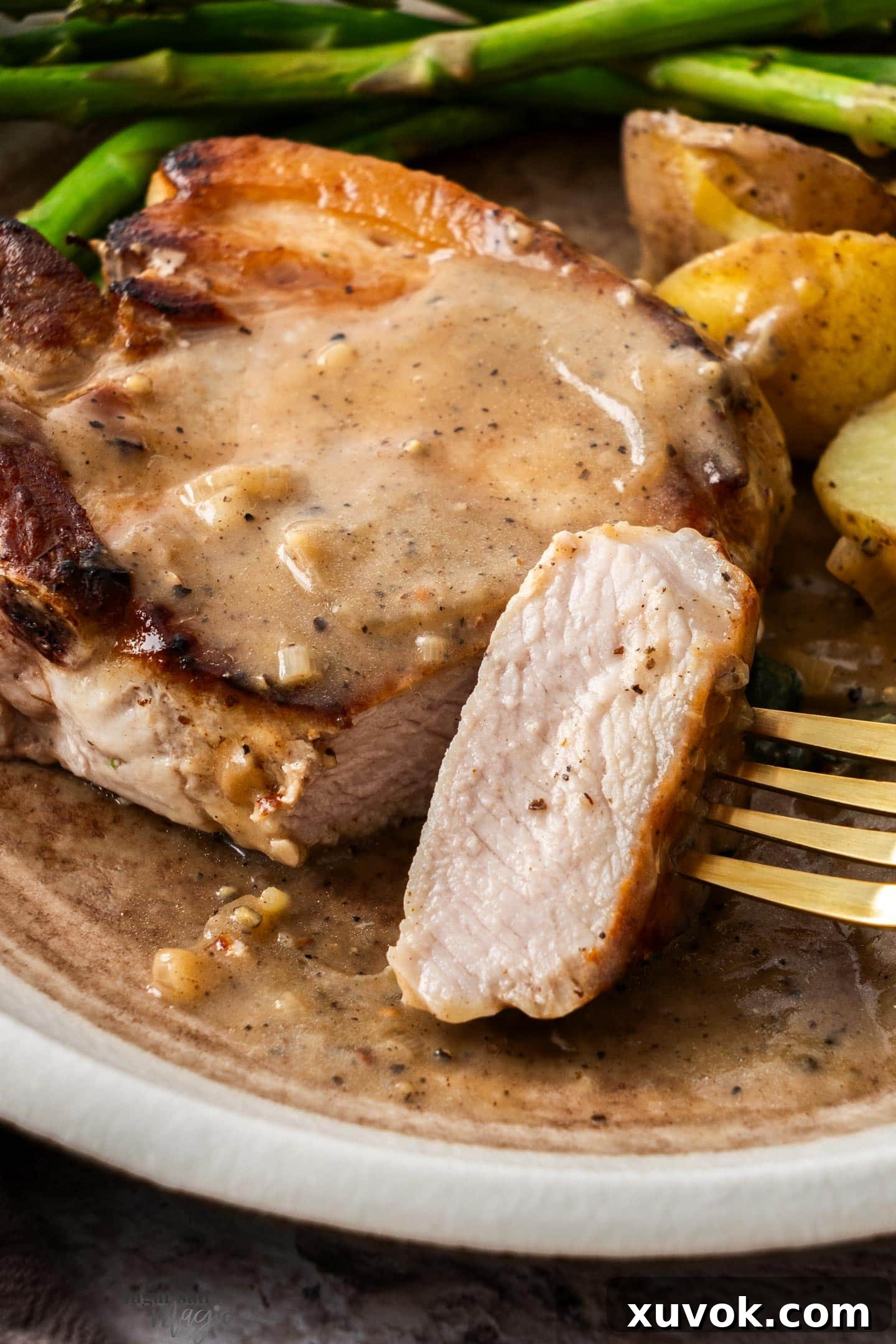
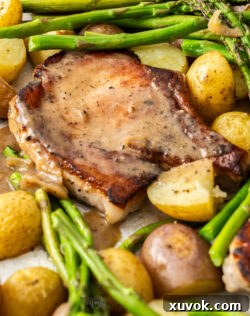
The image above perfectly illustrates why these oven-baked pork chops are truly exceptional. It highlights the incredible moisture and tenderness achieved, especially when you take the time to brine them first. There are no culinary illusions or tricky edits here – that undeniable juiciness is 100% authentic, promising a mouth-watering experience with every bite.
Table of Contents
- Why You’ll Love This Sheet Pan Pork Chop Recipe
- Key Ingredients for Perfect Pork Chops & Potatoes
- Step-by-Step Guide: How to Make Oven Baked Pork Chops
- Mastering the Sage and Shallot Sauce
- Perfect Pork Chops: Cooking Times and Temperatures
- Expert Tips for Unbelievably Juicy Pork Chops
- Delicious Sides and Variations for Your Meal
- Storage and Reheating Tips
- More Pork and Easy Dinner Recipes You’ll Love
Why You’ll Love This Sheet Pan Pork Chop Recipe
This sheet pan pork chop recipe is more than just a meal; it’s a testament to how simple ingredients, combined with smart cooking techniques, can produce extraordinary results. Here’s why it’s destined to become a staple in your kitchen:
- Effortless Elegance: Despite its gourmet taste and presentation, this dish requires minimal effort. The sheet pan concept means less cleanup and a straightforward cooking process.
- Incredible Juiciness: Say goodbye to dry, tough pork chops. Our method of pan-searing followed by oven-baking, especially when combined with brining, guarantees pork that’s tender, moist, and bursting with flavor.
- Complete Meal in One Pan: With pork, potatoes, and asparagus all cooked together on a single sheet pan, you get a balanced, wholesome meal without juggling multiple pots and pans.
- Quick Weeknight Solution: From start to finish, this dish is ready in approximately 30 minutes (excluding optional brining time), making it perfect for busy weeknights when you crave something satisfying and homemade.
- Versatile & Customizable: Easily adapt the vegetables to seasonal availability or your family’s preferences. The simple yet flavorful sauce complements a variety of pairings.
- Family & Guest Friendly: It’s comforting and familiar enough for picky eaters yet impressive enough to serve to guests for a casual dinner party.
Never Miss a Recipe!
Get the latest recipes straight to your inbox by subscribing to our newsletter!
Key Ingredients for Perfect Pork Chops & Potatoes
Every great recipe begins with quality ingredients. Here’s a breakdown of what you’ll need for these magnificent sheet pan pork chops and how each component contributes to the dish’s overall success. (Jump to the full recipe card for exact measurements and detailed instructions.)
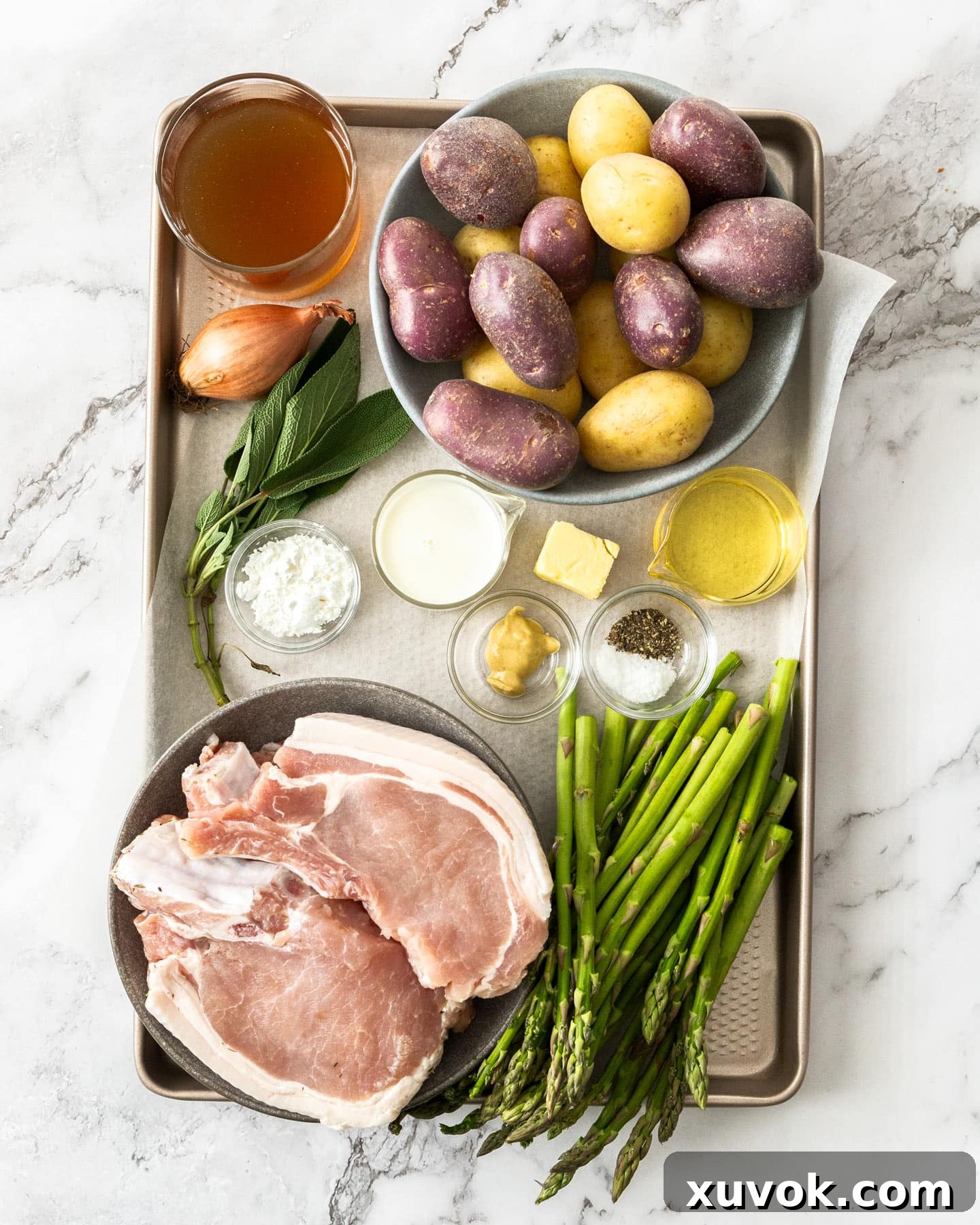
For the Pork Chop Tray Bake
- Pork Chops: The star of our show! I highly recommend using thick-cut, bone-in pork chops, ideally around 1 inch (2.5 cm) thick. The bone contributes significantly to flavor and helps retain moisture, resulting in a juicier chop. While these photos might show chops with skin on, which can be roasted separately for crackling (a delightful bonus!), it’s not essential for the core recipe. If you opt for thinner or boneless chops, be prepared to adjust cooking times, as they will cook much faster and might only need a few minutes in the oven after searing.
- Potatoes: Baby potatoes are excellent for this recipe as they cook evenly and become wonderfully crispy. However, almost any potato variety will work! Just ensure they are chopped into uniform, roughly 1-inch (2.5 cm) pieces. This size ensures they cook through perfectly within the baking time and develop that desirable golden-brown exterior.
- Asparagus: Thin asparagus spears are ideal here, softening beautifully as the pork and potatoes finish cooking. If your asparagus is particularly thick, simply slice them lengthwise down the center to ensure even cooking and tenderness.
With just a touch of olive oil, salt, and pepper, these core ingredients come together to form the foundation of your incredibly easy and satisfying sheet pan pork chops and potatoes!
For the Sage and Shallot Sauce
This buttery sage and shallot sauce is the crowning glory of the dish. It’s bursting with rich, savory flavors, drawing much of its depth from the caramelized bits left in the pan after searing the pork. It’s astonishingly quick to prepare and adds a sophisticated touch.
- Butter: Use salted butter for an extra layer of flavor. If using unsalted butter, remember to add a tiny pinch of salt to balance the taste.
- Shallots: Shallots offer a milder, sweeter onion flavor compared to regular onions, making them perfect for this elegant sauce. Red onion can be used as a substitute if shallots are unavailable.
- Fresh Sage Leaves: Fresh sage is non-negotiable for this sauce. Its earthy, aromatic notes are crucial to the distinct flavor profile. Dried sage won’t provide the same vibrant taste.
- Beef Stock/Broth: A quality beef stock (or broth) adds immense savory depth and helps build the volume of the sauce. Chicken or vegetable stock can also be used if preferred, though beef stock provides the richest flavor.
- Dijon Mustard: Don’t skip this ingredient, even if you’re not a huge mustard fan! Dijon mustard doesn’t impart a strong mustardy taste; instead, it provides a subtle tang and a wonderful umami background note that rounds out the sauce beautifully. A teaspoon of Worcestershire sauce can be a good substitute for a similar flavor boost.
- Cornflour (Cornstarch): This essential thickener, known as cornstarch in the US, is mixed with a little milk before being added to the sauce. This creates a smooth, slightly creamy consistency that coats the pork and potatoes perfectly, transforming it into a luxurious light gravy.
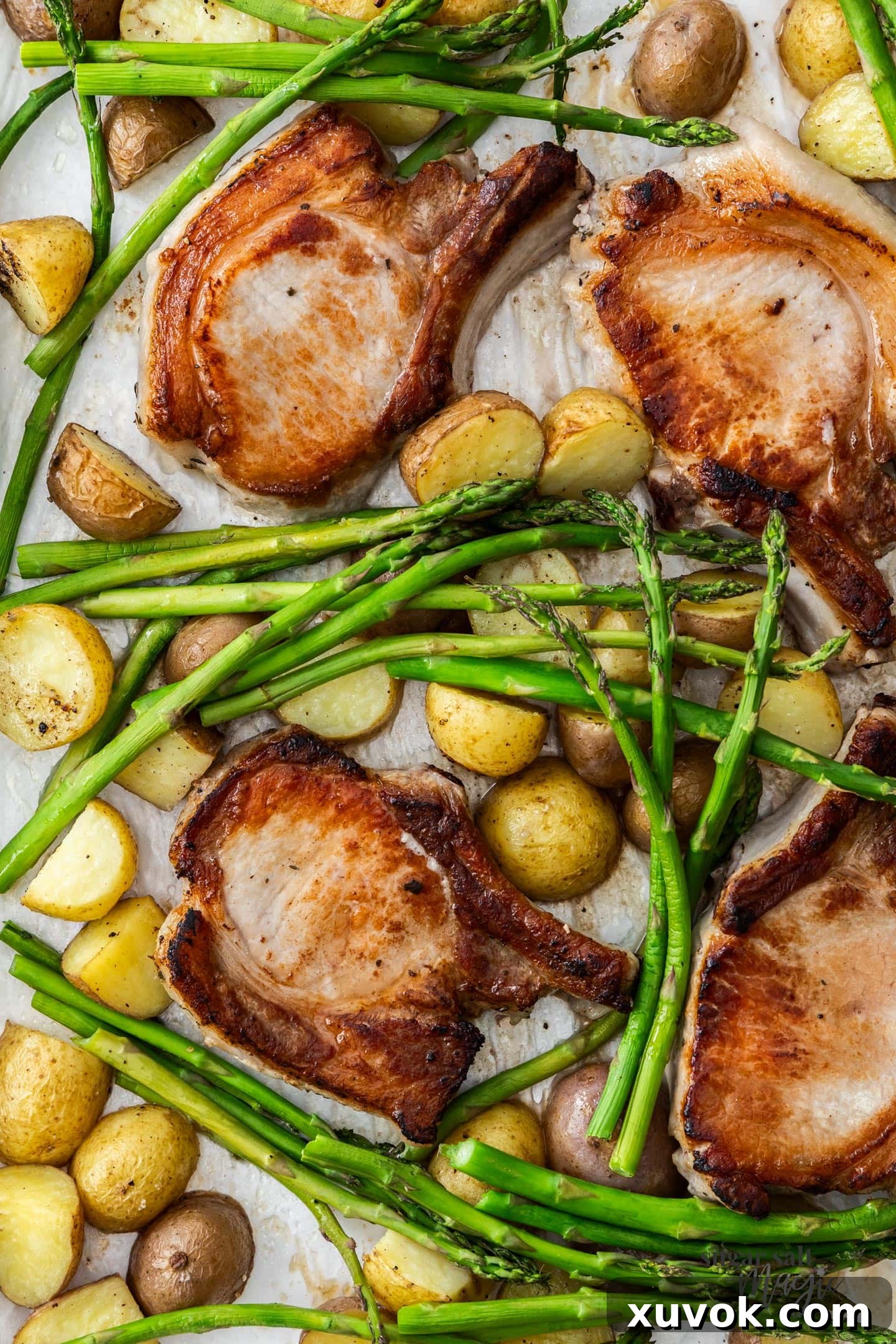
Step-by-Step Guide: How to Make Oven Baked Pork Chops
This recipe for juicy baked pork chops is designed to be straightforward and rewarding. Cooking pork chops in the oven, especially with a preliminary sear, locks in incredible flavor and moisture, making this dish both quick and incredibly satisfying. It’s elegant enough to impress dinner guests, yet simple and robust enough for a casual family weeknight meal.
As mentioned, I strongly encourage you to brine the pork chops first. This simple preparatory step is the secret to achieving truly succulent and moist pork. For thick-cut pork chops, I recommend at least 4 hours of brining, though even 45 minutes to an hour will infuse significant flavor and juiciness. For comprehensive details on the brining process, refer to my dedicated brine for pork chops recipe.
(Jump to the full recipe card for complete ingredients and detailed instructions.)
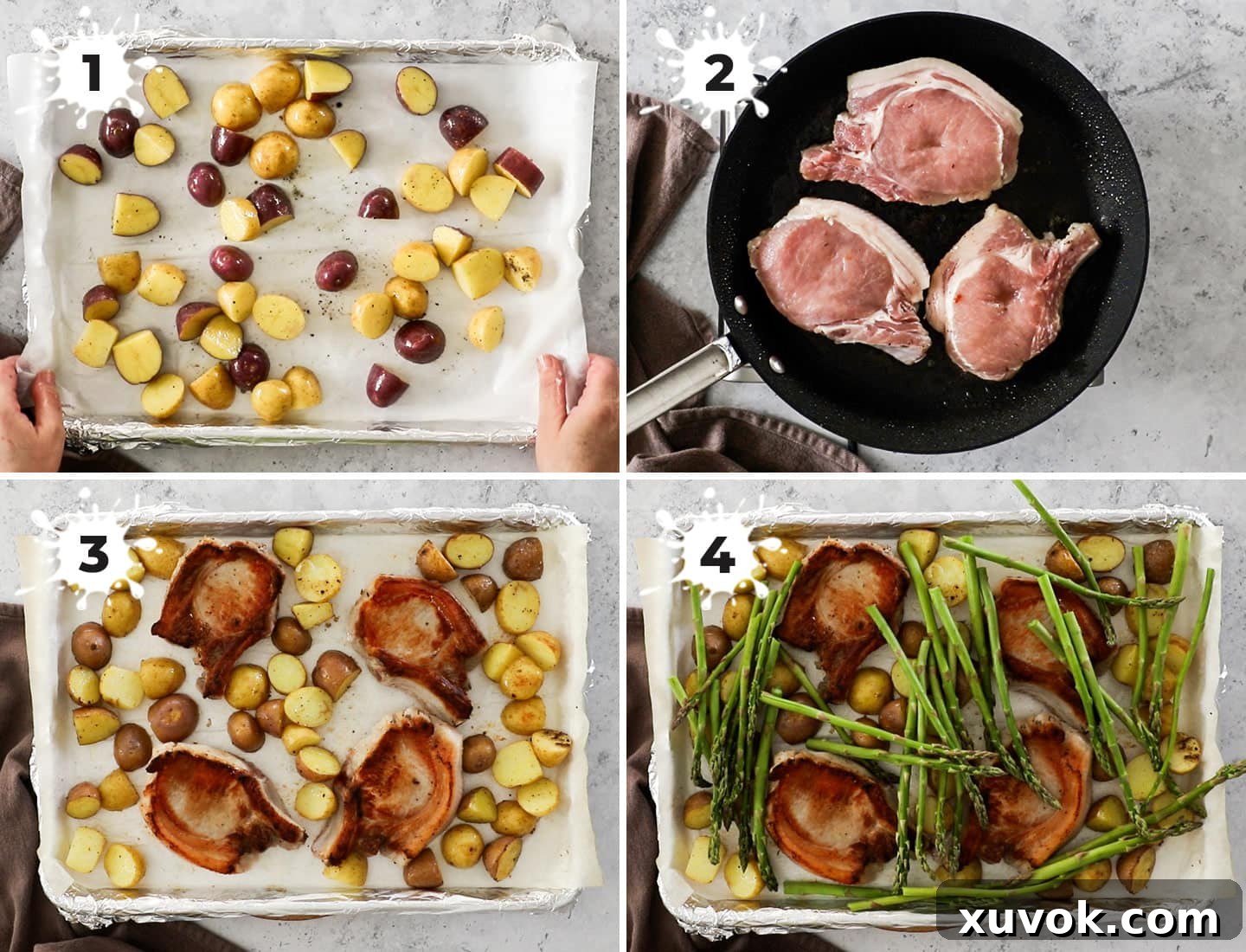
For the Sheet Pan Pork Chops and Potatoes
- Prepare and Roast Potatoes: Begin by washing and thoroughly drying your baby potatoes. There’s no need to peel them; the skin adds texture and nutrients. Chop them into roughly 1-inch (2.5 cm) sized pieces to ensure even cooking. Toss the potatoes with 1 tablespoon of olive oil, salt, and pepper directly on a large, parchment-lined baking sheet. Spread them in a single layer and roast in a preheated 220°C (425°F) oven for 20 minutes. This head start allows them to become tender inside and develop a crispy exterior.
- Sear the Pork Chops: While the potatoes are roasting, heat the remaining tablespoon of olive oil in a large frying pan or skillet over high heat until it’s shimmering and just starting to smoke. Pat your pork chops dry (this is crucial for a good sear). If you haven’t brined them, season them generously with salt and pepper now. Place the pork chops into the scorching hot pan, ensuring not to overcrowd it. Cook for 3-5 minutes without moving them, allowing a beautiful, golden-brown crust to form. If cooking in batches, transfer the seared chops to a warm plate and loosely cover with foil to keep them warm while you sear the rest.
- Combine and Finish Baking: After the potatoes have roasted for 20 minutes, carefully remove the sheet pan from the oven. Create four small gaps between the potatoes and place the seared pork chops onto the tray, seared-side up (this will be your attractive presentation side). Scatter the asparagus spears around the pan. Return the sheet pan to the oven and roast for an additional 8-12 minutes, or until the pork chops are cooked through. The internal temperature should reach 63°C (145°F) when measured with a meat thermometer inserted into the thickest part of the chop.
- Rest the Meat: Once cooked, remove the sheet pan from the oven. Tent the pork chops loosely with foil and allow them to rest for 5-10 minutes. This critical step allows the juices to redistribute throughout the meat, resulting in an even more tender and succulent chop.
Mastering the Sage and Shallot Sauce
The sage and shallot sauce is a light, savory gravy that’s incredibly quick and easy to prepare. The best part? You can make it while your pork is resting, ensuring everything is ready to serve piping hot.
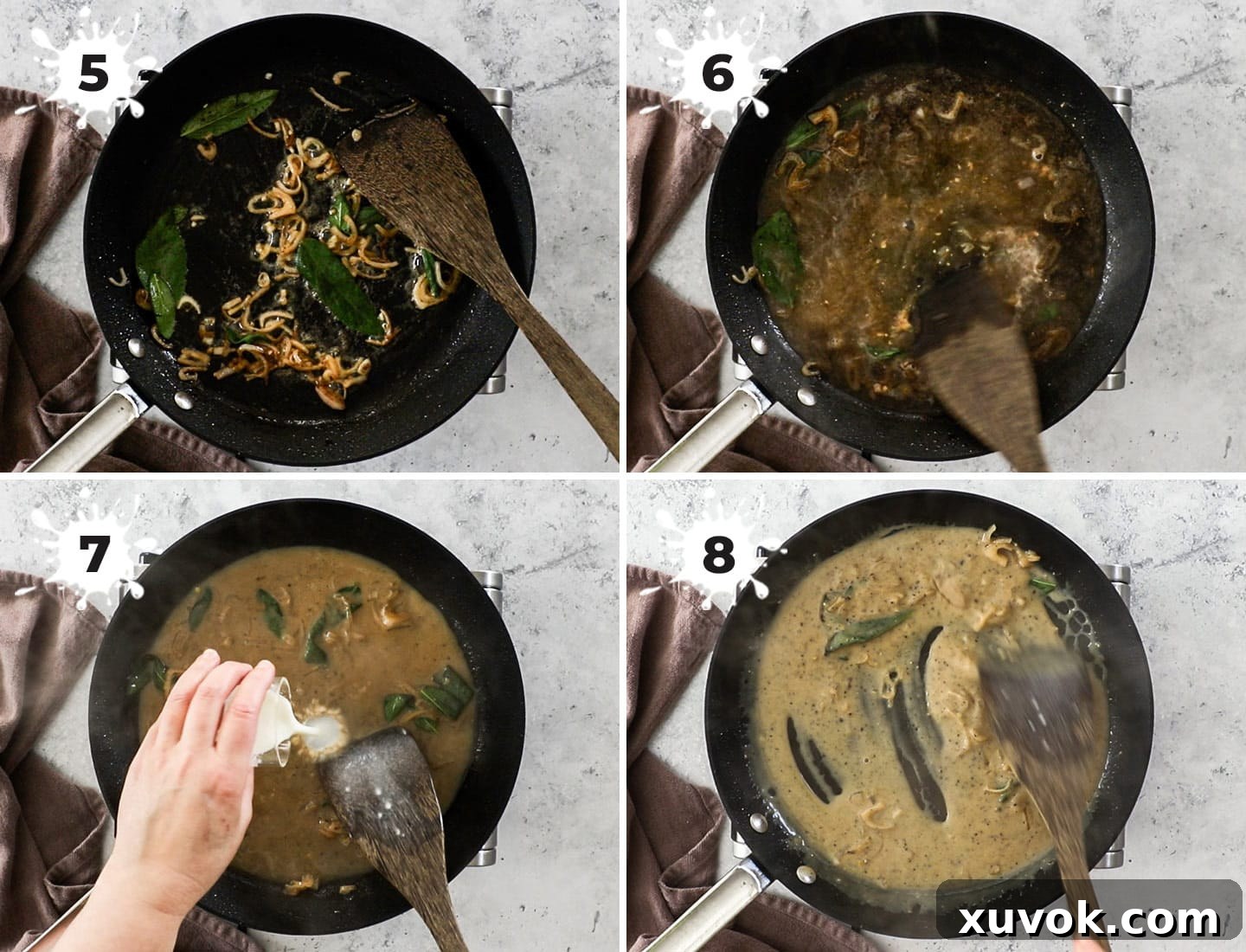
- Sauté Shallots: Using the same skillet where you seared the pork chops, remove any excess oil, leaving about 1 tablespoon. If there are any burnt bits stuck to the bottom, carefully wipe them out with a paper towel; these can make the sauce bitter. If your pan is dry, add a small glug of fresh oil. Heat over medium heat, then add the finely sliced shallots and cook for a couple of minutes until they soften and become fragrant.
- Infuse with Sage and Butter: Once the shallots are tender, add the fresh sage leaves and a tablespoon of salted butter. Allow the butter to melt completely, then cook for another minute, letting the sage infuse its wonderful aroma into the butter and shallots.
- Build the Sauce Base: Now, add the freshly cracked black pepper, beef stock, and Dijon mustard to the pan. Stir well, scraping up any delicious browned bits from the bottom of the pan – these are packed with flavor! Bring the mixture to a gentle boil.
- Thicken the Sauce: In a small separate bowl, whisk together the milk and cornflour until smooth. While continuously stirring the sauce in the pan, slowly pour in the cornflour mixture. Continue to stir until the sauce thickens to your desired consistency, which should happen quite quickly. If you find the gravy too thick, you can easily thin it out by adding a little more stock or water.
- Incorporate Pan Juices and Serve: Carefully transfer your rested pork, roasted potatoes, and asparagus to individual serving plates. Crucially, pour any accumulated resting juices from the pork (from the foil-covered tray) directly into your sage and shallot sauce. Stir them in thoroughly; these juices are pure flavor that you absolutely don’t want to waste! Spoon the warm, savory sauce generously over the pork chops and vegetables, then serve immediately.
Remarkably, this entire flavorful dinner, from prep to plate, takes 30 minutes or less of active cooking time. (Remember to factor in the hands-off brining time if you choose that extra step for ultimate juiciness!)
Perfect Pork Chops: Cooking Times and Temperatures
Achieving perfectly cooked pork chops is all about understanding temperatures and timing. For thick-cut pork chops, like the 1-inch (2.5 cm) thick ones used in this recipe, the total cooking time will typically range between 15-20 minutes at 220°C (425°F) if cooked entirely in the oven. To achieve some caramelization, you could swap to an overhead grill or broiler for the last few minutes.
However, in this recipe, we opt for the superior method of searing the pork chops in a hot skillet first. This initial sear, lasting about 3-5 minutes per side, creates an incredible golden crust and locks in juices more effectively than broiling. After searing, the chops are then transferred to the oven to finish cooking alongside the vegetables for an additional 8-12 minutes. This combination ensures maximum flavor and a beautifully tender interior.
A crucial step often overlooked is allowing the pork chops to rest for 3-5 minutes after they come out of the oven. This is best done on a warm (not hot) plate or a wooden chopping board, loosely covered with aluminum foil. Resting allows the muscle fibers to relax and reabsorb their juices, preventing them from escaping when you cut into the meat.
Keep in mind that cooking times will vary if you use thinner pork chops or boneless cuts, as they will cook faster. For food safety and optimal tenderness, the internal temperature of cooked pork chops should reach 63°C (145°F). Always use an instant-read meat thermometer inserted into the thickest part of the chop (avoiding the bone) to accurately check for doneness. Trusting a thermometer eliminates guesswork and guarantees perfectly cooked, safe-to-eat pork every time.
Expert Tips for Unbelievably Juicy Pork Chops
Tired of dry, tough pork chops? Achieving juicy, succulent pork is easier than you think. Follow these expert tips and tricks to ensure your pork chops are consistently moist and flavorful:
- Opt for Thick, Bone-In Chops: This is arguably the most crucial tip. Thicker pork chops (at least 1 inch / 2.5 cm) are more forgiving and less prone to drying out than thinner cuts. Bone-in chops offer an added advantage; the bone helps conduct heat more evenly and insulates the meat, contributing to superior moisture retention and flavor.
- Always Brine Your Pork: If time allows, this step is a game-changer. Brining pork chops, even for as little as 45-60 minutes or up to 12 hours, introduces moisture and seasoning deep into the meat. The salt solution helps denature proteins, allowing the pork to hold onto moisture more effectively during cooking, resulting in an incredibly tender and perfectly seasoned chop.
- Cook Quickly at High Heat: The goal is to cook the pork efficiently without overdoing it. This recipe employs a dual-cooking method: a high-heat pan sear followed by a brief roast in a very hot oven. The initial sear creates a delicious crust and quickly seals in the juices, while the hot oven finishes the cooking process rapidly.
- Never Overcook Your Pork Chops: This is the golden rule! Pork chops can go from perfectly cooked to dry and chewy in mere moments. An instant-read meat thermometer is your best friend here. As soon as the internal temperature registers 63°C (145°F) in the thickest part (away from the bone), remove the chops from the heat immediately. They will continue to cook slightly as they rest.
- Rest the Meat Properly: Once cooked, transfer the pork chops to a warm plate or cutting board and tent them loosely with foil. Allow them to rest for 5-10 minutes. This resting period is vital: it allows the muscle fibers to relax and redistribute their juices evenly throughout the chop. If you cut into the pork too soon, those precious juices will simply run out, leaving you with a drier piece of meat.
Delicious Sides and Variations for Your Meal
While this sheet pan pork chop recipe comes with its own delicious potato and asparagus sides, it’s incredibly versatile. Feel free to swap out or add different vegetables to suit your taste, seasonality, or what you have on hand. Here are some ideas to inspire your culinary creativity:
- Green Bean Swap: Asparagus can be easily replaced with fresh green beans. Toss them with the potatoes from the beginning for even cooking, or add them with the pork chops if you prefer them a bit crisper.
- Carrots and Brussels Sprouts: For added color and nutrition, consider adding carrots or Brussels sprouts. Cut carrots into ¼-inch (6mm) thick rounds or halves. Halve Brussels sprouts. Both should be added to the baking sheet at the same time as the potatoes to ensure they cook through.
- Broccoli Florets: Broccoli is another excellent addition. Add broccoli florets to the sheet pan about 5 minutes after the potatoes have started roasting. This prevents them from becoming overcooked or mushy.
- Sweet Potato or Butternut Squash: For a delightful flavor twist, replace some or all of the regular potatoes with sweet potatoes or butternut squash. Cut them into similar 1-inch (2.5 cm) chunks. They’ll roast beautifully and add a touch of sweetness.
- Bell Peppers & Onions: Sliced bell peppers (any color) and red onion wedges can be added to the pan with the potatoes for a Mediterranean-inspired touch.
- Seasonal Vegetables: Don’t limit yourself! Think about what’s in season. Zucchini, cherry tomatoes, or even thinly sliced fennel can be fantastic additions towards the end of the baking process.
Storage and Reheating Tips
This sheet pan pork chop and potato dinner makes for fantastic leftovers, perfect for a quick lunch or another easy dinner. Proper storage is key to maintaining freshness and flavor.
- Storage: Allow any leftover pork chops, potatoes, and asparagus to cool completely at room temperature (this usually takes about 30 minutes, but no longer than 2 hours). Once cooled, transfer them to an airtight container. Store the container in the refrigerator for up to 3 days. It’s best to store the sauce separately if you have any leftovers, as this helps preserve its texture and prevents the other components from becoming soggy.
- Reheating: For the best results, reheat leftovers gently to prevent the pork from drying out.
- Oven Method: Preheat your oven to 160°C (325°F). Arrange the pork and vegetables on a baking sheet and cover loosely with foil. Reheat for 10-15 minutes, or until warmed through. This method helps the potatoes re-crisp slightly.
- Microwave Method: For a quicker option, place individual portions on a microwave-safe plate. Cover with a microwave-safe lid or damp paper towel and reheat in 30-second intervals until hot. Be careful not to overheat, as this can dry out the pork.
- Stovetop (for pork only): If only reheating the pork, a quick sear in a lightly oiled pan over medium heat for 1-2 minutes per side can refresh the crust and warm the meat without overcooking.
- Sauce Reheating: Reheat the sage-shallot sauce gently in a small saucepan over low heat, stirring occasionally, until simmering. If it’s too thick, add a splash of water or stock to loosen it.
More Pork and Easy Dinner Recipes You’ll Love
If you’re a fan of pork or looking for more delicious and easy dinner ideas, explore these other fantastic recipes:
- Pork Belly Tacos
- Crispy Oven Roasted Pork Belly
- Stuffed Pork Tenderloin (Wrapped in Prosciutto)
- Honey Pepper Pork Stir Fry
- Brine for Pork Chops
- Parmesan Smashed Potatoes
Did you try this recipe for oven baked pork chops and potatoes?
Leaving a rating and comment below the recipe is so helpful!
Hungry for more? Subscribe to the newsletter for free recipes straight to your inbox. Also, follow along on Facebook, Pinterest and Instagram.
Oven Baked Pork Chops with Potatoes
4
serves
2
28
30
Rate
Pin
Ingredients
THE PORK & POTATOES
-
800
g
baby potatoes -
2
tablespoons
olive oil
(notes 1) -
½
teaspoon
salt - black pepper, to taste
-
4
thick-cut bone-in pork chops (at least 1 inch thick, or see notes) -
3
bunches
thin asparagus
FOR THE SAGE SHALLOT SAUCE
-
¼
cup
shallots (1 medium shallot), finely sliced -
6-8
fresh sage leaves -
1
tablespoon
salted butter -
½
teaspoon
freshly cracked black pepper, to taste -
1
cup
beef stock (beef broth) or chicken stock -
½
teaspoon
Dijon mustard -
2
teaspoons
cornflour (US cornstarch) -
2
tablespoons
whole milk
(notes 1) - Salt to taste
For best results, always weigh ingredients where a weight is provided
Equipment
-
large frying pan / skillet
-
large baking sheet
Instructions
-
I recommend brining the pork chops for the best flavor and perfectly juicy meat, for a minimum of 45 minutes or up to 12 hours prior to cooking.
-
Preheat oven to 220C (200C fan forced) / 425F.
-
OPTIONAL CRUNCHY CRACKLING:
If your pork has the skin attached and you would like it crunchy, cut the skin off each chop and lay it onto a baking tray lined with baking paper, skin side up. Drizzle over a little oil and scatter over some sea salt. Rub it over the skin then place on the bottom shelf of the oven. This should be super crunchy and ready about the same time as your pork and potatoes.
-
FOR THE PORK AND POTATOES:
Cut the potatoes into 2-3 pieces each or roughly inch size pieces. On a large baking sheet, toss the potatoes with 1 tablespoon oil, salt and pepper.
-
Place into the oven and bake for 20 minutes.
-
Meanwhile, heat the remaining oil in a skillet over high heat – get the pan searing hot. If your pork chops were not brined, season well with salt and pepper. Add the pork chops to the hot pan and cook without turning until caramelized underneath – 3-5 minutes. Don’t crowd the pan – if you need to do them in batches, place the seared pork chops on a warm plate covered with a piece of foil while doing the second batch.
-
After the potatoes initial 20 minutes, add the pork to the baking sheet seared side up (this is your presentation side). Scatter the asparagus around the pan, then bake for a further 8-12 minutes or until the pork is cooked through (63C/145F on a meat thermometer inserted into the thickest part.
-
Remove the tray from the oven. Cover loosely with foil to rest.
-
FOR THE SAUCE:
Meanwhile, make the sauce, using the same skillet the pork was seared in. If there is still some oil in the pan use that – remove all but 1 tablespoon and use paper towel to remove any burnt bits from the pan. If there is no oil, wipe out the pan and add a little glug of oil. Heat over medium heat.
-
Add the shallot to the pan and cook for a couple of minutes to soften. Add the fresh sage leaves and butter and cook another minute.
-
Add the pepper, stock and dijon and mix well to combine. Bring to a boil.
-
In a small bowl, combine the milk and cornflour and mix well. While stirring, pour it into the sauce. Keep stirring, it should thicken quite quickly.
-
Transfer the pork, potatoes and asparagus to warmed serving plates.
-
Pour the resting juices from the pork into the sauce and mix well. Pour the sauce over the plates and serve.
-
Please take a moment to leave a comment & rating. It’s appreciated and so helpful.
Notes
- Tablespoons: I use a standard Australian 20ml tablespoon (equal to 4 teaspoons). Check yours before measuring.
- Types of pork chops: This recipe is timed for bone-in thick-cut pork chops (about 1 inch thick). Thinner pork chops will take less time to cook. Boneless pork chops will also take less time to cook.
- Asparagus: If your asparagus is quite thick, just slice it in half down the length. You can also replace it with green beans.
MORE QUICK AND EASY DINNERS!
801
kcal
Marie Roffey
Dinner
American, Australian, British, World
Have you tried this recipe?
Don’t forget to leave a rating and comment below and let me know how it was! I love hearing from you. Nutrition information is approximate and derived from an online calculator. The brands you use may cause variations.
Calories from Fat 288
49%
63%
70%
26%
81%
18%
50%
11%
156%
53%
72%
15%
61%