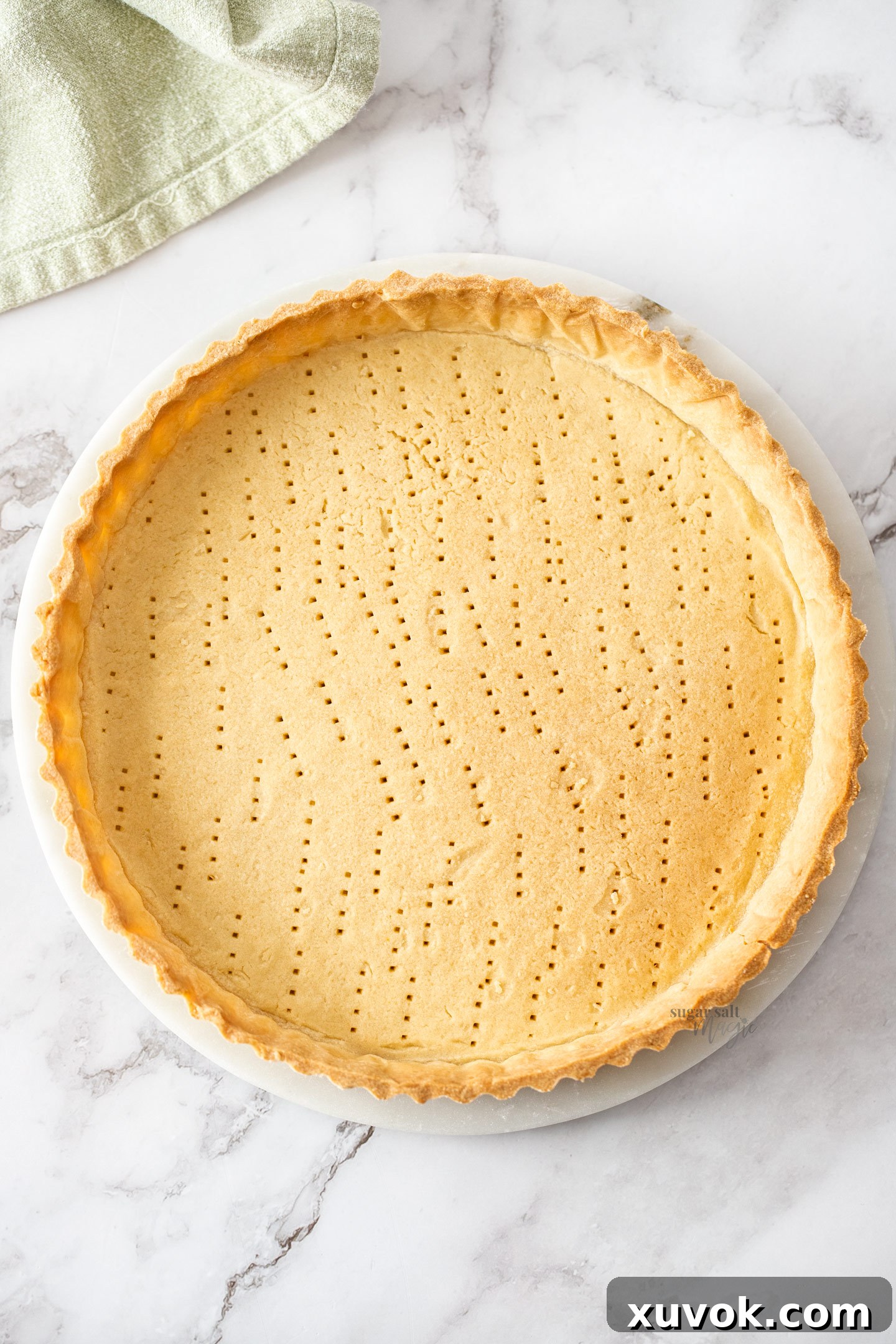
Mastering Sweet Shortcrust Pastry: The Essential Pâte Sucrée Recipe for Perfect Tarts and Pies
Every truly exquisite dessert tart or pie begins with a flawless foundation: a buttery, tender, and flavorful sweet shortcrust pastry. Forget store-bought shortcuts; creating this essential base from scratch is surprisingly simple and incredibly rewarding. This particular recipe, a classic French sweet shortcrust known as Pâte Sucrée, is my absolute favorite and forms the cornerstone of countless delightful desserts.
The pastry itself is far more than just a mere container for your delicious filling. It’s an integral component, offering a delicate contrast in texture and a rich, buttery flavor profile. A good shortcrust pastry should be “short,” meaning it breaks apart effortlessly with the gentle touch of a fork or spoon, rather than being tough or chewy. Yet, it must also be robust enough to hold its shape. Its taste should be light, buttery, and subtly sweet, designed to beautifully complement, not overpower, the flavors of your chosen filling.
This easy sweet shortcrust pastry recipe requires just four fundamental ingredients, making it an incredibly accessible project for home bakers of all skill levels. The simplicity belies its sophisticated results. What’s more, this versatile recipe can be easily adapted for savory applications, becoming the perfect crust for dishes like quiches, meat pies, or savory galettes, simply by adjusting the sugar and salt content.
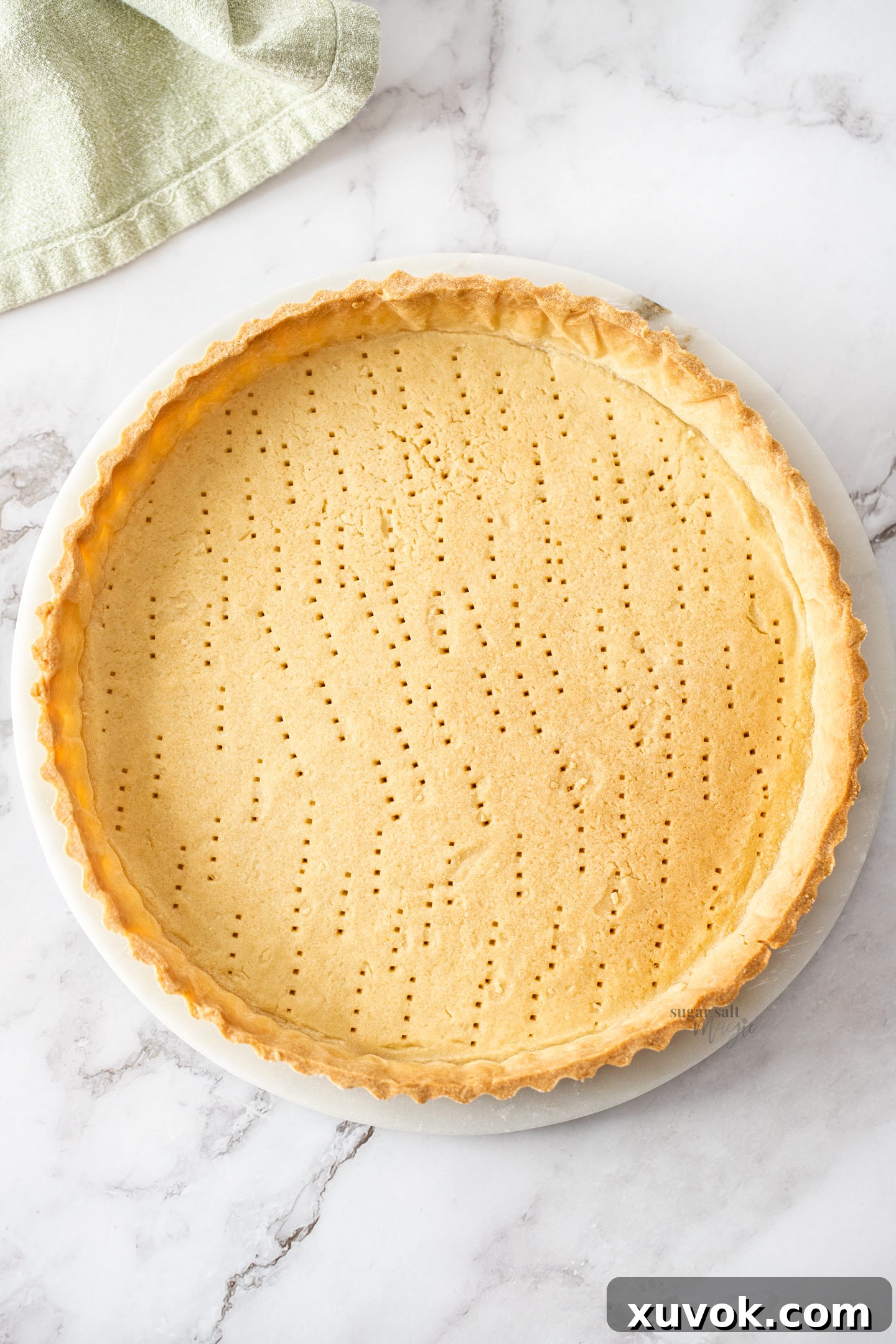
Table of Contents
- Never Miss a Recipe!
- What Is Shortcrust Pastry?
- Types of Shortcrust Pastry
- Sweet Shortcrust Pastry Ingredients
- How to Make Shortcrust Pastry (Step-by-Step)
- How to Cook Shortcrust Pastry (Blind Baking)
- How Long to Cook Shortcrust Pastry
- Expert Tips and Tricks for Perfect Pastry
- How Much Pastry Do I Need?
- Frequently Asked Questions (FAQs)
- Storage Solutions for Your Pastry
- Delicious Recipes Featuring Shortcrust Pastry
Never Miss a Recipe!
Stay updated with our latest delicious recipes straight to your inbox. Join our baking community today!
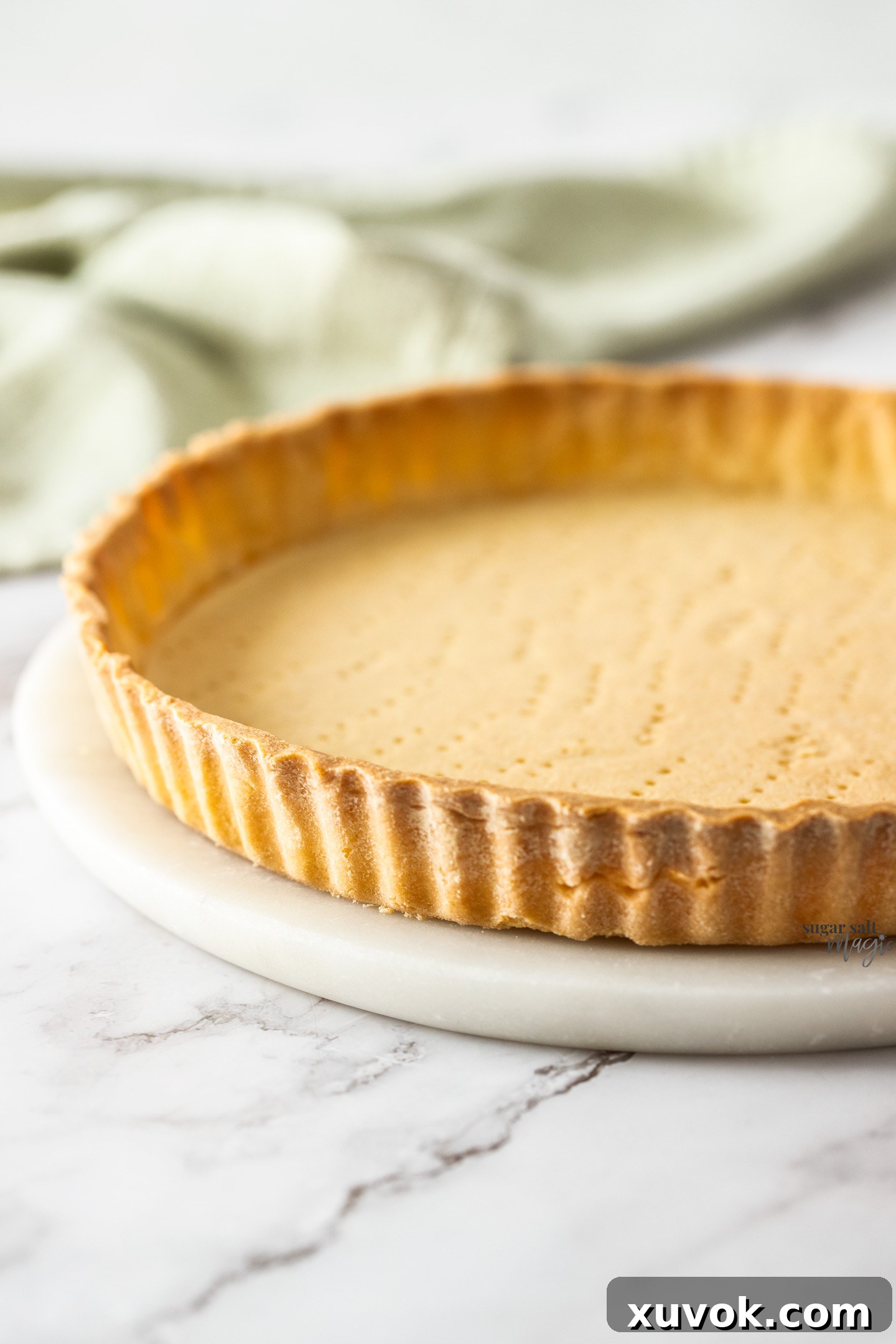
What Is Shortcrust Pastry?
So, let’s demystify shortcrust pastry. At its heart, it is a rich, versatile dough renowned for its crispy yet melt-in-your-mouth texture, serving as the ideal foundation for both pies and tarts. Its name, “shortcrust,” directly refers to its characteristic tenderness and crumbly nature, which results from the fat in the recipe interfering with the gluten development in the flour. This prevents the formation of long, elastic gluten strands that would otherwise make the pastry tough. Instead, you get a delightful crumbly texture that makes it incredibly pleasant to eat.
Shortcrust pastry is a culinary staple across many cuisines, appearing in a vast array of dishes, from the savory depths of quiches and hearty meat pies to the delicate sweetness of fruit tarts. Its robust structure supports heavy fillings, while its inherent flavor enhances the overall dish. Understanding the principles behind its creation is key to achieving consistent, professional-quality results in your home kitchen.
Types of Shortcrust Pastry: A Culinary Overview
While the term “shortcrust pastry” is broad, the world of baking boasts several distinct variations, each with its own unique characteristics, often distinguished by elegant French names and subtle differences in ingredients and preparation methods. The type we’re focusing on today, and my personal favorite for sweet applications, is Pâte Sucrée, a French sweet shortcrust pastry. Pâte Sucrée translates literally to “sugared pastry,” and its qualities live up to its name: it’s almost cookie-like in texture, incredibly buttery, wonderfully light, and exceptionally easy to slice through without crumbling excessively.
It’s important to understand the distinctions between Pâte Sucrée and other common French shortcrusts, such as Pâte Sablée. The primary differences lie in both their preparation methods and their final textures. Pâte Sucrée is typically made using softened butter and often employs a creaming method, where butter and sugar are beaten together first, usually in a stand mixer. This technique results in its signature tender, cookie-like crumb.
In contrast, Pâte Sablée (meaning “sandy pastry”) is known for an even more crumbly, somewhat flaky texture. It is traditionally made using very cold butter, which is cut into the flour, often with the aid of a food processor, similar to how pie crusts are often made. This method creates small pockets of butter that melt during baking, contributing to a flakier result. Another variation is Pâte Brisée, a more neutral shortcrust, often less sweet than Pâte Sucrée and Pâte Sablée, and used for both sweet and savory dishes, leaning towards a flakier, less tender texture than Pâte Sucrée.
Despite their differences, both Pâte Sucrée and Pâte Sablée can be incredibly versatile. You can easily transform either into a fabulous savory pie or quiche pastry by simply omitting the sugar from the recipe and opting for salted butter instead of unsalted. This adaptability makes mastering one type of shortcrust pastry a valuable skill in any baker’s repertoire.
Sweet Shortcrust Pastry Ingredients: Simplicity and Quality
The beauty of this sweet shortcrust pastry lies in its minimalist ingredient list, relying on just four common kitchen staples to create a remarkably sophisticated result. Each ingredient plays a crucial role in achieving the desired texture and flavor:
- All-Purpose Flour: Provides the structural backbone of the pastry. Using plain, all-purpose flour is ideal for developing the right amount of tenderness without becoming overly chewy.
- Icing Sugar (Powdered Sugar): Essential for a sweet tart crust. Icing sugar dissolves more readily than granulated sugar, contributing to the pastry’s smooth, tender texture and preventing any grittiness. It also helps in tenderizing the dough.
- Unsalted Butter, Softened: The heart of the flavor and the key to the “short” texture. Using softened butter, as opposed to cold butter (which is common in flakier pastry types), allows for easier incorporation and contributes to the cookie-like tenderness of Pâte Sucrée. Unsalted butter gives you control over the overall saltiness.
- Large Egg (Room Temperature): Acts as a binding agent, bringing the dough together and adding richness. Using a room temperature egg ensures it emulsifies smoothly with the softened butter and sugar, creating a cohesive dough without curdling.
It’s important to note that this recipe does not call for added water. The moisture from the softened butter and the egg is typically sufficient. Adding excess water can lead to a tougher dough and increased shrinkage during baking, compromising the delicate texture we aim for.
For those wishing to create a savory shortcrust pastry, the modification is straightforward: simply omit the icing sugar from this recipe and use salted butter instead of unsalted. You might also consider adding a pinch of extra salt for enhanced savory flavor.
How to Make Shortcrust Pastry: A Step-by-Step Guide for Flawless Results
Crafting this easy sweet pastry is surprisingly simple and gratifying. While many pastry recipes demand multiple chilling phases, I’ve meticulously developed this Pâte Sucrée recipe to require only one essential chilling period. This streamlined approach means you can prepare the dough anywhere from two hours to up to three days in advance, allowing you to seamlessly integrate tart baking into your schedule whenever you’re ready. This method ensures maximum flavor and minimal fuss, setting you up for baking success.
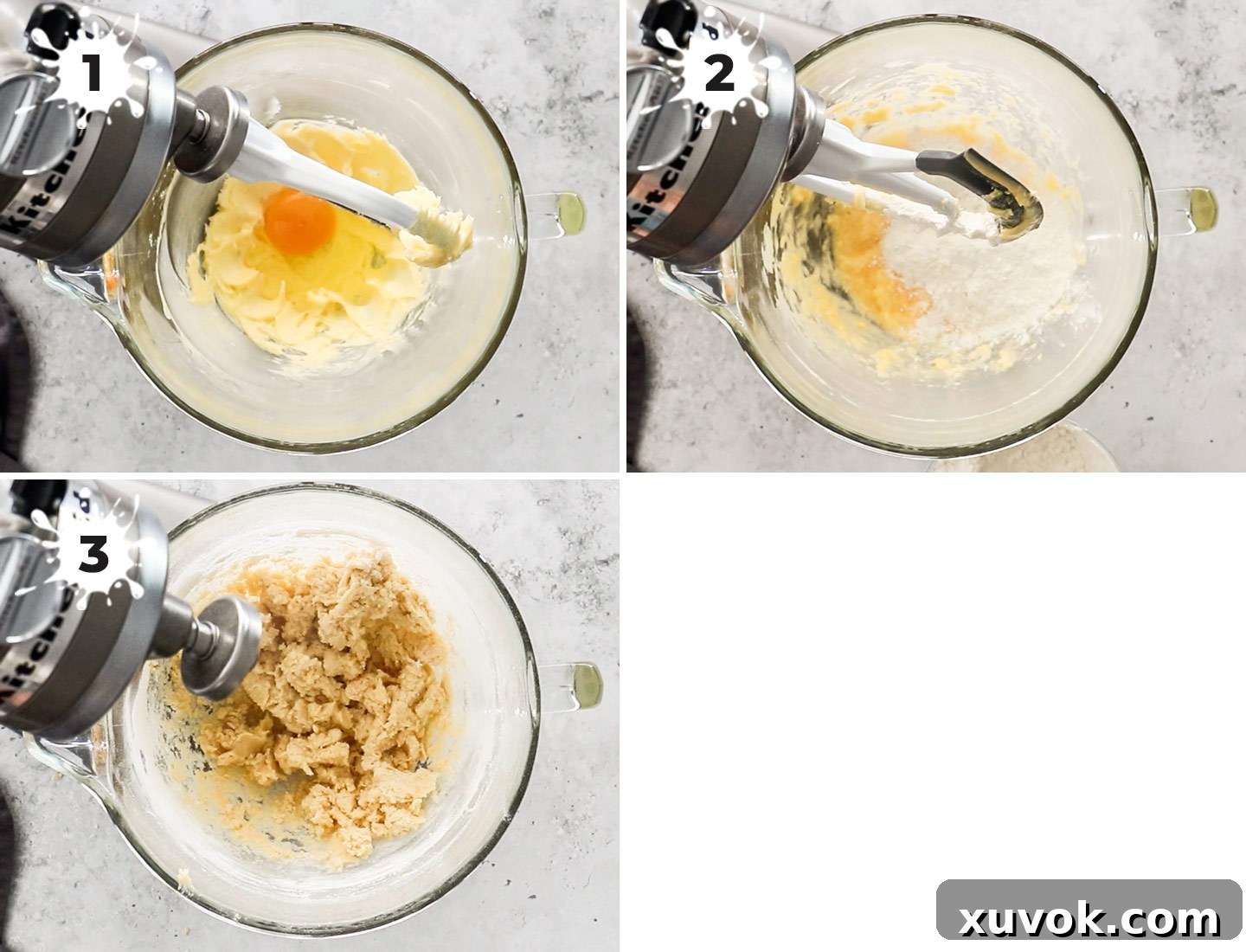
For precise quantities and detailed instructions, please refer to the complete recipe card below.
- Cream Butter & Sugar: In the bowl of your stand mixer fitted with the paddle attachment (or using an electric hand mixer), combine the softened unsalted butter and icing sugar. Beat these ingredients on medium speed until they are thoroughly combined, light, and creamy smooth. This typically takes 1-2 minutes and is known as the creaming method, which incorporates air and tenderizes the dough.
- Incorporate the Egg: Add the room temperature large egg to the butter-sugar mixture (as shown in photo 1). Continue to beat on low speed until the egg is fully incorporated and the mixture is smooth. If you notice the mixture struggling to come together or appearing slightly curdled, simply add a small spoonful of the measured flour and continue mixing on low; this often helps to stabilize the emulsion.
- Add Flour to Form Dough: Finally, add the measured plain flour (as depicted in photo 2). Beat on the lowest speed possible, just until the flour is incorporated and the mixture begins to clump together into a shaggy dough (see photo 3). Be careful not to overmix at this stage, as overworking the dough can develop the gluten too much, leading to a tough pastry. The goal is just to bring the ingredients together.
- Form a Disk: Turn the freshly mixed dough out onto a clean, lightly floured work surface. Using your hands, gently gather the dough and press it together to form a smooth ball. Avoid excessive handling, as the warmth from your hands can melt the butter and make the dough sticky. Once a cohesive ball is formed, flatten it into a 1-inch thick disk. This shape is ideal for chilling and rolling.
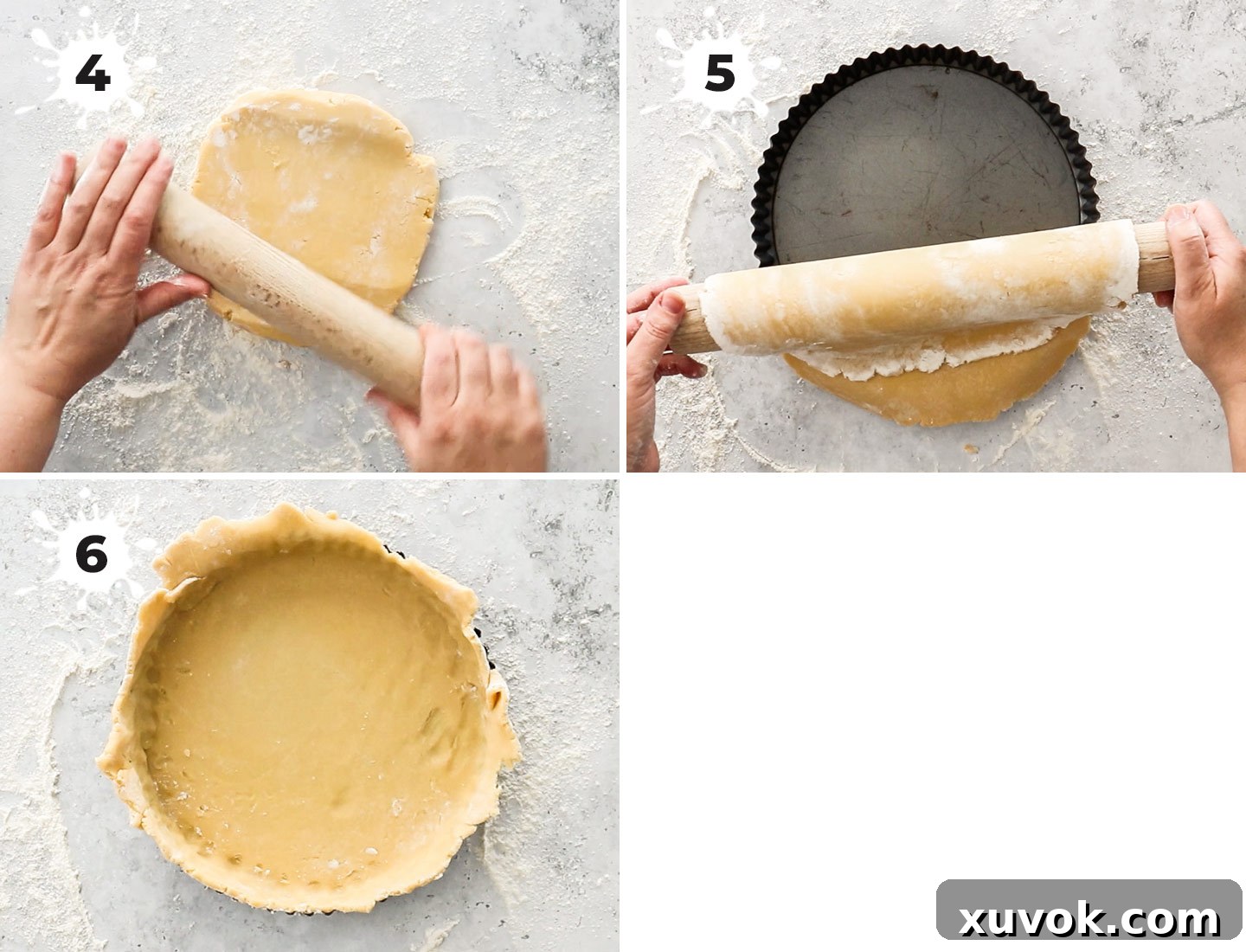
- Roll Out the Dough: Lightly flour your work surface and the top of the dough disk. Using a rolling pin, gently and gradually roll the pastry outwards from the center, turning it frequently to ensure an even thickness and to prevent sticking. Aim for a round shape approximately 4-5mm thick, or about 11 inches in diameter if you’re using a 9-inch tart pan. This larger diameter allows for a sufficient overhang to trim neatly.
- Shape into Tart Tin: Carefully transfer the rolled pastry into your tart tin. A common method is to gently roll the dough around your rolling pin, then unroll it over the tart pan (as seen in photo 4). Center the pastry, then gently press it into the bottom and sides of the tart tin (photo 5). For a crisp, professional finish, rather than pressing the base into the corners, gently push the edges of the pastry downwards into the fluted sides of the tin (photo 6). This technique helps create defined corners and minimizes shrinkage. Ensure the pastry is well-seated into all the crevices. Leave the excess overhang for now.
- Crucial Chilling Phase: Do not be tempted to skip this vital step! While this recipe is designed for only one chilling period, it is non-negotiable for success. Place the tart tin with the shaped pastry into the refrigerator to chill for a minimum of 2 hours. For your convenience, this pastry can be chilled for up to 3 days, making it perfect for preparing well in advance of a special occasion. Chilling allows the butter to firm up and the gluten to relax, which is paramount for preventing excessive shrinkage during baking and for achieving that desirable tender, crumbly texture.
This sweet shortcrust pastry is truly the work of minutes to prepare and remarkably forgiving! While a stand mixer makes the process easiest and most efficient, you can absolutely achieve excellent results using a simple electric hand mixer, or even by hand with a bit of elbow grease and a pastry blender for initial mixing.
How to Cook Shortcrust Pastry: The Art of Blind Baking
Most recipes involving a shortcrust pastry base will instruct you to begin with a technique called blind baking. But what exactly is blind baking, and why is it so important? Blind baking refers to the process of pre-baking your tart or pie shell before you add the filling. This can be done either partially or completely, depending on the nature of your filling and the final recipe.
The primary reasons for blind baking are twofold:
- Preventing a Soggy Bottom: Many fillings, especially those that are moist (like the jam in this Strawberry Bakewell Tart) or those with a high liquid content, can cause the pastry base to become unpleasantly soggy during the final baking process. Blind baking creates a barrier, helping the crust maintain its crispness.
- Pre-cooking for Unbaked Fillings: If your tart filling is not going to be baked at all (such as in a Fruit Custard Tart or a no-bake cheesecake), blind baking ensures the pastry is fully cooked and golden brown, ready to be filled and served.
Mastering blind baking is a skill that elevates your pies and tarts from good to extraordinary, guaranteeing a perfectly crisp foundation every time.
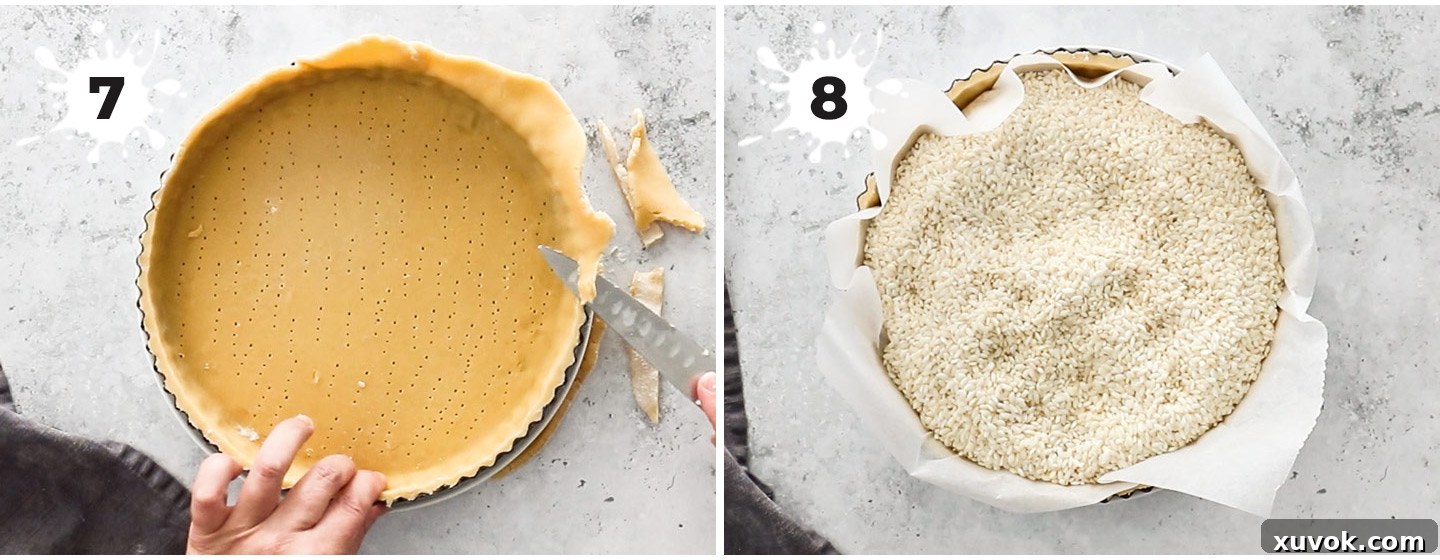
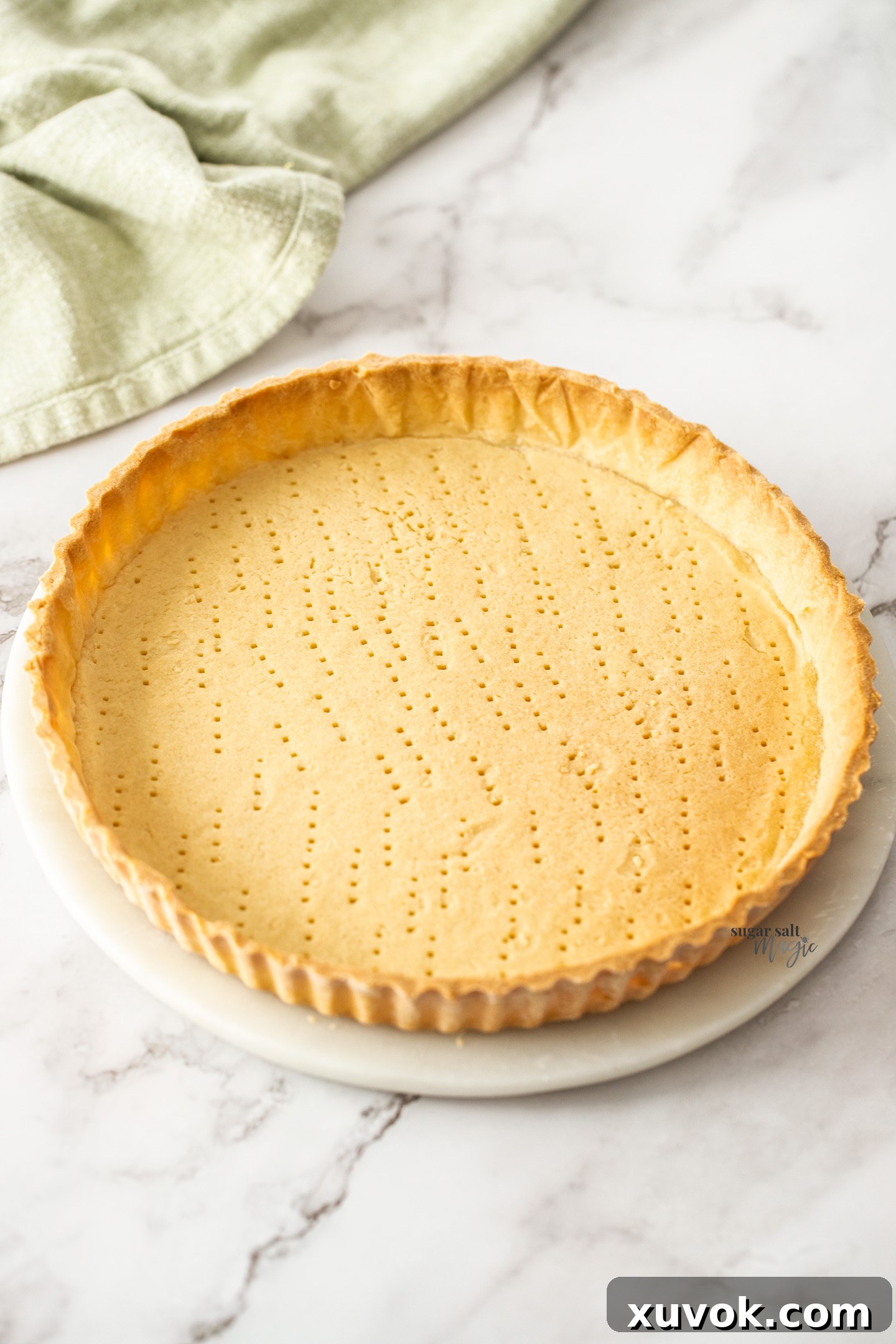
- Dock the Pastry: Once your pastry has been chilled in the tart tin, begin by “docking” it. This simply means pricking the base all over with the tines of a fork. Docking creates small holes that allow steam to escape during baking, preventing the base from puffing up unevenly or forming large air bubbles.
- Line and Weight: Line the docked pastry base with a sheet of baking paper or parchment paper. Then, fill this lining generously with pie weights or baking beans. You don’t necessarily need to purchase specialized pie weights; dried rice or lentils work just as effectively. Once used for baking, store these dedicated rice/lentils separately and reuse them for every future pastry project. Ensure the weights are distributed evenly and pressed firmly against the sides to support the pastry during baking.
- Initial Bake: Place the weighted tart shell into your preheated oven. Cook for approximately 15 minutes. This initial bake helps to set the pastry structure. After this time, carefully remove the baking paper and the pie weights.
- Continue Baking: The subsequent baking time will depend on whether your filling is going to be baked or not. Refer to the specific cooking times below to ensure your crust is perfectly baked for its intended purpose.
How Long to Cook Shortcrust Pastry: Achieving the Perfect Bake
The duration of blind baking largely depends on whether your tart filling will undergo further baking or not. Precision in baking times ensures a crust that is neither undercooked nor overdone, providing the ideal foundation for your dessert.
- You’ll always start by blind baking the pastry for an initial period of approximately 15 minutes at 180°C (160°C fan) / 350°F with pie weights in place. After this, remove the baking paper and pie weights.
- If your filling will be baked: After removing the weights, cook the pastry for an additional 5-7 minutes. This brief secondary bake allows the base to dry out completely and create a sealed surface, preventing any moisture from the filling from seeping in and making it soggy. The pastry should look dry and lightly golden around the edges.
- If your filling is not going to be baked (a fully cooked crust is needed): After removing the weights, continue to bake the tart shell for another 15-20 minutes. The goal here is a beautifully golden-brown crust that appears completely dry and crisp throughout. This ensures the pastry is fully cooked and ready to hold an unbaked filling.
Always remember that oven temperatures can vary significantly. It’s wise to keep a close eye on your pastry during the final minutes of baking and adjust times slightly as needed to achieve your desired golden hue.
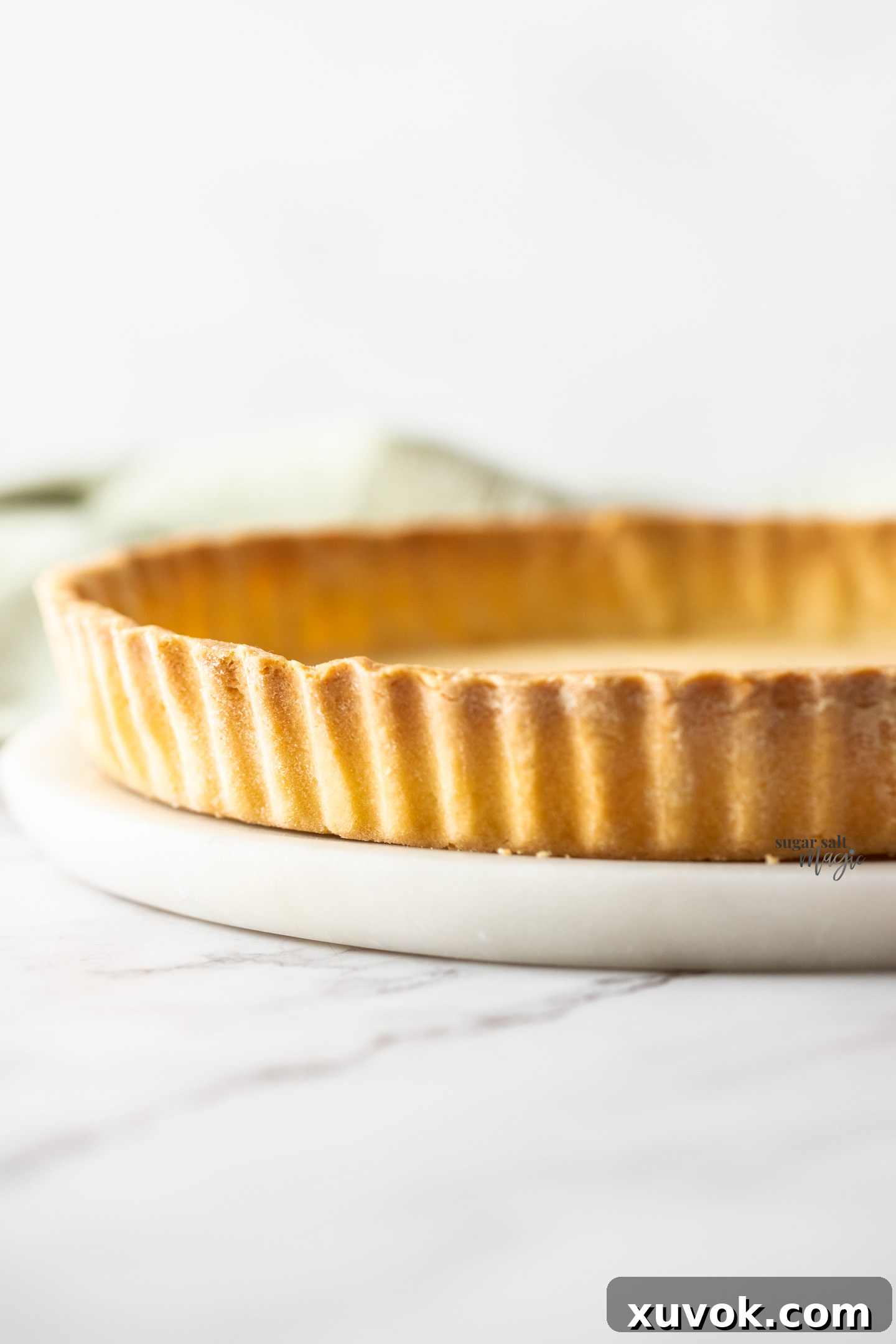
Expert Tips and Tricks for Perfect Pastry
- Press the Edges Downward for Tight Corners: When fitting the pastry into the tart tin, resist the urge to stretch the dough down into the base corners. Instead, gently push the pastry from the top edge downwards and into the fluted sides. This technique ensures that the pastry settles snugly into the sharp corners of the tin and prevents it from shrinking away during baking, giving you a beautiful, defined edge.
- Embrace Softened Butter and Room Temperature Egg: Unlike many flaky pastry recipes that demand ice-cold butter and eggs, this Pâte Sucrée recipe thrives on ingredients at room temperature. The softened butter creams beautifully with the sugar, creating a tender, almost cookie-like texture that melts in your mouth. A room temperature egg emulsifies more easily, contributing to a smoother, more cohesive dough.
- Never Skip the Chilling Step: I’ve optimized this recipe to require just one chilling phase, but it’s absolutely crucial for success. Chilling serves two vital purposes: it allows the gluten strands in the flour to relax, preventing a tough crust and minimizing shrinkage during baking. Secondly, it firms up the butter within the dough, which helps the pastry maintain its shape and ensures a tender crumb. A minimum of two hours is recommended, but you can chill it for up to three days.
- Avoid Overworking the Dough: While mixing and kneading are necessary, overworking pastry dough develops too much gluten, which can lead to a tough and chewy crust instead of a delicate, crumbly one. Mix only until the ingredients are just combined and the dough comes together. Minimal handling is key.
- Trim Excess Pastry Before Baking: After chilling, before blind baking, use a sharp paring knife held flat against the rim of the tart tin to trim off any excess pastry hanging over the edge. This creates a clean, professional finish and prevents the edges from burning or crumbling unevenly.
How Much Pastry Do I Need? A Guide to Yields
Understanding the yield of this sweet shortcrust pastry recipe is essential for planning your baking projects effectively, whether you’re making individual mini tarts or a grand pie.
- For Standard Tarts and Quiches: This recipe yields enough shortcrust dough to perfectly line a 9-inch (23 cm) fluted tart tin with a removable base. It will create a crust approximately 5mm thick, providing a little overhang for easy trimming and a neat finish. This quantity is ideal for elegant desserts like this Fresh Peach Tart or a vibrant Passionfruit Tart, as well as any savory quiche.
- For Pies (Single Crust): If you’re planning a single-crust pie (such as an apple pie with a top crust made from a different dough, or a simple bottom crust with a streusel topping), consider increasing this recipe by 1.5 times. This will give you a slightly thicker, more robust 9-inch pie crust with sufficient dough to trim and crimp a neat edge.
- For Double-Crust Pies: For a traditional double-crust pie, like an enclosed fruit pie, you will need to double this recipe. This ensures you have enough dough for both the bottom and top crusts, with ample material for decorative flourishes or secure crimping around the edges of your pie dish. Remember, when making savory pies, omit the sugar and add about ½ teaspoon of salt to the flour mixture. This adaptation makes it perfect for hearty dishes like Mum’s Steak and Mushroom Pie.
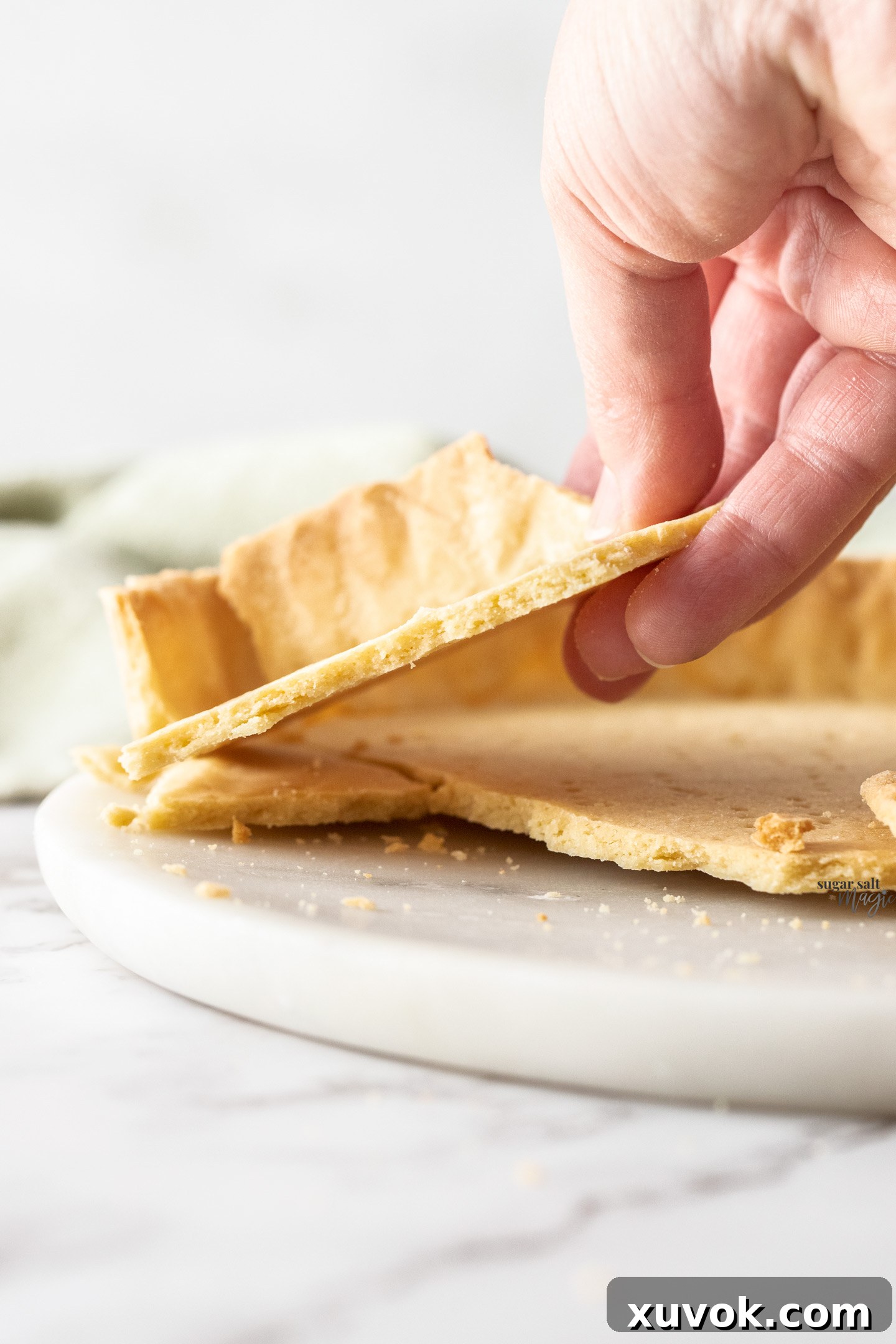
Frequently Asked Questions (FAQs) About Shortcrust Pastry
Absolutely! This sweet shortcrust pastry recipe is ideal for advance preparation. Once you’ve made the dough and shaped it into a disk, it can be securely wrapped in plastic wrap and stored in the refrigerator for up to 2-3 days. For longer storage, it can be frozen for up to 3 months. This flexibility is a huge advantage for busy bakers or when planning for events.
Yes, shortcrust pastry freezes exceptionally well. Similar to my Danish pastry recipe, you can wrap the dough tightly in several layers of plastic wrap and freeze it for up to 2 months. When you’re ready to use it, simply thaw the dough in the refrigerator overnight. Having pre-made dough on hand is a lifesaver for special occasions, holidays like Christmas or Thanksgiving, or anytime you need a quick dessert base.
Indeed, you can! To adapt this recipe for a gluten-free sweet shortcrust pastry, simply substitute the regular plain flour with an equal amount of gluten-free all-purpose flour blend. For best results, ensure your chosen gluten-free flour blend already contains a binding agent like xanthan gum or guar gum, as this helps stabilize the pastry and provides structure that gluten would normally offer. The performance of gluten-free flours can vary, so you might need to test a few brands to find one that works perfectly for your pastry needs.
If your dough feels excessively crumbly after mixing, assuming you’ve weighed your ingredients correctly, the culprit might be a slightly smaller egg or dry flour. You can usually fix this by adding a tiny amount (about half a teaspoon at a time) of cold water or milk until the dough just comes together. If, conversely, the dough is too sticky, it could be due to a larger egg or very soft butter. Lightly flour your hands and work surface, and gently knead it a couple of times. If it’s still too sticky, add a very small amount of flour, a teaspoon at a time, until it’s manageable. Remember, a perfectly pliable dough is key.
Optimal Storage Solutions for Your Shortcrust Pastry
Proper storage is key to extending the life and maintaining the quality of your homemade sweet shortcrust pastry, offering flexibility and convenience for your baking endeavors.
- Raw Dough (Disk Form): Once you’ve prepared your sweet pastry dough and gently shaped it into a flat disk, immediately wrap it tightly in several layers of plastic wrap. This prevents it from drying out or absorbing refrigerator odors. Store the wrapped disk in the refrigerator for up to 3 days. For longer storage, you can freeze it for up to 3 months. When ready to use, simply transfer it to the refrigerator to thaw overnight.
- Raw Dough (Shaped in Tart Tin): If you have sufficient space in your refrigerator or freezer, an even more convenient option is to shape the dough into your tart tin ahead of time. Line the tin with the pastry as directed, leaving the overhang, then cover the entire tin loosely with plastic wrap or aluminum foil. A shaped tart shell can be stored in the refrigerator for up to 3 days or frozen for up to 3 months. This method saves you a step on baking day.
- Baked Tart Shells: For ultimate convenience, especially for tarts with unbaked fillings, you can fully blind bake the tart shell, allow it to cool completely, and then store it. Once cooled, baked shells can be kept at room temperature in an airtight container for 1-2 days. For longer storage, wrap the baked shell carefully (to prevent breakage) and freeze it for up to 3 months. When freezing in shell form, ensure it’s placed in a sturdy container or a safe spot in your freezer to protect it from damage. Thaw at room temperature before filling.
Delicious Recipes Featuring Sweet Shortcrust Pastry
Now that you’ve mastered the art of making perfect sweet shortcrust pastry, it’s time to put your skills to delicious use! This versatile crust is the star of countless desserts. Here are some of our favorite recipes that beautifully showcase Pâte Sucrée:
- Warm Apple Crostata: A rustic yet elegant free-form tart bursting with sweet apples and a hint of almond, all nestled in a buttery crust.
- Panna Cotta Fresh Peach Tart: A sophisticated tart featuring a silky panna cotta filling topped with vibrant, fresh peaches, all resting on a crisp Pâte Sucrée.
- Mum’s Steak and Mushroom Pie: (Remember to adjust the pastry to savory by omitting sugar and using salted butter!) A hearty, comforting classic perfect for dinner.
- Apple Frangipane Tart: A delightful combination of sweet pastry, rich almond cream (frangipane), and tender baked apples.
- Chocolate Brownie Pie: Indulge in a rich, fudgy brownie baked into a sweet, crisp pastry shell – a dream for chocolate lovers.
Explore these recipes and more, and let your perfect sweet shortcrust pastry be the foundation for your next culinary masterpiece!
Did you try this sweet shortcrust pastry recipe?
Leaving a rating and comment below the recipe is so helpful! We love hearing from you!
Hungry for more? Subscribe to our newsletter for free recipes delivered straight to your inbox. Also, connect with us on Facebook, Pinterest and Instagram for daily inspiration!
Classic Sweet Shortcrust Pastry (Pâte Sucrée) Recipe
Rate
Pin
Ingredients
- 100 g unsalted butter, softened (7 tablespoons / 3.5oz)
- 40 g icing sugar (powdered sugar) (⅓ cup / 1.4oz)
- 1 large egg, room temperature
- 225 g plain flour (all-purpose flour) (8oz)
For the most accurate results, always weigh ingredients where a weight is provided.
Equipment
-
Stand mixer or electric mixer (with paddle attachment)
-
9-inch fluted tart tin with removable base
-
Rolling Pin
-
Parchment paper
-
Pie weights or dried beans/rice
Instructions
-
1. In the bowl of a stand mixer with the paddle attachment (or using an electric hand mixer), add the softened butter and icing sugar. Beat on medium speed until the mixture is fully combined, light, and smooth (this typically takes 1-2 minutes).
-
2. Add the room temperature egg and beat on low speed until it is fully incorporated and the mixture is smooth. If the mixture appears slightly curdled, add a small spoonful of the flour and mix on low until it comes together.
-
3. Add the plain flour to the bowl. Beat on the lowest speed just until the flour is incorporated and the mixture starts to clump together into a shaggy dough. Be careful not to overmix to maintain tenderness.
-
4. Turn the dough mixture out onto a lightly floured work surface. Gently gather the dough and press it together with your hands to form a smooth ball (avoid overhandling). Flatten the ball into a 1-inch thick disk.
-
5. Lightly dust the top of the dough disk and your work surface with a little more flour. Using a rolling pin, gently and gradually roll the pastry out to an even thickness of about 4-5mm (approximately 11 inches in diameter for a 9-inch tart pan). Turn the dough frequently to prevent sticking.
-
6. To transfer, place your rolling pin in the middle of the rolled dough and gently fold one side of the pastry over the top of the pin. Lift the rolling pin so the pastry hangs over it, and lightly dust off any excess flour from underneath. Carefully unroll and lay the pastry into a 9-inch round tart pan with a removable base, centering it.
-
7. Press the dough down from the edges into the corners all the way around, then gently press it into the scalloped sides of the tart tin to ensure it’s well-seated. Leave the pastry overhang standing upright for now. Place the tart pan into the fridge to chill for a minimum of 2 hours, or up to 3 days. This chilling step is crucial for preventing shrinkage.
-
TO BLIND BAKE THE TART SHELL:
8. Preheat your oven to 180°C (160°C fan) / 350°F.
-
9. Once chilled, remove the tart pan from the fridge. Use a fork to prick the pastry base all over (this is called docking). Using a small, sharp knife, trim off the excess pastry by running the blade flat against the edge of the tart tin.
-
10. Line the tart shell with a sheet of baking paper or parchment paper, ensuring it covers the base and extends up the sides. Fill the paper generously with pie weights, dried rice, or lentils. Make sure the weights are pressed tightly against the edges to support the pastry.
-
11. Bake for 15 minutes. Carefully remove the baking paper and pie weights.
-
12. If the filling will be baked (partially baked crust): Bake the tart shell for a further 5-7 minutes, just until the base looks dry and set, and is lightly golden around the edges.
If the filling is not going to be baked (fully baked crust): Bake the tart shell for a further 15-20 minutes, or until it is beautifully golden brown and appears completely dry and crisp throughout.
-
13. Allow the baked tart shell to cool completely on a wire rack before filling. Please take a moment to leave a comment & rating below. Your feedback is greatly appreciated and helpful!
Notes
- Oven Variation: All ovens vary slightly in temperature and performance. Always monitor your pastry closely and test for doneness 3-5 minutes before the suggested baking time to prevent overbaking.
- Weighing Ingredients: For the most consistent and best results, it is always recommended to weigh ingredients like flour and sugar using a reliable kitchen scale. If you don’t have a scale, use the “spoon and level” method for flour (lightly spoon flour into your measuring cup and then level off with a straight edge) rather than scooping directly, which can compact the flour and result in too much.
- Flavoring Your Dough: Feel free to customize the flavor of your sweet shortcrust pastry. A touch of vanilla extract (about ½ teaspoon) or finely grated lemon zest (from ½ lemon) can add wonderful depth and aroma, complementing a wide range of dessert fillings.
- Adjusting Dough Consistency: If your dough feels too crumbly after mixing, and you’ve accurately weighed all ingredients, it might be due to a slightly smaller egg. The dough should be soft and pliable. To bring it together, add a tiny amount (½ teaspoon at a time) of cold water until the desired consistency is reached. Conversely, if the dough is too sticky, add a very small amount of flour, a teaspoon at a time, until it’s workable.
- For Savory Pies and Tarts: To transform this into a savory shortcrust pastry, simply omit the icing sugar from the recipe entirely. Instead, use salted butter and consider adding an additional ½ teaspoon of salt to the flour mixture for enhanced savory flavor.
More Information and Guidance
These links will navigate you to the relevant sections within the article for more detailed explanations – just scroll back down to return to the recipe card.
- Step-by-step photos for mixing & shaping
- Expert Tips and Tricks for optimal results
- Guidance on How Much Pastry You Need
- Commonly Asked Questions (FAQs)
- Comprehensive Storage Instructions
DISCOVER MORE PIES & TARTS RECIPES
Have you tried this recipe?Don’t forget to leave a rating and comment below and let me know how it was! I love hearing from you. Nutrition information is approximate and derived from an online calculator. The brands you use may cause variations.