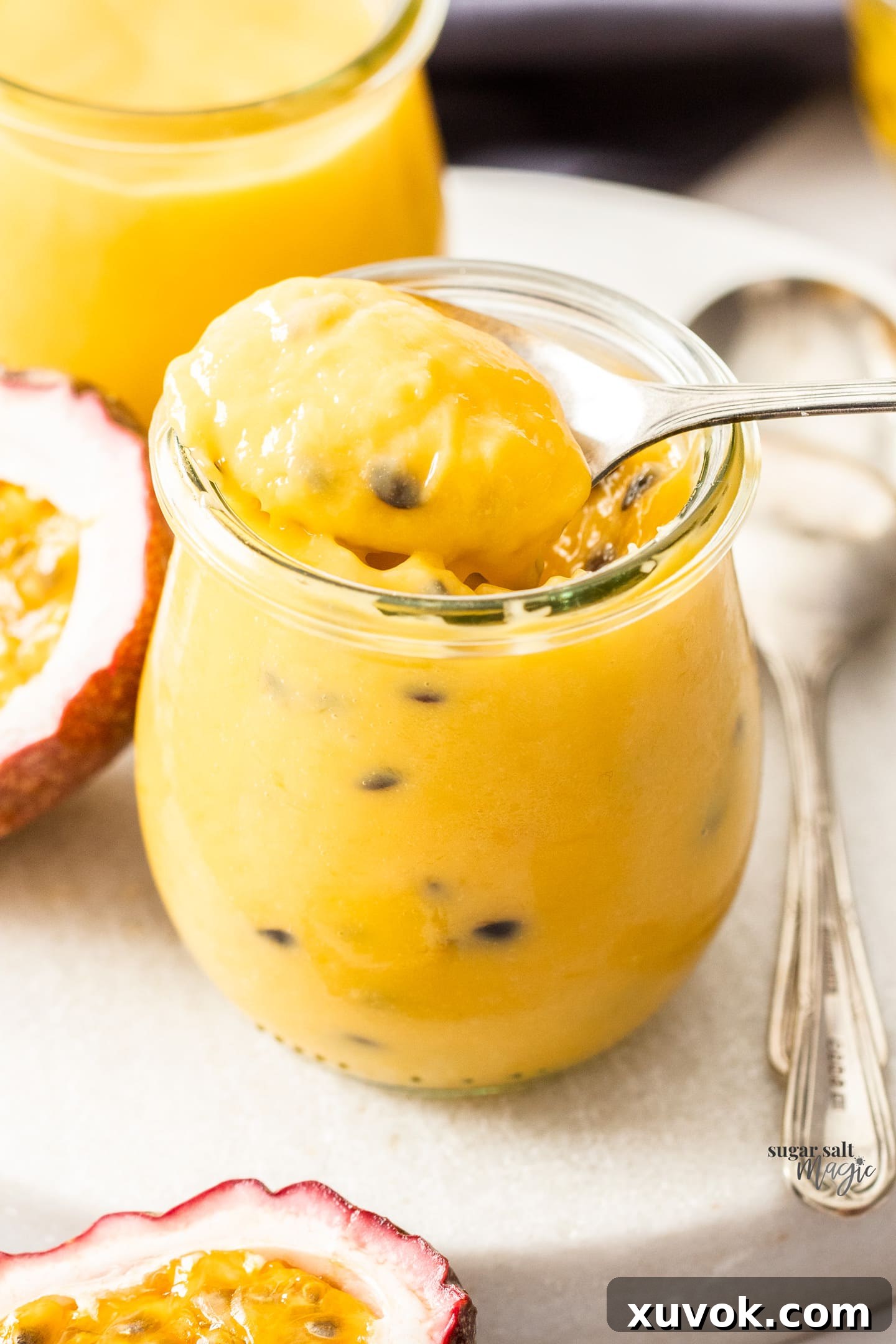
As an ardent admirer of zesty lemon desserts, I must confess a newfound devotion: this incredible passionfruit curd has undeniably surpassed lemon curd in my affections. Often referred to as passionfruit butter, it boasts the same delightful balance of sweetness and tanginess, but with an added vibrant, tropical zing that instantly evokes sunshine and infuses any dish with exotic flair.
This homemade passionfruit curd is not just a treat for the taste buds; it’s a testament to how simple and rewarding culinary creation can be. Imagine a spread so creamy, so buttery, and so bursting with bright, fruity flavor that it transforms ordinary breakfasts and desserts into extraordinary experiences. It’s remarkably versatile, perfect for elevating everything from simple toast to elegant layer cakes. With its luxurious texture and unforgettable taste, this passionfruit curd is poised to become a staple in your kitchen.
- Exquisitely Balanced Flavor: A perfect harmony of sweet, tangy, and subtly tart notes.
- Luxuriously Creamy & Buttery: Achieves an incredibly smooth and rich consistency.
- Remarkably Quick and Easy: A simple recipe that comes together in mere minutes, ideal for any home cook.
- Minimal Ingredients: Requires just 5 core ingredients, most of which you likely have on hand.
- No Double Boiler Needed: Streamlined cooking process, made directly in a saucepan for convenience.
- Flexible Fruit Sourcing: Can be crafted using fresh, frozen, or even good quality jarred passionfruit pulp.
- Versatile Application: Elevates a wide array of desserts, breakfasts, and snacks.
A common misconception with fruit curds is the absolute necessity of a double boiler. While some recipes insist on indirect heat, I’ve found that achieving a perfectly smooth and luscious curd is entirely possible, and much quicker, by cooking it directly in a saucepan. The key lies in maintaining a consistently low heat and continuous stirring, ensuring the eggs temper gently without scrambling. This method simplifies the process, making homemade passionfruit curd accessible to everyone, regardless of their kitchen equipment. The result is a vibrant, flavorful spread that’s just as silky and delicious as any made with a more traditional approach.
If you love the tropical burst of passionfruit, you absolutely must try these delightful passionfruit tartlets – they’re a perfect way to showcase this incredible fruit!
This cherished recipe was originally published on January 8th, 2018, and has since been thoughtfully updated and enhanced with fresh insights, a refined ingredient balance, and beautiful new imagery to inspire your culinary adventures.
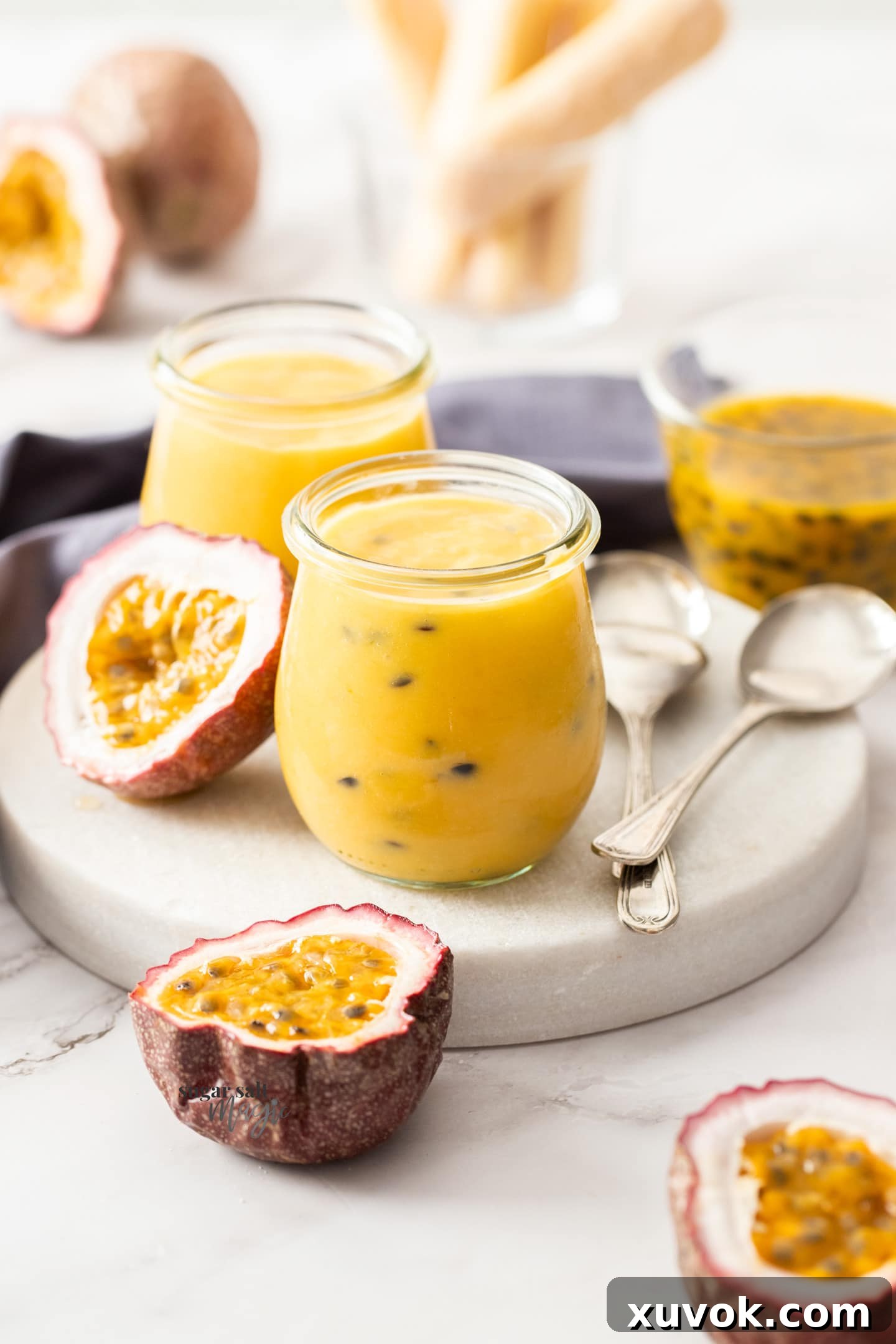
Table of Contents
- Essential Ingredients for Passionfruit Curd
- Understanding the Delightful Passion Fruit
- Mastering Passionfruit Curd: A Step-by-Step Guide
- Handy Kitchen Tools for Curd Making
- Expert Tips and Tricks for Perfect Curd
- How to Sterilize Jars for Safe Preserving
- Creative Ways to Enjoy Passionfruit Curd
- Yield, Storage, and Shelf Life
- Explore More Fruit Curd Recipes
Never Miss a Recipe!
Join our community and get the latest delicious recipes delivered straight to your inbox!
Essential Ingredients for Passionfruit Curd
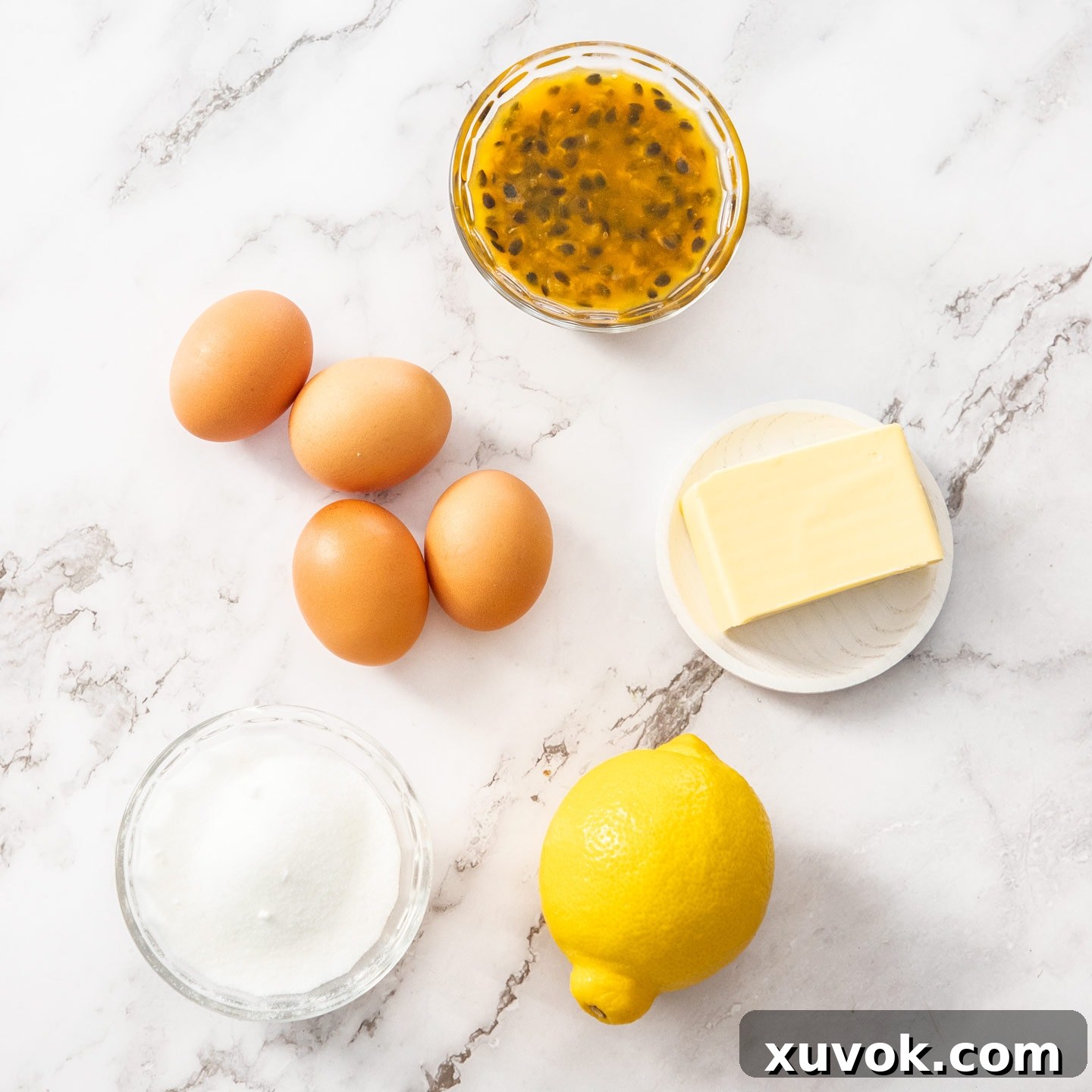
For precise measurements and detailed instructions, please refer to the comprehensive recipe card below.
- Passionfruit Pulp: This is the star of our show, delivering that unmistakable tropical tang. You can extract pulp from fresh passionfruits; typically, 5-6 medium-sized fruits will yield the necessary amount, though this can vary. Alternatively, frozen passionfruit pulp (thawed before use) or high-quality jarred passionfruit pulp are excellent, convenient options. When opting for jarred varieties, always scrutinize the ingredient list to ensure it’s pure passionfruit without excessive added water or sugar, which can alter the curd’s consistency and flavor. Some products might label it as passionfruit puree, which is perfectly suitable.
- Eggs: Crucial for the curd’s thickening and smooth texture, I always use large eggs in my recipes. This recipe calls for a combination of two whole large eggs and two additional large egg yolks. The extra yolks contribute to a richer, creamier, and more stable curd, providing a luxurious mouthfeel that truly sets this recipe apart.
- Sugar: Granulated white sugar or caster sugar (superfine sugar) is ideal here. Both dissolve easily and evenly, creating a smooth curd. Avoid powdered sugar, as it contains cornstarch and will yield a different texture. The sugar not only provides sweetness but also helps to stabilize the eggs and enhance the fruit’s flavor.
- Lemon Zest: While passionfruit itself is wonderfully tangy, a touch of fresh lemon zest amplifies its bright, citrusy notes, adding another layer of complexity to the flavor profile. It’s an optional but highly recommended addition that provides a subtle background lift. If you prefer to let the passionfruit shine entirely on its own, feel free to omit it.
- Unsalted Butter: Good quality unsalted butter is vital for achieving the rich, creamy texture and buttery finish that defines a perfect fruit curd. Using unsalted butter allows you to control the overall saltiness of the final product. It’s incorporated at a specific stage to emulsify beautifully with the other ingredients, contributing to the curd’s silky mouthfeel and luscious sheen.
Understanding the Delightful Passion Fruit
The passion fruit, truly a burst of sunshine in a bite, is a remarkable tropical fruit known by various enchanting names such as lilikoi in Hawaii or maracuyá in Spanish-speaking regions. Primarily, two main varieties exist: the vibrant yellow passion fruit and the deep purple passion fruit. Here in Australia, where I often source my fruits, they are a year-round delight, though they truly hit their peak and become most abundant during the warmer summer months.
Upon slicing open a passion fruit, you’re greeted with an extraordinary sight: a cavity filled with intensely aromatic, thick yellow pulp interspersed with tiny, edible black seeds. It’s in this glistening pulp that all the magic resides – the concentrated, complex flavor that ranges from intensely tart to wonderfully sweet, with floral and musky undertones. While many appreciate the pleasant crunch and slight textural contrast the seeds offer, if you prefer a perfectly smooth curd, don’t hesitate to strain them out. Rest assured, removing the seeds will not diminish the incredible, unique taste of your passionfruit curd; the essence of the fruit remains in the flavorful pulp.
Beyond its captivating flavor, passion fruit is also a nutritional powerhouse. It’s an excellent source of dietary fiber, vitamins A and C, and a good source of iron and potassium. Its antioxidants contribute to overall well-being, making this tropical delight not only delicious but also a healthy addition to your diet. When selecting passion fruit, look for fruits that are plump, heavy for their size, and have slightly wrinkled skin – this is usually an indication of ripeness and a fuller, sweeter pulp inside.
Mastering Passionfruit Curd: A Step-by-Step Guide
Creating a truly luscious, creamy, and smooth passionfruit curd (with or without the charming crunch of its seeds) is an incredibly straightforward process. Many traditional recipes might lead you to believe a double boiler is essential, involving a bowl gently heated over simmering water. However, this recipe embraces simplicity, proving that you can achieve a perfect curd directly in a saucepan with minimal fuss and maximum flavor.
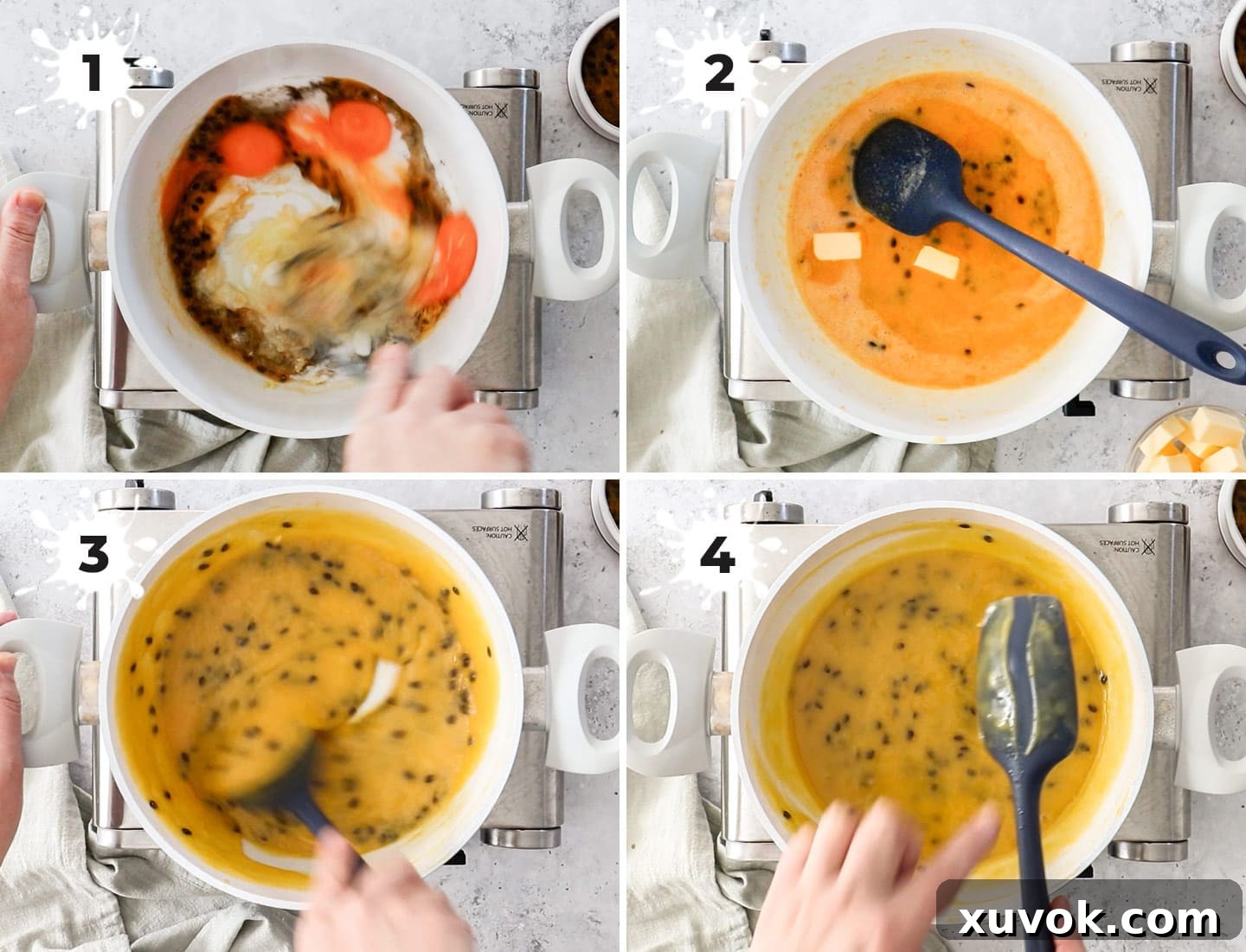
Detailed measurements and comprehensive instructions are provided in the recipe card below for your convenience.
- Combine & Dissolve Initial Ingredients: Begin by whisking together the passionfruit pulp (I personally prefer to strain it at this stage for a smoother final product, though leaving the seeds in is perfectly fine), granulated sugar, whole eggs, egg yolks, and lemon zest in a small, heavy-bottomed, non-reactive saucepan. Place this mixture over a consistently low heat. Stir continuously until the sugar has completely dissolved, which typically takes only a minute or two. This initial step is crucial for preventing the sugar from scorching and ensuring a uniform blend of flavors before thickening begins.
- Gradually Incorporate Butter: Once the sugar has fully dissolved, increase the heat slightly to low-medium. Now, begin adding the cold, cubed unsalted butter, 2-3 pieces at a time. After each addition, stir constantly with a whisk until the butter has fully melted and is thoroughly incorporated into the mixture before adding the next batch. This gradual incorporation and constant stirring are essential for creating a stable emulsion, resulting in a beautifully smooth and glossy curd. It also helps to prevent the eggs from cooking too quickly.
- Thicken to Perfection: As you continue to stir, the mixture will gradually thicken. You might find that your curd reaches the desired consistency by the time all the butter has melted. If not, continue to cook and stir for another minute or two. The curd is ready when it is thick enough to generously coat the back of a spoon. A classic test is to draw a line across the back of the spoon with your finger; if the line remains distinct and doesn’t run, your curd is perfectly thickened.
- Optional Straining for Silkiness: For those who prefer a velvety smooth texture without any seeds, now is the time to pass your freshly cooked curd through a fine-mesh sieve. This step removes the crunchy black seeds and any minuscule cooked egg bits, resulting in an impeccably silky spread. Remember, all the exquisite flavor is contained within the pulp, so straining will not impact the taste of your curd, only its texture. If you enjoy the visual appeal and slight crunch of the seeds, feel free to skip this step entirely or stir a few back in after straining.
Handy Kitchen Tools for Curd Making
One of the many joys of making homemade passionfruit curd is that it doesn’t require an arsenal of specialized kitchen equipment. With just a few basic tools, you’ll be well on your way to crafting this tropical delight. Essential items include:
- Small, Heavy-Based, Non-Reactive Saucepan: The “non-reactive” aspect is crucial here. Materials like stainless steel are perfect as they won’t react with the acidic fruit, which could otherwise impart an unpleasant metallic taste or discoloration to your curd. A heavy base ensures even heat distribution, preventing hot spots that can scorch the curd or scramble the eggs. Avoid cast iron or aluminum cookware for this recipe.
- Balloon Whisk: A good quality balloon whisk is your best friend during the cooking process. Its design allows for thorough and continuous agitation, which is vital for smoothly combining ingredients, dissolving sugar, incorporating butter, and preventing the eggs from clumping or sticking to the bottom of the pan.
- Heat-Resistant Silicone Spatula: Ideal for scraping down the sides of the saucepan to ensure all ingredients are evenly cooked and none are left to scorch. It’s also gentle on non-stick surfaces, if you happen to be using one.
- Preserving Jars: To properly store your finished curd, you’ll need clean, sterilized jars. I personally love and recommend high-quality options like Weck preserving jars for their aesthetic appeal and reliable seals.
- Fine Mesh Sieve (Optional): If you desire a perfectly smooth, seed-free curd, a fine mesh sieve is indispensable. It effectively removes the passionfruit seeds and any tiny bits of cooked egg, ensuring an impeccably silky texture.
Expert Tips and Tricks for Perfect Curd
Achieving a velvety smooth, perfectly set passionfruit curd is simpler than you might think, especially with these insider tips:
- Choose the Right Saucepan: Always use a heavy-based, non-reactive saucepan. Stainless steel is an excellent choice as it distributes heat evenly and won’t interact with the acidic passionfruit. Avoid aluminum or cast-iron, which can impart an undesirable metallic taste or discoloration to your delicate curd.
- Maintain Low, Gentle Heat: This is arguably the most crucial tip. Your goal is to gently cook the eggs to thicken the curd, not to scramble them. Keep the heat consistently low to low-medium. The mixture should never come to a rolling boil. Patience with the heat will ensure a smooth, custard-like consistency.
- Stir Continuously and Diligently: Do not step away from the saucepan! Constant stirring is essential for several reasons: it prevents the curd from sticking and scorching at the bottom of the pan, ensures even cooking of the eggs, and promotes the proper emulsification of all ingredients, leading to that desirable creamy texture. While it requires your full attention, the cooking time is relatively short, usually around 10-12 minutes.
- Master the “Spoon Test” for Doneness: The curd is ready when it coats the back of a spoon thickly. To confirm, draw a line through the curd on the back of the spoon with your finger. If the line holds and the curd doesn’t run back together, it’s perfectly set. For those who prefer precision, a digital thermometer can be used to confirm doneness; the curd should reach a temperature of 75°C / 170°F.
- Sterilize Your Jars: This isn’t just a suggestion; it’s a vital step for food safety and extending the shelf life of your homemade curd. Properly sterilized jars will keep your passionfruit curd fresh and safe to enjoy for much longer.
- Cool Down Rapidly: Once the curd is cooked, it’s best to transfer it immediately into your sterilized jars. Allowing it to cool quickly helps prevent bacterial growth and maintains its fresh flavor.
- Troubleshooting Common Curd Issues: For detailed guidance on preventing or fixing common problems like grainy texture, curd not thickening, or separation, refer to my comprehensive lemon curd troubleshooting guide. Many principles apply across all fruit curds.
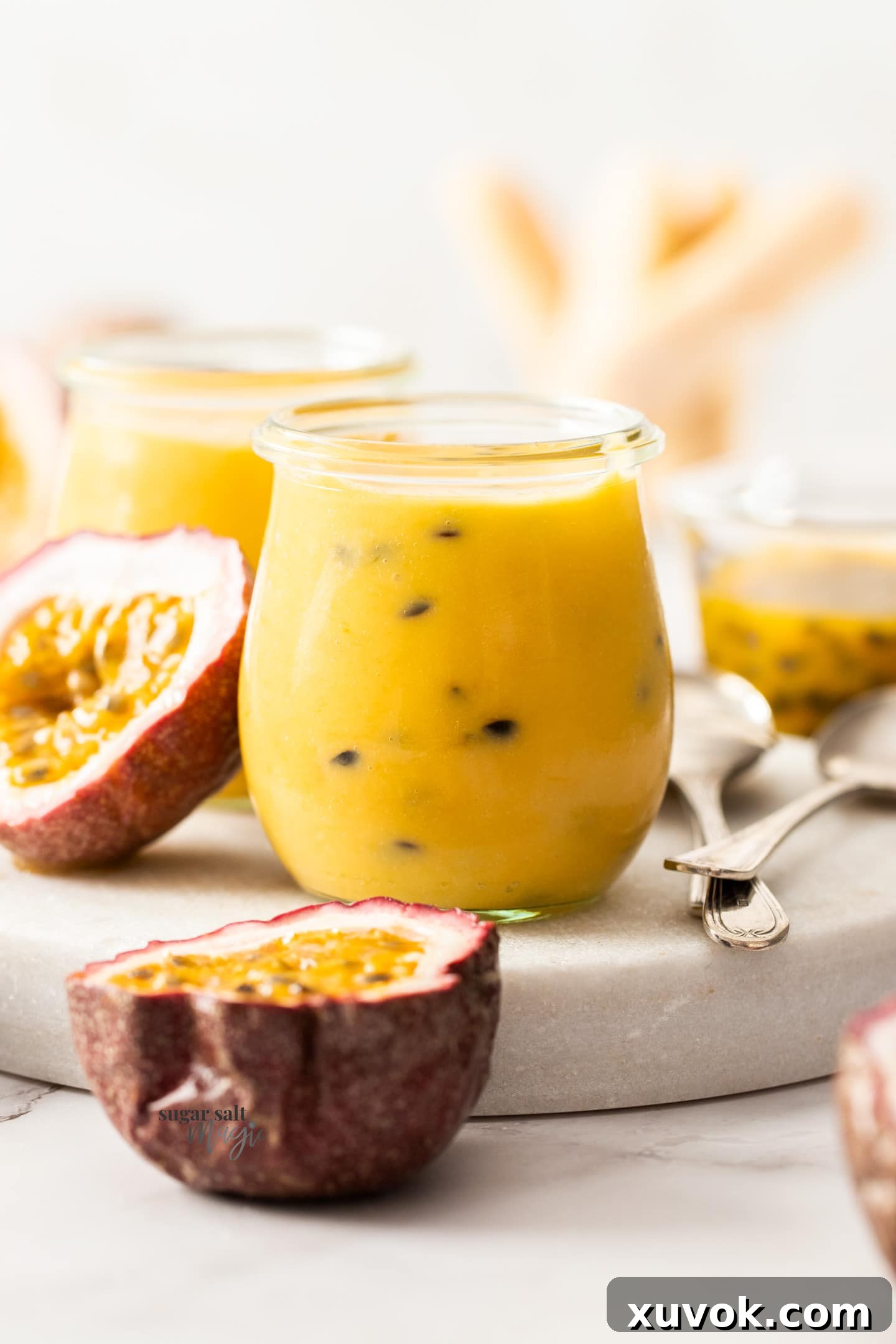
How to Sterilize Jars for Safe Preserving
Sterilizing your preserving jars is a critical step that ensures the longevity and safety of any homemade preserve, including this delightful passionfruit curd. While your curd will last about a week in clean, unsterilized jars, proper sterilization can extend its shelf life significantly, allowing you to enjoy your tropical treat for weeks or even months. Here are two effective methods for sterilizing your jars:
- Boiling Water Method:
- Wash your jars and lids thoroughly in hot soapy water, then rinse them well.
- Place the clean jars (without lids) into a large saucepan. Ensure the jars are completely submerged in water.
- Bring the water to a rolling boil and let the jars boil for at least 10 minutes.
- Carefully remove the jars using tongs, allowing them to drain upside down on a clean tea towel or cooling rack. Let them air dry and cool completely before filling. Submerge the lids in boiling water for 5 minutes just before use.
- Oven Method:
- Wash your jars well with hot soapy water, then rinse them thoroughly.
- Place the clean, wet jars upright on a baking sheet.
- Transfer the baking sheet with the jars into a preheated oven set to 120°C / 250°F for 10-15 minutes. The heat will sterilize and dry them.
- Turn off the oven and allow the jars to cool slightly within the oven, or carefully remove them with oven mitts and let them cool on a clean surface. Sterilize lids separately by boiling them for 5 minutes.
Always ensure your jars are completely cool before filling them with the curd to prevent thermal shock and potential cracking. Handling sterilized jars with clean tongs or hands will maintain their sterility.
Creative Ways to Enjoy Passionfruit Curd
Fruit curds, and this vibrant passionfruit curd in particular, are remarkably versatile and offer a delightfully decadent twist to countless dishes. While simply stirring it into yogurt or spreading it on toast are excellent starting points, the culinary possibilities are truly endless. Let your imagination run wild with these inspiring ideas:
- Elevate Breakfast & Brunch:
- Spread generously over warm, fluffy scones or crisp, homemade crumpets for a luxurious morning treat.
- Dollop onto stacks of light, fluffy pancakes or delicate crepes for a tropical breakfast sensation.
- Swirl into Greek yogurt or oatmeal for a burst of exotic flavor and added creaminess.
- Decadent Dessert Fillings & Toppings:
- Use as a vibrant, tangy filling for exquisite Danish pastries or turnovers.
- Fill or top layer cakes, cupcakes (like these amazing passionfruit coconut cupcakes), or elegant cheesecakes for an unforgettable dessert.
- Incorporate it into crème pâtissière to create a uniquely flavored tropical pastry cream for tarts, éclairs, or fruit parfaits.
- Serve as the star filling for a classic passionfruit tart, offering a perfect balance of sweet and tart.
- Swirl through homemade vanilla or coconut ice cream for a refreshing ripple effect.
- It’s absolutely divine for topping cloud-like pavlovas, paired with fresh berries and whipped cream.
- Unique Snack & Appetizer Ideas:
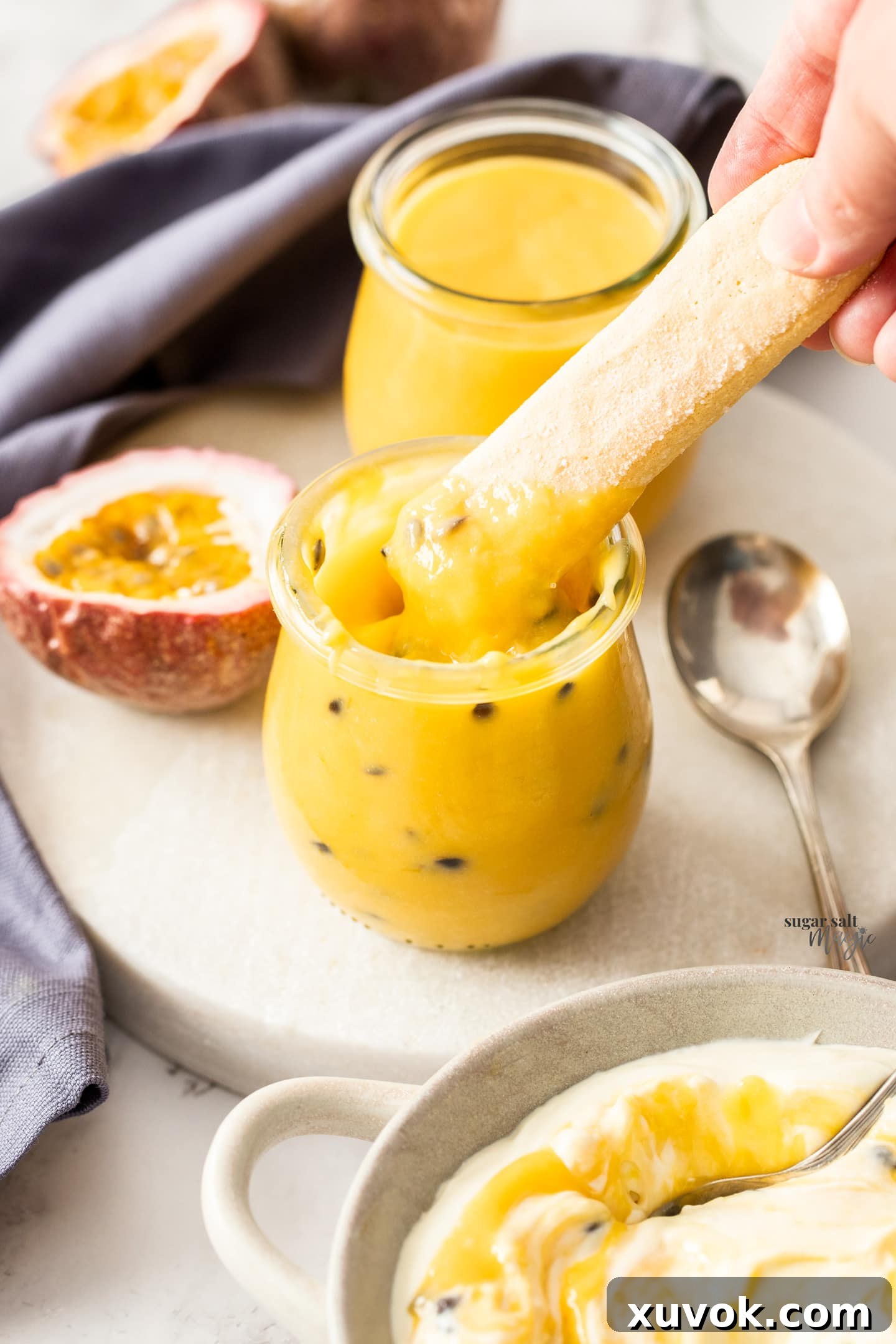
- Simply dip biscuits or cookies into the luscious curd, as shown in the images, for an indulgent snack.
- Stir it into a cream cheese dip: combine one block of softened cream cheese with about 2-3 tablespoons each of sugar and milk, beat until smooth, then swirl in generous dollops of passionfruit curd for a tropical fruit dip that’s perfect with fruit or graham crackers.
- Use it as a glaze for grilled chicken or fish for an unexpected sweet and tangy savory dish.
Yield, Storage, and Shelf Life
This recipe for homemade passionfruit curd will yield approximately 1 ⅔ cups (or just over 400ml) of this golden, tropical delight, making it perfect for enjoying fresh or storing for later indulgence.
Refrigerator Storage: When stored properly in a meticulously sterilized, airtight jar, your unopened passionfruit curd can last for up to one month in the refrigerator. For optimal preservation and to create a natural vacuum seal, some enthusiasts recommend filling the jar to the very top and storing it upside down. Once you’ve opened a jar, it’s best to consume the curd within 7-10 days to ensure peak freshness and flavor.
Freezing for Extended Shelf Life: Passionfruit curd freezes beautifully, offering a fantastic way to preserve its vibrant flavor for an extended period. To freeze, pour the cooled curd into large ice cube trays. Once completely solid, transfer the frozen curd cubes to a freezer-safe ziplock bag or an airtight container. It will keep well in the freezer for up to 3 months. When you’re ready to use it, simply thaw the desired amount overnight in the refrigerator for the best texture and consistency.
Always label your jars or containers with the date of preparation to keep track of freshness. The rich, concentrated flavor of frozen and thawed curd is just as delightful as freshly made, making it an excellent option for meal prep or spontaneous dessert cravings.
Explore More Fruit Curd Recipes
If you’ve fallen in love with the vibrant flavor and creamy texture of this homemade passionfruit curd, you’re in for a treat! The world of fruit curds is incredibly diverse and equally delicious. Each fruit offers its unique character, transforming into a spread that can brighten any breakfast, dessert, or snack. Expand your culinary repertoire with these fantastic fruit curd recipes, perfect for gifting or simply indulging your own sweet cravings:
- Zesty Homemade Lime Curd: A bright and tangy classic that’s incredibly refreshing.
- Creamy Easy Pineapple Curd: Experience a taste of the tropics with this sweet and juicy spread.
- Classic Easy Lemon Curd: The quintessential favorite, known for its sunshine-bright flavor.
- Rich Homemade Blackberry Curd: A delightful blend of sweet and tart, with a beautiful deep hue.
- Luscious Homemade Mango Curd: A tropical dream, bursting with the sweet, aromatic flavor of ripe mangoes.
- Vibrant Blood Orange Curd: A stunning and uniquely flavored curd with gorgeous color and citrusy depth.
Did you try this incredible passionfruit curd recipe?
We would absolutely love to hear from you! Leaving a rating and comment below the recipe card is so helpful and truly appreciated!
Hungry for more deliciousness? Subscribe to our free newsletter to receive the latest recipes straight to your inbox. Plus, make sure to follow along on Facebook, Pinterest, and Instagram for daily inspiration and behind-the-scenes glimpses!
Homemade Passionfruit Curd
31
serves
5 minutes
10 minutes
15 minutes
Makes 1 ⅔ cups
Rate
Pin
Ingredients
- ¾ cup caster (superfine) sugar (150g / 5.3oz)
- ⅔ cup strained passionfruit pulp (keep the seeds if preferred for texture)
- 2 large eggs
- 2 egg yolks, from large eggs
- Zest of ½ a lemon
- 115 g unsalted butter, cubed and cold (½ cup / 1 stick / 4oz)
For best results, always weigh ingredients where a weight is provided
Instructions
-
In a small heavy-based, stainless steel saucepan, whisk together the sugar, strained passionfruit pulp, whole eggs, egg yolks, and lemon zest until well combined.
-
Place the saucepan over low-medium heat and stir constantly with a whisk until the sugar has completely dissolved, which should take just a minute or two.
-
Begin adding the cold, cubed butter, 2-3 pieces at a time. Continue to stir constantly until each addition of butter has fully melted and is smoothly incorporated before adding the next.
-
Reduce the heat to low and continue cooking the mixture for an additional 2-3 minutes, stirring constantly, until the curd has thickened enough to coat the back of a spoon. To test, draw a line through the curd on the spoon; if the line holds and doesn’t drip, it’s ready.
-
If you desire a perfectly smooth curd, strain it through a fine mesh sieve to remove any passionfruit seeds or tiny cooked egg bits. Optionally, stir in a few seeds for texture and visual appeal, otherwise discard them.
-
Pour the hot curd into meticulously sterilized preserve jars. Seal them and allow the curd to cool completely before storing it in the refrigerator.
-
Please take a moment to leave a comment & rating. Your feedback is highly appreciated and incredibly helpful!
Notes
- This delightful curd, when stored unopened in a properly sealed, sterilized jar, will keep fresh in the refrigerator for up to 3 weeks. Once opened, please consume it within a week for the best quality and taste. It also freezes exceptionally well (refer to storage instructions above).
- To Sterilize Jars: You can either boil clean jars in a saucepan of boiling water for 10 minutes, then drain, dry, and cool them; or wash them thoroughly with soapy water, rinse, and place them in a preheated oven at 120°C / 250°F for 10 minutes, allowing them to cool afterwards. Lids should be boiled separately for 5 minutes.
- For a dairy-free version, you can substitute the unsalted butter with a high-quality vegetable-based spread. Note that the flavor profile may vary slightly.
- This recipe yields approximately just over 400ml, which is equivalent to roughly 1 ⅔ cups of luscious passionfruit curd.
DISCOVER MORE SWEET SAUCES AND CONDIMENTS!
70kcal
Marie Roffey
Condiment, Desserts, Sweets
Tropical, World
Have you tried this recipe?
Don’t forget to leave a rating and comment below and let me know how it was! I love hearing from you. Nutrition information is approximate and derived from an online calculator. The brands you use may cause variations.