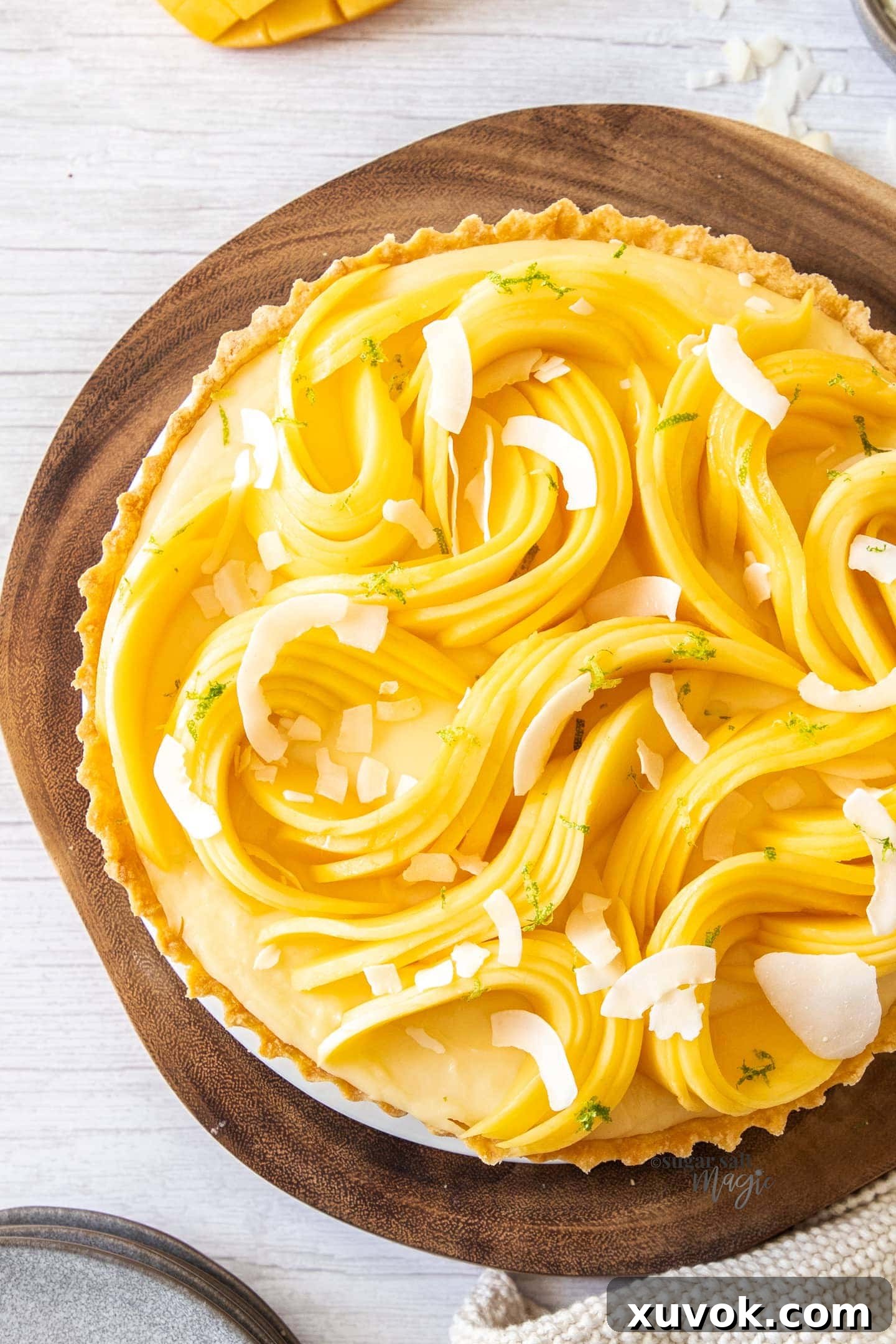
An Irresistible Tropical Dream: The Ultimate Mango Tart Recipe
Craving a taste of the tropics? This mango tart recipe is more than just a dessert; it’s a vibrant celebration of sunshine, sweet flavors, and delicate textures. Imagine a show-stopping creation, radiant with the golden hues of fresh mango, gracing your table. This tart isn’t just beautiful; it’s an unforgettable culinary experience that transports you to a paradise island with every bite.
At its heart, this exquisite dessert features a **buttery, crisp pastry base** – a perfect counterpoint to the **silky-smooth, rich custard filling**. The star, of course, is the mango, presented in an elegant arrangement of **fresh, thinly sliced mangoes** meticulously layered over the set custard. This vibrant topping not only adds an explosion of tropical flavor but also creates a stunning visual masterpiece that will impress any guest.
What makes this mango tart truly special is its deceptive simplicity. Composed of just three core homemade layers, you might be surprised at how accessible and straightforward it is to create such a sophisticated dessert from scratch. It’s a testament to the fact that extraordinary flavors don’t always require complicated techniques.
The dawn of a new year or the peak of summer always sparks a desire for bright, fresh, and exotic desserts. If you share this love for tropical delights, you’ll adore this mango tart. For more mango-inspired recipes, be sure to explore our popular homemade mango curd, the luscious mango coconut cheesecake, and the ethereal mango pavlova. Each offers a unique way to enjoy the delightful taste of mango, but this tart holds a special place as a quintessential summer treat.
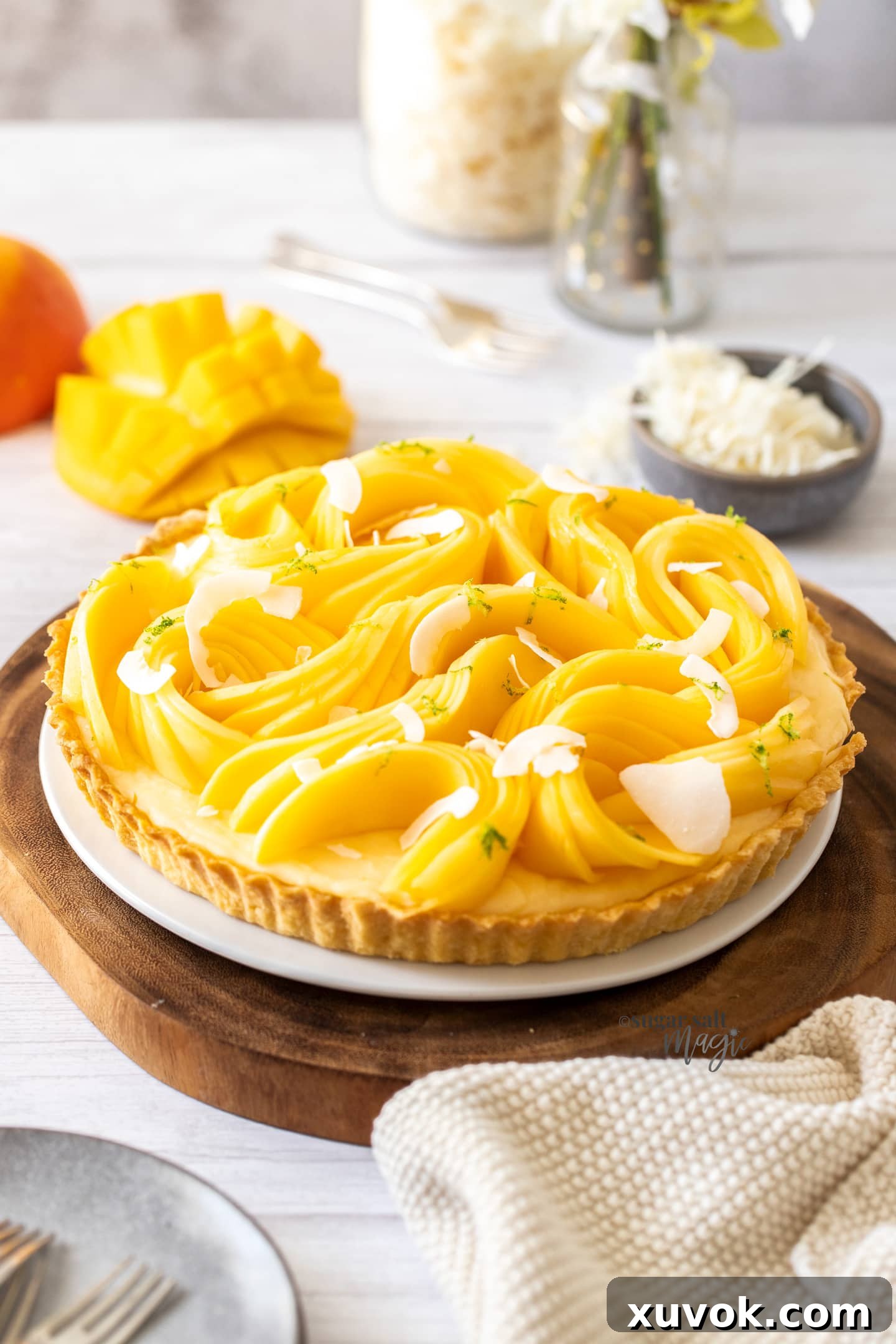
Table of Contents
- What You’ll Need: Key Ingredients for Your Mango Tart
- Mastering the Pâté Sucrée: Your Guide to a Perfect Tart Crust
- Creating the Silky Custard Filling: Crème Pâtissière Perfection
- The Art of Mango Decoration: How to Arrange Your Tropical Topping
- Expert Tips & Tricks for a Flawless Mango Tart
- Can I Make Mango Tart Ahead? Preparation & Storage Tips
- More Tropical & Custard Tart Recipes You’ll Love
Never Miss a Recipe!
Get the latest, most delicious recipes straight to your inbox and be the first to discover your next baking adventure!
What You’ll Need: Key Ingredients for Your Mango Tart
Embarking on this tropical baking journey is easier than you might think, as most of the ingredients required for this delectable mango tart are likely staples in your pantry. The star ingredient, of course, is the fresh mango, which we’ll cover in detail. Gathering your ingredients before you begin will ensure a smooth and enjoyable baking process.
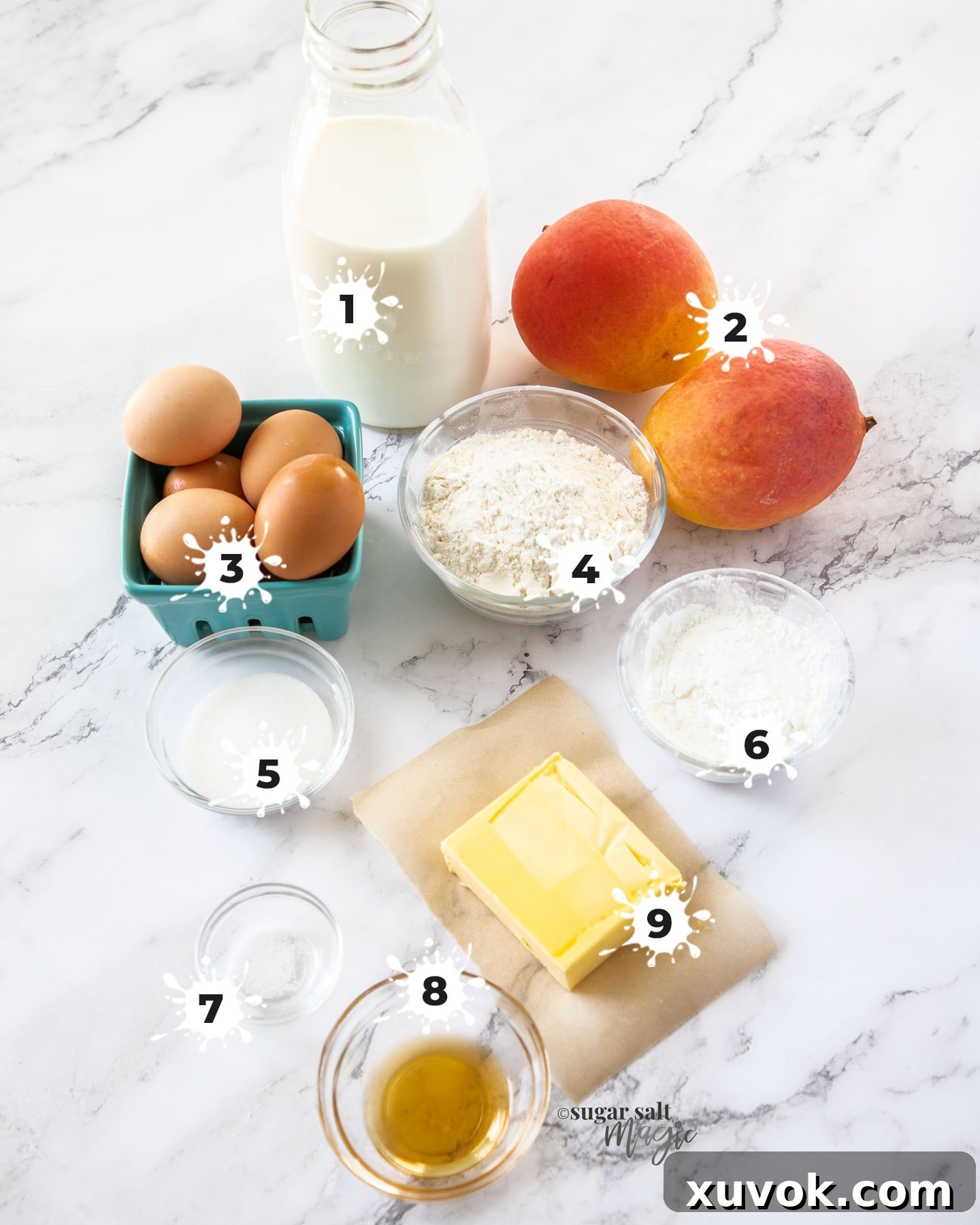
For precise measurements and detailed step-by-step instructions, please refer to the recipe card below.
- Mangoes: The soul of this tart! It’s crucial to select perfectly ripe mangoes for the best flavor and texture. A ripe mango will typically yield slightly to gentle pressure and emit a sweet, fruity aroma near the stem end. Avoid hard or overly soft mangoes. Two large, ripe mangoes are generally sufficient for the stunning topping.
- Milk: For an exceptionally rich and creamy custard, whole milk is highly recommended. Its fat content contributes significantly to the custard’s luscious texture and depth of flavor. However, if you prefer, lighter milk or even non-dairy alternatives can be used, though the final custard might be slightly less decadent.
- Eggs: Eggs are vital for the custard, acting as both a thickening agent and a source of its signature rich, velvety flavor. They help create that beautifully set, smooth texture that defines a classic pastry cream.
- Cornflour (Cornstarch): This essential ingredient works in conjunction with the eggs to thicken and stabilize the custard, ensuring it sets perfectly and holds its shape beautifully once chilled. It’s the secret to a firm yet tender filling.
Completing this simple yet elegant ingredient list are pantry staples: unsalted butter for that rich, flaky crust and creamy filling, all-purpose flour for structure, granulated sugar for sweetness, a pinch of salt to balance flavors, and vanilla extract to enhance the aromatic depth of the custard. Each ingredient plays a crucial role in creating a harmonious and utterly delicious mango tart.
Mastering the Pâté Sucrée: Your Guide to a Perfect Tart Crust
Pâté Sucrée, literally “sweet paste” in French, is a sophisticated sweet shortcrust pastry renowned for its delightful, almost cookie-like texture and subtle sweetness. Unlike traditional pie crusts that can be flaky and savory, pâté sucrée offers a more delicate, crisp, and tender bite, making it the ideal foundation for fruit tarts and custard fillings. It’s a versatile pastry that’s delicious enough to be eaten on its own, a testament to its rich butter content and fine crumb.
Crafting the perfect pâté sucrée is a foundational step in achieving a truly exceptional mango tart. Its sturdy yet crumbly nature provides the perfect contrast to the creamy custard and soft mango, ensuring every mouthful is a balance of textures. Don’t be intimidated by its French name; with a few key techniques, you’ll master this elegant crust in no time.
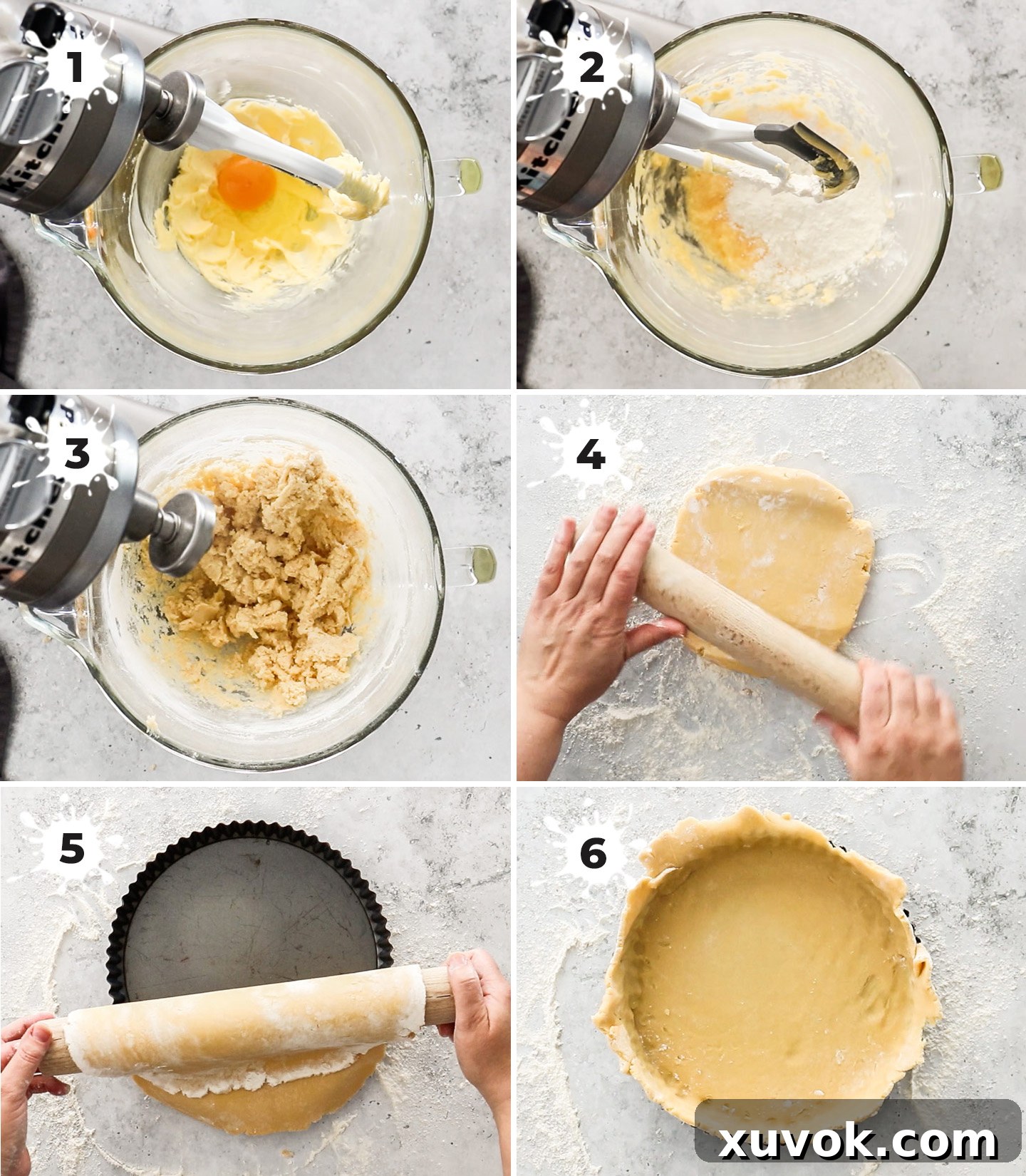
Detailed instructions are available in the recipe card below for precise guidance.
- Prepare the Pastry Dough: Begin by creaming together softened unsalted butter and fine icing sugar until the mixture is light, fluffy, and well combined. This initial step incorporates air, contributing to the pastry’s tender texture. Next, incorporate the egg, beating it in until fully blended. The egg acts as a binder, creating a richer dough. Finally, gradually add the all-purpose flour, mixing on low speed only until the ingredients just come together and begin to form large, shaggy clumps. Overmixing here can develop too much gluten, resulting in a tough crust.
- Form and Chill the Tart Shell: Gently gather the dough into a smooth, flattened disk – avoid overworking it with your hands. On a lightly floured surface, carefully roll out the dough to an even thickness of about 4-5mm (approximately 1/5 inch). The goal is to create a circle large enough to fit your tart tin with a slight overhang. Drape the rolled dough into your 9-inch fluted tart tin with a removable base. Carefully press the dough into the fluted sides and corners using your fingertips, ensuring it adheres well without stretching. Leave the excess pastry hanging over the edges for now. This step is crucial for achieving a neat finish later. Place the tart shell into the refrigerator and chill for a minimum of 2 hours, or ideally, overnight. Chilling is paramount; it allows the butter to firm up, preventing the crust from shrinking excessively during baking and ensuring a crisp, stable shell.
- Blind Bake the Tart Shell: Once adequately chilled, preheat your oven to 180°C (160°C fan) / 350°F. Before baking, carefully prick the base of the tart shell all over with a fork. This creates steam vents, preventing the crust from puffing up. Now, trim the overhanging pastry flush with the top edge of the tart tin using a sharp knife. Line the chilled shell with a sheet of baking paper or parchment paper, then fill it with pie weights, dried beans, or rice to weigh it down. This “blind baking” prevents the crust from collapsing. Bake for 20 minutes with the weights, then carefully remove the baking paper and weights, and continue baking for another 15-20 minutes, or until the crust is lightly golden brown and feels dry to the touch. If the edges begin to brown too quickly, you can shield them with strips of foil. Allow the baked tart shell to cool completely on a wire rack before filling.
Creating the Silky Custard Filling: Crème Pâtissière Perfection
The heart of this mango tart is its luscious custard filling, essentially a classic crème pâtissière (pastry cream). This creamy, vanilla-infused delight provides a smooth, rich base that perfectly complements the vibrant fresh mangoes. Despite its sophisticated taste and appearance, you’ll be genuinely surprised at how simple and rewarding it is to prepare this foundational French pastry cream from scratch.
Achieving a perfectly smooth, thick, and flavorful custard is key to the tart’s success. The process involves a careful balance of heat and whisking, ensuring a luxurious texture free from lumps or scrambled egg bits. Once you master this crème pâtissière, a world of dessert possibilities opens up to you!
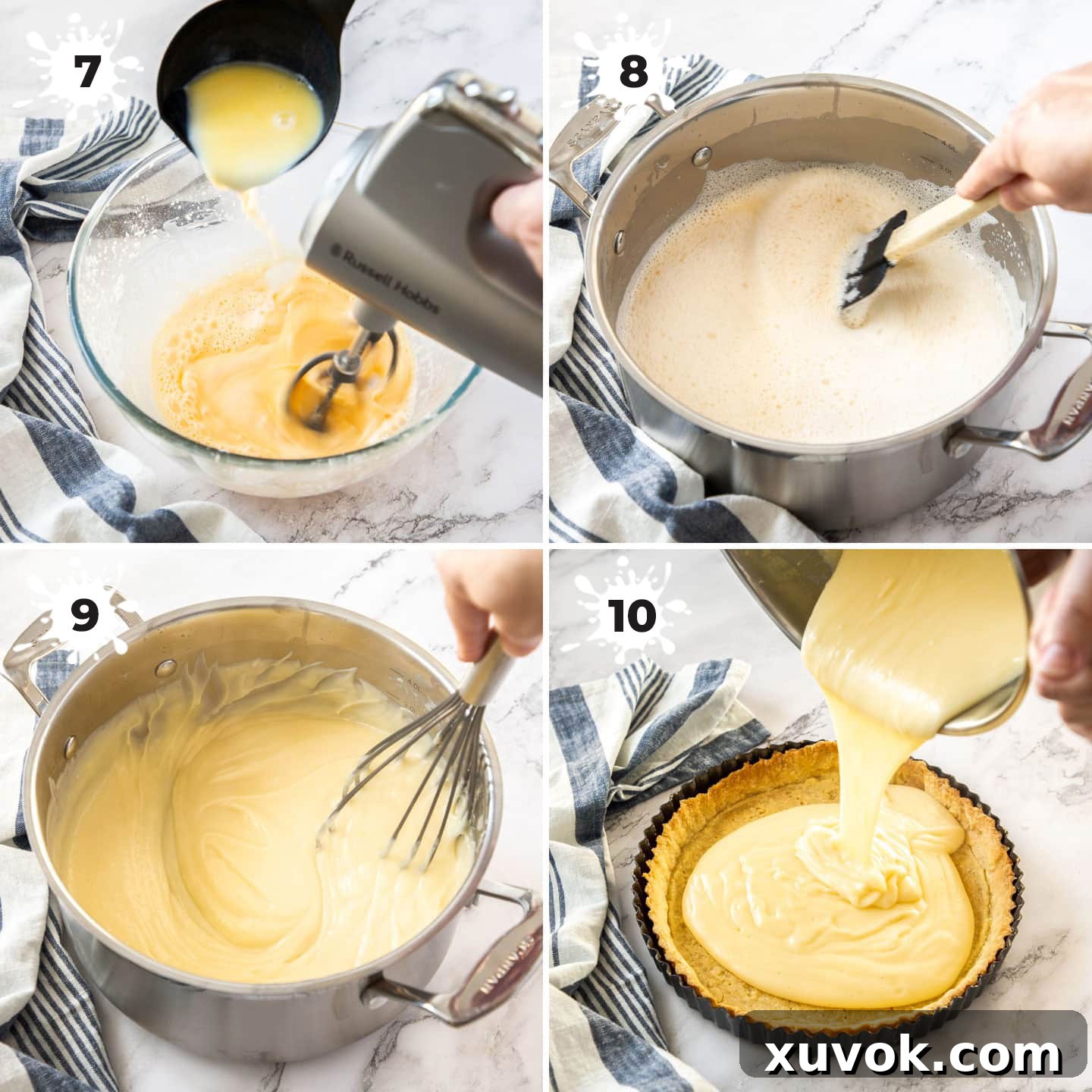
- Infuse the Milk Mixture: Begin by combining milk, sugar, butter, and vanilla extract in a heavy-based saucepan. Heat this mixture gently over low heat, stirring occasionally, until it just begins to steam. The goal is to warm it thoroughly and dissolve the sugar, infusing the milk with the wonderful aroma of vanilla, without letting it come to a rolling boil.
- Temper the Eggs: In a separate heatproof bowl, vigorously whisk together the eggs (whole eggs and yolks) and cornflour (cornstarch) until the mixture is pale yellow and completely smooth, with no visible lumps. This creates a stable base for the custard. Now, slowly and gradually drizzle a small amount of the hot milk mixture into the egg mixture while continuously whisking. This crucial step, known as tempering, slowly raises the temperature of the eggs, preventing them from scrambling when they are fully combined with the hot milk. Continue adding the milk mixture in a slow, steady stream, whisking constantly, until all the hot milk is incorporated.
- Cook to Perfection: Pour the entire tempered egg and milk mixture back into the saucepan. Place it back over low heat and stir constantly with a balloon whisk. This constant stirring is essential to prevent the custard from sticking to the bottom and forming lumps. Continue cooking until the custard thickens significantly and coats the back of a spoon, leaving a clear trail when a finger is drawn across it. This thickening usually happens quite suddenly after about 5-7 minutes. Once thickened, remove it immediately from the heat.
- Chill and Set: Pour the hot, thick custard directly into your pre-baked and cooled tart shell. Use an offset spatula or the back of a spoon to gently spread and level the top for a smooth finish. Place the filled tart into the refrigerator and allow it to chill completely, typically for at least 1-2 hours. The custard needs to be thoroughly set and firm before you add the mango decoration to ensure it can support the fruit beautifully.
For a delightful variation, you can also fill this tart with a vibrant and airy Mango Mousse, offering a different texture profile that’s equally delicious.
The Art of Mango Decoration: How to Arrange Your Tropical Topping
The crowning glory of this tropical dessert is the exquisite arrangement of fresh mango slices. This decoration not only provides a burst of authentic mango flavor but also transforms your tart into a visually stunning centerpiece. For this vibrant topping, you will need two large, perfectly ripe mangoes, ensuring a generous and impressive display.
The beauty of the mango topping lies in its natural presentation, showcasing the fruit’s vibrant color and juicy texture. While the arrangement can seem intricate, it’s surprisingly simple and allows for your own creative touch.
- Prepare the Mangoes: Start by carefully peeling your ripe mangoes. A regular vegetable peeler works perfectly for this, but exercise caution as peeled mangoes can be quite slippery. Once peeled, use a sharp knife to cut the two “cheeks” off either side of the large central stone. You’ll want to get as much flesh as possible while avoiding the fibrous pit.
- Slice for Presentation: Lay each mango cheek flat, cut-side down, on a chopping board. Using your sharp knife, carefully slice the mango flesh into very thin, even slices. The thinner the slices, the more pliable and elegant they will be for arranging. Aim for uniform thickness to create a beautiful, cohesive pattern.
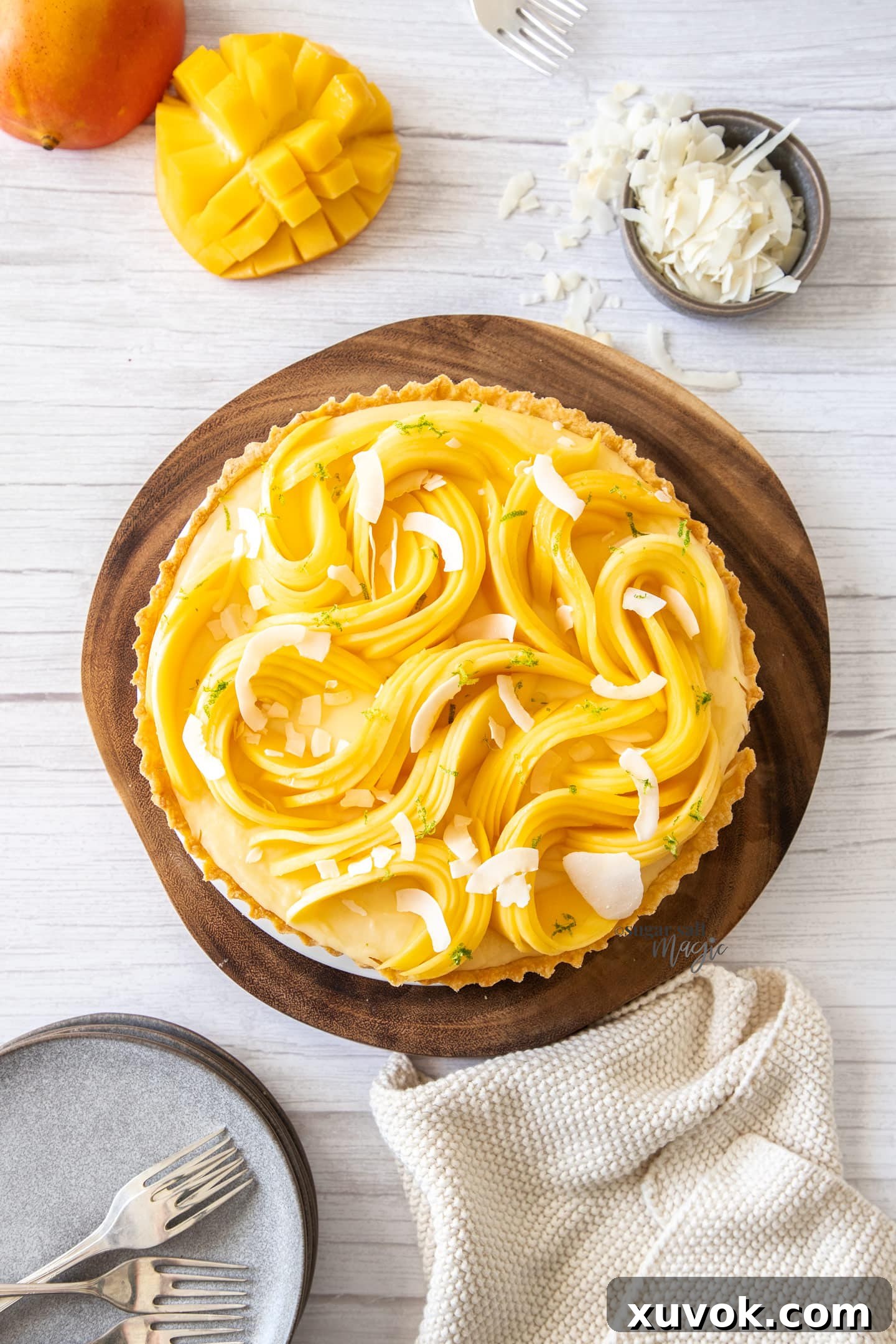
- Arrange the Mango Slices: Now for the artistic part! As you gently handle the mango slices, you’ll notice how easily they slide against each other. This natural movement is key to creating the stunning fanned effect. Take small groups of 4-6 thin slices, gently fan them out, and then curve them slightly. Arrange these fanned groups randomly or in an overlapping circular pattern all over the top of the chilled custard. You can create concentric circles, a swirling pattern, or a more free-form, organic design – the choice is yours. Ensure the entire surface of the custard is covered, creating a lush, tropical landscape. For an extra touch of sheen and to prevent drying, you can lightly brush the mangoes with a warmed apricot jam or a simple sugar glaze, though it’s equally delightful served naturally.
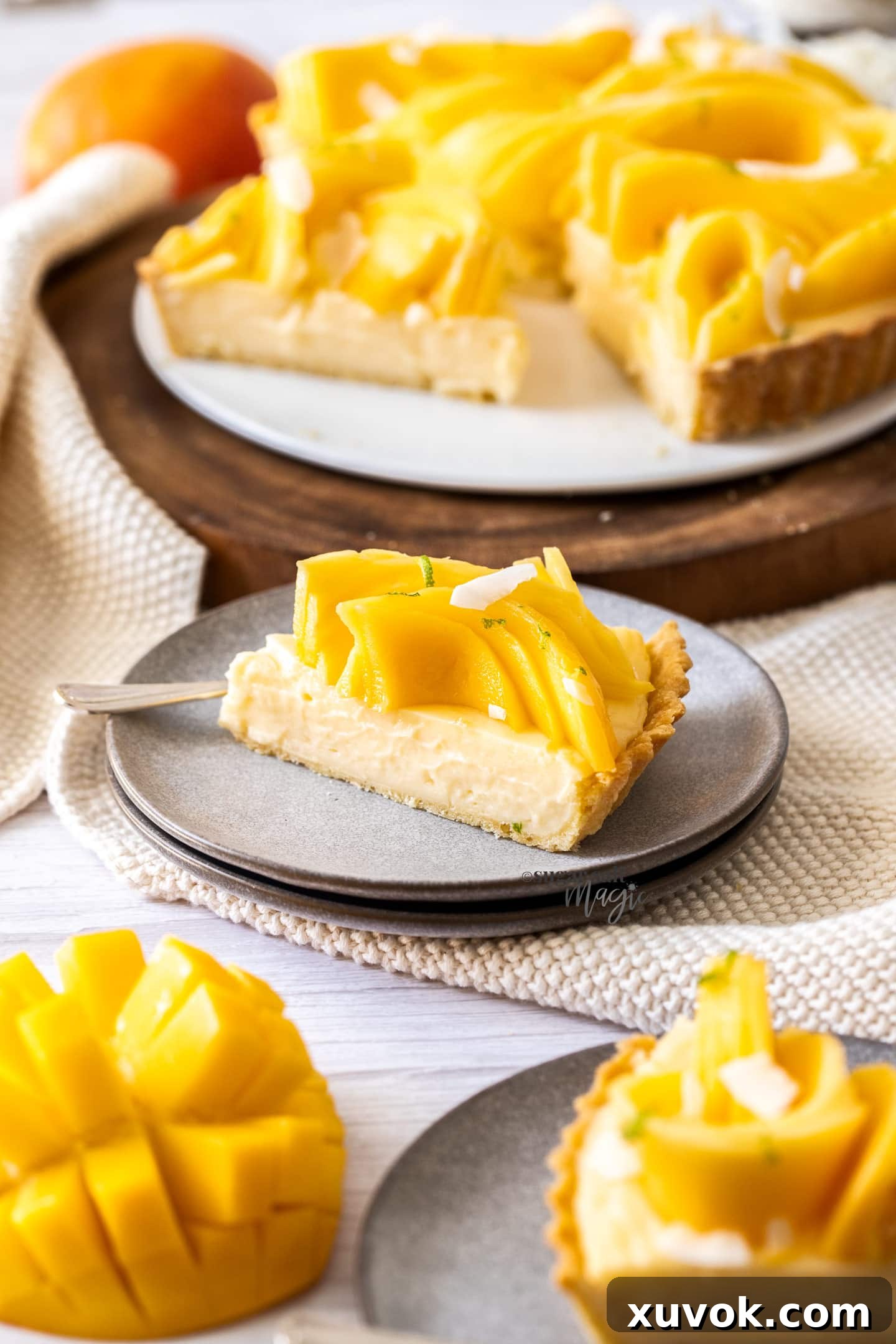
This tropical masterpiece can be served as soon as the custard has fully chilled and set, allowing the flavors to meld beautifully. While the tart is undeniably delicious when fresh, you can prepare it 1-2 days in advance. However, for the most vibrant appearance and juiciest texture, we recommend serving it on the same day it’s decorated, as the fresh mango slices tend to dry out slightly over time. A freshly assembled mango tart offers the ultimate sensory experience.
Expert Tips & Tricks for a Flawless Mango Tart
Achieving a bakery-worthy mango tart is well within your reach with these expert tips and tricks. These pointers address common challenges and ensure each component of your tart, from the crust to the topping, is absolutely perfect.
- For the Custard: Don’t Boil the Milk: When heating the milk mixture for the custard, remember that you only want it to reach a gentle steam. A rapid boil can scorch the milk, alter its flavor, and increase the risk of curdling your custard. Low and slow is the key to infusing flavors beautifully.
- For the Custard: Temper Eggs Slowly: The most crucial step to preventing scrambled eggs in your custard is to temper them correctly. Drizzle the hot milk mixture into the whisked eggs *very slowly* while continuously whisking. This gradual introduction of heat gently raises the eggs’ temperature, allowing them to integrate smoothly without cooking into solid pieces. Patience here pays off immensely.
- For the Custard: Constant Whisking for Smoothness: Once the tempered mixture is back in the saucepan, keep whisking constantly over low heat. This prevents the custard from sticking to the bottom, ensures even cooking, and breaks up any lumps as they form, guaranteeing a perfectly smooth and velvety texture.
- For the Crust: Don’t Overwork the Pâté Sucrée: When making the pastry dough, mix the flour only until it’s just combined and forms clumps. Overworking the dough develops gluten, which can lead to a tough, chewy crust instead of the desired crisp and tender pâté sucrée.
- For the Crust: Chill Thoroughly: Ensure your tart shell is thoroughly chilled before blind baking. Cold butter prevents the pastry from shrinking too much in the oven and helps maintain its crisp, delicate structure. If time permits, an overnight chill is ideal.
- Assembly: Let the Filling Set Completely: Before attempting to top and serve your mango tart, allow the custard filling to chill and set completely in the refrigerator. This usually takes at least 1-2 hours. A firm custard provides a stable base that can beautifully hold the weight and arrangement of the fresh mango slices, preventing any messy collapses.
- Serving Suggestion: Brighten with a Glaze: For an extra touch of professional finish and to prevent the mangoes from drying out if serving later, you can brush the arranged mango slices with a thin layer of warm apricot jam (strained and thinned with a little water) or a simple sugar syrup. This adds a beautiful sheen and seals in freshness.
Can I Make Mango Tart Ahead? Preparation & Storage Tips
While this mango tart shines brightest when served fresh, especially with its vibrant fruit topping, it’s definitely possible to prepare certain components in advance or even assemble the tart a day or two ahead. Thoughtful planning can make dessert preparation much more relaxed, allowing you to enjoy your guests and the occasion.
The assembled mango tart, once decorated, is best enjoyed within 1-2 days. Store it carefully in an airtight container in the refrigerator to maintain freshness. Keep in mind that beyond this timeframe, the fresh mango slices might begin to lose some of their vibrant appearance and juicy texture, appearing a little drier around the edges. For optimal presentation, aim to add the mango topping just a few hours before serving.
For convenience, you can prepare the pâté sucrée dough well in advance. Wrap the dough tightly in plastic wrap and store it in the freezer for up to 2 months. When you’re ready to bake, simply thaw it in the refrigerator overnight before rolling it out. You can also go a step further and blind bake the tart shell completely ahead of time. Once baked and cooled, wrap the empty shell carefully and store it in the freezer for 1-2 months. This is a fantastic time-saver for busy schedules.
The luscious custard filling is another component that can be made ahead. Prepare the crème pâtissière up to 2-3 days in advance. Store it in an airtight container in the refrigerator, with plastic wrap pressed directly onto the surface to prevent a skin from forming. Before filling your tart shell, give the chilled custard a good whisk to restore its smooth, creamy consistency, ensuring it’s lump-free and ready for assembly.
By preparing these components in stages, you can easily spread out the effort and enjoy a stress-free dessert experience, perfect for entertaining or simply treating yourself.
More Tropical & Custard Tart Recipes You’ll Love
If you’ve fallen in love with the vibrant flavors of this mango tart, you’re in for a treat! Here are more delightful recipes that explore tropical fruits and classic custard fillings, perfect for expanding your dessert repertoire:
- Mango Coconut Cheesecake: A creamy, dreamy fusion of tropical mango and rich coconut in a decadent cheesecake.
- Strawberry Custard Tart: A timeless classic featuring sweet strawberries nestled atop a smooth, vanilla custard.
- Passionfruit Tart: Experience the tangy and exotic burst of passionfruit in a bright and refreshing tart.
- Fruit Custard Tart: A versatile recipe for a classic custard tart, beautifully adorned with an assortment of seasonal fresh fruits.
- Lemon Vanilla Custard Slice: Layers of crisp pastry and zesty lemon-vanilla custard create a delightful bar-style treat.
- Coconut Mango Crumble: A comforting, warm dessert where sweet mangoes meet a crunchy, tropical coconut crumble topping.
If you’ve tried this mango tart, make sure to leave a comment and star rating below. Your feedback helps other bakers!
Hungry for more? Subscribe to our newsletter for free recipes straight to your inbox. Also, follow along on Facebook, Pinterest and Instagram for daily inspiration and behind-the-scenes glimpses!
Mango Tart
Rate
Pin
Ingredients
FOR THE TART SHELL
- 100 g unsalted butter, softened (7 tablespoons / 3.5oz)
- 40 g icing sugar (powdered sugar) (⅓ cup / 1.4oz)
- 1 large egg, room temperature
- 225 g plain flour (all purp flour) (1 ¾ cups / 8oz)
FOR THE FILLING AND TOPPING
- 3 ½ cups milk (875ml / 29.5 fl oz)
- 57 g butter
- 3 teaspoons vanilla extract
- 100 g granulated white sugar (1/2 cup / 3.5oz)
- ½ cup cornflour (cornstarch)
- 2 large eggs
- 3 egg yolks, from large eggs
- 2 mangoes, thinly sliced
For best results, always weigh ingredients where a weight is provided
Equipment
-
stand mixer is helpful
-
9 inch fluted tart tin with removable base
-
pie weights (or rice or dried beans)
-
heavy based saucepan
Instructions
For the tart shell:
-
In the bowl of a stand mixer with paddle attachment, add the butter and icing sugar. Beat on medium until fully combined and smooth (1 – 2 minutes).
-
Add the egg and beat on low until smooth. Add the flour and beat just until large clumps are forming.
-
Turn the dough out and pull it together into a smooth ball with your hands (making sure not to handle it too much) then press it out into a 1 inch thick disk.
-
Place it onto a lightly floured work surface and dust the top with just a little flour too. Gently and gradually roll the pastry out, turning it often, to about 4-5mm thick or about 11 inches in diameter.
-
Place the rolling pin in the middle of the dough and fold one side of the pastry over the top. Lift the rolling pin so the pastry is hanging over it, and lightly dust off any excess flour from underneath. Carefully lay it into a 9 inch round tart pan with removeable base.
-
Press the dough down in to the corners all the way round with your fingertips, then press it into the scalloped sides. Leave the overhang standing upright and place the tart pan into the fridge to chill for a minimum of 2 hours or overnight. If your freezer has space you can place it in there.
-
BAKE THE TART SHELL:
Preheat the oven to 180C (160C fan) / 350F.
-
Trim the overhang off the pastry with a sharp knife laid flat along the top of the tart tin and prick the base of the pastry shell all over with a fork.
-
Lay a sheet of baking paper into the shell and fill with rice (or pie weights), nudging them into the corners.
-
Transfer to the preheated oven and bake for 20 minutes then remove the baking paper and rice and bake a further 15-20 minutes. If the edges are browning too much, cover them with foil. It’s done when the base is starting to colour and the edges look a pale golden brown.
FOR THE FILLING
-
Pour the milk into a heavy based saucepan, and add the butter, sugar and vanilla, then heat on very low heat until steaming, stirring regularly.
-
While the milk mixture is heating, whisk together the cornflour, egg and egg yolks until pale yellow.
-
Once the milk mixture is steaming, drizzle it slowly into the eggs while whisking constantly. Don’t pour it too quickly or the heat will scramble the eggs.
-
Return the entire mix to the saucepan. Heat over low heat, stirring with a balloon whisk constantly, until it gets very thick. This will happen quite suddenly after about 5 minutes, so it’s important to keep stirring so you don’t get lumpy custard.
-
The custard is thick enough, when it takes 4-5 seconds to return to the side of the pan and the whisk leaves a trail.
-
Remove from the heat and allow to cool for a couple of minutes before pouring into your tart shell. Level out the top with an offset spatula or knife.
-
Place in the fridge and allow it to set for about 1 hour before topping and serving.
-
Peel the mangoes, then use a sharp knife to cut off the cheeks running along the side of the stone. Place them flat side down on a board, then cut thin slices. Using groups of 4-5 slices, arrange them over the top of the tart.
-
Please take a moment to leave a comment & rating. It’s appreciated and so helpful.
Notes
- Tablespoons: I use a standard Australian 20ml tablespoon (equivalent to 4 teaspoons worldwide).
- For the most accurate results, you should always weigh ingredients like flour and sugar. Kitchen scales are relatively inexpensive and provide precision. If you are unable to weigh ingredients, please use the spoon and level method (don’t scoop flour directly from the bag).
More Information
These links will take you up to the post – just scroll down to get back to the recipe card.
- What is pâté sucrée? Step by step photos
- The custard filling. Step by step photos
- The mango decoration
- Tips and tricks
- Can I make mango tart ahead
MORE PIES AND TARTS!