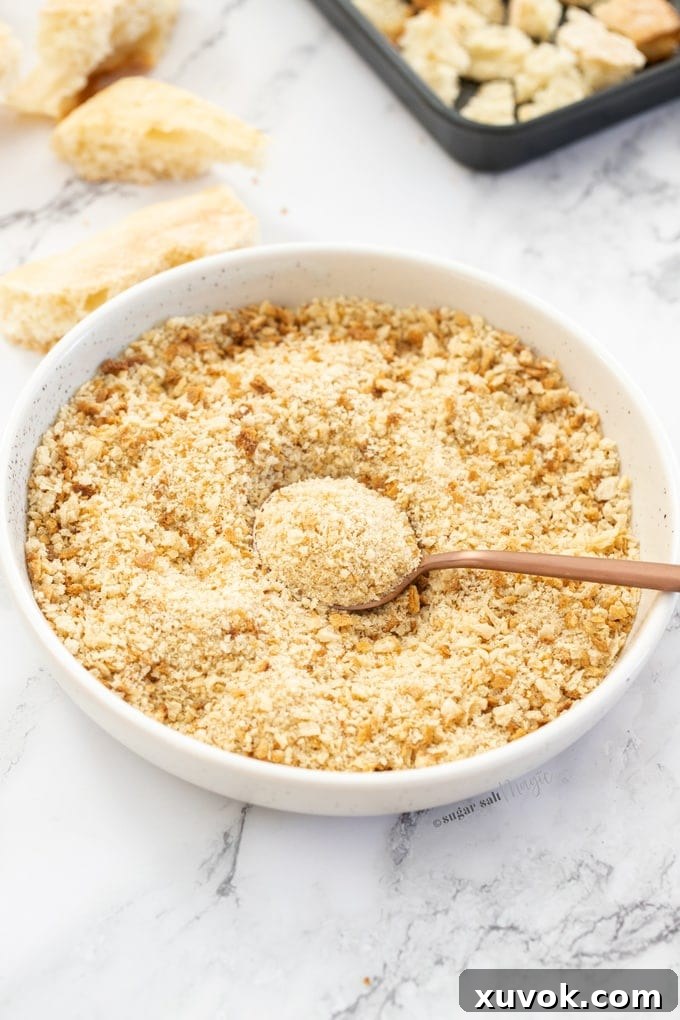
Unlock a culinary secret that will transform your kitchen habits and elevate your cooking: **making your own homemade breadcrumbs**. Once you discover how simple they are to prepare and how incredibly well they store, you’ll find yourself wondering why you ever bought store-bought varieties or let a single loaf of bread go to waste. For years, I’ve embraced this practice, turning every leftover bread roll or unfinished artisanal loaf into a versatile, flavorful ingredient. This isn’t just about saving money; it’s about reducing food waste, enhancing the taste of your dishes, and having complete control over the texture and quality of your ingredients.
Transforming stale bread into something new and exciting doesn’t stop at breadcrumbs. You can also use those forgotten loaves to craft these delightful Cheese and Garlic Croutons, perfect for salads and soups, or create a batch of Pangrattato, often called “poor man’s Parmesan,” which adds an irresistible crunch to pasta dishes.
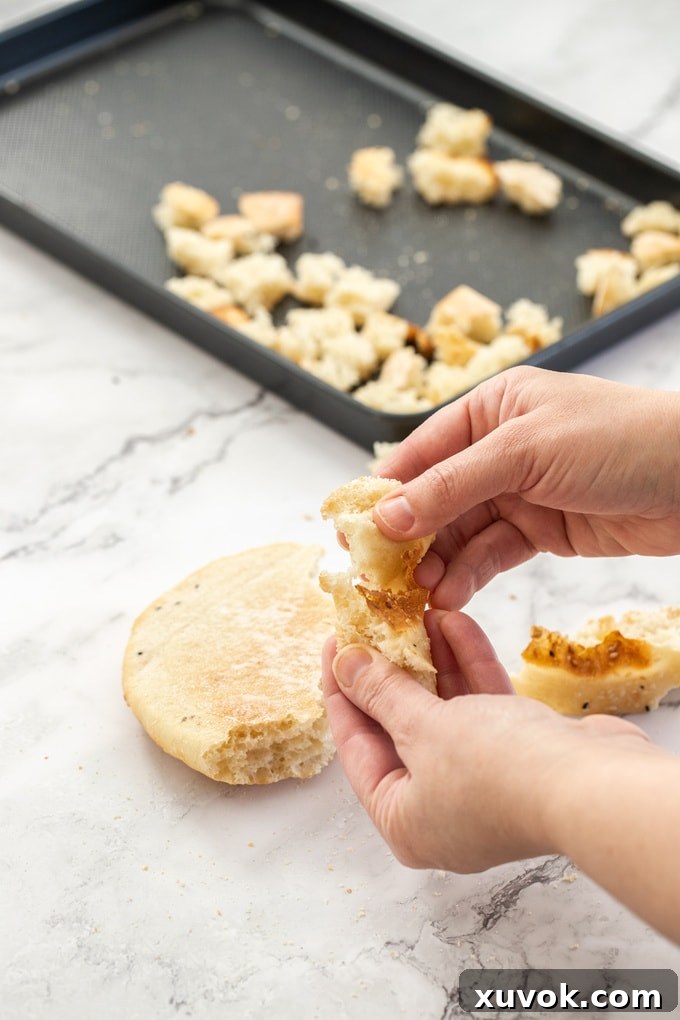
Table of contents
- Why Homemade Breadcrumbs are a Game Changer
- What Bread to Use to Make Breadcrumbs
- How Do You Make Breadcrumbs?
- How to Make Breadcrumbs Without a Food Processor?
- Should I Remove the Crusts?
- Can I Use Fresh Bread?
- How Long Do Breadcrumbs Last?
- How to Use Breadcrumbs
- More Recipes You’ll Love
Why Homemade Breadcrumbs are a Game Changer
Beyond the undeniable financial and environmental benefits, the true magic of homemade breadcrumbs lies in the control they offer over the final texture and flavor. Unlike often bland and uniformly fine store-bought options, you can customize your crumbs to be anything from rustic and chunky to super fine, depending on your culinary needs. This versatility is invaluable. For instance, I love using a combination of textures to create the perfect crispy coating for my Chicken Schnitzels and my Italian Chicken Cutlets, adding a depth of crunch and visual interest that simply can’t be matched by pre-packaged alternatives. This level of customization allows you to tailor the breadcrumbs precisely to the dish, ensuring a superior result every time.
What Bread to Use to Make Breadcrumbs
One of the most appealing aspects of making your own breadcrumbs is that **any type of bread will work**, making it an excellent solution for using up almost any leftover loaf. This means you’re not limited to a single style; just as there are countless varieties of bread, there can be endless variations of homemade breadcrumbs. Imagine the possibilities:
- Sourdough Breadcrumbs: These offer a delightful tang and complex flavor that can elevate savory dishes.
- Wholegrain Breadcrumbs: Perfect for adding a nutty depth and extra fiber, they’re fantastic for healthier coatings or toppings.
- Regular White Breadcrumbs: The classic choice, these are neutral in flavor and provide a crisp texture, making them suitable for almost any recipe.
- Gluten-Free Breadcrumbs: For those with dietary restrictions, simply use your favorite gluten-free bread to create compliant crumbs that taste far better than their store-bought counterparts.
- Crusty Baguette or Ciabatta: These yield exceptionally coarse and rustic crumbs, ideal for substantial coatings or hearty casserole toppings.
- Brioche or Challah: For a slightly sweeter, richer crumb perfect for desserts or a unique stuffing base.
The key is to use bread that is at least a day or two old and beginning to firm up. While fresh bread can technically be used (we’ll discuss that below), stale bread has less moisture, which significantly speeds up the drying process and results in crispier, more stable crumbs.
How Do You Make Breadcrumbs?
Making breadcrumbs at home is incredibly straightforward, requiring minimal equipment and just a few simple steps. Here’s a detailed breakdown of the process to ensure perfect results every time:
- Prepare the Bread: Begin by cutting or tearing your stale bread into small, uniform chunks. Smaller pieces ensure more even drying and processing. If using a food processor, aim for pieces roughly 1-2 inches in size.
- Process (if using a food processor): Transfer the bread chunks to a food processor. Pulse them in short bursts until they reach your desired consistency. For fine crumbs, process longer; for coarser, rustic crumbs, use fewer pulses. Avoid over-processing, which can turn the bread into a paste due to its natural oils.
- Toast for Crispness: Spread the processed (or hand-torn) bread chunks evenly on a baking tray. Place them in a preheated oven at 160C / 320F / 140C fan forced. Toast, turning them frequently (every 5-7 minutes), for about 20-30 minutes, or until they are completely dry, golden, and crispy. This step is crucial for removing all moisture, which prevents spoilage and ensures a delightful crunch.
- Cool Completely: Once toasted, remove the breadcrumbs from the oven and allow them to cool completely on the baking tray. This allows any residual moisture to escape and further crisps them up before storage. Storing warm breadcrumbs can lead to condensation and mold.
If you prefer an even finer consistency after toasting, simply return the cooled breadcrumbs to the food processor and pulse again until they achieve the desired super-fine texture. This method guarantees control over the final product, from light and airy to dense and substantial.
How to Make Breadcrumbs Without a Food Processor?
No food processor? No problem! You can absolutely **make delicious breadcrumbs without a food processor**. The process is just as effective and sometimes even more satisfying, especially if you enjoy a more hands-on approach. After you’ve torn or cut your bread into chunks (aim for smaller pieces since you won’t be processing them beforehand), spread them out on a baking tray and toast them in the oven as described in the normal steps. This initial toasting will dry them out and make them brittle.
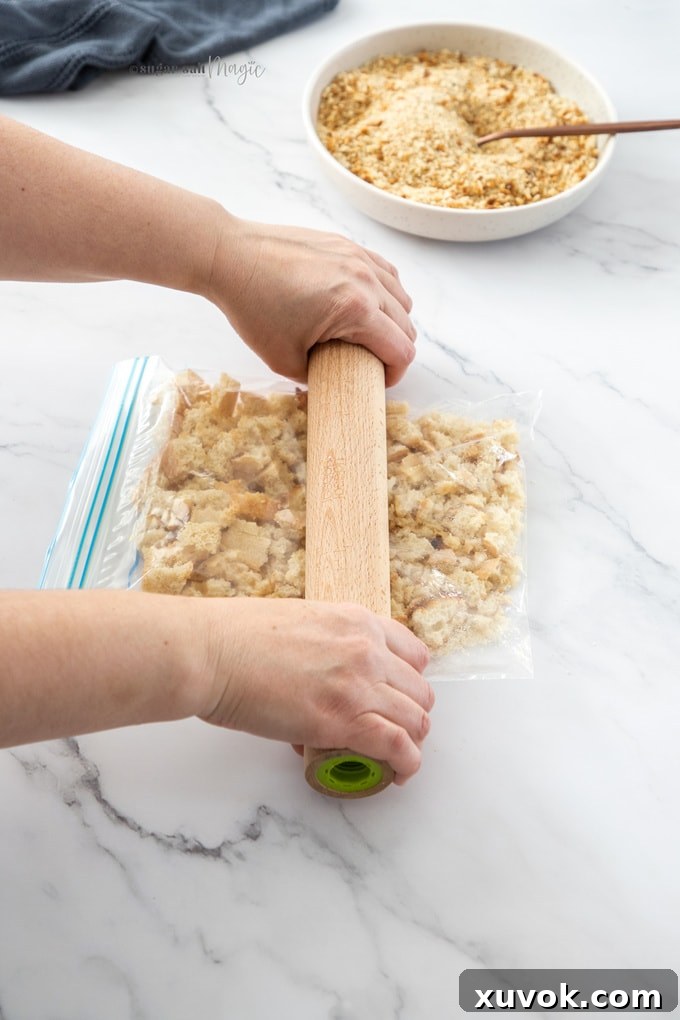
Once they are completely toasted and have cooled, transfer the crispy bread chunks to a sturdy **ziplock bag**. Seal the bag, ensuring most of the air is removed, then lay it flat on a sturdy surface. Use a rolling pin (or even the bottom of a heavy pan or glass) to roll repeatedly over the top of the bag. Apply firm, even pressure to break down the toasted bread into crumbs. Continue rolling until the crumbs reach your preferred size and consistency. This method is excellent for achieving a rustic, varied texture and is a fantastic way to release a little stress!
Should I Remove the Crusts?
When making homemade breadcrumbs, a common question arises: what about the crusts? My advice is firm: **don’t discard those crusts – definitely keep them on!** There are several excellent reasons for this. Firstly, bread crusts are packed with flavor, contributing a richer, more complex taste to your finished crumbs. They often have a slightly caramelized and deeper flavor profile compared to the softer interior of the bread. Secondly, a hard crust can help you achieve delightful, chunkier breadcrumbs, adding fantastic textural variety to your dishes. Unless you have a specific recipe that explicitly calls for crustless breadcrumbs (which is rare), embracing the whole loaf is the best approach for maximum flavor and minimum waste.
Can I Use Fresh Bread?
While **stale bread will consistently yield the best results** because its lower moisture content allows it to dry out quicker and process into perfect crumbs, sometimes you might be in a pinch or just really eager to make breadcrumbs. In such cases, yes, you can use fresh bread, but with a slight modification to the process. Fresh bread is much softer and moister, meaning it won’t break up as nicely in a food processor, often resulting in gummy clumps rather than distinct crumbs.
To use fresh bread effectively, I recommend tearing or cubing it first, then spreading the pieces on a baking tray and toasting them in the oven for a bit longer than usual, until they are significantly dried out and firm. Once they have dried and cooled sufficiently, they will be much easier to process into crumbs. Essentially, you’re “staling” the bread quickly in the oven before turning it into crumbs. This extra step ensures you still achieve that desirable crisp texture and shelf stability.
How Long Do Breadcrumbs Last?
Proper storage is paramount to extending the life of your homemade breadcrumbs. When stored correctly, in an **airtight container and kept completely away from any moisture**, they will maintain their freshness and crispness for a solid 4-6 weeks at room temperature. The key here is “completely away from moisture” – even a tiny bit of humidity can compromise their shelf life.
If you live in a particularly humid climate, or if you’ve made a very large batch, they may be more susceptible to mold. In such instances, freezing is your best friend. You can **freeze homemade breadcrumbs for up to 6 months**, and sometimes even longer, without any loss of quality. For optimal freezer storage, place them in a heavy-duty ziplock bag, pressing out as much air as possible, and then place that bag within an additional airtight container. This double layer of protection guards against freezer burn and odor absorption. Freezing also offers the convenience of being able to take out exactly what you need, whenever you need it, ensuring you always have fresh-tasting crumbs on hand.
How to Use Breadcrumbs
Homemade breadcrumbs are incredibly versatile and can be used in a myriad of ways to add texture, absorb moisture, and enhance flavor in your cooking. Here are just a few ideas to get you started:
- Perfect Coatings: Use them generously to coat savory items like arancini, chicken schnitzels, fish fillets, or homemade chicken kievs, providing that essential golden, crispy crust.
- Pangrattato: Transform them into a delicious and economical Italian pasta topping by toasting them with garlic, olive oil, and herbs.
- Crusted Fish: Before baking or pan-frying fish, dredge it in breadcrumbs seasoned with lemon pepper, dill, or Old Bay for an extra layer of flavor and crispness.
- Roast Lamb Crust: Create an aromatic crust on roast lamb by mixing coarse breadcrumbs with fresh rosemary, garlic, and a drizzle of olive oil, then pressing onto the meat before roasting.
- Crunchy Additions: Sprinkle them over salt and pepper prawns or chicken wings in the final moments of cooking for an incredible textural contrast.
- Binding Agent: Incorporate breadcrumbs into meatballs, meatloaf, or burger patties to act as a binder, keeping them moist and helping to bulk them up, making your meals go further.
- Soup Topping: Use chunkier crumbs as a rustic, crunchy topping for creamy soups, adding texture and preventing the soup from feeling too heavy.
- Casserole Topping: A classic use, breadcrumbs create a golden, crispy topping for baked mac and cheese, gratins, or vegetable bakes.
- Stuffings: They form the base of many delicious stuffings for poultry, mushrooms, or bell peppers, soaking up flavors and adding body.
- Vegetable Breading: Lightly bread vegetables like zucchini sticks, onion rings, or eggplant slices before baking or frying for a healthier, crispy alternative.
PIN IT: Click to Pin this recipe for later!
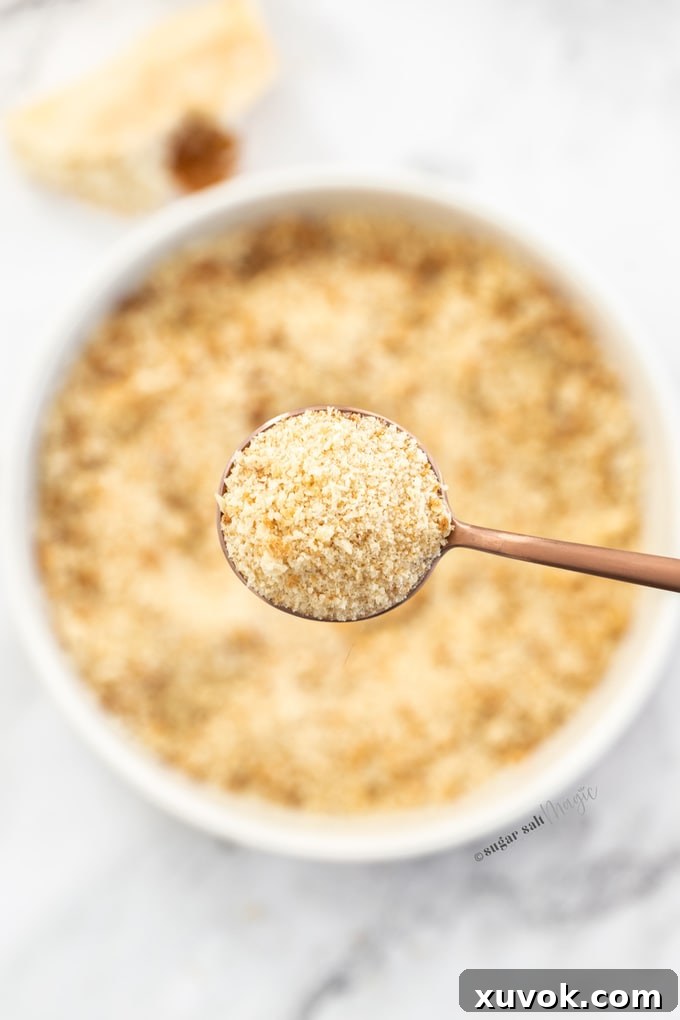
So there you have it. Making your own breadcrumbs is an effortless, rewarding culinary hack. It’s a testament to the idea that with a little creativity, nothing in your kitchen has to go to waste. Embrace this simple skill, and you’ll forever enjoy superior flavor and texture in your dishes, all while contributing to a more sustainable kitchen.
More Recipes You’ll Love
- How to Make Chicken Schnitzel
- Italian Chicken Cutlets
- Chorizo Arancini
- Sweet Corn Arancini
- Pork and Potato Croquettes
- Crumbed Sausages
- Pangrattato (crunchy Italian bread crumbs)
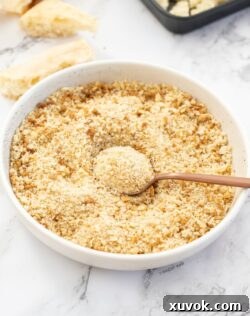
Homemade Breadcrumbs
Rate
Pin
Ingredients
- Stale bread – any type, any amount
For best results, always weigh ingredients where a weight is provided
Instructions
-
Preheat the oven to 160C / 320F / 140C fan forced.
-
Tear the bread into small chunks.
-
Place the chunks of bread in a food processor (or skip straight to step 4 if you don’t have a food processor). Blitz until they are the size you want.
-
Tip them onto a baking tray and level them out into a flat layer.
-
Bake for 20-30 minutes, tossing every 7-8 minutes until they are completely dry and crispy.
-
Let the crumbs cool completely before moving on.
-
If you don’t have a food processor, now transfer the cooled, toasted bread to a sturdy ziplock bag and roll over the top with a rolling pin until they are the desired size.
Notes
- You can make the breadcrumbs finer, after baking if you like by tipping them back into the food processor (once cool) and pulsing until they are the size you’re after.
- Use any bread you like but stale or at least day old bread will work best for optimal texture and quick drying.
- Nutritional info is based on 1/4 cup per serve.
For more how-to’s and baking essentials, click here.