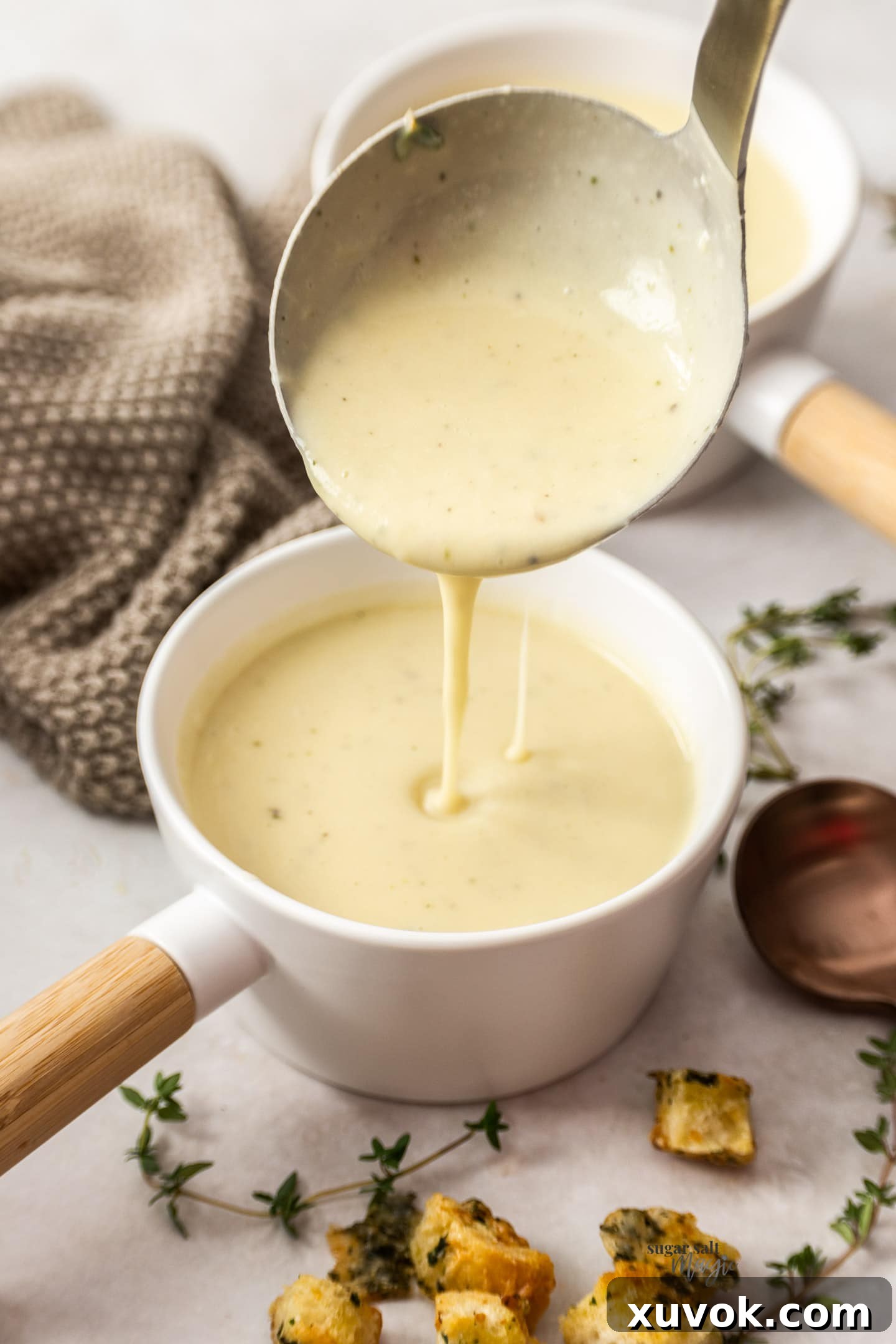
Prepare to be utterly enchanted by this roasted garlic potato chowder recipe – a culinary masterpiece that truly embodies the essence of comfort food. Rich, creamy, and undeniably hearty, it’s a soul-warming experience in every spoonful. Unlike any potato soup you’ve tasted before, this recipe features the deep, earthy, and naturally sweet notes of roasted garlic, transforming a classic into an unforgettable delight.
This chowder isn’t just a meal; it’s a culinary embrace that promises to become a cherished favorite in your home. From its velvety texture to its profoundly satisfying flavor, it’s designed to bring warmth and joy to any occasion.
- Indulge in an incredible depth of complex umami flavor, thanks to the slow roasting of garlic.
- Experience a luxuriously thick and hearty consistency, perfectly achieved through the careful selection of potatoes and a generous touch of cream.
- Savor the ultimate in cosy and comforting dining—truly like a hug in a bowl, ideal for cool evenings or whenever you need a culinary pick-me-up.
- Imagine the best bowl of creamy mashed potatoes, but transformed into a sophisticated, flavorful soup. You’ll distinctly taste the harmonious blend of tender potato and sweet, mellow roasted garlic.
- A delightful and family-friendly dish, it’s perfect for those rainy nights in, quick and satisfying lunches, or a comforting weeknight dinner.
My journey to perfecting this potato chowder began during a memorable trip through Canada and Alaska. The biting cold of the northern climate made the discovery of a rustic garlic and potato chowder an unforgettable moment. It was more than just a meal; it was a perfect union of warmth and comfort, a truly memorable culinary experience that lingered in my mind long after the trip ended.
Returning home, I was determined to recreate that exquisite taste. It took several attempts, countless adjustments, and a true labor of love, but the result is this incredibly delicious and comforting chowder. I’m absolutely thrilled to bring this bowl of cosy goodness to my own kitchen, and I know you’ll feel the same immense satisfaction when you create it in yours. It’s not just a recipe; it’s a piece of that wonderful travel memory, bottled up and ready to be savored.
If you love hearty soups, you’ll also adore this robust mushroom cauliflower soup. For those who crave a bit of tang and smoky flavor, don’t miss this vibrant roasted red pepper gouda soup. They’re both fantastic ways to warm up and enjoy delicious homemade meals.
This recipe was first published here on July 21st, 2018 and has been updated with new images and information.
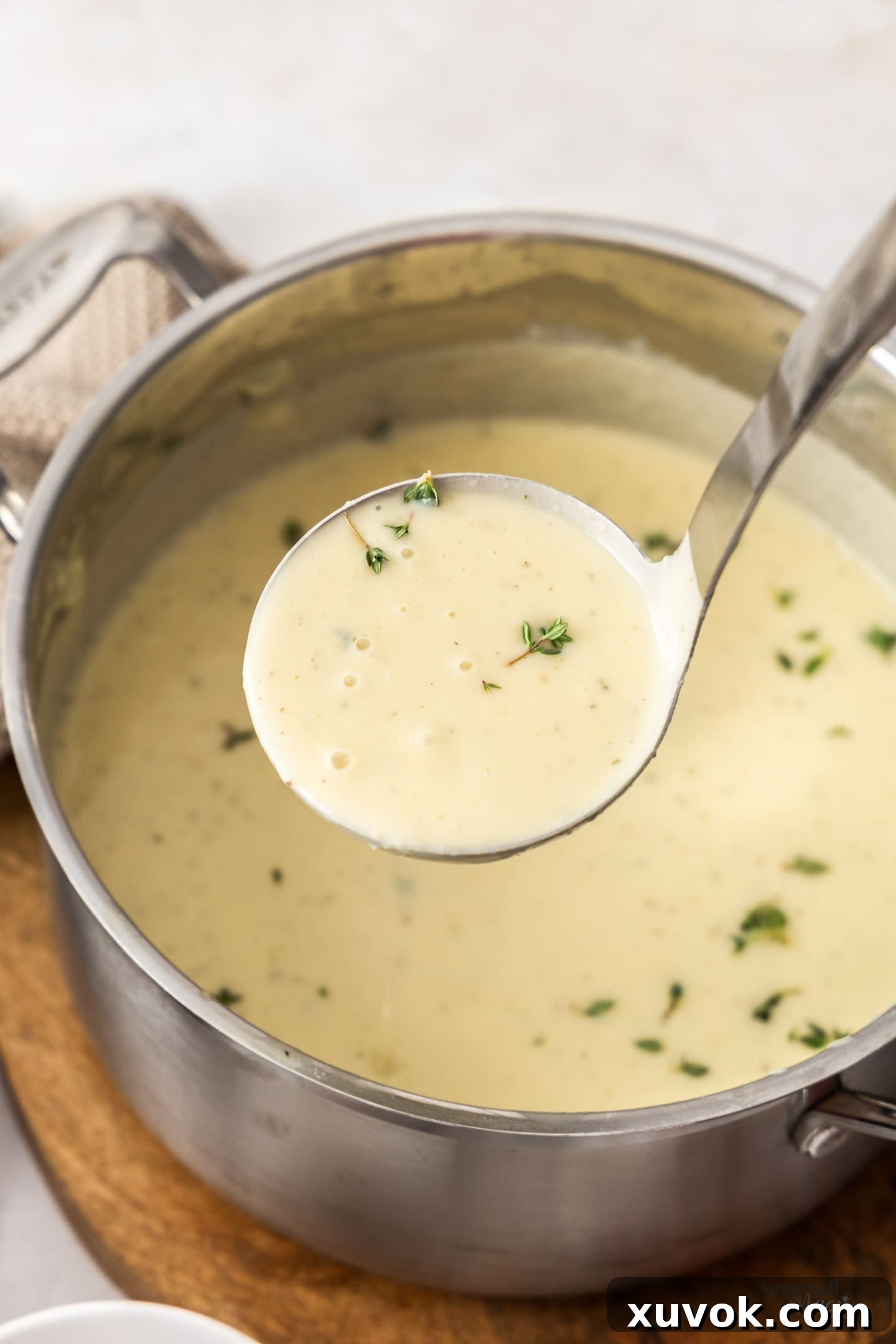
Table of Contents
- What is Chowder?
- The Best Potatoes for Potato Chowder
- Ingredients You’ll Need
- How to Make Roasted Garlic Potato Chowder (Step-by-Step)
- Why Roast Garlic?
- Tips and Tricks for Perfect Chowder
- FAQs About Potato Chowder
- Storage and Freezing Tips
- More Recipes You’ll Love
Never Miss a Recipe!
Get the latest, most comforting recipes straight to your inbox!
Sign up below to receive delicious new recipes and cooking tips!
What is Chowder? Understanding this Hearty Soup
Chowder is a distinct style of soup, celebrated for its characteristically thick, rich, and creamy consistency. While many associate it with seafood, particularly clam chowder, the term broadly refers to a hearty, milk- or cream-based soup often brimming with chunky ingredients like vegetables and meat or fish. What truly sets a chowder apart is its velvety body, which can be achieved through various thickening agents.
In a potato chowder like this recipe, the starch released from the potatoes themselves is a primary contributor to its luxurious thickness. Beyond potatoes, common thickening methods include a classic roux (flour cooked in butter), the addition of cheese for extra richness and texture, or simply a generous quantity of heavy cream or milk. Some chowder recipes might rely on just one or two of these methods, while others masterfully combine them to create an unparalleled depth of body and flavor. This roasted garlic potato chowder leverages the starchiness of the potatoes, along with butter, flour, and dairy, to achieve its perfect, comforting consistency.
Chowders are almost universally served with an accompaniment to soak up every last drop of the delicious broth. Popular choices include crisp crackers, crusty bread, or homemade croutons. For an extra special touch, I highly recommend pairing this chowder with my savory Cheese and Garlic Croutons, which perfectly complement the flavors of this rich potato soup.
Selecting the Best Potatoes for a Creamy Chowder
The choice of potato is paramount when crafting a truly exceptional potato chowder, especially one that will be blended to a smooth, creamy consistency. For this recipe, where the goal is a velvety, uniform texture, floury or starchy potato varieties are absolutely essential. These types of potatoes break down beautifully during cooking, releasing their starches into the liquid, which naturally thickens the soup and contributes to that desirable creamy mouthfeel.
I personally favor Royal Blue potatoes for their superb texture and outstanding flavor profile, which shines through in this chowder. However, if Royal Blues aren’t readily available in your region, several other excellent starchy varieties will yield fantastic results. Look for:
- Russet Potatoes (Burbank or Norkotah): Often known as baking potatoes, these are high in starch and become wonderfully fluffy and absorbent when cooked, perfect for thickening.
- Yukon Gold Potatoes: A versatile choice, Yukon Golds have a medium-starch content and a naturally buttery flavor, contributing to both creaminess and taste.
- Dutch Creams: These boast a creamy texture and rich flavor, making them a superb option for smooth soups and chowders.
- Maris Piper: A popular British variety, Maris Pipers are floury and produce excellent mashed potatoes and thus, excellent chowder.
- King Edward Potatoes: Another British favorite, known for their floury texture and ability to create a light, fluffy consistency, ideal for blending into a smooth soup.
Conversely, waxy potatoes (like Red Bliss or new potatoes) should be avoided for this specific chowder, as they tend to hold their shape and have less starch, resulting in a less thick and creamy soup when blended. Sticking to starchy varieties ensures your roasted garlic potato chowder achieves its signature comforting, silky texture.
Essential Ingredients for Your Roasted Garlic Potato Chowder
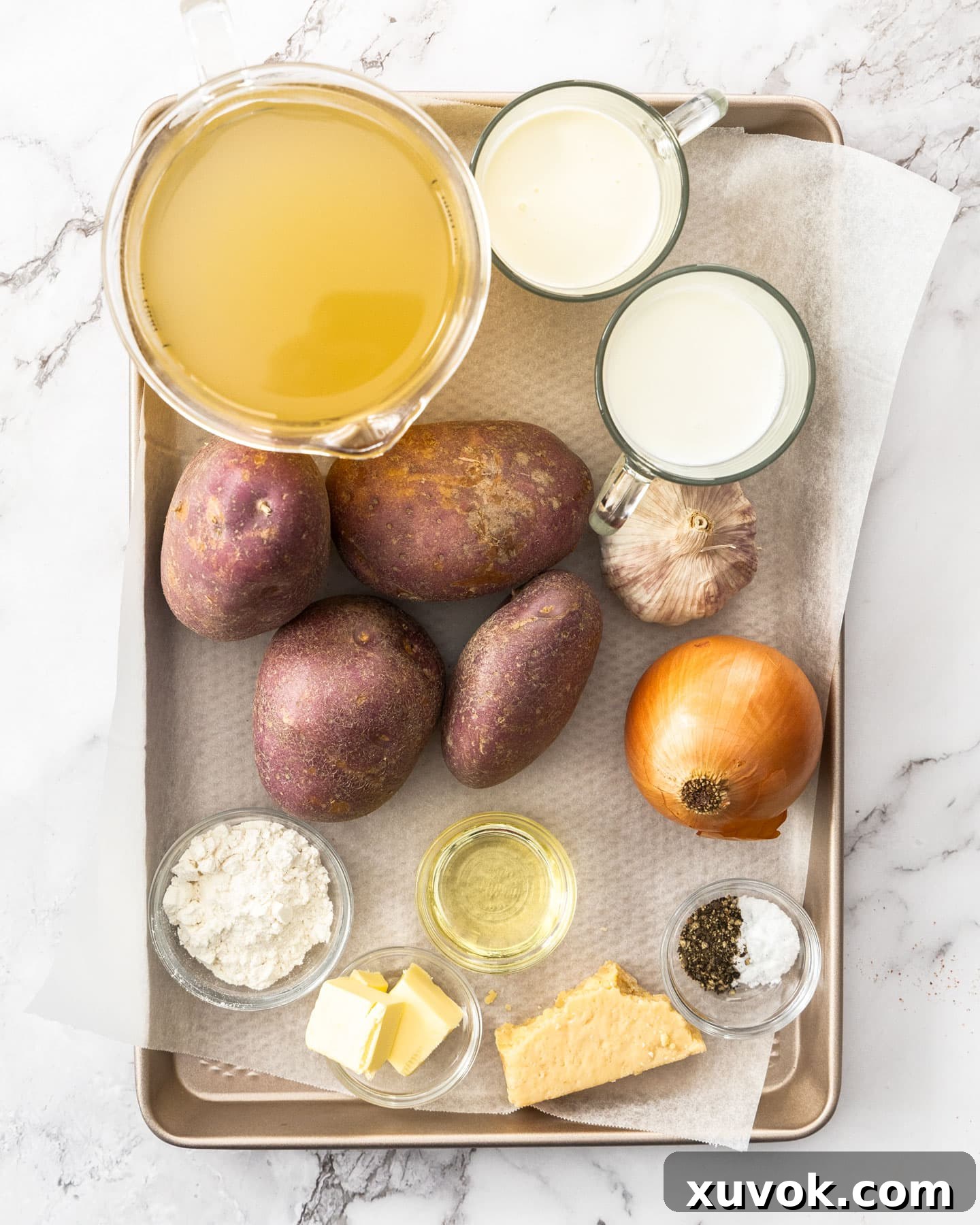
Creating this exquisite potato chowder requires a harmonious blend of simple yet high-quality ingredients. Each component plays a crucial role in building the robust flavor and luxurious texture that makes this dish so special. You’ll find detailed quantities and precise instructions in the recipe card below, but here’s a closer look at what you’ll need:
- Starchy Potatoes: As discussed, these are the backbone of our chowder’s texture. Refer to the comprehensive list above for the best varieties to use to ensure a thick and creamy result.
- Garlic: You’ll need one large, full bulb for roasting. Roasting the garlic is non-negotiable for this recipe, as it transforms the sharp pungency of raw garlic into a sweet, mellow, and deeply aromatic paste that defines this chowder’s unique flavor.
- Brown Onion: Also commonly known as yellow onions, these provide a foundational savory base for the soup. Feel free to enhance this by adding one large stalk of celery, finely diced, to sauté alongside the onion for an extra layer of aromatic complexity.
- Olive Oil: Essential for both the roasting process of the garlic and for gently sautéing the onion until translucent and sweet.
- Butter: This is a key component in creating the roux, a traditional thickening agent that contributes significantly to the chowder’s rich and smooth consistency.
- Plain Flour: Also known as all-purpose flour, it combines with the melted butter to form the roux, effectively thickening the potato chowder soup without making it heavy.
- Vegetable Stock: I highly recommend using a good quality vegetable stock (or vegetable broth) over plain water, as it infuses the chowder with an incredible depth of flavor. You can easily substitute this with chicken stock for a different, yet equally delicious, base.
- Whole Milk: Works in tandem with the cream to achieve an extra velvety, smooth texture and adds a gentle richness to the chowder. Full-fat milk is recommended for the best results.
- Thickened Cream: Known as heavy cream in many regions, this ingredient is vital for the chowder’s signature opulent creaminess. For those who enjoy a subtle tang, sour cream can be an interesting alternative, though it will alter the flavor profile slightly.
- Parmesan Cheese: Finely grated Parmesan contributes a lovely savory and slightly nutty background flavor, elevating the overall taste. A sharp cheddar cheese can also be used for a more pronounced cheesy note.
- Thyme: Fresh thyme leaves are preferred here for their bright, herbaceous aroma that beautifully complements the earthy potatoes and roasted garlic. If fresh isn’t available, dried thyme can be used in a smaller quantity (about 1/2 teaspoon).
- Salt and Pepper: Essential for seasoning to taste. I always advocate for freshly cracked black pepper and fine sea salt to ensure the purest flavors.
- Croutons: For an irresistible crunch and added flavor, serving with croutons is a must. You can quickly whip up my delightful Cheese Garlic Croutons to perfectly crown your chowder.
This roasted garlic potato chowder also achieves new heights of deliciousness when garnished with other savory toppings, such as a sprinkle of smoky paprika, finely chopped fresh chives, or a scattering of crisp, salty crispy prosciutto for a truly indulgent finish.
How to Make Roasted Garlic Potato Chowder: A Step-by-Step Guide
Crafting this rich and creamy roasted garlic potato chowder is a rewarding experience. Follow these detailed steps to achieve a perfectly smooth and flavorful soup. Remember, all precise quantities and instructions are conveniently located in the recipe card below.
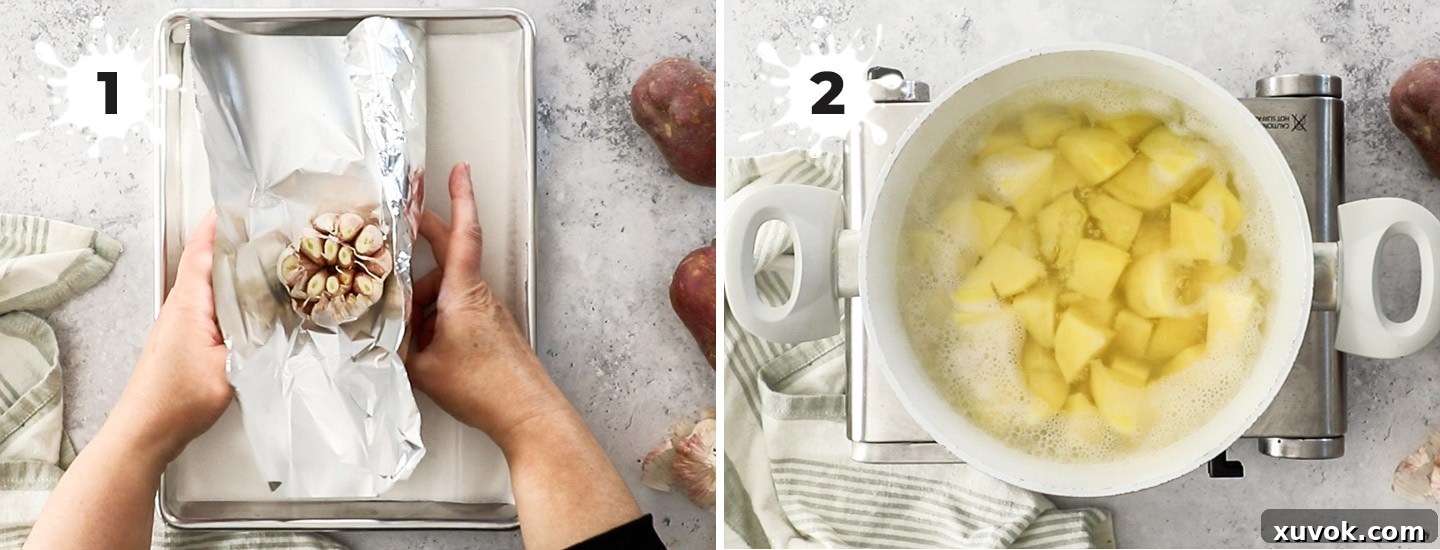
- Roast the Garlic to Perfection: Begin by preheating your oven to the specified temperature. Take your large garlic bulb, slice off the very top (the stem end) to expose the individual cloves. Place the bulb onto a sheet of foil, drizzle generously with olive oil, and sprinkle with a pinch of salt. Carefully wrap the foil around the garlic to create a packet, then roast it in the oven until the cloves are incredibly soft and golden brown (photo 1). This process takes time but is crucial for that sweet, mellow flavor.
- Prepare and Cook the Potatoes: While the garlic roasts, peel your chosen starchy potatoes and chop them into uniform 1-inch pieces. This ensures even cooking. Place the chopped potatoes in a saucepan, cover them with cold water, and add about ½ teaspoon of salt to the water for seasoning. Bring the water to a boil over medium-high heat, then continue to cook for approximately 7-10 minutes, or until the potatoes are fork-tender. Drain them thoroughly and set aside (photo 2).
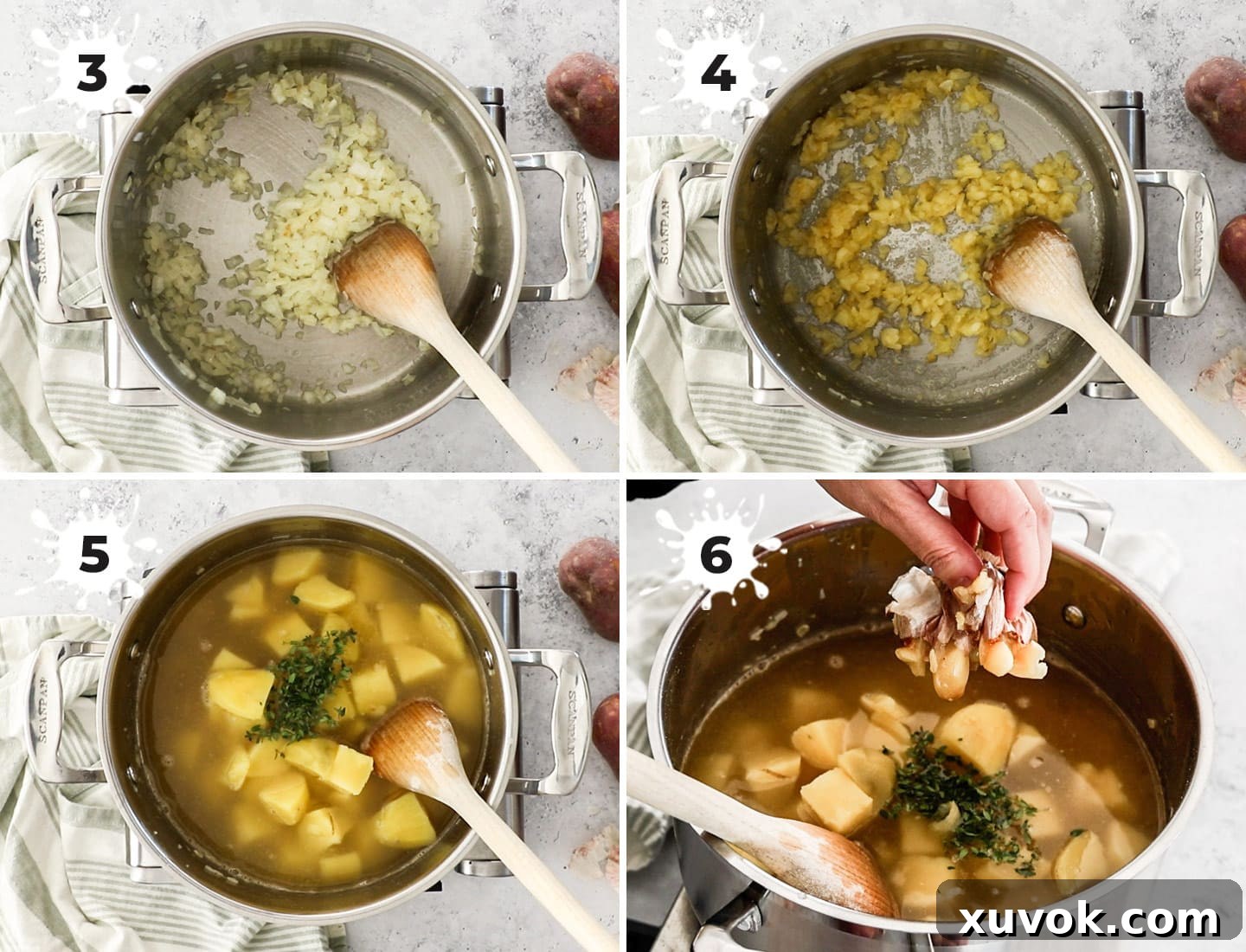
- Sauté the Onion Base: In a large, heavy-bottomed soup pot or Dutch oven, heat the remaining olive oil over medium heat. Add the finely chopped brown onion and sauté, stirring occasionally, until the onion becomes soft and translucent, typically taking 3-4 minutes (photo 3). Avoid browning the onion; we want it to be sweet and tender.
- Create the Flavorful Roux: Introduce the butter to the pot and allow it to melt completely. Once melted, sprinkle in the plain flour. Stir continuously with a whisk or wooden spoon for about 2 minutes. This step is crucial for cooking out the raw flour taste and creating a golden, aromatic roux that will thicken our chowder beautifully (photo 4).
- Combine Potatoes and Stock: Add the pre-cooked, drained potatoes, rich vegetable stock, and fresh thyme leaves to the pot. Stir everything together gently to combine.
- Infuse with Roasted Garlic: Retrieve your beautifully roasted garlic bulb. Treat it like a tube of toothpaste: firmly squeeze the soft, caramelized garlic cloves directly into the pot, being diligent to remove any papery skin that might remain. Discard the skin (photo 6). The aroma at this stage will be incredible!
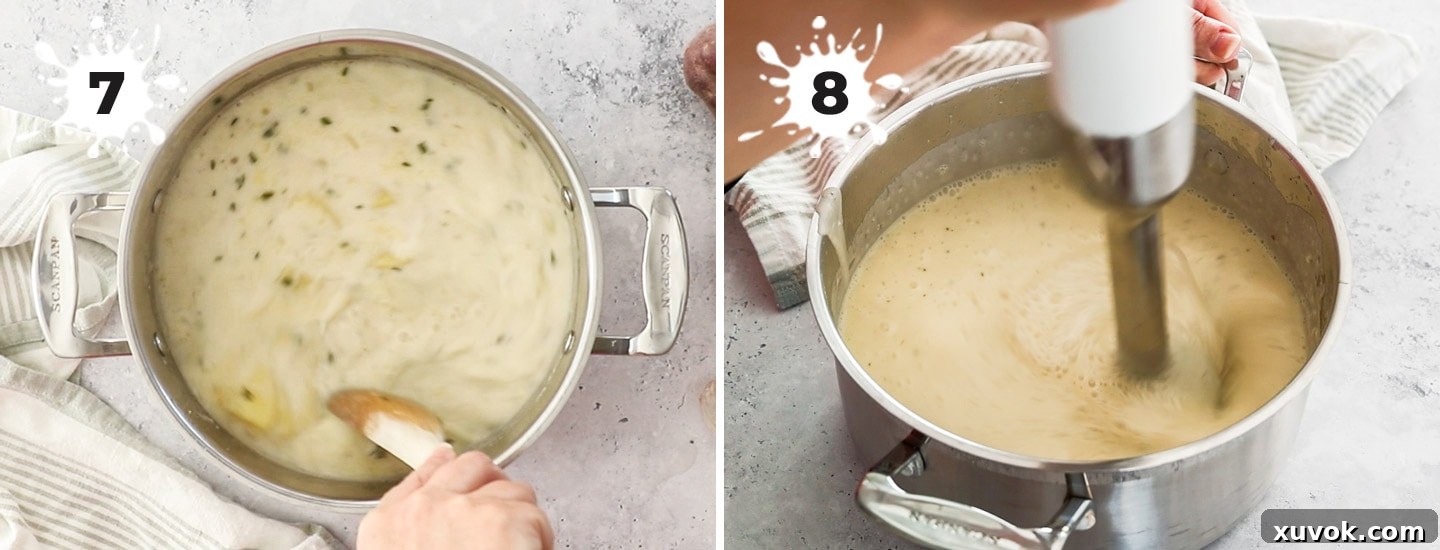
- Simmer and Enrich: Bring the soup mixture to a gentle boil and let it cook for about 3 minutes, allowing the flavors to meld. Then, stir in the whole milk, thickened cream, salt, and freshly cracked black pepper. Mix thoroughly and bring the chowder to a bare simmer (do not allow it to boil rapidly) before removing it from the heat (photo 7). This ensures the cream doesn’t curdle.
- Blend to Velvety Smoothness: Off the heat, stir in the finely grated Parmesan cheese until it melts smoothly into the soup. Now, for the signature creamy texture: use a hand-held immersion blender to purée the potato chowder directly in the pot until it’s utterly smooth and velvety (photo 8). If you don’t have an immersion blender, carefully transfer batches to a standard blender, filling it only halfway, and blend until smooth. Remember to leave the lid vent open and cover it with a kitchen towel to allow steam to escape safely.
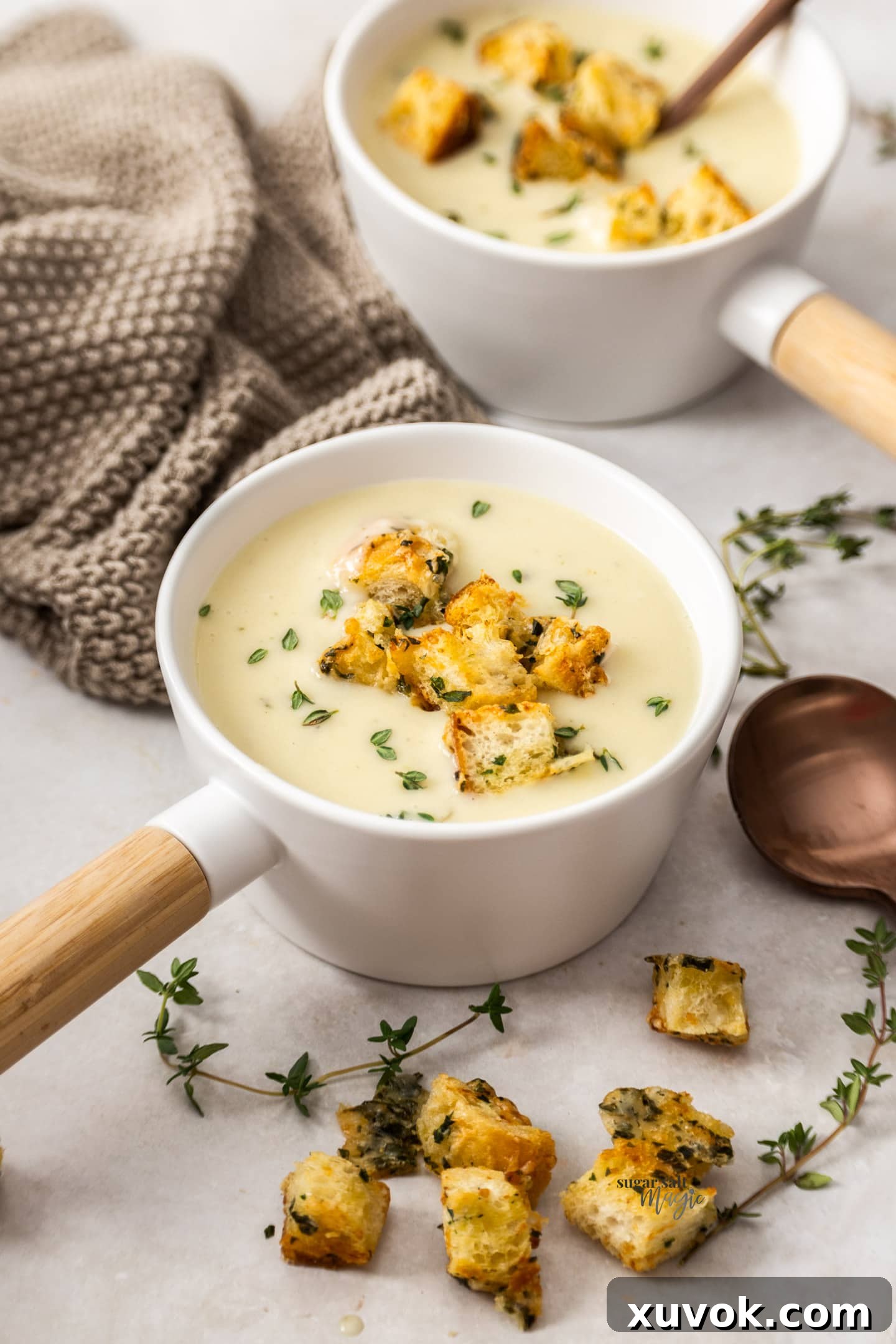
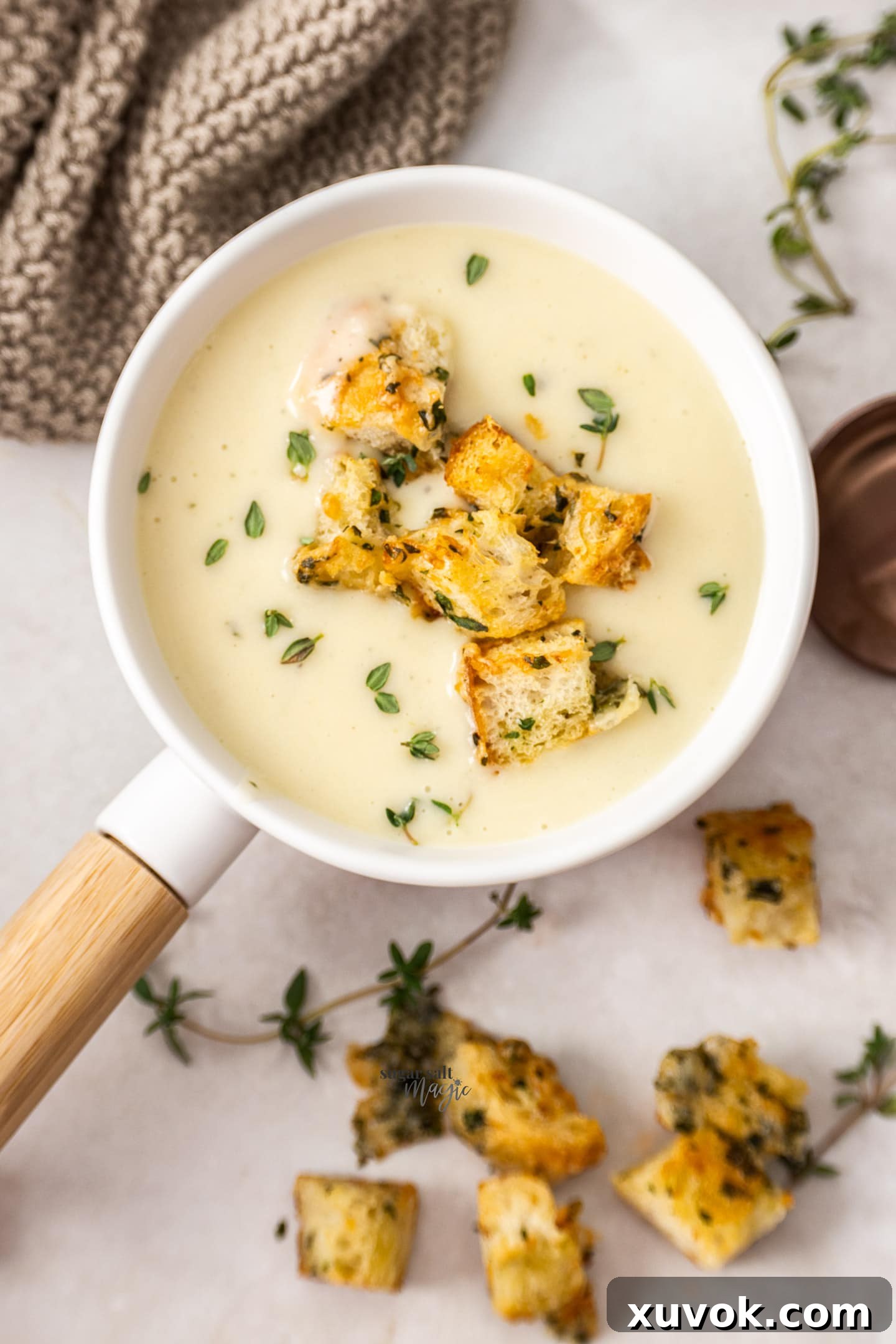
- Taste and Serve: Taste the chowder and adjust the seasoning with more salt and pepper as needed. Serve immediately, garnished with your favorite toppings like Cheese and Garlic Croutons and a sprinkle of fresh thyme leaves. Enjoy this comforting bowl of deliciousness!
The Magic of Roasted Garlic: Elevating Your Chowder
If you’ve never experienced the culinary wonder of roasted garlic, this potato chowder is the perfect introduction. Roasting garlic is a simple technique that yields profound flavor transformations, turning the pungent, sharp bite of raw garlic into something extraordinarily sweet, mellow, and spreadably creamy. This process caramelizes the natural sugars within the garlic cloves, resulting in a complex, nutty aroma and a buttery texture that melts into your dish.
The difference between raw and roasted garlic is like night and day. Raw garlic provides an aggressive kick, while roasted garlic offers a sophisticated, subtle warmth that enhances, rather than overwhelms, other flavors. It’s an amazing flavor profile that brings a unique depth to soups, sauces, and spreads. While garlic and potatoes are always a classic pairing, as seen in these delicious buttery garlic potatoes with prosciutto, the roasted garlic in this chowder takes that combination to an entirely new level. It infuses the entire soup with a sweet, earthy essence that is truly irresistible and defines the character of this particular potato chowder.
Beyond chowder, roasted garlic is incredibly versatile. You can mash it into butter for a gourmet garlic bread, spread it on crusty baguette slices, mix it into hummus, add it to salad dressings, or even blend it into marinades for an incredible depth of flavor. Once you try it, you’ll want to roast garlic regularly!
Tips and Tricks for the Ultimate Potato Chowder
Elevate your roasted garlic potato chowder with these expert tips and creative additions:
- Seasonal Variations: Embrace seasonal produce! If leeks are in season, they make a wonderful substitute for brown onions, offering a milder, sweeter, and slightly earthier flavor profile that pairs beautifully with potatoes and garlic. Simply clean and thinly slice the white and light green parts of the leek and sauté as you would the onion.
- Boost with Protein for a Complete Meal: This chowder is hearty on its own, but easily transforms into a full meal with added protein. Consider adding some cooked prawns (shrimp) or luxurious lobster for an extra rich and elegant dish. Leftover rotisserie chicken or roast chicken, shredded and stirred in at the end, is also a fantastic, easy option. For smoky depth, incorporate cooked and crumbled bacon, diced ham, or savory sausage.
- Incorporate More Vegetables: Enhance the nutritional value and texture by stirring in more vegetables. Frozen peas or corn kernels, added during the final simmering stage, bring a pop of color and sweetness. Diced carrots, sautéed with the onion, add extra flavor and nutrients. For an earthy touch, pan-fry some sliced mushrooms in butter until golden brown, then stir them in.
- Adding Ingredients After Blending: Remember, any additional ingredients like protein or extra vegetables should be incorporated into the potato chowder *after* it has been blended smooth. If these additions require cooking (e.g., raw prawns or raw vegetables), simply return the blended soup to the stove and cook gently until the extras are heated through or cooked to your liking. This ensures your chowder retains its silky smooth texture while still featuring delightful chunks of your chosen additions.
- Adjusting Consistency: If your chowder is too thick for your liking after blending, you can thin it out by stirring in a little extra warm vegetable stock or milk until it reaches your desired consistency. Conversely, if it’s too thin, simmer it gently for a few more minutes, stirring frequently, to allow some of the liquid to reduce, or make a very small slurry of cornstarch and water, stir it in, and simmer for another minute.
- Prepping Ahead: The roasted garlic can be made a day or two in advance and stored in an airtight container in the refrigerator. This can significantly reduce your active cooking time on the day you plan to make the chowder.
Frequently Asked Questions About Potato Chowder
A chowder is defined by its hearty nature, typically featuring a thick, creamy, and rich consistency. Its characteristic thickness usually comes from starchy vegetables like potatoes, a flavorful roux (flour cooked in butter), added cheese, or a generous amount of cream or milk – often a combination of these elements. Chowders are comforting, filling, and generally served warm, often with accompaniments like crackers or bread.
While the terms “potato soup” and “potato chowder” are sometimes used interchangeably, there’s a subtle distinction. Generally, a potato soup might be lighter in consistency and may contain distinct chunks of potato. A potato chowder, however, is characteristically thicker and creamier, often achieved by blending some or all of the potatoes into the broth, as well as incorporating cream, butter, and sometimes a roux. This particular roasted garlic potato chowder emphasizes the thick, velvety texture, making it a true chowder.
Absolutely! The robust and versatile flavor of this thick potato soup lends itself exceptionally well to a wide array of additions. You can enhance it with cooked, shredded chicken, succulent prawns (shrimp), crispy bacon bits, diced ham, or even more vegetables like frozen peas, corn, or sautéed mushrooms. The key is to incorporate these ingredients *after* the soup has been blended smooth. Then, simply return the chowder to the heat to ensure any additions are sufficiently warmed through or cooked, as needed.
For the most part, yes. The defining characteristic of most chowders, particularly those popular in New England style, is their creamy, dairy-rich base. Milk or cream not only contributes to the flavor but also plays a significant role in achieving that signature thick consistency. There are some notable exceptions, such as Manhattan clam chowder, which features a tomato-based broth without dairy, but these are less common variations.
This recipe is already vegetarian as written! To make it vegan, you would need to substitute the butter with a plant-based butter or olive oil, the whole milk and thickened cream with full-fat unsweetened plant-based milk (like cashew or oat milk) and vegan cream, and omit the Parmesan cheese or use a vegan Parmesan alternative. Adjust seasonings as plant-based dairy can sometimes alter the flavor profile.
Storage and Freezing Your Roasted Garlic Potato Chowder
Proper storage is key to enjoying your delicious roasted garlic potato chowder for days to come. Any leftovers should be transferred to an airtight container and stored in the refrigerator, where it will remain fresh and flavorful for up to 3 days. This makes it an excellent option for meal prep or convenient lunches.
This creamy soup also freezes quite well, allowing you to enjoy a comforting bowl whenever the craving strikes. To freeze, ensure the chowder has cooled completely to room temperature. Transfer it to freezer-safe airtight containers or heavy-duty freezer bags, leaving a little headspace for expansion. It can be stored in the freezer for up to 2-3 months.
When you’re ready to enjoy it, thaw the frozen chowder overnight in the refrigerator. Reheat gently on the stovetop over low to medium heat, stirring frequently. Because potatoes and dairy can sometimes alter texture slightly after freezing and thawing, give the chowder a good whisk before reheating, and if it appears too thick or slightly separated, stir in a splash of fresh milk or cream until it returns to its desired creamy consistency. Avoid high heat when reheating dairy-based soups to prevent curdling.
More Hearty and Comforting Recipes You’ll Love
If you’ve enjoyed this roasted garlic potato chowder, you’re sure to find more favorites among these delicious recipes:
- Easy Butternut Squash Soup
- Roasted Tomato Soup and Mini Grilled Cheese
- Buttery Garlic Potatoes with Prosciutto
- Perfect Roast Potatoes
- Cheese and Garlic Croutons
- Sausage Gnocchi Soup
Did you try this roasted garlic potato chowder soup recipe?
Leaving a rating and comment below the recipe is so helpful!
Hungry for more? Subscribe to the newsletter for free recipes straight to your inbox. Also, follow along on Facebook, Pinterest and Instagram.
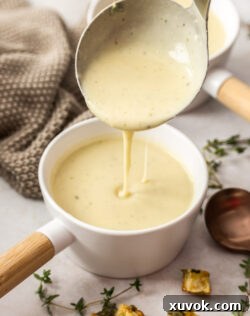
Potato Chowder (with Roasted Garlic)
Rate
Pin
Ingredients
- 1 large full bulb garlic
- 750 g starchy potatoes
- 1 tablespoon olive oil + extra for the garlic (notes 1)
- 1 medium brown onion, finely chopped
- 2 tablespoons butter (28g/1oz)
- 2 tablespoons plain flour (all-purpose flour) (notes 1)
- 4 cups vegetable stock (vegetable broth) (1 litre /1 qt)
- 2 teaspoons fresh thyme leaves
- ½ teaspoon salt + extra for seasoning garlic and potatoes
- ½ teaspoon freshly cracked black pepper
- ½ cup whole milk (125ml)
- ½ cup thickened cream (heavy cream) (125ml)
- ½ cup finely grated parmesan (27g/1oz)
- Croutons to serve
For best results, always weigh ingredients where a weight is provided
Equipment
-
Dutch oven or large pot
-
baking tray
Instructions
-
DO AHEAD:
Preheat oven to 200°C (180°C fan forced) / 400°F.
-
Using a sharp knife, slice off the top (stem end) of the bulb of garlic, leaving the top of the cloves exposed. Sit the bulb on a sheet of foil, douse in a good lug of olive oil, then sprinkle with a pinch of salt. Roast for 45 minutes until very soft and lightly caramelized.
-
Peel and chop the potatoes into uniform 1-inch pieces. Place them in a saucepan, cover with water and add ½ teaspoon of salt. Bring to the boil over medium-high heat. Once boiling, cook for 7-10 minutes until fork tender. Drain well and set aside.
-
FOR THE CHOWDER:
To a large soup pot or Dutch oven, add the olive oil and finely chopped onion. Sauté over medium heat until the onion has softened and turned translucent – about 3-4 minutes.
-
Add the butter to the pot and allow it to melt completely. Once melted, stir in the plain flour. Cook, stirring constantly, for 2 minutes or until the roux just begins to turn a light golden color in spots. This cooks out the raw flour taste.
-
Add the cooked potatoes, vegetable stock, and fresh thyme leaves to the pot. Carefully squeeze the soft, roasted garlic out of its bulb into the pot (like squeezing a tube of toothpaste), making sure to discard any papery skin. Stir to combine all ingredients.
-
Bring the soup to a gentle boil and let it cook for 3 minutes, allowing the flavors to meld beautifully.
-
Stir in the whole milk, thickened cream, ½ teaspoon salt, and ½ teaspoon freshly cracked black pepper. Mix thoroughly and bring the chowder to a bare simmer. Do not allow it to boil vigorously once the dairy is added.
-
Remove the pot from the heat. Stir in the finely grated Parmesan cheese until it has melted and is fully incorporated into the soup.
-
Use an immersion blender (also known as a stick mixer) directly in the pot to purée the soup until it is completely smooth and creamy. If using a standard blender, carefully transfer the soup in batches, filling the blender only halfway, and blend until smooth. Always ensure the lid has a steam vent (and cover it with a tea towel) to prevent pressure buildup.
-
Taste the finished chowder and add more seasoning (salt and pepper) if desired to suit your palate.
-
Serve your rich and creamy roasted garlic potato chowder immediately, garnished with homemade cheesy garlic croutons and a delicate sprinkle of fresh thyme leaves for presentation and added aroma.
-
Please take a moment to leave a comment & rating below. Your feedback is greatly appreciated and incredibly helpful to other home cooks!
Notes
- Tablespoons: I use a standard Australian 20ml tablespoon (equal to 4 teaspoons). Please check the capacity of your measuring spoons before preparing the recipe.
- Milk & Cream Substitutions: If available in your region, half-and-half can be an excellent substitute for the combination of whole milk and thickened cream, offering a balanced richness.
More Information & Helpful Resources
These links will take you to specific sections of this post for deeper dives into techniques and tips – just scroll down to return to the recipe card.
- What is Chowder?
- The best potatoes for potato chowder
- Step-by-step photos & instructions
- Tips and tricks
- FAQs about potato chowder
- Storage and freezing tips
Calories from Fat 144