Irresistible Mini Carrot Cakes: Your Go-To Recipe for Individual Indulgence
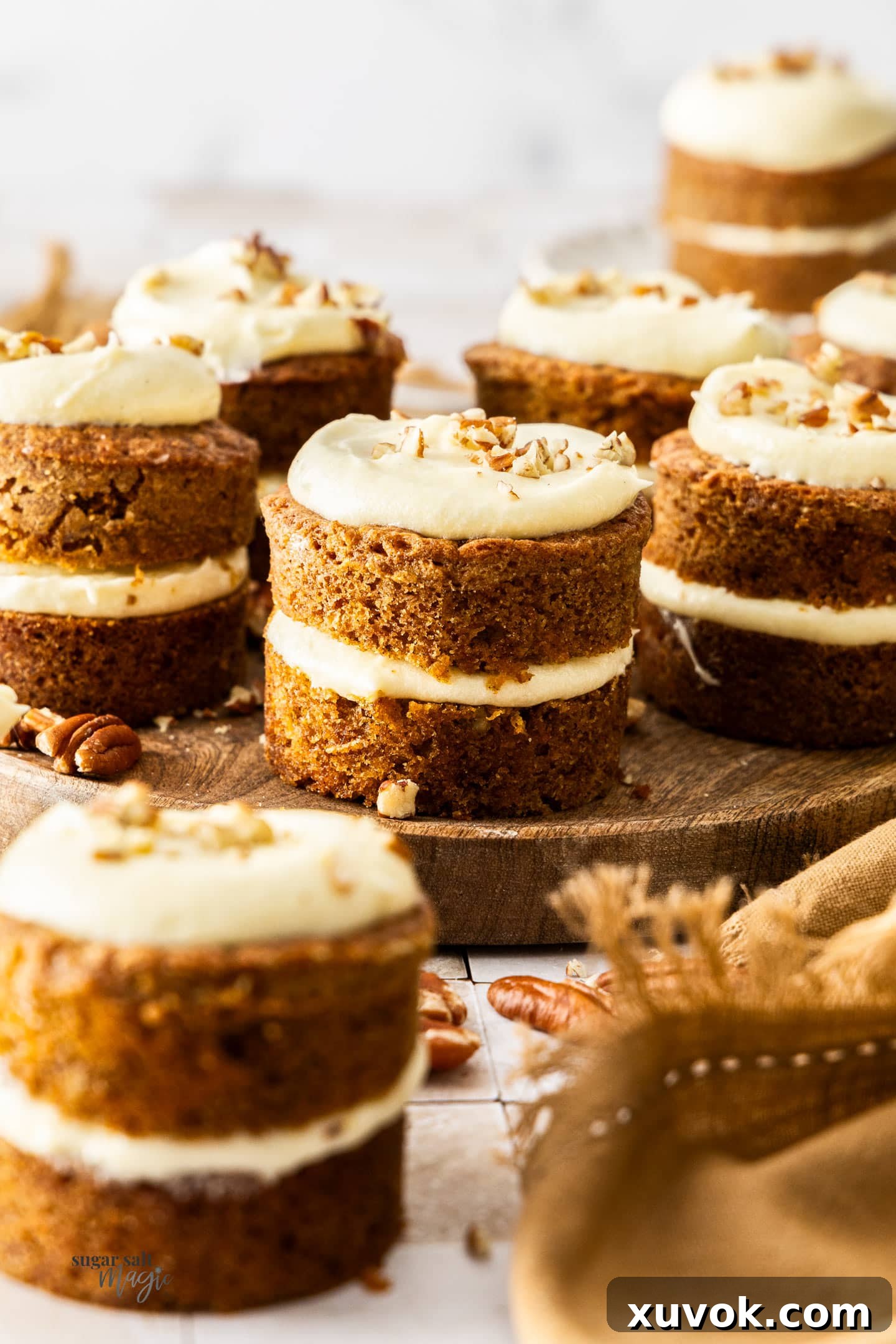
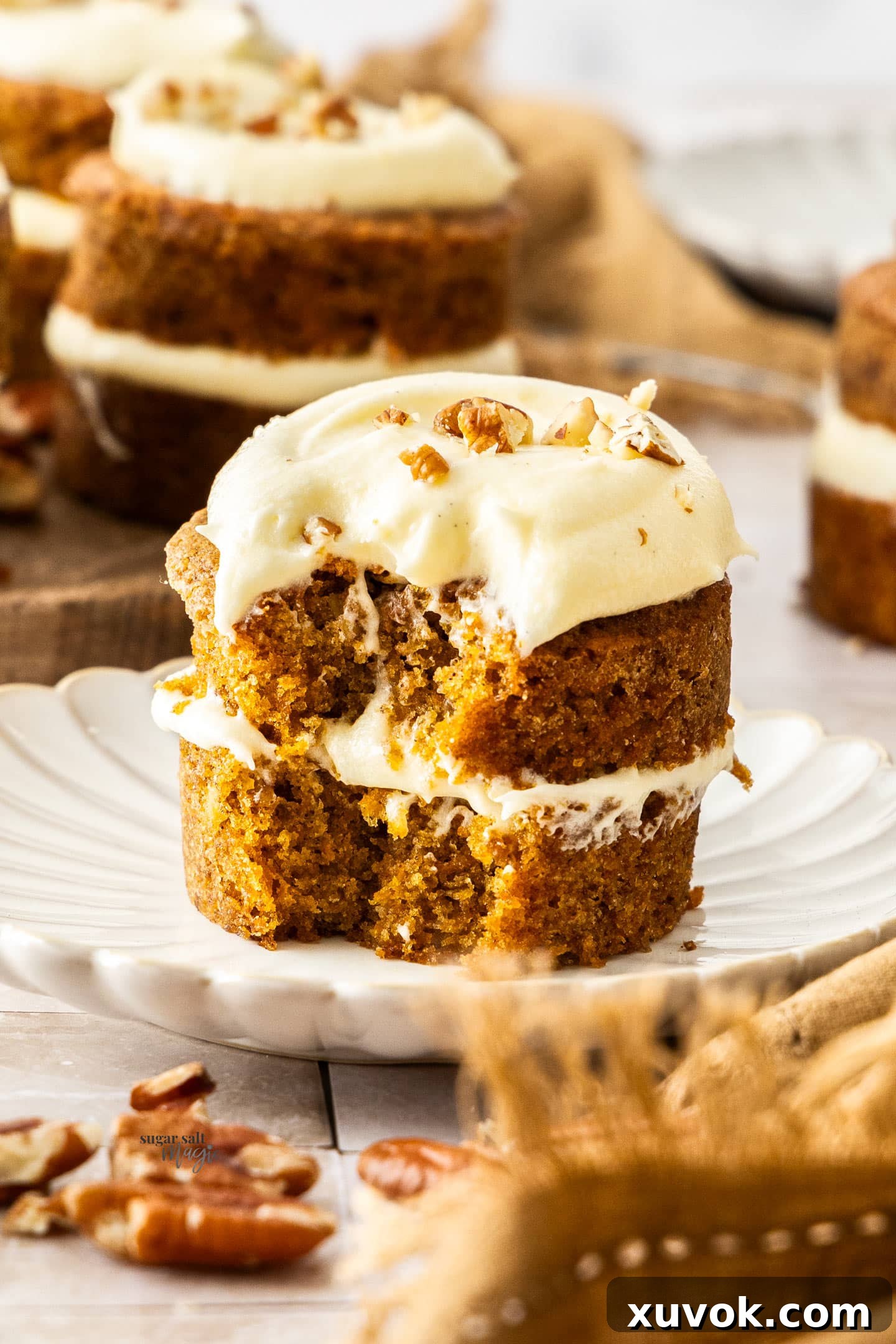
Prepare to fall in love with these incredibly charming and utterly delicious mini carrot cakes! Designed as the perfect individual treat, these cakes offer all the beloved flavors of a classic carrot cake in a delightful, personal size. Each bite promises a super moist, incredibly soft texture, perfectly balanced with a blend of warming spices, crunchy pecans, and crowned with a generous swirl of luscious cream cheese frosting. They are surprisingly easy to make and guaranteed to become a favorite for any occasion.
These miniature layer cakes are a celebration of flavor and texture. Packed with finely shredded carrots and studded with toasted pecans, they boast a harmonious spice blend that evokes comfort without overpowering the natural sweetness. This recipe is an adaptation, evolving from my popular carrot cake muffins, yet refined to perfection to deliver an even more indulgent experience. Whether you’re hosting a sophisticated dinner party, celebrating a birthday, or simply seeking a festive treat for Easter or any day, these mini carrot cakes are a superb choice that will leave everyone craving more.
What makes these mini carrot cakes truly special is their ability to deliver a full-sized flavor experience in a perfectly portioned package. They eliminate the need for slicing a large cake, making serving effortless and presentation absolutely stunning. Their individual nature also makes them ideal for bake sales, potlucks, or as thoughtful homemade gifts. Get ready to bake a batch of these adorable and delectable treats that combine convenience with gourmet appeal.
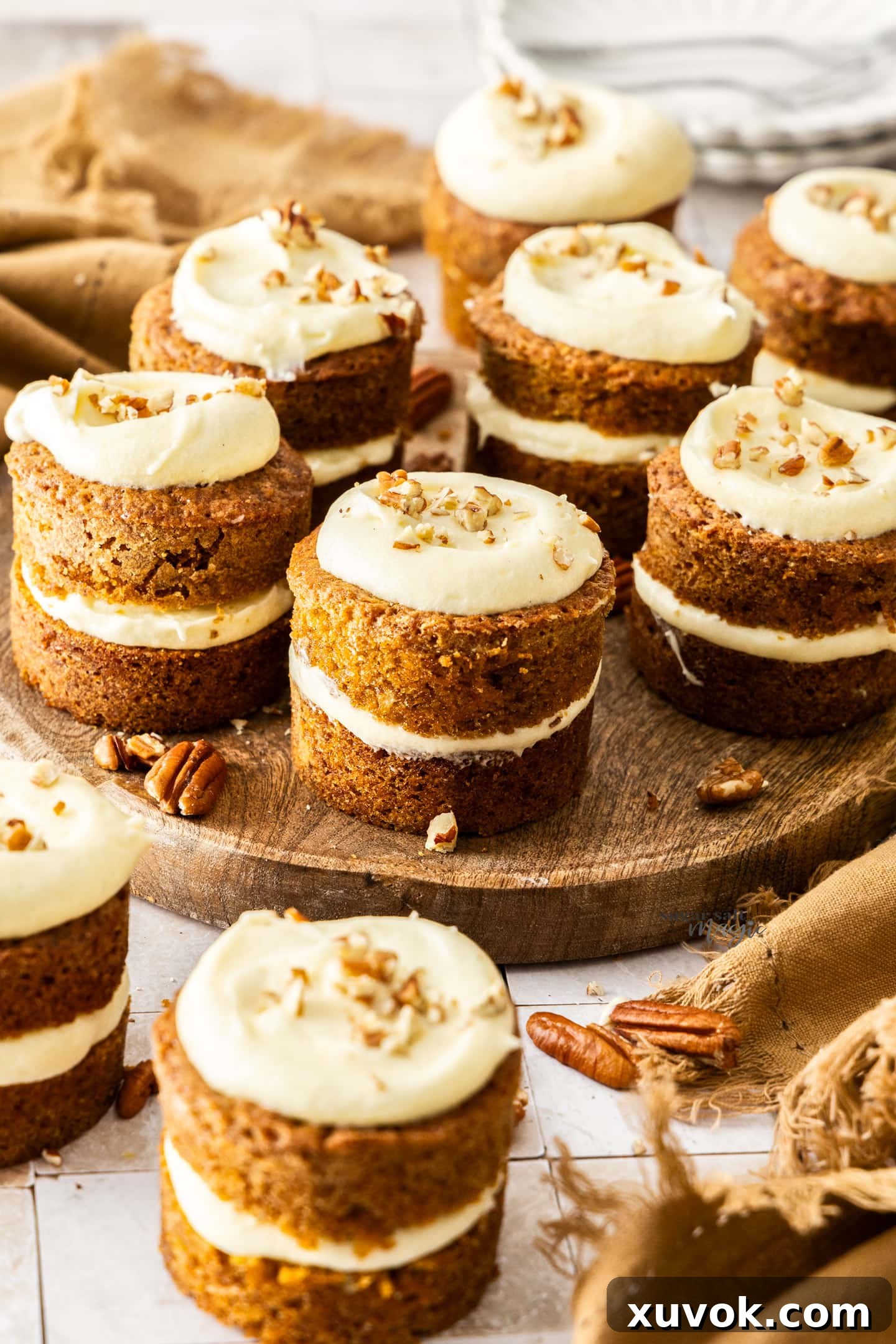
Table of Contents
- Irresistible Mini Carrot Cakes: Your Go-To Recipe for Individual Indulgence
- Unveiling the Key Ingredients for Perfect Mini Carrot Cakes
- Mastering the Art of Making Mini Carrot Cakes: A Step-by-Step Guide
- 1. Perfectly Blending the Dry Ingredients
- 2. Crafting the Flavorful Wet Ingredients Base
- 3. Gently Combining Wet and Dry Mixtures
- 4. Incorporating the Essential Carrot and Nuts
- 5. Portioning and Baking for Flawless Mini Cakes
- 6. Whipping Up the Silky Cream Cheese Frosting
- 7. Assembling Your Elegant Mini Carrot Cakes
- Pro Tips for Baking Mini Carrot Cakes Like a Pro
- Customization & Serving Suggestions
- Proper Storage for Lasting Freshness
- Frequently Asked Questions About Carrot Cake
- More Decadent Recipes You’ll Love
Never Miss a Delicious Recipe!
Join our community and get the latest irresistible recipes delivered straight to your inbox. Stay updated with fresh ideas and baking inspiration!
Unveiling the Key Ingredients for Perfect Mini Carrot Cakes
The beauty of carrot cake lies in its versatility, allowing for numerous delightful variations. Some recipes incorporate tropical notes with pineapple or coconut, while others feature the chewiness of raisins. However, at the heart of every great carrot cake are, of course, fresh carrots and a thoughtfully selected blend of spices. My recipe keeps things wonderfully simple yet incredibly flavorful, focusing on the essential elements with the delightful addition of pecans. You can, however, easily customize it to your liking – feel free to introduce shredded coconut, plump raisins, or experiment with different types of nuts to suit your preference and create your signature mini carrot cakes.
Understanding the role of each ingredient is key to achieving the perfect balance of moisture, flavor, and texture. Let’s delve into the components that make these mini carrot cakes so exceptional:
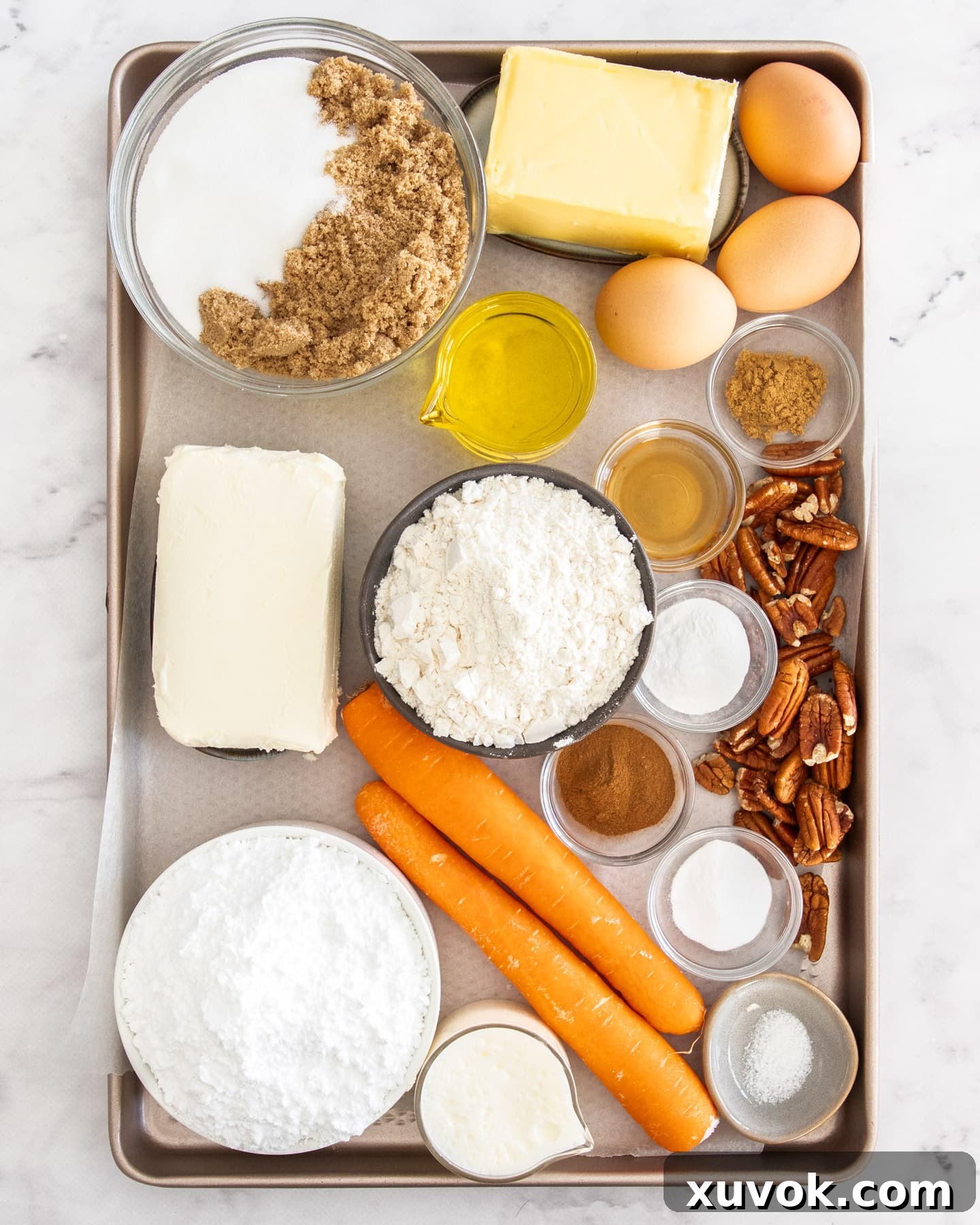
For detailed quantities and step-by-step instructions, please jump directly to the recipe card below.
- All-Purpose Flour: Commonly known as plain flour, this forms the structural backbone of our cakes. It provides the necessary gluten development for a tender crumb.
- Baking Powder and Baking Soda: This dynamic duo is crucial for lift and fluffiness. Baking powder creates an initial rise, while baking soda reacts with acidic ingredients (like brown sugar) to contribute to a soft texture and helps create those coveted perfectly level tops, ideal for frosting. Without both, your cakes might be dense or uneven.
- Spices: My preferred blend includes warming cinnamon, zesty ginger, and a touch of salt to enhance all the flavors. For an added layer of warmth, feel free to incorporate small amounts (e.g., ¼ teaspoon) of ground cloves or ground nutmeg. These spices are what give carrot cake its signature cozy aroma and taste.
- Oil and Butter: This winning combination of fats provides the best of both worlds. Vegetable oil ensures the cakes remain incredibly moist and tender, a hallmark of excellent carrot cake. Melted butter, on the other hand, infuses a rich, nutty flavor and contributes to a desirable texture without making the cakes greasy. Butter is also indispensable for our decadent cream cheese frosting.
- Sugars: We use both white granulated sugar for sweetness and structure, and light brown sugar for its molasses notes, which add depth of flavor and extra moisture. For a more intense caramel flavor, dark brown sugar can be used as a substitute. The classic cream cheese frosting relies on fine icing sugar (also known as powdered sugar or confectioners’ sugar) for its smooth, melt-in-your-mouth consistency.
- Eggs: Standard large eggs are essential binders, adding richness, moisture, and helping the cakes achieve their structure. Ensure they are at room temperature for better emulsification with other ingredients.
- Vanilla Extract: A splash of vanilla extract elevates the overall flavor profile of both the cake and the frosting. While vanilla extract works perfectly, I often opt for vanilla bean paste in the frosting for those beautiful little black flecks and a more intense vanilla aroma.
- Carrots: The star of the show! For these mini cakes, I recommend using two medium carrots, which typically yields around 200g (7oz) of finely grated carrot. Fine grating is crucial for even distribution and a tender cake texture, allowing the carrots to soften beautifully during baking without leaving large, fibrous chunks.
- Pecans: I’ve chosen pecans for their buttery flavor and delightful crunch in these mini carrot cakes. However, feel free to substitute with walnuts, which are a traditional and equally fantastic choice. Pistachios, as used in my carrot cake muffins, also work wonderfully. For variety, consider creamier nuts like cashews, hazelnuts, almonds, or macadamias. Whichever you choose, ensure they are finely chopped; a food processor can make this quick and easy.
- Cream Cheese: For the iconic cream cheese frosting, always opt for full-fat block cream cheese. Lower-fat versions tend to be too watery and will result in a runny frosting that requires excessive sugar to stiffen, compromising flavor and texture. Ensure it’s softened to room temperature for a smooth, lump-free frosting.
- Heavy Cream (Thickened Cream/Whipping Cream): A small amount of heavy cream in the frosting helps create a lighter, fluffier texture and makes it easier to spread. If you prefer a very stiff frosting for intricate piping, you can omit it, but I find it adds a wonderful creaminess.
Mastering the Art of Making Mini Carrot Cakes: A Step-by-Step Guide
Creating these individual carrot cakes is a surprisingly simple and rewarding process. For those perfectly straight sides and elegant presentation, I highly recommend using a mini cheesecake pan with removable bottoms. If you don’t have one, a standard 12-hole muffin pan works perfectly too – you’ll essentially be making adorable carrot cake cupcakes, which are just as delicious! The key is to follow each step diligently to ensure a moist, flavorful, and beautifully structured cake every time.
Ready to get baking? Jump to the recipe card below for precise measurements and detailed instructions.
1. Perfectly Blending the Dry Ingredients
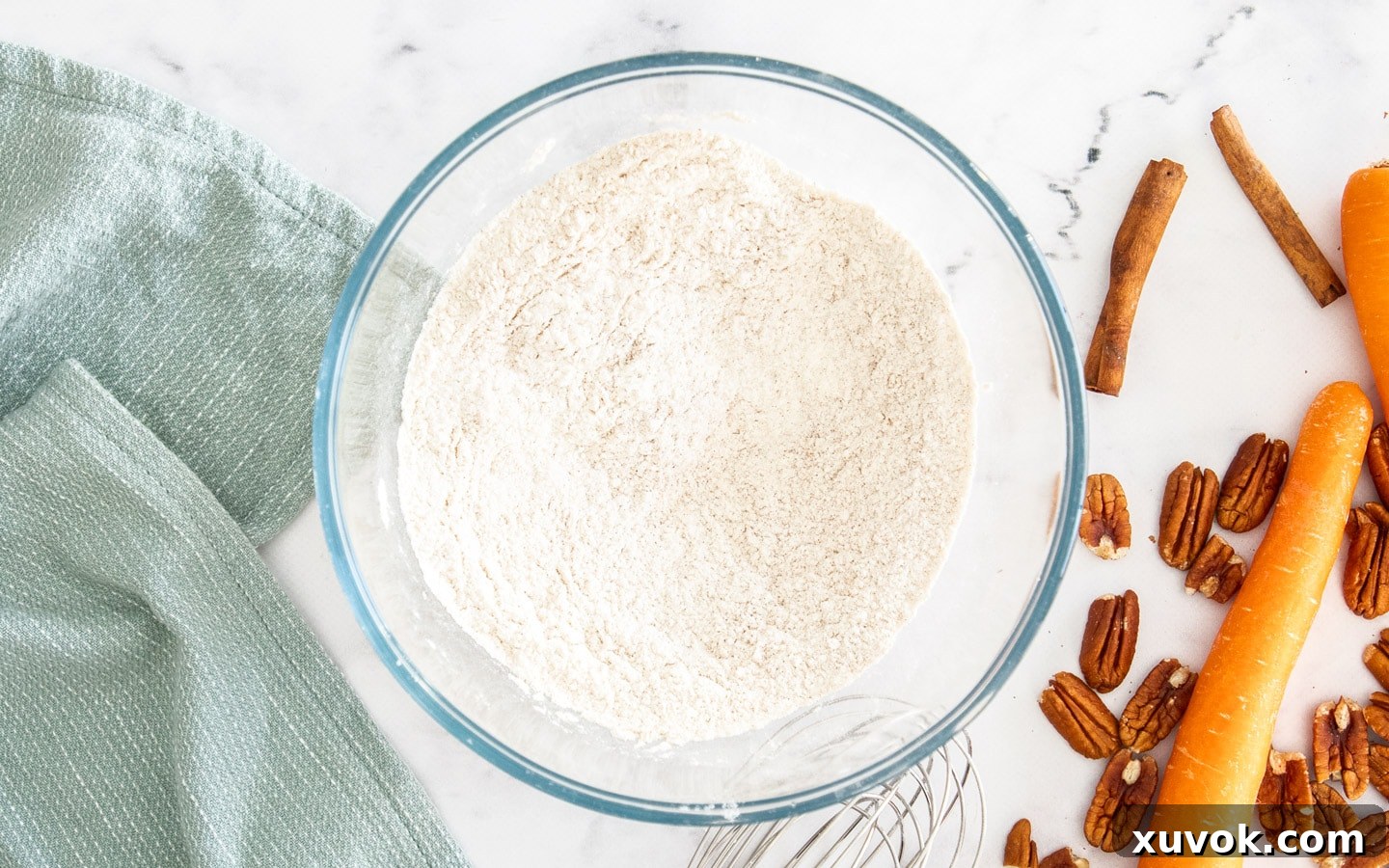
The first step is crucial for even distribution of leaveners and spices. In a medium-sized bowl, combine the all-purpose flour, ground cinnamon, baking powder, baking soda, ground ginger, and salt. Use a whisk to thoroughly mix these ingredients together, ensuring there are no lumps and that the leavening agents are evenly dispersed throughout the flour. This prevents pockets of unmixed ingredients and guarantees a consistent rise and texture in your finished mini carrot cakes.
2. Crafting the Flavorful Wet Ingredients Base
In a separate, large mixing bowl, combine the neutral-flavored vegetable oil, melted unsalted butter, light brown sugar, and white granulated sugar. Whisk these together until the mixture is smooth, creamy, and the sugars have started to dissolve. The combination of oil and butter ensures optimal moisture and flavor. Next, incorporate the eggs one at a time, whisking thoroughly after each addition until fully incorporated. This gradual addition helps emulsify the eggs into the fat and sugar mixture, resulting in a lighter batter. Finish by whisking in the vanilla extract, which adds a warm, aromatic depth to the cake batter.
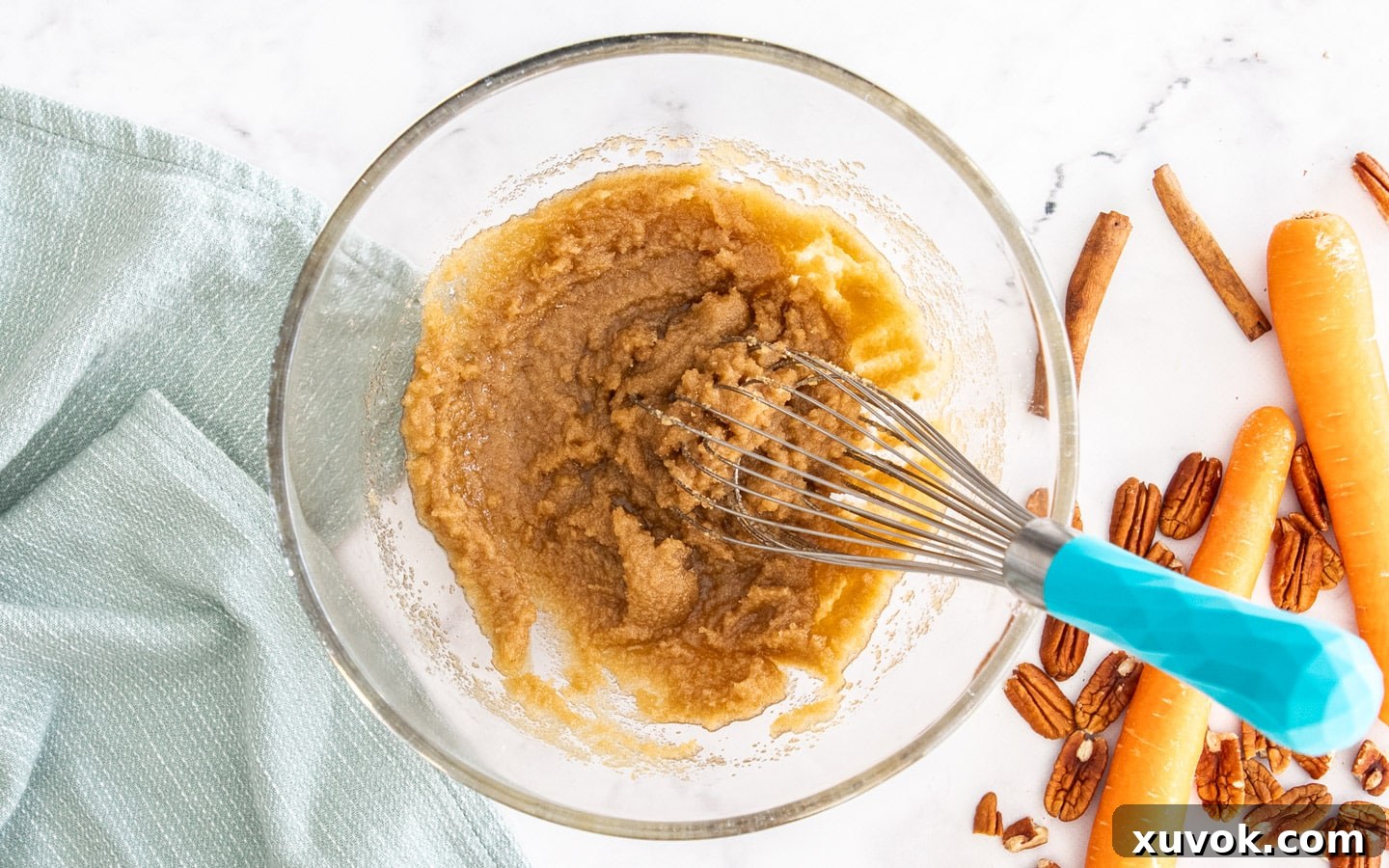
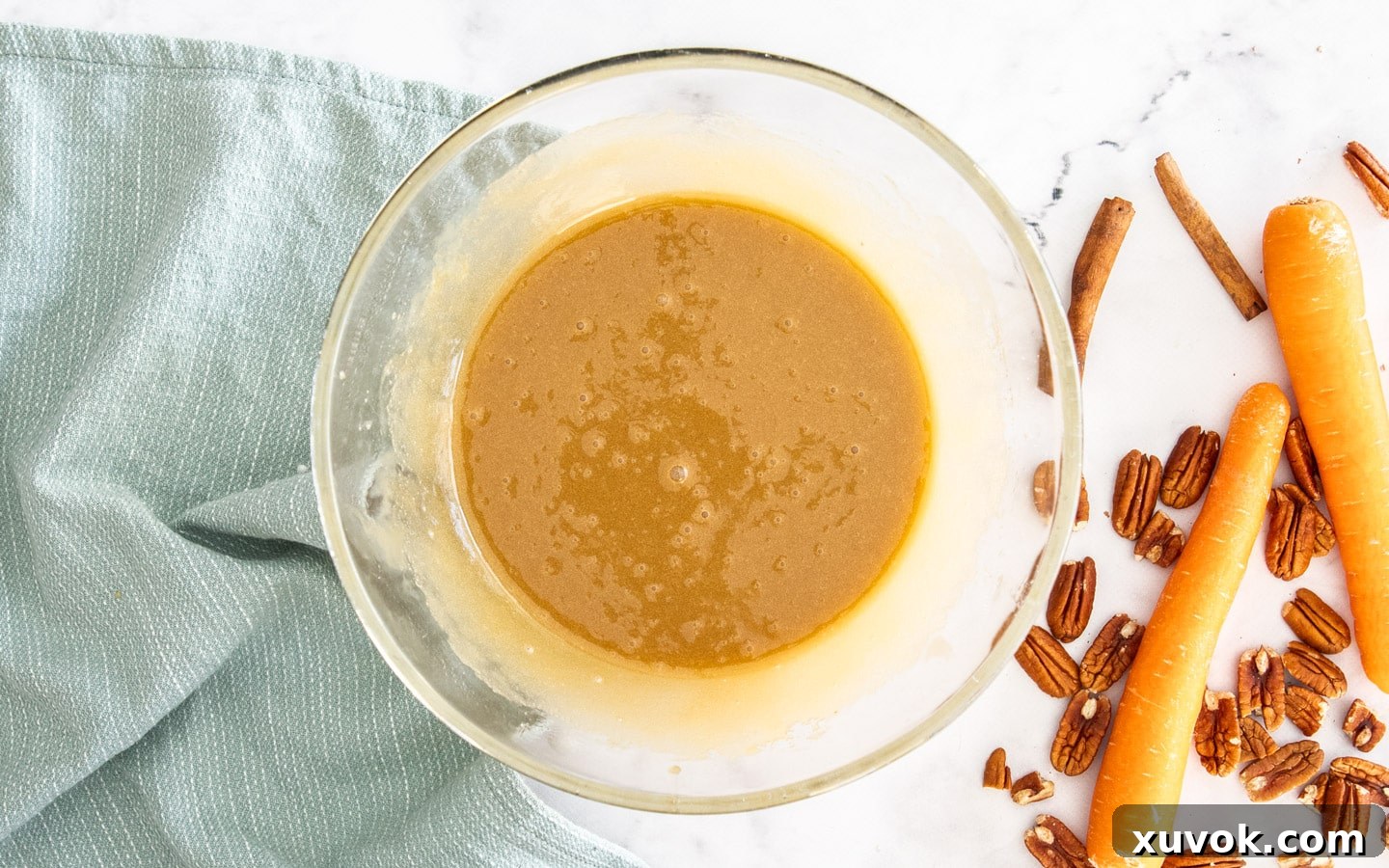
3. Gently Combining Wet and Dry Mixtures
Now it’s time to bring the two main components together. Add approximately half of your prepared dry ingredient mixture to the wet ingredients. Using a rubber spatula, gently stir until the flour is *almost* fully combined – a few streaks are perfectly fine at this stage. Avoid overmixing, as this can develop the gluten too much, leading to a tough cake. Repeat the process with the remaining flour mixture, stirring just until no dry streaks of flour are visible. A light touch ensures a tender, moist crumb, which is essential for a truly outstanding carrot cake.
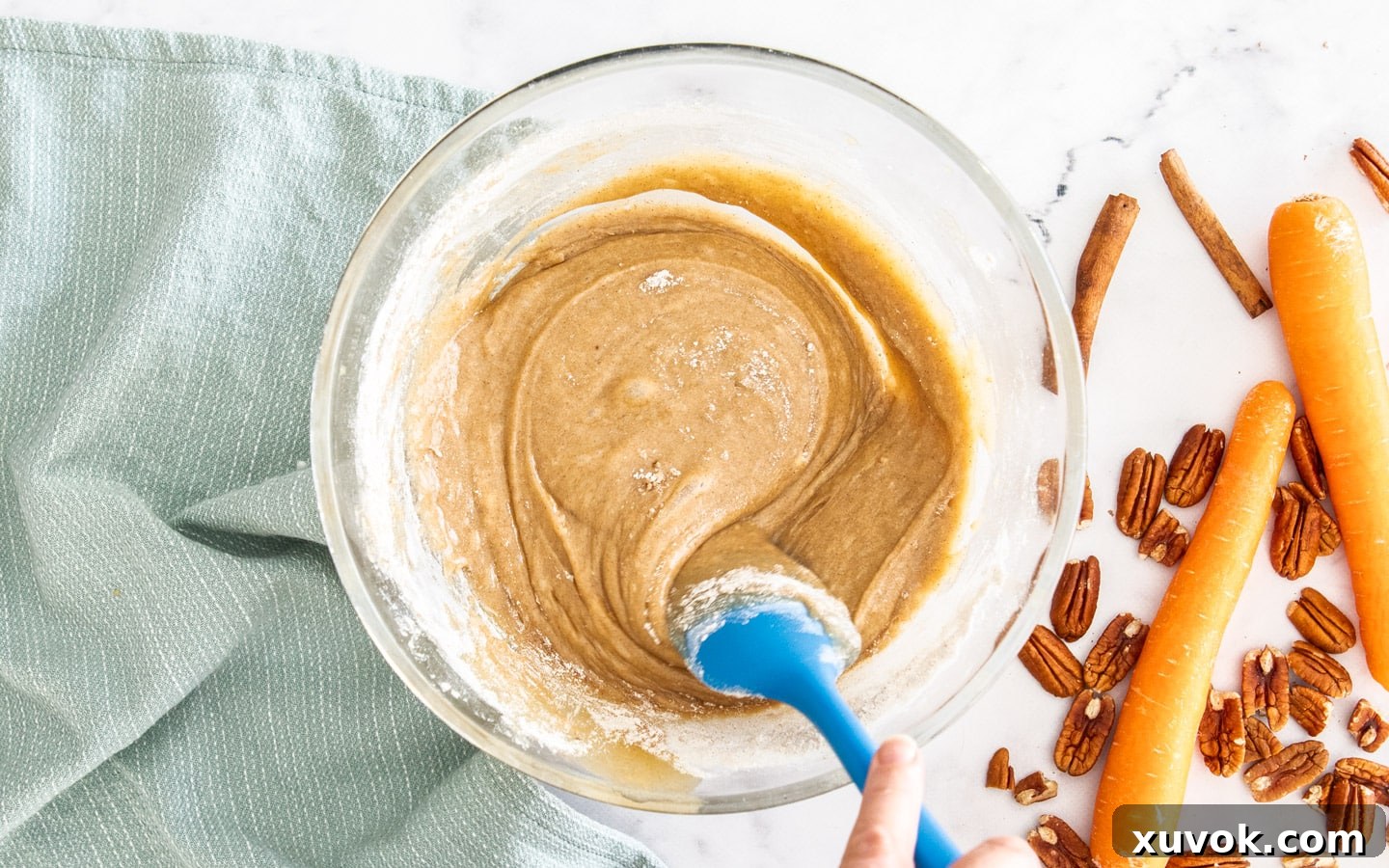
4. Incorporating the Essential Carrot and Nuts
With the batter nearly complete, it’s time for the stars of the show: the carrots and nuts. Gently fold in the finely grated carrots and finely chopped pecans (or your chosen nuts). For perfectly tender carrots, I recommend using the fine side of a box grater. Alternatively, a food processor can quickly achieve a fine, almost breadcrumb-like consistency, either with the grating blade or the regular blade. Ensure these delightful additions are evenly distributed throughout the batter with minimal stirring to maintain the cake’s tender texture.
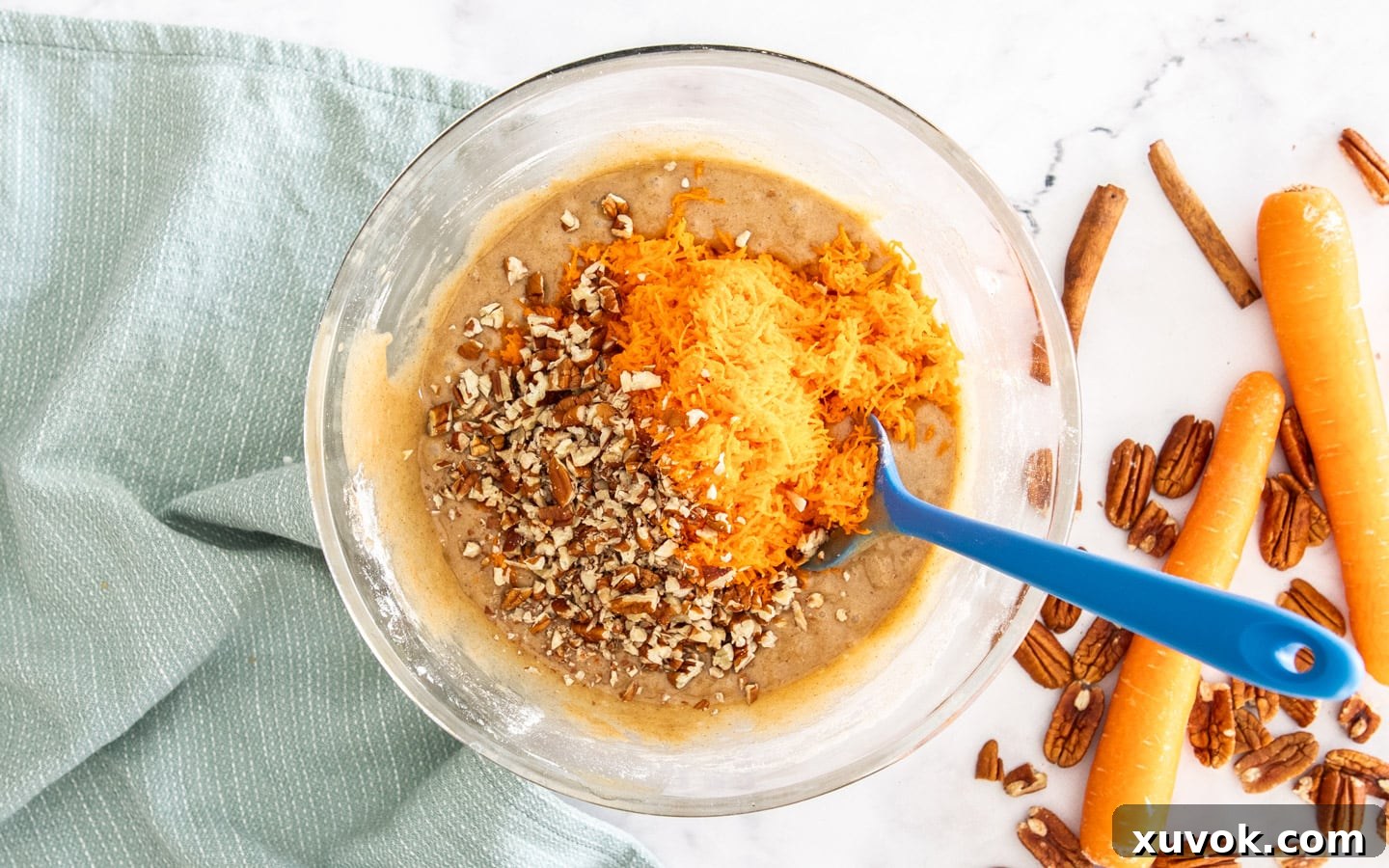
5. Portioning and Baking for Flawless Mini Cakes
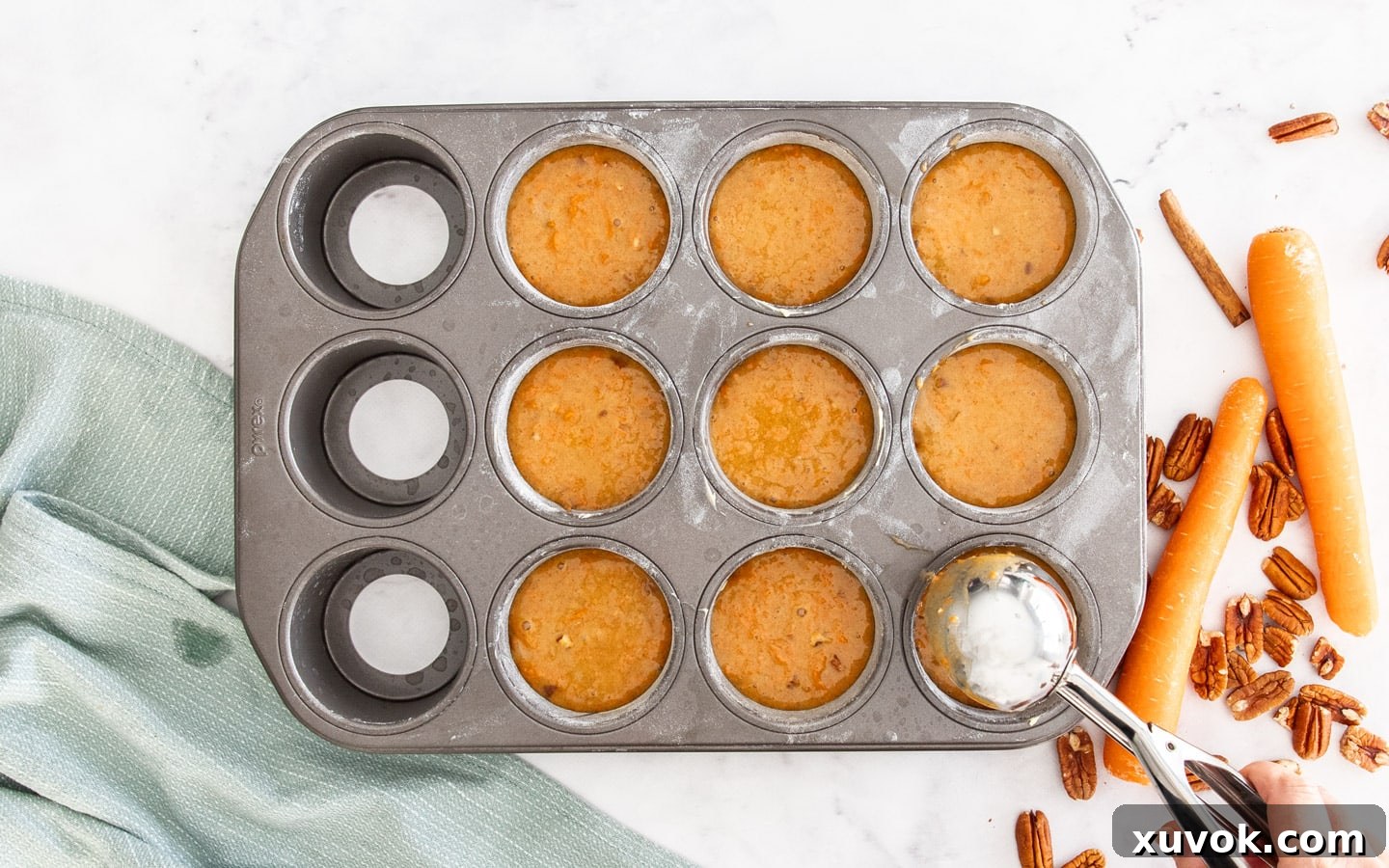
Now for the fun part – getting your batter into the pans! Divide the carrot cake batter evenly among the 9 holes of your prepared mini cheesecake pan. A large ice cream scoop is an excellent tool for this, ensuring consistent portion sizes and less mess. If you’re using a muffin pan, fill each cup about two-thirds full to allow for proper rising. Bake until a toothpick inserted into the center of a cake comes out with only a few moist crumbs attached, indicating they are perfectly baked through. Overbaking can lead to dry cakes, so keep a close eye on them!
6. Whipping Up the Silky Cream Cheese Frosting
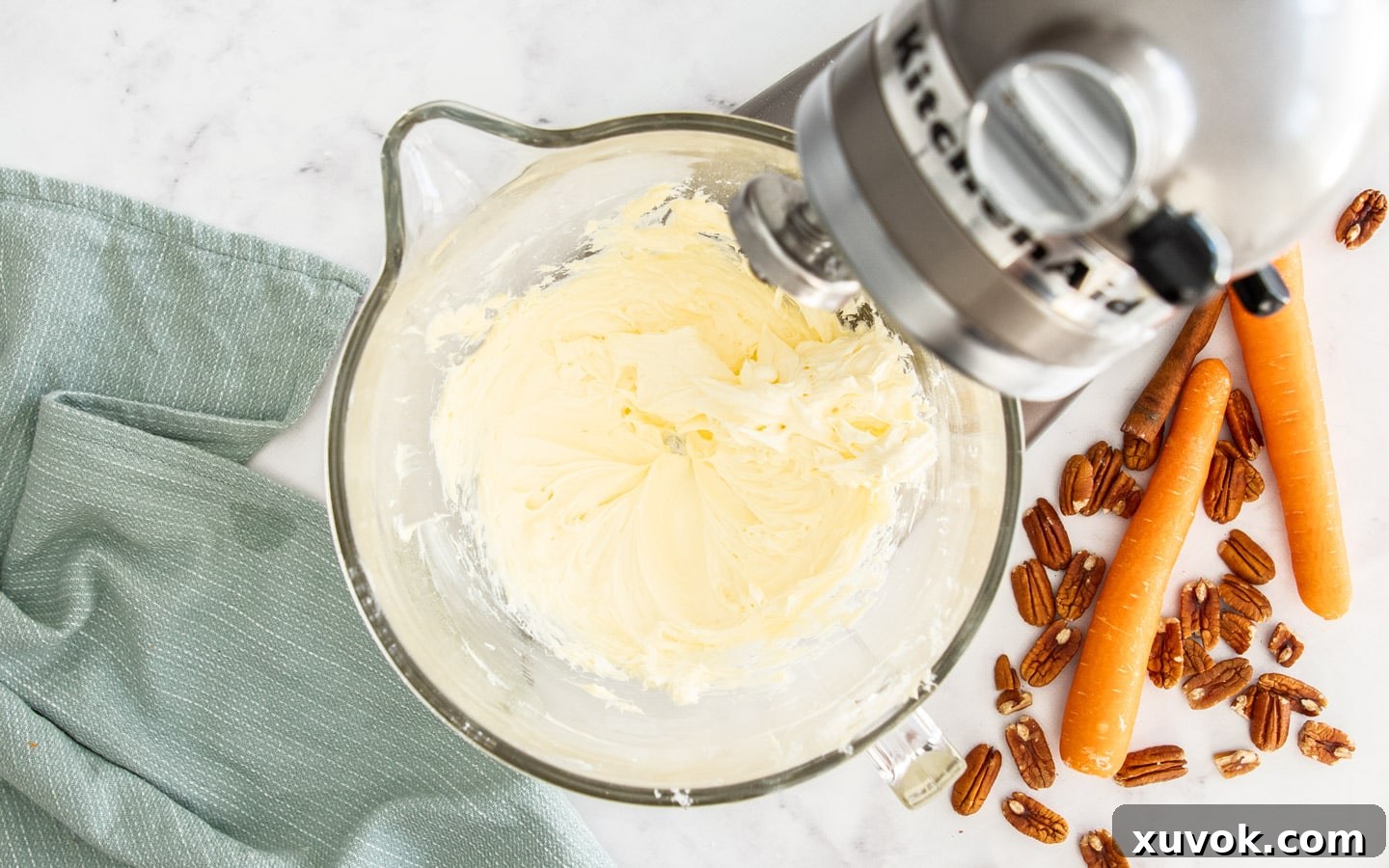
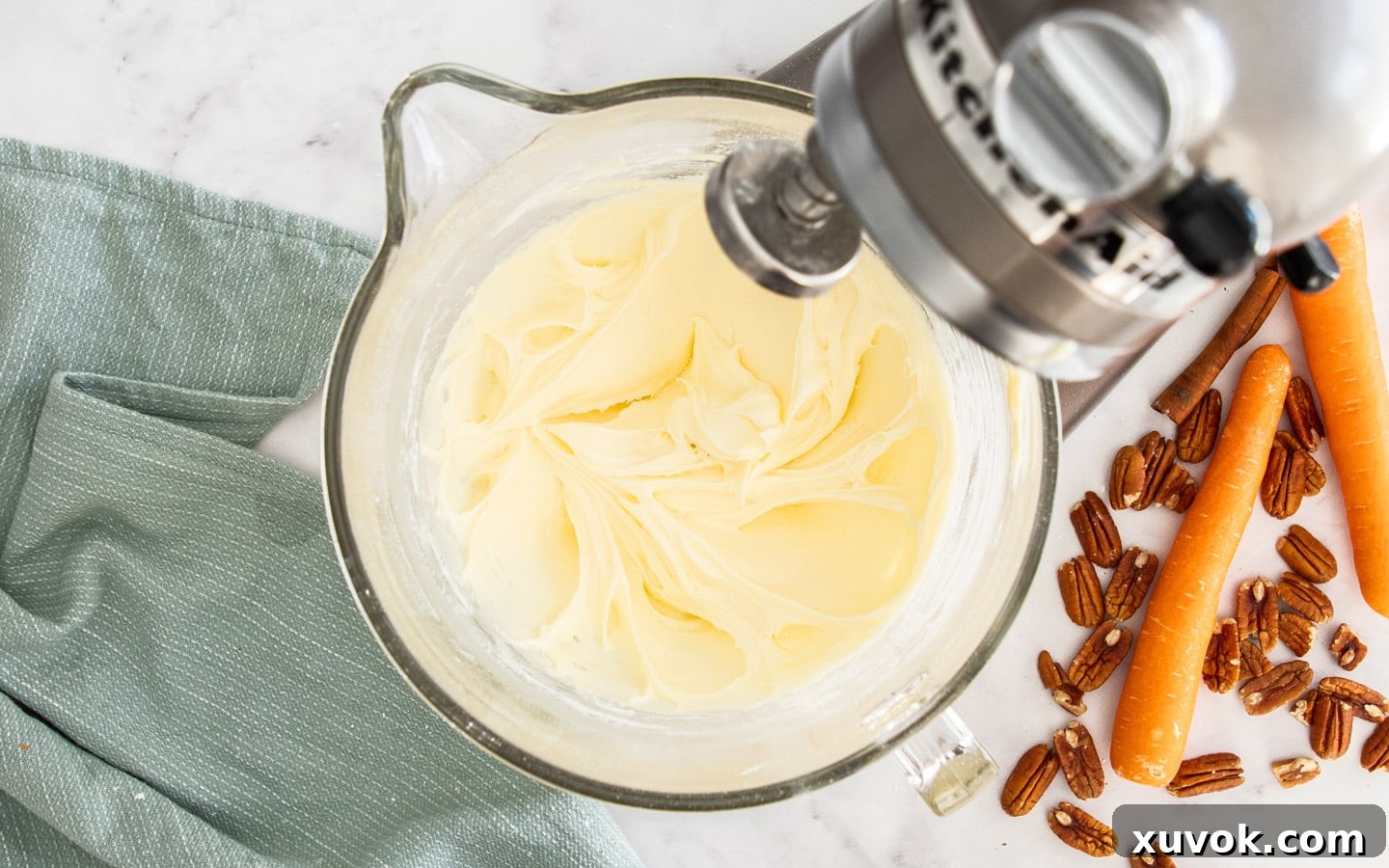
No carrot cake is complete without a rich, tangy cream cheese frosting, and this recipe delivers on all fronts. This frosting is incredibly simple to prepare. I typically use my trusty stand mixer for ease, but an electric hand mixer works just as effectively. Begin by beating the softened unsalted butter and full-fat cream cheese together with a small portion of the icing sugar until the mixture is light, fluffy, and completely smooth. Scrape down the sides of the bowl to ensure everything is well combined. Then, gradually add the remaining icing sugar, salt, and vanilla extract, beating on low speed until combined, then increasing to medium for a minute or two. Finally, slowly drizzle in the whipping cream as the mixer runs on low, then whip on medium-high for about a minute until the frosting is wonderfully light, airy, and truly irresistible. This careful process ensures a smooth, stable, and perfectly textured frosting.
7. Assembling Your Elegant Mini Carrot Cakes
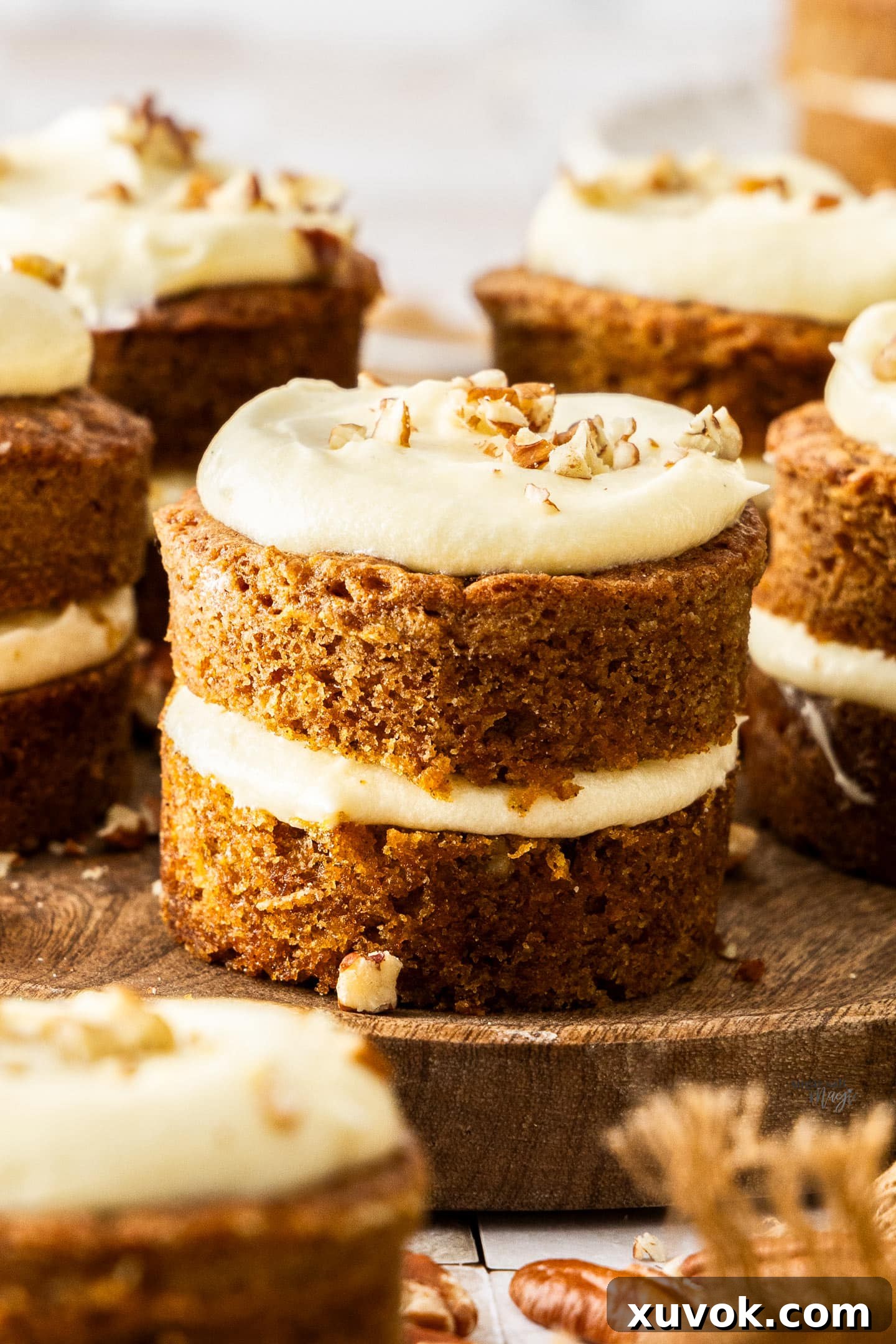
Once your mini carrot cakes have completely cooled, it’s time to transform them into elegant individual desserts. Carefully slice each cake in half horizontally through the middle using a serrated knife, creating two distinct layers. Transfer your delightful cream cheese frosting to a piping bag fitted with a large round nozzle, or simply use a spoon. Pipe or spoon a dollop of frosting onto the bottom layer of each cake, spreading it out gently, leaving a small border around the edges. Carefully place the top cake layer over the frosting. Then, add a slightly larger dollop of frosting to the top of each mini cake and spread it out for a beautiful swirl. For a perfect finishing touch and an extra bit of texture, sprinkle some roughly chopped pecans over the top of each frosted cake. These mini masterpieces are now ready to be admired and enjoyed!
Pro Tips for Baking Mini Carrot Cakes Like a Pro
Achieving bakery-quality mini carrot cakes at home is easier than you think, especially with a few insider tips. Here’s how to ensure your cakes are always moist, flavorful, and beautifully presented:
- Room Temperature Ingredients: This is a golden rule for baking! Ensure your eggs, butter, and cream cheese are at room temperature. This allows them to emulsify properly, creating a smooth, homogenous batter and frosting. Cold ingredients can lead to a lumpy batter or a split frosting.
- Finely Grated Carrots: For the best texture, grate your carrots finely. This allows them to soften completely during baking and seamlessly blend into the cake without large, chewy bits. A box grater’s fine side or a food processor can help achieve this.
- Don’t Overmix: After combining the wet and dry ingredients, mix just until no streaks of dry flour remain. Overmixing develops gluten, resulting in a dense, tough cake rather than a tender, moist one.
- Measure Accurately: Baking is a science! Especially for flour and sugar, use a kitchen scale for precise measurements where weights are provided. For liquids, use clear measuring cups.
- Quality Spices: Fresh, aromatic spices make a huge difference in flavor. If your spices have been sitting in the pantry for years, it might be time to replace them for a more vibrant taste.
- Cool Cakes Completely: Resist the urge to frost warm cakes! Warm cakes will melt your beautiful cream cheese frosting, leading to a runny mess. Allow them to cool completely on a wire rack before attempting to slice and frost.
- Full-Fat Cream Cheese: For your frosting, always opt for full-fat block cream cheese. Low-fat varieties have a higher water content and will yield a runny, unstable frosting that is difficult to work with.
- Adjust Frosting Consistency: If your frosting feels too stiff, add a tiny splash more cream or milk (half a teaspoon at a time). If it’s too soft, chill it in the fridge for 15-30 minutes, then re-whip. Adding more powdered sugar is also an option if it’s very thin.
Customization & Serving Suggestions
These mini carrot cakes are fantastic as is, but they also serve as a wonderful canvas for your creativity! Here are some ideas to make them uniquely yours and suggestions for how to best enjoy them:
Customization Ideas:
- Spice It Up: Beyond cinnamon and ginger, try adding a pinch of allspice or a tiny dash of cardamom for an exotic twist.
- Fruity Additions: For extra moisture and tang, fold in ½ cup of well-drained crushed pineapple or golden raisins with the carrots and pecans.
- Nutty Variations: While pecans are classic, consider walnuts, chopped pistachios, or even toasted shredded coconut for different textures and flavors.
- Chocolate Lover’s Dream: Stir in a handful of mini chocolate chips for a delightful surprise.
- Zesty Kick: Add a teaspoon of orange or lemon zest to the cake batter for a brighter, fresher flavor that beautifully complements the carrots and spices.
- Frosting Flavors: Experiment with adding a touch of orange extract or a different liqueur to your cream cheese frosting for an adult twist.
Serving Suggestions:
- Elegant Dessert Platter: Arrange these mini cakes beautifully on a platter for parties or gatherings. Their individual size makes serving a breeze.
- Coffee & Tea Companion: Pair them with a warm cup of coffee, tea, or even a spiced latte for a cozy afternoon treat.
- Brunch Star: Serve them as part of a decadent brunch spread.
- Garnish with Flair: Beyond chopped pecans, consider a sprinkle of edible gold dust, delicate edible flowers, or a dusting of cinnamon for an extra touch of elegance.
- Seasonal Delights: These cakes are perfect for fall celebrations, Thanksgiving, Christmas, and especially Easter. Adjust your garnishes to match the season!
Proper Storage for Lasting Freshness
To keep your delicious mini carrot cakes fresh and moist, proper storage is essential. Due to the cream cheese frosting, refrigeration is key. Any leftover cakes should be stored in an airtight container in the fridge for up to 3-4 days. For the best flavor and texture, allow them to come to room temperature for about 30 minutes before serving. This softens the frosting and enhances the cake’s tenderness.
These cakes also freeze beautifully! Place them in an airtight freezer-safe container, ensuring they are well-sealed to prevent freezer burn. They can be frozen for up to 2 months. When you’re ready to enjoy them, thaw the cakes overnight in the refrigerator. Again, bring them to room temperature before serving for optimal enjoyment. Freezing is a fantastic way to prepare them ahead for future events or simply to have a delicious treat on hand whenever a craving strikes.
Frequently Asked Questions About Carrot Cake
Many traditional carrot cake recipes rely solely on oil because carrots already provide a significant amount of moisture, and oil helps maintain that tenderness without adding extra richness from butter. However, I believe a combination offers the best of both worlds. In this recipe, a small amount of melted butter is used alongside vegetable oil. The oil ensures the cake stays incredibly moist, while the butter adds a lovely nutty depth of flavor and contributes to a more complex texture that you wouldn’t get with oil alone. It’s a subtle but impactful difference that elevates the overall taste profile.
A sunken carrot cake can be disappointing, but there are several common reasons. It might be due to an excess of moisture in the recipe, or too much leavening agent (baking powder/soda) causing the cake to rise too quickly and then collapse, either during baking or shortly after being removed from the oven. Opening the oven door too early during baking, especially in the first two-thirds of the bake time, can also cause a sudden drop in temperature, leading to a collapse. Additionally, if the cake is underbaked, the structure isn’t fully set, and it will likely sink. Always ensure your oven temperature is accurate and resist opening the door too frequently.
A wet or gummy center usually indicates that your carrot cake is underbaked. Even if the edges look golden, the center might not have cooked through. This can happen if the oven temperature is too high on the outside (creating a crust quickly) but too low inside, or simply if the baking time wasn’t sufficient. To ensure your cake is perfectly baked, always test the center with a toothpick; it should come out with just a few moist crumbs attached, but not wet batter. Another factor could be excessive moisture in the batter itself, which sometimes happens with very large or watery carrots.
Yes, you absolutely can! To make these mini carrot cakes gluten-free, simply substitute the all-purpose flour with a 1:1 gluten-free baking flour blend. Ensure your chosen blend contains xanthan gum (or add ¼ teaspoon per cup of flour) to provide structure and prevent the cakes from crumbling. The rest of the ingredients and instructions should remain the same. Always double-check that your baking powder and baking soda are also gluten-free, as some brands may contain wheat starch.
For elegantly shaped mini carrot cakes with straight sides, a mini cheesecake pan with removable bottoms is ideal. This allows for easy removal and a clean presentation. However, a standard 12-hole muffin tin can also be used, turning them into delicious carrot cake cupcakes. If using a muffin tin, make sure to line the cups with paper liners or grease and flour them well to prevent sticking. The baking time might need slight adjustment depending on the pan type, so always rely on the toothpick test.
More Decadent Recipes You’ll Love
If you enjoyed baking and tasting these mini carrot cakes, you’re in for a treat! Explore more delightful recipes that will satisfy your sweet cravings and expand your baking repertoire. From more carrot-infused delights to other irresistible mini desserts, there’s always something new to discover:
- Baked Carrot Cake Donuts: A lighter, equally flavorful take on carrot cake in a fun donut shape.
- Easy Carrot Cake Bars: Perfect for feeding a crowd, these bars are moist, delicious, and easy to transport.
- Classic Carrot Cake Muffins: The inspiration for these mini cakes, offering a simpler, equally delightful individual portion.
- Decadent Chocolate Mini Cakes: If you’re a chocolate lover, these individual chocolate cakes are pure indulgence.
- Zesty Lemon Drizzle Cake: A bright and refreshing alternative to rich carrot cake, perfect for citrus fans.
- Apple Crumble Cheesecake: A unique dessert that combines the best of a creamy cheesecake with a comforting apple crumble.
⭐⭐⭐⭐⭐
Did you try this mini carrot cake recipe? We’d love to hear your thoughts! Show it some love in the comments below and share your experience.
Hungry for more? Subscribe to our newsletter for free, delicious recipes delivered straight to your inbox. Also, follow along and connect with us on Facebook, Pinterest, and Instagram for daily inspiration and behind-the-scenes glimpses!
Mini Carrot Cakes with Cream Cheese Frosting
9
cakes
25 minutes
27 minutes
0 minutes
52 minutes
Rate
Pin
Ingredients
FOR THE MINI CARROT CAKES
-
1 ½
cups
all-purpose flour
(195g / ~7oz) -
1 ½
teaspoons
ground cinnamon -
1 ½
teaspoons
baking powder -
½
teaspoon
baking soda (bicarbonate of soda) -
½
teaspoon
ground ginger -
¼
teaspoon
salt -
½
cup
neutral flavored vegetable oil -
57
g
unsalted butter, melted
(¼ cup / 2oz) -
¾
cup
light brown sugar, packed
(150g / 5.3oz) -
¾
cup
white granulated sugar
(150g / 5.3oz) -
3
large
eggs, room temperature -
1
teaspoon
vanilla extract -
2
medium
carrots, finely grated
(200g/7oz) -
½
cup
pecans, finely chopped
(60g / 2oz)
FOR THE CREAM CHEESE FROSTING
-
226
g
unsalted butter, softened
(1 cup / 2 sticks) -
250
g
full-fat cream cheese, softened
(8oz is fine) -
390
g
icing sugar (powdered sugar)
(3 cups / 10 ½ oz) -
2
tablespoons
whipping cream
(40ml), notes 1 -
1
teaspoon
vanilla extract -
Pinch
of salt
For best results, always weigh ingredients where a weight is provided
Equipment
-
mixing bowls -
Whisk and rubber spatula -
mini cheesecake pan -
Large ice cream scoop, optional -
Handheld mixer or stand mixer
Instructions
-
FOR THE MINI CARROT CAKES:
Preheat your oven to 180°C (160°C fan-forced) / 350°F. Thoroughly grease and flour 9 holes of a non-stick mini cheesecake pan. Insert the removable bases and set the pan aside. If using a regular 12-hole muffin pan, grease and flour all holes (or use cupcake liners).
-
In a medium bowl, whisk together the flour, ground cinnamon, baking powder, baking soda, salt, and ground ginger until all ingredients are thoroughly combined and no lumps remain.
-
In a separate, larger bowl, whisk together the vegetable oil, melted butter, light brown sugar, and white granulated sugar until the mixture is smooth. Add the eggs one at a time, whisking well after each addition until fully incorporated before adding the next. Finish by whisking in the vanilla extract.
-
Add half of the dry ingredients mixture to the wet ingredients. Gently fold it in with a spatula until just incorporated, being careful not to overmix. Repeat this process with the remaining flour mixture, stirring just until no dry streaks of flour are visible.
-
Finally, gently fold in the finely grated carrots and the chopped pecans until they are evenly distributed throughout the batter.
-
Portion the carrot cake batter evenly among the 9 prepared holes of your mini cake pan. A large ice cream scoop is very helpful for this step. If using a muffin pan, fill each hole up to two-thirds full.
-
Bake for 25-28 minutes, or until a toothpick inserted into the center of a cake comes out with just a crumb or two attached, indicating it’s perfectly baked.
-
Allow the cakes to cool in their pan for 5-10 minutes (or until they are just cool enough to handle). Then, carefully release them from the mini cheesecake pan by pressing up on the bases from underneath. Gently transfer them to a wire cooling rack to cool completely. Be delicate as they are still warm and fragile.
-
Once completely cooled, use an offset spatula or a very thin knife blade to carefully slide between the cake and the removable bases to fully detach them. Ensure the cakes are completely cool before moving on to frosting.
-
FOR THE CREAM CHEESE FROSTING:
In a stand mixer fitted with a paddle attachment, or in a large bowl with a handheld mixer, beat the softened butter and cream cheese together with ½ cup of the icing sugar until the mixture is smooth, creamy, and well combined. Scrape down the sides of the bowl to ensure everything is incorporated.
-
Add the vanilla extract and salt. Then, gradually add the remaining icing sugar, about ½ cup at a time, beating on low speed just until combined after each addition. Once all the sugar is in, increase the speed to medium and beat for 2 minutes until light and fluffy.
-
With the mixer running on low speed, slowly drizzle in the whipping cream. Once fully incorporated, turn the mixer speed up to medium-high and beat for 1 minute until the frosting is wonderfully whipped and airy.
-
ASSEMBLING THE CARROT CAKES:
Once the carrot cakes have completely cooled, use a serrated knife to carefully slice each cake horizontally through the middle, creating two layers per cake.
-
Transfer the whipped cream cheese frosting to a piping bag fitted with a large round nozzle. Pipe a dollop of frosting onto the bottom layer of each cake and gently spread it out with a small offset spatula or teaspoon, leaving a slight border. Place the top cake layer on top. Then, pipe a slightly larger dollop of frosting onto the very top of each cake. Swirl it decoratively with the spatula or spoon. For an optional finishing touch, sprinkle with some extra crushed pecans. Serve immediately, or chill in an airtight container. Remember to allow them to come to room temperature before serving for the best flavor and texture.
-
Please take a moment to leave a comment & rating. Your feedback is greatly appreciated and incredibly helpful!
Notes
- Tablespoons: I use a standard Australian 20ml tablespoon (equal to 4 teaspoons). Please check your tablespoon measurement before beginning the recipe.
- You can use your food processor to finely grate/chop your carrots and pecans. Use the grater blade for carrots or the regular blade to process them until quite fine. Then, add the pecans and pulse until you achieve a fine, breadcrumb-like texture. This ensures both ingredients blend seamlessly into the cake.
- Nutritional information provided below the recipe is approximate only. Factors like specific brands used or exact portioning may cause variations.
DISCOVER MORE GREAT CAKE RECIPES!
903
kcal
Marie Roffey
Dessert
American
Have you tried this recipe?
Don’t forget to leave a rating and comment below and let me know how it was! I love hearing from you. Nutrition information is approximate and derived from an online calculator. The brands you use may cause variations.
Calories 903
Calories from Fat 495
% Daily Value*
Fat 55g
85%
156%
Cholesterol 161mg
54%
Sodium 263mg
11%
Potassium 288mg
8%
Carbohydrates 99g
33%
8%
89%
Protein 7g
14%
Vitamin A 5015IU
100%
Vitamin C 1mg
1%
Calcium 109mg
11%
Iron 2mg
11%