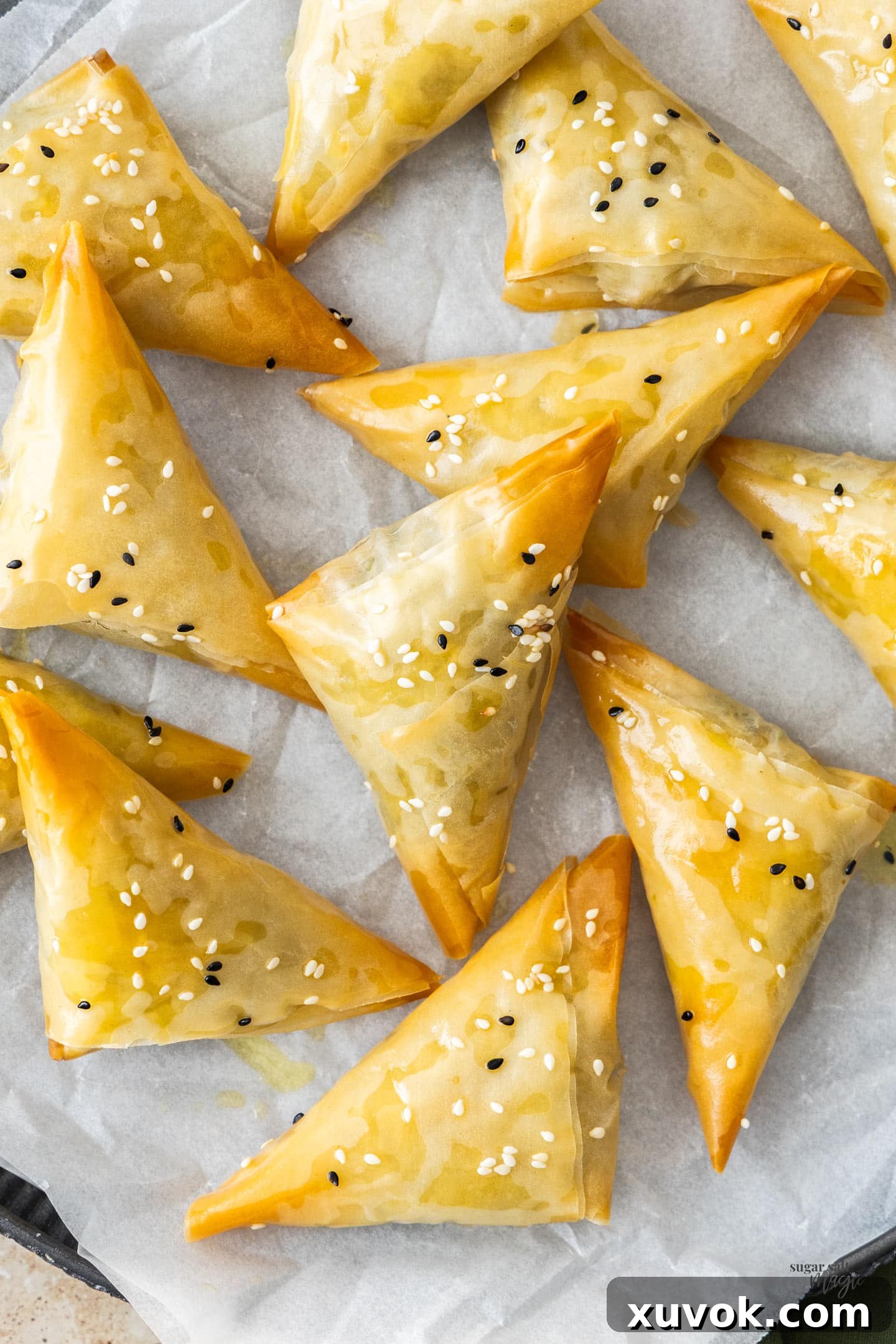
Crispy Spinach and Feta Triangles: Your Ultimate Spanakopita Bites
Delight in the irresistible crunch and savory goodness of these Spinach and Feta Triangles, a miniature, finger-food rendition of the beloved classic Greek spanakopita. Perfectly golden and flaky on the outside, with a warm, cheesy, and herbaceous spinach filling, these parcels are a true culinary triumph. They are not only **bursting with flavor** but also **surprisingly simple to prepare** and offer the fantastic convenience of being **made ahead**. Get ready to win over every palate!
These delightful filo pastries are incredibly versatile. With a filling that echoes the traditional spanakopita, they can be enjoyed in various ways: served **warm from the oven** as a comforting treat, or equally delicious **chilled from the fridge**. Elevate them into a light dinner by pairing them with a fresh side salad, present them as an elegant appetizer on their own or with a complementary dip, or simply pack them into lunchboxes for a wholesome and satisfying meal on the go. Their make-ahead potential and naturally vegetarian composition also make them an impeccable choice for any party or gathering, ensuring you can enjoy your guests without last-minute kitchen stress.
If you adore the delicate crispness of filo pastry, you might also love exploring other creations like these chicken filo parcels or this hearty chicken filo pie for more inspiration.
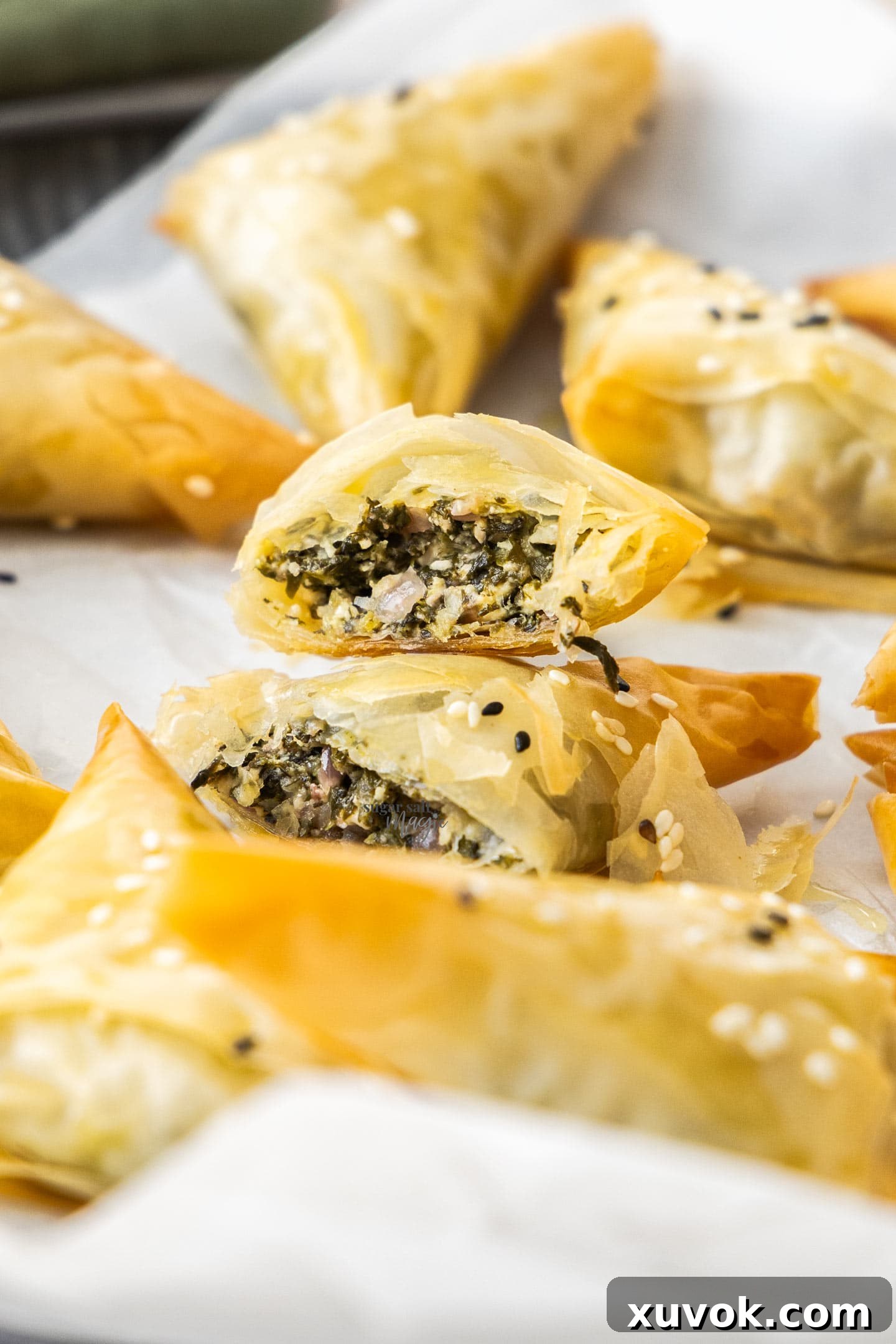
Table of Contents
Never Miss a Recipe!
Get the latest recipes straight to your inbox!
Sign up to our newsletter for delicious recipes delivered right to your inbox!
The Magic of Spinach and Feta Triangles
These mini spanakopita triangles capture all the traditional flavors of their larger, pie-like counterpart in a convenient, crispy bite. While classic spanakopita often takes the form of a large pie with multiple layers of filo encasing a generous filling, our finger-food version simplifies the presentation without compromising on taste. The essence remains the same: a harmonious blend of salty feta, earthy spinach, and aromatic herbs, all wrapped in shatteringly crisp filo pastry. We’ve slightly streamlined the herb profile for ease, focusing on dill, but you can easily reintroduce traditional parsley, mint, or a hint of nutmeg for a deeper, more authentic Greek flavor.
Imagine a golden-brown parcel, each bite offering a satisfying crackle of pastry before melting into a rich, creamy explosion of spinach and cheese. These triangles are more than just a snack; they are a celebration of simple ingredients transformed into something extraordinary. Whether you’re hosting a sophisticated dinner party, looking for a quick yet impressive appetizer, or simply want to elevate your weekly meal prep, these spanakopita triangles fit the bill perfectly. Their universal appeal and vegetarian nature ensure they’re a crowd-pleaser for any occasion.
Key Ingredients and Clever Substitutions
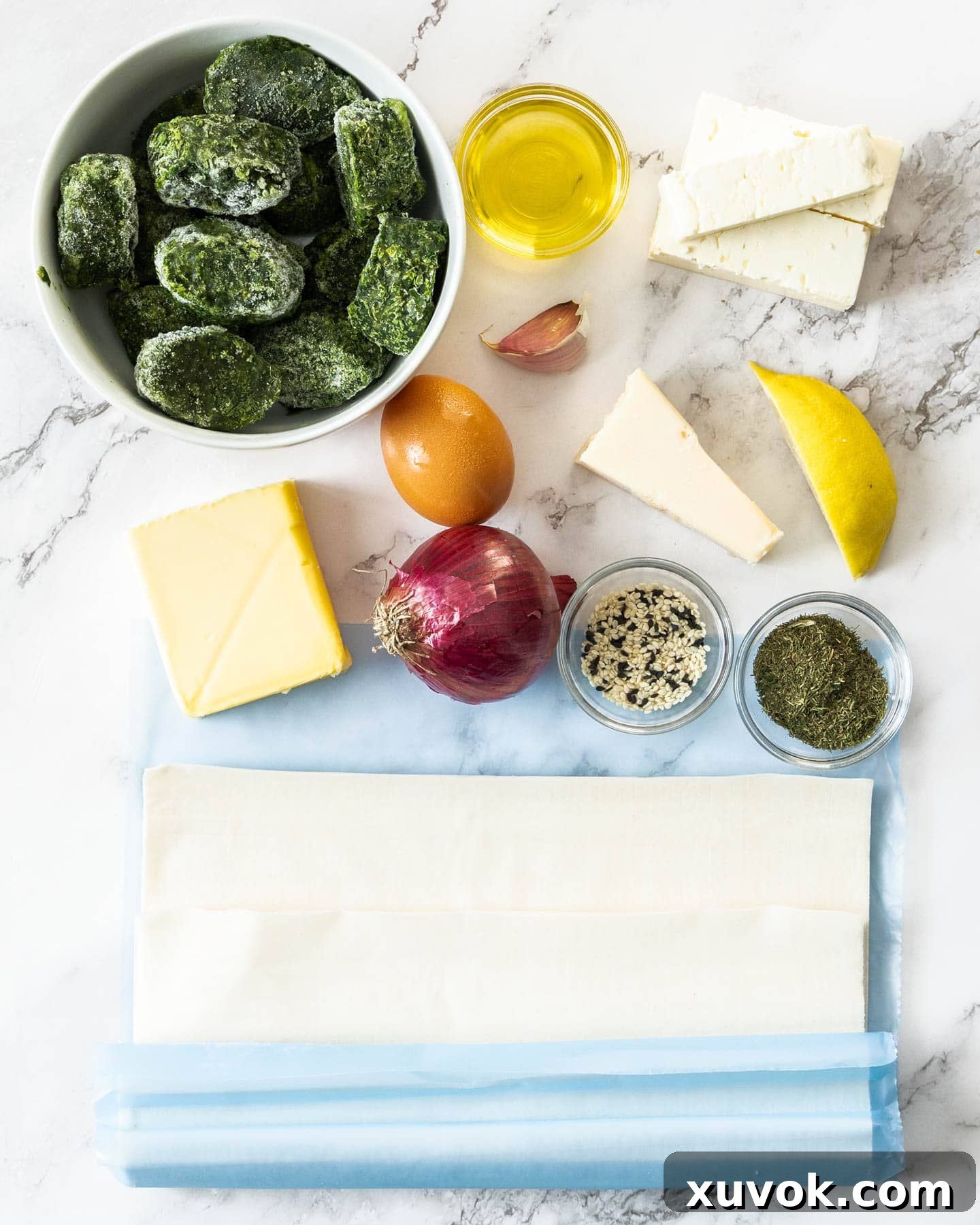
Crafting these delectable spinach and feta triangles begins with selecting quality ingredients. Below, we delve into each component, offering tips for selection and potential substitutions to ensure your spanakopita bites are always a success.
For precise measurements and full instructions, please refer to the recipe card at the bottom of this page.
- Filo / Phyllo Pastry: This incredibly thin, paper-like dough is the secret to the signature crisp and flaky texture of spanakopita. Store-bought filo is perfectly convenient. It typically comes in rolls of rectangular sheets and can be found in the freezer section of most supermarkets. Handling filo requires a gentle touch and speed, as it dries out quickly. Always keep unused sheets covered with a damp cloth while working. For a different texture, you can substitute with puff pastry, simply cut into squares, place the filling on one half, and fold the other half over to create a parcel.
- Spinach: We opt for frozen spinach for its sheer convenience and ease of preparation. Ensure it’s fully thawed and, crucially, that all excess liquid is thoroughly squeezed out. This step is non-negotiable for preventing a soggy filling and ensuring a crisp pastry. If using fresh baby spinach or regular fresh spinach leaves, you’ll need a larger quantity (it cooks down significantly). Blanch fresh spinach by submerging it in boiling water for about 30 seconds, then immediately transferring it to iced water to stop the cooking process. Squeeze out all moisture before chopping.
- Feta: As the name suggests, feta is central to this recipe. Invest in a good quality, crumbly feta cheese. Authentic Greek feta is traditionally made from sheep’s milk or a blend with goat’s milk, offering a distinctive tangy and salty flavor. Avoid pre-crumbled feta if possible, as it often contains anti-caking agents that can alter the texture and flavor. Crushing a block of feta yourself ensures superior taste and consistency.
- Kefalotyri Cheese / Parmesan Cheese: Kefalotyri is a hard, salty Greek sheep’s milk cheese that adds a wonderful depth of flavor. If kefalotyri is hard to find, good quality Parmesan cheese or even Pecorino Romano are excellent substitutes, offering a similar salty, sharp kick that complements the feta beautifully.
- Dried Dill: Dill is a classic herb in Greek cuisine and pairs wonderfully with spinach and feta. We use dried dill for simplicity, but for an even fresher, more vibrant flavor, feel free to use fresh dill. Remember that you’ll need approximately three times the amount of fresh herbs compared to dried. For a more traditional spanakopita profile, consider adding fresh parsley and a hint of mint to the filling. A pinch of nutmeg can also enhance the savory notes.
- Sesame Seeds: These are entirely optional but highly recommended. Sprinkled on top before baking, sesame seeds provide a delightful extra crunch and a subtle nutty flavor, enhancing the visual appeal of your triangles. For added texture and nuttiness within the parcels, a small amount of toasted pine nuts can be mixed into the filling.
- Onion: To keep things straightforward, we use red onion, which offers a mild sweetness when sautéed. Traditional spanakopita often features a combination of red onion and spring onions (also known as scallions or green onions), so feel free to experiment with a mix if you desire a more complex onion flavor. The garlic, minced and cooked with the onion, builds the foundational aromatic base for the filling.
Step-by-Step Guide to Perfect Spanakopita Triangles
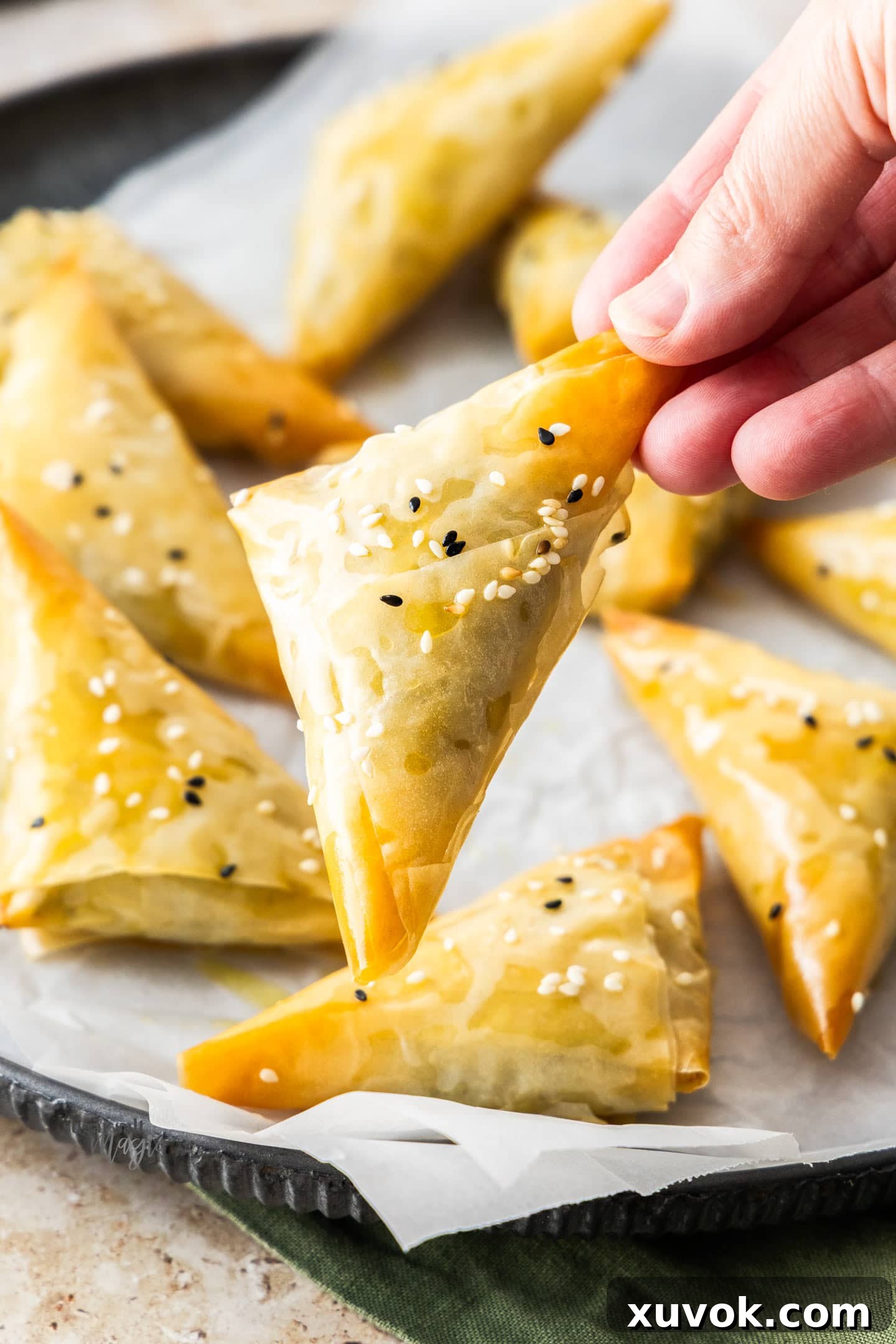
Creating these feta and spinach parcels is a rewarding process. While there’s a small amount of time dedicated to folding the filo, the technique is surprisingly simple and becomes intuitive quickly. The greatest advantage? You can effortlessly make these ahead of time, assembling them the day before baking, or even preparing a large batch and freezing them for future enjoyment. This makes them an ideal choice for hassle-free entertaining or last-minute cravings.
Refer to the full recipe card below for all ingredient quantities and detailed instructions.
1. Prepare the Spinach
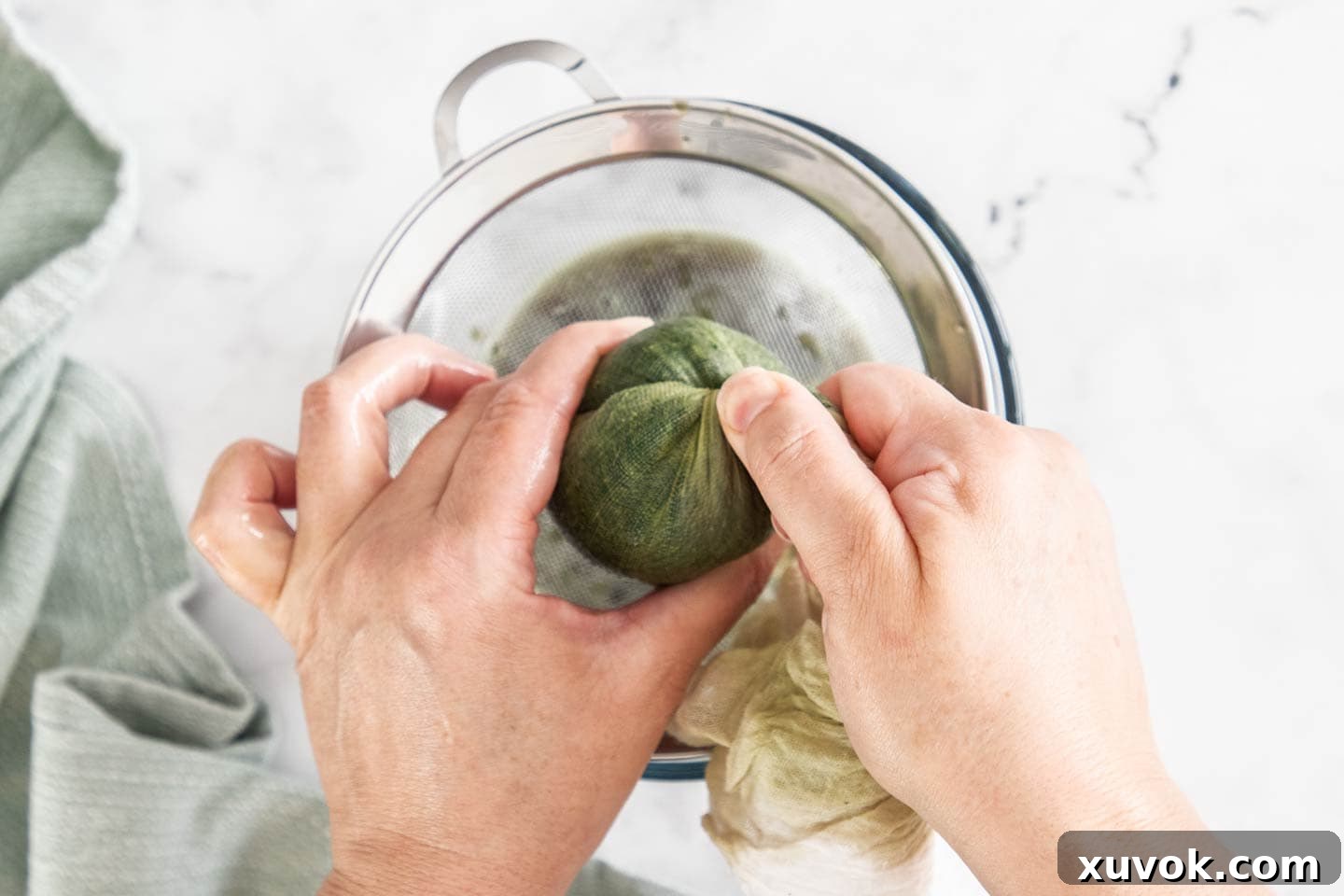
The first and most critical step for a crispy spanakopita is to thoroughly drain the spinach. Start by thawing your frozen spinach completely. Once thawed, wrap the spinach in a cheesecloth or several layers of sturdy paper towel. Squeeze out as much excess liquid as humanly possible. This moisture is the enemy of crisp filo, so don’t be shy! You’ll be surprised how much water comes out. Do this over a strainer set in a bowl to collect the liquid. Don’t discard this nutrient-rich spinach juice; it can be used in smoothies, soups, or even as a flavorful addition to vegetable stock, though keep in mind it will add a green tint.
2. Sauté the Aromatics
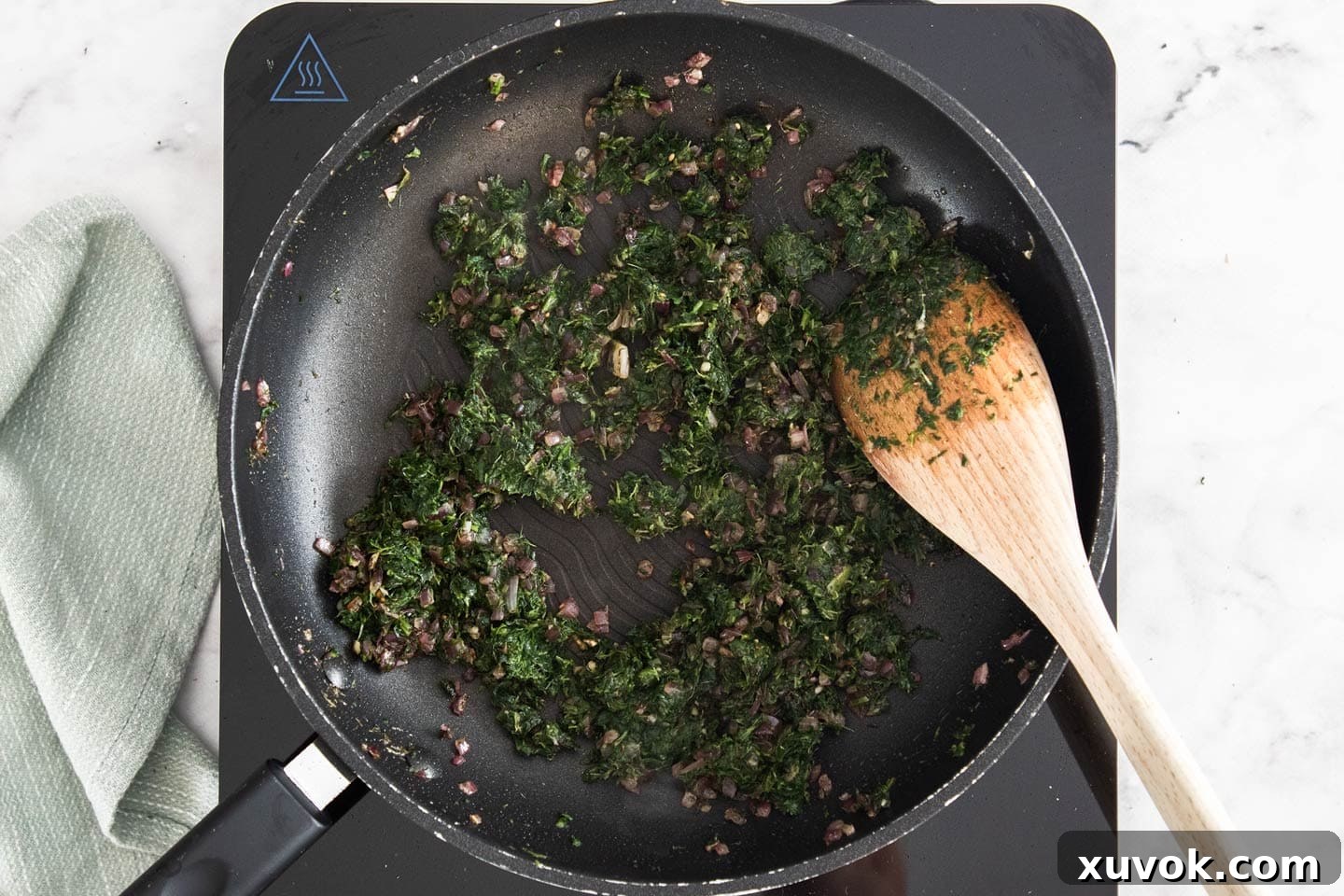
In a large skillet or frying pan, heat a tablespoon of olive oil over medium heat. Add the finely chopped red onion, minced garlic, and dried dill. Cook gently for 3-4 minutes, stirring occasionally, until the onion softens and becomes translucent, releasing its sweet aroma. This step builds the flavorful foundation for your filling. Next, add the thoroughly drained spinach to the pan. Cook for another 1-2 minutes, stirring frequently, to ensure any lingering moisture from the spinach evaporates, intensifying its flavor and preventing a watery filling.
3. Mix the Irresistible Filling
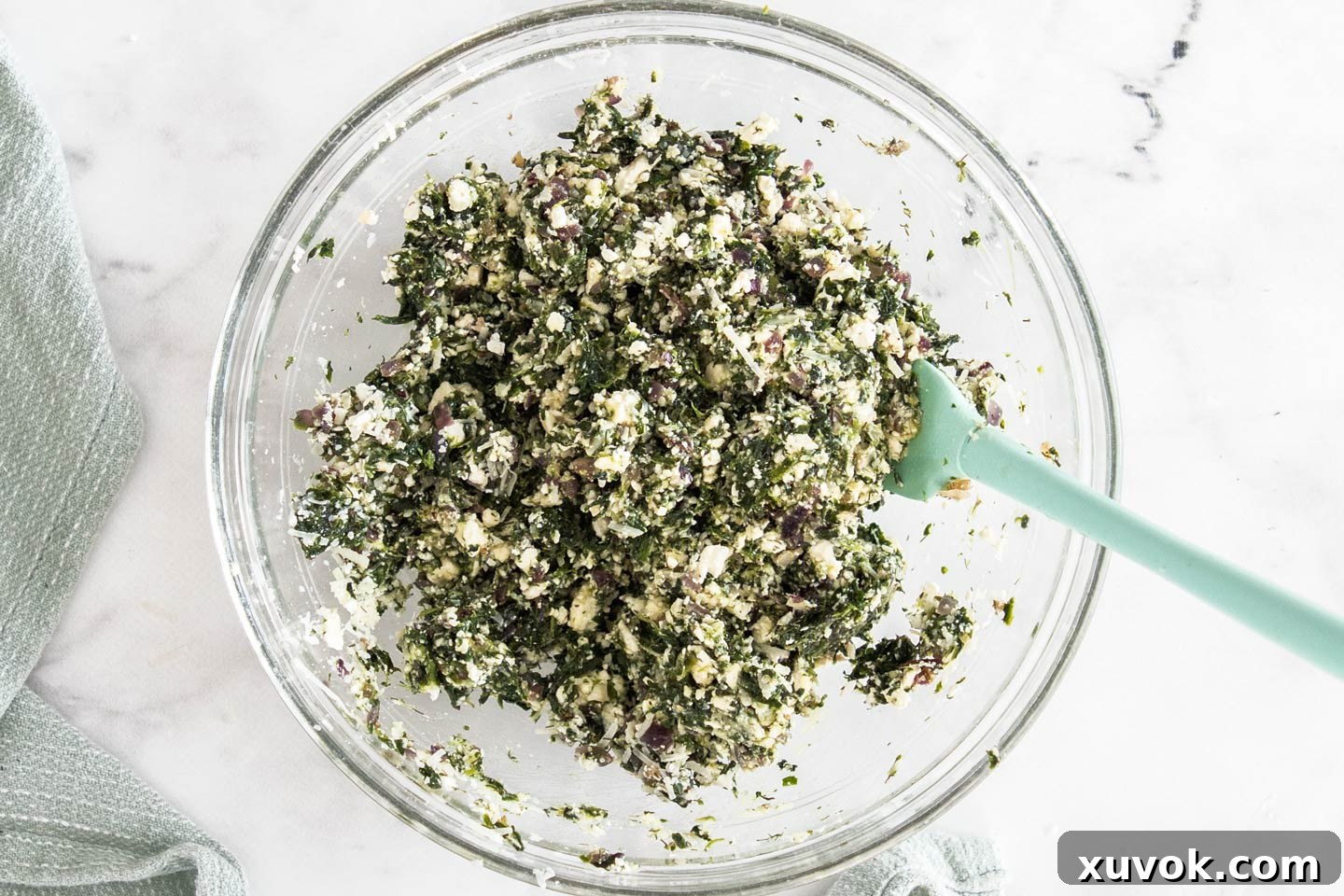
Once the cooked spinach and onion mixture has cooled completely (this is important to prevent the egg from scrambling), transfer it to a medium mixing bowl. Add the crumbled feta cheese, finely grated kefalotyri (or Parmesan) cheese, and the large egg. Squeeze in a generous amount of fresh lemon juice – its bright acidity perfectly balances the richness of the cheeses. Mix all the ingredients thoroughly until well combined. The mixture should be cohesive and ready to be spooned into your filo parcels.
4. The Art of Folding Filo Triangles
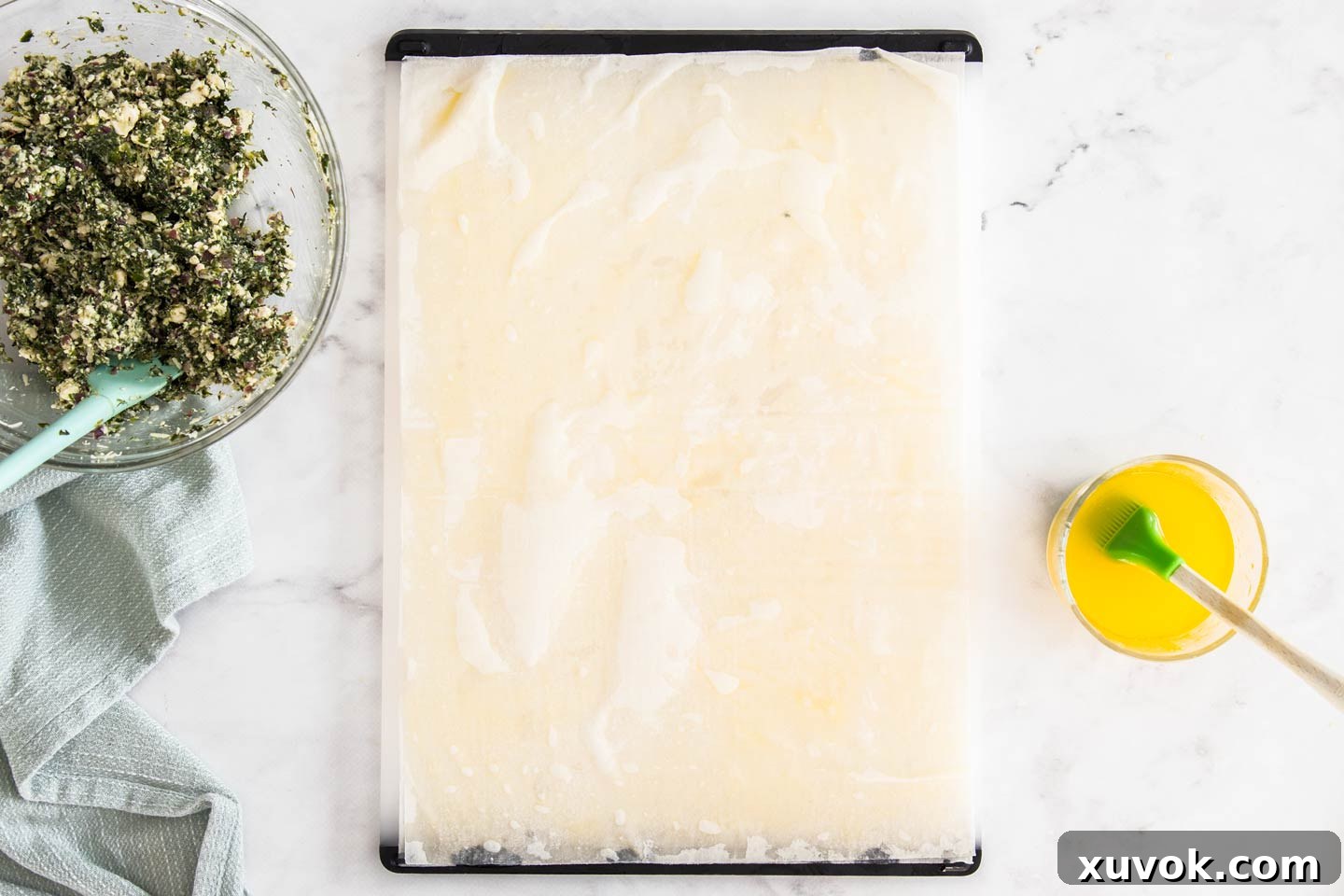
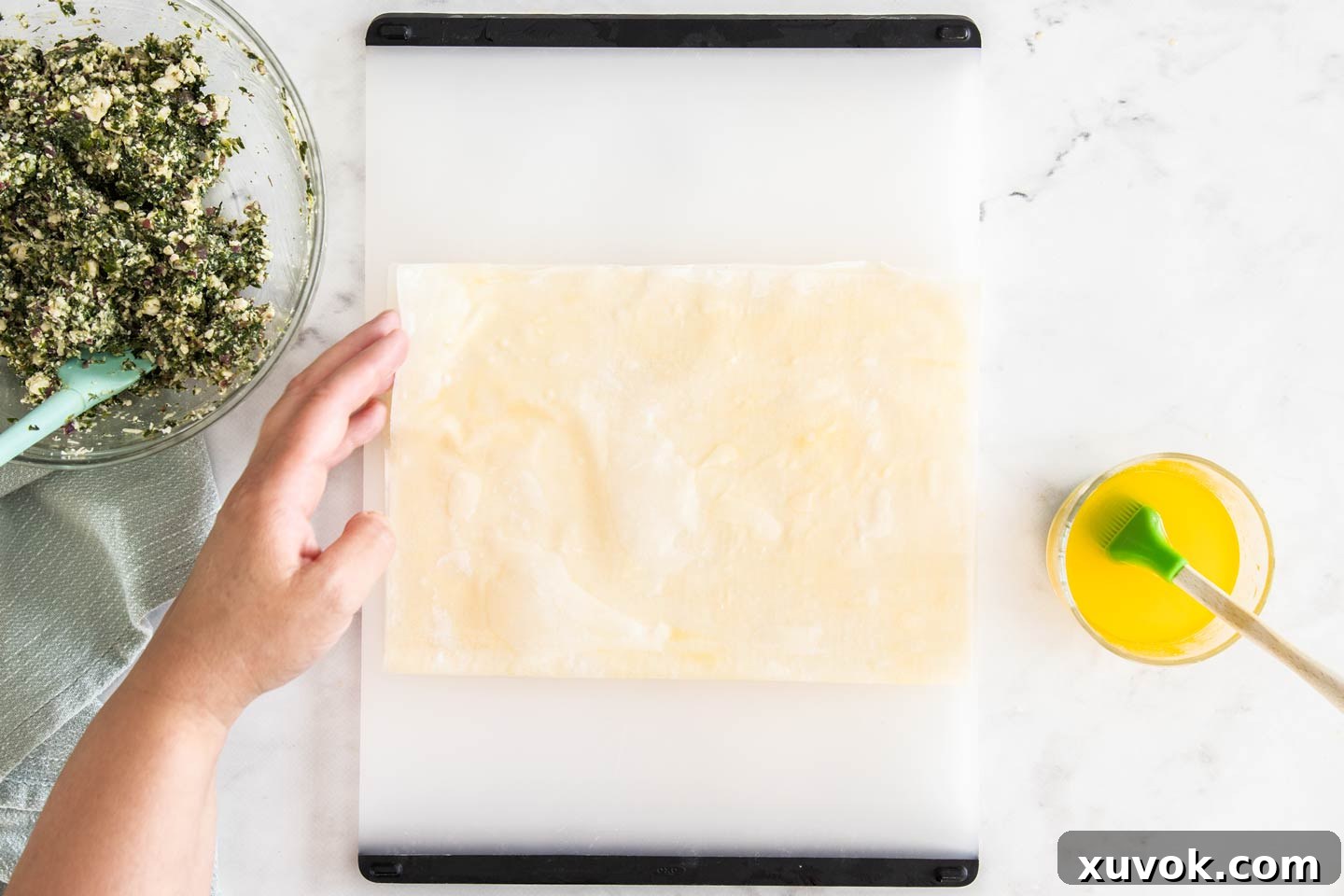
Now comes the fun part: assembling your spinach and feta parcels! This folding technique ensures perfectly sealed, crisp triangles. Start by carefully separating one sheet of filo pastry and laying it flat on a clean, dry work surface. Lightly brush this layer with melted butter, covering it evenly. Place a second sheet of filo directly on top of the first – but do NOT butter this top layer. Immediately cover the remaining unused filo sheets with a damp tea towel to prevent them from drying out and becoming brittle.
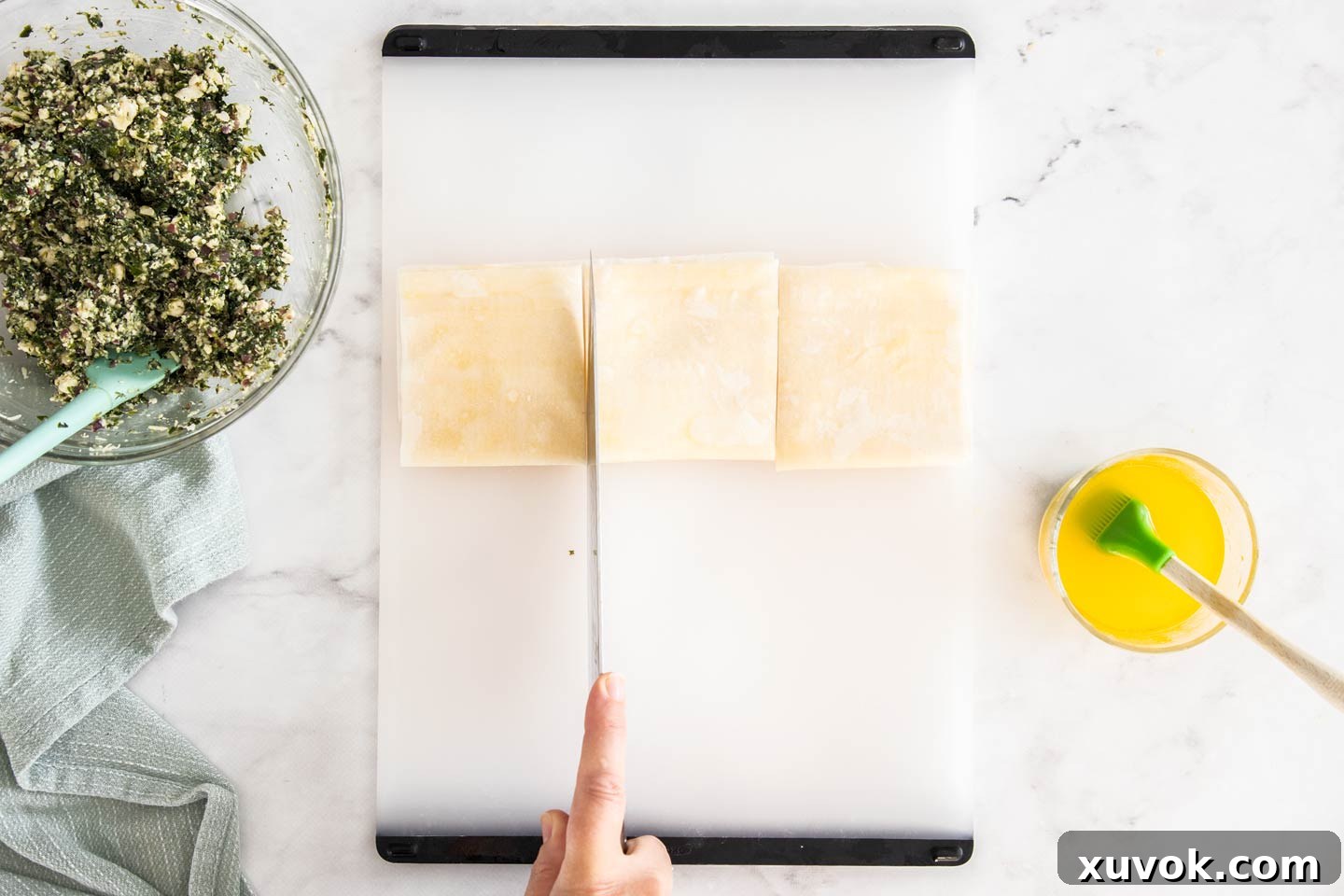
Next, take your double-layered filo and fold it in half, short side to short side. Since the top layer wasn’t buttered, it won’t stick, allowing you to unfold it later. Fold it in half again in the same direction, creating a smaller rectangle. Using a sharp knife, cut this folded pastry into three even squares. When you unfold these squares, you will have three long strips of double-layered filo, each ready for filling.
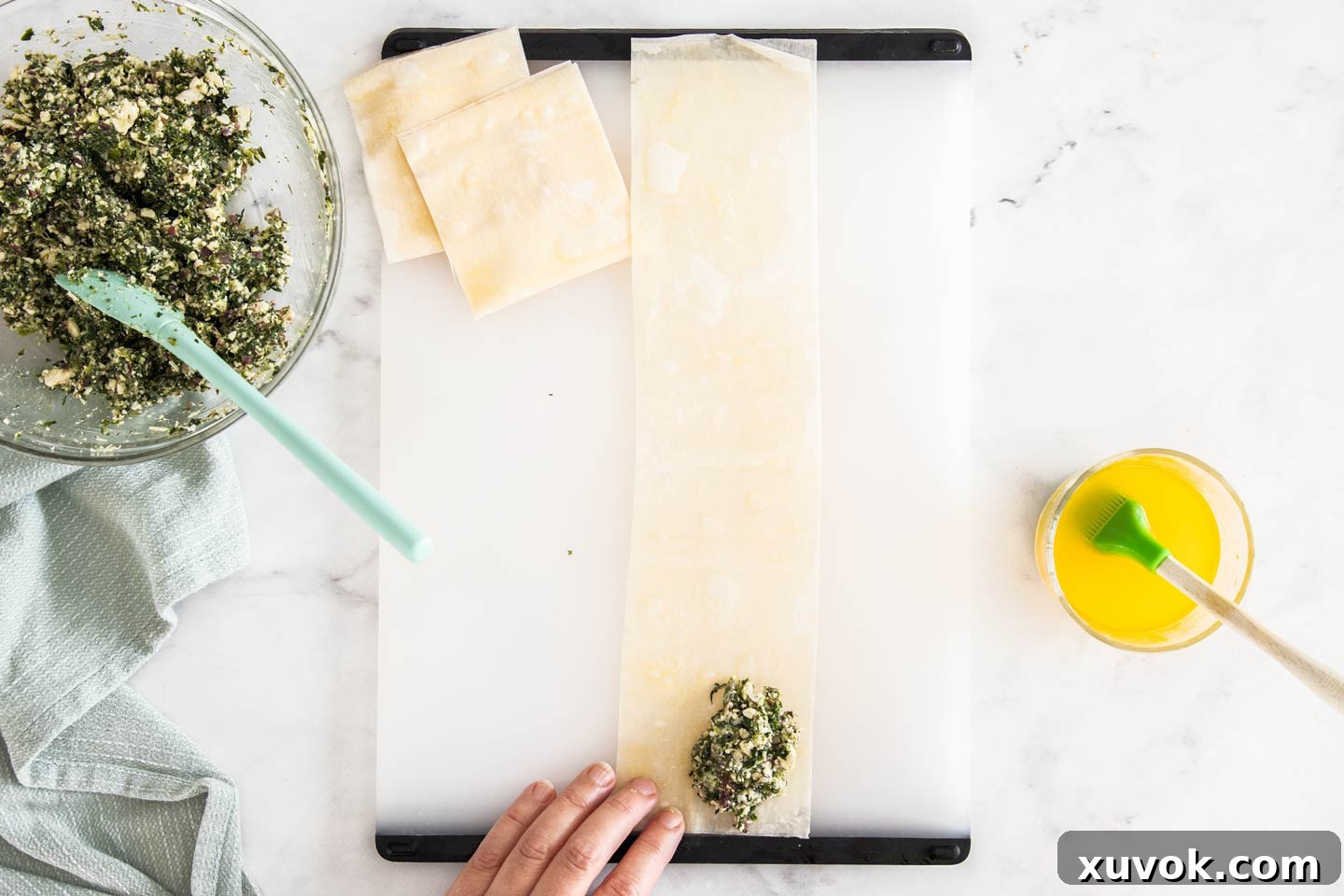
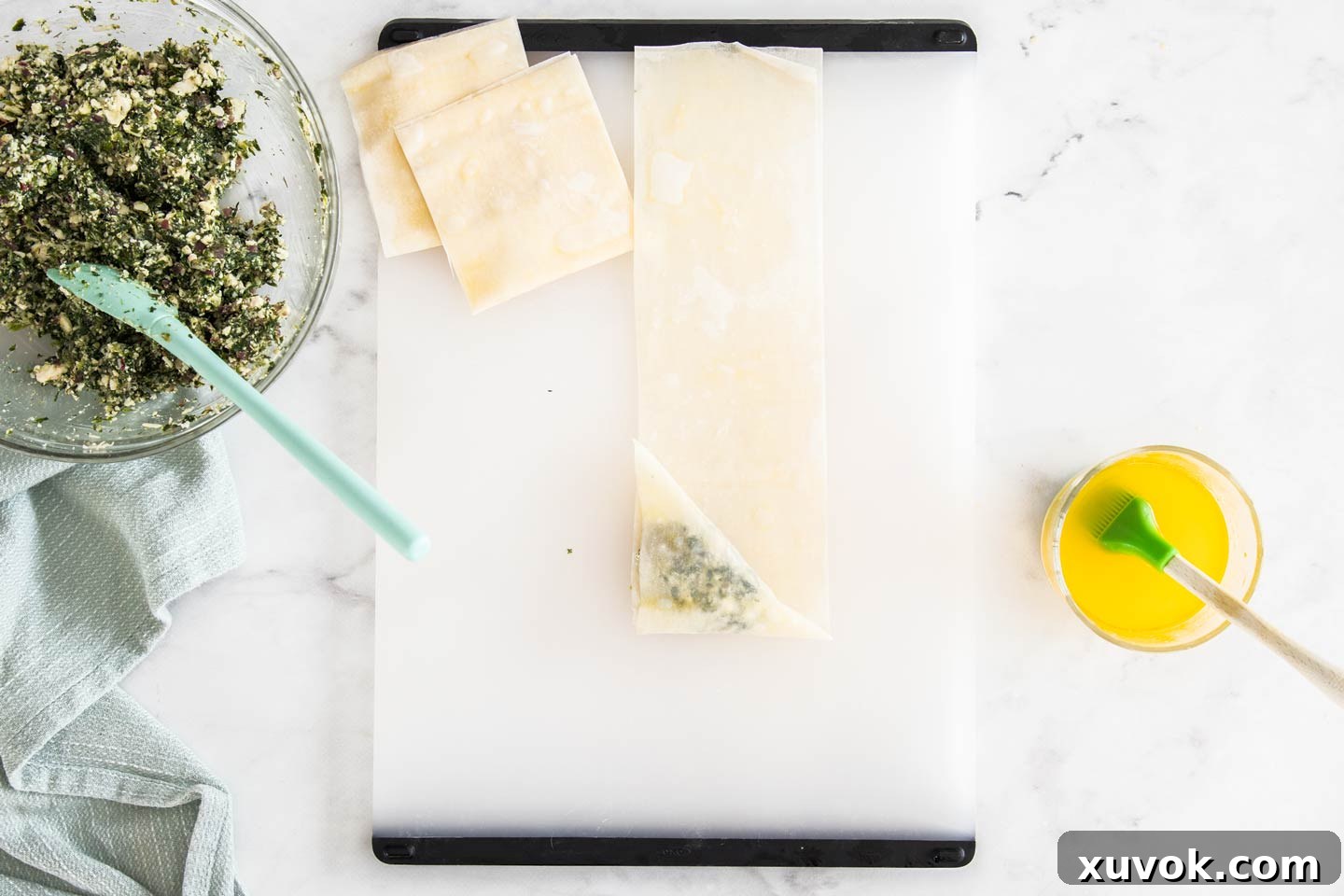
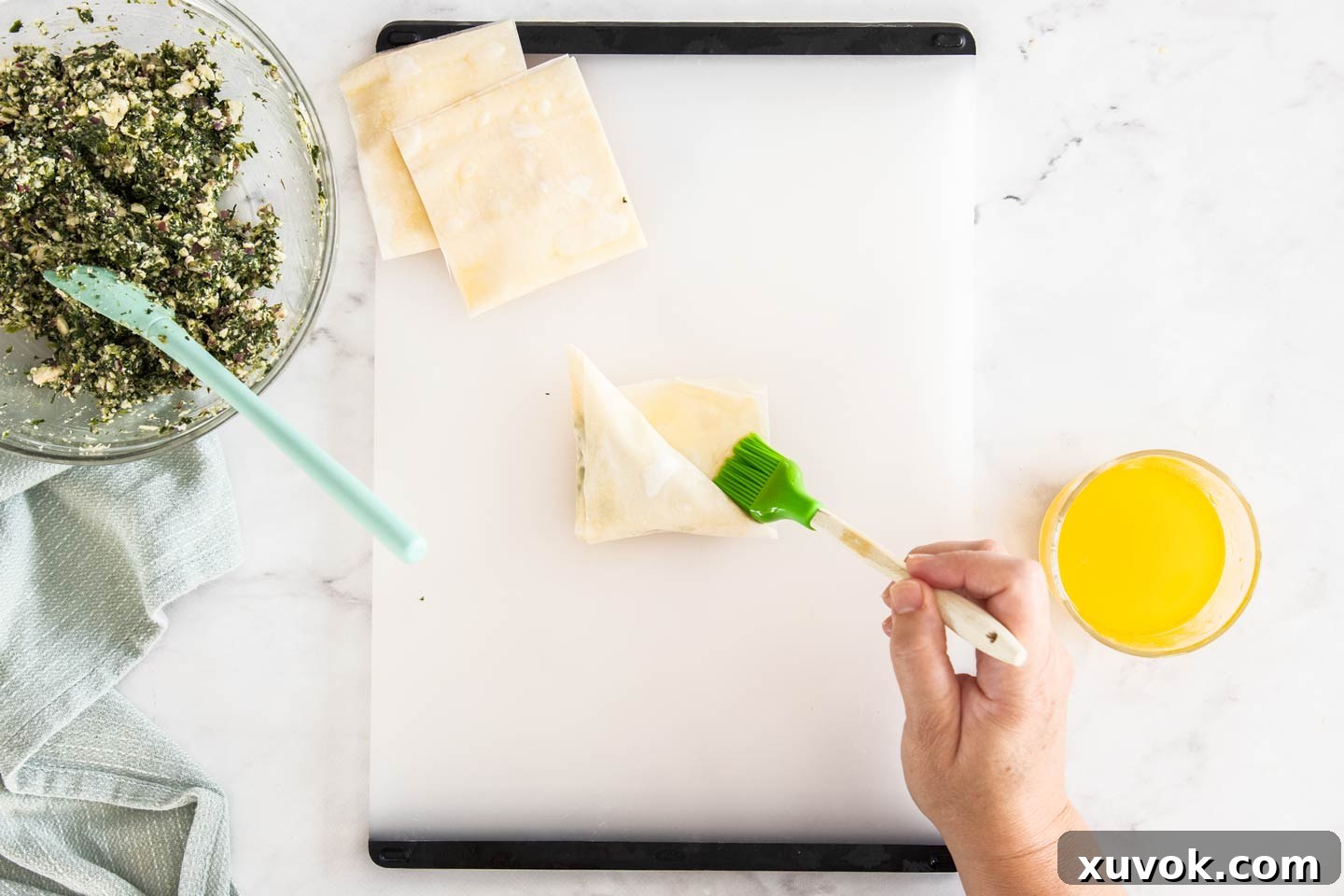
Unfold the first of your long filo strips. Place about 1 ½ to 2 tablespoons of the spinach and feta mixture onto the bottom corner of the strip, closest to you. Now, take that bottom corner and fold it diagonally over the filling, creating a triangle shape where the bottom edge of the pastry aligns with the side edge.
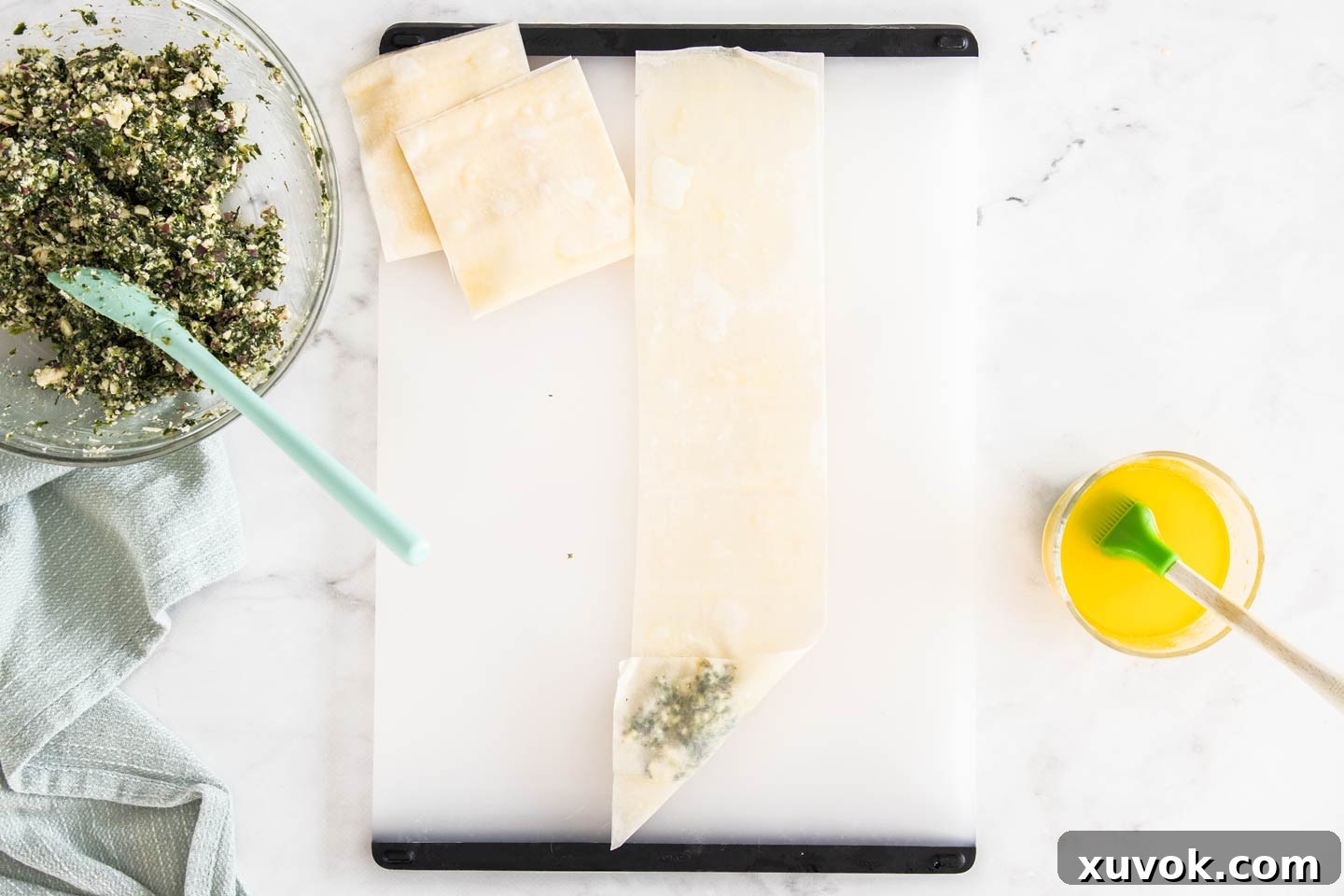
Continue folding the pastry. Fold the section you just created straight upwards, then diagonally again, then upwards, repeating this pattern until you reach the end of the strip. This creates a neat, layered triangle that securely encases the filling. Once you reach the end, brush any overhang with a little melted butter and fold it snugly around the triangle to seal it completely.
5. Butter, Bake, and Golden Perfection
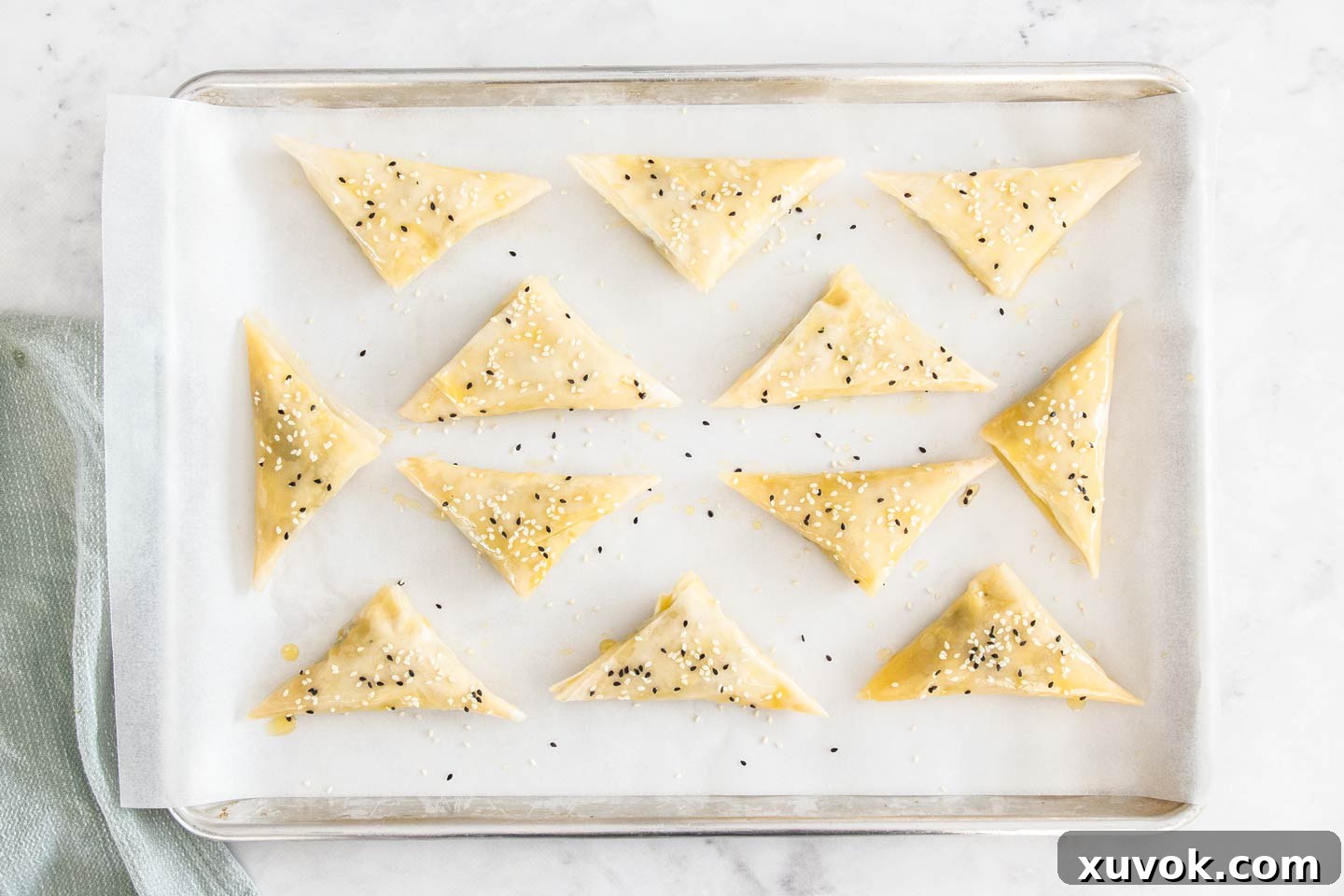
Once your triangle is sealed, brush the seam side (the side that was folded last) with more melted butter. Carefully transfer it to a baking sheet lined with parchment paper, placing it butter-side down. You can arrange the parcels fairly close together on the baking sheet as they won’t spread significantly, but ensure there’s still enough space for air to circulate, which promotes even baking and crispness. Repeat the folding process with the remaining filo strips and filling.
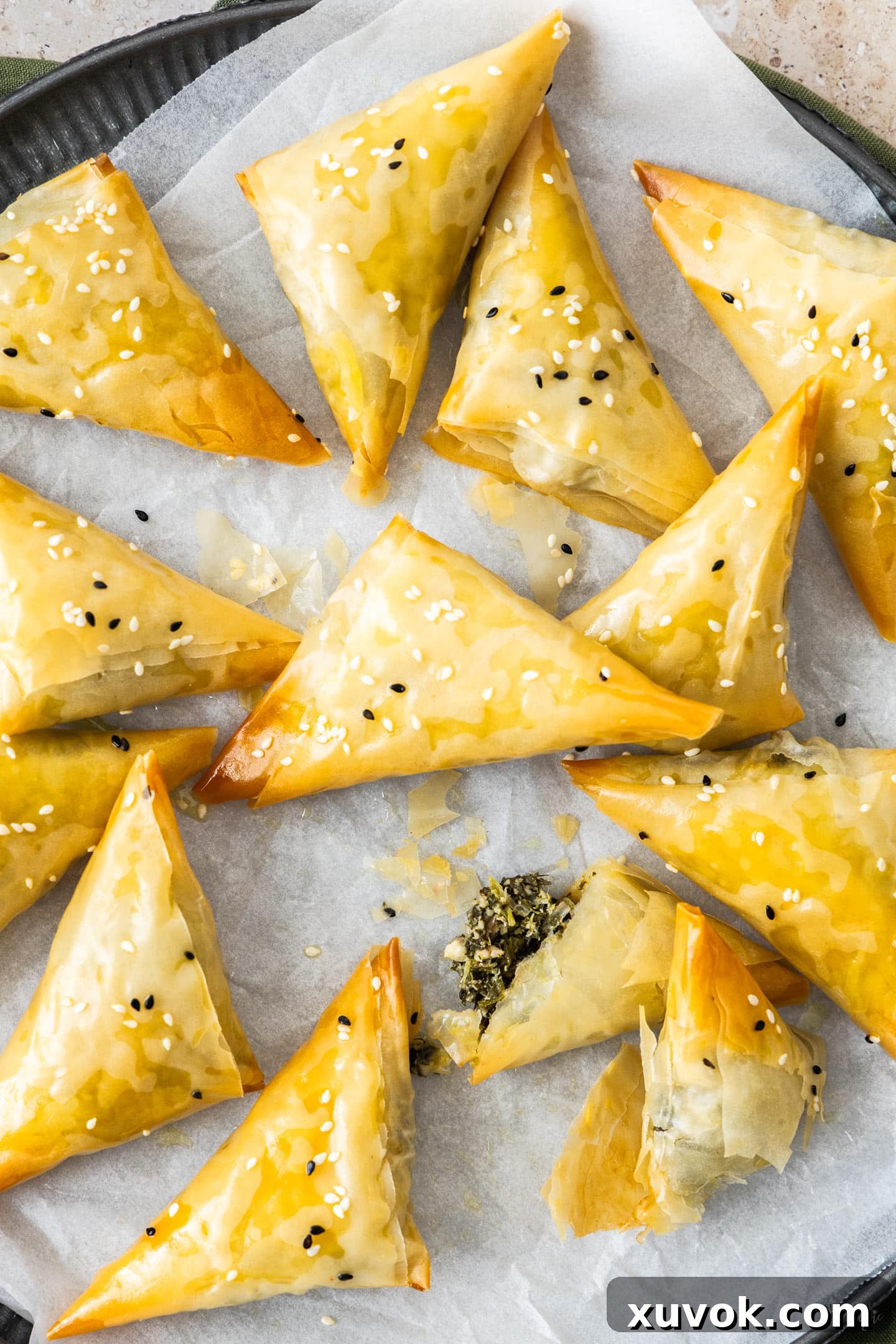
Once all your triangles are assembled on the baking sheet, brush the tops with a final generous coating of melted butter. This butter layer is crucial for achieving that beautiful golden-brown color and incredible crispy texture. If using, sprinkle a teaspoon of sesame seeds evenly over the tops of the triangles for added crunch and visual appeal. Bake your spinach and feta filo parcels in a preheated oven at 180°C (160°C fan-forced) / 350°F for approximately 25-28 minutes, or until they are gloriously golden brown and perfectly crisp. Serve warm and enjoy the fruits of your labor!
Expert Tips and Tricks for Flawless Filo
Mastering filo pastry can seem daunting, but with a few key tips, you’ll be creating perfect crispy triangles every time:
- Be Generous with the Butter (or Oil): Filo pastry thrives on fat to achieve its signature crispness and golden hue. Don’t be shy with the melted butter (or a light-flavored olive oil if preferred). While we butter one layer of the double sheet and the exterior of the finished parcel, you can also lightly butter each individual strip once unfolded for extra richness and flakiness. The more butter, the crispier the result!
- Handling Filo Like a Pro: Filo is incredibly delicate and dries out very quickly when exposed to air, becoming brittle and difficult to work with. Always keep your stack of unused filo sheets covered with a damp (but not wet) tea towel or plastic wrap. Work efficiently, and only uncover the sheets you need.
- Embrace Fresh Herbs: Traditional spanakopita is renowned for its aromatic blend of fresh herbs. While dried dill is convenient, incorporating fresh dill, parsley, and a hint of mint will elevate the flavor profile of your filling significantly. Adjust quantities to taste, remembering that fresh herbs are less potent than dried.
- Maintain the Ideal Size: We’ve carefully tested the ratio of filling to pastry. While it might be tempting to cut smaller strips (e.g., 4 instead of 3 from each folded sheet) to yield more mini triangles, this often results in a less satisfying bite where the pastry overpowers the delicious filling. Stick to cutting 3 strips for the perfect balance.
- Avoid Overcrowding Your Baking Sheet: For even cooking and maximum crispness, arrange your spinach and feta triangles with a little space between them on the baking sheet. This allows hot air to circulate freely around each parcel, ensuring they bake up uniformly golden and crispy on all sides.
- Serve with a Complementary Dip: While delicious on their own, these triangles are fantastic with a simple dip. A dollop of plain Greek yogurt, a refreshing tzatziki, or a zesty lemon-dill sauce can add another layer of flavor and moisture.
Air Fryer Instructions for Quick Crispness
For a quicker bake and equally crisp results, your air fryer is a fantastic tool for these spinach and feta triangles. Preheat your air fryer to 180°C (350°F) for 3 minutes. Carefully place the assembled (and buttered) triangles in a single layer in the air fryer basket, ensuring they don’t overlap. Cook for 12-15 minutes, flipping them halfway through, until they are beautifully golden brown and irresistibly crispy. Cooking times may vary slightly depending on your air fryer model, so keep an eye on them!
Storage and Make-Ahead Options
These spanakopita triangles are incredibly convenient for meal prep or entertaining. Here’s how to store them:
- Refrigeration (Baked): Leftover baked triangles can be stored in an airtight container in the refrigerator for up to 3-4 days. Reheat in a preheated oven (160°C/325°F) or air fryer until warmed through and crispy again, about 5-10 minutes.
- Refrigeration (Unbaked): You can assemble the triangles up to one day in advance. Arrange them on a baking sheet, cover tightly with plastic wrap, and refrigerate. When ready to bake, brush with butter and bake as directed, adding a few extra minutes to the baking time if baking from cold.
- Freezing (Unbaked): These triangles freeze beautifully! Assemble them as directed, but do not bake. Place the unbaked, buttered triangles on a baking sheet in a single layer and freeze until solid (about 2-3 hours). Once frozen, transfer them to a freezer-safe bag or airtight container. They will keep for up to 2-3 months.
- Baking from Frozen: To bake from frozen, arrange the frozen triangles on a parchment-lined baking sheet. Brush with a little extra melted butter and bake in a preheated oven at 180°C (160°C fan-forced) / 350°F for 30-35 minutes, or until golden brown and cooked through. No need to thaw!
Complementary Recipes You’ll Savor
If you enjoyed these spinach and feta triangles, you might also be interested in exploring other delicious appetizers and snacks that are perfect for entertaining or everyday enjoyment:
- How to make crostini
- Steak crostini
- Prawn spring rolls
- Baked feta and tomatoes
- Feta saganaki
⭐⭐⭐⭐⭐
Did you try this spinach and feta parcels recipe?
Share your thoughts and love in the comments below!
Hungry for more? Subscribe to our newsletter for free recipes straight to your inbox. Also, follow along on Facebook, Pinterest and Instagram.

Spinach and Feta Parcels (Spanakopita Triangles)
Yield: 15 parcels
Prep Time: 40 minutes
Cook Time: 25 minutes
Total Time: 1 hour 5 minutes
These spinach and feta parcels (spanakopita triangles) are crispy on the outside with soft cheesy, spinach filling. They’re the perfect party treat.
Rate This Recipe
Pin Recipe
Ingredients
- 1 tablespoon olive oil
- ½ cup finely chopped red onion (½ medium onion)
- 1 large clove garlic, minced
- 1 teaspoon dried dill
- 250 g frozen spinach, thawed (~9oz)
- 125 g feta cheese, crumbled (~4 ½oz)
- 50 g finely grated kefalotyri cheese or parmesan cheese (⅓ cup packed)
- 1 large egg
- ½ lemon (for juice)
- 10 sheets filo pastry (phyllo pastry)
- 100 g salted butter, melted (3 ½oz)
- 1 teaspoon sesame seeds (optional)
For best results, always weigh ingredients where a weight is provided.
Equipment
- Strainer
- Cheesecloth (helpful but not essential)
- Mixing bowl
- Chopping board
- Sharp knife
- Baking sheet
Instructions
- Preheat the oven to 180°C (160°C fan forced) / 350°F. Line a large baking sheet with baking paper.
- Thaw the spinach then wrap in cheesecloth or a few layers of paper towel and squeeze out as much excess moisture as possible. Set aside.
- Add the olive oil, onion, garlic, and dried dill to a pan over medium heat. Add a couple of pinches of freshly cracked black pepper, then cook for 3-4 minutes until the onions have softened.
- Add the spinach and cook for another 1-2 minutes, to cook off any excess moisture.
- Tip the mixture into a medium bowl and allow to cool completely.
- Once cool, add the feta, kefalotyri/parmesan, egg, and a good squeeze of lemon juice. Mix well to combine.
- Separate one sheet of pastry and lay it on a clean work surface. Brush with melted butter then place another sheet of pastry on top. Do not butter the top sheet. Keep the rest of the unused pastry under a damp tea towel so it doesn’t dry out.
- Fold the pastry in half from short side to short side. Then fold in half again in the same direction. Use a sharp knife to cut the filo into 3 squares, then unfold one at a time.
- Place about 1 ½ – 2 tablespoons of mixture in the corner of the first strip. Fold the corner over diagonally to form a triangle with the filling inside. Now fold it away from you, straight up. Repeat these folds, over and over until you get to the end. Brush the end with a little butter and seal it up. Brush the seam side with more melted butter and transfer to the prepared baking tray butter side down.
- Repeat with the remaining pastry and spinach mixture.
- Now brush the tops of all the triangles with butter and scatter over sesame seeds, if using.
- Bake for 25-28 minutes until golden brown and crisp.
- Please take a moment to leave a comment & rating. It’s appreciated and so helpful.
Notes
- Tablespoons: This recipe uses a standard Australian 20ml tablespoon (equal to 4 teaspoons). Please check your tablespoon measure before starting.
- Air fryer Instructions: You can cook the spinach and feta triangles in the air fryer too. Preheat it for 3 minutes at 180°C/350°F, then cook for 12-15 minutes, turning at the halfway mark, until golden brown.
- Nutrition details are approximate only and are provided below the recipe card. The specific brands of ingredients you use may cause variations.
MORE APPETIZERS AND SNACKS!
Calories: 144 kcal
Author: Marie Roffey
Course: Appetizer
Cuisine: Greek
Have you tried this recipe?
Don’t forget to leave a rating and comment below and let me know how it was! I love hearing from you. Nutrition information is approximate and derived from an online calculator. The brands you use may cause variations.
Calories from Fat 90