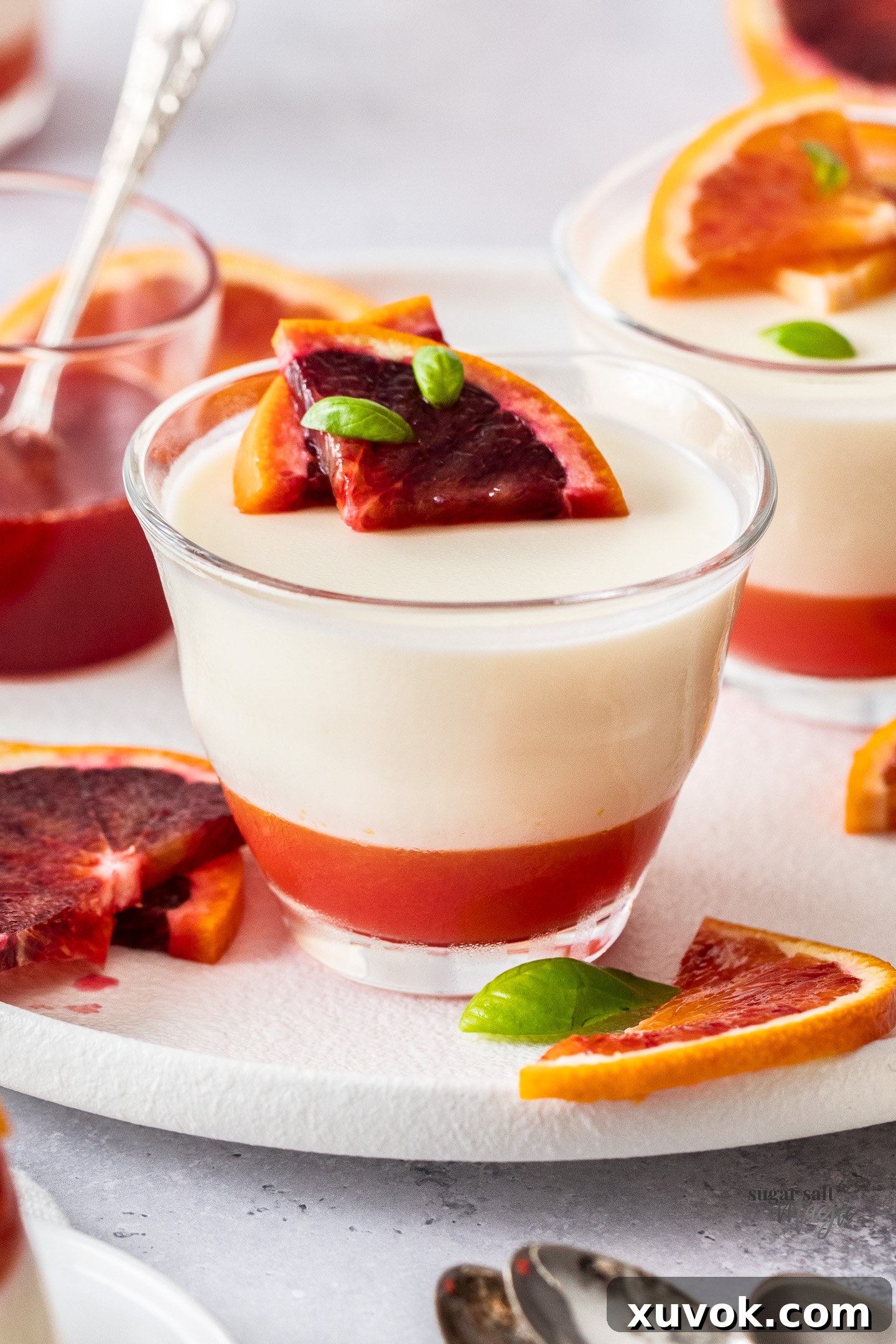
Luxurious Buttermilk Panna Cotta with Vibrant Blood Orange Jelly and Syrup
Embark on a culinary journey with this exquisite buttermilk panna cotta, a dessert that masterfully blends creamy texture with a delightful tang. While it might appear sophisticated, this recipe is surprisingly quick and simple to prepare, making it an ideal choice for both seasoned home cooks and ambitious beginners. What truly elevates this panna cotta is the vibrant blood orange jelly and a luscious blood orange syrup, turning a classic Italian dessert into a spectacular centerpiece.
Why This Buttermilk Panna Cotta Will Be Your New Favorite Dessert
- Silky Smooth Perfection: Experience an incredibly smooth and delicate texture that melts in your mouth, characteristic of a truly exceptional panna cotta.
- Tangy, Sweet, and Bright: The natural tartness of buttermilk is beautifully balanced by the sweetness of the panna cotta base and the zesty, sweet notes of fresh blood oranges. This creates a vibrant flavor profile that excites the palate.
- Pure Indulgence: Every spoonful feels utterly luxurious, making it perfect for special occasions or simply to treat yourself to an elegant dessert.
- Effortless Entertaining: One of the greatest advantages of panna cotta is its make-ahead convenience. Prepare it days in advance, allowing you to relax and enjoy your guests during dinner parties.
- A Showstopping Trio: Comprised of three simple yet harmonious components – the creamy buttermilk panna cotta, a ruby-red blood orange jelly, and a glistening blood orange syrup – this dessert is guaranteed to impress.
This dessert takes mere minutes of active preparation time, transforming humble ingredients into a gourmet experience. The gentle tang of buttermilk paired with the sweet, aromatic zestiness of blood oranges creates a match made in culinary heaven.
If you’re eager to explore more panna cotta delights, delve into the foundations with this classic vanilla panna cotta, which also features a delightful orange syrup. Or, transport your taste buds to a tropical paradise with this exotic mango panna cotta.
This timeless recipe was originally shared on August 28th, 2018, and has since been thoughtfully updated with fresh photos and enhanced information to enrich your baking experience.
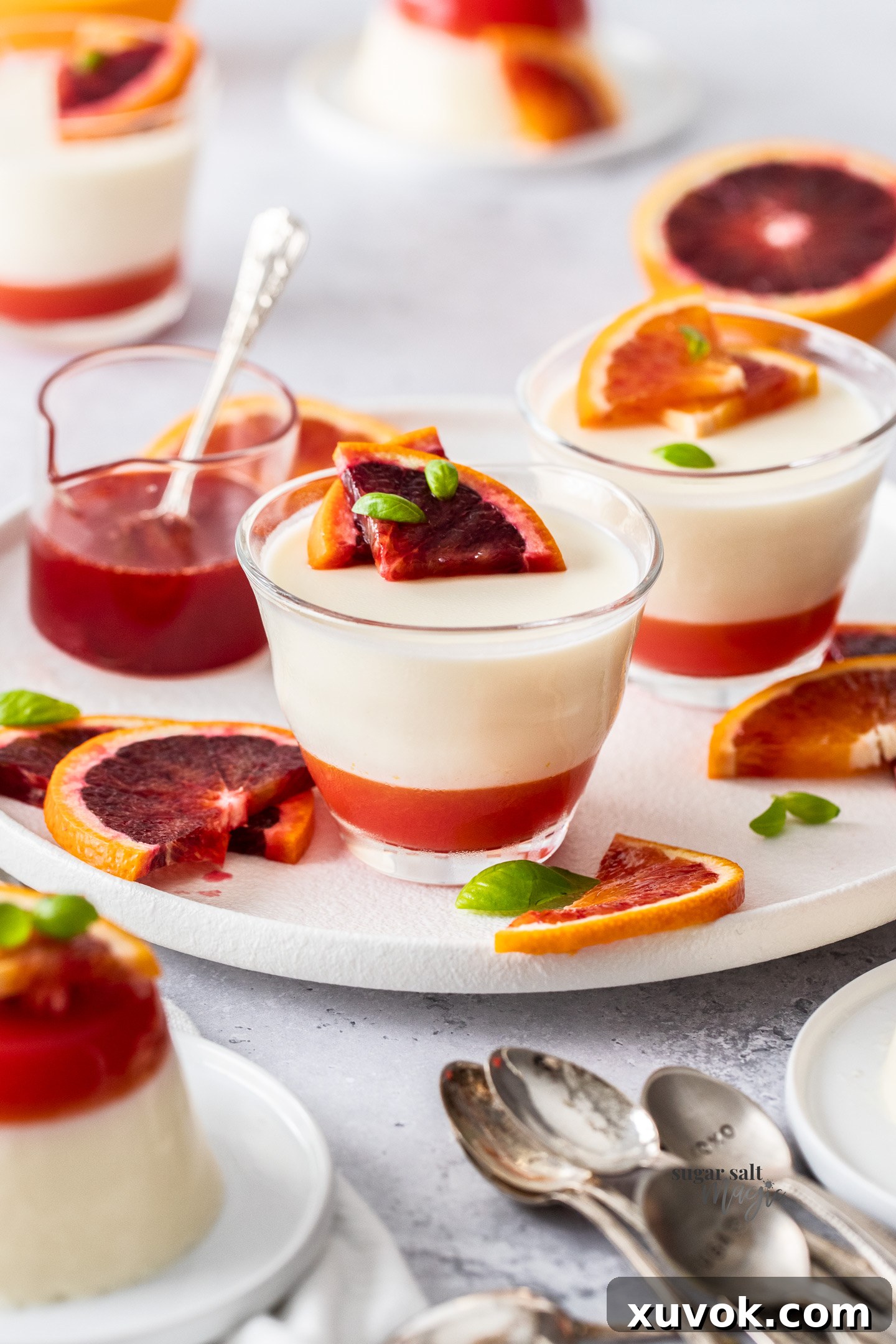
Table of Contents
- What is Panna Cotta?
- The Magic of Buttermilk and Blood Oranges
- Essential Ingredients for Your Panna Cotta
- Step-by-Step Guide to Making Buttermilk Panna Cotta
- Pro Tips for a Flawless Panna Cotta
- Creative Variations and Serving Ideas
- Storage and Make-Ahead Perfection
- Explore More Panna Cotta Recipes
Never Miss a Recipe!
Get the latest recipes straight to your inbox and elevate your dessert game!
What is Panna Cotta?
Panna cotta, meaning “cooked cream” in Italian, is a classic dessert that originated in the Piedmont region of Italy. It’s traditionally made by simmering cream, sugar, and vanilla, then setting it with gelatin. The beauty of panna cotta lies in its simplicity and versatility, serving as a perfect canvas for a myriad of flavors, from classic vanilla to exotic fruits and spices. Its delicate, jiggly texture and rich, creamy mouthfeel have made it a beloved dessert worldwide.
The Magic of Buttermilk and Blood Oranges
This particular panna cotta recipe takes a delightful twist on the classic by incorporating buttermilk. The natural acidity of buttermilk provides a wonderful counterpoint to the richness of the cream, resulting in a lighter, brighter dessert that is incredibly refreshing. The subtle tang adds depth and complexity, preventing the panna cotta from being overly sweet or heavy. Paired with blood oranges, this dessert becomes a celebration of vibrant flavors and stunning aesthetics.
Blood oranges are truly a seasonal marvel. Known for their striking ruby-red flesh and distinctive sweet-tart flavor with hints of berry, they not only lend a gorgeous, natural crimson hue to the jelly and syrup but also infuse the dessert with a unique aromatic complexity that regular oranges can’t replicate. Their seasonality makes this panna cotta a special treat to look forward to each year.
Essential Ingredients for Your Panna Cotta
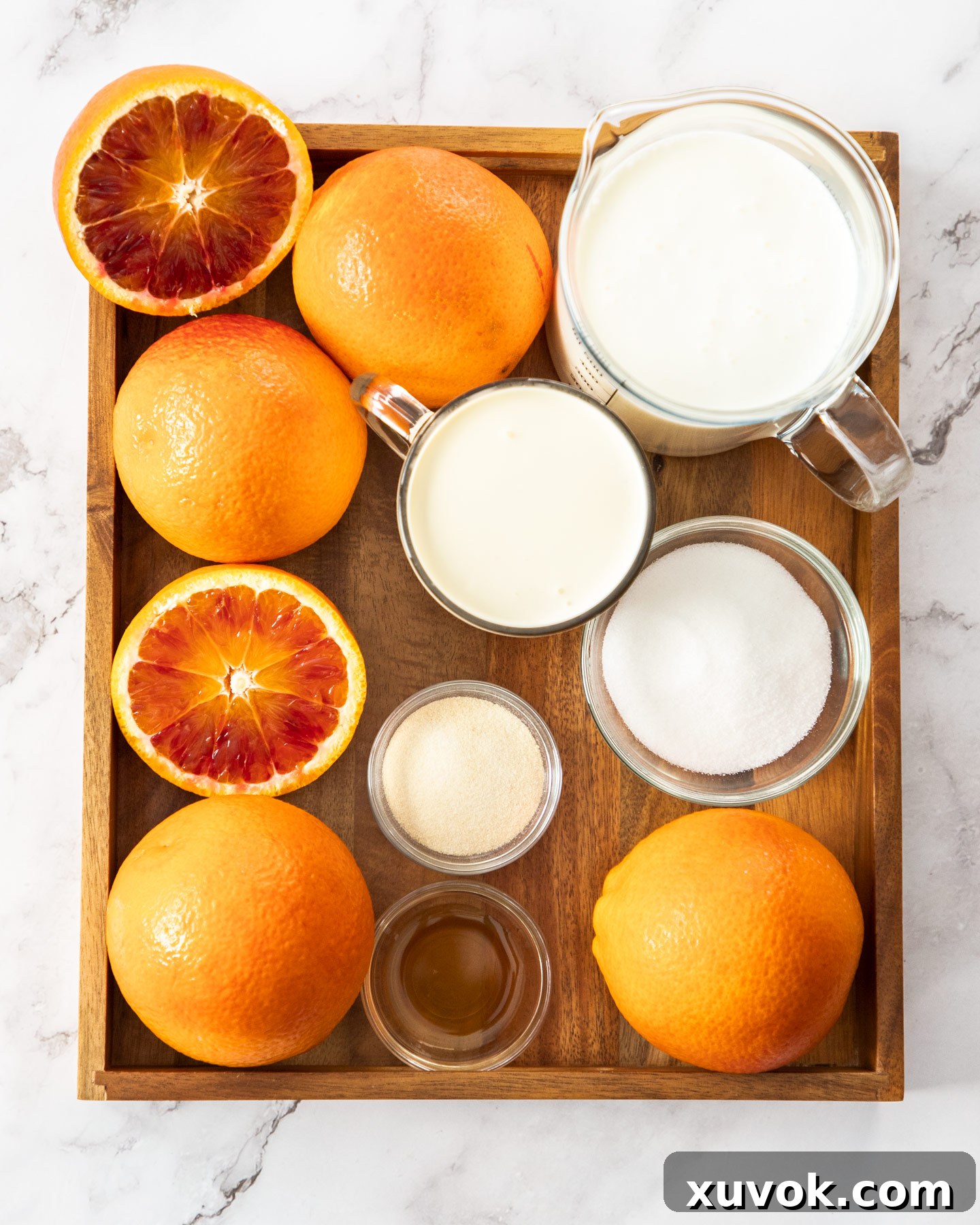
For precise measurements and detailed step-by-step instructions, please refer to the comprehensive recipe card below.
- Buttermilk: The cornerstone of this recipe, authentic full-fat buttermilk is crucial. Avoid using homemade buttermilk substitutes (like milk with lemon juice) as they may lead to a less stable panna cotta that can separate during setting. Full-fat buttermilk ensures the creamiest, most luxurious texture.
- Gelatine Powder: Gelatin acts as the essential setting agent, providing the characteristic delicate jiggle of panna cotta. Powdered gelatin is recommended for its reliability and ease of use in this recipe. While gelatin sheets can be used, their conversion ratio can vary, and this recipe has not been tested with them. Always “bloom” your gelatin by sprinkling it over a cold liquid (like buttermilk or juice) and letting it sit for a few minutes before heating to ensure proper dissolution.
- Granulated Sugar: Simple granulated white sugar is all you need to provide the perfect touch of sweetness to balance the tang of the buttermilk and the zest of the oranges. Caster sugar (superfine sugar) can also be used for even quicker dissolution.
- Thickened Cream / Heavy Cream: For that ultimate luxurious feel and rich flavor, thickened cream (or heavy cream) is indispensable. Its high fat content contributes to the dessert’s smooth, velvety consistency.
- Pure Vanilla Extract: Always opt for pure vanilla extract over synthetic vanilla essence. The depth of flavor from pure vanilla enhances the overall richness of the panna cotta beautifully.
- Oranges (Blood Oranges Recommended): Blood oranges are highly recommended for their distinctive flavor profile—sweet, subtly tart, with unique berry-like undertones—and their breathtaking crimson color. This natural pigmentation adds immense visual appeal without any artificial coloring. However, if blood oranges are not in season or available, other varieties like Cara Cara, Navel, or Valencia oranges will still yield a delicious result, albeit with a different color. Mandarins or tangerines can also be used for a milder citrus note.
It’s worth noting that this panna cotta recipe is designed to be only lightly sweetened. This thoughtful approach allows the natural flavors of the buttermilk and blood orange to truly shine, preventing the dessert from being cloyingly sweet. This balance also provides the perfect foundation for the additional sweetness brought by the blood orange jelly and syrup. While you don’t necessarily need both the jelly and the syrup, incorporating at least one of these components is highly recommended to achieve the intended flavor harmony. If you choose to make only the syrup, consider doubling its quantity for ample serving.
Step-by-Step Guide to Making Buttermilk Panna Cotta
Despite its elegant appearance, crafting panna cotta is remarkably straightforward. Each of the three components in this recipe—the blood orange jelly, the buttermilk panna cotta, and the blood orange syrup—is simple to prepare, requiring minimal active time.
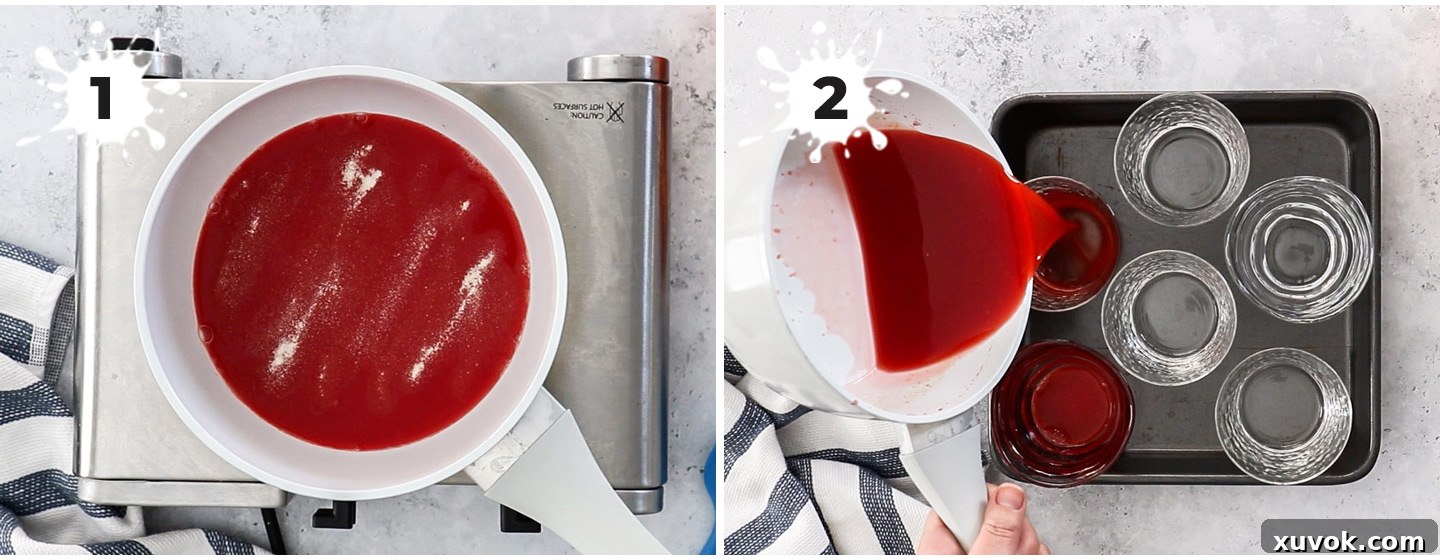
For detailed quantities and comprehensive instructions, please refer to the recipe card below.
- Prepare the Blood Orange Jelly: Begin by preparing the visually stunning blood orange jelly. In a small saucepan, sprinkle powdered gelatin evenly over fresh blood orange juice. Allow it to “bloom” for about two minutes, which means the gelatin will absorb the liquid and soften. Then, gently heat the mixture over low-medium heat, stirring continuously until the gelatin completely dissolves. Avoid bringing it to a boil; the mixture should only steam lightly. Incorporate the sugar, stirring until it too is fully dissolved. Once ready, carefully pour this vibrant mixture evenly into six small glasses or ramekins. These will form the base of your panna cottas. Transfer them to the refrigerator and chill for 1-2 hours, or until firmly set.
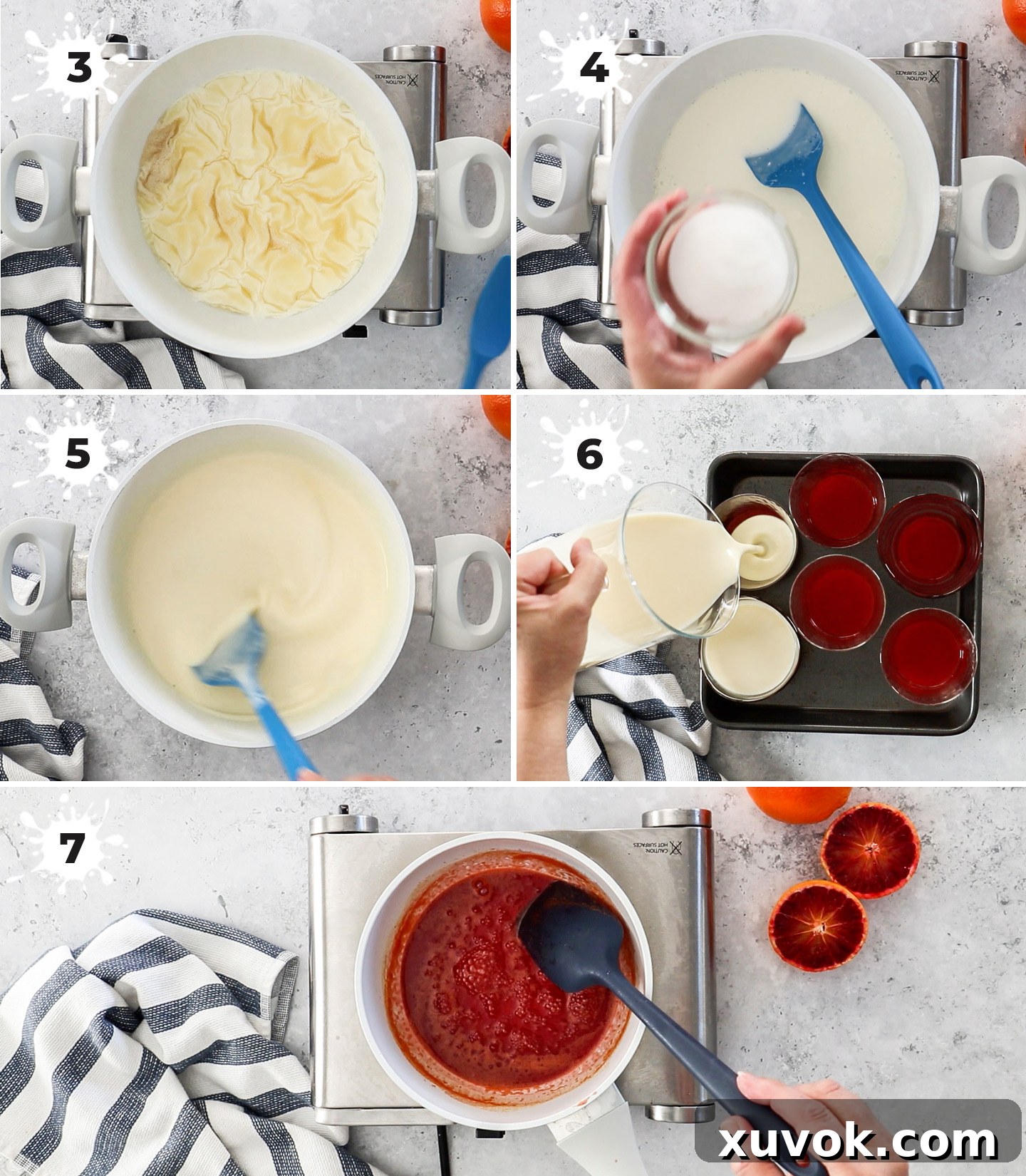
- Craft the Buttermilk Panna Cotta: In a separate, clean saucepan, pour the buttermilk and sprinkle the remaining powdered gelatin over its surface. Let it sit for approximately 5 minutes, allowing the gelatin to fully “bloom” and wrinkle. Then, place the saucepan over low heat, stirring gently until the gelatin has completely dissolved into the buttermilk. Crucially, ensure the mixture never simmers or boils, as high heat can compromise the gelatin’s setting ability. Add the sugar and continue stirring until it is fully dissolved. Remove the saucepan from the heat and stir in the thickened cream, pure vanilla extract, and a pinch of salt. For an extra silky-smooth texture, you may strain the mixture through a fine-mesh sieve to catch any undissolved gelatin bits. Carefully pour this creamy buttermilk mixture over the now-set blood orange jelly in your glasses or ramekins. Return them to the refrigerator to chill for an additional 3-4 hours, or preferably overnight, to allow the panna cotta to set perfectly.
- Prepare the Blood Orange Syrup: For the crowning touch, create the luscious blood orange syrup. Combine blood orange juice, water, and sugar in a small saucepan. Stir over low heat until the sugar has fully dissolved. Increase the heat slightly to a gentle simmer and allow the mixture to reduce for about 20 minutes, or until it thickens to a beautiful syrupy consistency. Once reduced, pour the syrup into a small jar or jug and let it cool completely before chilling. The syrup can be prepared ahead of time and stored in the refrigerator. A quick 10-second warm-up in the microwave can make it easier to drizzle just before serving.
Important Temperature Control: It is paramount that neither the buttermilk mixture nor the jelly mixture ever comes to a simmer or boil. The heat should be just enough to encourage steaming, which is sufficient to dissolve the gelatin and sugar without compromising the integrity of the gelatin or the delicate texture of your panna cotta. Boiling gelatin can cause it to lose its setting power, resulting in a runny dessert.
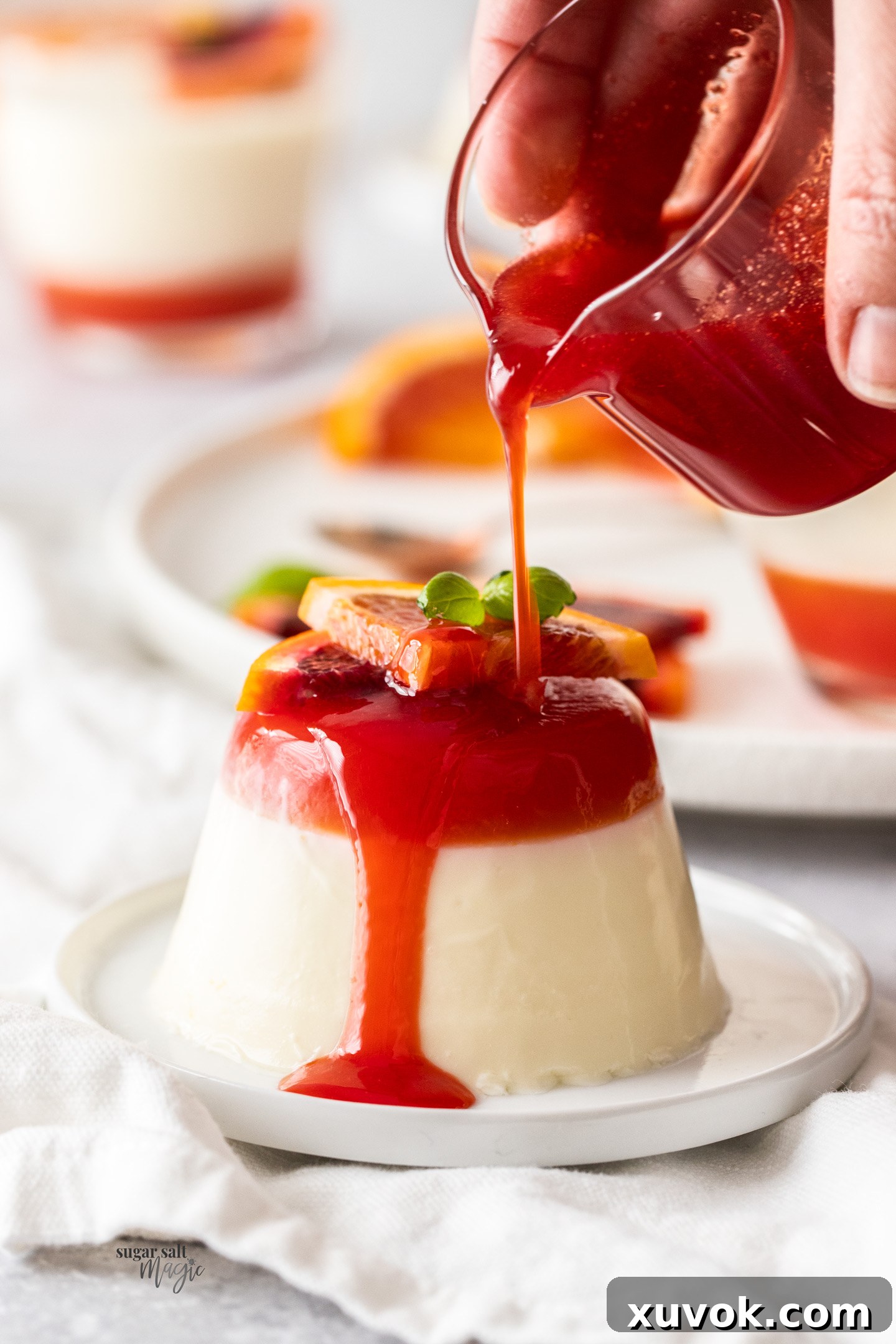
The stunning, deep ruby hue of the blood orange jelly you see in these images is completely natural and unenhanced. Blood oranges, particularly at peak season, display incredible variations in their internal color, ranging from rich crimson to speckled maroon, often with beautiful streaks of orange. This natural variability makes each panna cotta uniquely beautiful.
Pro Tips for a Flawless Panna Cotta
- Master the No-Boil Rule: As emphasized in the instructions, never allow your gelatin mixtures to boil or even simmer aggressively. Gelatin is a protein that can break down under high heat, losing its gelling properties. Gentle, low heat is sufficient to dissolve it, ensuring your panna cotta sets perfectly. If you notice any bubbles forming, immediately remove the saucepan from the heat, stir to cool it slightly, and then reduce the heat before returning it.
- Proper Gelatin Blooming: Always sprinkle gelatin evenly over the surface of cold liquid and allow it to sit for a few minutes before heating. This “blooming” process allows the gelatin granules to absorb water and swell, ensuring they dissolve smoothly and completely once heat is applied.
- Achieve Ultimate Smoothness: For an extra-silky panna cotta, consider pouring the buttermilk panna cotta mixture through a fine-mesh sieve after combining all ingredients. This step helps catch any tiny undissolved gelatin particles or lumps, resulting in a truly pristine texture.
- Patience is Key for Setting: While a few hours in the refrigerator will technically set the panna cotta, allowing it to chill overnight is always best. This ensures a firm, stable set and a superior texture, especially if you plan to unmold them.
- Unmolding Your Panna Cotta: If you prefer to serve your panna cotta unmolded on a plate, lightly oil your ramekins or molds before pouring in the jelly. When ready to serve, briefly dip the bottom of each ramekin into a bowl of hot water for 10-20 seconds. Then, gently press down around the top edge with your fingertip to help release the edges. Tilt the mold slightly and press down on the side closest to the edge until you hear the suction release. Place an inverted serving plate on top of the ramekin, then flip them both over to invert the panna cotta onto the plate. Remove the glass or mold carefully, and your elegant dessert is ready to be garnished.
Creative Variations and Serving Ideas
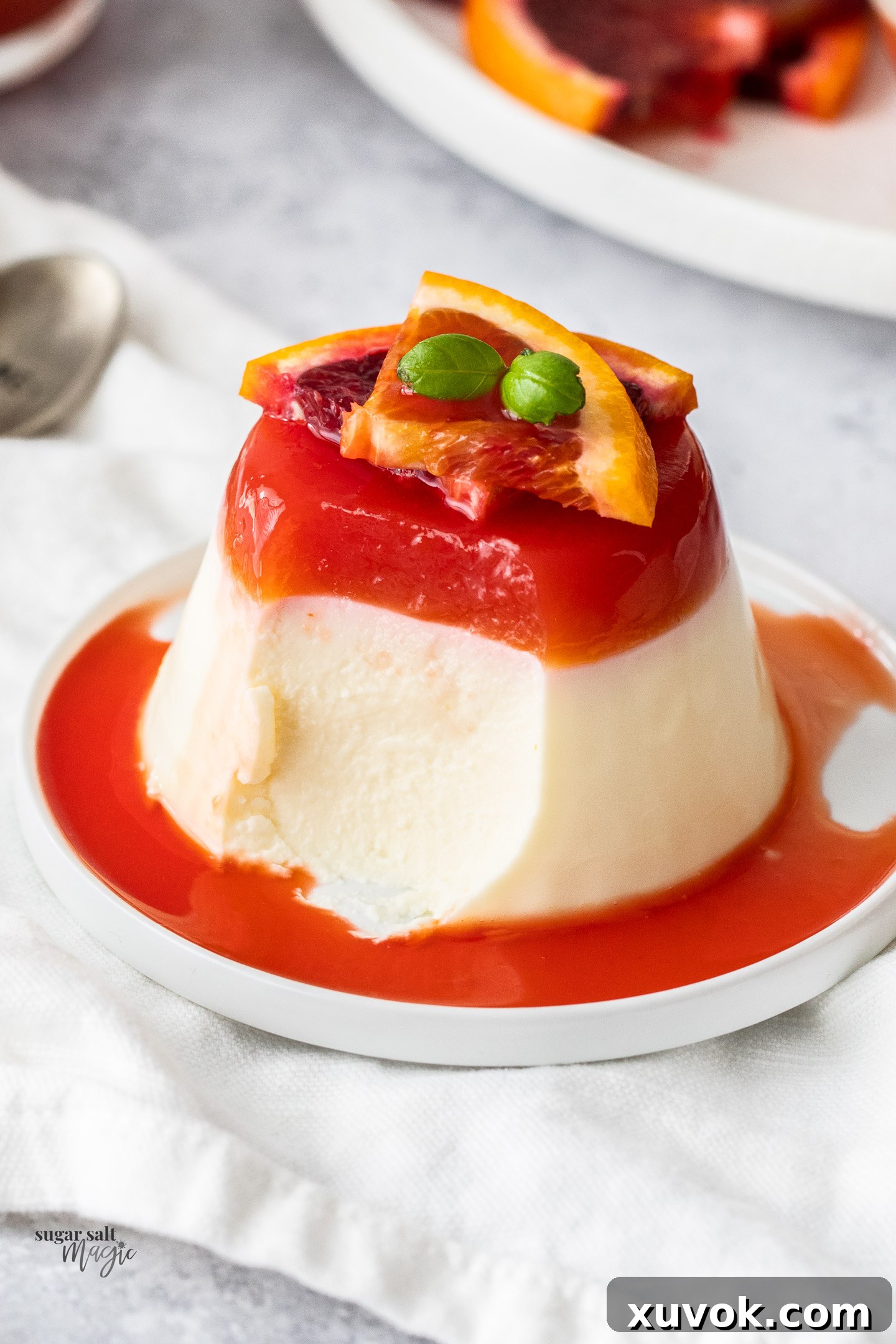
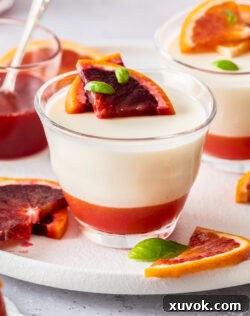
- Styling Your Panna Cotta: The presentation of panna cotta is incredibly flexible. You can opt to layer the blood orange jelly at the bottom for a colorful base or pour it on top as a shimmering glaze. Serve your panna cottas directly in elegant glasses, or prepare them in molds to be inverted onto plates for a more traditional presentation. Explore these creative styles:
- Present as individual portions in a beautiful tart form.
- Serve family style in a large bowl, allowing guests to scoop their desired portion.
- Utilize elegant wine glasses for a sophisticated touch.
- Use small shot glasses for mini dessert bites.
- Beyond Blood Orange – Alternative Toppings: While blood orange is a fantastic complement, the lightly sweetened buttermilk panna cotta base provides a versatile canvas for other flavors. Remember that the panna cotta itself is subtly sweet, so it will benefit from an additional sweet component. Consider these delectable alternatives:
- A simple drizzle of golden maple syrup or rich honey for earthy sweetness.
- Indulgent caramel sauce or decadent chocolate sauce for a more classic dessert pairing.
- Fresh and vibrant fruit compotes, offering a burst of natural flavor:
- Blueberry compote for a juicy, sweet-tart topping.
- Raspberry compote for a bright, tangy contrast.
- Blackberry compote for deep, complex fruitiness.
- Cherry compote for a sweet and slightly tart addition.
- Strawberry topping for familiar sweetness and vibrant color.
- Exotic passionfruit syrup for a tropical twist, or a bright lemon syrup for a zesty kick.
- A fresh strawberry sauce for a universally loved fruity complement.
- Garnish with fresh berries (raspberries, blueberries, blackberries), mint leaves, or a sprinkle of toasted nuts for added texture and visual appeal.
Storage and Make-Ahead Perfection
This recipe thoughtfully yields 6 individual panna cottas, each approximately 1 cup in volume, including the delightful blood orange jelly layer. These elegant desserts are a dream for entertaining, as they can be prepared well in advance.
Once fully set, your buttermilk panna cottas should be stored in the refrigerator. They can be made 2-3 days ahead of your event without any loss of quality. To maintain their freshness and prevent them from absorbing refrigerator odors, ensure they are kept in an airtight container or covered tightly with plastic wrap until you are ready to serve. Remove them from the fridge about 10 minutes before serving to allow their flavors to mellow and their texture to become ideally yielding.
Explore More Panna Cotta Recipes
If you’ve fallen in love with the silky smooth delight of panna cotta, there’s a world of flavors waiting to be discovered. Here are some more irresistible panna cotta recipes to inspire your next dessert creation:
- Almond Honey Panna Cotta
- Coffee Panna Cotta with Coffee Syrup
- Strawberry Panna Cotta
- Chai Panna Cotta
- Coconut Panna Cotta
- Mango Panna Cotta Coconut Cheesecake
- Baileys Panna Cotta
Did you indulge in this buttermilk panna cotta recipe?
We’d love to hear your thoughts! Leaving a rating and comment below the recipe is incredibly helpful and appreciated!
Hungry for more culinary inspiration? Subscribe to our newsletter for free, delectable recipes delivered straight to your inbox. Also, connect with us and follow along on Facebook, Pinterest and Instagram for daily doses of deliciousness!
Buttermilk Panna Cotta with Blood Orange Jelly
6
serves
15 minutes
7 minutes
4 hours
22 minutes
Rate
Pin
Ingredients
For the Blood Orange Jelly
- ▢ 1 cup blood orange juice (from about 5 blood oranges)
- ▢ 1 teaspoon powdered gelatine
- ▢ 1 tablespoon caster (superfine) sugar (notes)
For the Buttermilk Panna Cotta
- ▢ 2 cups buttermilk (500ml)
- ▢ 3 ¼ teaspoons powdered gelatine
- ▢ ¼ cup sugar (50g / 1.8oz)
- ▢ 300 ml thickened pourable cream (heavy cream) (1 cup + ¼ cup / 10 floz)
- ▢ 1 teaspoon vanilla extract
- ▢ Pinch of salt
For the Blood Orange Syrup (optional)
- ▢ ¾ cup blood orange juice (180ml)
- ▢ ¼ cup water (60ml)
- ▢ ¼ cup sugar (60ml)
For best results, always weigh ingredients where a weight is provided
Instructions
-
BLOOD ORANGE JELLY: See notes if you’re planning on turning the panna cotta out of the moulds.
-
Place 6 glasses, ramekins or moulds in a baking pan (this just helps to transport them in and out of the fridge easily).
-
Pour the blood orange juice into a small saucepan and sprinkle gelatin evenly over the top. Let it sit for 2 minutes then turn the heat on low and stir until the gelatin dissolves.
-
Add the sugar and stir for another minute until dissolved.
-
Turn the heat off and divide mixture evenly between your ramekins. Place in the fridge to set for one to two hours. It’s best to make the panna cotta when the jelly has a set texture but you can make it before if needed (see notes).
-
BUTTERMILK PANNA COTTA: Pour the buttermilk into a small saucepan and sprinkle the gelatine evenly over the top. Let it sit for 5 minutes until wrinkly then turn the heat on low, stirring until the gelatine has dissolved.
-
Add the sugar and stir for another minute until dissolved. Do not ever let it simmer or boil.
-
Turn the heat off and add the cream, vanilla and salt and stir well. If you like, you can pour it through a fine-mesh strainer to remove any bits of gelatine that may not have dissolved.
-
It’s easiest to pour the mixture into the ramekins from something that has a spout. Pour the cream mixture evenly into your ramekins over the jelly. Place in the fridge to set for 3-4 hours or until set.
-
BLOOD ORANGE SYRUP: Pour the blood orange juice, water and sugar into a small saucepan.
-
Stir over low heat until the sugar dissolves, then simmer on low for around 20 minutes until thickened.
-
Allow the syrup to cool to room temperature before serving with the panna cotta.
-
The syrup can be made ahead and stored in the fridge. Warm in microwave for 10 seconds to make it more pourable.
-
Take the panna cottas out of the fridge 10 minutes before serving.
-
TURNING OUT THE PANNA COTTA: If you want to turn the panna cottas out onto plates start by dipping the ramekin into a bowl of hot water for 10-20 seconds.
-
Now, gently press down all around the top with your fingertip to release it. Holding the glass on a slight angle, press down on the part closest to the top edge of ramekin until you see the vacuum release.
-
Place an upturned serving plate on top of the glass then turn it over to invert panna cotta onto the plate. Remove the glass and it’s ready.
-
Please take a moment to leave a comment & rating. It’s appreciated and so helpful.
Notes
- Tablespoons: This recipe uses a standard Australian 20ml tablespoon (equivalent to 4 teaspoons).
- If you intend to unmold the panna cotta onto serving plates, prepare your 6 molds or ramekins by lightly oiling them before pouring in the jelly mixture.
- The buttermilk panna cotta mixture can be prepared immediately after the jelly. If it sets too much while the jelly is chilling, simply place the saucepan back over very low heat and stir gently until it becomes fluid enough to pour.
- Craving something other than blood orange? The beauty of the buttermilk panna cotta is its adaptability. You can easily substitute the blood orange components with other delicious toppings. Consider a simple drizzle of honey or maple syrup, a rich caramel sauce, or a scattering of fresh berries like raspberries, strawberries, or blackberries. Remember, the panna cotta itself is only subtly sweet, so a complementary sweet syrup or fruit will enhance the overall flavor experience. Refer to the “Creative Variations and Serving Ideas” section above for more inspiration.
- Serving Vessels: Panna cotta is incredibly versatile when it comes to serving. Beyond traditional ramekins, feel free to use pretty dessert glasses, mason jars, or even small jam jars for a charming, rustic presentation.
- Yield: This recipe is designed to produce 6 individual panna cottas, each with a volume of approximately 1 cup (including the jelly layer).
- Storage: For optimal freshness and texture, store your buttermilk panna cottas in the refrigerator until ready to serve. They can be prepared 2-3 days in advance and should be kept in an airtight container or tightly covered with plastic wrap.
335
kcal
Marie Roffey
Dessert, Sweets
Italian
Have you tried this recipe?
Don’t forget to leave a rating and comment below and let me know how it was! I love hearing from you. Nutrition information is approximate and derived from an online calculator. The brands you use may cause variations.