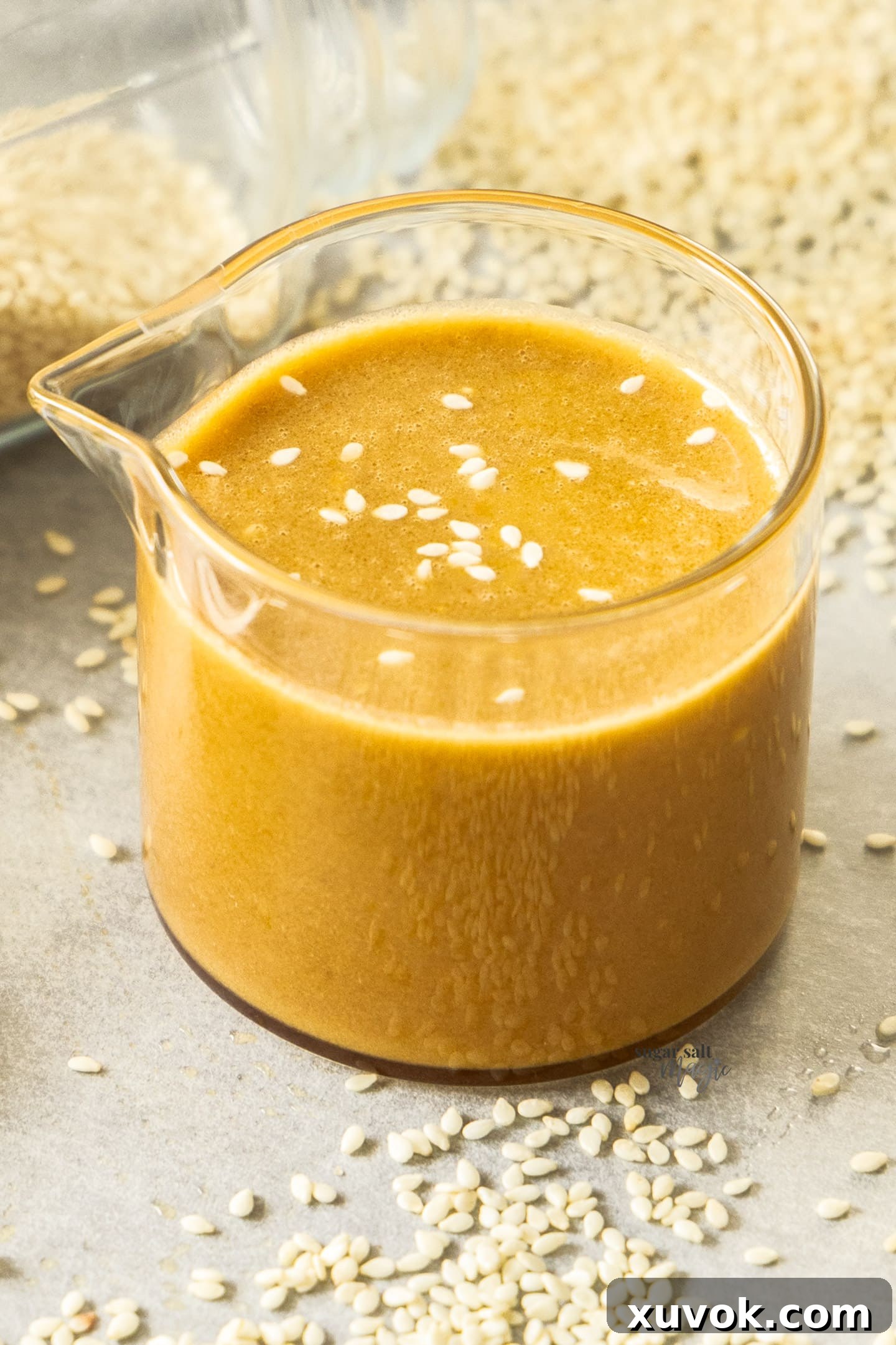
Homemade Japanese Sesame Sauce (Goma Dare) – A Versatile & Vegan Delight
Embark on a culinary journey to Japan with this exquisite homemade Japanese sesame sauce, affectionately known as Goma Dare. A staple condiment in Japanese cuisine, this dressing boasts an incredibly rich, nutty, sweet, savory, and tangy flavor profile that will elevate countless dishes. Forget store-bought versions that often rely on heavy ingredients like Kewpie mayonnaise; our traditional recipe is proudly mayo-free and completely vegan, offering a lighter yet equally satisfying experience.
Making this authentic sesame dressing at home is surprisingly simple, requiring just a few minutes of your time and minimal effort. Its versatility is truly boundless: drizzle it over a vibrant Asian slaw or steamed vegetables for an instant flavor boost, use it as a dipping sauce for gyoza, tofu, or grilled meats, or stir it through your favorite noodles for a quick and delectable meal. Once you discover the ease and deliciousness of homemade Goma Dare, you’ll wonder how you ever lived without it.
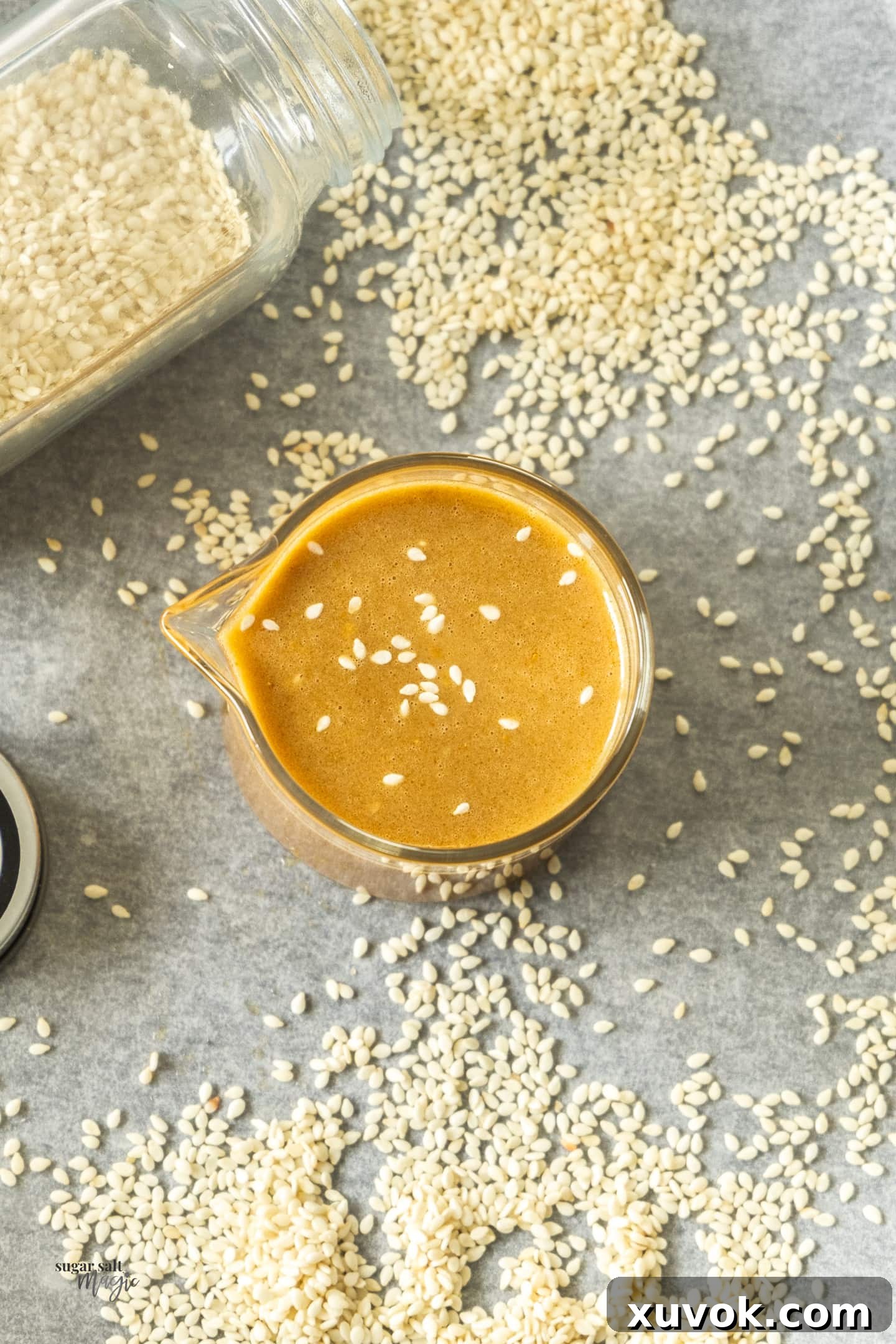
Table of Contents
- Why You’ll Love This Dressing
- What is Goma Dare (Japanese Sesame Sauce)?
- Essential Ingredients for Japanese Sesame Sauce
- How to Make Goma Dressing: Step-by-Step
- Expert Tips and Customization Tricks
- Transform It Into a Mouthwatering Noodle Sauce
- Storage and Shelf Life
- Frequently Asked Questions About Goma Dare
- More Asian-Inspired Recipes You’ll Love
Never Miss a Recipe!
Get the latest recipes straight to your inbox!
Why You’ll Love This Homemade Japanese Sesame Dressing
There are countless reasons why this homemade Japanese Sesame Sauce, or Goma Dare, will become a beloved staple in your kitchen. First and foremost, its flavor profile is truly exceptional. Imagine a symphony of tastes dancing on your palate: the deep, earthy richness of toasted sesame, balanced by a hint of natural sweetness, a savory depth from soy, and a bright, refreshing tang from rice vinegar, all punctuated by the subtle warmth of fresh ginger. This complex yet harmonious blend is what makes Goma Dare so addictive and versatile.
Beyond its incredible taste, this recipe stands out for its health-conscious credentials. Unlike many commercial sesame dressings that include mayonnaise for creaminess, our traditional rendition is entirely mayo-free. This not only makes it a fantastic option for those seeking lighter dressings but also ensures it is completely vegan, catering to a wider range of dietary needs and preferences. You get all the rich flavor without any dairy or eggs, making it accessible and enjoyable for almost everyone.
Another compelling reason to fall in love with this Goma Dare is its remarkable ease of preparation. You don’t need any special culinary skills or extensive time in the kitchen. In just a few minutes, with a handful of common pantry ingredients, you can whip up a batch of this flavorful sauce. This makes it perfect for busy weeknights when you want to add a gourmet touch to your meal without the fuss. Plus, the recipe is incredibly forgiving and easy to adapt to your personal taste. Whether you prefer it sweeter, tangier, or with an extra kick of ginger, you can effortlessly adjust the proportions to suit your palate and the dish you’re preparing.
Finally, the sheer versatility of this Japanese sesame dressing is unparalleled. It’s not just for salads; it’s a dip, a marinade, and a superb noodle sauce. From transforming mundane steamed vegetables into an exciting side dish to serving as a sophisticated accompaniment to traditional Japanese hot pots, its applications are endless. This means one recipe can enhance a multitude of meals throughout the week, offering incredible value and culinary inspiration.
What is Goma Dare (Japanese Sesame Sauce)?
Goma Dare is a quintessential Japanese condiment, deeply ingrained in the country’s culinary traditions. The name itself offers a clue to its essence: “goma” (胡麻) translates to sesame, and “dare” (たれ) means sauce. At its core, Goma Dare is a creamy, flavorful sauce primarily made from ground toasted sesame seeds, combined with a delicate balance of rice vinegar, soy sauce, sesame oil, and a touch of sweetness from sugar.
While the fundamental ingredients remain consistent, Goma Dare is celebrated for its adaptability. It’s common to find variations that incorporate ingredients like dashi powder for an umami depth, miso paste for a fermented richness, or fresh garlic for an aromatic punch. Our recipe introduces fresh ginger, which not only adds a vibrant tang and natural sweetness but also a warming, complex spice that truly sets it apart.
The star of Goma Dare is undoubtedly the sesame seeds. The magic happens when these tiny seeds are toasted until golden brown, intensifying their natural oils and unlocking a profoundly nutty, aromatic, and slightly sweet flavor. Grinding these toasted seeds then creates a rich, emulsifiable base that gives the sauce its characteristic body and creamy texture, even without the addition of mayonnaise or other dairy products.
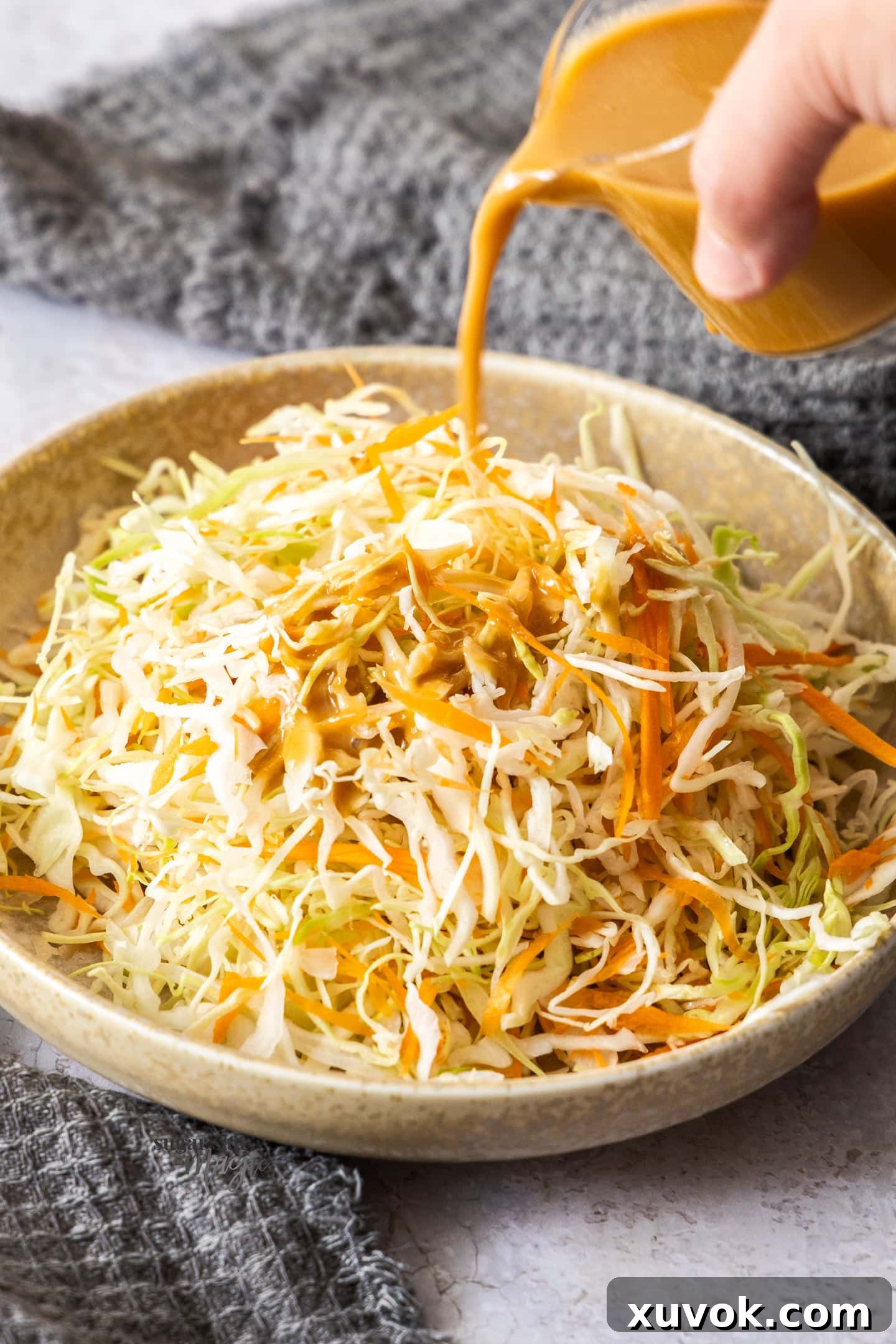
Culturally, Goma Dare holds a significant place, often accompanying dishes like shabu-shabu, a popular Japanese hot pot where thinly sliced meats and vegetables are cooked at the table in a simmering broth, then dipped into various sauces, with Goma Dare being a favorite. Beyond this traditional role, it’s widely enjoyed as a dressing for various salads – from simple green salads to elaborate Asian slaws – and steamed vegetables. It’s also fantastic stirred into cold or hot noodles, serving as a base for quick and satisfying meals.
The beauty of making Goma Dare from scratch lies in the ability to customize its consistency and intensity. The recipe as written provides a perfect balance for a pourable salad dressing or a light noodle sauce. However, for those who prefer a thicker, richer sauce ideal for hearty dipping, simply increasing the amount of toasted sesame seeds will yield a more substantial, creamy, and intensely nutty Goma Dare, allowing you to tailor it precisely to your culinary needs.
Essential Ingredients for Japanese Sesame Sauce
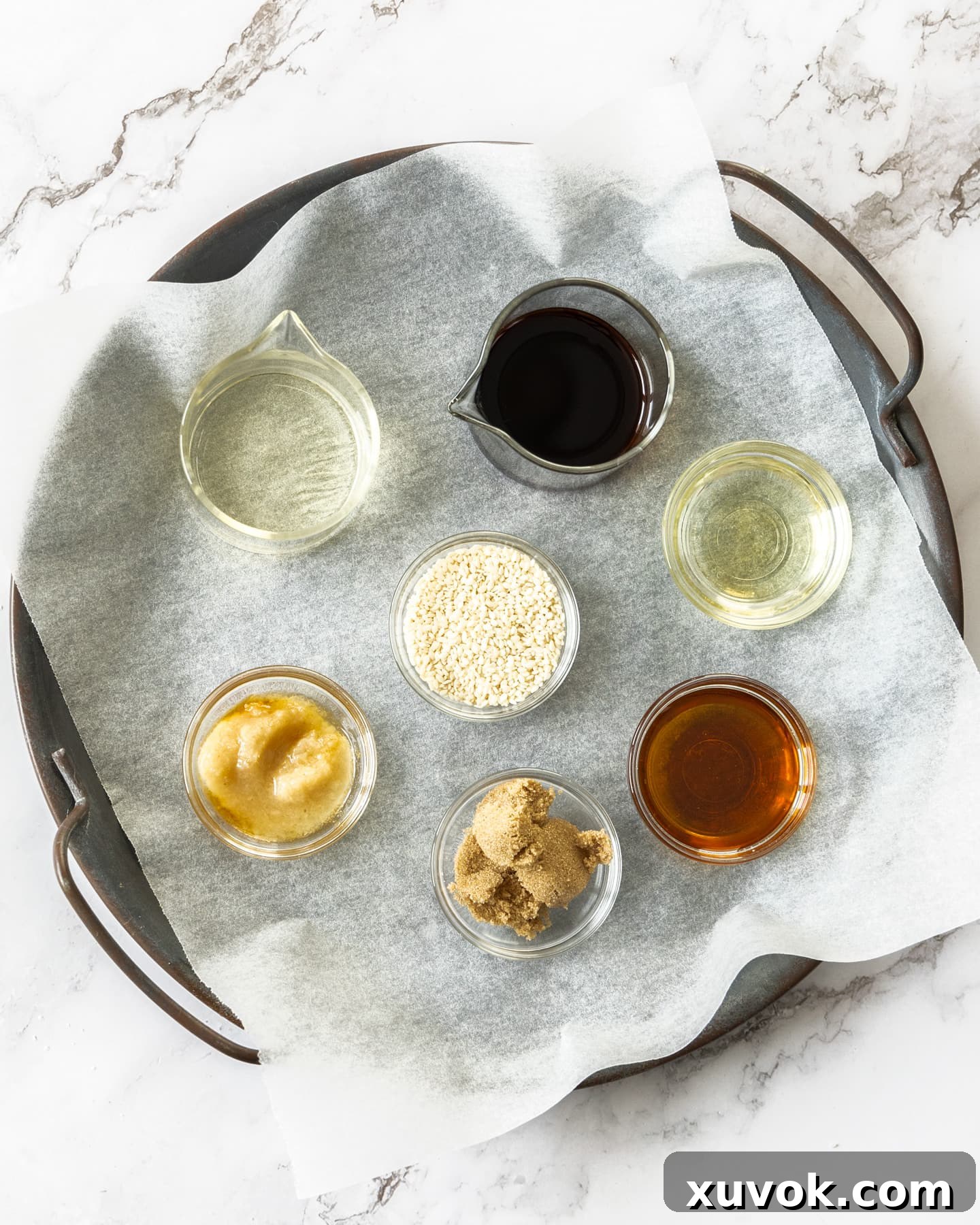
For exact measurements and detailed instructions, please refer to the full recipe card below.
- White Sesame Seeds: These are the undisputed foundation of Goma Dare. Starting with regular white sesame seeds and toasting them yourself is key to developing that signature deep, nutty flavor. Toasting caramelizes their natural sugars and releases their aromatic oils, creating a far more robust taste than raw seeds. Once toasted, they are ground into a fine powder, forming the creamy base of the sauce. While Japanese sesame paste (neri goma) from a jar can be used for convenience, freshly toasted and ground seeds offer a superior, more vibrant flavor. Avoid using tahini, which is made from raw sesame seeds and thus lacks the characteristic toasted flavor essential for Goma Dare. If tahini is your only option, compensate by increasing the amount of toasted sesame oil.
- Unseasoned Rice Wine Vinegar: A cornerstone of Japanese cooking, rice vinegar provides a gentle, slightly sweet tang that beautifully balances the richness of the sesame. Ensure you use unseasoned rice vinegar, as seasoned varieties contain added sugar and salt that can alter the flavor profile of your sauce.
- Soy Sauce: The umami powerhouse of Asian cuisine. Opt for a good quality traditional Japanese soy sauce, such as Kikkoman, for the best flavor. It provides a savory depth and salinity that ties all the other flavors together. If you require a gluten-free option, tamari is an excellent substitute.
- Toasted Sesame Oil (Roasted Sesame Oil): Often referred to as roasted sesame oil, this ingredient is a flavor bomb. It’s distinct from regular sesame oil (which is typically cold-pressed from raw seeds) because it’s made from toasted sesame seeds, giving it an intensely rich, nutty, and highly aromatic quality. A little goes a long way in imparting a profound umami essence to the sauce.
- Neutral Flavored Vegetable Oil: A small amount of a neutral oil, like canola or sunflower oil, helps to emulsify the dressing and achieve a smooth, pourable consistency. It also allows the vibrant flavors of the sesame and other ingredients to shine without interference. For an even more intense sesame flavor, you can substitute some or all of the vegetable oil with additional toasted sesame oil.
- Light Brown Sugar: Just a touch of light brown sugar provides the perfect sweet counterpoint to the savory and tangy elements. Its subtle caramel notes also add a gentle warmth and depth that white sugar might not offer, rounding out the overall flavor profile.
- Fresh Ginger: The addition of freshly minced ginger is a secret weapon in this Goma Dare recipe. It introduces a delightful natural spiciness, a bright zesty tang, and an underlying sweetness. Ginger elevates the dressing with its aromatic complexity and adds a layer of warming depth, making the sauce feel more vibrant and multi-dimensional.
How to Make Goma Dressing: Step-by-Step
Crafting this delicious Japanese sesame sauce (Goma Dare) is incredibly straightforward and requires minimal effort. It’s so easy, in fact, that you might find yourself making a double batch to keep on hand for various meals throughout the week!
For the precise ingredient quantities and full instructions, jump straight to the detailed recipe card below.
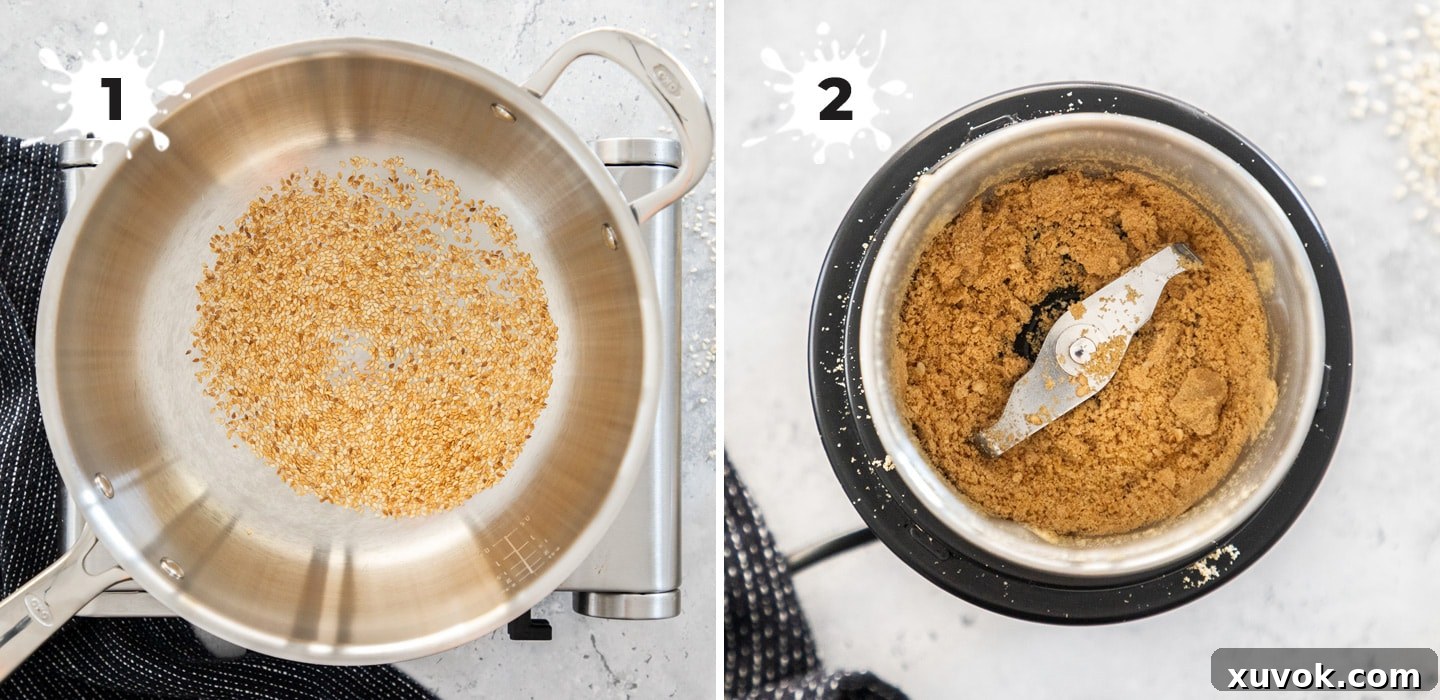
- Toast the Sesame Seeds: This crucial step unlocks the deep, nutty flavor essential for authentic Goma Dare. You can toast white sesame seeds in a dry pan over medium heat on your stovetop, stirring them frequently to ensure even browning (photo 1). Keep a close eye on them, as they can burn quickly. They’re ready when they turn a light golden color and emit a fragrant, popcorn-like aroma. Alternatively, you can spread them in a single layer on a baking sheet and roast them in a moderate oven (around 325°F or 160°C) for 5-8 minutes, stirring once or twice.
- Grind the Toasted Sesame Seeds: Once toasted and slightly cooled, the sesame seeds need to be ground into a fine powder (photo 2). A dedicated spice grinder or a clean coffee grinder makes this task effortless, yielding a perfectly fine texture. If you don’t have these, a mortar and pestle will also do the job, requiring a bit more effort but offering a traditional approach. A mini food processor can also work, though it might yield a slightly coarser texture. Grinding helps release the natural oils, contributing to the sauce’s creaminess.
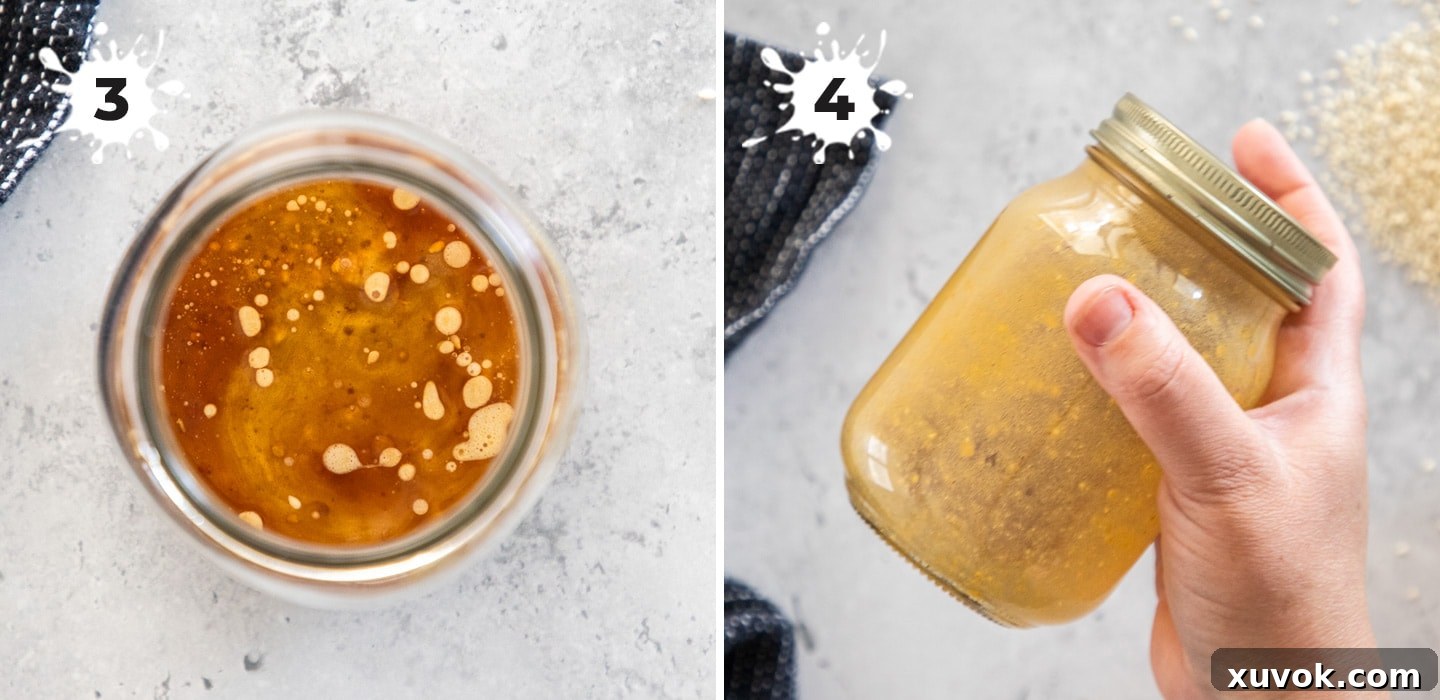
- Combine All Ingredients: Now for the simplest step! Transfer the finely ground sesame seed powder into a clean mason jar. Add the remaining ingredients – rice wine vinegar, soy sauce, toasted sesame oil, neutral vegetable oil, light brown sugar, and minced ginger (photo 3). Secure the lid tightly and give the jar a vigorous shake for about 30 seconds to a minute, ensuring all ingredients are thoroughly combined and emulsified (photo 4). If you don’t have a jar, you can simply whisk everything together vigorously in a small bowl or jug until smooth.
- Adjust and Serve: Your homemade Goma Dare is now ready to use! Before serving, taste and adjust the seasoning as needed. You might want a little more sugar for sweetness, a dash more soy for savoriness, or extra vinegar for tang. If you desire a thicker consistency, add another teaspoon or two of freshly ground toasted sesame seeds. This will not only thicken the sauce but also enhance its nutty flavor.
Expert Tips and Customization Tricks
- Adjusting Consistency and Nutty Flavor: The amount of sesame seeds directly impacts both the flavor intensity and the thickness of your Goma Dare. For a thinner, more pourable dressing, perfect for light salads or marinating, stick to the recipe’s specified amount. If you desire a richer, creamier, and thicker sauce – ideal for substantial dipping or coating noodles – feel free to increase the sesame seeds to 3 or even 4 tablespoons. This will intensify the nutty flavor significantly.
- Sesame Paste Alternatives: While freshly toasted and ground sesame seeds offer the best flavor, you can use pre-made sesame paste. Look for Japanese sesame paste (neri goma) in Asian grocery stores for the closest flavor profile, though it might be slightly less vibrant. Chinese sesame paste, which is also made from toasted seeds, can be a good substitute. However, be mindful that tahini, commonly found in Western supermarkets, is made from raw sesame seeds and will yield a distinctly different, more bitter flavor. If using tahini, you’ll need to add a generous extra drizzle of toasted sesame oil to replicate the characteristic nutty essence of Goma Dare.
- For a Creamier Texture: If you’re accustomed to creamier, richer dressings and want to emulate the texture of some store-bought versions, you can add a tablespoon or two of Japanese Kewpie mayonnaise to your Goma Dare. While our recipe is intentionally mayo-free and vegan for a traditional approach, this addition can provide a decadent creaminess if desired.
- Enhance with Additional Aromatics: Don’t hesitate to experiment with other flavor enhancers. A tiny pinch of garlic powder or a very finely minced garlic clove can add an extra layer of savory depth. For a subtle heat, a dash of chili oil or a tiny amount of sriracha can be stirred in. Always start small and taste as you go to achieve your preferred balance.
- Ensure Proper Toasting: The success of your Goma Dare hinges on perfectly toasted sesame seeds. Toasting should be done over medium heat, with constant movement of the pan or stirring, until they are golden and aromatic. Do not rush this step, and be careful not to burn them, as burnt sesame seeds will result in a bitter sauce.
- Taste and Adjust: Always taste your Goma Dare before serving. The balance of sweet, savory, and tangy is crucial. You might prefer a little more sugar to cut through the tang, more soy sauce for depth, or additional rice vinegar for brightness. Adjusting to your preference is what makes homemade sauces so rewarding.
Transform It Into a Mouthwatering Noodle Sauce
One of the most delicious ways to enjoy this Japanese Sesame Sauce is by transforming it into an irresistible noodle sauce. With just a few extra ingredients, you can turn simple noodles into a seriously addictive meal or side dish that tastes incredibly gourmet, yet comes together in a flash.
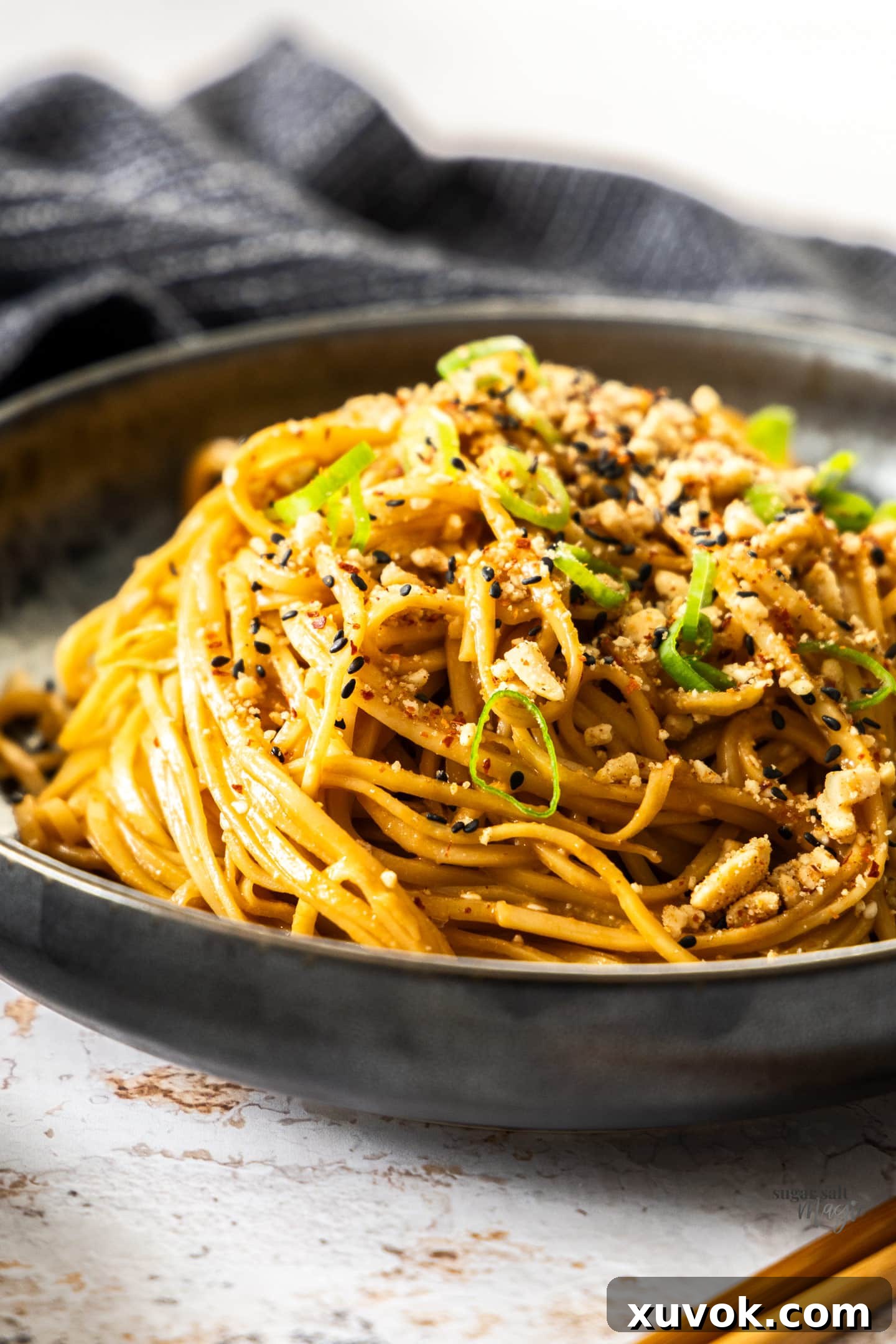
These sesame noodles are an absolute revelation – astonishingly quick to prepare and utterly delicious. They work wonderfully as a satisfying side dish for 4 people or can easily serve 2-3 as a light main meal, depending on hunger levels.
- First, bring a pot of water to a boil and cook 250g of dried egg noodles (or your preferred noodle type like ramen, udon, or soba) according to the package instructions until al dente. Drain the noodles thoroughly, then rinse them under cold water (or warm water if you prefer serving them hot) to prevent them from sticking and to stop the cooking process. Toss the rinsed noodles with a small dash of sesame oil to keep them lubricated, then set them aside.
- In the same saucepan you used to cook the noodles, add one full batch of this vibrant Japanese sesame sauce. To this, incorporate 1 tablespoon of sweet soy sauce (such as kecap manis), which adds a beautiful glossy sheen and a deeper caramelized sweetness. Next, stir in 1 tablespoon of creamy peanut butter for extra richness and a delightful nutty counterpoint to the sesame. Finally, add ½ to 1 teaspoon of sriracha or your favorite hot sauce/chili crisp, adjusting the amount to achieve your desired level of spice.
- Place the saucepan over medium heat and bring the sauce mixture just to a gentle simmer, stirring constantly to combine all the ingredients smoothly. Once it’s warm and well-mixed, add the cooked and prepared noodles back into the pan. Toss everything thoroughly, ensuring the noodles are evenly coated with the luscious sesame sauce. If the sauce appears too thick, you can add up to ¼ cup of water, a tablespoon at a time, until it reaches your preferred consistency.
- Serve these delectable sesame noodles immediately, garnished generously with finely sliced spring onions (scallions) for freshness and a slight oniony bite. For an extra layer of texture and spice, a sprinkle of our spicy Asian dukkah takes this dish to the next level. Deeeeelicious!
For a heartier meal, you can easily incorporate cooked protein into your sesame noodles. Shredded chicken, thinly sliced beef, succulent pork, or even pan-fried tofu or tempeh make excellent additions, transforming this side dish into a complete and incredibly satisfying main course.
Storage and Shelf Life
Storing your homemade Japanese sesame dressing is simple, allowing you to enjoy its fresh flavors for days. Transfer the Goma Dare into an airtight container, such as a mason jar, and store it in the refrigerator. Properly stored, it will maintain its quality and flavor for at least a week, if not longer. Before each use, give the jar a good shake, as the ingredients may separate slightly during storage. This will help re-emulsify the sauce and ensure a consistent texture and taste.
Frequently Asked Questions About Goma Dare
Japanese sesame paste, or neri goma, is a thick, creamy paste made by meticulously grinding toasted sesame seeds. Its flavor is deeply nutty and intensely aromatic, distinct from tahini. You can easily make your own at home by dry-toasting white sesame seeds until golden, then grinding them in a spice grinder, coffee grinder, or with a mortar and pestle. The longer you grind, the more the natural oils are released, resulting in a very thick, smooth paste.
While tahini is a sesame paste, it’s typically made from raw (untoasted) sesame seeds, which gives it a more bitter and less nutty flavor profile compared to Japanese Goma Dare. For an authentic taste, it’s best to toast and grind your own sesame seeds or use Japanese neri goma. If tahini is your only option, you’ll need to compensate for the lack of toasted flavor by adding a generous amount of high-quality toasted sesame oil to the dressing.
Japanese sesame sauce is incredibly versatile! It’s famously served alongside shabu-shabu (Japanese hot pot) as a dipping sauce for cooked meats and vegetables. Beyond that, it excels as a vibrant dressing for salads (especially Asian slaws), steamed or roasted vegetables, and cold noodle dishes. It’s also fantastic as a marinade for chicken or tofu, a dipping sauce for gyoza or spring rolls, or drizzled over grilled fish.
This homemade Goma Dare recipe is a healthier alternative to many store-bought dressings, especially since it’s mayo-free and vegan. Sesame seeds are a good source of healthy fats, protein, fiber, and essential minerals. When made with fresh, quality ingredients, it offers a flavorful way to add nutrients to your meals. As with any dressing, moderation is key due to the oil and sugar content, but overall, it can be a part of a balanced diet.
Absolutely! The only ingredient containing gluten in the traditional recipe is soy sauce. To make your Goma Dare entirely gluten-free, simply substitute regular soy sauce with tamari, which is a widely available gluten-free alternative that offers a similar rich, savory flavor. All other ingredients are naturally gluten-free.
More Asian-Inspired Recipes You’ll Love
- Sweet and Sour Dipping Sauce
- Gochujang Mayo
- Mojo Verde
- Fresh Jalapeno Relish
- Asian Slaw
Did you try this Japanese sesame sauce recipe?
Leaving a rating and comment below the recipe is so helpful!
Hungry for more? Subscribe to the newsletter for free recipes straight to your inbox. Also, follow along on Facebook, Pinterest and Instagram.
Japanese Sesame Sauce (Goma Dare)
5 from 1 rating
Rate
Pin
Ingredients
- 1 ½ tablespoons white sesame seeds, or pre-toasted (see notes 1 below)
- 2 tablespoons unseasoned rice wine vinegar
- 1 ½ tablespoon soy sauce
- 1 tablespoon roasted sesame oil
- 1 tablespoon neutral flavored vegetable oil
- 3 teaspoons brown sugar
- 2 teaspoons finely minced ginger
For best results, always weigh ingredients where a weight is provided
Equipment
- Saucepan (for toasting seeds)
- Spice grinder / coffee grinder / mortar and pestle
- Mason jar (helpful but not necessary for mixing)
Instructions
- If your sesame seeds are not pre-toasted, toast them in a dry pan over medium heat, shaking the pan often. Continue until they turn golden and smell nutty, similar to popcorn.
- Using a spice grinder, mini food processor, or a mortar and pestle, grind the toasted sesame seeds to a fine powder.
- Add the sesame seed powder to a jar along with all the remaining ingredients (rice vinegar, soy sauce, roasted sesame oil, vegetable oil, brown sugar, and minced ginger). Shake well to combine thoroughly. Alternatively, you can vigorously whisk all ingredients in a small bowl or jug until smooth.
- Your Japanese Sesame Sauce is now ready to use. For a thicker consistency or more intense nutty flavor, you can add an additional tablespoon or two of ground toasted sesame seeds. This will also make the sauce slightly less tangy.
- Please take a moment to leave a comment & rating. It’s appreciated and so helpful.
Notes
- Tablespoons: I use a standard Australian 20ml tablespoon (equal to 4 teaspoons). Please check your measuring spoons before use.
- Turn it into easy sesame noodles: To create a delicious noodle dish, cook 250g dry noodles according to package instructions, then drain and rinse with cold water (or warm if serving hot). Toss lightly with a dash of sesame oil. In the saucepan used for noodles, combine one batch of this sesame dressing with 1 tablespoon of sweet soy sauce / kecap manis, 1 tablespoon of peanut butter, and ½ to 1 teaspoon of sriracha (or a similar hot sauce/chilli crisp) to taste. Bring to a gentle simmer, then add the noodles back in. Toss well to coat, adding up to ¼ cup of water if a thinner consistency is desired. Serve topped with finely sliced spring onions/scallions and our spicy Asian dukkah for an incredible meal!
- Nutrition details are approximate only – scroll below the recipe to find the full nutritional information. Serving size is based on this amount of sesame sauce being used on a salad of 4 large serves.
MORE SAUCES AND SEASONINGS!
Calories from Fat 72