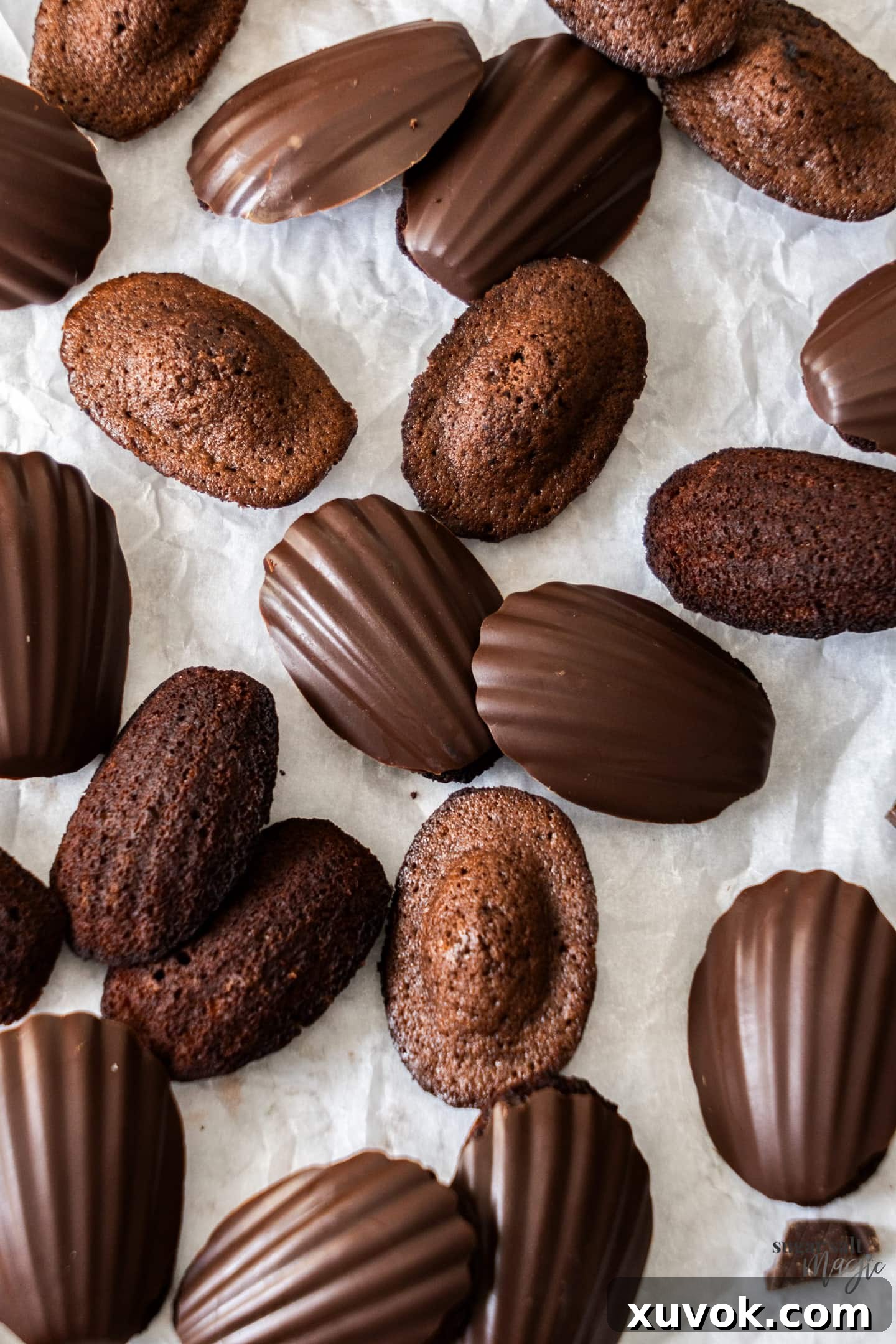
Decadent Chocolate Madeleines: A Petite French Delight
Indulge in the exquisite charm of these Decadent Chocolate Madeleines, a beloved French classic reimagined with a rich chocolate twist. These petite sponge cakes are celebrated for their distinctive shell shape and perfect humped “belly,” and our recipe elevates them further with a luxurious chocolate dip. Whether you’re a seasoned baker or new to French patisserie, you’ll find these chocolate madeleines surprisingly easy to make, delivering an unforgettable blend of sophisticated flavor and delightful textures. Prepare to impress your guests or simply treat yourself to a moment of pure chocolate bliss with every tender bite.
Why You’ll Love These Irresistible Chocolate Madeleines
There’s so much to adore about these fluffy chocolate madeleines, especially when they’re dipped in an extra layer of chocolate to make them truly special. They are incredibly light and airy, yet packed with deep chocolate flavor without being overly sweet, making them a perfectly balanced indulgence. Unlike heavier desserts, these won’t leave you feeling overly full or saccharine-sickly. Each bite offers a gorgeous contrast of textures: a slight crispness on one side from the perfectly baked shell, giving way to an incredibly soft, moist, and fluffy interior.
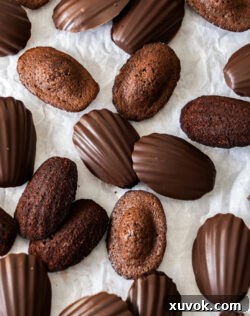
Beyond their delightful taste and texture, these French madeleines are visually stunning. They boast the signature shell shape on the bottom and a charming, characteristic madeleine dome on the top, a hallmark of a well-made madeleine. Their elegance makes them a beautiful addition to any dessert platter or afternoon tea spread. Plus, the convenience factor is a game-changer: the madeleine batter requires a chilling period, which means you can prepare it well in advance. This allows you to bake these beauties right as your guests arrive, serving them warm and fresh from the oven for an unparalleled treat that truly shines. They are the ultimate make-ahead delight for effortless entertaining or a spontaneous luxurious snack.
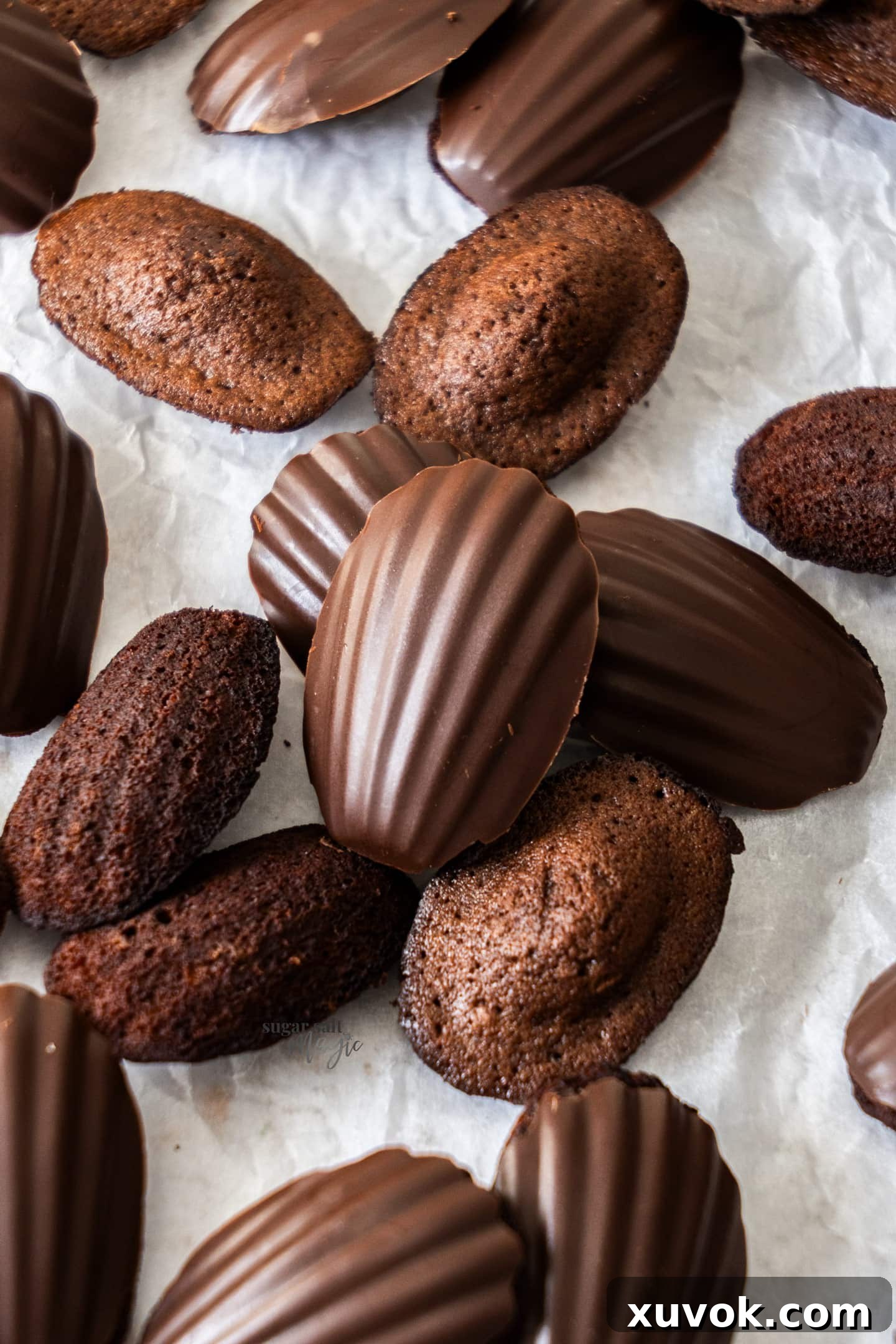
Table of Contents
- Why you’ll love them
- What are madeleines?
- Ingredients you’ll need
- How to make chocolate madeleines
- Make the chocolate madeleine batter
- The chocolate coating
- Tips and tricks
- Storage
- FAQ’s
- More recipes you’ll love
Never Miss a Recipe!
Get the latest recipes straight to your inbox!
Sign up to our newsletter for delicious updates!
What are Madeleines? A Brief History and Definition
Often mistaken for cookies due to their convenient size, madeleines are, in fact, small, delicate French sponge cakes. Their history dates back to the mid-1700s, originating from the Lorraine region of northeastern France, where legend has it they were created by a young pastry cook named Madeleine Paulmier. These charming cakes are traditionally crafted using a genoise sponge cake batter, which is renowned for its light, airy texture achieved by whipping eggs and sugar until incredibly voluminous. The batter is then baked in a special pan featuring distinctive shell-shaped indentations, which gives the madeleine its iconic scalloped edge and raised “hump” or “belly” on one side.
The beauty of madeleines lies in their subtle yet sophisticated flavor profile. They are typically light and not overly sweet, making them an ideal accompaniment to a cup of tea or coffee during an afternoon break. While the specific madeleine pan is crucial for achieving their classic shell shape and signature hump, don’t let the lack of one deter you from trying this recipe. You can certainly bake these delightful treats in a mini muffin pan or even a regular muffin pan, just be sure to adjust the baking time and keep them relatively small to ensure quick and even cooking. The essence of the madeleine – its light texture and delicate flavor – will still shine through, even without the iconic shape.
Essential Ingredients for Perfect Chocolate Madeleines
Crafting these exquisite chocolate madeleines requires a few key ingredients, each playing an important role in achieving their signature taste and texture. Below is a detailed look at what you’ll need to create this delightful French pastry. For precise measurements and full instructions, please jump to the complete recipe card.
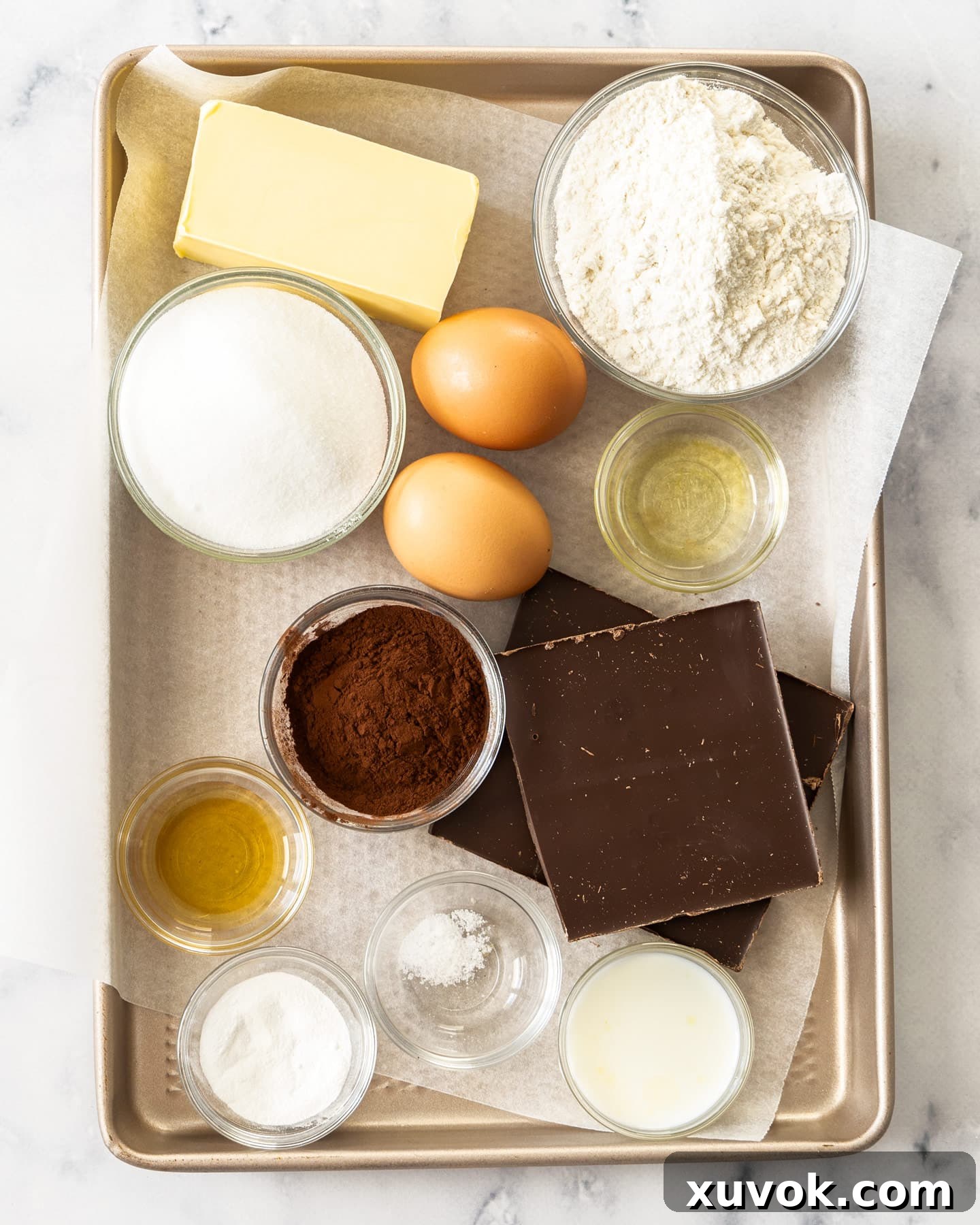
- Flour: For the delicate structure of these French sponge cakes, you’ll need simple plain flour, also known as all-purpose flour. Its balanced protein content helps create a tender crumb without making the madeleines tough.
- Cocoa Powder: To achieve a deep, rich chocolate flavor and a beautiful dark hue, I recommend using Dutch cocoa powder for these chocolate madeleines. Dutch-processed cocoa has a lower acidity, resulting in a smoother, less bitter chocolate taste and a noticeably darker color compared to natural cocoa.
- Baking Powder: A touch of baking powder is essential. It provides the necessary lift, working alongside the whipped eggs to help create that iconic, perfectly domed top on each madeleine, giving them their characteristic humped appearance.
- Eggs: Large eggs are crucial for providing structure, moisture, and helping to create the light and airy genoise-style batter. When whipped with sugar, they form the foundation of the madeleine’s fluffy texture.
- Sugar: Simple white granulated sugar or superfine caster sugar is all you need. Caster sugar dissolves more quickly, contributing to a smooth batter and a fine crumb, but regular granulated sugar works perfectly well too.
- Vanilla Extract: Always opt for pure vanilla extract over artificial vanilla essence. The real vanilla enhances the chocolate notes and adds a layer of fragrant warmth to the madeleines, making a noticeable difference in the final taste.
- Butter: Unsalted butter is preferred as it allows you to control the overall saltiness of the recipe. Melted butter is incorporated into the batter, adding richness and a tender texture to the sponge.
- Milk: A small amount of whole milk contributes to the richness of the madeleines and helps achieve a perfectly smooth, “pipable” batter consistency, making it easier to fill your madeleine pans.
- Chocolate (for coating): For the decadent dipping, I use a high-quality dark chocolate or semi-sweet chocolate. This provides a lovely contrast to the sweetness of the madeleines and creates a crisp, luxurious shell. You can choose your preferred level of darkness.
- Vegetable or Coconut Oil (for coating): A touch of neutral-flavored oil, such as vegetable oil or coconut oil, is mixed with the melted chocolate for the coating. This helps to thin the chocolate slightly, making it smoother for dipping and giving it a beautiful sheen and a satisfying snap once set.
How to Make the Best Chocolate Madeleines
Creating these delightful chocolate madeleines is a rewarding process that, with a few key steps, yields perfectly domed, tender, and incredibly flavorful French sponge cakes. Below, we’ll walk through the process, from crafting the rich chocolate batter to achieving that irresistible chocolate coating. For comprehensive, step-by-step instructions and ingredient quantities, please refer to the recipe card at the bottom of this post.
Crafting the Chocolate Madeleine Batter
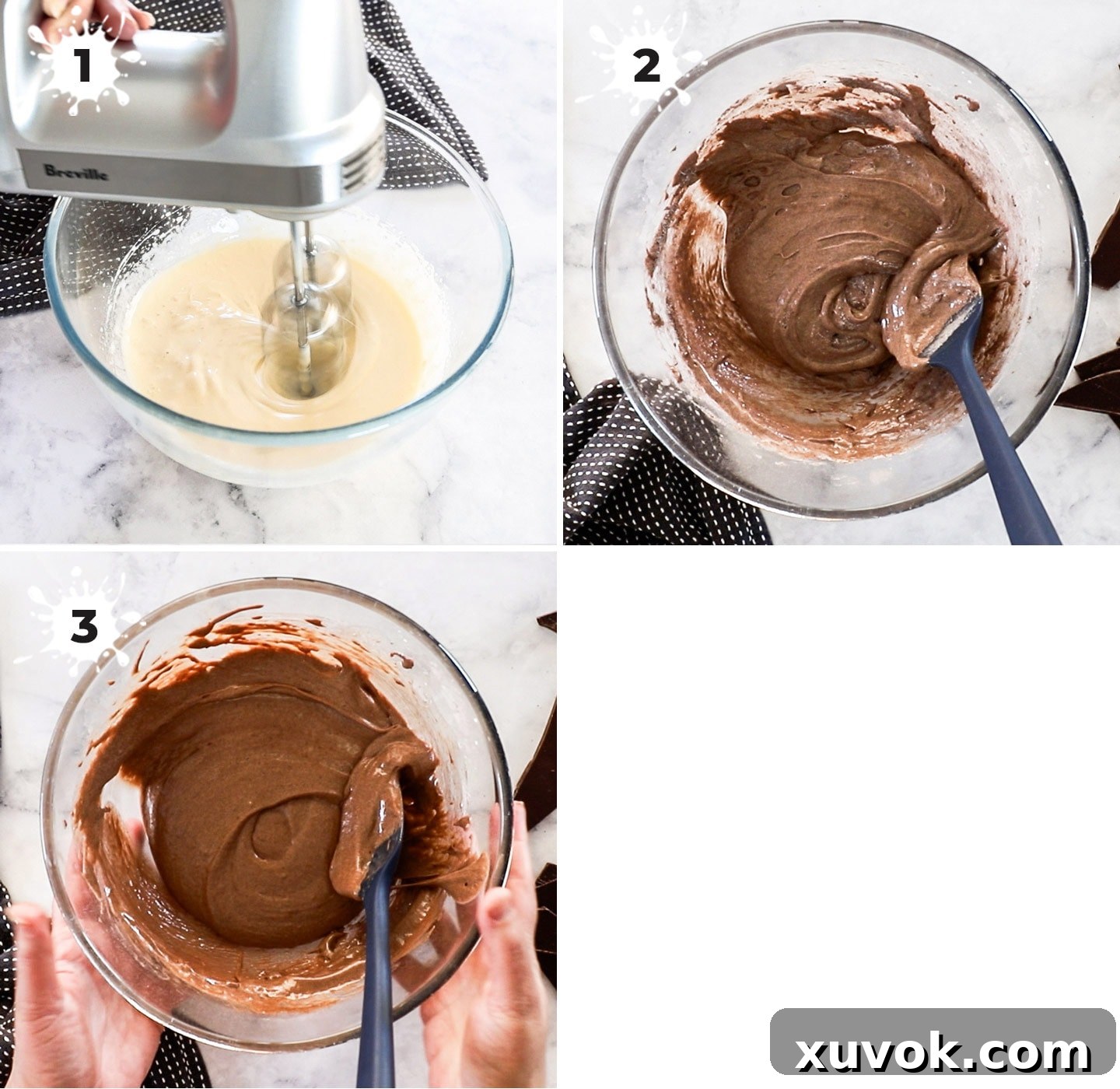
- Whip Eggs and Sugar: Begin by beating together the large eggs, granulated sugar, and vanilla extract until the mixture becomes super pale, thick, and incredibly fluffy. This process typically takes about 4-5 minutes with an electric mixer, and it’s a critical step for incorporating air into the batter, which contributes to the madeleines’ light texture and helps achieve their signature dome.
- Fold in Dry Ingredients: Gently sift the plain flour, Dutch cocoa powder, baking powder, and a pinch of fine sea salt over the whipped egg mixture. Using a spatula, carefully fold these dry ingredients into the wet mixture. The key here is to fold gently to avoid deflating all the precious air you’ve just incorporated. Overmixing will result in tough madeleines.
- Incorporate Melted Butter and Milk: Finally, add the melted unsalted butter and milk to the batter. Again, fold these in gently until just combined. Be careful not to overmix; a few streaks of flour or butter are better than a dense batter.
- Crucial Chilling Step: Now, cover the madeleine batter and chill it in the refrigerator for at least 2 hours, or even up to 48 hours. This chilling period is absolutely vital for developing the flavor, firming up the butter, and creating a temperature shock when the batter hits the hot oven. This shock is what helps produce that iconic, perfectly formed madeleine dome on top of each cake. Don’t skip this step for the best results!
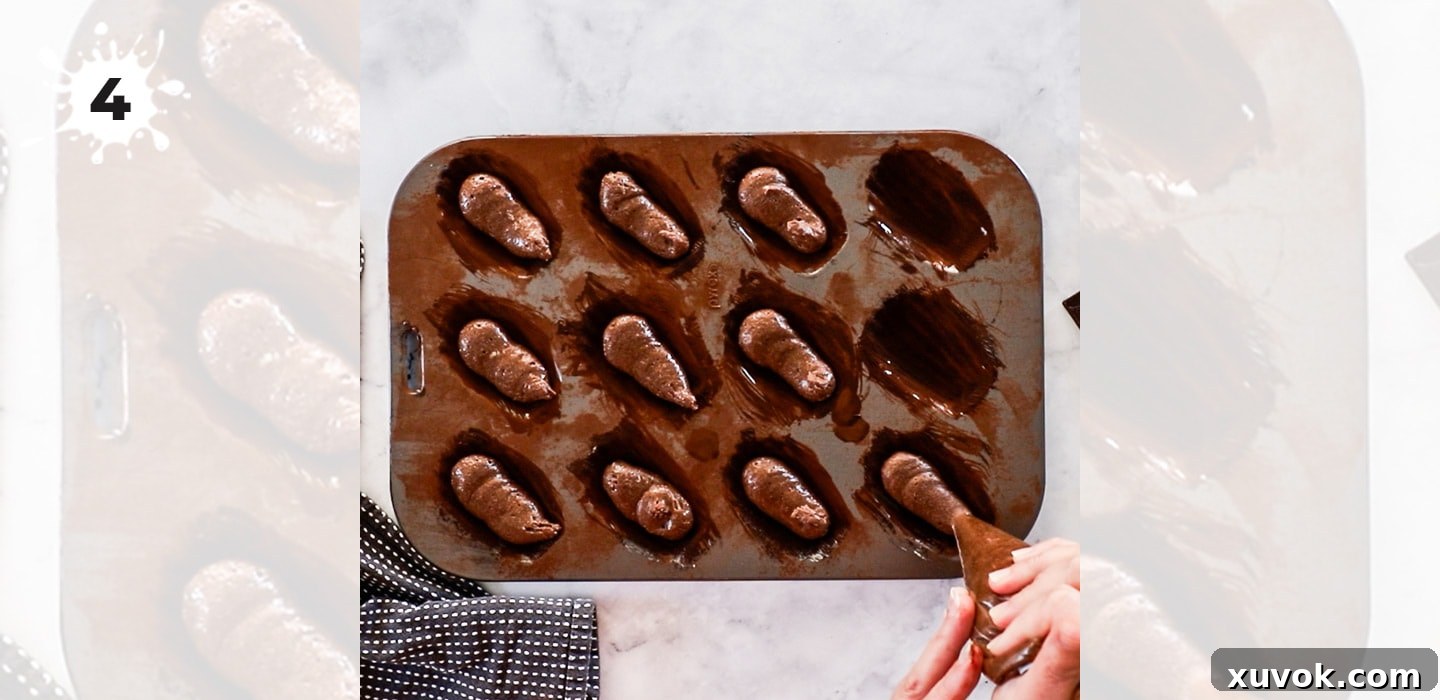
- Prepare the Madeleine Pan: While your batter is chilling, prepare your madeleine pan. Even if it’s non-stick, generously grease the depressions with just barely melted unsalted butter, ensuring every crevice is coated. Then, dust the pan thoroughly with cocoa powder, tapping out any excess. This step prevents sticking and contributes to a beautiful finish on your chocolate madeleines.
- Pipe the Batter: Transfer the chilled madeleine batter into a piping bag (or a sturdy ziplock bag with a corner snipped off). Pipe the batter into each mold, filling them about two-thirds to three-quarters full. Overfilling can lead to misshapen madeleines.
- Bake to Perfection: Preheat your oven to a relatively high temperature (around 200°C / 395°F). Place the filled madeleine pan into the hot oven and bake for a short duration, typically 6-8 minutes. French madeleines are ready when they have risen beautifully with a prominent dome, and when you gently press the top of the dome, it springs back. The edges should be lightly golden.
- Cooling: Carefully remove the madeleines from the oven. Let them cool in the pan for just a minute or two before gently tapping them out onto a wire rack to cool completely. Allowing them to cool slightly in the pan helps them firm up, making them less likely to break when transferred.
The Ultimate Chocolate Coating for Madeleines
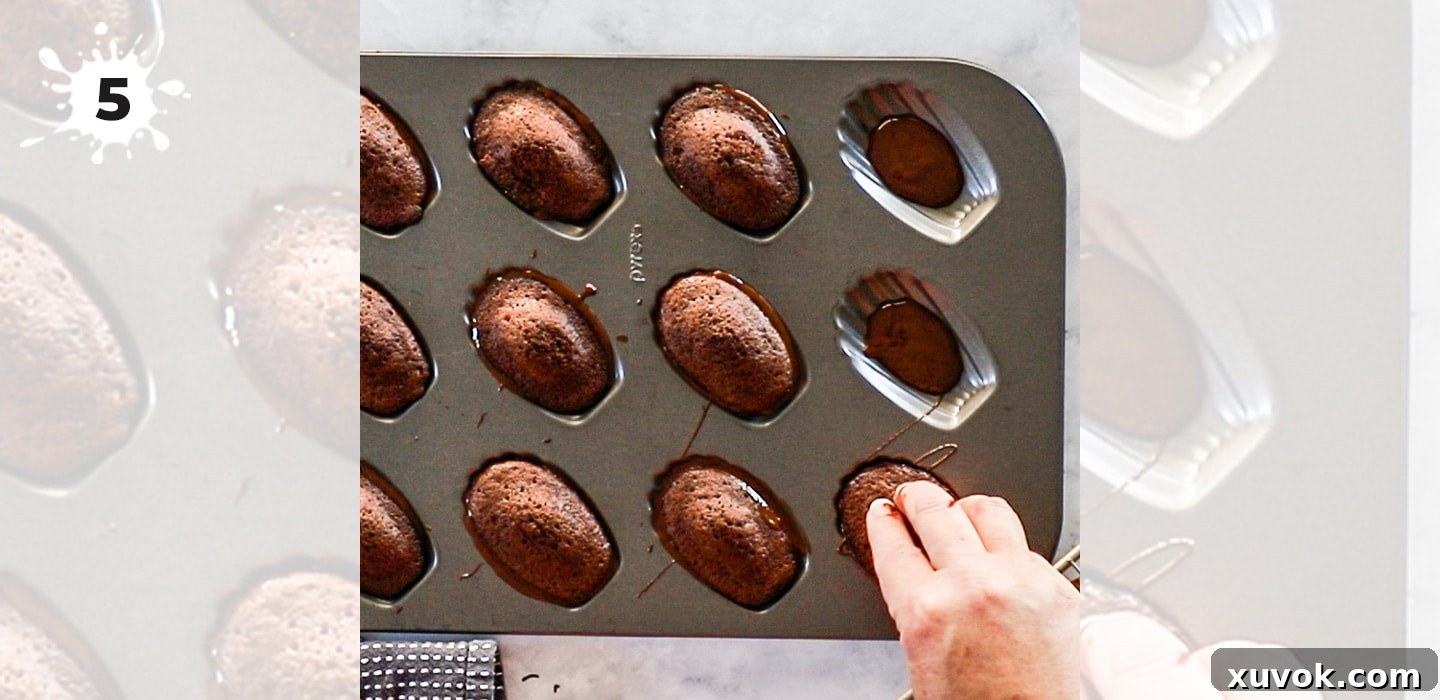
- Melt the Chocolate: If you’re going the extra mile to coat your chocolate madeleines for that irresistible finish, start by melting your dark or semi-sweet chocolate. You can do this in the microwave in 30-second intervals, stirring thoroughly between each, until the chocolate is about 90% melted. The residual heat will melt the rest. Then, stir in the vegetable or coconut oil until the chocolate is completely smooth and glossy. The oil helps to create a thinner, more manageable coating that sets with a beautiful shine and a satisfying snap.
- Two Coating Methods: You have a couple of options for coating. You can simply dip the madeleines directly into the melted chocolate, allowing any excess to drip off, then place them on parchment paper to set. For a truly professional and stunning presentation that perfectly preserves the madeleine’s shell shape, use the cleaned and dried madeleine pan. Pour about 2 teaspoons of melted chocolate into each mold. Then, gently press the baked madeleines, shell side down, into the chocolate-filled depressions. This method ensures the chocolate perfectly conforms to the elegant shell shape.
- Chill to Set: Once the madeleines are pressed into the chocolate (if using the pan method) or dipped, transfer them to the freezer for a quick chill – typically 5-10 minutes. This rapid cooling helps the chocolate coating set quickly and cleanly. Once firm, gently tap the pan on a clean work surface. The chocolate-coated madeleines should pop right out, revealing a beautiful, glossy shell on their underside.
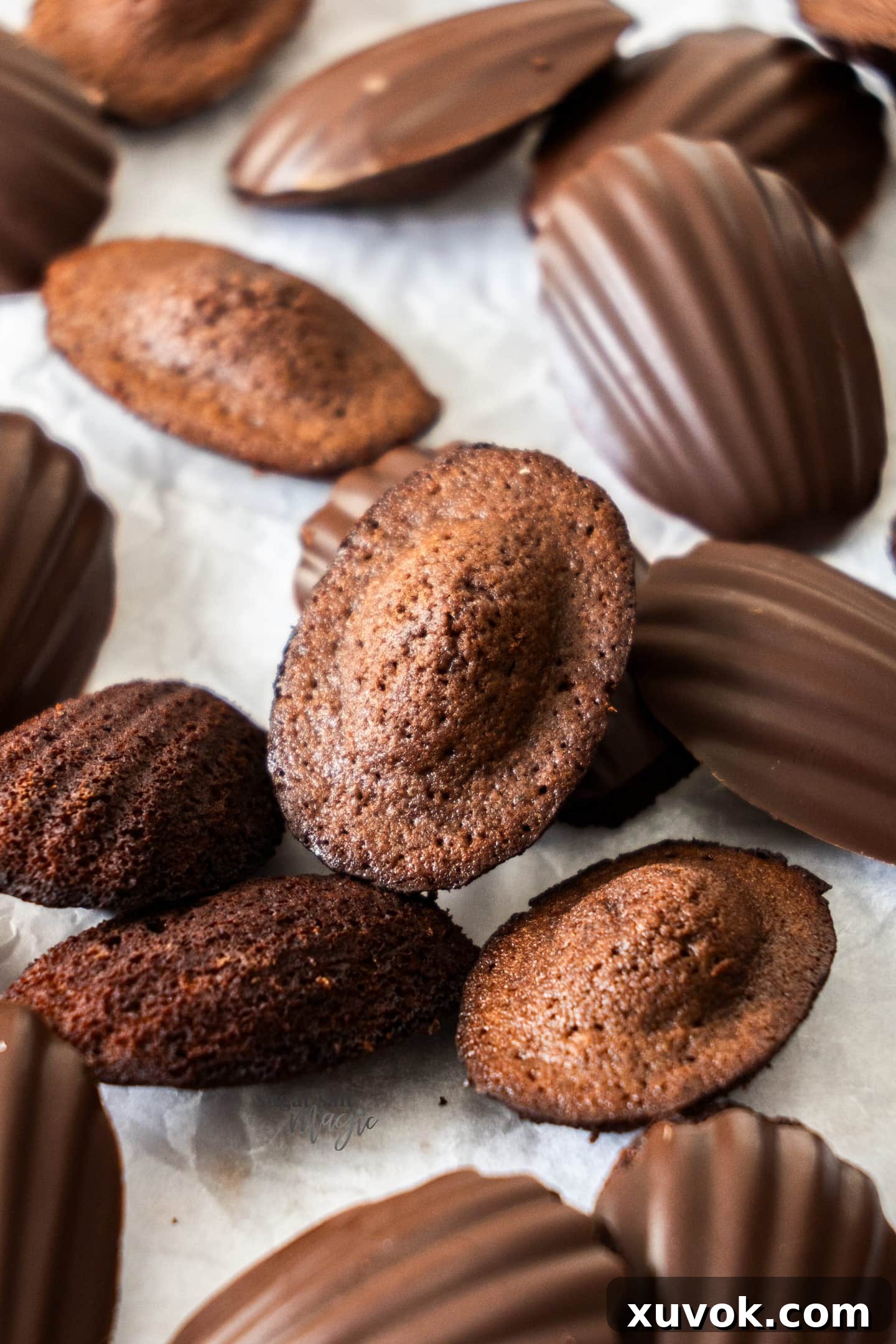
The classic shell shape of a madeleine, complete with its distinctive ridges and elegant curve, is achieved by using a special madeleine pan. Investing in one of these non-stick pans is highly recommended for anyone serious about making authentic French madeleines, ensuring perfect results every time.
Expert Tips and Tricks for Madeleine Mastery
- Always Use a Non-Stick Pan & Prepare It Well: For the absolute best results and easy release, ensure you use a high-quality non-stick madeleine pan. Even with a non-stick pan, I still strongly recommend thoroughly greasing and dusting your pan with cocoa powder (for chocolate madeleines) or flour (for classic madeleines). This extra step acts as an insurance policy, guaranteeing that your delicate madeleines will slide out effortlessly without any damage to their beautiful shape or crisp edges.
- Serve Madeleines Fresh and Warm: Madeleines are truly at their peak when eaten as soon as they’re baked, ideally while they’re still slightly warm from the oven. Their delicate texture and subtle aroma are most pronounced in this state. To achieve this fresh-baked perfection, take advantage of the batter’s excellent keeping qualities: you can actually prepare the madeleine batter up to two days in advance and store it, covered, in the refrigerator. Then, simply bake them off right before serving for a show-stopping treat that tastes incredibly fresh.
- Alternative Serving Suggestions for Fresh Madeleines: If you’re serving your madeleines straight from the oven and prefer not to coat them in chocolate, there are several delicious ways to enjoy them. You can absolutely eat them plain, appreciating their pure, delicate flavor. For a simple yet elegant touch, dust them generously with a cloud of icing sugar (powdered sugar). Another fantastic option is to create a quick chocolate ganache or a berry coulis for dipping, turning your madeleines into a delightful “fondue” experience.
- Cool Completely Before Coating: If you plan to coat your madeleines in a chocolate shell, as demonstrated in this recipe, it’s crucial to allow them to cool completely to room temperature first. Applying melted chocolate to warm madeleines will cause the chocolate to melt or seize, resulting in a messy, uneven, and dull coating that won’t set properly with that desirable snap. Patience here ensures a beautiful, professional finish.
- Don’t Overmix the Batter: Remember the genoise sponge base! The key to light and airy madeleines is incorporating air into the eggs and then carefully folding in the dry and wet ingredients. Overmixing at any stage after the eggs are whipped will develop the gluten in the flour, resulting in a tougher, chewier madeleine rather than the delicate, melt-in-your-mouth texture you desire.
Storage and Reheating Madeleines
While madeleines are undoubtedly best enjoyed fresh from the oven, they can be stored to enjoy later. For uncoated madeleines, store them in an airtight container in a cool, dry place like your pantry. If your madeleines are chocolate-coated, it’s best to store them in an airtight container in the refrigerator to prevent the chocolate from melting or becoming sticky. Generally, they will maintain their quality for 3-4 days. To revive their delicate texture and warmth, give them a quick zap in the microwave for about 8-9 seconds. This short burst of heat will fluff them up beautifully, bringing back much of their fresh-baked charm.
Frequently Asked Questions (FAQ’s) About Madeleines
Despite their small, cookie-like size and the ease with which one can pop them into their mouth, madeleines are definitively considered small French sponge cakes. Their batter, based on a genoise method, and their delicate, airy crumb structure classify them firmly in the cake category, distinguishing them from traditional cookies which are typically denser and chewier.
Traditional madeleines are primarily made from a genoise sponge base. This typically includes a combination of flour (usually all-purpose or plain flour), eggs, granulated sugar, melted butter, and a small amount of leavening agent like baking powder to help achieve their characteristic dome. In our chocolate madeleines recipe, we also incorporate Dutch cocoa powder for a rich chocolate flavor and dark color, along with a hint of vanilla extract and milk for added richness and texture.
Madeleines trace their origins back to the Lorraine region, located in the picturesque northeast of France. This historical sweet treat has been delighting palates for centuries, with its distinctive shell shape becoming a symbol of French patisserie.
For the ultimate madeleine experience, they should be eaten fresh from the oven, ideally while they are still slightly warm. Their delicate, moist interior and slightly crisp exterior are at their peak at this stage. They make a perfect elegant afternoon snack, traditionally served with a cup of tea or coffee, allowing you to fully appreciate their nuanced flavors and delicate texture. Many enjoy them simply dusted with powdered sugar, or, as in this recipe, with a luxurious chocolate coating.
While the iconic shell shape is a hallmark of the classic madeleine and is achieved with a dedicated madeleine pan, you can certainly bake delicious madeleines without one. An excellent alternative is to use a muffin pan or, for closer approximation in size, a mini muffin pan. When using these alternatives, avoid overfilling the cavities; you’ll want to use about a tablespoon of batter per regular muffin pan hole, or less for mini muffin pans, to ensure they bake quickly and retain a delicate texture. While they won’t have the classic shell, they will still be delightful sponge cakes.
Yes, madeleines can be successfully frozen. To freeze, allow them to cool completely, then place them in a single layer on a baking sheet to flash freeze until solid. Once frozen, transfer them to an airtight freezer-safe bag or container, separating layers with parchment paper. They can be stored for up to 1-2 months. When you’re ready to enjoy them, simply thaw them at room temperature, and for an extra touch of freshness, give them a quick 8-9 second zap in the microwave to warm and fluff them up again, bringing back their tender crumb.
More Delicious Recipes You’ll Love
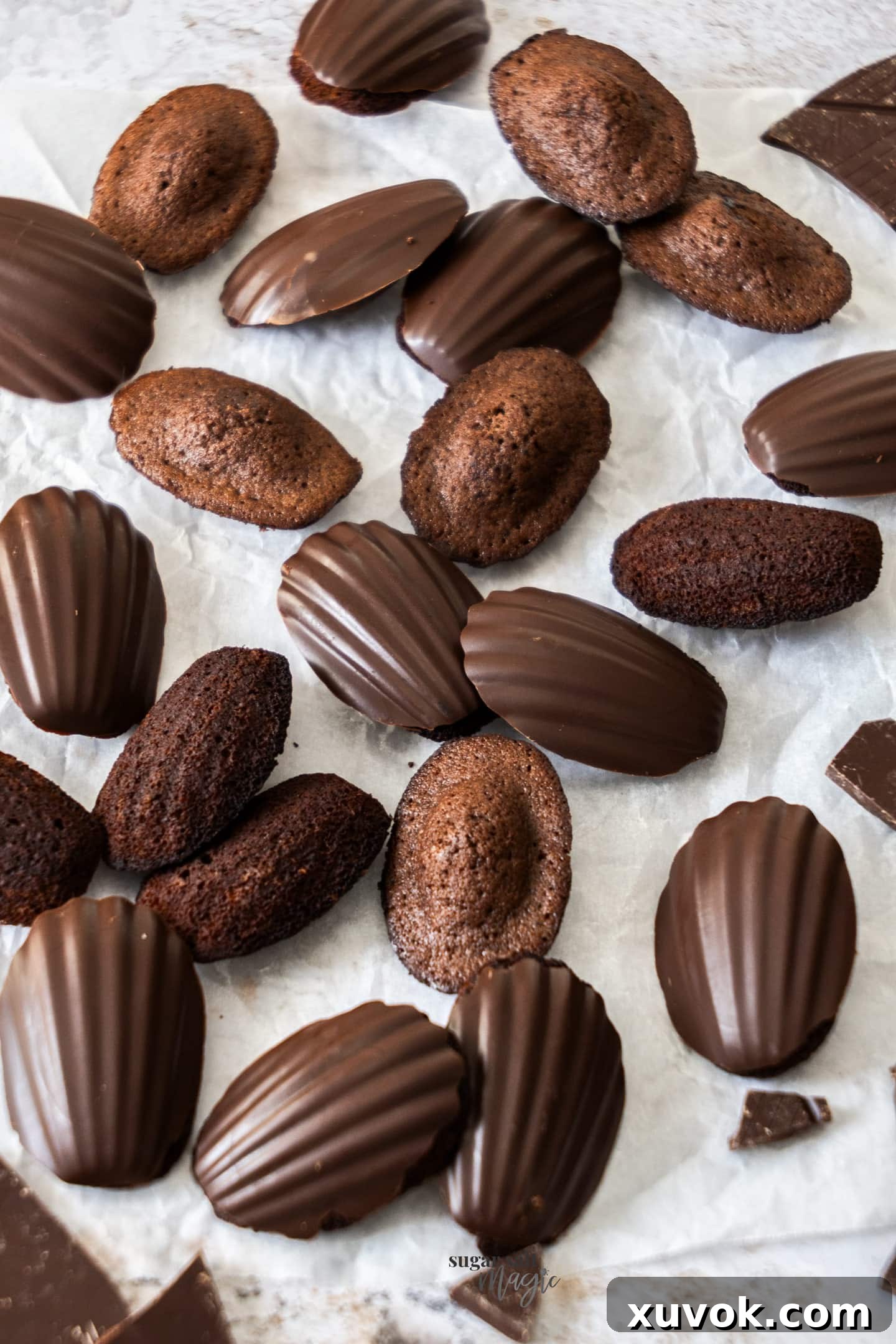
If you enjoyed these exquisite chocolate madeleines, you might love exploring more of our delightful dessert recipes. Perfect for special occasions, afternoon tea, or simply a sweet indulgence, these selections offer similar elegance and unforgettable flavors:
- Strawberry Chocolate Petit Fours: Bite-sized wonders combining the sweetness of strawberries with rich chocolate, ideal for elegant gatherings.
- Blueberry Chocolate Cake: A delightful pairing of juicy blueberries and rich chocolate in a moist, tender cake.
- Classic Strawberry Sponge Cake: A light and airy sponge cake layered with fresh strawberries and cream, perfect for spring and summer.
- Exotic Passionfruit Sponge Cake: A refreshing and tangy sponge cake infused with the tropical zest of passionfruit.
- Decadent Chocolate Meringues: Crispy on the outside, chewy on the inside, with a rich chocolate swirl – a truly impressive dessert.
Did you try this irresistible chocolate madeleine recipe?
Leaving a rating and comment below the recipe is so helpful and we love to hear from you!
Hungry for more? Subscribe to our newsletter for free, delicious recipes delivered straight to your inbox. Also, follow along with our culinary adventures on Facebook, Pinterest, and Instagram for daily inspiration and behind-the-scenes glimpses!
Chocolate Madeleines
Rate
Pin
Ingredients
- 95 g plain flour (all purpose flour) (¾ cup)
- 2 tablespoons Dutch cocoa powder (20g / ¾oz)
- 1 teaspoon baking powder
- ⅛ teaspoon fine sea salt
- 2 large eggs
- ½ cup white granulate sugar (100g / 3½oz)
- 1 teaspoon vanilla extract
- 113 g unsalted butter, melted + 3 teaspoons extra for greasing (4oz / 1 stick / ½ cup)
- 1 tablespoon milk (20ml)
TOPPING
- 200 g dark chocolate (semi-sweet chocolate) (7oz)
- 1 teaspoon vegetable oil or coconut oil
For best results, always weigh ingredients where a weight is provided
Equipment
-
2 12 hole madeleine pans Or just 1 and wash in between
-
Large mixing bowl and spatula
Instructions
-
If you haven’t already, melt the 113g of butter and set aside to cool slightly.
-
Sift the flour, cocoa powder, baking powder and salt together into a medium bowl and whisk briefly to combine them evenly.
-
In a large bowl, using an electric mixer (or the whisk attachment of a stand mixer) on high speed, beat the eggs, sugar and vanilla extract together for 4-5 minutes. Continue until the mixture is very pale in color, significantly thickened, and wonderfully fluffy. This step is crucial for incorporating air and creating a light sponge.
-
Gently sift the combined flour mixture over the whipped egg mixture. Using a spatula, carefully fold the dry ingredients into the wet batter until just combined. Be careful not to lose the air incorporated in the previous step.
-
Add the slightly cooled melted butter and milk to the batter. Fold in gently again until fully incorporated, taking care not to overmix. Overmixing will deflate the batter and lead to denser madeleines.
-
Cover the bowl with plastic wrap and chill the madeleine batter in the refrigerator for at least 2 hours. For optimal flavor development and dome formation, you can chill it for up to 48 hours. This chilling step is key to the distinctive madeleine hump.
-
Preheat your oven to 200°C (180°C fan forced) / 395°F. This high initial heat is essential for developing the dome.
-
Melt the remaining 3 teaspoons of butter until it’s just barely liquid. Generously brush this melted butter into all the depressions of your 2 x 12 hole madeleine pans (or one pan if you plan to bake in batches). Then, dust the greased pan with a light coating of cocoa powder, tapping out any excess. This ensures easy release and a beautiful finish.
-
Transfer the chilled madeleine batter to a piping bag (or a plastic ziplock bag with one corner snipped off). Pipe the batter into the prepared madeleine molds, filling each cavity about two-thirds to three-quarters full (approximately one tablespoon of batter per mold). Bake for 6-8 minutes, or until the madeleines are beautifully domed and spring back gently when lightly pressed.
-
Let the baked chocolate madeleines cool in their pans for about 2 minutes. Then, carefully tap them out onto a wire cooling rack to cool completely. If baking in batches, ensure you clean and thoroughly dry the madeleine pans before reusing for the next batch.
-
Prepare the chocolate coating: Melt the dark or semi-sweet chocolate in 30-second increments in the microwave, stirring well between each interval, until the chocolate is about 90% melted. Stir in the teaspoon of vegetable or coconut oil until the chocolate is completely smooth, glossy, and well combined.
-
For a perfectly shaped chocolate shell, pour 2 teaspoons of the melted chocolate into each cleaned madeleine mold. Gently press the baked madeleines, shell side down, into the chocolate-filled depressions. Transfer the pan to the freezer for about 5-10 minutes to allow the chocolate to set firmly. Once set, carefully pop the madeleines out of the molds. A gentle tap on a hard surface may help release them if needed.
-
Please take a moment to leave a comment & rating below. Your feedback is truly appreciated and incredibly helpful to us and other bakers!
Notes
- Tablespoons: Please note that I use a standard Australian 20ml tablespoon in my recipes, which is equivalent to 4 teaspoons. It’s always a good idea to check the capacity of your own measuring spoons to ensure accuracy in your baking.
- Experiment with Other Chocolates: While dark or semi-sweet chocolate is recommended for the coating, feel free to get creative! You can try other types of chocolate like smooth white chocolate, creamy milk chocolate, rich caramelized white chocolate, or even vibrant ruby chocolate for a unique twist. All of these options will taste absolutely amazing and add a different dimension to your chocolate madeleines.
- Nutrition Details: The provided nutritional information below is an approximate estimate only, calculated using an online calculator. Please keep in mind that the exact nutritional values can vary based on the specific brands of ingredients you use and any modifications made to the recipe.
EXPLORE MORE DELICIOUS CAKE RECIPES!
Calories from Fat 72