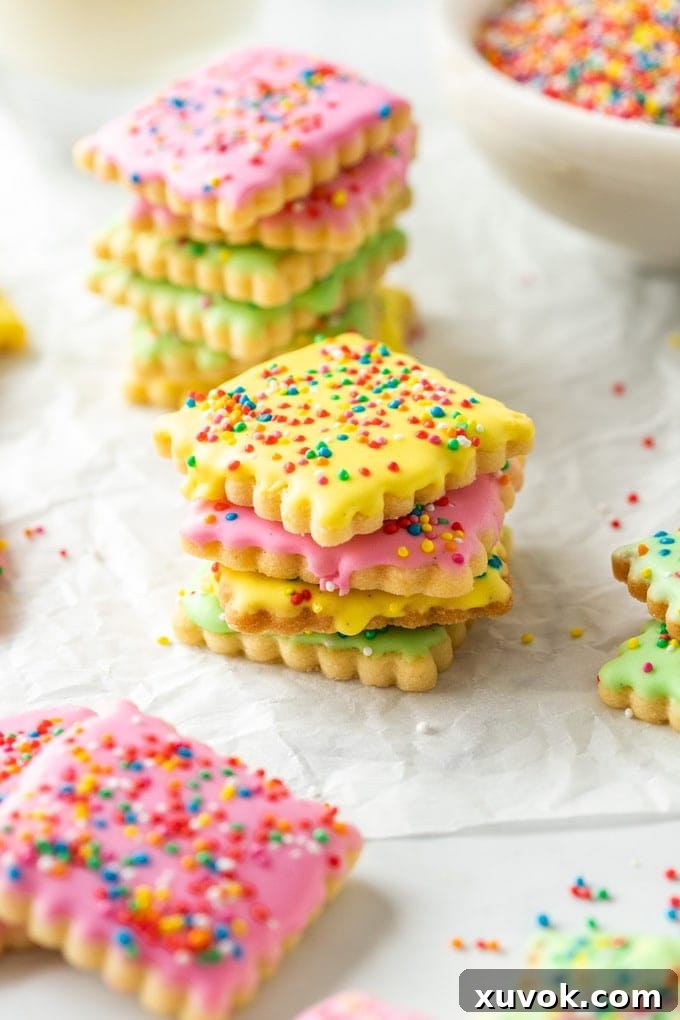
Welcome to the ultimate guide for creating the most delightful and **easy iced sugar cookies**! This comprehensive post is your one-stop resource for mastering both the art of baking **perfect homemade sugar cookies** and crafting the silkiest, best-tasting **royal icing** for all your decorating needs. Whether you dream of soft, melt-in-your-mouth delights or crisp, buttery bites, and whether you prefer intricate piping or simple dipping, we’ve got you covered.
These versatile vanilla sugar cookies are a true joy to bake and decorate. Unleash your creativity by experimenting with different icing techniques – perhaps try a stunning marble effect, similar to these Easter sugar cookies, or transform them into uniquely flavored cinnamon donut cookies. For a delightful twist, explore our chocolate sugar cookies. Most recently, this very adaptable cookie dough formed the base for our scrumptious Cinnamon roll cookies, proving just how much potential this recipe holds!
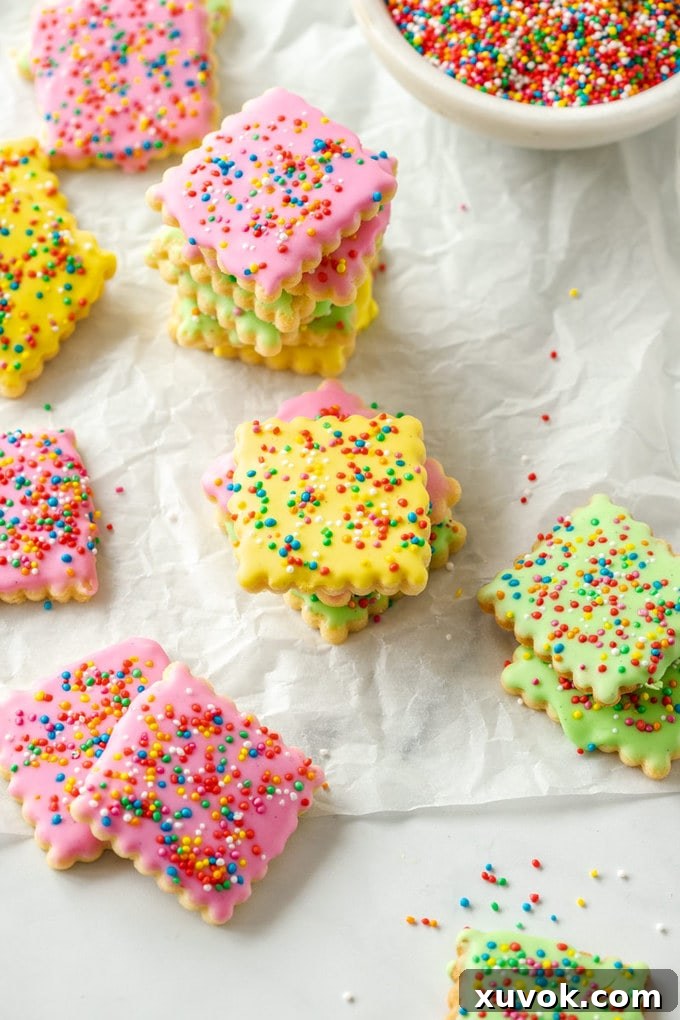
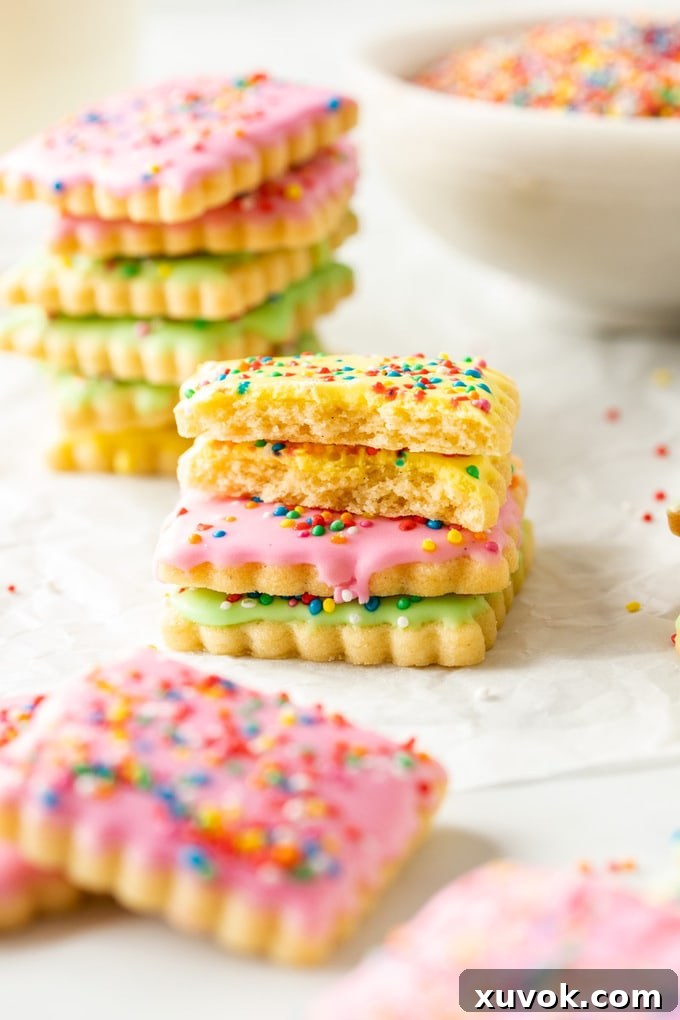
This isn’t just any recipe; it’s a celebration of the classic sugar cookie – rich, buttery, and perfectly sweet. They’re utterly delightful plain, but truly shine when adorned with our incredible royal icing. We understand that cookie preferences vary, which is why this recipe is designed to help you achieve your desired texture, whether you crave a soft, chewy cookie or one with a satisfying crispness.
The **royal icing** featured here is a game-changer. Not only does it taste absolutely fantastic, but its versatility makes it suitable for various decorating styles: precise outlining, smooth flooding, casual dipping, or elegant dolloping. Once you master this recipe, you’ll find yourself reaching for it again and again, confidently tackling any cookie decorating challenge.
If these cookies evoke a sense of nostalgia, you’re not alone! I specifically designed them to mimic my favorite childhood treat – the classic 100s and 1000s biscuits. Roll the dough thinly and bake them until golden brown to achieve that exact crisp texture and familiar, comforting flavor of the originals. These easy iced sugar cookies are truly a taste of happy memories, elevated with homemade goodness.
Crafting the Perfect Sugar Cookies: Your Foundation for Flavor
The journey to **exquisite iced sugar cookies** begins with a flawless base. This classic sugar cookie recipe delivers exactly what you’re looking for: **soft, intensely buttery, and melt-in-your-mouth cookies**. What makes this recipe truly exceptional is its inherent versatility. Even if you “accidentally” bake them a little longer, the result is a gloriously golden cookie with a deeper, richer browned butter flavor that is equally delicious. This forgiveness in baking makes it perfect for both beginners and seasoned bakers alike.
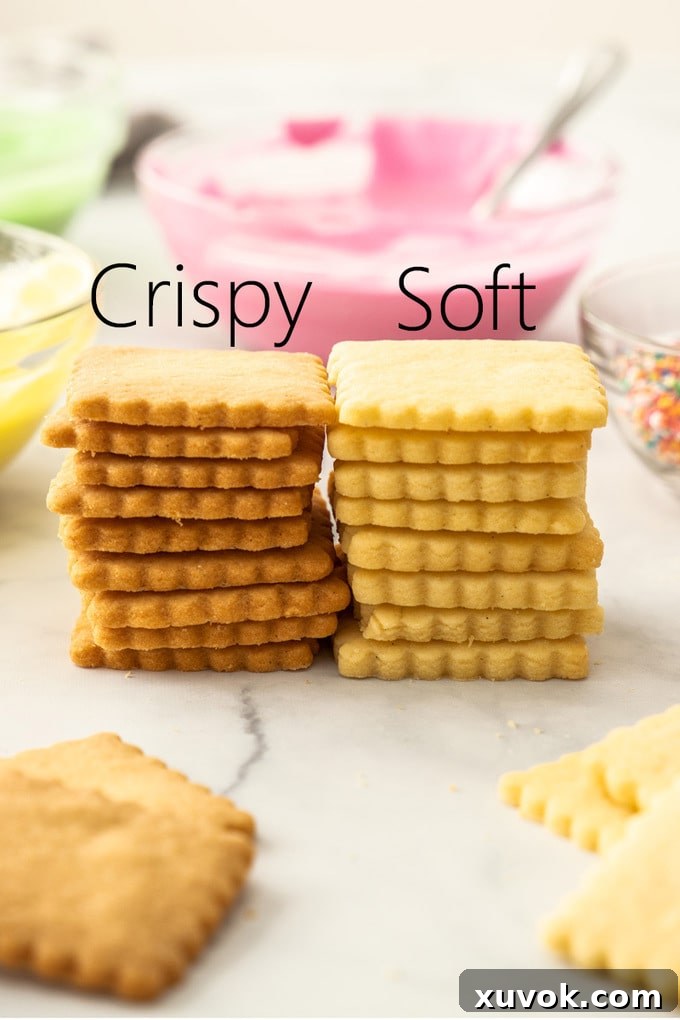
The beauty of this particular recipe lies in its adaptability to your personal texture preference. You are the master of your cookie’s destiny! Here’s how you can achieve your ideal sugar cookie:
- 9-10 minutes of baking: This timeframe will yield a pale, wonderfully soft cookie that truly melts in your mouth, offering a delicate texture.
- 12-14 minutes of baking: For those who love a bit more structure, baking for this duration results in a beautiful golden, crisp cookie. These boast a more pronounced, rich browned butter flavor that adds another layer of complexity.
Experiment with these timings to discover your perfect sugar cookie! Remember, every oven is different, so keep a close eye on your cookies during the last few minutes of baking to ensure they reach your desired doneness.
Step-by-Step Guide to Baking the Best Sugar Cookies
Creating these delightful **vanilla sugar cookies** is a straightforward process that yields impressive results. Follow these simple steps for success:
- Begin by creaming together your softened butter and granulated sugar. Beat them with an electric mixer for a few minutes until the mixture becomes visibly light, pale, and fluffy. This step incorporates air, contributing to the cookies’ tender texture.
- Next, incorporate the large egg and the fragrant vanilla extract. Continue to beat until these wet ingredients are fully combined and smooth, scraping down the sides of the bowl as needed to ensure everything is evenly mixed.
- In a separate bowl, whisk together the dry ingredients: all-purpose flour and baking powder. Gradually add this combined dry mixture to the wet ingredients, mixing on low speed until the dough just comes together. Be careful not to overmix, which can lead to tough cookies.
- Once the dough is formed, divide it into two equal portions. Gently shape each portion into a flat disk, about 1 inch thick. Wrap these disks tightly in plastic wrap and chill them in the refrigerator until they are firm, typically about 2 hours. This chilling step is crucial for flavor development and preventing the cookies from spreading too much during baking.
- After chilling, lightly flour your work surface and the top of one dough disk. Roll the chilled dough out evenly to a thickness between 4-6 mm (approximately ¼ inch). Aim for consistent thickness across the entire sheet of dough for uniform baking.
- Use your favorite cookie cutters to cut out various shapes. Carefully transfer these cut-out cookies to baking trays lined with parchment paper.
- If your kitchen is particularly warm, or if the dough has softened significantly during rolling, it’s a good idea to chill the cut cookies on the baking trays for an additional 10 minutes before baking. This extra chill helps them maintain their sharp shapes.
- Bake according to the recipe instructions for your desired texture. Once baked, allow the cookies to cool on the baking trays for a few minutes to set before carefully transferring them to a wire rack to cool completely. This prevents breakage and ensures even cooling.
Expert Tips for Flawless Sugar Cookies
Achieving bakery-quality **homemade sugar cookies** is easier than you think with these professional tips:
- Butter Consistency is Key: For the perfect dough, your butter should be softened but not greasy or melted. It should be pliable enough that a gentle press from your finger leaves a slight indent, but your finger shouldn’t sink straight through. Overly soft or greasy butter can lead to flat, oily cookies.
- Scrape Down the Bowl: During the creaming and mixing stages, make it a habit to stop your mixer and scrape down the sides and bottom of the mixing bowl. This simple step ensures all ingredients are thoroughly incorporated, leading to a homogenous dough and evenly textured cookies.
- Embrace a Slightly Sticky Dough: Don’t be alarmed if your dough feels a little sticky straight out of the mixer. This is a positive sign! It indicates a higher ratio of wet to dry ingredients, which is essential for these cookies to develop their rich, buttery flavor and tender crumb. The chilling process will resolve the stickiness.
- Chilling is Non-Negotiable: While it adds time, chilling the dough is absolutely necessary for **perfect sugar cookies** that hold their shape beautifully. This allows the butter to firm up, preventing excessive spreading in the oven, and gives the flour time to fully hydrate, resulting in a more tender cookie. A chilled dough is also significantly easier to roll and cut, making the overall process smoother and more enjoyable. Plan ahead, and you’ll find these cookies incredibly simple to make.
- Mindful Flour Dusting: When rolling out your chilled dough, use just enough flour on your work surface and rolling pin to prevent sticking, but avoid using too much. Excessive flour can dry out the dough, making your cookies tough and diluting that delicious buttery flavor. A light dusting is all you need.
- Adjust Baking Time for Thickness: The baking time for your cookies will largely depend on their thickness and, of course, the calibration of your individual oven. Thicker cookies (around 6mm or ¼ inch) will naturally be softer after the same baking duration compared to thinner cookies (around 4mm). Keep an eye on the edges for doneness cues.
- The Optional Second Chill: This extra chilling step isn’t always essential but can be very beneficial, especially if your kitchen is warm. If the dough becomes too soft and pliable while you’re rolling and cutting, chilling the cut cookies on the baking tray for 10 minutes before baking will help them maintain their precise shapes, ensuring beautifully defined edges.
Unveiling the Best-Tasting Royal Icing for Sugar Cookies
Once you’ve perfected your sugar cookie base, it’s time to elevate them with the crowning glory: the **best-tasting royal icing**. My recipe for royal icing is meticulously designed to be incredibly versatile, adapting to a multitude of cookie decorating styles simply by adjusting its consistency with water. A key ingredient in my recipe is meringue powder, which offers a stable, reliable icing without the need for raw egg whites, making it a safer and easier option for home bakers. Meringue powder is widely available, often found in the baking aisle of larger supermarkets or specialized cake decorating stores.
For my Australian readers: I’ve personally tested popular brands like Pavlova Magic (the one in the distinctive little plastic egg) and Queen brand Meringue Mix in this recipe. Both perform beautifully, producing excellent results, and are conveniently accessible in most Australian supermarkets.
This single royal icing recipe can be effortlessly manipulated to achieve the perfect consistency for outlining, flooding, dipping, and even dolloping, making it truly the only icing recipe you’ll ever need for your **decorated sugar cookies**.
- Outlining Consistency: This is a stiffer icing, firm enough to hold its shape without spreading, yet thin enough to flow smoothly through a small piping tip (like a #1 or #2). You’ll use this to create a defined border around the edge of your cookie, acting as a dam for thinner icing.
- Flooding Consistency: Thinner than outlining icing, this consistency is perfect for filling in the outlined areas. To test for flood consistency, give your icing a good stir and then drag a spoon through it. If the line you’ve created disappears and the icing settles back into itself within 10-12 seconds, you’ve hit the sweet spot.
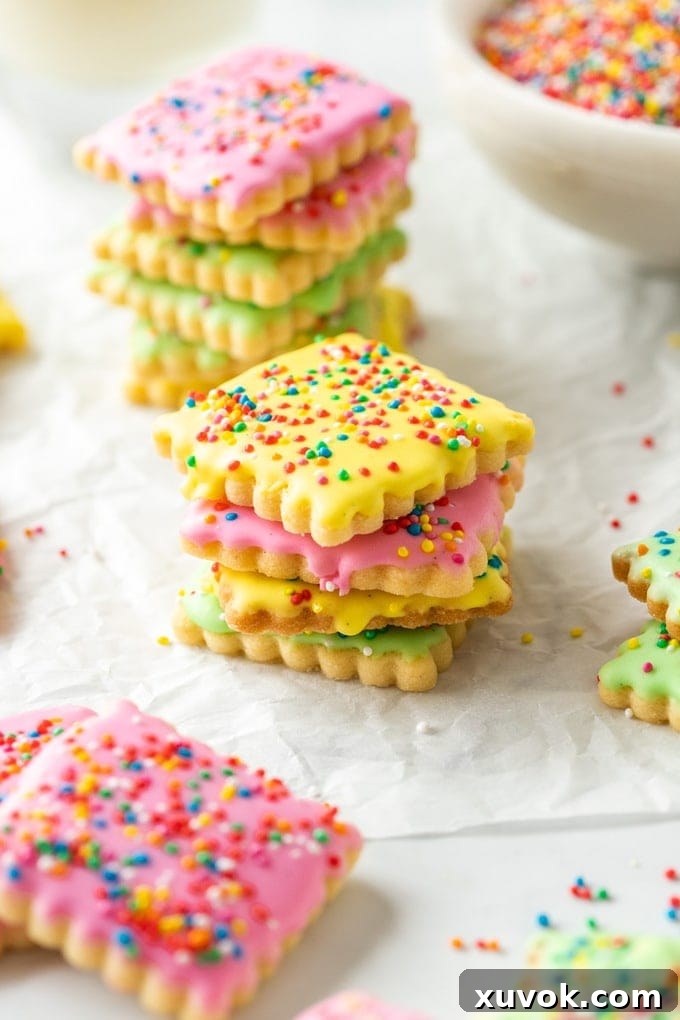
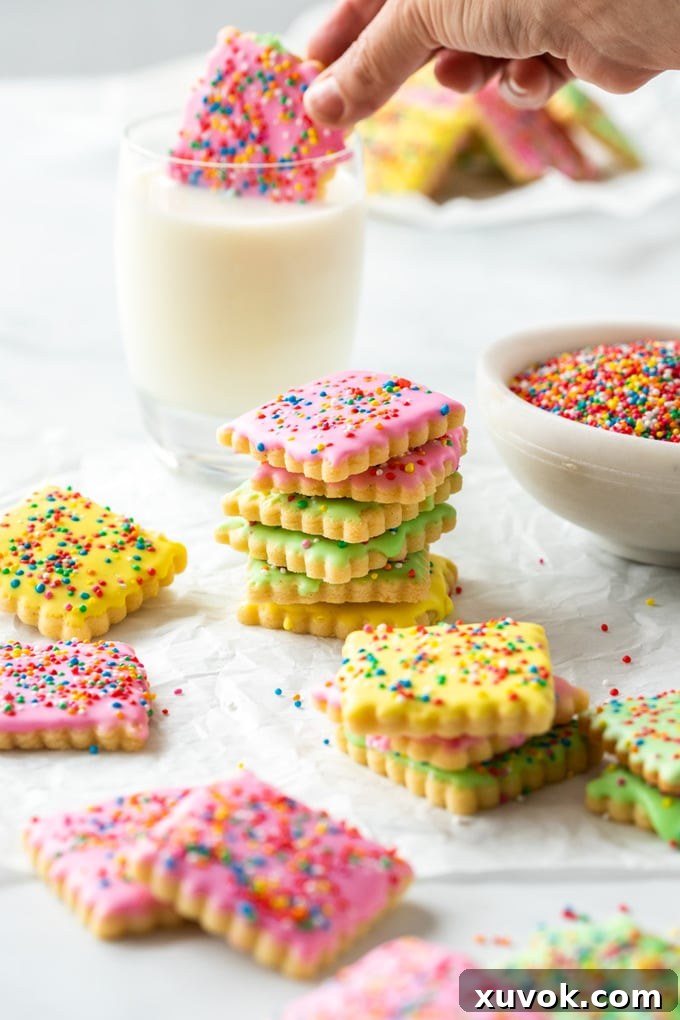
- Dipping Consistency: For a quick, rustic, and charming finish, dipping is ideal. The cookies pictured in this post were iced using this method. This icing is slightly thinner than flood consistency. After a good stir, it should settle back into itself within 8-10 seconds. When you dip a cookie, it coats beautifully, and any slight drips down the sides add to its homemade appeal.
- Dolloping Consistency (15-17 Second Icing): While not a formal technical term, “dolloping” describes an icing consistency that’s spoonable and will self-level to a smooth finish, but won’t flatten out completely or run off the cookie. Sometimes referred to as “20-second icing,” I find a 15-17 second return to smooth works best. This consistency is fantastic for creating dimensional elements or decorative blobs on top of a base layer without them losing their shape or spilling over the edges.
Simple Steps to Crafting Perfect Royal Icing for Cookie Decorating
Making this incredible **royal icing for cookie decorating** is surprisingly straightforward. Follow these instructions for a smooth and delicious result:
- In the bowl of a stand mixer fitted with the paddle attachment, or simply in a large bowl using an electric handheld beater, combine all the royal icing ingredients: sifted icing sugar, water, meringue powder, cream of tartar, and vanilla extract.
- Start mixing on low speed until all the ingredients are fully incorporated and the mixture is well combined. Once combined, increase the speed to high and beat for approximately 1 minute. This helps to activate the meringue powder and create a stable icing.
- At this stage, you have a basic, thick royal icing. Now, it’s time to adjust the consistency. Gradually add water, ½ to 1 teaspoon at a time, mixing well after each addition, until you reach your desired consistency for outlining, flooding, dipping, or dolloping. Refer to the detailed consistency guide above for reference.
- If you plan to use multiple colors, divide the icing into small bowls. Add just one drop of your desired gel food coloring to each bowl and mix thoroughly. For a stunning effect, you can also try this really cool marbling technique.
- Once your icing is colored and at the correct consistency, you’re ready to decorate! Dip the cooled cookies (right side down) into the icing, ensuring the top surface is fully coated. Gently lift the cookie and carefully scrape a little of the excess icing off against the edge of the bowl.
- Immediately flip the cookie, icing side up, and place it on a wire rack set over a baking tray (to catch any drips). To help the icing settle and create a smooth, even surface, lift the cookie just about 1 cm or so and gently drop it a couple of times.
- Work in batches of 3-4 cookies, and immediately sprinkle with hundreds and thousands or your favorite sprinkles before the icing starts to set. The sprinkles will adhere best to wet icing. Allow the decorated cookies to set completely. While they can be eaten sooner, they will take 24-48 hours to fully harden.
Mastering Royal Icing: Advanced Tips for Decorators
- Achieving the Right Consistency: This is arguably the trickiest part of royal icing, but also the most rewarding to master. Factors like the precise measurement of sugar, the humidity in your environment, and even your altitude can influence the ideal amount of water needed. Don’t rely solely on exact measurements; instead, eyeball the consistency carefully, referring back to the guide above. Add water cautiously, in ½ to 1 teaspoon increments, mixing thoroughly each time. If your icing becomes too thin, you can always add a little more sifted powdered sugar to thicken it back up. Practice makes perfect!
- A Starting Point for Dip Consistency: As a helpful benchmark, for a perfect dipping consistency (settling in 8-10 seconds), I typically add approximately 6 extra teaspoons of water to the base royal icing recipe provided. Use this as a guide and adjust as necessary for your specific conditions.
- Combatting Quick Drying: Royal icing begins to dry out almost immediately upon exposure to air. To maintain its workability, always give your icing a good, vigorous stir just before you use it, ensuring it’s at the correct consistency. When not actively using it, keep your icing covered tightly with plastic wrap directly touching the surface, or store it in an airtight container.
- Protecting Piping Bag Tips: If you’re using piping bags, prevent icing from hardening inside the tips by covering them with a piece of plastic wrap when you take a break from decorating. This simple trick will save you from clogged tips and frustration! For detailed work, disposable piping bags are a great option for easy cleanup.
Exciting Variations for Your Iced Sugar Cookies
One of the joys of baking these **easy iced sugar cookies** is their incredible adaptability! Don’t be afraid to experiment and make them your own:
Flavoring the Dough: You can effortlessly change the flavor profile of your cookies. During the initial mixing stage, consider adding a little finely grated lemon or orange zest for a bright, citrusy note. Alternatively, swap out some or all of the vanilla extract for other flavorings like almond, peppermint, or even a touch of rum extract. Remember that concentrated flavorings, such as peppermint, can be much stronger than vanilla, so add them sparingly, just a drop or two at a time, until you reach your desired intensity.
Beyond flavor, these cookies are a fantastic opportunity for interactive fun, especially with children. Get the kids involved in the decorating process! They’ll love choosing their favorite colors for the icing and scattering an array of vibrant sprinkles to customize each cookie. The beauty of the dipping method, in particular, is that it requires no complex piping skills, making it accessible and enjoyable for everyone, regardless of age or decorating experience. Let their imaginations run wild and create a rainbow of delicious, personalized treats!
Optimal Storing Instructions for Sugar Cookies and Royal Icing
Proper storage is essential to keep your **homemade sugar cookies** and **royal icing** fresh and delicious for as long as possible:
Storing Royal Icing: Royal icing is remarkably resilient when stored correctly. Transfer any leftover icing into an airtight container or a piping bag with the tip tightly sealed with plastic wrap. Store it in the refrigerator for up to 3-4 weeks. When you’re ready to use it again, allow the icing to come to room temperature. You’ll likely need to give it a good stir, and you may need to add a small amount of water (¼ to ½ teaspoon at a time) to restore its desired consistency, as it can thicken slightly during storage.
Storing Decorated Sugar Cookies: Once your sugar cookies are decorated and the royal icing has fully set (this can take 12-24 hours depending on humidity), store them in an airtight container at room temperature. They will remain wonderfully fresh for 7-10 days. If your home is particularly warm, or if you prefer, you can store them in the refrigerator, but allow them to come back to room temperature before serving for the best flavor and texture.
Freezing Sugar Cookie Dough: This recipe’s sugar cookie dough freezes beautifully, offering a convenient make-ahead option. You have two main choices for freezing:
- As a Disk: Wrap the dough disks (after the initial chill) tightly in plastic wrap, then place them in an airtight freezer-safe bag or container. Thaw overnight in the refrigerator before rolling and baking.
- As a Log (Slice-and-Bake): Shape the dough into a log before wrapping tightly in plastic wrap, then place in a freezer-safe bag or container. You can then slice and bake directly from the freezer, adding a few extra minutes to the baking time.
For both methods, ensure the dough is well-wrapped to prevent freezer burn. The dough can be frozen for up to 3 months.
Freezing Baked (Undecorated) Cookies: If you’re short on time, you can also bake the cookies ahead of time without decorating them. Once completely cooled, place the undecorated cookies in an airtight freezer-safe container, separated by parchment paper if stacking. They can be frozen for up to 2-3 months. Thaw them at room temperature before decorating or serving.
Click here to Pin this recipe for later!
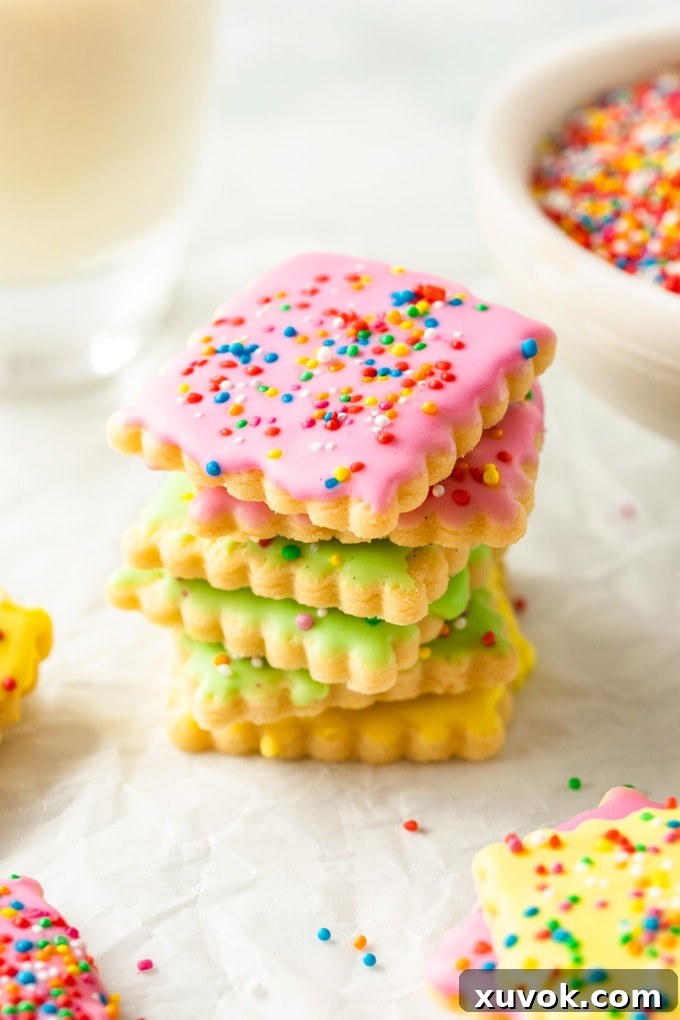
Now that you’re equipped with all the essential information – from perfecting your **homemade vanilla sugar cookies** to mastering the art of **gorgeous royal icing** – there’s nothing holding you back! These delightful treats are incredibly versatile and **perfect for any festive gathering**, whether it’s an Easter celebration, a joyous Christmas party, or any special occasion in between. Get baking and enjoy the magic of these easy iced sugar cookies!
More Cookie Recipes You’ll Love
- Chocolate Sugar Cookies
- Almond Sugar Cookies
- Lemon Curd Cookies
- Easy Easter Sugar Cookies
- Donut Cookies
- Cinnamon Roll Cookies

Easy Iced Sugar Cookies with Royal Icing
Rate
Pin
Ingredients
FOR THE EASY SUGAR COOKIES
- 225 g unsalted butter, softened (1 cup / 2 sticks)
- 1 cup caster (superfine) sugar (200g)
- 1 large egg, room temp
- 1 ½ teaspoons vanilla extract
- 355 g plain (all-purp) flour (2 ¾ cups)
- ½ teaspoon baking powder
FOR THE ROYAL ICING
- 4 ¼ cups icing (powdered) sugar (630g)
- 4 tablespoons water (notes 1)
- ½ teaspoon cream of tartar
- 2 tablespoons meringue powder (notes 1)
- 1 teaspoon vanilla extract
For best results, always weigh ingredients where a weight is provided
Equipment
-
stand mixer or electric handheld beater
-
cookie cutters
-
Rolling Pin
-
cookie sheets
Instructions
FOR THE COOKIES
-
Stand mixer with paddle attachment recommended but not absolutely necessary. Beat the butter and sugar for 2-3 minutes on med-high until lightened and fluffy. Scrape down the sides a couple of times during the process.
-
Add the egg and vanilla and beat to combine.
-
In a small bowl whisk together the flour and baking powder until well combined, then add to the butter mix. Beat on low, until all incorporated.
-
Take the dough out of the mixer, divide in two and shape into disks, 1 inch thick, then wrap in plastic wrap and chill for at least 2 hours (you can also freeze it at this stage – see notes in post).
-
Preheat the oven to 180C / 340F / 160C fan forced. Line two large cookie sheets with baking paper.
-
Place the dough on a lightly floured surface and sprinkle a little flour over the top.
-
Roll the dough out to about 4-6mm thick (up to ¼ inch), adding a little flour only if required to stop it sticking, then use cookie cutters to cut out shapes.
-
Transfer the shapes to the baking trays and chill for a further 10 minutes before baking: 9-10 minutes until they look dry and have slight colour change on the edges for soft cookies or 14-16 minutes and until golden for very crisp cookies.
FOR THE ROYAL ICING
-
Sift the icing sugar into the bowl of a stand mixer with paddle attached.
-
Add the water, meringue powder, cream of tartar and vanilla.
-
Mix on low until everything is combined.
-
Turn it up to high and beat for about a minute.
-
Now you have a basic royal icing. Add water ½ to 1 teaspoon at a time to get the consistency you like. Stiff but pipable for outline, settling in 8-10 seconds for dip icing, settling in 10-12 seconds for flood icing.
-
Divide the icing among small bowls and add 1 drop of food colouring to each. Mix well.
-
Place a wire cooking rack over a tray lined with baking paper.
-
Dip the top of each cookie into the icing, scrape a little on the side of the bowl, then turn, icing side up, onto the wire rack. Lift and drop the cookie gently (only about 1cm) to smooth out and level the surface of the icing.
-
Do 3 at a time, then sprinkle the top with sprinkles. Repeat with the remaining cookies.
Notes
- I use a standard Australian 20ml tablespoon
- All ovens vary – always test for doneness 3-5 minutes before the recipe suggests
- For best results, you should always weigh ingredients like flour and sugar. Kitchen scales are relatively cheap but if you can’t weigh the ingredients, use the spoon and level method (don’t scoop).
- The butter should be just softened enough that your finger will make a slight dent when you press on it – not so soft that your finger goes through or that it’s greasy.
- If you are doing outlines, allow them to set for 20-30 minutes before proceeding with flooding.
MORE COOKIE RECIPES!