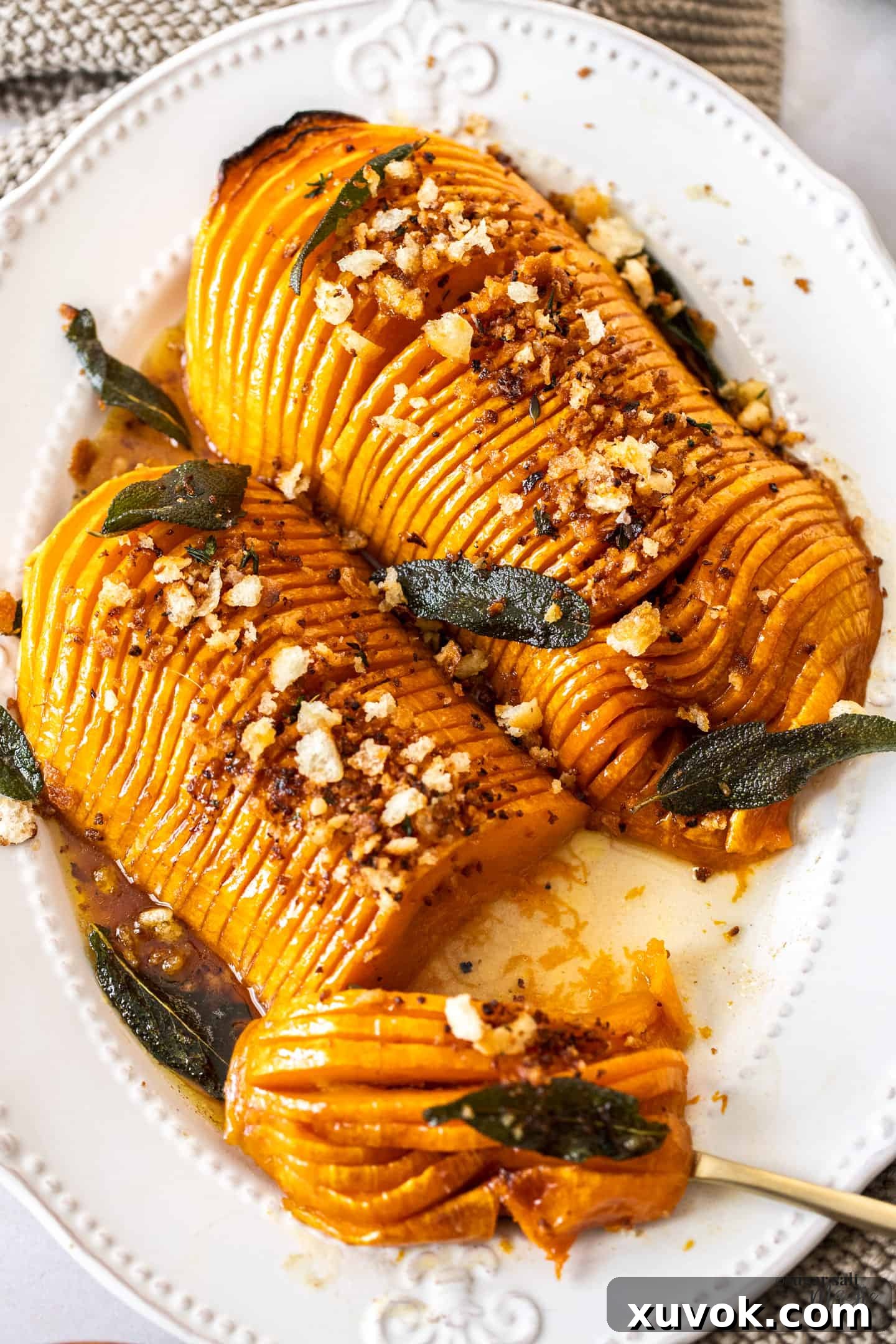
Prepare to elevate your culinary game with this truly exceptional Hasselback Butternut Squash. Marrying soft, naturally sweet roasted butternut with a sticky maple-balsamic glaze and a topping of crunchy, savory herb breadcrumbs, this dish isn’t just a side; it’s a showstopper. Whether gracing your festive holiday table or complementing your next comforting roast dinner, its harmonious blend of textures and flavors promises to captivate every palate.
Looking for more inspired side dishes to complete your meals? Explore these delightful options: our vibrant Mustard Maple Roasted Carrots, the comforting Easy Cheesy Potato Bake, or the refreshing Pumpkin Quinoa Salad. Each offers a unique way to enhance your dining experience.
Why This Hasselback Butternut Squash Will Become Your New Favorite
Butternut squash is a culinary marvel, revered for its natural sweetness and incredible versatility. In our home, it makes frequent appearances, often transforming into a hearty butternut soup or simply roasted to perfection. However, this hasselback preparation elevates the humble butternut to an entirely new level, making it truly special.
This dish boasts an undeniable elegance that makes it impressive enough for your most cherished holiday gatherings, be it Thanksgiving, Christmas, or any festive occasion. Yet, its straightforward preparation means it’s also perfectly suited for a relaxed weekend roast dinner, offering gourmet appeal without the fuss. It strikes that coveted balance between sophisticated presentation and comforting flavors.
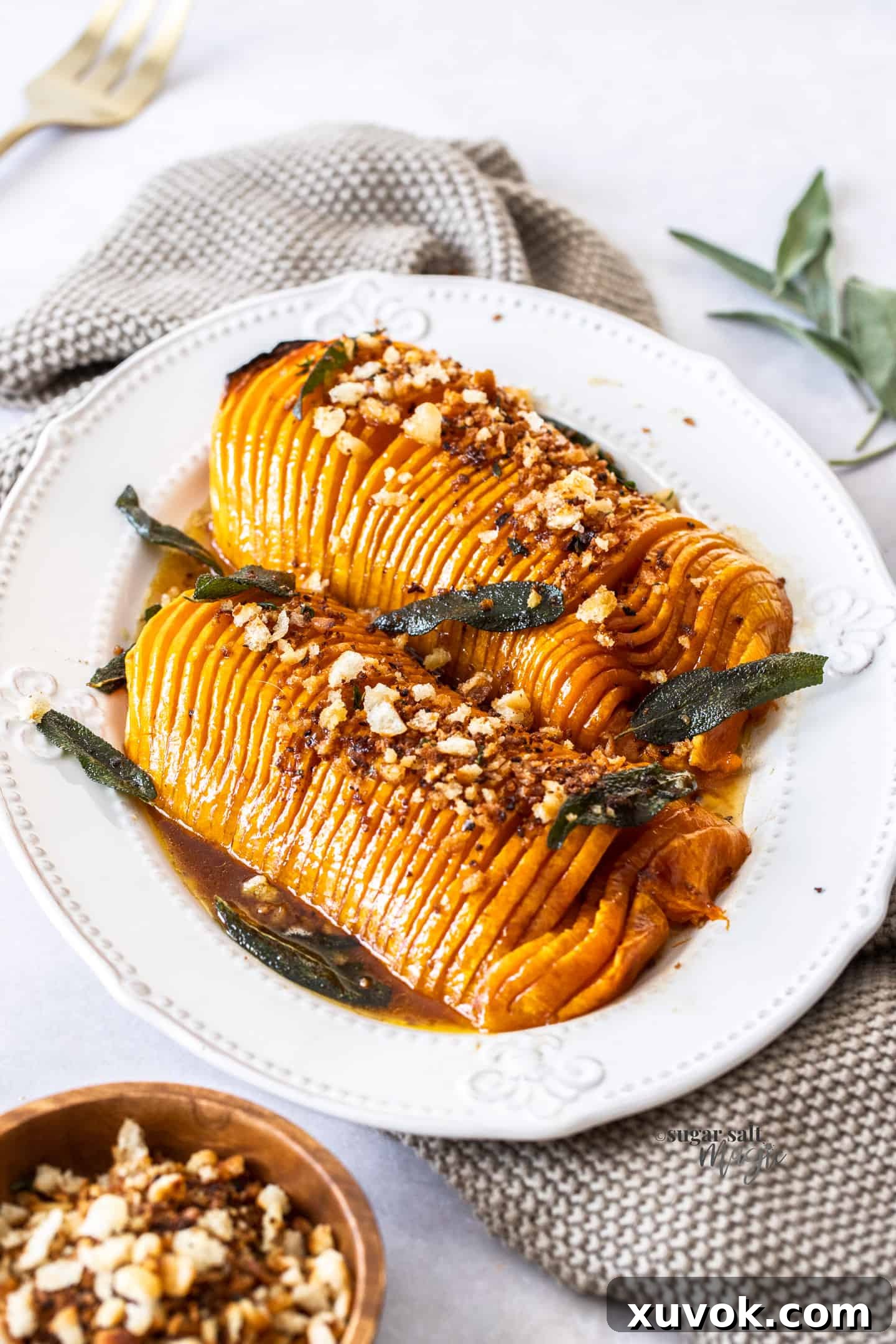
The secret lies in its irresistible layers of flavor and texture. Each delicate slice of butternut squash is generously coated in a shimmering maple-balsamic glaze, which caramelizes beautifully in the oven. This creates tender, sticky segments with wonderfully chewy, caramelized edges that are bursting with a sweet and tangy essence. To contrast this delightful sweetness, a generous topping of crispy brown butter sage and homemade pangrattato (crunchy, herb-infused breadcrumbs) is added. This final touch introduces an exquisite savory depth and an addictive crunch, transforming a simple vegetable into an extraordinary culinary experience that everyone will adore.
Essential Tools for Hasselback Butternut Squash
Crafting this elegant side dish requires only a few standard kitchen tools, making it accessible for home cooks of all skill levels. Having the right equipment ensures both efficiency and safety in your preparation:
- A sharp chef’s knife and a sturdy cutting board are paramount for safely and precisely slicing the firm butternut squash. A sharp knife minimizes the effort and risk of slippage.
- A vegetable peeler will make quick work of removing the tough skin from the butternut squash, ensuring a smooth and enjoyable texture.
- A large baking sheet or a spacious casserole dish is essential for roasting the squash evenly and allowing the glaze to caramelize beautifully. A larger surface area prevents steaming and promotes golden-brown perfection.
Key Ingredients for a Flavorful Roasted Butternut
This roasted butternut squash recipe celebrates simplicity, relying on a handful of high-quality ingredients to deliver maximum flavor. Each component plays a vital role in creating the dish’s distinct character.
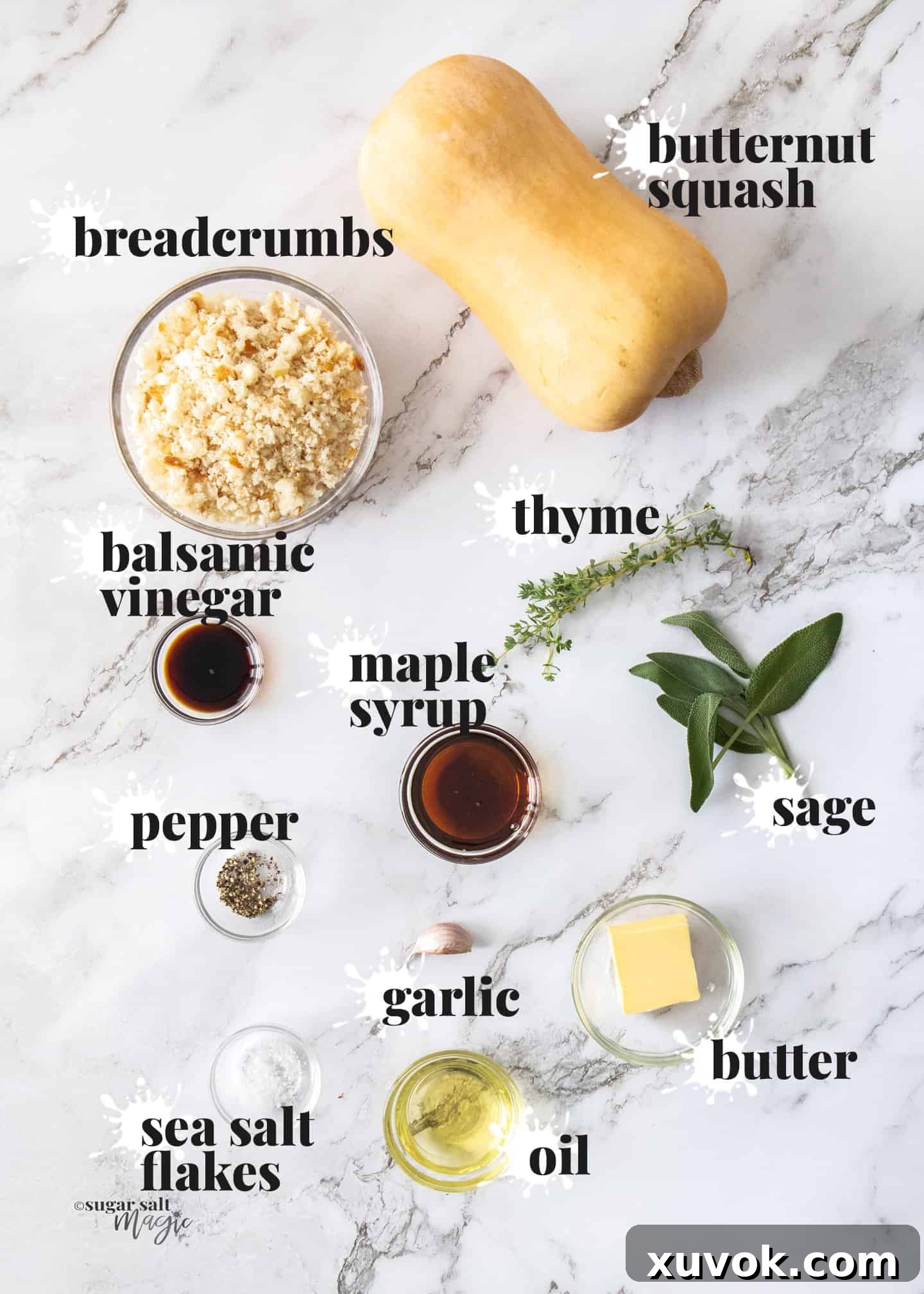
For precise quantities and detailed preparation steps, please refer to the comprehensive recipe card provided below.
- Butternut Squash: The star of our dish. I typically use a single medium-sized butternut squash, weighing around 1.4kg (approximately 3lb), which is perfect for a family meal. For larger gatherings or holiday feasts, this recipe scales up effortlessly—simply grab two medium squashes or a larger one to double the yield. When selecting, look for a squash that feels heavy for its size, has a firm rind, and is free of any soft spots or blemishes.
- Sage and Thyme: These aromatic herbs are a match made in heaven for butternut squash. Fresh sage leaves are transformed into irresistible crispy brown butter sage, adding a depth of flavor and texture. Fresh thyme, with its subtle earthiness, is incorporated into the crunchy pangrattato topping, lending an authentic Italian touch. While dried herbs can be used in a pinch, fresh herbs offer unparalleled fragrance and vibrancy.
- Breadcrumbs: The foundation for our flavorful pangrattato. For the best results, use fresh, high-quality bread. Artisanal varieties like ciabatta, sourdough, or even day-old crusty bread work beautifully, providing superior texture and flavor compared to pre-packaged dried crumbs. The slight staleness of leftover bread is actually ideal, as it absorbs the oil and crisps up perfectly.
- Maple Syrup: This natural sweetener plays a crucial role in intensifying the inherent sweetness of the butternut squash, creating a truly rich and comforting flavor profile. Opt for pure maple syrup, ideally a Grade A Dark Robust for a deeper, more pronounced maple flavor that truly shines in the glaze. Avoid artificial maple-flavored syrups, which lack the complexity and natural goodness.
- Balsamic Vinegar: A touch of balsamic vinegar is key to balancing the richness and sweetness of the dish. Its subtle acidity cuts through the buttery glaze, adding a layer of complexity and a beautiful, caramelized tang that complements the maple syrup perfectly. Choose a good quality balsamic for the best flavor.
- Butter: Versatile and essential, butter is used twice in this recipe. It forms the rich base of our maple-balsamic glaze and is also used to fry the fresh sage leaves until they are crisp and fragrant. You can use either salted or unsalted butter; simply adjust the amount of added salt accordingly based on your preference.
- Garlic: A single large clove of garlic, finely minced or grated, is added to the breadcrumbs for the pangrattato. It imparts a subtle depth and a hint of savory warmth, enhancing the overall flavor without making the topping overtly “garlicky.”
- Oil: A good quality extra virgin olive oil is recommended for seasoning the squash before its initial roast and for crisping up the pangrattato. Its fruity notes complement the other ingredients well. Alternatively, you can use another neutral vegetable oil if preferred.
- Salt and Pepper: Simple yet essential seasonings. Flaky sea salt (such as Maldon) offers a delightful textural crunch and a clean, briny flavor. Freshly cracked black pepper adds a pungent warmth that ties all the flavors together. This foundational seasoning is all that’s needed to highlight the natural deliciousness of the butternut.
For those who enjoy a hint of spice, a pinch of dried chili flakes can be added to the pangrattato for a gentle warmth. Additionally, to introduce even more textural intrigue, consider toasting some finely chopped nuts—such as walnuts, pecans, or hazelnuts—alongside the breadcrumbs. They will add another layer of crunch and nutty flavor, further elevating this already exceptional side dish.
Unveiling Pangrattato: The “Poor Man’s Parmesan”
Pangrattato, a term I’ve mentioned a few times, translates directly to “grated bread” or “breadcrumbs” in Italian. While often affectionately referred to as the “poor man’s Parmesan,” I firmly believe it is anything but “poor.” In fact, it’s a brilliant culinary innovation that adds an incredible dimension to various dishes, making it rich in flavor and texture.
More than just simple breadcrumbs, pangrattato is a masterful blend of breadcrumbs, a modest amount of olive oil, fresh herbs, and aromatic garlic, all sautéed together until they achieve a glorious golden crispness. This process transforms humble bread into a fragrant, crunchy topping that provides a burst of savory flavor and satisfying texture. It’s a fantastic way to utilize stale bread, preventing waste while creating something truly delicious.
Beyond its perfect pairing with this hasselback butternut squash, pangrattato is traditionally used to adorn a myriad of pasta dishes, providing a dairy-free, textural alternative to cheese. Imagine its delightful crunch atop this vibrant Chicken Basil Pesto Pasta or adding an unexpected dimension to a unique Celery Pesto Rigatoni. Its versatility is truly commendable, capable of elevating everything from soups and salads to roasted vegetables and even main courses.
Preparing Butternut Squash: A Step-by-Step Guide
While butternut squash is remarkably simple to prepare, its inherent firmness requires a bit of care and attention during the initial cutting stage. Following these steps will ensure a safe and smooth preparation process.
- Safely Cut the Squash: Begin by carefully slicing off both the stem end and the base of the butternut squash, creating two flat surfaces. Now, stand the squash upright on its widest, most stable end (the large round part) on a sturdy chopping board, ensuring it’s perfectly flat and steady. Using a sharp, heavy-duty chef’s knife, carefully cut downwards through the center of the squash. For added stability and safety, place one hand firmly on top of the squash to keep it from wobbling, while the other guides the knife through. Crucially, always keep your guiding hand well above the path of the knife to prevent any accidents.
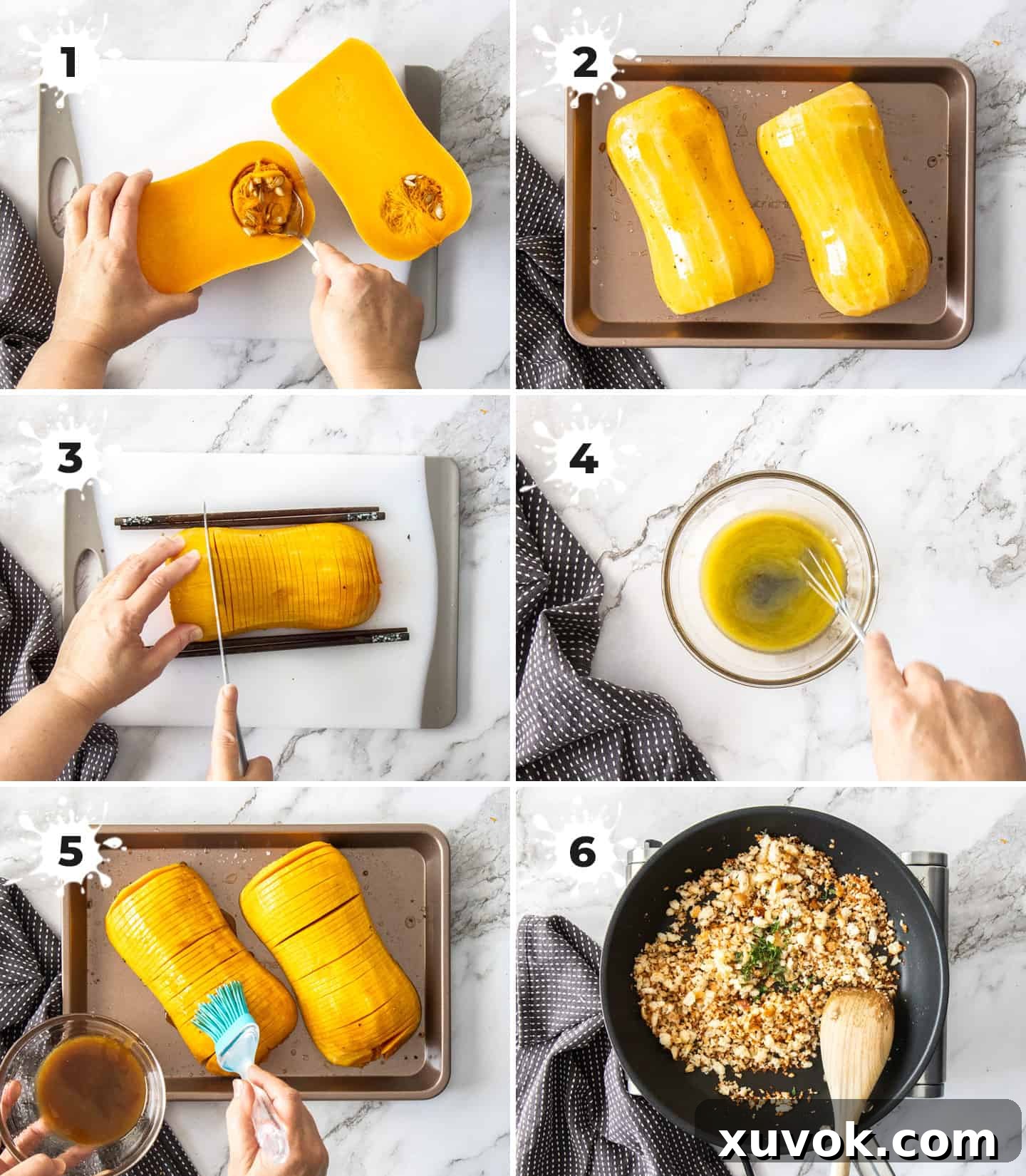
- Remove the Seeds: Once the squash is halved, you’ll easily see the fibrous strands and seeds in the bulbous bottom section. Using a sturdy spoon, simply scoop out all the seeds and stringy bits (photo 1). These seeds are a delightful bonus! You can save them, toss them with a little oil and salt, and roast them for a crunchy snack later, or simply discard them.
- Peel the Squash: With the squash now halved and deseeded, use a vegetable peeler to carefully remove all the tough outer skin. Work methodically from top to bottom, ensuring no green or dark spots remain. Once peeled, place the two beautifully prepared butternut squash halves onto your baking sheet, ready for the next exciting stage of transformation into hasselback perfection.
Crafting the Perfect Hasselback Butternut Squash
You’ll be delighted by how effortlessly this wonderful dish comes together, making it a favorite for both its ease and impressive presentation.
For a detailed breakdown of quantities and comprehensive instructions, please refer to the complete recipe card below.
- Initial Seasoning and Roast: Begin by rubbing a generous tablespoon of olive oil, ½ teaspoon of flaky sea salt, and ¼ teaspoon of freshly cracked black pepper all over the cut surfaces and peeled skin of the butternut squash halves (photo 2). This initial seasoning creates a flavorful foundation. Place the seasoned squash halves, cut-side down, on a prepared baking sheet and roast in a preheated oven for 20 minutes. This pre-roast step is crucial as it slightly softens the squash, making it much easier and safer to slice for the hasselback technique.
- Mastering the Hasselback Slices: Once the butternut has had its initial roast and is slightly softened, carefully transfer it to a sturdy chopping board. To create those signature hasselback slices without cutting all the way through, place the handles of two wooden spoons or thick chopsticks alongside each long side of the squash. These will act as a barrier, preventing your knife from slicing completely through. Now, using a sharp knife, make thin, even slices across the butternut, stopping when your knife meets the spoon handles or chopsticks (photo 3). This technique ensures the squash remains intact at the base, creating a beautiful “accordion” effect that allows the glaze to seep into every crevice.
- Applying the Maple-Balsamic Glaze: While the squash cools slightly, prepare the exquisite maple-balsamic glaze. In a small bowl, melt half of the butter (28g / 1oz), then whisk in the pure maple syrup and balsamic vinegar until well combined (photo 4). Carefully transfer the hasselback-sliced squash halves back onto your baking tray, ensuring the hasselback side faces upwards. Brush half of the prepared glaze generously over the top of the squash (photo 5), taking your time to allow the luscious liquid to slowly seep down between all the delicate slits. Return the squash to the oven and roast again for another 20 minutes. The glaze will begin to caramelize, creating sticky, irresistible edges.
- Crafting the Perfect Pangrattato: While the butternut squash continues its transformation in the oven, you can swiftly prepare the pangrattato – a process that takes a mere 5 minutes. In a frying pan or skillet over medium heat, add the remaining 1½ tablespoons of olive oil. Once shimmering, add the fresh breadcrumbs and the remaining ½ teaspoon of sea salt. Fry, stirring frequently, until the breadcrumbs are beautifully golden brown and delightfully crisp (this usually takes about 3-4 minutes) (photo 6). Just before they’re done, stir in the fresh thyme leaves and minced garlic, cooking for just one more minute until fragrant. Transfer the pangrattato to a bowl and set aside, then wipe out your pan, ready for the crispy sage.
I understand that the glaze contains both sweet maple syrup and a touch of sweet balsamic vinegar. However, rest assured, the quantities are carefully balanced, and these flavors are truly a natural pairing with the earthy sweetness of butternut squash. The glaze doesn’t overpower; rather, it intensifies and complements the squash’s natural deliciousness. While you certainly have the option to omit the glaze, I wholeheartedly encourage you to try it as written—its unique sticky, caramelized tang is what makes this hasselback butternut squash truly unforgettable.
The Magic of Crispy Sage Leaves
These delicate, crispy sage leaves are more than just a garnish; they are an integral component that adds both an earthy, aromatic flavor and a delightful textural contrast to the dish. Best of all, they are incredibly simple to make, transforming fresh sage into a golden, fragrant masterpiece.
Refer to the detailed instructions in the recipe card below for best results.
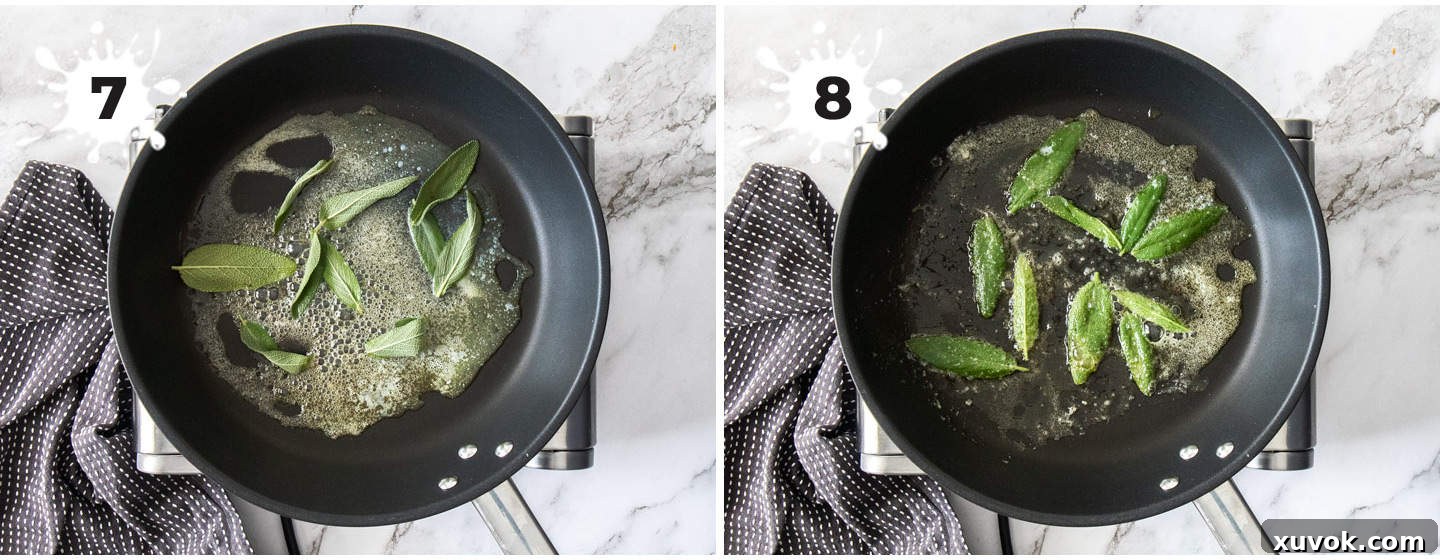
- In the same pan or skillet you used for the pangrattato, melt the remaining butter (28g / 1oz) over a low to medium heat. Once the butter is melted and begins to foam, add the fresh sage leaves (photo 7). Cook the sage gently, stirring and turning occasionally, until the butter develops a beautiful amber or nutty brown color (this is often referred to as “brown butter” or beurre noisette) and the sage leaves themselves become wonderfully crispy (photo 8). It’s important to watch carefully to prevent the butter from burning, as this can happen quickly. If you are using a dark-bottomed pan, periodically spoon a small amount of the butter onto a white plate to accurately check its color.
The resulting sage butter is a flavor powerhouse. This incredibly fragrant and nutty butter, infused with the essence of crispy sage, is also absolutely divine when drizzled over other dishes, such as this rich and savory Crispy Oven Roasted Pork Belly, adding an extra layer of gourmet indulgence.
Perfect Presentation: Serving Your Hasselback Butternut Squash
Serving this Hasselback Butternut Squash is just as important as preparing it. A beautiful presentation will truly highlight its festive appeal and make it an irresistible centerpiece on your table. Here’s how to serve it for maximum impact:
- Transfer with Care: Gently transfer the roasted butternut squash halves, hasselback side up, to an elegant serving platter. A fish slice or a wide, long spatula can be incredibly helpful for this delicate maneuver, ensuring the squash remains intact and beautifully fanned.
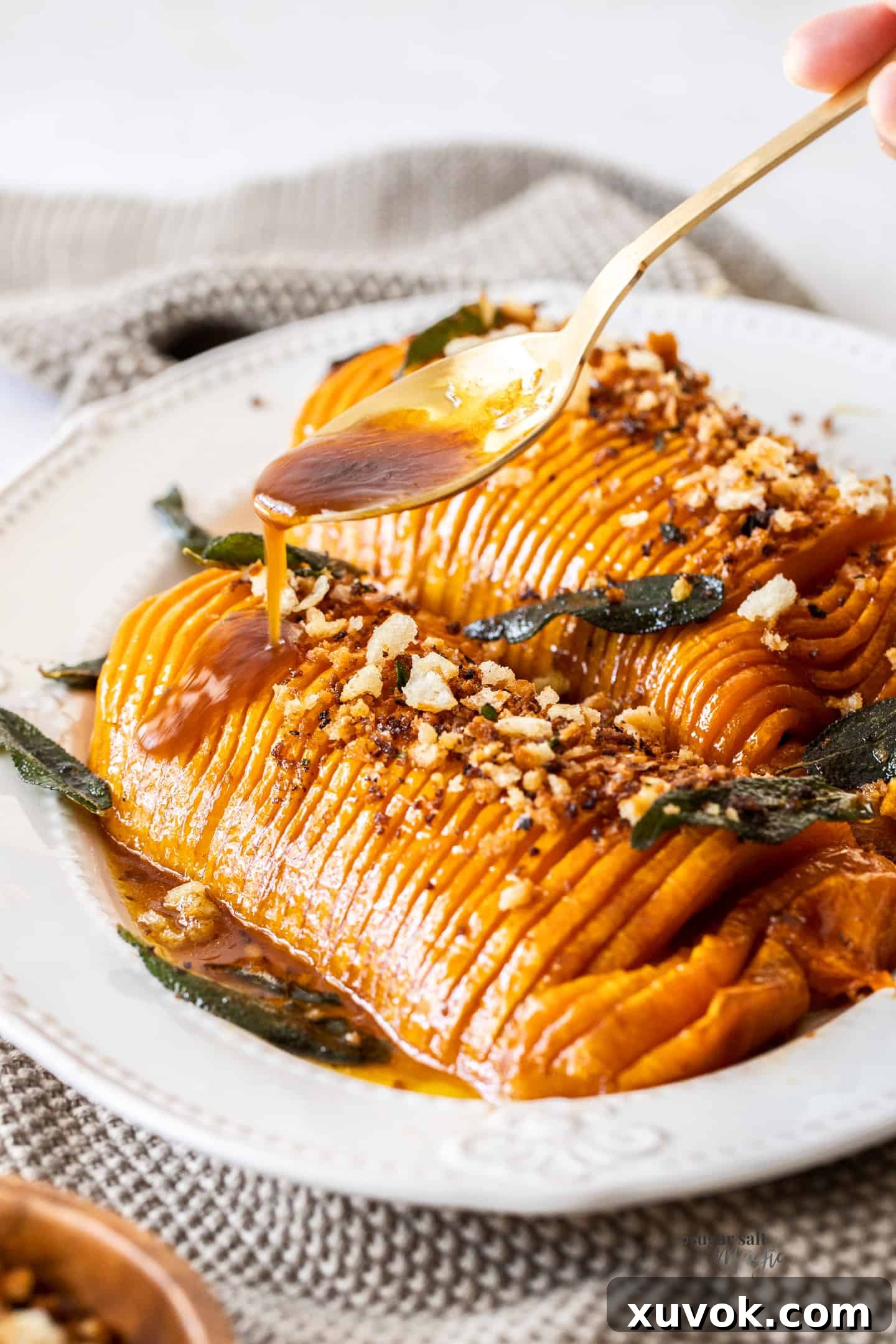
- Drizzle with Pan Juices: Don’t let those precious pan juices go to waste! Spoon a little of the rich, caramelized liquid from the baking sheet over the top of the squash. This adds an extra layer of flavor and a beautiful sheen.
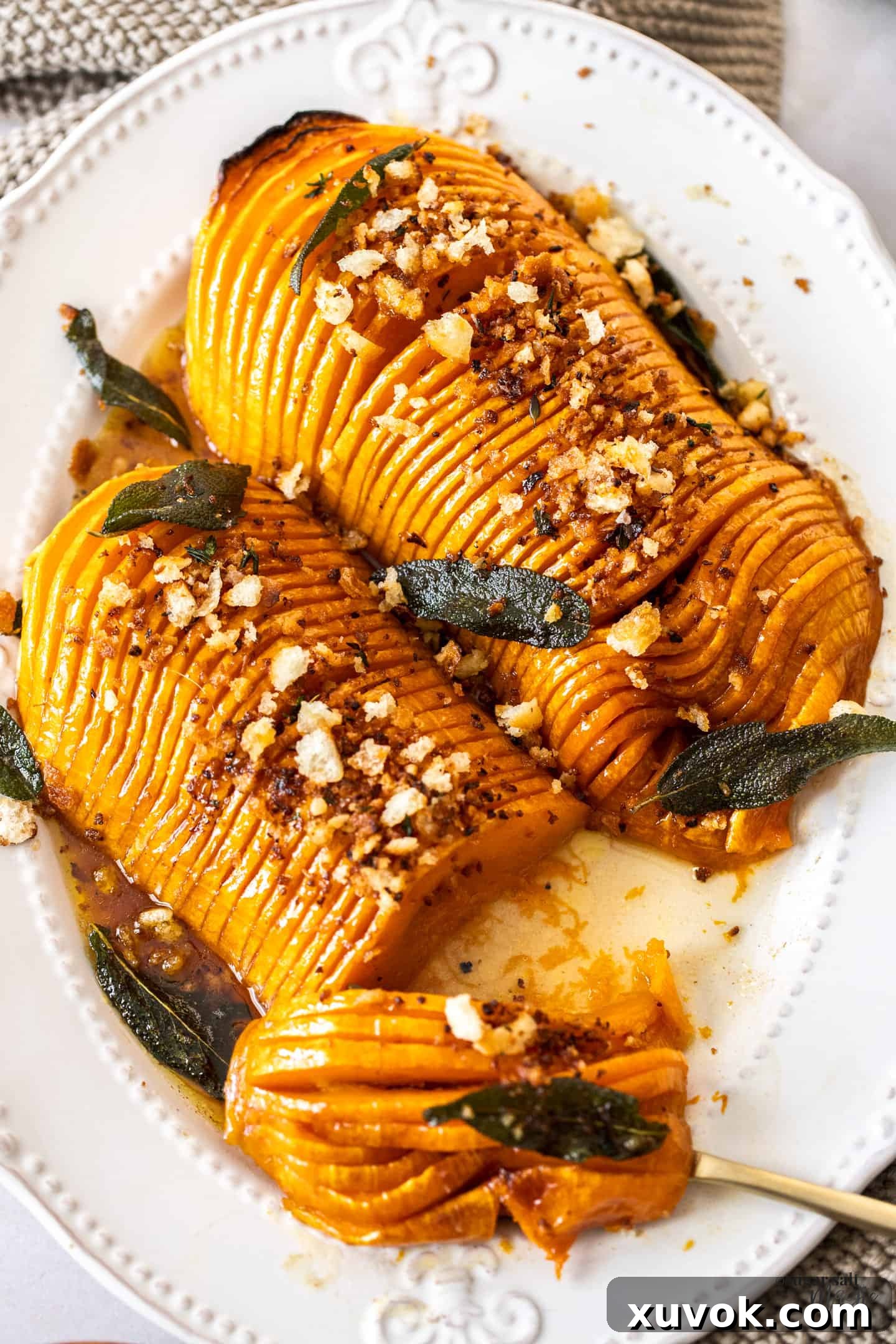
- Garnish Generously: Liberally scatter the freshly made pangrattato over the surface of the squash, ensuring it falls into the slits for maximum flavor and crunch. Follow this by distributing all the crispy sage leaves evenly across the dish, adding their unique aroma and texture.
- Offer Extra Crumbs: For those who can’t get enough of that delightful crunch, place any leftover pangrattato in a small, elegant bowl on the side. This allows guests to help themselves to additional servings, customizing their experience.
- Ready for Sharing: Place a serving spoon alongside the squash on the platter, and position it proudly in the middle of your table. Encourage everyone to dig in and enjoy this exquisite side dish, perfect for sharing and creating memorable dining moments.
This dish truly shines as part of a grand meal. Pair it with these perfectly tender and sweet Roasted Shallots for an absolutely fabulous Thanksgiving dinner spread. If you prefer a simpler roasted butternut, you can still elevate it by topping it with a luxurious Sage Butter Sauce instead of the full pangrattato and crispy sage preparation, offering a different, yet equally delicious, flavor profile.
Expert Tips for Hasselback Butternut Squash Success
Achieving culinary perfection often lies in the details. Here are some expert tips and tricks to ensure your Hasselback Butternut Squash turns out flawlessly, impressive and delicious every time:
- Precision Slicing is Key: When making the hasselback slices, the most crucial step is to ensure you do not cut all the way through the butternut squash. The wooden spoons or chopsticks placed alongside the squash are your best friends here. They act as natural stoppers, preventing your knife from going too deep. For optimal results, ensure your chosen spoons or chopsticks are of a decent, uniform thickness to guarantee consistent slices. If, by chance, you do accidentally cut through a section, don’t despair! The dish will still roast beautifully and taste incredible, even if the fanned effect isn’t perfectly continuous.
- Handle with Care During Transfer: Even though the butternut squash remains connected along its base, the delicate hasselback slices make it somewhat fragile, especially after the initial roast. Exercise caution when transferring the squash to and from the baking sheet. I’ve found that using a fish slice or a very long, flat spatula provides the best support, making the transfer smooth and simple, minimizing the risk of breakage.
- Consider a Glaze-Free Option: While the maple-balsamic glaze adds an incredible dimension, not everyone prefers extra sweetness. If you wish to highlight only the natural, inherent flavor of the roasted butternut squash, feel free to entirely omit the glaze. Simply proceed with the rest of the seasoning and roasting steps as instructed. The squash will still be wonderfully tender and flavorful, allowing its natural sugars to shine through with a simpler, more savory profile.
- Mastering the Crispy Sage: Frying sage leaves requires a watchful eye to prevent the butter from burning. If you’re using a pale-colored pan, it will be easier to monitor the butter’s transformation to an amber or nutty brown (“beurre noisette”). However, if your pan has a dark interior, a clever trick is to periodically dot a small amount of the melting butter onto a white plate. This allows you to accurately check its color and ensure it’s developing that desirable rich, nutty aroma without becoming acrid. Always keep the heat no more than low-medium.
- Knowing When Sage is Done: The sage leaves are perfectly cooked and crispy when they change to a uniformly darker green color (almost black in some spots) and feel brittle to the touch. They will also typically stop actively bubbling as much once their moisture has evaporated. Remove them from the heat immediately at this stage, as they can burn very quickly.
- Prepare Pangrattato in Advance: To streamline your cooking process, the pangrattato can be made a day or two ahead of time. Once cooled completely, store it in an airtight container at room temperature. This allows you to focus on the squash and glaze on the day of serving.
Storing and Repurposing Leftovers
Should you be fortunate enough to have any leftover Hasselback Butternut Squash—and trust me, it’s a rare occurrence—it stores exceptionally well. Simply transfer any remaining portions to an airtight container or cover them tightly with plastic wrap. Kept in the refrigerator, it will maintain its quality for 4-5 days, making it perfect for quick meals throughout the week.
Leftovers are incredibly versatile. Enjoy them cold, sliced into vibrant salads for a sweet and savory element, or nestled into sandwiches and wraps for a gourmet touch. To reheat, you can gently warm individual portions in the microwave until heated through, or for a crisper texture, place them on a baking sheet in a preheated oven (around 350°F / 175°C) until warmed and slightly re-crisped.
Another fantastic way to repurpose leftovers, even if a few crumbs of pangrattato or sage make it into the mix, is to transform them into a silky smooth and comforting butternut squash soup. Simply combine the roasted squash with vegetable broth, a touch of cream or coconut milk, and blend until velvety. It’s a delicious and resourceful way to extend the life of this delightful dish.
If you’ve had the pleasure of trying this Hasselback Butternut Squash recipe, please take a moment to leave a rating and comment below. Your feedback is invaluable, helping both me and other home cooks discover wonderful new dishes! Feel free to share your creation on Instagram and tag @sugarsaltmagic—I love seeing your culinary triumphs!
More Delicious Recipes to Inspire Your Next Meal
Expand your repertoire with these other delightful recipes, perfect for any occasion:
- Slow Cooker Turkey Breast: Tender, juicy turkey cooked effortlessly.
- Potato and Bacon Tart: A savory and satisfying tart, ideal for brunch or a light meal.
- Air Fryer Corn on the Cob: Perfectly cooked corn with minimal fuss.
- Rainbow Vegetable Tray Bake: A colorful and nutritious medley of roasted vegetables.
- Stovetop Pumpkin Mac and Cheese: A creamy, comforting classic with an autumnal twist.
- Perfect Roast Potatoes: Crispy on the outside, fluffy on the inside – the ultimate side.
- Hasselback Potato Gratin: A beautiful and rich potato dish, perfect for special occasions.
Never Miss a Recipe!
Stay updated with our latest culinary creations and get delicious recipes delivered straight to your inbox!
Hasselback Butternut Squash
6 serves
30 minutes
1 hour
1 hour 30 minutes
Rate
Pin
Ingredients
- 1 medium butternut squash (1.4kg / ~3lb)
- 2 ½ tablespoons extra virgin olive oil (notes)
- 1 teaspoon flaky sea salt
- ¼ teaspoon freshly cracked black pepper
- ¼ cup salted butter (57g / 2oz / 1/2 stick)
- 2 tablespoons pure maple syrup (notes)
- 2 teaspoons balsamic vinegar
- 1 cup fresh bread crumbs
- 2 teaspoons fresh thyme leaves
- 1 large clove garlic
- 10-12 sage leaves
For best results, always weigh ingredients where a weight is provided
Equipment
-
Large baking tray
-
Chopsticks or wooden spoons
-
Chopping board and sharp knife
Instructions
-
Preheat oven to 220C / 425F (200C fan-forced). Line a large baking tray with foil for easier cleanup.
-
Cut the butternut squash in half lengthwise. Scoop out the seeds and fibrous strands, then peel the tough outer skin. You can save the seeds for roasting later or discard them.
-
Rub the butternut squash halves with 1 tablespoon of olive oil, ½ teaspoon of flaky sea salt, and all of the black pepper, ensuring even coating.
-
Place the seasoned squash halves cut-side down on the prepared baking tray and roast for 20 minutes. After roasting, carefully transfer the softened butternut to a chopping board and allow it to cool for 5 minutes while you prepare the glaze.
-
For the glaze, melt half of the butter (28g / 1oz) in a small bowl. Whisk in the maple syrup and balsamic vinegar until thoroughly combined. Set this mixture aside.
-
On the chopping board, place a wooden spoon or a thick chopstick along each long side of the butternut squash half. Using a sharp knife, make thin, even cuts across the squash, stopping when the knife hits the spoons/chopsticks. This technique ensures the slices remain connected at the bottom.
-
Carefully use a fish slice or a large flat spatula to help transfer the hasselback-sliced butternut squash halves back onto the baking tray, with the hasselback side facing up. Brush half of the prepared butter mixture over the top, allowing it to slowly seep down between the delicate slices. Return to the oven and roast for another 20 minutes.
-
Brush the remaining butter mixture generously over the butternut halves. Drizzle 1 tablespoon of water around the pan to help prevent scorching and keep the squash moist. Place the tray back in the oven for a final 20 minutes, until the squash is tender and beautifully caramelized.
TO MAKE THE PANGRATTATO
-
Heat the remaining 1 ½ tablespoons of olive oil in a frying pan or skillet over medium heat. Once hot, add the fresh breadcrumbs and the remaining ½ teaspoon of sea salt. Fry, stirring frequently, until the breadcrumbs turn a beautiful golden brown and become perfectly crisp (this should take approximately 3-4 minutes).
-
Add the fresh thyme leaves and minced garlic to the pan. Continue to fry for just 1 more minute, until fragrant. Transfer the pangrattato to a separate bowl and wipe out the pan, ready for the next step.
TO MAKE THE FRIED BUTTER SAGE
-
In the same clean pan, melt the remaining butter (28g / 1oz) over medium heat. Add the fresh sage leaves to the foaming butter. Cook and foam gently, stirring and turning the sage occasionally, until the butter turns a rich amber or nutty brown color and the sage leaves become wonderfully crispy. If using a dark pan, spoon a little butter onto a white plate to accurately check its color. Once done, set both the brown butter and crispy sage aside.
TO SERVE
-
Carefully transfer the roasted butternut squash halves to your chosen serving platter. Drizzle any remaining juices from the pan and the fragrant sage butter over the squash. Finally, generously scatter the prepared pangrattato and crispy sage leaves over the top, ensuring a beautiful and irresistible finish.
Notes
- This recipe is wonderfully adaptable and easy to scale up. Feel free to double or even triple the ingredients, depending on the number of guests you’re serving.
- Leftovers (if you’re lucky enough to have them!) are delightful in sandwiches, salads, or simply warmed up. You can also puree them to make a rich and comforting butternut squash soup.
EXPLORE MORE GREAT SIDE DISHES!
262kcal
Marie Roffey
Side Dish
American