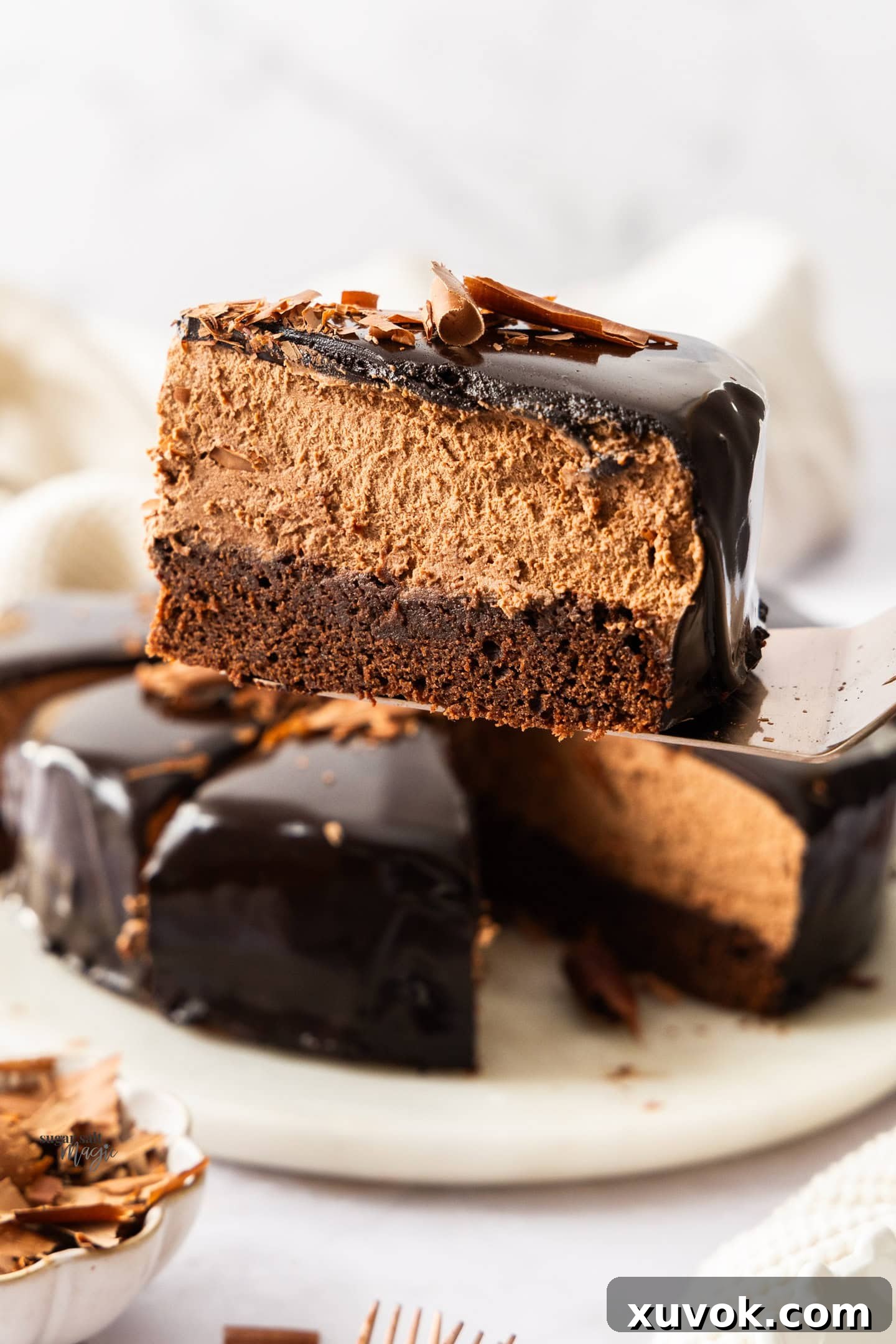
Indulgent Chocolate Mousse Cake with Mirror Glaze: A Showstopper Dessert
Prepare to be enchanted by this utterly irresistible Chocolate Mousse Cake, a true masterpiece composed of three exquisite layers. Each component, from the base to the shimmering glaze, is a delight in itself, but when united, they create a perfect symphony of chocolate decadence. Every bite is a luxurious journey of smooth, soft, and creamy textures, culminating in a flavor that is simply divine.
This isn’t just any chocolate cake; it’s an elevated experience designed for special occasions. Featuring a remarkably moist chocolate cake base, topped with an incredibly light and airy, melt-in-your-mouth chocolate mousse, and crowned with a breathtakingly shiny mirror glaze, this cake is guaranteed to impress. What makes this recipe truly fantastic is that each individual part is surprisingly easy to create. The secret lies not in complexity, but in patience – allowing sufficient setting and cooling time is key to achieving perfection. Plan ahead, and you’ll be rewarded with a dessert that looks professionally crafted and tastes utterly sensational.
If your heart desires just the luscious mousse without the cake, explore our Eggless Easy Chocolate Mousse recipe, or try it in a delightful pastry form with our Chocolate Mousse Tart.
This beloved recipe was originally shared on August 19th, 2017, and has since been updated with an improved cake recipe and clearer, more detailed step-by-step photographs to ensure your baking success.
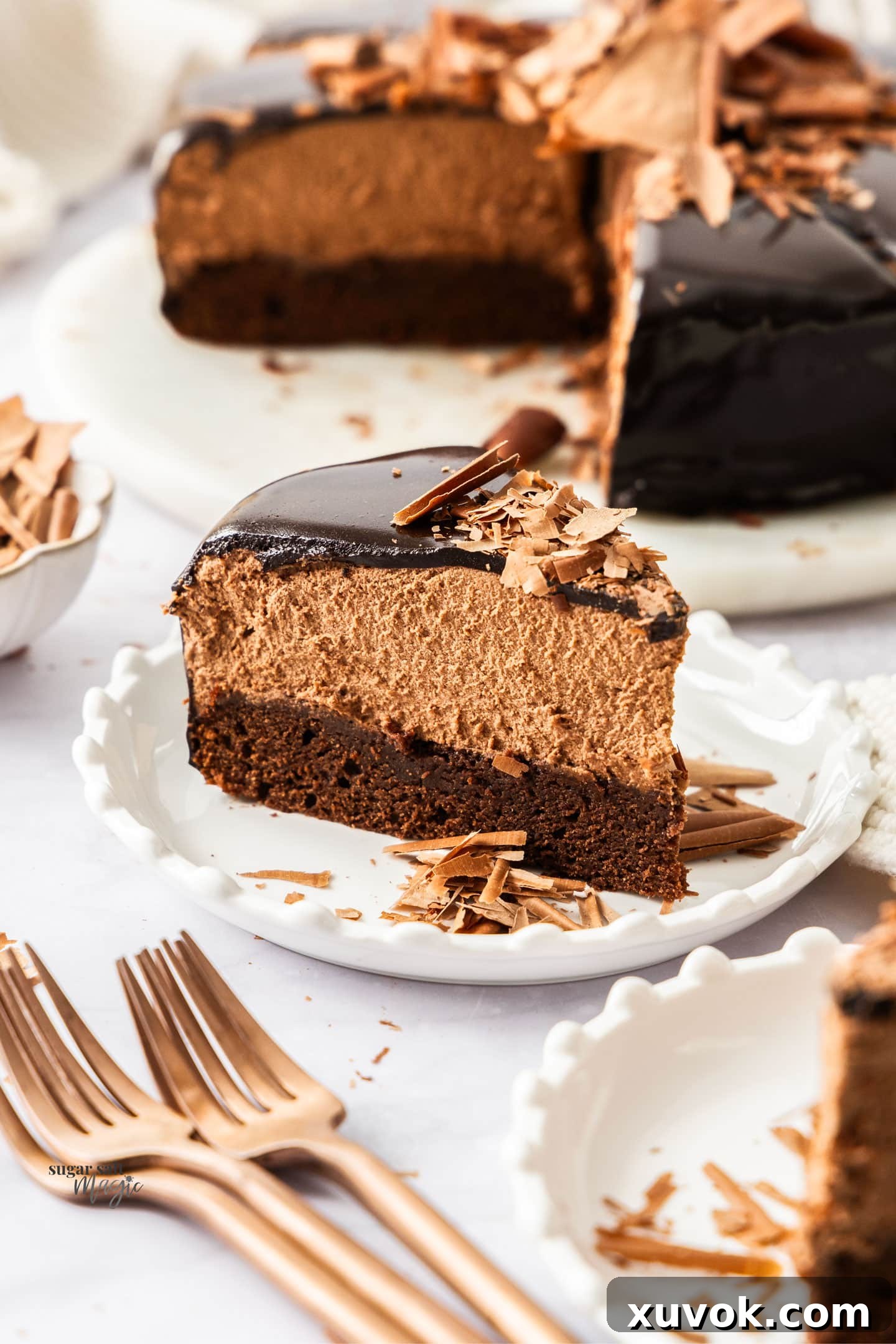
Table of Contents
- Essential Ingredients for Chocolate Mousse Cake
- Crafting Your Decadent Chocolate Mousse Cake: A Step-by-Step Guide
- Unveiling the Magic of Mirror Glaze
- Planning Ahead & Storage Tips for Your Chocolate Masterpiece
- Troubleshooting: What if My Mirror Glaze Isn’t Smooth?
- More Irresistible Dessert Recipes You’ll Love
Never Miss a Recipe!
Get the latest, most delectable recipes straight to your inbox and elevate your baking game!
Sign up to our newsletter for free recipes and baking tips!
Essential Ingredients for Chocolate Mousse Cake
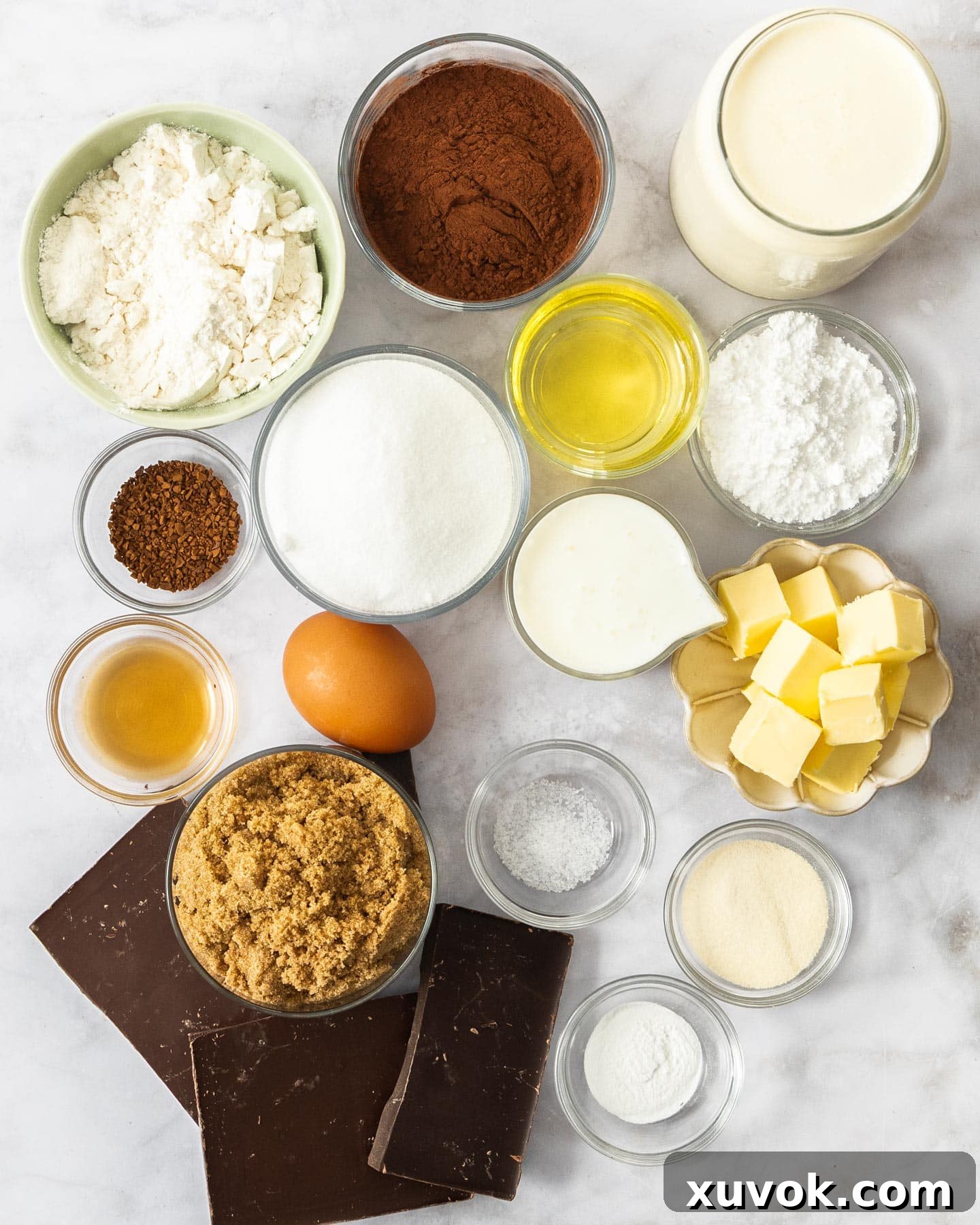
For a comprehensive list of quantities and detailed instructions, please jump to the full recipe card. Here, we’ll delve into why each ingredient is crucial for perfection.
- Sugars: The cake calls for both light brown sugar and white granulated sugar, creating a complex sweetness and incredibly moist texture. The mirror glaze uses granulated sugar for its clean shine, while the mousse benefits from a touch of delicate icing sugar (also known as powdered sugar), which dissolves seamlessly for a smooth finish.
- Buttermilk: A star ingredient for the cake, buttermilk is essential for its wonderfully moist crumb and tender texture. Its acidity reacts with the baking powder, aiding in a light lift without making the cake dry. If you don’t have buttermilk on hand, you can easily make a substitute by adding one tablespoon of white vinegar or lemon juice to regular milk and letting it sit for 5-10 minutes until it slightly curdles.
- Instant Coffee Granules: Don’t worry, this chocolate mousse cake won’t taste like coffee! Just a small amount of instant coffee granules significantly intensifies the rich, deep chocolate flavor in the cake, making it taste even more luxurious. It’s a secret weapon for chocolate lovers.
- Vegetable Oil: Unlike butter, which can make cakes denser, vegetable oil contributes significantly to the cake’s exceptional moisture and creates a beautifully tender crumb that stays soft for days. Use a neutral-flavored oil to avoid altering the chocolate taste.
- Egg: Just one large egg is used in the cake, providing structure and richness. It helps bind the ingredients and contributes to the overall texture and rise.
- Vanilla Extract: Always opt for pure vanilla extract over synthetic vanilla essence. Pure vanilla enhances the chocolate flavor and adds a beautiful aromatic depth that artificial versions simply cannot replicate.
- Flour: Standard plain flour (also known as all-purpose flour) is perfect for the cake, providing the necessary structure without making it too dense. Ensure it’s spooned and leveled for accurate measurement.
- Cocoa Powder: For the best results, we recommend using Dutch process cocoa powder. Its rich, mellow flavor and darker color contribute to a more profound chocolate experience. However, unsweetened natural cocoa powder will also work, though it may result in a slightly different flavor profile and color.
- Baking Powder: This leavening agent provides just the right amount of lift to the cake, ensuring it’s soft, light, and perfectly risen.
- Whipping Cream: A hero ingredient, whipping cream is featured in both the silky chocolate mousse and the glossy chocolate glaze. For optimal results, use a cream with a milk fat content of 35% or higher, often labeled as thickened cream, heavy cream, or heavy whipping cream. This ensures proper whipping and setting.
- Dark Chocolate: The quality of your chocolate directly impacts the flavor of your mousse. Choose a good quality dark or semi-sweet chocolate with around 50% cocoa solids for a balanced, intense chocolate flavor that isn’t overly bitter. Chocolate chips can work, but baking bars will melt more smoothly.
- Butter: A small amount of butter in the mousse ganache adds an extra layer of rich flavor and contributes to its luxurious, melt-in-your-mouth texture. Use unsalted butter for better control over the overall saltiness of the dessert.
- Powdered Gelatine: Gelatine is indispensable for stabilizing both the mousse and the mirror glaze, giving them their characteristic smooth, set texture. We specifically use powdered gelatine in our kitchen for consistent results. If you’re accustomed to using gelatine sheets, you’ll need to consult a conversion chart as quantities and preparation methods differ.
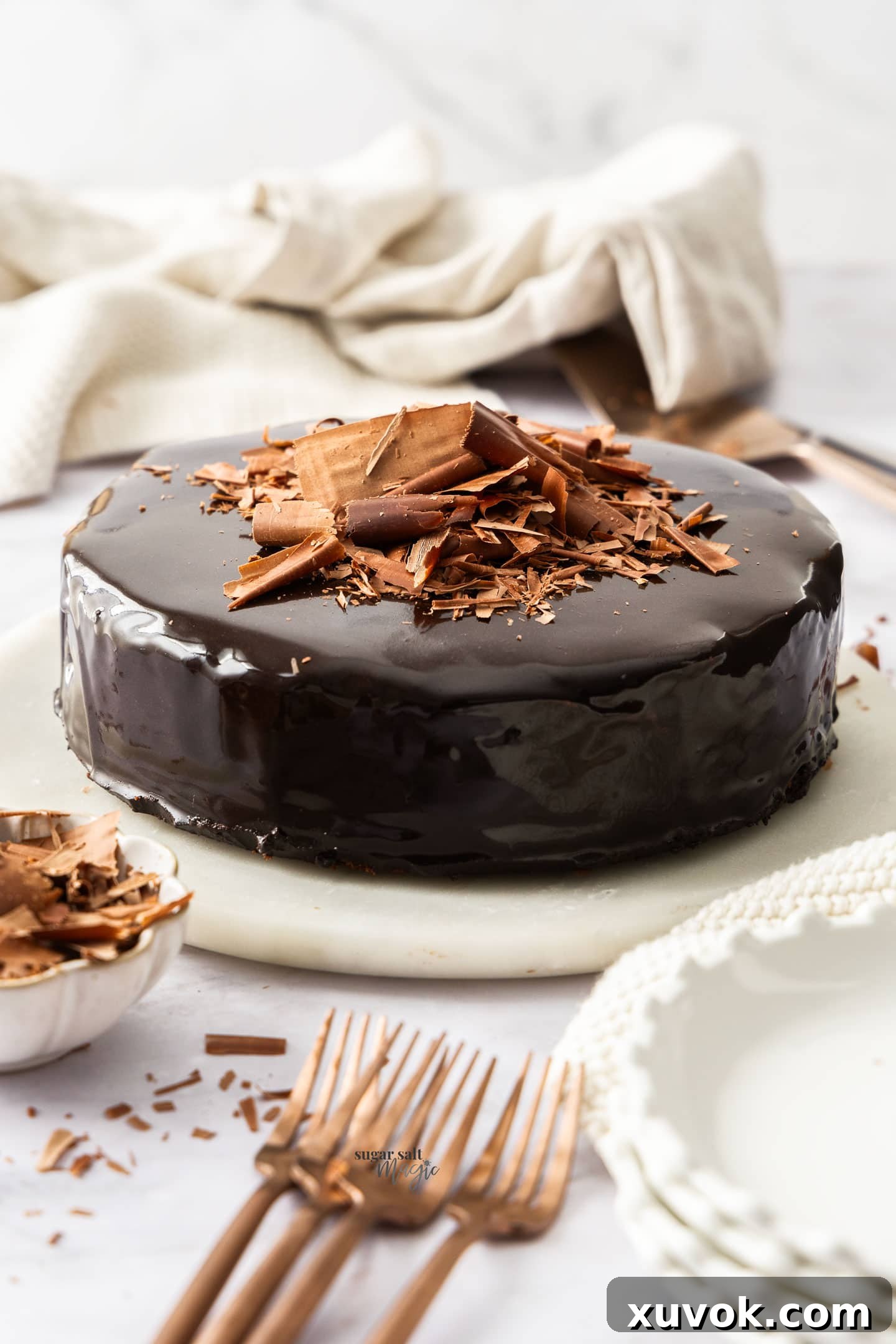
Crafting Your Decadent Chocolate Mousse Cake: A Step-by-Step Guide
Creating this stunning chocolate mousse cake is a rewarding process that involves three distinct, yet harmonious, components: the rich chocolate cake base, the ethereal chocolate mousse, and the show-stopping mirror glaze. While each element comes together with surprising speed – often in 15 minutes or less of active preparation – the key to perfection lies in allowing ample cooling and setting time between stages. You won’t even need a fancy stand mixer for this recipe!
The total hands-on time for this cake is approximately 45-50 minutes, but you’ll need to factor in at least 5 ½ hours for crucial cooling and setting. For this reason, we highly recommend spacing the preparation over two days. Bake the cake and prepare the mousse topping on Day 1, allowing them to chill thoroughly overnight. Then, on the day of serving, apply the dazzling mirror glaze. This approach reduces stress and ensures each layer is perfectly set and ready for assembly, contributing to a truly professional finish.
For precise measurements and detailed step-by-step instructions, please refer to the full recipe card located further down the page.
1. Make the Moist Chocolate Cake Base
Our chocolate cake recipe is wonderfully straightforward, designed for ease and guaranteed moistness. Begin by whisking together all the dry ingredients in one large bowl. In a separate bowl, combine the wet ingredients and sugars. This method ensures all components are evenly distributed, leading to a perfectly consistent batter.
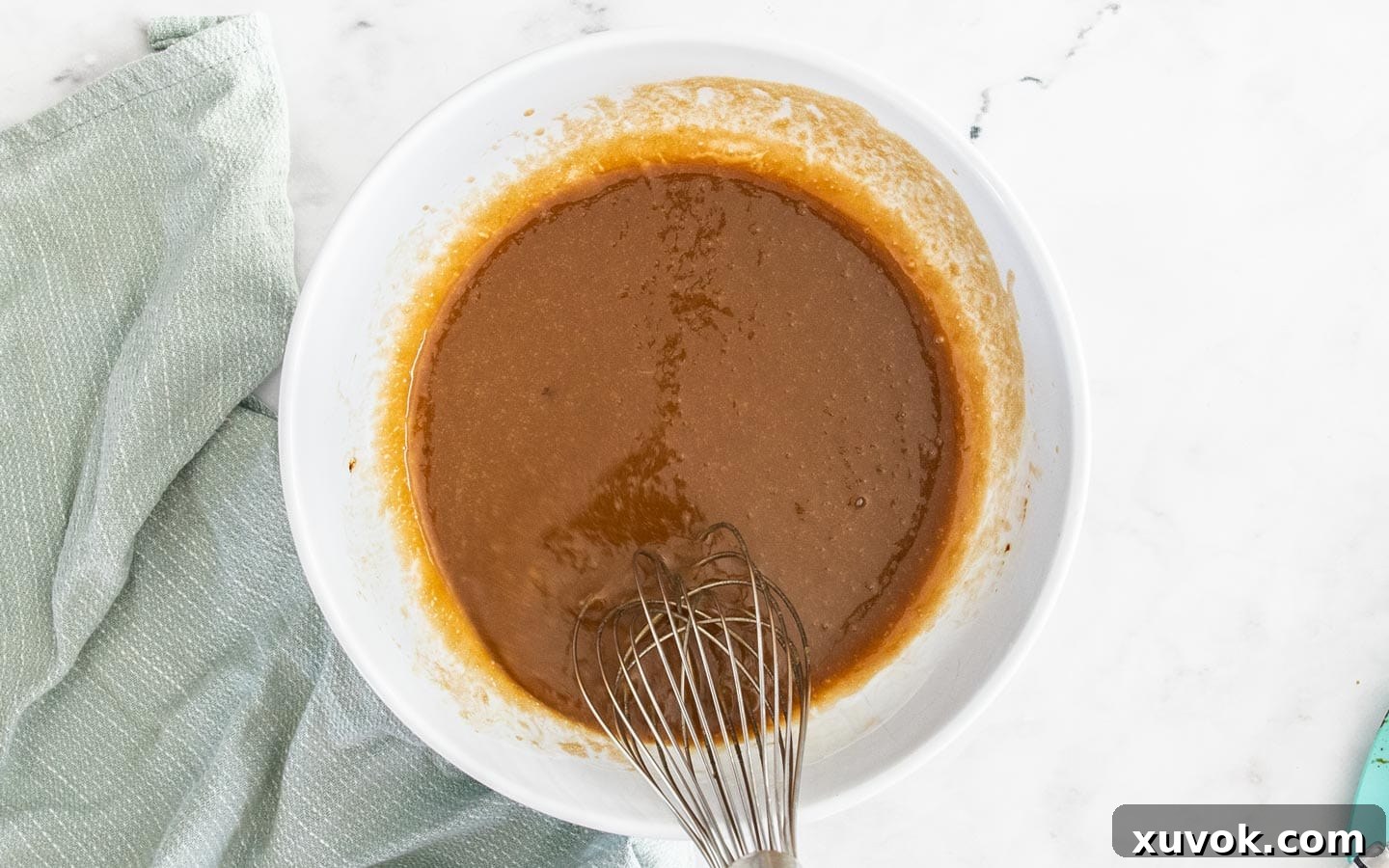
Once both mixtures are prepared, gently combine them. Stir until just incorporated, being careful not to overmix. Overmixing can develop the gluten in the flour, resulting in a tough cake. A few small lumps are perfectly fine and often indicate a tender crumb.
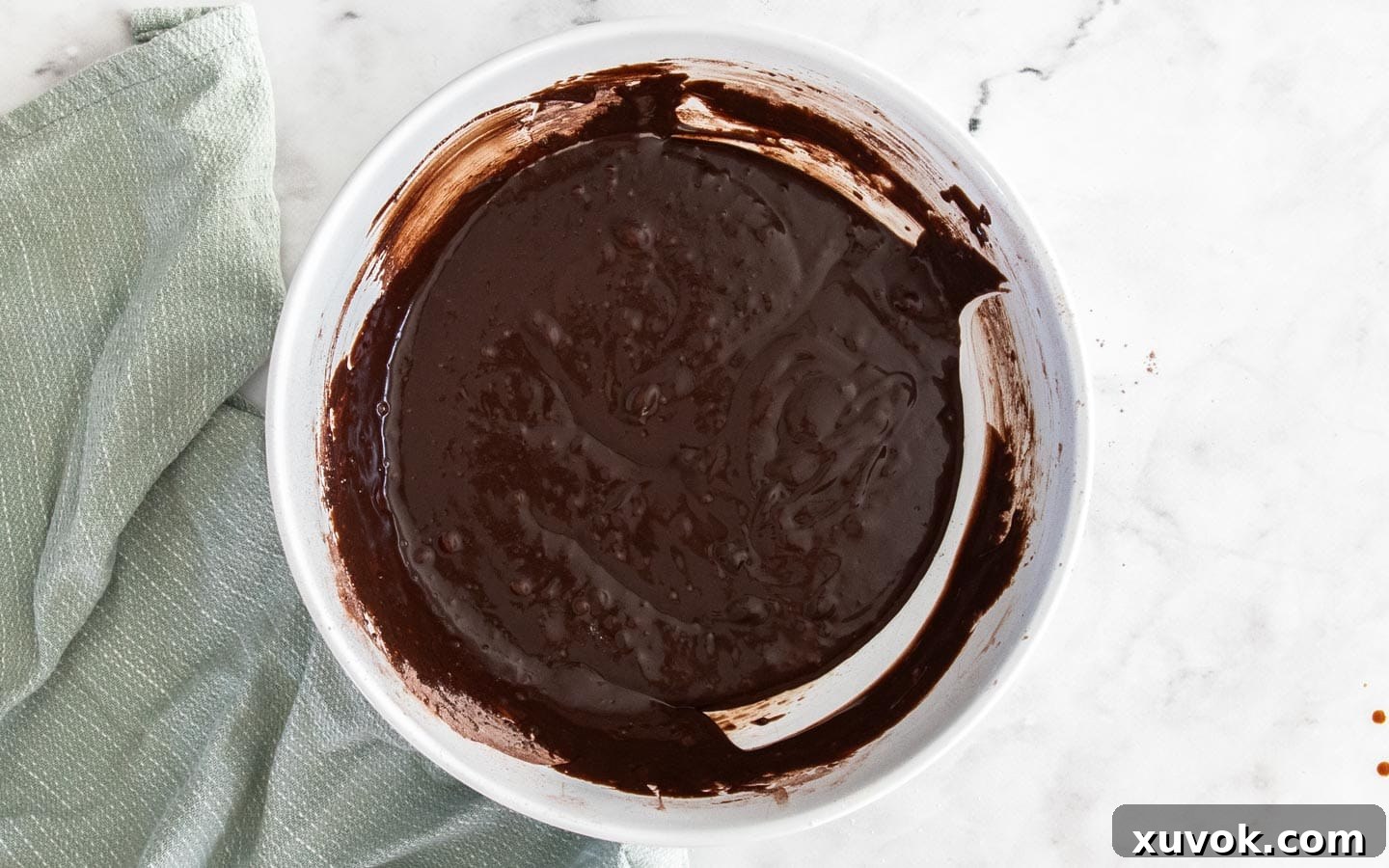
2. Bake the Cake to Perfection
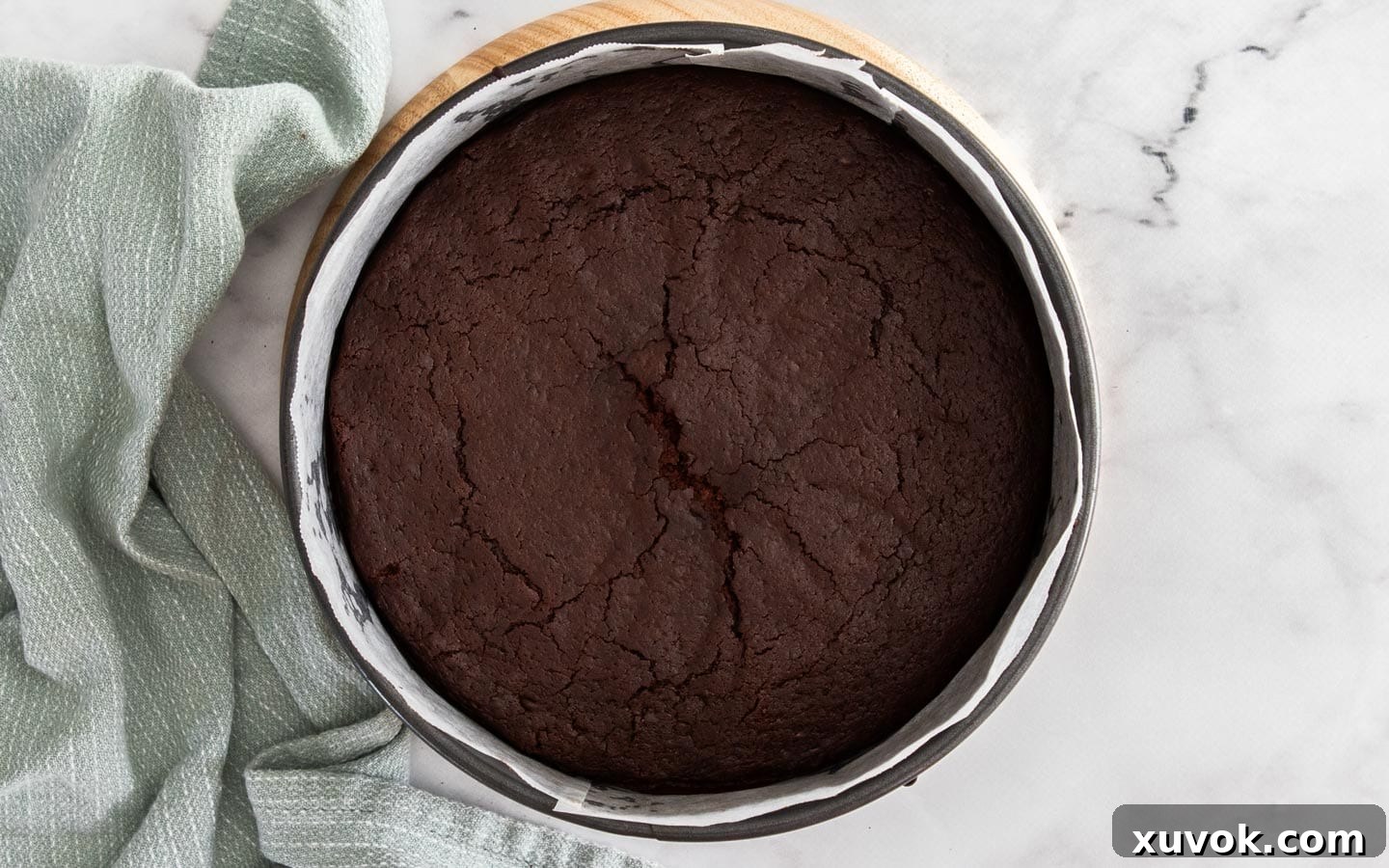
Before pouring in your meticulously prepared batter, ensure your 8-inch springform pan is properly lined with baking paper. This crucial step prevents sticking and allows for easy release. Once your pan is ready, pour the cake batter evenly into it and transfer it to your preheated oven. Bake until a toothpick inserted into the center comes out with just a crumb or two attached, indicating it’s cooked through but still wonderfully moist.
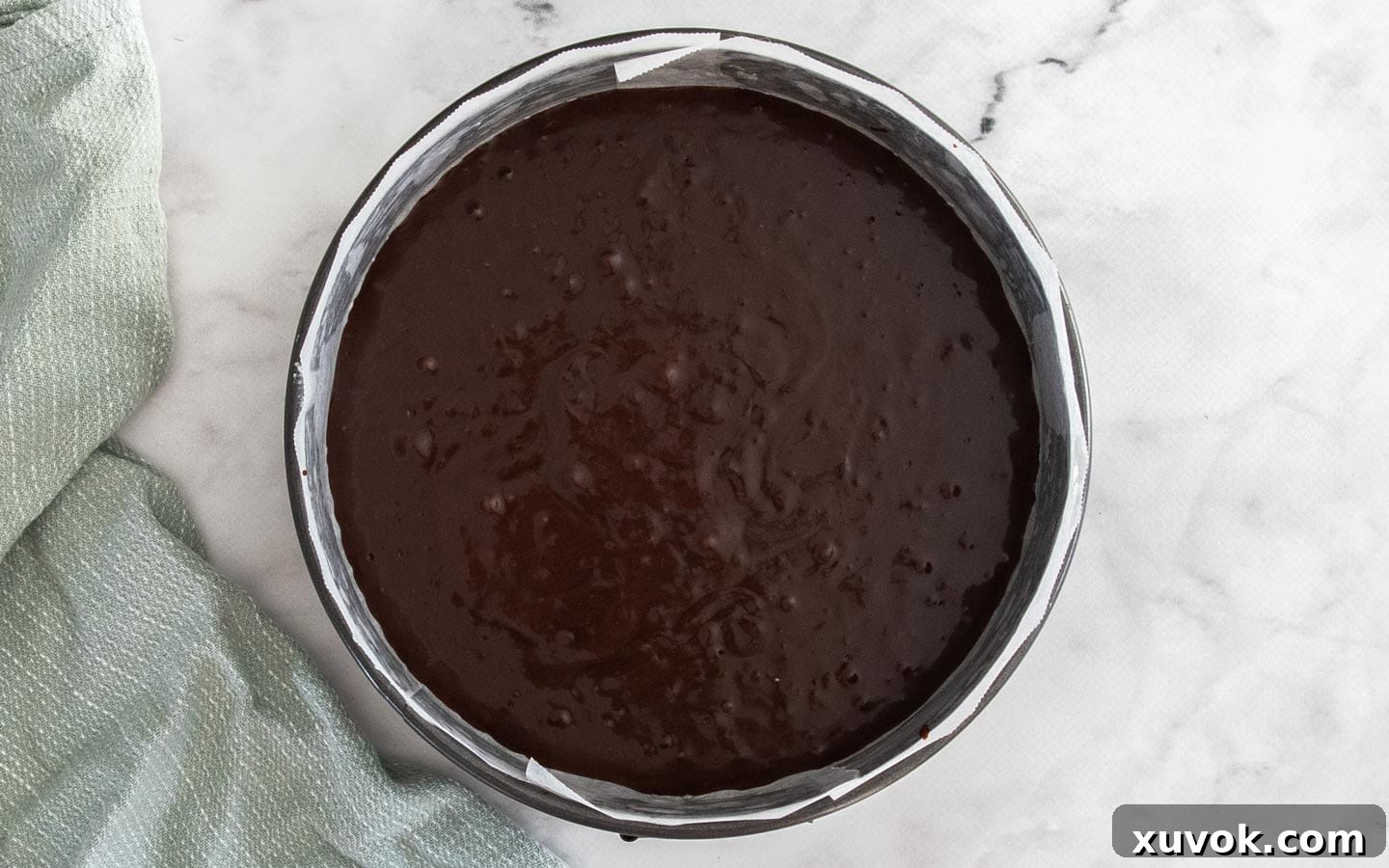
3. Gently Flatten the Cake Dome for a Perfect Base
This particular step might seem unconventional, but it’s a brilliant technique for achieving a perfectly flat cake top, which is ideal for layering. As soon as the cake emerges from the oven, while it’s still hot and pliable, gently but firmly press down the domed center with a flat-bottomed object, like another smaller pan or a large glass. While you could simply wait for it to cool and slice off the dome, this method offers a significant advantage: it helps create an amazing fudgy yet soft texture in the cake by compressing it slightly. Press evenly towards the sides to create the flattest possible surface for your upcoming mousse layer. This also means no wasted cake scraps! Allow the cake to cool completely before proceeding with the mousse. You can accelerate the cooling process by placing it in the fridge or freezer.
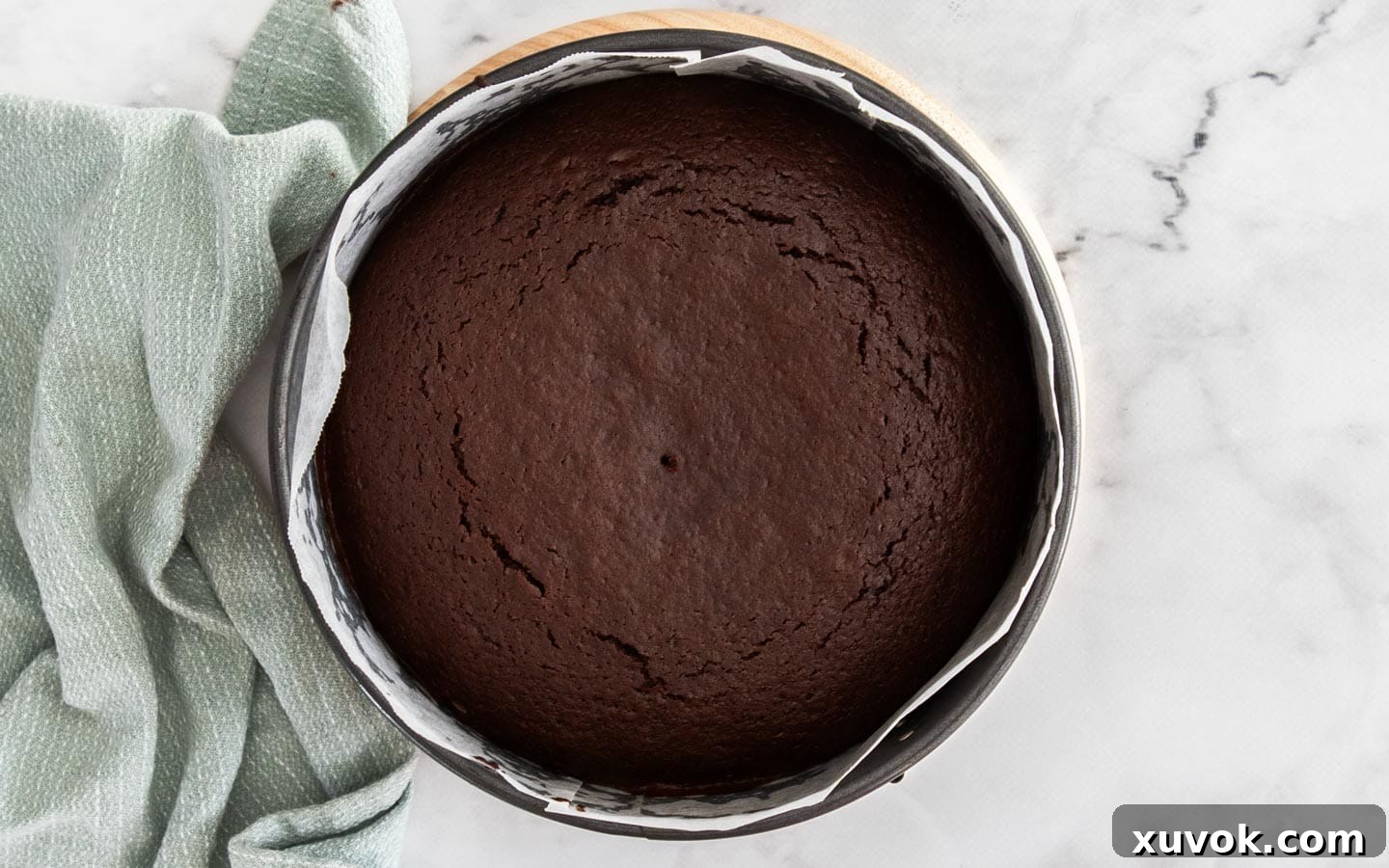
4. Prepare the Silky Chocolate Mousse Filling
This chocolate mousse recipe is truly exceptional, embodying everything you dream of in a perfect chocolate mousse. It’s incredibly smooth, intensely creamy, wonderfully light, and unbelievably fluffy, literally melting in your mouth with every spoonful. And here’s the best part: it’s an **eggless chocolate mousse**! This means no raw egg yolks or whites to worry about, making it accessible to more people and remarkably quick to prepare without compromising on taste or texture.
Once your cake base has completely cooled, begin by heating a portion of the whipping cream until it’s steaming hot but not boiling. Pour this hot cream over your finely chopped dark chocolate, icing sugar, and cubed butter. Allow the mixture to sit undisturbed for a minute or two; this gives the chocolate and butter a chance to soften from the residual heat. Then, gently stir until you achieve a perfectly smooth and glossy chocolate ganache. If you notice any stubborn lumps or it’s not quite melting together, a quick zap in the microwave for 10-20 seconds or a gentle stir over a saucepan of simmering water (ensuring the bowl doesn’t touch the water) will usually do the trick.
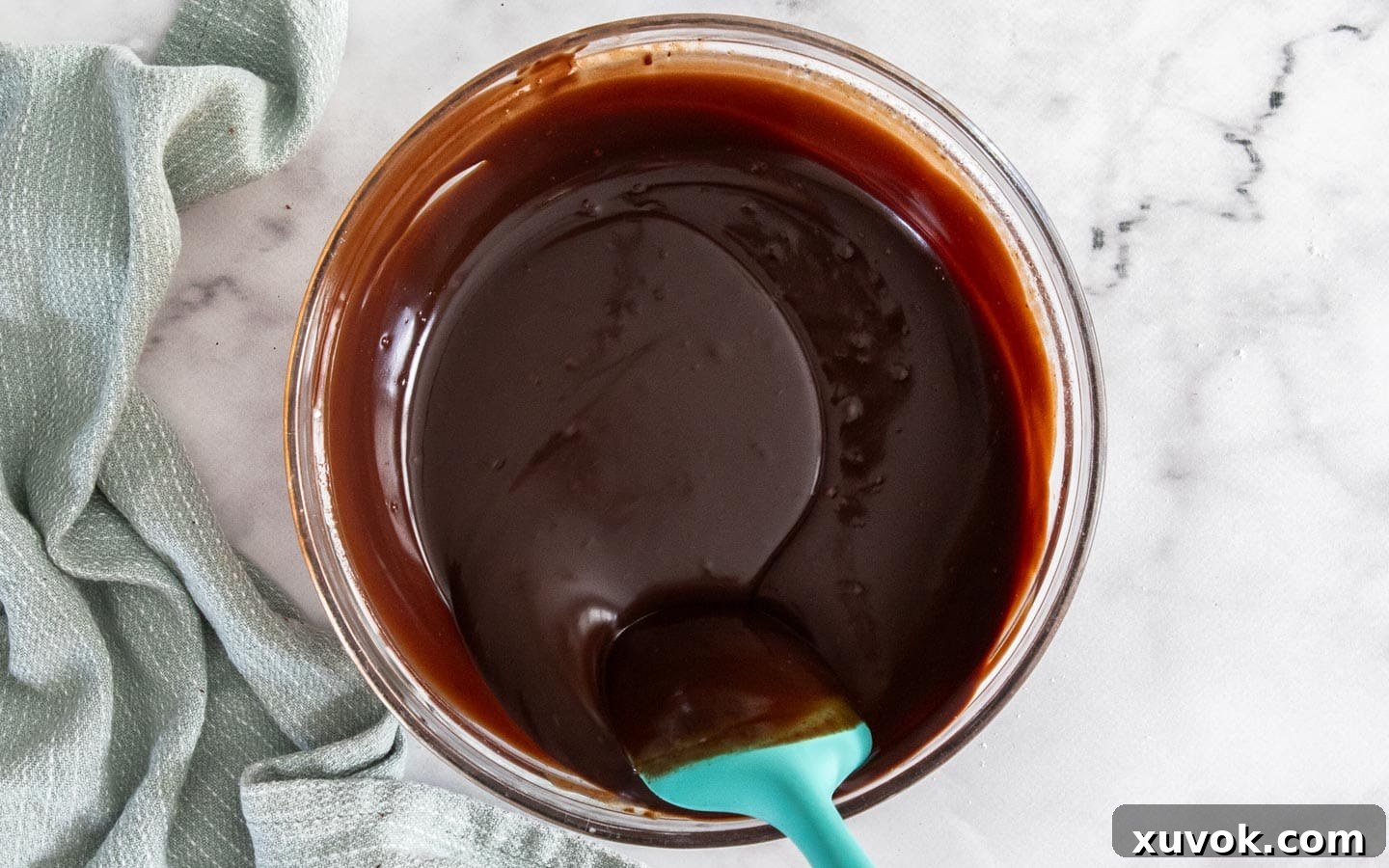
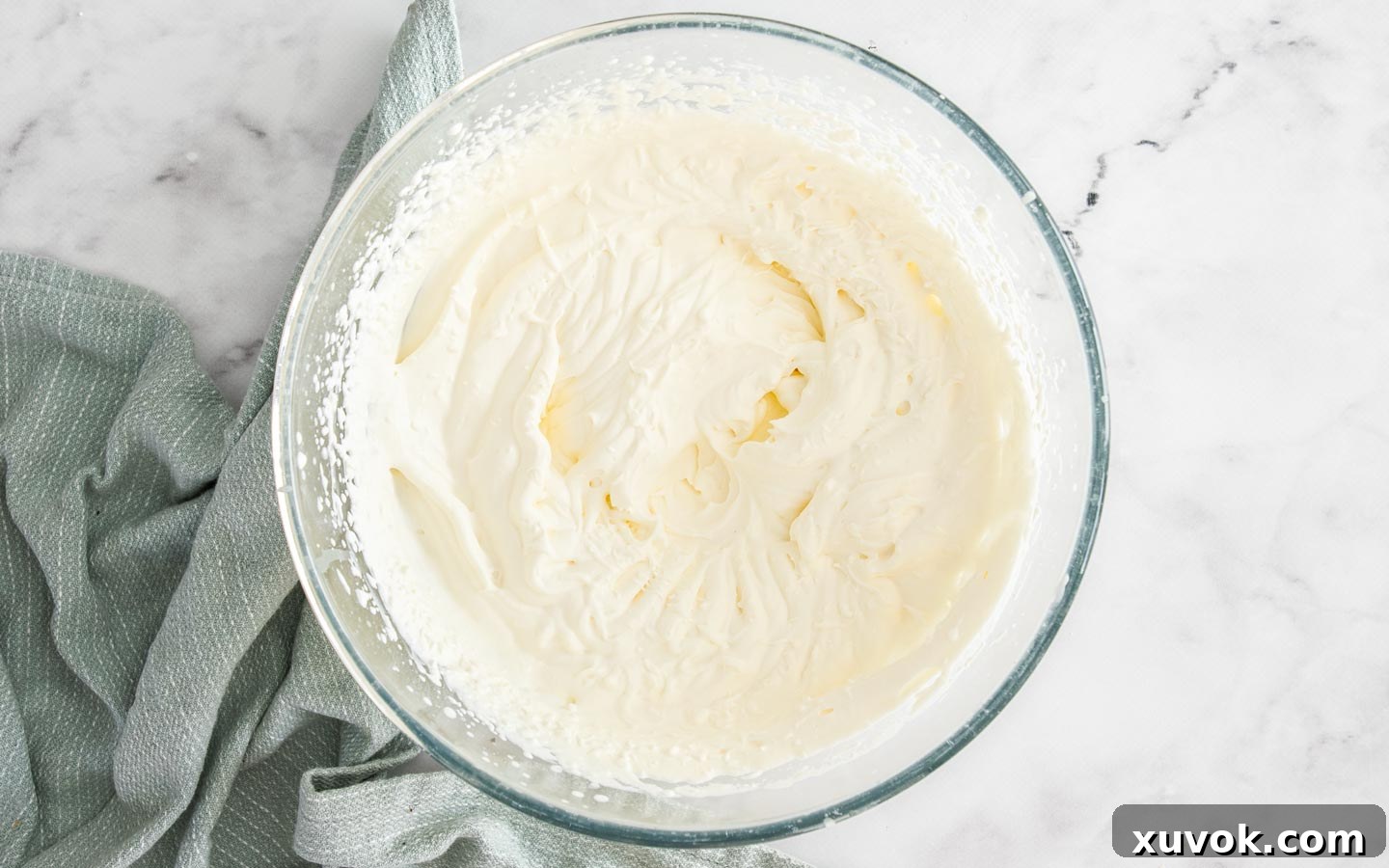
It is crucial to let the rich chocolate ganache mixture cool down to room temperature before moving on. This prevents it from deflating your whipped cream. While the ganache cools, whip the remaining cold whipping cream until it forms beautiful, soft peaks. The cream should hold its shape but still be light and airy.
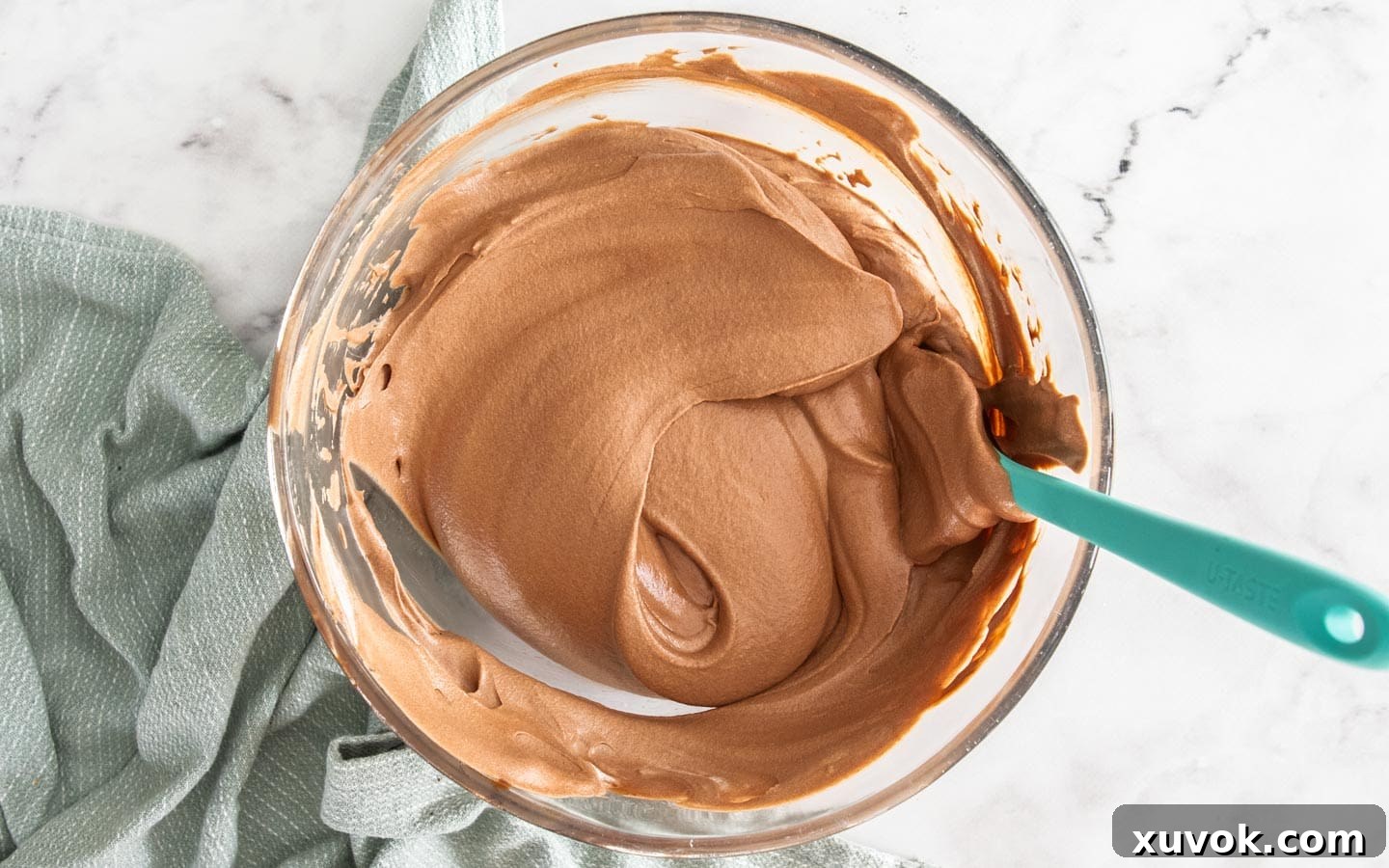
To combine the whipped cream and ganache, employ the folding technique. This means gently scooping mixture from the bottom of the bowl and folding it over the top. Incorporate the whipped cream in three additions, folding delicately until just combined. This method is vital for preserving the airiness of the whipped cream, ensuring your mousse remains light and fluffy, rather than dense.
5. Assemble the Layers: Mousse on Cake
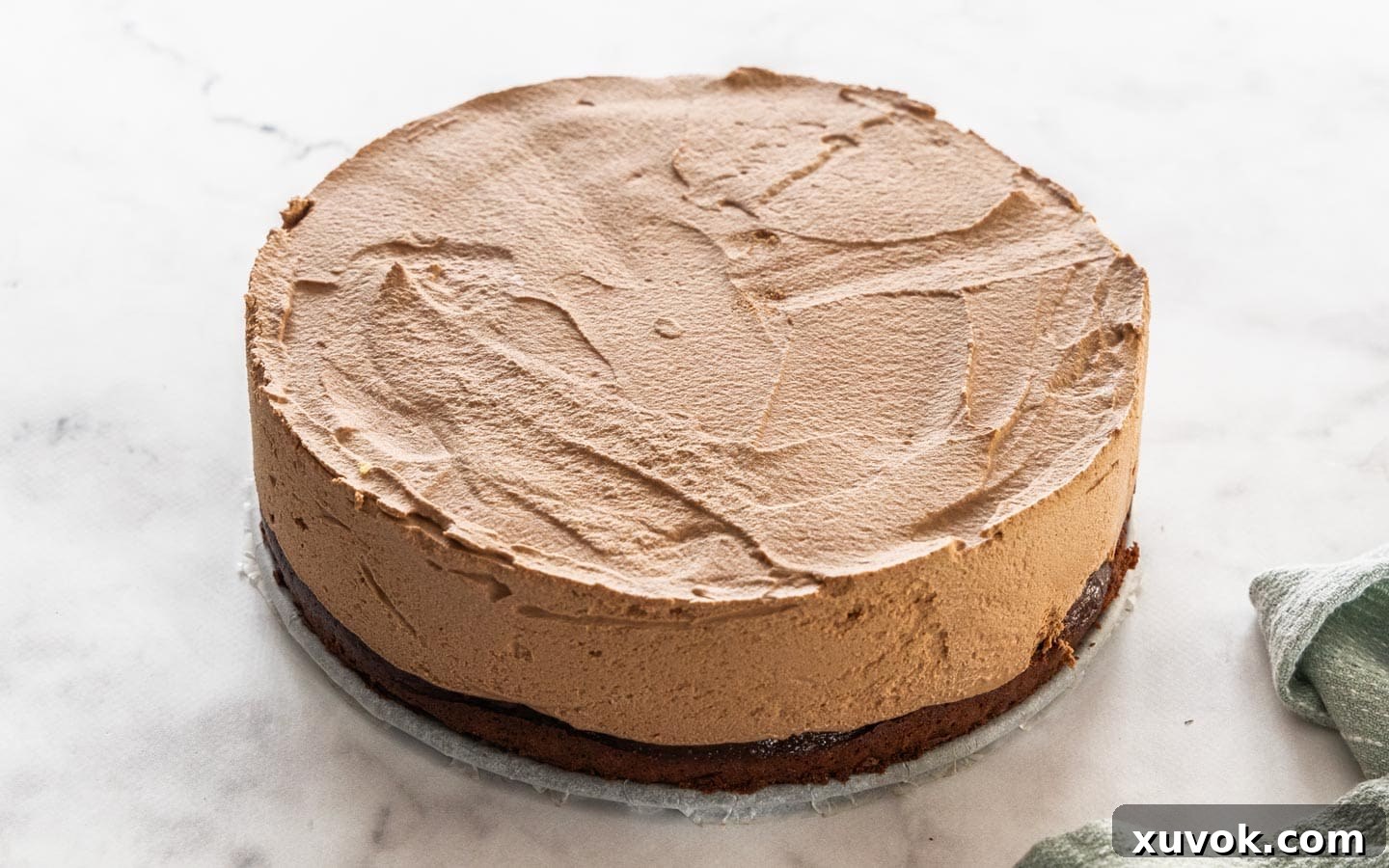
Before generously spooning the exquisite mousse onto your cooled chocolate cake base, consider using an acetate cake collar. This simple tool, slipped around the inside perimeter of your springform pan, helps create exceptionally clean, smooth sides for your mousse layer, giving your finished cake a truly professional and polished appearance. If you’re not using acetate, simply ensure your baking paper sides are still securely in place.
Once the collar (or paper) is set, carefully spoon the delicate chocolate mousse into the pan, spreading it evenly over the cake base. Use an offset spatula to level the top as smoothly as possible. This mousse layer now requires serious chilling time to set properly – a minimum of 3 hours is essential, but for the very best results and ultimate stability, chilling it overnight in the refrigerator is highly recommended. Patience here will be greatly rewarded!
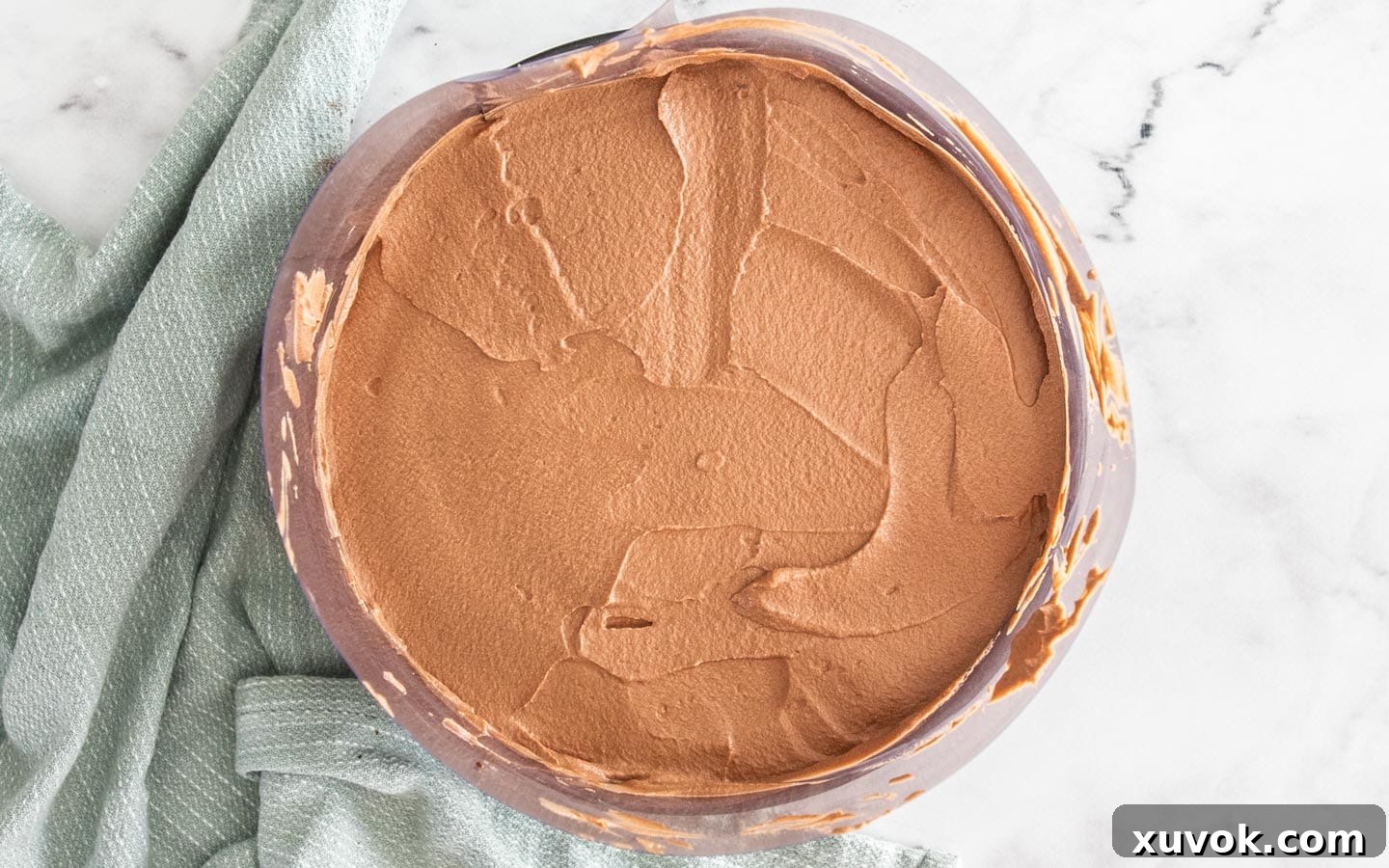
Unveiling the Magic of Mirror Glaze
Mirror glaze, often referred to as “glaçage miroir” in French pastry, is a magnificent, highly reflective coating used to adorn cakes, tarts, and other desserts. Its signature characteristic is a brilliantly shiny surface that remains smooth and glistening even after setting, giving it an almost glass-like, mirror-polished appearance. There are various formulations for mirror glaze, but most typically combine cream, sugar (or sometimes condensed milk), and gelatine. The gelatine is the magical ingredient that allows the glaze to set into a soft, jelly-like consistency, while retaining its incredible sheen.
Our particular chocolate mirror glaze recipe leverages a careful balance of water, gelatine, whipping cream, sugar, and cocoa powder. This combination results in a perfectly smooth, intensely shiny glaze that beautifully encases the cake, creating a stunning visual impact. It sets to a soft texture, reminiscent of a delicate chocolate jelly, and is surprisingly straightforward to prepare. A significant advantage of this glaze is its forgiving nature: should it set prematurely before you’re ready to use it, you can gently reheat it to bring it back to a pourable consistency. This exquisite glaze is undoubtedly the most elegant and impressive way to finish your chocolate cake with chocolate mousse, transforming it into a true work of art.
6. Crafting the Perfect Mirror Glaze
The journey to a flawless mirror glaze begins with “blooming” the gelatine. Sprinkle your powdered gelatine evenly over a small amount of cold water and set it aside for a few minutes. This allows the gelatine granules to absorb the liquid and soften, becoming plump and ready to dissolve smoothly later.
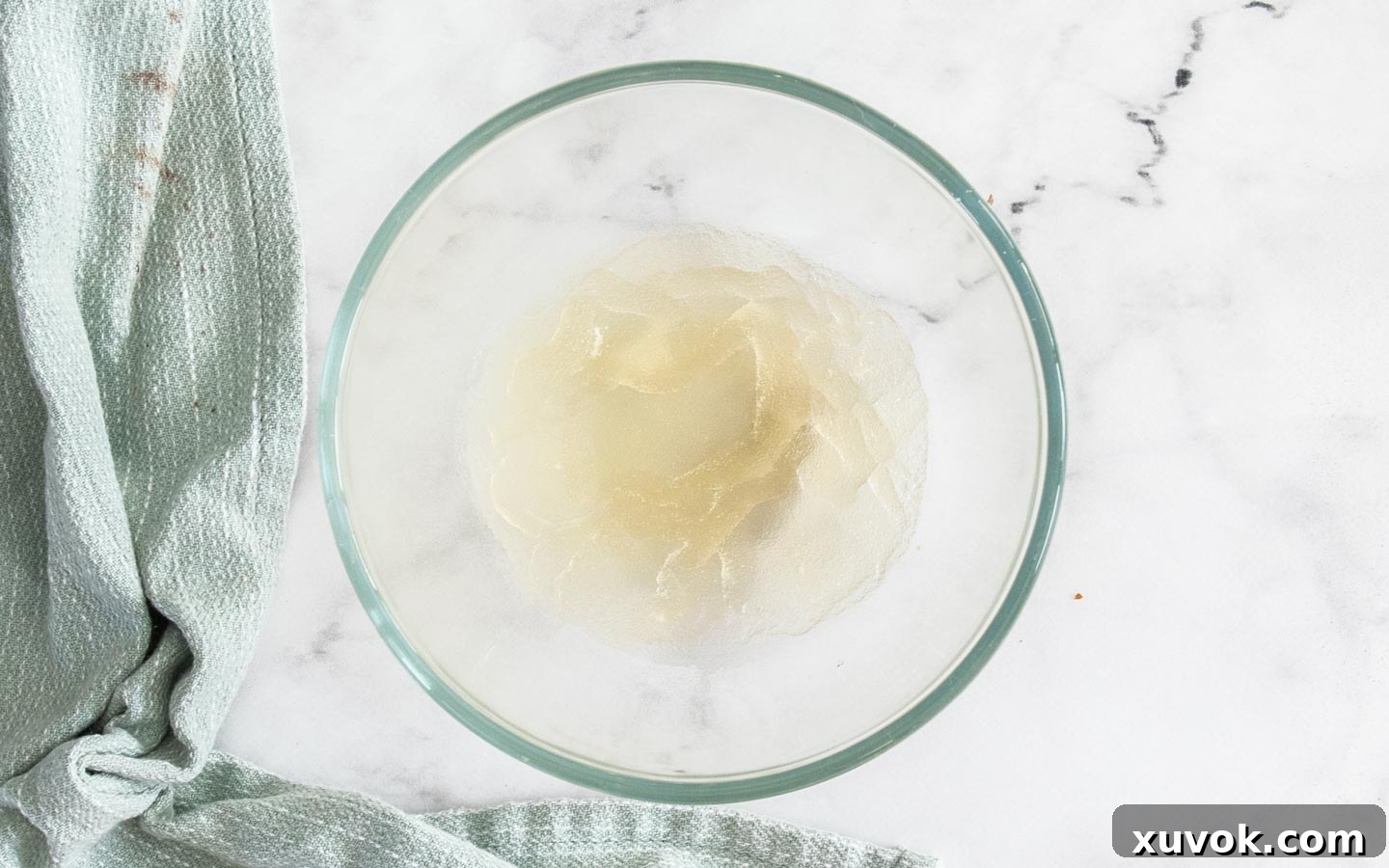
While the gelatine blooms, combine the remaining water, whipping cream, sugar, and cocoa powder in a saucepan. Place it over very low heat and stir continuously. The goal here is to gently dissolve the sugar completely without boiling the mixture. A silicone spatula is an invaluable tool for this step, as you can easily feel the bottom of the pan to ensure no sugar crystals remain. Continue stirring until the mixture is uniform and smooth.
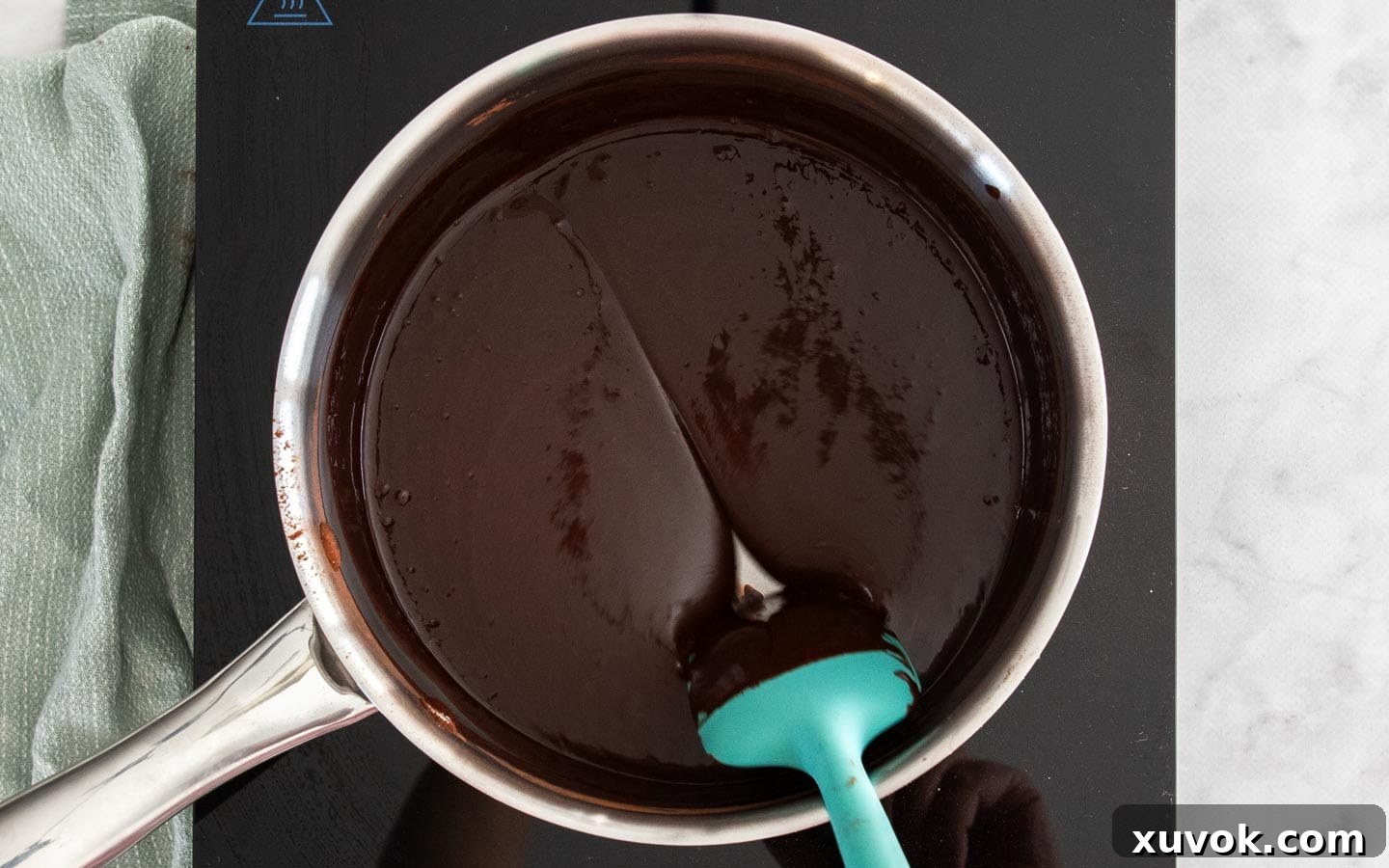
Once the sugar is fully dissolved, add the bloomed gelatine mixture to the saucepan. Whisk or stir for another minute or so, ensuring the gelatine completely dissolves into the warm liquid. Again, it is crucial to keep the heat low and prevent the mixture from boiling, as excessive heat can compromise the gelatine’s setting power. The glaze should appear beautifully shiny and smooth.
After cooking, immediately pour the glaze through a fine-mesh strainer into a clean jug. This step is essential for removing any potential lumps, undissolved cocoa, or impurities, ensuring your final glaze is impeccably smooth and pristine. Now, the most important part: cooling. Set the jug aside to cool slightly. The exact cooling time can vary depending on how hot the glaze initially got. It could take anywhere from 20 minutes to an hour. You’re looking for a specific consistency: it should be just above room temperature, thickened enough to coat the back of a metal spoon, but still fluid enough to pour smoothly. If it’s too hot, it will melt your mousse; too cold, and it will set too quickly and unevenly on the cake.
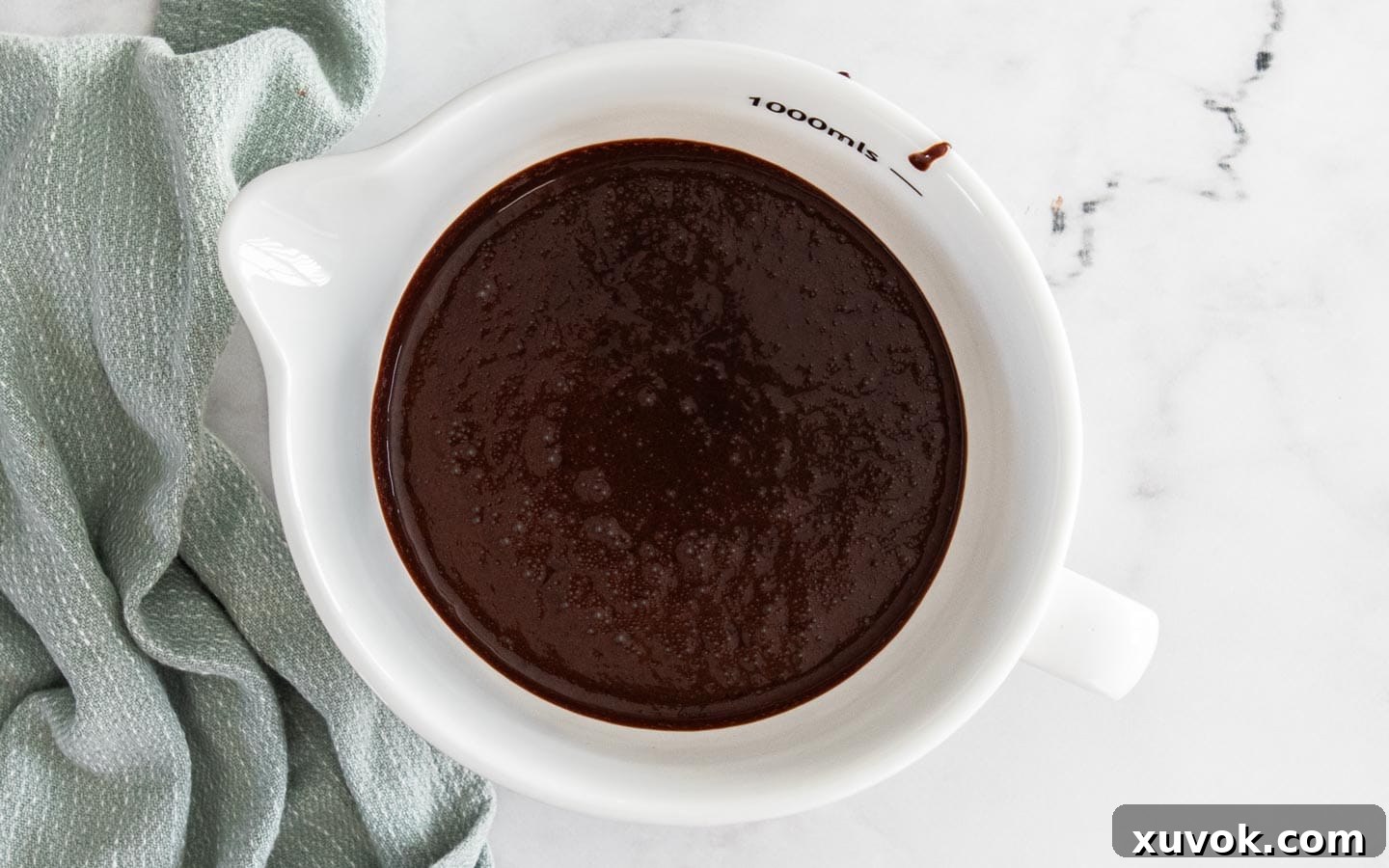
7. Achieve the Perfect Glaze on Your Mousse Cake
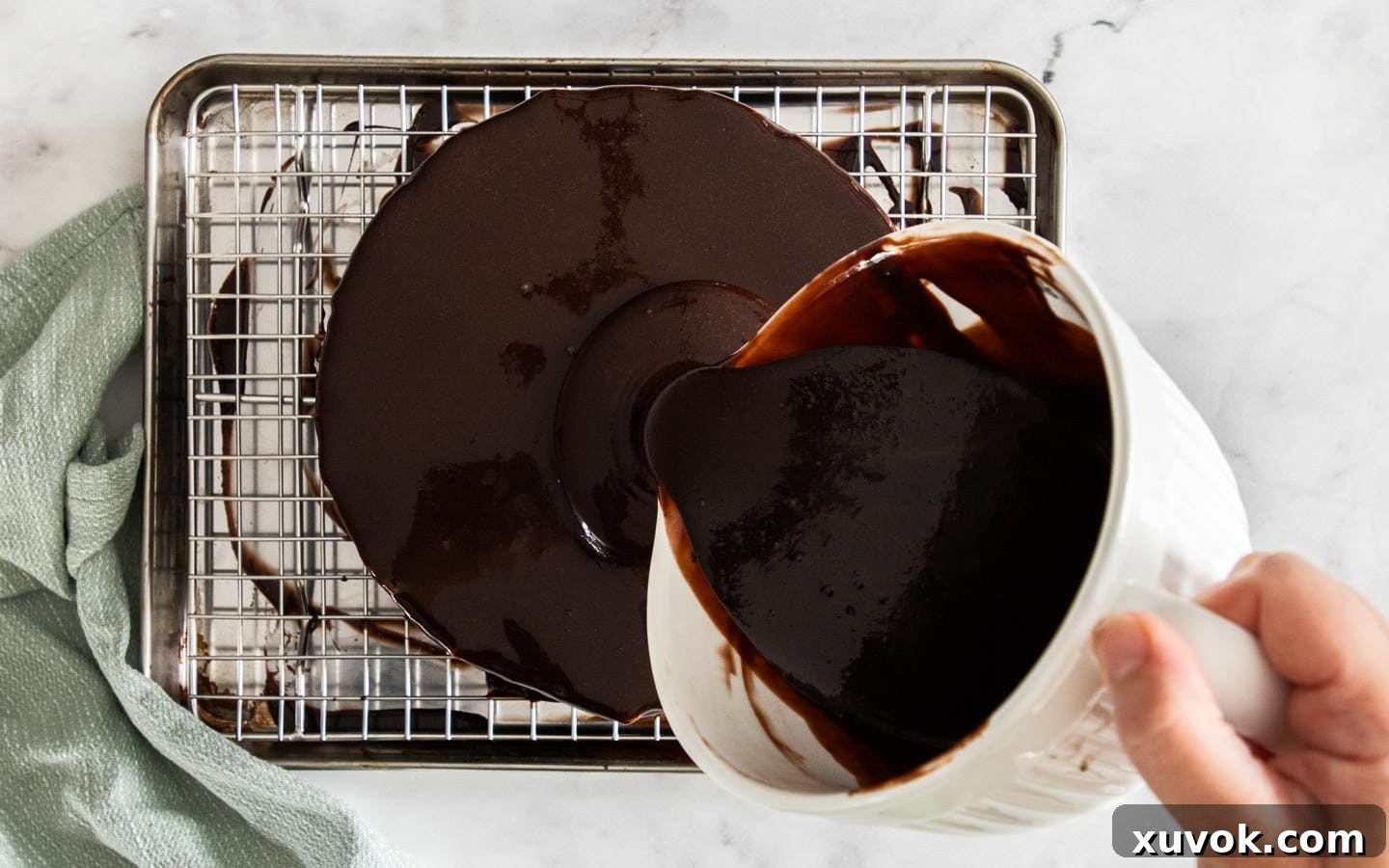
Now, the moment of truth! Your meticulously prepared chocolate mousse cake is ready for its shimmering mirror glaze. First, carefully remove the outer ring of your springform pan and gently peel away the baking paper or acetate strips from around the mousse. Leave the cake on its original pan base for stability. Place the cake, still on its base, onto a wire rack, ensuring the rack is positioned over a baking tray to catch any excess glaze.
The mirror glaze must be at the ideal consistency for pouring. It needs to be cool enough to have thickened slightly, but still fluid enough to cascade smoothly over the cake. The perfect test: it should thickly coat the back of a metal spoon, with only a small amount gently running off. It should feel just warmer than room temperature – absolutely not cold, as a cold glaze will seize immediately upon contact with the chilled cake, resulting in an uneven finish. If it’s too warm, it risks melting your delicate mousse layer.
Be warned: this step can get a little messy, so don’t hesitate to cover your work surface! Pour all of the glaze over the top of the chocolate mousse layer, working quickly and confidently. Ensure you guide the glaze around the edges, allowing it to drip beautifully down the sides, completely covering the cake. Once coated, carefully lift the wire rack (with the cake) and set it aside to allow the glaze to drip for a few minutes. Scrape all the excess glaze that has collected in your baking tray back into your jug. This collected glaze can be gently reheated and used for a second coat if desired, or saved for another dessert. Move swiftly during this process to prevent the glaze from setting prematurely on the cake, which happens quickly due to the cold mousse. If you’re applying multiple coats, work with speed and precision to avoid a patchy or lumpy appearance.
Planning Ahead & Storage Tips for Your Chocolate Masterpiece!
While this easy chocolate mousse cake recipe is not inherently difficult, it does demand a certain amount of time, primarily for cooling and setting. Rest assured, every minute invested is absolutely worth it for the spectacular result! No single step is overly complex, but successful execution hinges on good preparation and understanding the timeline.
- The Chocolate Cake Base: Our moist chocolate cake recipe is wonderfully simple and quick to prepare. However, it’s crucial to allow ample time for it to cool completely before the mousse layer can be added. This cooling process can take up to an hour at room temperature, but you can significantly speed it up by placing the cake in the fridge or even the freezer. If you’re planning to use acetate strips or an acetate cake collar for the mousse, you can remove the springform ring after baking to help the cake cool even faster. If you prefer to stick with baking paper, you can either leave the sides of the pan on while it cools or replace the baking paper and then secure the springform sides back around the cake once it’s cool enough to handle.
- The Chocolate Mousse: Once prepared and spread over the cake, the chocolate mousse requires a minimum of 2-3 hours to firm up sufficiently before you can pour the mirror glaze over it. For optimal stability and ease of glazing, chilling the mousse layer overnight is highly recommended. A well-chilled mousse will hold its shape beautifully under the weight and warmth of the glaze.
- The Chocolate Mirror Glaze: After cooking, the mirror glaze needs to cool to the correct pouring consistency, which can take anywhere from 20 to 60 minutes, depending on its initial temperature in the pan. Once applied to the cake, the glaze will then need another 45 minutes to an hour to set into its glossy, jelly-like state.
As you can see, while the active “hands-on” preparation time totals approximately 45-50 minutes, there’s an additional 5 ½ hours (or more!) dedicated solely to cooling and setting. For this very reason, **we strongly recommend preparing this exquisite cake a day in advance** of when you plan to serve it. This allows all layers to set perfectly, resulting in an impeccably structured and stunning dessert. The assembled cake will keep beautifully for up to 4-5 days when stored in an airtight container in the refrigerator. If you add the mousse layer far in advance, aim to serve the cake within 2-3 days max for the freshest taste and best texture.
Troubleshooting: What if My Mirror Glaze Isn’t Smooth?
Even experienced bakers can encounter challenges, and an uneven mirror glaze can be disheartening. It’s happened to me before: the glaze cooled too much, setting too quickly upon contact with the cake, resulting in unsightly lumps and bumps, especially with multiple pours. But don’t despair – there are ways to salvage your masterpiece!
If your glaze appears patchy or lumpy, act quickly. Place the entire cake back into the refrigerator for about 10 minutes to allow the glaze to firm up slightly. Then, with extreme care, try to gently peel off the uneven glaze. Because of the gelatine, it should come away from the mousse fairly easily, almost like a thin sheet. Do your best to remove it as tidily as possible, then give the mousse cake a little longer to re-chill and firm up completely.
Next, prepare a fresh batch of mirror glaze, paying extra attention to its temperature. Ensure it remains just above room temperature – thick enough to coat a spoon, but fluid enough to pour effortlessly. Before applying the new glaze, you can gently smooth out any slight imperfections on the mousse surface using a warm offset spatula (warmed under hot water and thoroughly dried, or with a kitchen blowtorch for just a second or two). Finally, pour the new glaze over your cake quickly and confidently. Aim for no more than two pours to achieve a perfectly smooth and glossy finish this time around. You’ve got this!
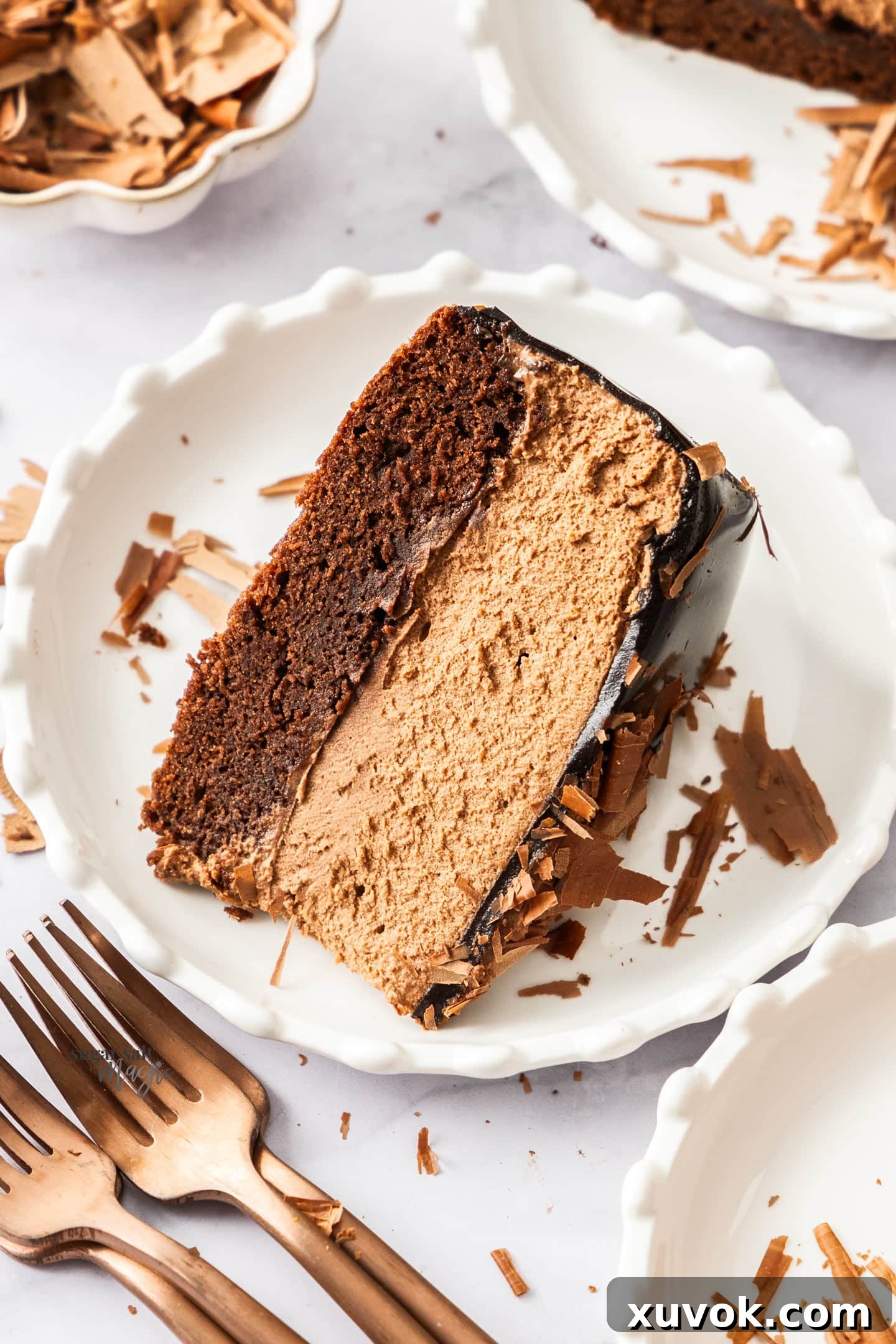
This is more than just a cake; it’s a luxurious, special dessert that will truly captivate your guests and leave a lasting impression. A complete showstopper in both appearance and taste, this chocolate mousse cake is so incredibly good that our trusty taste testers consistently rave about it and always come back for more. Prepare for applause!
More Irresistible Dessert Recipes You’ll Love
- Flourless Chocolate Hazelnut Cake: A rich, gluten-free delight for nut and chocolate lovers.
- Caramel Mud Cake: Deeply flavorful and incredibly moist, perfect for caramel enthusiasts.
- Chocolate Meringue Brownie Cake: A wonderful combination of chewy brownie, fluffy meringue, and intense chocolate.
- One Bowl Chocolate Freckle Cake: An easy, fun, and colorful cake that’s perfect for kids and adults alike.
- Quick Chocolate Bread (Chocolate Loaf Cake): A comforting, quick-to-make chocolate treat, perfect with your morning coffee.
- Blackberry Chocolate Cake: A delightful pairing of sweet, tart blackberries with rich chocolate.
- Chocolate Chip Bundt Cake with Cheesecake Filling: A stunning bundt cake with a surprise creamy cheesecake center.
⭐⭐⭐⭐⭐
Did you try this chocolate mousse cake recipe? We’d love to hear your thoughts! Share your experience and show it some love in the comments below.
Hungry for more culinary inspiration? Subscribe to our newsletter for a steady stream of free, delectable recipes delivered straight to your inbox. Plus, join our vibrant community and follow along on Facebook, Pinterest, and Instagram for daily doses of sweet and savory magic!
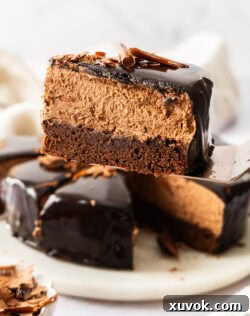
Chocolate Mousse Cake
Rate
Pin
Video
Ingredients
FOR THE MOIST CHOCOLATE CAKE BASE
- ½ cup packed light brown sugar (100g / 3 ½oz)
- ¼ cup caster sugar (superfine sugar) (50g/1.8oz)
- ½ cup buttermilk (125ml)
- 1 teaspoon instant coffee granules
- ¼ cup neutral flavoured vegetable oil
- 1 large egg
- 1 teaspoon vanilla extract
- 130 g plain flour (all-purpose flour) (1 cup spooned & levelled / 4.6oz)
- 30 g Dutch-processed cocoa powder (¼ cup / ~1oz)
- 1 teaspoon baking powder
- ¼ teaspoon salt
FOR THE LUXURIOUS CHOCOLATE MOUSSE
- 2 ½ cups whipping cream divided ¾ cup:1 ¾cup (625ml)
- 200 g dark chocolate (semisweet chocolate/50% cocoa solids) (7oz)
- 57 g unsalted butter (½ stick / ¼ cup)
- 2 tablespoons icing sugar (25g/~1oz) (notes 1)
FOR THE DAZZLING CHOCOLATE MIRROR GLAZE (OPTIONAL)
- ½ cup water (125ml)
- 2 teaspoons powdered gelatine
- ½ cup whipping cream (125ml)
- ¾ cup caster sugar (superfine sugar) (150g / 5.3oz)
- 55 g Dutch processed cocoa powder (½ cup spooned & levelled/2oz)
For best results, always weigh ingredients where a weight is provided
Equipment
-
8 inch spring form pan
-
Acetate cake strips helpful but not essential for a smooth finish
-
mixing bowls
-
A silicone spatula or three (always useful!)
-
Electric mixer or balloon whisk for whipping the cream
-
offset spatula
-
medium saucepan
-
Wire rack and baking tray
Instructions
-
FOR THE CAKE:
Grease and line an 8 inch / 20cm round springform tin with baking paper. Preheat the oven to 180C (160C fan forced) / 350F.
-
In a large bowl, dissolve the coffee granules into 2 tablespoon of hot water. Add the buttermilk, sugars, oil, egg and vanilla until well combined.
-
Sift over the flour, cocoa, baking powder and salt then stir with a rubber spatula until just combined.
-
Pour the batter into the prepared tin and bake for around 20-22 minutes, until a toothpick inserted comes out with just a crumb or two attached.
-
Immediately, use a flat bottomed glass or smaller pan to gently press all over the top of the cake, especially pressing out towards the sides to achieve a flat cake top. This method avoids waste and contributes to a fudgier texture.
-
Run a knife around the edge of the cake to ensure it isn’t sticking to the sides of the pan.
– If you are not using acetate to form your mousse, leave the cake in the pan to cool completely.
– If you plan to use acetate, lift out the baking paper sides and unspring the cake pan sides to facilitate quicker cooling.
-
Place the cake in the fridge or freezer to speed up cooling before making the mousse.
-
FOR THE CHOCOLATE MOUSSE (only once the cake has cooled completely):
Place the finely chopped dark chocolate, cubed unsalted butter, and icing sugar into a medium bowl.
-
Heat ¾ cup (180ml) of the whipping cream in a small saucepan until it is heavily steaming, just before simmering. Immediately pour it over the chocolate and butter mixture. Let it sit for one minute to soften, then stir gently until you achieve a smooth ganache. If necessary, briefly microwave for 20 seconds or set the bowl over a pan of simmering water (without touching the water) and stir until smooth.
-
Allow the ganache to cool to room temperature before proceeding. This can be sped up by placing it in the fridge, stirring occasionally.
-
In a large bowl, using a balloon whisk or electric beater, beat the remaining 1 ¾ cups cream to soft peaks.
-
Gently stir about ½ cup of the whipped cream directly into the cooled ganache to lighten it. Then, carefully fold the remaining whipped cream, in two additions, into the chocolate mixture until just combined. Be very gentle to avoid deflating the cream, which would make the mousse dense.
-
If using acetate to form the mousse, reset the side of the cake pan around the cake base and carefully slot the acetate strip down inside, ensuring it’s pressed down past the sides of the cake. Secure the join with sticky tape. If not using acetate, proceed to the next step directly.
-
Evenly spread the chocolate mousse over the cake base. Use an offset spatula to smooth the top as flat as possible. Chill in the refrigerator for at least 3 hours, or ideally, overnight, to ensure the mousse sets firmly.
-
FOR THE CHOCOLATE MIRROR GLAZE (Begin this step towards the end of the mousse cake chilling time, as it requires cooling):
Sprinkle the powdered gelatine over ¼ cup (60ml) of cold water and let it ‘bloom’ for 5 minutes.
-
In a saucepan over low heat, combine the remaining ¼ cup of water, whipping cream, caster sugar, and Dutch processed cocoa powder. Whisk to combine, then switch to a spatula and stir constantly until the sugar has completely dissolved. It is crucial to maintain low heat; the mixture must not come to a boil.
-
Add the bloomed gelatine and water mixture to the saucepan and whisk thoroughly until fully dissolved. Again, ensure the glaze does not boil at any point.
-
Immediately pour the hot glaze through a fine-mesh sieve into a clean jug to remove any potential lumps or impurities. Allow the glaze to cool. This can take anywhere from 20 minutes to an hour. The glaze is ready when it is slightly above room temperature and coats the back of a metal spoon thickly, with only a little running off. Do not let it get cold, or it will set too quickly. Skim off any light film that may form on top before using.
-
Carefully remove the outer frame of the springform tin and gently peel away the baking paper or acetate from the mousse cake. Optional: If you wish to smooth the mousse surface, refer to the notes section for tips on using a warm spatula.
-
Place the cake, still on its baking tin base, onto a wire rack set over a baking tray with sides. Quickly and confidently pour all of the prepared glaze over the entire cake, ensuring it covers the top and flows down the sides evenly. Use a large flat metal spatula to gently smooth any areas, being careful not to press into the mousse. Lift the wire rack and set it aside. Use a silicone spatula to scrape the excess glaze collected in the baking tray back into your jug. Work quickly to prevent the glaze from setting too rapidly on the cake.
-
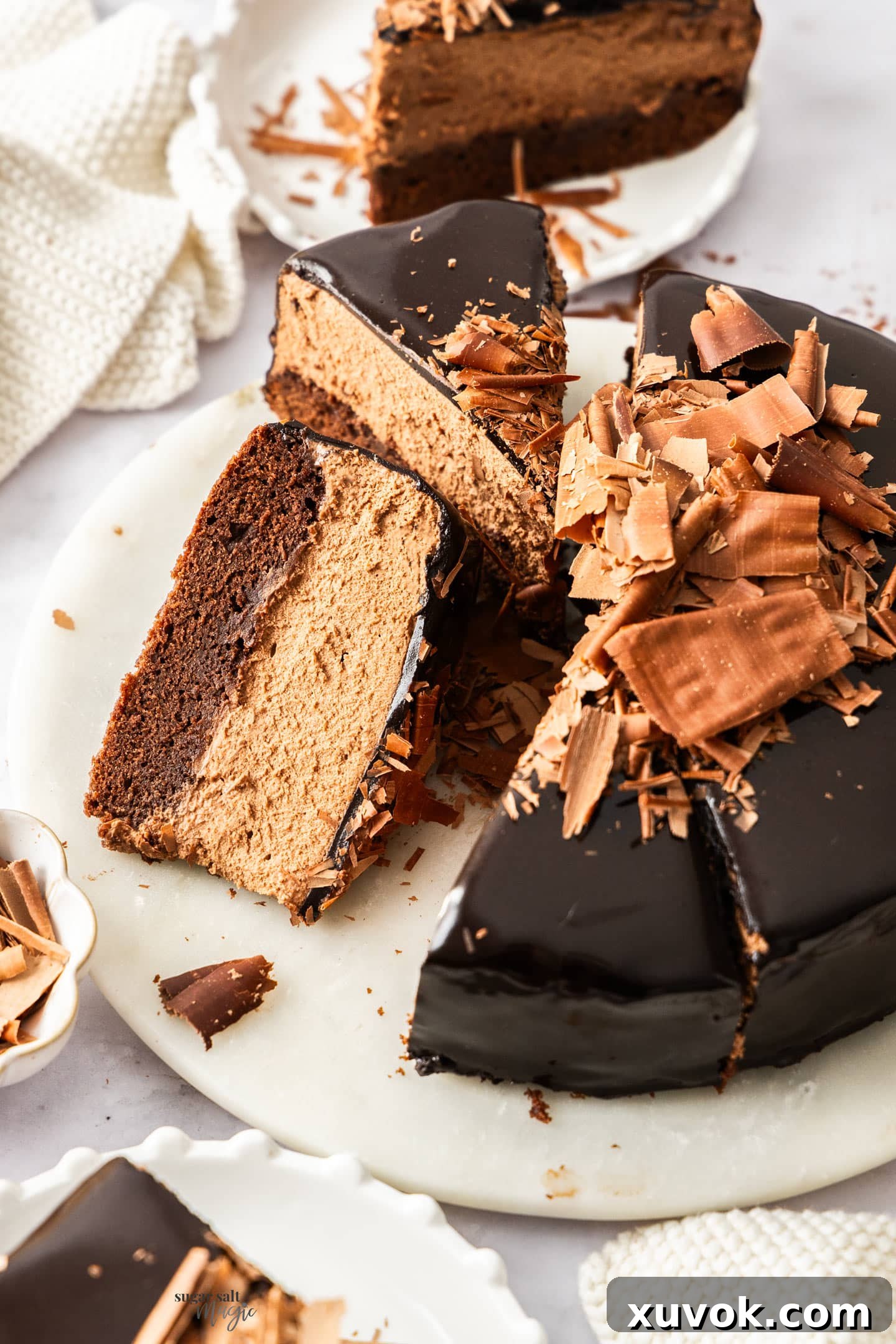
Chill the glazed cake in the fridge for at least an hour to allow the glaze to fully set. Once set, carefully remove the cake from its tin base. The base should detach with ease. Holding the cake from underneath with one hand, gently peel back the remaining baking paper halfway, then swap hands to remove it entirely. For a tidy edge, use a sharp knife to trim around the bottom where the glaze might be uneven. Transfer the cake to a serving plate. To cut perfect, smooth slices, use a sharp knife warmed under hot water and wiped dry before each cut.
-
Please take a moment to leave a comment & rating below. Your feedback is greatly appreciated and incredibly helpful!
Notes
- Tablespoons: This recipe uses a standard Australian 20ml tablespoon, which is equivalent to 4 teaspoons. Please check your measuring spoons to ensure accuracy.
- For the best serving experience, store this cake in the fridge and allow it to sit at room temperature for about 20 minutes before serving. This allows the mousse and cake to soften slightly for optimum texture.
- Due to the multiple cooling and setting times involved, we highly recommend making this cake a day in advance.
- Baking time: Oven temperatures can vary. Always monitor your cake as it approaches the suggested baking time. It’s done when a toothpick inserted into the center comes out with only a few moist crumbs.
- Feel free to experiment with a darker chocolate (e.g., 60-70% cocoa solids) for the mousse, but be aware that a higher cocoa percentage will result in a firmer mousse consistency once set.
- If you wish to achieve an even smoother mousse surface before glazing, gently warm an offset spatula (by running it under hot water and drying it thoroughly, or briefly with a kitchen blowtorch). Lightly run the heated spatula over the mousse. Be careful not to overheat the spatula or the mousse.
- The mirror glaze temperature is crucial. It can take up to an hour to cool to the ideal pouring consistency. It’s ready when it thickly coats a spoon with just a little running off and is slightly warm to the touch (around 85-90°F or 30-32°C). If it’s too warm, it can melt the mousse; too cold, and it will set prematurely and unevenly.
- Once the mirror glaze has cooled and set, it will have a jelly-like texture. If you need to re-use or re-melt it for any reason (e.g., for a second coat, or if it sets before you’re ready), you can gently reheat it in the microwave. Heat in 20-second increments, stirring well between each, until it reaches the desired pouring consistency. Avoid boiling, as this can destroy the gelatine’s setting properties.
- This magnificent cake will remain fresh for 2-3 days when stored in an airtight container in the refrigerator.
- Please note that all nutrition details provided are approximate, derived from an online calculator, and may vary depending on the specific brands and exact quantities of ingredients you use.
EXPLORE MORE DELECTABLE CAKE RECIPES!
Calories from Fat 351