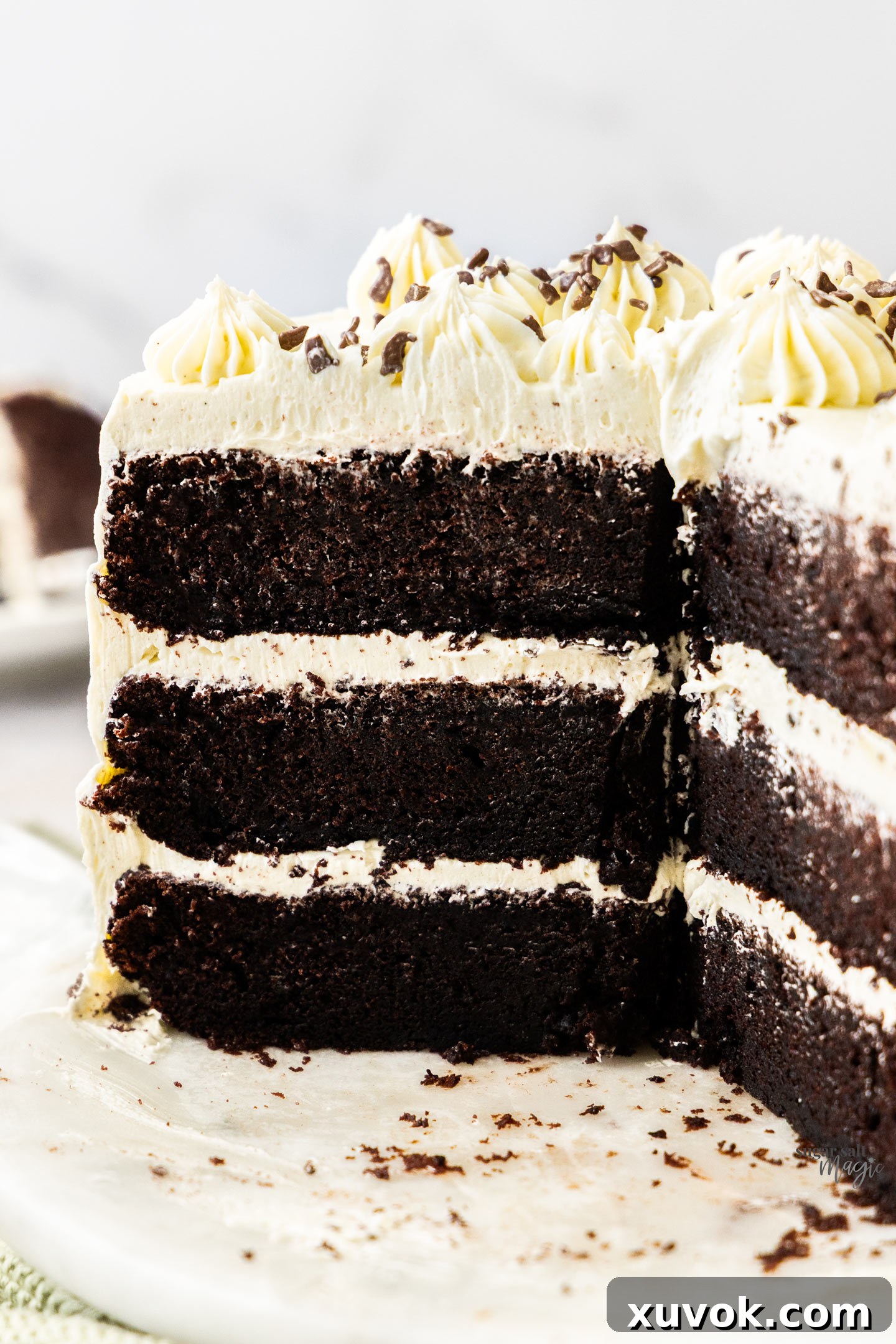
Indulge in Classic Perfection: The Ultimate Chocolate Cake with Vanilla Buttercream (Black and White Cake)
There are few desserts as universally adored and comforting as a rich chocolate cake, especially when crowned with a light, fluffy vanilla buttercream. This iconic combination, often lovingly referred to as the “Black and White Cake,” is a masterpiece of contrast and flavor – deep, dark chocolate meeting sweet, airy vanilla in a truly irresistible embrace. Forget dry, crumbly cakes; our recipe delivers three perfectly fudgy layers of the best chocolate cake you’ll ever taste, generously filled and topped with a simple yet sublime whipped vanilla buttercream that will have everyone asking for a second slice.
This isn’t just any chocolate cake recipe; it’s a tried-and-true classic, my absolute go-to for celebrations, birthdays, or simply when a serious chocolate craving strikes. Its deliciousness is matched only by its surprising ease of preparation, making it accessible for bakers of all skill levels. You might recognize its incredible base from other favorites like our decadent Oreo chocolate cake or the luxurious salted caramel chocolate cake. Whether you’re planning a grand birthday party, a special Mother’s Day brunch, or any festive gathering, this versatile cake serves as the perfect canvas for your creative decorations, promising a show-stopping dessert that tastes as amazing as it looks.
Dive into this guide and discover how to bake a truly unforgettable chocolate cake with vanilla buttercream – a dessert that embodies pure indulgence and timeless charm. From selecting the right ingredients to mastering the whipped frosting, we’ll walk you through every step to ensure your black and white cake is nothing short of spectacular.
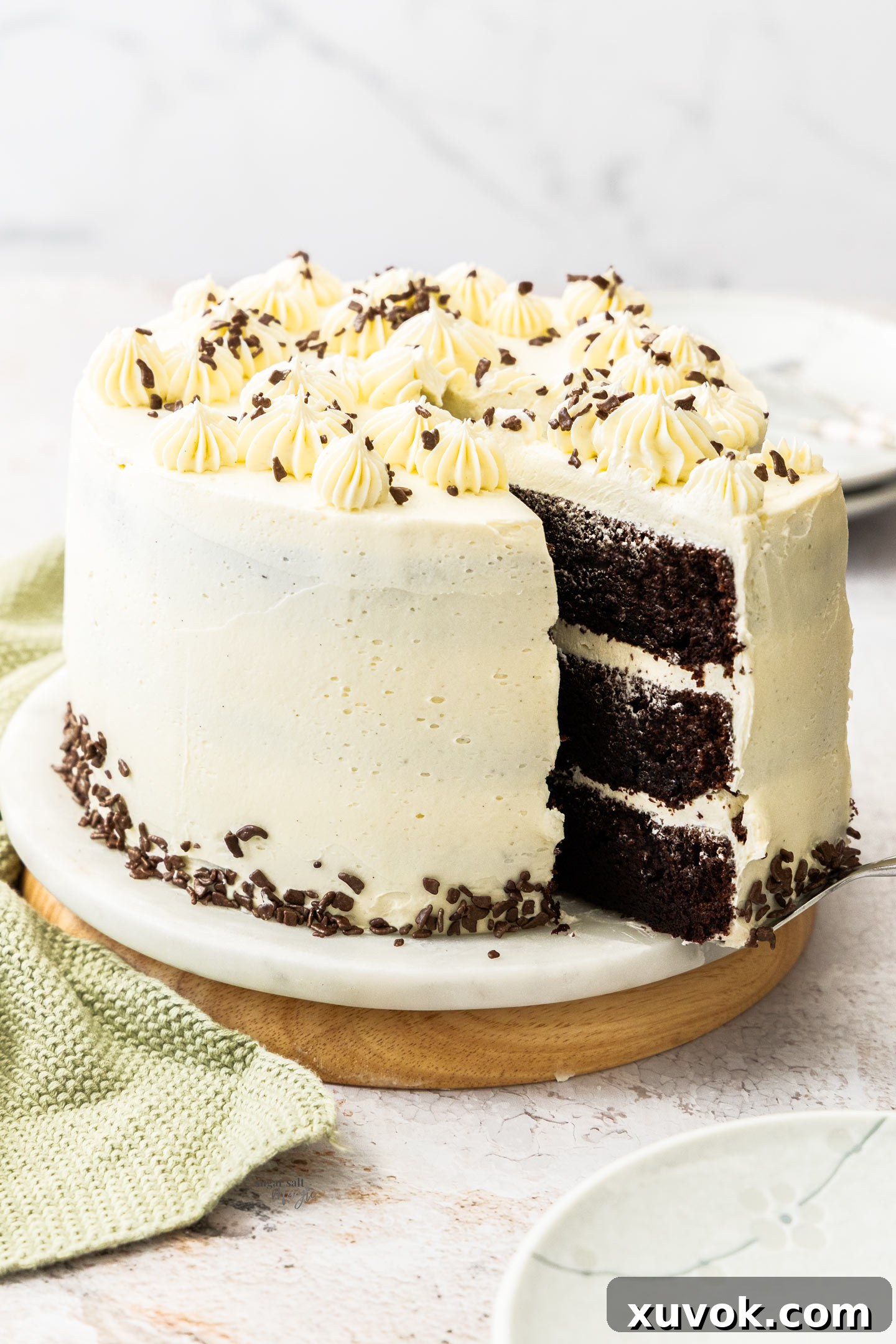
Table of Contents
Never Miss a Recipe!
Get the latest recipes straight to your inbox and elevate your baking game!
Sign up for our newsletter to receive delicious recipes and baking tips directly in your inbox. Join our community of home bakers!
The Essence of Flavor: Ingredients & Smart Substitutions
Crafting this luscious chocolate and vanilla cake begins with a selection of accessible baking staples. While most ingredients like flour, sugar, eggs, and cocoa are likely in your pantry, a deeper understanding of a few key components will ensure your cake reaches its full potential in terms of flavor and texture.
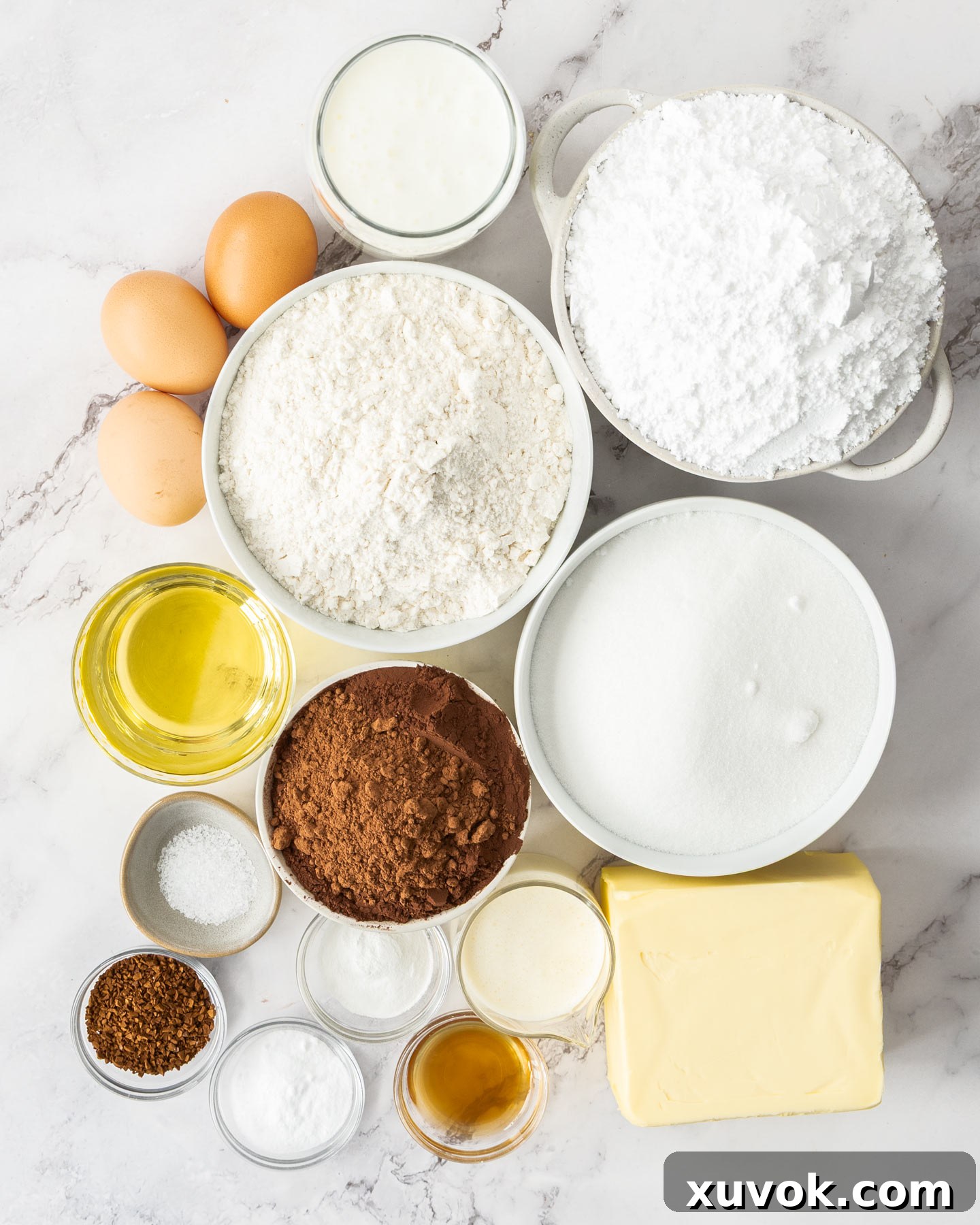
For precise measurements and detailed instructions, refer to the full recipe card below.
- Dutch Process Cocoa: For that truly deep, dark chocolate color and mellow, rich flavor in your cake, Dutch process cocoa powder is the superior choice. Its acidity has been neutralized, resulting in a less bitter taste compared to natural cocoa.
- Instant Coffee Granules: Don’t worry, your cake won’t taste like coffee! A small amount of instant coffee magically intensifies the chocolate flavor, making it richer and more profound. It’s a secret ingredient many bakers swear by for enhancing chocolate desserts. You can use decaf if preferred.
- Vegetable Oil: Crucial for keeping the chocolate cake layers incredibly moist and achieving that desirable fudgy texture. Oil ensures a tender crumb that stays soft for days, unlike butter which can sometimes make cakes denser.
- Buttermilk: This acidic ingredient works wonders for tenderness and moisture. Buttermilk reacts with the baking soda, creating air pockets that result in a light yet moist crumb. If you don’t have buttermilk, you can easily make your own by adding 1 tablespoon of white vinegar or lemon juice to a measuring cup, then filling the rest with milk to 1 ½ cups, letting it sit for 5-10 minutes until it slightly curdles.
- Baking Powder & Baking Soda: Both are leavening agents, but they function differently. Baking soda requires an acid (like buttermilk or cocoa) to activate, while baking powder is double-acting, providing lift both when wet and when heated. Using both ensures optimal rise and a perfect cake structure. Ensure accurate measurements for the best results.
- Thickened Cream (Heavy Cream) for Frosting: The secret to our incredibly light and airy whipped vanilla buttercream. Using thickened cream (or heavy whipping cream) instead of just butter and sugar gives the frosting a delicate, cloud-like texture that truly melts in your mouth and balances the richness of the chocolate cake.
- Unsalted Butter: Essential for the buttercream. Ensure it’s softened to room temperature for optimal whipping and a smooth, creamy frosting.
- Icing Sugar (Powdered Sugar): The base of the buttercream. Sifting it is key to avoiding lumps and achieving a silky-smooth consistency.
- Vanilla Extract: Use a good quality vanilla extract for both the cake and the buttercream to elevate the overall flavor profile.
Baking Mastery: How to Make the Perfect Black and White Cake
Despite its impressive appearance, this black and white cake is genuinely straightforward to prepare, making it a fantastic project for both novice and experienced bakers. Don’t be intimidated by the frosting process – even if you’re not a master decorator, a rustic, artfully spread frosting can be just as charming and delicious. You can opt for a simple elegant swirl, or even just pipe dollops between the layers for a beautiful effect, much like our Oreo chocolate cake and salted caramel chocolate cake.
Follow these steps closely, and you’ll be rewarded with a show-stopping cake that tastes as good as it looks. Remember to refer to the recipe card for precise quantities and comprehensive instructions.
1. Preparing the Dry Ingredients
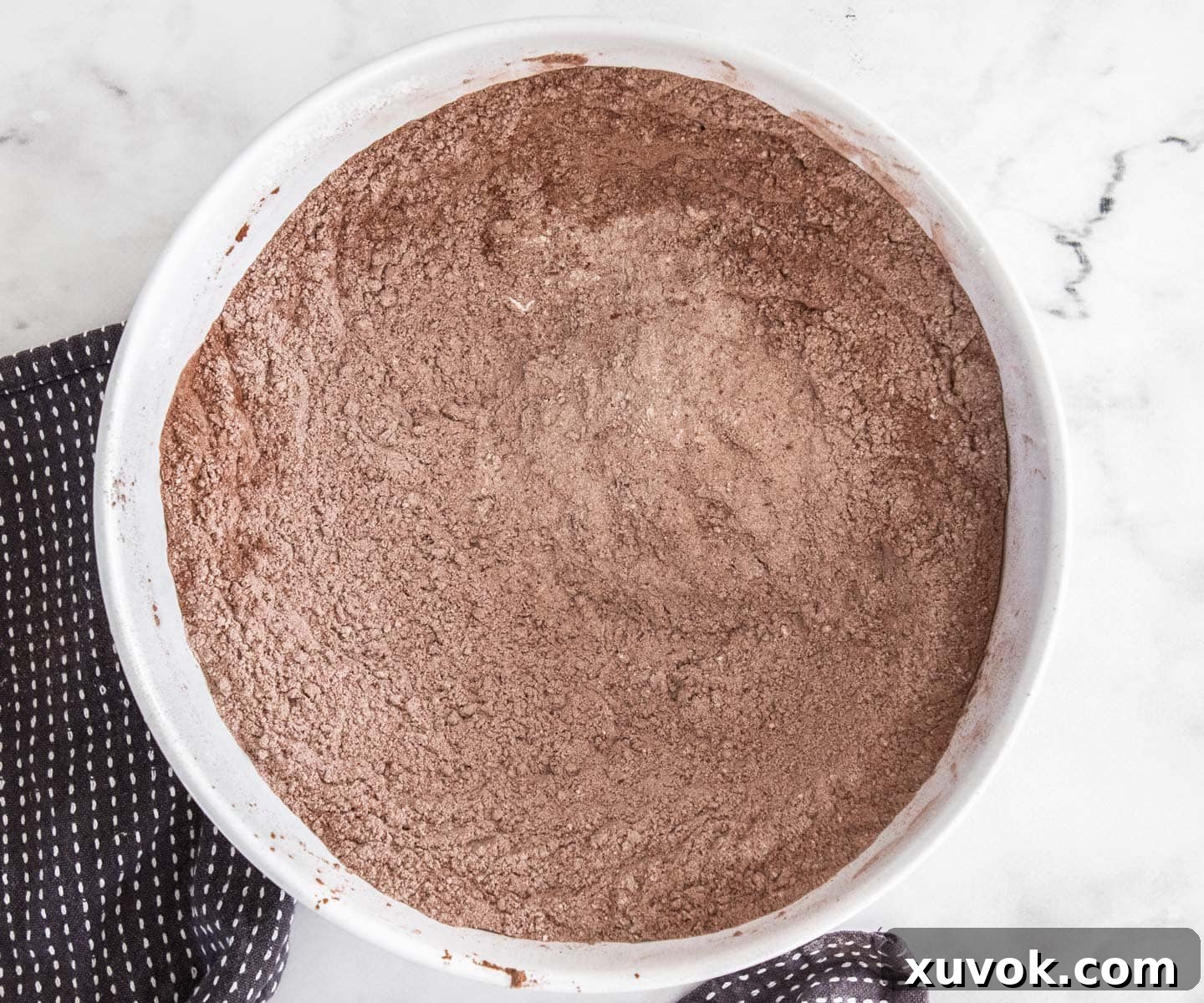
Begin by ensuring your dry ingredients are perfectly combined and aerated. In a very large bowl, meticulously sift together the plain flour, Dutch process cocoa powder, baking powder, and baking soda. Sifting is a crucial step that not only removes any lumps but also lightens the mixture, ensuring a smoother batter and a tenderer cake crumb. Once sifted, whisk in the granulated sugar and a pinch of salt. This gentle whisking ensures an even distribution of all dry components, setting the stage for perfectly balanced flavor throughout your cake layers.
2. Incorporating the Wet Ingredients
Creating a well in the center of your dry mixture is a classic technique for seamlessly blending wet and dry components. Into this well, pour the hot coffee (which has magically dissolved the instant coffee granules), vegetable oil, room temperature buttermilk, large eggs, and vanilla extract. Start by giving it a preliminary stir with a spatula to loosely combine, then switch to an electric mixer. Beat the mixture for precisely one minute. This brief mixing period is essential; overmixing can develop the gluten in the flour, leading to a tough cake, so adhere to the one-minute rule for a tender, moist result.
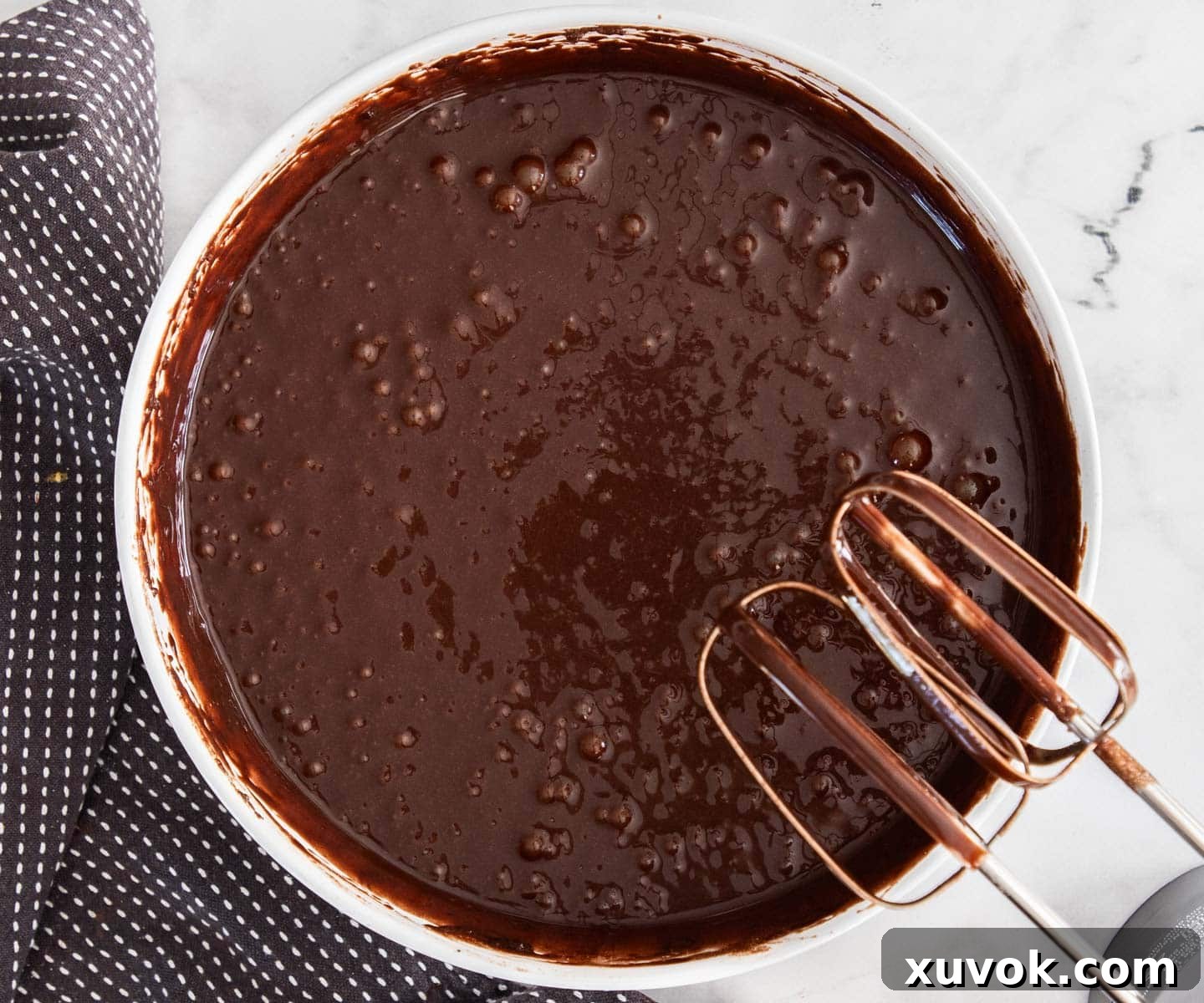
3. Portioning and Baking to Perfection
For uniform baking and perfectly level layers, evenly divide the chocolate cake batter among three 8-inch round cake pans. Ensure your pans have been thoroughly greased and dusted with cocoa powder (instead of flour, to prevent white residue on your dark cake). Bake for 30-35 minutes in a preheated oven. A reliable test for doneness is to insert a toothpick into the center of a cake – it should emerge with only a crumb or two attached, not wet batter. This indicates a perfectly baked, moist interior without being overdone.
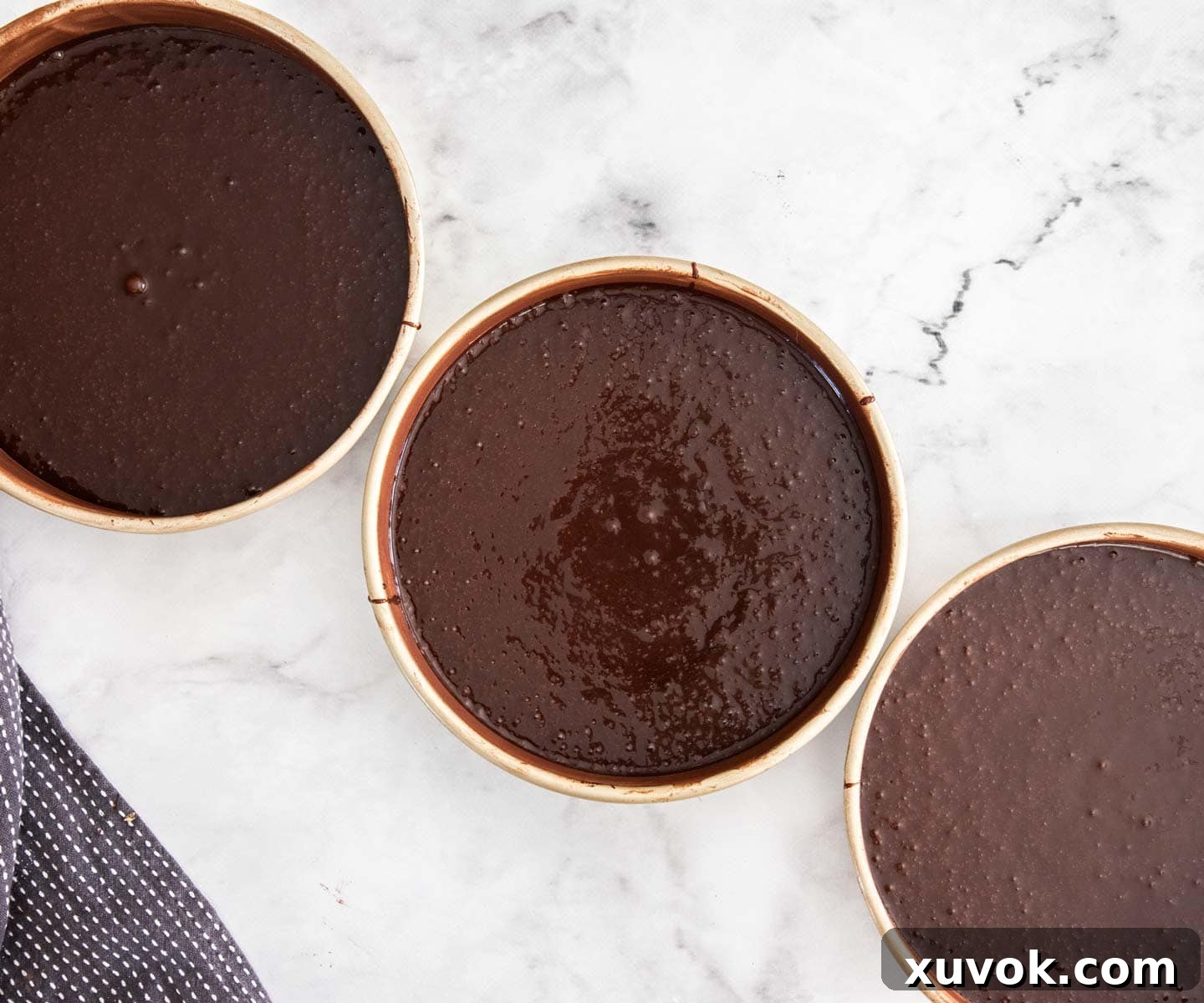
4. The Secret to Level Cakes: Flattening the Domes
This might sound unconventional, but a clever trick to achieve the slightly fudgy texture and perfectly stackable layers in these cakes is to gently flatten their domes immediately after baking. As soon as the cakes emerge from the oven, while still hot, carefully place another cake pan of the same size on top and press down lightly. Your goal is not to completely flatten the cakes to the height of the pan sides, which would make them too dense, but rather to just slightly reduce the dome. This simple step eliminates the need for trimming, ensures your layers sit flat and neatly when stacked, and contributes to the cake’s wonderful, moist consistency.
5. Crafting the Whipped Buttercream: Whipping the Butter
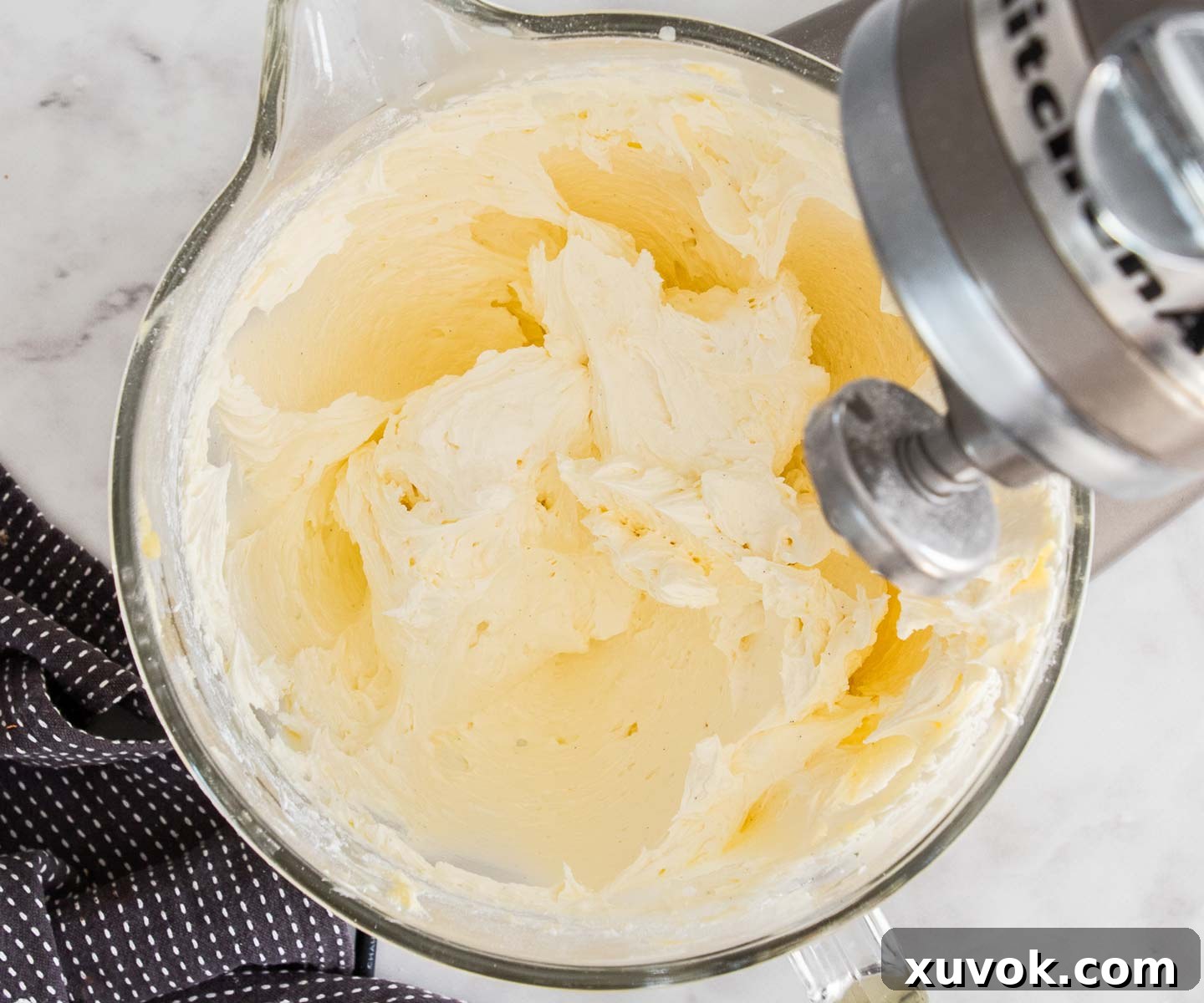
The star companion to our chocolate cake is a whipped vanilla buttercream – known for its incredibly airy, creamy, and light texture. For optimal results, a stand mixer is highly recommended, as it allows for the prolonged beating needed to achieve that coveted pale and whipped consistency. Begin by beating the softened unsalted butter with just ½ cup of the sifted icing sugar for a full 4-5 minutes. This extended beating incorporates a significant amount of air, transforming the butter into a light and fluffy base. Remember to pause occasionally and scrape down the sides of the bowl to ensure everything is thoroughly combined.
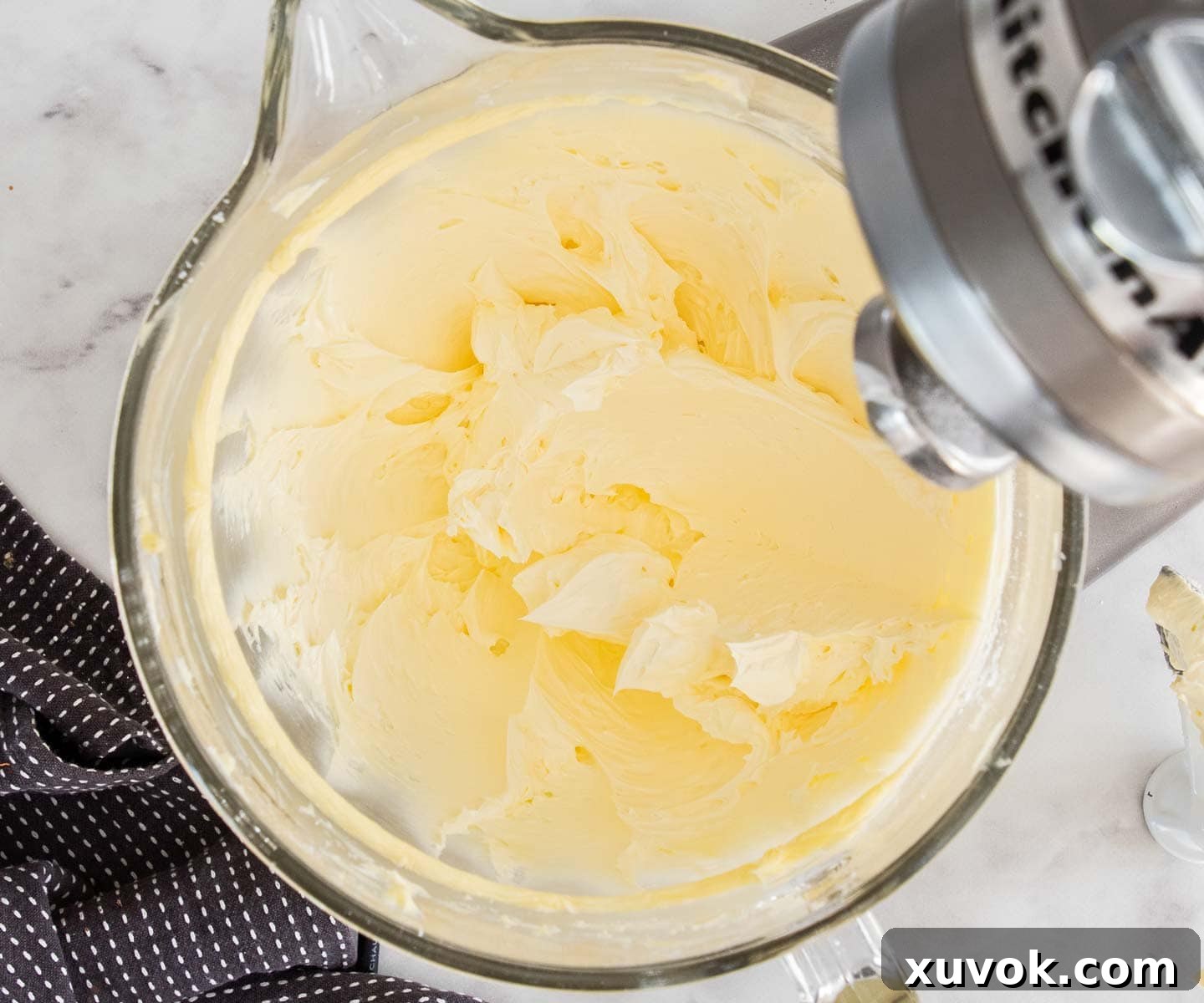
6. Gradually Adding the Sugar
Once your butter is perfectly whipped, it’s time to introduce the sweetness. Add the vanilla extract and salt along with half of the remaining icing sugar. Beat on low speed until the sugar is fully incorporated and the mixture is smooth. To avoid a “sugar cloud” in your kitchen, gradually add the rest of the icing sugar, bit by bit, while the mixer remains on low. After all the sugar is added and combined, increase the mixer speed to medium and beat for an additional 2 minutes. This second beating ensures the sugar is fully dissolved and further aerates the buttercream, making it exceptionally smooth and light.
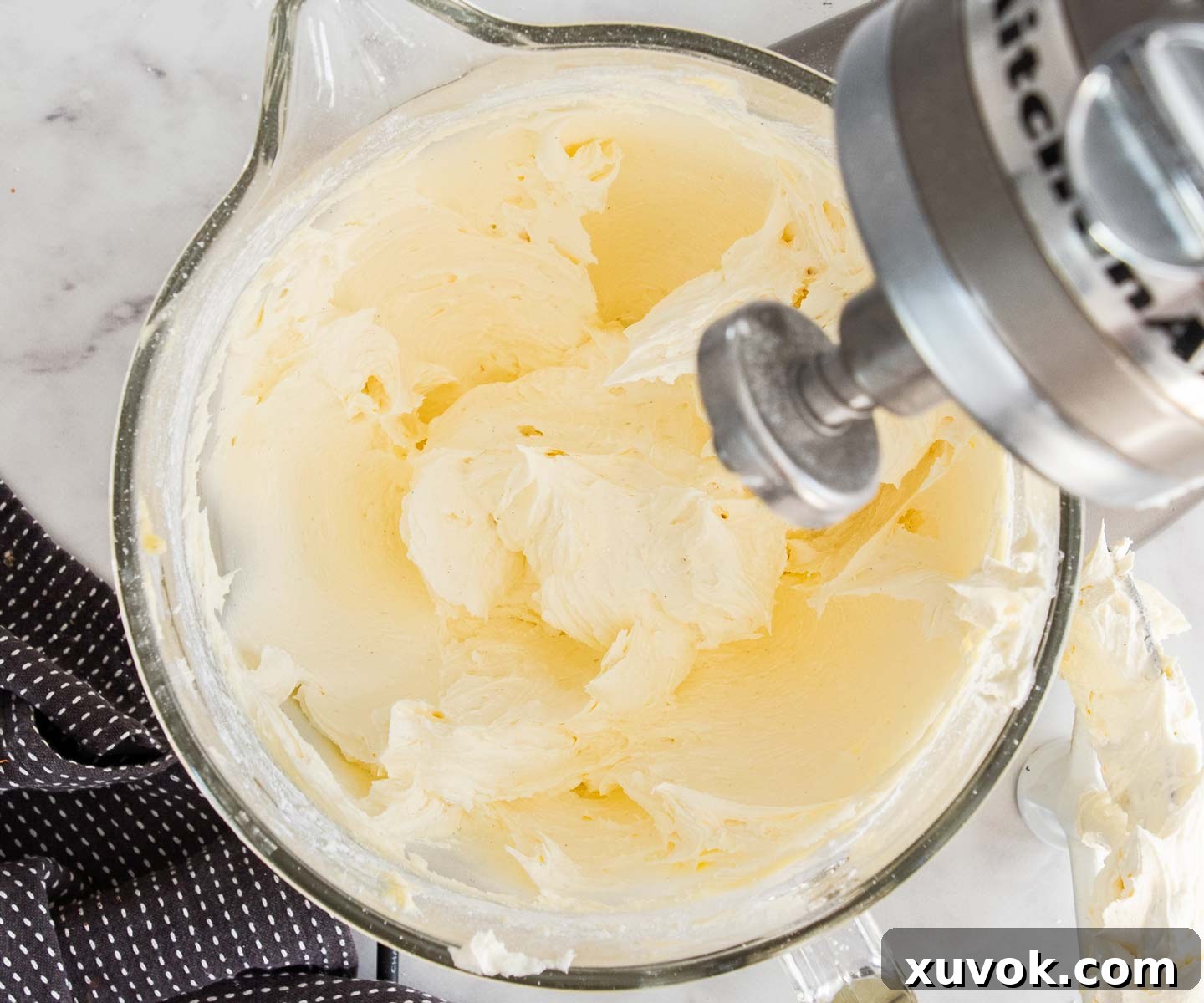
7. The Final Touch: Adding the Cream
The final step in creating our signature whipped vanilla buttercream is to add the thickened cream (heavy cream). Pour in the cream and beat on low speed until it is fully incorporated into the mixture. Then, increase the speed to medium and continue beating for a final 2 minutes. This last burst of whipping lightens the buttercream even further, transforming it into a luxurious, spreadable consistency that is both airy and incredibly flavorful. Your buttercream should now be beautifully light, thick, and perfectly whipped, ready to adorn your fudgy chocolate cake layers.
8. Assembling the Chocolate Masterpiece
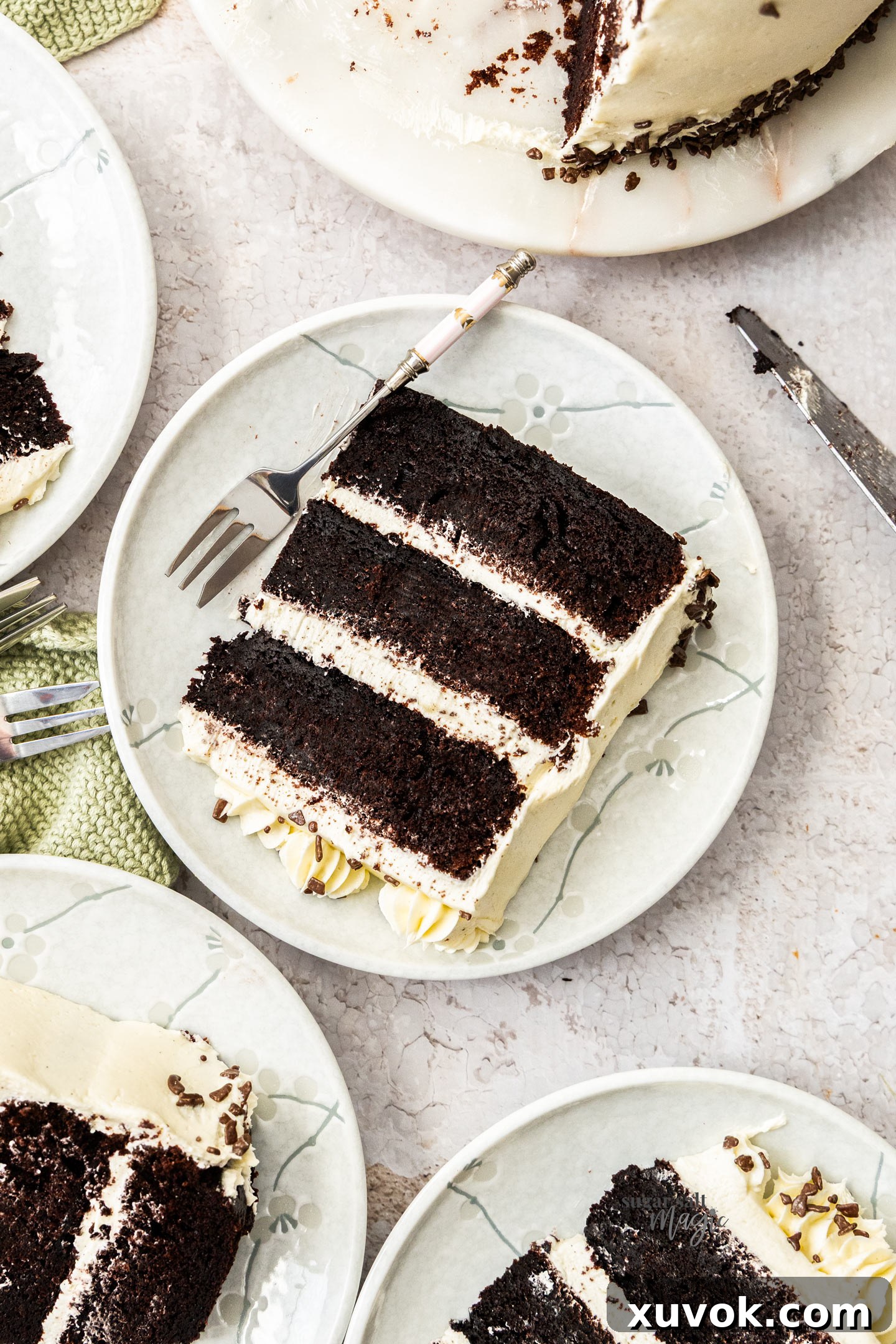
With your perfectly baked cake layers cooled and your dreamy vanilla buttercream ready, it’s time for the exciting part: assembly! Place your first cake layer on a cake plate or stand, ensuring the flattened side is down. Evenly spread approximately ¾ cup of the luscious whipped vanilla buttercream over the top. Repeat this process with the second cake layer. Finally, position the last cake layer on top, with its flat side facing up, creating a smooth surface. Now, spread most of the remaining buttercream generously over the top and around the sides of the entire cake, aiming for as neat a finish as you can achieve. A small portion (about ½ cup) of frosting can be reserved for piping decorative stars or other embellishments on top, adding a beautiful professional touch. The elegance of a homemade cake, even with a slightly rustic frosting, is truly captivating!
Endless Creativity: Delicious Variations for Your Chocolate Cake
The beauty of this chocolate cake recipe lies in its versatility. While the vanilla buttercream is a classic pairing, the rich, fudgy chocolate base is robust enough to complement a wide array of flavors. By simply switching up the frosting, you can transform this dessert into an entirely new culinary experience, perfect for any occasion or flavor preference.
- Rich Chocolate Frosting: Double down on the chocolate goodness with a decadent chocolate fudge frosting. This intensifies the chocolate experience, creating a true chocoholic’s dream.
- Silky Swiss Meringue Buttercream: For an exceptionally light, smooth, and less sweet frosting, Swiss meringue buttercream is an exquisite choice. Its sophisticated texture beautifully complements the rich cake.
- Aromatic Coffee Buttercream: Enhance the chocolate’s depth with a coffee-infused buttercream. Coffee and chocolate are a match made in heaven, and this frosting will bring out subtle, delightful notes.
- Sweet Caramel Buttercream: Indulge in a sweet and salty combination by pairing the chocolate cake with a luscious caramel buttercream. Drizzling extra caramel sauce over the top would make it even more irresistible.
- Fun Oreo Buttercream: For a playful twist, an Oreo buttercream adds delightful crunch and cookie flavor. It’s a fantastic option for kids’ birthdays or playful gatherings.
- Smooth German Buttercream: Discover the unique richness of German buttercream, a custard-based frosting that’s creamy, flavorful, and less sweet than traditional buttercreams.
- Seasonal Fruit Toppings: Beyond frosting, consider garnishing your cake with fresh berries like raspberries or strawberries for a pop of color and tartness that cuts through the richness.
- Chocolate Ganache Drip: A simple chocolate ganache drizzled over the top and down the sides adds an elegant touch and another layer of chocolatey flavor.
- Sprinkles or Shaved Chocolate: For easy decoration, a generous shower of sprinkles or finely shaved chocolate can elevate the cake’s appearance instantly.
Expert Baker’s Secrets: Tips and Tricks for Success
While this chocolate cake with vanilla frosting is designed to be approachable, incorporating a few expert baking tips can significantly elevate your results, ensuring a flawless and delicious cake every time.
- Precision is Key: Weigh Your Dry Ingredients. This is perhaps the most critical tip for consistent baking success. Even a slight excess of flour or cocoa powder, when measured by volume, can drastically alter the cake’s texture, leading to a dry or sticky outcome. Investing in a good kitchen scale is invaluable; they are affordable and will serve you well for years, guaranteeing accurate measurements.
- Avoid Overmixing the Batter. Once all wet ingredients are combined with the dry, beat the batter for no more than one minute with an electric mixer. Overmixing develops the gluten in the flour, which can result in a tough, rubbery cake rather than a tender, moist one. Stop mixing as soon as the ingredients are just combined.
- Ensure Evenly Baked Layers by Weighing Batter. To guarantee that all three cake layers bake uniformly and finish at the same time, use a kitchen scale to weigh the batter into each pan. This ensures each layer has an identical amount of batter, leading to consistent thickness and baking times.
- Master the Art of Softened Butter for Buttercream. The consistency of your butter is paramount for a perfect whipped buttercream. It should be softened to room temperature – pliable enough to indent easily with your finger, but not so soft that it’s greasy or melted. Butter that is too cold won’t whip properly, resulting in a lumpy frosting, while overly soft butter can lead to a soupy buttercream that lacks structure and spreadable consistency.
- Patience is a Virtue: Cool Cakes Completely. Resist the temptation to frost warm cakes. It is absolutely essential that your cake layers are completely cooled before applying the buttercream. Any residual warmth will cause the frosting to melt and slide off, ruining your hard work. Plan ahead and allow ample cooling time, ideally several hours or even overnight.
- Room Temperature for Wet Cake Ingredients: Beyond buttermilk, ensuring your eggs and any other dairy are at room temperature helps them emulsify better with other ingredients, creating a smoother, more uniform batter and a finer crumb.
- Don’t Skip the Sifting: Sifting flour and cocoa not only prevents lumps but also aerates the dry ingredients, contributing to a lighter cake texture.
- Proper Pan Preparation: Always grease your cake pans thoroughly and dust them with cocoa powder for chocolate cakes to prevent sticking and maintain the cake’s dark color.
- Know Your Oven: Ovens can vary significantly. Keep an eye on your cakes as they bake and start checking for doneness a few minutes before the recipe indicates.
Preserving Perfection: Storage Guidelines
To enjoy your delicious chocolate and vanilla cake at its best, proper storage is essential. Here’s how to keep it fresh and flavorful:
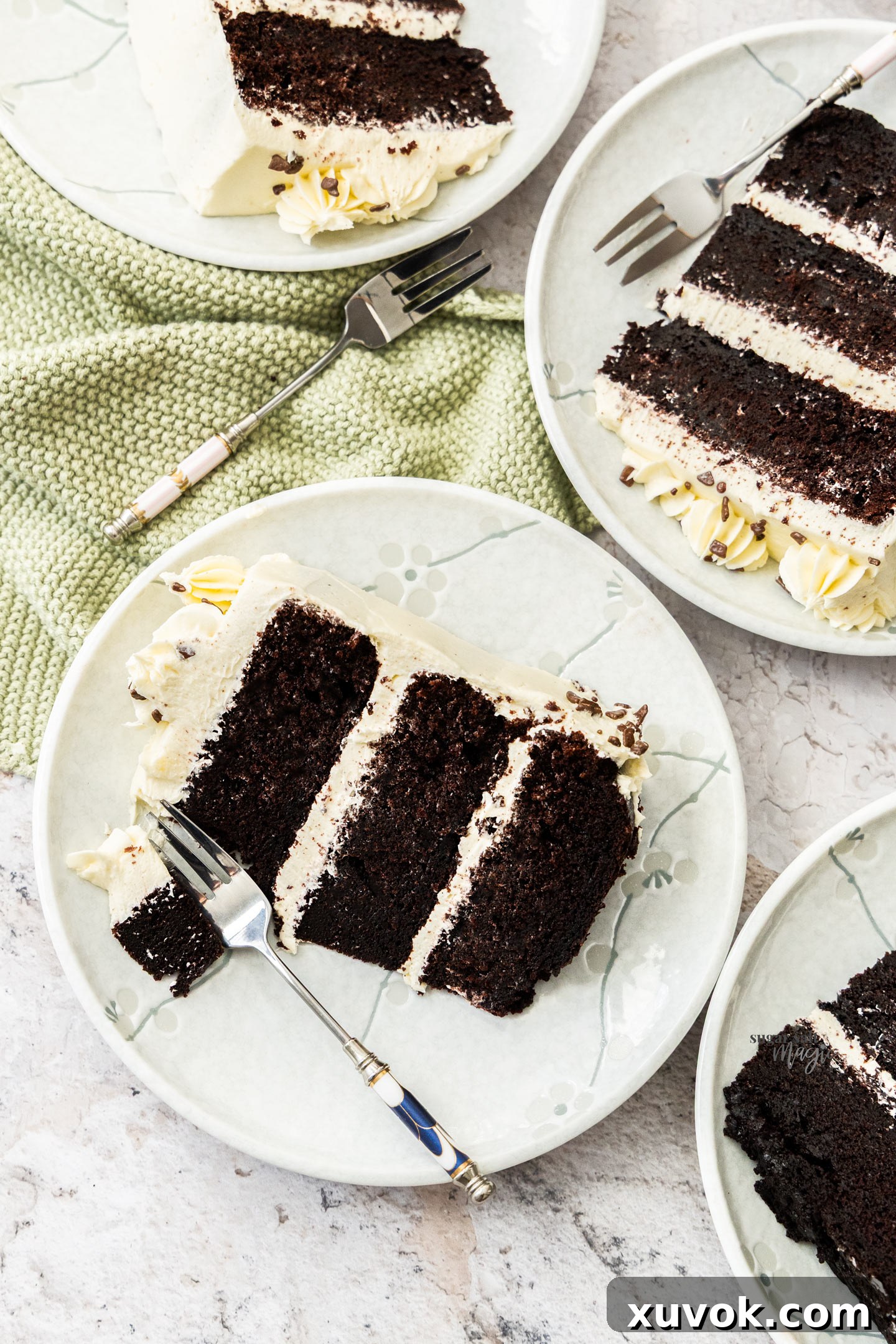
Store your assembled chocolate and vanilla cake in a large airtight container in the refrigerator for 4-5 days. While refrigeration helps preserve its freshness, this cake truly shines when served at room temperature. For optimal flavor and texture, remove the cake from the fridge at least an hour before serving to allow the buttercream to soften and the cake layers to become wonderfully moist and tender.
For those who appreciate perfectly clean slices, consider cutting the cake when it’s still cold from the refrigerator. Cold buttercream holds its shape better, resulting in crisp, neat cuts. You might notice the frosting softening and spreading slightly as the cake comes to room temperature, creating a charming, slightly relaxed look. If presentation is paramount, slice cold, then let the individual slices warm up before indulging.
This cake is also freezer-friendly, allowing you to enjoy a slice of homemade deliciousness whenever a craving strikes. Individual slices or the entire cake (unfrosted is best for whole cakes) can be stored in the freezer. Wrap slices tightly in plastic wrap, then place them in an airtight container for up to 3 months. To thaw, simply transfer to room temperature for about an hour or until soft. This is a great way to bake ahead for future events or to simply have a treat on hand.
Explore More Delectable Recipes
If you’ve loved baking this classic chocolate cake, we encourage you to explore more delightful recipes from our collection. Each offers a unique twist on beloved desserts, ensuring there’s always something new and exciting to create in your kitchen!
- Black Velvet Cake
- Blackberry Chocolate Cake
- Blueberry Chocolate Cake
- Cherry Chocolate Bundt Cake
- Chocolate Fudge Cupcakes
- Salted Caramel Chocolate Cake
- Oreo Chocolate Cake
- Classic Red Velvet Cake
⭐⭐⭐⭐⭐
Did you try this chocolate cake and vanilla frosting?
Show it some love with a rating and comment below.
Hungry for more? Subscribe to the newsletter for free recipes straight to your inbox. Also, follow along on Facebook, Pinterest and Instagram.
Detailed Recipe: Chocolate Cake with Vanilla Buttercream (Black and White Cake)
12
serves
45
minutes
35
minutes
1
hour
20
minutes
Rate Recipe
Pin Recipe
Ingredients
FOR THE CHOCOLATE CAKE LAYERS
- 3 teaspoons instant coffee granules, dissolved in 1 ½ cups boiling water (375ml) (Note: use decaf if preferred)
- 390 g plain flour (all purpose flour) (3 cups / ~13¾oz)
- 105 g Dutch process cocoa powder (1 cup / ~3¾oz)
- 2 ½ teaspoons baking soda (bicarb soda)
- 1 ½ teaspoons baking powder
- 500 g white granulated sugar (2 ½ cups / 1.1lb)
- ¾ teaspoon salt
- ¾ cup vegetable oil (125ml)
- 1 ½ cups buttermilk room temp (375ml)
- 3 large eggs room temp
- 2 teaspoons vanilla extract
FOR THE WHIPPED VANILLA FROSTING
- 450 g unsalted butter, softened (2 cups)
- 4 cups icing sugar (powdered sugar), sifted (520g) (more as necessary for consistency)
- ⅓ cup thickened cream (heavy cream) (60ml)
- 3 teaspoons vanilla extract
- ½ teaspoon salt
For best results, always weigh ingredients where a weight is provided.
Instructions
-
FOR THE CHOCOLATE CAKE LAYERS:
Preheat your oven to 180°C (160°C fan forced) / 350°F. Prepare your pans by greasing three 8-inch round sandwich tins (cake pans) and dusting them thoroughly with cocoa powder, tapping out any excess. This prevents sticking and ensures a clean, dark finish.
-
In a very large bowl, sift together the plain flour, Dutch process cocoa powder, baking soda, and baking powder. This step is crucial for an even texture. Add the granulated sugar and salt, then use a balloon whisk to gently combine all the dry ingredients.
-
Create a well in the center of the dry ingredients. Pour in the prepared hot coffee (with dissolved granules), vegetable oil, room temperature buttermilk, large eggs, and vanilla extract. Stir briefly with a spatula to loosely incorporate, then switch to an electric mixer and beat for exactly 1 minute until just combined and smooth. Do not overmix.
-
Evenly divide the batter among the three prepared pans. For precise layers, you can weigh the batter into each pan using a kitchen scale, though eyeballing is generally sufficient.
-
Bake for 30-35 minutes. Rotate the pans at approximately the 20-minute mark to ensure even baking. The cakes are done when a toothpick inserted into the center comes out with only moist crumbs attached, not wet batter.
-
Immediately after removing the cakes from the oven, gently press down on the domes using another same-sized cake pan or a flat-bottomed glass. This flattens the tops slightly, creating level layers that are easy to stack and contributing to the cake’s fudgy texture. Avoid pressing completely flat.
-
After 5 minutes, carefully invert the cakes onto a wire rack to cool completely. Ensure they are fully cooled before frosting.
-
FOR THE WHIPPED VANILLA FROSTING:
In the bowl of a stand mixer fitted with a paddle attachment, beat the softened unsalted butter and ½ cup of the sifted icing sugar on medium speed for 5-6 minutes. This extended beating time is crucial for creating light and airy whipped butter. Scrape down the sides of the bowl several times during this process.
-
Add the vanilla extract, salt, and half of the remaining icing sugar. Beat on low speed until combined. With the mixer still on low, gradually spoon in the rest of the icing sugar to avoid creating a sugar cloud. Once all sugar is added, scrape down the sides of the bowl again. Increase speed to medium and beat for a further 2 minutes.
-
Pour in the thickened cream and beat on low to incorporate. Then, increase to medium speed and beat for a final 2 minutes until the frosting is light, thick, and perfectly whipped. If a thicker consistency is desired, you can beat in more sifted icing sugar, a tablespoon at a time, until achieved.
-
ASSEMBLE THE CAKE:
(Optional: Reserve about ½ cup of frosting for piping decorative stars on top at the end.)
Place one cooled cake layer onto your chosen cake platter, flat side down. Spread approximately ¾ cup of the whipped vanilla buttercream evenly over the top. Repeat this step with the second cake layer and another ¾ cup of frosting.
-
Gently place the final cake layer on top, flat side up, creating a smooth surface. Spread the majority of the remaining buttercream over the top and down the sides of the cake. For cleaner slices, chill the cake briefly before cutting, but remember it’s always best served at room temperature for the ultimate flavor and texture experience.
-
We love hearing from you! Please take a moment to leave a comment & rating on how your cake turned out.
Notes
- Tablespoons: This recipe uses a standard Australian 20ml tablespoon (equivalent to 4 teaspoons). Please check your tablespoon size to ensure accurate measurements.
- While the amount of caffeine from coffee in one slice of cake is minimal, if you’re sensitive to caffeine, feel free to use decaffeinated instant coffee granules. It will still provide the flavor-intensifying effect without the caffeine.
- For optimal baking accuracy and consistent results, we highly recommend weighing ingredients like flour and sugar. Kitchen scales are an inexpensive and invaluable tool. If you must use cup measurements, employ the “spoon and level” method (lightly spoon flour into the cup and level with a straight edge) rather than scooping directly from the bag.
- Oven Variability: All ovens heat differently. It’s always a good practice to start checking your cake for doneness 2-3 minutes before the recipe’s suggested baking time to prevent overbaking.
- Nutritional information provided is an approximate estimation and derived from an online calculator. Variations may occur based on the specific brands and exact quantities of ingredients you use.
EXPLORE MORE CAKE RECIPES!
907
kcal
Marie Roffey
Dessert
American
Have you tried this recipe?
Don’t forget to leave a rating and comment below and let me know how it was! I love hearing from you. Nutrition information is approximate and derived from an online calculator. The brands you use may cause variations.
Calories from Fat 450
77%
156%
44%
23%
9%
38%
17%
92%
16%
23%
0%
9%
17%