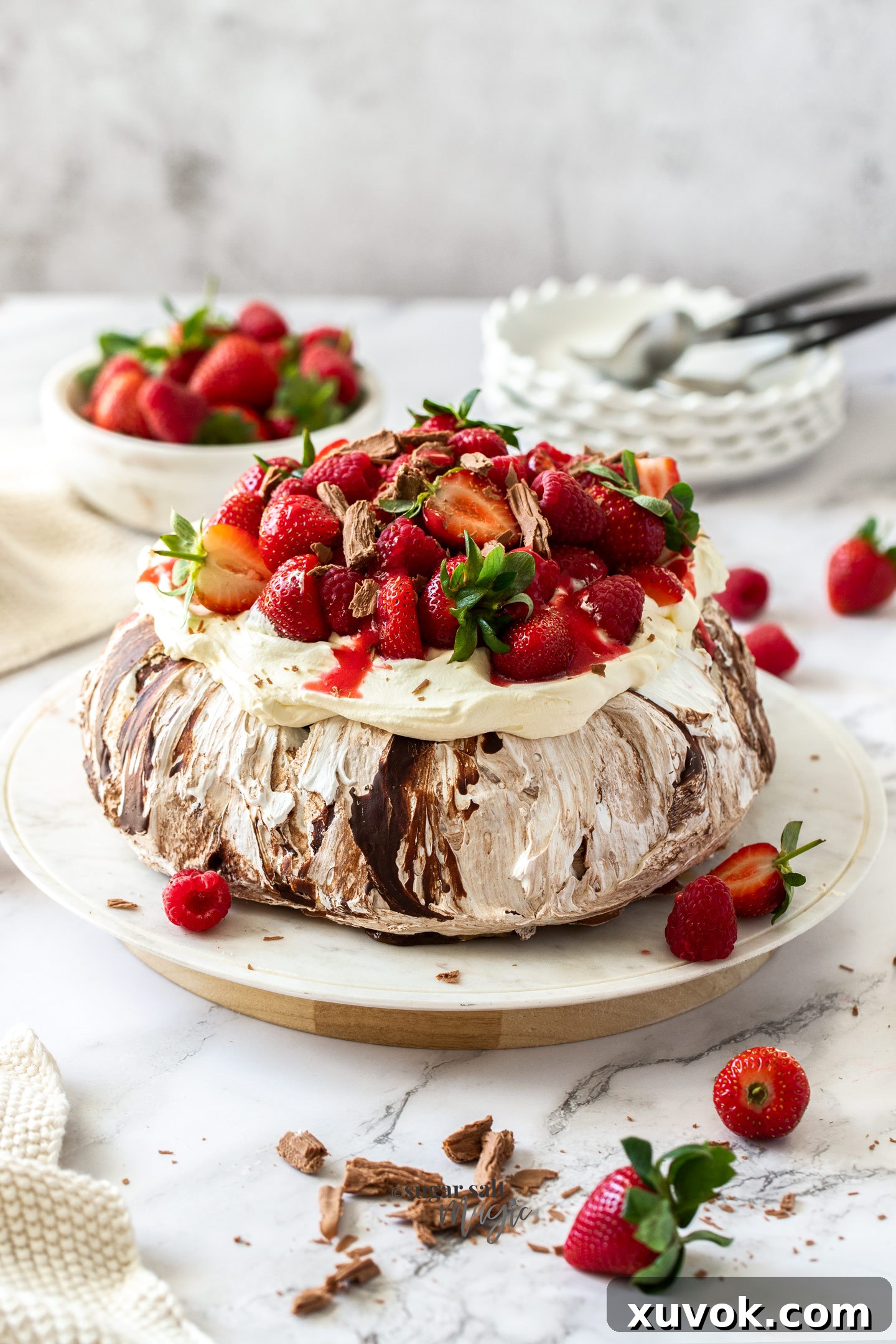
Irresistible Swirled Chocolate Pavlova: A Showstopping Dessert
Prepare to enchant your guests and elevate any gathering, whether grand or intimate, with this truly spectacular Swirled Chocolate Pavlova. Far from daunting, this elegant dessert is surprisingly simple to create, and I’m here to guide you through every step, ensuring a flawless result that will earn you endless compliments. This isn’t just another dessert; it’s a culinary masterpiece that’s both beautiful and bursting with flavor.
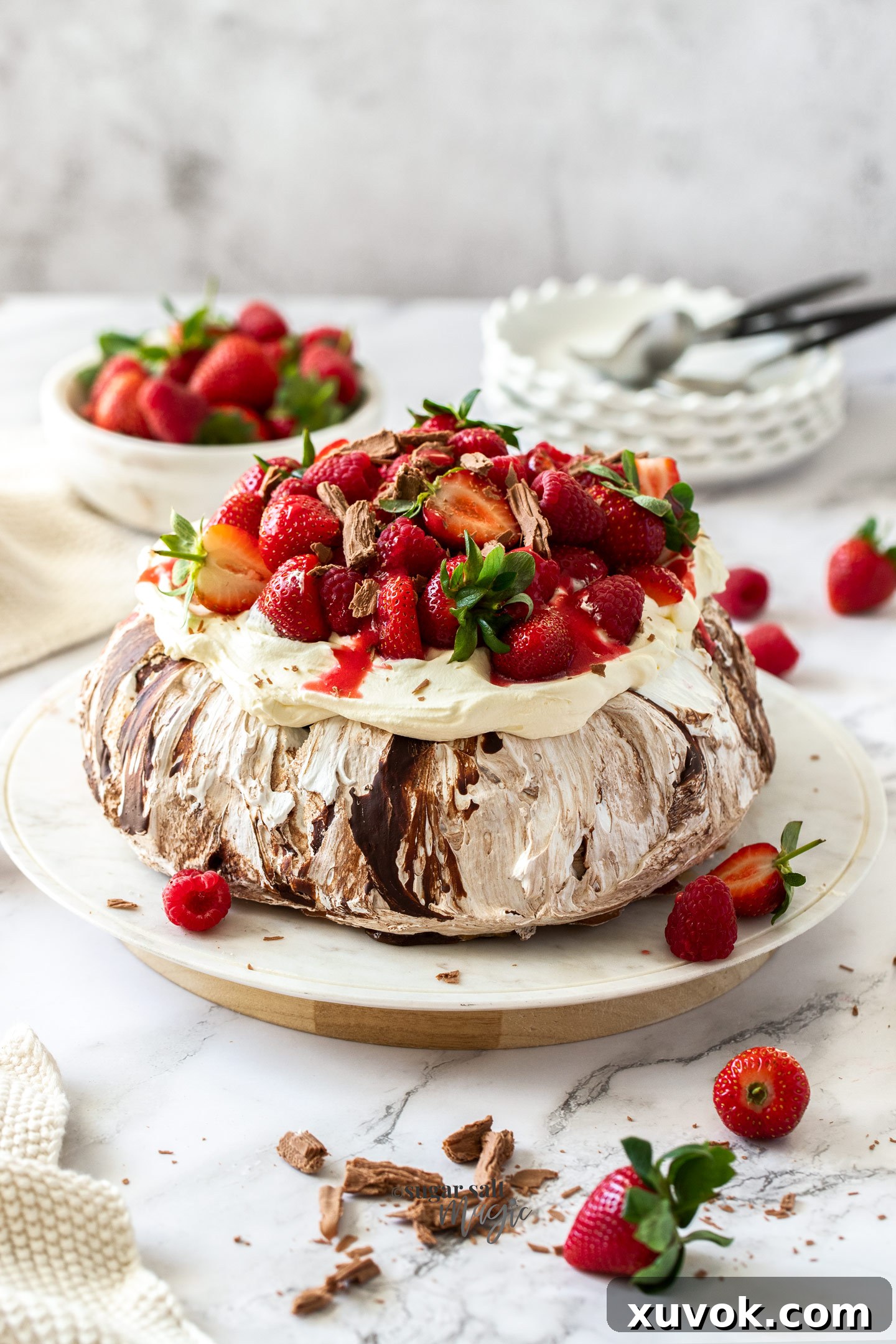
For those who cherish the rich, deep notes of chocolate, this rendition offers a delightful twist on the classic pavlova. We infuse the light, airy meringue with streaks of real chocolate, creating a visually stunning “swirl” effect that runs through its entire structure. Imagine a luxurious dessert that delivers both a satisfying crunch and a melt-in-your-mouth marshmallow interior, each bite laced with exquisite chocolate.
This unique recipe harmoniously blends the best elements of my acclaimed Swirled Chocolate Meringues and my definitive guide on How to Make Perfect Pavlova. I’ve distilled years of baking wisdom into this one recipe, addressing all common pavlova queries and ensuring your success. Get ready to create a dessert that tastes as incredible as it looks, making every occasion a little more special.
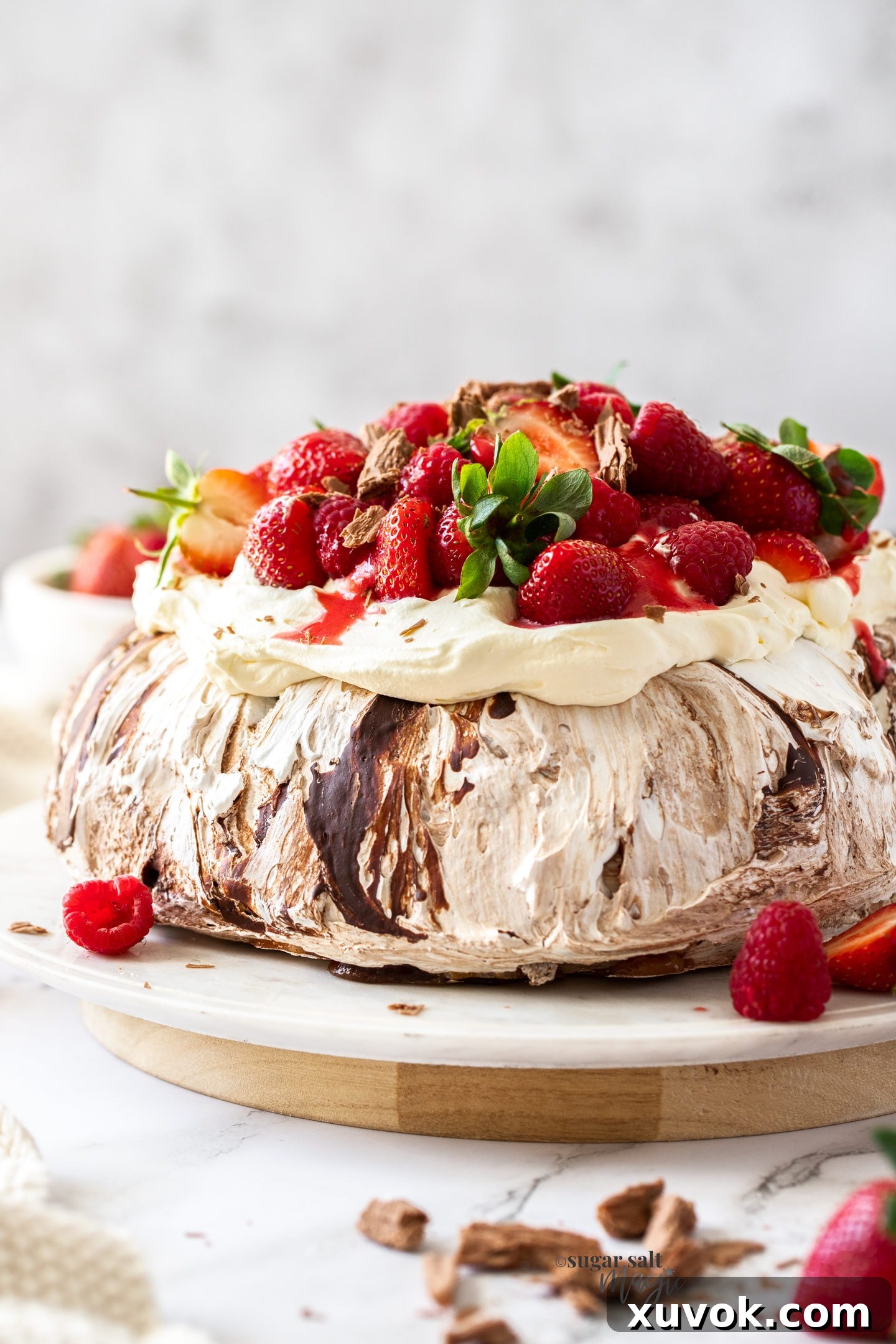
Table of Contents
- The Essence of Chocolate Pavlova
- Ingredients for Your Chocolate Pavlova
- Step-by-Step Guide to Making Chocolate Pavlova
- Expert Tips and Tricks for Pavlova Perfection
- Preparing Your Chocolate Pavlova in Advance
- Discover More Pavlova and Meringue Delights
Never Miss a Recipe!
Unlock a world of deliciousness! Get the latest and greatest recipes delivered straight to your inbox by subscribing to our newsletter today. Don’t miss out on your next favorite dish!
The Essence of Chocolate Pavlova
Pavlova, a dessert named after the Russian ballerina Anna Pavlova, is renowned for its delicate meringue base – crispy on the outside, soft and marshmallowy within. Our chocolate rendition takes this classic to new heights by incorporating real chocolate into the meringue itself, creating a visually dynamic and flavor-rich experience. This elegant dessert is naturally gluten-free and relatively light, making it a fantastic choice for any occasion, from celebratory dinners to casual family gatherings.
What makes a pavlova truly exceptional is the perfect balance of textures: the shattering crispness of the exterior giving way to a dreamy, chewy, almost gooey center. The swirled chocolate not only adds a decadent flavor but also creates beautiful patterns, ensuring each slice is a work of art. Topped with freshly whipped cream and vibrant seasonal fruits, it’s a harmonious blend of sweetness, tartness, and luxurious texture that captivates every palate. This recipe simplifies the process, debunking the myth that pavlova is difficult, and guarantees a stunning centerpiece for your dessert table.
Ingredients you’ll need
Crafting this divine chocolate pavlova requires just five fundamental ingredients for the meringue base, providing a straightforward approach to an impressive dessert. The magic truly begins with these core components, which then allow you the creative freedom to select your favorite toppings.
- Egg whites: The foundation of any great meringue. Always opt for large, fresh eggs. While some recipes suggest room temperature, using them straight from the fridge is perfectly fine for this recipe, provided they are fresh. Freshness is key to achieving stable peaks and a strong meringue structure.
- Cream of tartar: This acidic ingredient is a secret weapon in meringue making. It acts as a stabilizer, helping the egg whites whip up faster, achieve greater volume, and hold their aeration more effectively. If you don’t have cream of tartar on hand, an equal amount of lemon juice or white vinegar can be used as an effective substitute, offering similar stabilizing properties.
- Cornflour (cornstarch): This humble ingredient is essential for achieving the signature marshmallowy interior of a perfect pavlova. It helps to keep the center soft and chewy, contrasting beautifully with the crispy outer shell. Without cornflour, your pavlova might turn out entirely brittle, lacking that delightful melt-in-your-mouth texture.
- Sugar: Caster sugar, also known as superfine sugar, is the superior choice for pavlova. Its fine granules dissolve quickly and evenly into the egg whites, minimizing the risk of over-whipping and ensuring a smooth, glossy meringue. While granulated sugar can be used in a pinch, it may take longer to dissolve, potentially leading to a less stable meringue or a grainy texture. Absolutely avoid powdered or icing sugar, as these contain cornstarch and other anti-caking agents that can interfere with the meringue’s structure.
- Chocolate: For a truly decadent chocolate pavlova, the quality of your chocolate matters immensely. Opt for a good quality dark chocolate with at least 70% cocoa solids. The robust flavor of high-quality dark chocolate will shine through beautifully in the meringue. Steer clear of compound chocolate, which contains vegetable fats instead of cocoa butter, as it will compromise both the flavor and texture of your dessert.
A truly spectacular pavlova is traditionally crowned with a generous dollop of freshly whipped cream (never from a can!) and an assortment of vibrant, fresh fruit. This particular recipe elevates the experience further by suggesting a sprinkle of crumbled chocolate, like a Cadbury Flake, adding an extra layer of chocolatey indulgence and textural contrast that perfectly complements the rich base and fresh toppings.
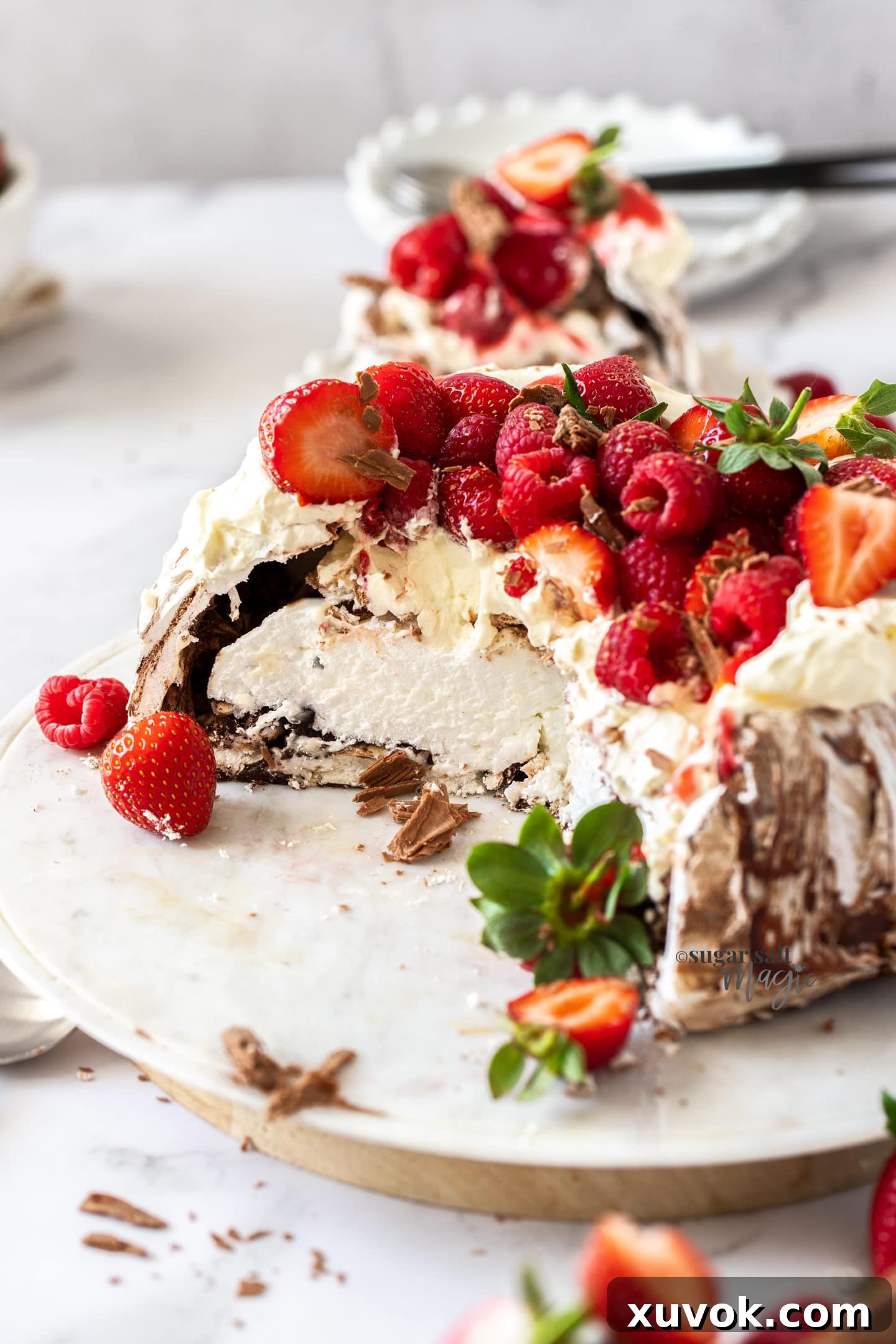
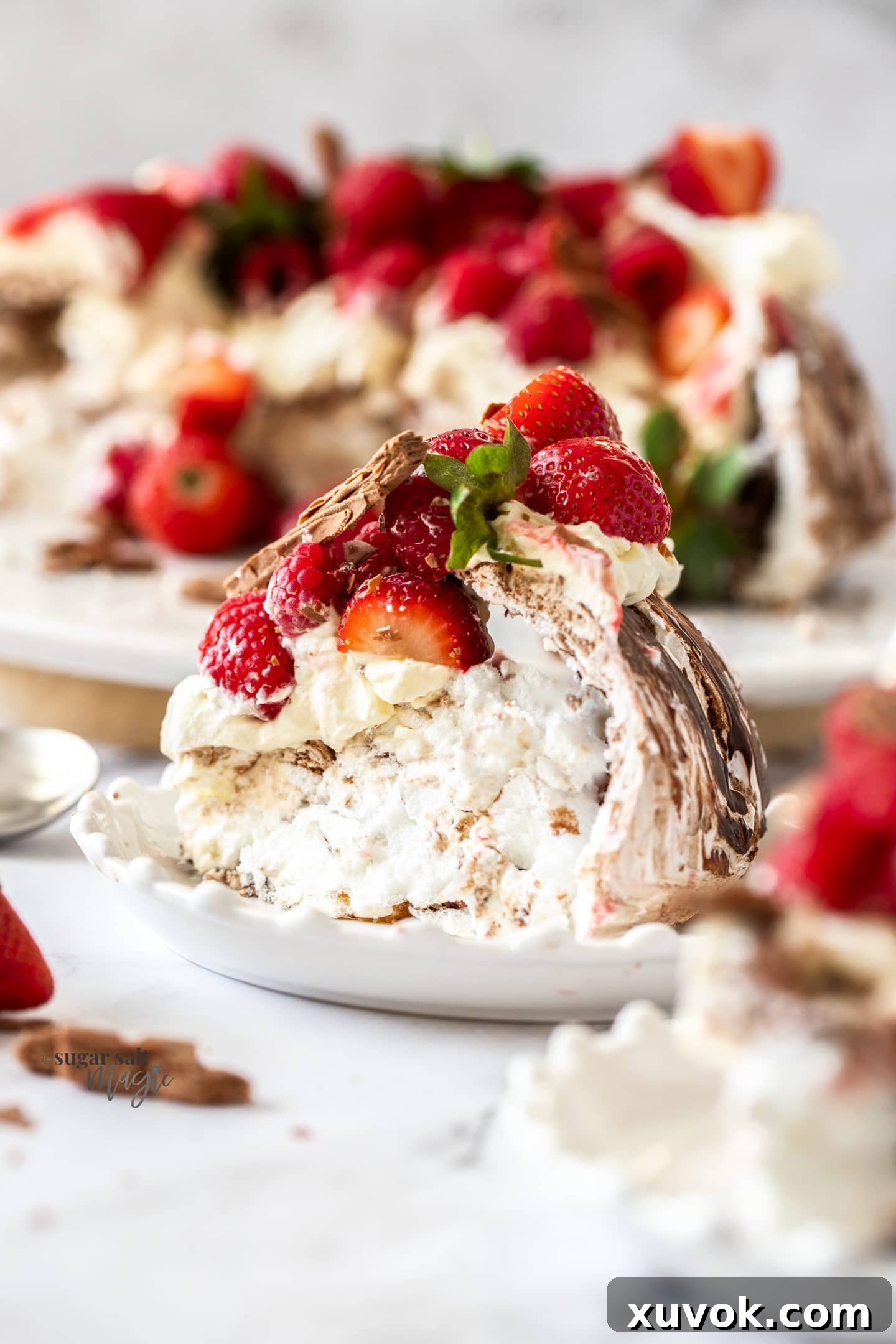
Don’t let the seemingly white interior of some slices mislead you; the rich chocolate swirls are intricately woven throughout the soft, marshmallowy core. As you cut into this magnificent dessert, you’ll discover beautiful ribbons of dark chocolate running through the tender meringue, ensuring a burst of chocolate flavor in almost every delightful bite. It’s a hidden treasure that adds to the magic of this truly special pavlova.
How to make it
Many perceive pavlova as a challenging dessert, often leading to intimidation. However, I assure you, it is remarkably straightforward to prepare. With a few key techniques and a careful approach, you’ll be crafting a showstopping dessert in no time. For a comprehensive guide to all things pavlova, including troubleshooting common issues, refer to my detailed How to Make Perfect Pavlova post. But for this specific chocolate swirl variant, simply follow the streamlined steps below:
- **Melt the Chocolate:** Gently melt your dark chocolate in a microwave-safe bowl. Use 30-second intervals, stirring thoroughly after each, until just smooth. Set it aside to cool slightly to prevent it from seizing or affecting the meringue’s stability.
- **Prepare Your Baking Surface:** Preheat your oven to a low temperature as specified in the recipe. Take a sheet of baking paper and trace an 8-inch circle using a cake tin as a guide. Flip the paper over (so the pencil mark doesn’t transfer to your pavlova), and place it on a flat baking tray.
- **Whip Egg Whites to Soft Peaks:** In a meticulously clean stand mixer bowl fitted with the whisk attachment (or using handheld beaters), begin beating the egg whites on a low-medium speed. Continue until they reach the “soft peak” stage – typically around 5 minutes – where the peaks curl over gently when the whisk is lifted.
- **Incorporate Stabilizers:** Sift the cream of tartar and cornflour directly over the soft-peak egg whites. Whisk for only a few seconds, just enough to fully incorporate these stabilizers without deflating the delicate foam.
- **Gradually Add Sugar:** With the mixer still on a low setting, add the caster sugar one tablespoon at a time. This slow addition is crucial, allowing the sugar to dissolve completely into the egg whites. Count to 20 seconds between each addition to give the sugar ample time to integrate.
- **Whip to Stiff, Glossy Peaks:** Once all the sugar is added, increase the mixer speed to medium-high (avoid the highest setting). Continue whisking until the meringue becomes incredibly thick, glossy, and reaches the “stiff peak” stage. To test, rub a tiny bit between your finger and thumb – it should feel completely smooth, with no grittiness from undissolved sugar.
- **Gently Swirl in Chocolate:** Pour the slightly cooled, melted chocolate evenly over the top of the stiff meringue. Using a spatula, fold it through very gently, just once or twice. The goal is to create beautiful streaks, not to fully incorporate the chocolate. Over-mixing will diminish the swirl effect and can potentially deflate the meringue due to the fat content of the chocolate.
- **Shape Your Pavlova:** Transfer the swirled meringue mixture onto your prepared baking tray, centering it within the traced circle. Using the spatula, gently coax and shape the meringue into a beautiful, rustic mound, adhering to the circular outline. Create small decorative sweeps from the bottom upwards around the sides, then gently level the top for an elegant finish.
- **Slow Bake and Cool:** Carefully place the shaped pavlova into the preheated oven. Bake for approximately 1 ½ hours. After this time, crucial for achieving that signature crunchy crust and chewy interior, turn the oven off completely. Leave the pavlova in the oven, undisturbed, for at least 2 hours, or even overnight. This slow cooling process prevents cracking and allows the pavlova to set perfectly.
- **Top and Serve:** Once the pavlova is completely cool and has rested, transfer it to your serving platter. Lavishly top it with freshly whipped cream and an abundance of mixed fresh fruit. Serve immediately to enjoy its perfect texture and fresh flavors.
Tips and tricks
- A stand mixer is the easiest method for whipping egg whites efficiently and consistently, thanks to its powerful motor and continuous operation. However, don’t despair if you don’t have one; a good quality handheld electric beater will also achieve excellent results with a bit more arm work.
- Make sure your mixing bowl is perfectly clean and grease-free. Any trace of fat – even a tiny speck of egg yolk or residual oil – can prevent egg whites from whipping up properly. Wipe your bowl and whisk attachment with a paper towel and a little vinegar or lemon juice to ensure they are immaculate before starting.
- Don’t let any yolk get into the whites – this reiterates the crucial point about fat. Carefully separate your eggs, ideally cracking each one into a small separate bowl before adding the white to your main mixing bowl. This way, if a yolk breaks, it only contaminates one white, saving the rest.
- Soft peak stage is a critical visual cue. When you lift the beater out of the egg whites, the peaks should form but gently curl over at the very top, resembling a soft serve ice cream swirl. This indicates the perfect point to add your stabilizers.
- Make sure the meringue is smooth and at stiff peaks before turning it out onto your baking tray. At this stage, the meringue should look thick, opaque, and incredibly glossy. When you rub a small amount between your fingers, it should feel completely smooth, indicating that all the sugar crystals have fully dissolved. This glossy, stable meringue is key to a perfect pavlova.
- Don’t swirl the chocolate through too much. The beauty of this dessert lies in its distinct chocolate veins. After pouring the melted chocolate over the meringue, give it just one or two quick, gentle turns with a spatula. Over-mixing will fully incorporate the chocolate, turning the meringue uniformly brown and losing the desired “swirl” effect. Moreover, stirring real chocolate (which contains fat) too vigorously into the meringue can destabilize and break down the delicate egg white structure. A light fold and immediate shaping will ensure those perfect, mesmerizing swirls.
- Leave the pavlova in the oven after you turn it off for at least 2 hours. This slow cooling process within the residual heat of the oven is absolutely vital. It allows the meringue to dry out gradually and set without sudden temperature changes that can cause cracking. You can even leave it in there overnight for maximum stability and convenience, allowing you to prepare it the evening before your event and wake up to a perfectly set pavlova base.
Can I make chocolate pavlova ahead?
Absolutely! One of the many advantages of pavlova is that the meringue base can be prepared in advance, making it an ideal dessert for entertaining. You can successfully make the meringue (the baked pavlova shell without any toppings) 1-2 days ahead of your event. The key to preserving its crispness is proper storage. Ensure you have an airtight container, and find a cool, dry spot in your pantry or kitchen for storage. Meringues are highly susceptible to humidity, which can cause them to soften and lose their crunchy texture, so avoid damp environments.
It’s crucial to remember: Don’t top the pavlova until you are ready to serve. The moisture from whipped cream and fresh fruit will quickly start to soften the delicate meringue crust. However, to streamline your serving process, you can prepare your toppings ahead of time. Whip your cream and store it in the fridge, and wash and chop your fresh fruit. Then, just before serving, assemble your pavlova – a quick and effortless way to present a stunning dessert without last-minute stress.
Once assembled with cream and fruit, any leftovers will keep in the fridge for a couple of days in an airtight container. Be aware that the cream will gradually soften the top crust of the pavlova, but the flavors will still be delicious. For optimal texture, however, it’s best enjoyed within a few hours of assembly.
More recipes you’ll love
If you’ve fallen in love with the magic of meringue, explore more of our delightful recipes:
- Chocolate Meringue Cake
- Pavlova Roll (Meringue Roulade)
- Mini Pavlova Grazing Board
- Easy Peppermint Meringues
- Mini Lemon Meringue Pies
- Festive Pavlova Wreath
- How to make Perfect Pavlova (Your ultimate guide!)
⭐⭐⭐⭐⭐
Did you try this chocolate pavlova recipe? We’d love to hear your thoughts! Show it some love and leave a rating and comment below. Your feedback helps us grow!
Hungry for more? Subscribe to our free newsletter for a steady stream of delicious recipes delivered straight to your inbox. And don’t forget to follow us on Facebook, Pinterest, and Instagram for daily inspiration and behind-the-scenes glimpses!
Swirled Chocolate Pavlova
Rate
Pin
Ingredients
- 120 g dark (70%) chocolate (4.2oz), good quality
- ¾ cup egg whites (approximately 6 large eggs)
- 1 ½ cups caster (superfine) sugar (300g / 10.5oz) (see notes for sugar type)
- 3 teaspoons cornflour (cornstarch)
- 1 ½ teaspoons cream of tartar (or equivalent lemon juice/vinegar)
- 1 cup thickened cream (heavy cream)
- 2 cups mixed fresh fruit (seasonal berries, sliced stone fruit, etc.)
For best results, always weigh ingredients where a weight is provided
Equipment
-
Flat cookie trays
-
Silicone spatulas
-
Stand mixer with whisk attachment or handheld beater
Instructions
-
Place the specified amount of dark chocolate in a microwave-safe bowl. Melt it in the microwave using short 30-second bursts, stirring diligently after each interval. Continue this process until the chocolate is just barely melted and smooth. Crucially, set it aside to cool completely to lukewarm or room temperature before adding it to the meringue, as hot chocolate can deflate the egg whites.
-
Preheat your oven to 120C / 245F (or 110C if using a fan-forced oven). Prepare your baking sheets by tracing an 8-inch circle onto a piece of baking paper using a pencil and an 8-inch cake tin as a guide. Place this paper pencil-side down on a flat baking tray (this prevents pencil lead from touching your food). You may need a second sheet for the top of the pavlova if it’s a very large meringue, but generally one is enough for the base.
-
In the clean bowl of a stand mixer with the whisk attachment (or using a handheld beater), begin beating the egg whites on a low-medium speed. Continue to whisk until the egg whites reach the “soft peak” stage, which typically takes about 5 minutes. At this point, the peaks will curl over gently when the whisk is lifted.
-
Once soft peaks are achieved, sift the cornflour and cream of tartar directly over the whipped egg whites. Whisk for just a few seconds – only long enough to thoroughly incorporate these stabilizing ingredients – being careful not to overmix and deflate the meringue.
-
With the mixer still running on a low speed, begin adding the caster sugar, one tablespoon at a time. It’s vital to count to approximately 20 seconds between each addition. This allows the sugar crystals ample time to fully dissolve into the egg whites, ensuring a smooth and stable meringue. Once all the sugar has been incorporated, increase the mixer speed to medium-high (but not the absolute highest setting) and continue to whisk.
-
Continue beating until the egg whites are incredibly thick, glossy, and have reached the “stiff peak” stage. To verify this, take a small amount of meringue between your thumb and forefinger and rub them together. The mixture should feel perfectly smooth, indicating that all sugar grains have dissolved. If it still feels grainy, continue beating until smooth.
-
Gently pour the cooled, melted chocolate evenly over the surface of the stiff meringue. Using a large silicone spatula, fold the chocolate through the meringue very carefully, just once or twice. The aim is to create distinct swirls, not to fully combine the chocolate. Over-folding will result in a uniformly brown meringue and can deflate the delicate structure. The chocolate will naturally swirl more as you shape it later.
-
To secure the baking paper to your tray, dab tiny bits of meringue under each corner of the paper with the traced circle. Press the paper down firmly onto the baking tray. This prevents the paper from sliding around while you’re shaping the pavlova.
-
Using your spatula, carefully spoon the chocolate-swirled meringue mixture onto the center of the prepared baking tray. Gently coax and shape the meringue into a neat circular mound, using the drawn line as your guide. For an attractive finish, make small, sweeping motions from the base towards the top all the way around the sides, and then gently level the top surface. This creates an elegant, rustic look.
-
Carefully place the baking tray into your preheated oven and bake for 1 ½ hours. After the baking time, turn the oven heat off completely. Leave the pavlova inside the closed oven, undisturbed, for a minimum of 2 hours. For best results and convenience, you can even leave it in there overnight (see notes). This slow cooling is essential for preventing cracks and achieving the perfect crispy exterior with a soft, chewy interior. Once removed from the oven, it will still need a little more time at room temperature to cool completely before topping.
-
Once the pavlova has fully cooled, transfer it to your desired serving platter. Generously top it with freshly whipped cream and an abundance of your chosen fresh fruit. Serve immediately to enjoy the incredible textures and flavors.
-
We love hearing from you! Please take a moment to leave a comment & rating below after trying this recipe. Your feedback is greatly appreciated and incredibly helpful to our community.
Notes
- **Oven Variations:** All ovens vary significantly in temperature. If you notice your pavlova starting to turn golden brown too quickly, your oven may be running hotter than indicated. Reduce the temperature by 10-15 degrees Celsius (25-30 degrees Fahrenheit) and monitor closely.
- **Sugar Type is Crucial:** For optimal results, do not use icing sugar, powdered sugar, granulated sugar, or brown sugar. Only caster (superfine) sugar should be used. Its fine crystal structure allows it to dissolve quickly and completely into the egg whites without requiring excessive beating, which could otherwise over-whip the egg whites and compromise the meringue’s stability.
- **Cream of Tartar Substitutes:** If cream of tartar is unavailable, it can be seamlessly swapped at a 1:1 ratio for either white vinegar or fresh lemon juice. These acidic alternatives provide similar stabilizing effects for the egg whites.
- **Topping Ideas & Seasonality:** When it comes to decorating your pavlova, the possibilities are endless and best guided by what’s in season. Berries (strawberries, raspberries, blueberries) are classic choices, but consider sliced kiwi, passionfruit, mango, or even roasted peaches or plums for a unique twist. A sprinkle of grated chocolate or toasted nuts can also add delightful texture and flavor.
- **Overnight Cooling for Best Results:** For the most stable, crack-free, and perfectly set pavlova, you can bake it in the evening and then simply leave it in the turned-off oven overnight to cool completely. This extended, gradual cooling ensures maximum crispness and minimizes the risk of shrinkage or cracking.
- **Comprehensive Pavlova Guide:** For an in-depth exploration of all pavlova tips, tricks, and common troubleshooting solutions, be sure to consult this dedicated post. It covers everything from egg separation to preventing collapse.
- **Nutrition Disclaimer:** Please note that the nutrition details provided are approximate estimates only. They have been derived from an online calculator and can vary based on the specific brands and exact quantities of ingredients you use. For precise nutritional information, it is recommended to conduct your own calculations.
EXPLORE MORE PAVLOVA RECIPES!
Calories from Fat 162