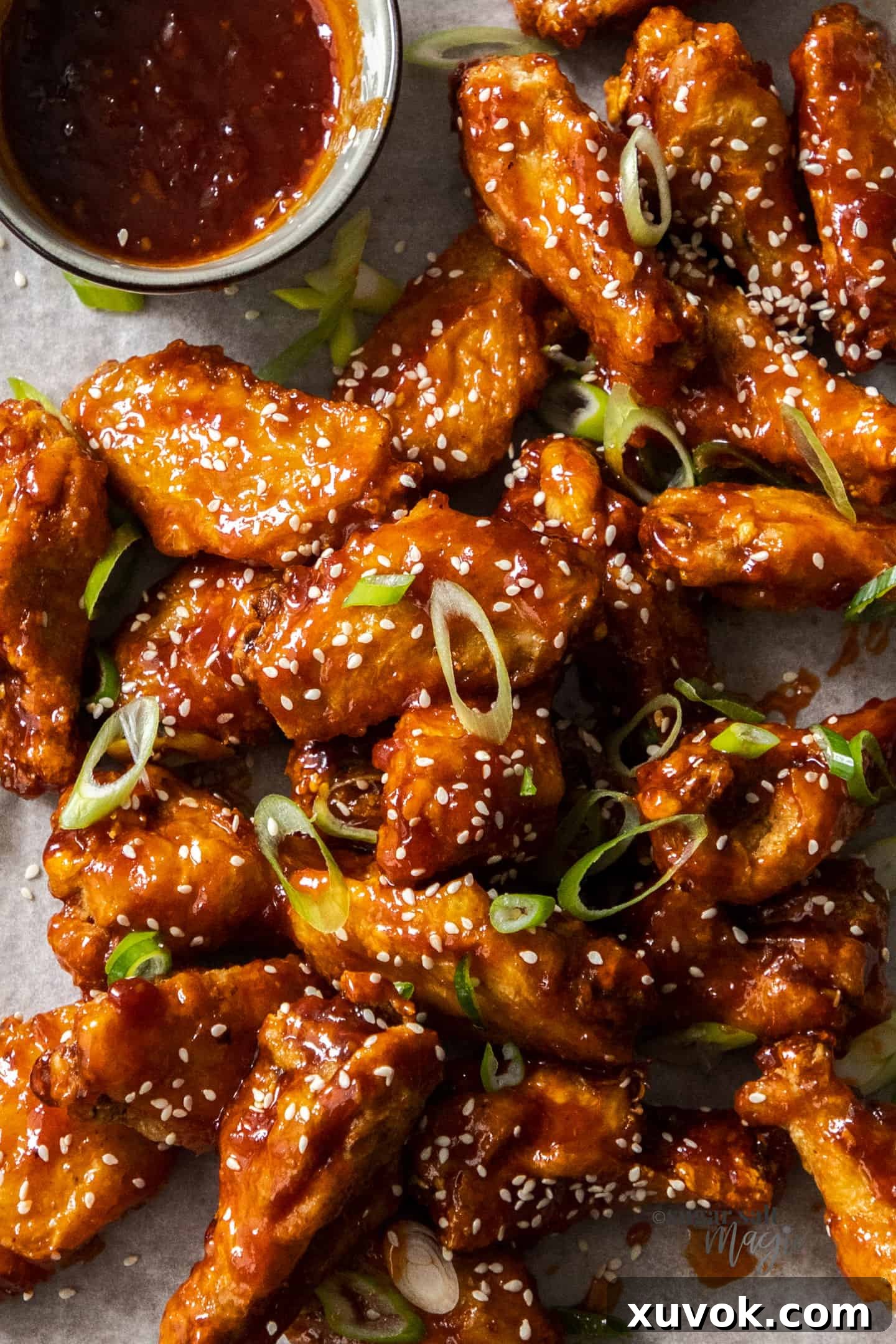
Irresistibly Crispy Korean Fried Chicken Wings with a Sticky, Spicy Glaze
Prepare to tantalize your taste buds with these sensational Korean Fried Chicken Wings. Each bite offers an explosion of flavor and texture – a truly perfect crunch enveloped in a vibrant, sweet, sticky, and spicy Korean sauce that is simply lip-smackingly good. This comprehensive guide will equip you with all the expert tips and tricks to effortlessly recreate this iconic dish at home, making it both simple and utterly delicious. Our recipe guarantees wings that are:
- **Twice-fried for unparalleled, long-lasting crunch**
- **Boasting a rich, authentic Korean flavor profile**
- **Featuring a simple yet effective dry coating for maximum crispness**
- **Generously coated in a crave-worthy sweet, sticky, and spicy sauce**
- **Surprisingly easy to master, even for home cooks**
If you’re as passionate about vibrant Asian flavors as we are, be sure to explore more of our delightful recipes. For delectable Asian finger food and party ideas, try these Japanese pork gyoza and our crowd-pleasing sesame prawn toast. To complete your Korean feast, serve these wings alongside this refreshing Korean cucumber salad.
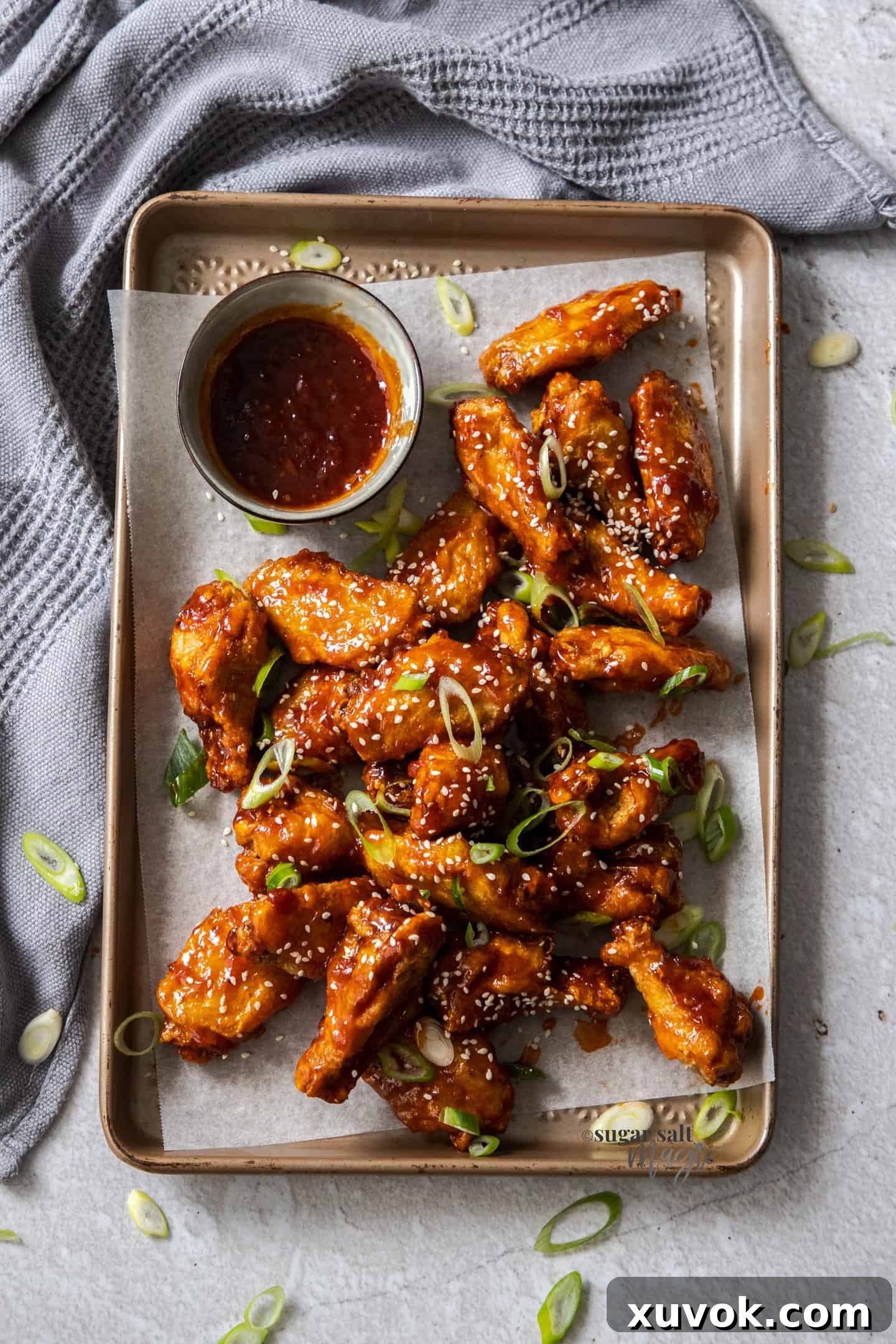
FEATURED COMMENT
Made these tonight. Chicken crispy and sauce amazing. … Will certainly cook these again. Thank you for a great recipe.
Rosemarie
Table of Contents
- What is Korean Fried Chicken?
- Why These Korean Fried Chicken Wings Are a Must-Try
- Essential Ingredients for Korean Fried Chicken Wings
- Step-by-Step: How to Make Korean Fried Chicken Wings
- Expert Tips and Tricks for Perfect Korean Fried Chicken
- How to Serve Korean Fried Chicken Wings
- Frequently Asked Questions (FAQ’s)
- More Delicious Chicken Wing Recipes You’ll Love
Never Miss a Recipe!
Get the latest, mouth-watering recipes straight to your inbox and elevate your home cooking!
Sign up for our newsletter to receive delicious recipes directly:
What is Korean Fried Chicken? A Culinary Delight Explained
Korean fried chicken, often affectionately known as “Chimaek” when paired with beer, is a global culinary phenomenon that has captivated food enthusiasts far and wide. While it shares the basic premise of fried chicken, it stands distinctly apart from its American counterpart through unique preparation methods and an unparalleled flavor profile. At its core, Korean fried chicken involves chicken pieces fried to an extreme crispness, then coated in a rich, often sticky, sweet, and spicy sauce. The signature spicy element of this sauce is typically derived from gochujang, a fermented Korean chili paste renowned for its complex flavor that goes beyond mere heat.
A hallmark of authentic Korean fried chicken, including these wings, is the meticulous twice-frying technique. This method is the secret weapon behind its legendary crunch. The first fry, conducted at a lower temperature, gently renders the fat from the chicken skin and partially cooks the meat, preparing it for maximum crispness. The second fry, at a higher temperature, then develops that iconic, shatteringly crispy crust that makes Korean fried chicken so addictive. This two-stage process seals in the juiciness of the chicken while ensuring the exterior achieves a light, airy, and incredibly crispy texture that miraculously resists becoming soggy, even when coated in sauce.
The coating itself is another key differentiator. Unlike the typically thicker, flour-based batters of American fried chicken, Korean fried chicken often employs a simple, thin mixture, predominantly using cornflour (also known as cornstarch), salt, and a touch of baking soda. The baking soda is crucial as it reacts with the moisture in the chicken, creating small air pockets that expand during frying, resulting in those characteristic blisters and an extraordinary light, crispy finish. For those who prefer a slightly heartier, albeit still crispy, batter, a blend of half plain (all-purpose) flour and half cornflour can be used.
Why These Korean Fried Chicken Wings Are a Must-Try
What sets this particular Korean Fried Chicken Wing recipe apart? It’s a harmonious blend of time-honored techniques and perfectly balanced flavors. We’ve refined the classic approach to deliver an experience that’s both authentic and incredibly accessible for the home cook. The magic begins with selecting fresh, high-quality chicken wings, providing a tender canvas for our signature crisp coating and flavorful glaze. The twice-frying method isn’t just a suggestion; it’s the bedrock of the wings’ legendary crispness, a technique borrowed from traditional Korean preparation to ensure every piece has that satisfying shatter upon biting, even hours after being sauced. This recipe minimizes heavy batter, focusing on a thin, delicate shell that achieves ultimate crunch without overwhelming the natural flavor of the chicken.
Then comes the sauce – the soul of Korean fried chicken. Our carefully developed recipe strikes a perfect balance between savory soy, floral sweetness from honey, a tangy kick from ketchup, and the unmistakable, complex spice of authentic gochujang. Mirin adds a subtle sweetness and depth, while fresh aromatics like ginger, garlic, and onion infuse the sauce with layers of irresistible flavor. The result is a vibrant, sticky glaze that clings beautifully to every crispy contour of the wing, offering a tantalizing interplay of sweet, spicy, and umami notes in every single bite. It’s not just a meal; it’s an experience, making these wings an ideal centerpiece for game nights, parties, or simply a delicious weeknight treat.
Essential Ingredients for Korean Fried Chicken Wings
The beauty of Korean fried chicken lies in its relatively simple yet powerful ingredients. After extensive testing, we’ve perfected this sauce recipe, which we believe achieves the most balanced and delicious flavor profile. One non-negotiable component for true authenticity is gochujang – the spicy Korean chili paste that forms the backbone of its unique taste, and the very same one we feature in our popular Spicy Korean Chicken Tacos.
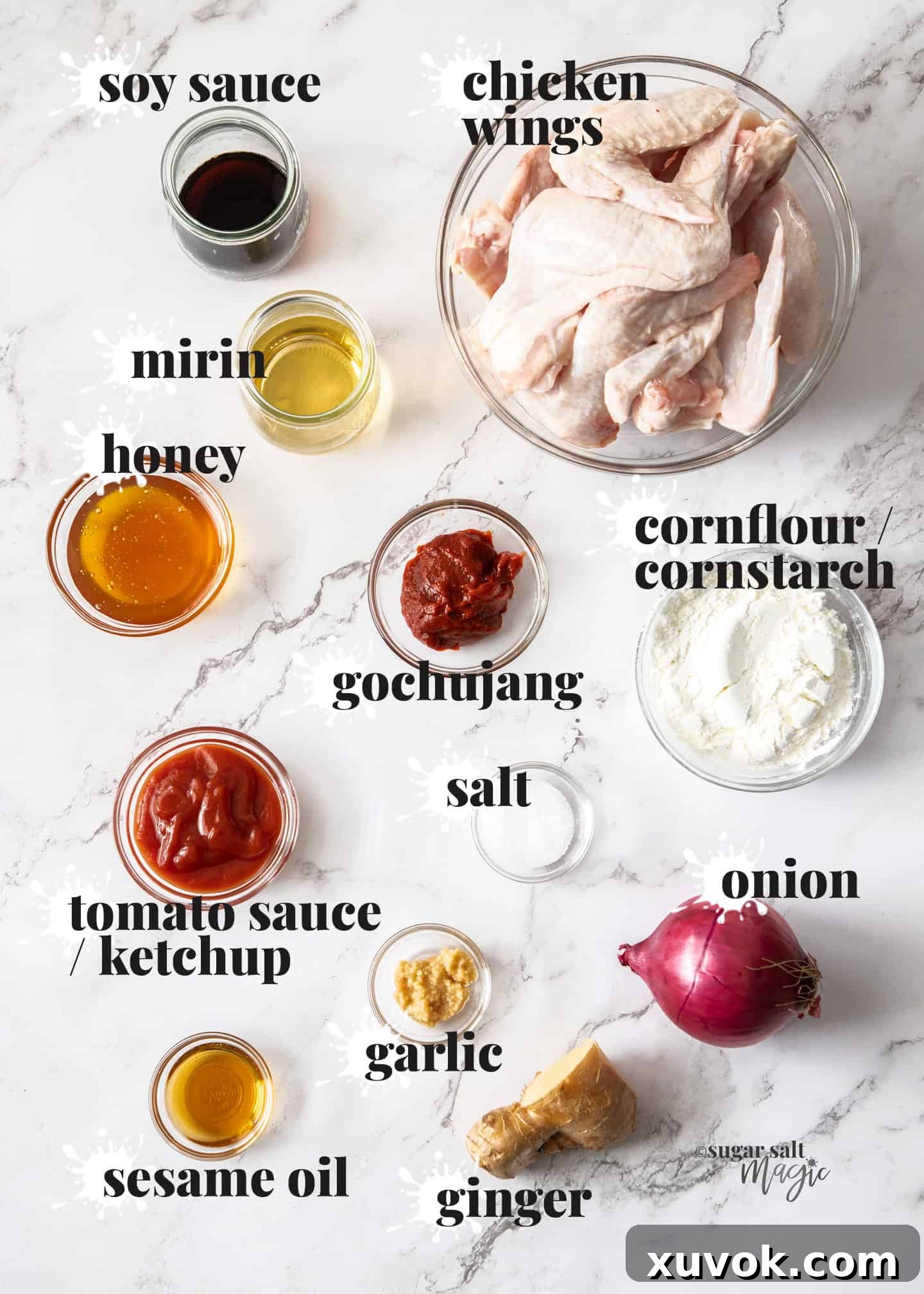
For precise quantities and detailed instructions, please refer to the recipe card below.
- Chicken Wings: We recommend using regular chicken wings. You can purchase them whole and cut them into flats and drumettes yourself, or buy them pre-cut for convenience. While wings are traditional, you can also use bone-in, skin-on chicken breast or thigh pieces. The skin is essential for protecting the meat and achieving the best flavor and crispiness. Adjust frying times accordingly for different cuts.
- Soy Sauce: A fundamental ingredient in East Asian cuisine, a good quality light soy sauce is perfect for this recipe. It adds a deep umami and savory base to the sticky glaze without overpowering other flavors. Keep it stocked in your pantry for versatile use.
- Honey: This natural sweetener is crucial for balancing the heat from the gochujang and creating that signature sticky texture. It contributes to the beautiful caramelization of the sauce.
- Tomato Sauce / Ketchup: Depending on your region, you might call this tomato sauce or tomato ketchup. It’s the familiar condiment you’d put on burgers or fries, and it adds a touch of tangy sweetness and depth to the Korean sauce.
- Mirin: A sweet Japanese rice wine, mirin is a key player in many Asian sauces. It imparts a subtle sweetness and a beautiful glaze to the sauce. If mirin is unavailable, a dry sherry can serve as a suitable substitute, though the flavor profile will be slightly different.
- Fresh Aromatics (Onion, Ginger, and Garlic): These foundational ingredients are non-negotiable for building complex flavor. Finely grated onion, minced garlic, and finely grated ginger provide a pungent, aromatic base that elevates the entire sauce, adding warmth and depth.
- Gochujang: The star of the show! Gochujang is a cornerstone of Korean cooking, a savory, sweet, and spicy fermented chili paste. It’s essential for achieving the authentic flavor of Korean fried chicken sauce. It’s increasingly available in the international aisle of most grocery stores. If you absolutely cannot find it, a good quality chili paste (like sriracha, though it won’t be the same complex flavor) combined with a tablespoon of white miso paste can offer a makeshift alternative, but we strongly recommend sourcing gochujang for the best results.
- Salt: Proper seasoning is vital. Salt enhances all the other flavors, ensuring a well-rounded and delicious final product. Don’t skip it!
- Cornflour / Cornstarch: This fine starch is a classic choice for Korean fried chicken coatings due to its ability to create a light, incredibly crispy crust. You can also experiment with potato starch (another excellent choice for crispiness), or plain (all-purpose) flour, or even a combination of these for slightly different textures. The baking soda addition helps create those desirable airy blisters.
- Vegetable Oil: For deep frying, a neutral oil with a high smoke point is essential. Vegetable oil, canola oil, or peanut oil are all excellent choices. Ensure you have enough to submerge the chicken pieces for even cooking.
- Sesame Oil: Added to the sauce, a drizzle of sesame oil at the end imparts a rich, nutty aroma and flavor, a signature touch in many Korean dishes.
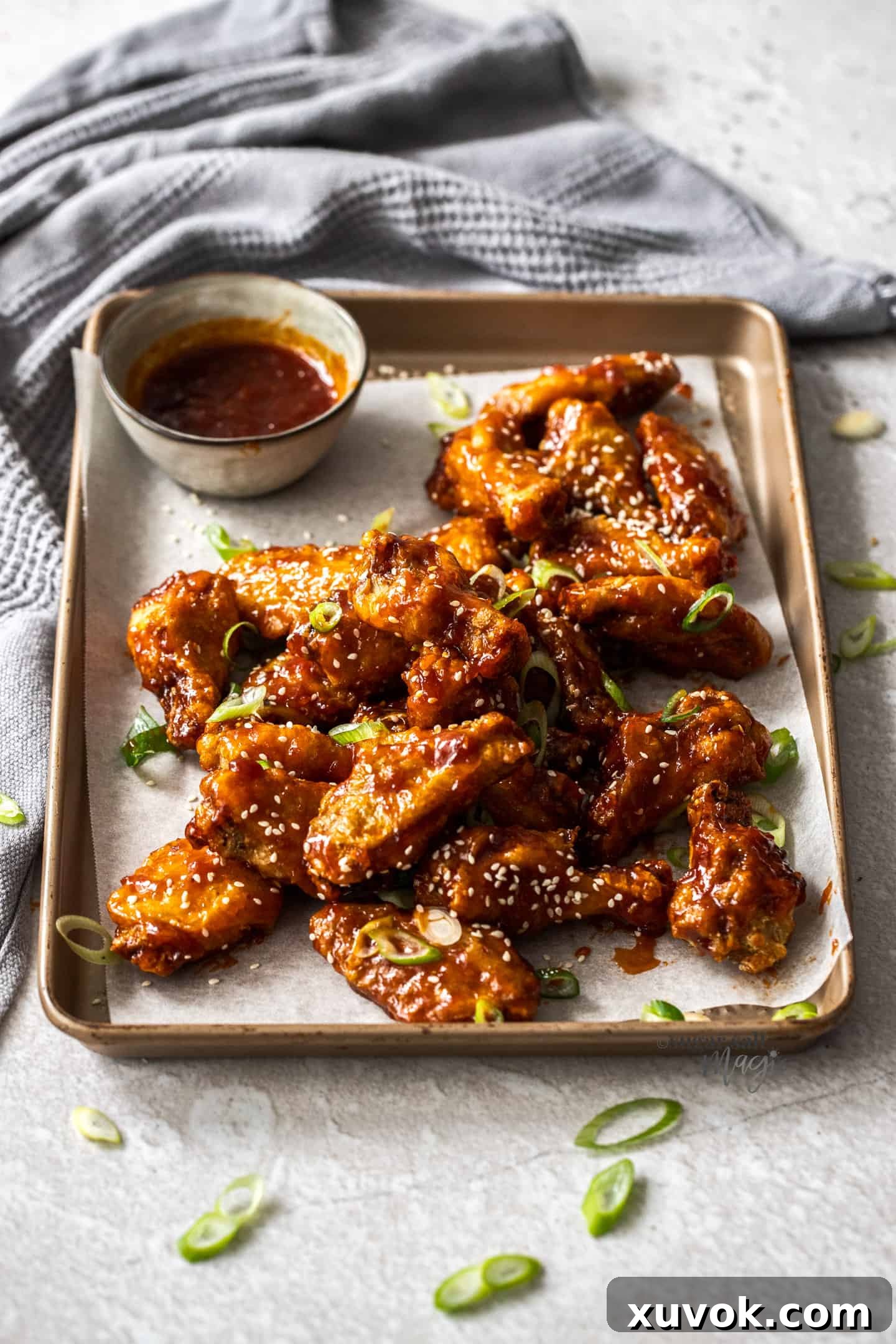
Step-by-Step: How to Make Irresistible Korean Fried Chicken Wings
You might be pleasantly surprised at how straightforward these exceptionally delicious wings are to prepare. With a few key steps and a little patience, you’ll achieve restaurant-quality Korean fried chicken right in your own kitchen!
For precise quantities and detailed instructions, please refer to the recipe card below.
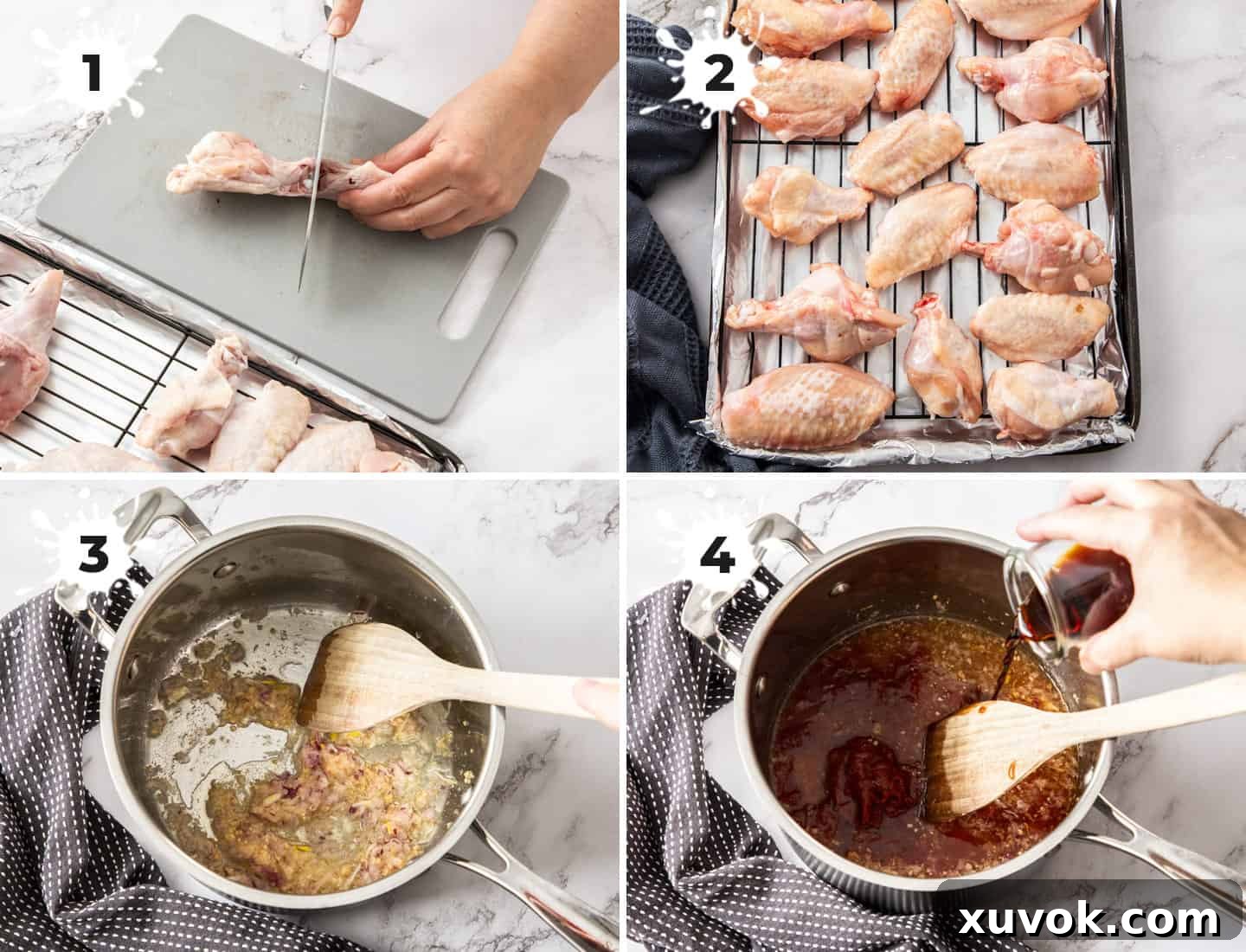
- **Prepare the Wings for Ultimate Crispness:** The journey to truly crispy wings begins before they even touch the oil. After cutting your chicken wings into their individual pieces (drumettes and flats, photo 1), arrange them in a single layer on a wire rack set over a baking tray. Place this uncovered tray in the refrigerator overnight (photo 2). This crucial step allows the skin to thoroughly dry out, which is absolutely essential for achieving that characteristic light, airy, and ultra-crispy texture when fried. While a shorter drying time will still yield good results, maximizing this step guarantees superior crispiness.
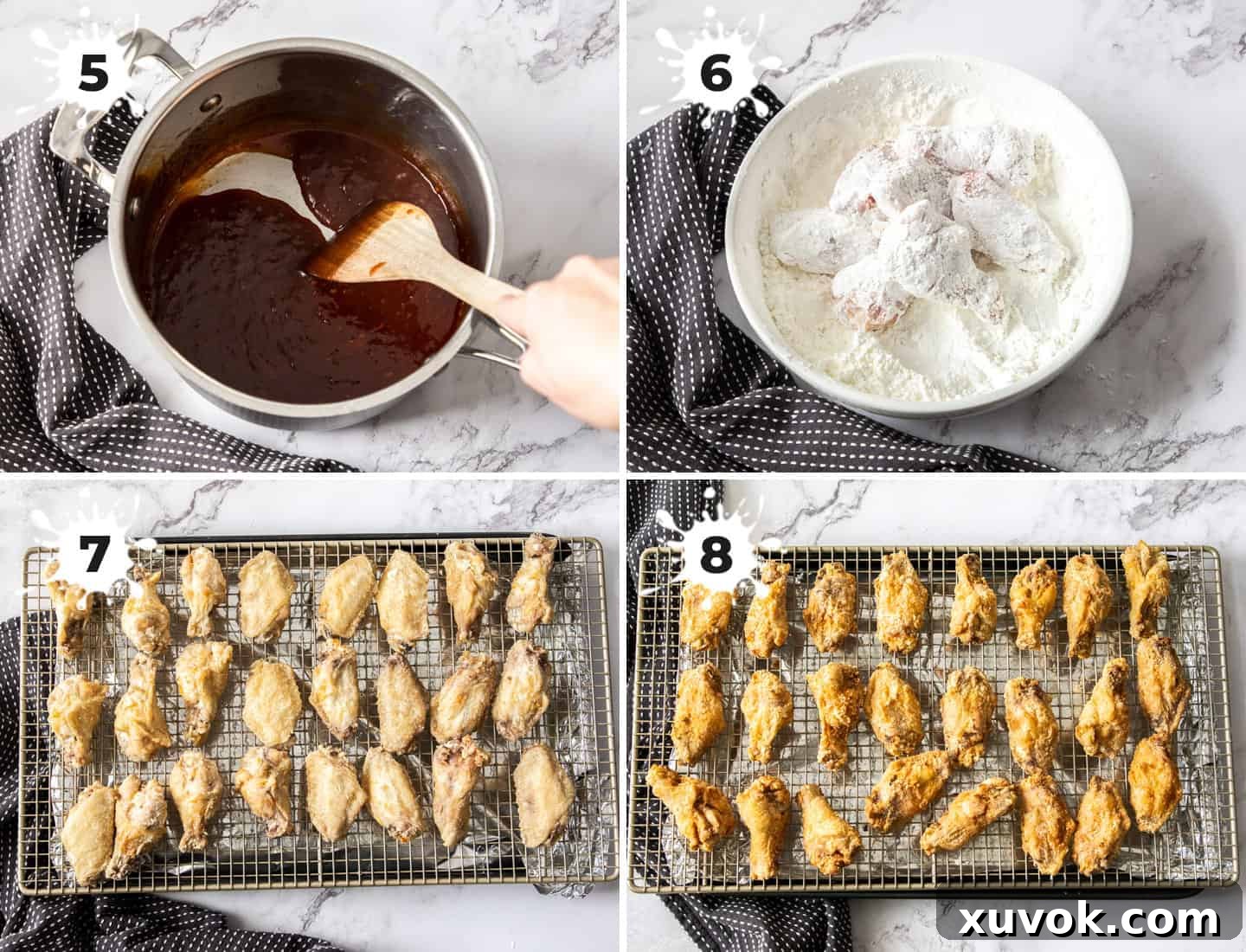
- **Craft the Signature Gochujang Sauce:** Begin by heating a small amount of oil in a saucepan. Sauté the finely grated onion, minced garlic, and grated ginger until they become wonderfully fragrant, which typically takes just a minute or two (photo 3). This gentle cooking process mellows their flavors and releases their aromatic oils. Next, add the remaining sauce ingredients: soy sauce, mirin, tomato sauce (ketchup), gochujang, honey, and sesame oil (photo 4). Bring the mixture to a gentle simmer and cook for 7-10 minutes, stirring occasionally, until the sauce thickens to a glossy, syrupy consistency that will beautifully cling to the fried chicken (photo 5).
- **The Art of Twice Frying for Maximum Crunch:**
- **First Fry (Lower Temperature):** In a large, heavy-bottomed saucepan or Dutch oven, heat your vegetable oil to 160°C (320°F). While the oil heats, combine the cornflour, salt, and baking soda to create your dry coating. Lightly coat a batch of chicken wings in this mixture, ensuring they are evenly dusted. Carefully lower the coated wings into the hot oil, ensuring not to overcrowd the pan. Fry for approximately 5 minutes. During this first fry, the chicken begins to cook through, and the skin starts to render its fat, forming the initial crispy layer. Remove the wings from the oil and place them on a wire rack over paper towels to drain excess oil. Keep them warm in a low oven (around 70°C / 160°F) while you fry the remaining batches.
- **Second Fry (Higher Temperature):** Once all wings have completed their first fry, increase the oil temperature to 200°C (395°F). Re-coat the partially fried wings in the cornflour mix – this second dusting is key to the ultimate crisp. Return the wings to the hotter oil in batches, frying for another 5 minutes, or until they are deeply golden brown and boast an incredibly crispy, almost blistered exterior. This higher temperature flash-fries the outer coating, locking in the crispness and ensuring the chicken is perfectly cooked through.
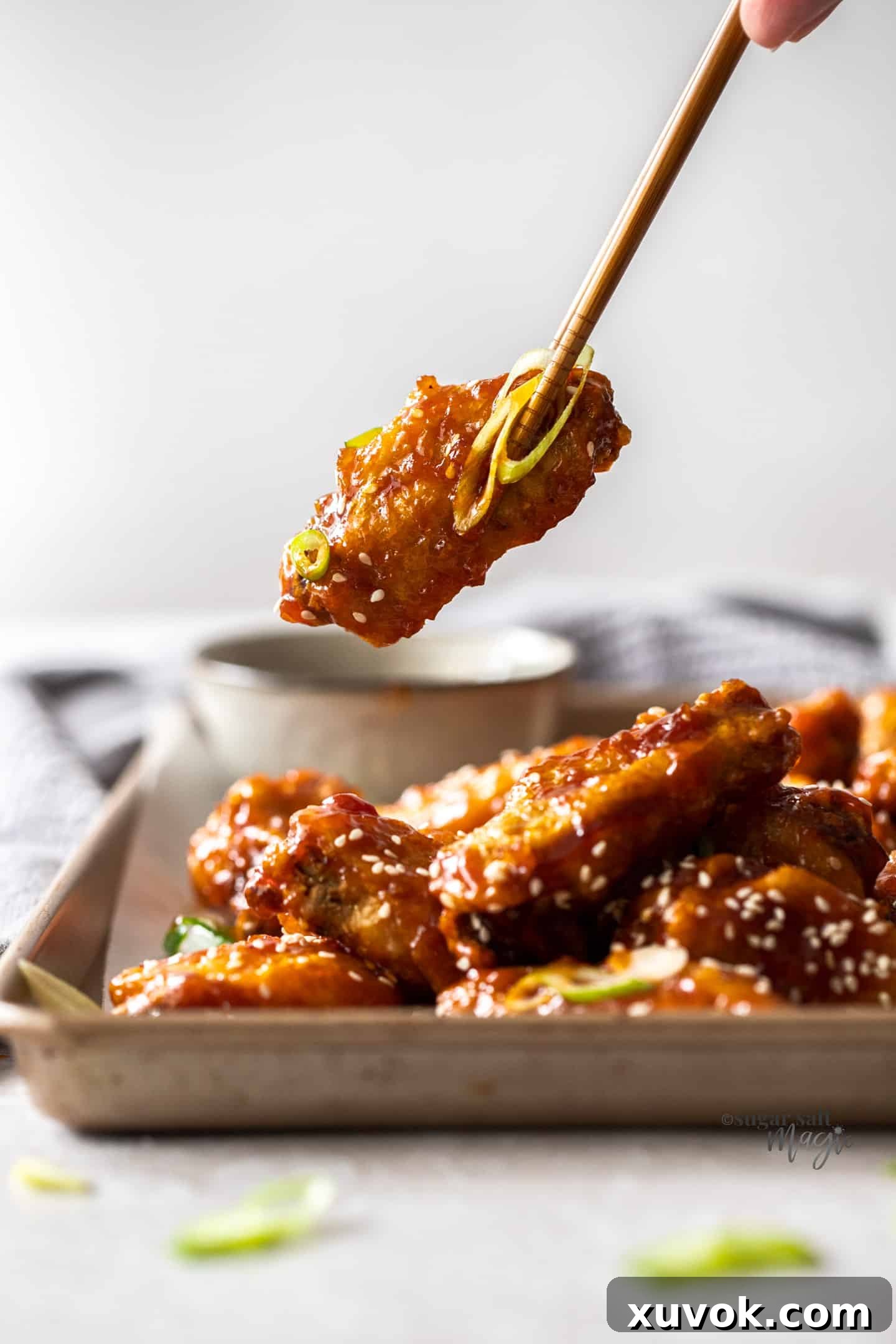
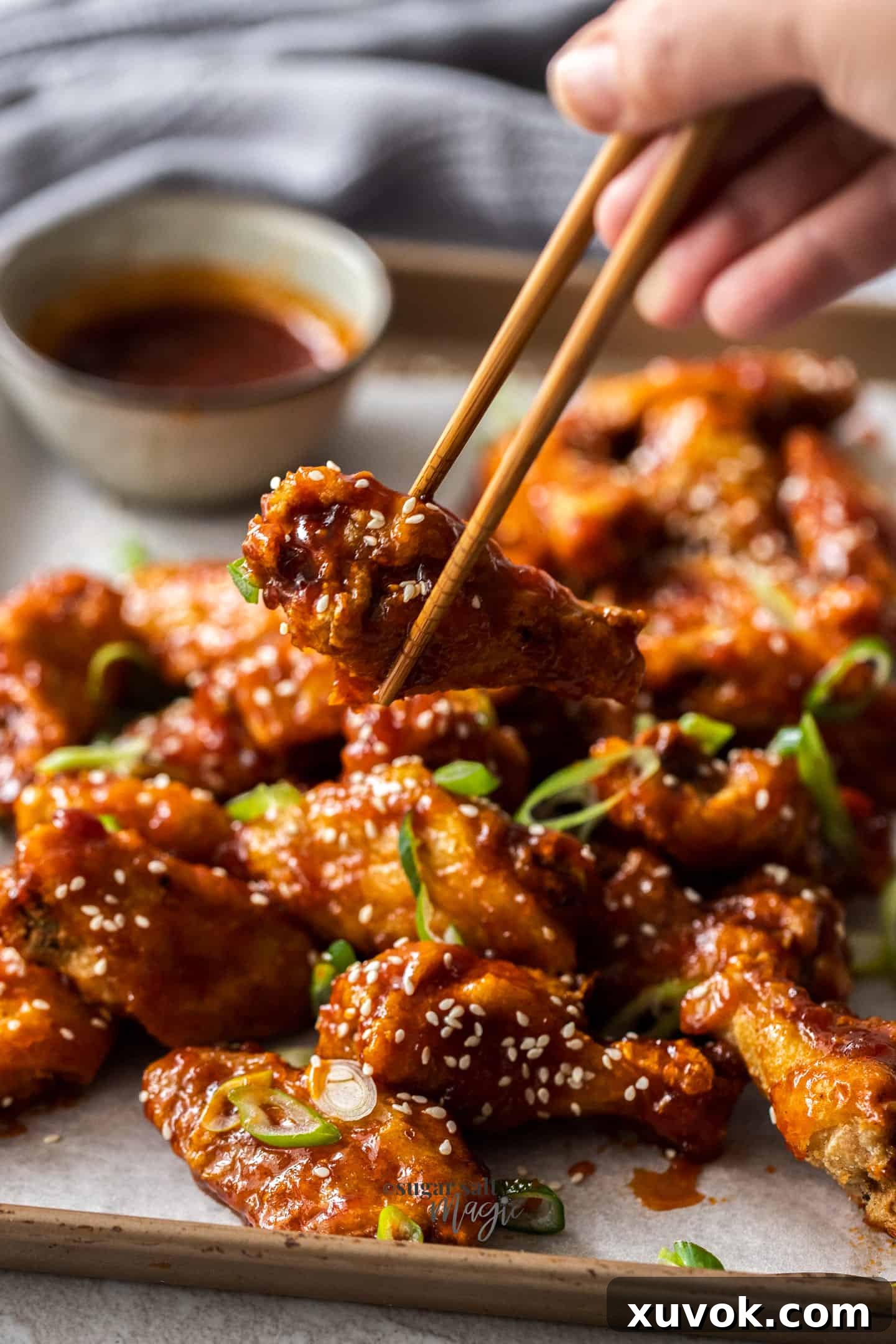
- **Glaze and Serve:** Immediately after the second fry, transfer the piping hot, crispy wings directly into the simmering gochujang sauce. Toss them thoroughly to ensure every piece is generously coated in the sweet, sticky, and spicy glaze. Garnish with a sprinkle of sesame seeds and freshly sliced spring onions (scallions) for added flavor and visual appeal. Serve these glorious Korean Fried Chicken Wings piping hot and enjoy the irresistible crunch!
Expert Tips and Tricks for Perfect Korean Fried Chicken
- **The Critical Drying Step:** Seriously, do not skip drying out the wings overnight in the fridge. This step is a game-changer for skin crispiness. Moisture is the enemy of crispiness, and by allowing the air to circulate around the naked chicken wings, you dehydrate the skin, leading to that coveted, shatteringly crisp texture that holds up even after being coated in sauce.
- **Temperature Control is King:** Investing in a reliable candy thermometer or deep-fry thermometer is highly recommended. Maintaining precise oil temperatures for both the first (160°C / 320°F) and second (200°C / 395°F) frying stages is absolutely crucial for achieving perfectly cooked, ultra-crispy wings. The first lower-temp fry cooks the chicken and renders fat, while the second higher-temp fry crisps the coating without burning.
- **Don’t Overcrowd the Pot:** Fry the chicken in small batches. Overcrowding the frying vessel will significantly drop the oil temperature, leading to soggy, greasy chicken instead of crispy perfection. Give each wing ample space to fry evenly.
- **Use a Sturdy Pot:** A deep, heavy-based saucepan, Dutch oven, or wok is essential for safe deep frying. Its heavy construction helps maintain a consistent oil temperature, and the depth prevents oil from splattering excessively.
- **Season the Chicken Directly:** While the sauce is flavorful, a little salt directly on the chicken before coating (or mixed into the dry coating) can enhance its internal flavor, ensuring every part of the wing is delicious.
- **Pat Dry Again Before Coating:** Even after drying overnight, give the wings a final pat with paper towels right before coating in cornflour. This ensures the dry coating adheres properly and maximizes crispness.
- **Customize Your Spice Level:** Feel free to adjust the amount of gochujang in the sauce to match your preferred spice level. Start with 2 tablespoons for a milder kick and increase to 3 tablespoons or more for a bolder, spicier experience.
- **Fresh Aromatics Make a Difference:** While garlic and ginger powder can work in a pinch, fresh grated ginger, minced garlic, and grated onion provide a much more vibrant and aromatic depth to the sauce.
How to Serve Korean Fried Chicken Wings
These crunchy, sweet, and spicy Korean Fried Chicken Wings are incredibly versatile and make for a show-stopping dish for various occasions. They are an absolute triumph as an appetizer for any gathering, a perfect indulgence for game day food, or a fantastic finger food option for parties. The generous coating of sticky sauce means they don’t typically require a separate dipping sauce, but if you’re like us and can’t get enough of that delectable glaze, a small bowl of the leftover sauce works wonderfully. For an extra kick, consider pairing them with our homemade gochujang mayo.
To transform these wings into a satisfying and complete meal, we highly recommend serving them with simple steamed rice. The mildness of the rice provides a perfect canvas to soak up the rich flavors of the sauce and helps to balance the intensity. Sliced cucumber or a light, refreshing pickled vegetable salad are also excellent accompaniments. The coolness and freshness of these sides offer a delightful contrast to the warmth and spiciness of the wings, providing a welcome palate cleanser, especially if you’ve opted for a spicier sauce. For a more adventurous pairing, try a crisp, light lager to complete the authentic Chimaek (chicken and beer) experience.
Frequently Asked Questions (FAQ’s) About Korean Fried Chicken Wings
Chicken wings are undoubtedly ideal for Korean fried chicken due to their smaller size, ideal meat-to-skin ratio, and how well they take to crunchy coatings and sticky sauces. However, you can certainly use other cuts. Bone-in pieces like drumsticks or thighs will offer more flavor as the bone imparts richness during cooking, but they will require longer frying times. Chicken pieces with the skin left on are highly recommended as the skin crisps up beautifully and protects the meat from drying out. Boneless pieces like chicken tenders or breast chunks can also work but be mindful not to overcook them, as they can dry out quickly. Remember that frying times will vary significantly depending on the cut and size of chicken you choose.
The twice-frying method is the ingenious secret to Korean fried chicken’s unparalleled crispiness. The first fry, performed at a relatively lower temperature (around 160°C/320°F), serves two main purposes: it slowly renders out the fat from the chicken skin, making it thin and delicate, and it partially cooks the chicken meat. This initial stage creates a foundational crispness. The second fry, at a significantly higher temperature (around 200°C/395°F), is a rapid process. It flash-fries the now-thin and dehydrated skin, causing it to expand and develop those signature airy blisters, resulting in an incredibly light, airy, and shatteringly crispy crust. This method also ensures the chicken is cooked fully and retains its juiciness, as the high heat creates a barrier that locks moisture in.
Korean fried chicken achieves its legendary crispiness primarily through a combination of techniques: the twice-frying method (as explained above) and a specific type of thin, starchy coating. The initial drying of the chicken skin in the refrigerator removes surface moisture, while the cornflour-based coating, often with a touch of baking soda, creates a delicate shell that develops a unique, almost translucent crispness when fried. The baking soda helps create tiny bubbles and blisters in the coating, making it extra light and crunchy. Unlike heavier batters, this thin coating allows the inherent crispness of the chicken skin to shine. Cooked this way, Korean fried chicken boasts a remarkable ability to stay crispy even after being generously glazed with its sticky sauce, a feat many other fried chicken styles struggle with.
While deep-frying provides the absolute best, most authentic crispy results for Korean fried chicken, you can achieve a pretty good alternative in an air fryer. Keep in mind that the texture will be different – it will be crispy, but not quite the same light, blistered crunch as deep-fried. To prepare for air frying, rub a little oil over the seasoned and coated chicken pieces. Ensure they are arranged in a single layer with good space between them in the air fryer basket to allow for proper air circulation. Cook at 180°C (350°F) for about 10 minutes, then flip them, increase the temperature to 200°C (395°F), and cook for another 10-12 minutes, or until they are golden brown and cooked through. You’ll still get a tasty, crispy wing, just with a slightly different mouthfeel.
Korean wings distinguish themselves from classic American fried chicken in several significant ways. Firstly, the coating is typically much lighter and simpler, primarily using cornflour (or potato starch), often with baking soda and salt, rather than a thick, seasoned flour batter. Secondly, the cooking method is distinct: Korean fried chicken is almost always twice-fried, which imparts its signature ultra-crispy, thin, and delicate crust that holds up well even when sauced. American fried chicken is typically fried once. Lastly, the flavor profile is markedly different due to the sauce. Korean wings are almost always coated in a sticky, sweet, and spicy glaze that features traditional Korean ingredients like the fermented chili paste gochujang, sesame oil, and mirin, offering a more complex sweet-spicy-umami balance compared to the savory, herby profiles often found in American fried chicken.
While Korean fried chicken is best enjoyed fresh off the fry and coated, you can prepare certain components ahead of time. The sauce can be made a day or two in advance and stored in the refrigerator; gently reheat it before coating the wings. The wings can also be dried overnight in the fridge as recommended. If you want to get a head start on frying, you can perform the first fry (at 160°C/320°F) a few hours before serving. Allow the par-fried wings to cool completely, then refrigerate them. When ready to serve, bring them to room temperature, perform the second fry at 200°C (395°F), and then toss in the warm sauce. This ensures maximum crispness upon serving.
Leftover Korean Fried Chicken Wings can be stored in an airtight container in the refrigerator for up to 2-3 days. To reheat and revive their crispiness (as much as possible), avoid the microwave, which will make them soggy. Instead, place them on a wire rack over a baking sheet and reheat in an oven preheated to 180°C (350°F) for 10-15 minutes, or until heated through and the coating has re-crisped somewhat. An air fryer can also work well for reheating, using the same temperature and time guidelines. The sauce may not be as sticky or intensely crisp as fresh, but it will still be delicious!
More Delicious Chicken Wing Recipes You’ll Love
If you’ve enjoyed these Korean Fried Chicken Wings, you’re in for a treat! We have a fantastic collection of chicken wing recipes, each offering a unique flavor experience. Explore these other mouth-watering options:
- Zesty Honey Lemon Pepper Wings
- Classic Oven Baked Barbecue Chicken Wings
- Crispy Salt and Pepper Chicken Wings
- Addictive Crispy Honey Soy Chicken Wings
- Easy Air Fryer Teriyaki Chicken Drumsticks
- Sweet and Savory Honey Garlic Chicken Wings
- Authentic Chinese Fried Chicken Wings
Did you try this Korean chicken wings recipe?
Leaving a rating and comment below the recipe is so helpful!
Hungry for more? Subscribe to our newsletter for free recipes straight to your inbox. Also, follow along on Facebook, Pinterest and Instagram for daily inspiration.
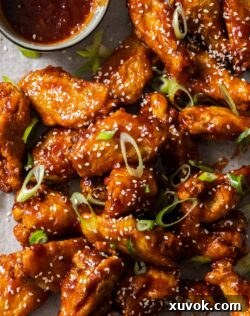
Korean Fried Chicken Wings
Rate
Pin
Ingredients
- 12 chicken wings (split at joint, tips discarded)
- 2 tablespoons coarsely grated onion (note 1)
- 3 cloves minced garlic
- 3 teaspoon finely grated ginger
- 2 tablespoon soy sauce (note 1)
- ⅓ cup mirin (80ml)
- ¼ cup tomato sauce (ketchup) (60ml)
- 2-3 tablespoons gochujang (to your taste) (notes 1 & 2)
- ¼ cup honey (60ml)
- 2 teaspoon sesame oil
- ¾ cup cornflour (cornstarch) (97g / 3.4oz)
- 1 ½ teaspoons salt
- ½ teaspoon baking soda
- 2 litres vegetable oil (or enough to fill a large saucepan to 4cm depth) (2 quarts)
- Sesame seeds and sliced spring onions (scallions) to serve
For best results, always weigh ingredients where a weight is provided
Equipment
-
Baking sheet with wire rack for drying out the wings.
-
A deep heavy based saucepan or wok for frying is essential – I prefer my large saucepan or Dutch oven as it holds its temperature well and is deep enough to be safe.
-
A candy thermometer or deep fry thermometer is helpful to regulate the temperature of the oil.
Instructions
-
Lay the chicken wing pieces out on a large wire rack set over a tray so they are all separated and not touching. Place this uncovered tray in the fridge for 24 hours. This essential step thoroughly dries out the chicken skin, which is paramount for achieving the crispiest final result. While a shorter drying time will still yield good chicken, the longer the wings air-dry, the more exceptional the crunch will be.
-
To prepare the gochujang sauce, heat 2 tablespoons of the vegetable oil in a medium saucepan over medium heat. Add the minced garlic, coarsely grated onion, and finely grated ginger. Stir-fry for a minute or two until the aromatics become fragrant and slightly softened, releasing their wonderful scents.
-
Now, add the rest of the sauce ingredients: soy sauce, mirin, tomato sauce (ketchup), gochujang (adjust to your preferred spice level), honey, and sesame oil. Bring the mixture to a gentle simmer and cook for 7 – 10 minutes, stirring occasionally. The sauce should reduce and thicken to a beautiful, sticky, and syrupy consistency, perfect for coating the crispy wings. Set aside and keep warm.
-
While the sauce simmers, prepare for frying. Pour the remaining vegetable oil into a deep, heavy-bottomed saucepan or Dutch oven, ensuring it is deep enough to safely submerge the chicken pieces. Heat the oil to 160°C (320°F). Preheat your oven to a low, warm setting (approximately 70°C / 160°F) to keep the first batches of fried chicken warm.
-
In a separate bowl, thoroughly mix together the cornflour (cornstarch), salt, and baking soda to create your dry coating. Take about 8 of the dried chicken wing pieces and roll them in this cornflour mixture, ensuring each piece is lightly and evenly coated. Gently lower these coated wings into the hot oil, being careful not to overcrowd the pan. Deep fry for about 5 minutes until they are just beginning to turn a pale golden color and appear slightly crispy. Carefully remove the wings from the oil and place them on a clean wire rack set over paper towels to drain any excess oil. Transfer them to the warm oven to hold their temperature while you continue.
-
Repeat the first frying step with two more batches of chicken wings, coating and frying them as described above. Continue to drain and keep them warm in the oven between batches to ensure they maintain heat for the second fry.
-
Once all the wings have undergone their first fry, significantly increase the heat of the oil to 200°C (395°F). This higher temperature is crucial for achieving the ultimate, shatteringly crispy crust.
-
Take the warmed, par-fried chicken pieces from the oven and give them a quick recoat in the cornflour mix (this helps to enhance the final crispiness). Fry them again in batches for another 5 minutes, or until they achieve a deep golden-brown color and an irresistibly crispy, almost blistered texture. Immediately transfer the hot, crispy wings into the warm gochujang sauce. Stir thoroughly to ensure every single wing is generously coated in the rich, sticky glaze.
-
Sprinkle generously with toasted sesame seeds and freshly sliced spring onions (scallions) for garnish and an extra burst of flavor. Serve your sensational Korean Fried Chicken Wings immediately, perhaps alongside steamed rice and refreshing sliced cucumber or pickled vegetables to complete the meal.
-
Please take a moment to leave a comment & rating. Your feedback is truly appreciated and incredibly helpful to us!
Notes
- I use an Australian standard 20ml tablespoon for all measurements in this recipe.
- Gochujang is a fundamental fermented Korean red chili pepper paste. It’s increasingly available in the Asian/Oriental section of most major grocery stores or can be found at specialty Asian markets. Using gochujang is highly recommended for an authentic and rich flavor. If you truly can’t find it, you can substitute with your favorite chili sauce to taste, but for a more complex flavor profile, add a tablespoon of white miso paste alongside it to mimic the fermented umami notes.
- For a slightly different, chunkier coating texture, try using a blend of half cornflour (cornstarch) and half plain (all-purpose) flour in your dry coating mix.
More Information
These links will take you up to the main sections of the post – just scroll down to get back to the recipe card.
- What is Korean Fried Chicken?
- Step by Step Photos and Instructions
- Expert Tips and Tricks for Success
- Creative Ways to Serve Korean Fried Chicken Wings
- Common Questions Answered (FAQ’s)
EXPLORE MORE APPETISERS AND FINGER FOOD!
DISCOVER MORE ASIAN-INSPIRED RECIPES!
Karaage Chicken (Japanese Fried Chicken)
Mini Korean Beef Tacos