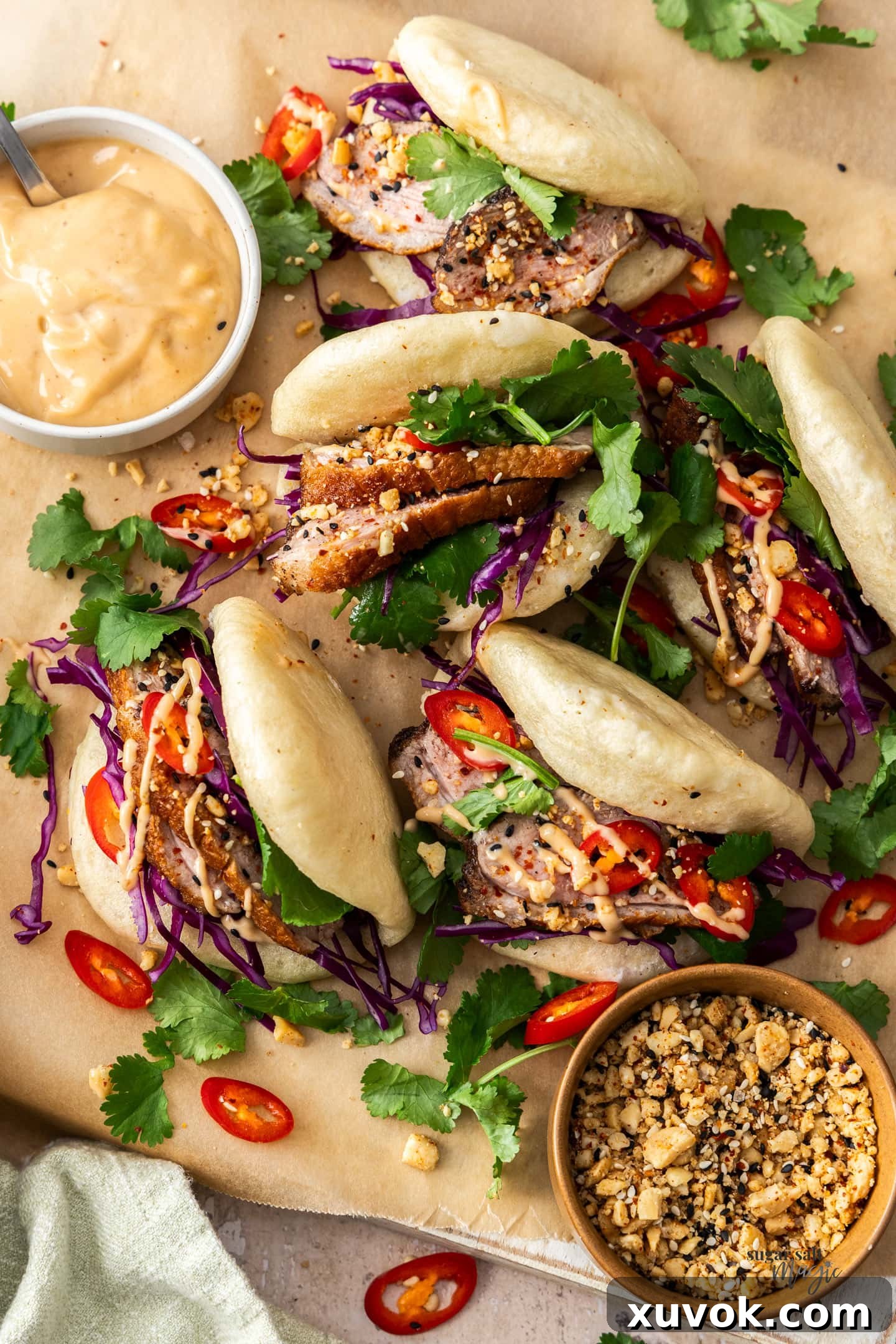
Irresistible Duck Bao: Your Guide to Perfectly Pan-Seared Five-Spice Duck Buns
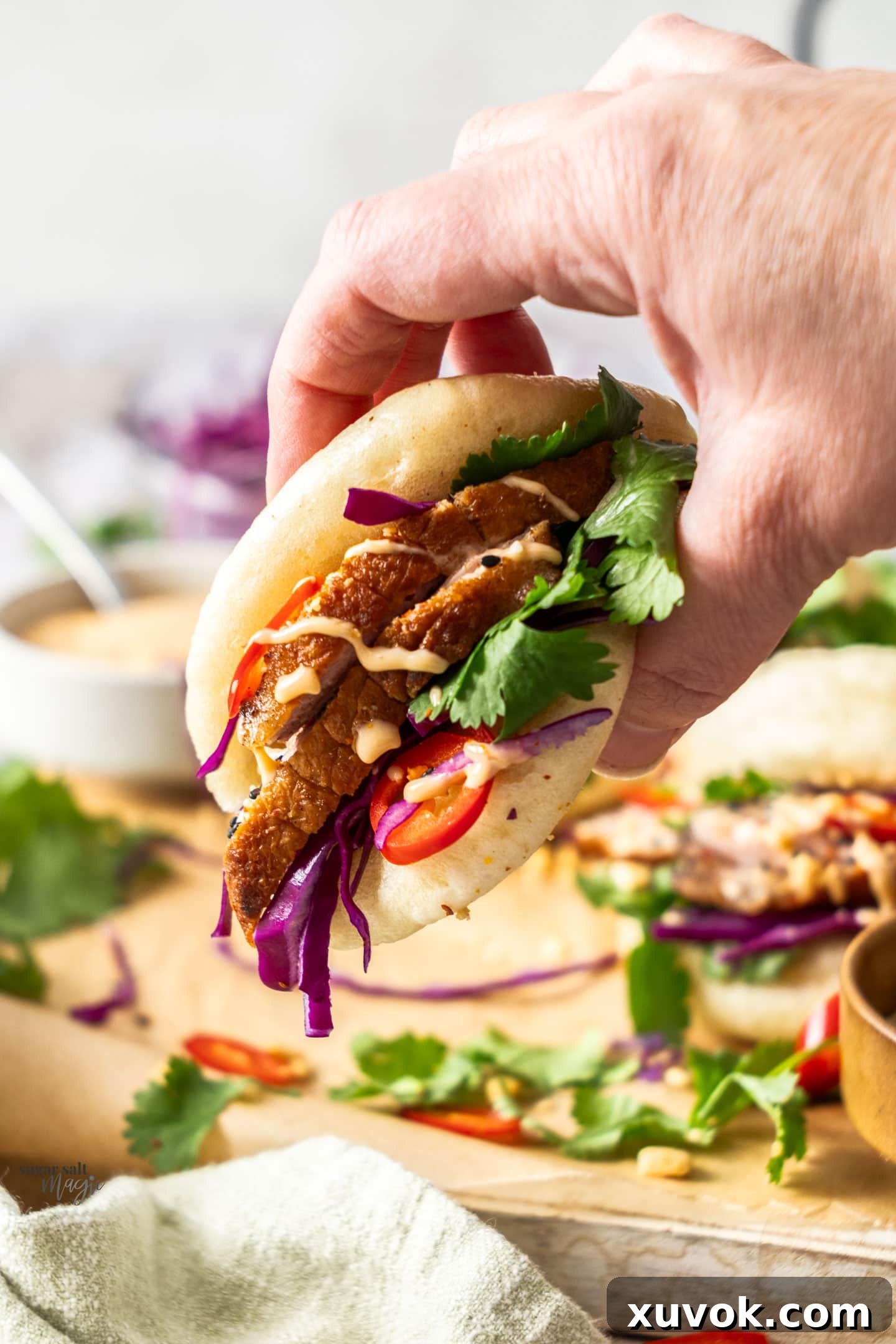
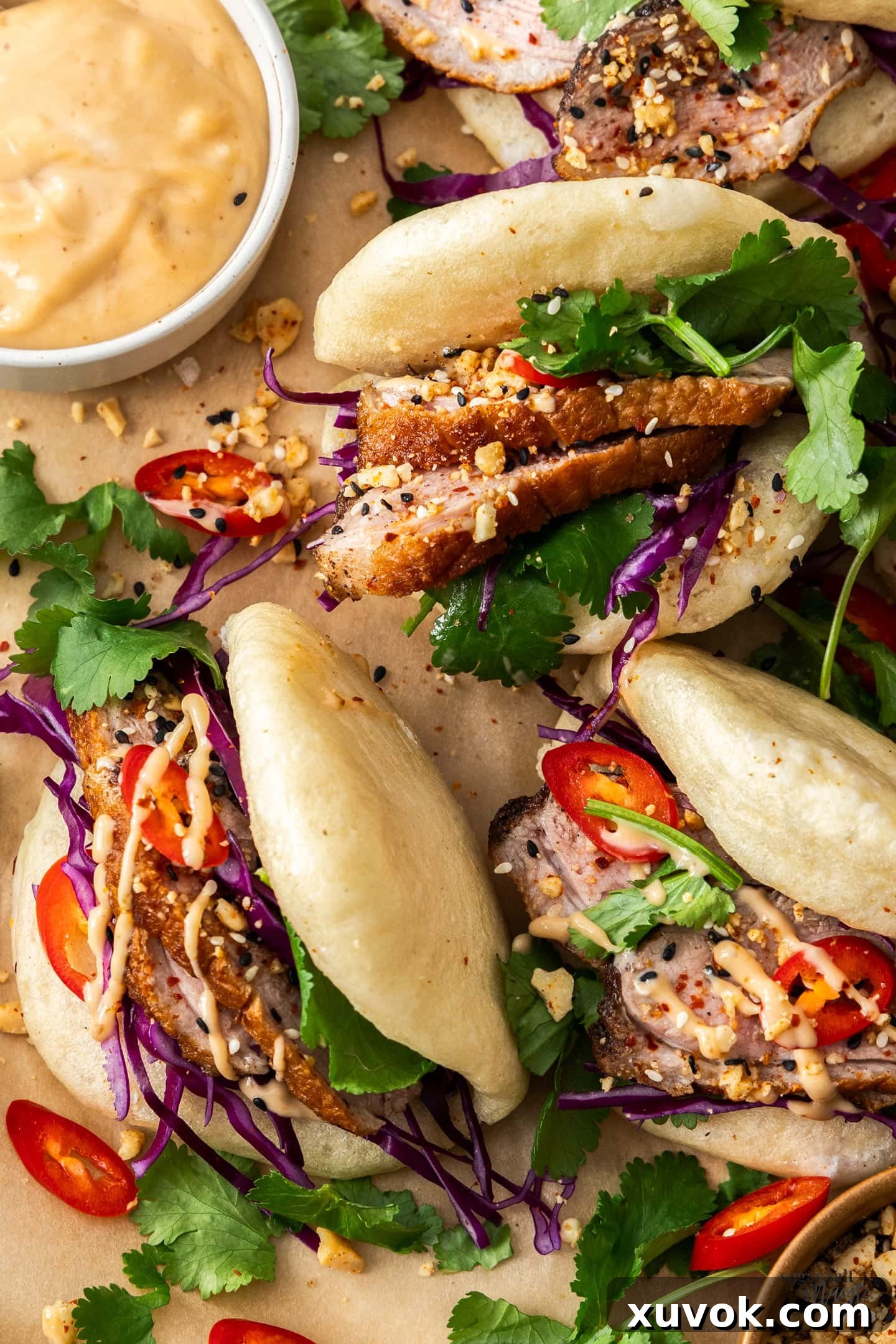
Step into the delightful world of Chinese cuisine with homemade Duck Bao Buns! Often simply called duck bao (as “bao” already means bun, making “bao buns” redundant but commonly understood), these charming steamed pockets are a symphony of flavors and textures. Imagine pillowy-soft steamed buns, generously filled with succulent, perfectly pan-seared duck breast, infused with aromatic Chinese five-spice, and complemented by crisp, fresh vegetables and a luscious hoisin mayo. They’re not just incredibly tasty; they’re also a joy to prepare, offering a rewarding cooking experience even for those new to working with yeasted dough.
While the idea of making bao buns from scratch might seem daunting, it’s surprisingly simple and yields a far superior result. Don’t let the thought of working with yeast intimidate you; these buns are much easier than they appear and offer that authentic, fluffy texture that store-bought versions often lack.
The star of the show, the duck filling, is kept effortlessly elegant. We begin by seasoning premium duck breast with a fragrant five-spice blend, then pan-sear it to achieve that coveted crispy, golden skin and tender, juicy interior. If cooking duck breast feels a bit intimidating, rest assured it’s a straightforward process to master, delivering restaurant-quality results right in your own kitchen.
The remaining components are a refreshing contrast to the rich duck: thinly shredded red cabbage, fresh coriander (cilantro), and a hint of vibrant red chili. A simple yet incredibly flavorful two-ingredient hoisin mayo brings everything together. To elevate these delectable parcels further, consider adding a sprinkle of homemade sweet and spicy dukkah (the recipe is included below), or simply scatter some sesame seeds and/or crushed peanuts for extra crunch and nutty depth. Prepare for a flavor explosion that’s both quick to make and endlessly delicious!
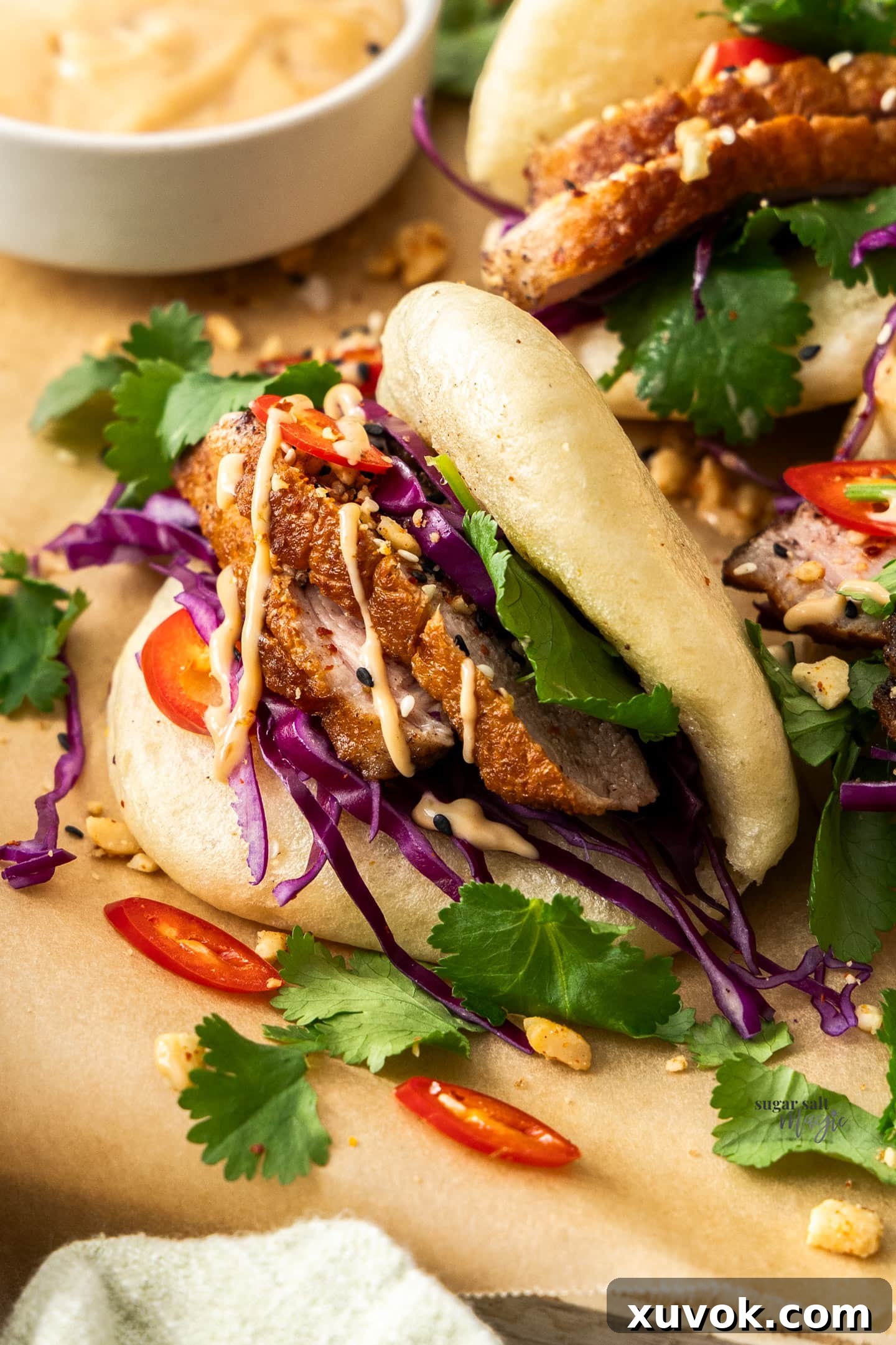
Table of Contents: Your Duck Bao Journey Awaits
- Essential Ingredients for Perfect Duck Bao
- Mastering Duck Bao Buns: A Step-by-Step Guide
- Crafting the Perfect Five-Spice Duck
- Achieving Fluffy Steamed Buns
- Assembling Your Delicious Duck Bao
- Elevate Your Bao with Homemade Asian Sweet and Spicy Dukkah
- Creative Filling Ideas for Versatile Bao
- Frequently Asked Questions About Duck Bao Buns
- Yield and Storage Tips for Leftovers
- More Asian-Inspired Recipes You’ll Adore
Never Miss a Recipe!
Get the latest recipes straight to your inbox and elevate your home cooking!
Sign up to receive our latest delicious recipes directly in your inbox. Join our community of food lovers!
Essential Ingredients for Perfect Duck Bao
These exquisite duck steamed buns were inspired by a memorable dish I once enjoyed at a local restaurant, originally chicken-filled. The simplicity of their ingredients belied an explosion of flavor. My version, swapping chicken for duck, captures that exact deliciousness. I chose duck for two reasons: firstly, its rich flavor profile lends itself beautifully to adaptations, including a delightful Peking duck style; and secondly, I was determined to master the art of pan-frying duck breast to achieve that perfect crisp skin and tender meat.
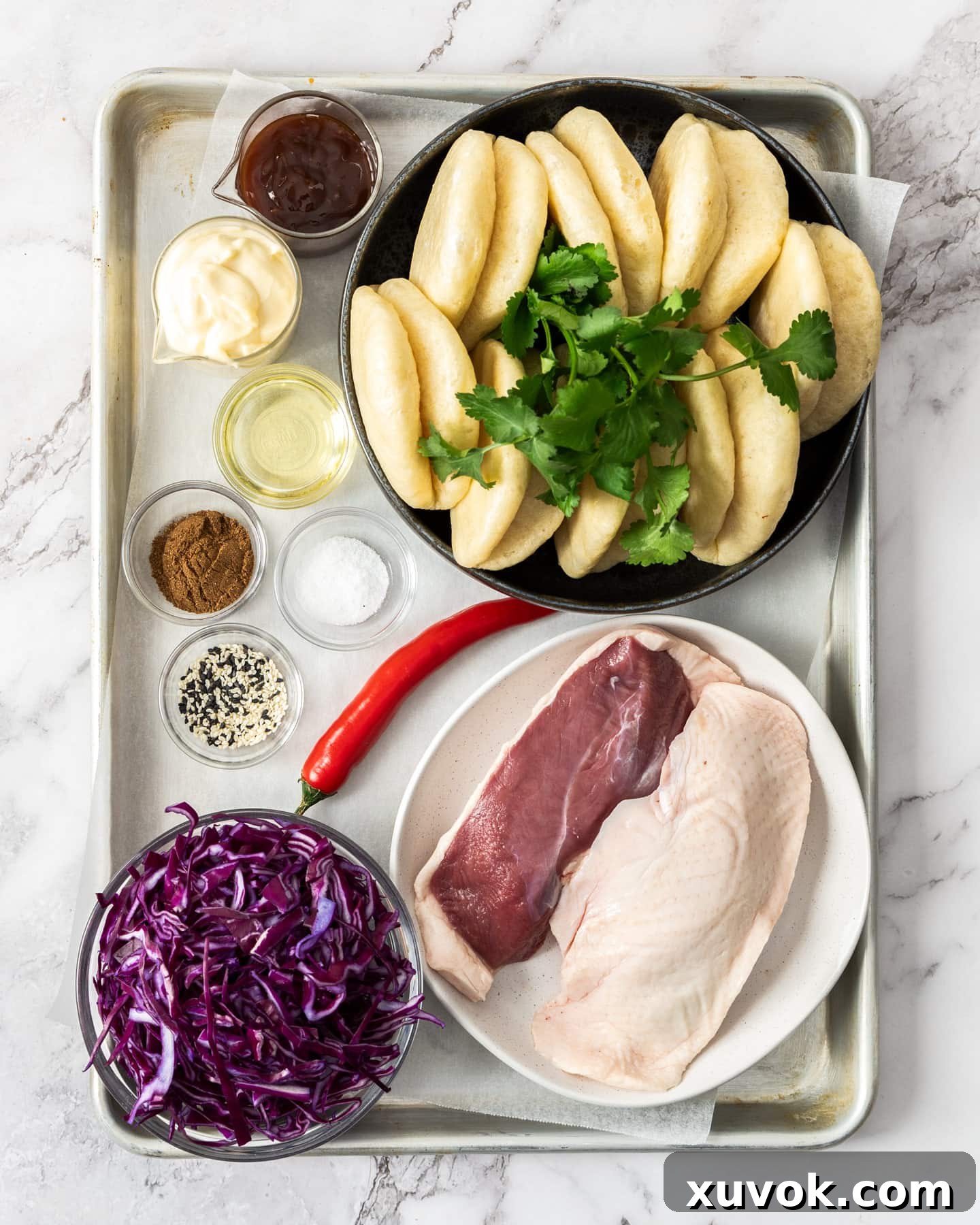
For a complete list of ingredients and detailed instructions, scroll down to the full recipe card.
- Bao Buns: These soft, fluffy Chinese steamed buns are the foundation of our dish. While you might know them as “bao buns,” the term “buns” is actually redundant since “bao” already translates to bun. The folded, taco-like style we use here is specifically known as a lotus bun, a popular choice for savory fillings. For the freshest taste and texture, I highly recommend using my homemade bao buns recipe. However, for convenience, you can easily find pre-made frozen bao in the freezer section of most Asian markets or larger supermarkets.
- Duck Breast: The star protein of this dish! You’ll need boneless duck breast, ideally skin-on, to achieve that glorious crispy skin. While this recipe is designed for skin-on duck, you can certainly adapt it for skinless duck if preferred, though you’ll miss out on some of that incredible texture and rich flavor.
- Chinese Five Spice Powder: This essential spice blend is a cornerstone of Chinese cooking, typically comprising five (or sometimes more) core spices: cinnamon, star anise, cloves, fennel seeds, and Szechuan pepper. Its complex, aromatic profile provides an incredible depth of flavor to the duck, requiring only a touch of salt to season the meat perfectly.
- Kewpie Mayonnaise: A Japanese mayonnaise renowned for its rich, umami-packed, and slightly sweeter flavor compared to Western mayonnaise. Its distinctive taste elevates the hoisin mayo. If Kewpie isn’t available, a good quality regular mayonnaise will work as a substitute, but the flavor will be slightly different.
- Hoisin Sauce: A thick, fragrant, sweet, and savory sauce commonly used in Chinese cuisine, most famously with Peking duck. It adds a delicious glaze and a deep, complex sweetness that pairs beautifully with the duck and mayo.
- Fresh Vegetables: To provide a fresh, crisp counterpoint to the rich duck, we keep the vegetables simple and vibrant. This recipe calls for thinly sliced red cabbage, fresh coriander (cilantro), and thinly sliced red chili for a touch of heat. Feel free to customize by adding shredded carrots, or by substituting red cabbage with Chinese cabbage (Napa cabbage) for a milder crunch.
Craving Peking Duck Bao Buns? Here’s a simple swap! To transform these into a classic Peking duck experience, omit the cabbage, chili, and coriander. Instead, fill your bao with crisp cucumber sticks and delicate strips of spring onions (also known as scallions or green onions). For the sauce, skip the mayo and use pure hoisin sauce. The result? Authentic Peking duck buns in minutes!
Mastering Duck Bao Buns: A Step-by-Step Guide
Embarking on the journey of making homemade bao buns is highly recommended for an unparalleled culinary experience; the fresh, soft texture is truly unmatched. However, if time is of the essence or you prefer a shortcut, many supermarkets offer pre-made bao buns in their freezer section, ready to be steamed.
The process of cooking the duck breast to perfection is surprisingly straightforward. I’ve found an excellent, foolproof tutorial for pan-frying duck over at Hunt Gather Cook, which greatly simplified my own approach to achieving consistently delicious results.
For full ingredients and detailed instructions, refer to the complete recipe card below.
Crafting the Perfect Five-Spice Duck
Achieving a perfectly cooked duck breast with crispy skin and tender meat is easier than you think. Follow these steps for a truly remarkable filling for your bao buns.
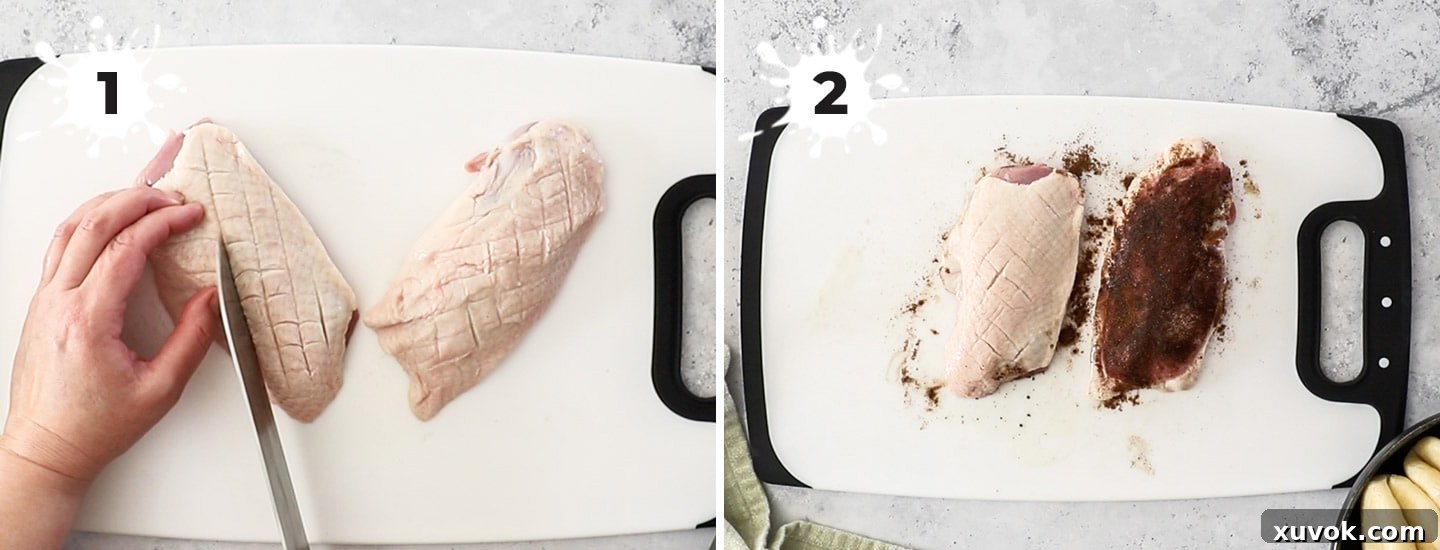
- Prepare the Duck Breast: For even cooking, remove the duck breasts from the refrigerator about 20-30 minutes before you plan to cook them, allowing them to come closer to room temperature. Using a sharp knife, carefully score the duck skin in a criss-cross pattern, making sure not to cut through to the meat itself. This scoring allows the fat to render more efficiently, resulting in beautifully crispy skin (photo 1). Next, lightly oil and salt the duck breasts, rubbing the seasoning all over. Then, apply the Chinese five-spice powder *only* to the meat side (not the skin). This crucial step prevents the five-spice from burning during the extended skin-side-down cooking, which can happen over the 8 minutes required to render the fat (photo 2).
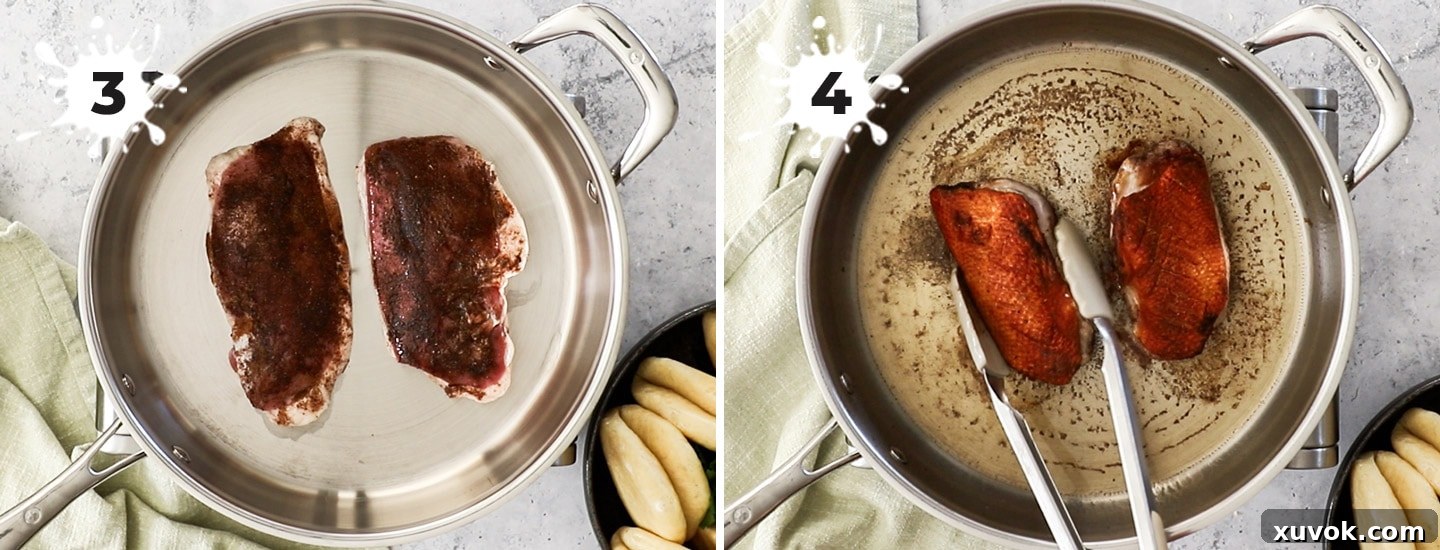
- Pan-Sear the Duck: Place the duck breasts into a *cold* pan, skin-side down (photo 3), then turn the heat to medium. Starting with a cold pan helps the fat render slowly and evenly, resulting in much crispier skin. As soon as you hear a gentle sizzle, start a timer for 8 minutes. During this time, a significant amount of fat will render, creating that desirable crispy skin. Once the skin is golden brown and perfectly crisp, flip the duck breasts (photo 4) and cook on the meat side for another 3-5 minutes, depending on your preferred doneness (3 minutes for medium-rare, 5 for more well-done). For a final touch, stand the duck breasts upright on their thickest side, leaning them against each other if necessary (photo 5, below). Cook for about 1 minute to ensure that the thickest part of the breast is cooked through.
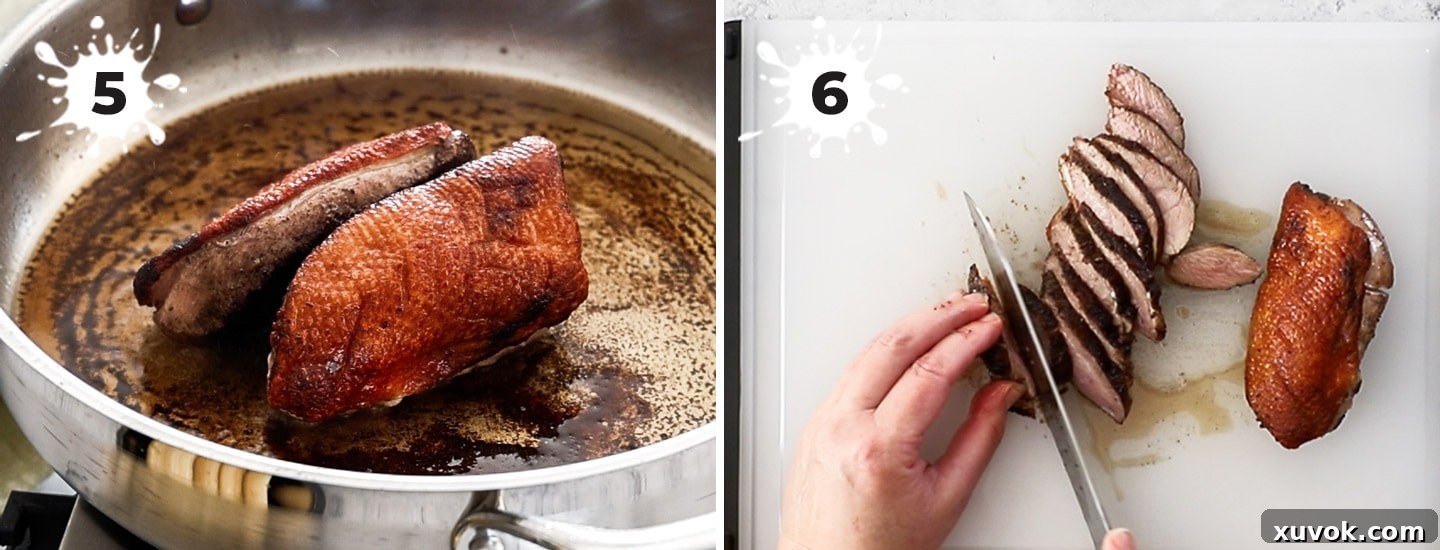
- Rest the Duck: Just like any cut of meat, allowing the duck breast to rest after cooking is crucial. This short resting period (about 3-5 minutes) allows the juices to redistribute throughout the meat, ensuring every slice is incredibly tender and juicy. Once rested, thinly slice the duck breast against the grain (photo 6), ready to be nestled into your steamed bao.
Don’t be alarmed by the duck fat! When cooking duck breast, you’ll notice a significant amount of fat rendering out from the skin. Your pan might start almost dry, but as it cooks, a generous pool of rich duck fat will accumulate. This is exactly what we want for crispy skin! You can strain this flavorful fat and save it for future cooking endeavors, though be mindful that it will carry a subtle five-spice aroma.
Achieving Fluffy Steamed Buns
While your duck is cooking, this is the perfect time to get your bao buns beautifully steamed and ready for their delicious filling. The goal is light, airy, and soft buns.
- Prepare Your Steamer: Begin by adding about an inch of water to a large saucepan or a wok and bring it to a gentle simmer over medium heat.
- Position the Steamer Basket: Carefully place your steamer basket (bamboo or metal) over the simmering water. Ensure that the water level is low enough that it doesn’t touch the bottom of the basket, preventing your buns from becoming soggy.
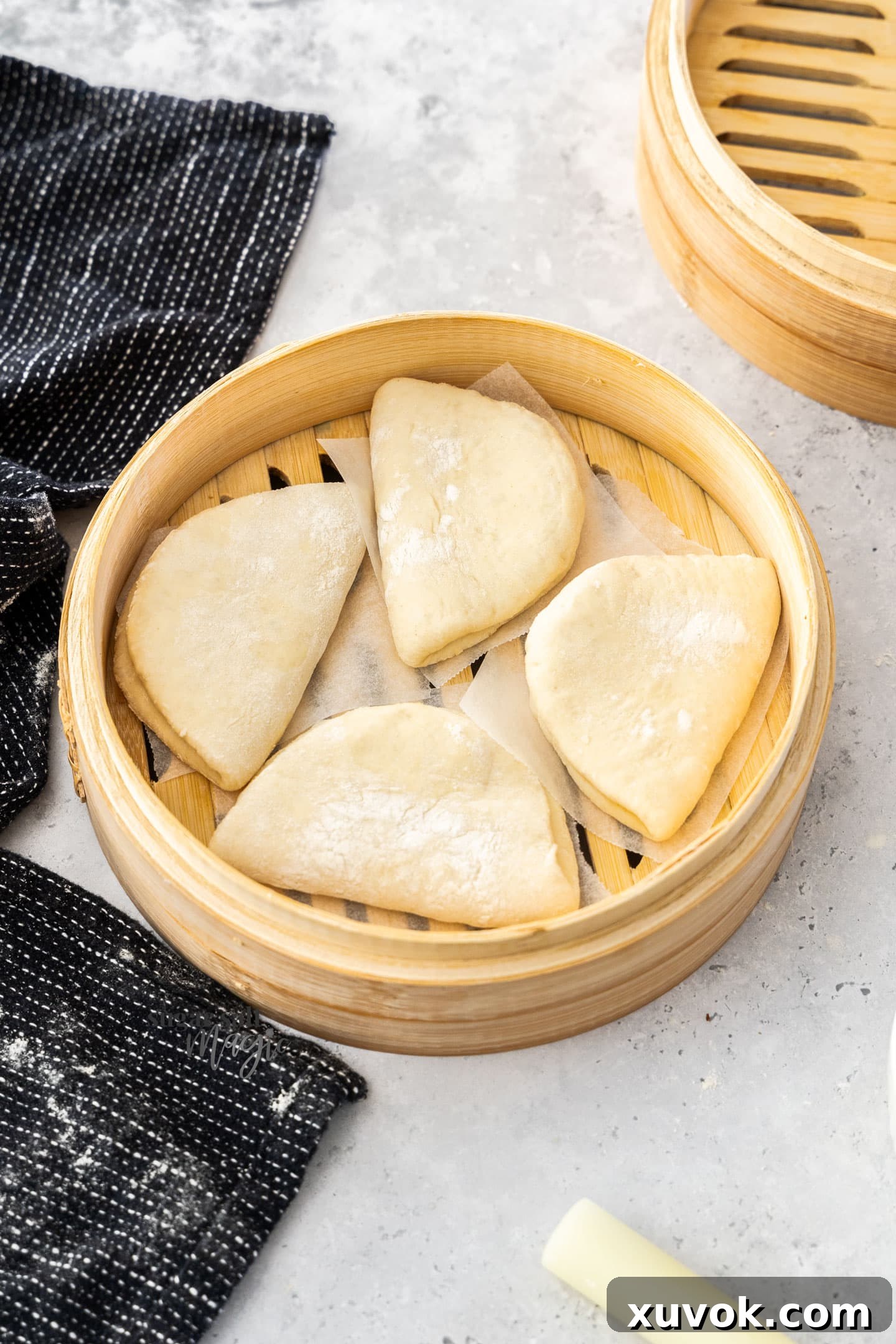
- Arrange the Buns: To prevent sticking, place each bao bun on a small square of baking paper before arranging them in the steaming basket. Leave a little space between each bun to allow for expansion. Cover the steamer with its lid.
- Steam to Perfection: Steam the buns for approximately 8 minutes. When done, they should be wonderfully soft, fluffy, and slightly warm to the touch.
Assembling Your Delicious Duck Bao
Now that your duck is perfectly cooked and your bao buns are steamed to fluffy perfection, it’s time for the exciting part: assembly! This is where all the elements come together to create a harmonious blend of flavors and textures.
- Whip Up the Hoisin Mayo: The sauce is incredibly simple yet adds a punch of flavor. In a small bowl, combine the rich Kewpie mayonnaise with the sweet and savory hoisin sauce. Mix until thoroughly combined and smooth. This creamy, tangy, and sweet sauce will beautifully complement the duck.
- Layer the Fillings: Gently open each steamed bao bun to create a pocket. First, add a generous amount of finely sliced red cabbage, providing a refreshing crunch. Next, sprinkle in some fresh coriander (cilantro) for its bright, herbaceous notes. Then, lovingly place a couple of slices of your perfectly cooked duck breast into the bun. Finally, drizzle a generous amount of that delicious hoisin mayo over the duck and vegetables.
- Add the Finishing Touches: To complete your masterpiece, garnish each duck bao with delicate slices of red chili for a hint of heat and color. For added texture and a nutty flavor, sprinkle with sesame seeds and/or crushed roasted peanuts. Serve immediately and enjoy the incredible combination of flavors and textures!
Elevate Your Bao with Homemade Asian Sweet and Spicy Dukkah
While a simple scattering of sesame seeds or crushed peanuts makes for a lovely finish, I adore taking these duck bao buns to the next level with a quick homemade sweet and spicy dukkah. This irresistible blend takes mere minutes to prepare and adds an incredible layer of texture and complex flavor that truly elevates the dish.
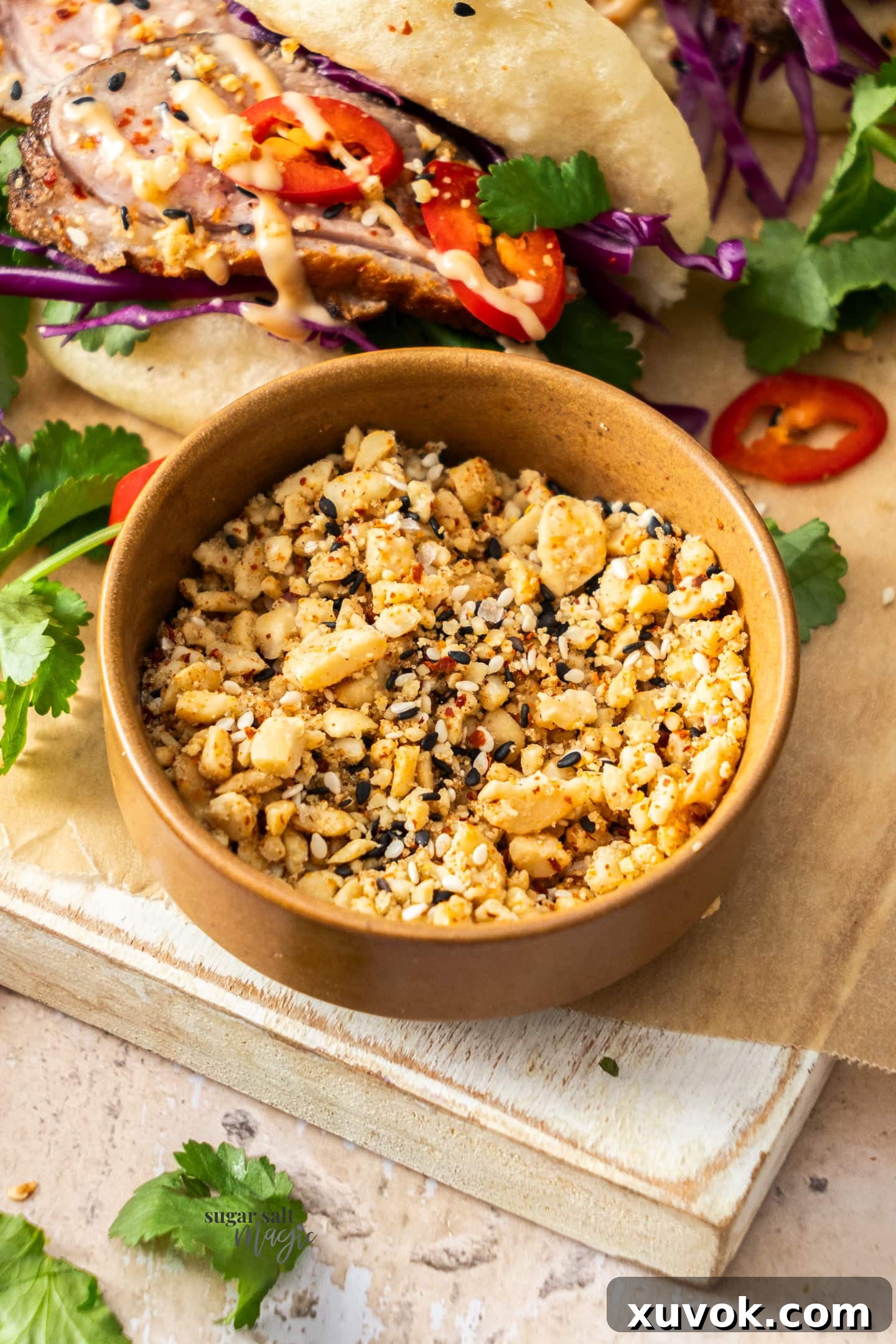
To make this delightful dukkah, start with ⅓ cup of salted toasted peanuts. You can roughly chop them with a knife or use a mortar and pestle for a more rustic crush. Once prepared, simply stir in 1 teaspoon of brown sugar, 1 teaspoon of Korean chili flakes (gochugaru), 2 teaspoons of sesame seeds (a mix of white and black is lovely for visual appeal), and a pinch each of sea salt flakes and Chinese five-spice powder. Mix everything together, and voilà! You have a vibrant, crunchy, and flavor-packed topping ready to sprinkle over your duck bao buns, adding an unforgettable sweet, spicy, and nutty dimension.
A note on chili flakes: Korean chili flakes are significantly milder than typical dried chili flakes (red pepper flakes often found in Italian-American cuisine). If you’re substituting, use regular dried chili flakes sparingly and adjust to your preferred level of heat.
Creative Filling Ideas for Versatile Bao
Bao buns are incredibly versatile, much like tacos or wraps, offering a perfect canvas for a wide array of fillings. While these duck buns are undeniably delicious, don’t hesitate to experiment with different proteins and vegetables to suit your taste or what you have on hand. The soft, neutral flavor of the bao pairs beautifully with almost anything.
Instead of duck, consider slow-cooked pork belly for a rich, melt-in-your-mouth experience, or shredded chicken for a lighter option. Crispy fried chicken, perhaps glazed with an Asian-inspired sauce, also makes for an exciting filling. For a truly decadent twist, you could even use pre-roasted duck from your favorite Asian deli. On the vegetarian front, try crispy tofu or tempeh, marinated mushrooms, or a vibrant medley of stir-fried vegetables.
Beyond the main protein, get creative with your vegetables! Sliced cucumber, pickled daikon and carrot, finely shredded lettuce, or even a quick Asian slaw can add crunch and freshness. For sauces, experiment with sriracha mayo, plum sauce, or a spicy peanut sauce. The possibilities are endless, allowing you to customize your bao to perfection every time.
Frequently Asked Questions About Duck Bao Buns
Bao buns are becoming increasingly popular and are readily available. You can typically find them in the freezer section of most large supermarkets, Asian grocery stores, or specialty food shops. Look for them alongside other Asian frozen foods like dumplings or spring rolls. For an extra special touch, many Asian bakeries also sell freshly steamed bao.
Cooking frozen bao buns is very straightforward and primarily involves steaming. Place your bao buns in a steaming basket set over simmering water for about 8 minutes. If you have stackable bamboo steaming baskets, they are ideal for even cooking. Alternatively, you can use any metal or silicone steaming basket. No steamer? A colander placed over a pot of simmering water with a tight-fitting lid (or foil) can work in a pinch. Always remember to place a small square of baking paper under each bao to prevent it from sticking to the steamer and to ensure easy removal.
While duck bao buns are incredibly flavorful on their own, they often leave room for a complementary side to create a more balanced and satisfying meal. Since the buns themselves are rich and savory, a fresh, vibrant salad or slaw is an excellent choice. This Asian slaw would be a fantastic accompaniment, offering a refreshing crunch and tangy dressing that cuts through the richness of the duck. Other great options include a light cucumber salad, steamed edamame, or even a simple bowl of miso soup.
While freshly assembled duck bao are best, you can certainly prepare components in advance. The duck breast can be cooked, sliced, and stored in an airtight container in the refrigerator for up to 3 days. The hoisin mayo can also be made and refrigerated. If using homemade bao buns, you can steam them and then freeze any leftovers. When ready to serve, simply reheat the duck (a quick pan-fry or microwave) and re-steam the buns until fluffy. Assemble just before serving for the best experience.
Chinese five-spice powder is a foundational spice blend in Chinese and Taiwanese cuisine, celebrated for its balanced flavor profile that hits all five traditional Chinese tastes: sweet, sour, bitter, pungent (spicy), and salty. While variations exist, it typically consists of ground star anise, cloves, Chinese cinnamon (cassia), Szechuan peppercorns, and fennel seeds. This powerful blend adds incredible depth and aroma to meats, stews, and marinades, making it perfect for our five-spice duck bao.
Yield and Storage Tips for Leftovers
A single pair of duck breasts goes a surprisingly long way when it comes to crafting these delightful duck bao buns, typically yielding enough filling for 8-10 bao. This makes them perfect for a family meal or for entertaining a small group.
Should you find yourself with any delicious leftover cooked duck breast, ensure it’s stored properly to maintain freshness and safety. Place the cooled duck breast in an airtight container or wrap it tightly with plastic wrap, then refrigerate promptly. It will remain fresh and delicious for up to 3 days. For best results when reheating, gently warm the duck slices in a pan or microwave, and re-steam any leftover bao buns until they are soft and fluffy again. Avoid assembling the bao until just before you’re ready to eat, as the buns can become soggy with pre-filled ingredients.
More Asian-Inspired Recipes You’ll Adore
If you’ve fallen in love with the flavors of these duck bao buns, you’re in for a treat! Our collection of Asian-inspired recipes offers a diverse range of dishes that are equally delicious and satisfying. From comforting classics to exciting new flavors, there’s something for every palate.
- Homemade Bao Buns: Master the foundation of these incredible duck bao with our detailed guide to fluffy, perfect steamed buns.
- Turkey San Choy Bow: A light, fresh, and flavorful lettuce cup recipe, perfect for a quick and healthy meal.
- Chinese Prawn Fried Rice: A classic comfort food, packed with juicy prawns and aromatic rice.
- Crispy Spring Rolls: Learn to make your own golden, crunchy spring rolls, ideal for an appetizer or snack.
- Authentic Thai Fish Cakes: Experience the vibrant flavors of Thailand with these fragrant and tender fish cakes.
- Hearty Beef Teriyaki Bowls: A delicious and customizable meal featuring tender beef and a rich teriyaki sauce.
Explore these recipes and bring even more exciting Asian flavors to your kitchen table!
Did you try this steamed duck buns recipe?
Leaving a rating and comment below the recipe is so helpful!
Hungry for more? Subscribe to our newsletter for free recipes straight to your inbox. Also, follow along on Facebook, Pinterest and Instagram for daily inspiration!
Duck Bao Buns (Five-Spice Pan-Seared Duck)
4
servings
15 minutes
15 minutes
30 minutes
⭐
⭐
⭐
half ⭐
Rate
Pin
Ingredients
-
10-12
bao buns
DUCK FILLING
-
2
duck breasts (skin-on recommended) -
1
tablespoon
olive oil
(see notes) -
½
teaspoon
salt -
1 ½
teaspoons
Chinese five spice powder -
½
cup
Kewpie mayo -
¼
cup
hoisin sauce -
1-2
long red chillies, finely sliced (adjust to taste) -
2
cups
finely sliced red cabbage -
Fresh coriander (cilantro), to serve -
Sesame seeds and/or crushed roasted peanuts (for garnish)
For best results, always weigh ingredients where a weight is provided
Equipment
-
Bamboo steamer (best) or other steamer basket -
Large frying pan / skillet -
Sharp knife
Instructions
-
Remove the duck breasts from the fridge 30 minutes before cooking. Using a sharp knife, score only the skin of the duck breasts (without cutting into the meat) in a ½ inch criss-cross pattern. This helps render the fat.
-
Drizzle the olive oil and sprinkle salt over the duck breasts, rubbing them thoroughly. Then, with the skin side down, sprinkle the Chinese five-spice powder *only* over the meat side and rub it in. This prevents the five-spice from burning during the long skin-side cooking.
-
Place the duck breasts, skin side down, into a cold large skillet or frying pan over medium heat. Cook for approximately 8 minutes to render the fat and achieve golden brown, crispy skin.
-
Flip the duck breasts and continue cooking on the meat side for 2-5 minutes, depending on your desired level of doneness (2 minutes for medium-rare, 5 minutes for well-done). Finally, stand the duck breasts upright against each other, searing the thickest fatty edge on the pan for just 1 minute to ensure it cooks through.
-
While the duck is cooking, prepare your other fillings. In a small bowl, mix the Kewpie mayo and hoisin sauce together until well combined. At this point, also steam your bao buns according to the instructions in the main post.
-
Transfer the cooked duck to a chopping board, skin side up, and allow it to rest for 2-3 minutes. This crucial step helps the juices redistribute, ensuring tender meat.
-
Thinly slice the rested duck breast. Assemble your steamed bao buns by layering in the finely sliced cabbage, fresh coriander, duck slices, and a generous drizzle of the hoisin mayo. Garnish with chili slices and crushed peanuts/sesame seeds.
-
Please take a moment to leave a comment & rating if you tried this recipe. Your feedback is greatly appreciated and helpful to others!
Notes
- Tablespoons: Please note that I use a standard Australian 20ml tablespoon in my recipes, which is equivalent to 4 teaspoons. It’s always a good idea to check your measuring spoons before you start to ensure accuracy.
- Oil: While olive oil is suggested, any neutral cooking oil with a high smoke point (like grapeseed, canola, or vegetable oil) can be used for searing the duck.
DISCOVER MORE ASIAN-STYLE RECIPES!
456
kcal
Marie Roffey
Main Course, Dinner, Appetizer
Chinese, Asian
Have you tried this recipe?
Don’t forget to leave a rating and comment below and let me know how it was! I love hearing from you. Nutrition information is approximate and derived from an online calculator. The brands you use may cause variations.
Calories from Fat 279
48%
31%
33%
36%
15%
7%
8%
9%
50%
14%
59%
5%
39%