Decadent Chocolate Filled Donuts: Your Ultimate Homemade Recipe Guide
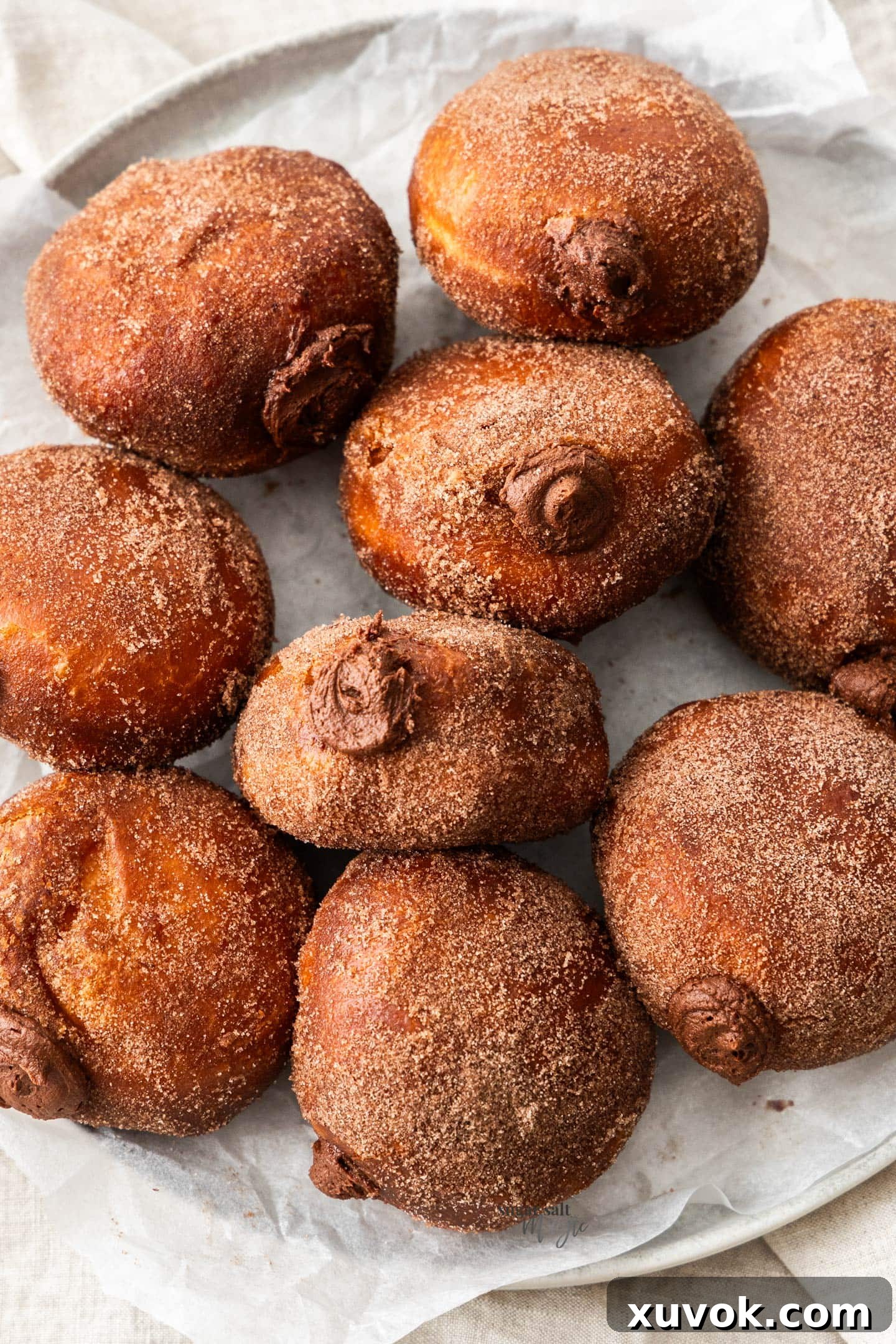
Indulge in the ultimate treat with these truly decadent chocolate-filled donuts. Imagine sinking your teeth into a perfectly **pillowy-soft, yeasted donut dough**, lovingly fried until golden brown, then generously coated in a rich **cocoa-sugar mixture**, and finally bursting with a creamy, whipped chocolate ganache filling. Each bite offers a delightful contrast: a satisfying crunch on the outside yielding to a soft, gooey, chocolate-infused interior. These aren’t just donuts; they are an experience, a deliciously indulgent dessert perfect for any chocolate lover.
There’s an undeniable satisfaction that comes from crafting such delights from scratch. While making these fried chocolate donuts requires a bit of time for the dough to rise, the process itself is surprisingly straightforward and incredibly rewarding. They make for a wonderful weekend baking project, transforming a quiet Sunday into a culinary adventure. From start to finish, these delectable donuts can be ready to enjoy in as little as 2.5 hours, with only 30-40 minutes of active, hands-on preparation time. The aroma filling your kitchen alone is worth the effort!
For those who prefer a lighter touch, **these doughnuts can also be baked**. While they won’t achieve the signature crispy, golden exterior of their fried counterparts – they’ll be much lighter in color and softer, akin to delightful lemon donuts – they remain equally delicious and are a fantastic, less-messy alternative to deep-frying. Whether baked or fried, prepare for a chocolatey sensation!
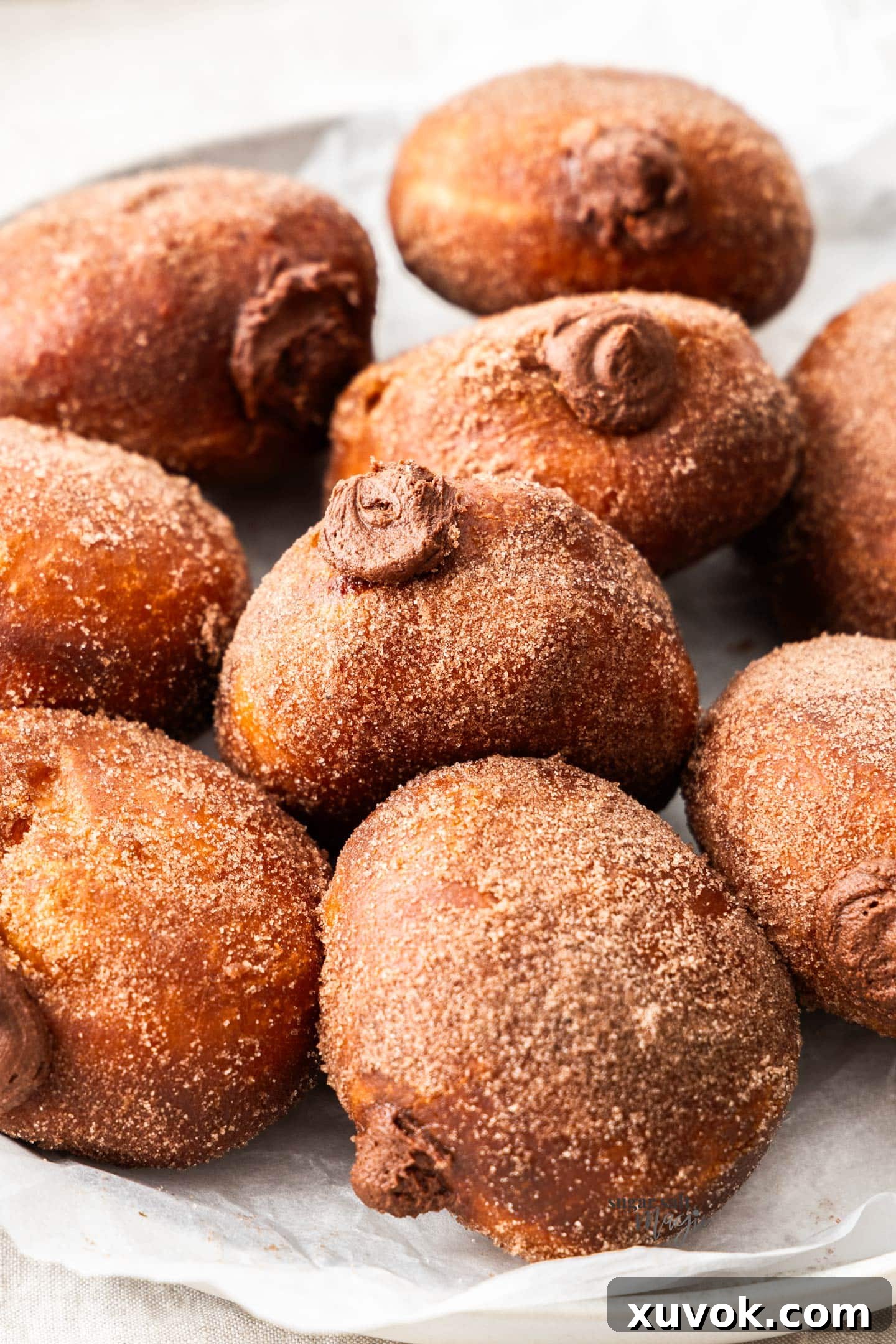
Table of Contents
- Essential Ingredients for Chocolate Donuts
- How to Make Homemade Chocolate Doughnuts: A Step-by-Step Guide
- Expert Tips and Tricks for Perfect Donuts
- Creative Variations to Try
- Bake Your Donuts: A Healthier, Less Messy Option
- Storage Tips for Maximum Freshness
- More Donut Recipes You’ll Adore
- Frequently Asked Questions About Chocolate Donuts
Never Miss a Recipe!
Get the latest, most delicious recipes straight to your inbox by subscribing to our newsletter!
Subscribe Now!
Essential Ingredients for Decadent Chocolate Donuts
Crafting these homemade chocolate-filled donuts starts with a simple yet carefully selected list of ingredients. You’ll find most of these staples in any well-stocked pantry, with yeast playing a crucial dual role, not just for its leavening power but also for imparting that quintessential rich, fermented flavor characteristic of classic donuts. Let’s dive into what makes these ingredients truly shine.
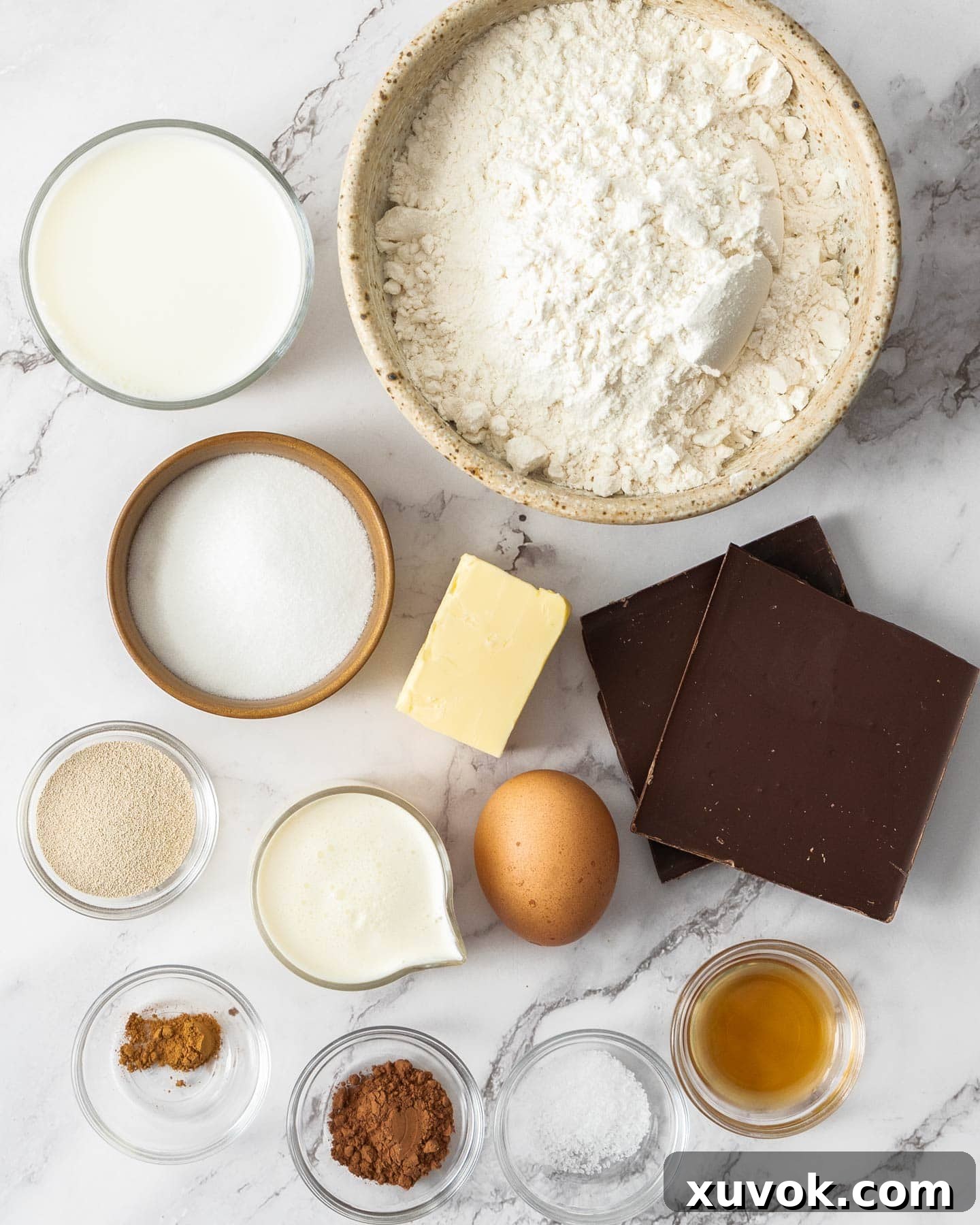
For precise measurements and detailed instructions, scroll down to the full recipe card.
- Bread Flour: While all-purpose flour can work, bread flour is highly recommended. Its higher protein content develops more gluten, which is essential for giving these donuts their wonderful chewy, yet incredibly tender and airy texture that distinguishes exceptional fried goods.
- Milk: Using whole milk not only adds vital moisture to your donut dough but also contributes significantly to its richness and flavor profile. Warm milk is also crucial for activating the yeast properly.
- Yeast: This recipe utilizes instant yeast, a convenient choice that doesn’t typically require prior activation. However, active dry yeast can be used interchangeably; just ensure you proof it first to confirm its viability, a step we always recommend for baking success. Yeast is the magical leavening agent responsible for making your donuts light, fluffy, and beautifully risen.
- Sugar: Caster sugar, also known as superfine sugar, is the ideal choice for both the dough and the delightful cocoa-sugar coating. Its fine crystals dissolve easily, ensuring a smooth dough and a perfectly textured coating. Avoid using powdered sugar for the coating, as it will create a different, less desirable texture.
- Butter: Unsalted butter plays a dual role, enriching both the donut dough with its luscious flavor and contributing to the silky smoothness of the chocolate ganache. If you opt for baked donuts, a touch of melted butter brushed on before and after baking adds a beautiful finish and enhanced flavor.
- Egg: Just one large egg enriches the dough, providing structure, moisture, and a lovely golden hue to the finished donuts. It contributes to that desirable soft crumb.
- Cocoa Powder: A sprinkle of good quality cocoa powder in the sugar coating elevates the flavor, perfectly complementing the intense chocolate ganache filling and adding a hint of sophisticated bitterness.
- Cinnamon: Even a small amount of ground cinnamon in the sugar coating works wonders. It adds a subtle warmth and a classic bakery-style aroma that somehow makes these chocolate-filled donuts taste even more authentic and comforting.
- Cream: For the ganache, you’ll need thickened cream, heavy cream, or whipping cream with at least 35% fat content. This high-fat cream is essential for creating a stable ganache that whips up beautifully into a light, airy filling.
- Vanilla Extract: A dash of pure vanilla extract in the ganache doesn’t just add its own delightful flavor; it surprisingly intensifies and enhances the deep, complex notes of the dark chocolate, making the filling truly irresistible.
- Dark Chocolate: For the ultimate ganache, we recommend using dark chocolate with around 50% cocoa solids. This provides a balanced, rich chocolate flavor without being overly bitter. You can certainly use darker chocolate if you prefer a more intense, less sweet profile, but be aware it will adjust the overall richness. Finely chopping your chocolate ensures it melts smoothly and evenly.
How to Make Homemade Chocolate Doughnuts: A Step-by-Step Guide
Creating homemade chocolate-filled donuts might seem daunting, but it’s a surprisingly straightforward process, even for beginner bakers. While a stand mixer with a dough hook will certainly simplify the kneading, it’s not strictly essential, and you can achieve excellent results by hand. The key to truly soft and fluffy donuts lies in a slightly soft, tacky dough. Resist the urge to add too much extra flour, especially if kneading by hand, as this can lead to dry, tough donuts. Proper kneading is vital as it activates the gluten in the flour, developing the elasticity and chewiness that makes a donut perfect. Embrace the stickiness initially; as you continue to knead, the dough will become smoother and more manageable.
For exact quantities and comprehensive instructions, please refer to the complete recipe card below.
1. Activate the Yeast (and Check for Freshness!)
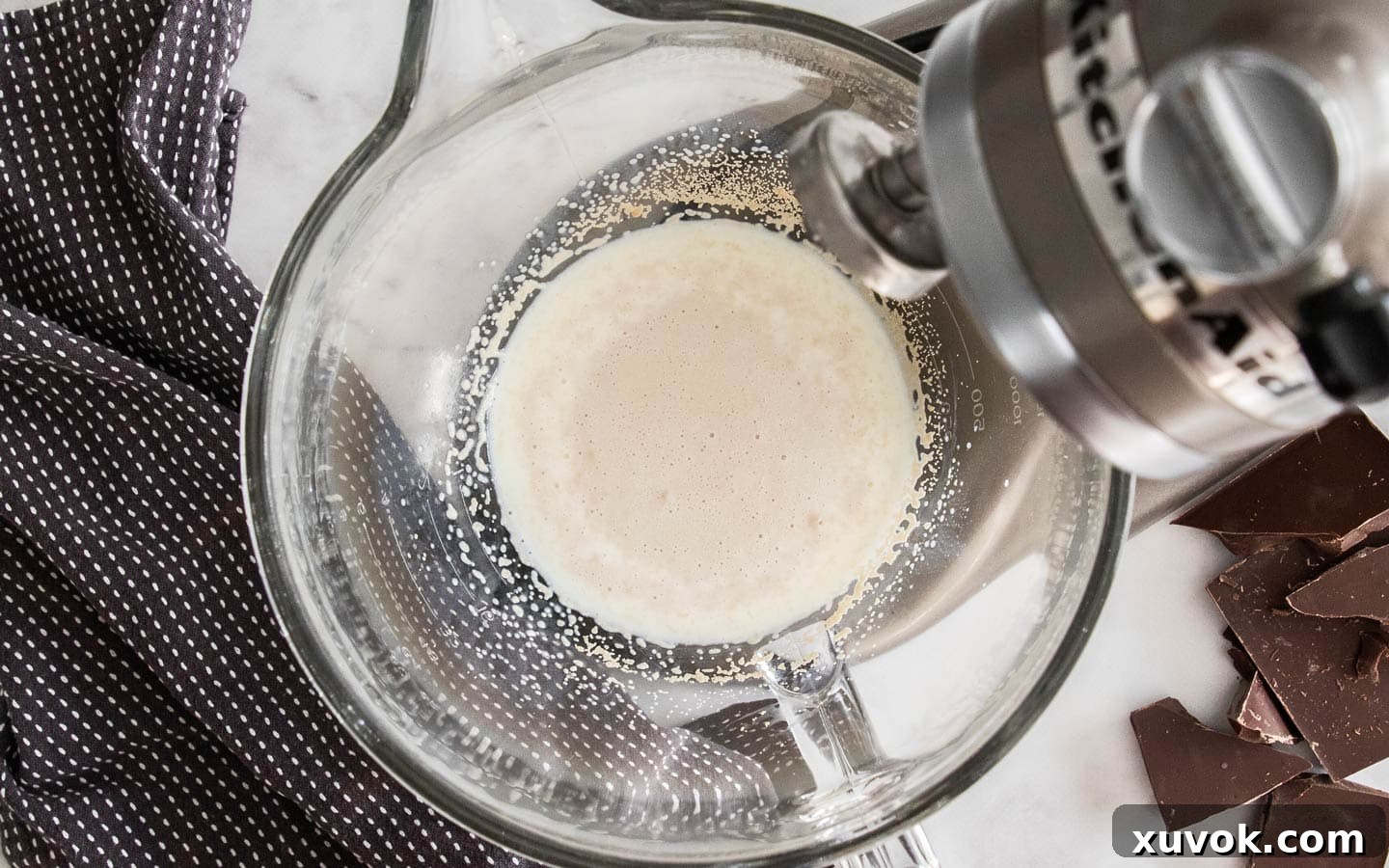
While instant yeast technically doesn’t require activation, taking this initial step offers a valuable safeguard: it confirms your yeast is alive and active before you commit the rest of your ingredients. This is a crucial step if you’re using active dry yeast. Simply combine your yeast with warm milk and a touch of sugar. Let this mixture rest for 5-10 minutes. If it becomes foamy and puffy, your yeast is happy and ready to go. If not, it’s time to replace your yeast to ensure your donuts rise beautifully.
2. Prepare and Proof the Dough
Once your yeast is activated, incorporate the remaining dry and wet ingredients into your mixing bowl. If using a stand mixer, attach the dough hook and knead on low speed for 7-8 minutes. The dough should transform into a mostly smooth, elastic consistency. If kneading by hand, this will take a bit longer, approximately 12-15 minutes. Remember our earlier advice: resist adding excessive flour, even if the dough feels slightly sticky. This tackiness is a sign of a well-hydrated dough, which will result in wonderfully soft donuts. After kneading, transfer the dough to a lightly oiled bowl, cover it tightly with plastic wrap, and allow it to rise in a warm, draft-free spot for 45-60 minutes, or until it has visibly doubled in size. Many ovens have a “dough rising” setting which works perfectly for this stage.
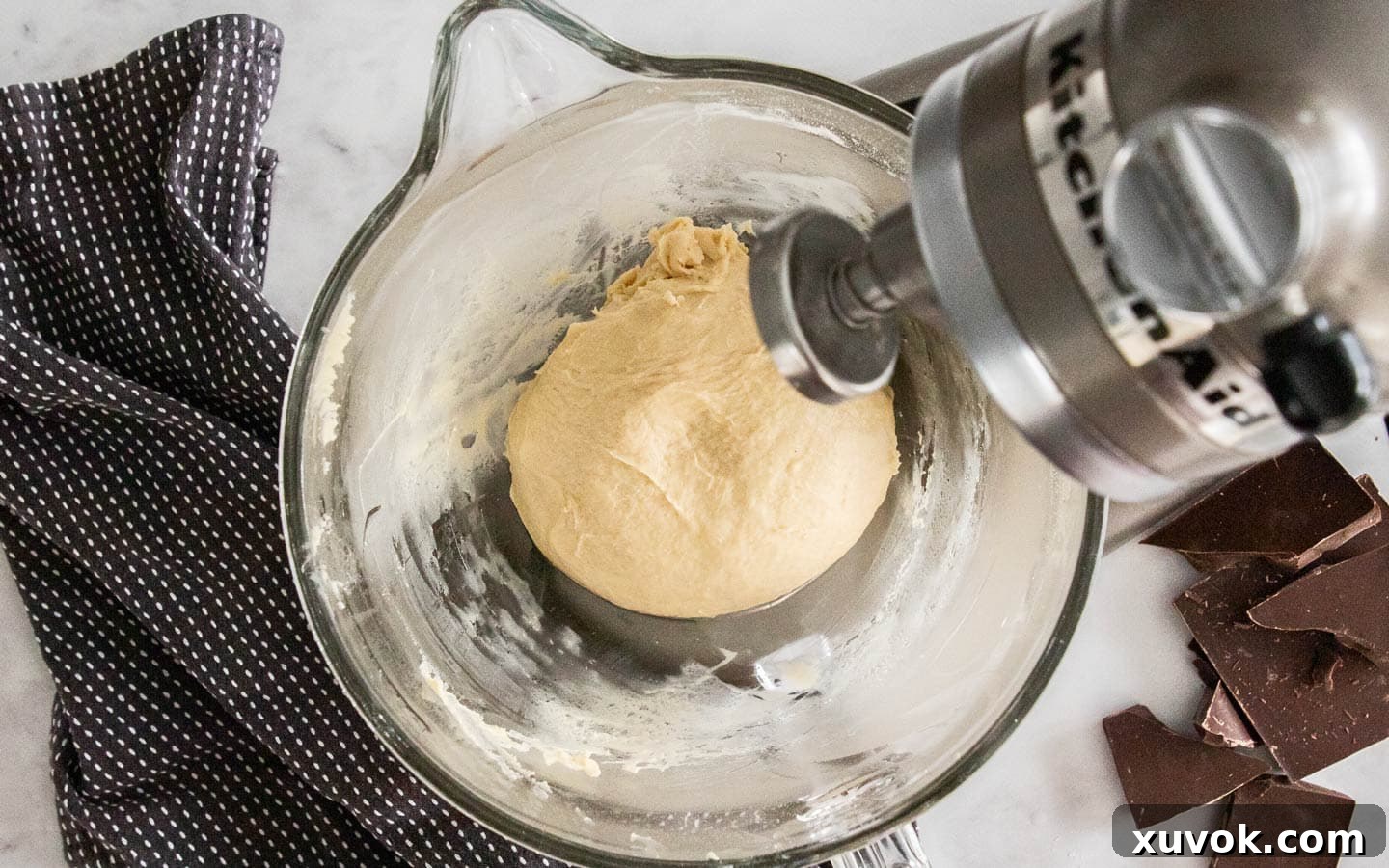
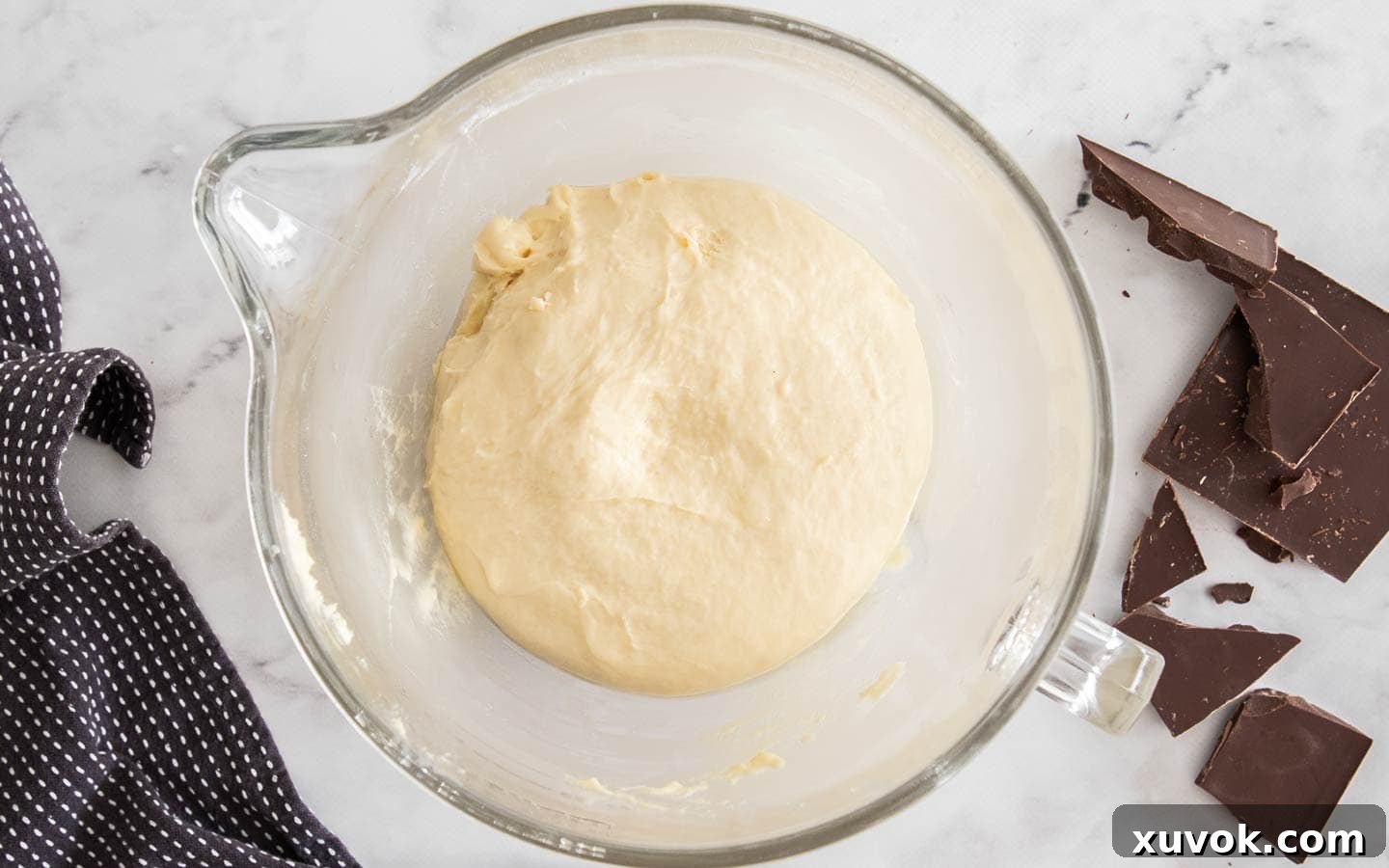
3. Shape Your Doughnuts
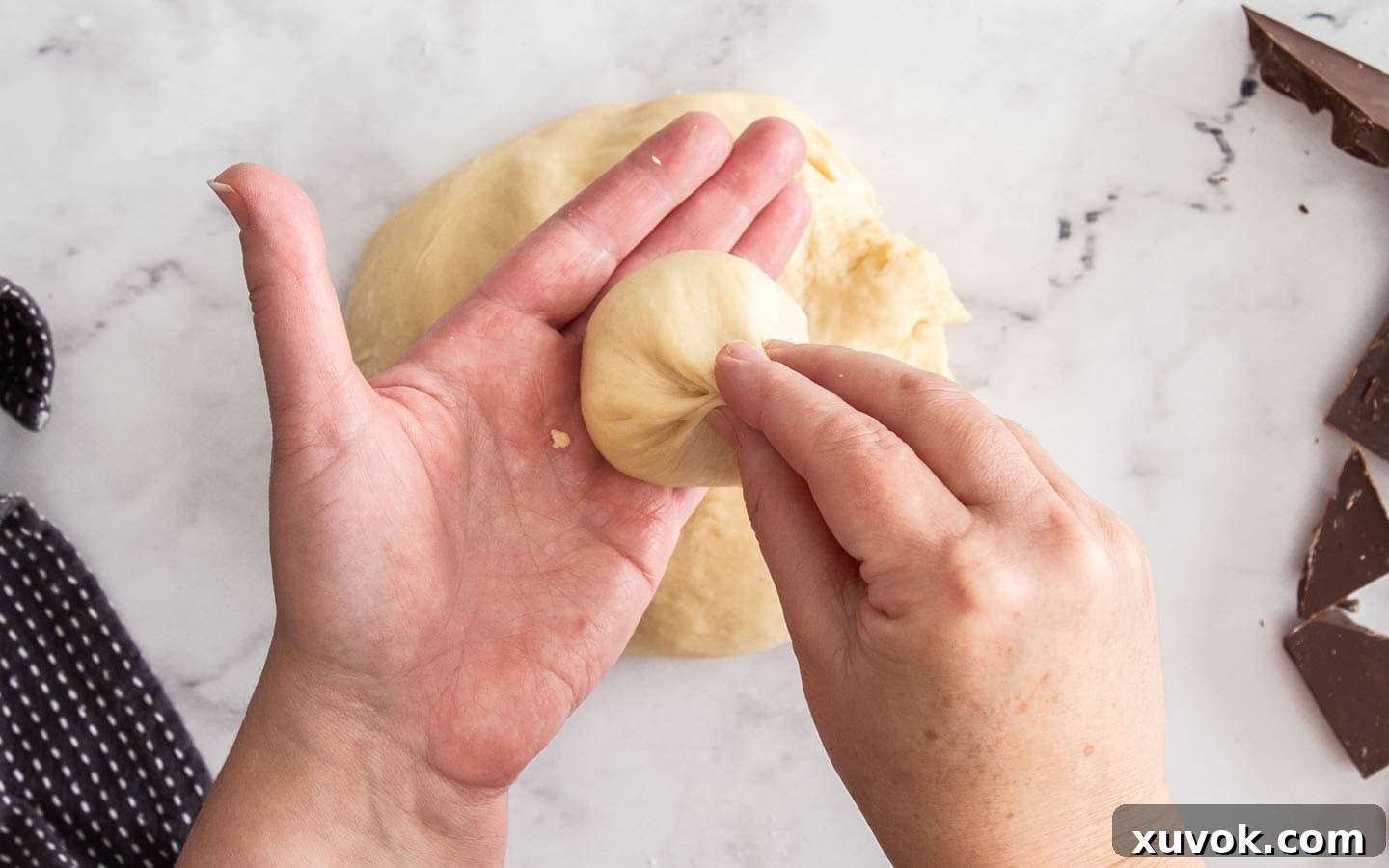
Once the dough has completed its first rise, it’s time to shape your individual donuts. Instead of using a traditional donut cutter, which often leaves wasted dough scraps, we’ll be shaping the dough into small, perfect balls. For consistent size and even cooking, a kitchen scale is invaluable here. Weigh the entire dough ball, divide that total weight by 9 (for nine donuts), and then weigh out each individual piece of dough. This precision ensures every donut cooks uniformly.
We recommend two effective methods for shaping these dough balls:
- The Pinching Method: Hold a piece of dough in the palm of your non-dominant hand. With your other hand, systematically pinch the sides of the dough and pull them towards the center, tucking them underneath. Repeat this motion continuously until the bottom surface of the dough ball is smooth and taut.
- The Drag-Roll Method: Place a portion of dough onto a clean, *unfloured* surface. Cupping your hands around the dough, gently pull and drag it towards you with your little fingers, creating tension on the surface. Rotate the dough slightly and repeat the dragging motion a couple more times. This technique quickly forms a beautifully smooth, round ball.
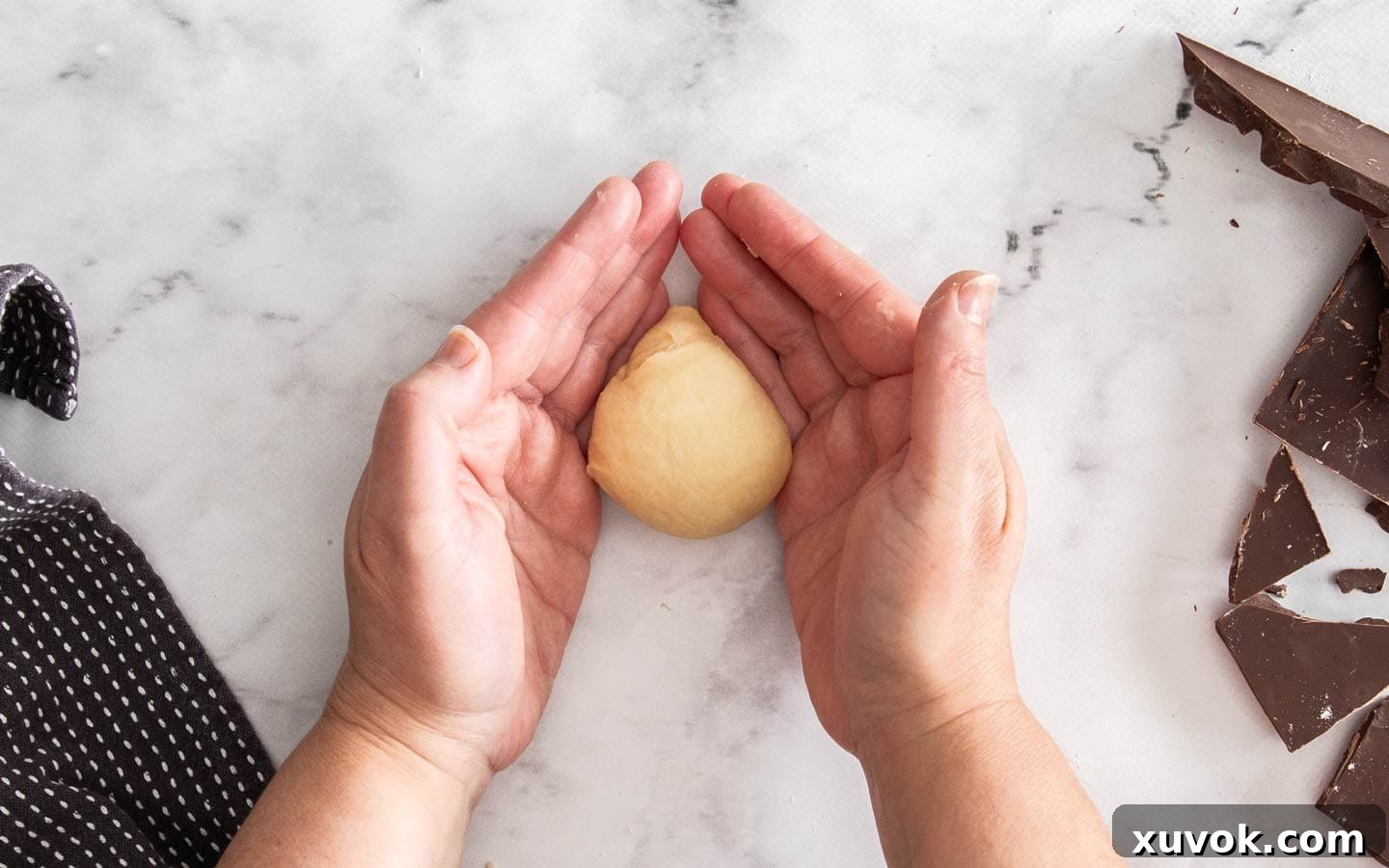
4. The Second Rise: Proofing for Ultimate Fluffiness
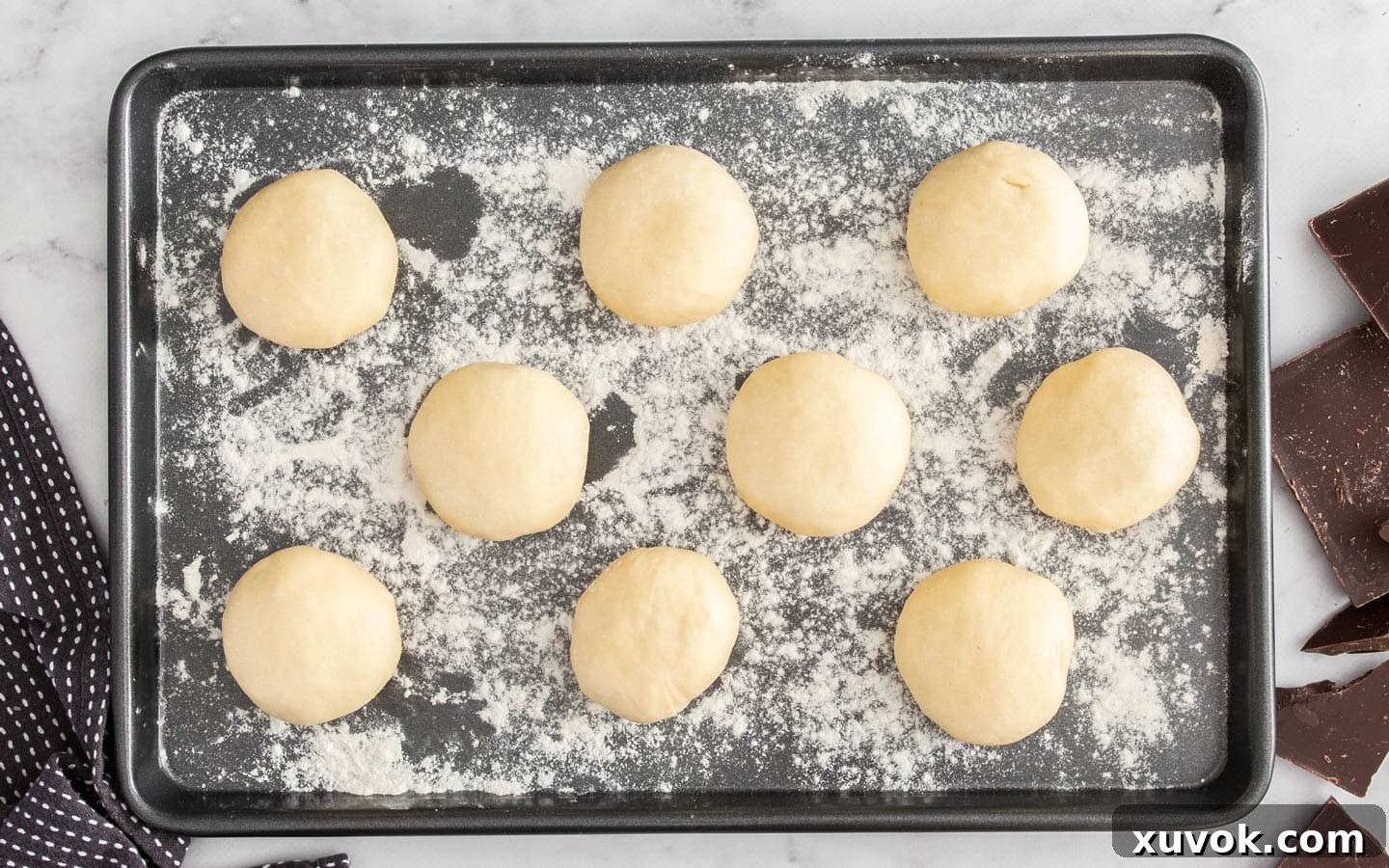
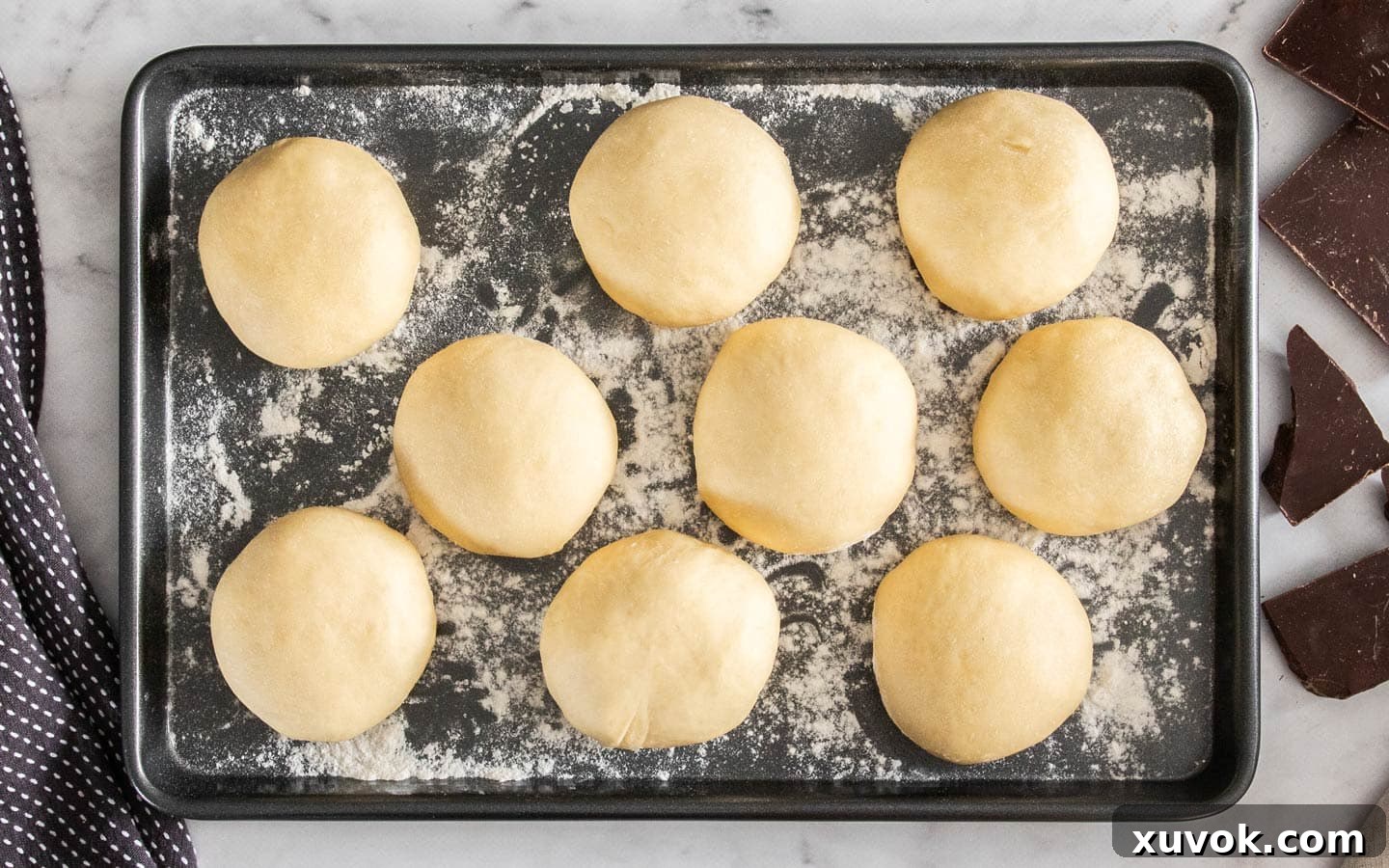
After shaping, your donut balls require a second round of rising, also known as proofing. Carefully arrange them onto a lightly floured baking tray, ensuring there’s enough space between each for expansion. Gently cover the tray with a light tea towel or a sheet of plastic wrap to prevent them from drying out. Place them back into a warm, draft-free environment and let them rise for another 45-60 minutes, or until they have noticeably doubled in size and feel light and airy. This crucial second rise develops their final texture, ensuring they are wonderfully fluffy and absorbent once fried or baked.
5. Prepare the Silky Chocolate Ganache Filling
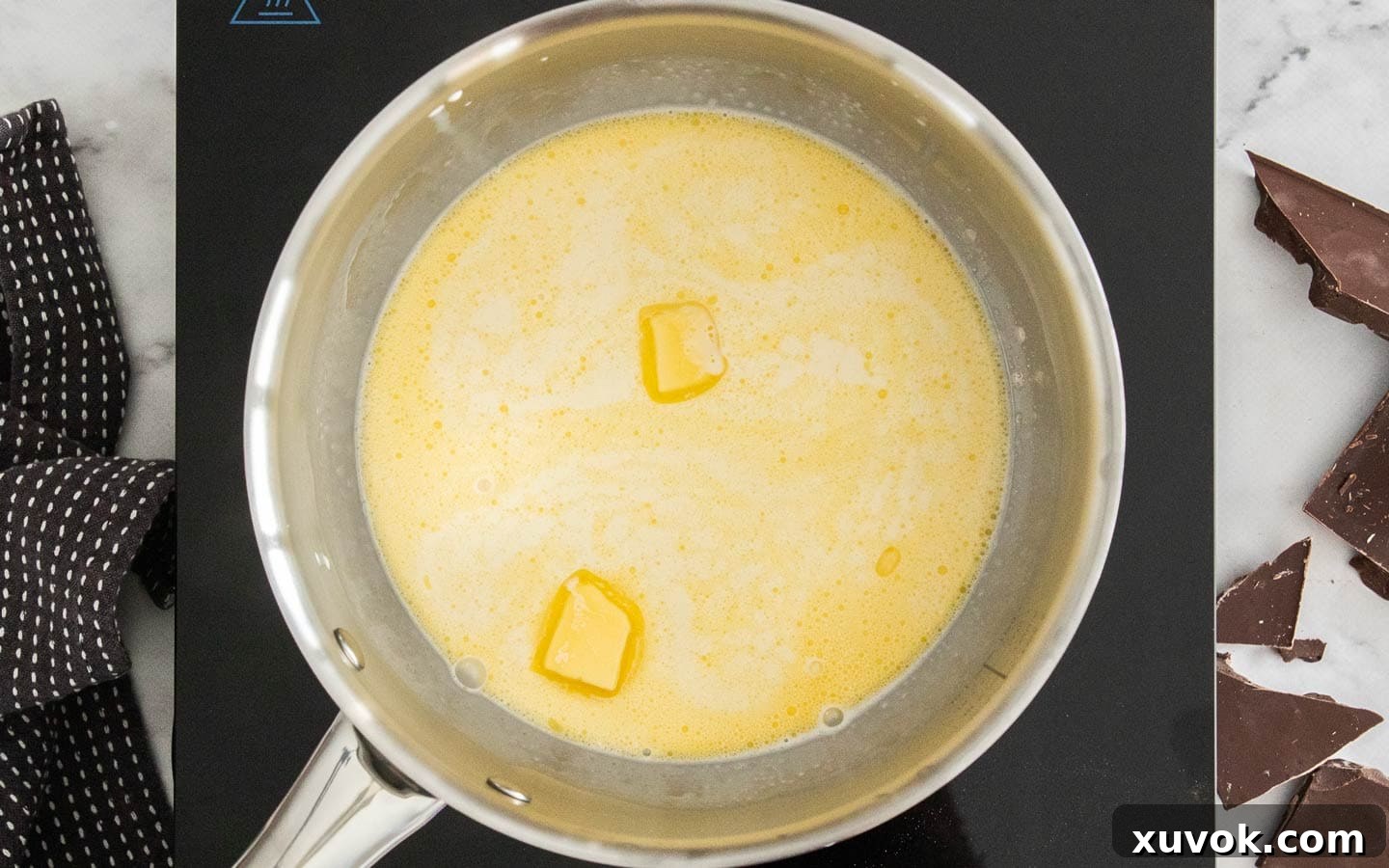
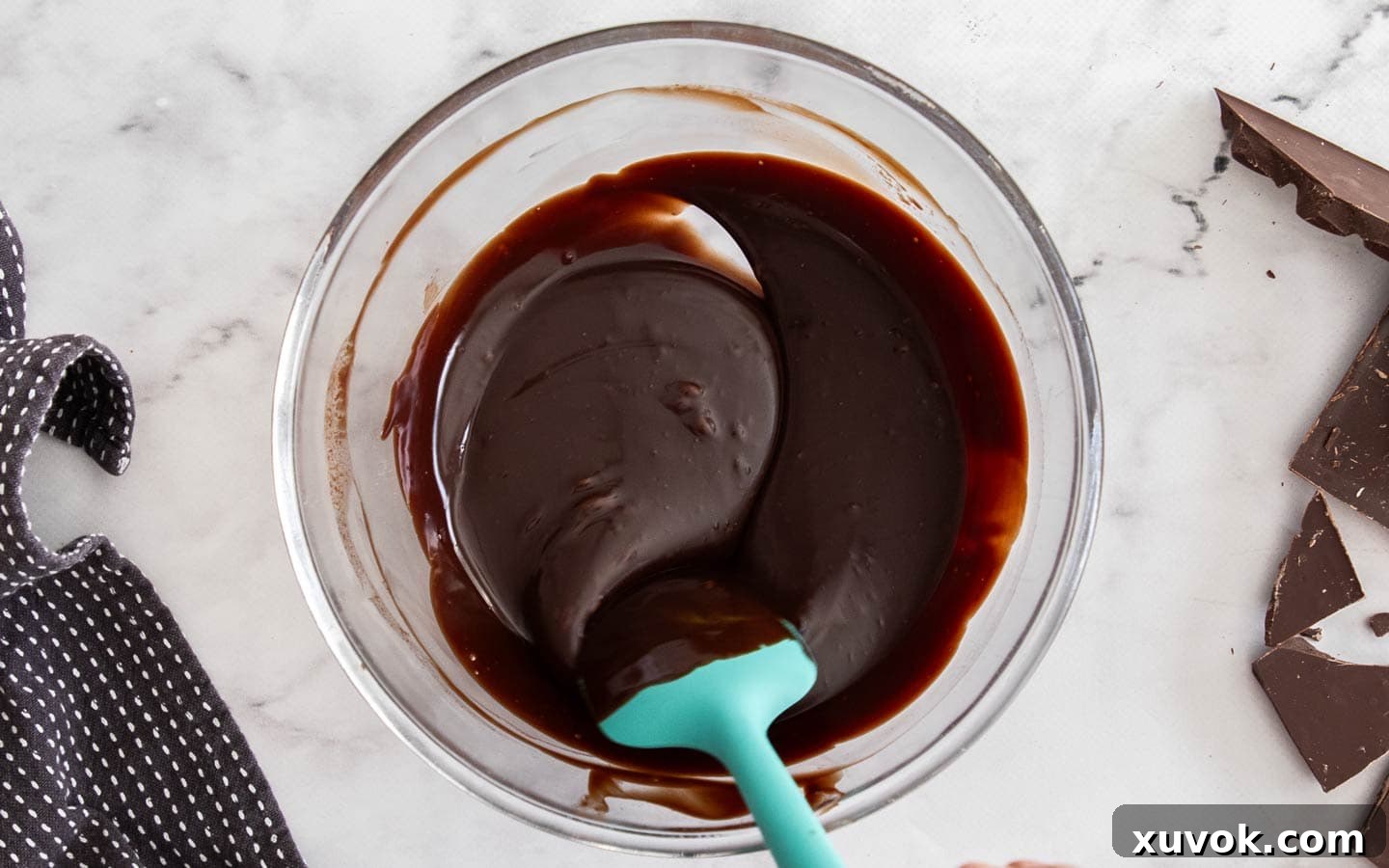
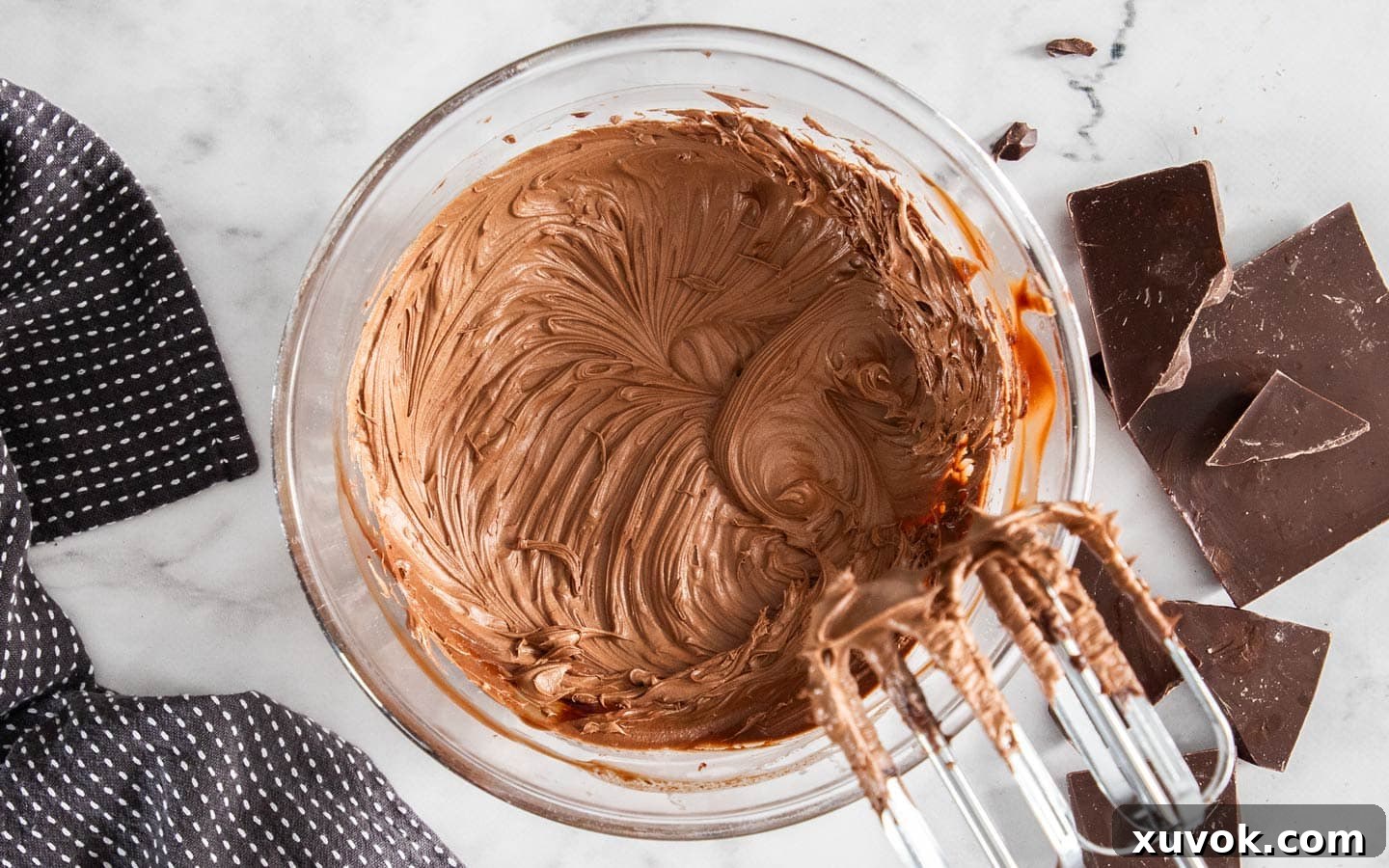
While your donut dough is undergoing its second rise, you can efficiently prepare both the sugar coating and, most importantly, the luscious chocolate ganache filling. For the ganache, combine the cream and butter in a small saucepan over medium-low heat. Gently heat the mixture, stirring occasionally, until it’s steaming hot and the butter is fully melted and incorporated. Be careful not to let it boil. Immediately pour this hot cream mixture over your finely chopped dark chocolate, ensuring all the chocolate is submerged. Allow it to sit undisturbed for about one minute; this gives the chocolate time to soften and melt. Then, with a whisk or spatula, gently stir the mixture from the center outwards until it transforms into a smooth, glossy, and beautifully uniform ganache. If any stubborn bits of chocolate remain, a quick 15-second zap in the microwave can help achieve perfect consistency. Once smooth, chill the ganache in the refrigerator until it’s firm enough to whip, but not rock-hard.
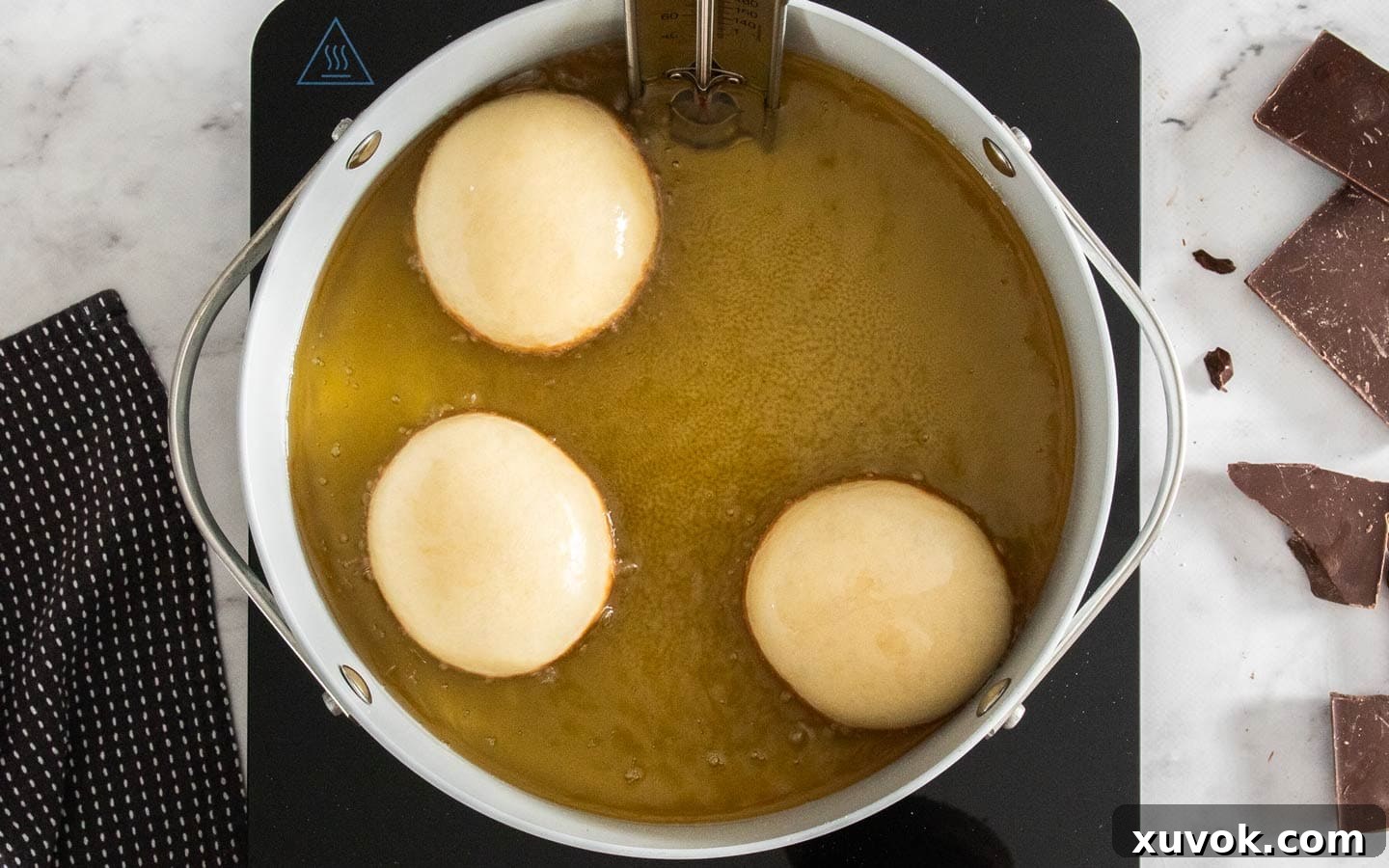
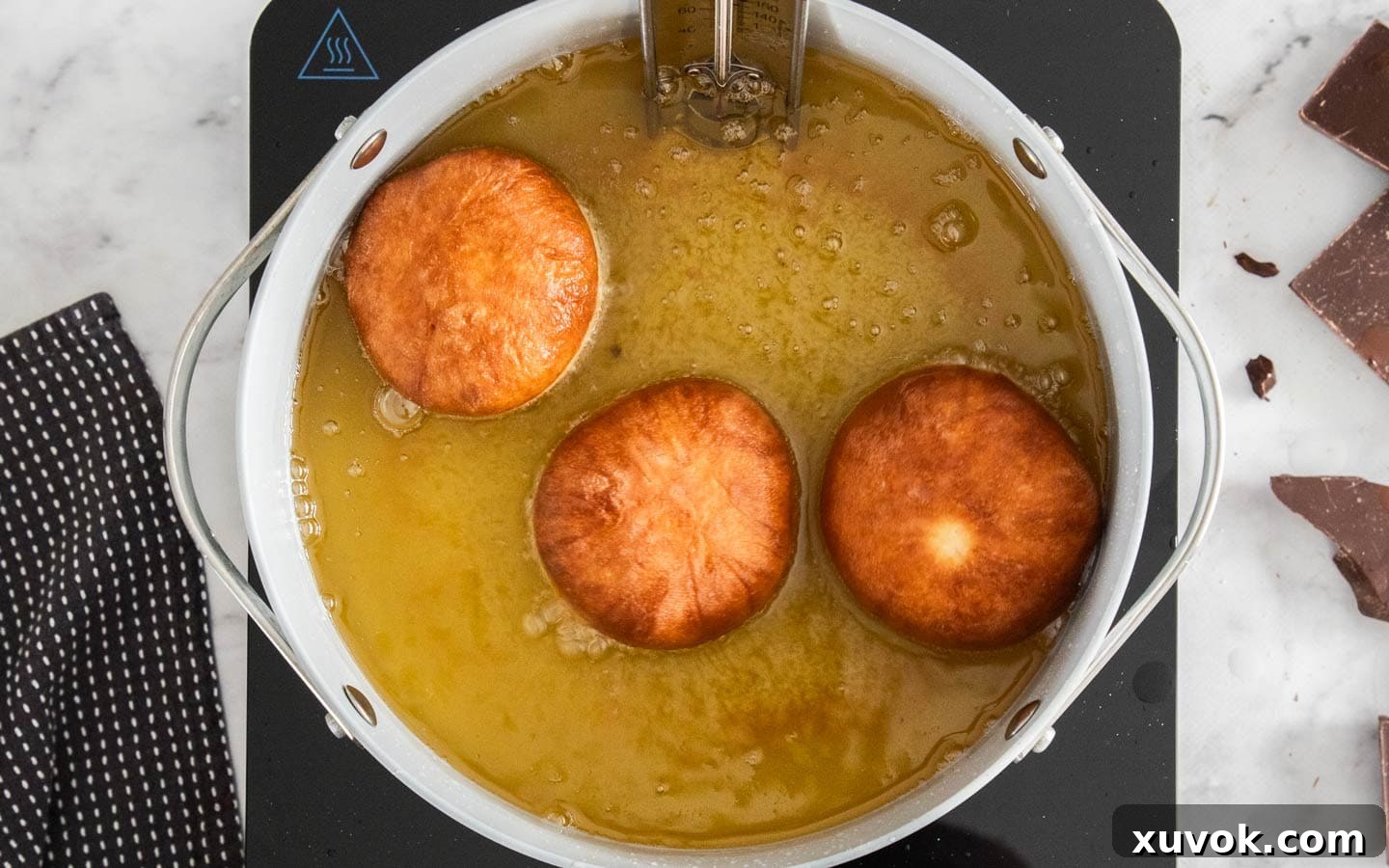
6. Fry Your Donuts to Golden Perfection
Achieving perfectly fried donuts relies heavily on maintaining the correct oil temperature. Here’s how to do it:
- Prepare the Oil: Pour about 1.5 inches of a neutral-flavored oil (like vegetable, canola, or sunflower oil) into a large, deep saucepan or Dutch oven. Heat the oil over medium heat until it reaches a precise temperature of 180°C (350°F).
- Monitor Temperature Strictly: A deep-fry thermometer is an absolute must. Without it, your donuts risk becoming either overly greasy (if the oil is too cool) or burnt on the outside and raw on the inside (if the oil is too hot). Aim to keep the oil temperature consistently between 170-180°C (340-350°F) throughout the frying process. An induction cooktop can be particularly helpful for stable temperature control.
- Fry in Batches: To prevent the oil temperature from dropping too drastically, fry only 2-3 donuts at a time, depending on the size of your pan.
- Cooking Time: Fry each donut for approximately 2 minutes per side, or until they achieve a beautiful golden-brown color and are puffed up.
- Check for Doneness: For absolute certainty, you can use an instant-read thermometer inserted into the center of a donut. A perfectly cooked donut should register an internal temperature of 88°C (190°F).
- Drain: Once fried, carefully remove the donuts with a slotted spoon and place them on a plate lined with paper towels to drain any excess oil.
7. Coat Your Delicious Chocolate Doughnuts
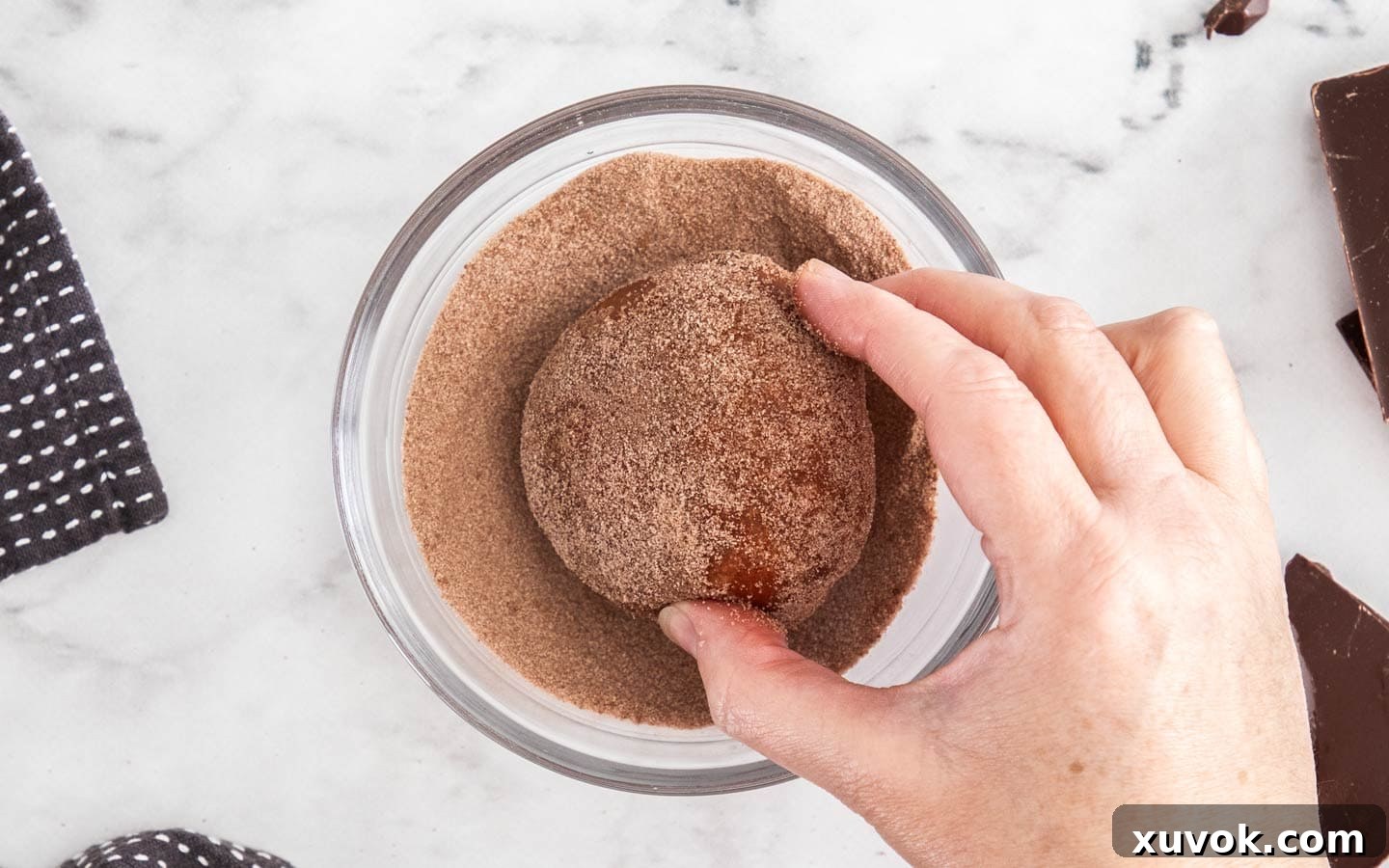
Once your freshly fried (or baked) donuts have drained and cooled slightly, it’s time for their flavorful coating. In a shallow bowl, whisk together the caster sugar, cocoa powder, and ground cinnamon until well combined. While the donuts are still warm, but cool enough to handle, gently roll each one through this fragrant sugar mixture, ensuring it’s thoroughly coated on all sides. The warmth helps the sugar adhere beautifully, creating a delightful crunchy exterior that perfectly complements the soft donut and rich filling.
8. Fill with Whipped Ganache for a Gooey Center
Now for the pièce de résistance: filling your donuts with the irresistible chocolate ganache. Retrieve your chilled ganache from the refrigerator. Using an electric hand mixer, beat the ganache on medium-high speed for about 1 minute. It will transform, becoming lighter in color, noticeably softer, and wonderfully fluffy. Immediately transfer the whipped ganache into a piping bag fitted with a small, plain round tip (or simply snip off the end of the bag). To create space for the filling, take the handle end of a teaspoon and gently press it into the side (or top) of each donut, wiggling it around to hollow out a generous cavity within. Insert the tip of your piping bag deep into this hole and gently squeeze, allowing the ganache to fill the donut. Continue piping until you feel a slight resistance, indicating the donut is nicely plump with its chocolatey core. The pressure of the filling will naturally push the piping bag back out when the donut is full.
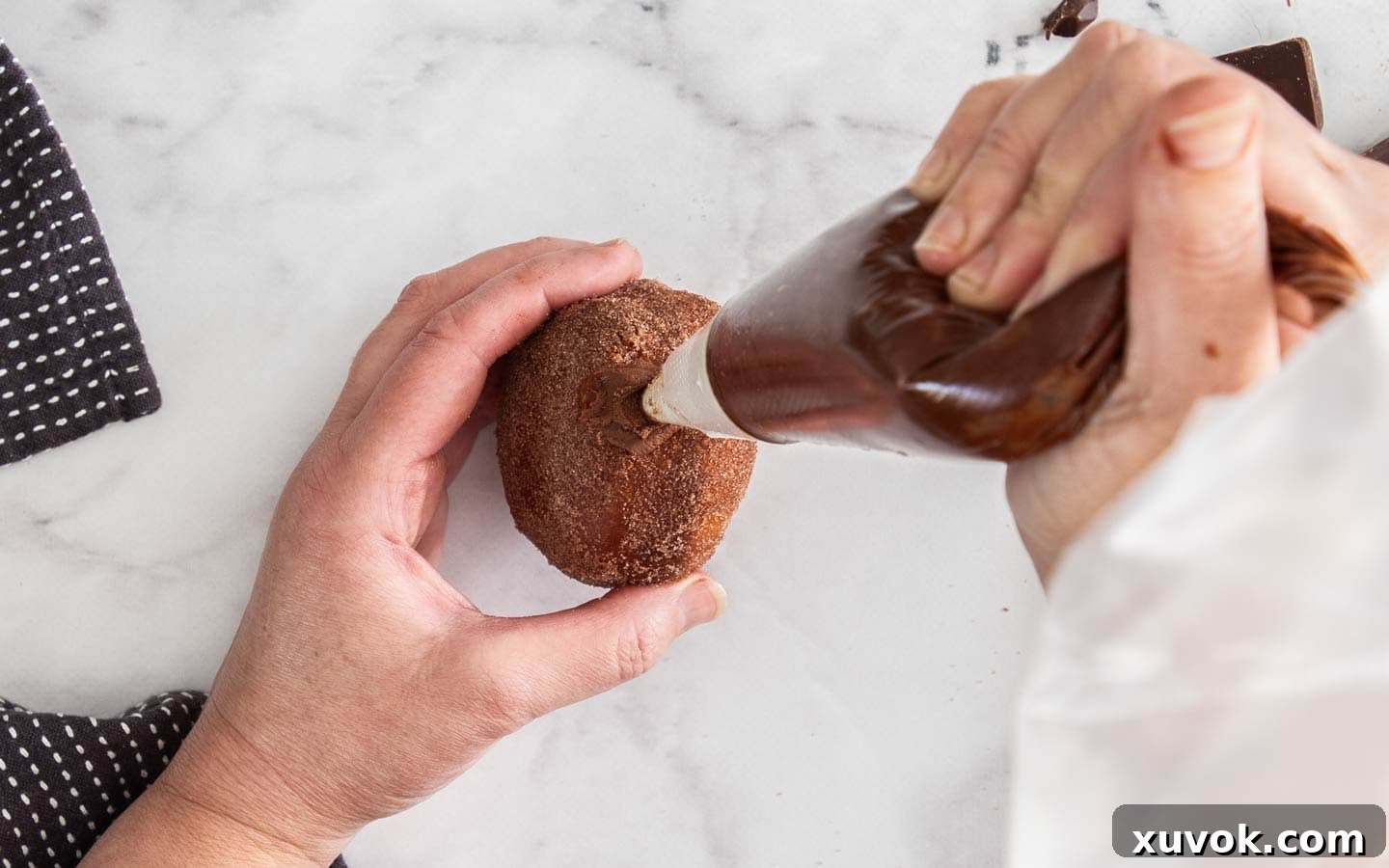
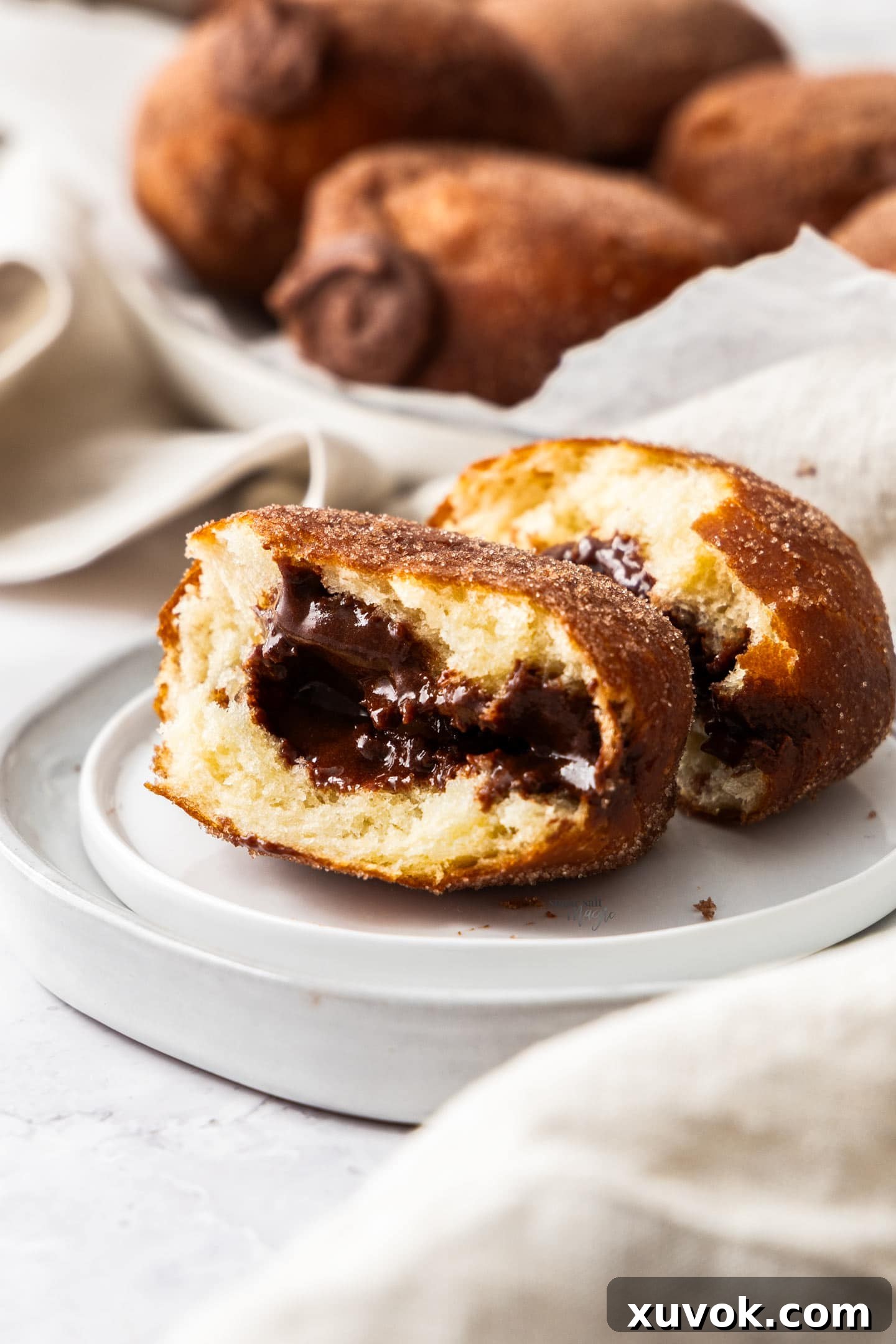
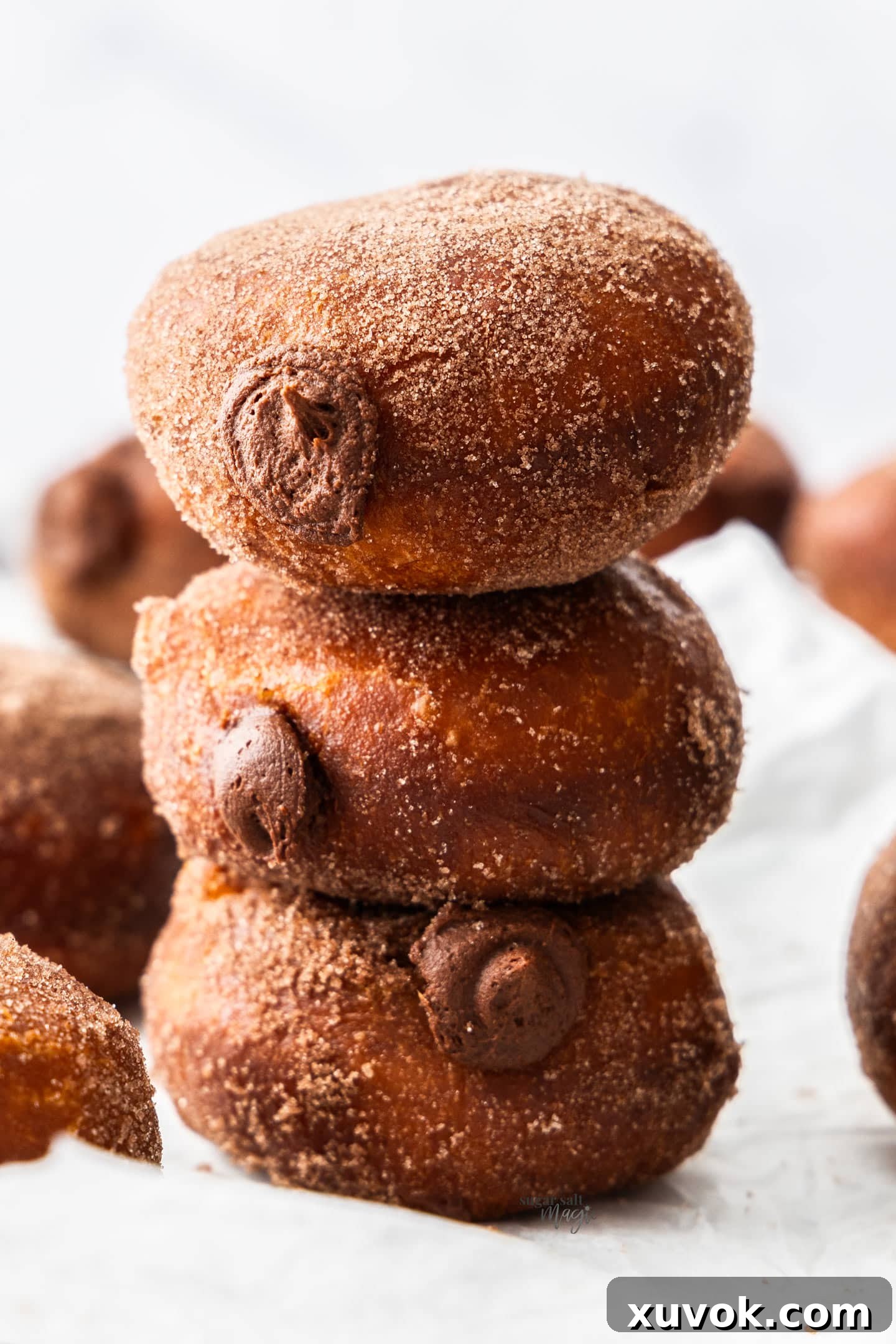
And there you have it! Your irresistible chocolate-filled donuts are now complete and ready to be devoured. For the absolute best experience, serve these donuts fresh and slightly warm. The gentle warmth will cause that incredible ganache filling to become wonderfully gooey and melt-in-your-mouth, elevating every single bite.
Expert Tips and Tricks for Perfect Homemade Donuts
- Precision is Key: Use a Kitchen Scale. In baking, accuracy makes all the difference. Weighing your flour and sugar ensures consistent results every time. A slight excess of flour, for example, can dramatically alter the texture, making your donuts dry instead of moist and tender.
- Master the Rise: Don’t Rush or Over-Proof. The dough must double in size during both its first and second proofing stages. Under-proofed dough will result in dense, heavy donuts, while over-proofed dough can collapse during frying or baking, leading to flat, sometimes alcoholic-tasting donuts. Pay attention to visual cues, not just the clock.
- Embrace the Stickiness: The Dough Should Be Tacky. A slightly sticky or tacky dough is a good sign! It indicates optimal hydration, which is the secret to those coveted moist and soft chocolate donuts. Resist the temptation to add extra flour during kneading or shaping; a light dusting is usually all you need to handle it.
- Oil Temperature Control: Essential for Frying. When deep-frying, maintaining a steady oil temperature is paramount. Invest in a deep-fry thermometer and keep it at the recommended 170-180°C (340-350°F). Too low, and your donuts will soak up oil and become greasy; too high, and they’ll brown too quickly on the outside while remaining raw inside.
- Internal Doneness: Use a Thermometer. For absolute confidence that your donuts are cooked through, use an instant-read thermometer. Insert it into the center of a fried donut; it should read 88°C (190°F) when perfectly done. This prevents undercooked centers and ensures a safe, enjoyable treat.
- Optimal Rising Environment: Find a Warm Spot. Yeast thrives in warmth. Ideal spots for proofing dough include near a range hood light, in a sunny window (especially in cooler months), or utilizing the “dough rising” function available on many modern ovens. A slightly humid environment is also beneficial, which can be created by placing a bowl of hot water in the oven with the dough.
- Work Clean and Efficiently: Have all your ingredients measured and tools ready before you begin. This ‘mise en place’ approach makes the donut-making process smoother and more enjoyable.
- Don’t Overcrowd the Pan: Whether frying or baking, give your donuts space. Overcrowding a frying pan lowers oil temperature, and in the oven, it can lead to uneven cooking and less desirable browning.
Creative Variations to Elevate Your Donuts
While the classic chocolate ganache filling is undeniably superb, don’t hesitate to experiment with different flavors and coatings to customize your homemade donuts. Here are a few creative ideas:
- Alternative Fillings:
- Creamy Chocolate Custard: Instead of ganache, try a rich chocolate pastry cream or a velvety chocolate cremeux for a denser, more pudding-like center.
- Nutella Swirl: For a hazelnut-chocolate delight, swirl some Nutella into your ganache or use it as a standalone filling.
- Fruit Compote: A tangy raspberry or cherry compote can provide a wonderful contrast to the rich chocolate, offering a burst of fruity freshness.
- Peanut Butter Cream: Whip peanut butter with some powdered sugar and cream for a decadent, savory-sweet filling.
- Exciting Coatings:
- Classic Glaze: Opt for a simple, sweet glaze. The chocolate glaze from our chocolate sprinkle donuts recipe would be fantastic, or a vanilla bean glaze for a simpler option.
- Caramel Drizzle: A luscious caramel glaze adds another layer of indulgence, pairing beautifully with chocolate.
- Powdered Sugar: For a simpler, elegant finish, a dusting of powdered sugar is always a classic.
- Chopped Nuts or Sprinkles: Add texture and visual appeal by sprinkling chopped nuts (like pecans or almonds) or colorful sprinkles over a freshly glazed donut.
Bake Your Donuts: A Healthier, Less Messy Alternative
If the thought of deep-frying makes you hesitant, you’re not alone. Deep-frying can indeed be messy and, for the uninitiated, even a little intimidating. Fortunately, these chocolate-filled donuts lend themselves beautifully to baking, offering a significantly less messy and healthier alternative without sacrificing much of the deliciousness. While baked donuts will have a different textural profile – they won’t achieve the deep golden color or the signature crispy exterior of fried donuts, instead being much lighter and softer on the outside – they remain incredibly moist and flavorful, especially with the rich chocolate ganache filling.
To bake your donuts (before filling), simply preheat your oven to 180°C (350°F / 160°C fan-forced). Arrange your proofed dough balls on a large baking sheet. Lightly brush the tops of each donut with a little melted butter; this helps with browning and adds a touch of richness. Bake for approximately 15 minutes, or until they are puffed up and just beginning to turn a pale golden color. An internal temperature of 88°C (190°F) confirms they are cooked through. Once baked, they’re ready for their sugar coating and decadent chocolate filling!
Storage Tips for Maximum Freshness
Homemade donuts are always best enjoyed fresh, ideally on the same day they are made. The delicate texture and fresh flavors are at their peak shortly after cooking and filling. However, if you find yourself with a few delicious leftovers, here’s how to store them to maintain their quality:
- Room Temperature Storage: Place any leftover donuts in an airtight container at room temperature. They will typically stay fresh for 1-2 days. While they might lose a little of their initial fluffiness, they will still be enjoyable.
- Reheating for Freshness: To revive a day-old donut and bring back its soft texture and gooey filling, simply pop it in the microwave for 10-15 seconds. This short burst of heat will gently warm the donut, making it pillowy soft again and melting the ganache into a wonderfully gooey consistency.
- Freezing (Unfilled is Best): If you plan to make a larger batch, consider freezing the fried (or baked) donuts *before* coating and filling them. Once cooled completely, place them in a single layer on a baking sheet to freeze solid, then transfer them to an airtight freezer bag. They can be stored for up to 1 month. When ready to enjoy, thaw them at room temperature, then proceed with the sugar coating and ganache filling steps. Freezing already filled and coated donuts is possible but can lead to a slightly soggier texture upon thawing.
More Donut Recipes You’ll Adore
If you’ve fallen in love with making homemade donuts, explore some of our other fantastic recipes:
- Zesty Lemon Donuts
- Classic Bavarian Cream Donuts
- Sweet Jam Doughnuts
- Rich Caramel Doughnuts
⭐⭐⭐⭐⭐
Did you try this chocolate filled donuts recipe? We’d love to hear your thoughts! Show it some love and share your experience in the comments below.
Hungry for more culinary inspiration? Subscribe to our newsletter for a delicious stream of free recipes delivered straight to your inbox. Don’t forget to connect with us on Facebook, Pinterest, and Instagram for daily food inspiration and behind-the-scenes glimpses!

Chocolate Filled Donuts
Yield: 9 donuts
Prep Time: 35 minutes | Cook Time: 12 minutes | Rising Time: 1 hour 30 minutes | Total Time: 2 hours 17 minutes
Rating: ⭐⭐⭐⭐⭐ (5 from 1 rating)
These soft, fluffy chocolate-filled donuts are a classic delight, featuring a pillowy yeasted dough, a delightful cocoa-sugar coating, and a rich, creamy chocolate ganache filling.
Rate This Recipe
Pin Recipe
Ingredients
For best results, always weigh ingredients where a weight is provided.
THE DOUGHNUT DOUGH
- 180 ml whole milk, luke warm (¾ cup)
- 2 tablespoons white granulated sugar (see Notes 1)
- 2 teaspoons instant yeast or active dry yeast
- 2 ½ cups bread flour (325g / ~11 ½ oz)
- 57 g unsalted butter, half-melted (¼ cup / 2oz)
- 1 large egg
- ½ teaspoon salt
- Vegetable oil, for frying
CHOCOLATE SUGAR COATING
- ¼ cup caster sugar (50g / 1.8oz)
- 1 teaspoon cocoa powder
- ⅛ teaspoon ground cinnamon
CHOCOLATE GANACHE FILLING
- 125 ml thickened cream (heavy cream) 35% fat (½ cup)
- 14 g butter (½ oz / 1 tablespoon)
- 1 ½ teaspoons vanilla extract
- Pinch of sea salt
- 180 g good quality dark chocolate (50% cocoa solids) (~6.4oz), finely chopped
Equipment
- Stand mixer (helpful but not essential)
- Mixing bowls
- Baking sheet
- Piping bag / pastry bag
- Small saucepan
- Large, deep saucepan
- Slotted spoon
- Deep-fry thermometer (essential for frying)
- Kitchen scales
Instructions
- FOR THE DOUGHNUT DOUGH: Warm the milk for 30-35 seconds in the microwave if cold (or 15 seconds if room temperature). It should be just slightly warmer to the touch, not hot.
- Pour the warm milk into the bowl of a stand mixer with the sugar. Sprinkle the yeast on top and stir gently. Let it sit for 5-10 minutes until it becomes frothy, indicating the yeast is active.
- Add the flour, half-melted butter, egg, and salt to the yeast mixture. Using the dough hook attachment, stir everything together until just combined.
- Attach the dough hook and knead on a low setting for about 7-10 minutes until the dough looks elastic and quite smooth. If kneading by hand, this will take 12-15 minutes; try to avoid adding too much extra flour, as this will result in dry donuts. The dough should remain soft and slightly tacky, but manageable.
- Lightly grease a large bowl with a little oil. Transfer the doughnut dough into the bowl, cover tightly with plastic wrap, and let it rise in a warm (not hot) spot for 1 to 1 ½ hours, or until it has doubled in size.
- SHAPE THE DOUGHNUTS: Gently tip the risen dough out onto a clean, lightly floured surface. Knead it just a couple of times to release air (only add flour if absolutely necessary to prevent sticking). Divide the dough into 9 equal portions (see Notes for tips on precise division). Shape each portion into a smooth ball using either the pinching or drag-roll method described in the main article.
- Place the shaped dough balls onto a lightly floured baking tray, pressing down lightly to flatten them slightly. Cover loosely with a piece of plastic wrap or a light tea towel and let them rise for another 45-60 minutes, or until doubled in size.
- FOR THE CHOCOLATE SUGAR COATING: While the donuts are undergoing their second rise, combine the caster sugar, cocoa powder, and cinnamon in a bowl large enough to easily roll the donuts in. Set aside until needed.
- FOR THE CHOCOLATE GANACHE: Ensure your dark chocolate is finely chopped and placed in a medium heatproof bowl. In a small saucepan over medium heat, combine the thickened cream, butter, vanilla extract, and a pinch of salt. Heat the mixture, swirling the pan to melt the butter, until it’s steaming heavily and fully combined. Do not bring it to a boil.
- Pour the hot cream mixture over the chopped chocolate. Let it sit undisturbed for 1 minute to allow the chocolate to melt. Then, stir gently from the center outwards until you achieve a smooth, glossy ganache. Chill the ganache in the fridge until cool and slightly firm.
- If the ganache has been in the fridge for an extended period, remove it in advance to bring it to room temperature before you plan to fill the donuts.
- COOKING THE DOUGHNUTS:
DEEP FRYING METHOD: Heat approximately 1 ½ inches of vegetable oil in a large, deep saucepan to a precise temperature of 180°C (350°F). Carefully place 2-3 donuts into the hot oil, ensuring not to overcrowd the pan. Fry for about 2 minutes per side, constantly monitoring the oil temperature to keep it between 170-180°C (340-350°F) by adjusting the heat. Once golden brown, transfer the fried donuts with a slotted spoon to a plate lined with paper towels to drain for a few minutes. To check for doneness, an inserted thermometer should read 88°C (190°F) in the center.
OVEN METHOD: Preheat your oven to 180°C (160°C fan forced) / 350°F. Lightly brush the proofed donuts with a little melted butter. Bake the donuts directly on the baking sheet they proved on for 15 minutes, or until they are lightly golden. An internal temperature of 88°C (190°F) indicates they are cooked through.
- If your donuts were baked, melt an additional tablespoon of butter and brush it over the tops of each warm donut before rolling them in the prepared chocolate sugar coating. If fried, simply let them drain and cool for a few minutes before rolling in the sugar coating.
- Transfer the coated donuts to a wire cooling rack and allow them to cool for another 5-10 minutes before filling. If they are too hot, the ganache filling may melt and run out too quickly.
- While the donuts cool, use an electric mixer to beat your chilled ganache for about one minute until it lightens in color and becomes fluffy. Immediately transfer the whipped ganache to a piping bag fitted with a small open tip. Work quickly, as whipped ganache can seize if left too long; if it does, simply beat it again briefly.
- Using the handle end of a teaspoon, carefully poke a hole into the side (or top) of each donut. Gently wiggle the spoon around inside to create a generous cavity for the ganache.
- Insert the tip of the piping bag deep into the hole in the donut and squeeze to fill it with ganache. Allow the pressure of the ganache to gently push the piping bag out as the donut becomes full.
- Serve your chocolate-filled donuts immediately for the best warm, gooey experience. If serving later, a quick 10-15 second zap in the microwave will restore their fluffiness and make the filling wonderfully gooey again.
- We love to hear from you! Please take a moment to leave a comment & rating below if you enjoyed this recipe. Your feedback is greatly appreciated and helps other bakers.
Notes
- Tablespoons: Please note that we use a standard Australian 20ml tablespoon (equivalent to 4 teaspoons). We recommend checking your tablespoon measure to ensure accuracy, as tablespoon sizes can vary internationally.
- Dividing the Dough: For the most consistently sized and evenly cooked donuts, the most precise method is to weigh your entire dough ball after its first rise. Divide this total weight by 9, and then weigh out 9 individual portions accordingly. If a scale isn’t available, you can eyeball it by rolling the dough into an even log, cutting it into 3 equal pieces, and then cutting each of those into 3, yielding 9 pieces in total.
- Shaping the Dough Balls:
- Pinching Method: Hold a piece of dough in your non-dominant hand. Using the fingers of your dominant hand, repeatedly pinch the edges of the dough and pull them towards the center, tucking them underneath until the exposed surface in your palm is smooth and rounded.
- Drag-Roll Method: Place a portion of dough onto a clean (not floured) surface. Cup your hands around the dough so your pinky fingers are lightly touching the surface at the base of the dough. Gently pull the dough towards you across the surface 4-5 times, rotating slightly each time, until a smooth, round ball is formed.
- Nutrition Details: The nutritional information provided is an approximate estimate, typically derived from an online calculator. Variations may occur depending on the specific brands and exact measurements of ingredients you use.
EXPLORE MORE DOUGHNUT RECIPES!
Calories: 439 kcal | Author: Marie Roffey | Course: Dessert | Cuisine: American
Don’t forget to leave a rating and comment below and let me know how it was! I love hearing from you. Nutrition information is approximate and derived from an online calculator. The brands you use may cause variations.
Calories from Fat 225
Frequently Asked Questions About Homemade Chocolate Donuts
A filled donut, as its name suggests, is a type of donut that features a delicious filling piped into its center after it has been cooked. Unlike ring donuts or plain glazed varieties, these donuts offer a delightful surprise of cream, fruit, or, in this case, rich chocolate ganache, creating a more indulgent and multi-textured dessert experience.
It’s surprisingly simple to fill a donut at home! Once your round donuts are cooked and cooled, you create a small cavity. This is typically done by gently poking a small hole into the side or top of the donut using the handle end of a teaspoon or a small skewer. Then, a piping bag, often fitted with a plain round tip (or simply with the end snipped off), is inserted into this hole. The filling is then squeezed into the donut until it’s plump and full. The pressure from the filling itself will often cause the piping bag to back out when the donut has reached its capacity.
Yes, you absolutely can! To make these chocolate donuts even more convenient, you can prepare the dough the night before. After the first rise, instead of shaping the donuts, simply punch down the dough gently, cover the bowl tightly with plastic wrap, and refrigerate it overnight. The next morning, remove the dough from the fridge, let it sit at room temperature for 30-60 minutes to warm up slightly, then proceed with shaping and the second rise as directed in the recipe.
For frying donuts, it’s best to use a neutral-flavored oil with a high smoke point. Good options include vegetable oil, canola oil, sunflower oil, or grapeseed oil. These oils won’t impart any unwanted flavors to your donuts and can withstand the high temperatures required for proper frying without burning or smoking.