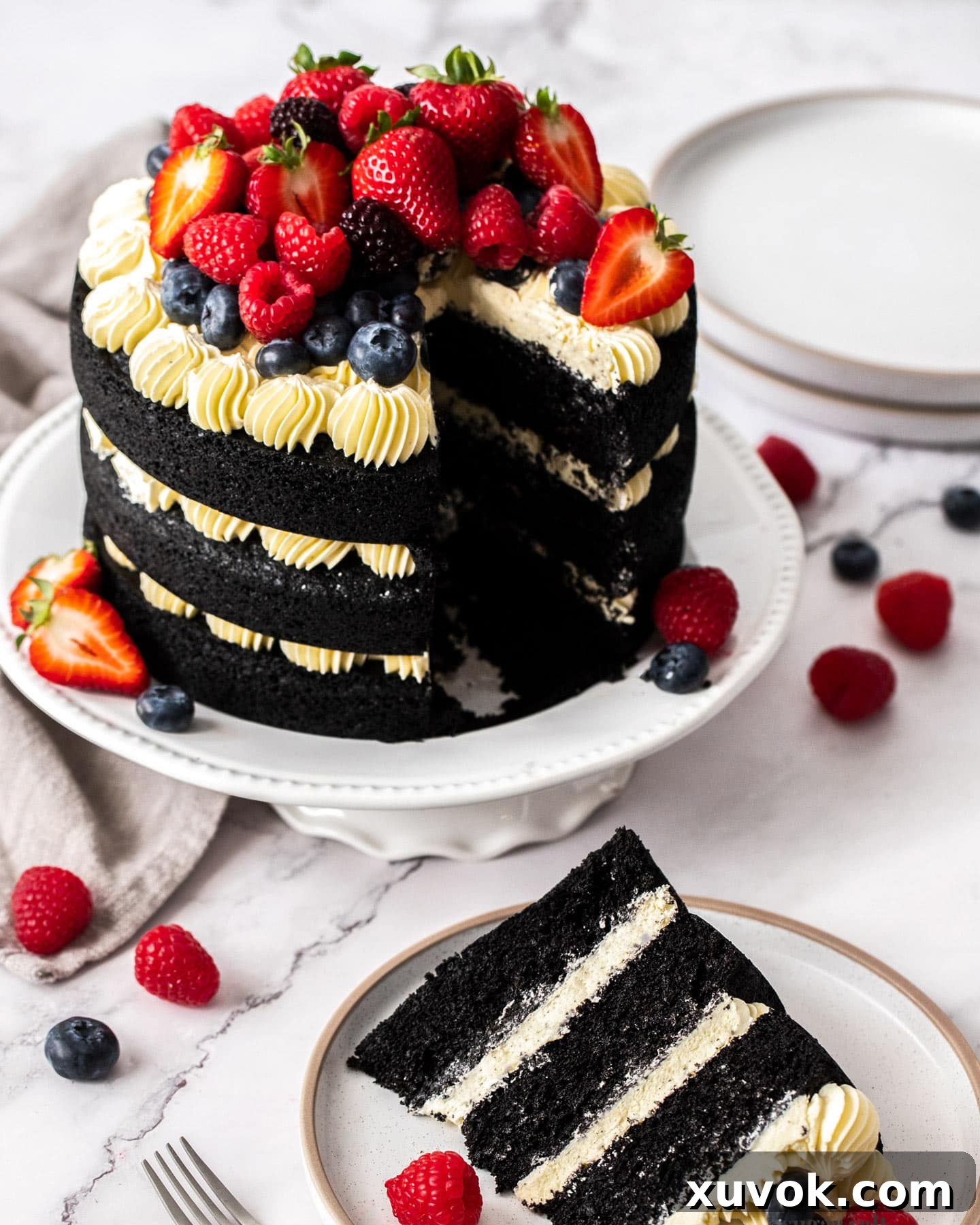
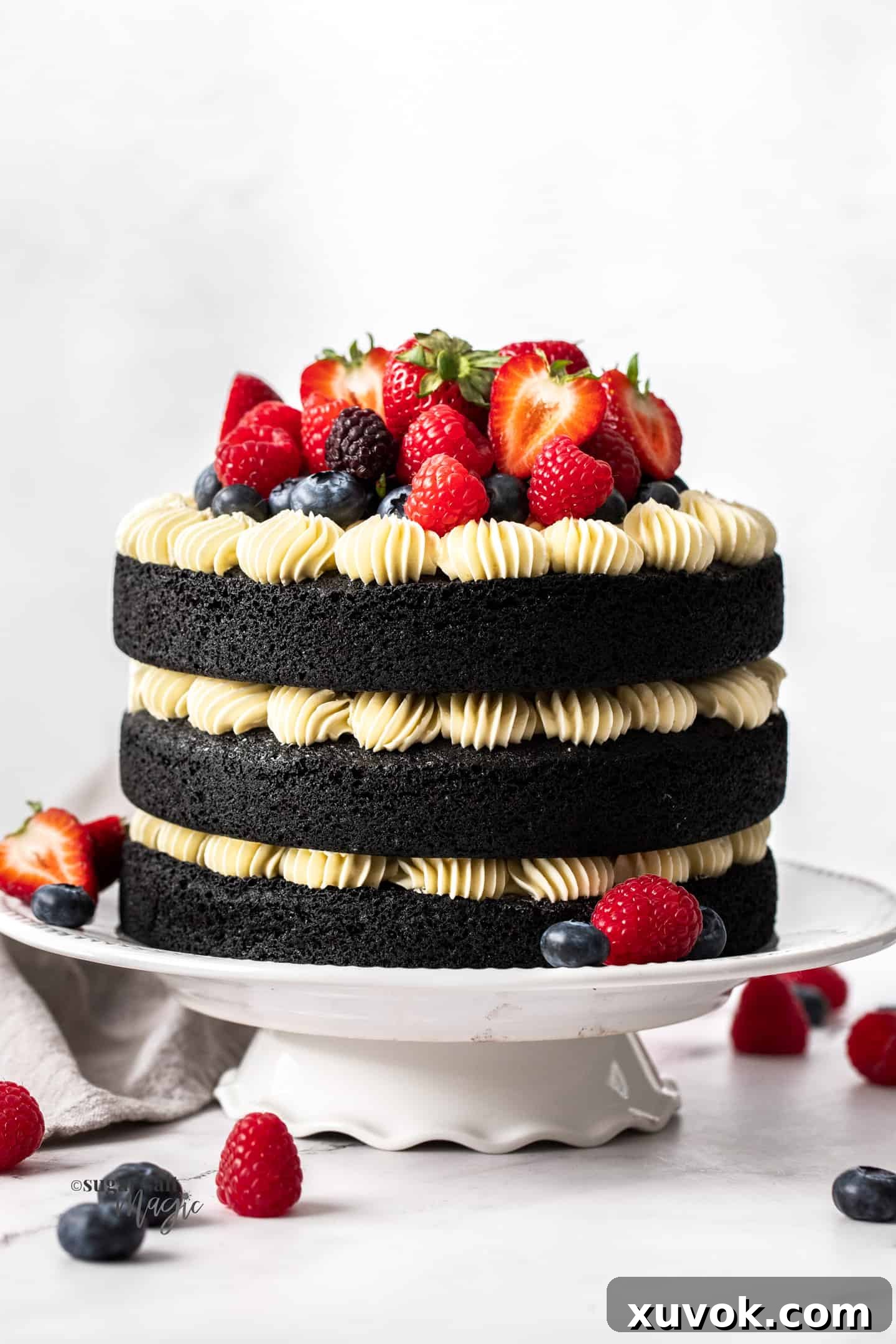
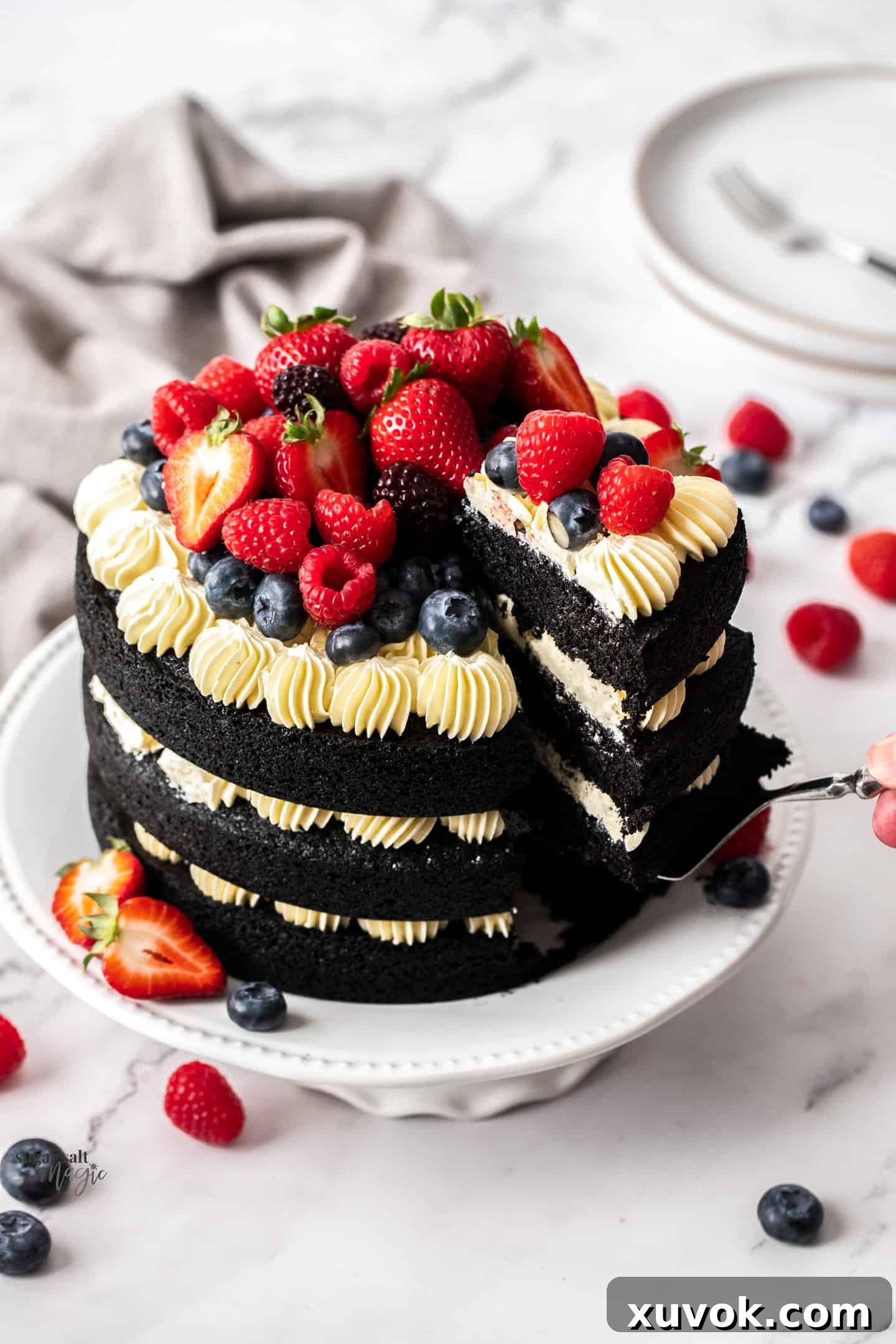
Inspired by the rich, deep flavors of classic red velvet cake and my own beloved layered chocolate and blackberry creation, this Black Velvet Cake is a true showstopper. It boasts an incredibly moist and tender crumb, perfectly complemented by a luscious, velvety smooth frosting that you’ll want to eat straight from the spoon. This recipe offers a sophisticated twist on a classic, delivering an unforgettable dessert experience that’s as visually striking as it is delicious.
❤️ Why You’ll Adore This Black Velvet Cake
This isn’t just another cake; it’s an experience waiting to happen. Here’s why this Black Velvet Cake will become your new favorite:
- Effortlessly Simple to Bake: Don’t let its elegant appearance fool you. The cake layers come together with a straightforward ‘mix and bake’ method, making it accessible for bakers of all skill levels. You won’t find complicated techniques here, just pure, baking joy.
- Unbeatable Texture: Prepare your taste buds for pure bliss. Each bite offers a remarkable balance – incredibly moist and rich, yet surprisingly light and fluffy. This unique “velvet” texture is what sets it apart, ensuring a melt-in-your-mouth sensation.
- Luxuriously Smooth Buttercream: The accompanying Swiss meringue buttercream is nothing short of divine. It’s exceptionally smooth, delicately creamy, and incredibly fluffy, providing the perfect counterpoint to the cake’s richness without being overly sweet.
- A True Showstopper: With its striking dark hue and elegant presentation, this Black Velvet Cake is guaranteed to impress. It’s perfect for any special occasion, from a spooky Halloween gathering to a sophisticated birthday celebration, instantly becoming the centerpiece of your dessert table.
- Generous Servings for a Crowd: Built with three decadent layers, this cake is designed to feed a good number of guests. Whether you’re hosting a large party or simply want to ensure there are plenty of leftovers, this recipe has you covered.
- Conveniently Freezer Friendly: Planning ahead or hoping to savor a slice later? This Black Velvet Cake freezes beautifully. Individual slices or even whole layers can be wrapped and frozen, making future dessert cravings easily satisfied.
- Endless Frosting Versatility: While our chosen Swiss meringue buttercream is a dream, this cake is incredibly versatile. Feel free to experiment with your favorite frosting, whether it’s a tangy cream cheese frosting for a more traditional velvet cake feel or a rich caramel buttercream for an extra layer of indulgence.
This beloved recipe was originally shared on October 14th, 2021, and has since been updated with enhanced, clearer step-by-step images to guide you through the baking process.
Never Miss a Recipe!
Stay updated with our latest delicious creations. Get new recipes straight to your inbox by subscribing to our newsletter.
(Sign-up form placeholder – subscription functionality would be handled by your website’s integrated email service.)
Decoding the Black Velvet Cake: A Culinary Deep Dive
Beyond its strikingly dark appearance, Black Velvet Cake shares a deep connection with its renowned cousin, the classic red velvet cake. The defining characteristic of this intriguing dessert is its dramatic black hue, which is achieved naturally through the use of black cocoa powder. This unique cocoa is not just for color; it’s instrumental in developing a distinct flavor profile that is notably milder and less intensely chocolatey than traditional cocoa, giving the cake a truly unique, nuanced taste.
Just like the red velvet, this black version relies on the magic of vinegar and buttermilk. These acidic ingredients react with the baking soda, contributing to the signature “velvet” crumb – incredibly tender, fine, and exceptionally moist. This chemical reaction also helps to enhance the cocoa’s unique flavor, creating a complex and satisfying dessert that is far more than just a visually impressive treat.
Black Velvet vs. Traditional Chocolate Cake: Understanding the Difference
While Black Velvet Cake contains a similar quantity of cocoa powder to many classic chocolate cake recipes, such as my popular layered chocolate cake with vanilla buttercream, the flavor experience is remarkably different. The secret lies in the type of cocoa used. Black cocoa is a heavily “Dutch-processed” cocoa, meaning it undergoes a special alkaline treatment not once, but twice, to neutralize its natural acidity. This extensive processing is what gives it its characteristic dark color and significantly alters its flavor.
Because nearly all acidity is removed, black cocoa delivers an exceptionally smooth, mellow, and almost cookie-like chocolate flavor, devoid of any bitterness often associated with natural cocoa powder. In comparison to a traditional chocolate cake made with regular cocoa, a Black Velvet Cake will taste smoother, lighter, and less overtly “bold” in its chocolate intensity. It offers a subtle, sophisticated cocoa note that is distinctly different and utterly delightful.
Essential Ingredients for Your Black Velvet Cake
Crafting this magnificent Black Velvet Cake requires mostly common pantry staples, with one special star ingredient: black cocoa powder. While you can often find black cocoa online or at specialty cake decorating supply stores, don’t let its unique nature deter you. If black cocoa is unavailable, you can achieve a fantastic result using Dutch process cocoa, which is readily available in most grocery stores and will still yield a delicious, albeit slightly less dramatic, dark cake.
The quality of your ingredients significantly impacts the final taste and texture of your cake. Opt for fresh, high-quality components to ensure the best possible outcome for this stunning dessert.
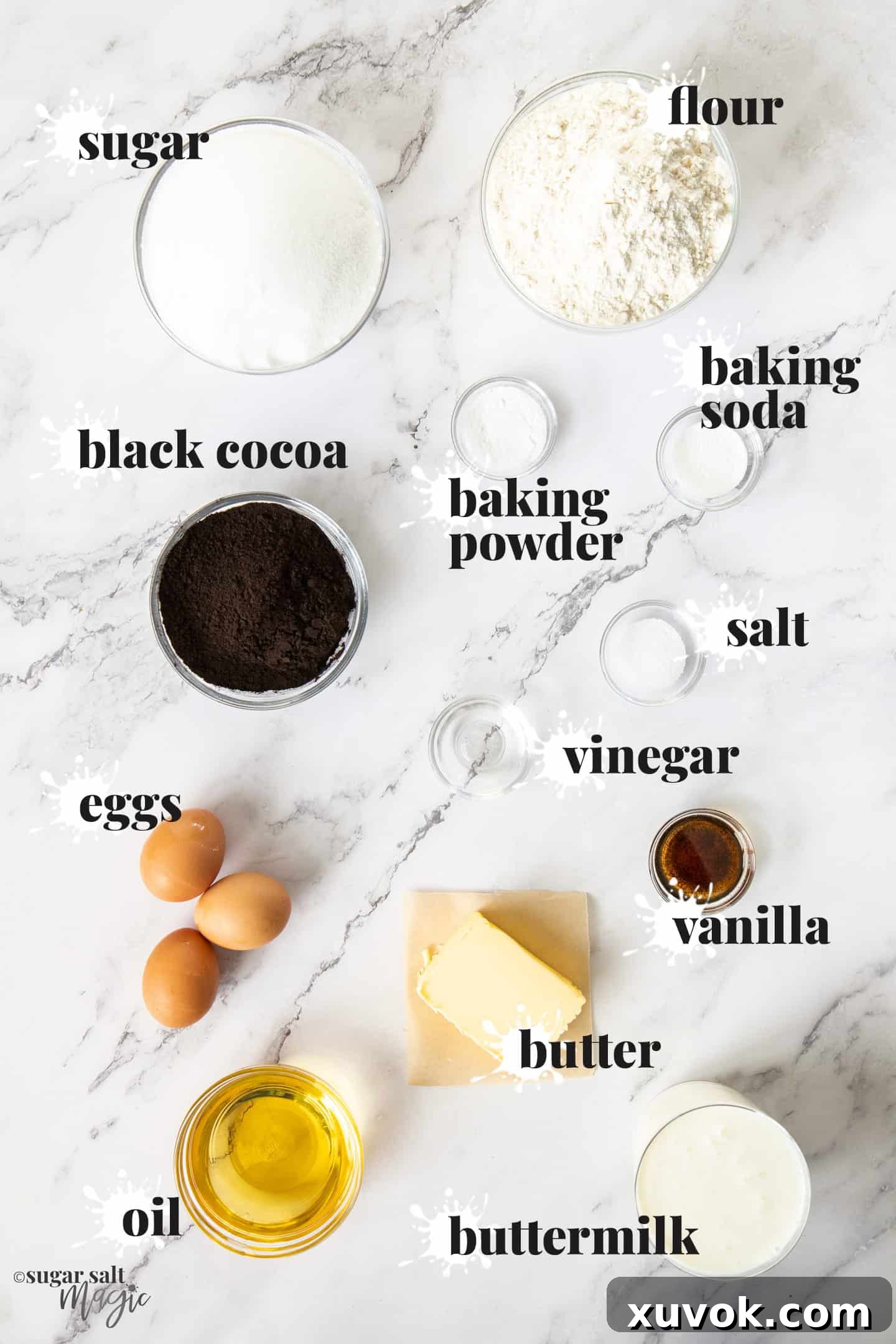
You’ll find detailed quantities and precise directions within the recipe card below.
- Black Cocoa Powder: This is the key to our cake’s striking color and unique flavor. It’s a heavily “Dutched” cocoa, meaning it has been treated to neutralize its natural acidity. This process not only gives it a natural black hue but also results in a milder, less bitter chocolate flavor compared to standard cocoa.
- Vanilla Extract: While this is a chocolate-focused cake, a good quality vanilla extract is crucial. It doesn’t just add its own flavor; it actually works to intensify and deepen the chocolate notes, adding complexity to the overall taste profile.
- Unsalted Butter: Using unsalted butter gives you complete control over the salt content in your cake, allowing you to perfectly balance the flavors. Ensure it’s at room temperature for optimal creaming.
- Neutral Vegetable Oil: Oils like sunflower or avocado oil are ideal as they add moisture without imparting any strong flavors that might compete with the cocoa. Oil also contributes to a tender, softer crumb that stays moist longer.
- Full-Fat Buttermilk: For the best texture and flavor, always opt for real, full-fat buttermilk. Its acidity is essential for reacting with the leavening agents and contributing to the cake’s signature tender, velvet crumb. A homemade substitute may not yield the same superior results.
- Large Eggs: Eggs provide structure, richness, and help bind the cake ingredients together. Ensure they are at room temperature for better emulsion and a more uniform batter.
- White Vinegar: Alongside buttermilk, vinegar acts as an acidic component that reacts with baking soda, creating air pockets for a light and fluffy texture. It’s a non-negotiable ingredient for achieving that classic velvet cake feel.
- All-Purpose Flour: The foundation of our cake’s structure. Measure accurately, preferably by weight, to avoid a dense or dry cake.
- Baking Powder & Baking Soda: These leavening agents work in harmony to give the cake its lift and tender crumb. The baking soda specifically reacts with the buttermilk and vinegar.
- Granulated Sugar & Salt: Sugar provides sweetness and moisture, while salt balances the flavors and enhances the depth of the cocoa.
Mastering the Art of Black Velvet Cake Layers: A Simple Guide
You might expect a cake this stunning to be complicated, but the truth is, these black velvet cake layers are unbelievably easy to make. The method is straightforward, focusing on proper ingredient incorporation rather than complex techniques, ensuring a perfect result every time.
For a full, comprehensive breakdown of the recipe details and step-by-step guidance, please refer to the complete recipe card below.
Step 1: Prepare Your Dry and Wet Ingredients Separately
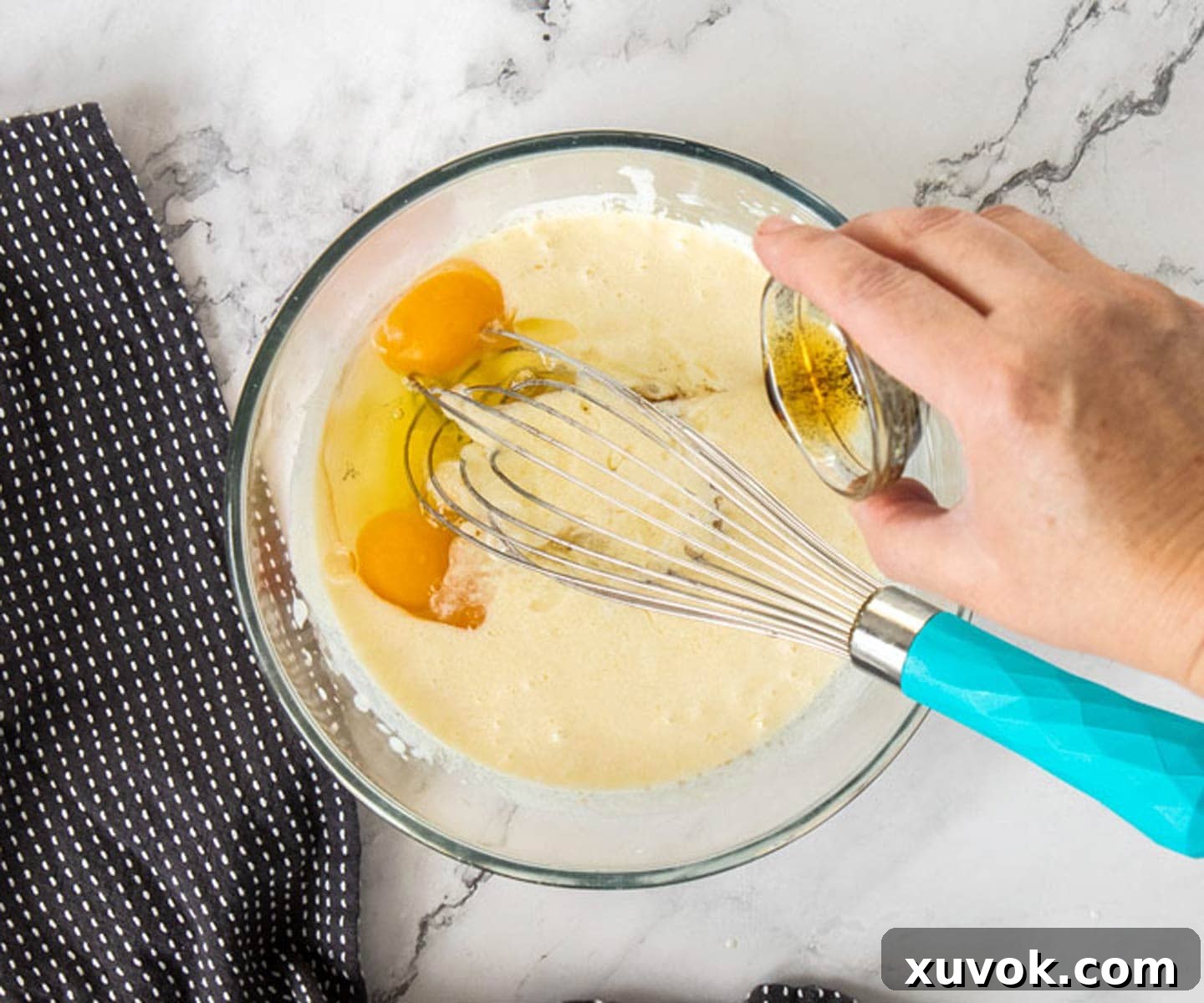
Begin by combining all your dry ingredients – flour, black cocoa, baking powder, baking soda, sugar, and salt – in one large bowl. Whisk them thoroughly to ensure even distribution. In a separate medium bowl, whisk together the wet ingredients: melted butter, vegetable oil, buttermilk, eggs, vanilla extract, and white vinegar. This dual preparation method helps control the mixing process and ensures a tender crumb.
Step 2: Gently Combine for Perfect Batter
Create a small well in the center of your dry ingredients. Pour the whisked wet mixture into this well. Using a spatula, gently fold and stir the ingredients together until just combined and smooth. The key here is to avoid overmixing, which can lead to a tough cake. Ensure you scrape the bottom and sides of the bowl to incorporate all the flour and cocoa without developing too much gluten.
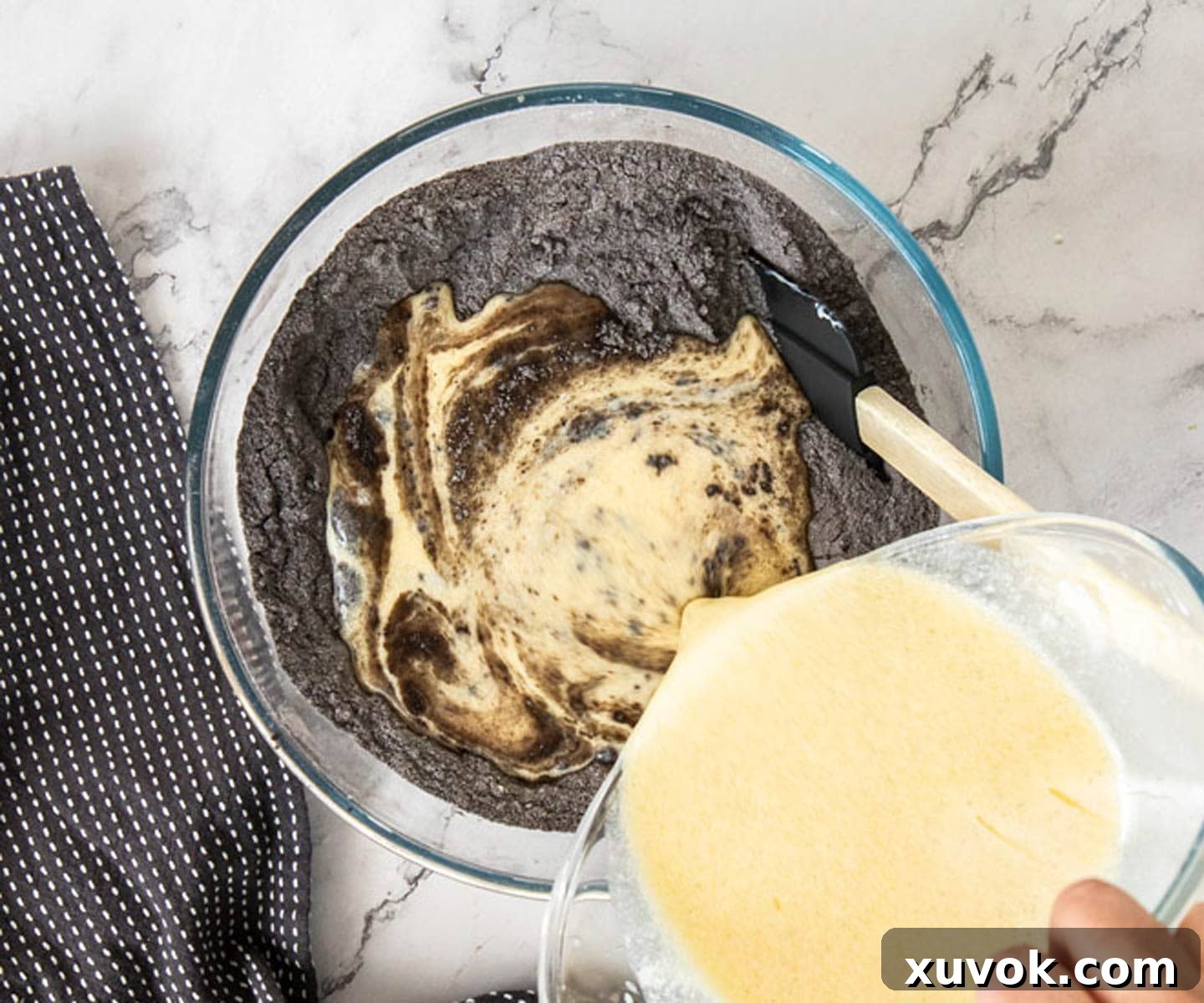
Step 3: Portion and Bake to Perfection
Evenly divide the luscious black velvet batter among three prepared cake pans. For precise, uniform layers, you can weigh the batter in each pan, though eyeballing it is often sufficient. Gently level the tops of the batter in each pan. Bake in a preheated oven until a toothpick inserted into the center comes out clean or with a few moist crumbs. This simple step ensures your cake layers are perfectly cooked and ready for assembly.
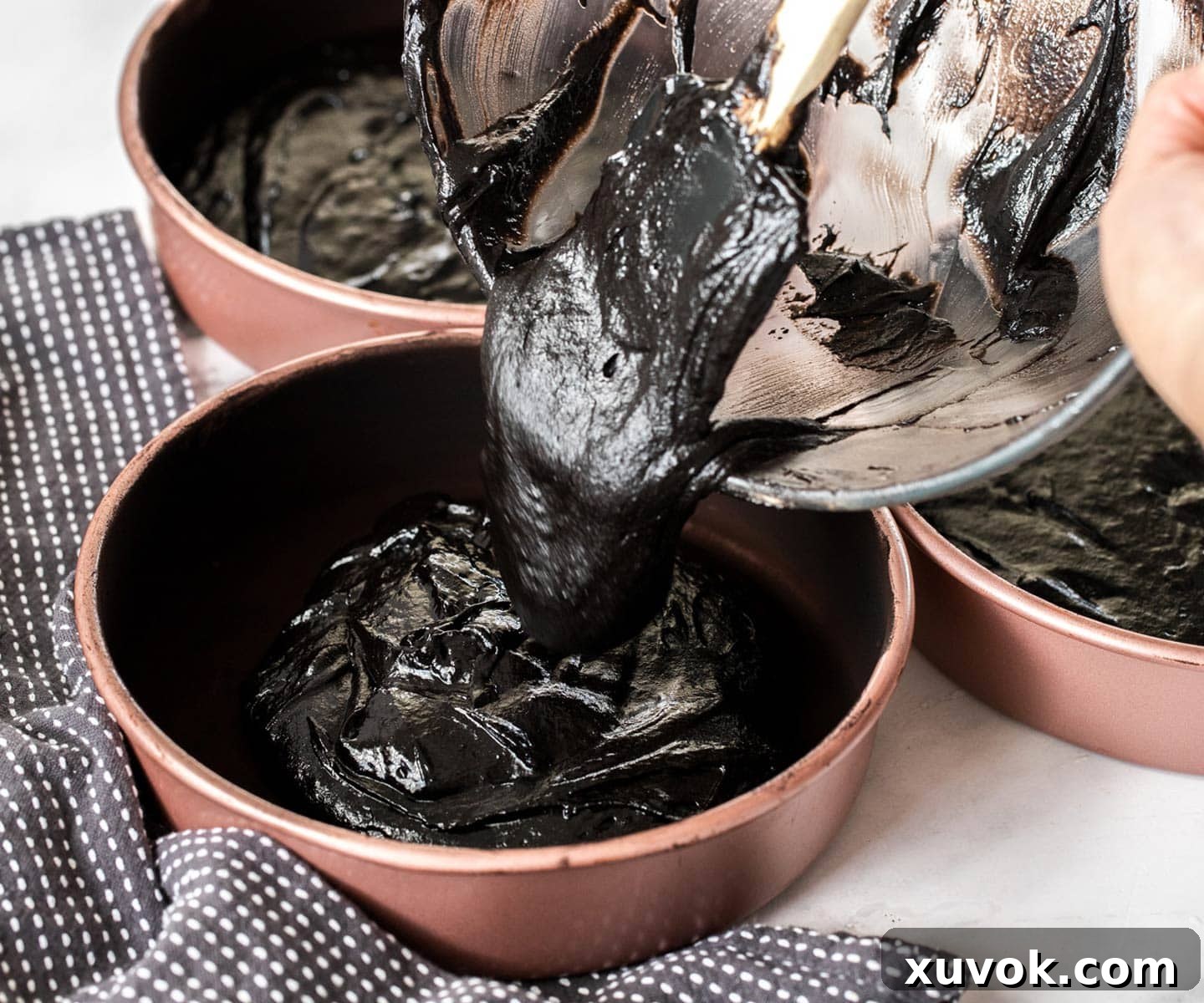
Crafting the Silky Smooth Vanilla Swiss Meringue Buttercream Frosting
When it came to choosing the perfect frosting for this Black Velvet Cake, I initially considered a tangy cream cheese frosting, a classic pairing for red velvet. However, for its unparalleled creamy, silky-smooth qualities and exceptional pipability, I ultimately landed on Swiss meringue buttercream (SMB). This frosting offers a luxurious texture that is lighter and less sweet than traditional American buttercream, allowing the subtle notes of the black cocoa to truly shine through. While cream cheese frosting would certainly work and provide a delightful contrast, SMB elevates this cake to another level of elegance.
Swiss meringue buttercream, despite its sophisticated reputation, is made with just five core ingredients: egg whites, sugar, butter, vanilla, and a touch of salt. Its preparation, however, differs significantly from standard buttercreams as it begins with a cooked meringue base. This cooking process ensures the egg whites are safely pasteurized and creates a stable, incredibly smooth meringue. Don’t be intimidated by the process; while it requires a little more attention than a simple powdered sugar frosting, the rich reward of a perfectly silky, stable, and less sweet buttercream is well worth the effort. It’s a game-changer for any layered cake.
For those who want to master this incredible frosting technique, I have a comprehensive post dedicated to Swiss meringue buttercream, where you can find all the tips, tricks, troubleshooting advice, and step-by-step photos you need to achieve perfection.
If you’re looking for alternative frosting ideas to complement the cake’s unique flavor, especially since the cake itself isn’t overly sweet, a rich chocolate buttercream would be absolutely divine. For a more traditional “velvet cake” experience with a hint of tang, consider using this fantastic chocolate cream cheese frosting. You could even color your frosting black with a touch of gel food coloring for an extra dramatic effect, perfect for a Halloween party or a truly gothic aesthetic.
Mastering the Art of Frosting Your Black Velvet Cake
Achieving a beautifully frosted cake is all about technique, and for a three-layer cake like this Black Velvet showstopper, I’ve found a method that yields the best results. The optimal way to frost this cake is by applying frosting to each individual layer before you stack them. This approach prevents the common issue of buttercream squishing out the sides as you try to spread or pipe frosting onto upper layers of an already assembled cake. It ensures clean lines and a stable structure from the start.
Method for Stacking and Frosting:
The Swiss meringue buttercream is robust enough to hold these layers beautifully. To prevent any unsightly squishing, simply frost one cake layer, then carefully place the next layer on top and frost it, repeating until all layers are stacked and frosted. This step-by-step assembly ensures an even distribution of frosting and a clean finish. Don’t rush this process; a little patience goes a long way in creating a visually stunning cake.
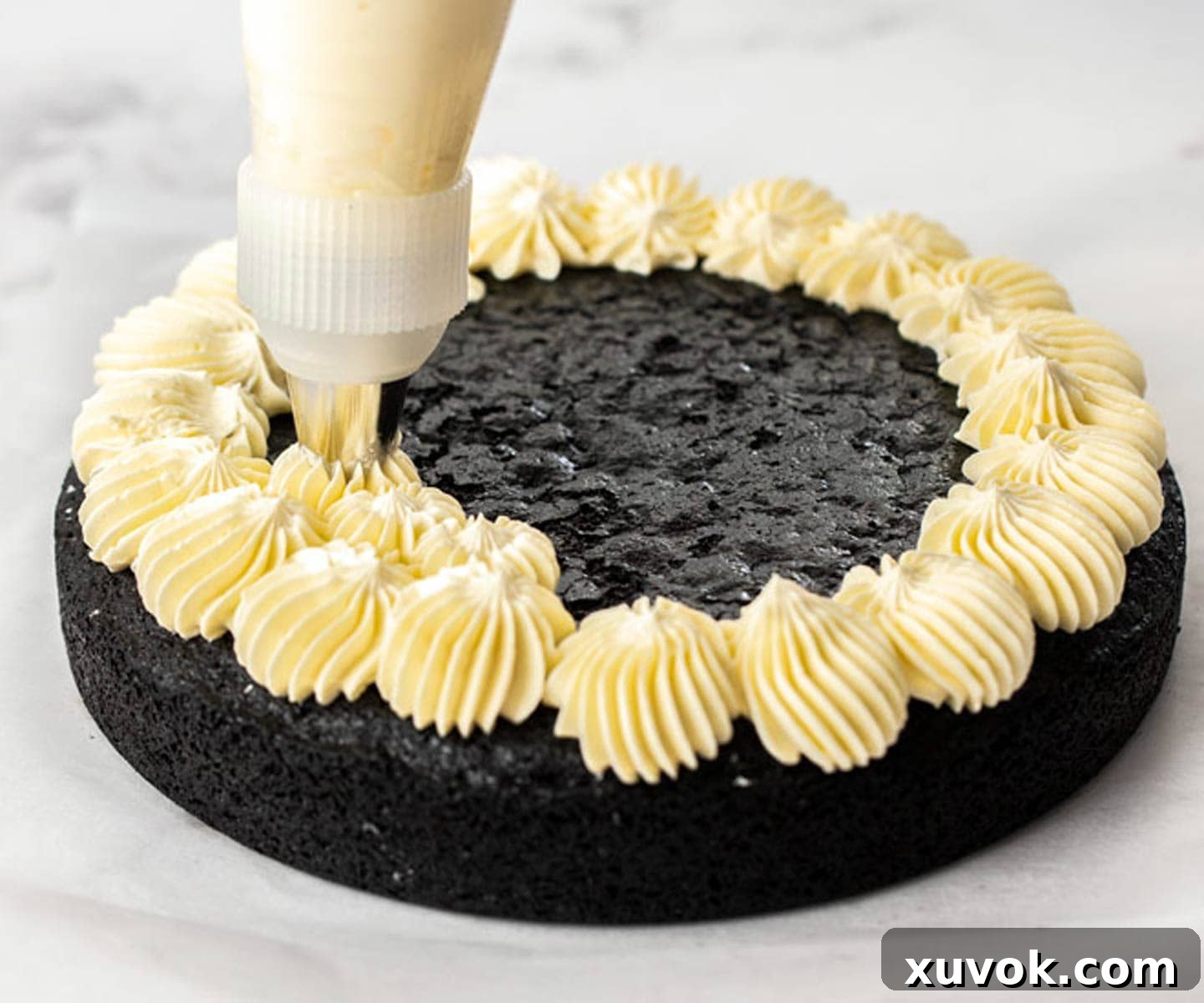
Pro Tip: Chill for Flawless Stacking
Another excellent tip for a professional finish is to chill each frosted layer until the buttercream is firm before stacking. Once the buttercream has set, the layers are much easier to handle, allowing you to make any necessary adjustments to alignment without marring your beautiful piping or spreading. This technique creates a stable foundation, making the final coating of frosting a breeze and resulting in a perfectly straight and elegant cake.
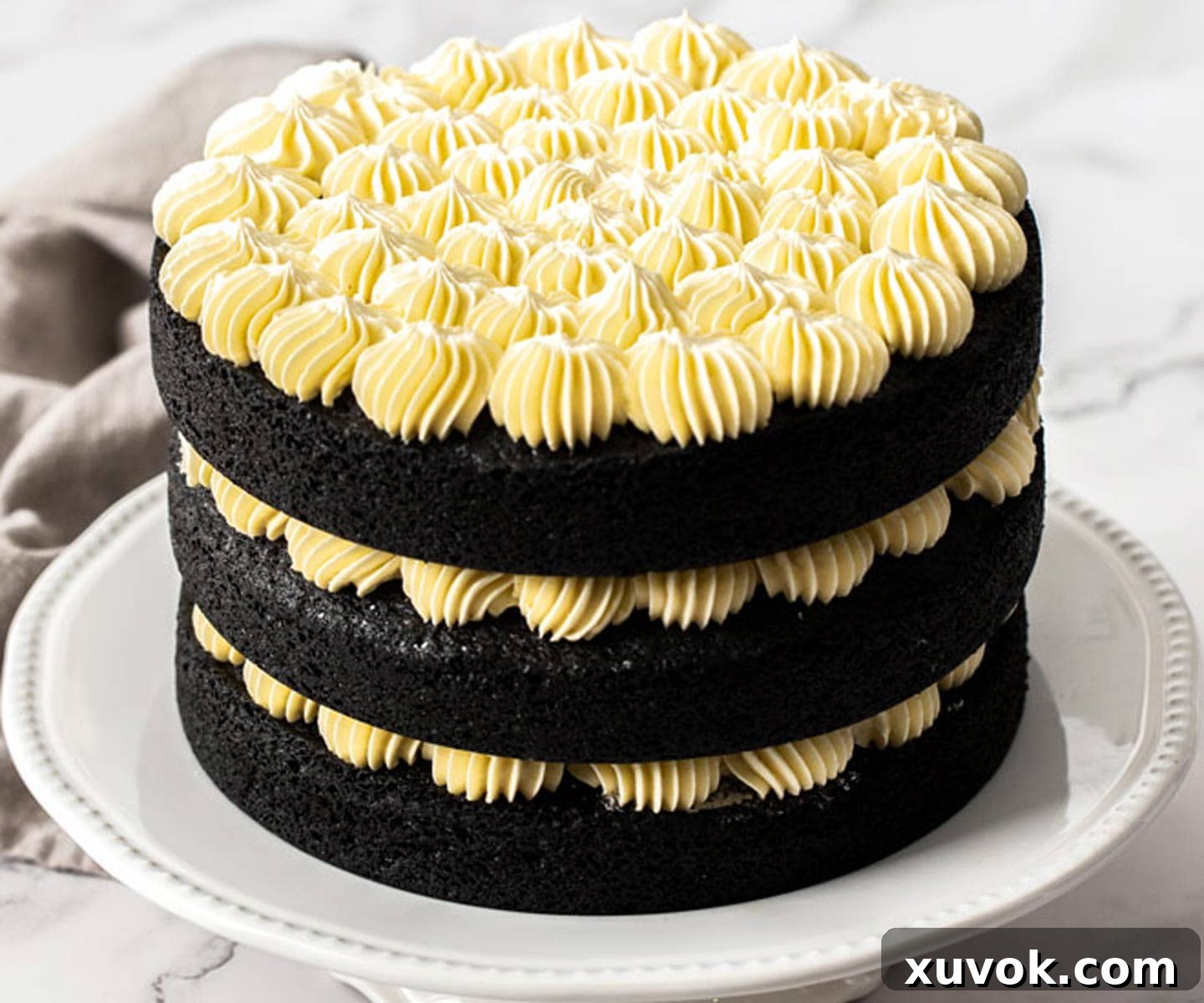
Storing Your Black Velvet Cake for Optimal Freshness
Proper storage is key to maintaining the exquisite taste and texture of your Black Velvet Cake. Follow these guidelines to keep your cake fresh and delicious for as long as possible:
- At Room Temperature: If your room temperature is moderate (around 20°C / 68°F), this Black Velvet Cake will remain fresh and delightful for up to two days. Always store it in an airtight cake dome or container to prevent it from drying out and to protect the frosting.
- Refrigeration: For longer freshness, the cake can be stored in the refrigerator for 3-4 days. Before serving, allow the cake to come to room temperature for at least 30-60 minutes. This will soften the buttercream and enhance the cake’s flavor and moistness, as cold temperatures can make cake layers dense and dull flavors.
- Freezing for Extended Enjoyment: This cake freezes exceptionally well, making it perfect for meal prepping or enjoying later. You can freeze it in individual slices, separate layers, or even as a whole cake (if you have sufficient freezer space). Whichever method you choose, ensure the cake is very well wrapped in several layers of plastic wrap, followed by a layer of aluminum foil, to prevent freezer burn.
- Tip for Freezing: For frosted slices or a whole frosted cake, freeze it first (unwrapped) until the buttercream is completely solid. This step ensures that the plastic wrap won’t stick to or damage the frosting during the wrapping process. Once solid, proceed with wrapping.
- Thawing: When ready to enjoy, simply transfer the wrapped cake or slices to the refrigerator overnight, or let them sit at room temperature for a couple of hours until fully thawed and brought to the desired serving temperature.
Frequently Asked Questions About Black Velvet Cake
Black cocoa powder, the secret to this cake’s intense color and unique flavor, can typically be sourced online from specialty baking stores or through major e-commerce retailers. You might also find it at dedicated cake decorating supply shops. It’s truly worth seeking out for its distinct, mild chocolate taste and natural dark pigmentation that transforms baked goods.
Absolutely, if black cocoa powder isn’t an option, you can substitute it with either Dutch process cocoa powder (which is highly recommended for its smoother flavor and darker color) or regular unsweetened cocoa powder. During recipe development, all three types were tested, and while all yielded delicious cakes, Dutch-processed and black cocoas consistently delivered the best results in terms of flavor and appearance.
Yes, if you opt for a more common cocoa powder like Dutch-processed or natural unsweetened, you can enhance the dark color by adding a little black gel food coloring. Be prepared to add a fair amount to achieve a truly dark black, as cocoa itself doesn’t provide intense color without processing. For the best black color using food coloring, starting with Dutch-processed cocoa will give you a stronger, darker base to work with.
The term “velvet cake” refers to a specific type of cake characterized by its remarkably tender, fine, and slightly dense crumb. This unique texture is achieved through a combination of ingredients, primarily cocoa for flavor and color (which often reacts with the acidic components to deepen its hue), and crucially, acidic ingredients like vinegar and buttermilk. These acids react with baking soda to create air pockets and break down gluten, resulting in the cake’s signature soft, luxurious “velvet” mouthfeel.
Yes, you can adapt this recipe for different pan sizes, but you’ll need to adjust baking times accordingly. For instance, using two 9-inch pans instead of three 8-inch pans will require a longer baking time, typically around 30-35 minutes. Cupcakes will bake much faster, usually 18-22 minutes. Always perform the toothpick test for doneness and remember that ovens vary, so keep a close eye on your cake.
Discover More Irresistible Cake Recipes You’ll Love
If you’ve fallen in love with the elegance and flavor of this Black Velvet Cake, you’re in for a treat! Explore more of our delightful cake creations that are perfect for any occasion:
- Classic Chocolate Cake with Vanilla Buttercream: A timeless favorite, rich and comforting.
- Spooky Monster Cupcakes(Featuring Black Cocoa): Fun and festive treats, perfect for themed parties.
- Decadent Chocolate Salted Caramel Cake: A harmonious blend of sweet and savory.
- Enchanting Black Magic Cake: Another dark and delicious masterpiece.
- Elegant Chocolate Roll Cake: A lighter, swirled dessert that’s surprisingly easy.
- Indulgent Oreo Chocolate Cake: For the ultimate cookie and cake lover.
- Unique Chocolate Meringue Brownie Cake: A delightful combination of chewy brownie and airy meringue.
⭐⭐⭐⭐⭐
Did you try this black velvet cake recipe?
Show it some love with a rating and comment below. Your feedback is truly valued!
Hungry for more? Subscribe to our newsletter for free, delicious recipes delivered straight to your inbox. Also, connect with us and follow along on Facebook, Pinterest, and Instagram for daily inspiration!
Black Velvet Cake
12
serves
1
25
1
25
Rate
Pin
Ingredients
FOR THE BLACK VELVET CAKE
- 355 g plain flour (all-purpose flour) (2 ¾ cups)
- 105 g black cocoa powder (1 cup / ~3 ¾oz)
- 1 ½ teaspoons baking powder
- 1 teaspoon baking soda (bicarb soda)
- 500 g white granulated sugar (2 ½ cups / ~17 ½oz)
- 1 teaspoon salt
- 113 g unsalted butter, melted (½ cup / 4oz)
- ½ cup vegetable oil (125ml), neutral flavored
- 1 ½ cups buttermilk, room temperature (375ml)
- 3 large eggs, room temperature
- 2 teaspoons vanilla extract
- 2 teaspoon white vinegar
FOR THE VANILLA SWISS MERINGUE BUTTERCREAM
- 180 g egg whites (roughly 6 large eggs, see notes)
- 336 g caster sugar (superfine sugar) (1 ⅔ cups)
- 340 g unsalted butter, cool but slightly softened (3 sticks / 1 ½ cups)
- 2 teaspoons vanilla extract
- ¼ teaspoon salt
For best results, always weigh ingredients where a weight is provided.
Instructions
FOR THE BLACK VELVET CAKE
-
Preheat your oven to 180°C (160°C fan-forced) / 350°F. Prepare three round 8-inch sandwich tins (cake pans) by lightly greasing them. Then, dust the insides generously with cocoa powder, tapping out any excess to prevent sticking and ensure a beautiful finish.
-
In a very large bowl, sift together the plain flour, black cocoa powder, baking soda, and baking powder. This step helps to aerate the dry ingredients and remove any lumps. Add the granulated sugar and salt, then use a balloon whisk to gently combine all the dry ingredients, ensuring they are thoroughly mixed.
-
In a separate medium bowl, combine the melted unsalted butter, neutral vegetable oil, and buttermilk. Whisk these wet ingredients together until they are well integrated.
-
Add the room-temperature eggs, vanilla extract, and white vinegar to the wet mixture. Continue whisking just until all the components are combined. Avoid over-whisking at this stage.
-
Make a well in the center of your dry ingredient mixture. Pour the entire wet ingredient mixture into this well. Using a spatula, gently fold and stir the ingredients together until the batter is just smooth and no pockets of dry flour remain. Be diligent in scraping the bottom and sides of the bowl to ensure everything is fully incorporated without overmixing.
-
Evenly divide the batter among the three prepared cake tins. For precise and uniform layers, you can weigh the batter in each tin, but eyeballing it will also work perfectly fine. Gently level out the tops of the batter in each pan with your spatula.
-
Bake the cake layers for 22-24 minutes. It’s a good practice to turn the trays halfway through baking (around the 15-minute mark) to ensure even cooking. The cakes are done when a toothpick inserted into the center comes out clean or with just a few moist crumbs attached. Avoid overbaking to maintain moisture.
FOR THE VANILLA SWISS MERINGUE BUTTERCREAM
-
For additional detailed guidance, expert tips, and troubleshooting advice, be sure to check out my dedicated Swiss meringue buttercream post.
-
To ensure your mixing bowl is perfectly clean and grease-free (crucial for meringue), rub vinegar around the inside of your mixing bowl, then rinse it out thoroughly and dry completely.
-
Fill a medium saucepan with about 1 inch of water and bring it to a gentle simmer over medium heat. This will create a double boiler.
-
Place the egg whites and caster sugar into your prepared clean mixing bowl. Whisk them together with a balloon whisk until well combined.
-
Place the bowl over the simmering water (making sure the bottom of the bowl does not touch the water). Continue to gently whisk and stir the mixture constantly for approximately 5 minutes, or until the temperature reaches 71°C / 160°F. To ensure all sugar granules have dissolved, rub a small amount of the mixture between your fingers. If you feel any grittiness, continue stirring over the heat until smooth. Remove from heat.
-
Immediately transfer the hot bowl to your stand mixer fitted with the whisk attachment. Whisk on medium-high speed until the meringue forms stiff, glossy peaks and the bowl and meringue have cooled down to at least room temperature. This cooling process is essential before adding the butter. If the bowl is still warm, you can let it rest until it cools sufficiently.
-
Once the meringue is cool and stiff, switch to the paddle attachment. Begin adding the cool, slightly softened butter, one tablespoon at a time. Beat at medium-high speed until each tablespoon is fully incorporated before adding the next. Continue this process until all the butter is combined. The mixture may look curdled or soupy at first – this is normal! Keep beating, and it will magically come together into a thick, smooth, and creamy buttercream.
-
Once the buttercream is looking thick, smooth, and creamy, add the vanilla extract and salt. Mix for a good 20 seconds to ensure everything is thoroughly combined and the flavors are evenly distributed.
-
If you plan to pipe your frosting, transfer the buttercream to a piping bag.
-
To assemble, place one cooled cake layer onto your serving plate or cake stand. Pipe or spread one-third of the frosting evenly over this layer. Repeat with the second and third layers, ensuring each layer is frosted before placing the next on top. This technique prevents the buttercream from squishing out the sides, resulting in a cleaner, more stable cake.
-
When it’s time to slice your masterpiece, use a very sharp knife for clean cuts. As this is a three-tiered cake, you may find it even easier to chill the entire cake until the frosting is firm before cutting. This helps maintain its structure and provides perfectly neat slices.
-
Please take a moment to leave a comment & rating once you’ve tried the recipe. Your feedback is greatly appreciated and incredibly helpful to other bakers!
Notes
- For the most consistent and reliable results, you should always weigh dry ingredients like flour and sugar using a digital kitchen scale. Kitchen scales are relatively inexpensive and provide far more accuracy than volume measurements. If you must use cups, use the “spoon and level” method (spoon flour into the cup and level with a straight edge; do not scoop directly from the bag).
- All ovens vary significantly in temperature and cooking times. Always start checking for doneness 2-3 minutes before the recipe suggests. An oven thermometer can help ensure your oven is truly at the set temperature.
- Egg white weight for Swiss Meringue Buttercream: While 6 large eggs typically yield around 180g of egg whites, egg sizes can vary. For absolute precision, separate your eggs and weigh the whites. This ensures the correct ratio for a stable meringue.
EXPLORE MORE DELICIOUS CAKE RECIPES!
793
kcal
Marie Roffey
Dessert
American, World
Have you tried this recipe?
Don’t forget to leave a rating and comment below and let me know how it was! I love hearing from you. Nutrition information is approximate and derived from an online calculator. The brands you use may cause variations.
Calories from Fat 387