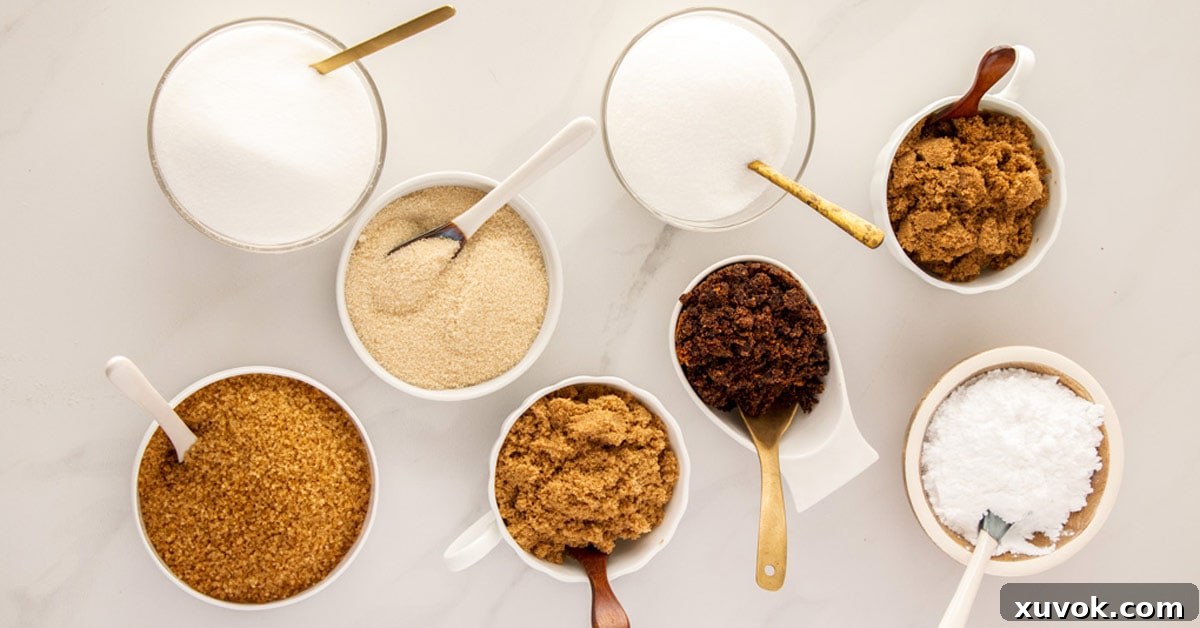
The Ultimate Guide to Sugar: Types, Uses, and Baking Secrets
Sugar is often seen as a simple sweetener, a mere ingredient to make things taste good. From luscious cakes and chewy cookies to refreshing beverages, its primary role in adding sweetness is undeniable. However, sugar is a remarkably versatile ingredient that performs a myriad of essential functions in the kitchen, particularly in baking. Beyond its sweetening capabilities, sugar contributes significantly to texture, aids in leavening, enhances browning, and even adds an invaluable depth of flavor in both sweet and savory applications. Understanding the different types of sugar and their unique properties is key to mastering your culinary creations and achieving perfect results every time.
My exploration into the fascinating world of sugar deepened recently, sparked by a curious reader’s question about a specific type I frequently use: caster sugar. This inquiry prompted me to delve further into the nuances of various sugars, and what I discovered is a wealth of knowledge that can transform your baking.
In this comprehensive Baking Essentials guide, we’ll unravel the mysteries behind the most common types of sugar used in baking. While the world of sugar is vast, we’ll focus on those you encounter most often, detailing their best uses, explaining their unique characteristics, and even demystifying those lesser-known varieties that sometimes appear in recipes, leaving you wondering what they are and how to use them.
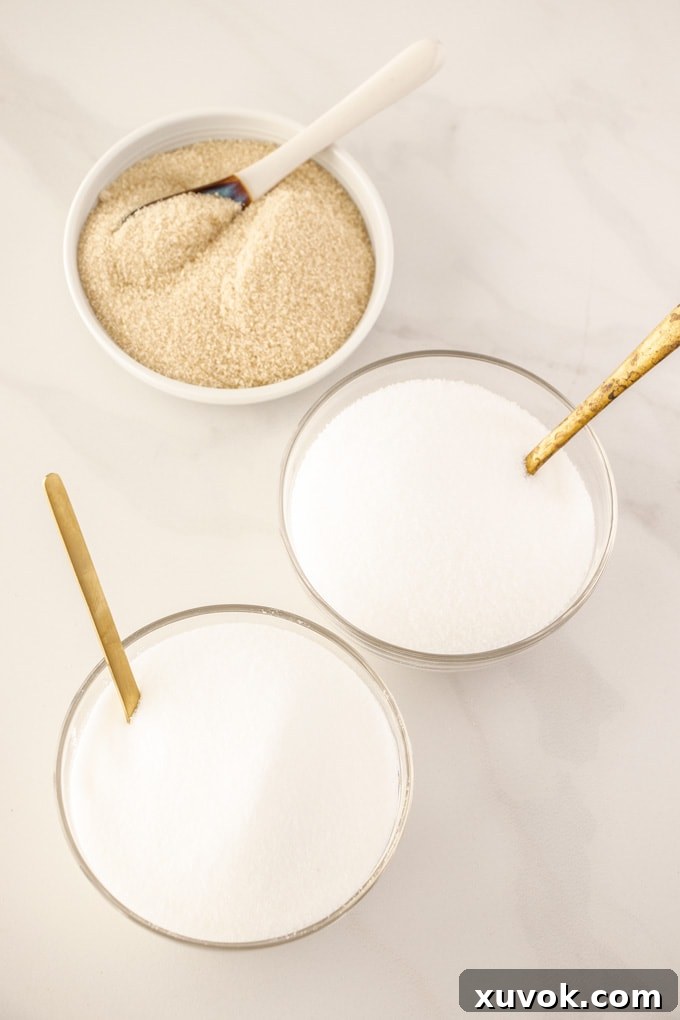
From top to bottom: Golden Caster Sugar, Granulated Sugar, Caster Sugar.
What is Granulated Sugar? The Everyday Essential
When most people envision sugar, they’re likely thinking of granulated sugar. This ubiquitous refined white sugar, also commonly known as table sugar, is characterized by its medium-sized, uniform crystals. It’s the most widely available and versatile sugar, making it a staple in kitchens worldwide. Produced from either sugar cane or sugar beets, it undergoes a refining process that removes all molasses, resulting in its pristine white color and neutral flavor.
Granulated sugar is perfect for general baking tasks, from cookies and cakes to muffins and pies, where it contributes to structure and sweetness. Its crystal size allows it to dissolve adequately in liquids and provides a slight crunch in some applications. Beyond baking, it’s the go-to choice for sweetening hot beverages like coffee and tea, and for making simple syrups.
What is Caster Sugar? The Baker’s Secret Weapon
Caster sugar, also known as superfine sugar or bakers sugar in the US, is essentially granulated sugar that has been ground into much finer crystals. This significantly smaller crystal size is what sets it apart and makes it a favorite among professional and home bakers alike. The diminutive crystals dissolve far more quickly and effortlessly than granulated sugar, making it an excellent choice for delicate recipes where a smooth texture is paramount, such as meringues, soufflés, and light sponges.
The rapid dissolution of caster sugar also proves advantageous when creaming butter and sugar together, a crucial step in many baking recipes. It helps to incorporate more air into the mixture, resulting in a lighter, fluffier texture in the final baked good. While commonly found in Australia and the UK, its popularity is growing globally as bakers discover its benefits.
For most regular baking tasks, caster sugar is my preferred choice. It offers superior performance in terms of texture and dissolution, often leading to a more refined end product. An added bonus is its pantry efficiency: caster sugar can almost always be used as a direct substitute for regular granulated sugar without issue, whereas the reverse is not always true, especially in recipes requiring quick dissolution or a fine crumb.
Both granulated and caster sugar are excellent foundations for making aromatic homemade vanilla sugar, infusing your bakes with an extra layer of flavor.
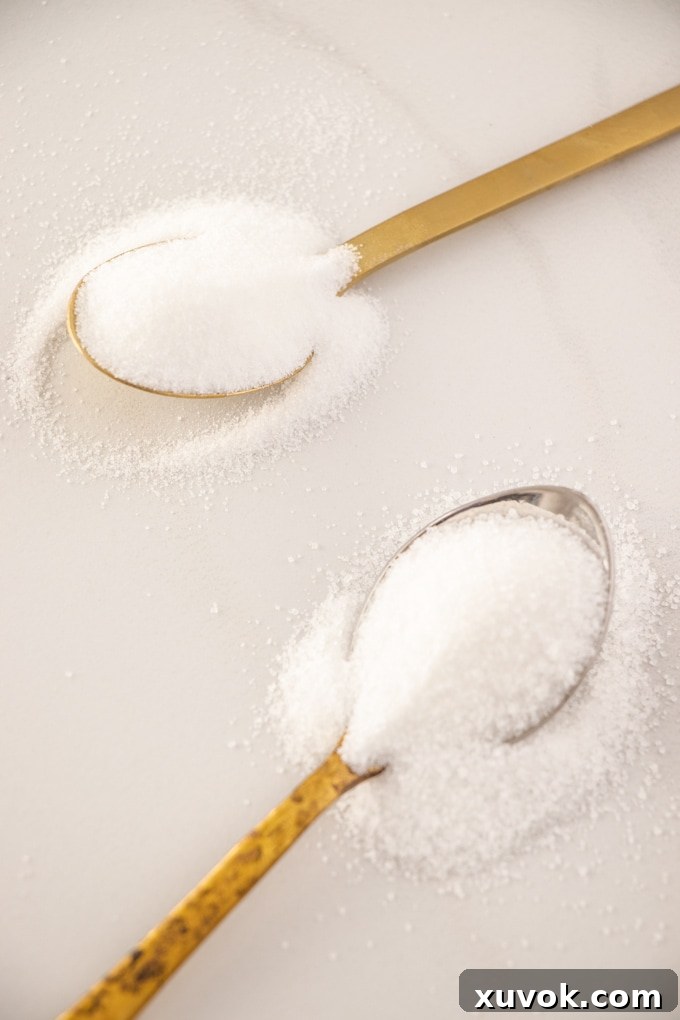
From top to bottom: Caster sugar, Granulated Sugar.
How to Make Caster Sugar at Home
Don’t have caster sugar on hand or finding it’s a bit pricey or hard to locate in your area? No problem! You can easily make your own. Simply take regular granulated sugar and pulse it in a food processor or a powerful blender for a few seconds. Be careful not to over-process, as you don’t want to turn it into powdered sugar. The goal is to achieve finer crystals, not a powder. This simple trick ensures you’re never without this versatile baking ingredient.
Is Caster Sugar the Same as Powdered Sugar? A Clear Distinction
This is a common point of confusion, and it’s important to clarify: no, caster sugar and powdered sugar are distinctly different. While both have fine textures compared to granulated sugar, their compositions and best uses vary significantly. Caster sugar consists of very fine crystals, whereas powdered sugar is ground to an almost impalpable powder and typically contains an anti-caking agent. We’ll delve deeper into powdered sugar next.
Granulated Sugar & Caster Sugar: Names and Variants
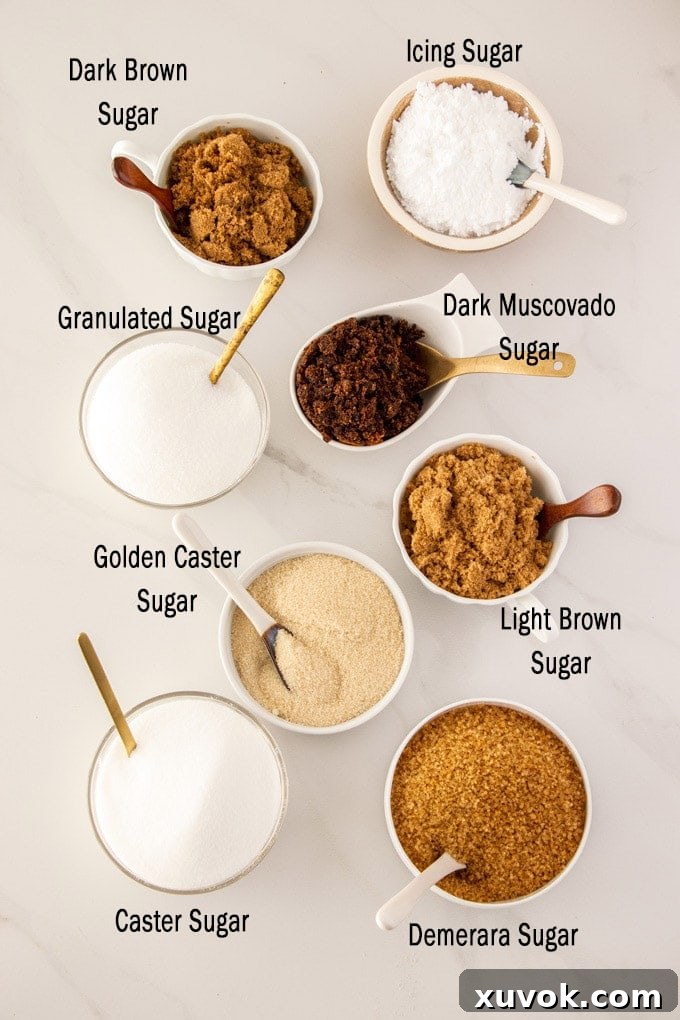
Granulated Sugar | Caster Sugar | Superfine Sugar | Bakers Sugar | Golden Caster Sugar
What is Icing Sugar? For Silky Smooth Finishes
Icing sugar, often referred to as powdered sugar or confectioners’ sugar (as shown below), is sugar that has been milled into an incredibly fine powder. What differentiates it from caster sugar and makes it perfect for its namesake uses is the addition of a small amount of anti-caking agent, typically corn flour or cornstarch. This agent prevents the finely ground sugar from clumping together, ensuring a smooth, lump-free consistency in your frostings and glazes.
Are Powdered Sugar and Icing Sugar the Same Thing? Yes!
Absolutely, powdered sugar and icing sugar are indeed the same product, just known by different names across regions. They are also referred to as confectioners’ sugar. As the names suggest, this type of sugar is most frequently used in making smooth icings, buttercreams, and frostings. Its powdery texture dissolves instantly, creating a silky mouthfeel that is essential for these applications. Beyond decorative toppings, it’s a key ingredient in cake decorating elements like fondant and flower paste, as well as in various candies such as peppermint patties and butter mints.
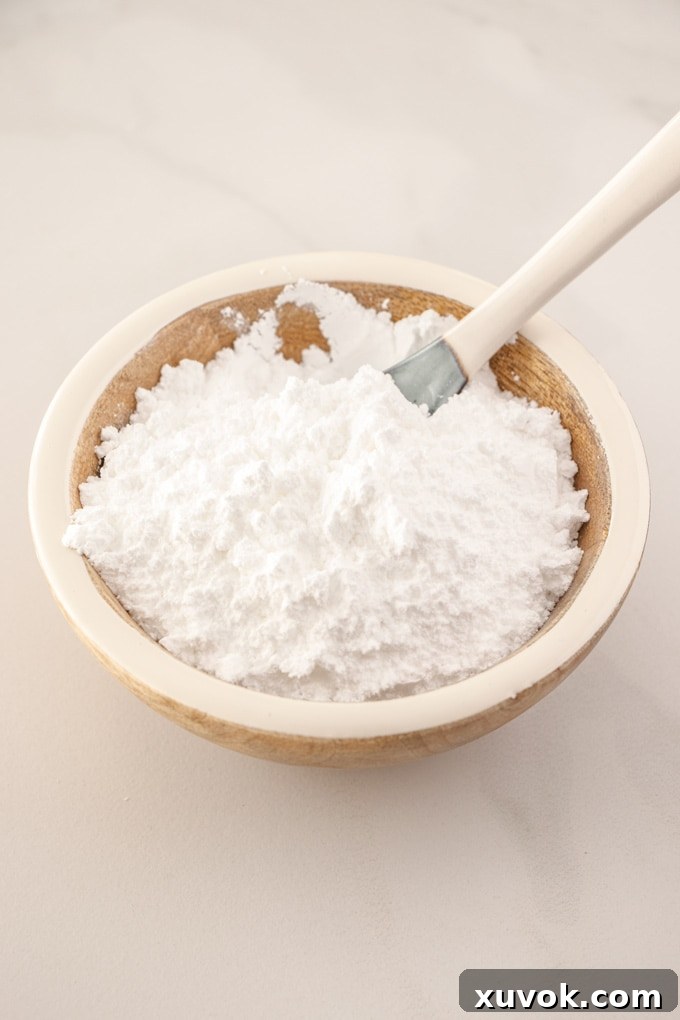
Is Caster Sugar the Same as Icing Sugar? A Vital Difference
To reiterate, no, caster sugar is definitively not the same as icing sugar. This distinction is crucial for successful baking. Caster sugar consists of fine, individual crystals, whereas icing sugar is a true powder, containing an anti-caking agent. Substituting one for the other in a recipe will yield vastly different, and likely undesirable, results in terms of texture and structure. For instance, using icing sugar in a meringue recipe instead of caster sugar would prevent proper aeration and result in a dense, chewy product rather than light and crisp.
How to Make Homemade Icing Sugar
If you find yourself without icing sugar, it’s surprisingly easy to make at home. You’ll need a very powerful blender or food processor. Simply combine regular granulated sugar with a small amount of corn flour (or cornstarch) at a ratio of 1 cup of sugar to 1 tablespoon* of corn flour. Blend on high until you achieve a super fine, powdery consistency. This homemade version is perfect for your icings and glazes.
*Note on measurements: The tablespoon mentioned here is a US standard (equivalent to 3 teaspoons). If you’re in Australia, where the standard tablespoon is 4 teaspoons, adjust accordingly to maintain the proper ratio.
What is Pure Icing Sugar? The Macaron Maker’s Choice
Pure icing sugar is a variant of icing sugar that, as its name suggests, does not contain any anti-caking agent. This absence of cornstarch makes it the preferred choice for specific applications, most notably in delicate French macarons, where it is believed to contribute to a crisper texture and better ‘feet’. However, due to the lack of an anti-caking agent, pure icing sugar can be prone to clumping, often requiring a double sift to ensure a smooth, lump-free product before use.
Icing Sugar: Names and Variants
Icing Sugar | Powdered Sugar | Confectioners’ Sugar | Pure Icing Sugar
What is Brown Sugar? The Molasses Magic
Brown sugar distinguishes itself from white sugars by its molasses content. It comes in various forms, being either unrefined or only partially refined, which means the natural molasses from the sugar cane is either retained or added back in after processing. This molasses is responsible for brown sugar’s characteristic color, moist texture, and distinct caramel-like flavor. The darker the brown sugar, generally, the higher its molasses content, leading to a stickier consistency and a more pronounced flavor profile.
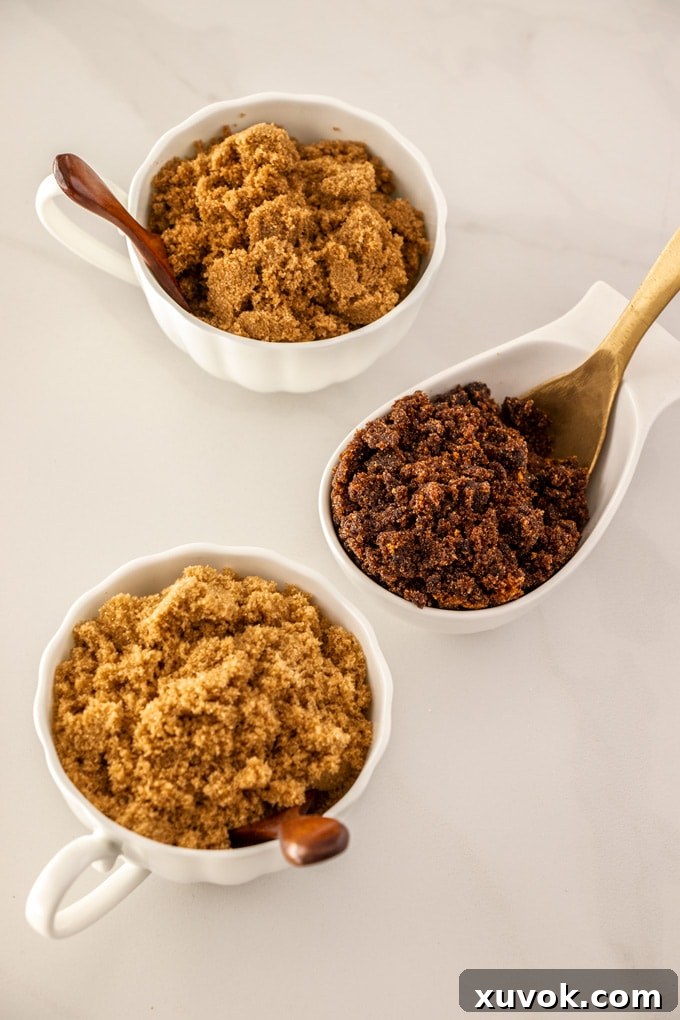
From top to bottom: Dark Brown Sugar, Dark Muscovado Sugar, Light Brown Sugar.
Brown sugar has a unique damp quality, often resembling wet sand. This moisture is directly attributed to the molasses, which also contributes to its softer texture compared to granulated sugar. It’s an indispensable ingredient in recipes where you want to add richness, chewiness, and a lovely golden-brown hue, such as in chocolate chip cookies, gingerbread, and certain cakes.
Brown Sugar Substitutions: What to Use in a Pinch
If you’ve run out of brown sugar, you can generally substitute it with white granulated sugar or caster sugar in a 1:1 ratio. While your baked goods will still turn out wonderfully, it’s important to anticipate a slightly different end result. You might notice subtle differences in moisture content (as brown sugar adds more moisture), chewiness (especially in cookies), a lighter color, and a less complex flavor profile. However, for most home baking, these differences will be negligible and your creation will still be delicious.
How to Make Homemade Brown Sugar
Yes, you absolutely can make your own brown sugar! Since the primary difference between white and brown sugar is the presence of molasses, all you need is a good quality molasses and either granulated or caster sugar. For standard light brown sugar, combine 1 cup of white sugar with 1 tablespoon* of molasses. Mix it thoroughly, ensuring the molasses is evenly distributed, until the sugar takes on a uniform brown color and moist texture. For a darker brown sugar with a more intense molasses flavor, simply add a little more molasses, increasing the quantity gradually until you reach your desired color and intensity.
*Note on measurements: The tablespoon referenced here is a US standard (equivalent to 3 teaspoons). If you’re in Australia, where a standard tablespoon is 4 teaspoons, please adjust to ensure the correct ratio.
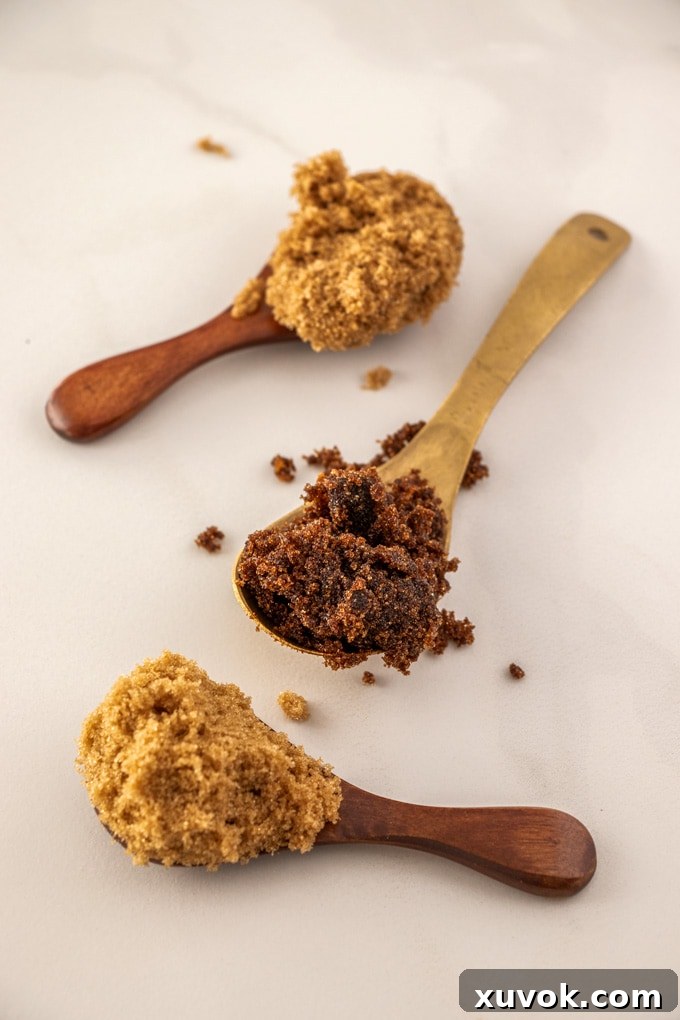
From top to bottom: Dark Brown Sugar, Dark Muscovado Sugar, Light Brown Sugar.
If molasses isn’t available, or you prefer a different flavor profile, you can experiment with other dark syrups like treacle, maple syrup, or golden syrup. While these will impart slightly different flavors, they still offer a delicious alternative and achieve a similar moist texture.
Brown Sugar: Names and Variants
Light Brown Sugar | Dark Brown Sugar | Muscovado Sugar | Molasses Sugar | Barbados Sugar
What is Cane Sugar? An Unrefined Touch
Cane sugar is specifically sourced only from sugar cane, differentiating it from conventional granulated sugar which can be derived from both sugar cane and sugar beets. It undergoes a less intensive refining process, which allows it to retain some of its natural molasses content and minerals, giving it a slightly coarser crystal and a light golden hue. While less refined, cane sugar can generally be used as a direct substitute for regular granulated sugar in most baking and cooking applications, offering a subtle hint of caramel flavor.
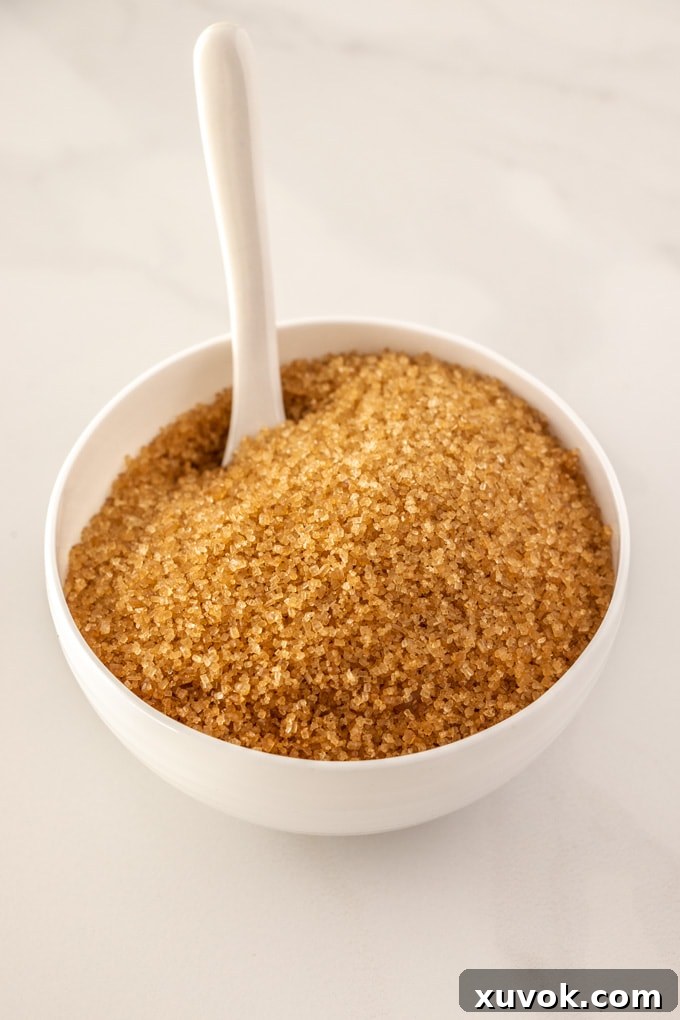
What is Demerara Sugar? The Crunchy Topping
Demerara sugar (shown above) is a type of partially refined cane sugar, renowned for its large, amber-colored crystals and mild molasses flavor. It’s almost identical to turbinado sugar in appearance and use. Its larger crystal size provides a delightful crunch, making it an excellent choice for textural toppings rather than for incorporating directly into doughs or batters. Demerara sugar is wonderful scattered over cakes, cookies, muffins, crumbles, and streusel toppings before baking, where it caramelizes beautifully, adding both sweetness and a satisfying crispy texture. It’s also a popular choice for sweetening coffee and tea, providing a pleasant textural element as it slowly dissolves.
Cane Sugars: Names and Variants
Raw Cane Sugar | Demerara Sugar | Turbinado Sugar
What is Coconut Sugar? The Natural Alternative
Coconut sugar is an unrefined natural sweetener derived from the sap of the coconut palm. Often marketed as a healthier alternative, it can be used cup-for-cup as a substitute for granulated sugar in most recipes. While it typically offers no significant nutritional advantages over regular sugar, it is generally less sweet and possesses a distinct, slightly nutty, caramel-like flavor. This unique flavor profile can add an interesting depth to your baked goods and beverages, making it a popular choice for those seeking natural or alternative sweeteners.
A Sweet Experiment: How Different Sugars Impact Your Cookies
To truly illustrate the profound impact different types of sugar can have on your baking, I conducted a practical experiment using my absolute favorite chocolate chip cookie recipe. The goal was to bake the exact same cookie recipe, but with six different sugars or sugar combinations, keeping all other ingredients, mixing steps, and baking times precisely identical. This allowed me to isolate the effect of the sugar alone on the final cookie.
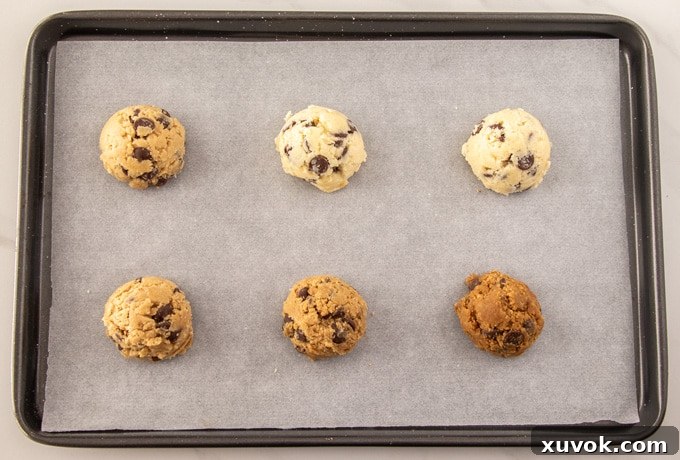
In this first image, you can clearly observe the immediate difference in color that the various sugar types impart to the raw cookie dough:
- **Control:** The standard recipe, featuring a balanced mix of caster sugar and light brown sugar. This served as our baseline.
- **All Caster Sugar:** A cookie dough made exclusively with fine caster sugar.
- **All White Granulated Sugar:** Dough prepared solely with medium-crystal granulated sugar.
- **All Light Brown Sugar:** Using only light brown sugar, known for its mild molasses content.
- **All Dark Brown Sugar:** Incorporating only dark brown sugar, richer in molasses.
- **Caster & Dark Muscovado Sugar:** A combination of caster sugar for structure and dark muscovado for deep flavor.
The variations in color, particularly between the white sugar doughs (2 & 3) and the brown sugar doughs (4, 5 & 6), highlight how profoundly sugar choices influence the visual appeal even before baking begins. The control (1) and the caster/muscovado mix (6) show nuanced color development.
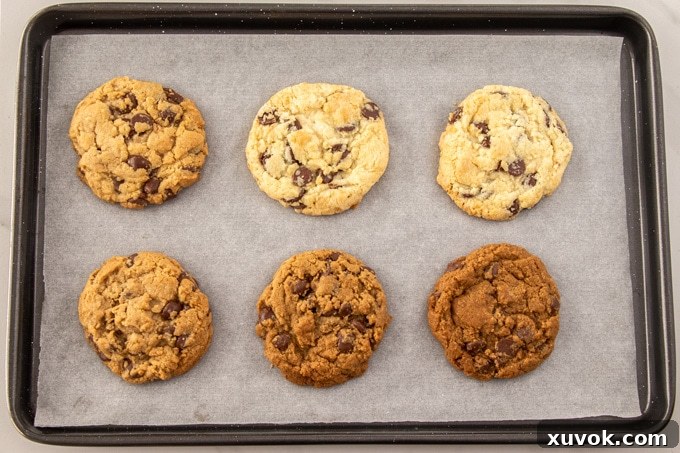
After baking, all six cookies maintained a generally similar overall appearance, with the most notable differences being in their color and slight variations in spread. The bottom three cookies (4, 5, and 6), which all utilized versions of brown sugar, exhibited slightly less spread compared to their counterparts. This is likely due to the higher moisture content of brown sugar, which can create a denser dough that resists spreading as much. Conversely, the top three cookies (1, 2, and 3) were visibly lighter in color, especially those made exclusively with white sugars (numbers 2 and 3).
One of the most intriguing findings was that cookie number 2, made entirely with caster sugar, spread the most and appeared noticeably flatter than the other five. This could be attributed to caster sugar’s quicker dissolution, potentially contributing to a weaker dough structure that spreads more rapidly during baking. This observation underscores how the crystal size and dissolution rate of sugar directly influence the cookie’s final shape and thickness.
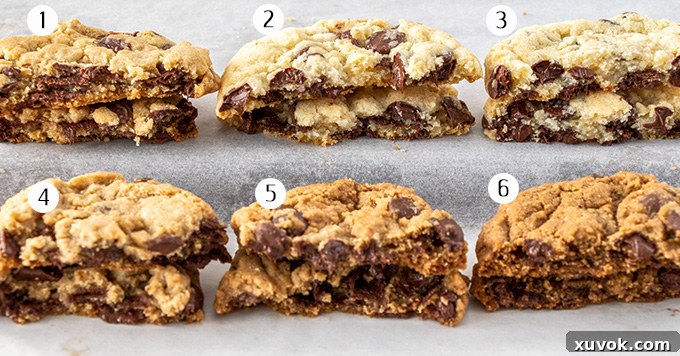
The final stage of the experiment involved letting the cookies cool and then breaking them open to examine their internal texture and, of course, taste them. Here’s what we discovered:
- **Cookies #1 (Control) and #4 (All Light Brown Sugar):** Both cookies, which included light brown sugar, offered the most delightful texture and flavor. They struck a perfect balance of chewiness and sweetness, with a well-developed caramel note from the molasses. This confirms why the combination of white and brown sugar is often preferred in many classic cookie recipes.
- **Cookies #2 (All Caster Sugar) and #3 (All Granulated Sugar):** These cookies, made with only white sugars, had a somewhat less pronounced flavor compared to their brown sugar counterparts. While their texture wasn’t drastically different, the absence of molasses meant a simpler, less complex taste.
- **Cookies #5 (All Dark Brown Sugar) and #6 (Caster & Dark Muscovado):** Utilizing the darkest of the brown sugars, these cookies boasted a rich, complex caramel flavor. They were notably denser and had a more pronounced chewy texture, a direct result of the higher molasses content. These would be ideal for those who prefer a deeply flavored, fudgy cookie.
This experiment powerfully demonstrates that sugar is far more than just a sweetener; it’s a critical component that influences everything from color and spread to texture and overall flavor profile in your baked goods. Choosing the right sugar truly matters!
Types of Sugar and Their Best Uses: A Quick Reference
Navigating the world of sugars can be daunting, but understanding their optimal applications will elevate your baking. Here’s a concise guide to the best uses for each common sugar type:
- Granulated Sugar: The all-purpose workhorse. Ideal for general baking (such as sturdy cookies and classic cakes) and as a standard sweetener for hot beverages like coffee and tea. Its medium crystals provide reliable structure.
- Caster Sugar (Superfine Sugar / Baker’s Sugar): The ultimate all-rounder for refined results. Its fine crystals dissolve rapidly, making it perfect for delicate meringues, airy pavlovas, and any recipe where quick dissolution is desired, such as panna cotta, caramel, or homemade cocktail syrups. It also creams beautifully with butter for fluffier baked goods. Most of my recipes feature caster sugar; experience its magic in this Easy Vanilla Panna Cotta or these Massive Chocolate Swirl Meringues.
- Icing Sugar (Powdered Sugar / Confectioners’ Sugar): Your go-to for smooth, silky finishes. Its powdery texture and anti-caking agent make it indispensable for icings, buttercreams, frostings, and glazes. It’s also excellent for dusting cakes and cookies for a final elegant touch, and a primary ingredient in certain candies. See it in action in the luscious Strawberry Buttercream here or in these decadent Homemade Mint Slice Biscuits.
- Pure Icing Sugar: A specialty sugar for precision. Similar to regular icing sugar but without the corn flour anti-caking agent. While not always necessary, it’s the perfect choice for crafting delicate French macarons, contributing to their signature crisp texture and flawless ‘feet’.
- Light Brown Sugar: For added moisture and chewiness. This sugar is fantastic in cakes and cookies, providing a tender crumb and a delightful, slightly chewy texture (especially in cookies). Its mild molasses flavor adds depth without overpowering. I frequently use it in recipes like this moist Blueberry Cake and my beloved Chunky Chocolate Chip Cookies.
- Dark Brown Sugar: For rich, intense flavor. With a higher molasses content than light brown sugar, it imparts a more complex, robust caramel flavor and increases moisture. It’s excellent for rich desserts and bakes where a deeper flavor profile is desired. Perfect for creations like these fudgy Salted Butterscotch Chocolate Fudge Brownies.
- Muscovado Sugar (Molasses Sugar / Barbados Sugar): The connoisseur’s choice for deep flavor. These very dark, moist sugars boast an intensely rich, almost treacle-like flavor due to their high molasses content. They are glorious in traditional fruit cakes, Christmas cakes, and other rich, dense desserts. They also add a wonderful complex flavor and chewiness to cookies and brownies, such as this indulgent Chocolate Brownie Pie.
- Demerara Sugar (Turbinado Sugar): The crunch and sparkle provider. With its large, amber crystals and subtle molasses flavor, this sugar is best used as a crunchy topping. Sprinkle it over streusels, crumbles, muffins, or cakes before baking for a beautiful glisten and satisfying texture. See demerara sugar add magic to these delicious Nutella Hand Pies.
- Coconut Sugar: The natural, nutty alternative. An unrefined sugar with a distinct nutty, caramel-like flavor, it can be used as a 1:1 substitute for granulated sugar. It offers a unique taste profile that can enhance certain baked goods and drinks.