
The Ultimate Blood Orange Loaf Cake: A Burst of Citrus Sunshine
Prepare to fall in love with this Blood Orange Loaf Cake – a true masterpiece of flavour, simplicity, and visual appeal. This recipe isn’t just a cake; it’s an experience. Each slice is absolutely bursting with the sweet and subtly tart essence of sun-kissed blood oranges, complemented by an incredibly easy, two-ingredient icing that boasts a natural, vibrant pink hue. Pour it over the cooled cake, and watch as it transforms into a beautiful, show-stopping dessert that’s guaranteed to brighten any day.
What sets this blood orange loaf cake apart is its remarkable texture. Crafted with a clever combination of oil and Greek yogurt in the batter, it achieves an unparalleled moistness that lasts for days. In fact, many find the flavour only intensifies by the next day, making it a perfect make-ahead treat. And while blood oranges offer their unique colour and taste, this versatile recipe welcomes regular oranges with open arms, allowing you to enjoy this delightful cake year-round.
If you’re a devoted fan of comforting loaf cakes, you’ll also adore our quick chocolate bread and our enchanting coconut and raspberry cake. Each offers a unique flavour profile, but all share the ease and homemade charm of a perfectly baked loaf.
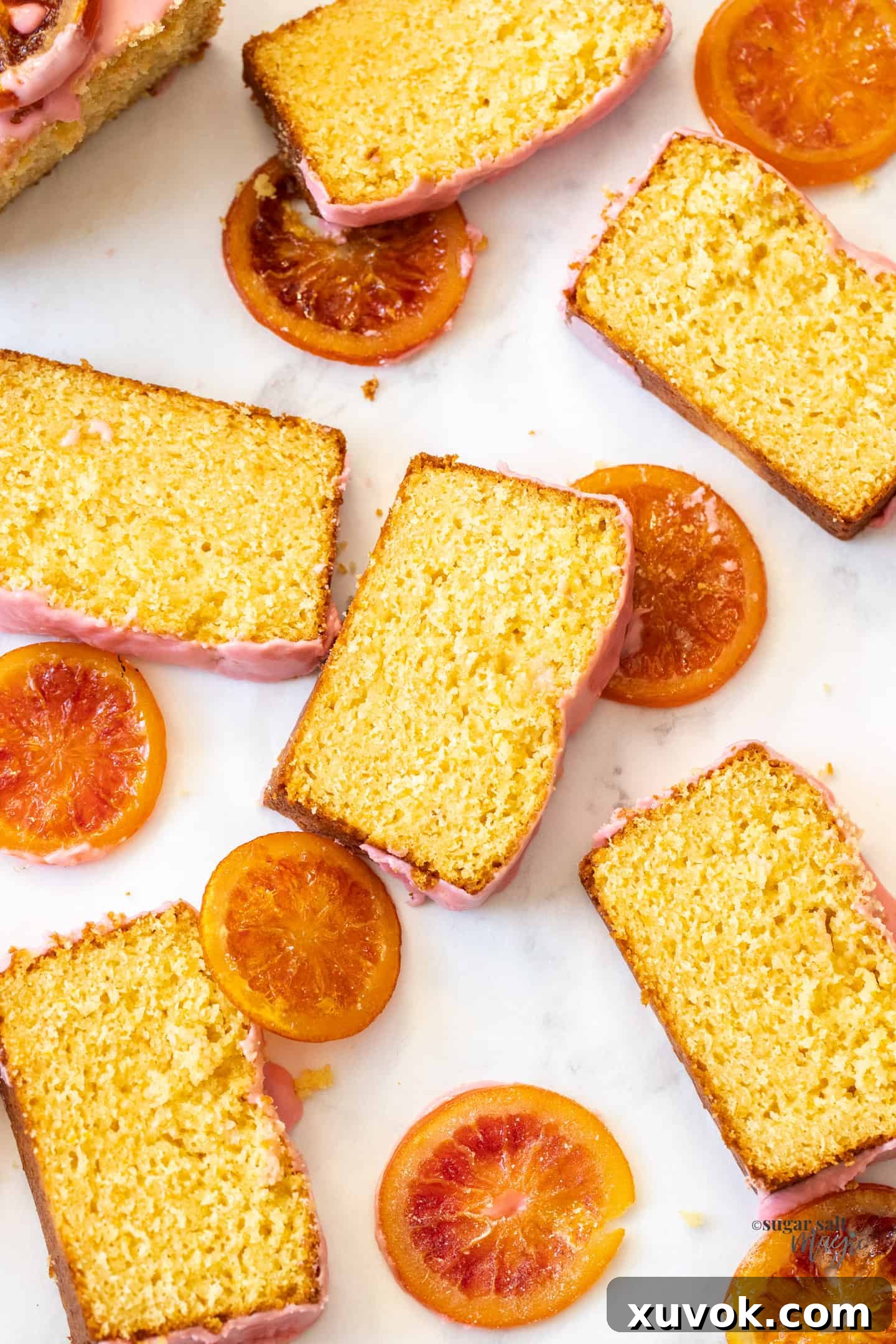
Table of Contents
- Why You’ll Love This Blood Orange Loaf Cake
- Essential Ingredients for Your Perfect Orange Loaf
- Mastering the Art of Blood Orange Loaf Cake: Step-by-Step Guide
- Pro Tips and Tricks for a Flawless Blood Orange Cake
- Choosing the Right Oranges for Your Loaf
- Storing Your Delicious Orange Loaf Cake
- More Citrusy and Delightful Recipes You’ll Love
Never Miss a Recipe!
Get the latest recipes straight to your inbox and be the first to discover new baking adventures!
Sign up below to receive delicious new recipes directly to your email!
Essential Ingredients for Your Perfect Orange Loaf
Crafting this gorgeous blood orange cake requires surprisingly simple, everyday ingredients. The beauty of this recipe lies in its adaptability. While blood oranges are certainly spectacular with their striking colour and unique flavour, their season can be short. Fear not, for you can effortlessly substitute them with normal, readily available oranges. If you’re set on that beautiful pink icing but can’t find blood oranges, consider using our pomegranate icing recipe for a similar vibrant hue.
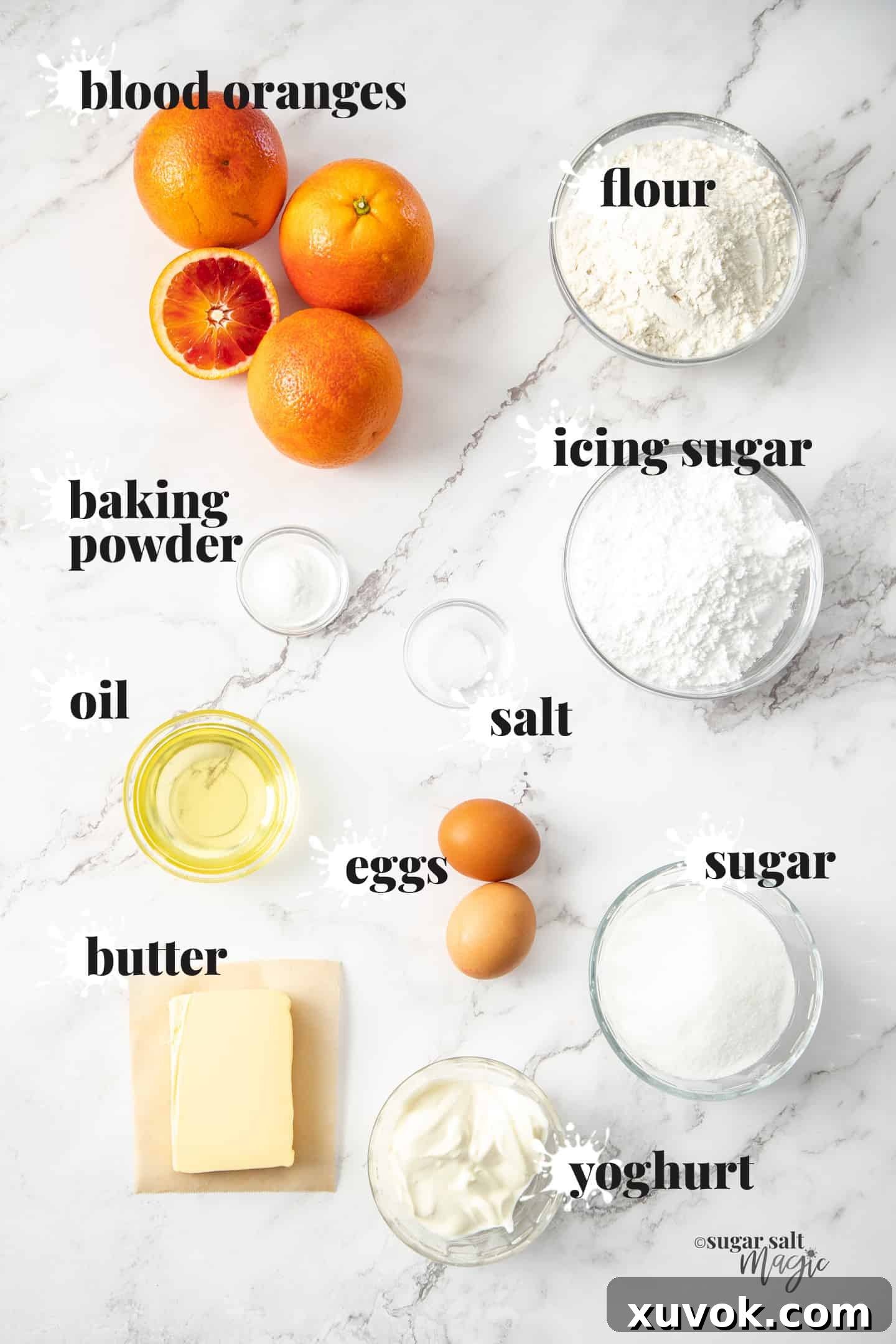
For detailed quantities and comprehensive directions, please refer to the recipe card at the bottom of this post.
- Oranges: This recipe truly shines with blood oranges, renowned for their stunning ruby-red flesh and distinct, berry-like flavour. Their season is brief, but the resulting cake is well worth the wait. However, don’t let seasonality deter you! Regular navel or Valencia oranges work wonderfully, lending a classic, sweet orange flavour. For an adventurous twist, feel free to experiment with other citrus fruits like tangerines, mandarins, or even lemons for a brighter, zingier loaf.
- Sugar: We recommend using white granulated sugar or superfine caster sugar. Both dissolve beautifully, contributing to the cake’s tender crumb and sweetness without overpowering the delicate citrus notes.
- All-Purpose Flour: Simple plain or all-purpose flour is all you need. Ensure it’s not self-rising, as we’ll be adding our leavening agents separately for precise control over the cake’s rise and texture.
- Baking Powder: This crucial ingredient acts as our primary leavener, giving the cake its beautiful lift and airy texture. It’s important not to confuse it with baking soda, as they react differently and are not interchangeable in this recipe.
- Salt: Just a small pinch of salt works wonders to enhance and balance the overall sweetness, bringing out the vibrant orange flavours even further. It’s a subtle but essential component.
- Neutral Oil: Incorporating a light-flavoured vegetable oil, such as sunflower, canola, or a mild extra virgin olive oil, is key to achieving and maintaining the cake’s incredible moistness. Oil contributes to a softer, more delicate crumb compared to butter alone, and keeps the cake fresh for longer.
- Greek Yoghurt: This ingredient is a secret weapon for tender, moist cakes. Greek yogurt adds a wonderful tang that complements the citrus, while its fat and acidity contribute significantly to the cake’s rich texture and prolonged freshness. Sour cream is an excellent substitute if you don’t have Greek yogurt on hand.
- Eggs: Large, room-temperature eggs are vital for binding the ingredients, adding structure, and contributing to the cake’s richness and golden hue. Using them at room temperature helps them incorporate more evenly into the batter.
- Unsalted Butter: While oil provides ultimate moisture, a touch of melted unsalted butter adds a luscious richness and a delightful depth of flavour that can’t be achieved with oil alone. Ensure it’s melted and slightly cooled before adding to the wet ingredients.
- Icing Sugar (Powdered Sugar): The base for our simple yet stunning two-ingredient icing. Also known as powdered sugar, its fine consistency ensures a smooth, lump-free glaze that sets beautifully.
Mastering the Art of Blood Orange Loaf Cake: Step-by-Step Guide
One of the many joys of this blood orange loaf cake recipe is its straightforward preparation. Forget the tedious creaming of butter and sugar; this method is designed for ease and efficiency, ensuring a perfect bake every time with minimal fuss.
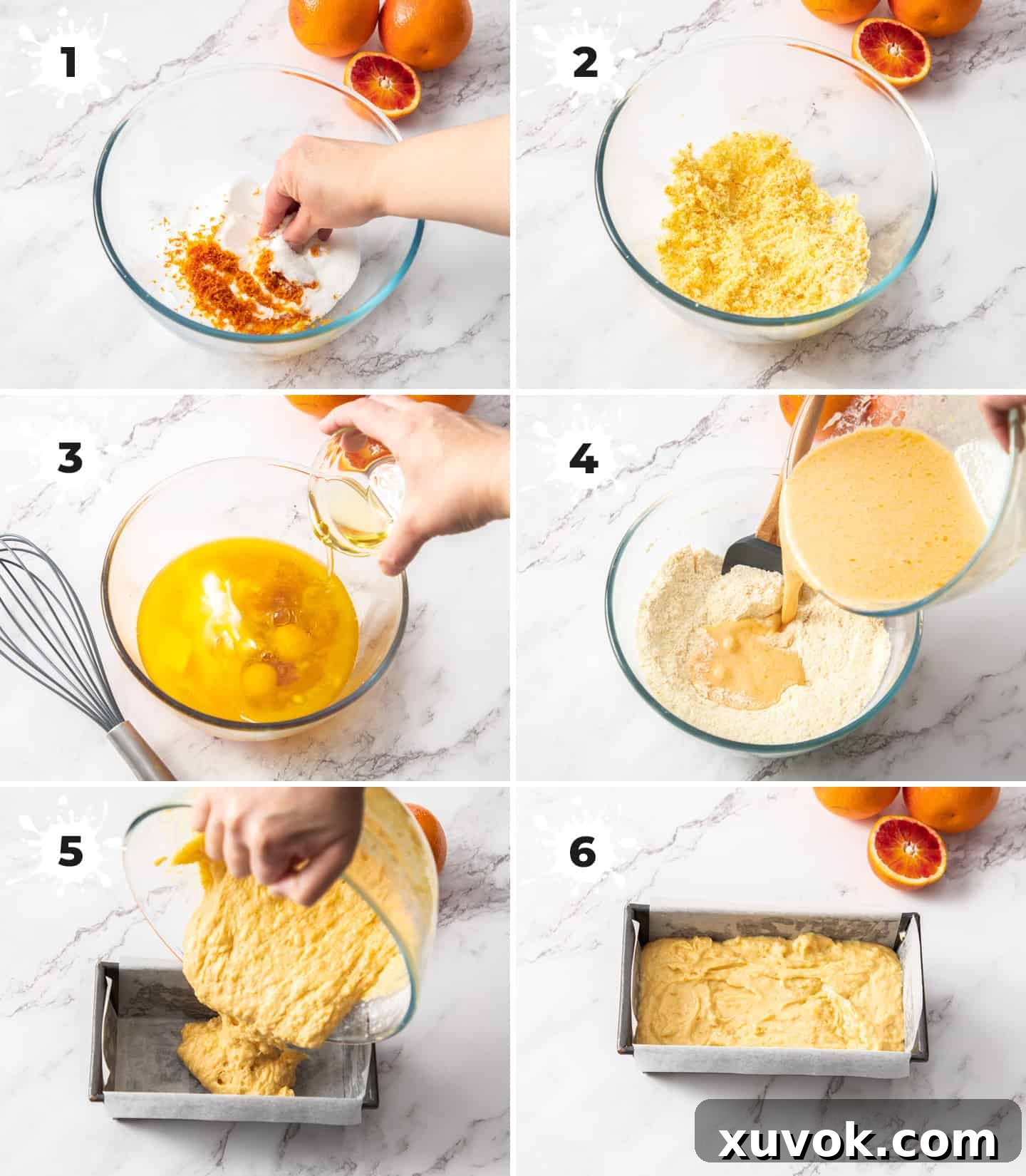
For precise measurements and detailed step-by-step instructions, please consult the full recipe card located at the bottom of this article.
- Prepare the Dry Ingredients: Begin by combining the sugar and vibrant orange zest in a large bowl. Use your fingertips to gently rub them together. This crucial step helps to release the aromatic oils from the zest, infusing the sugar (and ultimately the entire cake) with an intense citrus flavour. Once fragrant, whisk in the flour, baking powder, and a pinch of salt until everything is thoroughly combined and evenly distributed.
- Combine the Wet Ingredients: In a separate medium bowl, whisk together the eggs, orange juice, melted butter, neutral oil, and creamy Greek yogurt until the mixture is smooth and well-emulsified. The combination of oil and yogurt is key to the cake’s exceptional moistness and tender crumb.
- Gently Mix and Bake: Create a small well in the centre of your dry ingredients mixture. Pour the entire wet ingredient concoction into this well. Using a spatula, gently fold the wet and dry ingredients together. Mix just until no streaks of dry flour remain. Be careful not to overmix, as this can lead to a tough, dense cake. Once combined, pour the luscious batter into your prepared loaf tin and gently level the top with your spatula. Transfer to the preheated oven and bake until golden brown and cooked through.
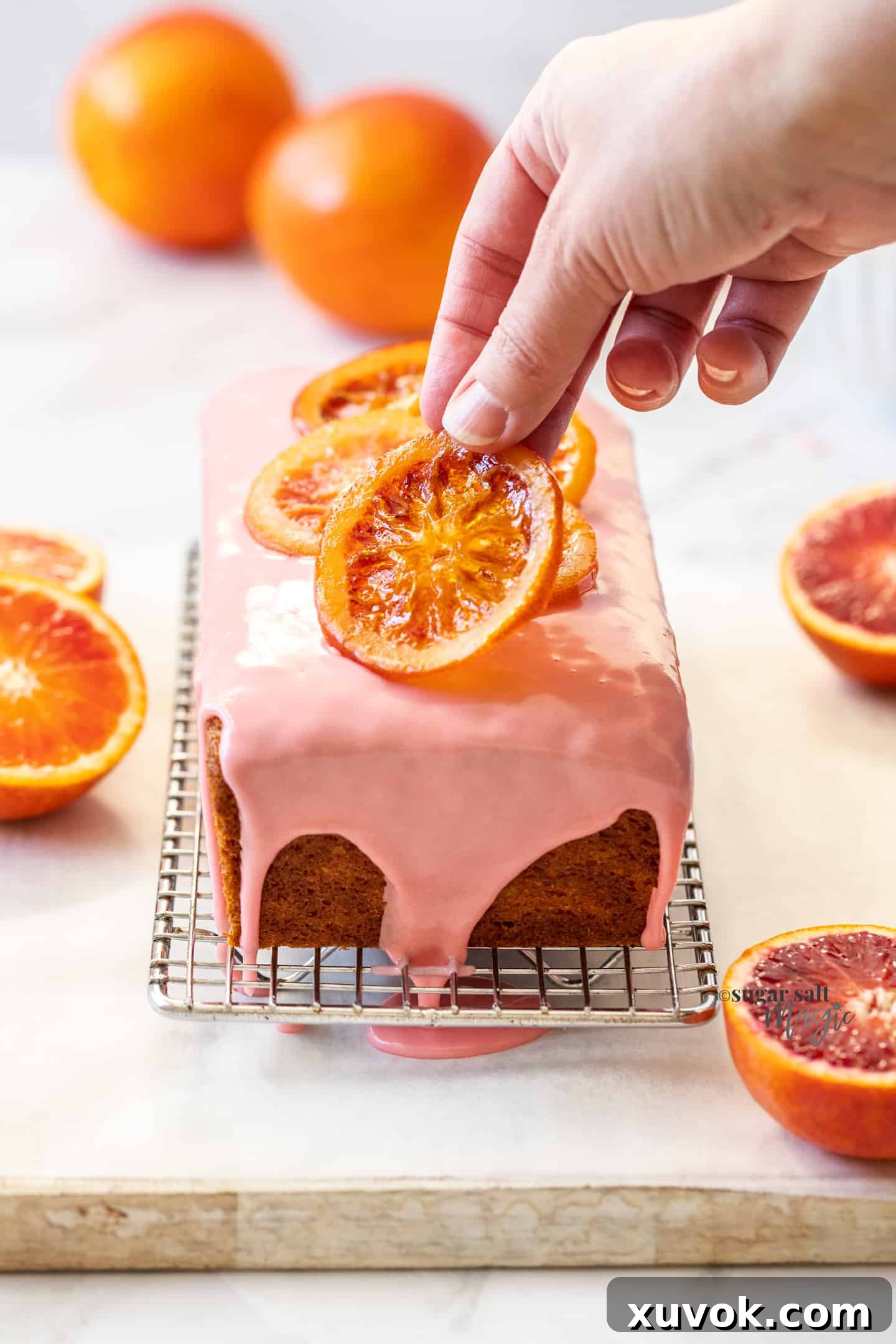
- Craft the Simple Icing: While the cake cools, prepare the effortlessly beautiful icing. In a small bowl, whisk together the icing sugar (powdered sugar) and fresh blood orange juice. Start with a smaller amount of juice and gradually add more until you achieve a smooth, pourable consistency – thick enough to coat the back of a spoon but thin enough to drizzle elegantly over the cake. The blood orange juice will naturally give it a lovely pink hue.
To elevate this already stunning orange cake, consider adorning it with our delightful candied orange slices. They add both visual appeal and an extra layer of candied citrus flavour. For an even more indulgent creation, you could swirl a generous amount of homemade blood orange curd through the batter before baking, similar to how raspberries are incorporated into our popular coconut raspberry cake.
Alternatively, if you’re seeking a different kind of glaze, transform this into a drizzle cake! Simply adapt the topping from our lemon drizzle cake by swapping the lemon juice for orange juice. Crucially, as soon as the cake emerges from the oven, use a skewer or toothpick to poke numerous holes all over the top. This allows the warm, sweet orange drizzle to seep deeply into the cake, creating an incredibly moist and flavourful interior.
Pro Tips and Tricks for a Flawless Blood Orange Cake
Achieving a bakery-worthy blood orange loaf cake is easier than you think with these expert tips:
- Selecting the Right Oranges: Always choose oranges that are firm, heavy for their size, and have bright, unblemished skin. A ripe orange will emit a lovely citrusy aroma when scratched gently. Since we’ll be using the zest in this blood orange loaf cake, quality of the skin is paramount. Organic or unwaxed oranges are always a great choice.
- Avoid Overmixing the Batter: This is a golden rule in baking, especially for cakes. Once you’ve combined the wet and dry ingredients, mix them gently with a silicone spatula until just barely combined – a few small lumps are perfectly fine. Overmixing develops the gluten in the flour, leading to a tough, dry cake.
- The Correct Loaf Pan: For optimal results, use an 8×4 inch (6 cup capacity) loaf tin. Preparing your pan properly is crucial: grease it thoroughly, then line it with baking paper (parchment paper) leaving an overhang on the longer sides. This “sling” makes removing the cooled cake from the tin incredibly easy and prevents sticking.
- Patience with Cooling Before Icing: Resist the urge to ice your cake while it’s still warm! Applying icing to a hot cake will cause it to melt, run off, and soak into the cake, resulting in a soggy mess rather than a beautiful glaze. Ensure the blood orange loaf cake is completely cool to the touch before drizzling on that vibrant pink icing.
- Checking for Doneness Accurately: To determine if your cake is perfectly baked, insert a wooden toothpick or thin skewer into the very centre of the loaf. If it comes out with just a moist crumb or two attached, your cake is ready. If it’s wet with raw batter, continue baking for a few more minutes and test again.
- Understanding Your Oven: Remember that all ovens vary, often significantly. A cake that takes 50 minutes in one oven might take 45 or even 65 minutes in another. For even baking, always place your loaf pan in the centre of the oven rack. If your oven tends to bake unevenly, consider rotating the pan halfway through the baking time. Start checking for doneness a few minutes before the recipe’s suggested minimum baking time.
Choosing the Right Oranges for Your Loaf
For this particular recipe, I’ve chosen to highlight the magnificent blood orange. These unique citrus fruits are celebrated for their distinctive crimson interior, which can range from a blush pink to a deep, dark ruby. Their flavour is equally captivating – a delightful blend of sweet and tart, often with notes reminiscent of berries, making them truly special for baking.
In Australia, the blood orange season typically runs for a short period at the end of winter, usually between August and October. In the United States, you might find them available for a longer stretch, from November through May, depending on the specific growing region and variety. Keep an eye out for varieties like ‘Moro,’ ‘Tarocco,’ or ‘Sanguinello,’ each offering slightly different nuances in colour and flavour.
However, if blood oranges are out of season or simply unavailable in your area, please don’t let that stop you from making this incredible cake! You can confidently use common varieties like navel or Valencia oranges. These will yield a wonderfully classic orange loaf cake with a bright, sweet citrus flavour. While the striking pink hue of the icing might be less pronounced (or absent if using plain orange juice), the cake itself will still be incredibly delicious and moist. For a touch of pink, consider the pomegranate icing option mentioned earlier.
Storing Your Delicious Orange Loaf Cake
One of the many benefits of this blood orange loaf cake is its excellent keeping quality. Thanks to the inclusion of oil and Greek yogurt, this cake remains wonderfully moist and tender for several days, making it an ideal candidate for meal prepping or enjoying throughout the week.
For the best results, store your blood orange loaf cake at room temperature in an airtight container. This will protect it from drying out and keep it fresh for up to 4 days. You might even discover, as many do, that the flavours deepen and intensify beautifully by day two, making it an even more delightful treat. If you live in a particularly warm or humid climate, or if you prefer to extend its shelf life, the cake can also be stored in the refrigerator. Just be sure to bring it back to room temperature before serving for the best texture and flavour.
If you’re looking to store it for longer, this cake freezes beautifully. Once completely cooled and un-iced, wrap the loaf tightly in plastic wrap, then an additional layer of aluminum foil. It can be frozen for up to 2-3 months. Thaw overnight in the refrigerator, then bring to room temperature before icing and serving.

More Citrusy and Delightful Recipes You’ll Love
If you’ve fallen in love with the vibrant flavours of this Blood Orange Loaf Cake, you’re in for a treat! Our kitchen is brimming with a variety of cakes and sweets that celebrate the bright, refreshing notes of citrus and other delightful ingredients. Explore these other beloved recipes:
- Blueberry Lemon Yoghurt Cake: A light, airy cake combining the sweetness of blueberries with the tang of lemon and yogurt for ultimate moisture.
- Orange and Poppy Seed Cake: A classic pairing, this cake offers a delightful texture from the poppy seeds and a profound orange flavour.
- Candied Orange Slices: Perfect for garnishing cakes or enjoying on their own, these beautiful slices are sweet, chewy, and intensely citrusy.
- Greek Orange Semolina Cake: A rustic and incredibly moist cake with a unique texture, soaked in a fragrant orange syrup.
- Orange Donuts with Pomegranate Icing: Baked donuts bursting with orange flavour, topped with a naturally pink and tangy pomegranate glaze.
- Blood Orange Scones: Fluffy, tender scones elevated by the sweet-tart essence of blood oranges, perfect for breakfast or afternoon tea.
- Orange Cupcakes with the Creamiest Orange Buttercream: Individual treats packed with bright orange flavour, crowned with a smooth, luscious citrus buttercream.
If you try this exceptional blood orange loaf cake, we’d absolutely love to hear from you! Please take a moment to leave a rating and comment below. Your feedback means the world to us and helps other readers discover this wonderful recipe!
Hungry for more? Subscribe to our newsletter for a steady stream of free, delectable recipes delivered straight to your inbox. Plus, connect with us and stay inspired by following along on Facebook, Pinterest and Instagram!

Blood Orange Loaf Cake
10
servings
20
55
1
15
Rate
Pin
Ingredients
FOR THE CAKE
-
1
cup
white granulated sugar
(200g / 7oz) -
2
tablespoons
not packed, blood orange zest
(from 3-4 oranges) -
260
g
plain (all-purpose) flour
(2 cups / 9.1oz) -
2
teaspoons
baking powder -
¼
teaspoon
salt -
2
large eggs, room temperature -
113
g
unsalted butter, melted & cooled slightly
(½ cup / 4oz) -
¼
cup
vegetable oil
(60ml) -
½
cup
blood orange juice
(125ml) -
½
cup
Greek yoghurt
(125ml)
FOR THE ICING
-
1 ½ – 2
tablespoons
blood orange juice, from the reddest oranges -
1 ½
cups
icing sugar (powdered sugar)
(195g / 7oz)
For best results, always weigh ingredients where a weight is provided
Equipment
-
8×4 loaf pan -
large mixing bowl & medium bowl -
silicone spatula -
Balloon whisk
Instructions
-
Preheat your oven to 180°C (160°C fan) / 350°F. Grease and then line an 8×4 inch loaf pan with baking paper, leaving an overhang on the longer sides for easy removal.
-
In a large mixing bowl, combine the granulated sugar and blood orange zest. Use your fingertips to rub the zest into the sugar for a minute or two until the sugar becomes fragrant and slightly moistened, indicating the essential oils have been released.
-
To the same bowl, add the plain flour, baking powder, and salt. Whisk these dry ingredients together thoroughly to ensure they are evenly distributed, which is key for a consistent rise.
-
In a separate medium bowl, whisk together the room temperature eggs, fresh blood orange juice, slightly cooled melted butter, vegetable oil, and Greek yogurt until the mixture is smooth and well combined.
-
Make a well in the centre of the dry ingredients and pour the entire wet mixture into it. Using a silicone spatula, gently fold the ingredients together just until no streaks of dry flour remain. Be careful not to overmix, as this can lead to a tough cake.
-
Pour the batter evenly into your prepared loaf pan. Bake for approximately 55-60 minutes, or until a wooden toothpick inserted into the centre comes out with just a moist crumb or two attached. Keep a close eye on the cake towards the end of baking, as loaf cakes can brown quickly.
-
Allow the cake to cool in the tin for about 10 minutes. Then, use the baking paper overhang on the long sides to carefully lift the cake out of the pan. Transfer it to a wire rack to cool completely before proceeding to the icing step.
-
Once the blood orange loaf cake is completely cooled, prepare the vibrant icing. In a small bowl, whisk together the icing sugar and blood orange juice (from the reddest oranges you have for the best color) until you achieve a smooth, pourable consistency. Drizzle this gorgeous pink icing generously over the top of the cake.
-
For an extra special and visually stunning finish, top your iced blood orange loaf cake with homemade candied orange slices.
-
We love hearing from you! Please take a moment to leave a comment & rating below after you’ve tried this recipe. It’s incredibly helpful for us and other bakers.
Notes
- Please note that Australian tablespoon measurements are typically 20ml, equivalent to 4 teaspoons worldwide. Adjust accordingly if using international tablespoon measures (usually 15ml).
- For the most accurate and consistent baking results, it is highly recommended to always weigh ingredients like flour and sugar using a digital kitchen scale. If you do not have a scale, use the spoon and level method for measuring flour (spoon flour into the measuring cup, then level off with a straight edge) rather than scooping directly from the bag.
- Oven temperatures can vary significantly. We recommend checking your cake for doneness 8-10 minutes before the suggested baking time to prevent overbaking. Every oven is unique!
EXPLORE MORE DELICIOUS CAKE RECIPES!
402
kcal
Marie Roffey
Dessert
World
Have you tried this recipe?
Don’t forget to leave a rating and comment below and let me know how it was! I love hearing from you. Nutrition information is approximate and derived from an online calculator. The brands you use may cause variations.
Calories from Fat 144
25%
44%
21%
7%
5%
20%
4%
43%
10%
8%
11%
6%
11%