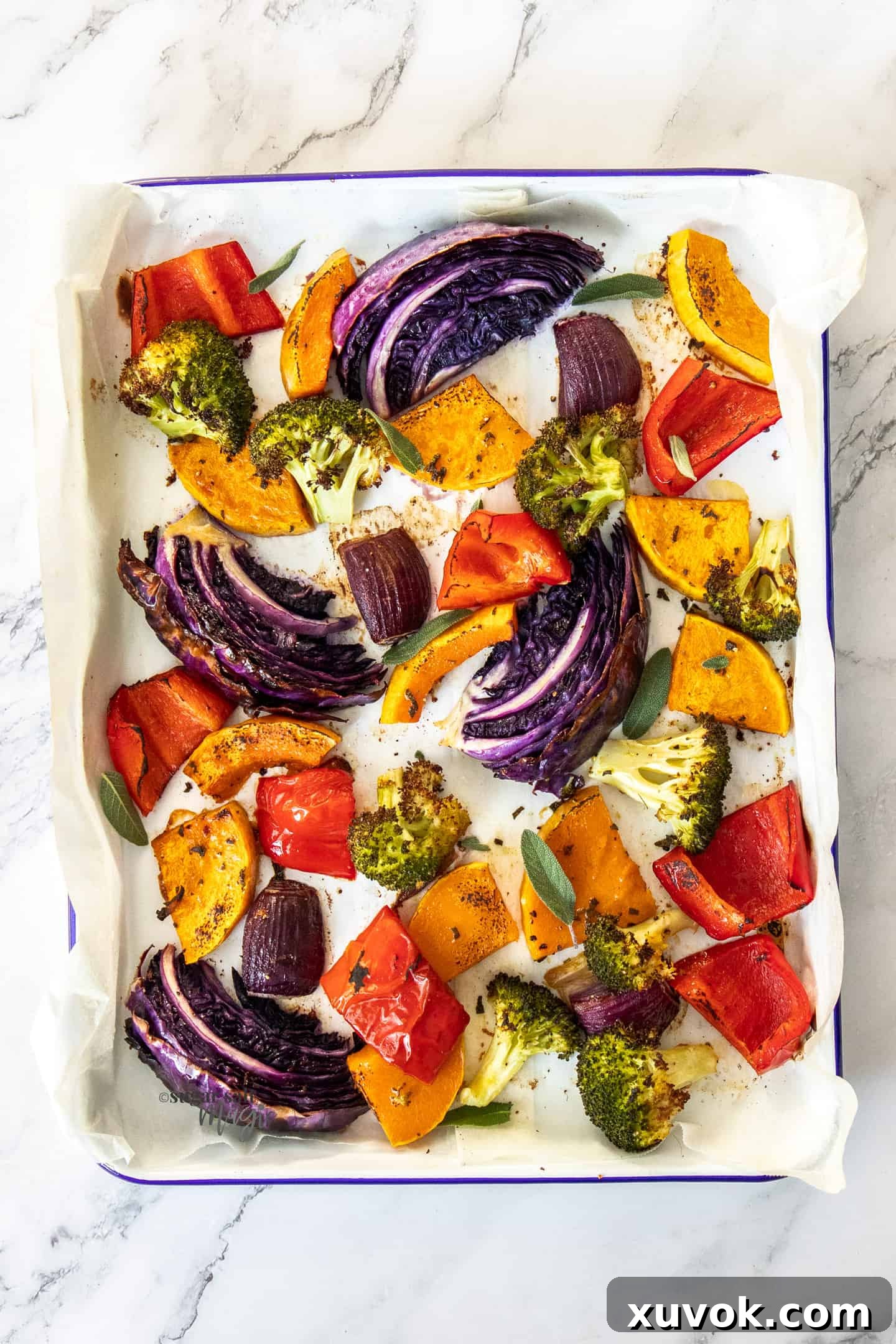
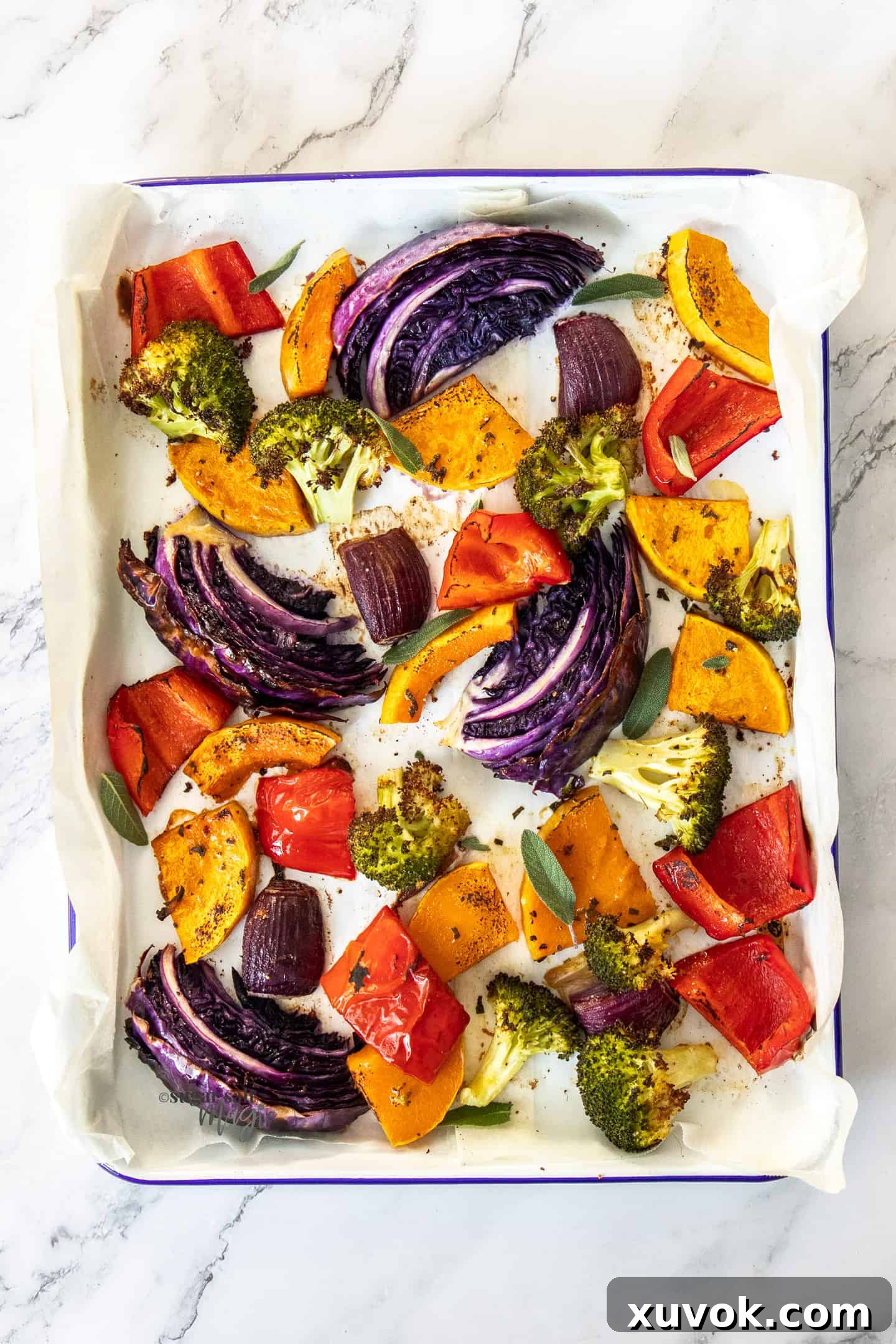
Welcome to the ultimate guide for creating a vibrant, flavorful, and incredibly easy rainbow vegetable tray bake! This method isn’t just a recipe; it’s a culinary philosophy that transforms humble vegetables into a show-stopping dish with minimal effort. Roasting is, without a doubt, one of the finest ways to prepare vegetables, coaxing out their natural sweetness and developing rich, caramelized notes that are simply irresistible. It’s also an ingenious way to utilize whatever fresh produce you have on hand, minimizing food waste and maximizing flavor.
If you’re looking to elevate your side dish game, consider pairing this versatile tray bake with other delicious options. Explore these delightful Mustard Maple Roasted Carrots for a sweet and savory addition, or master the art of crispy edges with these Perfect Roast Potatoes. Each dish complements the other, promising a feast for both the eyes and the palate.
Why You’ll Fall in Love with This Rainbow Vegetable Tray Bake
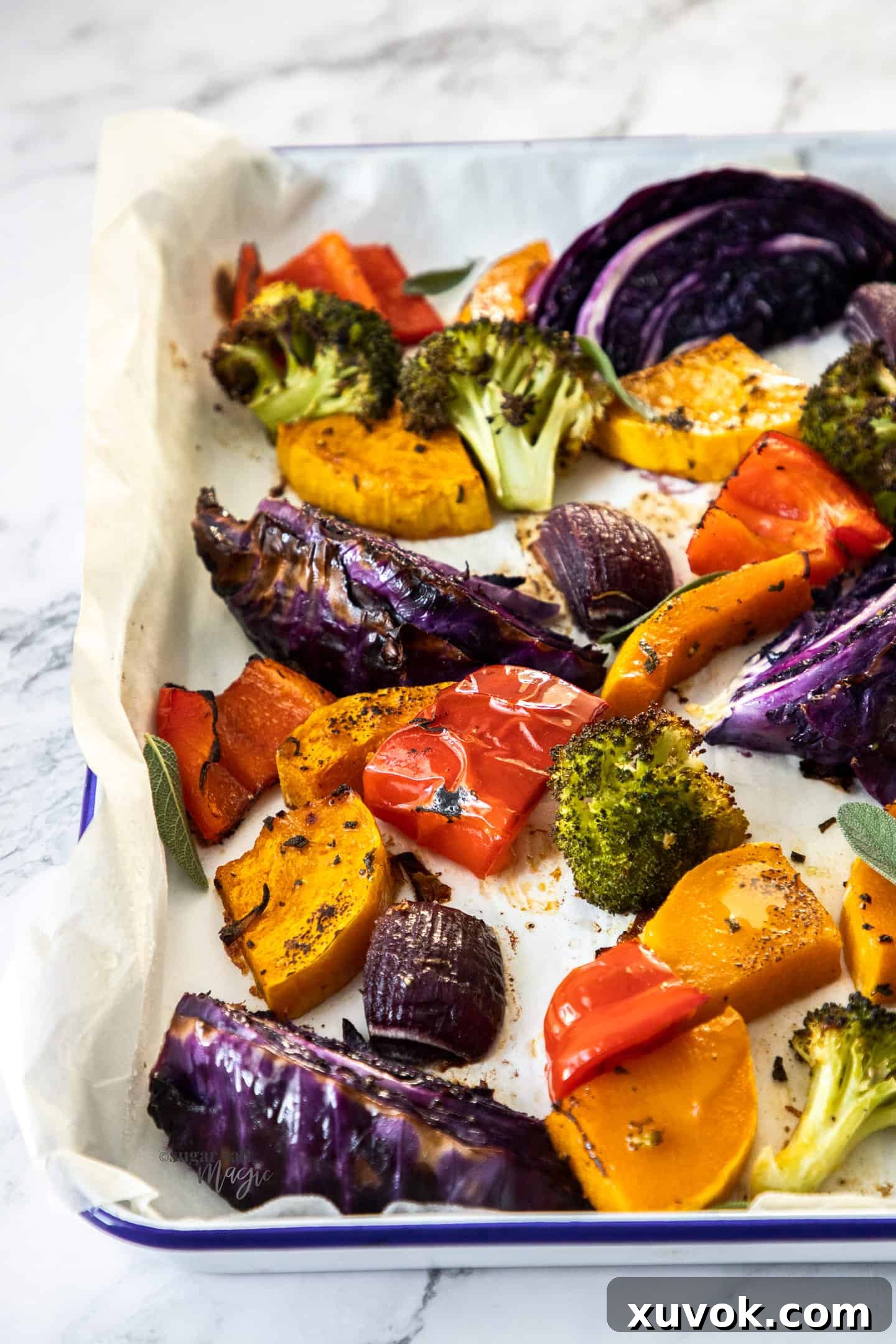
Roasting vegetables is one of those culinary techniques that offers a huge reward for very minimal effort. The transformation that occurs in the oven is nothing short of magical: dull, raw produce emerges vibrant, tender, and bursting with intensified flavor. This particular rainbow vegetable tray bake is a true feast for the senses – a symphony of bold colors captivating the eye, while the enticing aromas promise a satisfying culinary experience. It’s more than just food; it’s an invitation to enjoy wholesome goodness.
- Explosive Flavor in Every Bite: Roasting caramelizes the natural sugars in vegetables, creating deeply rich and complex flavors that are far superior to steaming or boiling. Each bite offers a delightful combination of tenderness and perfectly browned, slightly crispy edges.
- Endless Adaptability to Your Liking: This recipe is incredibly forgiving and flexible. It serves as a fantastic blueprint, allowing you to swap in your favorite seasonal vegetables or whatever you have on hand. Whether it’s a winter root vegetable medley or a summer harvest of tender greens, this method adapts beautifully.
- Effortless Preparation for Busy Lives: The beauty of a tray bake lies in its simplicity. With just a bit of chopping and tossing, your oven does most of the heavy lifting. It’s the perfect solution for weeknight dinners, meal prep, or when you need a healthy, delicious side without the fuss.
- Convenient One-Pan Cooking and Cleanup: Say goodbye to multiple pots and pans! Everything cooks together on a single sheet pan, which means fewer dishes to wash. This streamlined approach makes cooking enjoyable and cleanup a breeze, giving you more time to savor your meal.
- Reap the Abundant Health Benefits: By incorporating a diverse array of colorful vegetables, you’re loading your plate with essential vitamins, minerals, antioxidants, and fiber. Each color signifies different beneficial compounds, contributing to overall well-being and a balanced diet. It’s a delicious way to boost your daily nutrient intake.
This approach is less about a rigid recipe and more about embracing a method. While my preferred combination of vibrant vegetables is highlighted here, I’ll equip you with all the essential tips and tricks to confidently roast any vegetables you have, ensuring consistently delicious results every time.
Essential Tools for Your Tray Bake Adventure
Gathering the right equipment makes the roasting process even smoother and more enjoyable. You don’t need an arsenal of gourmet gadgets, just a few key items:
- A large sheet pan or a couple of smaller ones: The size of your pan is crucial for preventing overcrowding, which can lead to steaming instead of roasting. Ensure it has raised edges to keep all those delicious veggies contained.
- A sturdy chopping board and a good, sharp knife: Essential for safely and efficiently preparing your vegetables.
- A spacious mixing bowl: Ideal for tossing your chopped vegetables with oil and seasonings, ensuring every piece is evenly coated.
Ingredients: Crafting Your Perfect Vegetable Medley
The beauty of this tray bake lies in its versatility. While I often gravitate towards this specific colorful blend for its balanced flavors and stunning appearance, the truth is, there are very few vegetables that don’t shine when roasted. This section offers guidance on both my go-to selections and a wide array of other options to inspire your culinary creativity.
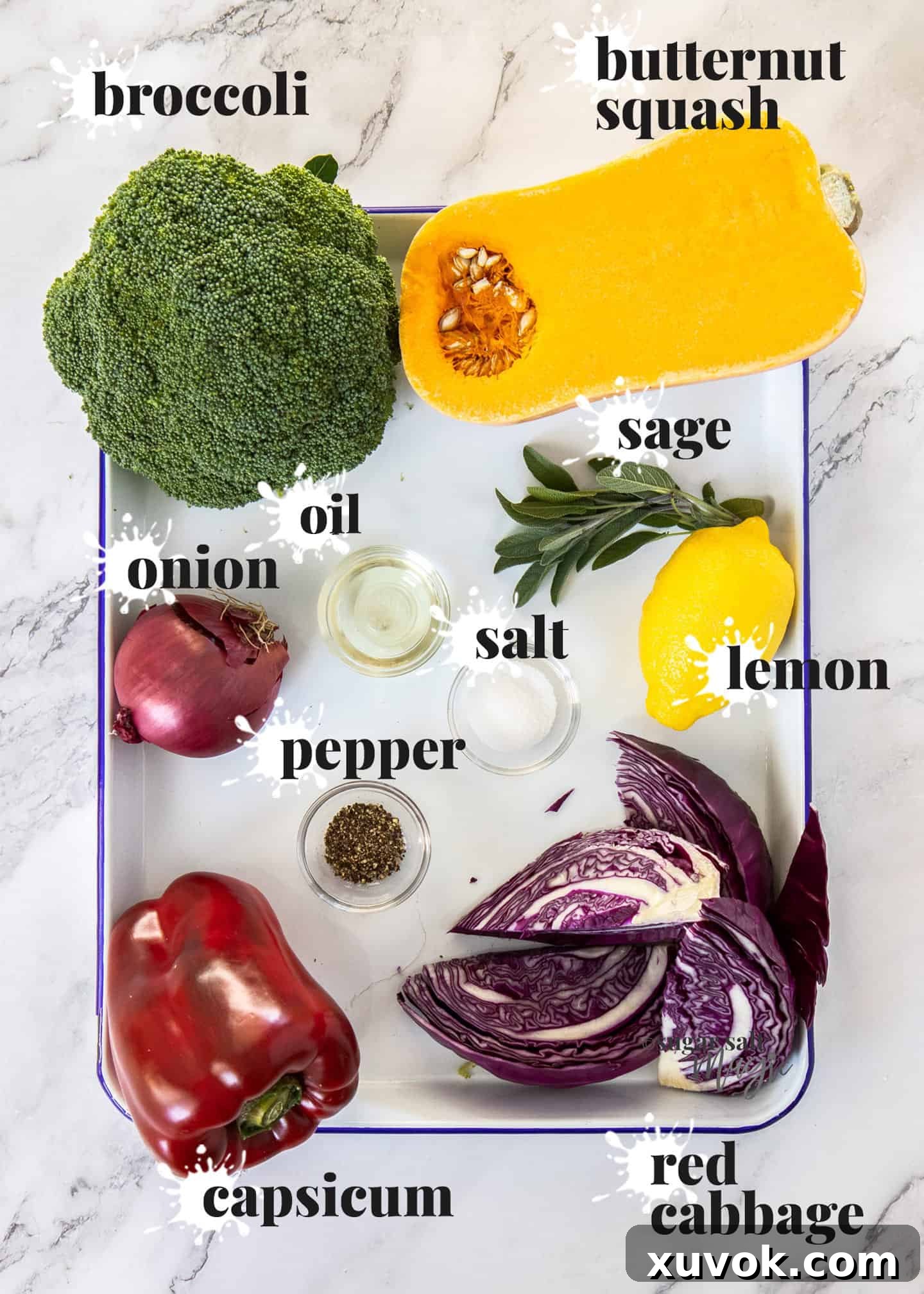
For precise quantities and step-by-step instructions, please refer to the detailed recipe card further down.
My preferred vibrant selection typically includes:
- Red cabbage: A standout for its gorgeous hue, red cabbage retains much of its vibrant color when roasted. Slicing it into large, substantial wedges creates a unique texture and presentation, making it feel truly special and satisfyingly tender-crisp.
- Capsicum / Bell pepper: I tend to use red bell peppers due to their sweet flavor and consistent availability, but yellow, orange, or even green bell peppers will work beautifully, each adding its own subtle variation in sweetness and color to the mix.
- Broccoli: Roasting transforms broccoli. The florets develop delightful toasty, slightly charred edges that add a nutty depth of flavor, while the stalks soften to a tender perfection, maintaining that classic broccoli essence.
- Butternut squash: With its naturally sweet and earthy flavor, butternut squash is a staple in my tray bakes. Its creamy texture and golden hue are always a welcome addition, and other varieties of pumpkin can be used interchangeably for similar results.
- Onion: Red onion is my preference, not only for its beautiful color that intensifies with roasting but also for its milder, sweeter flavor profile. When roasted, it caramelizes into soft, sweet pockets of deliciousness, losing its raw pungency.
Expand Your Palette: Other Vegetables Perfect for Roasting
The world of roasted vegetables is vast and exciting. Don’t limit yourself to the list above; many other vegetables excel under the high heat of the oven, each bringing its own unique texture and flavor profile to your tray bake. Consider these fantastic alternatives:
- Potatoes: A timeless classic for roasting, potatoes crisp up beautifully. For truly exceptional crunch, I often recommend roasting them separately (check out my perfect roast potatoes guide!). However, if you’re not overly concerned with extreme crispness, they can certainly join your mixed tray bake, just ensure they are cut into smaller, uniform pieces to cook through.
- Carrots: Whether using baby carrots or larger carrots cut into chunks, these root vegetables sweeten and caramelize wonderfully in the oven, intensifying their earthy flavor.
- Parsnips: Another delightful root vegetable, parsnips develop a sweet, nutty flavor when roasted, similar to carrots but with their own distinct aromatic qualities.
- Beetroot: A favorite in many households, roasted beetroot offers a deep, earthy sweetness. To prevent its vibrant color from staining other vegetables, you can roast it wrapped in foil or on a separate small pan.
- Cauliflower: Roasting unlocks an incredible depth of flavor in cauliflower, transforming it from bland to boldly delicious. It can be roasted as florets or sliced into “steaks” for a heartier presentation.
- Brussels sprouts: Halved Brussels sprouts become wonderfully tender on the inside and crispy on the outside when roasted, their inherent bitterness mellowing into a sweet, earthy taste.
- Mushrooms: Roasting brings out the umami in mushrooms, intensifying their earthy notes and giving them a satisfyingly chewy texture. For a unique twist, try these Roasted Miso Mushrooms.
- Zucchini: While zucchini can absolutely be roasted, its high water content can release steam, potentially hindering the caramelization of other vegetables on the same pan. For best results, consider roasting zucchini on a separate sheet to ensure crispier, more caramelized outcomes.
- Eggplant: Similar to zucchini, eggplant’s moisture can create steam. If you desire distinct caramelization for all your vegetables, roasting eggplant on its own tray is advisable.
- Asparagus: These delicate spears roast quickly, becoming tender-crisp with a slightly sweet, grassy flavor.
- Fennel: Roasted fennel softens and sweetens, developing a lovely subtle anise flavor that pairs well with many dishes.
- Radishes: Roasting significantly mellows the peppery bite of radishes, turning them tender and surprisingly sweet.
- Turnips: Another root vegetable that softens and sweetens with roasting, turnips offer an earthy, slightly peppery flavor.
- Tomatoes: Halved cherry tomatoes or sliced larger tomatoes burst with intensified sweetness and juiciness when roasted, adding a lovely tang to the mix.
- Sweet Potato: Sweet potatoes are a natural for roasting, becoming incredibly soft and sweet, with beautifully caramelized edges.
This list is by no means exhaustive; the world of vegetables offers endless possibilities for your roasting adventures. Experiment with what’s in season and what appeals to your taste buds. Each vegetable brings its own unique contribution to a flavorful and nutritious roast.
Elevate Your Dish: Seasoning for a Perfect Vegetable Tray Bake
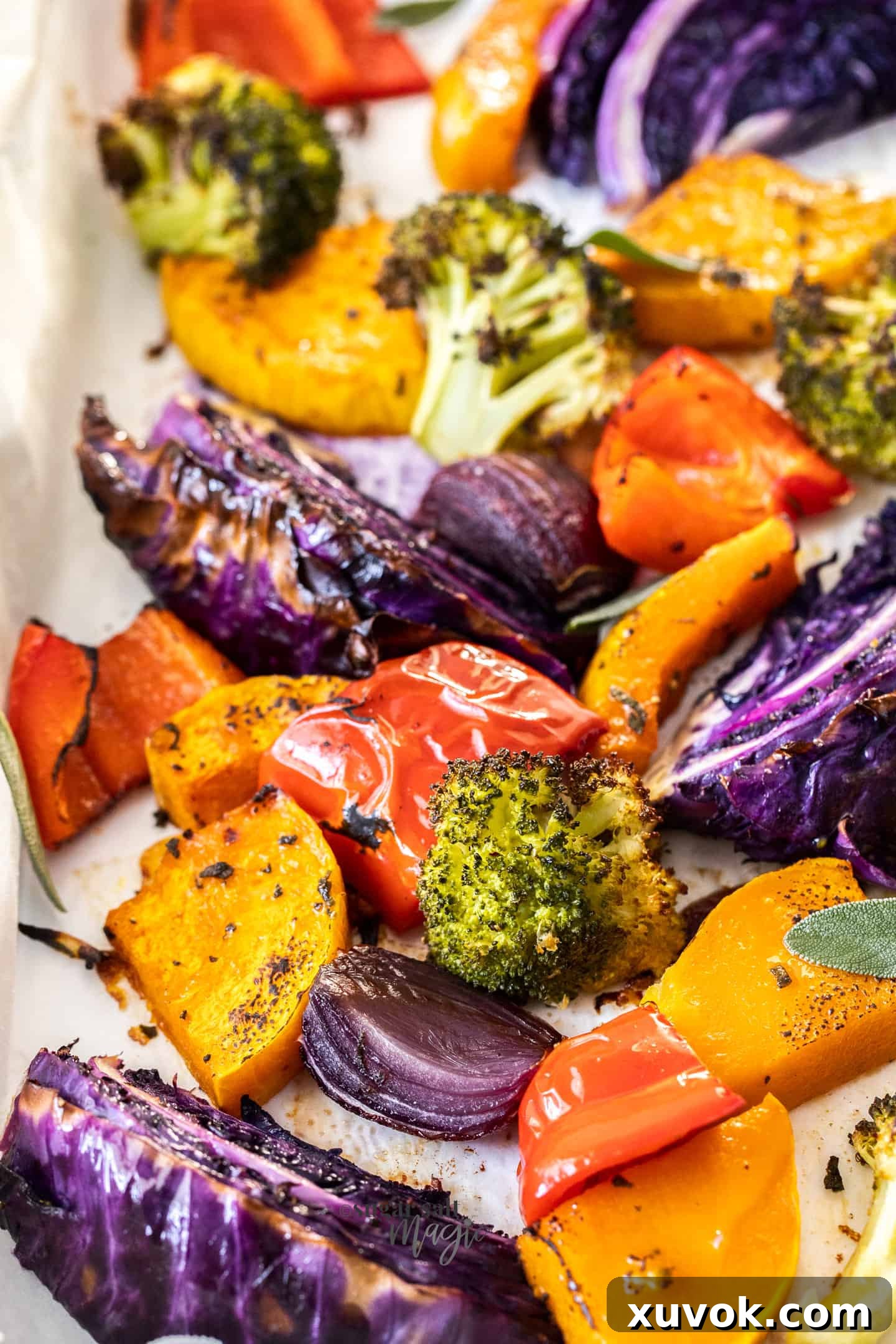
While salt and freshly cracked black pepper are the undeniable foundational seasonings for any roasted dish, they are merely the starting point. The right combination of herbs, spices, and aromatics can transform your vegetable tray bake from good to truly extraordinary, adding layers of depth and intrigue to every bite.
- Fresh Herbs: I am a true devotee of incorporating fresh herbs into my roasting. A generous sprinkle of earthy sage, aromatic thyme, or pungent rosemary over your vegetables before they hit the oven will infuse them with an incredible, fragrant complexity that simply can’t be replicated.
- Garlic – The Roasting Secret Weapon: Here’s a trick I employ often: add a few whole, unpeeled cloves of garlic directly to the pan. As the garlic roasts, its sharp, pungent flavor mellows and sweetens, lightly permeating the surrounding vegetables. After roasting, you’ll be rewarded with soft, wonderfully sweet, and much milder garlic pulp that can be squeezed directly from its skin, mashed into the vegetables, or even incorporated into a savory dressing.
- Spring Onion / Green Onion / Scallion: For a delicate oniony freshness, thinly sliced spring onions or scallions draped over the vegetables during the final stages of roasting add a bright, gentle flavor without overpowering the dish.
- Zesty Lemon: Lemon can brighten and cut through the richness of roasted vegetables in several ways. A splash of fresh lemon juice and a sprinkle of zest, particularly over greens like broccoli, provides a lively finish. You can also roast lemon slices or wedges alongside your vegetables; just be mindful that excessive liquid can inhibit browning, so add them towards the end if crispiness is paramount.
- Piquant Spice: For those who appreciate a bit of heat, consider adding a pinch of dried chili flakes, a dash of fiery cayenne pepper, or a warming spoonful of curry powder. These spices will add a delightful warmth and an exciting kick to your roasted medley.
- Ready-Made Flavorful Seasoning Blends: Don’t underestimate the power of a good pre-made seasoning mix. Blends like Cajun seasoning, Moroccan spices, or a vibrant Greek seasoning can effortlessly transport your roasted vegetables on a global flavor journey, adding instant depth and an exotic touch.
Experiment with different combinations to discover your favorite flavor profiles. A well-seasoned tray bake is not just healthy; it’s a memorable culinary experience.
Mastering the Prep: How to Prepare Vegetables for Roasting
Proper preparation is the foundation for perfectly roasted vegetables. These simple steps ensure your veggies achieve that coveted tender interior and delightful caramelized exterior every single time:
- Wash and Dry Thoroughly: Always give your vegetables a thorough wash to remove any dirt or residues. Crucially, dry them exceptionally well before roasting. Excess moisture on the surface of the vegetables will create steam in the oven, preventing them from browning and caramelizing beautifully. Pat them dry with a clean kitchen towel or use a salad spinner for leafy greens.
- Scrub or Peel Root Vegetables: Many root vegetables, such as carrots, potatoes, and turnips, can be roasted with their skins on, which often adds to their nutritional value and rustic appeal. If leaving the skin on, ensure you scrub them vigorously to remove any clinging dirt. If scrubbing isn’t your preference, simply peel them instead.
- Cut into Even, Consistent Sizes: This is a key step for uniform cooking. Cutting your vegetables into roughly even sizes ensures they roast at a similar rate, preventing some pieces from burning while others remain undercooked. I find that a “two-bite” size is often ideal – not only do they cook evenly, but they also look aesthetically pleasing and offer a satisfying ratio of caramelized edges to soft centers.
- Remove Any Damaged or Bruised Parts: Before roasting, inspect your vegetables and trim away any obvious damage, bruised sections, or withered parts. This could involve removing the outer leaves of Brussels sprouts, cutting out blemishes on potatoes, or trimming the dry ends of broccoli stalks. (Yes, broccoli stalks are perfectly delicious when roasted!).
- Generously Oil and Season: Once prepped, transfer your vegetables to a large mixing bowl. Drizzle them generously with a good quality oil (such as olive oil or avocado oil) and season well with salt, pepper, and your chosen herbs or spices. Toss everything thoroughly to ensure every surface is evenly coated. Then, spread them out in a single layer on your preheated baking sheet.
Achieving Perfection: The Art of Roasting Vegetables
The hallmark of perfectly roasted vegetables is a delightful contrast: they should be fork-tender and creamy on the inside, yet beautifully caramelized and slightly crisp on the outside. Two primary factors dictate this exquisite outcome: the temperature of your oven and the duration of the roasting process.
Optimal Oven Temperature for Roasting Vegetables
A consistent oven temperature of around 200°C / 395°F / 180°C (fan-forced) is generally ideal for roasting most vegetables. This heat level is high enough to encourage browning and caramelization (the Maillard reaction) without burning them too quickly. This temperature creates a hot environment that effectively evaporates surface moisture, allowing those coveted crispy edges to form.
Remember, personal preference plays a significant role. If you prefer your vegetables with a crisper texture, you can remove them from the oven when they reach your desired level of tenderness and browning. For an extra boost of crispiness and deeper caramelization, don’t hesitate to place them under a hot overhead grill (broiler) for a few minutes, keeping a very close eye on them to prevent burning. Conversely, if you enjoy softer, melt-in-your-mouth vegetables, simply extend the cooking time slightly.
Understanding Roasting Times for Different Vegetables
Just as with any culinary endeavor, different ingredients require different cooking times. The beauty of this rainbow vegetable tray bake, however, is its efficient two-phase roasting process, making it surprisingly straightforward. This method accounts for vegetables with varying densities and moisture contents, ensuring everything cooks to perfection.
Generally, denser root vegetables with higher moisture content require longer roasting times compared to more delicate, cruciferous, or leafy greens. Here’s a breakdown to guide your timing:
- Longer-Cooking Vegetables (40 minutes to 1 hour): This category includes robust root vegetables and hard squash. Think carrots, potatoes, parsnips, onions, whole garlic cloves, beetroot, and radishes. These benefit from a longer, sustained roast to become tender throughout and deeply caramelized.
- Medium-Cooking Vegetables (25 to 35 minutes): This group encompasses most cruciferous vegetables and firmer mushrooms. This includes broccoli, cauliflower, Romanesco, Brussels sprouts, and cabbage. Their cooking time will vary slightly depending on how thickly they are cut. Don’t forget that broccoli and cauliflower stalks are also delicious when roasted!
- Shorter-Cooking, More Delicate Vegetables (15-20 minutes): These vegetables have a higher water content or a more delicate structure, requiring less time in the oven. This includes capsicum (bell pepper), asparagus, and zucchini. For my preferred very soft bell peppers, I often add them at the same time as the broccoli, allowing them to fully soften and char slightly.
For an alternative and equally delicious way to enjoy broccoli, you might also like to try this savory Broccoli Cheese Bake.
Simplified Steps for This Vibrant Rainbow Vegetable Tray Bake
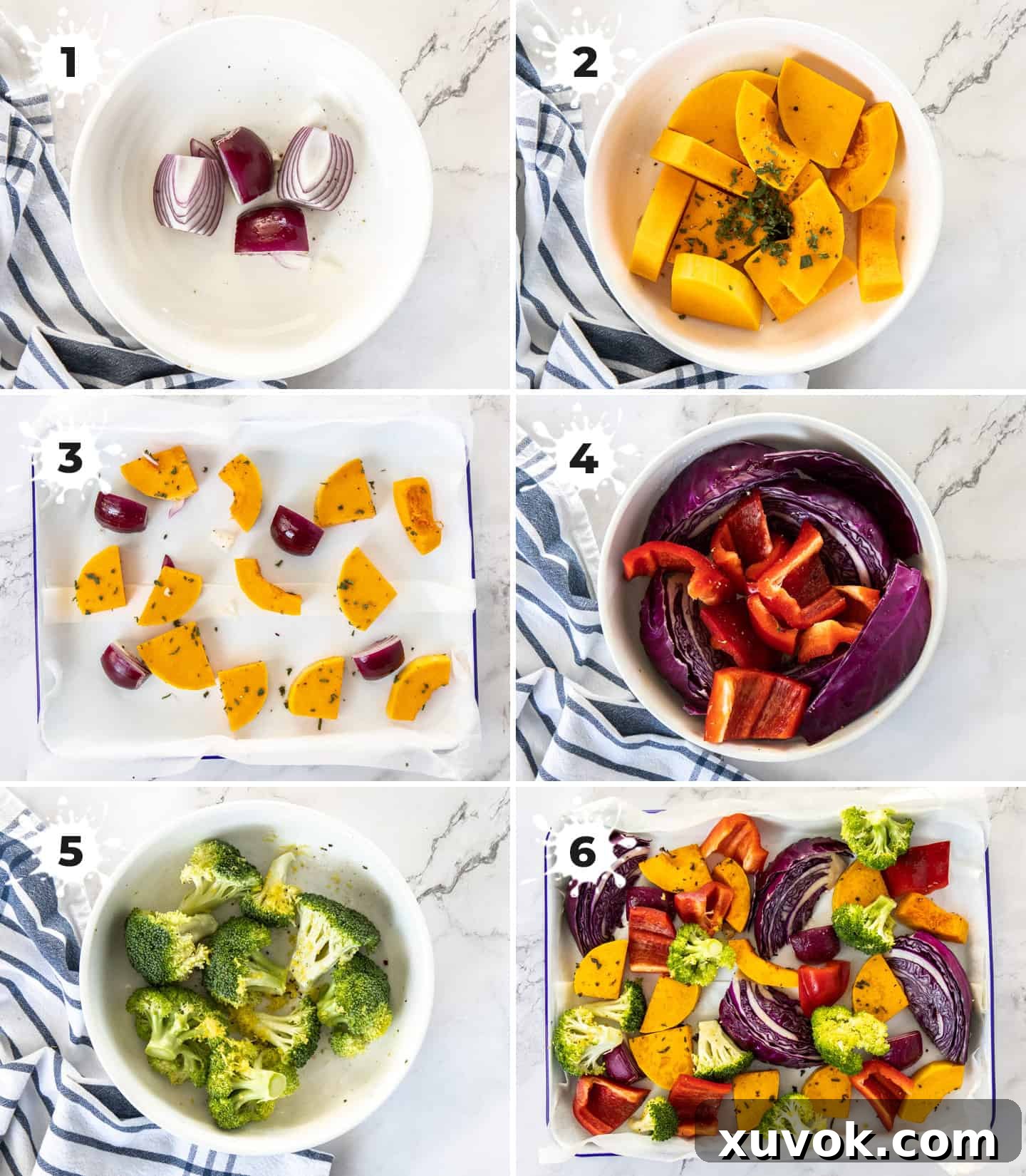
For the complete and precise recipe details, please refer to the dedicated recipe card below.
- Preheat your oven to 200°C / 395°F / 180°C (fan-forced). Line a sturdy metal baking tray or sheet pan with baking paper or aluminum foil for easy cleanup.
- Thoroughly wash and dry all your vegetables. Peel and cut them according to the specified sizes in the ingredients list to ensure even cooking.
- In a large mixing bowl, toss the onion wedges with a little oil, salt, and pepper until evenly coated. Spread them out evenly on one section of the prepared baking sheet. Next, add the butternut squash slices to the same bowl, season them with a little oil, salt, pepper, and the chopped fresh sage. Toss well, then arrange them on the baking sheet alongside the onions. Roast these denser vegetables for 25 minutes.
- After 25 minutes, carefully remove the tray from the oven and use tongs or a spatula to turn the onions and butternut squash over, ensuring even browning.
- Return the tray to the oven. In the mixing bowl, toss the capsicum (bell pepper) pieces and red cabbage wedges with a drizzle of oil, salt, and pepper. Arrange these new additions in the empty spaces on the baking tray. Finally, add the broccoli florets to the bowl, toss them with a little oil, salt, pepper, and the lemon zest and juice. Distribute the broccoli around the tray. Ensure all vegetables are in a single layer to promote optimal roasting and caramelization. Continue roasting for another 20-30 minutes, turning all the vegetables halfway through to achieve beautiful golden-brown edges.
- Once roasted to your desired tenderness and crispness, remove from the oven and serve immediately.
Expert Tips and Tricks for Roasting Success
Achieving perfectly roasted vegetables is simpler than you might think, especially with these insider tips:
- Stagger Roasting Times by Vegetable Type: As discussed, different vegetables have different cooking requirements. Group similar vegetables together or add denser ones (like root vegetables) to the pan first, followed by quicker-cooking ones (like bell peppers or broccoli) to ensure everything is done at the same time.
- Consistency in Cutting: Always strive for uniform thickness and size when cutting your vegetables. This is the golden rule for even roasting, preventing some pieces from becoming mushy while others are still raw. Aim for bite-sized pieces that will cook efficiently.
- Avoid Overcrowding the Pan: This is perhaps the most critical tip. When a sheet pan is too full, vegetables release moisture, and the steam gets trapped, causing them to steam rather than roast. This results in soft, pale vegetables instead of beautifully caramelized ones. Give your veggies space – use two pans if necessary, ensuring each piece has room to breathe.
- Single Layer is Key: Related to avoiding overcrowding, always arrange your vegetables in a single layer on the baking sheet. If they are piled on top of each other, they won’t brown evenly, and you’ll miss out on those delicious crispy bits.
- Season Generously and Creatively: Don’t be shy with your seasonings. Vegetables can handle a surprising amount of flavor. Beyond salt and pepper, explore the myriad of options discussed in our seasoning section – fresh herbs, garlic, spices, and flavored blends can elevate your dish dramatically. Taste before and after roasting to perfect your balance.
- Adjust Heat as Needed: Keep an eye on your vegetables throughout the roasting process. If they are browning too quickly on the outside but still firm on the inside, reduce the oven temperature slightly. Conversely, if they are cooking through but not developing enough color, you can slightly increase the heat or, as a final step, pop them under the broiler for a minute or two (watch carefully to prevent burning!).
PIN IT:
Click to PIN this recipe later!
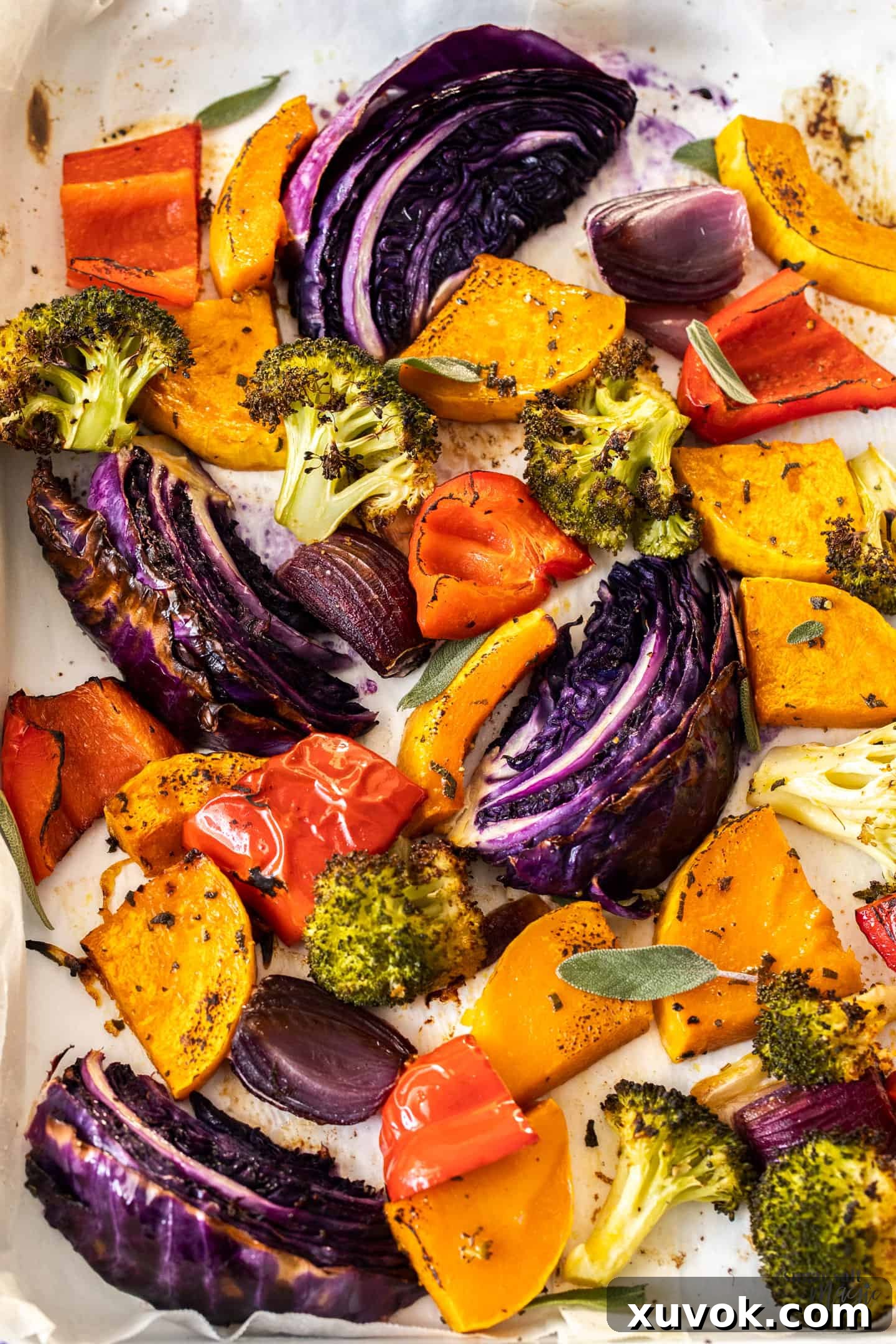
If you embark on this rainbow vegetable tray bake recipe, please take a moment to leave a rating and comment below. I genuinely love hearing about your culinary experiences and your feedback is invaluable to other readers too! Feel free to capture your delicious creation and tag @sugarsaltmagic on Instagram.
Discover More Delightful Recipes You’ll Love
If you enjoyed the simplicity and deliciousness of this tray bake, you’ll surely love these other fantastic side dishes and vegetable-focused recipes:
- Hasselback Butternut Squash: A stunning and flavorful presentation of roasted squash.
- Mustard Maple Roasted Carrots: A perfect blend of sweet and savory notes for tender carrots.
- Spiced Roast Sweet Potato Salad: A warm and inviting salad, bursting with flavor.
- Roasted Beetroot Feta Salad: Earthy beets paired with salty feta for a vibrant salad.
- Easy Cheesy Potato Bake: The ultimate comforting potato dish, rich and indulgent.
- How to Make Perfect Roast Potatoes: Your guide to achieving consistently crispy, fluffy roast potatoes.
- Lemon Garlic Green Beans: A quick and zesty side that brightens any meal.
Never Miss a Recipe!
Stay updated with our latest delicious creations delivered straight to your inbox. Join our community of home cooks and culinary enthusiasts!
Rainbow Vegetable Tray Bake
Pin
Ingredients
- ½ small butternut squash, peeled and sliced 1 ½ cm thick
- 1 red onion, peeled, trimmed and quartered
- ½ red cabbage, cut into 4 wedges
- ½ large head of broccoli, broken into large florets
- 1 red capsicum (bell pepper), seeds removed, cut into 16 pieces
- 1 tablespoon oil (e.g., olive or avocado oil)
- 2 teaspoons finely chopped fresh sage
- 1 teaspoon of fresh lemon juice
- zest of 1/2 lemon
- ¾ teaspoon salt (or to taste)
- ½ teaspoon freshly ground black pepper (or to taste)
For best results, always weigh ingredients where a weight is provided
Equipment
-
Large metal sheet pan (or two smaller ones)
-
Spacious mixing bowl for seasoning
-
Sharp knife and cutting board
Instructions
-
Preheat your oven to 200°C / 395°F / 180°C fan forced. Prepare your baking sheet by lining it with baking paper or aluminum foil.
-
Thoroughly wash and dry all the vegetables. Peel and cut the vegetables according to the sizes specified in the ingredients list to ensure they cook evenly.
-
In a large mixing bowl, toss the red onion wedges with a little oil, a pinch of salt, and pepper until evenly coated. Spread them out on the prepared baking sheet, ensuring they are not overlapping.
-
Add the butternut squash slices to the same mixing bowl. Drizzle with a little oil, a pinch of salt, pepper, and the finely chopped fresh sage. Toss thoroughly to combine. Add these seasoned butternut squash pieces to the baking sheet alongside the onions.
-
Place the baking sheet in the preheated oven and roast the onions and butternut squash for 25 minutes. After this time, carefully remove the tray and turn the vegetables over with tongs or a spatula for even cooking and browning.
-
While the first batch continues to roast, prepare the next set of vegetables. In the mixing bowl, toss the red capsicum (bell pepper) pieces and red cabbage wedges with a little oil, salt, and pepper.
-
Remove the baking tray from the oven. Arrange the seasoned capsicum and cabbage in the empty spaces on the tray. Finally, add the broccoli florets to the bowl, toss them with a little oil, salt, pepper, lemon zest, and fresh lemon juice. Distribute the broccoli around the tray. Crucially, ensure all vegetables are spread in a single layer to allow for proper caramelization and prevent steaming.
-
Return the baking tray to the oven and roast for a further 20-30 minutes. Be sure to turn all the vegetables over halfway through this second roasting phase to ensure consistent browning and tenderness on all sides. Once the vegetables are tender and beautifully caramelized, they are ready to serve.
Notes
- This recipe is incredibly versatile! Feel free to substitute the suggested vegetables with your favorites or what’s in season. For instance, swap the broccoli for cauliflower or romanesco, replace the red cabbage with green cabbage or Brussels sprouts, or use zucchini or asparagus instead of capsicum. Refer to the main article for a comprehensive list of possible vegetables and their approximate roasting times to guide your substitutions.
- Leftover roasted vegetables can be stored in an airtight container in the refrigerator for up to 3-4 days. Reheat gently in the oven or microwave, though some crispness may be lost.
- This tray bake serves wonderfully as a hearty side dish or can be enhanced with a protein (like grilled chicken, baked salmon, or chickpeas) to create a complete and satisfying meal.
EXPLORE MORE DELICIOUS SIDE DISHES!