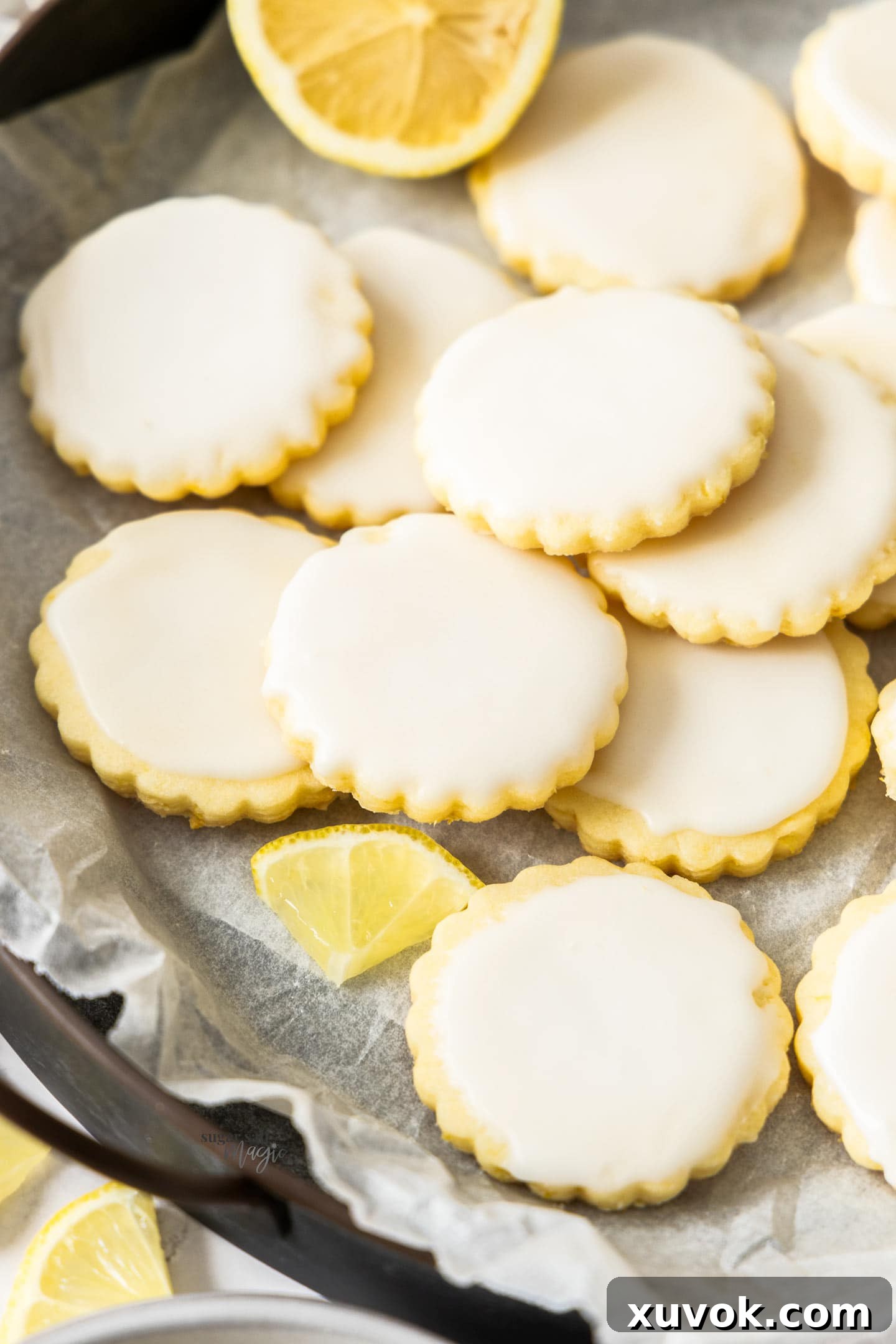
Irresistibly Buttery & Zesty Iced Lemon Sugar Cookies
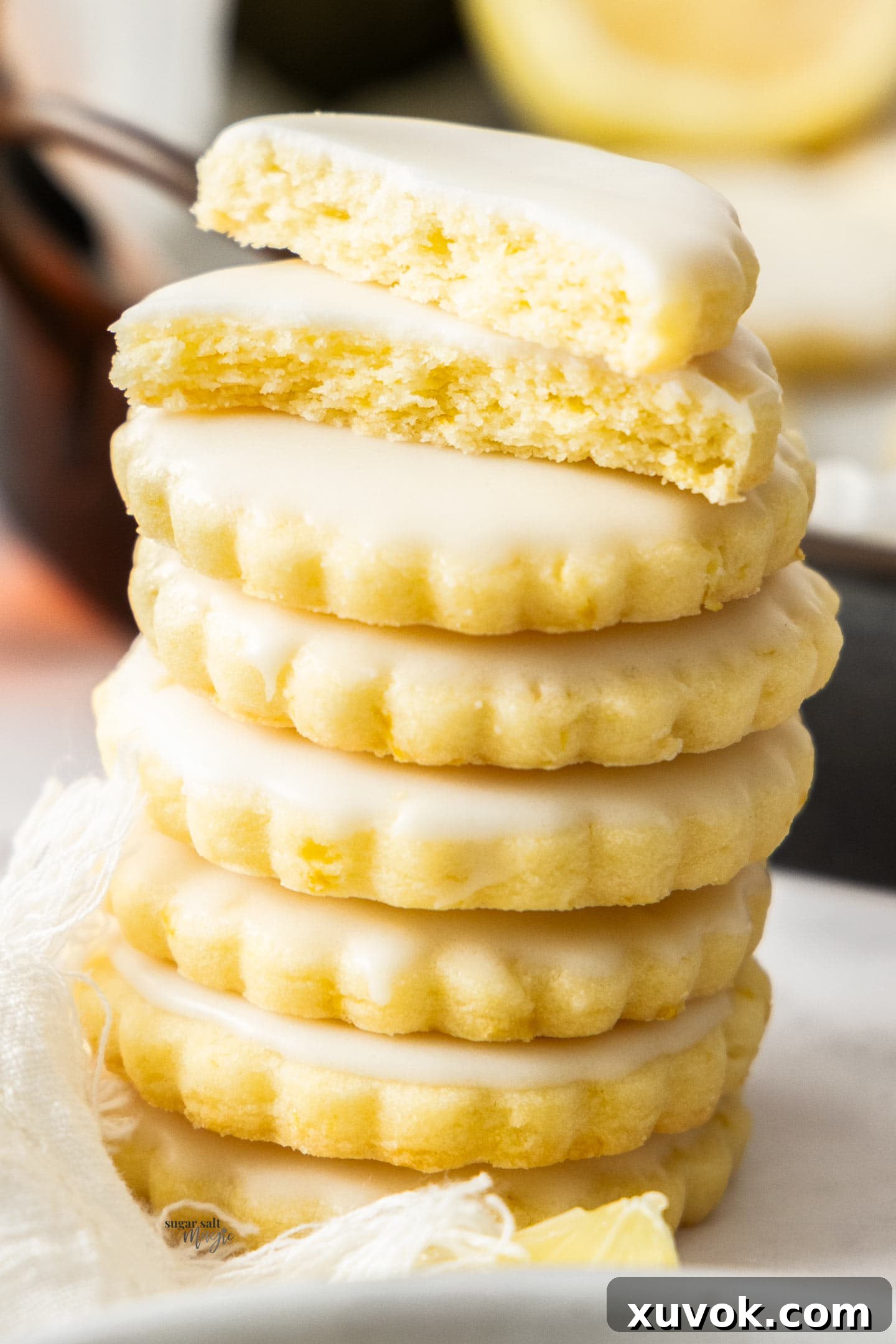
Imagine a cookie that’s incredibly soft, buttery, and infused with a vibrant burst of lemon flavor, melting delightfully in your mouth with every bite. That’s exactly what these Lemon Sugar Cookies deliver. While some might call them “lemon biscuits,” especially in places like Australia and the UK, in American culinary terms, these are truly exquisite cookies – sweet, tender, and perfectly glazed. They are a delightful spin on a classic sugar cookie recipe, elevated with a generous amount of fresh lemon zest and crowned with a luscious, sweet, and tangy lemon glaze that makes them absolutely irresistible.
Beyond their amazing taste and dreamy texture, these iced lemon cookies offer fantastic convenience. The dough can be prepared well in advance, chilling in your refrigerator for as little as 30 minutes or up to three days. For ultimate preparedness, you can even freeze the cookie dough, ready to bake whenever a sudden craving for something sweet and lemony strikes. This makes them perfect for entertaining, gifting, or simply treating yourself to a homemade delight without the last-minute rush.
If you’re a fan of citrusy delights, you might also enjoy exploring other lemon-infused treats like our Lemon Meringue Pie Cookies or, for a different twist, these delightful Glazed Almond Sugar Cookies.
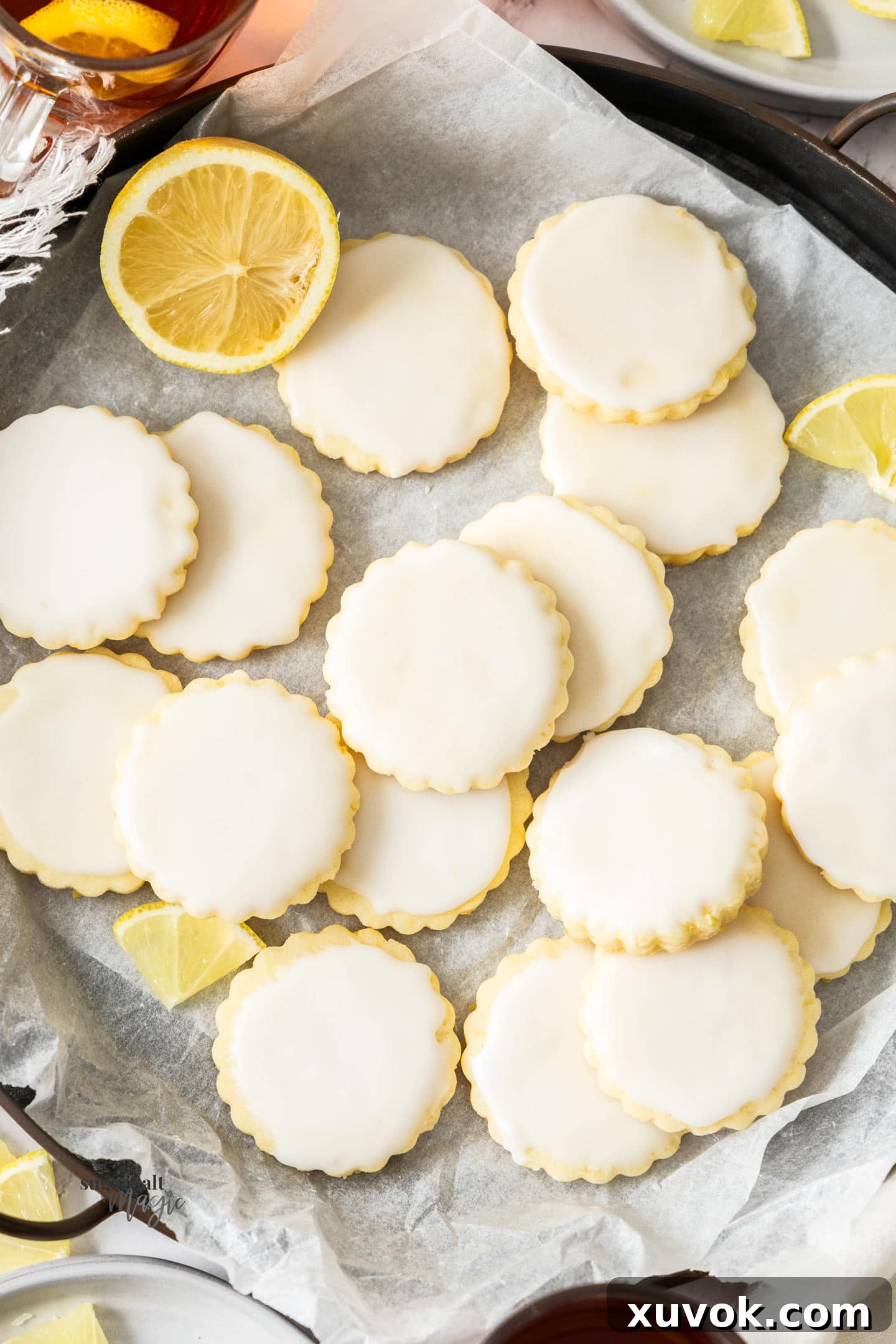
Table of Contents
- The Essence of Lemon: Ingredients
- Baking Perfection: How to Make Them
- 1. Infuse the Sugar with Lemon
- 2. Cream Butter, Sugar, & Egg
- 3. Incorporate the Dry Ingredients
- 4. Chill the Dough for Success
- 5. Roll and Cut Your Cookies
- 6. Bake to Golden Perfection
- 7. The Final Touch: Icing the Cookies
- Expert Baking Tips and Tricks
- ⏰ Time-Saving Strategies for Busy Bakers
- Storage: Keeping Your Cookies Fresh
- More Citrusy Delights You’ll Adore
Never Miss a Recipe!
Get the latest recipes straight to your inbox and elevate your baking game!
The Essence of Lemon: Ingredients
Crafting these delectable lemon cookies requires only a handful of common pantry staples, focusing on quality to bring out the best flavors. The foundation is a classic sugar cookie dough, generously enhanced with the bright, aromatic notes of fresh lemon zest and juice. Each ingredient plays a crucial role in achieving that perfect buttery, soft, and zesty balance.
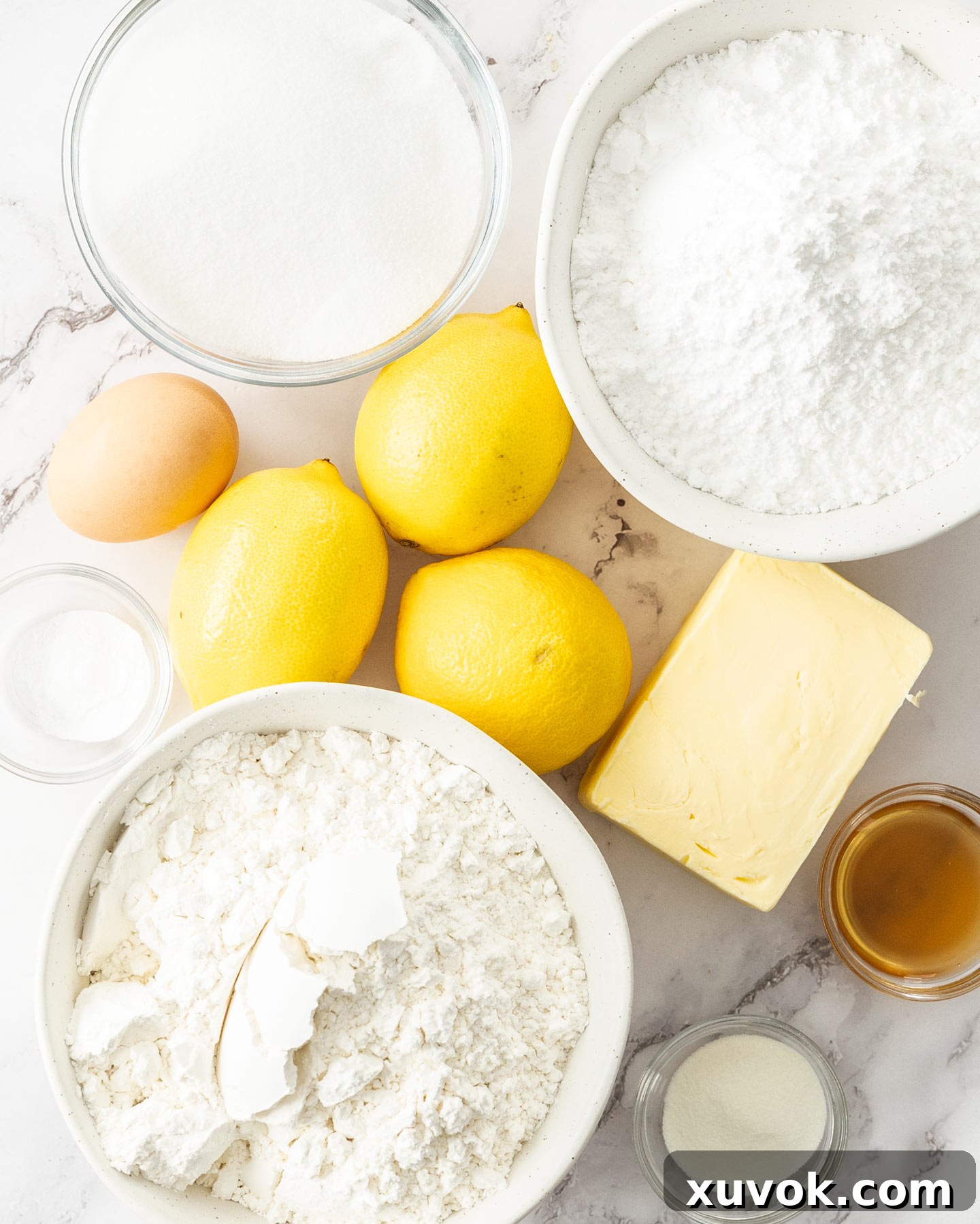
For precise measurements and detailed instructions, please jump to the full recipe card below.
- Unsalted Butter: Always opt for unsalted butter when baking. This gives you complete control over the salt content in your recipe. Ensure your butter is softened to room temperature for optimal creaming, which creates a light and fluffy dough structure.
- Sugar: Caster sugar (superfine sugar) is ideal for the cookie dough as its fine granules dissolve easily, creating a smooth texture. However, standard white granulated sugar will also work beautifully. For the delightful lemon glaze, you’ll need icing sugar (powdered sugar). If you find yourself without powdered sugar, simply blend granulated sugar in a food processor until it reaches a fine, powdery consistency.
- Egg: Just one large, room-temperature egg is needed. A room-temperature egg emulsifies better with the butter and sugar mixture, leading to a more uniform and tender dough.
- Vanilla Extract: A good quality vanilla extract is essential. It adds a layer of warmth and depth that beautifully complements the bright lemon flavor. Always choose pure vanilla extract over synthetic vanilla essence for the best taste.
- Flour: Simple plain flour (all-purpose flour) is all you need. Measure it correctly, ideally by weight, to avoid a dense or dry cookie.
- Lemons: Fresh lemons are non-negotiable for this recipe! You’ll be utilizing both the aromatic zest for intense flavor in the dough and the tart juice for the vibrant glaze. Seek out bright, firm lemons with unblemished skin for the best zest.
- Baking Powder: This leavening agent provides a delicate lift and a tender crumb to the cookies without causing them to spread excessively, helping them maintain their perfect shape.
- Meringue Powder (Optional): While not strictly necessary, adding meringue powder to your icing mixture, if available, helps it dry beautifully and creates a firmer, less sticky glaze. It contributes to a professional finish and makes the cookies easier to stack and transport.
Baking Perfection: How to Make Them
These exquisite iced lemon cookies are surprisingly straightforward to prepare, making them an accessible baking project for all skill levels. While a stand mixer can make quick work of the stiff dough, you can absolutely achieve fantastic results with a mixing bowl, a handheld electric mixer, and a sturdy wooden spoon. The key is to follow each step carefully to ensure that buttery, melt-in-your-mouth texture and intense lemon flavor.
Don’t forget to scroll down to the recipe card for the complete list of ingredients and detailed instructions.
1. Infuse the Sugar with Lemon
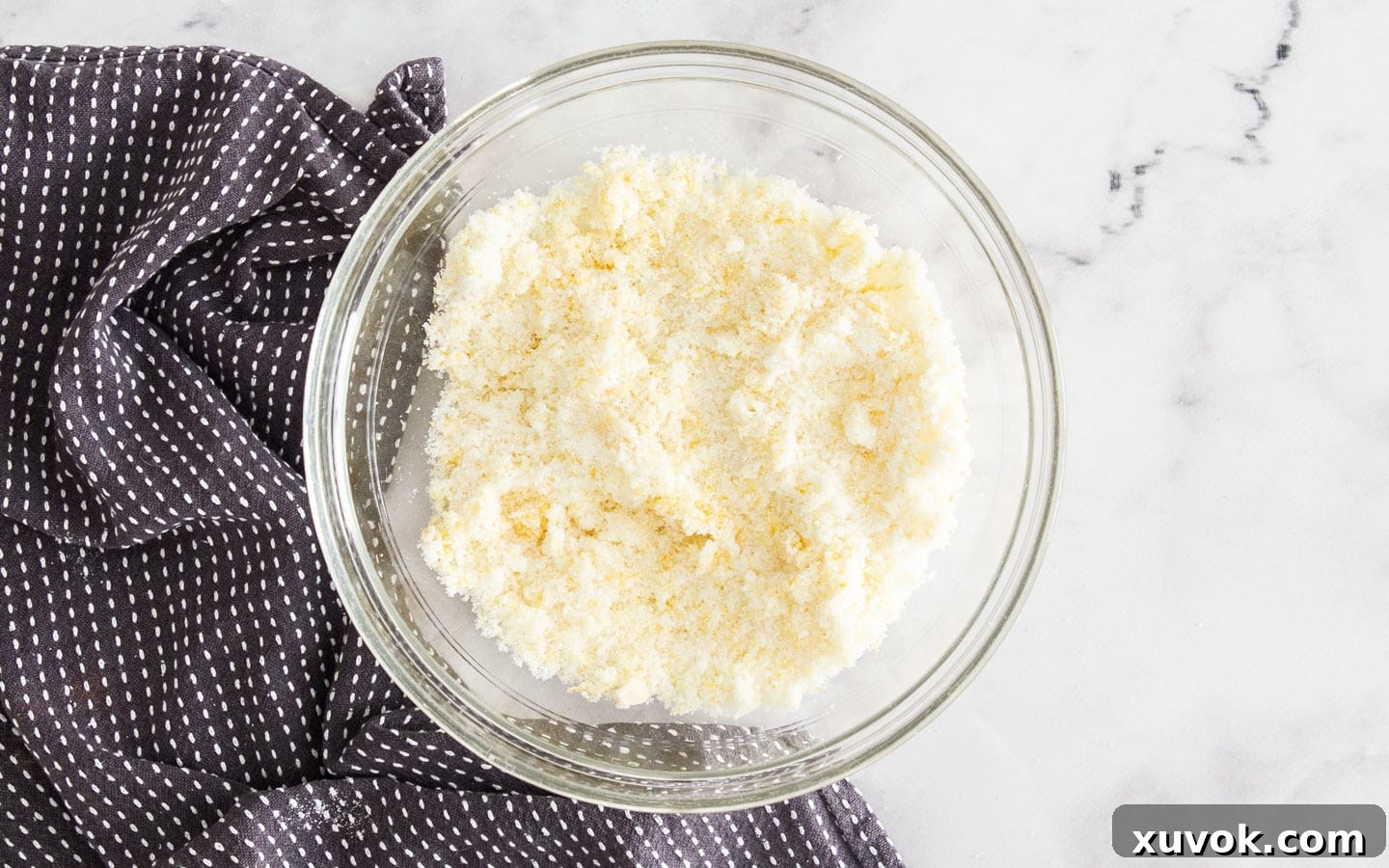
The secret to maximizing that vibrant lemon flavor starts here! Using your fingertips, gently rub the fresh lemon zest into the granulated sugar. This process releases the essential oils from the zest, infusing the sugar with an incredibly potent citrus aroma and flavor. Continue rubbing until the sugar takes on the texture of wet, fragrant sand, ensuring every crystal is coated with zesty goodness. This simple step makes a huge difference in the final taste of your cookies.
2. Cream Butter, Sugar, & Egg
In your mixer, combine the softened butter with the lemon-infused sugar. Beat them together on medium speed for about 3-4 minutes until the mixture transforms into a light, pale, and fluffy consistency. This creaming process incorporates air, which is vital for the cookies’ tender texture. Remember to pause occasionally and scrape down the sides of the bowl to ensure everything is evenly combined. Next, add the room-temperature egg and the vanilla extract. Beat on low speed until just incorporated, being careful not to overmix. Again, a quick scrape down of the bowl helps achieve a homogeneous mixture.
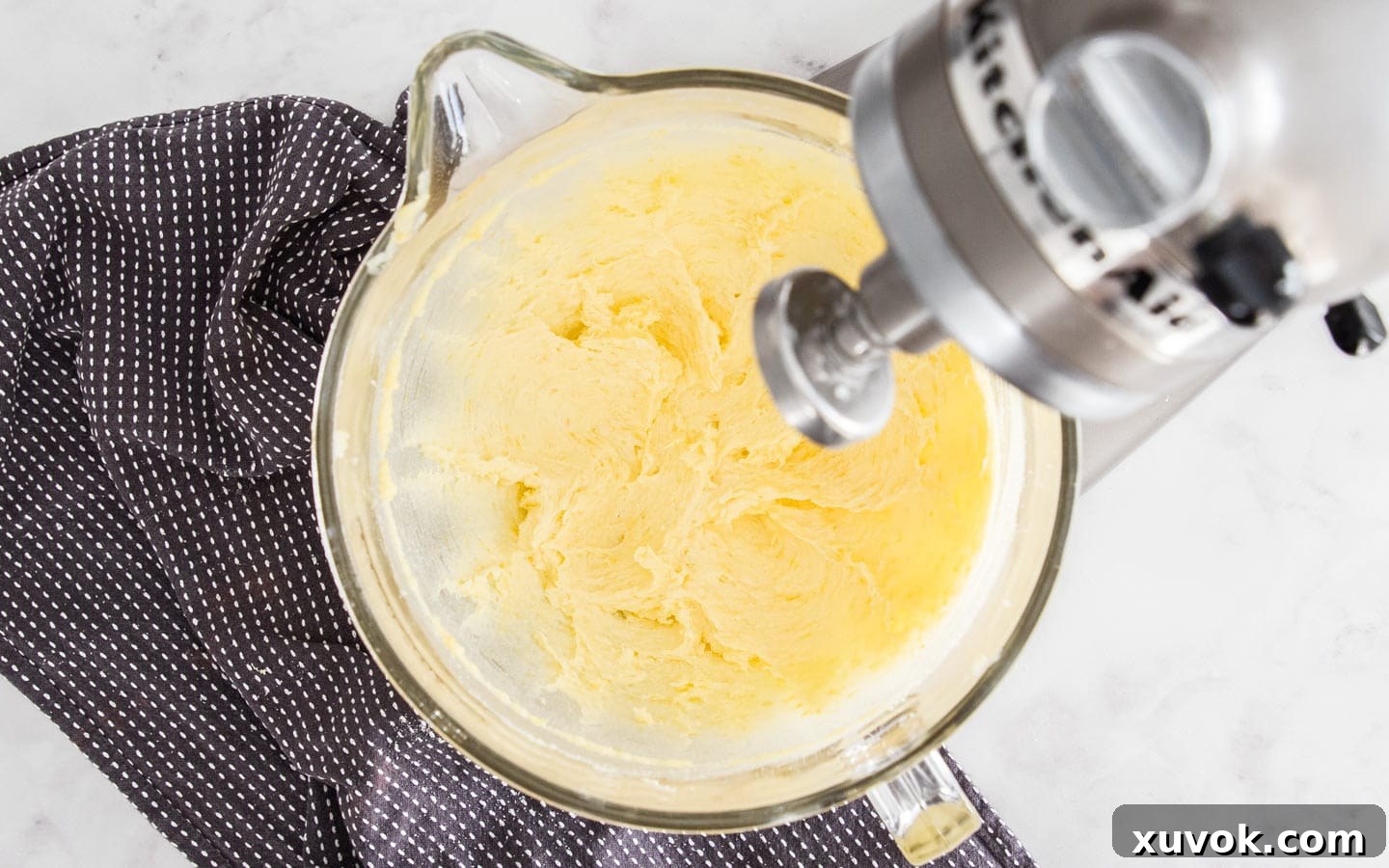
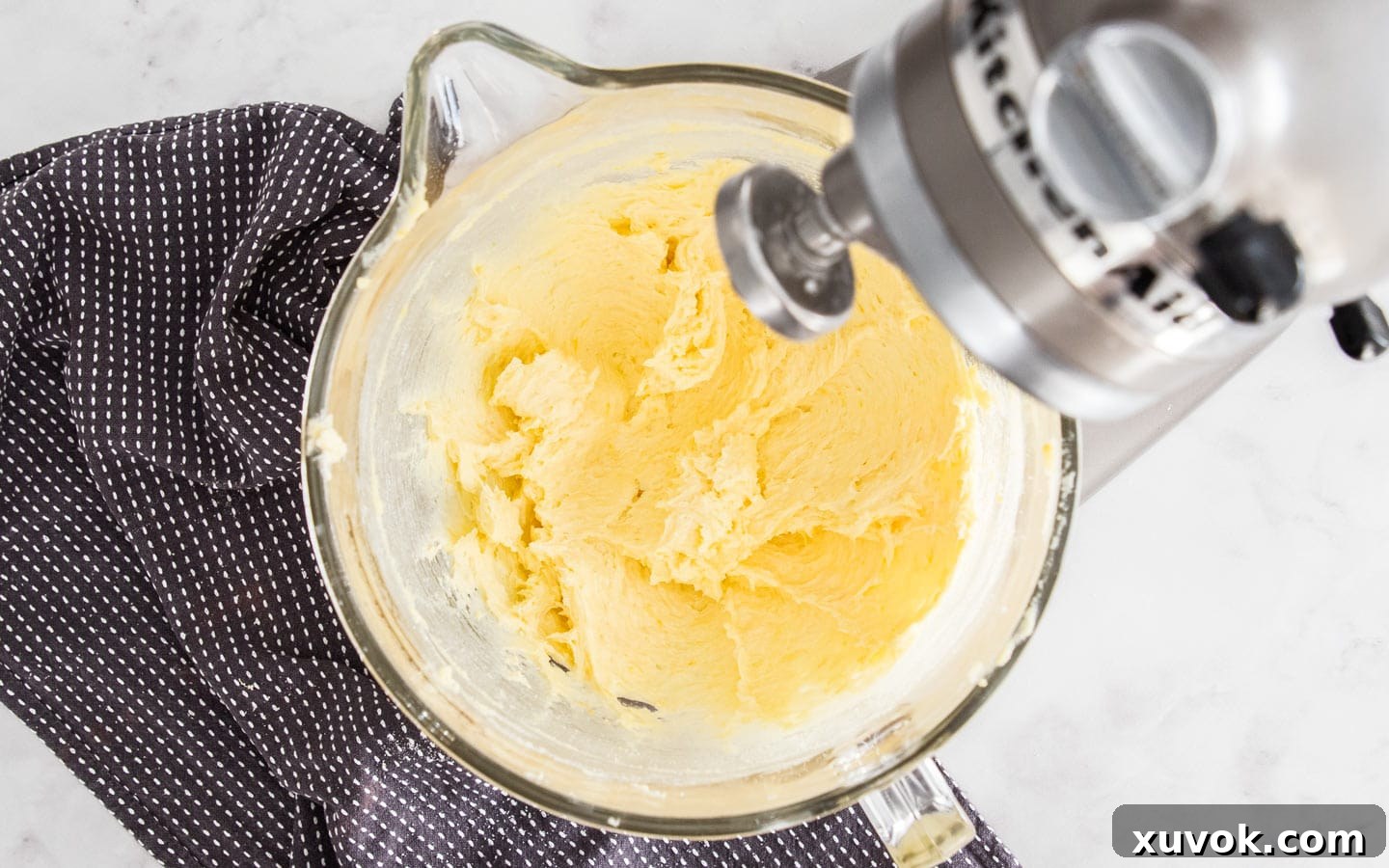
3. Incorporate the Dry Ingredients
With the wet ingredients perfectly combined, it’s time to add the dry components. Gradually add the plain flour and baking powder to the mixture. Begin by pulsing the mixer on low speed a few times to prevent a cloud of flour from escaping, then continue beating on low until the flour is just incorporated. The goal is to mix until no dry streaks of flour remain and a thick, yet still soft, dough forms. Be extremely careful not to overmix, as this can develop the gluten in the flour, leading to tough rather than tender cookies.
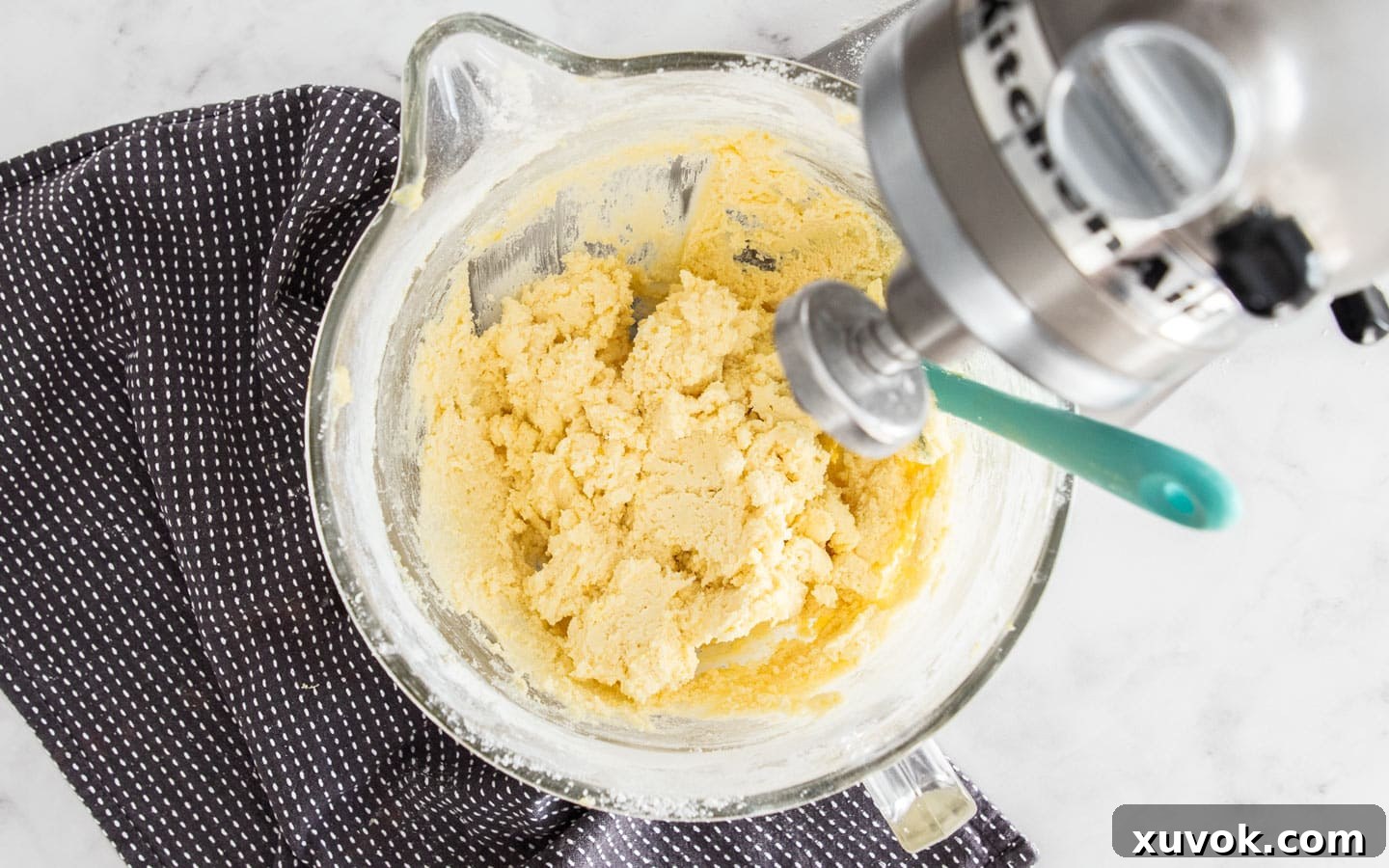
4. Chill the Dough for Success
Chilling the cookie dough is a non-negotiable step for these lemon cookies. This crucial period allows the butter to firm up, preventing the cookies from spreading excessively in the oven and helping them maintain their beautifully cut shapes. More importantly, chilling allows the flavors to meld and deepen, resulting in a more pronounced lemon taste. It also makes the dough much easier to handle and roll out without adding excess flour. For convenience, divide the dough into two flattened disks, wrap each tightly in plastic wrap, and chill for at least 30 minutes, or up to 3 days. For even more flexibility, refer to our time-saving tips later in this post for freezing options.
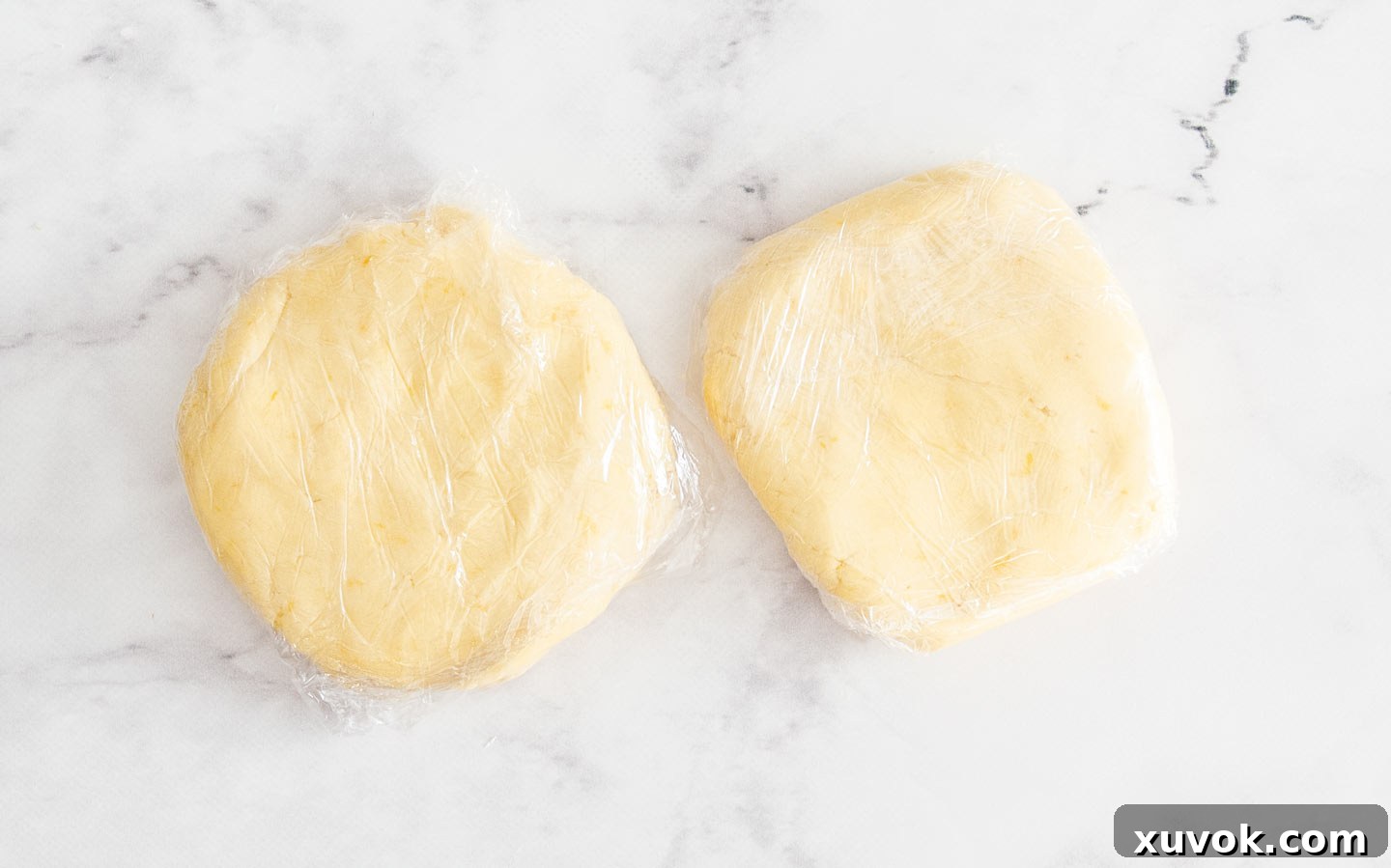
5. Roll and Cut Your Cookies
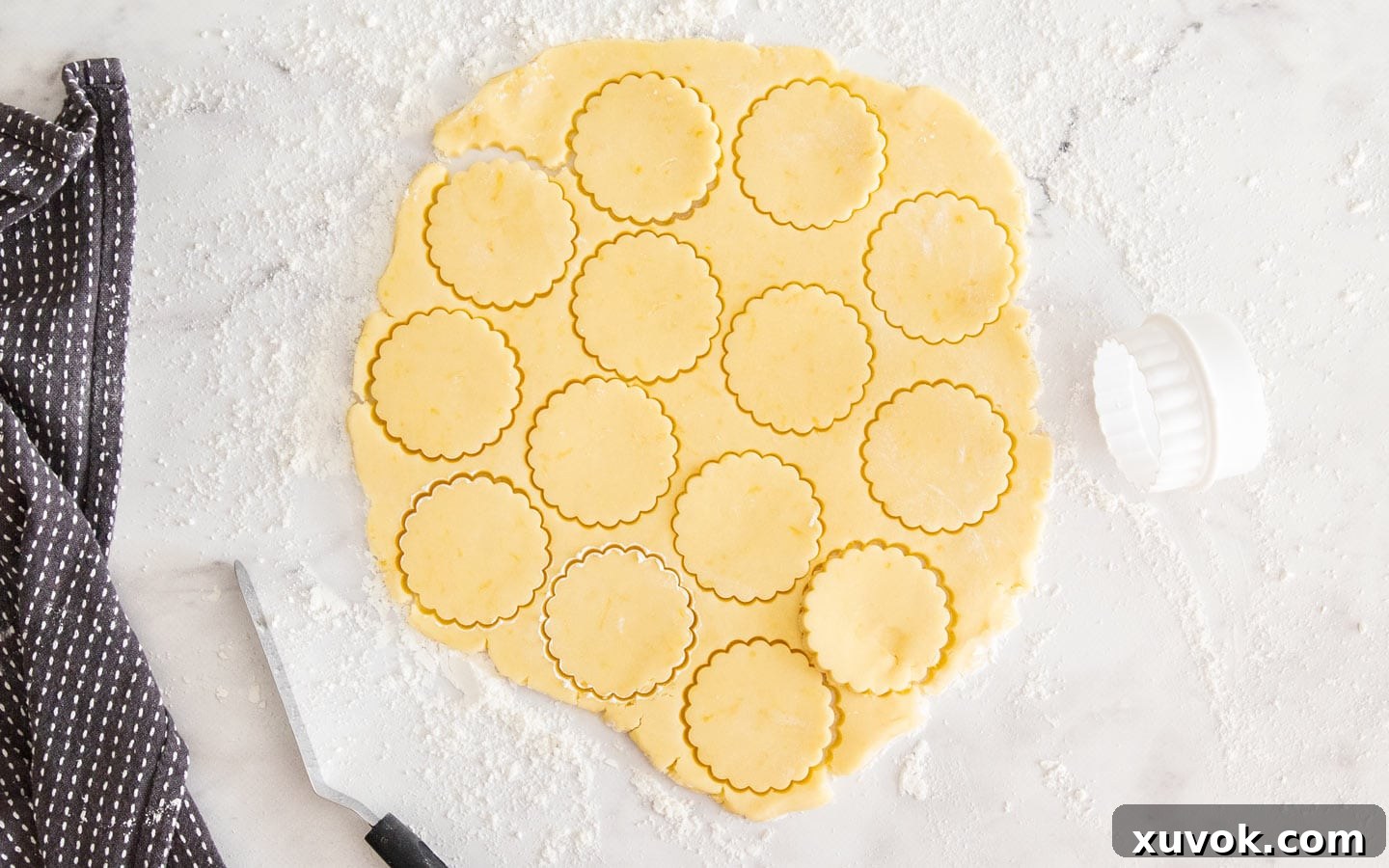
Once the dough is sufficiently chilled, it’s ready to be rolled. Lightly flour your work surface and your rolling pin. Roll out one disk of dough at a time until it’s about 6mm (or ¼ inch) thick. Work gently but efficiently to prevent the dough from becoming too warm. For classic lemon cookies, we recommend a 5cm / 2-inch fluted cookie cutter, which creates beautiful, scalloped edges. Cut out as many shapes as possible from the first roll, then gather the scraps, gently re-knead them, and roll them out again to cut more cookies. Repeat with the second disk of dough. This minimizes waste and ensures you get the most cookies from your batch.
6. Bake to Golden Perfection
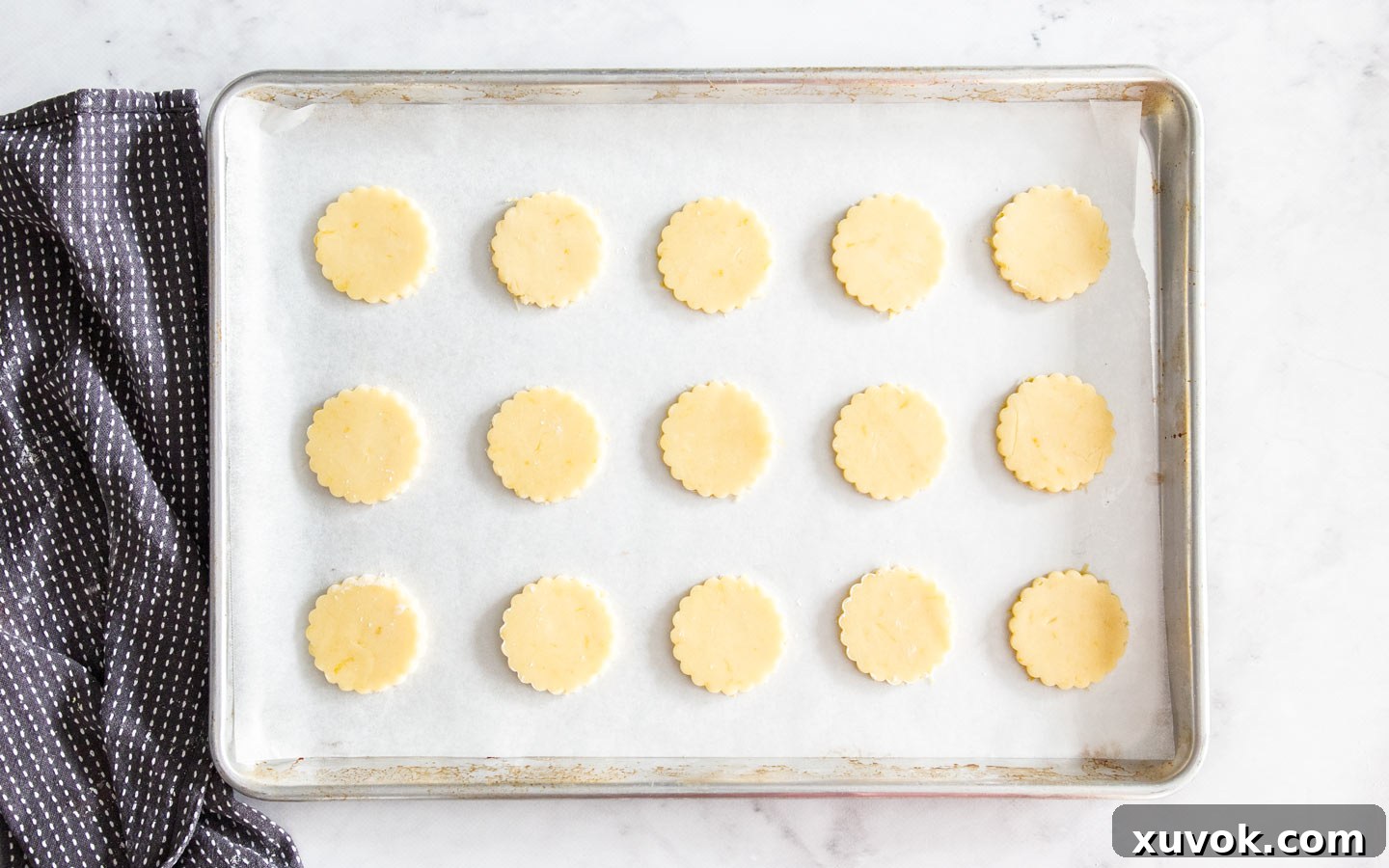
Carefully transfer your cut-out cookie dough rounds onto a baking sheet lined with parchment paper, spacing them about 1 inch apart. This allows for even air circulation and prevents them from baking into each other. Bake for approximately 8-9 minutes in a preheated oven. The goal for a soft, melt-in-your-mouth cookie is to bake until the edges just begin to show the faintest hint of golden, while the centers remain pale but set. If you prefer a cookie with a crisper edge and a more pronounced buttery flavor, you can extend the baking time by a minute or two, watching carefully for a deeper golden hue around the edges. Remember, ovens vary, so it’s always a good idea to test-bake one or two cookies first to determine the perfect timing for your appliance.
7. The Final Touch: Icing the Cookies
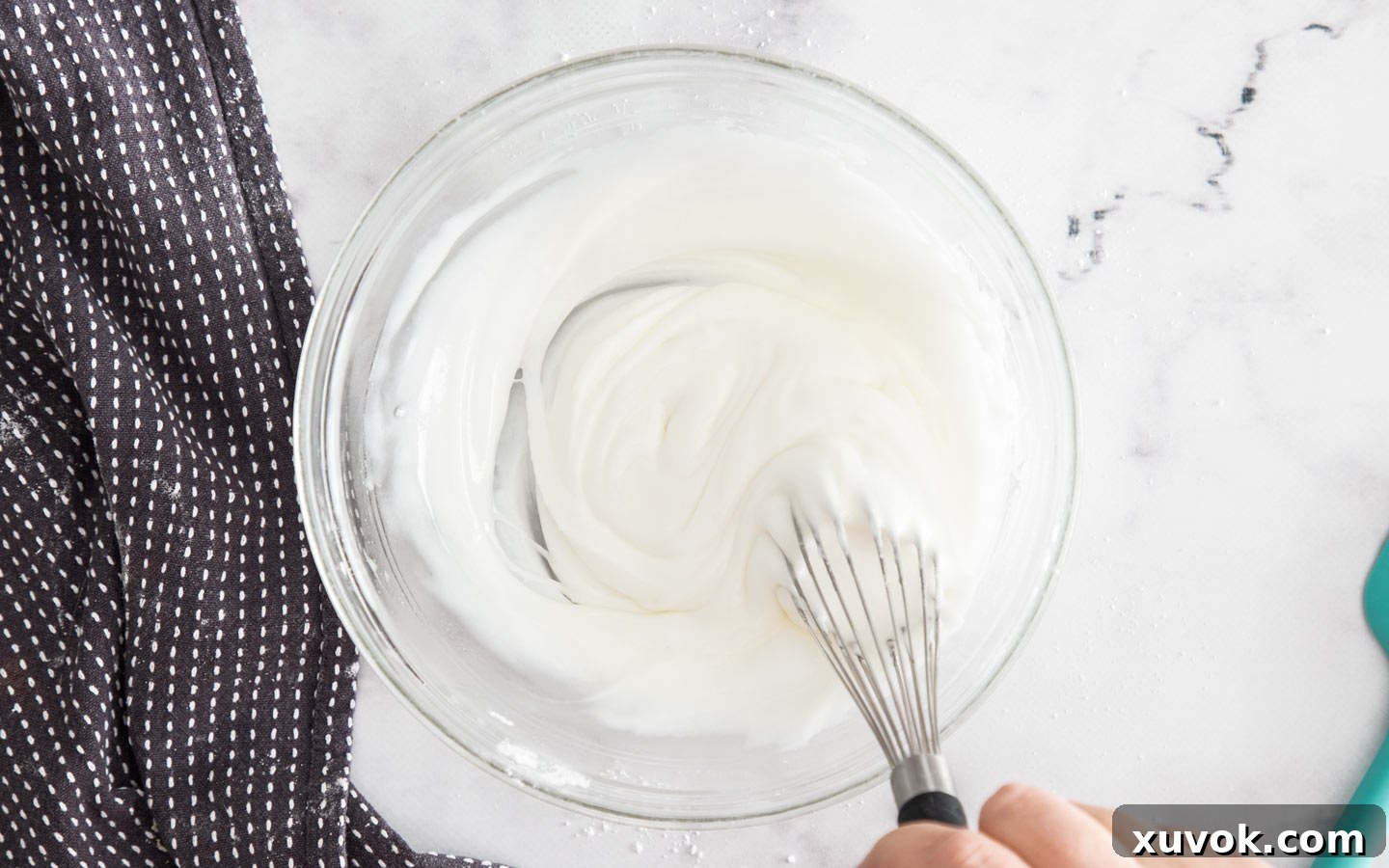
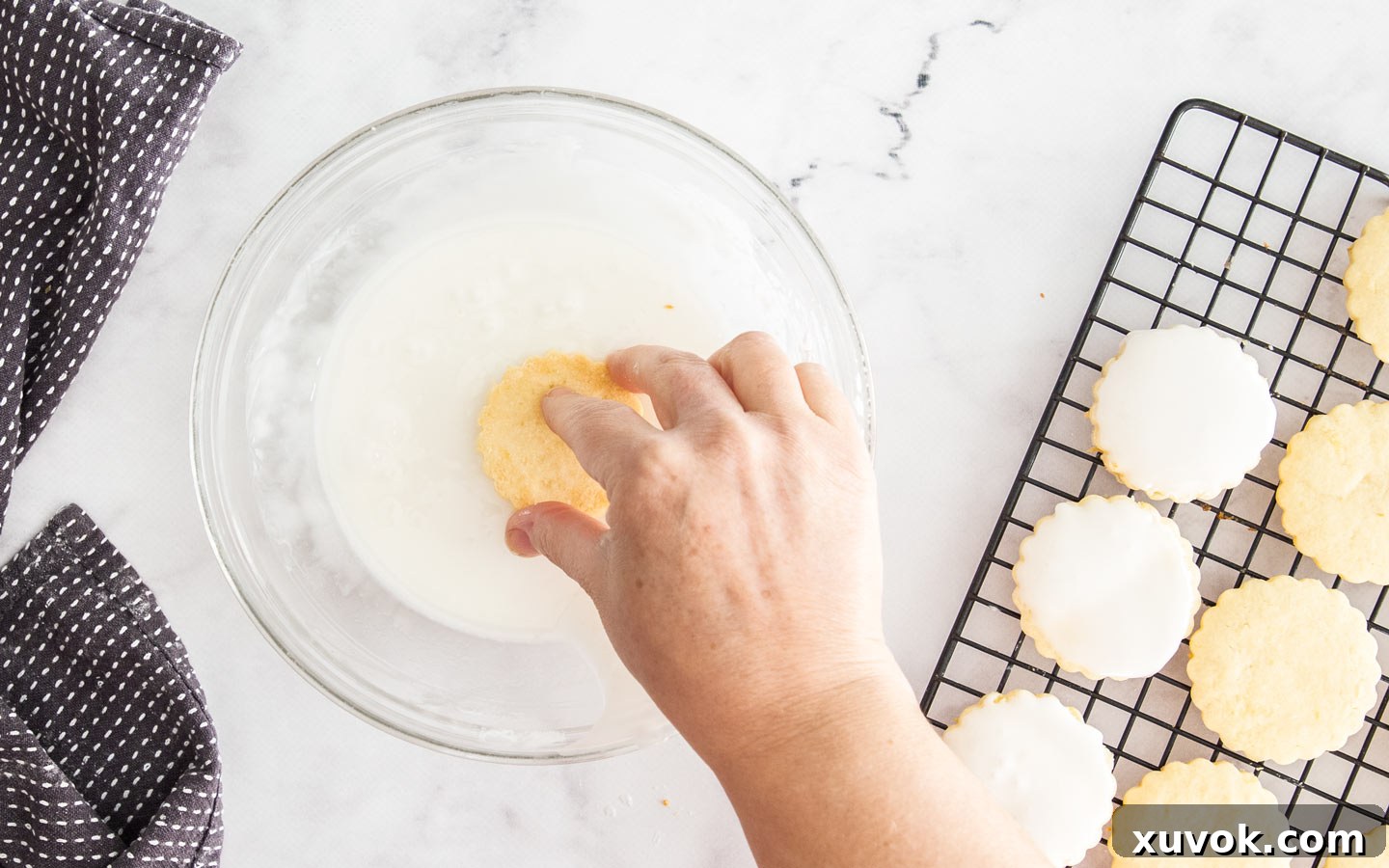
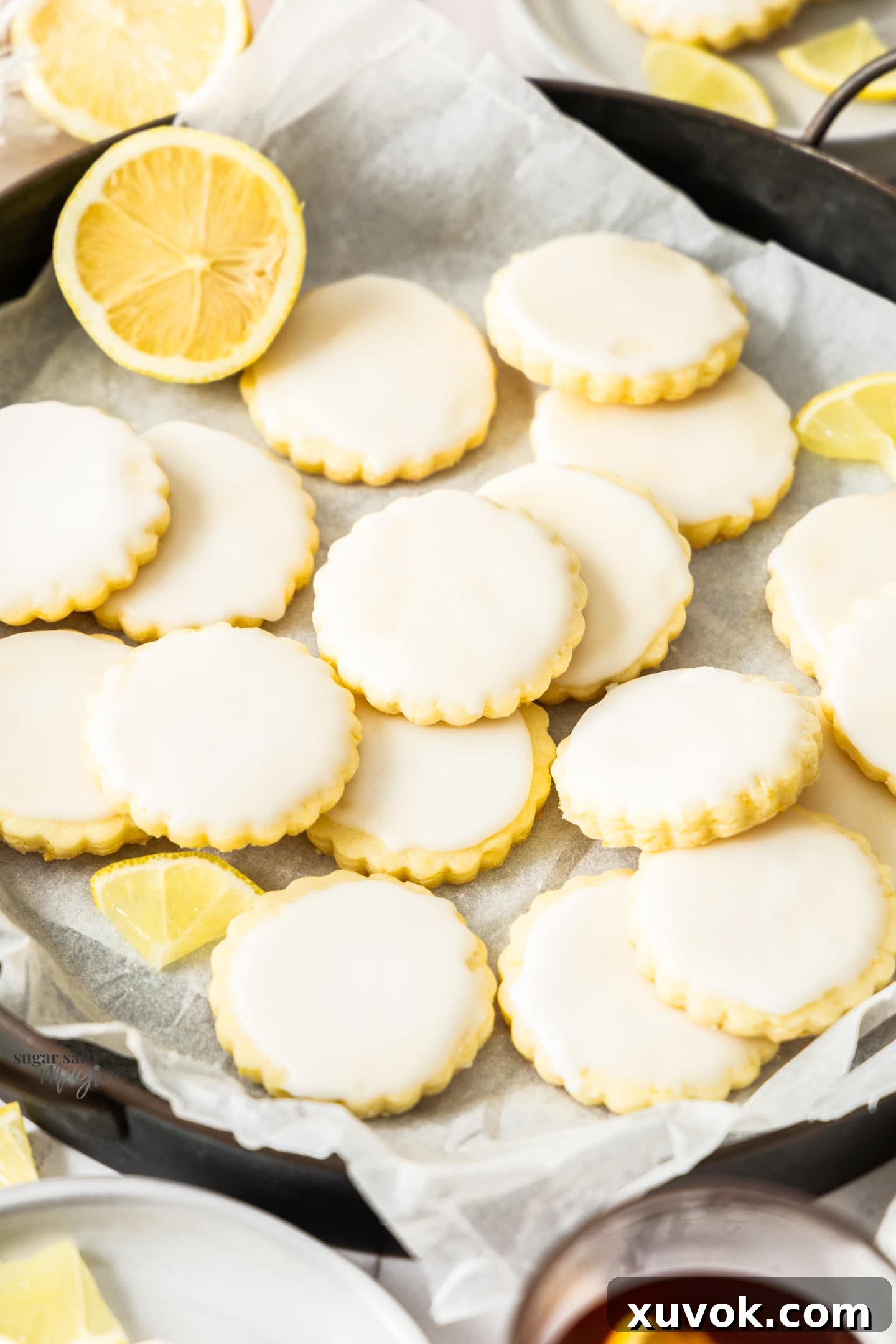
Once your cookies have completely cooled on a wire rack, it’s time for the delightful lemon glaze. In a bowl, simply whisk together the icing sugar (powdered sugar) and fresh lemon juice until you achieve a smooth, pourable consistency that is thick enough to coat but thin enough to settle. For an optional professional touch, add meringue powder to help the icing set firmer and faster. Dip the top of each cooled cookie into the glaze, allowing any excess to drip off. Gently scrape the bottom edge of the cookie against the rim of the bowl to remove extra icing. Place the iced cookies back on the wire rack and let them set for at least 30 minutes, or until the glaze is dry to the touch. This delicate lemon glaze not only adds a beautiful finish but also amplifies the bright citrus flavor, making each cookie a small piece of sunshine.
The beauty of these cookies lies in their adaptability to your preferred texture. Baking them for 8-9 minutes typically yields a wonderfully soft sugar cookie once cooled, maintaining a pale appearance with just the slightest hint of golden around the edges. If you desire a cookie with a more pronounced golden hue, a crispier edge, and a deeper, more caramelized buttery flavor, extend the baking time to 11-12 minutes. At this point, the cookies will be noticeably golden underneath and around the edges, with a delightful crispness, while still retaining a slightly soft middle upon cooling. Since oven temperatures can vary significantly, we always recommend baking 1-2 test cookies first. This allows you to fine-tune the baking time to suit your specific oven and achieve your desired level of crispness and color.
Expert Baking Tips and Tricks
Achieving bakery-quality lemon cookies at home is easy with a few simple techniques:
- Room Temperature Ingredients are Key: Always ensure your butter is properly softened and your egg is at room temperature before you begin mixing. Room temperature ingredients emulsify much better, creating a smoother, more uniform dough and a more tender, consistent cookie texture.
- Weigh Your Ingredients for Accuracy: For the most consistent and best baking results, especially with dry ingredients like flour and sugar, use a kitchen scale to weigh them rather than relying on cup measurements. The volume of flour or sugar can vary greatly depending on how it’s scooped, which can lead to a dry, crumbly dough or an overly dense cookie.
- Avoid Overmixing the Dough: Once you add the flour, mix the dough only until it’s just combined and no dry streaks remain. Overmixing develops the gluten in the flour, which can result in tough, chewy cookies rather than the desired soft, melt-in-your-mouth texture.
- Do Not Skip the Chilling Step: Chilling the dough is critical for successful cut-out cookies. If you attempt to roll out the dough immediately after mixing, it will be too soft and sticky, forcing you to add excessive amounts of flour, which will dry out your lemon biscuits. Chilling allows the butter to firm up and the dough to become much more manageable, ensuring your cookies hold their beautiful shapes perfectly during baking.
- Proper Lemon Zesting: When zesting your lemons, be sure to only remove the bright yellow outer layer, avoiding the bitter white pith underneath. A microplane zester works best for fine, flavorful zest.
- Preventing Cookies from Spreading: Ensure your oven is fully preheated to the correct temperature. A cold oven can contribute to cookies spreading too much. Also, a quick 10-15 minute chill of the cut-out cookies on the baking sheet just before baking can help them hold their shape even better.
⏰ Time-Saving Strategies for Busy Bakers
These lemon cookies are incredibly versatile, offering several make-ahead options to fit into your schedule:
- Chill Dough Ahead: The prepared cookie dough can be kept chilled in the refrigerator for up to 3 days. This is fantastic for breaking up your baking tasks; you can make the dough one day and bake fresh cookies a day or two later.
- Freeze Dough in a Block: For longer storage, you can freeze the entire dough in a well-wrapped block. Thaw it in the refrigerator overnight before rolling and cutting.
- Freeze Pre-Cut Cookies: This is arguably the most convenient method! Roll out and cut all your cookies as directed. Lay the raw, cut-out cookies in a single layer on a baking tray lined with baking paper. Freeze until solid, then transfer the frozen cookie dough shapes to an airtight container or ziplock bag. They can be stored for up to 3 months. When a craving hits, simply bake them directly from frozen (you may need to add an extra minute or two to the baking time). This means warm, fresh cookies are always just minutes away!
Storage: Keeping Your Cookies Fresh
Proper storage ensures your lemon cookies remain fresh and delicious for as long as possible:
- Room Temperature: Once the icing has fully set, store your baked lemon cookies in an airtight container at room temperature in your pantry. They will maintain their wonderful soft texture and bright flavor for 4-5 days.
- Freezing Baked Cookies: These cookies freeze beautifully! Place cooled, iced cookies in a single layer on a baking sheet and freeze until solid. Once frozen, transfer them to an airtight freezer-safe container, separating layers with parchment paper to prevent sticking. They can be frozen for up to 3 months. Thaw them at room temperature for a few hours before serving. They retain their lovely texture and flavor remarkably well after thawing, making them a perfect make-ahead dessert.
More Citrusy Delights You’ll Adore
If you love the zesty flavor of these lemon cookies, you’re in for a treat with these other citrus-inspired recipes:
- Lemon Blueberry Cookies
- Lemon Curd Cookies
- Lemon Biscotti
- Raspberry Thumbprint Cookies (with a hint of citrus!)
- Easy Iced Sugar Cookies (for endless flavor variations!)
- Lemon Meringue Pie Cookies
⭐⭐⭐⭐⭐
Did you try this lemon cookies recipe? We’d love to hear from you! Please share your thoughts and show it some love in the comments below.
Hungry for more? Subscribe to our newsletter for free recipes straight to your inbox. Also, follow along on Facebook, Pinterest and Instagram for daily inspiration!

Lemon Biscuits (Iced Lemon Sugar Cookies)
48
biscuits
20 minutes
9 minutes
1 hour
1 hour
29 minutes
Rate
Pin
Ingredients
-
225
g
unsalted butter
softened (1 cup / 2 sticks) -
1
cup
caster sugar or white granulated sugar
(200g/7oz) -
1
large egg
room temp -
1 ½
teaspoons
vanilla extract
-
355
g
plain flour (all-purpose flour)
(2 ¾ cups) -
⅓
cup
lemon zest, not packed (4 medium lemons or 3 large) -
½
teaspoon
baking powder
FOR THE LEMON GLAZE (ROYAL ICING OPTION)
-
2
cups
icing sugar (powdered sugar)
(260g/9.2oz) -
2-2½
tablespoons
fresh lemon juice
(see notes) -
2
teaspoons
meringue powder
optional, for a firmer set
For best results, always weigh ingredients where a weight is provided
Equipment
-
stand mixer or electric
handheld beater -
cookie cutters -
Rolling Pin -
Baking sheets.
Instructions
-
In the bowl of a
stand mixer or large mixing bowl, use your fingertips to vigorously rub the lemon zest into the granulated sugar until it resembles wet sand. This infuses the sugar deeply with lemon flavor. -
Add the softened unsalted butter to the lemon sugar mixture. Beat with the paddle attachment (or electric handheld mixer) on medium speed for 3-4 minutes, or until the mixture becomes notably light, pale, and fluffy. During this process, scrape down the sides of the bowl 1-2 times to ensure even creaming.
-
Introduce the room-temperature large egg and vanilla extract to the creamed mixture. Beat on low speed until they are just combined, being careful not to overmix. Scrape down the sides of the bowl as needed to fully integrate the ingredients.
-
Add the plain flour and evenly scatter the baking powder over the top. Start by pulsing the mixer on low speed to prevent flour from flying out, then continue beating on low until the flour is just incorporated and the dough comes together. Mix only until no dry streaks remain; overmixing will result in tough cookies.
-
Remove the dough from the mixer bowl. Divide it into two equal portions and shape each into a flat disk. Wrap each disk tightly in plastic wrap to prevent drying. Chill the dough in the refrigerator for a minimum of 30-60 minutes, or up to 2 days. This chilling step is essential for the cookies to hold their shape during baking. (See notes for freezing options if desired).
-
Preheat your oven to 180°C (160°C fan-forced) / 350°F. Line two large baking sheets with parchment paper.
-
Retrieve one disk of chilled dough from the fridge. Depending on how long it has been chilling, you might need to let it sit at room temperature for 5-15 minutes to soften slightly and become easier to roll without cracking.
-
Lightly flour a clean work surface and your
rolling pin. Place the dough on the floured surface and sprinkle a little flour over the top. Gently roll out the cookie dough to an even thickness of 4-6mm (approximately ¼ inch). If the dough is too firm and cracks easily, allow it to warm up slightly more, or gently cup your hands around it for a moment to provide a little warmth. -
Using a 5cm (2-inch) round
fluted cookie cutter (or any desired shape/size), cut out as many cookies as possible from the rolled dough. Carefully gather the dough scraps, gently knead them back together, and re-roll to cut out additional cookies until all dough is used. -
Transfer the cut cookie shapes to the prepared baking sheets, leaving about 1 inch of space between each. If your dough has become very soft during rolling, chill the baking sheets with cookies for 10 minutes in the fridge before baking; this helps them maintain their shape. Bake for 8-9 minutes. Cookies are done when the edges just begin to turn the palest golden, and the tops appear matte and set but are still very pale. They will firm up further as they cool.
-
Once baked, immediately transfer the cookies from the hot baking sheets to a
wire cooling rack to cool completely before applying the icing. -
FOR THE LEMON GLAZE:
In a medium
mixing bowl, combine the icing sugar (powdered sugar) and the optional meringue powder (if using). -
Add 1 tablespoon of fresh lemon juice and whisk until partially combined. Continue adding more lemon juice, 1 teaspoon at a time, whisking after each addition, until the icing reaches a smooth, pourable consistency. The ideal consistency is when the icing, if dropped from the whisk, settles back into itself within 10-12 seconds.
-
Dip the top surface of each completely cooled cookie into the lemon glaze. Gently scrape off any excess icing from the bottom edge of the cookie against the side of the bowl. Place the iced cookies, icing side up, back onto the wire rack. For a perfectly smooth surface, gently lift and drop each cookie (about 1cm) once or twice to encourage the icing to spread evenly. Alternatively, you can simply drizzle the icing over the tops of the cookies. Allow the icing to set and dry on the wire rack before serving or storing.
-
Enjoy your homemade Iced Lemon Sugar Cookies! Please consider leaving a
comment & rating below. Your feedback is greatly appreciated and very helpful!
Notes
- Tablespoon Measurement: This recipe uses a standard Australian 20ml tablespoon, which is equivalent to 4 teaspoons. Please verify the capacity of your tablespoon before measuring to ensure accuracy.
- Meringue Powder: Adding meringue powder is an optional step but highly recommended. It helps the lemon glaze to set firmer and dry more quickly, which is ideal for stacking and transporting cookies, and gives a more polished finish.
- Oven Variations: All ovens can vary in temperature. For the best results, we always suggest baking a single test cookie (or two) first. Observe how it bakes and adjust your oven temperature or baking time accordingly to achieve your desired texture and goldenness.
- Freezing Dough for Later: This recipe yields approximately 48 cookies. If you prefer not to bake the entire batch at once, you can easily freeze half of the dough for future enjoyment. You can either freeze one disk of dough (from step 4) wrapped in plastic wrap, or go ahead and cut all the cookie shapes. To freeze already cut cookies, arrange them in a single layer on a
baking tray lined with parchment paper. Freeze until solid, then transfer the frozen shapes to an airtight container or ziplock bag. You can then bake them directly from frozen whenever you like (add 1-2 minutes to baking time). - Cookie Cutter Size: The quantity of 48 cookies, along with the baking time and nutritional information provided, is based on using a 5cm (2-inch) round cookie cutter, yielding cookies weighing approximately 21g (¾ oz) each. Using a different size or shape cutter will affect the yield, baking time, and nutritional data.
- Add Sprinkles: For a festive touch, you can add colorful sprinkles to the top of each cookie immediately after dipping or drizzling them with the lemon glaze, while the icing is still wet.
- Nutritional Information: The nutrition details provided below are approximate values and have been derived from an online calculator. Please note that variations can occur based on the specific brands and precise quantities of ingredients you use.
EXPLORE MORE DELICIOUS COOKIE RECIPES!
98
kcal
Marie Roffey
Dessert, Snack
American, Australian, International
Have you tried this recipe?
Don’t forget to leave a
rating and comment below and let me know how it was! I love hearing from you. Nutrition information is approximate and derived from an online calculator. The brands you use may cause variations.
Calories from Fat 36
6%
13%
4%
0%
0%
5%
1%
10%
2%
2%
1%
1%
2%