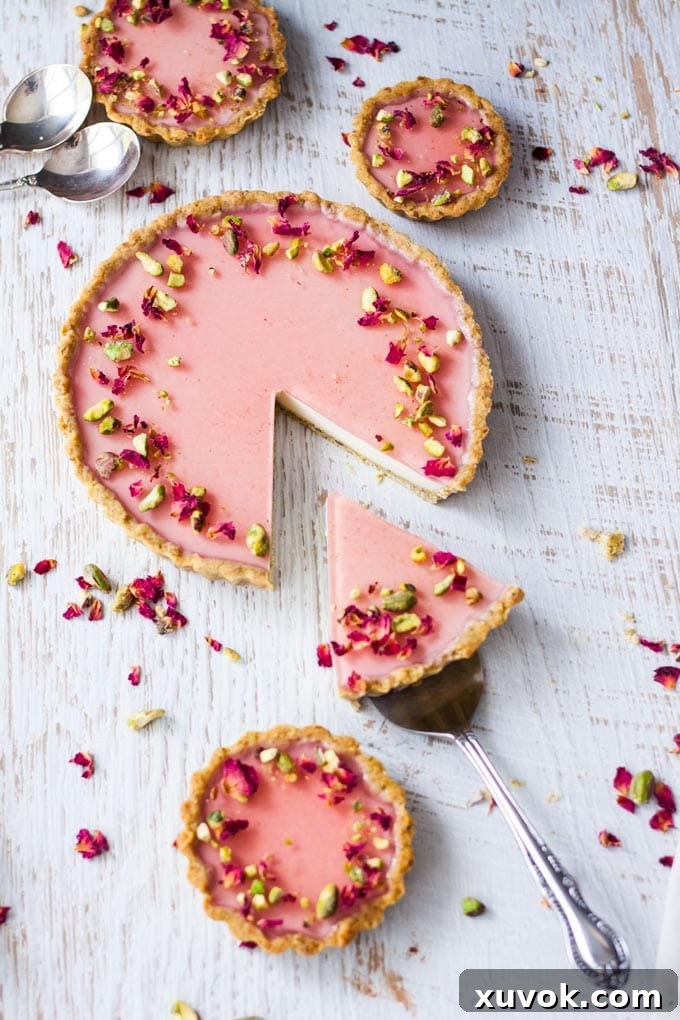
Indulge in Elegance: The Ultimate Pistachio Rose Panna Cotta Tart Recipe
Embark on a culinary journey with a dessert that perfectly marries delicate flavors and exquisite textures: our Pistachio Rose Panna Cotta Tart. This isn’t just any tart; it’s a testament to persistence and a celebration of sophisticated taste. After countless iterations and much experimentation – from rose water mousse with a pistachio cookie in a glass, to a panna cotta in a glass, and various tart adaptations – I am thrilled to present this truly beautiful creation. It’s a dessert designed to impress and delight on any special occasion, encapsulating the very best of those experimental stages, refined into a show-stopping masterpiece that proves perseverance pays off.
Creating this stunning tart does require a dash of patience, but I assure you, the reward is immeasurable. The process is thoughtfully broken down into manageable stages, allowing you to enjoy the creation without feeling rushed. You’ll master:
- Crafting and baking a perfectly crisp pistachio pastry case – a straightforward process that lays the foundational crunch and nutty flavor.
- Whipping up the silky smooth rose panna cotta filling – surprisingly quick to prepare, though it demands time to set to its ideal melt-in-your-mouth consistency.
- Adding a shimmering rose jelly topping – a final, effortless layer that brings both visual splendor and a burst of fresh flavor, again requiring a short setting period.
Each stage includes ample waiting time for chilling and setting, making this an ideal make-ahead dessert. You can comfortably spread the preparation over a day or two, making it perfect for entertaining guests without last-minute stress. The end result? A sublime, elegant dessert that will earn you rave reviews and become a cherished recipe in your repertoire, showcasing layers of exquisite flavor and texture that truly elevate the dining experience.
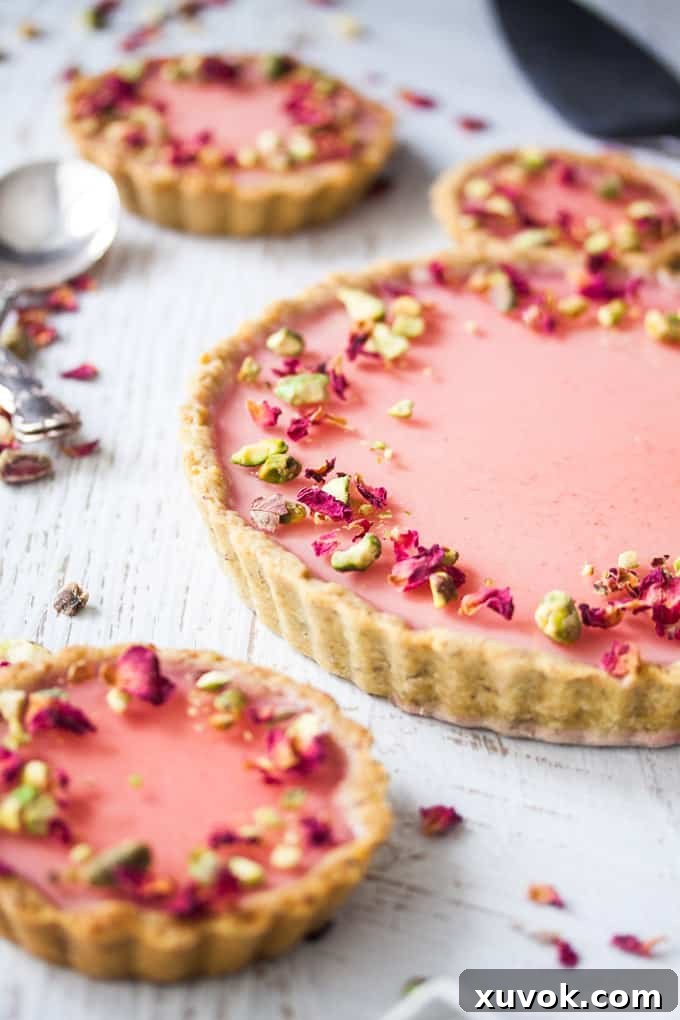
What Makes Rose Panna Cotta So Irresistible?
Panna cotta, an Italian delicacy translating to “cooked cream,” is a celebrated dessert renowned for its delicate, silken texture and rich, creamy essence. It serves as an incredibly versatile canvas for an array of flavors, a characteristic that fueled my enduring fascination with it for years. My culinary journey with panna cotta began with simple delights like Vanilla Panna Cotta with Orange Syrup, and has since evolved to embrace more intricate infusions such as the comforting Vanilla Chai Panna Cotta. This Pistachio Rose Panna Cotta Tart elevates that versatility, imbuing the creamy base with the subtle yet distinctive elegance of rose.
If the notion of rose flavor in a dessert gives you a moment’s hesitation, please be reassured. The rose in this panna cotta is intentionally delicate and understated, crafted to complement and enhance rather than dominate the palate. Unlike the often-intense, sometimes overpowering floral notes associated with traditional Turkish delight, this tart offers a gentle, aromatic whisper. It’s a flavor designed to provide a sophisticated undertone that beautifully rounds out the overall sensory experience. As someone who generally prefers a milder floral presence, I can attest to loving this tart immensely, finding its balanced flavor profile absolutely perfect.
A vital culinary tip when incorporating rose water or any potent extract is to always introduce your flavoring incrementally. Add a small amount, mix thoroughly, then taste. Repeat this process, adding tiny quantities each time, until you achieve your desired flavor intensity. This meticulous approach is crucial because the potency of rose extracts and essences can vary significantly between different brands and types. By gradually building the flavor, you ensure that the rose essence reaches its ideal level of subtle elegance, providing an aromatic kiss without overwhelming the other harmonious ingredients.
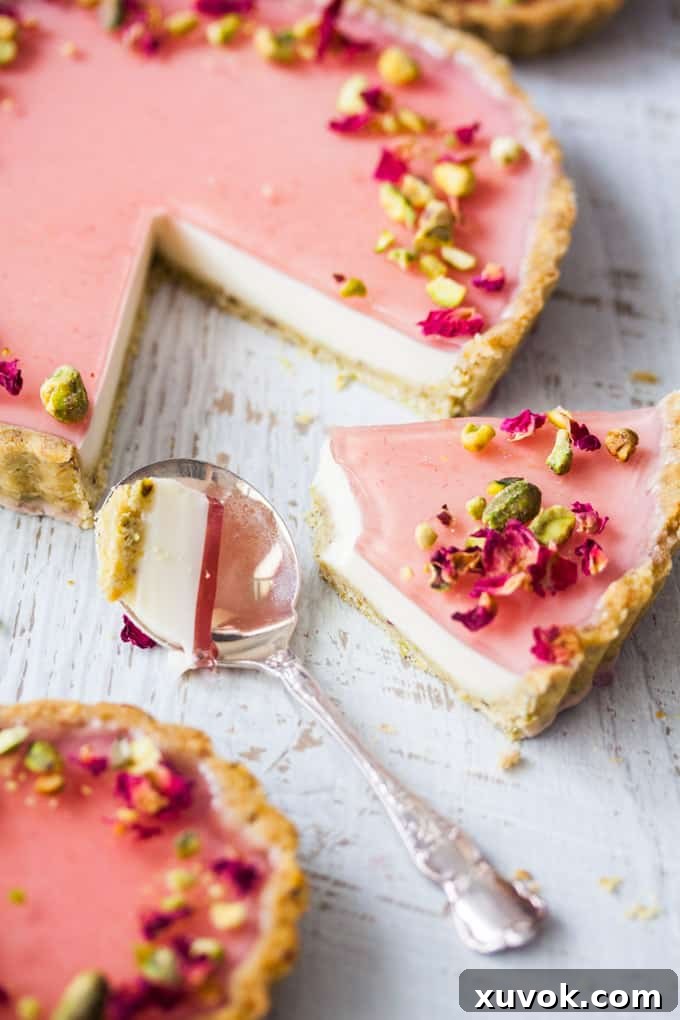
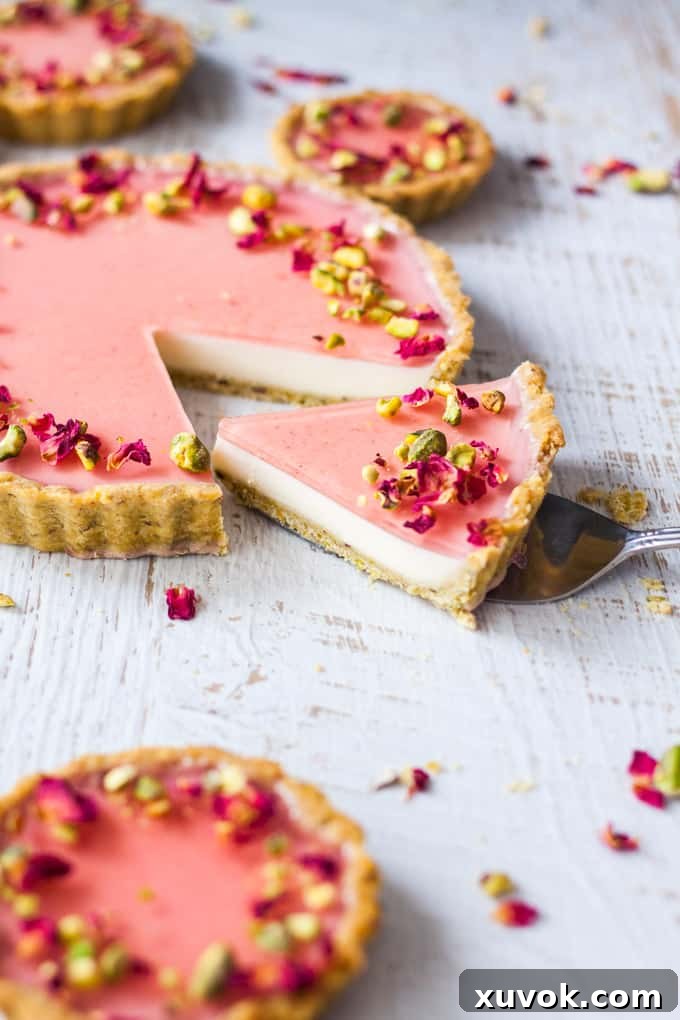
The true allure of this Pistachio Rose Panna Cotta Tart lies in its exquisite layering and harmonious interplay of textures. The foundation is a crisp, thin tart shell, which surprises and delights with the unmistakable, rich nutty aroma of finely crushed pistachios. This robust base offers a delightful textural contrast to the incredibly soft, almost ethereal rose panna cotta filling, which effortlessly melts away in your mouth. Crowning this masterpiece is a vibrant, translucent rose jelly. Its gorgeous natural pink hue is derived solely from a handful of fresh raspberries, ensuring an all-natural finish that is as beautiful as it is delicious. The jelly adds a final layer of subtle sweetness and a hint of refreshing tartness, making each spoonful a symphony of creamy, crunchy, and silken bliss – truly, an unforgettable dessert experience.
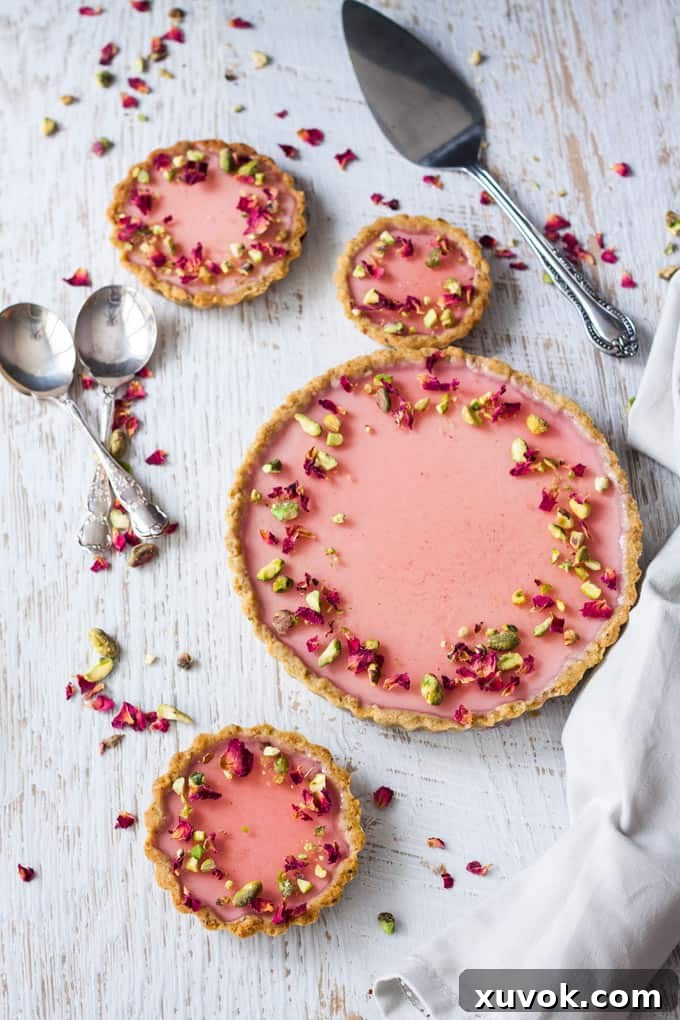
Planning Your Pistachio Rose Panna Cotta Tart: Hands-on vs. Setting Time
While this Pistachio Rose Panna Cotta Tart projects an image of intricate sophistication, the actual hands-on preparation time is surprisingly minimal, typically requiring only around 30-40 minutes of active effort. The secret to its impeccable presentation and delightful texture, however, lies in careful planning and respecting the essential setting times for each component. This makes it an ideal dessert to prepare in stages, allowing you to manage your time effectively, distribute the workload, and enjoy the creative process without any last-minute rush or stress.
- Pistachio Tart Crust (Approx. 20 minutes active effort): Crafting the tart shell involves a quick blending of pastry dough ingredients, a brief and important resting period in the refrigerator, precise blind baking, careful trimming of any excess pastry, and a final bake to achieve perfection. The outcome is a robust, intensely flavorful, and perfectly crisp foundation that provides a satisfying counterpoint to the creamy fillings.
- Rose Panna Cotta Filling (Approx. 5 minutes active effort): This luscious layer comes together with remarkable speed and ease. You’ll gently warm a selection of the ingredients to meticulously dissolve both the sugar and the gelatin, ensuring a smooth, lump-free base. These are then combined with the remaining components before being carefully poured into your pre-baked and chilled tart shell. The bulk of the time dedicated to this stage is spent allowing the panna cotta to chill and set to its optimal, velvety consistency.
- Rose Jelly Topping (Approx. 5 minutes active effort): The final, crowning touch is equally quick and uncomplicated to prepare. The ingredients are combined and gently heated to ensure the gelatin and sugar are fully dissolved. This mixture is then strained for an impeccably smooth finish before being delicately poured over the firm, set panna cotta layer. As with the panna cotta, patience is a virtue here, as the jelly requires time to firm up and create its beautiful, clear, and shimmering layer.
Despite the various distinct steps involved, each individual part of this recipe is remarkably straightforward and demands only a minimal amount of active work. The intervals allocated for chilling and setting are unequivocally crucial, so it is imperative to allow ample time in your schedule for these phases. This strategically staged approach ensures that each layer achieves its perfect set, culminating in a stunningly elegant Pistachio Rose Panna Cotta Tart. The dessert offers a delightful contrast between the crunchy, nutty pistachio crust and the melt-in-your-mouth, fragrant rose-infused fillings, promising an extraordinary sensory experience with every bite.
Crafting Your Pistachio Rose Panna Cotta Tart: A Detailed How-To
Follow these detailed steps to create a truly magnificent Pistachio Rose Panna Cotta Tart. Each stage is designed for clarity and success, ensuring a beautiful and delicious outcome that will impress all who taste it.
The Perfect Pistachio Tart Crust
The foundation of this tart is its unique pistachio crust, offering a wonderful nutty flavor and a satisfying crunch that complements the creamy filling beautifully.
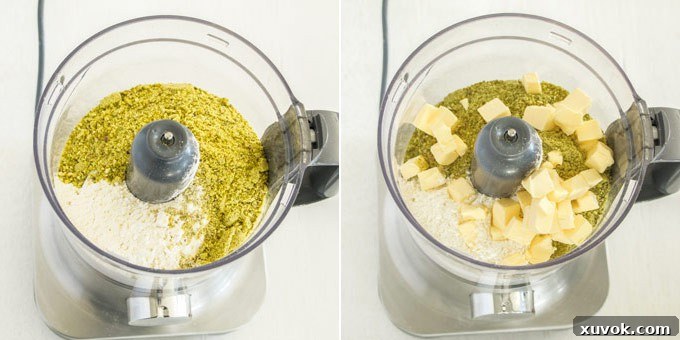
Begin by finely blitzing the dry ingredients together – this includes your pistachios, all-purpose flour, icing sugar (also known as confectioners’ or powdered sugar), and a pinch of salt. It is essential to process the pistachios until they are very fine, almost like a coarse meal, ensuring even distribution of flavor and a smooth texture in the crust. Be careful not to over-process them into a paste. Next, add the chilled, unsalted butter, cut into small cubes, to the dry mixture. Pulse the food processor in short bursts for only 5-10 seconds until the mixture resembles coarse breadcrumbs. This technique ensures the butter is evenly distributed but remains in small pieces, which is key for developing a flaky, tender crust.
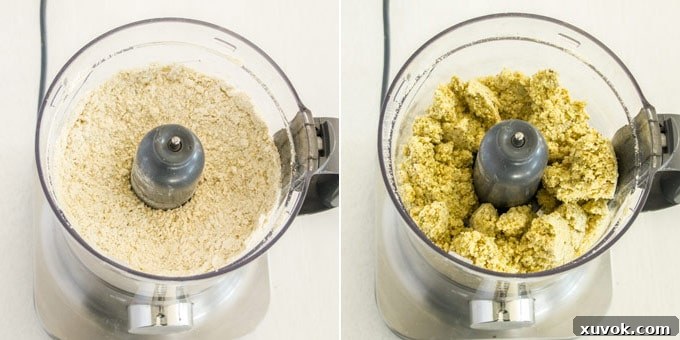
With the food processor running on a low setting, slowly drizzle in one to one and a half tablespoons of ice-cold water, just a small amount at a time. Stop adding water and turn off the processor as soon as the dough begins to clump together and hold its shape when pressed. The goal is to bring the dough just to the point where it coalesces, without overworking it. This minimal handling technique is critical; it prevents the butter from melting prematurely and helps in achieving a wonderfully tender and crisp crust that won’t be tough or chewy.
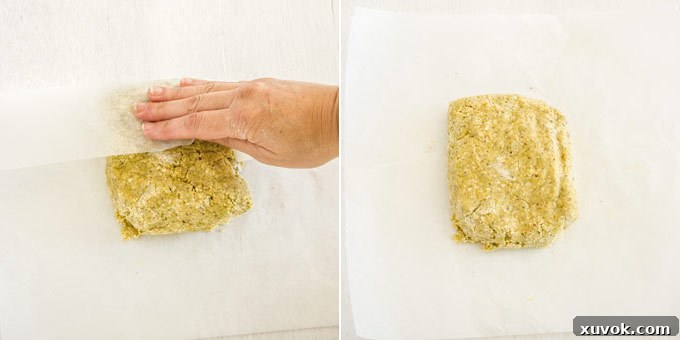
Turn the freshly made dough out onto a piece of baking paper. Utilize the baking paper to gently gather and press the dough into a flat, round disk. This method is vital for pastry, as it minimizes direct hand contact. The heat from your hands can easily melt the butter in the dough, which could lead to a less tender and crisp crust. Once formed, wrap the dough tightly in the same piece of baking paper and refrigerate it for at least 30 minutes. This essential chilling period allows the gluten in the flour to relax, preventing the crust from shrinking excessively during baking, and simultaneously firms up the butter, which contributes significantly to a superior, flakier texture.
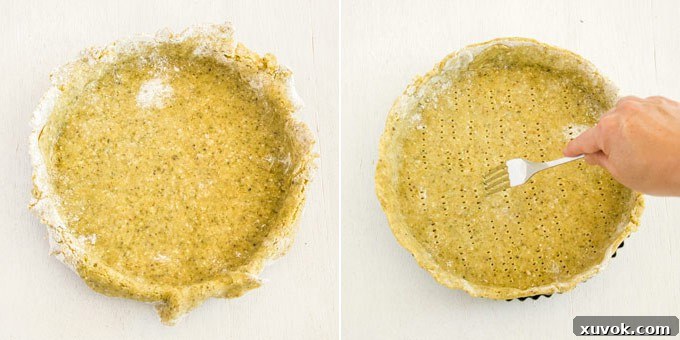
Once thoroughly chilled, dust a large, clean sheet of baking paper with a light coating of flour and place the dough on top. Dust the top of the dough with a little more flour to prevent sticking, then use a rolling pin to roll it out evenly into a large circle, approximately 3mm (about 1/8 inch) thick. Ensure the rolled-out circle is wide enough to comfortably fit your 9-inch fluted tart tin with a removable base, allowing for sufficient overhang around the edges. To transfer the dough without tearing, rest your entire arm underneath the baking paper and pastry to lift it. With your other hand, hold the tart tin and its base together, then carefully invert it over the pastry as you simultaneously flip the pastry towards it. Gently peel away the baking paper, then carefully nudge and press the pastry down into the fluted edges and corners of the tin, ensuring a neat and even fit. Use kitchen scissors to trim the excess pastry, leaving about 1cm (approximately ½ inch) overhang. This slight overhang helps to counteract any potential shrinkage during baking and creates a professional finish. Freeze the lined tart tin for an additional 15 minutes. This quick chill is crucial as it helps the pastry hold its shape remarkably well during the blind baking process. After freezing, prick the base of the pastry all over with a fork to create vents for steam, preventing the crust from puffing up. Line the shell with a fresh piece of baking paper and fill it with baking weights or dried beans. Bake for 20 minutes in your preheated oven (180°C / 350°F / 160°C fan forced).
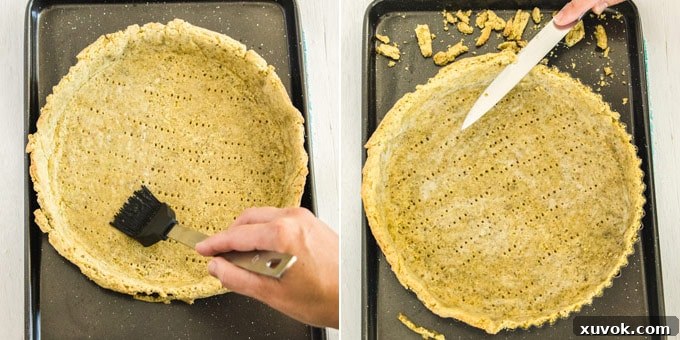
After the initial 20-minute bake, carefully remove the baking paper and baking weights from the tart shell. Whisk one egg white lightly until just frothy, then brush it generously and thoroughly over the entire inside surface of the partially baked tart shell, covering both the base and sides. This egg wash serves as a crucial sealant, creating a protective barrier that prevents the creamy panna cotta filling from making the delicate pistachio crust soggy. For a clean and professional finish, take a sharp knife and lay it flat against the top edge of the tart tin. With swift, even strokes, trim away any remaining overhanging pastry, creating a perfectly neat and straight edge. Return the tart shell to the oven and bake for an additional 20 minutes, or until the crust is beautifully golden brown and thoroughly cooked through. Do not worry about any minor hairline cracks that might appear; they will be effectively sealed by the egg wash and will not compromise the final structure or taste. Once baked, remove the tart shell from the oven and allow it to cool completely. For the best results and to aid in quicker panna cotta setting, carefully place the cooled tart shell in the freezer until it is cold to the touch; this critical step helps to minimize any risk of leaks and ensures a perfectly set panna cotta.
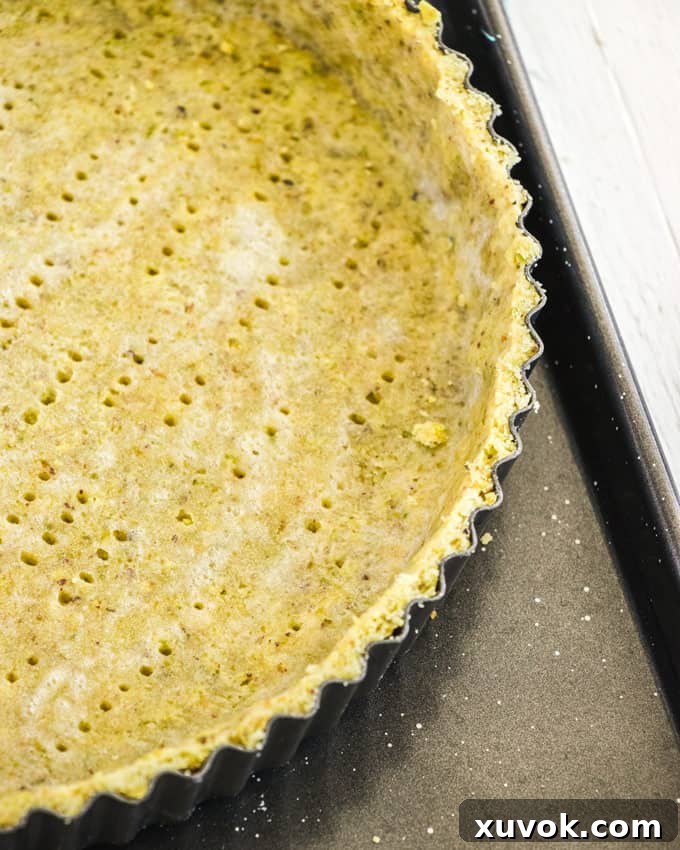
Crafting the Luscious Rose Panna Cotta Filling
The heart of this dessert is the creamy, fragrant rose panna cotta. It’s surprisingly simple to make, yet yields an incredibly elegant result that melts in your mouth.
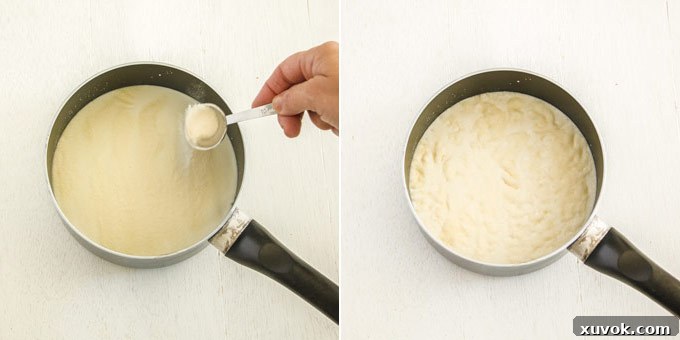
In a small, heavy-bottomed saucepan, pour the cold whole milk and add the caster (superfine) sugar. Evenly sprinkle the powdered gelatine over the surface of the milk-sugar mixture. Allow the gelatine to “bloom” undisturbed for approximately 5 minutes; during this time, it will absorb the liquid, swell, and take on a slightly wrinkled appearance. This crucial step is vital for ensuring a perfectly smooth panna cotta, free from any gritty texture. Gently place the saucepan over very low heat and stir continuously for 1-2 minutes until both the sugar and the gelatine are fully dissolved. It is paramount not to let the mixture boil or even simmer; the milk should only be warm enough to dissolve the solids. Once dissolved, immediately remove the saucepan from the heat. Stir in the heavy cream, the delicate rose water essence (remember to add a little at a time, tasting as you go, to achieve your desired intensity, as noted previously), and a tiny pinch of salt. Mix thoroughly until all ingredients are well combined and the panna cotta mixture is homogenous and silky smooth.
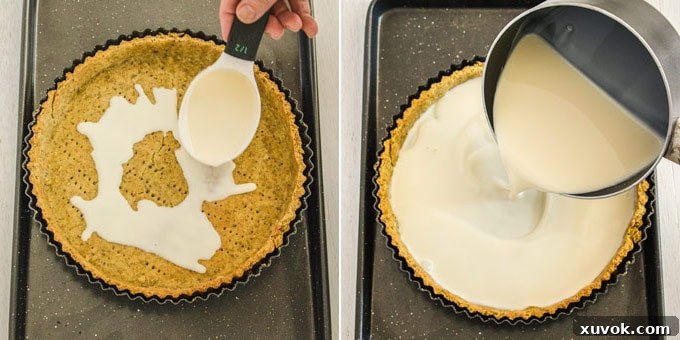
To ensure a perfectly sealed base and absolutely prevent any leakage of the delicate panna cotta, pour just half a cup of the prepared panna cotta mixture into the thoroughly chilled and frozen tart shell. Gently swirl it around to ensure the bottom of the crust is evenly coated with this initial thin layer. Immediately return the tart shell to the freezer for 10 minutes; this quick freeze creates a fast-setting, protective seal on the base. Once this initial layer is slightly firm to the touch, carefully pour the remaining panna cotta mixture into the tart shell, filling it almost to the top. Carefully transfer the tart, ensuring it remains perfectly flat and level, to the refrigerator. Allow it to set for a minimum of 2 hours, or ideally until it is completely firm and exhibits its characteristic gentle wobble. Proper setting is absolutely key to achieving the panna cotta’s delightful, creamy texture and ensuring its structural integrity within the tart.
The Shimmering Rose Jelly Topping
The final touch is a beautiful, naturally colored rose jelly that adds a lovely sheen, a hint of freshness, and another layer of subtle rose flavor.
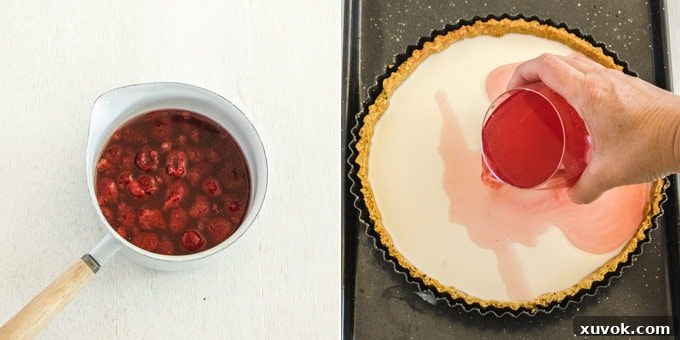
In another small saucepan, combine the water and the remaining sugar. Evenly sprinkle the powdered gelatine over the surface of the water-sugar mixture and let it sit undisturbed for a few minutes to bloom. This pre-soaking helps the gelatine dissolve smoothly later. Heat the mixture over very low heat, stirring continuously, until both the sugar and the gelatine have completely dissolved. Once dissolved, add the frozen raspberries and the remaining rosewater essence to the saucepan. Stir gently and, using the back of a spoon or a fork, carefully press down on the raspberries as the mixture warms. The raspberries will begin to release their beautiful natural color and juices, gradually turning the liquid a lovely, vibrant shade of pink. Continue to stir until the color is consistent and the raspberries have softened slightly, infusing the jelly with their fruity notes.
Carefully pour the liquid through a fine-mesh strainer into a small jug or spout-equipped container. This crucial step removes any raspberry seeds or pulp, ensuring that your rose jelly topping is perfectly smooth, beautifully clear, and free from any unwanted textures. Once the rose panna cotta layer in the tart is completely and firmly set, gently and slowly pour the strained rose jelly mixture over its surface. Take care to pour evenly to create a smooth, glistening layer. Return the tart to the refrigerator and allow the rose jelly to set for approximately 1 hour before serving. This final chill ensures all layers are firm, distinct, and ready to be enjoyed as a harmonious and visually stunning dessert.
Click here to Pin this exquisite recipe for later!
Storing and Serving Your Pistachio Rose Panna Cotta Tart
To maintain the integrity, delicate texture, and exquisite flavor of your Pistachio Rose Panna Cotta Tart, proper storage is absolutely crucial. This elegant dessert is best enjoyed when served perfectly chilled, directly from the refrigerator, ensuring each spoonful is a refreshing delight.
Given that panna cotta is fundamentally a milk-based gelatin dessert, it is inherently susceptible to melting and losing its structure if left at room temperature for an extended period. Therefore, it is essential to always keep the tart refrigerated until just before you plan to serve it. While the tart is surprisingly robust and capable of holding its beautifully distinct layers and overall shape for about half an hour at room temperature (a testament confirmed during various photo shoots), for optimal freshness, pristine presentation, and the best textural experience, maintaining its chill is key. The firm, distinct layers and the delightful wobble of the panna cotta are best preserved in a consistently cool environment.
For storage, carefully place the entire tart in an airtight container in the refrigerator. This not only helps to preserve its freshness but also prevents it from absorbing any unwanted odors from other foods, and crucially, it helps to keep the delicate pistachio pastry crisp for a longer duration. It is important to note that this particular tart is not suitable for freezing. The intricate and delicate texture of both the panna cotta and the rose jelly, along with the desired crispness of the tart crust, will unfortunately be compromised upon thawing, resulting in a less-than-ideal consistency. For the finest quality, optimal flavor, and the crispest pastry, it is highly recommended to serve this tart within 1 to 2 days of making it. Beyond this timeframe, while the tart will certainly still be delicious and maintain its overall shape, the pistachio pastry crust may gradually begin to soften, diminishing some of its initial, satisfying crispness.
Understanding Rose Water: A Key Ingredient for Delicate Flavor
Rose water, or rosewater essence, is the quintessential ingredient that infuses this panna cotta tart with its signature delicate yet captivating floral aroma. The specific brand and type of rose flavoring you choose to use can significantly impact the final taste profile of your dessert. Personally, I frequently use Queen Fine Foods Rosewater Essence, which I find consistently delivers a lovely, subtle, and well-balanced floral note. However, it’s a well-known fact in baking that rose extracts and essences from different manufacturers can vary greatly in their intensity and concentration.
Therefore, my strongest and most important recommendation for this recipe is to always add your rose flavoring little by little, tasting as you go. This iterative approach is paramount to ensure you achieve the perfect balance that harmonizes with your personal palate, effectively preventing the flavor from becoming overpowering or “soapy.” Begin with half the amount recommended in the recipe, mix it thoroughly, then taste. If you desire more floral intensity, gradually add small increments, tasting after each addition, until you are absolutely delighted with the subtle, aromatic notes that the rose imparts.
My enthusiasm and devotion to panna cotta continue to grow with each new and exciting flavor combination I explore. Beyond the exquisite Pistachio Rose Panna Cotta Tart, I’ve had the immense pleasure of creating and sharing a diverse array of other popular panna cotta recipes, each offering its own unique charm. If you find yourself captivated by the creamy indulgence of this set dessert and are seeking further inspiration, I encourage you to explore other delightful variations. Consider trying my simple yet elegantly satisfying Vanilla Panna Cotta with Orange Syrup, a festive and comforting Christmas Panna Cotta, or the uniquely spiced and textured Chai Panna Cotta with Pistachio Brittle. Each recipe offers a distinct and memorable experience, beautifully showcasing the incredible versatility and timeless appeal of this beloved Italian dessert tradition.
More Dessert Inspirations You’ll Adore
If you’ve fallen in love with the elegance and flavor profile of this Pistachio Rose Panna Cotta Tart, you’ll surely appreciate these other delightful and inspiring dessert recipes from our collection:
- Coconut Panna Cotta with Raspberry Sauce: A delightful tropical twist on the classic panna cotta, featuring a creamy coconut base perfectly complemented by a vibrant and tangy raspberry sauce.
- Rose Strawberry Lamingtons: Experience the delicate fusion of soft sponge cakes infused with subtle rose and sweet strawberry flavors, all coated in a classic coconut dusting.
- Baklava Frangipane Tart: A rich, profoundly nutty, and exquisitely honey-sweet tart, creatively inspired by the intricate layers and flavors of traditional baklava.
- Buttermilk Panna Cotta with Blood Orange Jelly: A wonderfully tangy and refreshingly light panna cotta, elevated by a luscious blood orange jelly – perfect for citrus enthusiasts.
- Fresh Peach Panna Cotta Tart: A seasonal triumph combining the creamy indulgence of panna cotta with the juicy sweetness and tender texture of ripe, fresh peaches, encased in a crisp tart shell.
- Almond Honey Panna Cotta: A truly comforting and sweet panna cotta, enriched with the warm, inviting notes of almond and the natural sweetness of honey.
Want more delicious recipes and exclusive culinary tips delivered straight to your inbox? Sign up for our exclusive newsletter today! Don’t miss out on daily inspiration and behind-the-scenes content by following us on Pinterest, Instagram, and Facebook. Connect with our community and share your culinary adventures!
Pistachio Rose Panna Cotta Tart Recipe
Yield: 10 serves
Prep Time: 20 minutes
Cook Time: 25 minutes
Setting Time: 3 hours
Total Time: 3 hours 45 minutes
Pistachio Rose Panna Cotta Tart, with its pistachio tart crust, rose panna cotta filling and rose jelly topping, is a beautiful tart just perfect for a special occasion.
This recipe requires setting time, so make sure to plan ahead.
Print Recipe
Pin Recipe
Ingredients
For the Pistachio Tart Shell
- 100 g pistachios (3.5oz)
- 1 ¼ cups plain (all-purpose) flour (163g / 6oz)
- ⅓ cup icing (confectioners / powdered) sugar
- ½ teaspoon salt
- 113 g unsalted butter, chilled, cut into cubes (1 stick / ½ cup / 4oz)
- 1 – 1 ½ tablespoons ice water (20-30ml) (see notes 1)
- 1 egg white, lightly beaten
For the Rose Panna Cotta
- 1 cup whole milk (250ml)
- 2 teaspoons powdered gelatine (recommended brand link)
- 2 tablespoons caster (superfine) sugar (see notes 3)
- 1 cup cream (250ml)
- 1 teaspoon rosewater essence (recommended brand link) (see notes 2)
- pinch of salt
For the Rose Jelly
- 1 cup water
- 1 tablespoon sugar (see notes 1)
- 1 handful of raspberries
- 1 teaspoon powdered gelatine (recommended brand link)
- ½ teaspoon rosewater essence (recommended brand link) (see notes 2)
Toppings
- ¼ cup pistachios (finely chopped) (recommended brand link)
- Dried rose petals (recommended brand link)
For best results, always weigh ingredients where a weight is provided.
Equipment
- Food processor
- Rolling Pin
- 9″ fluted tart tin with removable base
- Small saucepans (2)
- Fine-mesh strainer
- Measuring cups and spoons
- Kitchen Scissors
- Pie Weights / Baking Beads
- Sharp Knife
Instructions
For the Pistachio Tart Shell
- Preheat the oven to 180°C / 350°F (160°C fan forced). Line the base of a 9-inch fluted tart tin with a removable base with baking paper.
- Blitz the pistachios in a blender or food processor until very fine (the largest pieces should be no more than 1mm round).
- Add the finely ground pistachios, plain flour, icing sugar, and salt to the food processor and blitz until well combined. Add the chilled, cubed unsalted butter and pulse for only 5-10 seconds until the mixture resembles large breadcrumbs. Slowly drizzle in the ice water while the processor is running on low, stopping as soon as the mixture starts forming large clumps.
- Tip the dough out onto a piece of baking paper. Use the paper to help you gently pull the dough together into a flat disk. Wrap the dough in the baking paper and place it in the fridge for at least 30 minutes to chill and firm up.
- Dust a large sheet of fresh baking paper with flour and place the chilled dough on top. Dust the top of the dough with a little more flour, then use a rolling pin to roll it out evenly into a large circle, approximately 3mm thick. Ensure the circle is wide enough to cover your tart tin with some overhang.
- Carefully transfer the rolled dough into your prepared 9-inch fluted tart tin. Gently press the pastry down into the corners and fluted edges of the tin to ensure a neat and even fit. Using kitchen scissors, trim the overhang to approximately 1 cm above the lip of the tin, making sure the dough sits up straight.
- Freeze the lined tart shell for 15 minutes. Prick the base all over with a fork to allow steam to escape, then line the shell with baking paper and fill with baking weights or dried beans.
- Bake for 20 minutes. Carefully remove the baking paper and weights. Use a sharp knife, laid flat against the top of the tin, to trim away any excess pastry for a perfectly neat edge. Brush the entire inside surface of the partially baked tart shell with the lightly beaten egg white; this creates a crucial seal to prevent the panna cotta filling from making the crust soggy. Return the tart shell to the oven and bake for a further 20 minutes, or until golden brown and fully cooked. Any minor hairline cracks will be sealed by the egg wash.
- As soon as the tart tin is cool enough to handle, carefully place the baked shell in the freezer until it is completely cold. This rapid cooling helps the panna cotta set more quickly and significantly reduces any risk of leakage or the base becoming soggy.
For the Rose Panna Cotta
- Pour the cold whole milk into a medium saucepan. Evenly sprinkle the powdered gelatine over the top and allow it to “bloom” for about 5 minutes until it appears slightly wrinkled.
- Place the saucepan over low heat and stir continuously for 1-2 minutes until the gelatine has fully dissolved. Do not let the milk come to a simmer or boil; it should only be warm enough to dissolve the gelatine.
- Add the caster sugar and continue to stir for another minute or two until the sugar is completely dissolved. Remove the saucepan from the heat.
- Pour in the heavy cream, rose water essence (add gradually and taste to achieve your preferred level of floral flavor, as per the notes), and a pinch of salt. Mix thoroughly until all ingredients are well combined and the panna cotta mixture is smooth.
- Pour approximately ½ cup of the prepared panna cotta mixture into the thoroughly frozen tart shell. Gently swirl it around to ensure the bottom of the crust is evenly coated. Return the tart shell to the freezer for 10 minutes; this creates a quick-setting, protective layer that prevents any leakage.
- Once the initial layer is slightly set, pour the remaining panna cotta mixture into the tart shell. Carefully transfer the tart, ensuring it remains perfectly flat, to the refrigerator. Allow it to set for a minimum of 2 hours, or until the panna cotta is completely firm and wobbly.
For the Rose Jelly
- In a small saucepan, combine the water and sugar. Sprinkle the powdered gelatine evenly over the surface and let it sit for a couple of minutes to bloom.
- Heat the mixture over low heat, stirring continuously, until both the sugar and gelatine have completely dissolved.
- Add the frozen raspberries and rosewater essence to the saucepan. Stir and gently press down on the raspberries with a spoon. As they warm, they will release their natural juices, turning the liquid a beautiful pink color. Continue to stir until the color is vibrant and the raspberries have softened slightly.
- Carefully pour the liquid through a fine-mesh strainer into a small jug. This step ensures a smooth, seedless, and beautifully clear rose jelly.
- Once the rose panna cotta layer in the tart is completely set, gently and slowly pour the strained rose jelly mixture over its surface.
- Return the tart to the refrigerator and allow the rose jelly to set for approximately 1 hour before serving. This final chill ensures all layers are firm, distinct, and ready to be enjoyed.
Notes
- I use a standard Australian 20ml tablespoon (which is equivalent to 4 teaspoons worldwide). Adjust accordingly based on your local measurement standards.
- I use Queen Fine Foods Rosewater Essence. If you’re using a different brand, always add your rose flavoring a little at a time and taste as you go until you achieve your desired flavor intensity. Essences and extracts can vary significantly in strength.
- For the most accurate results, especially with baking, it is always recommended to weigh ingredients like flour and sugar using a kitchen scale. If a scale is unavailable, use the spoon and level method (scoop flour into the measuring cup, then level off with a straight edge) rather than scooping directly from the bag to avoid compacting the flour.
- To store the tart in the fridge without plastic wrap sticking to the delicate surface (which can ruin the appearance), use a large round plastic container that covers the entire tart, or gently place a plate over the top of the tart tin to protect it.
Have you tried this Pistachio Rose Panna Cotta Tart recipe?
Don’t forget to leave a rating and comment below and let us know how it was! We love hearing from you. Please note: Nutrition information is approximate and derived from an online calculator. The specific brands and quantities of ingredients you use may cause variations.
Author: Marie Roffey
Course: Afternoon Tea, Dessert, High Tea, Sweets
Cuisine: Italian, Various
Calories: 297 kcal (approximate)