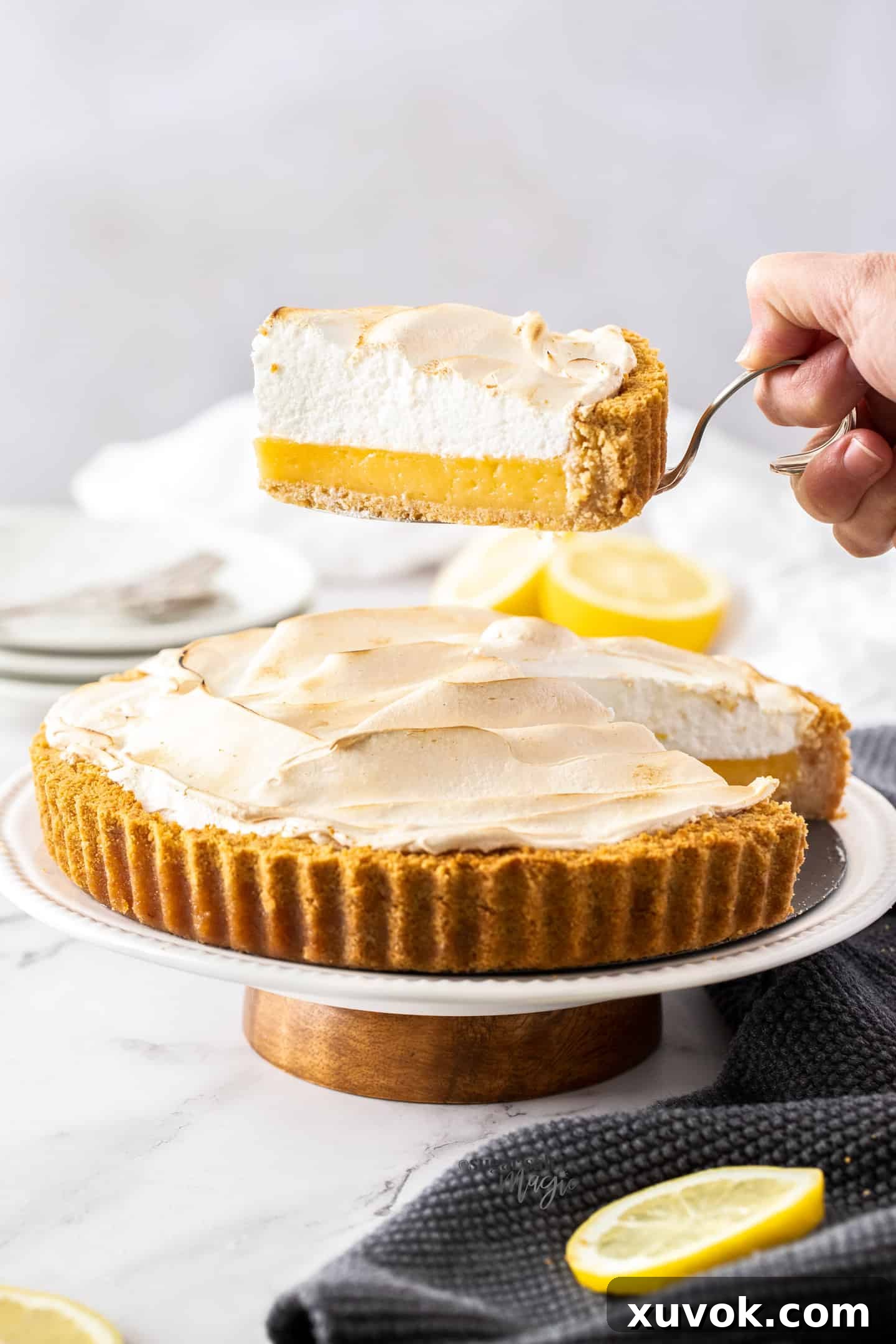
Forget the fuss of a traditional pastry base! This Biscuit Base Lemon Meringue Pie offers an irresistibly easy and equally delicious take on a timeless dessert. In what feels like no time at all, you can whip up a crunchy, buttery cookie crust, ready to cradle a luscious, tangy lemon filling and a cloud-like, light-as-air meringue topping. It’s a delightful departure from the classic, proving that sometimes, the simplest methods yield the most sensational results.
If you love the zesty brightness of citrus desserts, be sure to also try our Sky-High Lime Meringue Pie for a vibrant twist, or indulge in these adorable Lemon Meringue Pie Cookies for a bite-sized treat.

What is Lemon Meringue Pie? A Classic Reimagined
Lemon meringue pie is a beloved dessert celebrated for its harmonious blend of tart, sweet, and rich flavors. Traditionally, it features three distinct layers: a crisp, flaky pastry crust, a smooth and tangy lemon custard filling, and a towering, billowy meringue topping that is often lightly toasted to golden perfection. Once baked and cooled, the pie is typically sliced into elegant wedges, revealing the beautifully defined layers that make this dessert so iconic.
While the exact origins of lemon meringue pie are somewhat debated and remain a little vague, culinary historians suggest that versions of this delightful confection began appearing in both French and American kitchens as early as the 19th century. Over the centuries, it has evolved into a staple on dessert tables worldwide, a testament to its enduring appeal and classic charm. This recipe honors that tradition while simplifying the crust to make it accessible for even the most novice bakers, ensuring you can enjoy this historical treat with modern ease.
Why You’ll Adore This Easy Lemon Meringue Pie Recipe
This biscuit base lemon meringue pie isn’t just another dessert; it’s a revelation in simplicity and flavor. While traditional lemon meringue pie often intimidates home bakers with its demanding pastry crust, this recipe completely eliminates that hurdle, offering a stress-free alternative without compromising on taste or texture. You’re going to love it for several compelling reasons:
- Effortless Biscuit Base: The star of this simplified recipe is undoubtedly the biscuit (or cookie) base. It’s incredibly quick to prepare, requiring no laborious rolling, chilling, or blind baking. Just crush, mix, press, and bake! This makes it a fantastic option for busy days or when you want an impressive dessert without the usual fuss. Despite its ease, this base delivers a delightful crunch and a buttery flavor that perfectly complements the vibrant lemon filling.
- Perfectly Balanced Lemon Filling: The lemon custard filling is a masterpiece of sweet and tangy harmony. It’s rich, smooth, and bursting with fresh lemon flavor, providing that essential zing that cuts through the sweetness of the meringue. Made with fresh lemon juice and zest, it’s a bright and refreshing core to the pie that will awaken your taste buds.
- Fluffy, Sweet Meringue: Topping off this incredible pie is a luscious, airy meringue. It’s whipped to perfection, creating a light, cloud-like texture that melts in your mouth. When baked, it forms beautiful golden peaks, adding both visual appeal and a delicate sweetness that balances the tart lemon.
- Nostalgic Comfort: For many, lemon meringue pie evokes cherished childhood memories. Growing up, I was fortunate enough to enjoy homemade lemon meringue pie, lovingly prepared by both my mum and dad (though with pastry!). This recipe, in its simplified form, still carries that warmth and heart, making it a truly comforting and close-to-my-heart dessert. It’s a recipe that tastes like home, without the complexity.
- A Guaranteed Crowd-Pleaser: Whether you’re hosting a dinner party, bringing a dish to a potluck, or simply treating your family, this lemon meringue pie is sure to impress. Its stunning appearance and incredible flavor make it an unforgettable dessert that will have everyone asking for the recipe.
Essential Tools for Your Lemon Meringue Pie
Gathering the right equipment before you begin will make the baking process smooth and enjoyable. Here are the key tools you’ll need to create this magnificent pie:
- A food processor is incredibly helpful for quickly transforming biscuits into fine crumbs for your base.
- A sturdy pie dish or a 23cm / 9-inch fluted tart tin with a removable base is perfect for molding and baking your crust.
- You’ll need a heavy-based saucepan to cook your silky lemon filling evenly without scorching.
- For whipping the meringue, a stand mixer offers a hands-free experience, but an electric hand mixer works just as well.
Key Ingredients for a Perfect Lemon Meringue Pie
One of the beauties of this recipe lies in its simplicity, requiring just a handful of very common, everyday ingredients. Despite the short list, each ingredient plays a crucial role in creating the perfect balance of flavors and textures.
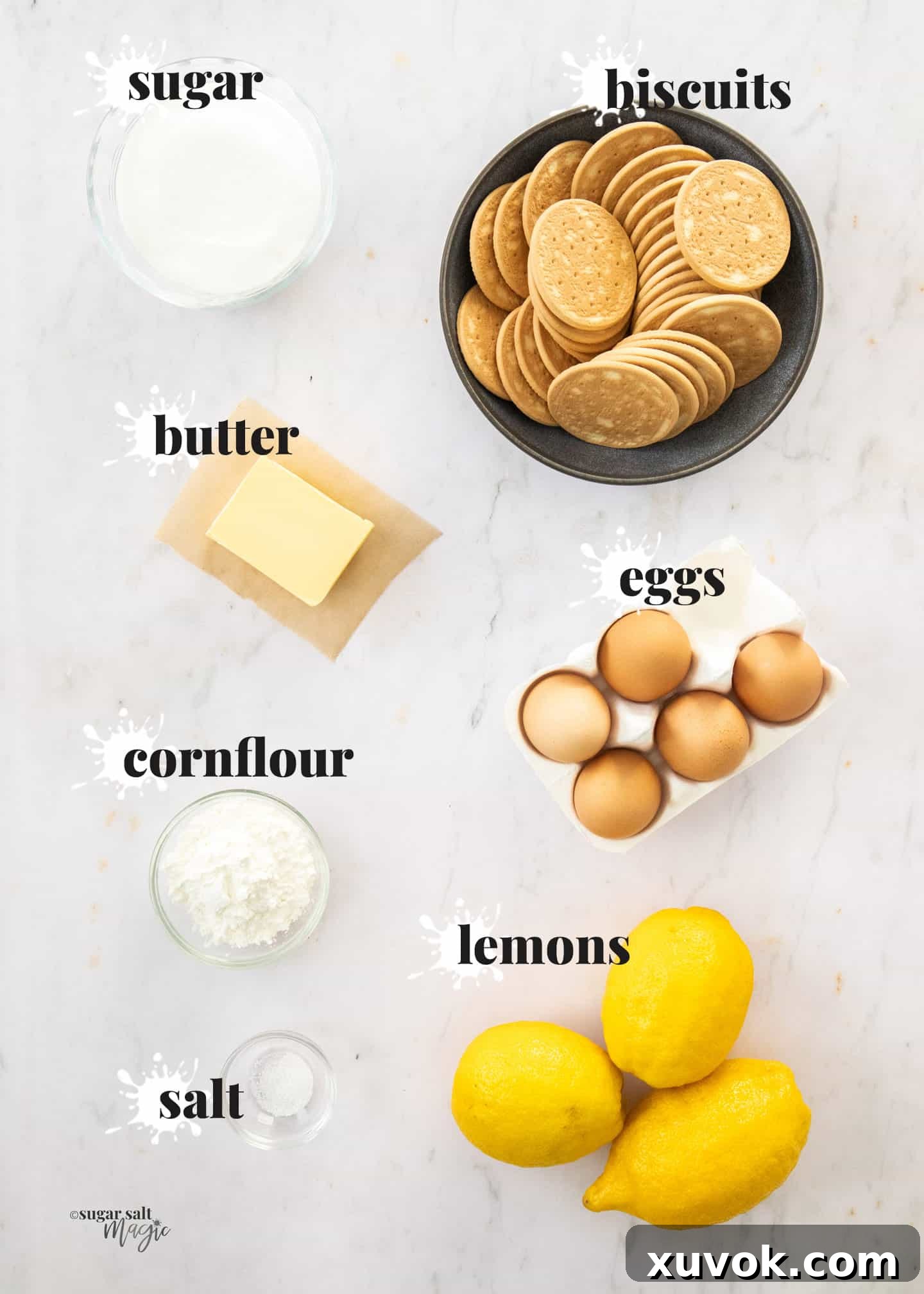
You’ll find detailed quantities and complete instructions in the recipe card at the bottom of this post.
- Lemons: It simply wouldn’t be lemon meringue pie without the star ingredient! You’ll need about 3-4 fresh, vibrant lemons, utilizing both their finely grated zest for intense aroma and their freshly squeezed juice for that essential tartness. Fresh lemons are non-negotiable for the best flavor.
- Biscuits / Cookies: For the crust, opt for simple, plain sweet biscuits or cookies. Varieties like Arnotts Marie, Milk Coffee, or Milk Arrowroot work wonderfully. Graham crackers are an excellent choice if you’re in the US. Avoid strongly flavored biscuits like digestives, as they can overpower the delicate lemon notes.
- Butter: Used in both the biscuit base and the lemon filling, unsalted butter is preferred here. This allows you to control the overall saltiness of the pie, ensuring a perfectly balanced flavor profile. It adds richness and helps bind the crust and create a silky filling.
- Sugar: While regular white granulated sugar can be used, caster (superfine) sugar is highly recommended, especially for the meringue. Its finer crystals dissolve more quickly, which helps prevent overwhipping your meringue and contributes to a smoother, glossier finish.
- Eggs: Eggs are critical to all three layers of this pie. The whites and yolks are used separately. You’ll use egg whites to bind the biscuit base and create the fluffy meringue, while the rich egg yolks are essential for thickening and enriching the lemon custard. Using large, free-range eggs often yields the best results.
- Cornflour / Cornstarch: This versatile ingredient plays a dual role. In the lemon filling, it acts as a primary thickener, working in conjunction with the egg yolks to create a luscious, stable custard. In the meringue, a touch of cornflour helps stabilize the egg whites, contributing to a perfect texture and significantly helping to prevent dreaded weeping.
- Salt: Just a small pinch of salt is all that’s needed to enhance and intensify the vibrant flavors of the lemon and balance the sweetness throughout the pie.
For those with dietary considerations, it’s very easy to make this a gluten-free lemon meringue pie. Simply replace the standard biscuits/cookies with a certified gluten-free version. Always double-check that your cornflour/cornstarch is also gluten-free, as some brands may contain trace amounts of gluten.
Crafting Your Easy Lemon Meringue Pie: A Step-by-Step Guide
This delightful dessert is composed of three distinct yet surprisingly simple layers. Breaking down the process makes it incredibly manageable for any home baker. Here’s how to create each component, step by step, for a perfectly balanced and visually stunning lemon meringue pie.
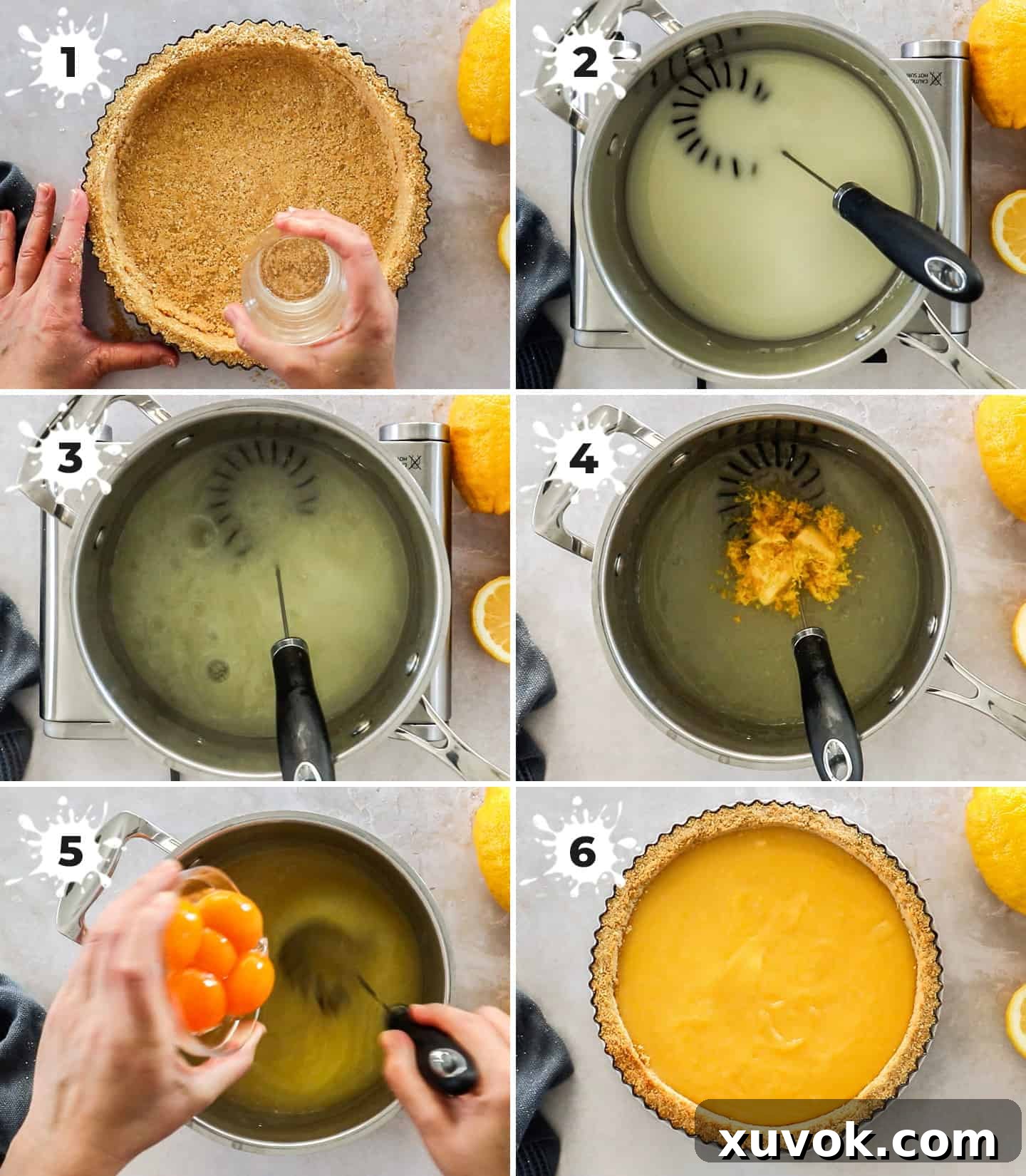
Detailed measurements and precise instructions can be found in the recipe card below.
Creating the Quick and Crunchy Biscuit Base
Say goodbye to fussy pastry! This biscuit base is incredibly quick and reliable:
- Prepare the Crumb Mixture: Begin by processing your chosen biscuits or cookies into fine, even crumbs using a food processor. Once finely crushed, combine these crumbs with one whisked egg white and the melted butter. Mix until the texture resembles wet sand – it should be moist enough to hold together when pressed.
- Mold and Bake the Base: Transfer the crumb mixture into your pie dish or tart tin. Use the bottom of a glass or a flat measuring cup to firmly press the mixture down onto the bottom and up the sides of the tin. It might feel a bit loose at first, but continuous firm pressure will create a solid, even crust. This pressure is key! Once molded, bake the base for about 10 minutes to set its shape and achieve that perfect crunch.
Should you prefer a traditional pastry crust, you are welcome to use our reliable shortcrust pastry recipe as an alternative.
Crafting the Silky Lemon Curd Filling
This is where the magic of the lemon truly comes alive:
- Begin with the Gel: In a heavy-based saucepan, whisk together the sugar, cornflour, lemon juice, and water until smooth. Place the saucepan over medium heat, bringing the mixture to a boil. Continue to cook, whisking constantly, until the mixture thickens considerably and large bubbles begin to pop on the surface. This is your initial gel, ensuring a stable filling.
- Incorporate Butter and Zest: Remove the saucepan from the heat immediately. Add the chopped unsalted butter and the fragrant lemon zest to the hot gel. Whisk vigorously until the butter has completely melted and is fully incorporated, making the filling smooth and glossy.
- Temper and Thicken with Yolks: While continuously whisking the hot mixture vigorously, quickly pour in the egg yolks. This rapid whisking is crucial to prevent the yolks from scrambling in the heat, ensuring a smooth custard. Return the saucepan to the heat for another minute or so, allowing the custard to reach a temperature of 71°C (160°F) to ensure the eggs are safely cooked. Once done, pour the luscious lemon filling into your pre-baked tart shell. Allow the custard to cool slightly and set while you prepare the meringue topping.
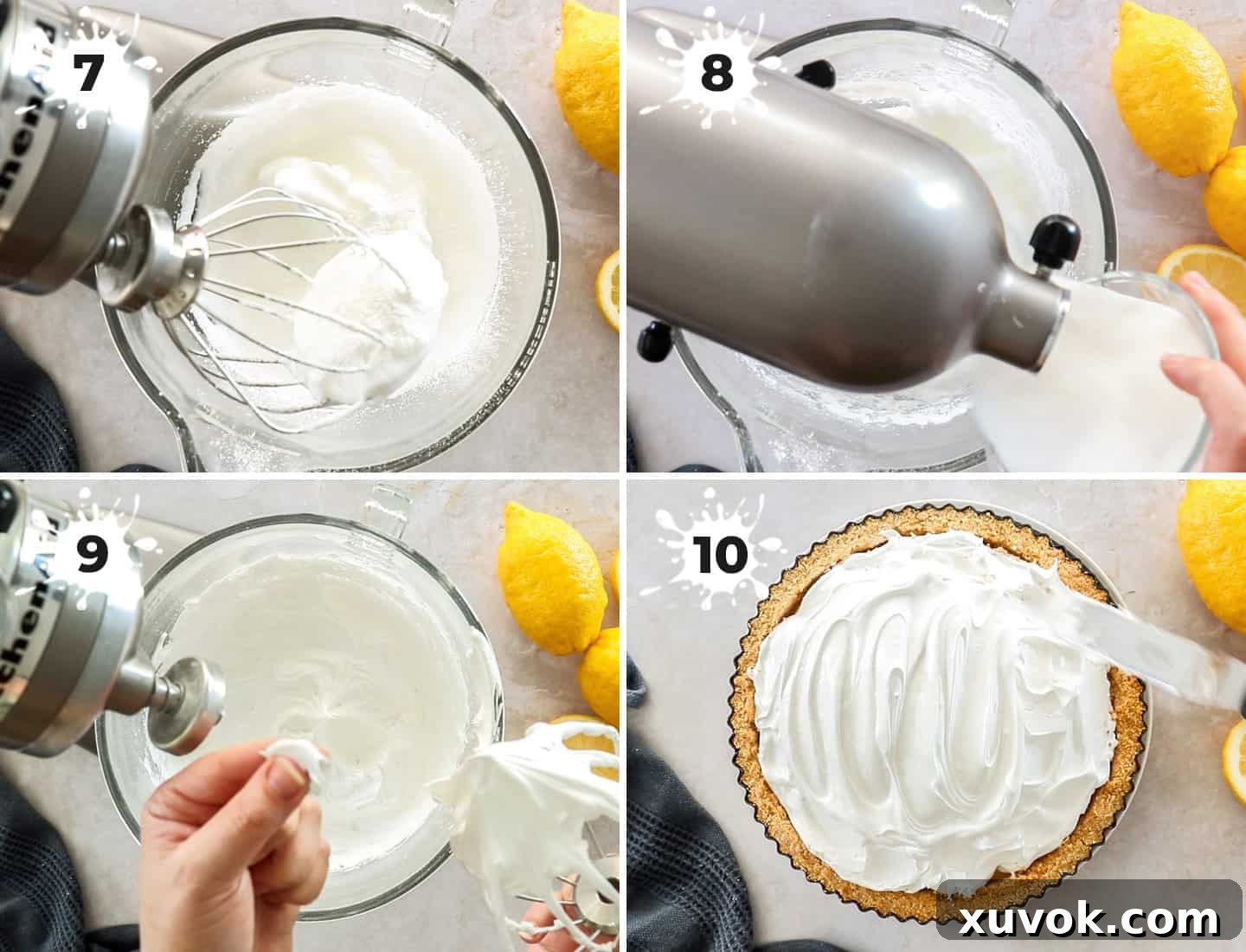
Achieving the Perfect Fluffy Meringue Topping
The crowning glory of your pie:
- Whip Egg Whites to Soft Peaks: In a very clean, dry bowl (preferably a stand mixer bowl), whisk the cold egg whites on medium-high speed until they become fluffy and form soft peaks when the whisk is lifted. At this stage, the peaks will hold their shape but gently droop at the tip. Be careful not to overwhip them at this initial stage.
- Fold in Cornflour: Sift the cornflour directly over the whipped egg whites. Gently beat it through on low speed until it is just combined. The cornflour is essential for stabilizing the meringue and preventing weeping.
- Gradually Add Sugar for Stiff Peaks: With the mixer running on low speed, add the caster (superfine) sugar one tablespoon at a time, allowing about 20 seconds between each addition. This slow process ensures the sugar dissolves properly. Once all the sugar is incorporated, increase the mixer speed to high and continue to beat until the meringue is thick, incredibly glossy, and has reached stiff peak stage. You’ll know it’s ready when you lift the whisk and the peaks stand tall and firm, with maybe just a tiny curl at the very tip.
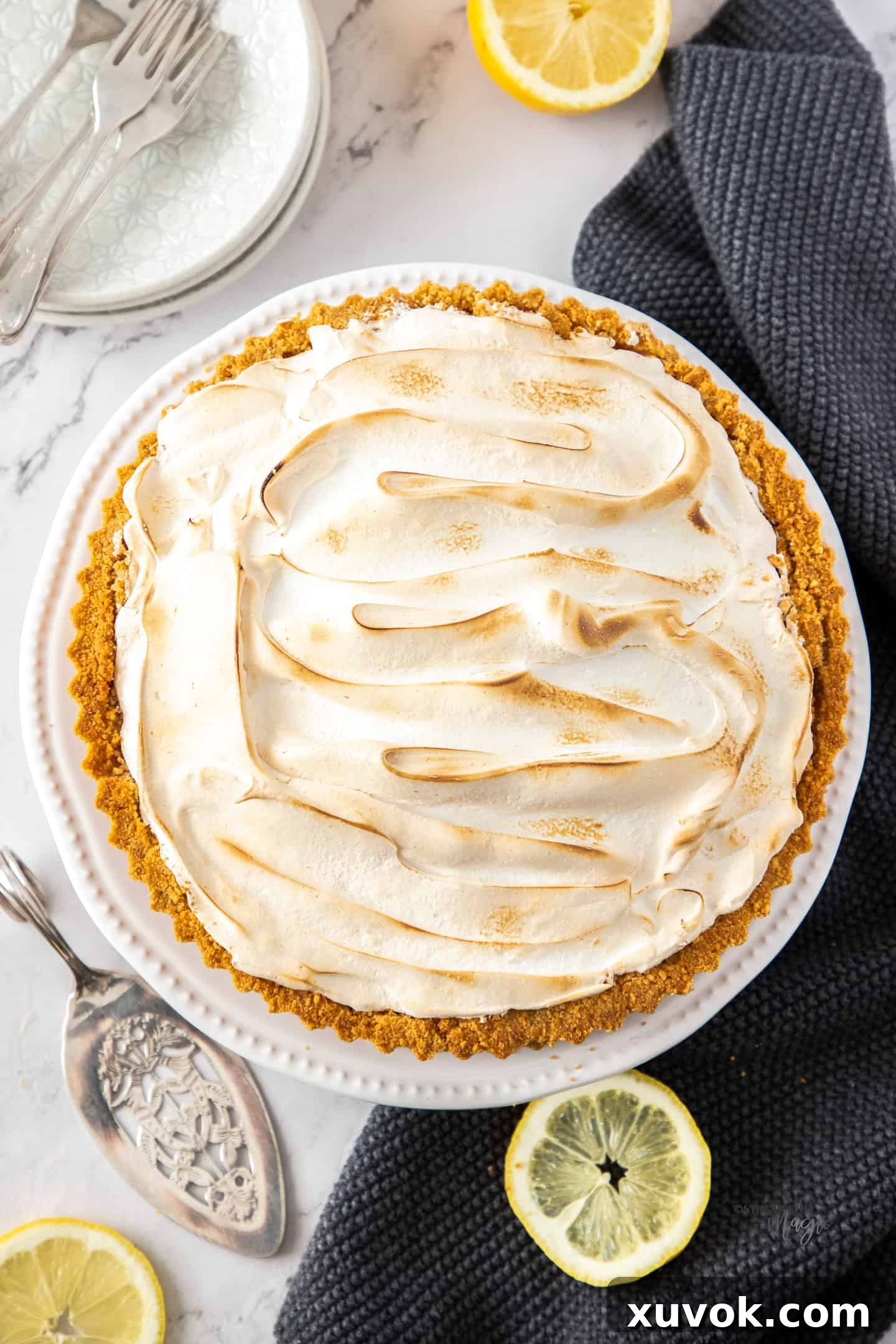
- Spread Over Filling: To ensure all sugar crystals are dissolved, rub a small amount of meringue between your thumb and forefinger. If it feels grainy, continue beating for another minute or so until smooth. Once perfect, gently spoon the meringue over the slightly cooled lemon filling. Spread it out, ensuring it touches the crust all the way around the edge of the pie – this creates a seal and helps prevent weeping. Create beautiful peaks or artistic swirls with your spatula for an appealing finish.
- Bake to Golden Perfection: Bake the pie for 15-20 minutes, or until the meringue peaks turn a beautiful golden brown. For an extra toasted, artisanal look, you can use a kitchen blowtorch to caramelize the meringue peaks further once the pie has cooled.
If you desire a more decorative look, feel free to pipe your meringue onto the pie using a star tip for elegant rosettes or other intricate patterns.
Expert Tips for a Flawless Pie
Achieving a show-stopping lemon meringue pie is easier than you think with a few simple techniques and considerations:
- Mastering the Biscuit Base: The biscuit base might initially feel loose and crumbly, but persistence is key.
- Start by tipping all the crumbs into the center of your tart tin, then gently level them out.
- Use a flat-bottomed glass or measuring cup to firmly press the crumbs, starting from the center and working your way outwards. Apply consistent, strong pressure.
- When shaping the sides, place your thumb or fingers over the top edge of the crumbs, pressing downwards, while simultaneously pushing the glass upwards against the sides. This technique ensures a stable and evenly shaped crust that will hold beautifully once baked thanks to the egg white binder.
- Smooth Lemon Filling is Paramount: To prevent a lumpy filling, it is absolutely crucial that you stir constantly as the gel cooks on the stovetop. This ensures the cornflour fully dissolves and thickens evenly, resulting in a perfectly smooth, silky custard.
- Adding Egg Yolks Safely: The moment you add the egg yolks to the hot lemon mixture, you must whisk vigorously without interruption. This rapid whisking tempers the yolks, preventing them from scrambling and instead incorporating smoothly into the warm gel. If you’re new to this step and a little nervous, you can let the hot gel cool for a few minutes off the heat before adding the yolks.
- Ensuring Egg Safety: For complete peace of mind, especially with the raw egg yolks being cooked in the filling, you can use a digital thermometer to check that your lemon filling reaches the safe temperature of 71°C (160°F). If it hasn’t quite reached this temperature after you’ve added the yolks and whisked, a minute or two more over gentle heat (while whisking) will usually get it there.
Achieving Meringue Perfection: Essential Tips
While meringue may seem intimidating, it’s quite simple once you understand a few key principles and stages. Pay close attention to these tips for a stable, fluffy, and glossy topping:
- Cleanliness is Key: Always ensure your mixing bowl and whisk attachment are impeccably clean and completely free of any grease or fat. Even a tiny speck of oil can prevent egg whites from whipping up properly.
- Whip Egg Whites Alone First: Start by beating the egg whites on their own until they reach the soft peak stage. They should be uniformly white and fluffy, with no liquid egg white remaining at the bottom of the bowl. When you lift the whisk, the peaks will hold their shape but gently fold over at the very top.
- Slow and Steady Sugar Addition: The sugar must be added very slowly, gradually, to allow it sufficient time to dissolve into the egg whites. This slow dissolution is vital for creating a stable, glossy meringue that holds its shape and prevents weeping. A helpful trick is to count to 20 seconds between each tablespoon addition of sugar. Using a stand mixer is ideal for this, as it allows you to multitask while the mixer does its work.
- The Stiff Peak Stage: Once all the sugar is incorporated, increase the mixer speed to high and continue beating until the meringue is incredibly thick, smooth, and very glossy, reaching the stiff peak stage. When you slowly lift the whisk, the meringue should form firm, upright peaks that stand on their own, with perhaps only the very tip gently curling over.
- Avoid Overbeating: While achieving stiff peaks is crucial, do not overbeat the meringue. Overbeating can cause it to become dry, granular, and prone to deflating or weeping once baked. Stop beating as soon as stiff peaks are achieved and the sugar is dissolved.
- Cool the Filling Slightly: It’s beneficial to allow the lemon filling to cool and set a little before adding the meringue. Placing it in the fridge for about 15-30 minutes, or simply letting it sit at room temperature for half an hour, will firm it up just enough. This provides a more stable surface for spreading the meringue and prevents the hot filling from melting or collapsing the delicate meringue structure.

Troubleshooting: Why is My Lemon Meringue Pie Weeping?
Weeping – a frustrating watery layer that forms between the meringue and the lemon filling – is a common issue for many bakers. While this specific recipe, when followed correctly, has consistently yielded weep-free results for me, it’s helpful to understand the potential causes so you can avoid them.
- Seal the Edges: It’s absolutely essential that the meringue extends all the way to the edge of the crust, creating a complete seal. This barrier prevents air from getting between the meringue and the lemon layers. Because meringue is only baked for a relatively short time, exposure to air at its base can cause the sugar within it to “melt,” leading to the weeping phenomenon.
- Don’t Skip the Cornflour in Meringue: The cornflour (or cornstarch) added to the meringue is not just for texture; it’s a crucial stabilizer. It helps to absorb excess moisture, keeping it away from the sugar. When sugar comes into contact with moisture, it can dissolve and lead to weeping.
- Avoid Overbeating: Moisture beading or forming small droplets on the surface of your baked meringue is most often a sign of overbeating. When egg whites are whipped too aggressively or for too long, they can become unstable, causing the sugar to crystallize and release water.
- Warm vs. Cold Filling: There’s an ongoing debate among bakers about whether to add meringue to a warm or cold filling. Some believe a warm filling helps to “seal” and lightly cook the bottom of the meringue, preventing weeping. Others prefer a cool filling. In my experience, using a slightly warm filling (after it’s had a chance to set for about 30 minutes, as per this recipe) or a completely cold one has not resulted in weeping, as long as the other key steps (meringue to the edge, cornflour, correct whipping) are followed.
Storing Your Delicious Lemon Meringue Pie
While lemon meringue pie is truly at its peak when enjoyed on the day it’s made, any leftovers of this biscuit base version can be stored in the refrigerator overnight. It’s important to note a few things for optimal storage and serving:
- Cool Completely Before Slicing: For best results and clean, neat slices, it is absolutely vital that the pie cools completely before you attempt to cut into it. This means allowing it to cool at room temperature for at least 2 hours, then transferring it to the fridge, uncovered, for another 3-4 hours (or even overnight). If you try to slice it too soon, the delicate biscuit crust can be fragile and may crumble, and the filling might not be fully set, leading to a messy slice.
- Refrigerate Uncovered: When storing in the fridge, especially overnight, it’s best to leave the pie uncovered. Covering it tightly can trap moisture, which might cause the meringue to “weep” or become sticky. As long as your meringue securely touches the edges of the crust, creating a seal, it will store well uncovered.
- Plan Ahead for Serving: If you plan to serve the pie on the same day, make sure to prepare it early in the morning. This allows ample time for it to cool thoroughly and set completely, ensuring perfect slices every time.
PIN IT:
Click to PIN this recipe for later!

If you try this biscuit base lemon meringue pie recipe, please take a moment to leave a rating and comment below. I love hearing from you and it helps other readers too! You can also take a photo and tag @sugarsaltmagic on Instagram.
More Lemon Recipes You’ll Love
Can’t get enough of that zesty lemon flavor? Explore these other delightful lemon-infused recipes:
- Mini Lemon Meringue Pies
- Lemon Tartlets
- Lemon Vanilla Custard Slice
- Lemon Ricotta Cake
- Lemon Meringue Cake
- No Bake Lemon Meringue Cheesecake
Never Miss a Recipe!
Get the latest delicious recipes straight to your inbox by subscribing to our newsletter!

Biscuit Base Lemon Meringue Pie
8 serves
1 hour
30 minutes
6 hours
7 hours 30 minutes
This biscuit base lemon meringue pie is an easy take on a classic dessert. With just 7 ingredients, it’s crunchy cookie crust, perfectly tangy lemon filling and fluffy cloud-like meringue topping, this easy dessert will disappear in no time.
Important! This pie can take up to 6 hours to cool completely.
Rate
Pin
Ingredients
FOR THE BASE
- 250 g plain sweet biscuits (I use Arnotts Marie biscuits) (8.8oz) (notes)
- 100 g unsalted butter, melted (7 tablespoons / 3.5oz)
- 1 egg white
FOR THE FILLING
- ¾ cup caster (superfine) sugar (150g / 5.3oz)
- ⅓ cup cornflour (cornstarch) (40g / 1.3oz)
- pinch of salt
- ¾ cup lemon juice (180ml)
- 1 cup water (250ml)
- 42 g unsalted butter, chopped (3 tablespoons / 1.5oz)
- finely grated zest of 2 lemons (about 1 tablespoon)
- 5 egg yolks
FOR THE MERINGUE
- 4 egg whites, cold
- 3 teaspoons cornflour (cornstarch)
- 1 cup caster (superfine) sugar (200g / 7oz)
For best results, always weigh ingredients where a weight is provided
Equipment
-
food processor
-
pie dish or 9 inch fluted tart tin with removable base
-
Balloon whisk
-
heavy base saucepan
-
stand mixer or electric hand mixer
Instructions
-
Preheat oven to 180C / 350F / 160c fan forced.
-
Separate your eggs. Keep one egg white aside and put the rest of the egg whites together in the fridge. The yolks can stay out at room temp too.
-
Process the biscuits to crumbs in a food processor. Whisk the single egg white so that it’s a little frothy then add it along with the melted butter to the biscuit crumbs. Mix or process until well combined and it looks like wet sand.
-
Tip the crumbs into a 9 inch removable base tart tin and level them out. Use a flat bottomed glass to press them down firmly all over and up the sides. It will seem too crumbly but it will come together – see notes for tips.
-
Place the tart tin on a baking tray and bake for 10 minutes. Set aside.
-
FOR THE FILLING: Combine sugar, cornflour and salt in a saucepan, then pour in the lemon juice and water. Whisk well to combine. Place over medium heat. Cook, whisking regularly so you don’t get lumps, until you have a thick gel with big bubbles popping all over the surface.
-
Take it off the heat and add butter and zest, mix until melted and fully combined. While whisking vigorously, tip in the yolks and whisk well until fully combined – this is important so the yolks don’t scramble in the hot gel.
-
Place the saucepan back over the heat and cook for a further minute or until the temperature reaches 71C / 160F on a digital or instant read thermometer.
-
Pour lemon filling into base then let it cool at room temperature for 30 minutes to set up a bit. This will make it easier to spread the meringue. Keep in mind, the filling should still be warm when you add the meringue so get straight onto making that.
-
FOR THE MERINGUE: I find a stand mixer with whisk attachment easiest for making meringue.
-
Whisk egg whites in clean glass bowl or the bowl of a stand mixer on medium-high speed, until soft peaks.
-
Sift over the cornflour and mix on low to combine. Turn the mixer up to medium and add the sugar 1 tablespoon at a time, counting to 20 seconds after each addition.
-
Once all the sugar is in, give the bowl a scrape down the sides with a spatula to get any sugar crystals that may be stuck there. Now beat on high until the meringue is glossy with stiff peaks and rubbing a little between your fingers, you can’t feel any sugar grains.
-
Scoop the meringue out onto the filling and gently press out a little towards the sides, keeping a hill in the middle. Make sure to go all the way to the sides though, touching the crust. Create peaks or a swirly pattern with your spatula.
-
Bake for 15-20 minutes until golden on top. If you want that nice toasted look, you can use a kitchen blow torch once the meringue has cooled, to add some toasty effect.
-
Let it cool for 2 hours at room temperature, then place in the fridge uncovered to cool completely (3-4 hours) before you slice it. As long as your meringue is all the way to the edges, it will be fine in the fridge overnight like this.
Notes
- The biscuit base will seem like a lot of crumbs and will seem crumbly but as long as you keep pressing it evenly and firmly it will hold together. Once baked the egg white will keep it firmly together. When pressing up the sides, hold your thumb or finger over the top of the crumbs at the edge, pressing down at the same time the glass is pressing up against the sides – this will make the sides hold nicely.
- To get nice slices, this pie must be completely cooled before you cut it. If not, the biscuit crust is fragile and can break.
- Biscuits / cookies: You can use any plain sweet biscuits / cookies. Graham crackers work well. Arnotts Marie, Milk Coffee and Arrowroot are all great. I find digestives to strong a flavour though.
- Gluten free: For a gluten free lemon meringue pie, use gluten free cookies and cornflour.
- Pastry base: If you prefer a pastry base, you can use this shortcrust pastry recipe.
MORE PIES AND TARTS!
527kcal
Marie Roffey
Dessert
American, French
Have you tried this recipe?
Don’t forget to leave a rating and comment below and let me know how it was! I love hearing from you. Nutrition information is approximate and derived from an online calculator. The brands you use may cause variations.