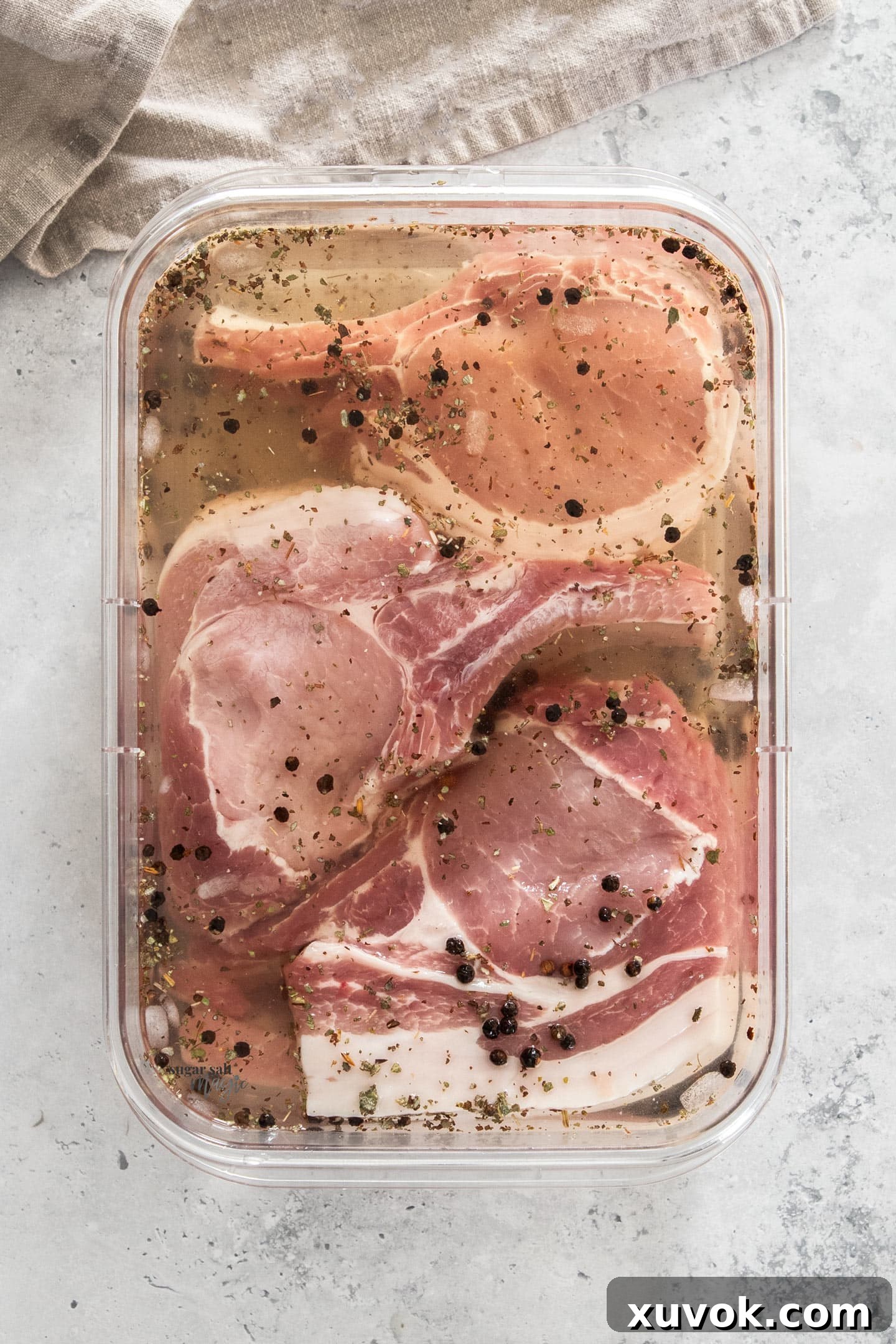
Are you tired of dry, bland pork chops? Imagine sinking your teeth into a piece of pork that’s unbelievably juicy, perfectly seasoned, and incredibly tender from the first bite to the last. This pork brine recipe is your secret weapon to achieving just that! It’s astonishingly quick to prepare, utterly simple to use, and guaranteed to transform your pork chops from ordinary to extraordinary. Once you incorporate this no-fuss brine into your cooking routine, you’ll never settle for less than succulent, flavorful pork again.
In mere minutes, you can mix up this magical solution, and within as little as one hour, your pork chops will be ready for cooking, promising the most delectable, moist, and tender results you’ve ever experienced. This isn’t just a promise; it’s a culinary revelation. And the best part? This versatile brine isn’t limited to pork chops alone. It’s also fantastic for a variety of other cuts of pork, as well as poultry like chicken and even beef, ensuring every meal is a triumph of flavor and texture.
Looking for a complete meal idea? You’ll also love my oven-baked pork chops with potatoes recipe – a delicious, easy dinner all on one sheet pan!

Table of Contents
- What is a Brine?
- Why Brine Your Meat?
- What is Brine Made Of?
- How Long to Brine Pork Chops
- How to Make Pork Brine (Step-by-Step Guide)
- How to Cook Brined Pork Chops
- Expert Tips and Tricks for Brining
- Brining Safely: Food Safety Guidelines
- Variations and Flavor Enhancements
- Frequently Asked Questions (FAQs)
- More Delicious Pork Recipes to Try
Never Miss a Delicious Recipe!
Get the latest, most mouth-watering recipes delivered straight to your inbox. Join our culinary community today!
What is a Brine? The Science Behind Juicy Meat
Once I discovered the magic of brining pork chops, I truly never looked back. A brine is fundamentally a simple solution of salt and water, in which you submerge meat before cooking. This seemingly basic kitchen technique works wonders by infusing moisture and flavor deep into the meat fibers, while also actively tenderizing the cut. It’s a scientific marvel that makes a noticeable difference in the final product.
The primary mechanism behind brining is osmosis. The salt in the brine creates a higher concentration of solutes outside the meat cells. Through osmosis, water from the brine is drawn into the meat, increasing its internal moisture content. This added moisture acts as a safeguard during cooking, ensuring the meat remains juicy even if slightly overcooked. Beyond moisture, the salt in the brine also denatures the meat proteins. In simpler terms, the salt disrupts the tightly bound protein structures within the meat, causing them to unravel and relax. This relaxation prevents the proteins from tightening up excessively and squeezing out moisture when exposed to heat, resulting in a more tender and succulent texture.
You might have also heard of “dry brining.” While effective, dry brining isn’t technically a brine because it doesn’t involve water. Instead, dry brining is a method of seasoning meat by coating it generously with salt (and often other spices). The salt draws out moisture from the meat’s surface, which then reabsorbs some of the salt and liquid, creating a concentrated seasoning. It’s more accurately described as a dry rub or a curing process, distinct from the water-based immersion brine we’re discussing here.
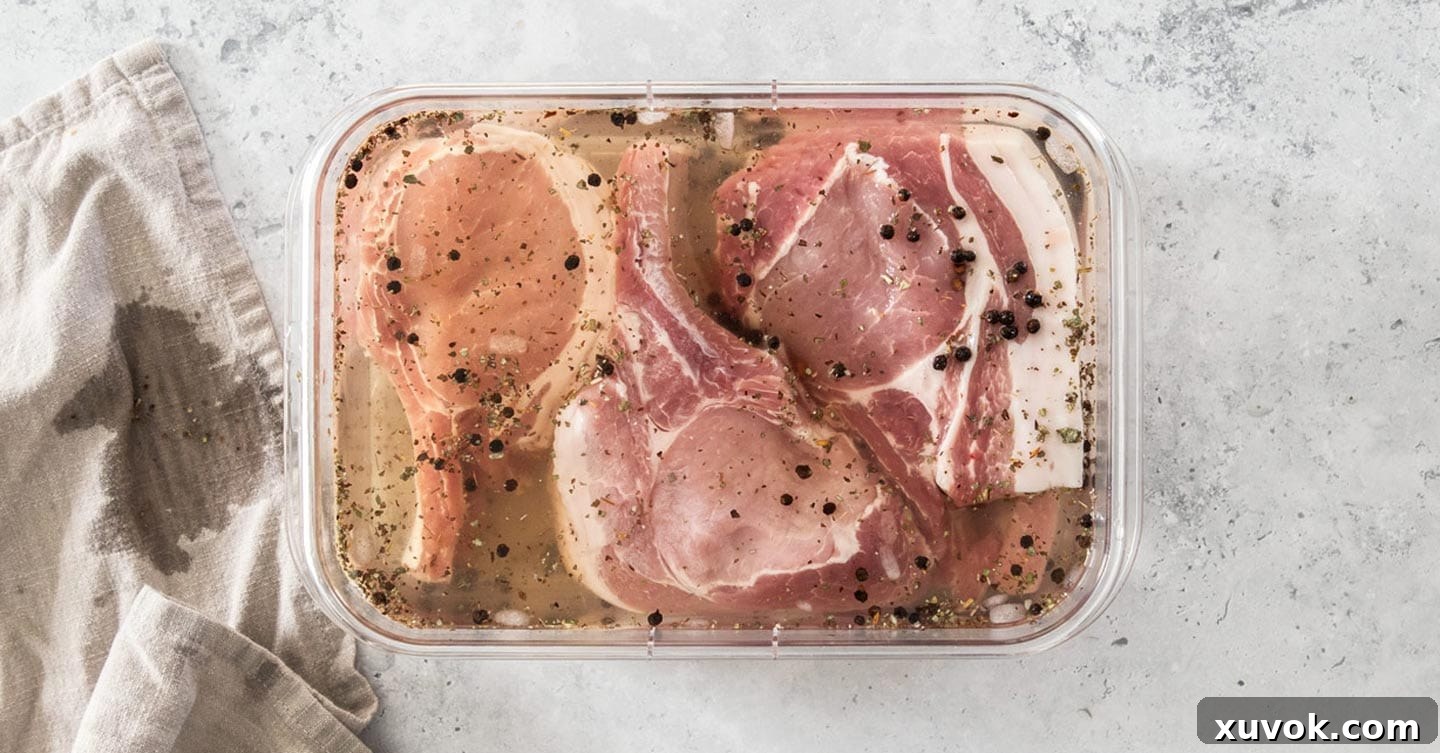
Why Brine Your Meat? The Triple Threat of Taste and Texture
Brining isn’t just an extra step; it’s a transformative process that dramatically improves the eating experience. Here are the key reasons why you should make brining a regular part of your cooking:
- Unmatched Moisture Retention: As the meat rests in the brine, it actively absorbs the seasoned water. This process significantly increases the meat’s internal moisture content. During cooking, some moisture is inevitably lost, but by starting with a higher baseline of hydration, you ensure that your meat remains incredibly juicy and moist. Say goodbye to dry, chewy pork chops forever – you’re guaranteed juicy perfection.
- Deep, Internal Seasoning: Unlike surface seasoning that only flavors the exterior, brining seasons the meat from the inside out. As the water is absorbed, it carries the salt and other dissolved seasonings deep into the muscle fibers. This means every bite is infused with flavor, creating a much more complex and satisfying taste profile than simply seasoning the surface right before cooking. The flavor isn’t just on the outside; it penetrates through the entire cut.
- Superior Tenderness: The salt in the brine acts as a natural tenderizer. It denatures the meat proteins, a scientific process where the salt disrupts the natural, tightly wound structure of the proteins. This “unraveling” makes the muscle fibers less prone to seizing up and toughening when cooked. The result is a significantly more tender cut of meat that’s easier to chew and much more enjoyable. The longer the meat soaks (within safe limits), the more pronounced this tenderizing effect becomes.
What is Brine Made Of? Essential Components for Flavor
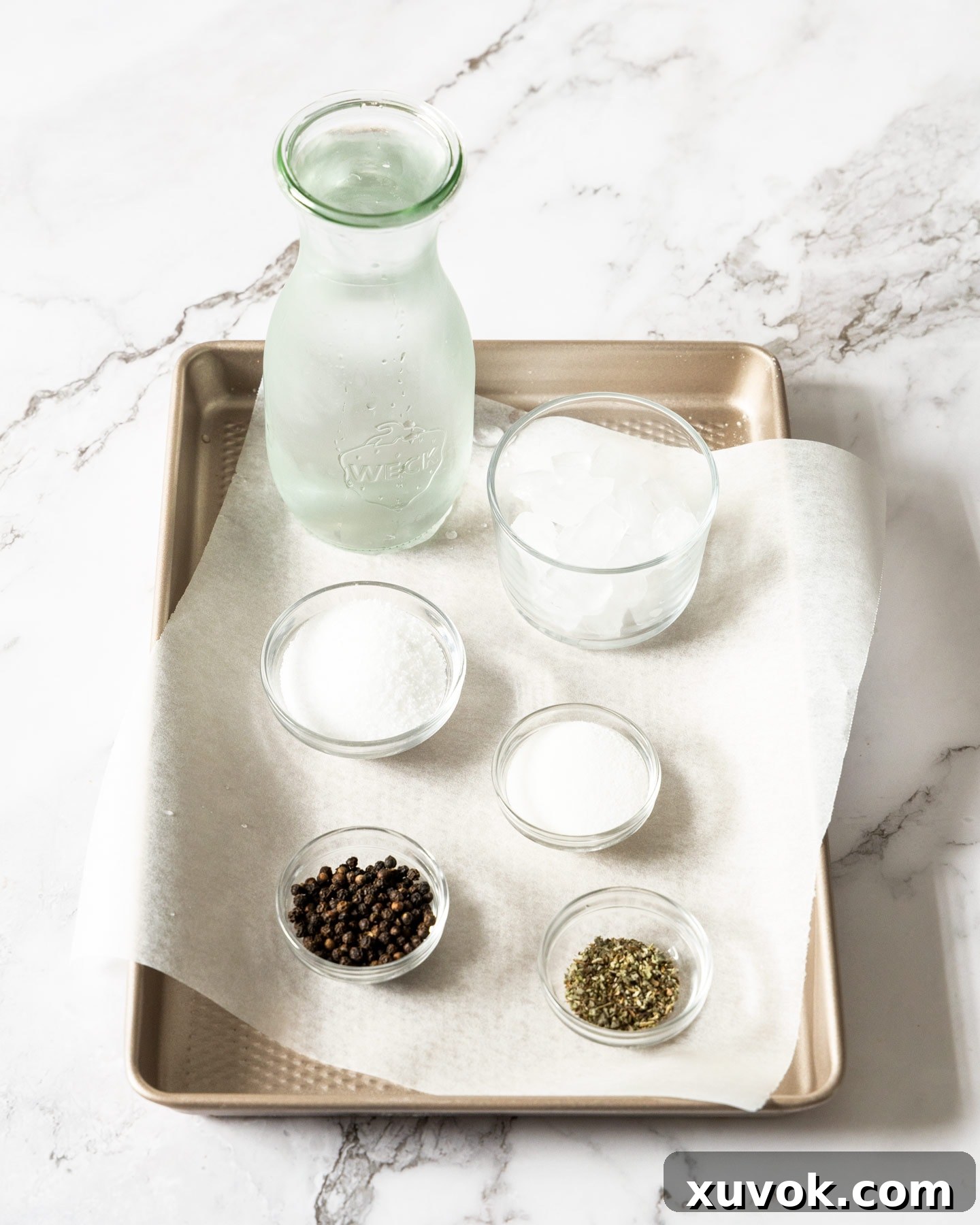
At its core, a brine is brilliantly simple: salt and water. The salt is the workhorse, providing both seasoning and tenderization, while the water acts as the vehicle for moisture infusion. However, a great brine truly shines with the addition of other seasonings and aromatics. Black pepper and aromatic herbs like sage add layers of flavor, while a touch of sugar plays a crucial role not only in balancing the saltiness but also in assisting with the glorious browning and caramelization of the meat’s surface during cooking.
The classic ratio for a basic brine is typically ¼ cup of salt to 4 cups of water. In my experience, using a slightly reduced salt concentration yields optimal results – I use ¼ cup of salt with what equates to about 4 ⅔ cups of water (after accounting for the melted ice cubes). This particular ratio delivers impeccable seasoning and tenderization without making the meat overly salty, providing a perfectly balanced flavor profile.
The type of salt you use is remarkably important. Cooking salt or kosher salt are your ideal choices. These salts have a coarser grain compared to fine sea salt or common table salt. This coarser texture means that a quarter cup of kosher salt contains less actual sodium by weight than a quarter cup of fine table salt. If you were to substitute the same volume of table salt, your brine would end up significantly saltier, potentially overpowering the delicate flavors of the pork and resulting in an unpleasant taste. Be mindful that even among kosher salts, brands like Diamond Crystal have a lighter, flakier crystal structure and therefore less sodium by volume than Morton kosher salt. For this recipe, standard kosher salt is perfectly fine, just avoid fine-grain salts unless you adjust the quantity downwards.
How Long to Brine Pork Chops for Perfect Results
The duration of brining is a frequently debated topic among home cooks and chefs alike, with many opinions on the ideal time for pork chops or any meat. The truth is, it depends on a few factors, but a little experimentation can help you find your personal sweet spot.
Generally, you can achieve excellent results by brining for as little as 1 hour per pound (or half kilogram) of meat. This timing is based on the weight of an individual piece of meat. So, if you have four pork chops, each weighing approximately ½ lb (250g), you would only need to brine them for about 30 minutes to get a wonderfully flavorful and tender outcome. This makes brining a viable option even on busy weeknights!
Naturally, the longer the meat remains in the brine, the more time the salt has to work its magic, transforming proteins and further softening the meat. Many resources suggest that brining for more than 4 hours can lead to an overly soft, almost mushy texture and excessively salty flavor. However, I’ve found this isn’t always the case, especially with my slightly less concentrated brine recipe. I decided to conduct my own rigorous testing to find the optimal brining duration.
For my experiment, I used bone-in pork chops, each nearly 1 inch thick. In my very first attempt at brining, I inadvertently left the chops in the solution for a full 16 hours. To my surprise, the results were phenomenal! The meat was anything but mushy; instead, it was incredibly tender, juicy, and packed with flavor, proving that a longer brine can indeed be successful with the right salt ratio.
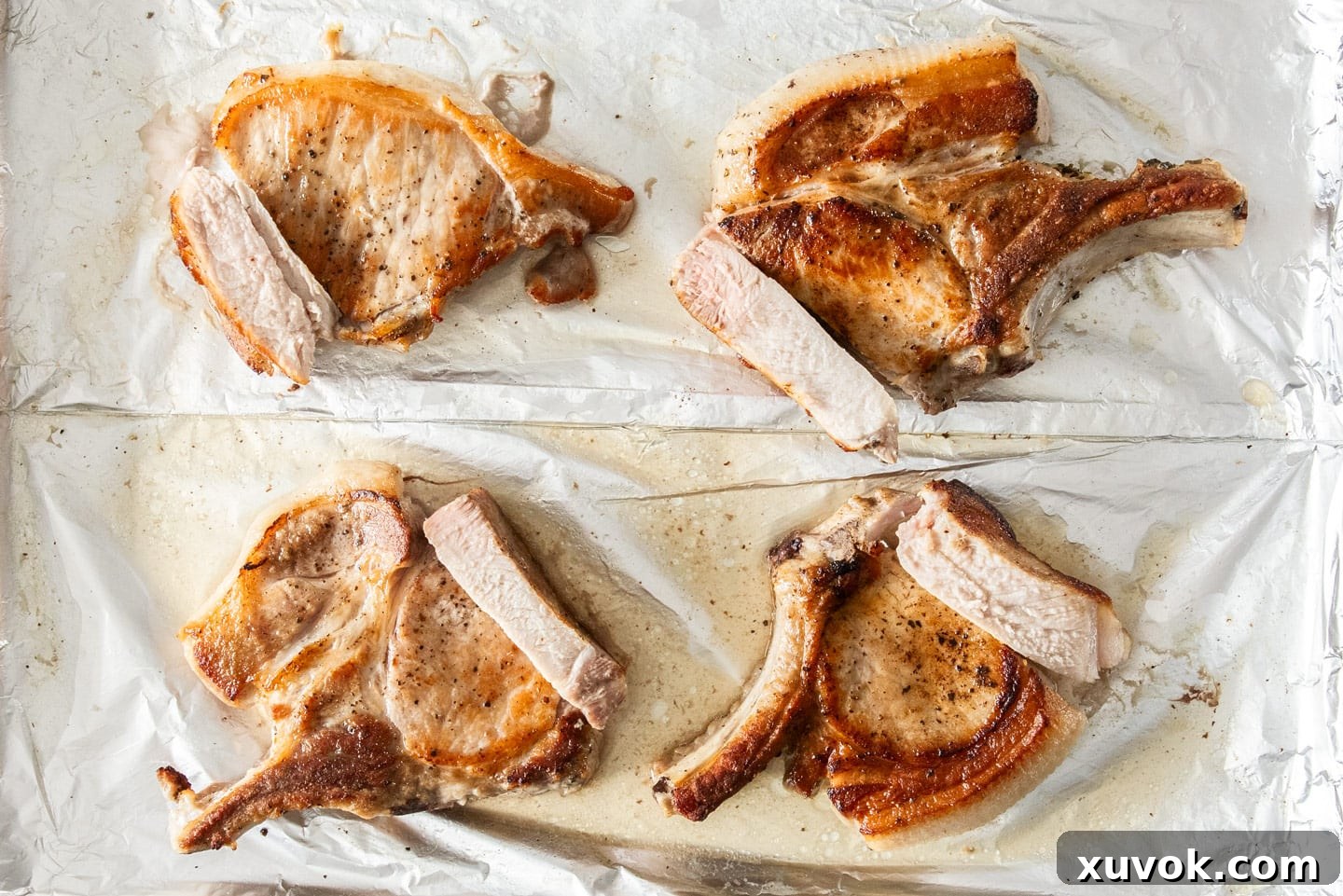
The four pork chops pictured above were brined for varying lengths of time: 2 hours (top left), 4 hours (bottom left), 8 hours (top right), and 12 hours (bottom right). My personal favorites were the chops brined for 4 and 8 hours. Across all four test pieces, the meat was delightfully tender, wonderfully juicy, and the flavor was outstanding. However, those brined for 4 and 8 hours possessed just that extra edge of enjoyment. Crucially, none of them developed a mushy or excessively soft texture.
I highly recommend playing around with brining times to discover your own perfect duration. If you’re pressed for time on a weekday evening, the 30-minute method will still yield excellent results. If you have a bit more leisure on the weekend, try extending the brining time. Rest assured, any duration greater than 30 minutes and less than 12 hours (or even 16 hours with this specific brine) is bound to give you a fantastic outcome. The key is to experiment and find what best suits your taste and schedule.
How to Make Pork Brine (Step-by-Step Guide to Perfection)
Making this pork chop brine is incredibly fast and straightforward, adding minimal time to your meal prep for maximum flavor. An added benefit is that it can be made in advance, allowing you to whip up a batch and store it in the fridge for up to 4 days until you’re ready to use it. This prep-ahead convenience makes juicy pork chops accessible any day of the week.
Jump to the full recipe card for exact ingredient measurements and detailed instructions.
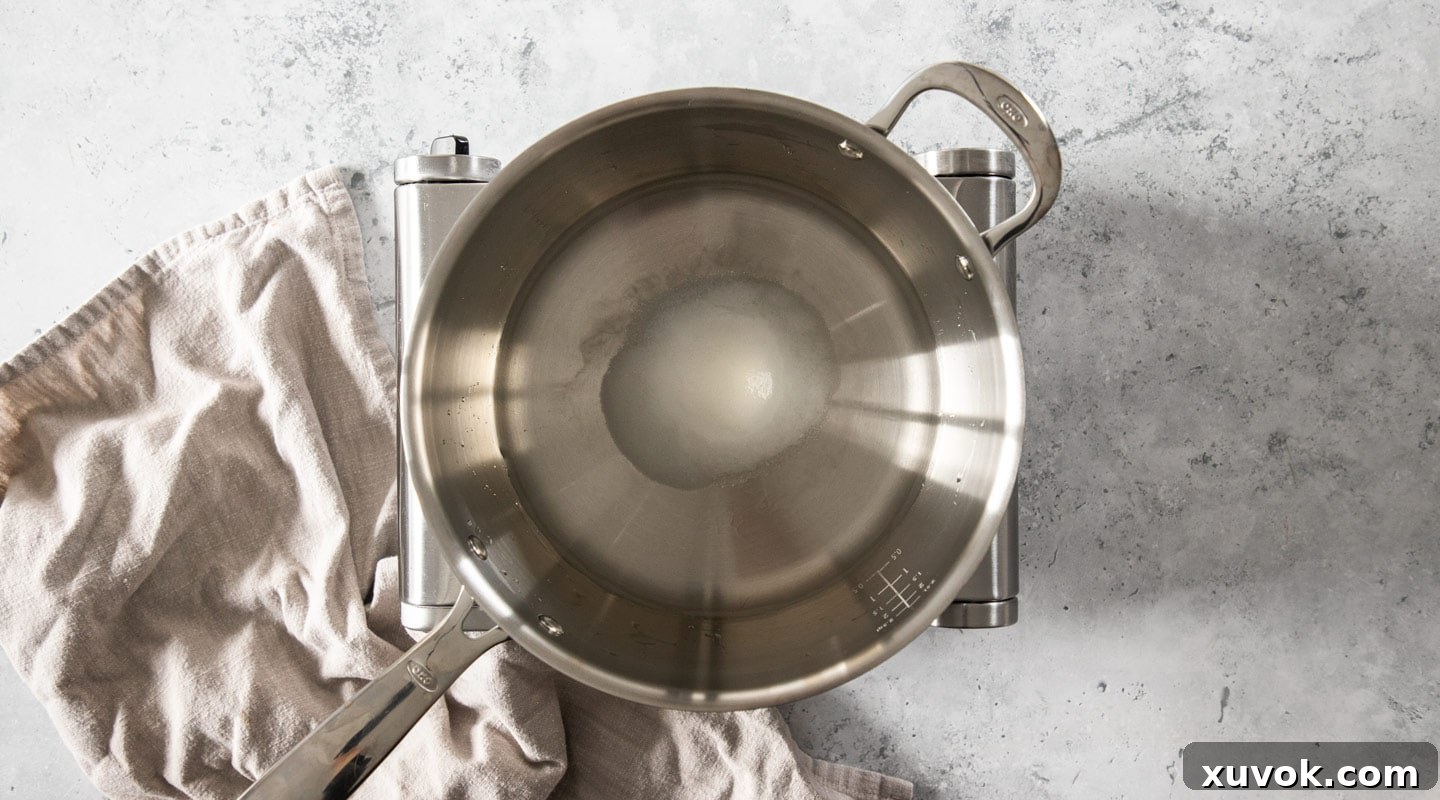
- Combine Water, Salt, and Sugar: Begin by placing 1 cup of water into a saucepan. Add the precise measurements of salt and sugar. Place the saucepan over high heat and stir continuously. The goal here is to fully dissolve the salt and sugar into the water. Heating the water helps this process significantly, ensuring an even distribution of flavor.
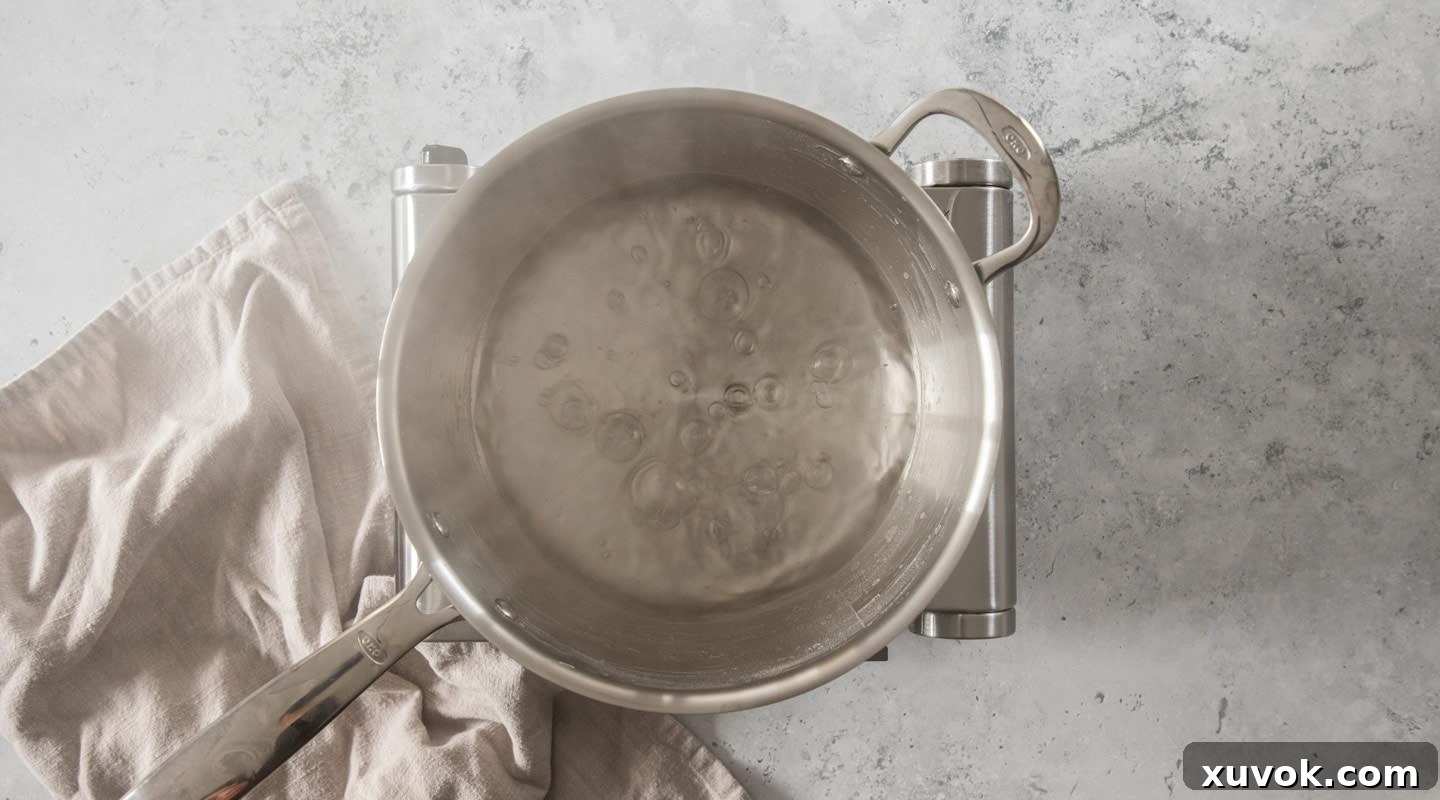
- Bring to a Boil: Continue heating the mixture until it reaches a rolling boil. Once it’s boiling, immediately remove the saucepan from the heat. This boiling step ensures that all the solids are completely dissolved and helps to meld the initial flavors.
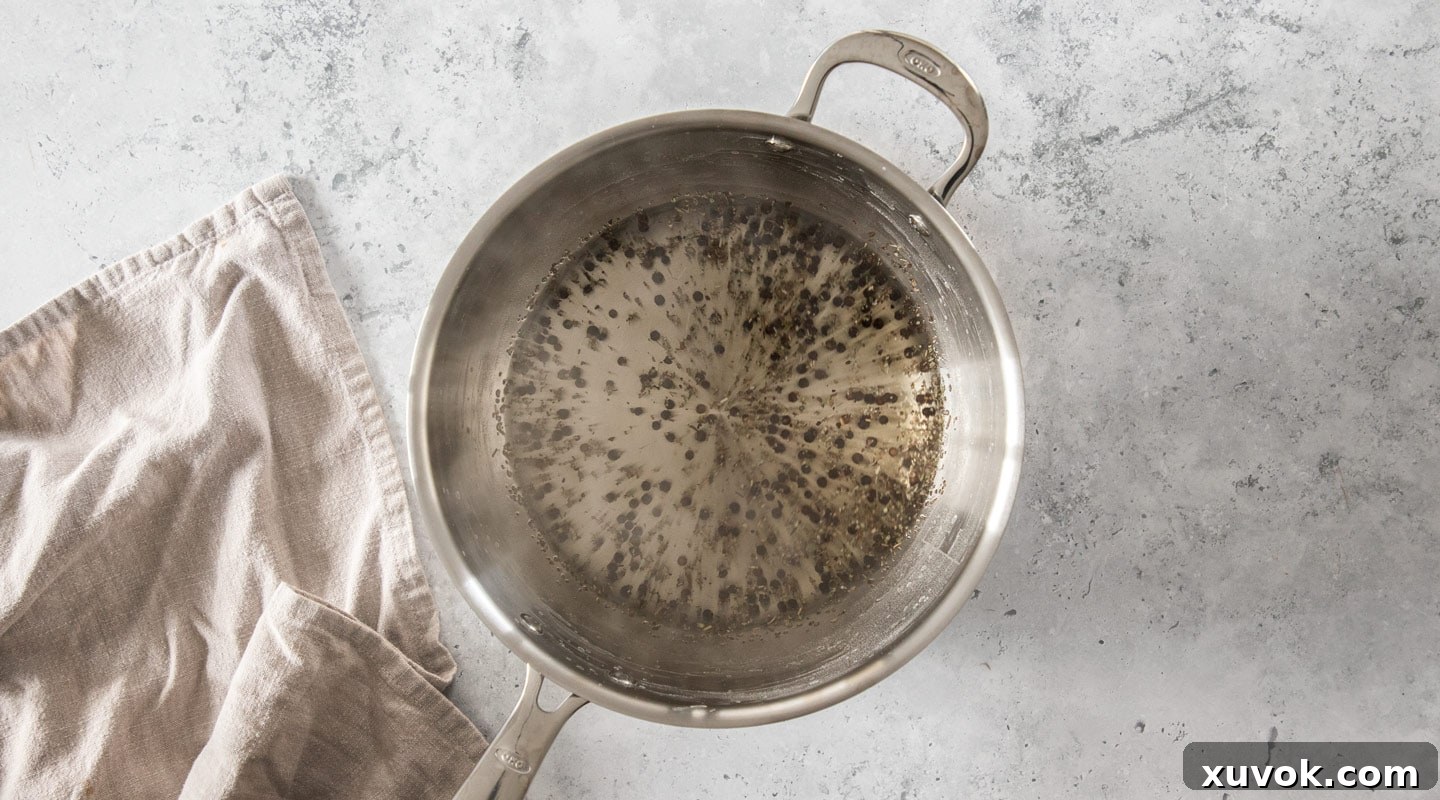
- Infuse Flavorings: With the saucepan off the heat, add the black peppercorns and dried sage. Stir them in gently and allow them to steep for about 1 to 2 minutes. This brief steeping period allows the heat of the water to extract and infuse the aromatic oils and flavors from the spices and herbs into the brine. Feel free to get creative here by adding other dried herbs, fresh herbs like thyme or rosemary, whole spices, or even crushed cloves of garlic for an extra layer of complexity.
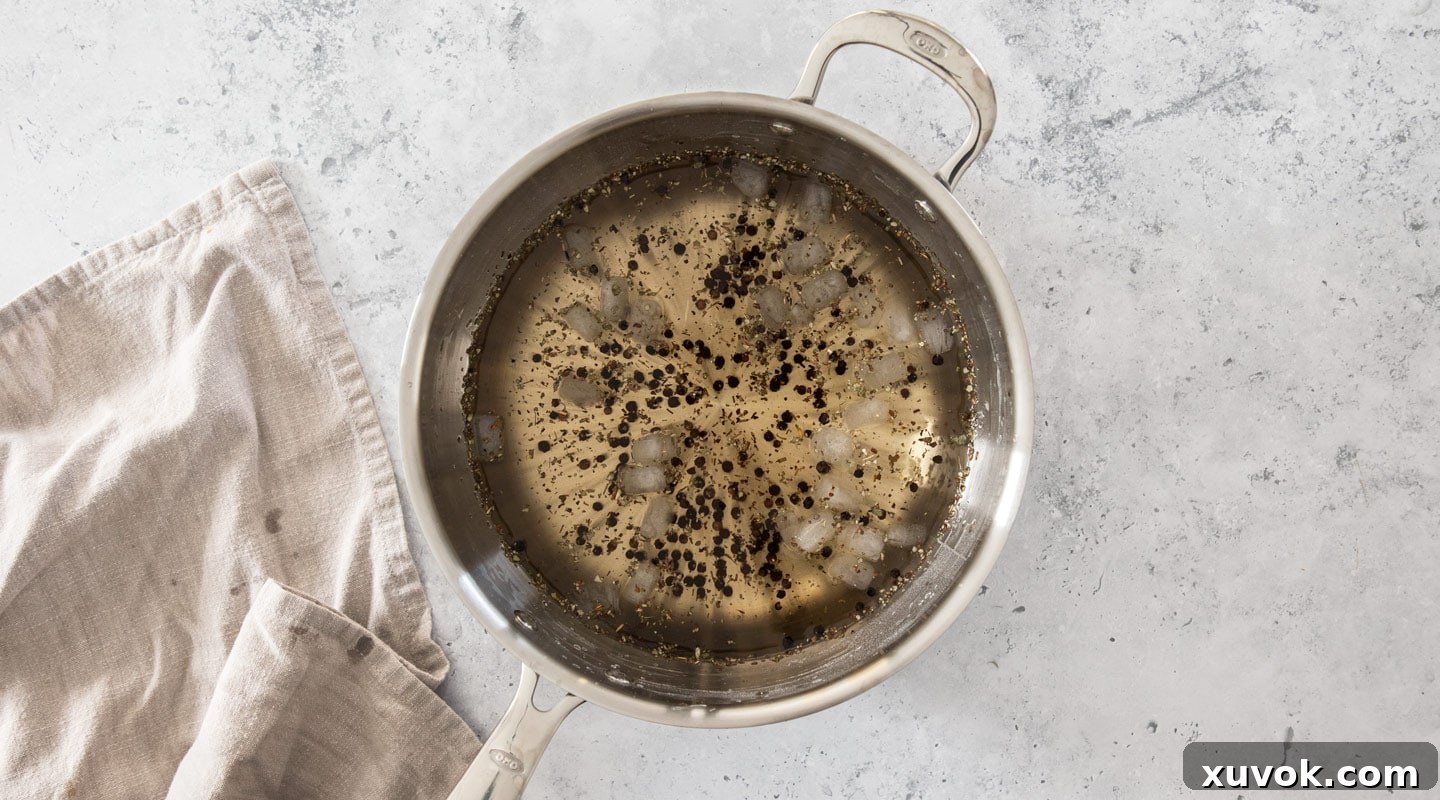
- Rapidly Cool the Brine: Now, add the remaining 3 cups of cold water and the ice cubes to the saucepan. Stir thoroughly until the ice cubes have melted and the brine is completely cool to the touch. This step is critical for food safety: adding meat to hot or warm brine can partially cook it and create an environment conducive to bacterial growth. Ensure the brine is at refrigerator temperature before proceeding.
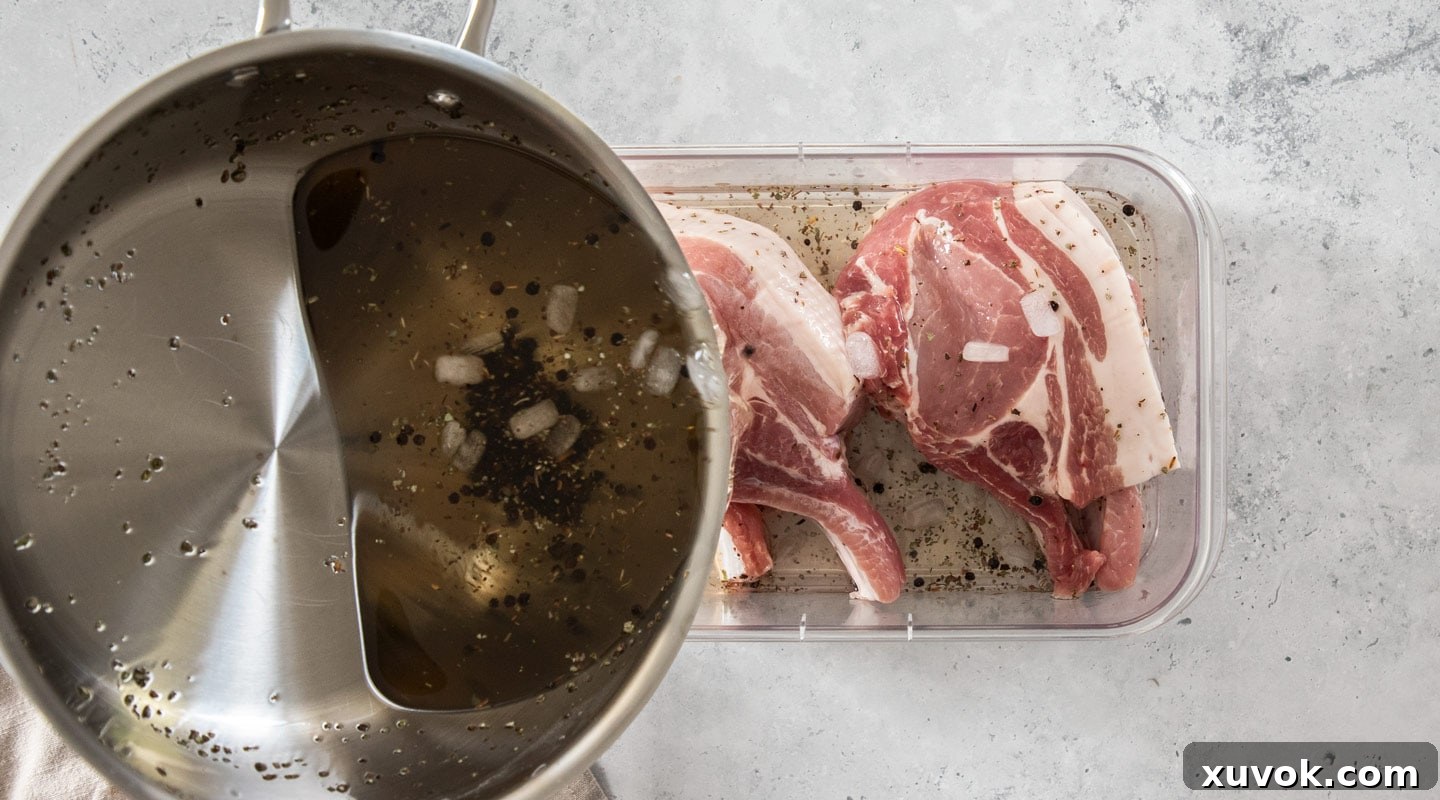
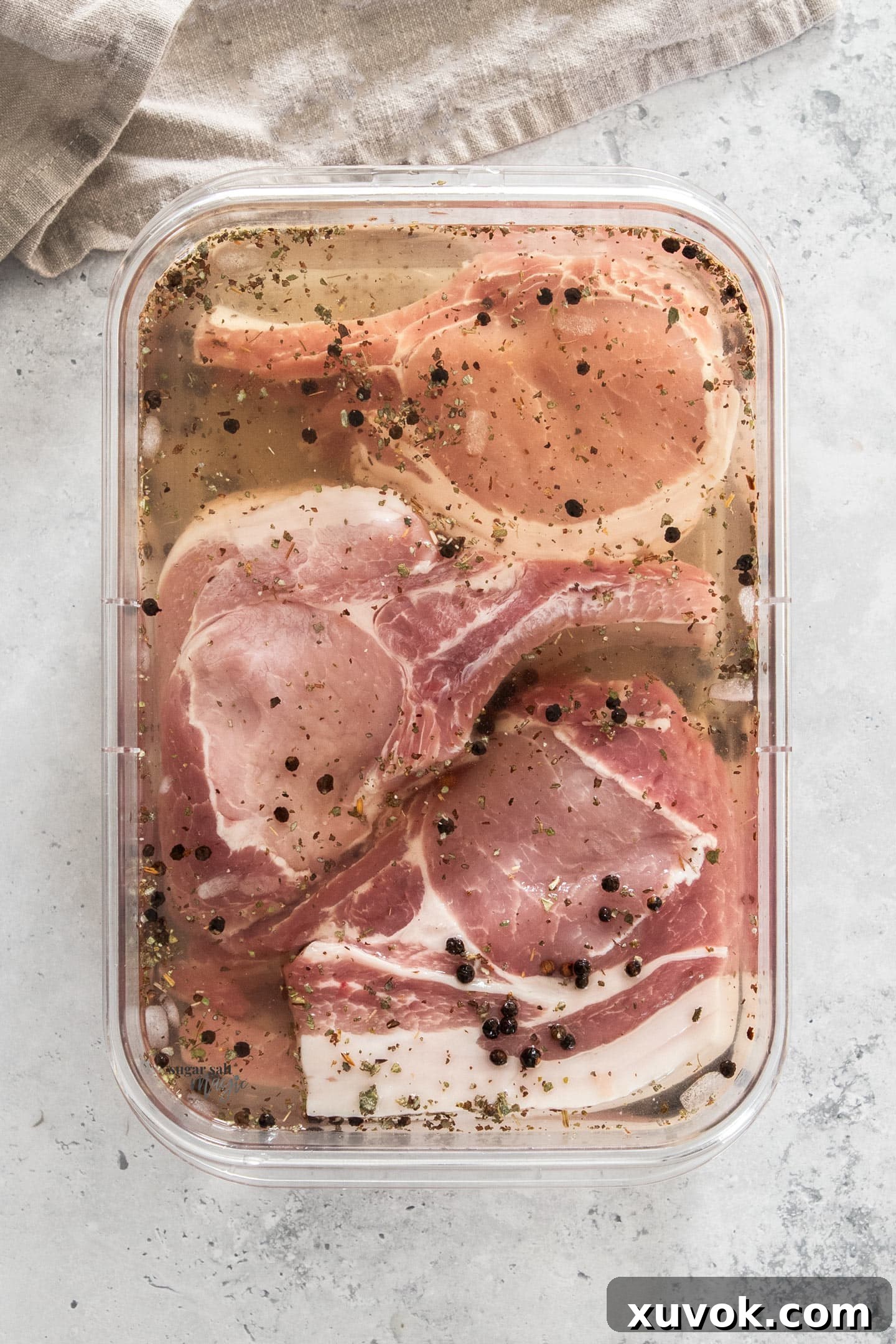
- Brine the Pork Chops: Once the brine is fully cooled (it should feel cold to the touch due to the added cold water and ice), it’s time to add your pork. Place your pork chops into a large resealable freezer bag or a non-reactive dish (like glass, food-grade plastic, or stainless steel) that is just large enough to comfortably hold the meat and the brine without excessive empty space. Pour the prepared brine over the pork, ensuring the chops are fully submerged. If the dish is too large, the brine might not cover the meat completely. Seal the bag or cover the dish tightly and transfer it to the refrigerator for the recommended brining time.
How to Cook Brined Pork Chops for Maximum Flavor and Juiciness
Brining sets the stage for incredibly juicy and tender pork, but how you cook it next is equally important to lock in that amazing flavor and texture. Here’s how to get the best out of your brined pork chops:
- Rinse and Thoroughly Dry: This step is crucial and cannot be skipped. After your pork chops have finished brining, remove them from the solution and rinse them thoroughly under cold running water. This washes away any excess surface salt, preventing your chops from becoming too salty. Don’t worry; you won’t be washing away all the seasoning, as the brine has already penetrated deep into the meat. After rinsing, pat the chops completely dry with paper towels. A dry surface is essential for achieving a beautiful, golden-brown crust during searing.
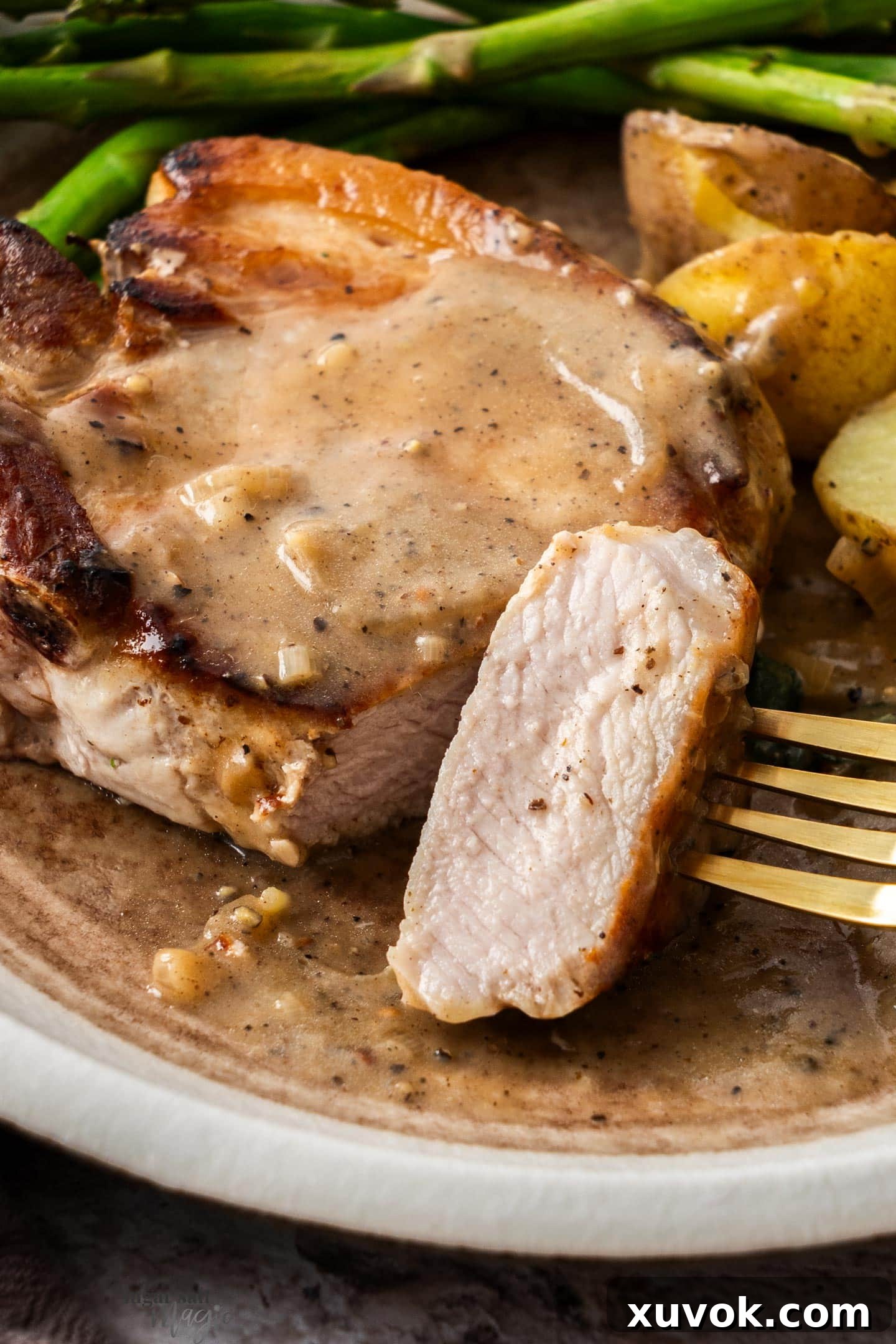
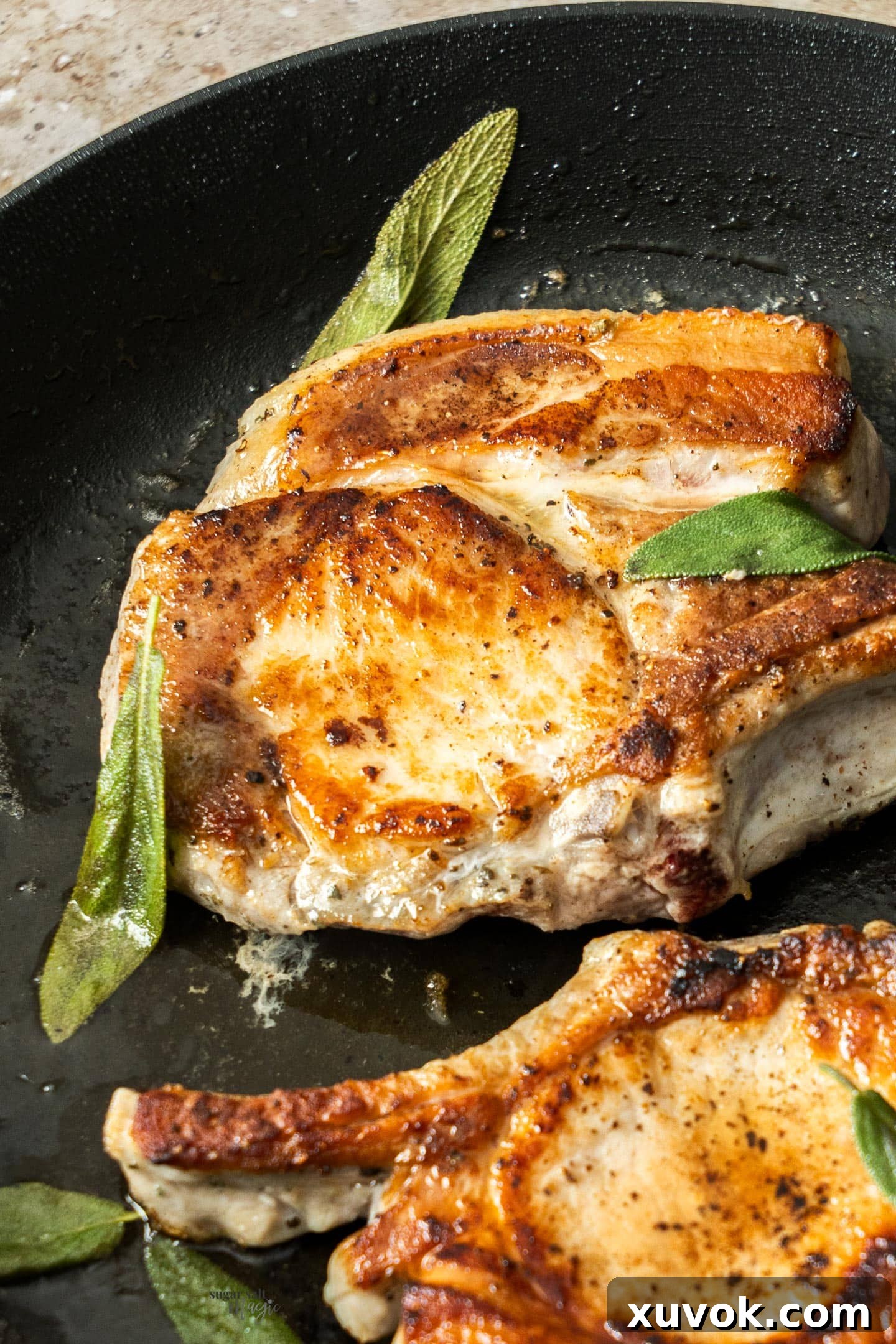
- Sear for Color, Then Bake for Doneness: My favorite method for cooking brined pork chops is a combination of searing and baking. Begin by heating a heavy-bottomed skillet (cast iron works wonderfully) over high heat with a little oil. Once the pan is screaming hot, sear the pork chops for 2-3 minutes per side until they develop a rich, golden-brown crust. This searing creates incredible flavor and texture. Immediately transfer the skillet (if oven-safe) or the seared chops to a preheated oven at 220°C / 425°F. Finish cooking for 8-12 minutes, depending on the thickness of your chops. The internal temperature of pork should reach 63°C (145°F) for medium-rare, or slightly higher if you prefer. Always use a meat thermometer for accuracy.
- Other Cooking Methods: Brined pork chops are versatile! You can also cook them entirely on the stovetop, grill them, or even sous vide for ultimate precision. Regardless of the method, ensure you aim for an internal temperature of 145°F (63°C) for a perfectly juicy, slightly pink center, followed by a brief rest.
Expert Tips and Tricks for the Best Brined Pork Chops
Achieving consistently perfect, juicy pork chops is easy with these insider tips:
- Choose the Right Salt: As mentioned, not all salts are created equal. For brining, kosher salt or cooking salt are highly recommended. These salts have a coarser grain, which makes it easier to measure accurately and results in a less concentrated saline solution by volume compared to finer table salt. If you must use table salt, reduce the quantity significantly to about 2 tablespoons (or 3 US tablespoons) to prevent over-salting. Note that Diamond Crystal kosher salt has a flakier texture and less sodium per volume than Morton kosher salt; if using Diamond Crystal, you might increase the amount by about 20% for equivalent salinity. Stick to standard kosher salt for this recipe for consistent results.
- Ensure Full Submersion: For the brine to work effectively and evenly, the meat must be completely submerged in the liquid. Choose a container or a resealable bag that is appropriately sized for your pork chops and the amount of brine. An overly large container will cause the brine to spread too thinly, leaving parts of the meat exposed.
- The Role of Sugar: While salt is essential for texture and core seasoning, sugar is a fantastic addition. You can substitute white sugar with brown sugar, honey, or even maple syrup. Sugar helps to balance the intense saltiness of the brine, adding a subtle sweetness that complements pork beautifully. More importantly, sugar contributes to the Maillard reaction during cooking, resulting in a more attractive, golden-brown crust on your chops. It doesn’t affect the tenderizing quality of the meat but significantly enhances its appearance and flavor profile.
- Bring to Room Temperature (Partially): About 30 minutes before you plan to cook your brined pork chops, remove them from the refrigerator. Allowing the meat to come up slightly in temperature ensures more even cooking. A cold chop will take longer to cook through, increasing the risk of the exterior drying out before the center is done.
- Don’t Skip the Pat Dry: After rinsing and before cooking, thoroughly pat your pork chops dry with paper towels. A dry surface is crucial for achieving a perfect sear and a desirable crust. Moisture on the surface will steam the meat rather than sear it, preventing that delicious browning.
- Use a Meat Thermometer: The only way to guarantee perfectly cooked, juicy pork chops is to use an instant-read meat thermometer. For pork, aim for an internal temperature of 145°F (63°C) at the thickest part for a safe, tender, and slightly pink medium-rare.
- Rest Your Meat: Once cooked, transfer the pork chops to a cutting board and let them rest for at least 5-10 minutes. This allows the juices to redistribute throughout the meat, resulting in a more tender and juicy bite. Cutting into the meat too soon will cause all the delicious juices to run out.
Brining Safely: Essential Food Safety Guidelines
Brining is a highly effective and safe method for enhancing meat, provided you adhere to fundamental food safety principles. Handling raw meat requires care to prevent bacterial contamination. Follow these golden rules to ensure your brining process is always safe and hygienic:
- Always Refrigerate: It is paramount to keep your meat submerged in brine in the refrigerator at all times, except for the short period (about 30 minutes) before cooking when you might bring it to room temperature. Maintaining a cold temperature (below 4°C or 40°F) is crucial to inhibit the growth of harmful bacteria, such as salmonella, which thrives at warmer temperatures.
- Never Reuse Brining Solution: Once the brining liquid has been used for one batch of meat, it must be discarded. The brine comes into contact with raw meat, meaning it contains bacteria. Reusing it for another batch, even after straining, poses a significant cross-contamination risk and could lead to foodborne illness. Always prepare a fresh batch of brine for each use.
- Ensure Brine is Completely Cooled Before Adding Meat: This is a critical safety step. The brine must be cool to the touch – ideally, at refrigerator temperature – before you add any raw meat. Adding meat to warm or even lukewarm brine can bring the meat’s temperature into the “danger zone” (between 40°F and 140°F / 4°C and 60°C), where bacteria multiply rapidly. The inclusion of cold water and ice cubes in this recipe is specifically designed for rapid cooling, making the brine safe for immediate use after preparation.
- Use Non-Reactive Containers: When brining, always store your meat and brine in containers made of non-reactive materials. This includes glass, food-grade plastic, or stainless steel. Avoid using aluminum, cast iron, or other reactive metals, as the salt in the brine can react with these materials, imparting an metallic taste to your meat and potentially leaching harmful substances.
- Practice Good Hygiene: Always wash your hands thoroughly with soap and warm water before and after handling raw meat and brine. Clean and sanitize all surfaces, utensils, and cutting boards that come into contact with raw meat or brine to prevent cross-contamination.
Variations and Flavor Enhancements for Your Brine
While the basic brine recipe is fantastic on its own, it also serves as an excellent canvas for culinary creativity. Don’t hesitate to experiment with different flavor combinations to tailor the brine to your taste or the specific meal you’re preparing.
- Versatility with Meats: This brine isn’t exclusively for pork chops. It’s a truly versatile solution suitable for brining a wide array of other meats and cuts. Feel free to use it for various cuts of pork, such as pork tenderloin (which also benefits immensely from brining), pork loin, or even larger cuts like a pork shoulder (adjusting brining time accordingly). It’s also exceptionally effective for poultry – think juicy chicken breasts, tender chicken drumsticks, whole chickens, or even a magnificent Thanksgiving turkey. For beef, it works wonderfully on tougher cuts destined for roasting, like a beef roast, helping to tenderize and season it thoroughly. I’ve personally achieved fantastic results using this brine on chicken breasts, transforming them into incredibly moist and flavorful pieces.
- Dried Herb Infusions: Dried herbs are fantastic for adding depth and aroma to your brine. Add any of your favorite dried herbs to the hot liquid after removing it from the heat, allowing them to steep for a few minutes before adding the cold water. A general guideline is about a tablespoon of dried herbs for this quantity of brine. Consider adding:
- Dried Thyme: Earthy and slightly minty, pairs wonderfully with pork and poultry.
- Dried Oregano: Pungent and slightly bitter, adds a Mediterranean flair.
- Dried Rosemary: Piney and robust, excellent for heartier meats.
- Fennel Seeds: Offers a subtle licorice-like sweetness, often found in Italian sausage.
- Chilli Flakes: For a gentle kick and warmth.
- Bay Leaves: Provides a subtle, earthy, and herbal background note.
- Juniper Berries: A classic pairing for pork, offering a resinous, slightly citrusy flavor.
- Fresh Aromatic Ingredients: Fresh ingredients can elevate your brine with bright, vibrant flavors. For best results, bruise or lightly crush ingredients like garlic to release their essential oils before adding them to the warm brine for steeping. Ideas include:
- Garlic Cloves: Add several peeled and bruised garlic cloves for a pungent, savory base.
- Sliced Onion or Shallots: Adds a sweet and savory oniony depth.
- Fresh Herb Sprigs: Tuck in sprigs of fresh thyme, rosemary, or sage leaves for garden-fresh aromatics.
- Citrus Peel: Strips of lemon, orange, or even lime peel can add a bright, zesty fragrance without the bitterness of the pith.
- Ginger: Thin slices of fresh ginger can provide a warm, spicy, and slightly sweet note, especially good for Asian-inspired dishes.
Frequently Asked Questions (FAQs) About Brining Pork Chops
For optimal results, brine pork chops for a minimum of 30 minutes per ½ lb (250g) of meat, based on the size of any single piece. For example, if you have four individual 250g pork chops, they would only require 30 minutes of brining. However, if you have one large 1lb (500g) piece, it would need a minimum of 1 hour. For thicker bone-in pork chops, you can brine for up to 12 hours with fantastic results, even extending to 16 hours with our specific, less aggressive brine recipe, which ensures ultimate tenderness without a mushy texture.
A very common and effective basic ratio for brine is ¼ cup of kosher salt to 4 cups of water. Our recipe slightly adjusts this to ¼ cup kosher salt for approximately 4 ⅔ cups of water (including melted ice), which we’ve found creates a perfectly balanced and not-too-salty flavor profile.
Yes, it is possible to brine pork chops for too long, though our specific recipe is more forgiving. While I’ve had great success brining pork chops for up to 16 hours, it’s generally not recommended to exceed this. Most brining guidelines suggest a maximum of 12 hours to avoid an overly tenderized or salty outcome, especially with more concentrated brines.
No, brining pork chops for as long as 48 hours is strongly not recommended. Brining for an extended period beyond 16 hours, especially for 24-48 hours, can result in an unappetizingly mushy texture due to excessive protein denaturation and a flavor that is far too salty to be enjoyable.
Yes, absolutely! It is crucial to always rinse pork chops thoroughly under cold running water after brining. Afterward, pat them completely dry with paper towels before cooking. Rinsing removes any excess surface salt, preventing the meat from tasting overly salty, while patting dry is essential for achieving a beautiful, crisp sear.
Always use a non-reactive container for brining. Excellent choices include glass dishes, food-grade plastic containers (like large Tupperware or Ziploc bags), or stainless steel bowls. Avoid reactive metals like aluminum or cast iron, as they can react with the salt in the brine, potentially imparting an off-flavor to your meat.
While effective, dry brining produces slightly different results. Wet brining specifically infuses extra moisture into the meat, guaranteeing a juicier outcome. Dry brining seasons deeply and enhances natural moisture but doesn’t add external liquid. If your main goal is ultimate juiciness, wet brining is the way to go.
More Delicious Pork Recipes to Try
Once you’ve mastered the art of brining, explore these other fantastic pork recipes:
- Oven-Baked Pork Chops and Potatoes: A complete and comforting meal, all on one sheet pan.
- Crispy Oven Roasted Pork Belly: Indulge in rich, tender pork belly with an irresistible crackling crust.
- Stuffed Pork Tenderloin: An elegant dish featuring a flavorful filling, perfect for a special occasion.
Did you try this amazing pork chop brine recipe?
Leaving a rating and comment below the recipe is incredibly helpful and much appreciated!
Hungry for more culinary inspiration? Subscribe to our newsletter for free recipes delivered straight to your inbox. You can also follow along on Facebook, Pinterest, and Instagram for daily deliciousness.

Brine for Pork Chops
Rate
Pin
Ingredients
- 4 cups water (3 cups of it cold)
- ¾ cup ice cubes
- ¼ cup cooking salt / kosher salt
- 1 tablespoon sugar
- 1 tablespoon whole black peppercorns
- 2 teaspoons dried sage
For best results, always weigh ingredients where a weight is provided
Equipment
-
Saucepan
-
Large glass dish with lid or zip lock bag
Instructions
-
Place 1 cup of water into a small saucepan over high heat. Add the salt and sugar, swirling often to dissolve it and bring it to a boil.
-
Turn the heat off and add the peppercorns and sage and let it steep for 1-2 minutes.
-
Add the remaining 3 cups of cold water and the ice cubes and stir to combine.
-
Place your pork chops into a dish or container with just enough room for the both the meat and the brine. Pour the brine over the top and cover.
-
Chill for 1 or up to 12 hours.
-
Rinse the meat under running water and dry with paper towel. Cook your preferred way.
-
Please take a moment to leave a comment & rating. It’s appreciated and so helpful.
Notes
- Tablespoons: I use a standard Australian 20ml tablespoon (equal to 4 teaspoons). Please check your own measuring spoons for accurate conversion before using this recipe.
- This quantity of brine is suitable for brining approximately 4 pork chops, especially if they are 1 inch thick or less. Its versatile nature also makes it perfect for other meats like chicken, turkey, and beef.
- Feel free to unleash your culinary creativity with the herbs! You can incorporate both fresh and dried herbs, or even combine them, to discover your favorite flavor profile.
- For an added layer of savory depth, try adding a couple of peeled garlic cloves to the brine. You can either leave them whole to gently infuse flavor or slice them up for a more pronounced garlic presence.
- To introduce a bright, zesty aroma, consider adding a few strips of lemon peel or orange peel (ensuring you avoid the bitter white pith).
EXPLORE MORE SAUCES AND SEASONINGS!
Calories from Fat 1