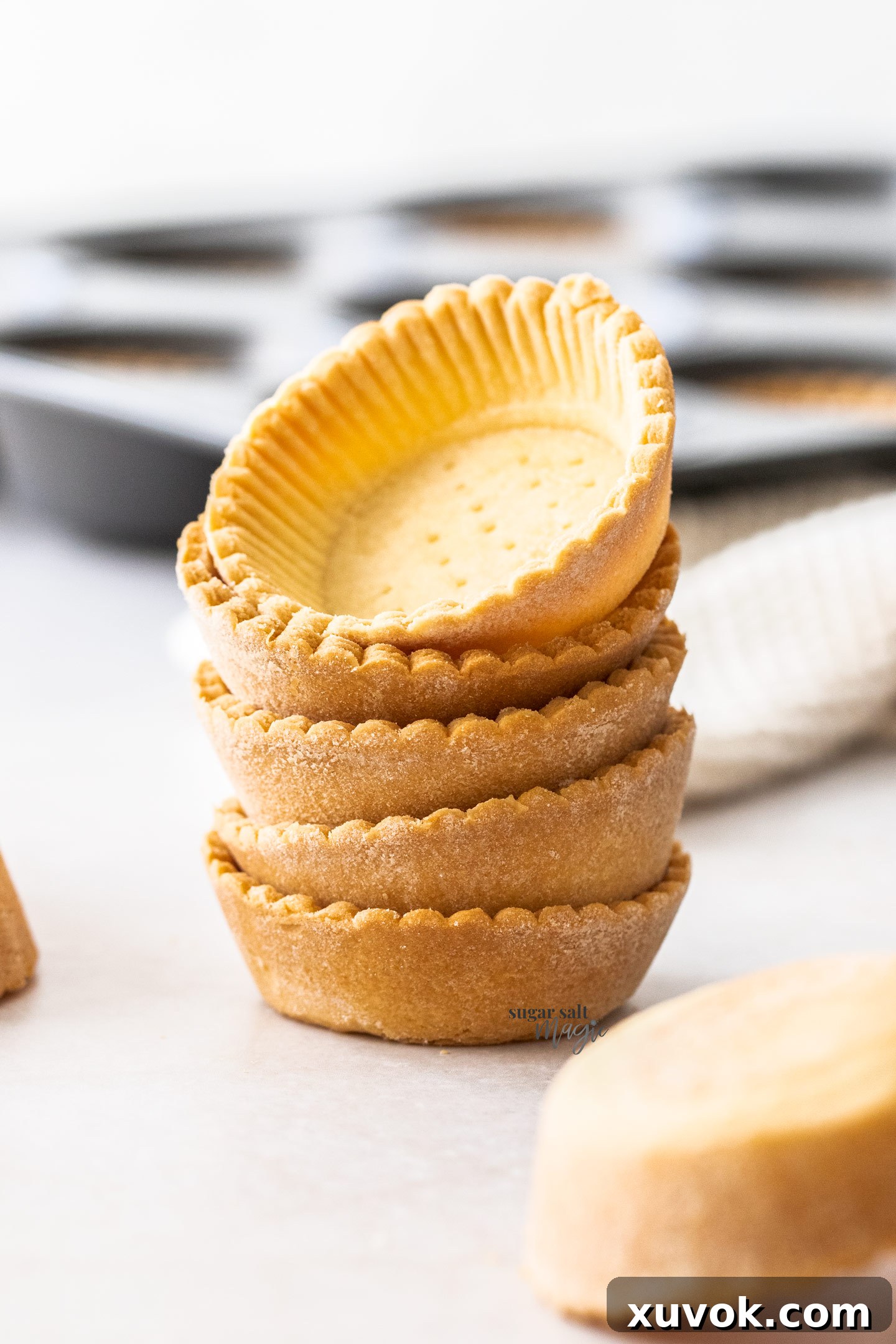
Homemade Mini Tartlet Shells: Your Guide to Effortless Elegance
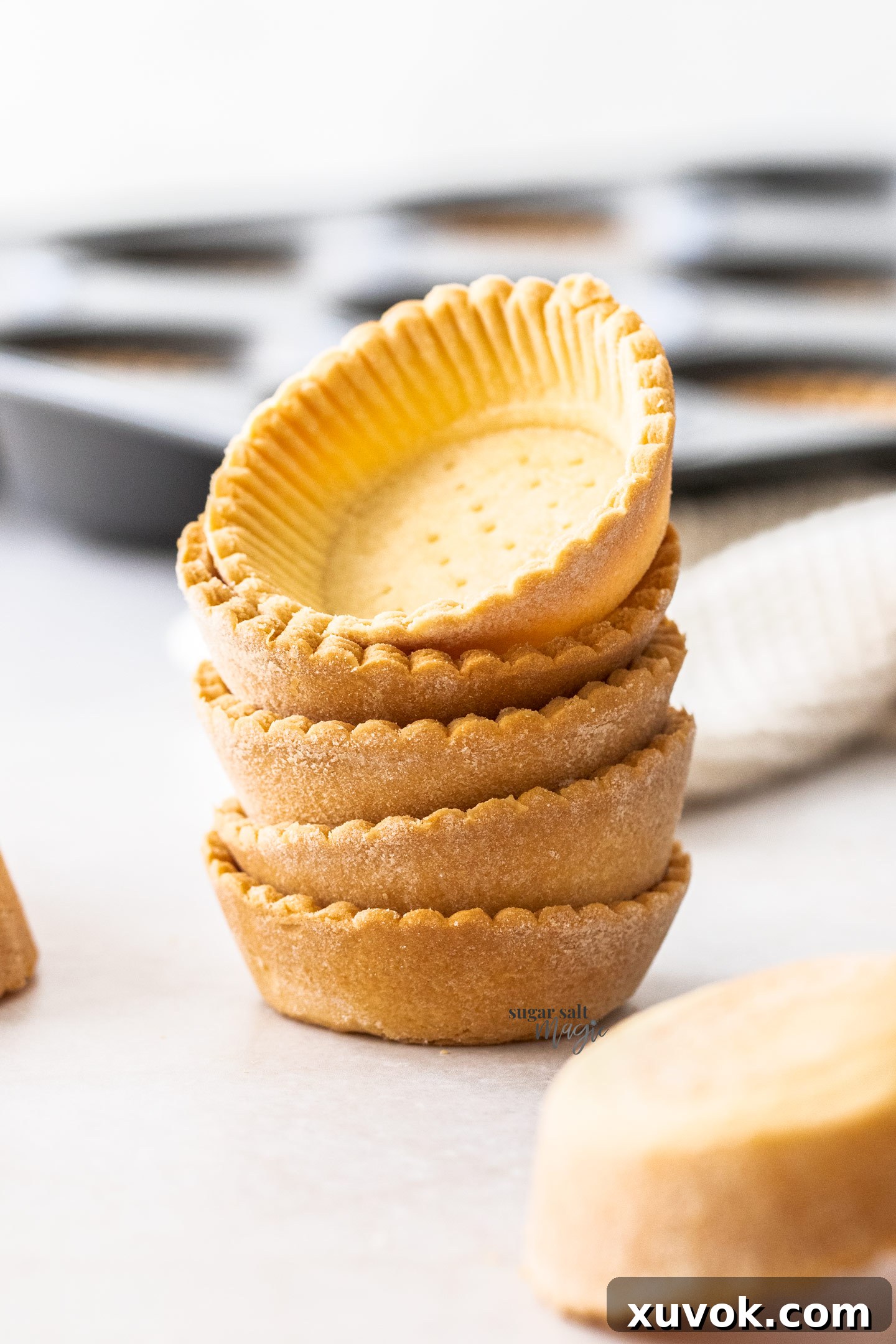
Imagine serving perfectly portioned, crispy, and buttery desserts or appetizers that are guaranteed to impress every guest. These homemade mini tartlet shells are not just incredibly versatile; they’re also surprisingly simple to prepare right in your existing muffin tin or mini tart pans. Achieving that professional, elegant look with beautifully scalloped edges and defined internal lines is easier than you think, thanks to a clever technique involving a fluted cookie cutter and cupcake cases during the blind baking process. Say goodbye to lackluster store-bought alternatives and discover the superior taste and texture of handcrafted pastry that elevates any filling to gourmet status.
- Richly Buttery and Delicately Sweet: Each shell offers a melt-in-your-mouth experience with a perfectly balanced flavor profile.
- Unbeatably Crispy Texture: Provides the ideal crunch, offering a delightful contrast to creamy, fruity, or savory fillings.
- Only 4 Essential Ingredients: This straightforward recipe relies on pantry staples, making it accessible for any home baker.
- Versatile for All Fillings: Designed to perform flawlessly with both baked and unbaked creations, offering endless culinary possibilities.
These exquisite shells serve as the perfect foundation for an array of delightful fillings, whether you prefer the tangy zest of lemon curd, the decadent smoothness of chocolate mousse, or the classic richness of pastry cream. Whether your chosen filling requires a gentle bake or is simply spooned in, these robust yet delicate pastry cups are up to the task. For another charming dessert idea, you might also enjoy exploring these airy meringue nests.
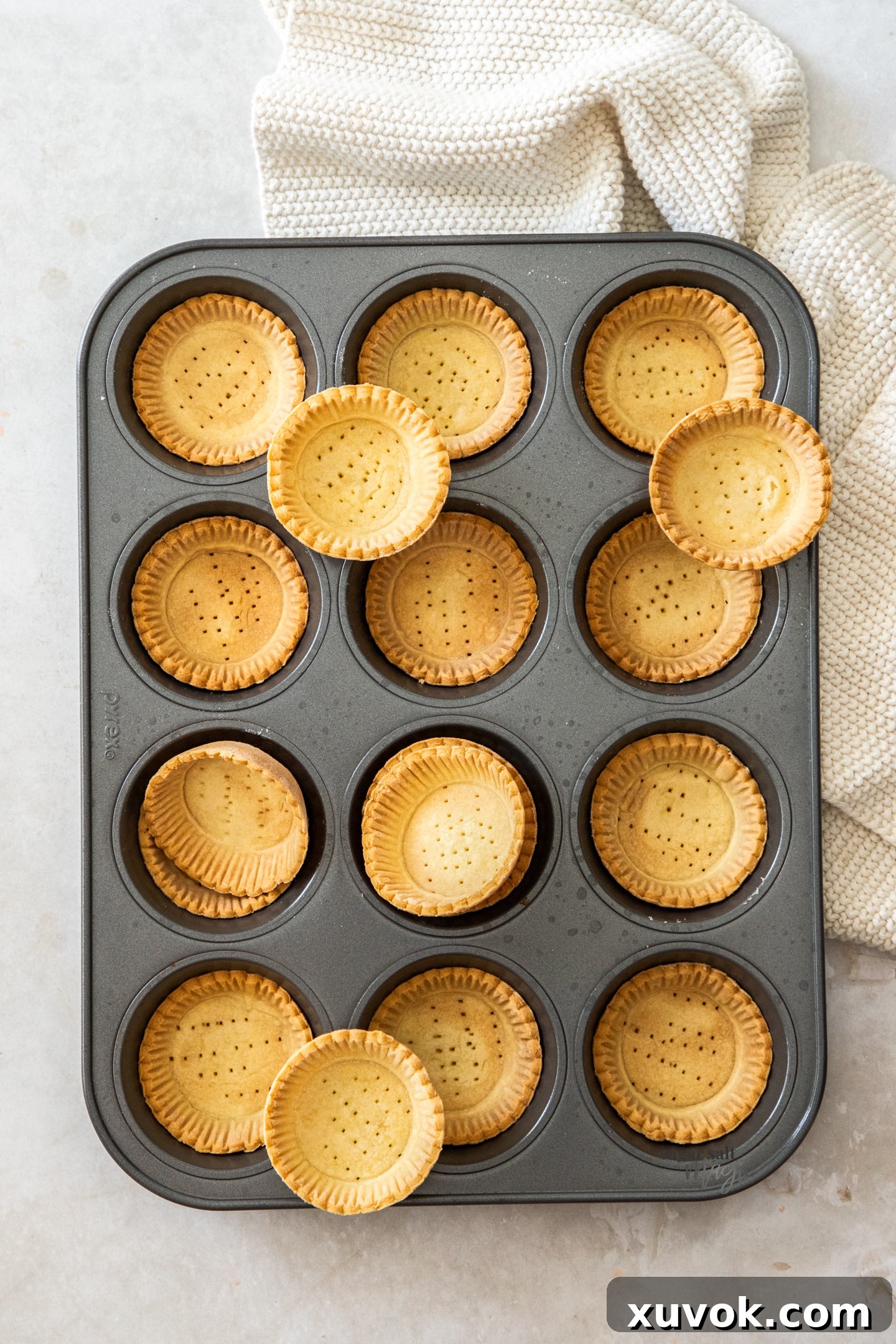
Table of Contents
- The Irresistible Appeal of Homemade Tartlet Shells
- Essential Ingredients for Your Perfect Pastry
- Crafting Your Tartlet Shells: A Step-by-Step Guide
- Pro Tips for Flawless Tartlet Shells
- Creative Tartlet Filling Inspirations
- Frequently Asked Questions for Tartlet Bakers
- Batch Size and Optimal Storage Solutions
- More Delightful Recipes to Explore
- Full Recipe Card
- Nutrition Facts
Never Miss a Recipe!
Get the latest recipes straight to your inbox!
(Sign up for our newsletter to receive delicious, easy-to-follow recipes delivered right to your inbox!)
The Irresistible Appeal of Homemade Tartlet Shells
There’s a special charm and undeniable flavor in homemade pastry that store-bought versions simply cannot replicate. Our mini tartlet shells offer a superior foundation for any sweet or savory creation, boasting a crisp, buttery texture that provides the perfect contrast to your chosen filling. Ideal for elegant finger-food parties, casual picnics, or sophisticated individual desserts, these shells bring a touch of gourmet flair to any occasion without demanding professional baking skills.
The individual size of each tartlet ensures that every guest receives their own perfect, intact treat, making them not only delicious but also incredibly practical for serving. Beyond their exquisite taste, the beautiful scalloped edges and defined internal ridges are simple to achieve, adding a professional touch that will impress your friends and family. This recipe demystifies the art of pastry making, proving that incredible results can be achieved with just a handful of common ingredients and a few straightforward steps.
Essential Ingredients for Your Perfect Pastry
The magic of these sweet shortcrust pastry shells begins with just four core ingredients, making them an accessible baking project even on short notice. Most likely, you already have everything you need in your pantry! The simplicity of the ingredient list means you can whip up a batch whenever inspiration strikes, or prepare them ahead of time and freeze them for up to three months, ensuring you’re always ready for an impromptu gathering or a dessert craving. The quality of your ingredients plays a crucial role in the final flavor and texture, so choose them with care.
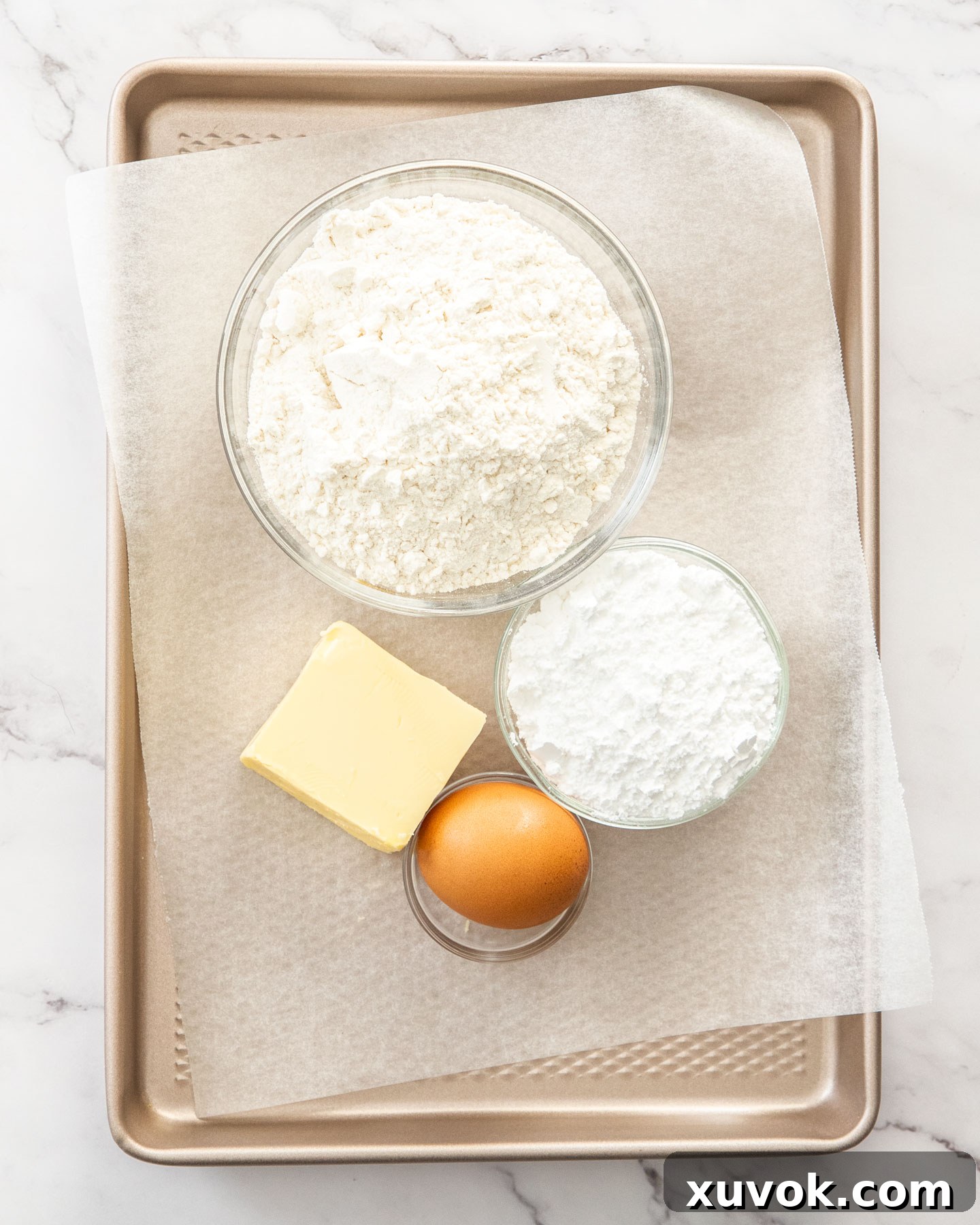
For precise quantities and step-by-step instructions, please consult the recipe card below.
- All-Purpose Flour: This forms the structural foundation of your tartlet shells. Using plain or all-purpose flour ensures a tender yet sturdy pastry. For optimal accuracy in baking, especially with flour, weighing your ingredients rather than using volume measurements is highly recommended. This prevents common issues like a tough or crumbly dough.
- Icing Sugar (Powdered Sugar / Confectioners Sugar): Unlike granulated sugar, icing sugar dissolves seamlessly into the dough, contributing to an incredibly smooth texture and a delicate, uniform sweetness. This fine consistency helps create a tender, almost crumbly pastry that melts in your mouth.
- Unsalted Butter, Chilled & Cubed: Butter is the hero of flavor and texture in this pastry. Using unsalted butter allows you to control the exact amount of salt in your recipe. Critically, the butter must be very cold and cut into small cubes. Cold butter creates pockets of steam during baking, which results in a wonderfully crispy and slightly flaky crust. Always check butter labels to ensure they don’t contain excessive water, which can negatively impact the pastry’s final texture.
- Large Cold Egg: A single large, cold egg acts as a crucial binding agent, bringing all the dry ingredients together to form a cohesive dough. Keeping the egg cold further assists in maintaining the butter’s chill, reinforcing the overall strategy for a tender and flaky pastry.
These four simple ingredients, when combined and handled with a little care, will yield a sweet shortcrust pastry that is both a joy to work with and a delight to taste. Remember, precision in measurement and adherence to cold temperatures are your keys to pastry success!
Crafting Your Tartlet Shells (A Step-by-Step Guide)
Creating beautiful tart shells from scratch is a surprisingly approachable process, especially with the efficiency of a food processor. This method ensures that the dough comes together quickly and evenly, preventing overworking – a common pitfall in pastry making. From blending the few simple ingredients to shaping and blind baking, each stage is designed for ease and to guarantee you perfectly crisp, golden shells. Let’s walk through the steps in detail to ensure your success.
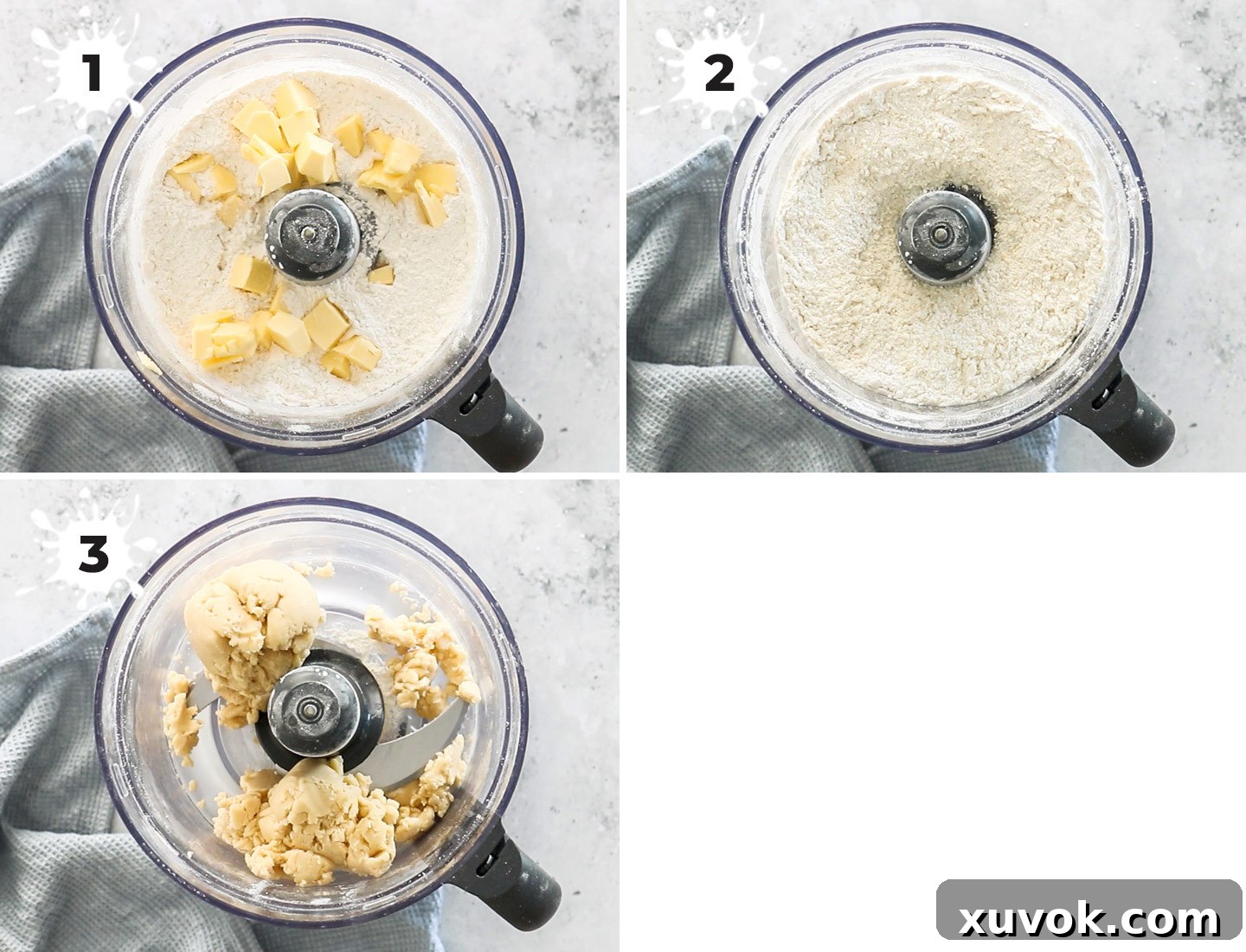
For a complete list of quantities and detailed instructions, refer to the recipe card below.
- Crafting the Tartlet Dough: Begin by placing your all-purpose flour and icing sugar into the bowl of a food processor. Pulse for just a few seconds to ensure they are evenly combined. Next, add the cold, cubed unsalted butter. Process the mixture in short bursts until it resembles coarse, lumpy sand. It’s perfectly normal, and indeed desirable, to still see small, lentil-sized pieces of butter – these are essential for creating pockets of steam during baking, leading to a wonderfully flaky texture. Finally, add the single cold egg and process on a low setting. Continue pulsing until the mixture starts to form large, shaggy clumps. As soon as these clumps appear, stop processing immediately to avoid overworking the dough. Overworking the gluten will result in a tough, chewy pastry, which we want to avoid.
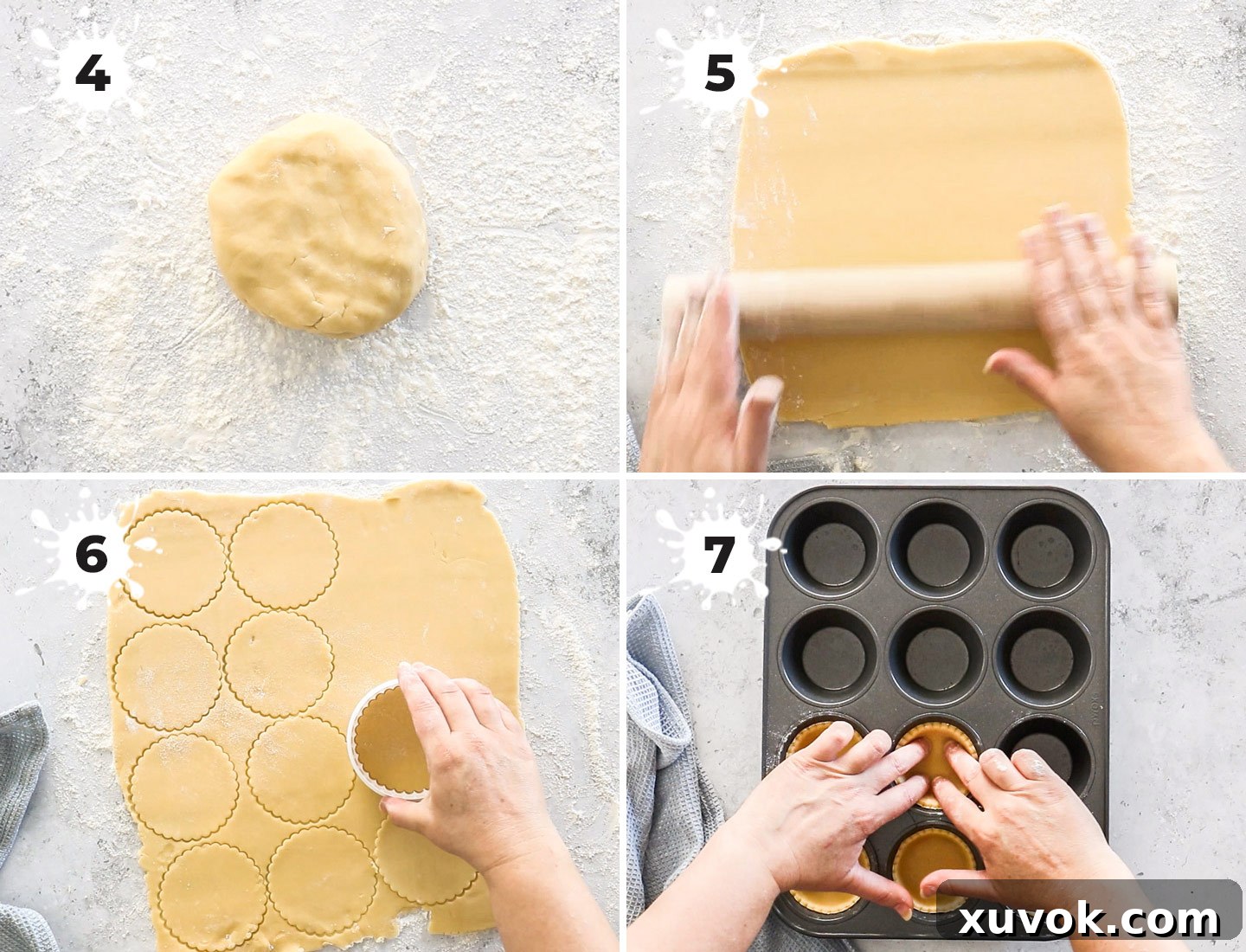
- Rolling and Cutting the Pastry: Carefully transfer the dough clumps onto a lightly floured work surface. Gently gather the dough together with your hands, forming it into a smooth, flattened disk. Remember to handle it as little as possible to keep the butter cold and the gluten relaxed. Lightly dust the top of the dough with a small amount of flour, then, using a rolling pin, gradually roll it out to an even thickness of approximately 3-4mm (⅛ inch). Periodically lift and rotate the dough to prevent it from sticking and to ensure uniform thickness. For beautifully shaped tartlet shells, use a 9cm (3 ½ inch) round cookie cutter. For that charming, professional touch, a fluted cookie cutter is ideal.
- Shaping the Tartlet Shells: Have a non-stick muffin tin or individual mini tart pans ready. Carefully pick up each dough circle, perhaps using an offset spatula to prevent distortion, and center it over one of the muffin cups. Gently press your fingers into the center of the dough, easing it down into the base of the cup. Continue to press the dough carefully into all the corners and against the sides, ensuring a snug fit and a flat bottom without tearing the pastry. If your rolling pin has a flat end, it can be incredibly useful for gently tamping down the bases to achieve perfectly sharp, defined corners.
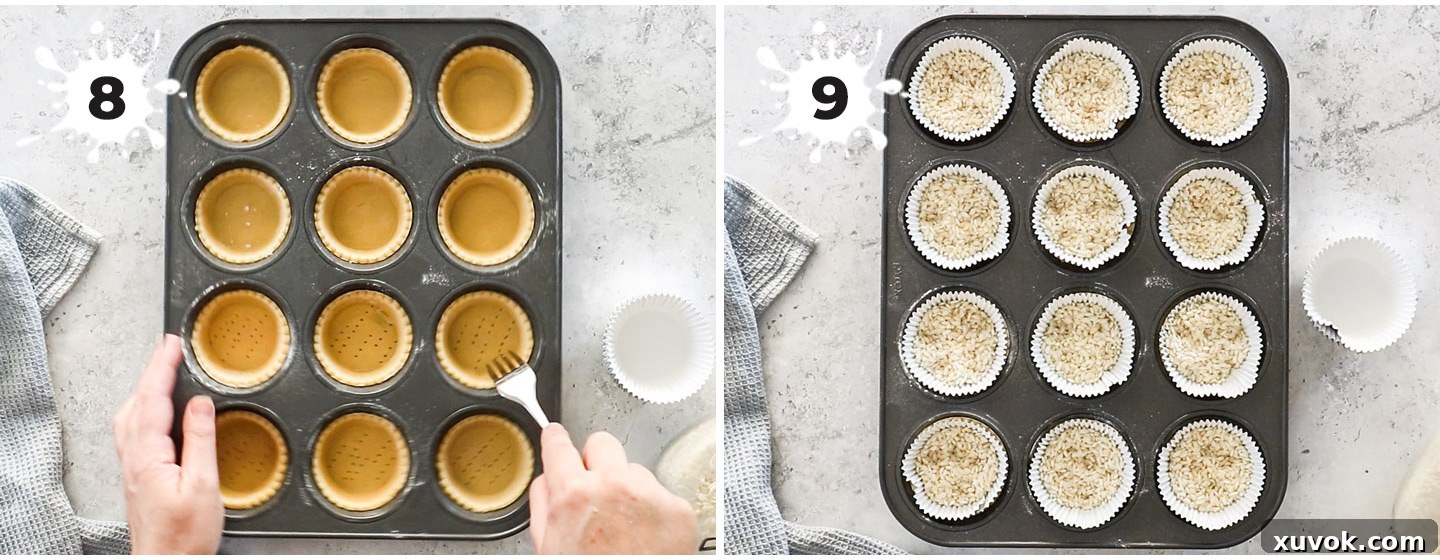
- The Critical Chilling Phase: Once your tartlet shells are meticulously shaped in the muffin tin, a crucial chilling period is required. Place them in the refrigerator for a minimum of 2 hours, or ideally, overnight, and up to 3 days. This step is absolutely non-negotiable for achieving perfect tartlet shells. Chilling allows the butter within the dough to re-solidify and the gluten to fully relax. This relaxation is vital as it prevents the pastry from shrinking excessively during baking, ensuring your shells maintain their beautiful, intended shape and size. The longer the chill, the more stable and less prone to shrinkage your shells will be.
- Mastering Blind Baking for Crispness: Preheat your oven to 180°C / 350°F (160°C fan forced). Before baking, gently prick the bases of each chilled tartlet shell several times with a fork. This step creates small vents, allowing steam to escape and preventing the pastry from puffing up unattractively. Next, carefully line each tartlet shell with a paper cupcake case or a small piece of baking parchment, ensuring it presses snugly against the pastry at the bottom. Fill each liner with baking weights, such as dried rice, beans, or specialized pie weights. These weights are essential for holding the pastry in place and preventing the sides from collapsing or bubbling during the initial bake. Bake for 15 minutes with the weights. Afterward, carefully remove the paper liners and weights, and continue baking for a few more minutes. The exact additional baking time will depend on whether you intend to bake them again with a filling (par-baked) or if they are destined for a no-bake filling (fully baked).
Pro Tips for Flawless Tartlet Shells
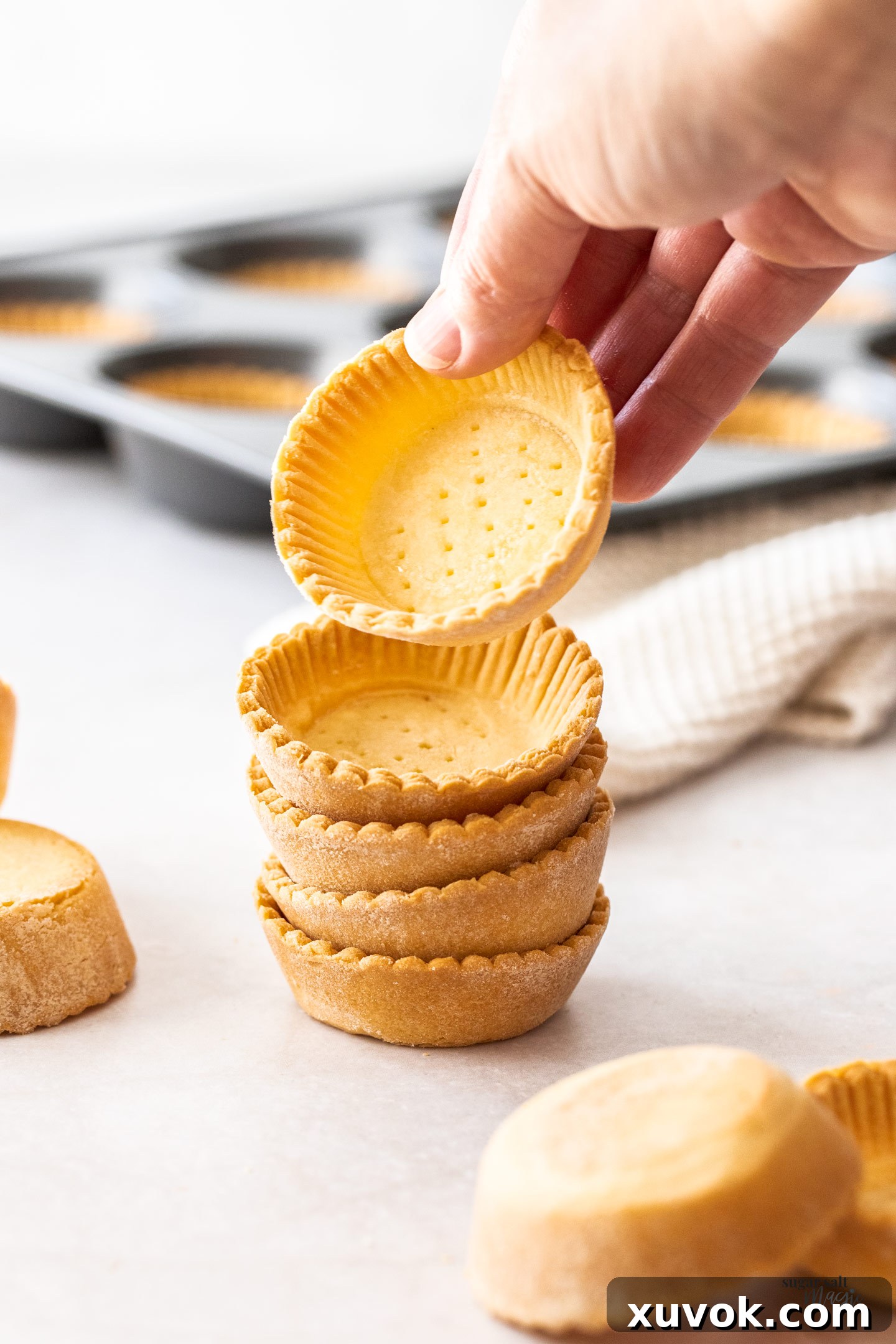
- Achieving Professional Sharp Corners and Flat Bases: To give your tartlets a truly professional, neat appearance with defined corners and a flat base, employ a simple trick. If your rolling pin has a flat end, use it to gently press the dough into the base and corners of the muffin cup. This technique helps compact the dough evenly, ensuring a sturdy and visually appealing shell. A tart tamper is another option, but a rolling pin end works just as well.
- Emphasize the Chilling Time – Don’t Skip It: This is arguably the most critical step for perfect tartlet shells. Do not be tempted to skip or shorten the recommended chilling time. Allowing the dough to chill for a minimum of 2 hours, and ideally overnight, is vital. It permits the butter to fully firm up and the gluten in the flour to relax completely. This relaxation dramatically reduces shrinkage during baking, resulting in beautifully stable, crisp, and perfectly shaped shells that hold their form.
- Understanding Baking Time Variations: The precise baking time will vary based on your intended use for the tartlet shells:
- Fully Baked Shells: If you plan to fill your tartlets with a no-bake filling (such as mousse, pastry cream, or fruit curd), bake them all the way until they are golden brown and fully cooked through. This typically takes about 20-22 minutes in total (including the blind baking phase).
- Par-Baked Shells: If your filling requires a second bake (e.g., a custard tart or a frangipane filling), you should par-bake the shells for around 17 minutes. This sets the base without fully cooking it. Once filled, be careful not to bake them for more than an additional 10 minutes, as over-baking the pastry will make it dry and brittle.
- Managing Dough Temperature: Pastry dough is happiest when cold. If at any point during rolling or shaping the dough becomes too warm, sticky, or difficult to handle, simply return it to the refrigerator for 10-15 minutes. A slightly chilled dough is always easier to work with and less prone to tearing.
- Re-rolling Dough Scraps: After cutting out your initial rounds, gather the leftover dough scraps. Gently press them together to form a new disk. Briefly chill this dough (about 15-20 minutes) before re-rolling it. This quick chill helps relax the gluten that may have developed during handling, ensuring the re-rolled pastry remains tender and easy to work with for additional shells.
Creative Tartlet Filling Inspirations
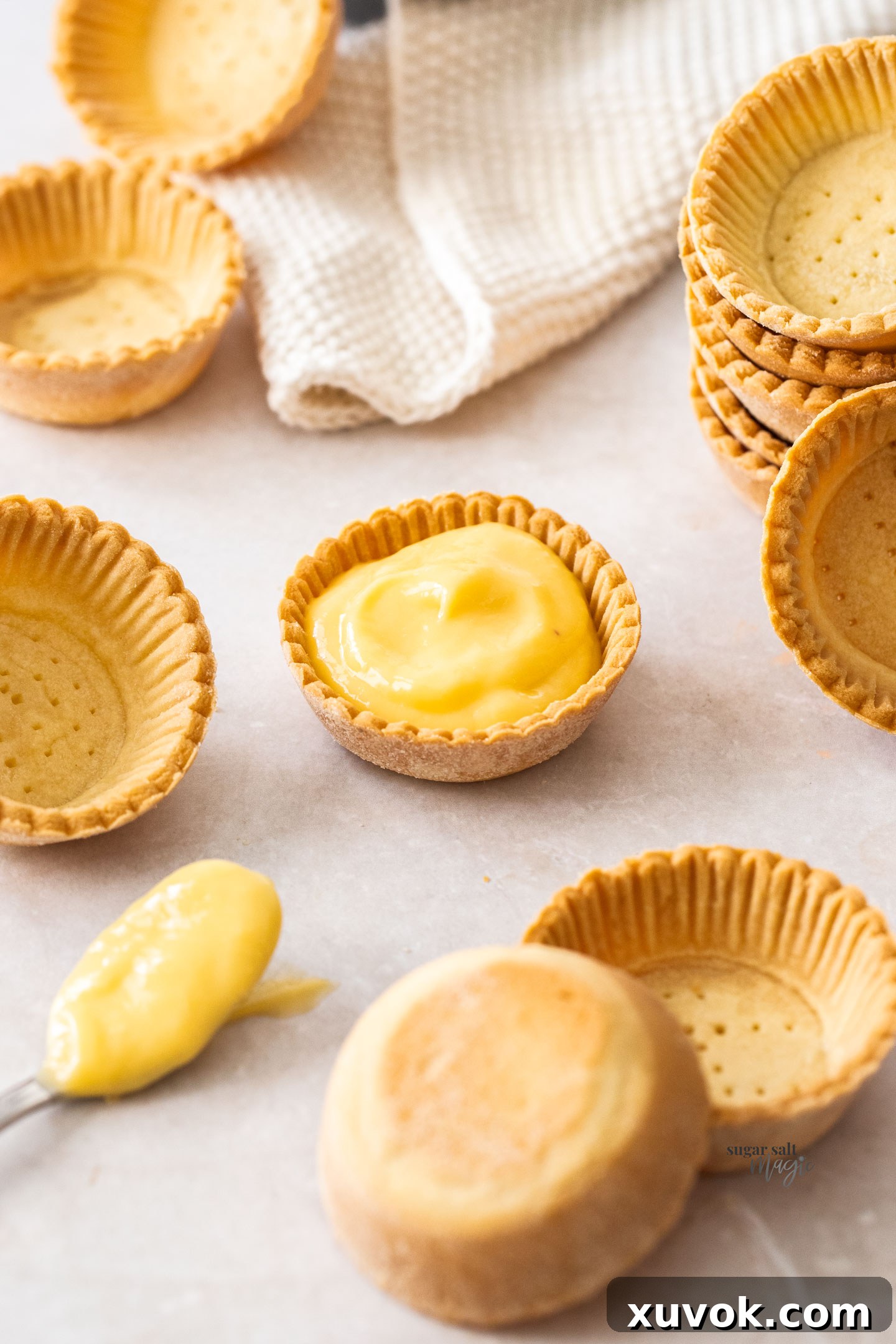
The true brilliance of these empty tartlet shells lies in their versatility. Once baked, they can be stored in your freezer, offering unparalleled convenience. When guests are on the horizon, simply pull out a batch, thaw, and fill them with your favorite sweet or savory creations. Their robust structure and delicate flavor make them the perfect canvas for countless delicious possibilities. Here’s a wealth of ideas to inspire your next tartlet masterpiece:
- Luxurious Fruit Curds: Bright, tangy, and wonderfully smooth, fruit curds are an exquisite pairing for these buttery shells. Their vibrant colors and intense flavors create elegant individual desserts.
- Classic Lemon Curd for a zesty kick.
- Exotic Passionfruit Curd for a tropical twist.
- Sweet Mango Curd (pictured above) for a sunny delight.
- Vibrant Orange Curd for a citrusy burst.
- Tangy Lime Curd for a refreshing taste.
- Rich Blackberry Curd for a deeper, fruity flavor.
- Creamy Pineapple Curd for a smooth, tropical filling.
- Light and Airy Mousse: For a delicate and sophisticated dessert that contrasts beautifully with the crisp pastry, mousses are an exceptional choice.
- Decadent Chocolate Mousse for the chocoholics.
- Tangy Lemon Curd Mousse combining two favorites.
- Sweet Raspberry Mousse for a fruity, frothy treat.
- Fun Oreo Mousse for a playful indulgence.
- Tropical Mango Mousse for a light, summery option.
- Smooth Pastry Cream (Crème Pâtissière): A classic and versatile cream that provides a rich, smooth base, perfect for pairing with fresh fruits.
- Classic Vanilla Pastry Cream, a timeless favorite.
- Indulgent Chocolate Pastry Cream for a rich dessert.
- Rich Caramel or Chocolate Ganache: For intensely satisfying and deeply flavorful tartlets, a glossy caramel or velvety chocolate ganache filling is a wonderful choice. A sprinkle of sea salt on a caramel filling creates an exquisite salted caramel tartlet.
- Tiramisu-Inspired Delights: Transform these shells into individual tiramisu mini tarts! Layer coffee-soaked cake or ladyfingers with creamy mascarpone, as showcased in these delightful Tiramisu tartlets.
- Pistachio and Cream Creations: Fill your shells with a touch of aromatic pistachio paste, then top with a light cheesecake mixture or a delicate panna cotta for an elegant and nutty dessert.
- Savory Canapés: These shells aren’t just for sweets! Adapt the recipe (see FAQ) for savory versions, perfect for mini quiches, cheese and herb fillings, or smoked salmon and cream cheese canapés for your next party.
For those who adore chocolate, you could also explore my specialized recipe for chocolate tartlet shells. Regardless of your chosen filling, a beautiful topping of fresh fruit or vibrant berries will always add a gorgeous visual appeal and a refreshing finish to your mini tarts, making them truly irresistible.
(Note: Any interactive elements or JavaScript embeds, such as the original TikTok video, have been removed to comply with the request for pure HTML output. The descriptive content has been integrated into the article.)
Frequently Asked Questions for Tartlet Bakers
Can I adapt this recipe to make savory tartlet shells?
Absolutely, this recipe is incredibly versatile for savory applications, making perfect canapés for any event. To transform them into savory shells, simply substitute the unsalted butter with salted butter (or add a pinch of salt if using unsalted) and completely omit the icing sugar. If, after combining, the dough feels a little too dry and doesn’t quite clump together, you can gradually add a touch of ice-cold water, one tablespoon at a time, until it forms a cohesive dough. This creates a beautifully neutral and crisp base ideal for mini quiches, cheese fillings, or elegant vegetable tarts.
What can I use if I don’t have a specific tart tamper tool?
While a tart tamper is a handy wooden utensil designed to press dough perfectly into tart tins, it’s far from essential! You can achieve equally fantastic results using common kitchen items. The flat end of a small rolling pin is often the perfect size and shape for pressing the dough into the base and corners of your muffin pan, helping to create those desirable sharp corners and flat bottoms. Alternatively, your own fingertips, used gently and consistently, are also excellent tools for shaping the dough effectively.
Is tart crust the same as pie crust? What’s the difference?
While tart crust and pie crust share many similar ingredients (flour, fat, water/egg), they are designed to achieve different textures. Pie crust is typically made to be much flakier and tender, often with larger pieces of cold butter that create distinct layers. Tart shells, on the other hand, are intended to be crisper, sturdier, and more uniform, with only a subtle flakiness. This structure allows them to hold substantial fillings without becoming soggy or collapsing, offering a cleaner bite. Tart dough often contains an egg, which contributes to its richness and stability.
What are the main components of tart dough?
Our simple yet effective tart dough is crafted from just four core ingredients: all-purpose flour, which provides the essential structure; icing sugar, for a delicate sweetness and tender texture; cold unsalted butter, crucial for richness and a crispy finish; and a cold large egg, which acts as a binder, bringing all the elements together into a cohesive and workable pastry.
Is tart crust similar to puff pastry?
No, tart crust is fundamentally different from puff pastry. Traditional tart crust is a type of shortcrust pastry, which is a non-laminated dough that bakes to a crisp, firm, and sometimes slightly crumbly texture without significantly puffing up. Puff pastry, in contrast, is a laminated dough created by repeatedly folding layers of butter into dough. This intricate process creates hundreds of thin layers that dramatically puff and separate when baked, resulting in a very light, airy, and exceptionally flaky product. While some free-form tarts might use puff pastry for a quicker approach, classic tartlets rely on the distinct structure of shortcrust.
What can I use if I don’t have specialized tartlet pans?
Good news! If you don’t possess dedicated tartlet pans, a standard non-stick muffin pan is an excellent and widely available substitute. In fact, this recipe is specifically developed with the use of a muffin pan in mind, ensuring it’s accessible to most home bakers. The individual cups of a muffin tin provide the perfect molds for shaping your mini tart shells, yielding consistent and beautifully formed results without the need for additional, specialized kitchen equipment.
Can I make these tartlet shells gluten-free?
While this recipe is formulated with all-purpose flour, you can certainly experiment with a high-quality 1:1 gluten-free baking flour blend as a substitute. Look for blends that specifically state they can be used cup-for-cup and ideally contain xanthan gum, which helps with structure. The resulting texture might be slightly more delicate or crumbly than traditional pastry, but many gluten-free blends yield very good results for shortcrust. Ensure all other steps, especially the chilling period, are followed precisely for the best possible outcome.
What should I do if my dough is too sticky or too dry during preparation?
Pastry dough can be temperamental, but these issues are easily remedied. If your dough feels overly sticky after processing or handling, add a very small amount of additional flour (about ½ teaspoon at a time) and gently pulse or knead until it’s more manageable. Alternatively, a quick 10-15 minute chill in the refrigerator will firm it up. If the dough is too dry and crumbly to form a cohesive ball, add a tiny splash of ice-cold water (start with ½ teaspoon) and pulse or knead minimally until it just comes together. Avoid adding too much liquid, as this can lead to a tough, unworkable pastry.
Batch Size and Optimal Storage Solutions
This recipe is designed to be efficient, providing a generous yield of mini tartlet shells. By carefully rolling the dough to the recommended thinness of approximately 3-4mm (⅛ inch), you should be able to produce around 18-19 beautifully crisp tartlet shells from a single batch. This makes them ideal for entertaining a crowd or for stocking your freezer with convenient pastry bases.
- Storing Unbaked Tartlet Shells: For exceptional make-ahead convenience, you can prepare the unbaked mini tart shells and keep them in their muffin pan, tightly covered with plastic wrap, in the refrigerator for up to 3 days before baking. For longer-term storage, these shells freeze beautifully for up to 3 months. When you’re ready to bake, simply transfer them to the refrigerator overnight to thaw completely before proceeding with the blind baking steps.
- Storing Fully Baked Tartlet Shells: Once your tartlet shells are fully baked and have cooled completely to room temperature, they can be stored in an airtight container. They will maintain their wonderful crispness at room temperature for a surprisingly long period, typically 7-10 days. For extended storage, place them in an airtight container and freeze for up to 3 months. To serve, thaw them at room temperature or refresh them in a warm oven (around 150°C / 300°F for 5-7 minutes) to restore their original crisp texture.
- Storing Par-Baked Tartlet Shells: If you’ve opted to par-bake your shells in preparation for a subsequent filling and bake, they can be stored in an airtight container in the refrigerator for 2-3 days. Alternatively, they can be frozen for up to 3 months. Always thaw par-baked shells in the refrigerator before adding your filling and completing the final baking process.
The ability to prepare and store these shells in various stages makes them an invaluable asset for any home baker, ensuring you’re always prepared to create an impressive and delicious treat with minimal last-minute effort.
More Delightful Recipes to Explore
If you’ve enjoyed the process of crafting these versatile tartlet shells, you’re in for a treat! Discover more delectable recipes that are sure to become new favorites in your baking repertoire:
- Bright Lemon Curd Tartlets
- Irresistible Salted Caramel Tartlets
- Sweet Coconut Tartlets
- Classic Jam Tarts
- Traditional Neenish Tarts
- Rich Mini Chocolate Tarts
- Delicate Meringue Nests
Did you try this mini tart shells recipe?
Leaving a rating and comment below the recipe is so helpful!
Hungry for more? Subscribe to our newsletter for free recipes straight to your inbox. Also, follow along on Facebook, Pinterest and Instagram.
Full Recipe Card: Homemade Tartlet Shells
Tartlet Shells
Yield: 19 tart shells
Prep Time: 20 minutes
Cook Time: 20 minutes
Chilling time: 2 hours
Total Time: 2 hours 40 minutes
Summary: This recipe guides you on how to make crisp and buttery tartlet shells from scratch. Using just 4 simple ingredients, these mini tart shells are easy to prepare and perfect for parties or elegant portable desserts.
Average Rating: 4.9 out of 5 stars from 28 ratings
Print Recipe |
Pin Recipe
Video Tutorial
(Original video content has been removed to ensure a pure HTML output without JavaScript embeds. You can find visual guides on the original source.)
Ingredients
- 225 g plain flour (all purpose flour) (1 ¾ cups / 8oz)
- 60 g icing sugar (powdered sugar / confectioners sugar) (½ cup / 2oz)
- 100 g unsalted butter, chilled & cubed (7 tablespoons / 3.5oz)
- 1 large egg, cold
For best results, always weigh ingredients where a weight is provided.
Instructions
- Place the flour and icing sugar in the bowl of a food processor. Process a few seconds to distribute evenly.
- Add the cubed cold butter and blitz until the mixture looks a bit like sand – there may be lentil-sized pieces of butter left here and there and that’s perfect.
- Add the egg and process on low until the mixture starts forming large clumps.
- Turn the dough out and pull it together into a smooth ball with your hands (making sure not to handle it too much) then press it out into a 1-inch thick disk.
- Place it onto a lightly floured work surface and dust the top with just a little flour too. Gently and gradually roll the pastry out, turning it often, to about 3mm (1/8 inch) thick.
- Have a non-stick 12-hole muffin tin at the ready.
- Using a circle cookie cutter 9cm/3 ½ in wide (or just a little larger than the opening of the muffin tin holes), cut out circles of dough. Try to get 12 from the first roll, and at least 6 from a second roll out. Try to handle the dough only enough to bring back into a disk for the second roll.
- Lift with an offset spatula so they don’t become misshapen and gently push each down into the muffin tin holes, gently pressing into the corners (if your rolling pin has a flat end like mine, it’s perfect for getting them flat to the bottom with a nice corner). Chill 2 hours or overnight (don’t skip chilling).
- Preheat oven to 180C / 350F / 160C fan forced.
- Prick the bases of the tartlet shells a few times with a fork. Place a cupcake case or piece of baking paper into each, pressing it to the pastry at the bottom, and fill with rice (or pie weights). Press down lightly on the rice to settle the cases into the tart shell.
- Transfer to the preheated oven and bake for 15 minutes then remove the cupcake cases and bake a further;
- If the filling will be baked, bake the tartlet shells a further 2-3 minutes, just to set the bases.
- If the filling won’t be baked, bake the tartlet shells a further 7-8 minutes until golden brown.
- Carefully remove the mini tart shells from the tins and transfer to a wire rack to cool.
- Please take a moment to leave a comment & rating on the original recipe page if you tried this! It’s greatly appreciated and helpful.
Notes
- All ovens vary – always test for doneness 3-5 minutes before the recipe suggests.
- For best results, you should always weigh ingredients like flour and sugar. Kitchen scales are relatively cheap but if you can’t weigh the ingredients, use the spoon and level method (don’t scoop).
- Unbaked tart shells or even just the pastry dough can be stored in the fridge covered in plastic wrap for 2-3 days.
- Fully baked mini tart shells can be stored in an airtight container at room temperature for up to a week and frozen for up to 3 months.
- Par-baked tartlet shells can be stored in the fridge in an airtight container for 2-3 days before filling and final baking or in the freezer for up to 3 months.
DISCOVER MORE PIES & TARTS HERE
Author: Marie Roffey
Course: Dessert
Cuisine: French
Nutrition Facts
Nutrition Facts
Tartlet Shells
Amount Per Serving
Calories 97 (Calories from Fat 45)
% Daily Value*
Fat 5g 8%
- Saturated Fat 3g 19%
- Trans Fat 0.2g
- Polyunsaturated Fat 0.3g
- Monounsaturated Fat 1g
Cholesterol 21mg 7%
Sodium 5mg 0%
Potassium 18mg 1%
Carbohydrates 12g 4%
- Fiber 0.3g 1%
- Sugar 3g 3%
Protein 2g 4%
Vitamin A 146IU 3%
Calcium 5mg 1%
Iron 1mg 6%
* Percent Daily Values are based on a 2000 calorie diet. Nutrition information is approximate and derived from an online calculator. The brands and specific quantities you use may cause variations.