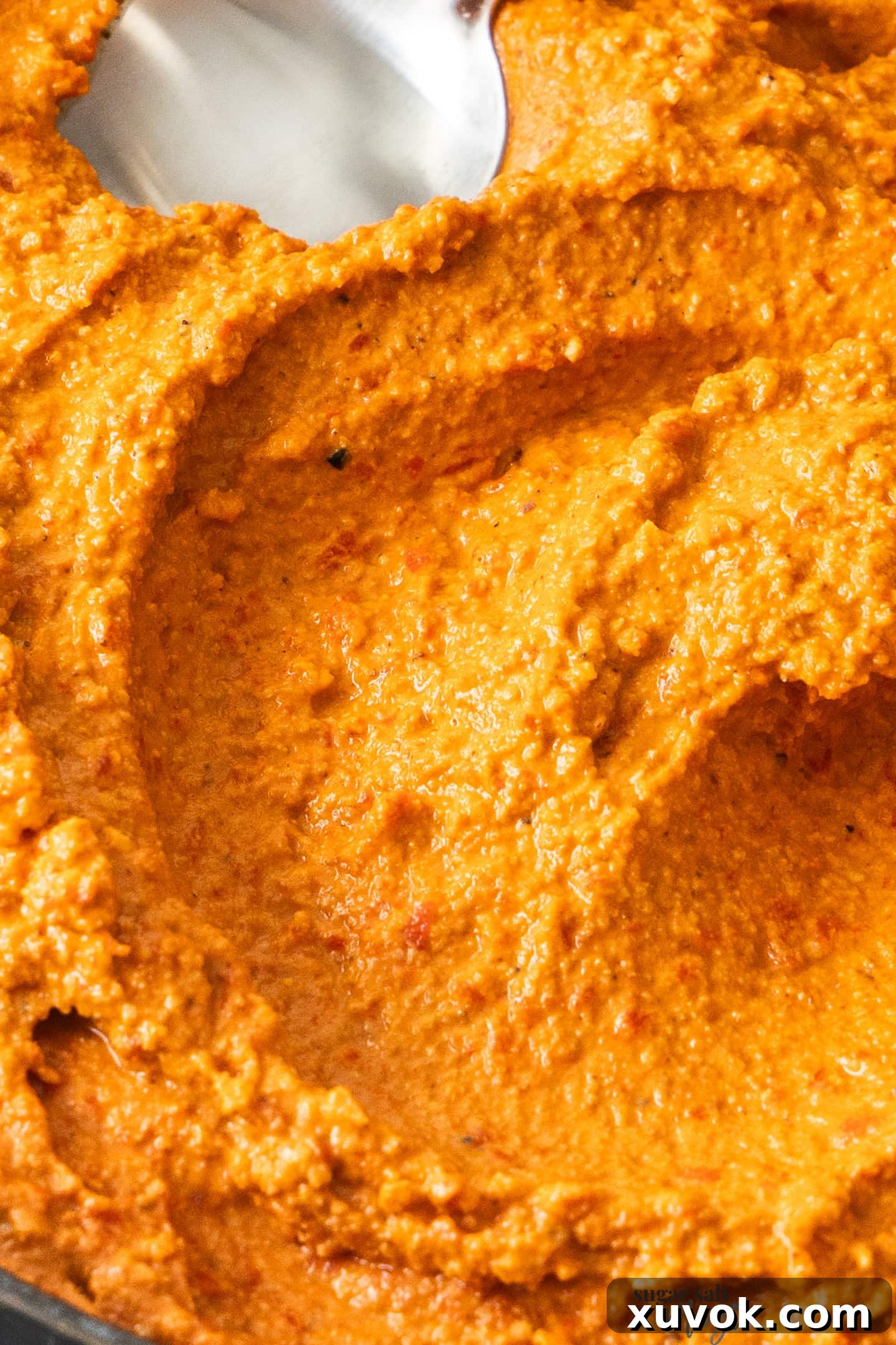
Romesco Sauce: The Ultimate Spanish Roasted Red Pepper Delight
Prepare to elevate your culinary experience with Romesco sauce, an incredibly rich, complex, and utterly delicious condiment that hails from the vibrant region of Catalonia, Spain. Also known as salsa romesco, this iconic Spanish sauce captivates the palate with its harmonious blend of flavors: a subtle sweetness from fire-roasted red peppers and tomato, a delightful nuttiness courtesy of toasted almonds, and a bright, zesty tang that balances every bite. Its versatility is truly remarkable, making it the perfect accompaniment for virtually any dish, from succulent roast chicken and an array of roasted vegetables to perfectly grilled steak and exquisite seafood preparations.
My journey with this magnificent tomato and pepper sauce began years ago during a memorable dining experience. I tasted it alongside a perfectly cooked roast chicken breast, and from that moment, I was completely captivated. The depth of flavor, the intriguing texture, and its ability to transform a simple dish left a lasting impression. Ever since, I’ve dedicated myself to perfecting my own recipe for authentic Romesco sauce, ensuring it captures the essence of its Spanish heritage while remaining accessible for home cooks. Today, I am thrilled to finally share this perfected recipe with you, confident that it will become a staple in your kitchen.
This isn’t just another recipe; it’s an invitation to discover a condiment you’ll want to keep on hand at all times. Fortunately, crafting a fresh batch of homemade Romesco sauce is surprisingly simple. It comes together quickly, primarily using readily available, mostly shelf-stable ingredients, and requires minimal effort. Get ready to add a touch of Spanish magic to your meals with this vibrant and irresistible sauce!
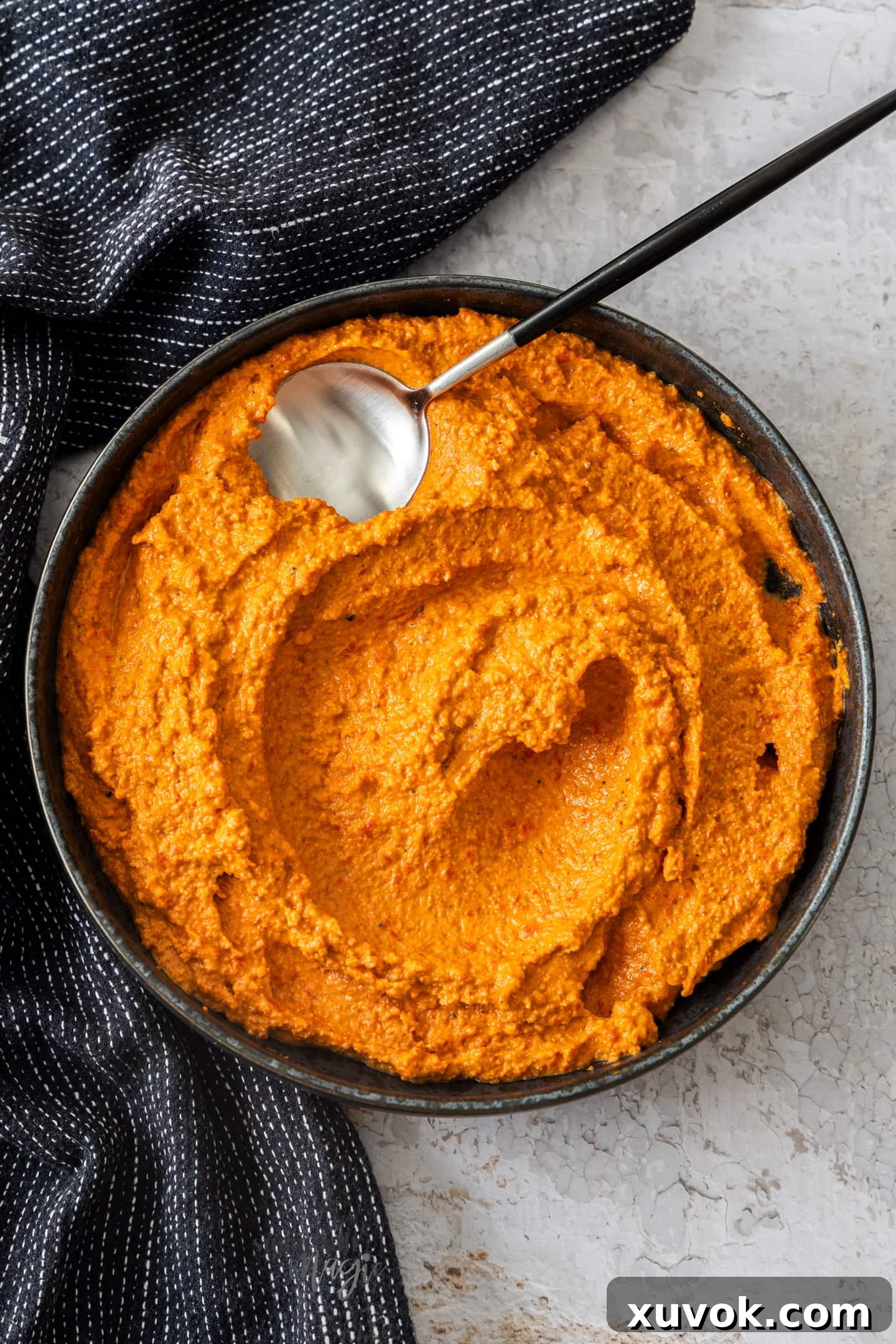
Table of Contents
- What is Romesco Sauce?
- The History of Romesco Sauce
- Key Ingredients for Authentic Romesco
- How to Make Romesco Sauce: Step-by-Step
- Serving Suggestions: Endless Uses for Romesco
- Expert Tips for Perfect Romesco Every Time
- Storage and Freezing Your Romesco Sauce
- Frequently Asked Questions About Romesco
- Romesco Sauce Variations to Try
- More Delicious Sauce Recipes You’ll Love
Never Miss a Recipe!
Get the latest, most exciting recipes straight to your inbox and elevate your cooking!
Sign up for our newsletter to receive new recipes and culinary inspiration directly!
What is Romesco Sauce?
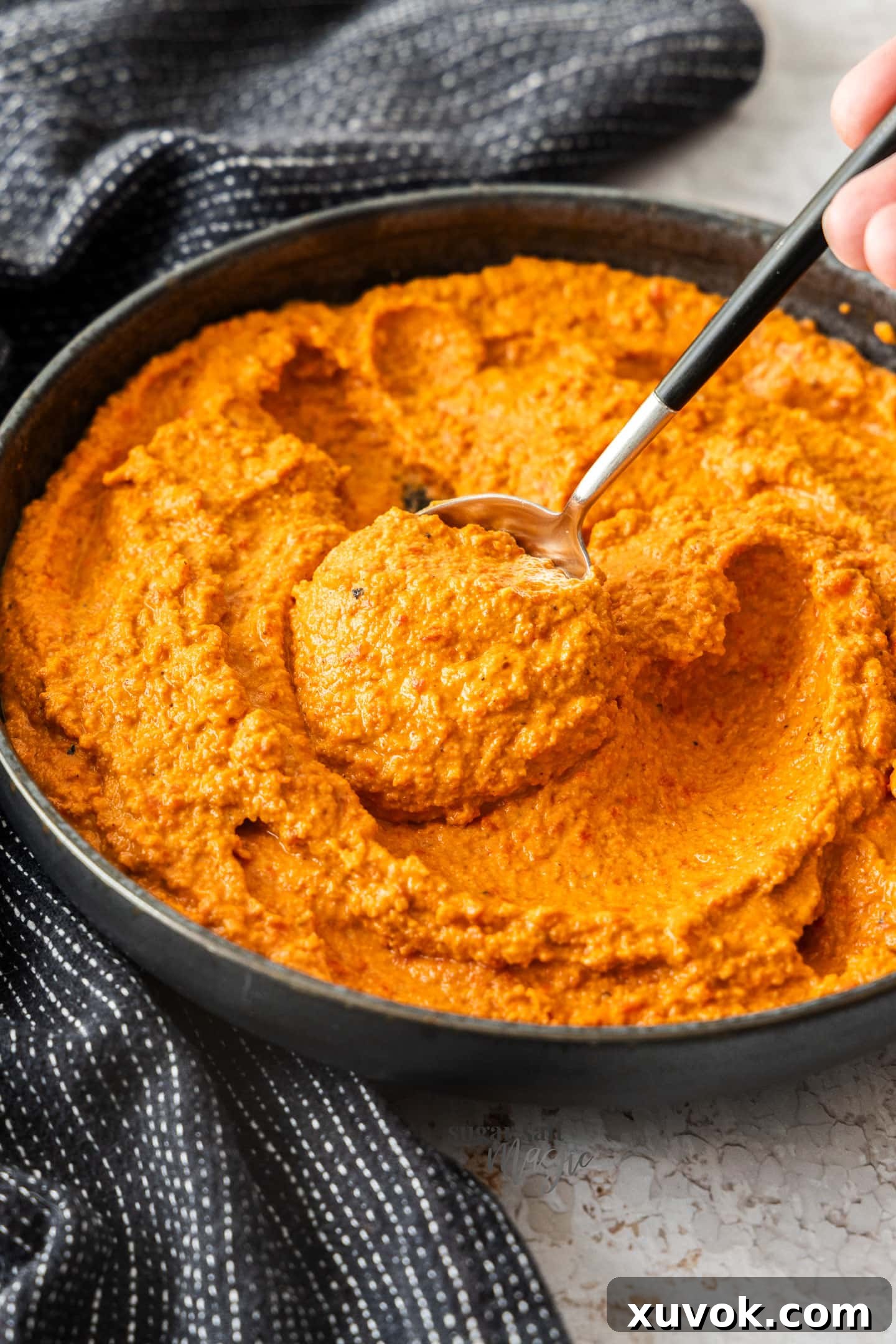
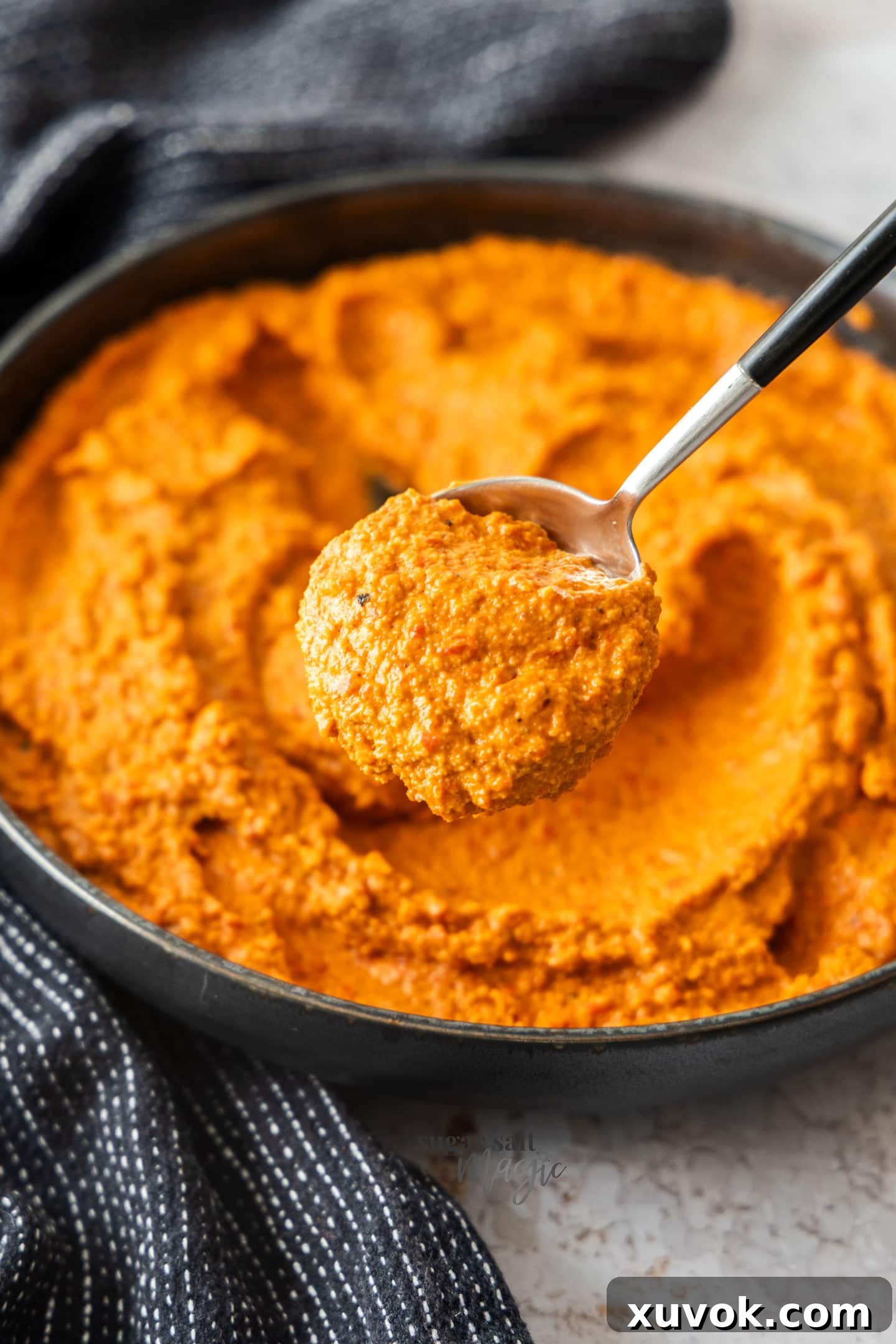
At its heart, Romesco sauce (or salsa romesco in Spanish) is a truly remarkable condiment originating from the Catalonian region of Spain. This vibrant sauce is traditionally crafted from a base of roasted peppers and fire-roasted tomatoes, enriched with nuts (typically almonds, sometimes hazelnuts), fresh garlic, high-quality olive oil, and a splash of sherry vinegar. The result is a profoundly flavorful sauce that is at once nutty, wonderfully creamy, exquisitely tangy, and possesses a subtle sweetness with a hint of smoky depth. It’s an explosion of taste that makes it an indispensable component of Spanish cuisine.
While classic Romesco often involves roasting fresh tomatoes and peppers from scratch, my streamlined version is designed for both authentic flavor and modern convenience. To significantly speed up the preparation process without compromising on taste, this recipe calls for using high-quality jarred roasted red peppers. These are readily available in most supermarkets and offer a consistently delicious flavor profile, saving you considerable time and effort. Instead of fresh roasted tomatoes, we incorporate a good-quality tomato paste, which delivers concentrated tomato flavor and contributes to the sauce’s rich body. Both jarred peppers and tomato paste are pantry staples, ensuring you can whip up a batch of this gorgeous red pepper and almond sauce whenever the craving strikes.
The History of Romesco Sauce
Delving into the origins of Romesco sauce reveals a fascinating culinary heritage tied to the fishing communities along the coast of Tarragona in Catalonia. This sauce was originally created by fishermen (known as “pescadors”) to accompany their freshly caught fish and seafood. The ingredients, primarily nuts, stale bread, garlic, and local produce like peppers and tomatoes, were readily available and provided a hearty, flavorful accompaniment that could enhance even the simplest meal.
Over time, Romesco sauce transcended its humble beginnings and became a beloved staple throughout Catalonia and eventually, globally. It embodies the essence of Mediterranean cooking – simple, fresh ingredients transformed into something extraordinary. The combination of its robust flavor and versatile nature has ensured its enduring popularity, proving that some of the best culinary creations come from necessity and ingenuity.
Key Ingredients for Authentic Romesco
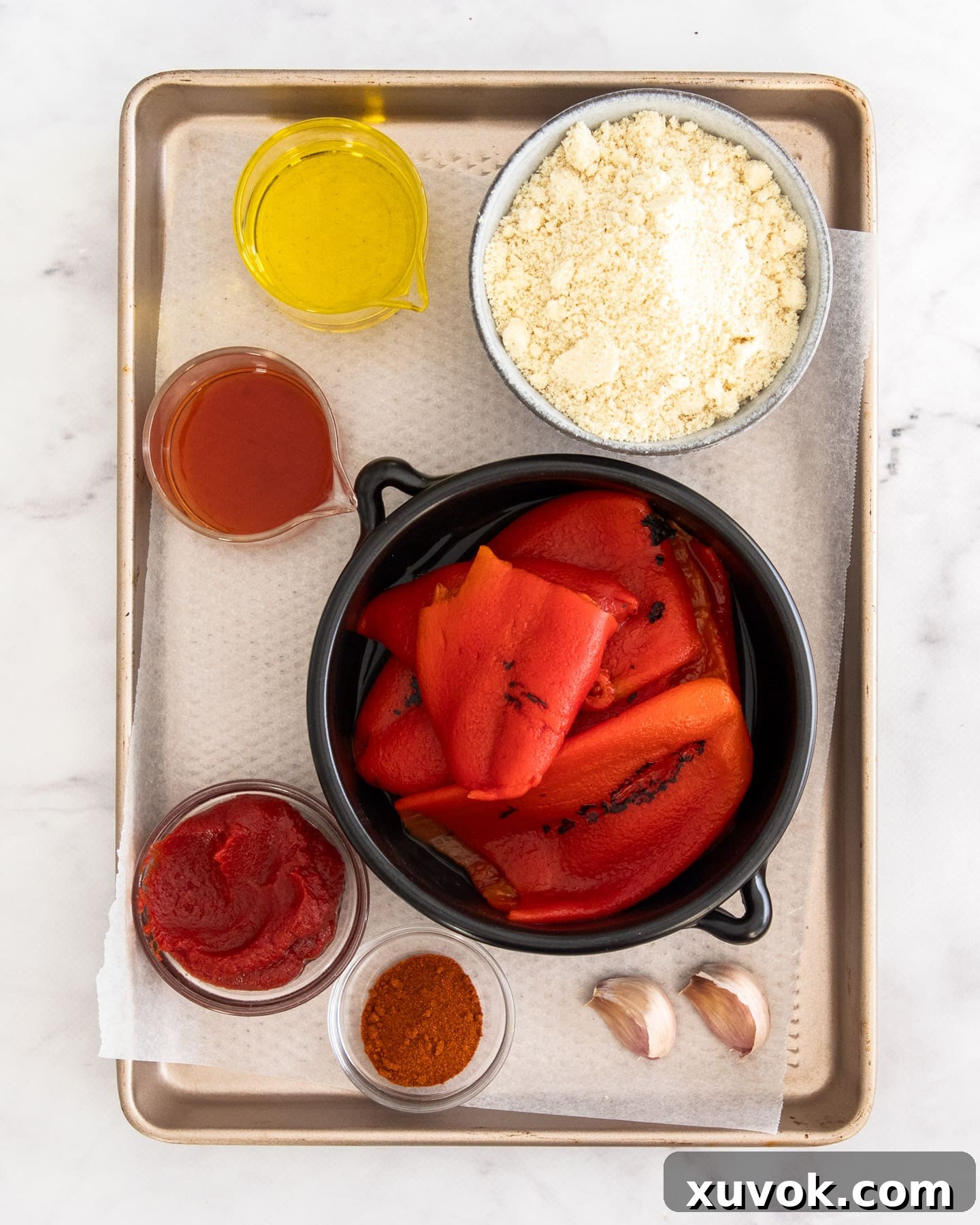
For precise measurements and detailed instructions, please refer to the full recipe card below. Here’s a closer look at the essential components that make this Spanish roasted red pepper sauce so irresistible:
- Almond Meal (Ground Almonds): This forms the foundational nutty base of our Romesco sauce. Using pre-ground almond meal (sometimes labeled as almond flour, though meal is typically coarser and preferred for texture) simplifies the process immensely. If you prefer to grind your own, blanched almonds can be processed in a food processor until they reach a fine, breadcrumb-like consistency. Toasting these almonds, a crucial step we’ll cover, significantly deepens their flavor and adds a rich, aromatic complexity to the sauce. While almonds are traditional, some variations incorporate other nuts like hazelnuts or even walnuts for a different flavor profile.
- Roasted Red Bell Peppers: For maximum convenience and consistent quality, this recipe utilizes jarred roasted red bell peppers. These are packed in brine and offer a wonderfully smoky and sweet flavor without the effort of roasting fresh peppers at home. When selecting, look for good quality brands, as their convenience often rivals the effort of DIY roasting. If you wish to roast your own, simply char whole red bell peppers over an open flame or under a broiler until skin is blackened, then steam in a bowl to loosen the skin before peeling, deseeding, and chopping. Ensure they are thoroughly drained before use to prevent a watery sauce.
- Tomato Paste: This powerful, shelf-stable ingredient provides a concentrated burst of savory tomato flavor and contributes to the Romesco’s vibrant color and rich consistency. It’s a convenient alternative to roasting fresh tomatoes. For an even deeper umami boost and a slightly different flavor nuance, you can substitute tomato paste with sun-dried tomatoes (oil-packed, drained), which also add a delightful chewiness if not fully blended smooth.
- Garlic: Fresh garlic is indispensable in Romesco, providing a pungent, aromatic foundation. There’s no need for meticulous mincing here; rough chops are perfectly sufficient as all ingredients will be thoroughly blitzed in the food processor or blender. The raw garlic provides a sharp kick that mellows slightly into the sauce, adding a crucial layer of flavor.
- Sherry Vinegar: A cornerstone of authentic Spanish cuisine, sherry vinegar introduces a vital tanginess and acidity that expertly balances the richness of the nuts, oil, and roasted peppers. It brightens the entire sauce and prevents it from being too heavy. If sherry vinegar is unavailable, good quality red wine vinegar makes an excellent substitute, offering a similar acidic profile.
- Paprika: Paprika is key for adding both color and a subtle warmth to Romesco sauce. I generally opt for sweet or mild paprika to maintain the sauce’s traditional flavor profile. However, if you enjoy a deeper, smoky dimension, feel free to use smoked paprika (pimentón ahumado), which will infuse the sauce with a distinctive campfire-like aroma popular in many Spanish dishes.
- Extra Virgin Olive Oil: As with many Mediterranean sauces, the quality of your extra virgin olive oil matters immensely. A good quality EVOO not only helps achieve the desired dip-like consistency through emulsification but also imparts a beautifully fruity and peppery flavor that is integral to the overall taste of Romesco. Drizzle it in slowly to ensure proper blending and emulsion.
- Salt and Pepper: Essential for seasoning, these humble ingredients bring all the flavors into harmony. Always taste and adjust as needed.
How to Make Romesco Sauce: Step-by-Step
Creating this exquisite Romesco sauce is surprisingly straightforward, especially with the aid of a food processor or a powerful blender. These tools make quick work of combining the ingredients into a luscious, perfectly textured sauce. For those who appreciate tradition or don’t own a processor, the sauce can certainly be made the old-fashioned way with a mortar and pestle. While it requires a bit more effort and patience, the resulting taste and rustic texture will be equally rewarding and authentically delicious.
For the complete list of ingredients and precise instructions, scroll down to the recipe card. Here’s a detailed breakdown of the process:
1. Toast the Almonds for Enhanced Flavor
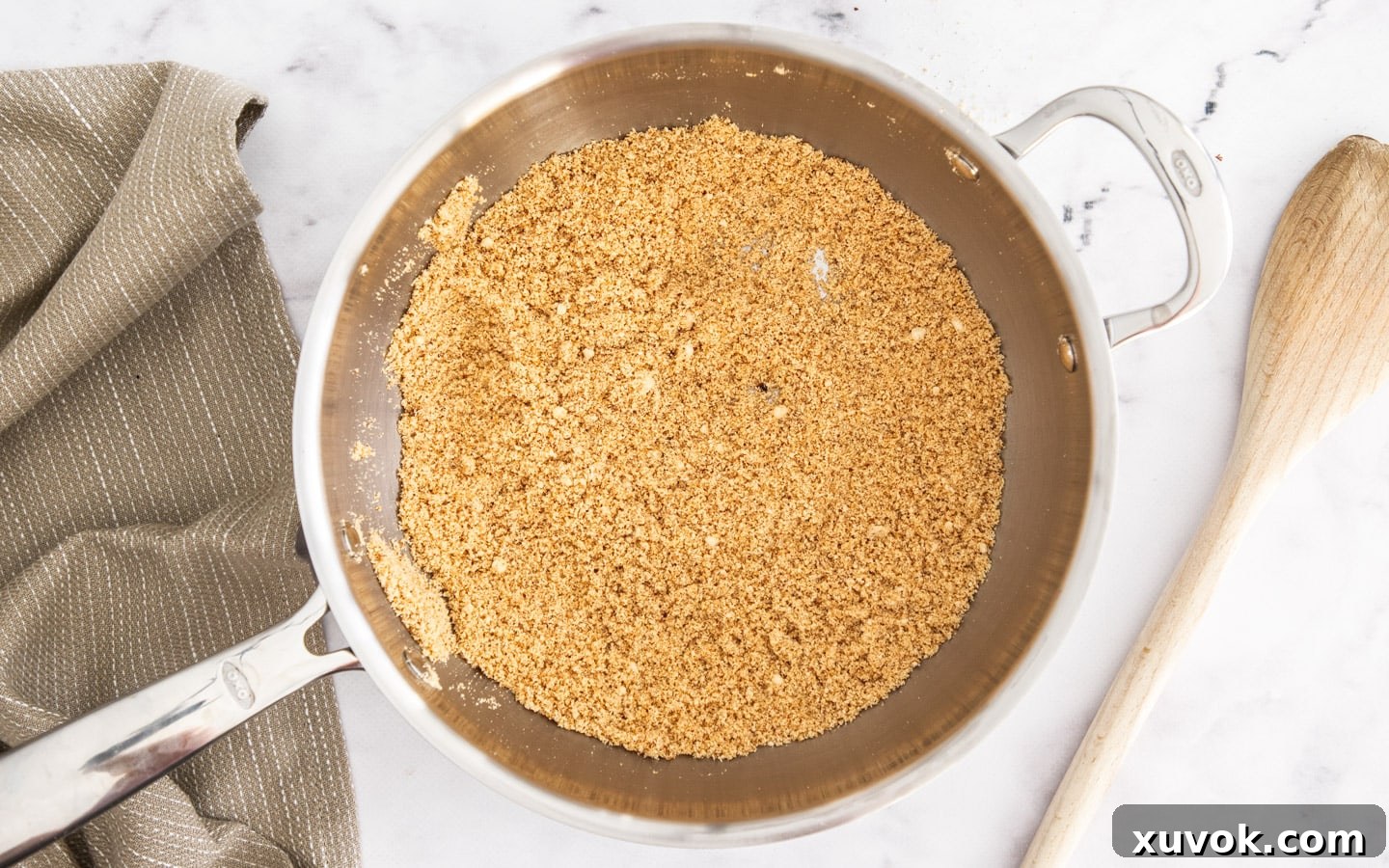
Begin by placing your ground almonds (almond meal) in a dry frying pan over medium heat. Toast them gently, stirring frequently, until they transform into a beautiful golden brown color and release a wonderfully fragrant, nutty aroma – this typically takes about 4-5 minutes. This crucial step, known as dry-toasting, intensifies the almond flavor significantly, adding depth and richness to the Romesco. Once toasted, immediately transfer the almonds to a separate cool bowl to prevent them from continuing to cook and potentially burning in the hot pan. Allow them to cool for a couple of minutes while you prepare the other ingredients.
2. Combine and Process the Core Ingredients
Once your toasted almond meal has cooled slightly, transfer it to the bowl of your food processor or powerful blender. Add the drained roasted red peppers, roughly chopped garlic, rich tomato paste, tangy sherry vinegar, and aromatic paprika. Secure the lid and blend these ingredients until they form a thick, cohesive paste. At this stage, the mixture should not be perfectly smooth; a slightly coarse or chunky texture is desirable, indicating that all the flavors are well integrated but still retain some character. This initial blend ensures a robust flavor foundation for your Romesco.
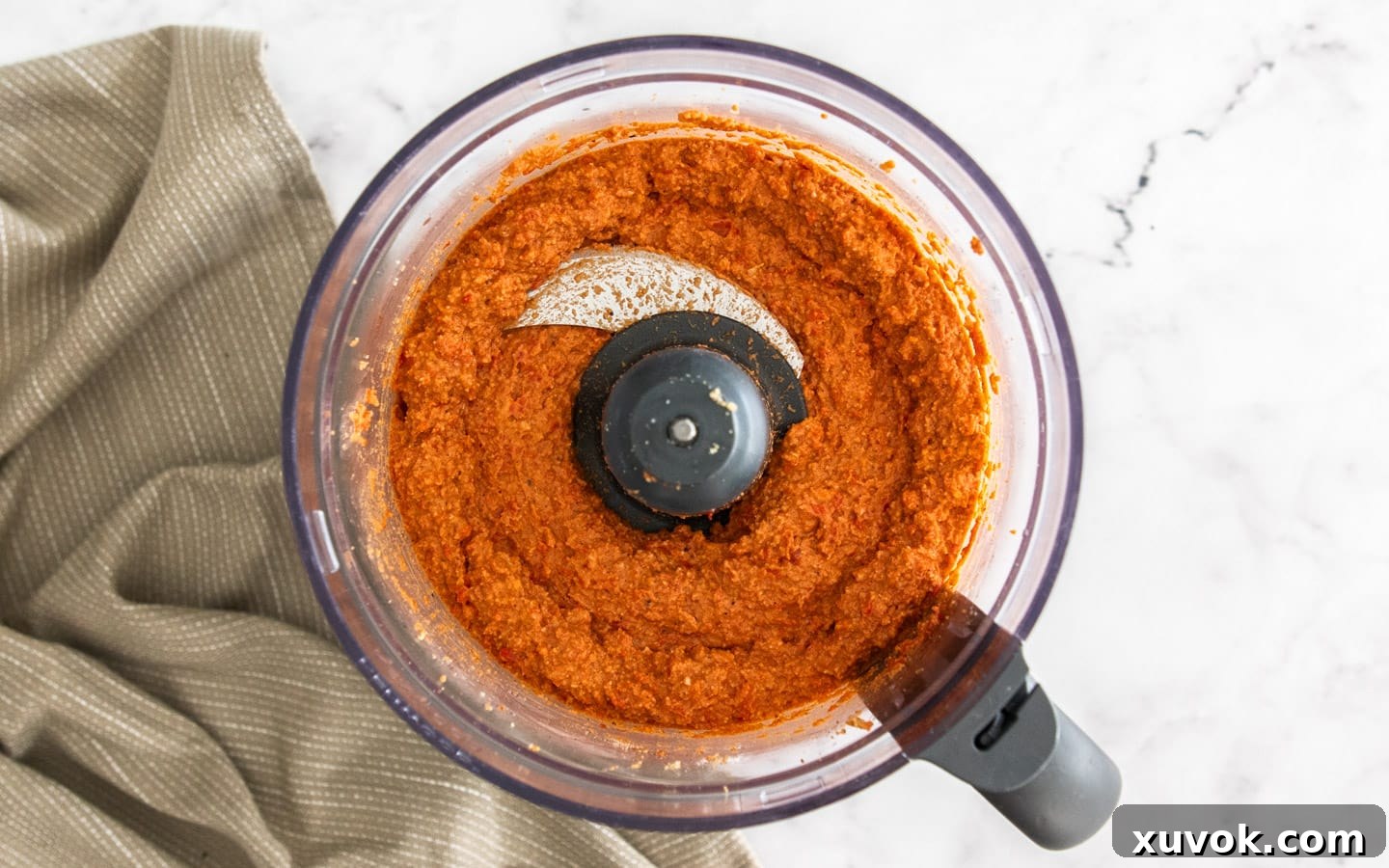
3. Emulsify with Olive Oil and Adjust Seasoning
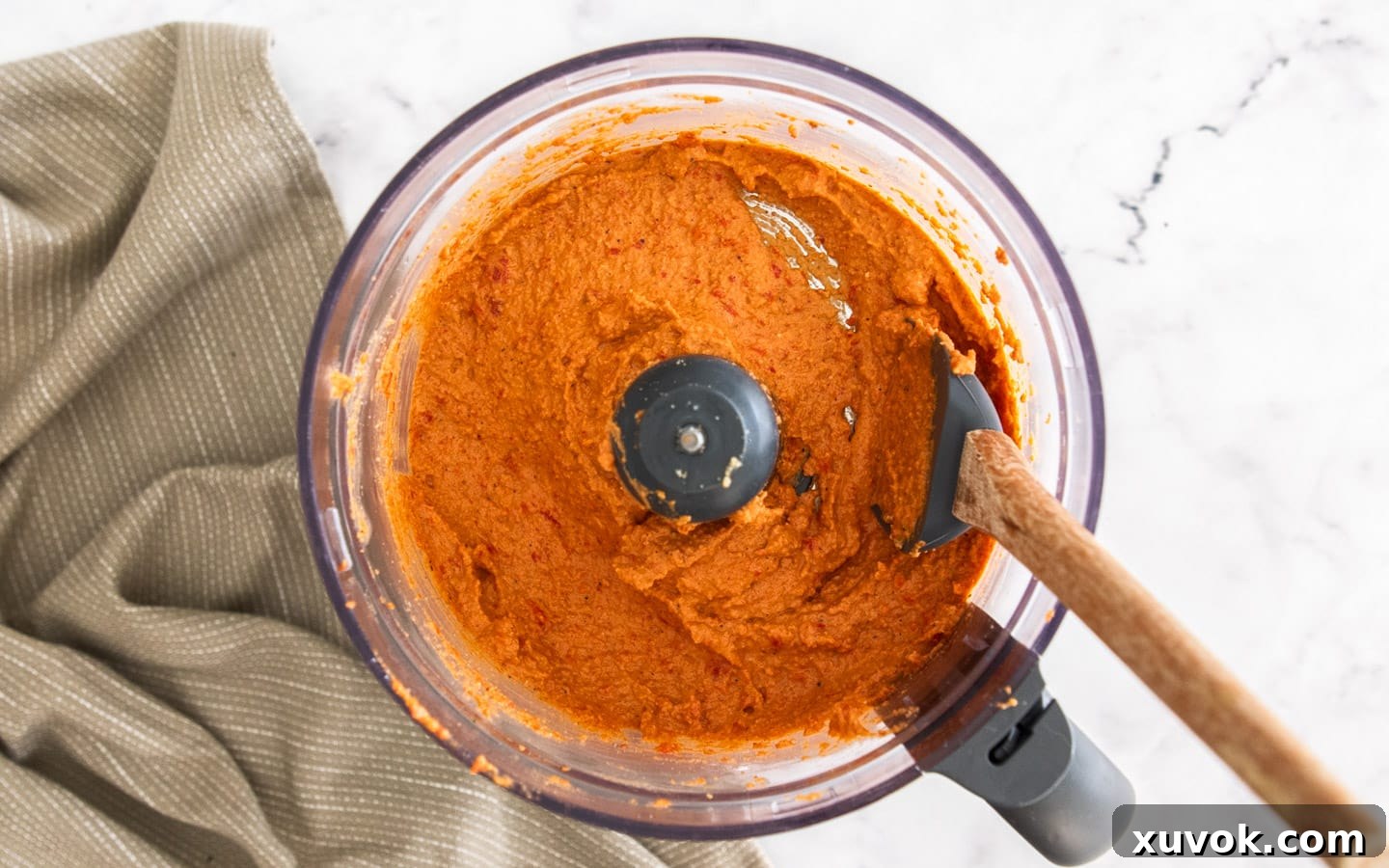
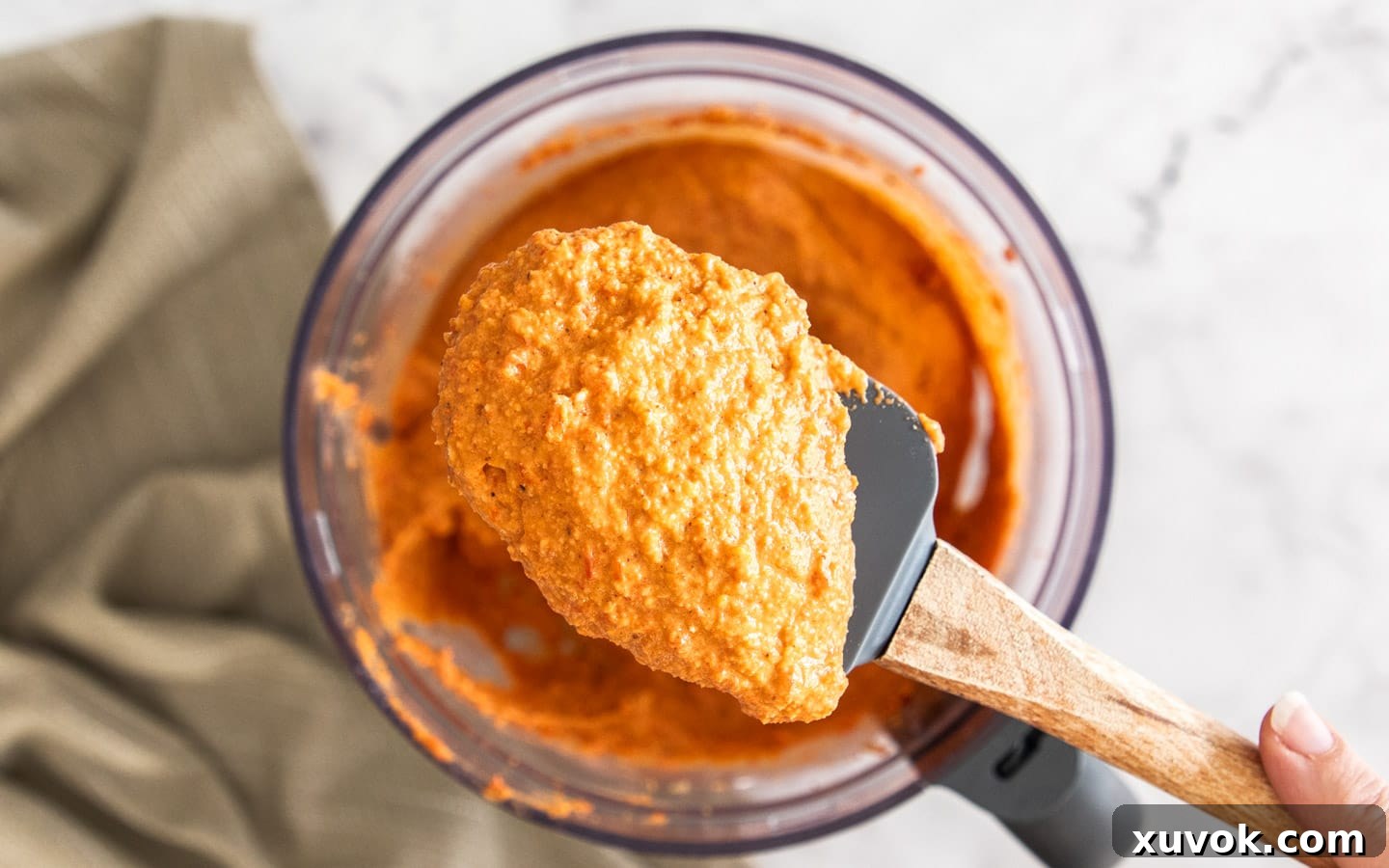
With the food processor or blender running on a low setting, slowly and steadily drizzle in the extra virgin olive oil through the feed tube. Continue to process until the sauce begins to emulsify, thickening into a wonderfully smooth, dip-like consistency. The gradual addition of oil is key to achieving this luxurious texture. Once emulsified, stop the processor and taste your Romesco sauce. This is your opportunity to customize it to your preference. If needed, add a pinch of salt to enhance the flavors or a little more sherry vinegar for an extra burst of tang. For a looser consistency, you can incorporate a touch more olive oil, some of the brine from the jarred roasted peppers, or even a small amount of water. Continue to adjust until the sauce is exactly how you like it – perfectly balanced and irresistibly delicious!
Serving Suggestions: Endless Uses for Romesco Sauce
One of the most appealing characteristics of this versatile Spanish red pepper sauce is its incredible adaptability in the kitchen. Romesco sauce pairs beautifully with an astonishing array of dishes, making it a fantastic staple to have on hand. Here are just a few ideas to inspire you:
- Breakfast & Brunch: Drizzle it over perfectly poached eggs or scrambled eggs, or spread it generously on toast with avocado for a gourmet start to your day.
- Lunchtime Delights: Transform an ordinary sandwich or wrap into something extraordinary by spreading Romesco as a vibrant base. It’s also fantastic stirred into a simple pasta salad or grain bowl.
- Dipping & Spreading: Serve it as a robust and flavorful dip for crispy roast potatoes, golden French fries, crusty artisan bread, or a colorful platter of fresh crudités. Its thick, dip-like consistency is perfect for scooping.
- Pasta & Grains: Stir it through warm pasta for a quick and satisfying meal, or swirl it into risotto or couscous for an instant flavor boost.
- Roasted & Grilled Vegetables: Romesco truly shines with vegetables. Toss it with roasted asparagus, Brussels sprouts, broccoli, or pour it over hearty cauliflower steaks or my savory roasted shallots. It’s also phenomenal with grilled zucchini, eggplant, or bell peppers.
- Proteins:
- Chicken: A classic pairing! Spoon it over roast chicken, grilled chicken breast, or even incorporate it into chicken stew.
- Beef & Pork: The tangy, rich flavor cuts beautifully through fattier meats like slow-cooked pork belly or tender short ribs, enhancing their depth. It’s also superb with grilled steak or lamb chops.
- Seafood: As it was originally designed, Romesco is magnificent with fish and shellfish. Serve it alongside baked cod, grilled shrimp, pan-seared scallops, or a rustic seafood paella.
- Plant-Based: Drizzle it over grilled tofu, tempeh, or black bean burgers for a flavor explosion.
- Pizza & Flatbreads: Use it as an unforgettable base sauce for homemade pizzas or flatbreads – its unique flavor profile will elevate your pie to gourmet status.
- Appetizer Spreads: Serve it as part of a tapas spread with crusty bread, olives, and cheese for an authentic Spanish experience.
Expert Tips for Perfect Romesco Every Time
Achieving a truly exceptional Romesco sauce is within easy reach with a few key considerations. Follow these expert tips to ensure your homemade salsa romesco is consistently delicious and perfectly balanced:
- Customize to Your Palate: After the initial blending process, it’s crucial to taste your roasted red pepper sauce. This is where you become the chef! If you desire more tanginess, incorporate an additional splash of sherry vinegar. For an extra kick of savory depth, a bit more salt can make all the difference. Don’t be afraid to experiment with the consistency either:
- To loosen: Gradually add a little more extra virgin olive oil, some of the flavorful brine from the jar of roasted peppers (if using), or even just a touch of water until you reach your preferred texture.
- To thicken: If your sauce is too thin, you can add a small piece of crusty bread (blitz it in with the other ingredients) or a few more toasted almonds to absorb excess liquid and build body.
- Don’t Skip Toasting the Almonds: While it might be tempting to skip this seemingly small step, dry-toasting the almond meal in a skillet makes a colossal difference in the final flavor of your Romesco sauce. The heat brings out the natural oils in the almonds, intensifying their nuttiness and adding a rich, almost caramelized depth that can’t be achieved with raw almonds. Once toasted, remember to transfer them to a cool bowl immediately; they will continue to cook in a hot pan and can quickly burn.
- Prioritize High-Quality Ingredients: Romesco sauce, like many simple, ingredient-focused dishes, relies heavily on the quality of its components. Since there are relatively few ingredients, each one plays a starring role. Invest in a good quality extra virgin olive oil, a reputable brand of jarred roasted red peppers (or fresh if roasting your own), and authentic sherry vinegar. These small upgrades will collectively elevate your Romesco from good to truly exceptional.
- Achieve the Right Texture: Traditional Romesco is often somewhat rustic, with a slight texture from the nuts. While a food processor will make it smooth, avoid over-processing to the point of being completely liquid. Aim for a consistency that is thick enough to cling to food but still pourable, with perhaps a tiny bit of texture from the almonds.
- Consider a Touch of Heat: While not strictly traditional for all Romesco, a small pinch of red pepper flakes (chili flakes) or a tiny piece of dried nora pepper (a common Spanish pepper) can add a delightful, subtle warmth if you enjoy a hint of spice. Add sparingly and taste as you go.
Storage and Freezing Your Romesco Sauce
Making a batch of Romesco sauce is a great way to have a delicious condiment ready for various meals throughout the week. Proper storage ensures its freshness and flavor endure:
- Refrigerator Storage: To store your freshly made Romesco sauce, transfer it into an airtight container or a glass jar with a securely fitting lid. Place it in the refrigerator, where it will maintain its optimal freshness and vibrant flavor for approximately 1 to 2 weeks. A thin layer of olive oil on top can also help to prevent oxidation and keep it fresh for longer.
- Freezer Storage: If you wish to extend the shelf life of your Romesco sauce, it freezes exceptionally well. For convenient portioning and thawing, consider placing individual servings into an ice cube tray. Once frozen solid, transfer the cubes to a freezer-safe, airtight container or a heavy-duty freezer bag, removing as much air as possible to prevent freezer burn. Alternatively, you can freeze the sauce in larger quantities in freezer-safe containers. When stored correctly, Romesco sauce can be kept in the freezer for up to 3 months.
- Thawing and Reheating: When you’re ready to use frozen Romesco, simply transfer the desired amount from the freezer to the refrigerator and allow it to thaw overnight. For quicker thawing, you can place the container in a bowl of cold water. Once thawed, stir the sauce well. If it appears a little separated, a quick whisk or a pulse in the food processor will bring it back to its creamy consistency. Gently reheat on the stovetop over low heat, stirring occasionally, or use at room temperature as a dip.
Frequently Asked Questions About Romesco
Despite their very similar-sounding names, Romesco and Romanesco are entirely distinct. Romanesco is a striking type of edible flower-vegetable, closely related to cauliflower, broccoli, cabbage, and kale. It’s renowned for its intricate, fractal-like geometric pattern and vibrant chartreuse color. Romesco sauce, on the other hand, is a savory Spanish condiment made from roasted red peppers, almonds (or other nuts), garlic, olive oil, and vinegar, with a rich, tangy, and nutty flavor profile. One is a vegetable, the other is a delicious sauce!
Romesco sauce offers a complex and wonderfully balanced flavor experience. You’ll taste the sweet and smoky notes of roasted red peppers and tomatoes, complemented by the rich, earthy nuttiness of toasted almonds. A vibrant tanginess from sherry vinegar cuts through the richness, preventing it from being too heavy. Hints of pungent garlic and a subtle warmth from paprika complete the profile, making it a robust, savory, and incredibly versatile sauce that is both comforting and exciting.
Romesco is incredibly versatile and pairs well with a vast array of dishes. It’s exceptional with various proteins, including chicken, beef, lamb, pork, and all types of seafood, reflecting its traditional origins. It also beautifully enhances roasted or grilled vegetables like asparagus, cauliflower, and zucchini. Beyond main courses, it’s a superb dipping sauce for crusty bread, chips, or crudités, and makes a fantastic spread for sandwiches or a unique base for pizza. The possibilities are truly endless!
Traditionally, Romesco sauce is not inherently spicy in the way a chili sauce would be. Its flavor profile leans more towards sweet, smoky, tangy, and nutty. However, some regional variations or personal preferences might include a pinch of red pepper flakes or a dried Spanish pepper like Nora pepper for a subtle warmth. The recipe provided here uses mild or sweet paprika, so it delivers flavor without heat. You can always add a touch of chili if you prefer a spicier kick.
Absolutely! While a food processor makes quick work of Romesco, it can certainly be made using a traditional mortar and pestle. This method, though more laborious, can yield a sauce with a slightly coarser, more rustic texture that many aficionados appreciate. Ensure your ingredients are finely chopped before you begin pounding and grinding them to a paste, slowly incorporating the olive oil as you go.
Romesco Sauce Variations to Try
While the classic Romesco recipe is a masterpiece in itself, its adaptable nature makes it perfect for creative variations. Feel free to experiment with these ideas to tailor the sauce to your specific taste preferences or available ingredients:
- Nut Alternatives: Instead of solely using almonds, consider a blend of almonds and toasted hazelnuts for a richer, more complex nutty profile, which is common in some traditional Catalonian recipes. Walnuts can also be used, offering a slightly more bitter, earthy note.
- Add a Spicy Kick: For those who appreciate heat, a small amount of dried chili flakes (like Piment d’Espelette or a pinch of cayenne pepper) can be added during the blending process. Alternatively, a dried Nora pepper, rehydrated and deseeded, offers a more authentic Spanish heat.
- Fresh vs. Jarred Peppers: While jarred roasted peppers offer immense convenience, roasting fresh red bell peppers at home (charred over an open flame or under a broiler) will impart a distinct, deeper smoky flavor.
- Tomato Options: If you have access to ripe, fresh tomatoes, you can roast them alongside the peppers for an even more vibrant, fresh tomato flavor. Sun-dried tomatoes (oil-packed, drained) can be used instead of or in addition to tomato paste for a more intense, sweet-tart umami flavor.
- Herbaceous Twist: While not traditional, a small handful of fresh parsley or cilantro can be blended in for a fresh, herbaceous lift, particularly if serving with lighter dishes like grilled fish.
- Bread for Thickness: Some traditional Romesco recipes include a piece of stale bread (often fried or toasted) blended into the sauce. This helps to thicken the sauce and adds a rustic texture. If your sauce is too thin, try adding a small piece of crusty bread.
More Delicious Sauce Recipes You’ll Love
- Mojo Verde (Spanish Green Sauce)
- Chimichurri Sauce
- Homemade Basil Pesto (Genovese Pesto)
- Sun-Dried Tomato Pesto (Pesto Rosso)
- Easy Roasted Tomato Salsa
- Tomato Confit
⭐⭐⭐⭐⭐
Did you try this incredible Romesco sauce recipe? We’d love to hear your thoughts! Share your experience and leave a rating in the comments below.
Hungry for more culinary inspiration? Subscribe to our newsletter for a steady stream of free recipes delivered straight to your inbox. Don’t forget to connect with us on Facebook, Pinterest, and Instagram for daily deliciousness!
Romesco Sauce Recipe
Yield: 1.5 cups
Prep Time: 10 minutes
Cook Time: 5 minutes
Total Time: 15 minutes
Rating: 5 out of 5 stars (based on 3 ratings)
Summary: This homemade Romesco sauce recipe is incredibly easy to prepare from scratch in just minutes, using mostly shelf-stable ingredients. Its tangy, rich, and nutty flavor adds an amazing zing to any dish, making it a versatile and essential condiment.
Ingredients
- 150 g almond meal (ground almonds)
- 300 g roasted red peppers from a jar, thoroughly drained
- 2 cloves garlic, roughly chopped
- 2 tablespoons tomato paste (Note 1)
- 1 ½ tablespoons sherry vinegar (or good quality red wine vinegar) (Note 1)
- 1 tsp paprika (mild or sweet, or smoked if preferred)
- ¼ cup extra virgin olive oil
- Salt, to taste
- Freshly ground black pepper, to taste (optional)
For best results, always weigh ingredients where a weight is provided.
Equipment
- Frying pan or saucepan
- Food processor or powerful blender
- Airtight container for storage
Instructions
- In a dry frying pan over medium heat, toast the ground almonds (almond meal), stirring frequently, until they turn golden brown and smell distinctly nutty (reminiscent of popcorn) – this typically takes about 4-5 minutes. Immediately transfer the toasted almonds into a cool bowl to halt the cooking process and allow them to cool for a couple of minutes.
- In the bowl of a food processor or powerful blender, combine the cooled toasted almond meal, thoroughly drained roasted red peppers, roughly chopped garlic, tomato paste, sherry vinegar, and paprika. Process these ingredients until they form a thick, rustic paste. The mixture should not be completely smooth at this stage; a slightly coarse texture is desirable.
- With the food processor or blender running on a low setting, slowly drizzle in the extra virgin olive oil through the feed tube. Continue to process until the sauce emulsifies and achieves a wonderfully smooth, dip-like consistency.
- Taste the Romesco sauce. Add a little salt and freshly ground black pepper (if desired) to taste. If you prefer more tang, add a small splash of additional sherry vinegar. For a looser consistency, you can incorporate a little more olive oil, some brine from the jarred peppers, or even just a touch of water until it reaches your desired texture.
- Serve immediately or store for later. Enjoy your homemade Romesco sauce!
Recipe Notes
- Tablespoons: This recipe uses a standard Australian 20ml tablespoon (equivalent to 4 teaspoons). Please check your measuring spoons for accuracy.
- Almond meal is essentially finely ground almonds, retaining a slightly coarser texture than almond flour.
- Roasted peppers from a jar are typically stored in brine. The weight specified in this recipe refers to the net weight of the drained peppers only, not including the brine.
- Nutrition details are approximate only and calculated per serving (based on 1.5 cups yield divided into 6 servings). Nutritional values can vary based on the specific brands of ingredients used.
- For even deeper flavor, consider adding a small piece of crusty bread (toasted) to the food processor with the other ingredients in step 2.
DISCOVER MORE DELICIOUS DIPS AND SAUCES!
Calories: Approximately 158 kcal per serving (based on 6 servings from 1.5 cups)
Author: Marie Roffey
Course: Condiment, Sauce, Dip
Cuisine: Spanish, Mediterranean, Catalan
Have you tried this recipe? Don’t forget to leave a rating and comment below and let me know how it was! Your feedback is incredibly valuable, and I love hearing from you. Please note that nutrition information is an approximation derived from an online calculator, and values may vary depending on the specific brands and ingredients you use.