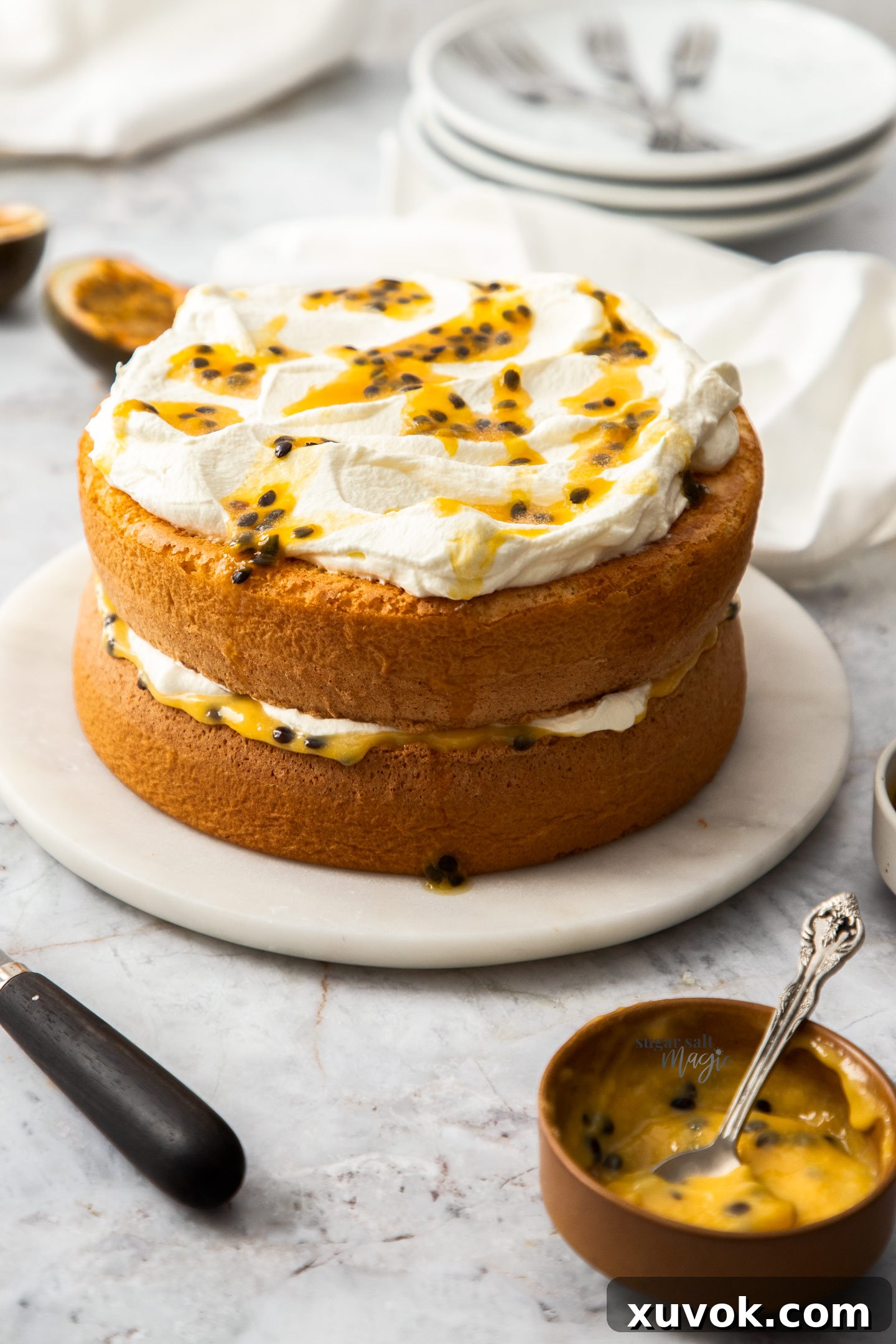
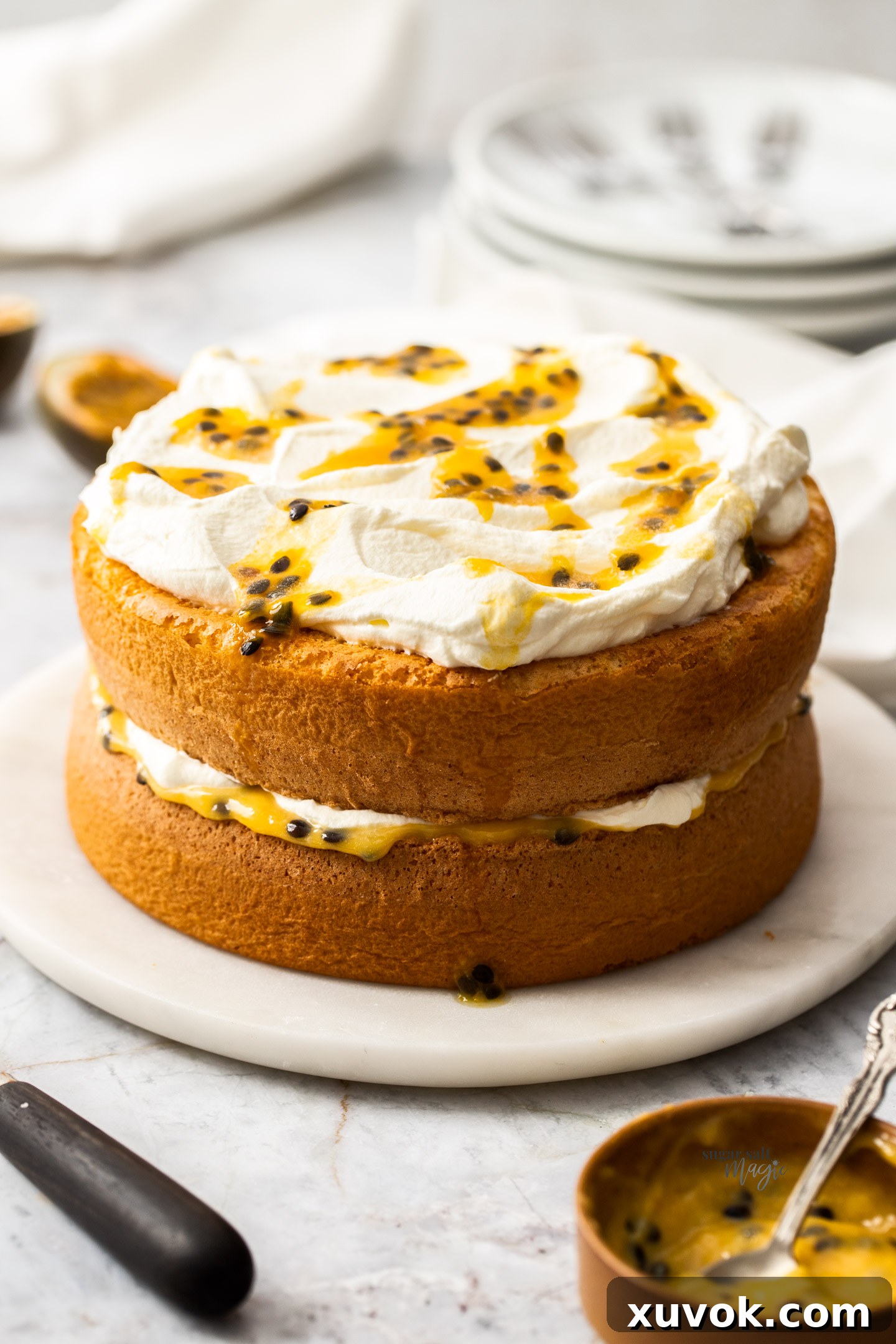
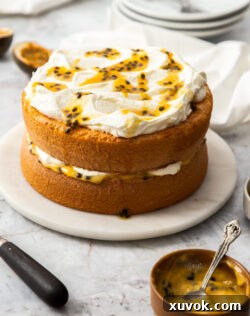
There are few desserts as universally adored and distinctly Australian as a classic **Passionfruit Sponge Cake**. This isn’t just a cake; it’s a culinary icon, a testament to simple elegance and vibrant flavor. While its delicate appearance might suggest complexity, you’ll be delighted to discover that crafting this light, airy masterpiece is more accessible than you might imagine. With its subtly sweet, cloud-like sponge, rich whipped cream, and the irresistible tang of fresh passionfruit, every generous slice promises a truly heavenly and light treat. It’s the quintessential showstopper, perfect for afternoon tea, celebratory gatherings, or simply elevating an ordinary day into something special.
- Surprisingly **Easier** to make than its elegant presentation suggests.
- An absolute **Classic** Australian dessert that never fails to impress and truly is a **Showstopper**.
- A **Fluffy, Feather-Light Sponge** cake that melts in your mouth.
- Bursting with the bright, **Tangy flavor of Passionfruit**.
- Enveloped in clouds of luscious, **Whipped Cream**.
I am genuinely thrilled to share this meticulously perfected recipe with you. For a long time, I envisioned creating the ultimate light and fluffy sponge cake – one that embodied perfection. This particular recipe achieves a texture akin to a classic génoise, yet it remarkably contains no butter. Instead, the magic lies in whipping the eggs until they transform into a thick, pale, and pillowy mixture, incorporating an abundance of air that gives the cake its signature lightness. The **resulting cake is incredibly ethereal**, providing an ideal canvas for a variety of toppings, though none quite capture the essence of an Australian summer like passionfruit.
This recipe was, in fact, the inspiration behind my delightful Strawberry Sponge Cake, and if you appreciate bright, zesty flavors, you’ll undoubtedly fall in love with this Lemon Meringue Cake too. Each offers a unique twist on the beloved sponge, promising a delightful baking adventure.
FEATURED COMMENT
Fantastic cake! My Dad loves it and says it is the perfect type of sponge cake.
Fiona
Table of Content
- What is Passionfruit Sponge?
- The Essence of Aussie Baking: Why This Cake is Special
- Essential Ingredients for Your Passionfruit Sponge
- The Journey to Perfection: My Testing Process
- How to Make Passionfruit Sponge Cake (Step-by-Step)
- Make the Feather-Light Sponge
- Assemble Your Stunning Cake
- Tips and Tricks for Sponge Cake Success
- Delicious Variations to Explore
- Yield and Storage Guidelines
- More Recipes You’ll Love
Never Miss a Recipe!
Get the latest recipes straight to your inbox and elevate your baking!
What is Passionfruit Sponge?
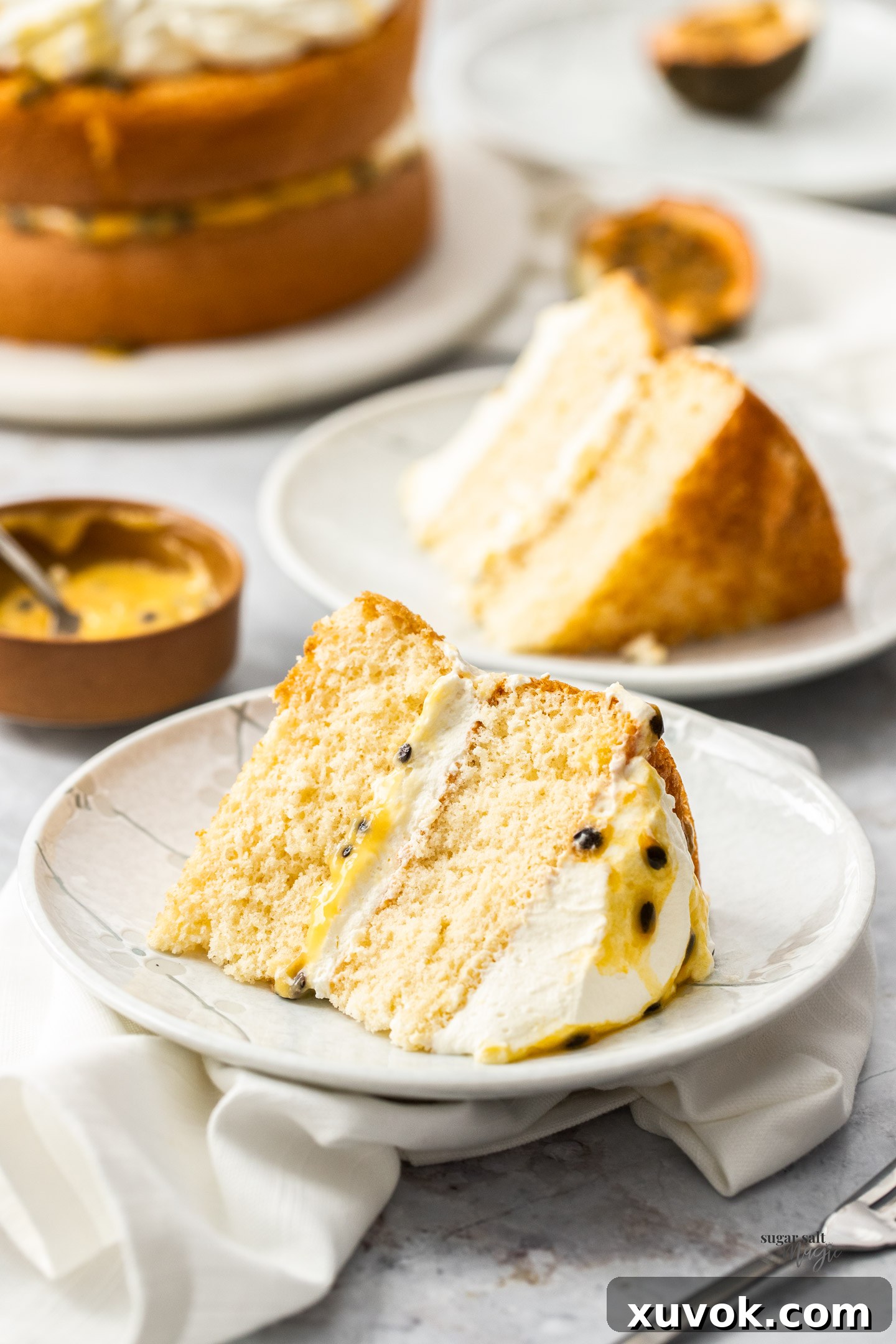
The Passionfruit Sponge Cake is more than just a dessert; it’s an iconic cornerstone of Australian culinary tradition, deeply woven into the fabric of afternoon teas and family gatherings. At its heart, a classic passionfruit sponge is a light, airy cake, often compared to a génoise for its delicate texture achieved through whipped eggs. Traditionally, it’s generously filled with a smooth, sweet whipped cream and the vibrant, tangy pulp of fresh passionfruit, then elegantly topped with a layer of passionfruit icing. This combination creates a harmonious balance of sweetness and tartness, a hallmark of this beloved treat.
My version takes a slight detour from the traditional icing, opting instead for a luscious, homemade passionfruit curd paired with billows of fresh whipped cream for the filling. I then keep the topping simple yet striking: more whipped cream and a generous drizzle of passionfruit pulp, allowing the natural beauty and flavor of the fruit to shine. However, for those who prefer the classic approach, I’ve included instructions for the traditional passionfruit icing in the recipe notes. The beauty of a classic sponge cake lies in its versatility, making it a perfect canvas for various flavors and decorations, as you’ll discover in my variations section.
It’s important to understand the unique characteristics of a sponge cake. Unlike butter cakes, a true sponge is typically not inherently moist. Its charm lies in its drier, incredibly light, and airy texture. This characteristic makes it an ideal companion for moist fillings, a brush of a delicate syrup, or, most commonly, a generous helping of whipped cream, all of which contribute the necessary moisture and richness to create an unforgettable dessert experience.
The Essence of Aussie Baking: Why This Cake is Special
Beyond its delicious taste, the Passionfruit Sponge holds a special place in Australian hearts. It evokes memories of sunshine-filled afternoons, family celebrations, and the simple joy of sharing good food. This cake embodies the relaxed yet refined spirit of Australian baking. The contrast between the incredibly light, vanilla-scented sponge and the vibrant, tropical burst of passionfruit is what makes it truly exceptional. It’s a dessert that feels celebratory but is surprisingly approachable to bake at home, rewarding your efforts with a creation that is both visually stunning and exquisitely flavorful. The lightness of the sponge ensures that even after a hearty meal, there’s always room for a slice of this delightful cake, making it a perennial favorite for any occasion.
Essential Ingredients for Your Passionfruit Sponge
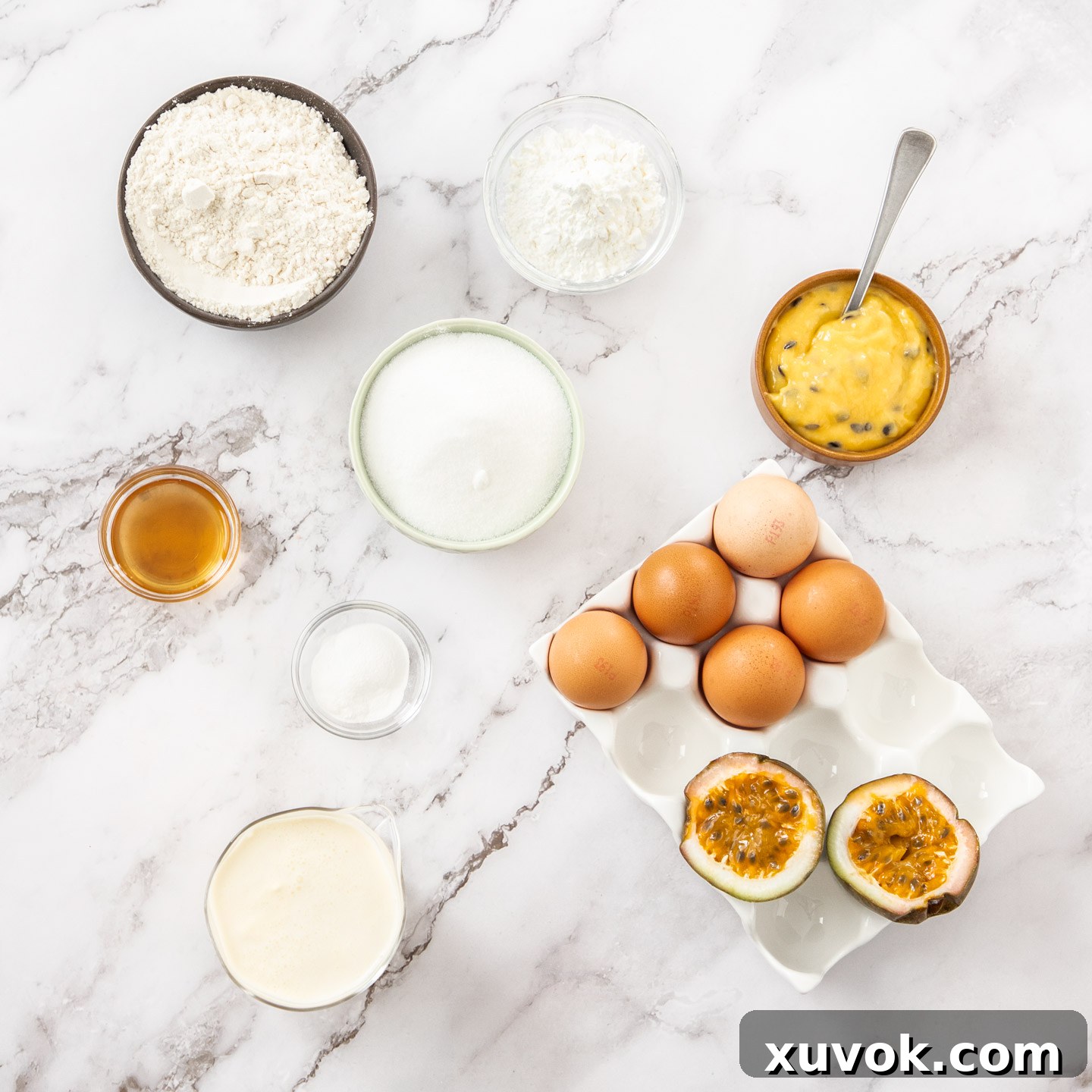
Detailed quantities and instructions can be found in the recipe card below. Accurate measurements, especially by weight, are crucial for sponge cake success.
- Water: A key component in many classic sponge recipes, water contributes to the overall lightness of the cake. Unlike milk, it doesn’t add fat, allowing the delicate egg structure to truly shine.
- Vanilla: For the purest and most exquisite flavor, always opt for pure vanilla extract. Avoid synthetic vanilla essence, which can leave an artificial aftertaste that detracts from the subtle elegance of the sponge.
- Flour: This recipe utilizes a blend of two flours: plain flour (also known as all-purpose flour) and cornflour (or cornstarch). The cornflour is instrumental in achieving that distinctively soft and tender texture that defines a perfect sponge. For convenience, you can substitute both flours with an equal weight of cake flour, but do not replace just one with cake flour, as the ratios are specific for optimal results.
- Baking Powder: This leavening agent is critical for providing an additional lift to the sponge, ensuring it rises beautifully and maintains its airy structure. Be sure to use baking powder, not baking soda, as they react differently and yield varied results in sponge cakes.
- Eggs: Large, free-range eggs are ideal for this recipe. It is paramount that your eggs are at room temperature. This allows them to whip up to maximum volume, incorporating ample air for the cake’s light structure.
- Sugar: Caster sugar (superfine sugar) is my preferred choice due to its fine crystals, which dissolve quickly into the whipped eggs, creating a stable meringue-like base. However, standard white granulated sugar will also work effectively, though you might need to beat slightly longer to ensure it’s fully dissolved.
- Cream: For the luscious filling, use a fluid whipping cream, thickened cream, or heavy cream with a minimum of 35% milk fat. This ensures a stable, rich, and wonderfully decadent whipped cream that holds its shape beautifully.
- Passionfruit Curd: The tangy heart of this cake! I highly recommend making your own passionfruit curd from scratch for unparalleled flavor; you can even prepare it 2-3 days in advance. As an alternative, and to adhere more closely to a classic Australian sponge, I’ve also provided a recipe for a traditional passionfruit icing in the notes section.
- Passionfruit Pulp: A small amount of fresh or jarred passionfruit pulp is used as a final flourish, adding visual appeal and an extra burst of fresh, tangy flavor to the top of the assembled cake.
Pro Tip: To truly elevate this cake to an extraordinary level, consider brushing each sponge layer with a delicate passionfruit syrup before adding the filling. This not only infuses more tropical flavor but also adds an extra touch of moisture, enhancing the overall sensory experience.
The Journey to Perfection: My Testing Process
As I mentioned, creating this gorgeous, light, and fluffy sponge cake has been a long-held ambition, and I couldn’t be happier that it has finally come to fruition. The path to perfection was one of careful experimentation and unwavering dedication, ensuring every element contributed to the ideal outcome.
My journey began with numerous trials, exploring various iterations of traditional sponge recipes. Unfortunately, many of these attempts fell short of my stringent criteria. I was aiming for tall cakes with perfectly straight, golden sides that resisted sinking in the center, and an interior that was consistently light, airy, and possessed just the right level of sweetness. Achieving this delicate balance proved to be a delightful challenge.
The breakthrough came unexpectedly while I was developing my fairy bread lamingtons. I pondered whether the robust and reliable lamington sponge recipe could be adapted to form the basis of a classic, stand-alone sponge. And BINGO! This proved to be the turning point. Many traditional sponge recipes call for bicarbonate of soda (baking soda), but in my tests, this often resulted in a crust that was too dark for my aesthetic preference. My lamington sponge, however, utilizes baking powder, which I discovered was the perfect leavening agent, providing a beautiful rise and an appealing golden hue without excessive browning. While most génoise-type sponges incorporate a minimal amount of butter for richness, I aimed to keep this recipe as simple and accessible as possible, so I omitted it entirely. I also swapped milk for water, which is the traditional liquid of choice for a classic sponge, further contributing to its lightness. Lastly, I fine-tuned the flour content, strategically reducing the overall amount and incorporating some cornflour to ensure the cake remained wonderfully soft and tender.
Through this rigorous testing, several crucial techniques emerged as non-negotiable for sponge cake success:
- **Flour Flexibility:** You have the option to substitute both the plain flour and the cornflour for an equivalent weight of cake flour. However, it’s essential to replace both, not just one, to maintain the correct balance and texture.
- **The Ribbon Stage:** Achieving the “ribbon stage” when beating the eggs is paramount. This process, which typically takes around 8 minutes with an electric beater, signifies that the eggs have incorporated enough air to create the sponge’s structure.
- **The Metal Spoon Advantage:** When folding in the dry ingredients, using a metal spoon is incredibly important. Its rigid edge allows you to cut cleanly through the aerated egg mixture, gently combining the ingredients without deflating the precious air you’ve worked so hard to incorporate.
- **Double Sifting for Lightness:** Sifting the flour mixture not once, but twice, is a small but significant step. This double sifting thoroughly aerates and lightens the flour, preventing lumps and ensuring a uniform, delicate crumb. While some recipes suggest a third sift, I’ve found that twice is sufficient for this particular recipe without making a substantial difference.
- **Mastering the Folding Motion:** The technique used to fold the ingredients is as important as the tool. A gentle, deliberate folding motion is key to preserving as much of the whipped air in the batter as possible. This prevents the cake from becoming dense and ensures that coveted feather-light texture.
This recipe truly took time to perfect, with every adjustment and trial contributing to its ultimate success. The effort was undoubtedly worth every moment, and I am incredibly proud and excited to share this meticulously developed recipe with you, confident that it will bring joy to your kitchen and table.
How to Make Passionfruit Sponge Cake (Step-by-Step)
While the creation of a sponge cake might be perceived as having technical nuances, I assure you, with the right tips and careful attention to detail, it is far less daunting than you might imagine. The process of preparing the sponge itself, along with the delightful filling and topping, is straightforward and immensely rewarding. Follow these steps to bake a magnificent Passionfruit Sponge Cake that will impress everyone.
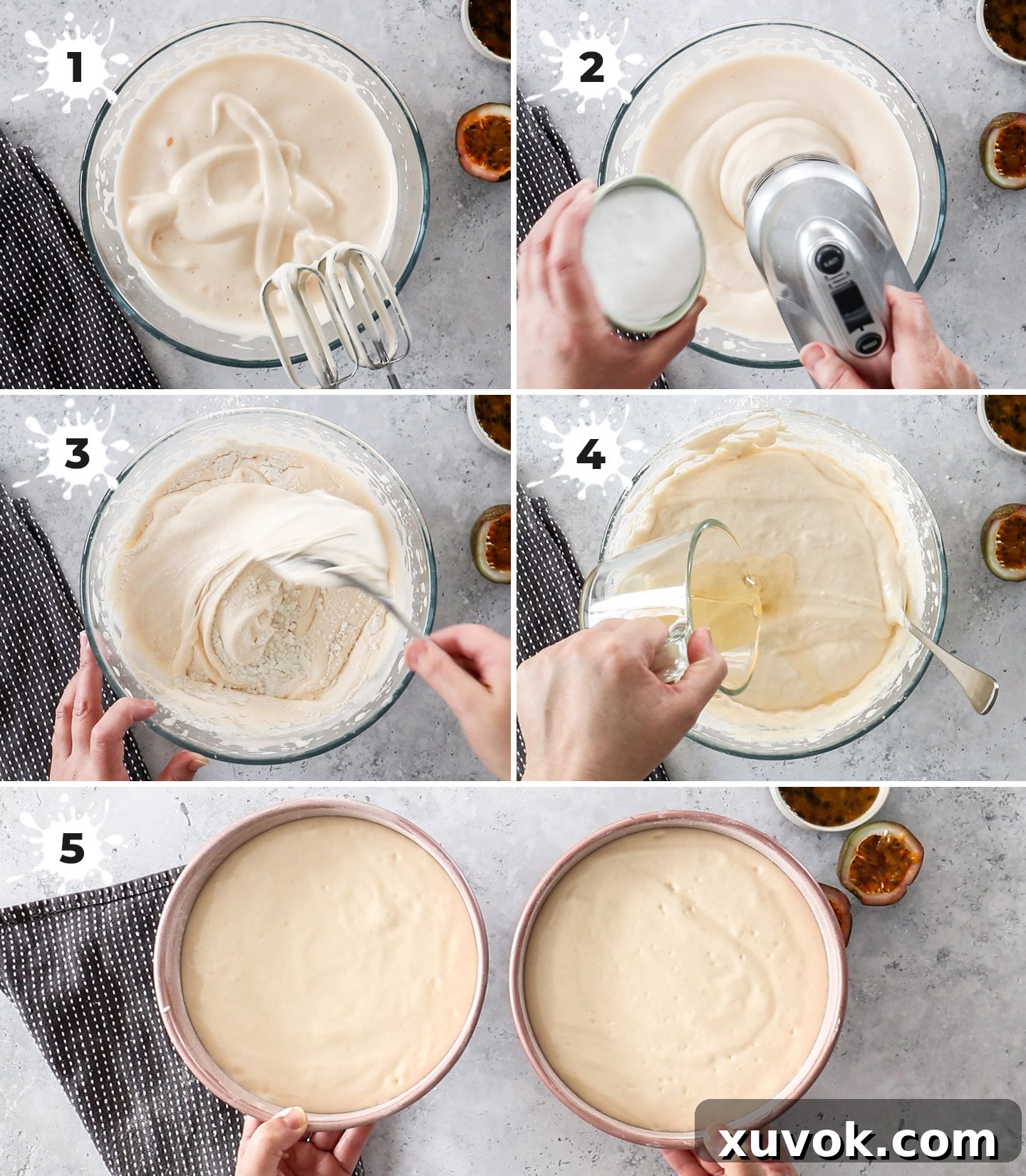
Detailed quantities and comprehensive instructions are provided in the recipe card below. Pay close attention to the order and technique for the best results.
Make the Feather-Light Sponge
- Begin by combining the measured water and vanilla extract in a small jug or bowl. Set this aromatic liquid aside, ready for later incorporation into the batter.
- In a separate medium bowl, meticulously sift together the plain flour, cornflour, and baking powder. After sifting, use a whisk to gently combine these dry ingredients thoroughly, ensuring they are light and uniformly mixed. Set this aside.
- In a large mixing bowl, crack your room-temperature eggs. Using an electric beater, beat the eggs vigorously until they reach the crucial “ribbon stage.” This typically takes about 8 minutes, resulting in a thick, pale, and incredibly fluffy mixture that holds a distinct ribbon-like trail when the beaters are lifted.
- Once the eggs are at ribbon stage, gently sift in half of your prepared dry ingredients over the whipped eggs. With a metal spoon, carefully fold the dry mixture into the eggs, using a gentle lifting and turning motion until about 90% combined. Repeat this process with the remaining half of the dry ingredients, folding until nearly incorporated.
- Now, add the reserved water and vanilla mixture to the batter. Continue to carefully fold with the metal spoon until all the wet ingredients are fully incorporated, ensuring you do not overmix, which can deflate the air.
- Divide the light and airy batter evenly between two prepared sandwich tins (8-inch round cake pans). Place them in the preheated oven and bake for approximately 20-22 minutes, or until a toothpick inserted into the center comes out clean.
- Once baked, allow the sponge layers to cool in their tins for a crucial 5 minutes. This brief resting period helps stabilize their delicate structure before carefully inverting them onto wire racks to cool completely to room temperature.
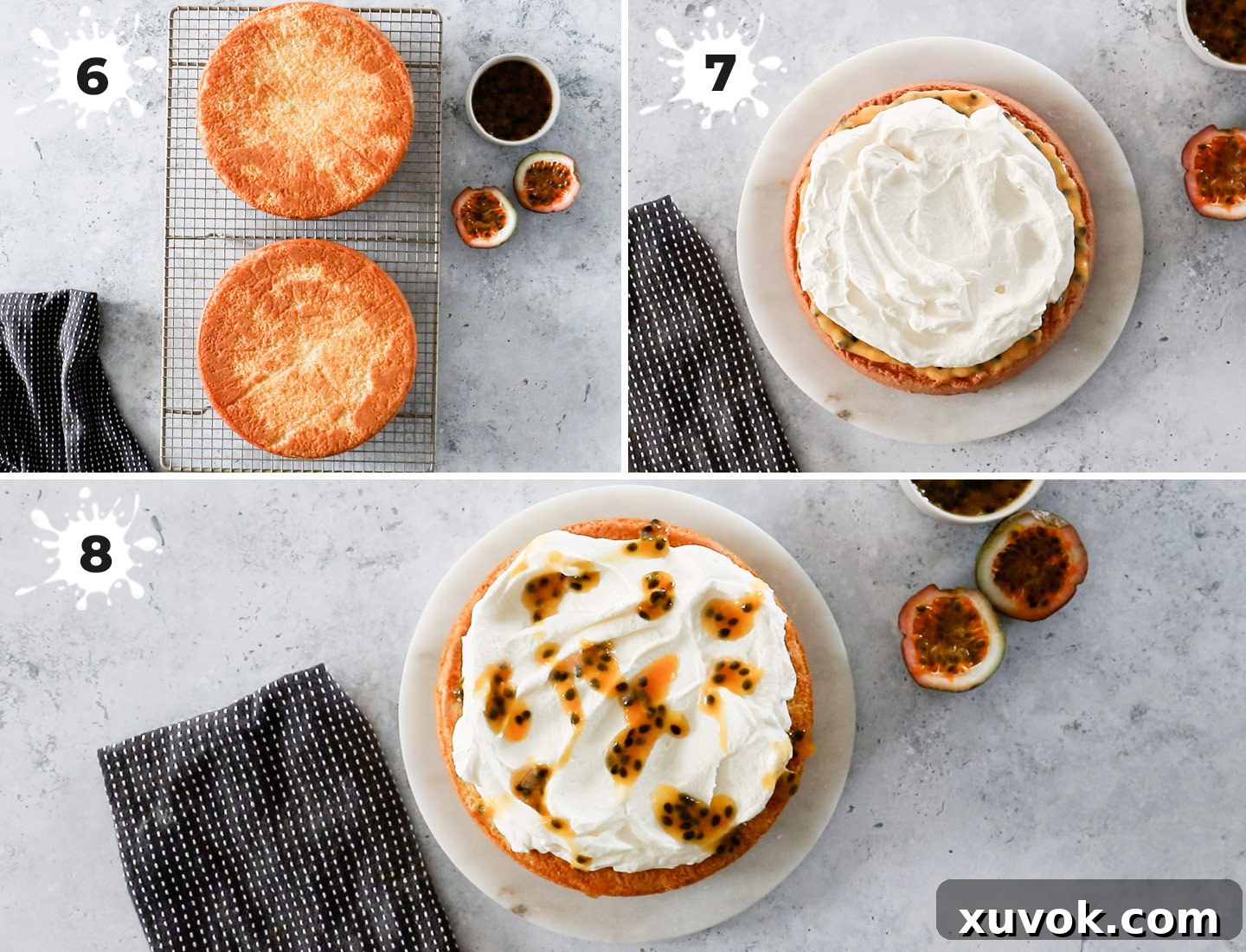
Assemble Your Stunning Cake
- In a clean, chilled bowl, whip your fluid whipping cream until it forms firm, luscious peaks. Be careful not to over-whip, which can result in a grainy texture.
- Carefully place one of the cooled sponge layers onto your chosen cake plate or serving stand. Spread a generous, even layer of the tangy passionfruit curd over the entire surface of this bottom sponge.
- Gently dollop half of the freshly whipped cream over the passionfruit curd, spreading it evenly to create a creamy, luxurious layer.
- Delicately place the second sponge layer on top of the cream-covered base. Spread the remaining whipped cream gracefully over the top surface of this layer, creating an inviting crown.
- For the grand finale, drizzle the fresh passionfruit pulp artfully over the top layer of whipped cream. The vibrant seeds and golden pulp add both beauty and an extra burst of tropical flavor. Your exquisite Passionfruit Sponge Cake is now ready to be admired and, most importantly, served!
Tips and Tricks for Sponge Cake Success
Mastering the art of sponge cake baking often comes down to understanding and executing a few key techniques. These crucial tips will ensure your passionfruit sponge is consistently light, fluffy, and utterly delightful:
- Achieving the Perfect Ribbon Stage: This is arguably the most vital step in creating an airy sponge. “Ribbon stage” refers to beating your eggs (with an electric beater or a stand mixer fitted with a whisk attachment) until they become incredibly thick, voluminous, pale yellow, and fluffy. The best way to test this is by lifting the whisk and allowing the batter to drizzle back into the bowl. If you can clearly “draw” a figure eight on the surface of the batter with the drips, and it holds its shape for a few seconds before slowly sinking away, your eggs are at the perfect ribbon stage. This indicates maximum air incorporation, which forms the structural backbone of your light sponge.
- The Essential Metal Spoon: When it comes to folding in your dry ingredients, the choice of utensil matters significantly. A rigid metal spoon is preferred over a rubber spatula because its firm edge allows you to “cut” through the dense, aerated egg mixture. This precise action helps to gently combine the ingredients without excessively deflating the delicate air bubbles that you’ve meticulously beaten into the eggs. Preserving this air is paramount for a truly light crumb.
- Mastering the Art of Folding: Beyond just using the right tool, the technique of folding is critical. The goal is to incorporate ingredients thoroughly while retaining as much of the precious air as possible – something vigorous stirring would quickly destroy. To fold correctly, use your metal spoon to dig down to the bottom edge of the bowl, then bring the spoon towards you, lifting the batter from the bottom and gently folding it over itself. Rotate the bowl slightly after each fold. Repeat this gentle motion until your ingredients are *just* incorporated and no streaks of dry flour remain. Avoid overmixing at all costs, as this will lead to a dense, tough cake.
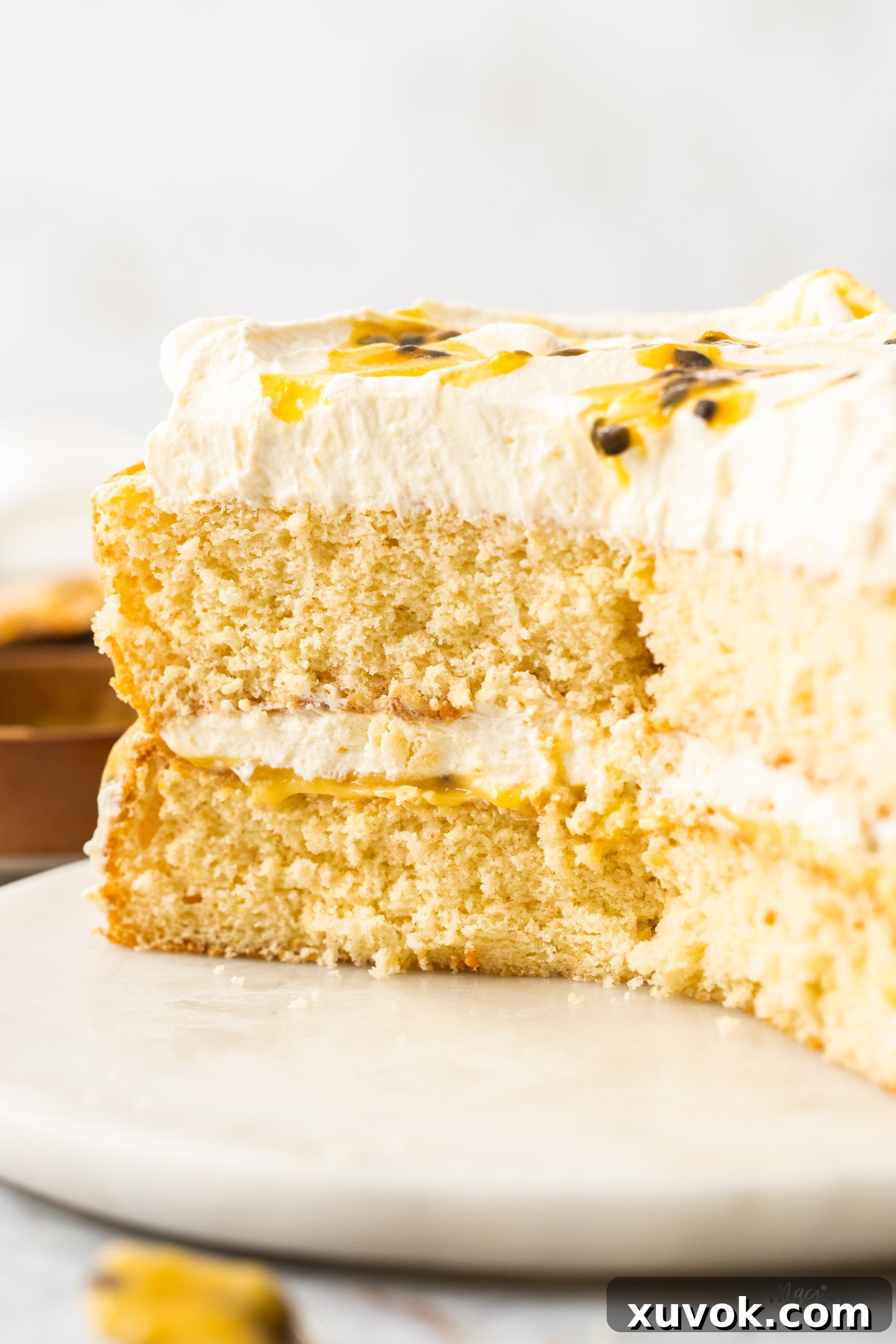
Delicious Variations to Explore
The beauty of this classic sponge cake lies in its adaptability. While the passionfruit version is undeniably exquisite, the base sponge lends itself beautifully to a myriad of flavor combinations. Don’t hesitate to get creative in your kitchen!
- Classic Passionfruit Icing: For a truly traditional Australian experience, you can swap out the curd for a delightful passionfruit icing. Simply combine 2 cups of icing sugar (powdered sugar) with 2 tablespoons of melted butter and 3 tablespoons of fresh passionfruit pulp. Fill the cake layers with half the amount of whipped cream and a light drizzle of passionfruit pulp in the middle, then generously spread this tangy, sweet icing over the top layer of the cake.
- Simplified Cream Filling: If you prefer an even simpler approach without curd or icing, you can sweeten the whipped cream directly. Beat 2 tablespoons of icing sugar (powdered sugar) into the fluid whipping cream as you whip it to firm peaks. Use this sweetened cream to both fill and top the cake, finishing with a light drizzle of fresh passionfruit pulp on each layer. This adjustment helps to balance the natural tanginess of the passionfruit with the subtle sweetness of the sponge.
- Explore Other Curds: The versatility of this sponge means you’re not limited to passionfruit! Unleash your imagination by pairing this light cake with any of my other homemade curd recipes. Imagine a vibrant lemon curd for a zesty twist, a rich blackberry curd for a berry delight, the crispness of lime curd, the tropical sweetness of mango curd, or the sophisticated notes of blood orange curd. Each will create a uniquely delicious cake.
- Embrace the Victoria Sponge: Transform this recipe into a British classic by making it a Victoria Sponge. This beloved cake typically features a simple filling of strawberry jam and fresh whipped cream, dusted lightly with icing sugar on top. To adapt, layer the bottom sponge with cream first, then generously spread a double amount of your favorite jam (strawberry is traditional, but raspberry or mixed berry work wonderfully). Top with the second sponge, more cream, and a final dusting of powdered sugar.
- Fruit Compote Delight: Instead of curd or jam, try a homemade fruit compote. A gently cooked berry compote or stewed apples with a hint of cinnamon would provide a delightful, rustic contrast to the light sponge and fresh cream.
- Chocolate Lover’s Dream: For those who can’t resist chocolate, a light chocolate ganache or even chocolate shavings folded into the whipped cream could create a decadent, yet still elegant, variation.
Yield and Storage Guidelines
This recipe yields a beautifully tall, impressive 8-inch round cake, designed to generously serve between 10 to 12 people. Its elegant height and rich filling make it a satisfying dessert for any gathering.
Once assembled, your exquisite passionfruit sponge cake can be stored with confidence in the refrigerator. To maintain its freshness, delicate texture, and vibrant flavors, place the cake in an airtight container. It will remain delicious for 2 to 3 days, allowing you to enjoy slices over multiple days or prepare it slightly in advance for an event.
For convenience and future enjoyment, the unfilled and un-topped sponge cake layers freeze exceptionally well. To preserve their quality, wrap each cooled sponge layer tightly twice in plastic wrap, ensuring no air can reach them. Then, place these well-wrapped layers in an airtight freezer-safe container or a heavy-duty freezer bag. They can be stored in the freezer for up to 3 months. When you’re ready to assemble your cake, simply thaw the frozen layers overnight in the refrigerator, or at room temperature for a couple of hours, before proceeding with the filling and topping steps. This allows for spontaneous baking and enjoyment whenever the craving strikes!
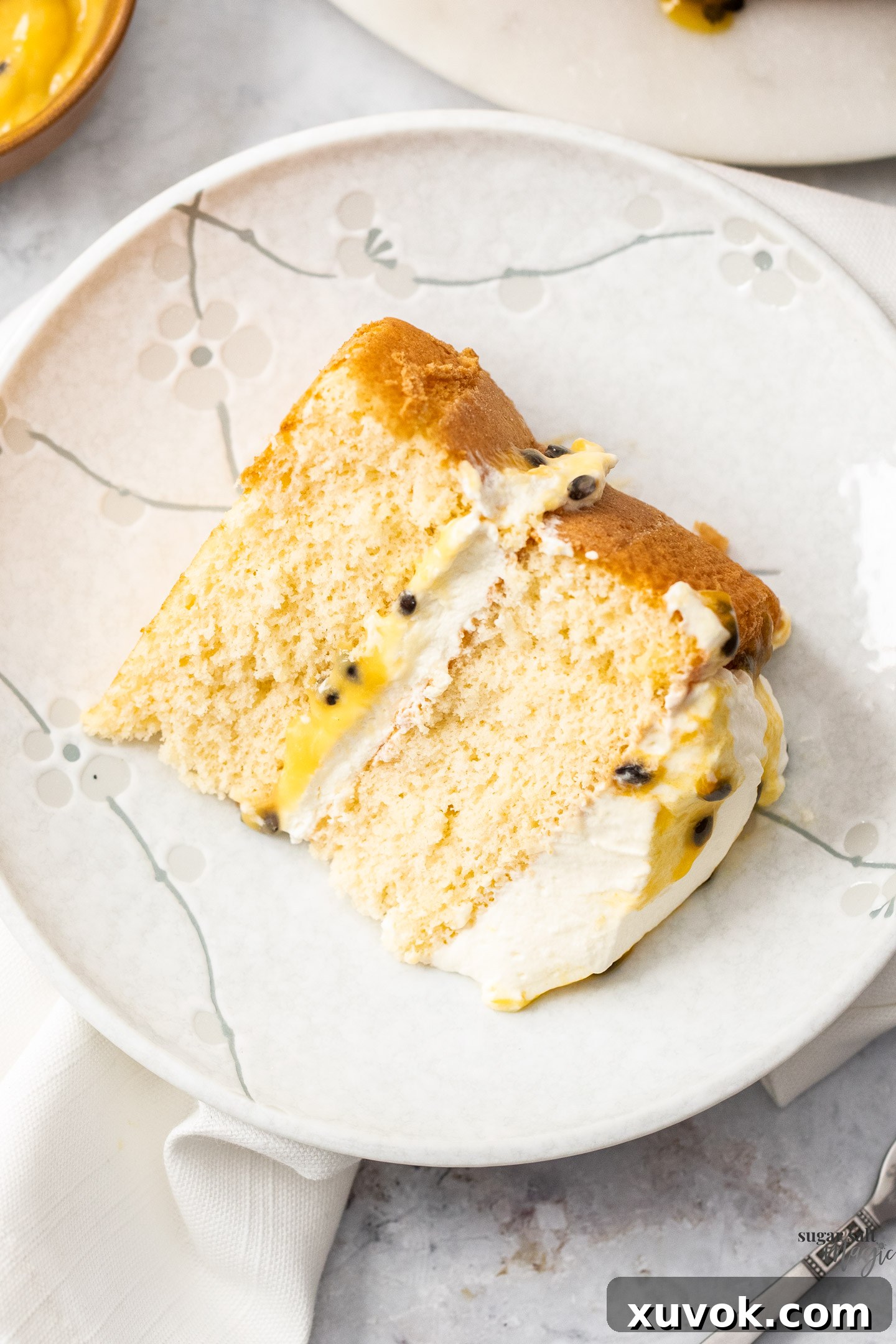
More Recipes You’ll Love
If you’ve enjoyed the light, fruity elegance of this Passionfruit Sponge Cake, you’re in for a treat! Our collection features a variety of delightful recipes, from more tropical delights to classic bakes that will surely satisfy your sweet cravings and expand your baking repertoire. Discover your next favorite dessert below!
⭐⭐⭐⭐⭐ Did you try this passionfruit sponge cake recipe?
Leaving a rating and comment below the recipe is so helpful!
Hungry for more? Subscribe to the newsletter for free recipes straight to your inbox. Also, follow along on Facebook, Pinterest and Instagram.
Passionfruit Sponge Cake
Rate
Pin
Ingredients
- ¼ cup water, room temperature
- 2 teaspoons vanilla extract
- 1 ¼ cups plain flour (all purpose flour) (165g / 5.8oz)
- ¼ cup cornflour (cornstarch) (35g / 1.2oz)
- 1 ½ teaspoons baking powder
- 5 whole large eggs, room temperature
- 200 g caster sugar (superfine sugar or granulated sugar) (1 cup / 7oz)
- 1 ½ cups fluid whipping cream
- ½ cup passionfruit curd (or see notes for other options)
- 2 tablespoons passionfruit pulp
For best results, always weigh ingredients where a weight is provided
Equipment
-
Fine mesh sieve
-
Small jug
-
Medium and large mixing bowls
-
Metal spoon
-
electric beater
-
Sandwich tins / 8 inch round cake tins
Instructions
-
If you’re making your own passionfruit curd, prepare this first (and up to 3 days in advance) to allow it to chill and set properly.
-
Preheat your oven to 180C (160C fan) / 350F. Ensure the oven is fully preheated before baking to guarantee an even rise.
-
Generously grease two 8-inch round cake tins (or sandwich tins) with softened butter. Line the base of each tin with baking paper. Then, roll a small amount of flour around the inside to lightly coat the greased sides of the tin, tapping out any excess. This helps prevent sticking and promotes an even rise.
-
In a small jug, combine the room temperature water and vanilla extract. Stir briefly to mix, then set this liquid mixture aside.
-
Into a medium bowl, carefully sift together the plain flour, cornflour, and baking powder. After sifting, use a whisk to gently blend these dry ingredients thoroughly, ensuring they are light and perfectly combined.
-
Crack the large, room-temperature eggs into a large mixing bowl. Beat vigorously using an electric beater until they reach the crucial “ribbon stage”—this typically takes approximately 8 minutes. To test for ribbon stage, lift the beaters and let the mixture run off in a figure-eight pattern. If the “8” holds its shape on the surface for a few seconds before slowly disappearing, it’s ready. The mixture will be very thick, noticeably pale, and wonderfully fluffy.
-
With the electric beater running on low speed, gradually add the caster sugar, a tablespoon at a time, allowing it to fully dissolve into the egg mixture. Once all the sugar has been incorporated, continue to beat on low for another minute to ensure a stable, glossy mixture.
-
Sift half of the prepared flour mixture directly over the whipped egg and sugar mixture (this second sift ensures maximum aeration). Using a metal spoon, very gently fold the flour into the eggs with a careful lifting and turning motion. Stop folding when the flour is about 90% incorporated. Repeat this process with the remaining half of the flour mixture.
-
Continue folding with the metal spoon until the dry ingredients are just about 90% combined, ensuring not to overmix and preserve the air.
-
Finally, add the water and vanilla mixture to the batter. Carefully fold it through with the metal spoon until it is fully incorporated, making sure there are no pockets of unmixed liquid. Remember, gentle folding is key to retaining the sponge’s lightness.
-
Divide the delicate batter evenly between the two prepared baking tins. Bake for 20-22 minutes, or until the sponges are golden and a toothpick inserted into the center of each comes out perfectly clean, indicating they are fully cooked.
-
Allow the freshly baked sponge layers to cool in their tins for 5 minutes. This brief resting period helps them firm up slightly. After 5 minutes, carefully invert them onto wire racks to cool completely to room temperature before assembling.
-
Once completely cool, place one sponge layer onto your desired cake plate or serving stand. Spread a generous ½ cup of the tangy passionfruit curd evenly over the surface of this bottom layer.
-
In a medium, chilled bowl, whip the fluid whipping cream to firm peaks. Once whipped, gently spread half of this luscious cream over the top of the passionfruit curd, creating a smooth and creamy layer.
-
Carefully place the second sponge layer on top of the cream-filled base. Gently spread the remaining whipped cream evenly over the entire top surface of the cake. For a beautiful finish, drizzle the fresh passionfruit pulp artfully over the cream.
-
Your magnificent Passionfruit Sponge Cake is ready to be served! Please take a moment to leave a comment & rating below. Your feedback is truly appreciated and incredibly helpful to other bakers.
Notes
- It’s important to remember that a traditional sponge cake is not typically a moist cake by nature. Its characteristic dryness is what allows it to be incredibly light and airy. Therefore, it’s often complemented with a brush of syrup or, as in this recipe, generously loaded with cream for added moisture and richness.
- For the most accurate and consistent baking results, it is highly recommended to **always weigh ingredients** like flour and sugar, especially in delicate recipes like sponge cakes. A good set of kitchen scales is a worthwhile investment and relatively inexpensive. If weighing isn’t possible, use the “spoon and level” method for measuring dry ingredients (lightly spoon flour into a measuring cup, then level off with a straight edge) rather than scooping, which can compact the flour.
- **Oven temperatures can vary significantly** between models. Always test for doneness 3-5 minutes before the recipe suggests, as cooking times are always approximate. A visual check and a toothpick test are your best guides.
- **Flour Alternatives:** You can substitute both the plain flour and the cornflour (cornstarch) with an equal weight of cake flour for a similar delicate crumb. However, it’s crucial to replace both, not just one, to maintain the correct flour balance.
- **Mastering the Ribbon Stage:** Achieving the “ribbon stage” is key to an airy sponge. This means beating your room-temperature eggs with an electric beater or a stand mixer (with a whisk attachment) until they are very thick, voluminous, pale, and fluffy. When you lift the whisk, the batter should fall back in a thick stream, creating a “ribbon” that holds its shape on the surface for a few seconds before slowly blending in.
- **The Advantage of a Metal Spoon:** When folding dry ingredients into the egg mixture, a metal spoon is superior to a rubber spatula. Its firm edge allows you to cut cleanly through the aerated batter, gently combining the ingredients without deflating the precious air bubbles that give the sponge its lift and lightness.
- **The Importance of Double Sifting:** Sifting the flour mixture twice is a small but powerful technique. This process thoroughly aerates the flour, preventing lumps and ensuring a consistently light and even texture in your finished sponge. While some recipes call for three sifts, I’ve found twice to be perfectly effective for this recipe.
- **The Gentle Art of Folding:** The specific folding motion is critical for preserving the air you’ve painstakingly beaten into the eggs. Use a gentle, sweeping, lifting motion from the bottom of the bowl upwards, turning the bowl as you go. Avoid stirring or vigorous mixing, as this will quickly deflate the batter and result in a dense cake.
- **For a Classic Passionfruit Icing:** If you prefer the more traditional Australian passionfruit sponge, omit the curd. Instead, prepare an icing by mixing 2 cups of icing sugar (powdered sugar) with 2 tablespoons of melted butter and 3 tablespoons of fresh passionfruit pulp until smooth. Assemble the cake with half the amount of cream and a drizzle of passionfruit pulp in the middle, then spread this classic icing over the top layer.
- Flavor Freedom: Don’t feel limited to passionfruit! This versatile sponge cake base can be paired with any flavored curd or even your favorite jam. Lemon, lime, raspberry, or mango curds are excellent choices for delicious variations.