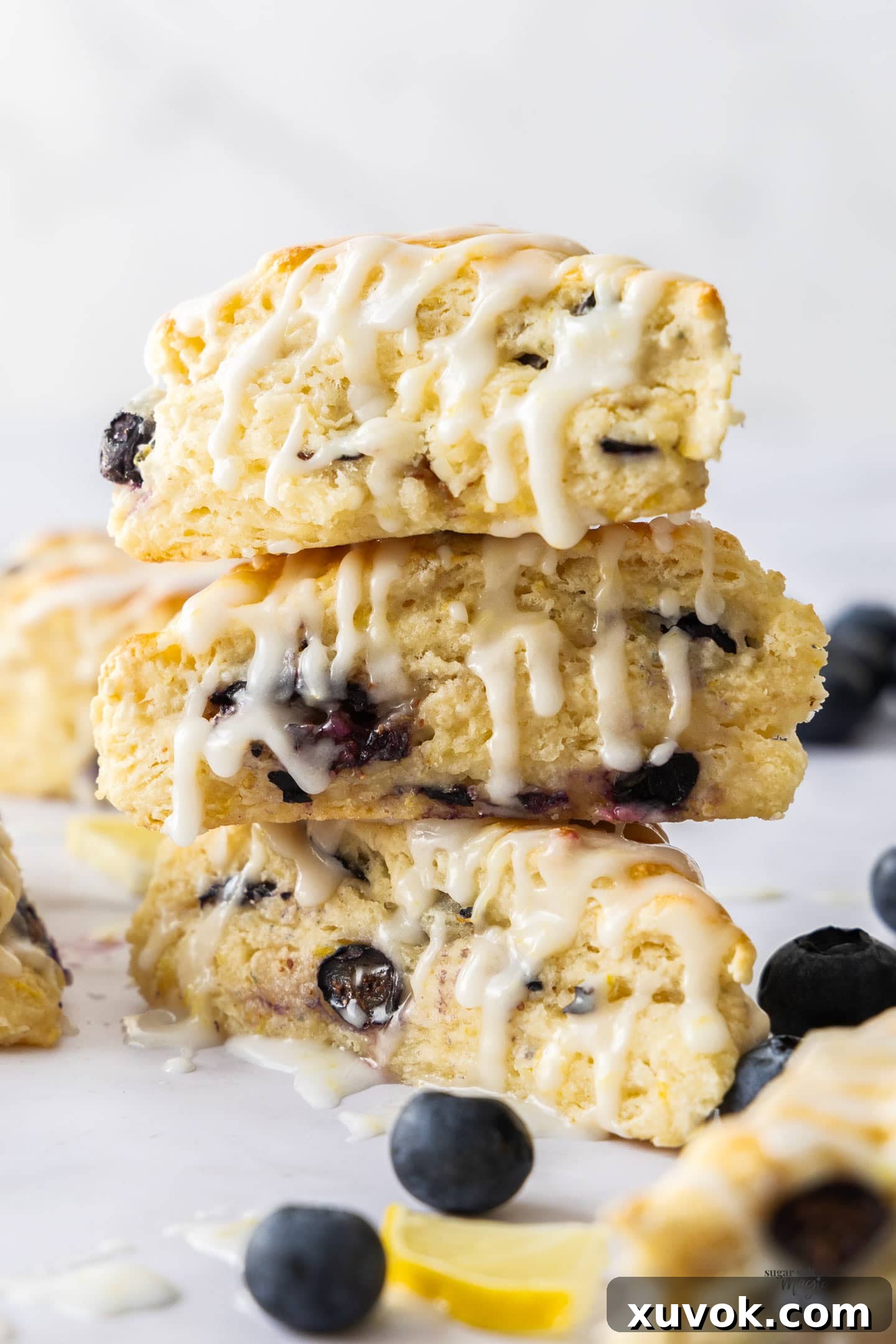
Welcome to the ultimate guide for crafting the most exquisite blueberry and lemon scones you’ll ever taste! These delightful pastries strike a perfect balance, offering a beautifully crumbly yet incredibly tender and moist texture, generously studded with succulent, fresh blueberries. The crowning glory, an easy-to-prepare lemon glaze, adds a tangy-sweet finish that elevates these scones from delicious to absolutely unforgettable. Forget dry, crumbly scones; this recipe promises a light, fluffy interior with a golden exterior, ensuring every bite is pure bliss.
Our journey to the perfect scone begins with a foundational recipe that consistently delivers buttery, tender, and perfectly crumbly results. This versatile base is then infused with the vibrant, refreshing flavors of lemon and the sweet burst of blueberries – a classic pairing that truly shines. The bright acidity of lemon zest and juice beautifully complements the natural sweetness of blueberries, creating a harmonious flavor profile that’s simply irresistible.
Beyond their incredible taste, these homemade blueberry lemon scones are remarkably quick and easy to prepare, making them an ideal choice for a wide array of occasions. Imagine serving them warm at a lavish Sunday brunch, alongside your favorite tea for an elegant morning treat, or as a charming addition to bridal showers, baby celebrations, Mother’s Day gatherings, or any special event where you want to impress with minimal effort. Their rustic charm and exquisite flavor make them a standout dessert or breakfast item that always receives rave reviews.
If you’re eager to explore more delightful scone creations, be sure to try our popular Cherry Scones next, or dive into the blog’s all-time favorite, the refreshing Lime and Coconut Scones. Each recipe promises a unique flavor experience built on the same reliable scone base.

Table of contents
- British Scones vs. American Scones: Understanding the Delicious Differences
- Essential Ingredients for Perfect Blueberry Lemon Scones
- Step-by-Step Guide: How to Make Blueberry Lemon Scones
- Expert Tips for Flawless Scones Every Time
- Exciting Variations to Customize Your Scones
- Storing Your Delicious Blueberry Lemon Scones
- More Irresistible Scone Recipes You’ll Adore
Never Miss a Recipe!
Stay updated with our latest delicious creations! Get the newest recipes delivered straight to your inbox by subscribing to our newsletter.
British Scones vs. American Scones: Understanding the Delicious Differences
When you hear the word “scone,” images of different baked goods might spring to mind depending on where you are in the world. Many might instantly think of the classic British scone, served split in half with a generous dollop of clotted cream and strawberry jam. If this is your expectation, you might wonder why our blueberry lemon scones come with a sweet glaze and vibrant fruit baked right in!
The distinction lies in a fascinating culinary divergence. Traditional British scones, often served at afternoon tea, are typically less sweet on their own. They might occasionally contain dried fruit like currants or raisins, but more often, they are plain, designed to be a vehicle for the rich accompaniments of cream and jam, which provide the bulk of the sweetness and moisture. They are usually round and possess a slightly firmer, crumbly texture, but are tender on the inside, perfect for soaking up delicious toppings. This simple elegance is a hallmark of British tea culture.
American scones, on the other hand, have evolved into a distinctly different pastry. They are commonly triangular in shape, achieved by forming the dough into a disc and then cutting it into wedges before baking. A key characteristic of American scones is their inherent sweetness, making them enjoyable even without additional toppings. Furthermore, they almost always feature a variety of flavorful add-ins, ranging from fresh fruits like blueberries and raspberries, to chocolate chips, nuts, or spices. The final touch is often a sweet glaze or icing, which adds another layer of flavor, moisture, and visual appeal, transforming them into a decadent breakfast treat or a delightful dessert. Our blueberry lemon scones perfectly embody this American style, offering a rich, sweet, and fruit-filled experience with every bite.
Essential Ingredients for Perfect Blueberry Lemon Scones
Crafting these homemade lemon blueberry scones doesn’t require an extensive list of exotic ingredients. In fact, most items are standard baking staples you likely already have in your pantry, with the star additions of fresh blueberries and lemons taking center stage. The magic lies in how these simple components come together to create a truly spectacular pastry.
Using high-quality, fresh ingredients is always recommended for the best flavor and texture in your baking. Here’s a closer look at what you’ll need and why each element is crucial for achieving light, fluffy, and flavorful scones:
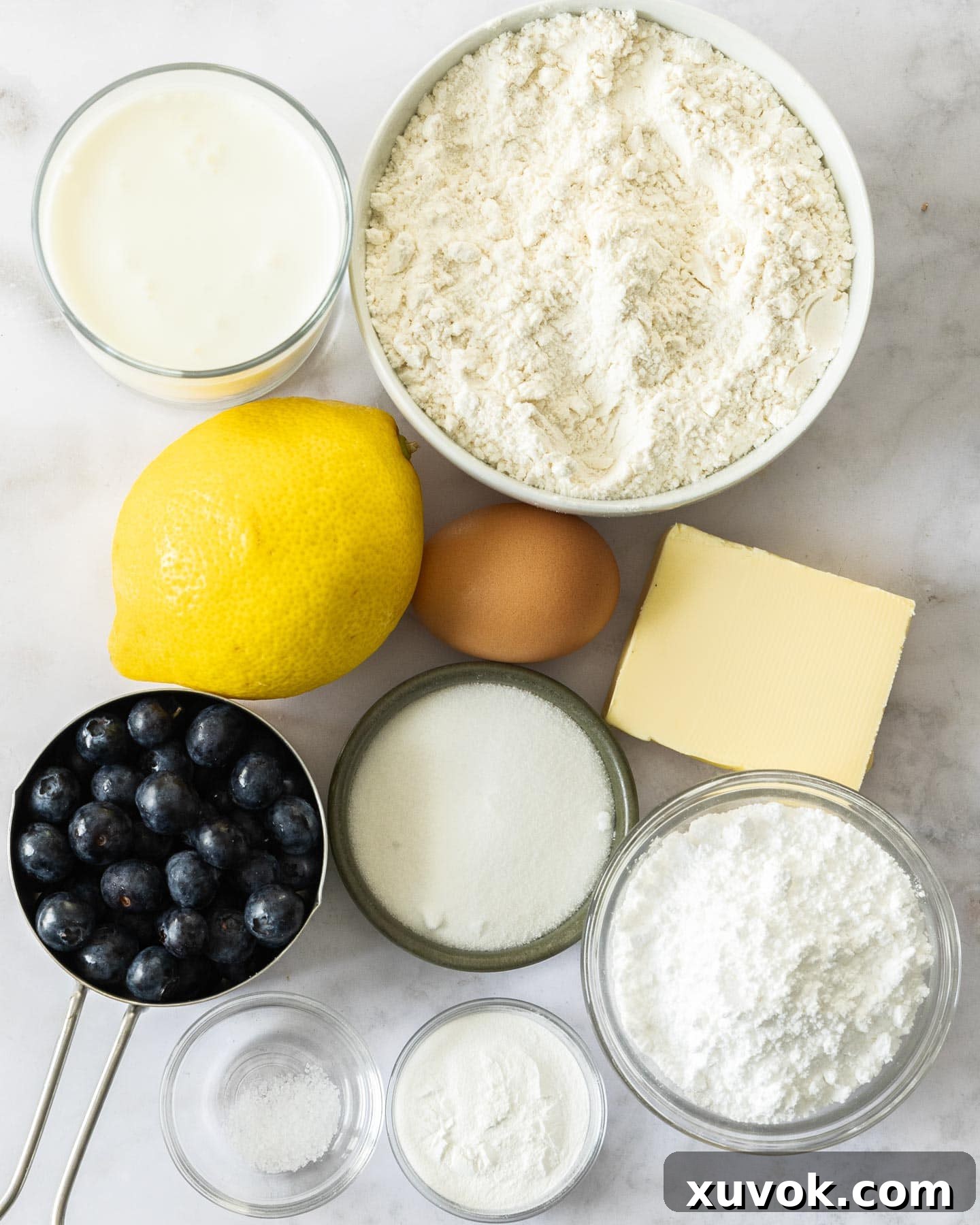
For precise measurements and detailed instructions, please jump to the full recipe card located at the bottom of this article.
- Sugar: We prefer caster sugar for the scone dough due to its finer granules, which dissolve more evenly and contribute to a tender crumb. However, standard white granulated sugar can be used as a perfectly acceptable substitute. For the irresistible lemon glaze, you’ll definitely need icing sugar (also known as powdered sugar or confectioners’ sugar) to achieve that smooth, pourable consistency.
- Lemon: Fresh lemon is paramount for this recipe. You’ll need both the zest and juice of a medium-sized lemon. Always remember to zest the lemon first, before juicing it, as it’s much easier to extract the fragrant oils from the whole fruit. The zest provides a concentrated burst of citrus aroma, while the fresh juice delivers a bright, tangy flavor that cuts through the sweetness and perfectly complements the blueberries.
- Flour: Simple plain flour (or all-purpose flour in North America) is all you need. It provides the structural foundation for the scones, ensuring they hold their shape while baking and maintain a tender chew. There’s no need for fancy specialty flours here.
- Baking Powder: This leavening agent is critical for giving your scones their characteristic lift, creating a light, airy, and fluffy texture. It reacts with the buttermilk and heat during baking, producing carbon dioxide bubbles that expand the dough. It’s important not to confuse baking powder with baking soda, as they have different compositions and require different acidic activators to work effectively.
- Butter: Unsalted butter is our choice, allowing you to control the salt content in the recipe precisely. If you only have salted butter on hand, you can use it, but be sure to reduce or omit the added salt in the dough. Critically, the butter must be very cold and grated. This technique ensures small pockets of butter are distributed throughout the dough, which then melt during baking, creating steam that yields those coveted flaky layers and tender texture.
- Buttermilk: Buttermilk is a secret weapon in scone making. Its slight acidity reacts with the baking powder to create a wonderful lift. More importantly, it contributes to an incredibly tender crumb and adds a subtle tang that pairs beautifully with the sweet blueberries and bright lemon. If you don’t have buttermilk, you can easily make a substitute by adding a tablespoon of lemon juice or white vinegar to regular milk and letting it sit for 5-10 minutes until it slightly curdles.
- Blueberries: For the best results and visual appeal, fresh blueberries are highly recommended. Their plump juiciness bursts with flavor in every bite. If fresh aren’t available, frozen blueberries can be used; just make sure to add them to the dough while they are still frozen to prevent them from bleeding color into the dough. Dried blueberries are another option, similar to how we use dried cranberries in our Cranberry White Chocolate Scones, offering a chewier texture.
- Egg: One egg is used primarily for the egg wash. Brushing the tops of the scones with a beaten egg (mixed with a dash of milk or water) before baking creates a beautiful golden-brown crust and a lovely sheen. If you prefer, heavy cream can also be used for a similar effect, giving the scones a rich, caramelized top.
Step-by-Step Guide: How to Make Blueberry Lemon Scones
If you’re new to scone baking, prepare to be delighted by how straightforward and rewarding the process is. These lemon blueberry scones are no exception, proving that bakery-quality pastries are entirely achievable in your own kitchen. You’ll only need a few basic tools: a spacious mixing bowl, a trusty spoon, and a pastry blender, though your fingertips or even a sturdy knife can work perfectly well for cutting in the butter.
Each step is designed to maximize flavor and achieve that desirable tender, flaky texture. Pay close attention to the details, especially regarding ingredient temperatures and dough handling, and you’ll be rewarded with sensational homemade scones.
For a complete list of ingredients and detailed instructions, scroll down to the recipe card.
1. The Lemon Sugar Infusion
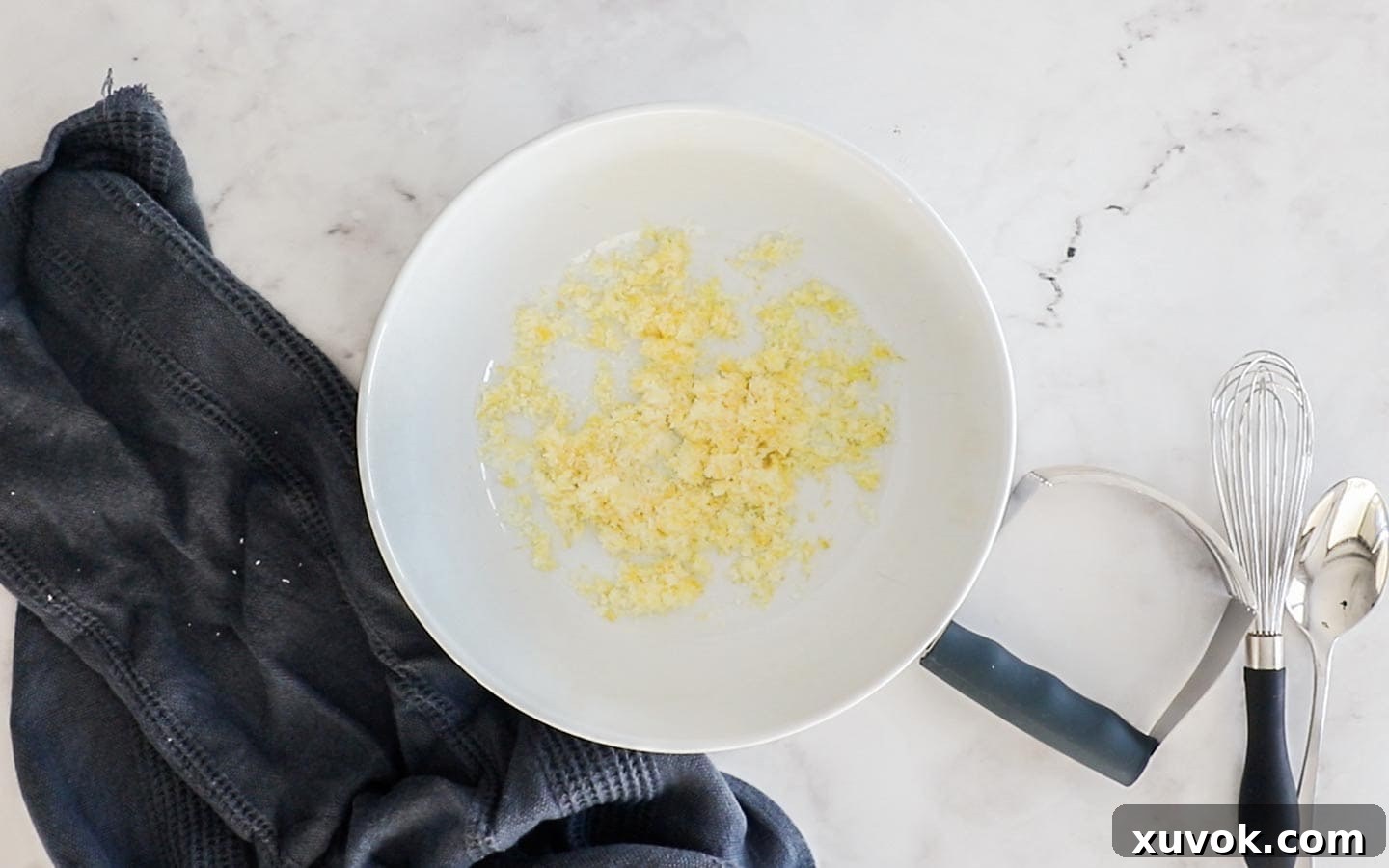
Begin by combining the granulated sugar with the finely grated lemon zest in a large mixing bowl. Using your fingertips, gently rub the lemon zest into the sugar until the mixture resembles moist sand and a fragrant citrus aroma fills the air. This crucial step, known as “zesting into sugar,” releases the essential oils from the lemon zest, intensifying the overall lemon flavor throughout your scones and ensuring every bite is bursting with bright, tangy goodness.
2. Incorporate Flour and Cold Butter
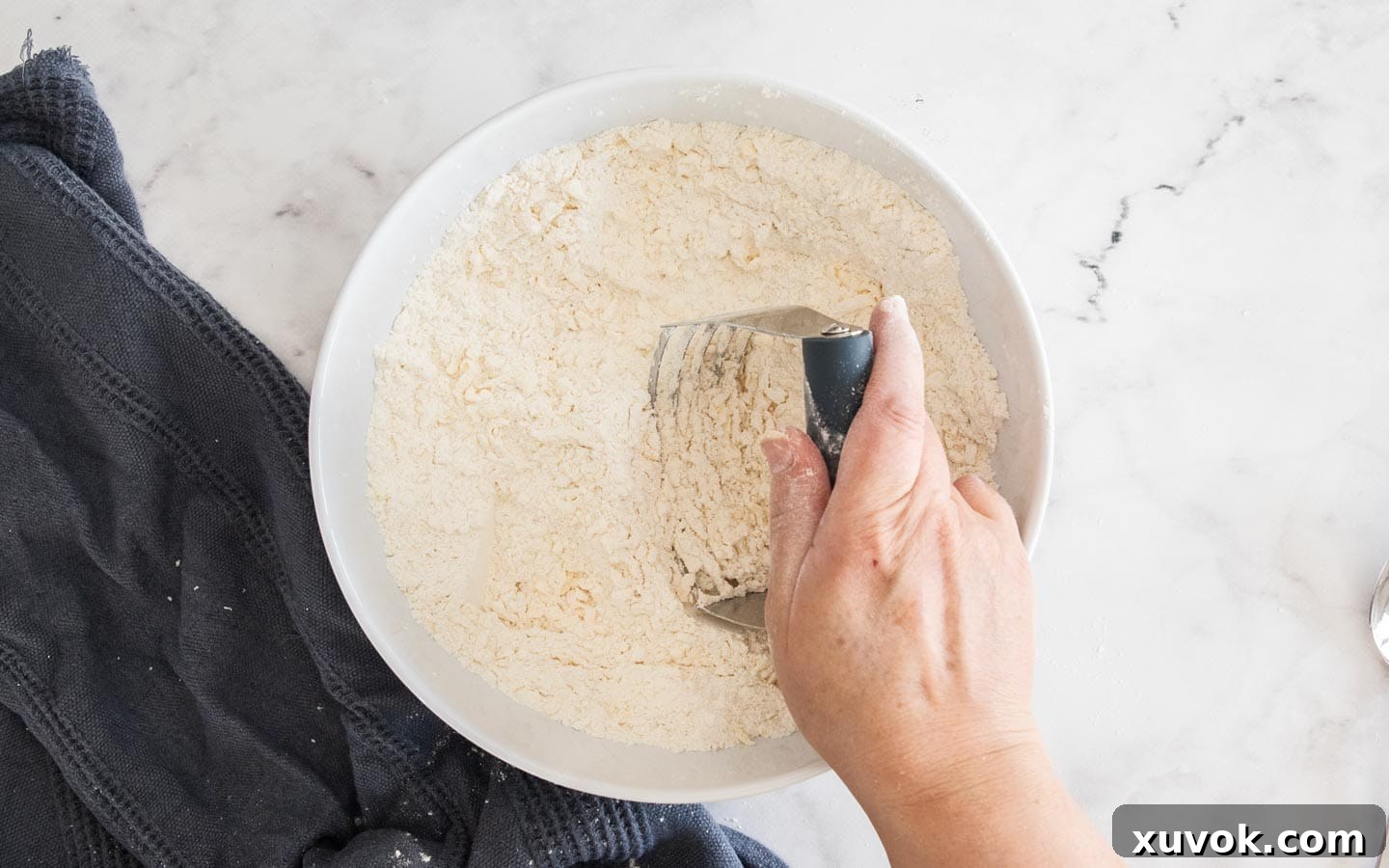
Next, add the remaining dry ingredients – the plain flour, baking powder, and a pinch of fine sea salt – to the lemon sugar mixture and whisk them together until just combined. Now comes one of the most vital steps for flaky scones: adding the cold, grated butter. The butter must be kept as cold as possible to prevent it from fully integrating with the flour. Use your fingertips, a pastry blender, or a pastry cutter to work the butter into the flour mixture. Continue until the butter pieces are roughly the size of small peas or lentils. These small pockets of cold butter will create steam during baking, yielding those delightful flaky layers.
3. Introduce Wet Ingredients and Blueberries
With the dry ingredients and butter perfectly combined, it’s time to add the liquid components. Pour in the cold buttermilk and fresh lemon juice, then gently fold in the fresh blueberries. Using a spoon, stir the mixture just until a sticky, shaggy dough forms. Be careful not to overmix at this stage; excessive mixing can develop the gluten in the flour, leading to tough scones, and can also burst the delicate blueberries, staining the dough. A light touch ensures tender, beautifully textured scones.
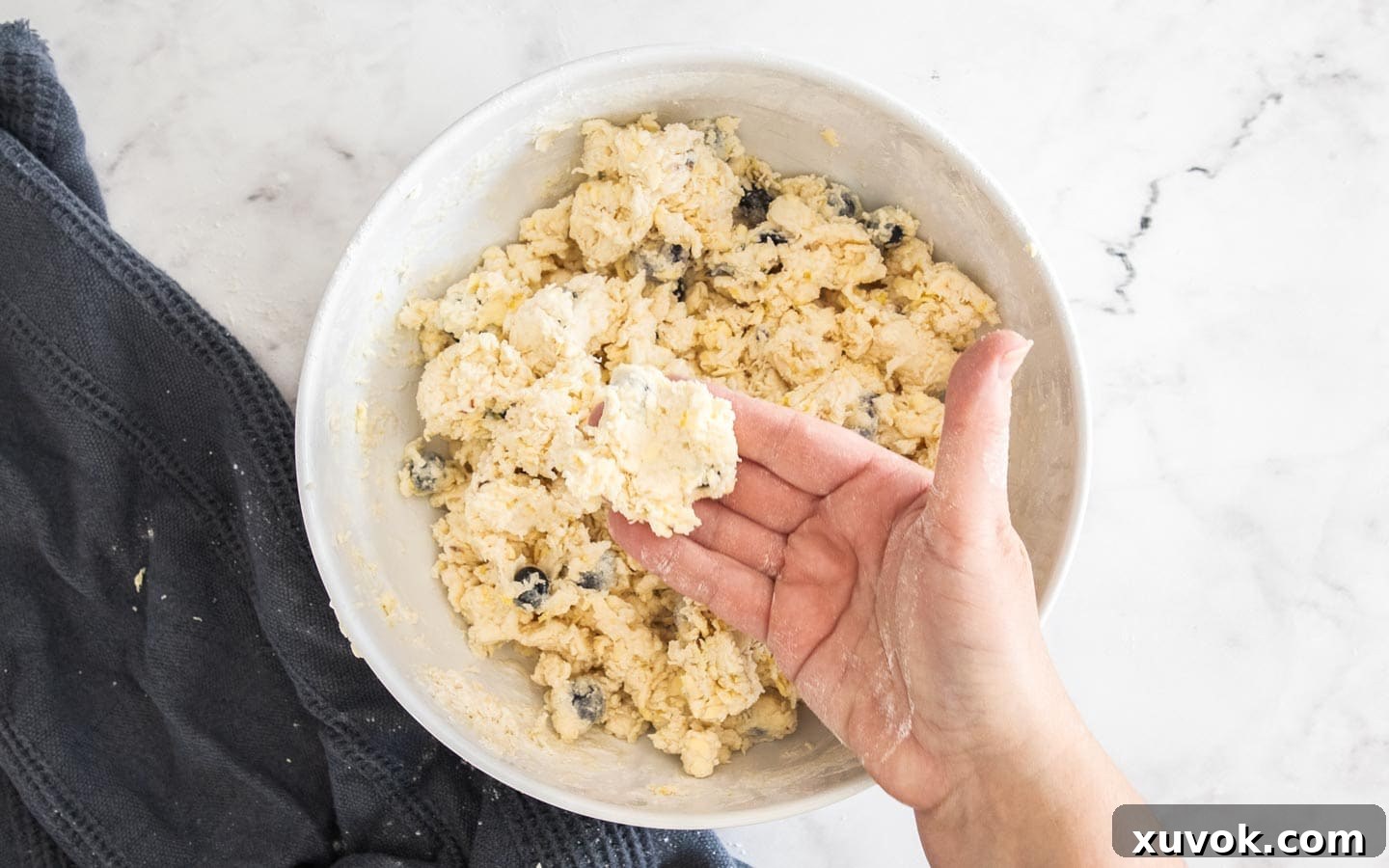
4. Shape and Cut Your Scones
Lightly flour your work surface, then gently turn out the sticky scone dough. Sprinkle a minimal amount of flour over the dough and on your hands – just enough to prevent sticking, but not so much that it dries out the dough. Carefully fold the dough over on itself about three times. This light handling helps to bring the dough together without overworking it and keeps the blueberries largely intact. Pat the dough into a smoothish round, approximately 4cm (1 ½ inches) deep. Aim for a consistent thickness to ensure even baking. For these American-style scones, cut the round into 8 even wedges using a sharp knife that has been dipped in flour to prevent sticking. This wedge method is efficient and creates no dough scraps, meaning no re-rolling is necessary. While you can use a round cookie cutter if you prefer the classic British scone shape, the wedge method is simpler and prevents potential toughness from re-rolling.
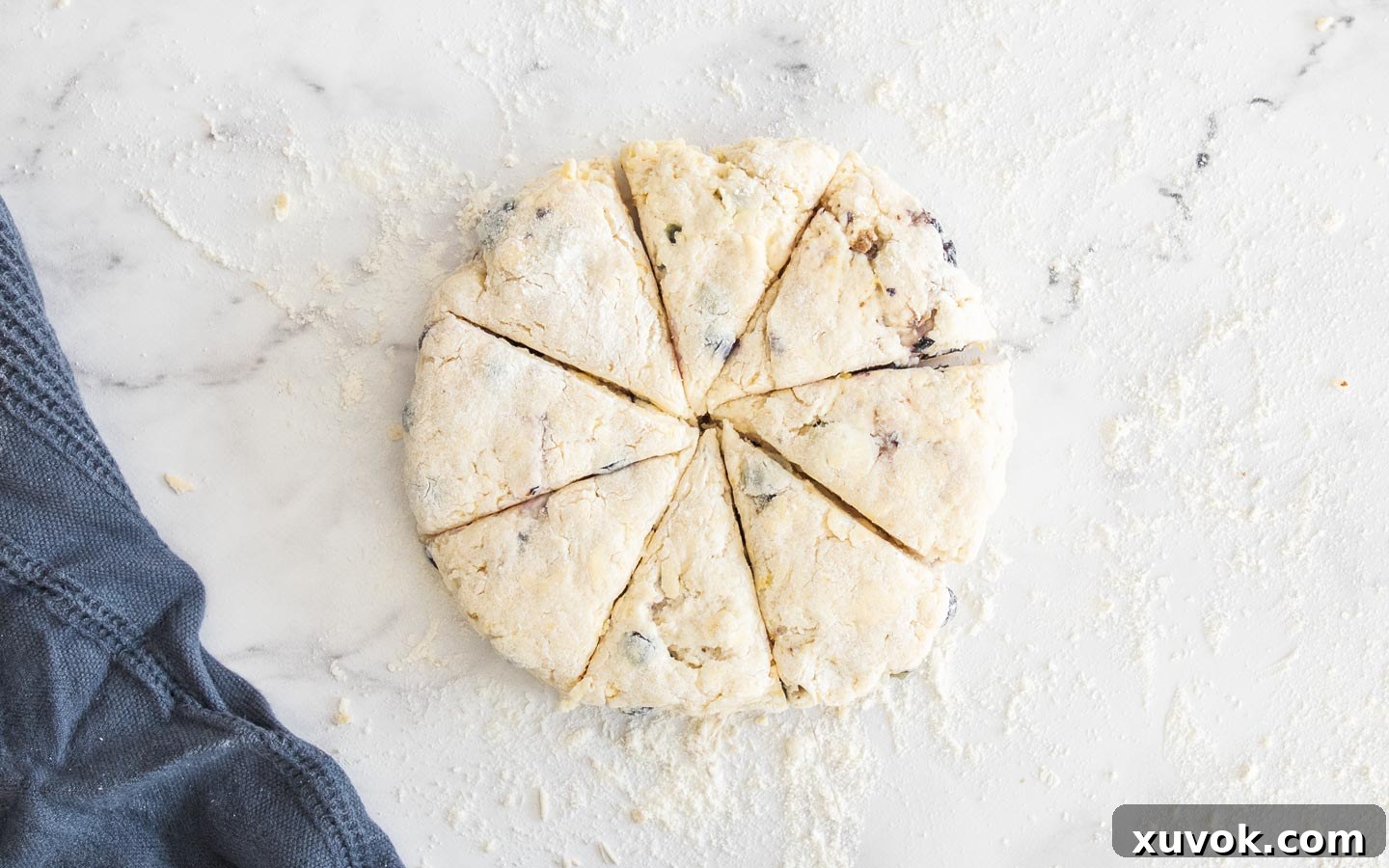
5. Bake to Golden Perfection
Carefully transfer the shaped dough wedges to a baking tray lined with baking paper, ensuring they have a little space between them to expand. Before placing them into the oven, brush the tops of each scone with an egg wash (one egg yolk beaten with a dash of milk or water). This egg wash isn’t just for aesthetics; it helps create that gorgeous golden-brown, shiny crust that makes homemade scones so appealing. Bake for approximately 16-18 minutes in a preheated oven, or until they are beautifully golden on top and sound hollow when tapped on the bottom. To check for doneness, you can gently pull two adjacent scones apart slightly; if the dough in the middle appears cooked and dry, they are ready. Avoid underbaking, which can result in a doughy center.
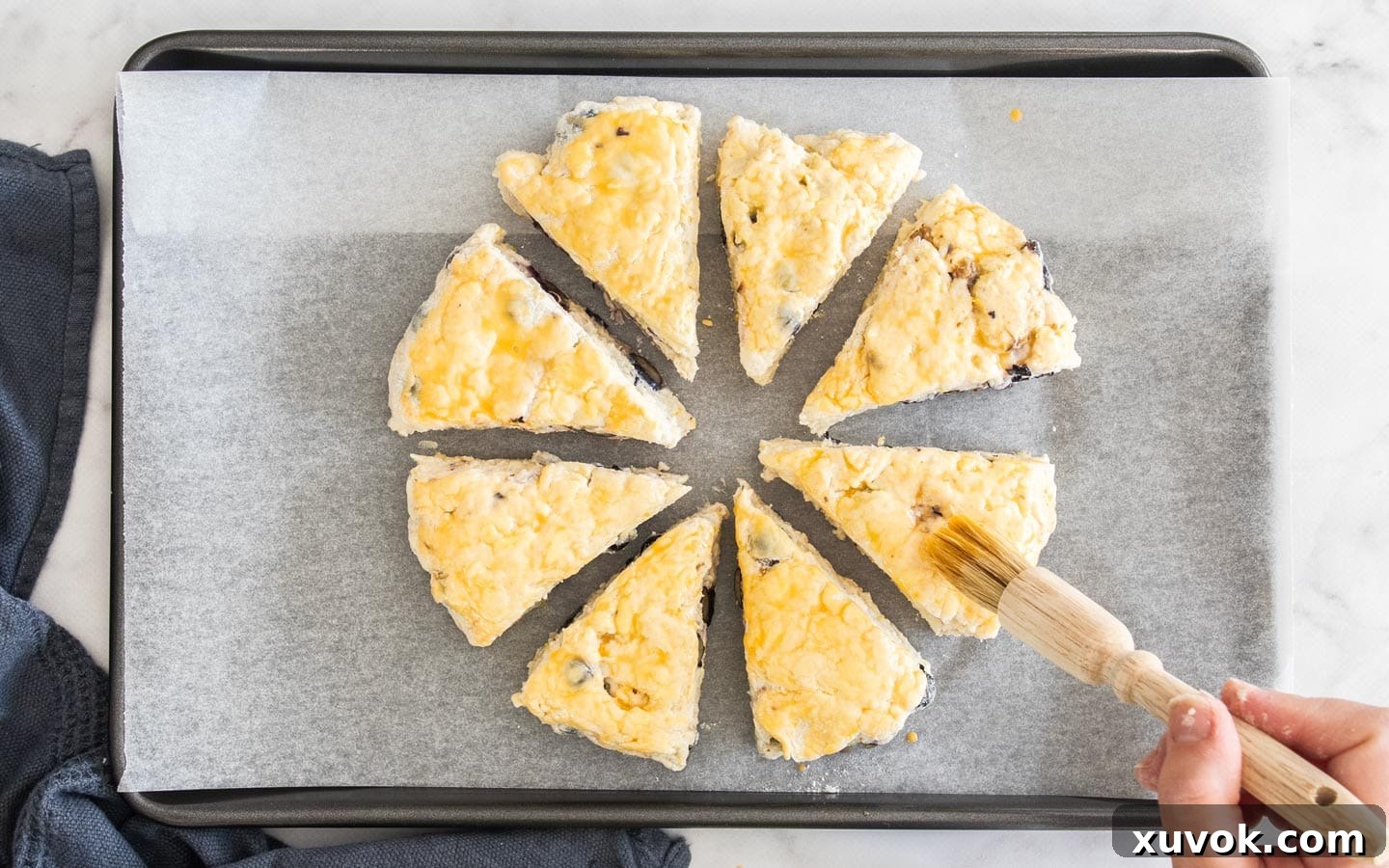
6. Glaze the Scones with Zesty Lemon Icing
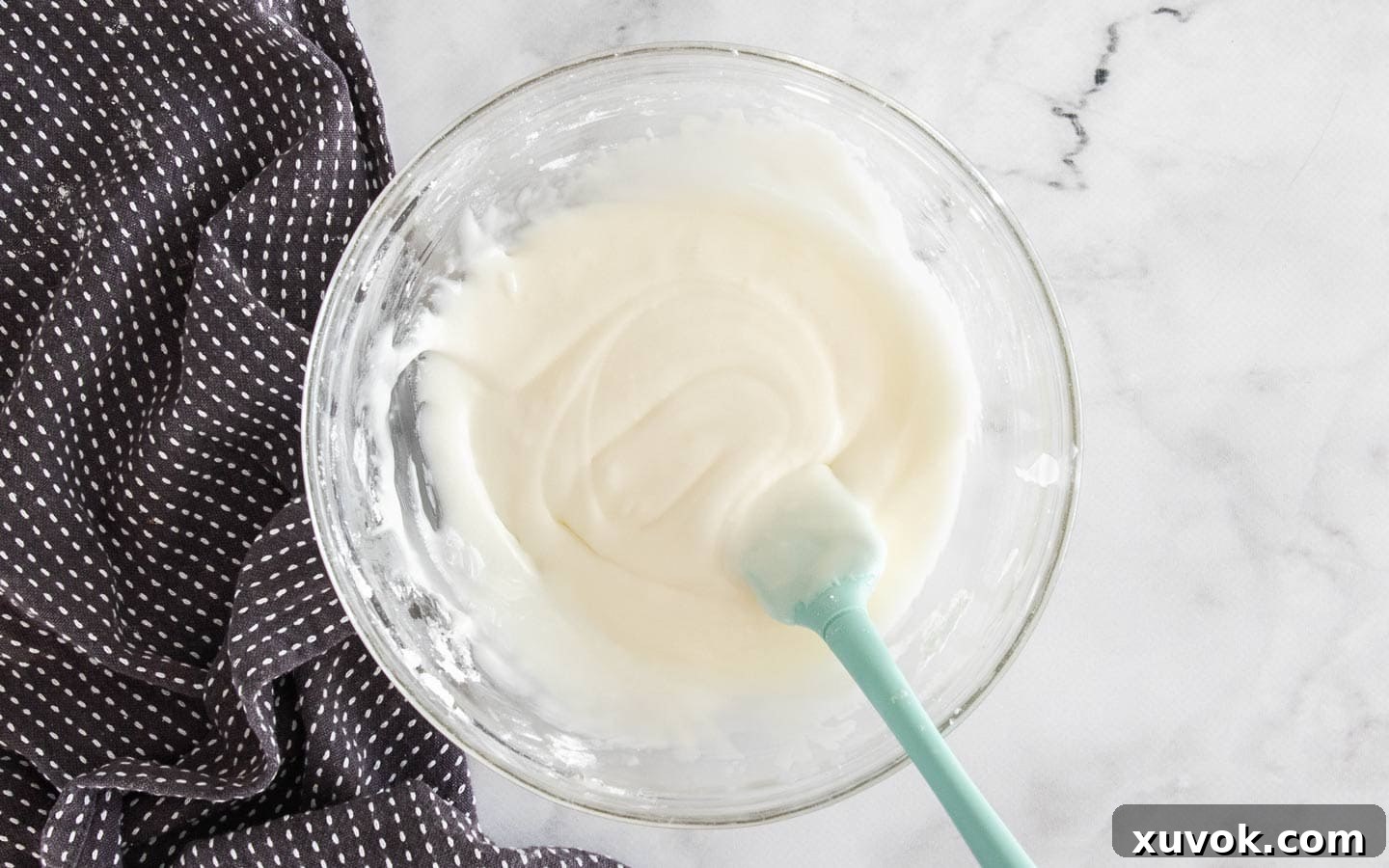
The final touch for your blueberry and lemon scones is the incredibly simple, yet utterly delicious, three-ingredient lemon glaze. To prepare it, simply whisk together icing sugar (powdered sugar), fresh lemon juice, and a hint of lemon zest in a small bowl until smooth and of a drizzling consistency. Once the scones have cooled slightly – they should still be warm but not hot – generously drizzle this tangy lemon glaze over their tops. As the glaze sets, it will create a beautiful finish and add an extra layer of bright, sweet-tart flavor that perfectly complements the fruit-filled scones, making them truly irresistible.
Expert Tips for Flawless Scones Every Time
Achieving perfectly tender, flaky scones is a rewarding experience. While our recipe is straightforward, a few expert tips can make all the difference, transforming good scones into truly exceptional ones. Follow these guidelines for baking success:
- Embrace the Cold: The cardinal rule for scone making is to keep your ingredients, especially butter and buttermilk, as cold as possible. Cold butter creates pockets of steam in the dough during baking, resulting in those coveted flaky layers. Cold buttermilk helps keep the butter solid for longer. Try working quickly to minimize handling, or even chill your mixing bowl for a few minutes before you start.
- Grate and Chill Your Butter: For the easiest and most effective way to incorporate cold butter into your flour, use a box grater to grate a stick of frozen or very cold butter. Once grated, pop the butter shreds back into the freezer for 10-15 minutes while you prepare your other ingredients. This ensures the butter remains perfectly firm when added to the flour.
- Do Not Overmix the Dough: This is a common pitfall. Overmixing develops the gluten in the flour, leading to tough, dense scones instead of light and tender ones. Mix the dough just until the wet and dry ingredients are combined and a shaggy dough forms. A few dry streaks are perfectly fine. Gentle handling is key throughout the shaping process too.
- Avoid Twisting When Cutting: If you opt for round scones using a cookie cutter, press straight down and lift straight up. Do not twist the cutter, as this can seal the edges of the scone, preventing it from rising properly and creating beautiful layers.
- Consider a Bench Scraper: A bench scraper is an invaluable tool for working with sticky doughs. It helps you gather and fold the dough on your work surface without over-handling it, and it makes cleaning up your countertop a breeze.
- Don’t Be Afraid to Get Your Hands Dirty: While pastry blenders are helpful, sometimes the best tool is your own clean fingertips. The warmth of your hands can be a concern, but quick, light motions are often more effective for cutting butter into flour and gently bringing dough together.

Exciting Variations to Customize Your Scones
One of the beauties of this base scone recipe is its incredible versatility. While the blueberry and lemon combination is a classic for a reason, don’t hesitate to get creative and experiment with other delicious mix-ins and flavor enhancements. Just like our popular Blueberry White Chocolate Chip Scones, there are countless ways to adapt these sweet treats:
- Chocolate Chip Delight: Chocolate and fruit are often a match made in heaven. White chocolate chips pair wonderfully with blueberries and lemon, adding a creamy sweetness. However, milk chocolate or even dark chocolate chips would also provide a delightful contrast. Add about ½ to ¾ cup of your preferred chocolate chips when you add the blueberries.
- A Hint of Vanilla: For an added layer of warmth and sweetness, consider incorporating a teaspoon of good quality vanilla extract into the wet ingredients before mixing with the dry. It complements both the lemon and blueberry flavors beautifully.
- Nutty Crunch: To introduce a delightful texture, fold in about ½ cup of finely chopped nuts, such as pecans, walnuts, or almonds, along with the blueberries. Toasting the nuts lightly beforehand can enhance their flavor significantly.
- Spice It Up: A pinch of cinnamon or a tiny grating of fresh nutmeg can add a subtle, comforting warmth to the scones, especially if you’re leaning into a more autumnal flavor profile. Start with ¼ teaspoon and adjust to taste.
- Other Berries: Feel free to swap blueberries for other berries like raspberries, blackberries, or mixed berries. Adjust sweetness if using tart berries. Remember to add frozen berries while still frozen to prevent color bleeding.
- Cream Cheese Glaze: For an even richer topping, transform the simple lemon glaze into a luscious cream cheese glaze by beating softened cream cheese with powdered sugar, lemon juice, and a touch of vanilla.
Storing Your Delicious Blueberry Lemon Scones
While these blueberry lemon scones are undeniably best enjoyed fresh from the oven, still warm with their melting glaze, you can certainly store any leftovers to savor later. Proper storage ensures they retain as much of their delightful texture and flavor as possible.
- Room Temperature: If you plan to consume the scones within a day, you can store them in an airtight container at room temperature. However, due to the fresh fruit and glaze, refrigeration is generally recommended for optimal freshness and safety, especially in warmer climates.
- Refrigerator: To extend their freshness, place any leftover glazed or unglazed blueberry lemon scones in an airtight container and store them in the refrigerator for up to 3-4 days. When you’re ready to enjoy them, we highly recommend warming them slightly in the oven or microwave. A quick warm-up helps to fluff them up and restore their tender texture, making them almost as good as freshly baked.
- Freezing for Later: These scones freeze beautifully, allowing you to enjoy homemade treats whenever a craving strikes. Let the baked scones cool completely before freezing. It’s best to freeze them *without* the lemon icing, as the icing can become watery upon thawing. Arrange the cooled scones in a single layer on a baking sheet and freeze until solid, then transfer them to a freezer-safe airtight container or heavy-duty freezer bag. They can be stored in the freezer for up to 2 months.
- Reheating Frozen Scones: When ready to enjoy frozen scones, simply take them out of the freezer. You can thaw them at room temperature for a few hours or reheat them directly from frozen. To warm them up and restore their delicious texture, place them in a preheated oven at 160°C (140°C fan-forced) / 320°F for about 10-15 minutes, or until warmed through and soft. Once reheated, you can then prepare and drizzle the fresh lemon glaze if you froze them plain.

More Irresistible Scone Recipes You’ll Adore
If you’ve fallen in love with the art of scone making, you’re in luck! Our collection of scone recipes offers a delightful array of flavors, each promising that same tender, buttery crumb you now know and love. Explore these other fantastic options to expand your baking repertoire:
- Blueberry White Chocolate Scones: A heavenly combination of sweet blueberries and creamy white chocolate.
- Earl Grey Scones: Infused with the delicate, aromatic flavor of Earl Grey tea for a sophisticated twist.
- Blood Orange Scones: Bright, vibrant, and bursting with the unique citrus notes of blood oranges.
- Chocolate Scones: A rich and indulgent treat for all chocolate lovers, perfect for any time of day.
- Cranberry White Chocolate Scones: A festive and flavorful pairing of tart cranberries and sweet white chocolate.
⭐⭐⭐⭐⭐⭐
Did you try this lemon blueberry scones recipe? Leaving a rating and comment below the recipe is so helpful! We love hearing your feedback.
Hungry for more? Subscribe to our newsletter for free recipes straight to your inbox. Also, follow along with us on Facebook, Pinterest and Instagram for daily inspiration and behind-the-scenes glimpses!

Blueberry and Lemon Scones
8
scones
15 minutes
18 minutes
33 minutes
Rate
Pin
Ingredients
-
50
g
caster sugar
(¼ cup/1.8oz) -
1
tablespoon
finely grated lemon zest
(notes 1) -
360
g
plain flour (all purpose flour)
(2 ¾ cups / ~12 ½oz) -
4
teaspoons
baking powder -
¼
teaspoon
fine sea salt -
85
g
unsalted butter
cold and grated (3 oz / ¾ stick) -
1
cup
buttermilk
cold (250ml) -
2
tablespoons
lemon juice
(8tsp, notes 1) -
1
cup
fresh blueberries
(125g / 4 ½oz) -
1
egg yolk beaten with a dash of milk or water
LEMON ICING
-
¾
cup
icing
powdered sugar -
3
teaspoons
lemon juice -
½
teaspoon
lemon zest
For best results, always weigh ingredients where a weight is provided
Equipment
-
mixing bowl -
Pastry blender helpful but not essential -
Spoon -
Baking sheet -
Sharp knife
Instructions
-
Preheat your oven to 220°C (200°C fan-forced) / 425°F. Line a baking sheet with baking paper to prevent sticking.
-
In a large mixing bowl, combine the caster sugar and lemon zest. Use your fingertips to rub the zest into the sugar until the mixture is fragrant and resembles wet sand. This step intensifies the lemon flavor.
-
Add the plain flour, baking powder, and fine sea salt to the lemon sugar mixture. Whisk well to ensure all dry ingredients are evenly distributed.
-
Add the very cold, grated unsalted butter to the dry ingredients. Using either your fingertips, a knife, or a pastry blender, gently cut the butter into the flour mixture. Continue until the butter pieces are roughly the size of lentils or small peas; avoid overworking the mixture.
-
Pour in the cold buttermilk and lemon juice. Gently fold in the fresh blueberries. Stir with a spoon just until a sticky, shaggy dough begins to form. Be careful not to overmix the dough.
-
Lightly flour a clean work surface, then turn the scone dough out onto it. Sprinkle a tiny bit more flour over the dough and dust your hands. Gently fold the dough over on itself about 3 times to bring it together and smooth it slightly, being careful not to burst the blueberries.
-
Pat the dough into a round disc, approximately 4cm (1 ½ inches) thick. Dip a sharp knife into flour to prevent sticking, then cut the round into 8 even wedges.
-
Transfer the scone wedges to your prepared baking sheet. Brush the tops of each scone generously with the egg wash to achieve a golden crust.
-
Bake for 16-18 minutes, or until the scones are a beautiful pale golden-brown on top and feel dry to the touch on their sides. Once baked, let them cool on the baking sheet for about 15 minutes before applying the glaze.
-
FOR THE OPTIONAL LEMON ICING:
In a small bowl, whisk together the icing sugar, fresh lemon juice, and lemon zest until smooth and drizzly. Once the scones have cooled slightly, spoon or drizzle this tangy glaze over their tops.
-
Please take a moment to leave a comment & rating below after trying the recipe. Your feedback is greatly appreciated and incredibly helpful to us!
Notes
- Tablespoons: Please note that I use a standard Australian 20ml tablespoon in my recipes (which is equivalent to 4 teaspoons). We recommend checking your own tablespoon measure before preparing the recipe to ensure accuracy.
- Serving Suggestion: For the best flavor and texture, serve these delightful scones slightly warm or at room temperature on the very day they are baked. This is when they are at their absolute freshest.
- Freezing Instructions: To freeze scones, allow them to cool completely after baking. Store them in an airtight container or freezer bag in the freezer. They are best frozen without the lemon icing. When you wish to enjoy them, thaw the scones completely at room temperature, then fluff them up by warming them in a preheated oven at 160°C (140°C fan-forced) / 320°F for 3-4 minutes. Once warm, you can then apply a fresh batch of the lemon glaze.
- Nutritional Information: The nutrition details provided are approximate only. A full nutritional breakdown can be found below the recipe card. Please be aware that the specific brands and types of ingredients you use may cause variations in the final nutritional values.
EXPLORE MORE DELICIOUS BREAKFAST AND BRUNCH RECIPES!
393
kcal
Marie Roffey
Brunch, Morning Tea, Snack
American
Have you tried this recipe?
Don’t forget to leave a rating and comment below and let me know how it was! I love hearing from you. Nutrition information is approximate and derived from an online calculator. The brands you use may cause variations.
Calories from Fat 126