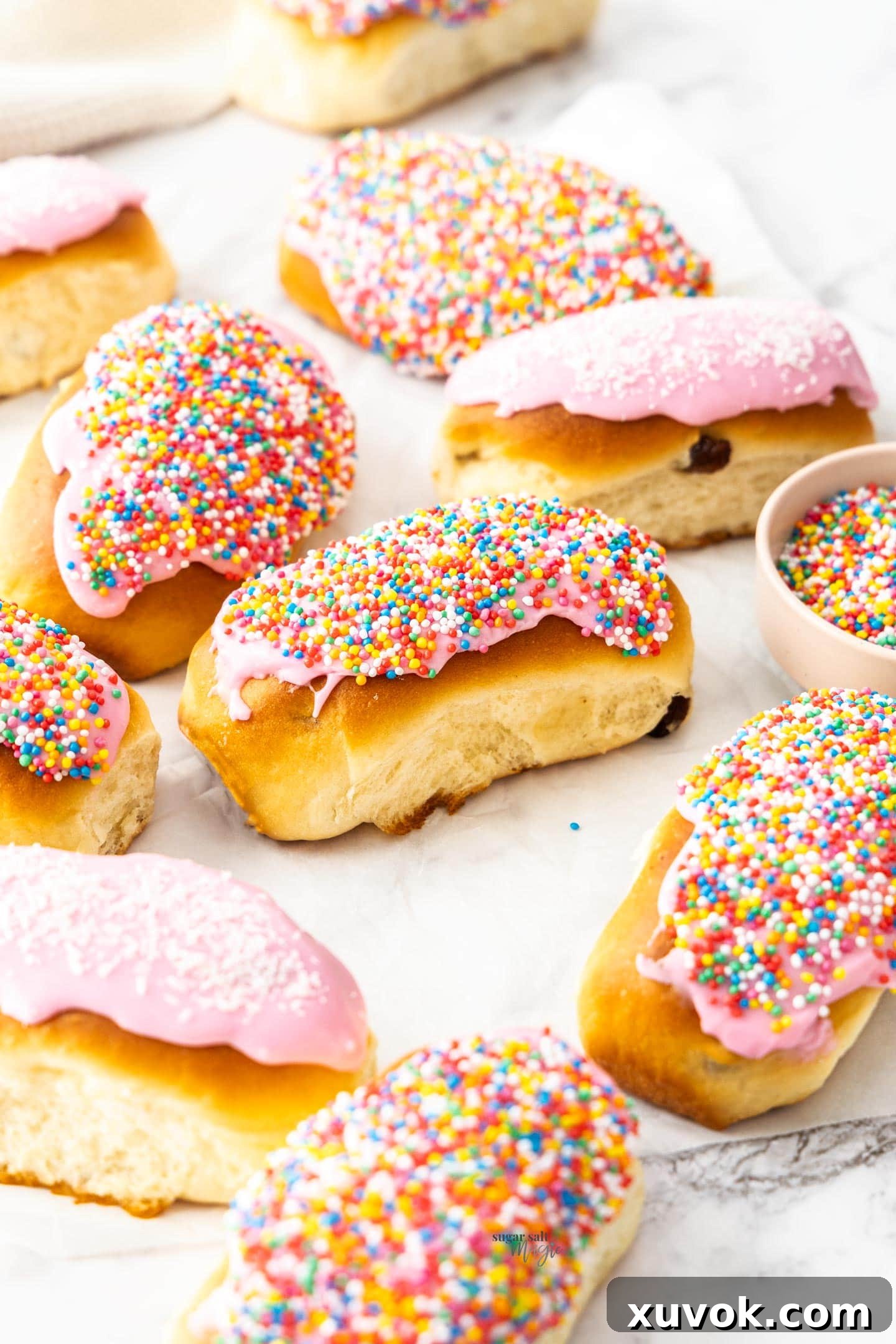
Classic Australian Finger Buns: A Nostalgic Bakery Delight
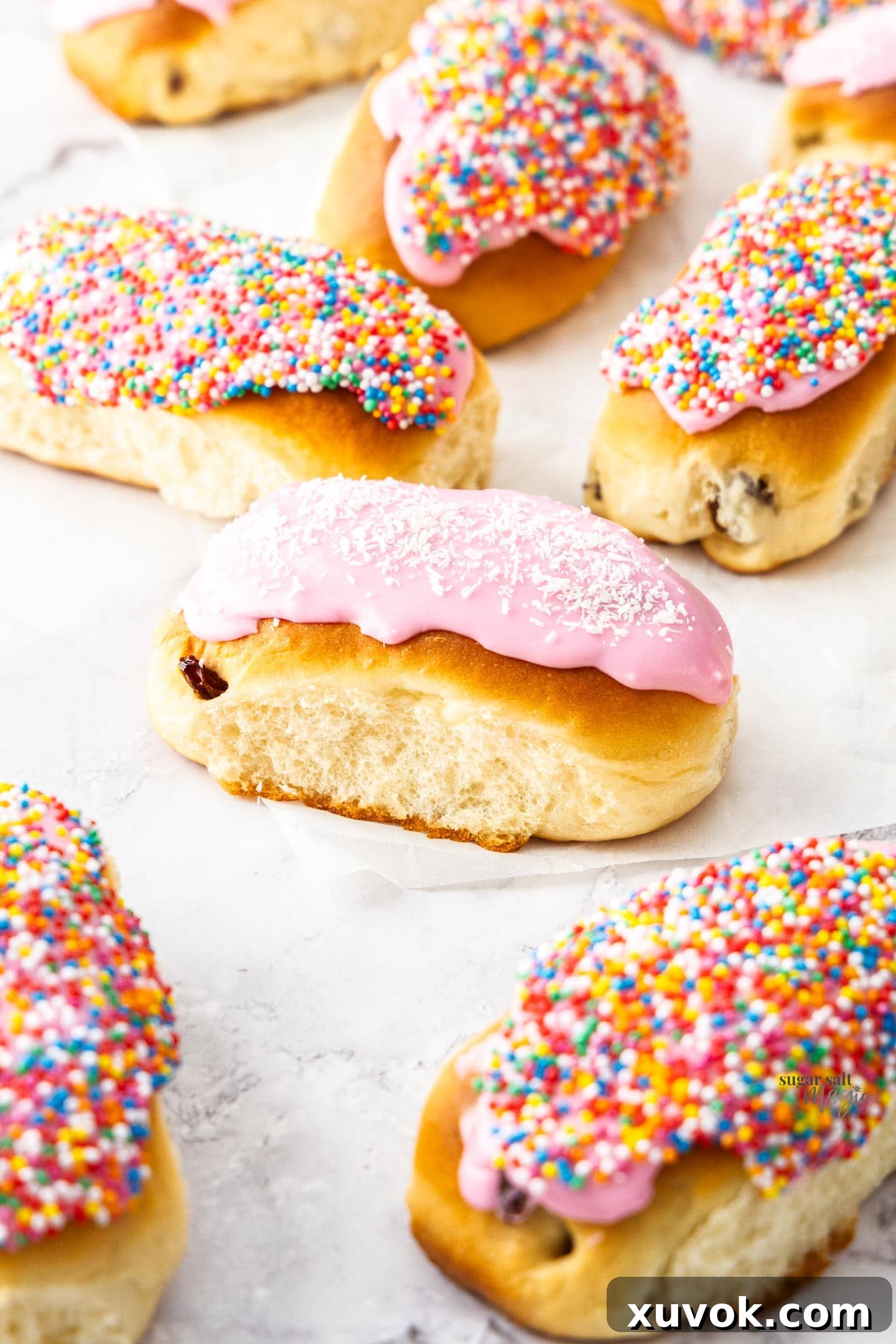
Step into any classic Australian bakery, and among the tempting array of pastries, pies, and lamingtons, you’ll undoubtedly find the beloved finger bun. These soft, sweet, and delightfully fluffy rolls hold a special place in the hearts of Australians, evoking cherished childhood memories with every bite. Sometimes studded with plump sultanas (or raisins) for an extra burst of sweetness – though entirely optional for those who prefer them plain – these iconic buns are always crowned with a generous, thick layer of vibrant icing. The final touch? A playful sprinkle of “100s and 1000s” (what Americans call sprinkles) or, for a more subtle finish, a dusting of coconut. No matter the topping, the result is an undeniably delicious and truly nostalgic treat that transports you back to simpler times.
While wonderfully simple served with just a spread of butter, finger buns offer a versatile canvas for further indulgence. For a truly decadent experience, consider slicing them open and sandwiching them with dollops of whipped cream and a spoonful of your favourite jam. This elevates them from a delightful snack to a show-stopping dessert perfect for any occasion, from afternoon tea to a special gathering.
This perfected recipe, thoughtfully adapted from our popular coconut iced buns, promises an authentic taste of this Aussie favourite. Prepare to recreate the magic of these soft, sweet, and perfectly iced rolls right in your own kitchen!

Table of Contents
Toggle
Never Miss a Recipe!
Get the latest, most delicious recipes straight to your inbox – subscribe to our newsletter today!
Sign up here to receive our newsletter and latest recipes!
Ingredients for Perfect Finger Buns
Crafting perfect finger buns starts with understanding the role each ingredient plays. While many items like white granulated sugar, eggs, and whole milk are simple pantry staples, a few key components deserve a closer look to ensure your homemade finger buns achieve that authentic bakery quality.
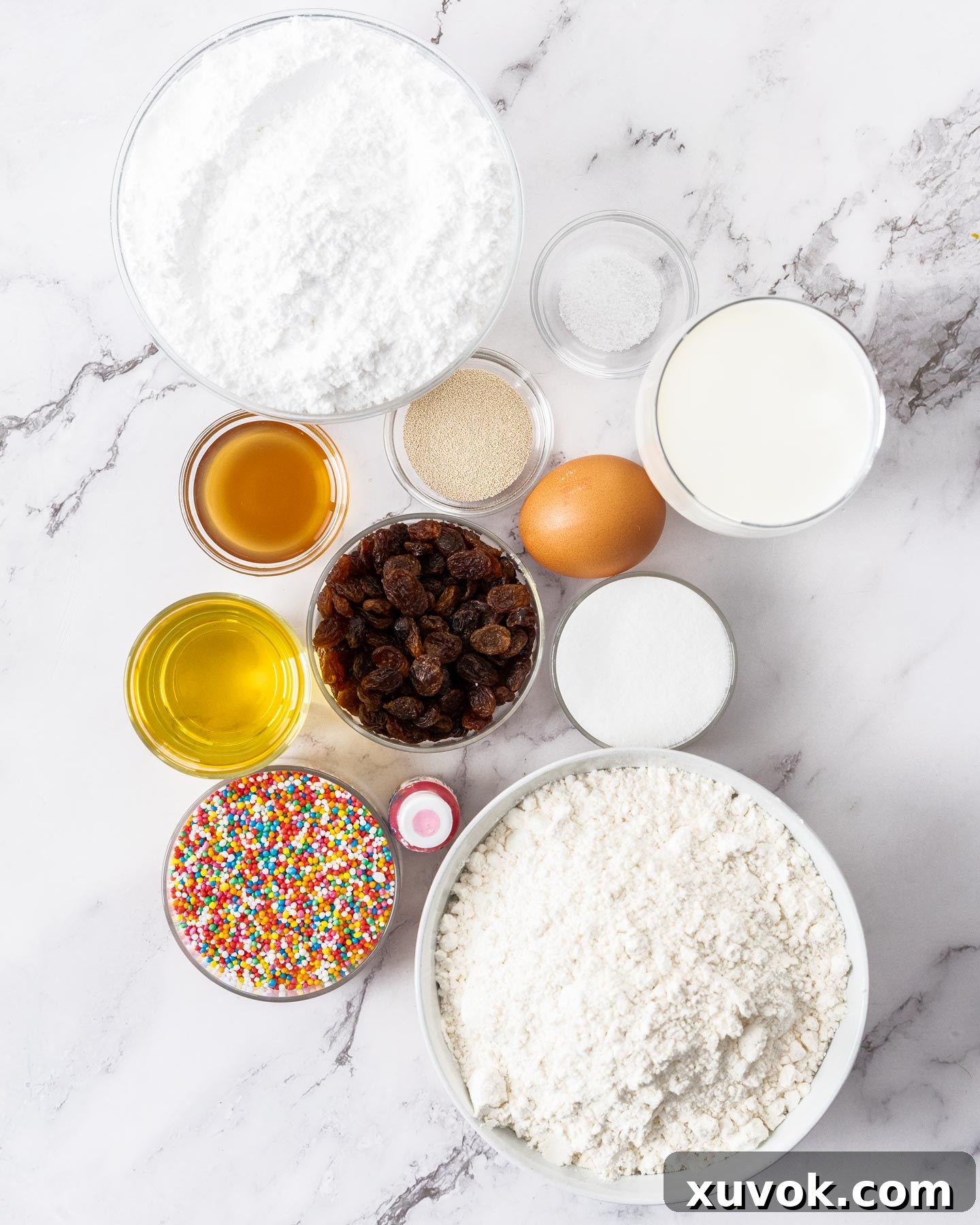
Jump to the recipe card for the full list of ingredients and detailed instructions.
- Bread Flour: This is a non-negotiable ingredient for achieving the ideal chewy, yet soft texture that distinguishes classic bakery buns. Bread flour has a higher protein content compared to all-purpose flour, which develops more gluten during kneading. This gluten network is what gives the buns their characteristic elasticity and structure, allowing them to rise beautifully and retain their shape while remaining incredibly tender on the inside.
- Yeast: We recommend using instant yeast (also known as instant dry yeast) for its convenience and reliability. It can often be added directly to dry ingredients without prior activation. However, if you have active dry yeast, you must activate it first in warm liquid before combining it with other ingredients. Regardless of the type, always check the expiry date to ensure your yeast is fresh and active – a small step that prevents disappointment later in the baking process.
- Oil: A neutral-flavored oil like vegetable oil or sunflower oil is crucial for keeping your finger buns exceptionally tender and moist. It helps to prevent the dough from drying out prematurely, ensuring the finished buns stay soft and fresh for longer. Unlike butter, which can make dough tougher when cold, oil keeps the crumb consistently delicate.
- Sultanas (or Raisins): These sweet dried grapes are a delightful, albeit optional, addition to finger buns, providing pockets of chewy sweetness. Sultanas are typically smaller and lighter in color than raisins, but regular raisins work perfectly well as a substitute. You could also experiment with currants or a mix of dried fruits for a different flavour profile. If dried fruit isn’t your preference, simply omit them for a classic plain bun.
- Icing Sugar: Also known as powdered sugar or confectioners’ sugar, icing sugar is finely milled granulated sugar, often with a small amount of cornstarch added to prevent caking. Its fine texture is essential for creating a smooth, lump-free, and delightfully creamy icing that coats the finger buns perfectly. Do not substitute with granulated sugar for the icing, as it will result in a grainy texture.
- Food Colouring: To achieve the iconic pale pink icing synonymous with Australian finger buns, a tiny drop of red or pink gel food colouring is all you need. Gel food colourings are highly concentrated, so start with a minimal amount and add more gradually until you reach your desired shade. This ensures a vibrant colour without altering the consistency of your icing.
The Magic of 100s and 1000s
Beyond being the classic finishing touch for finger buns, “100s and 1000s” are deeply ingrained in Australian culinary culture. Known as nonpareils in other parts of the world, these tiny, multi-coloured candy balls are essentially a specific type of sprinkle. While they fall under the broader category of “sprinkles,” the term “100s and 1000s” is uniquely prevalent in Australia, New Zealand, the UK, and South Africa, conjuring images of childhood treats and vibrant celebrations.
Their cheerful appearance graces countless nostalgic foods, most famously on “fairy bread” – buttered white bread topped liberally with these colourful gems, a staple at children’s parties. They also adorn other classic Australian favourites like honey joys, traditional bakery meringues, and chocolate freckles (chocolate discs covered in sprinkles). In Australia, there’s even a popular biscuit (cookie) named after them, a testament to their widespread appeal. If you’re feeling adventurous, you can even find copycat recipes for these iced sprinkle sugar cookies to make at home. While 100s and 1000s are traditional, feel free to use any sprinkles you have on hand, or choose colours to match a particular theme or celebration. Their purpose is to add a festive pop of colour and a delightful crunch that perfectly complements the soft, sweet bun and creamy icing.
Mastering the Art of Homemade Finger Buns
Making finger buns from scratch is a rewarding experience that, while requiring a little patience for the dough to rise, is surprisingly straightforward. The process is divided into simple, manageable steps, making it accessible even for novice bakers. The key to success lies in understanding the dough and allowing it the necessary time to develop its perfect texture.
For kneading the dough, a stand mixer equipped with a dough hook attachment is an invaluable tool, significantly simplifying the process and ensuring consistent results. However, don’t despair if you don’t own one; the dough can absolutely be kneaded by hand. If opting for hand-kneading, you might find the dough initially quite sticky. The natural inclination is to add more flour, but it’s crucial to resist this urge as much as possible. The dough will gradually become less tacky and more manageable the longer it is kneaded. This will require a bit of perseverance, typically 15-18 minutes of continuous hand-kneading, but the effort is well worth the incredibly soft and pliable dough you’ll achieve.
Jump to the full recipe card for precise measurements and comprehensive instructions.
1. Activate the Yeast
While instant yeast doesn’t technically require activation, taking this extra step is a smart preventative measure. It allows you to quickly verify the viability of your yeast before committing all your ingredients. If you were to add inactive yeast directly to your dough, you’d only discover the problem after the dough fails to rise, leading to wasted time and ingredients. For just 5 additional minutes, this simple check provides invaluable peace of mind.
Furthermore, if you are specifically using active dry yeast, pre-activation is not optional – it is a mandatory step for the yeast to work effectively.
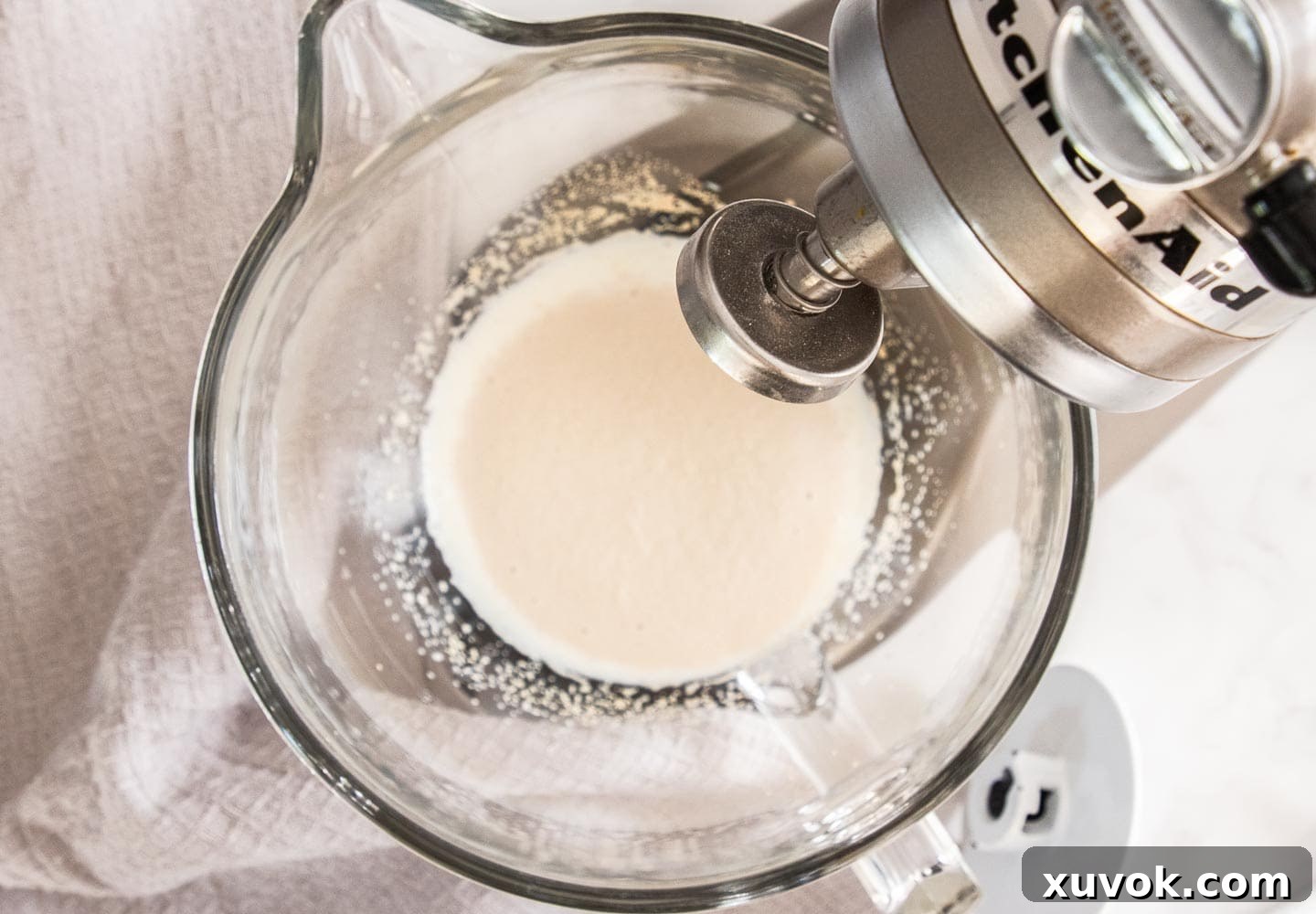
To activate, simply combine your yeast with warm milk (not hot, as excessive heat can kill the yeast) and a small amount of the measured sugar in a bowl. Give it a gentle stir, then let it rest at room temperature for 5-10 minutes. You should observe a noticeable puffiness or a frothy layer forming on the surface, indicating the yeast is alive and well. If no activity occurs, your yeast is likely expired or inactive, and you’ll need to replace it before proceeding with the recipe.
2. Make the Dough
Once your yeast is bubbling with life, it’s time to bring the dough together. Add the remaining dry and wet ingredients for the dough into the bowl with the activated yeast mixture. Begin by mixing everything roughly by hand using a wooden spoon, or, if using a stand mixer, attach the dough hook. Initial mixing will combine the ingredients into a shaggy mass.
Next, the kneading process begins. This step is vital for developing the gluten in the bread flour, which contributes to the buns’ signature chewiness and soft texture. You’re aiming for a dough that is mostly smooth, elastic, and no longer sticky to the touch. With a stand mixer, knead on a low setting (typically the first or second speed) for 10-12 minutes. The dough should gather around the hook, clinging to the bottom of the bowl while leaving the sides relatively clean. If kneading by hand, prepare for a more vigorous workout, needing 15-18 minutes. Resist the urge to continuously add flour if the dough feels sticky; continued kneading will gradually make it smoother and less tacky. A well-kneaded dough will spring back slowly when gently poked with a fingertip.
- Mixer Kneading: Use a stand mixer on a low setting for 10-12 minutes until the dough is smooth and elastic.
- Hand Kneading: Knead continuously for 15-18 minutes. Avoid excessive flour additions; stickiness will reduce with proper kneading.
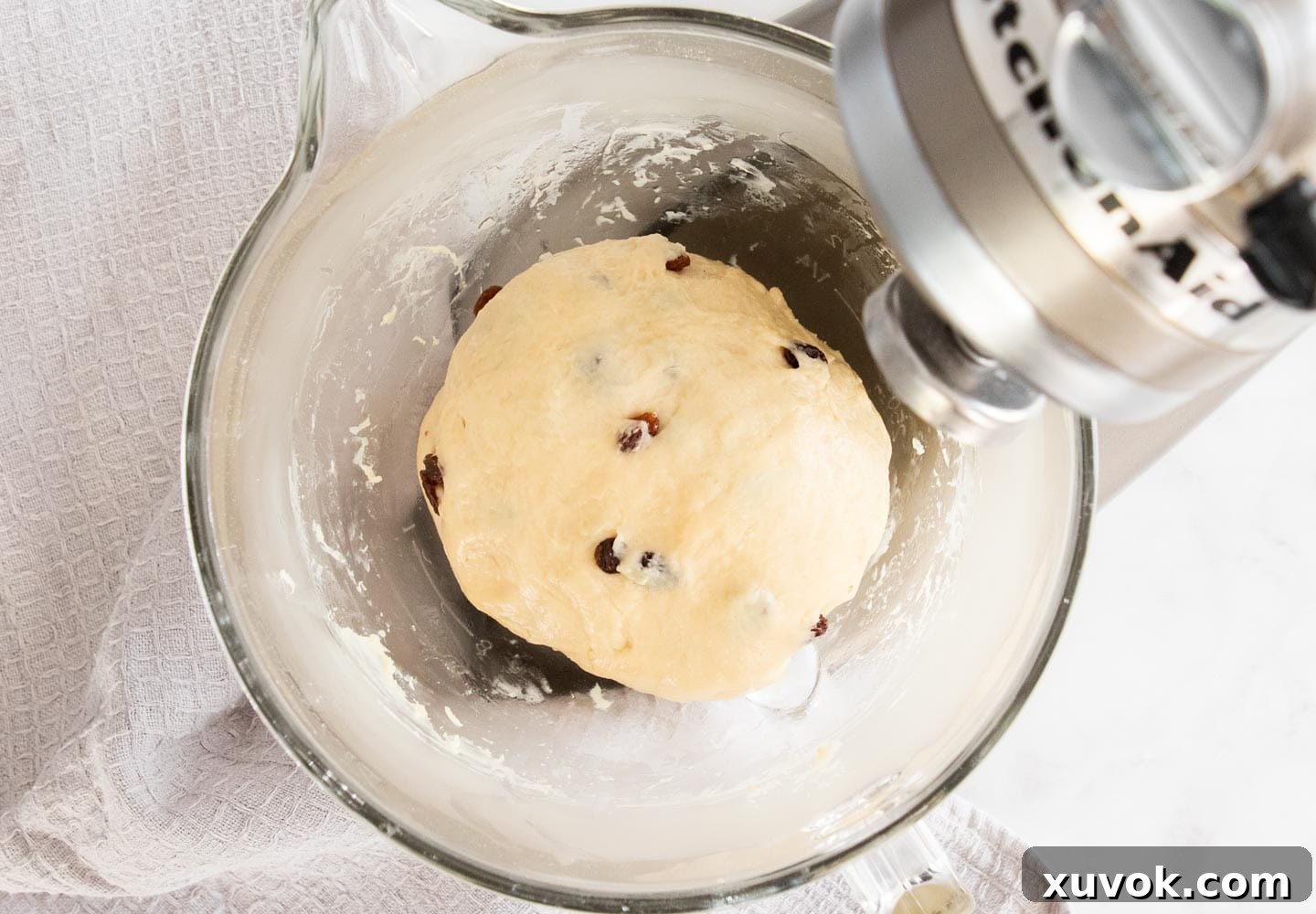
3. The First Prove (Bulk Fermentation)
After kneading, the dough needs time to rise, a process known as proving or bulk fermentation. This step allows the yeast to work its magic, producing carbon dioxide gas that inflates the dough and develops flavour. Carefully remove the kneaded dough from the mixing bowl. Drizzle a small amount of neutral oil (like vegetable or sunflower oil) into the bowl and rub it around to lightly grease the entire surface. Place the dough back into the bowl, then turn it over once to ensure it has a light, even coating of oil, which prevents it from sticking to the bowl and drying out. Cover the bowl tightly with plastic wrap or a damp kitchen towel to create a warm, humid environment.
Now, place the covered bowl in a warm (but not hot!) spot. Ideal temperatures for proving are typically around 25-28°C (77-82°F). Avoid overly hot places, as this can cause the yeast to over-ferment too quickly or even die. The dough should prove until it has visibly doubled in size. This usually takes approximately 45-60 minutes, but proving times can vary depending on the ambient temperature and humidity of your kitchen. Look for the visual cue of doubling in size rather than strictly adhering to a timer; a properly risen dough will be light and airy.
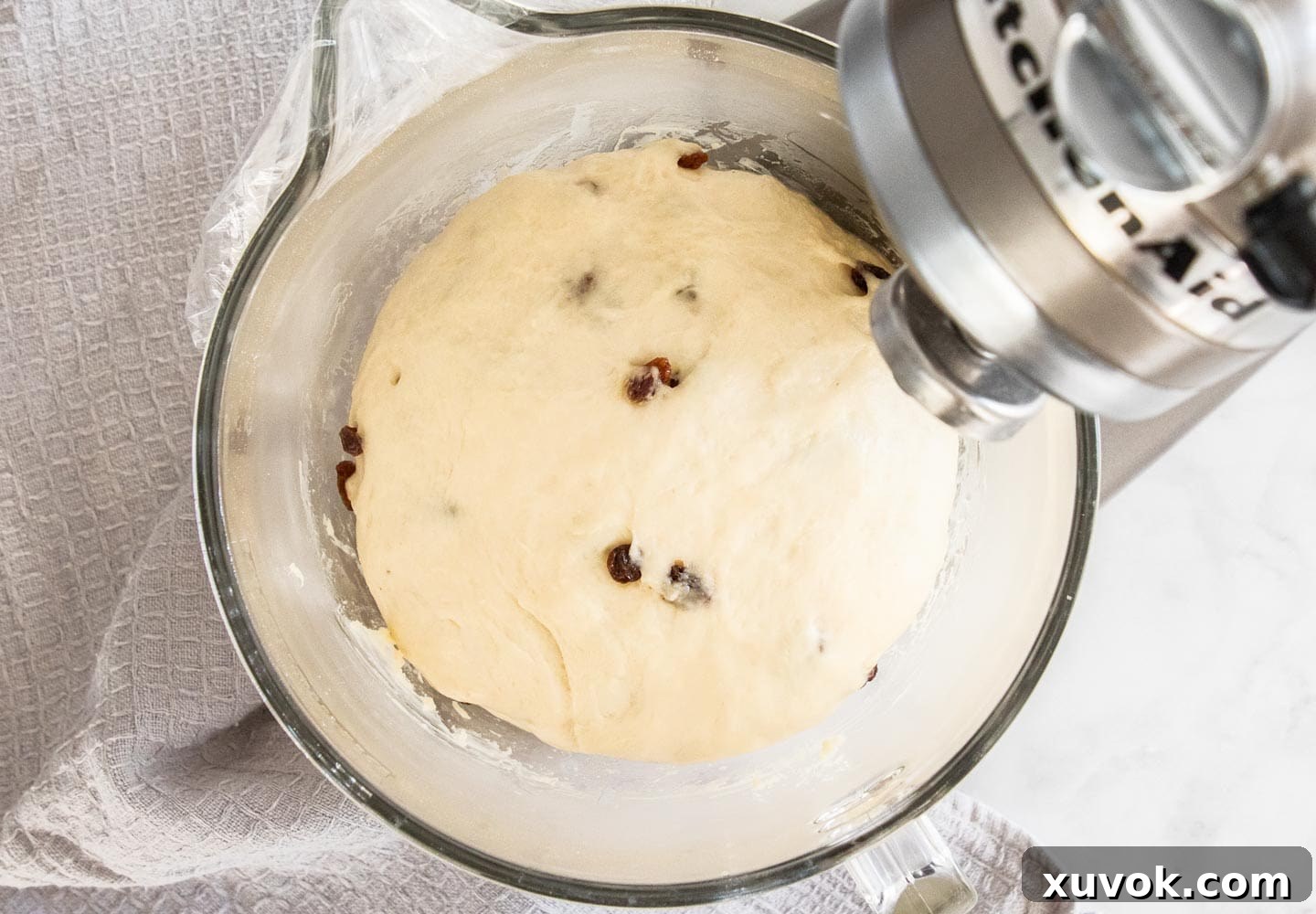
4. Shape and Prove Again
Once your finger bun dough has impressively doubled in size, it’s time to gently “punch it down” to release the accumulated gases and then divide it into individual portions. For uniform results and even baking, it’s best to divide the dough into 12 equal pieces. A precise way to do this is to weigh the entire ball of dough, then divide that total weight by 12. Weigh out each individual piece of dough to match, ensuring every bun is the same size and bakes consistently.
Next, you’ll shape each portion. First, create a smooth ball by cupping the dough between your two little fingers against your clean work surface and dragging it towards you in a circular motion 2-3 times. This technique creates surface tension, resulting in a smooth, taut dough ball. Once you have a smooth ball, gently roll it into the characteristic log shape of a finger bun. Aim for a log approximately 3cm (about 1 ¼ inches) wide and 11cm (about 4 ¼ inches) long. This size is ideal for the classic finger bun.
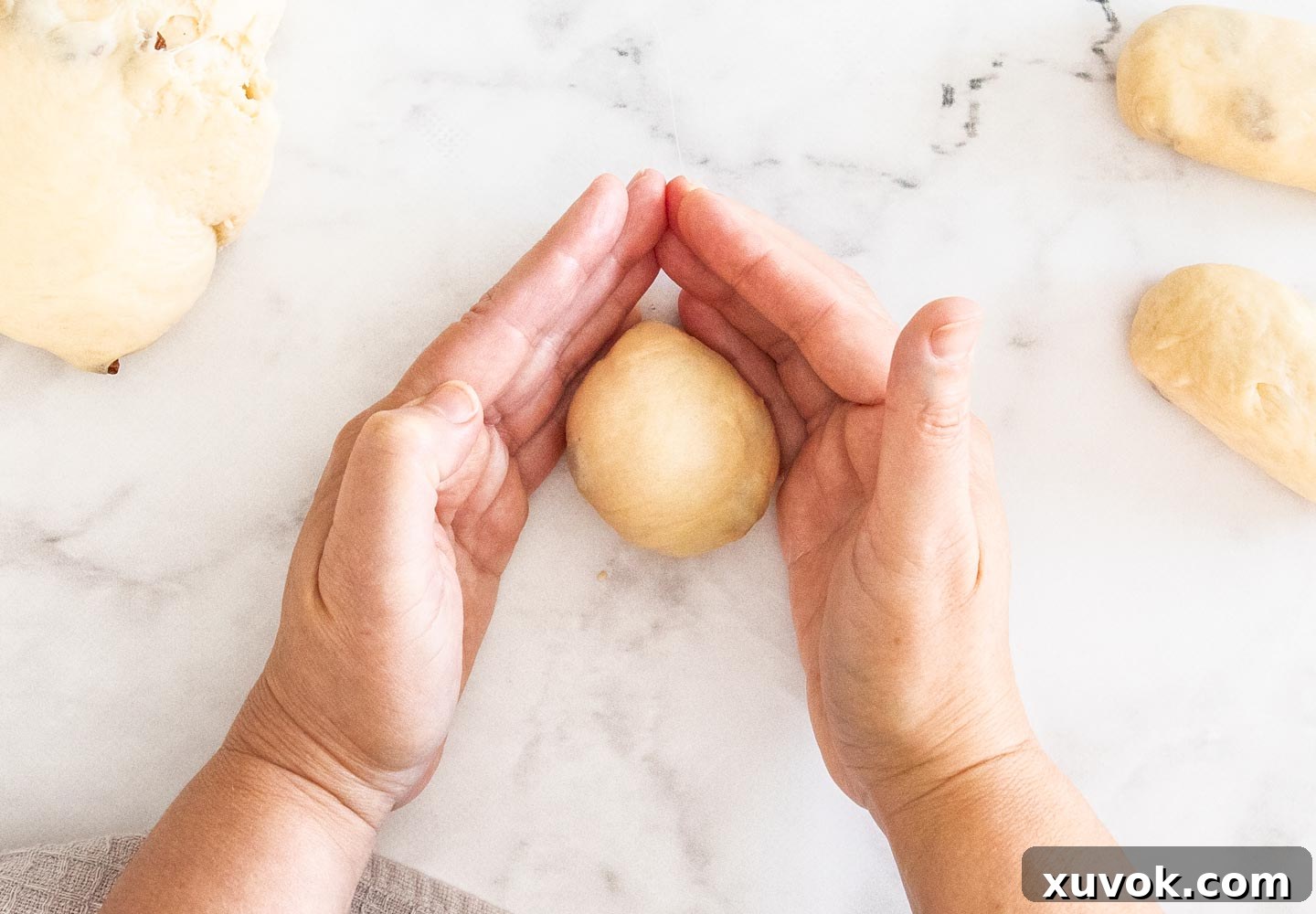
As you shape each piece, arrange them on a baking tray (roughly 26cm x 30cm or 10×12 inches), ensuring they are spaced about 2.5cm (1 inch) apart. This spacing allows them enough room to expand during their second prove and baking without touching too much. Once all the buns are shaped and on the tray, lightly cover them again with plastic wrap or a damp towel. Allow them to rise for another 45-60 minutes, or until they have doubled in size once more and appear visibly puffy and soft. This second prove is crucial for achieving that light, airy texture after baking.
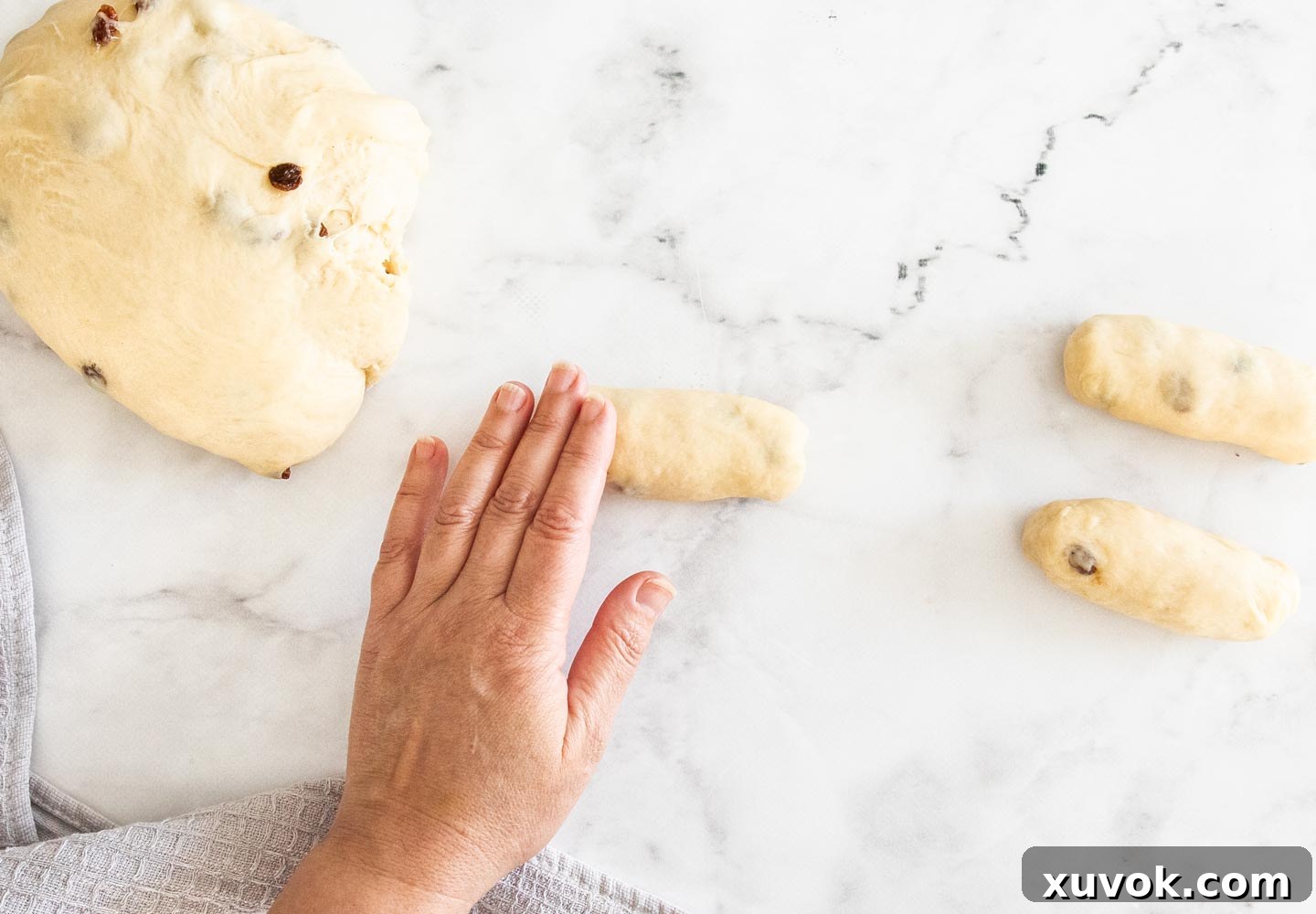
After shaping, arrange your finger bun logs neatly on a baking tray, ensuring there’s about 2.5 cm (1 inch) of space between each one to allow for expansion. This step is crucial for achieving distinct, perfectly formed buns.
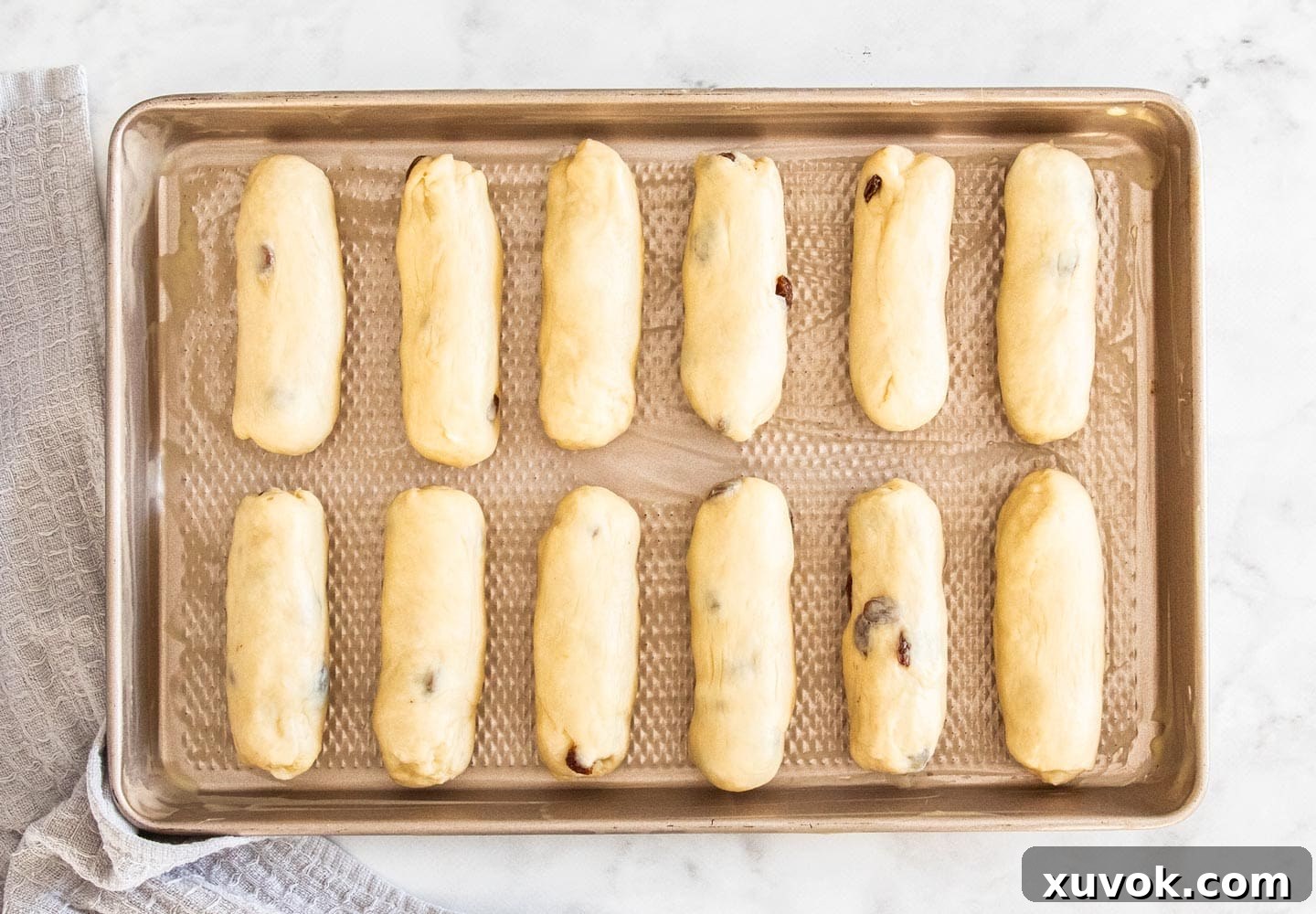
Cover the tray lightly with plastic wrap or a damp cloth and let the buns undergo their second rise for another 45-60 minutes. They should double in size and appear wonderfully puffy and soft. This second prove ensures a light, airy texture in the final baked product.
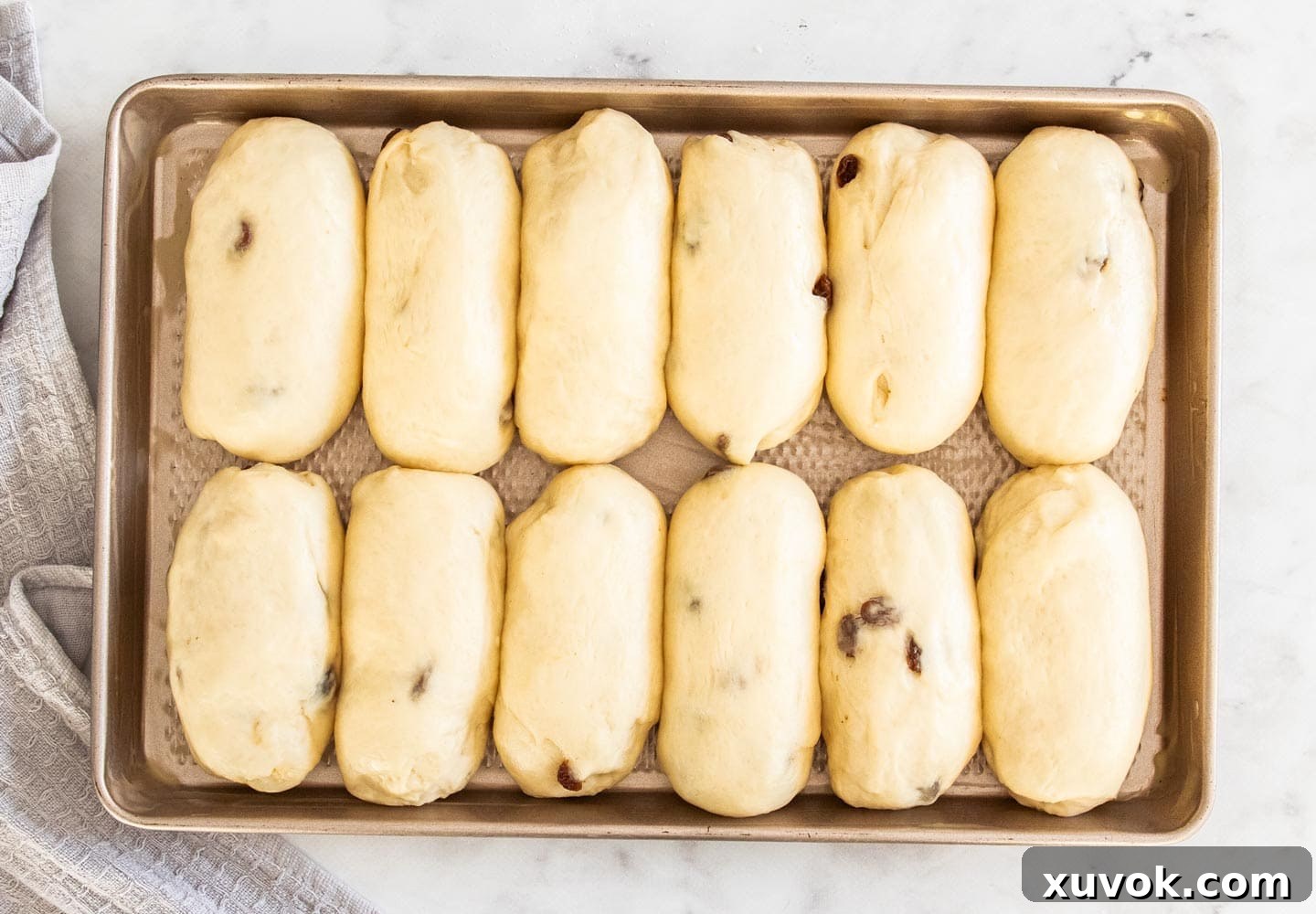
Baking and Icing Your Finger Buns
With your finger buns perfectly proved and puffy, they are now ready for the oven. Preheat your oven to 180°C (160°C fan forced) / 350°F. Baking typically takes around 15-18 minutes. Keep a close eye on them; you’re looking for a beautiful golden-brown color on top. If you have an instant-read thermometer, the internal temperature should register 88°C (190°F) when fully baked. Once baked, transfer the buns to a wire rack to cool completely. This cooling step is critical before icing; applying icing to warm buns will cause it to melt and run off, creating a sticky mess instead of a smooth, even coating.
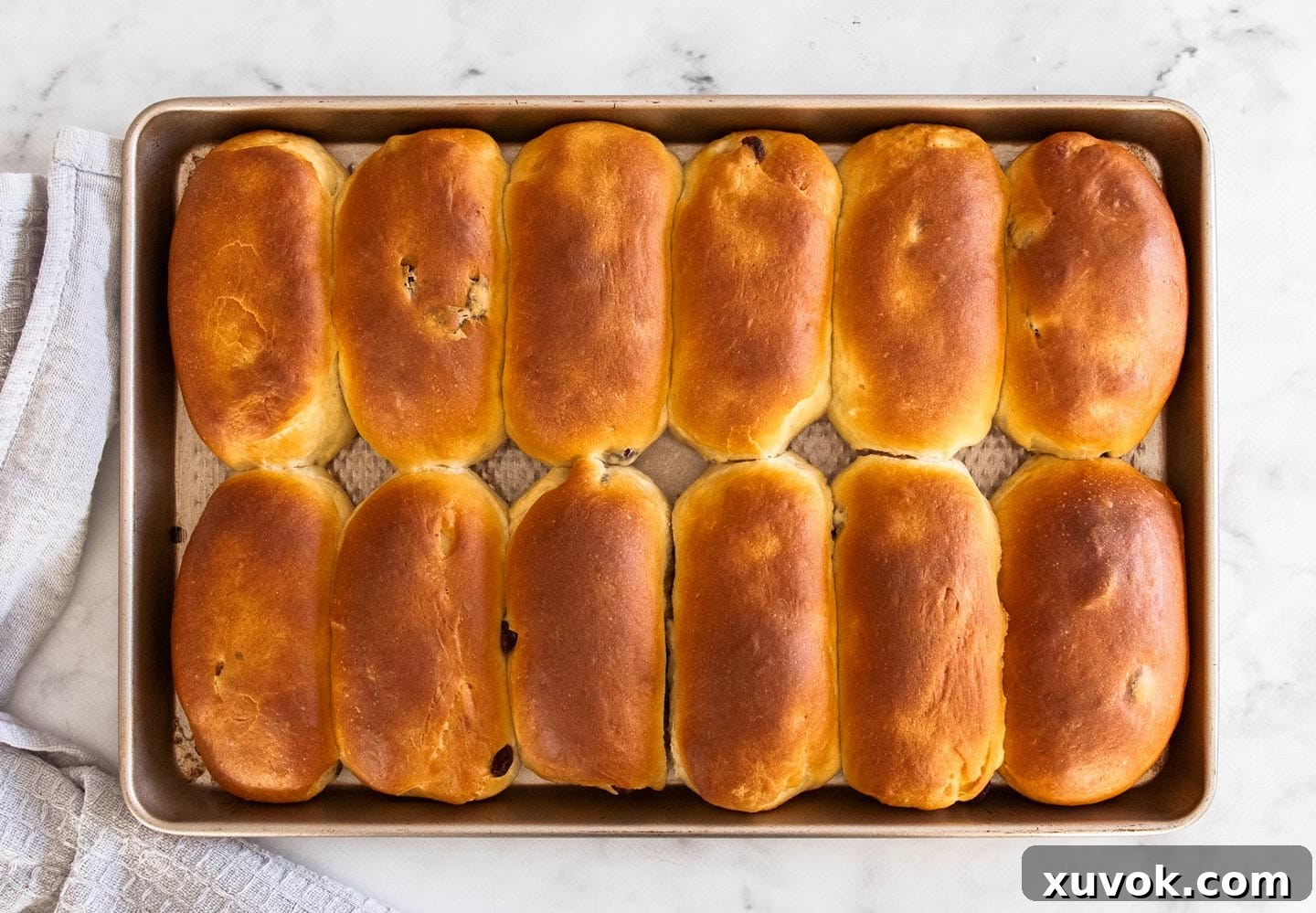
Icing the Finger Buns
Creating the signature pink icing for your finger buns is incredibly simple. In a medium bowl, combine the icing sugar (powdered sugar) with milk, adding it gradually, a tablespoon at a time, until you achieve a thick yet slightly pourable consistency. You want it to be thick enough to cling to the buns but loose enough to spread smoothly. Next, add just a tiny drop of pink food colouring – or red if pink isn’t available – and stir thoroughly until you reach a pleasing pale pink hue. Remember, gel food colourings are potent, so always start with less and add more if needed.
Once the buns have cooled completely to room temperature, generously spread the prepared icing over the top of each finger bun. Don’t be shy; a thick layer is part of their charm! For the final flourish, either sprinkle your chosen toppings (100s and 1000s or desiccated coconut) over the iced buns, or for a more even coating, gently dunk the iced tops directly into a shallow bowl of sprinkles. Allow the iced buns to set for at least 15 minutes. The icing will firm up as it dries, ensuring a clean, less sticky finish. Then, they are ready to serve and enjoy!
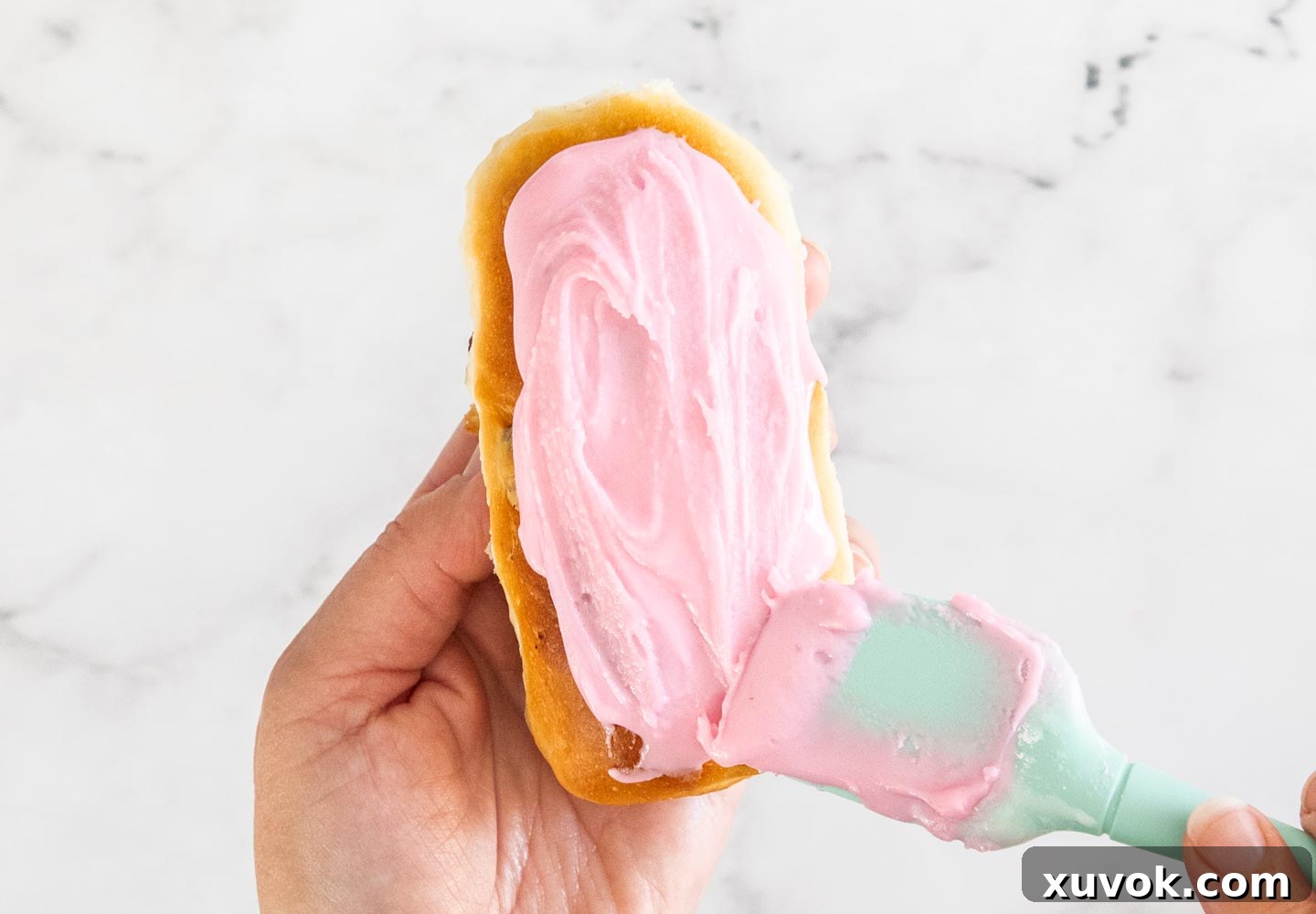
After spreading the icing, it’s time for the signature sprinkles! You can either generously sprinkle “100s and 1000s” or desiccated coconut over the tops of the buns, or for a more uniform coating, gently press the iced surface of each bun into a shallow dish of your chosen topping. This ensures every bite gets a delightful crunch and burst of color.
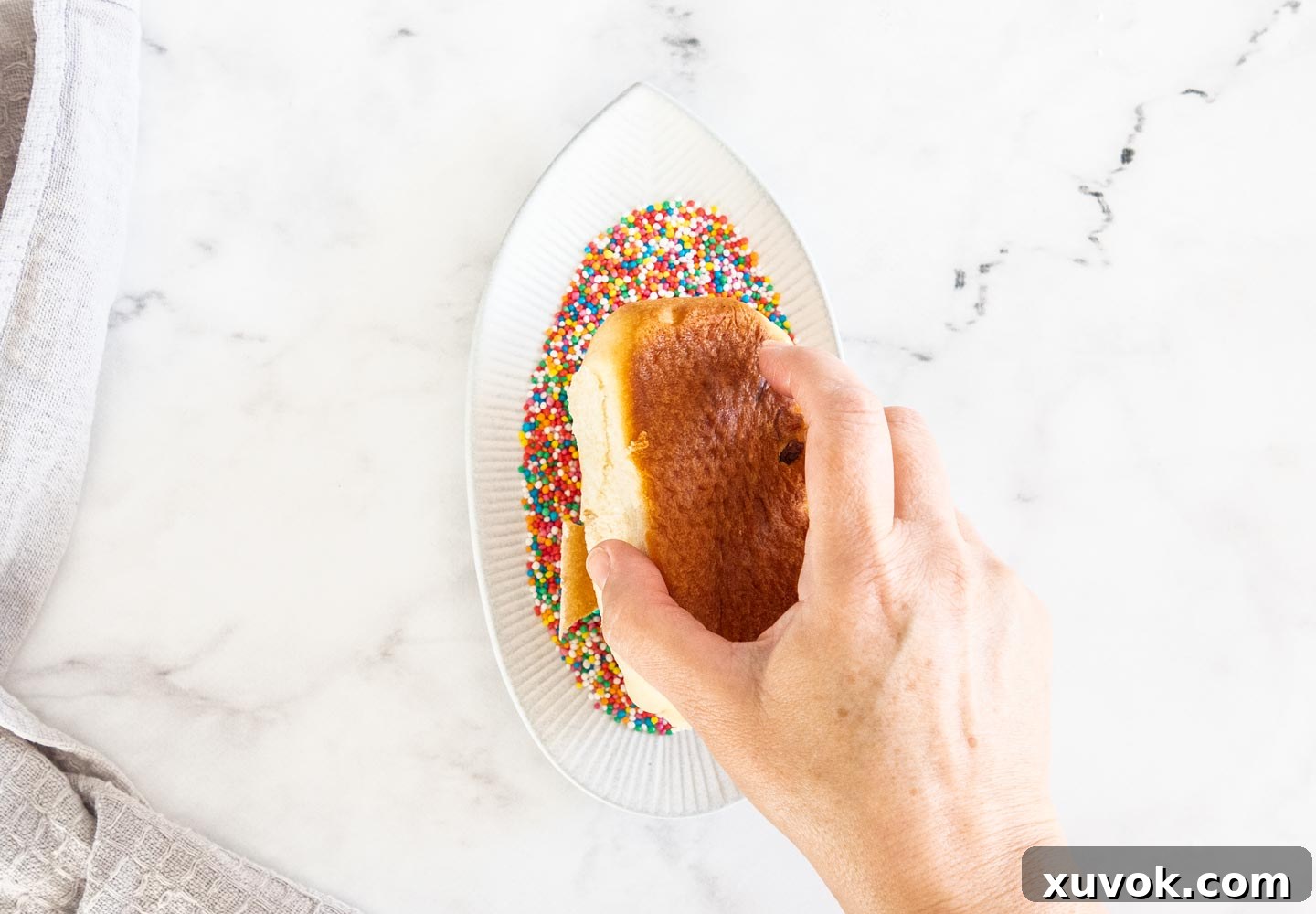
Once topped, allow the buns to sit for at least 15 minutes before serving. This crucial setting time allows the icing to firm up, preventing it from being too sticky and ensuring it adheres beautifully to the bun. As the icing sets, it will create a delightful, slightly crisp shell over the soft, sweet roll, enhancing the overall texture and eating experience of your homemade finger buns.
Essential Tips for Baking Finger Buns
Achieving bakery-perfect finger buns at home is entirely within reach with a few expert tips and tricks:
- Proving Time Will Vary: The most crucial aspect of successful yeast baking is patience, as proving time is highly dependent on environmental factors. In warmer climates or during summer, your dough may double in size much faster, possibly even on the kitchen bench. If you have air conditioning running, or in cooler weather, you might need to find a warmer spot, such as near a sunny window (but out of direct, intense sunlight which can overheat the dough) or in a slightly warmed, turned-off oven (a proofing setting if your oven has one, or simply turning on the oven light can create enough warmth). The key isn’t the clock, but the visual cue: ensure the dough has genuinely doubled in size before moving to the next step.
- Kneading by Hand: While a stand mixer makes kneading effortless, hand-kneading is a perfectly viable (and satisfying) alternative. Expect it to take a little longer – usually 15-18 minutes – and prepare for the dough to be quite sticky at first. The most common mistake is to add too much extra flour. Resist this urge! As you continue to knead, the gluten will develop, and the dough will naturally become less sticky and more elastic. Trust the process; the stickiness is temporary.
- Icing Consistency is Key: The perfect finger bun icing should be thick enough to cling to the buns but still spread smoothly. You can easily adjust the consistency: if it’s too thick, add a tiny bit more milk (half a teaspoon at a time) until it reaches the desired texture. If it’s too runny and threatens to drip straight off the buns, add more icing sugar (a tablespoon at a time) until it thickens. A good test is to drizzle a spoonful of icing back into the bowl; it should settle back into itself after about 10-12 seconds. It should require some spreading with a spatula, rather than simply pouring.
- Make-Ahead Option: For convenience, you can prepare the dough up to the point where it has been shaped into logs and placed on the baking tray. Instead of letting them rise for the second prove, cover the tray tightly with plastic wrap and chill it in the refrigerator overnight. The next morning, remove the buns from the fridge and let them sit at room temperature for about 30-60 minutes (or until visibly puffy and expanded) before baking as usual. This allows you to enjoy fresh-baked finger buns without the early morning start.
Storage and Make-Ahead Options
To preserve the delightful softness and freshness of your homemade finger buns, store them in an airtight container at room temperature for 2-3 days. It’s important to remember that homemade bread, unlike commercially produced versions, does not contain the same stabilizers and preservatives. For this reason, finger buns are always at their absolute best on the day they are baked, when their texture is most tender and their flavour most vibrant.
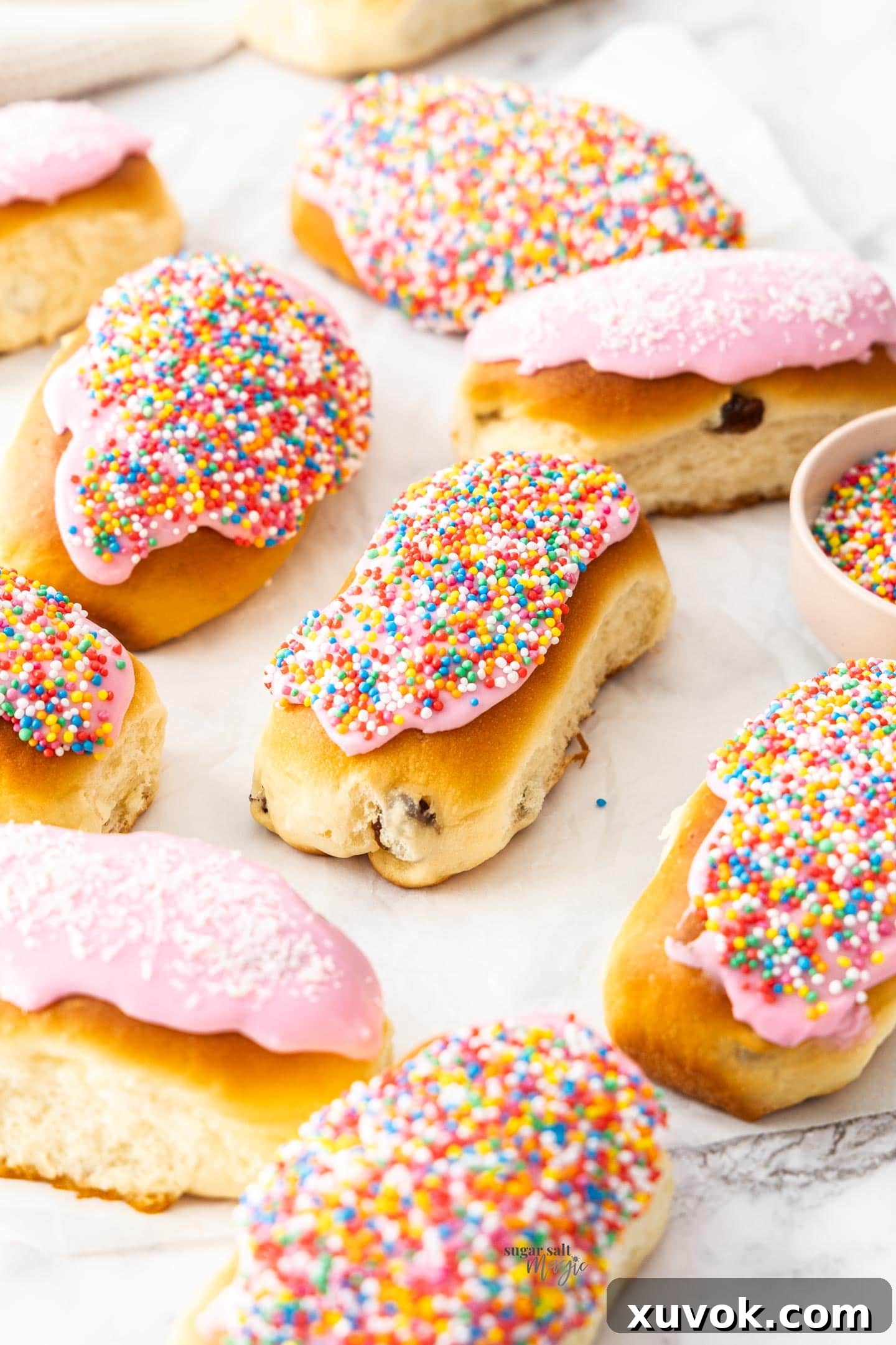
If you plan to bake the rolls a day in advance, a helpful tip is to delay icing them until closer to the time of serving. This is particularly crucial if you are using colourful sprinkles like 100s and 1000s. Overnight, the dyes in these sprinkles tend to “bleed” their colour into the white or pale pink icing, potentially diminishing their fresh appearance. The extent of this bleeding can depend on the brand and type of sprinkles used, but the vibrant multi-coloured 100s and 1000s typically used for these buns (as seen in the accompanying photos) are quite prone to it. For optimal visual appeal, ice and decorate your finger buns just a few hours before they are to be enjoyed.
More Sweet Treats You’ll Love
If you’ve fallen in love with the comforting taste of these classic finger buns, you’re in for a treat! Our collection of sweet baked goods offers a variety of delightful recipes to explore, from spiced bread to creamy buns. Here are some more favourites we think you’ll adore:
- Cinnamon Star Bread: A visually stunning and equally delicious bread, perfect for impressing guests.
- Coconut Iced Buns: The original inspiration for our finger buns, featuring a tropical twist.
- Chocolate Chip Hot Cross Buns: A delightful twist on a classic, perfect for any time of year.
- Small Batch Cinnamon Rolls: For when you crave that warm, sticky sweetness without making a huge batch.
- Maritozzi (Italian Cream Buns): Indulge in these rich, brioche-like buns filled with luscious whipped cream.
⭐⭐⭐⭐⭐
Did you try this finger buns recipe? Show it some love in the comments below! We’d love to hear about your experience.
Hungry for more? Subscribe to our newsletter for free recipes straight to your inbox. Also, follow along on Facebook, Pinterest and Instagram for daily inspiration!

Classic Australian Finger Buns
Rate
Pin
Ingredients
- 455 g strong white bread flour (3 ½ cups / 1lb)
- ⅓ cup white granulated sugar (66g / ~2 ¼oz)
- 2 ¼ teaspoons instant yeast (or active dry yeast) (1 sachet / 7g)
- ¼ teaspoon salt
- 1 large egg room temp
- 1 cup whole milk (250ml)
- ⅓ cup vegetable oil (80ml)
- 2 teaspoons vanilla extract
- ½ cup sultanas or raisins optional (75g/~2 ½)
FOR THE ICING
- 1 ¾ cups icing sugar (powdered sugar) (225g / 8oz)
- 1-2 tablespoons milk
- 1-3 drops pink or red food colouring
- 100’s and 1000’s or desiccated coconut for topping
For the most accurate and consistent results, always weigh ingredients where a weight is provided.
Instructions
-
MAKE THE DOUGH:
To the bowl of a stand mixer fitted with a dough hook attachment (or use a large bowl if kneading by hand, see notes), pour in the warm milk (aim for around 40°C / 105°F, or comfortably warm to the touch, never hot). Add one tablespoon of the granulated sugar and all of the yeast. Whisk these ingredients gently together and let the mixture sit for 5-10 minutes. During this time, the yeast should become visibly puffy and frothy, indicating it’s active.
-
Once the yeast is activated, add the strong white bread flour, the remaining granulated sugar, salt, room temperature egg, vegetable oil, and vanilla extract to the bowl. Use the dough hook (or a wooden spoon for hand mixing) to mix everything together until it forms a rough, shaggy dough.
-
Begin kneading the dough. If using a stand mixer, knead on a low-medium speed for approximately 10-12 minutes. The dough should become smooth, elastic, and pass the “windowpane test” (a small piece can be stretched thin enough to see light through it without tearing). If kneading by hand, this will take longer, around 15-18 minutes. Resist the urge to add excessive flour to combat stickiness; the dough will become less tacky as the gluten develops through persistent kneading.
-
If you are including sultanas or raisins, add them now and knead them into the dough until evenly distributed. This can be done briefly with the stand mixer or by hand.
-
Remove the dough from the bowl. Lightly brush the inside of the bowl with a little extra oil. Place the dough back into the bowl and flip it over to ensure it has a light, even coating of oil. Cover the bowl tightly with plastic wrap or a damp kitchen towel and let it prove in a warm place for 1 to 1 ½ hours, or until the dough has clearly doubled in size.
-
ASSEMBLING THE FINGER BUNS:
Generously grease a 26x30cm (10×12 inch) baking tray with butter or line it with parchment paper.
-
Gently punch down the proved dough to release the air, then transfer it to a lightly floured, clean work surface. Divide the dough into 12 equal pieces. For precise and uniform buns, it’s recommended to weigh the total dough and then divide by 12 to get the target weight for each piece.
-
Take each piece of dough and roll it into a smooth log, approximately 3cm (1 ¼ inches) wide and 11cm (4 ¼ inches) long. Arrange the shaped buns on your prepared baking tray, ensuring there is about 2.5-5cm (1-2 inches) of space between each. Lightly cover the tray again with plastic wrap and let them rest and rise for another 45-60 minutes, or until they have doubled in size and look wonderfully puffy and soft.
-
While the buns are undergoing their second prove, preheat your oven to 180°C (160°C fan-forced) / 350°F.
-
BAKE:
Bake the finger buns for approximately 15-18 minutes, or until they are beautifully golden brown on top. For absolute certainty, the internal temperature of a baked bun should register 88°C (190°F) using an instant-read thermometer.
-
Once baked, transfer the buns to a wire cooling rack. It is crucial to let them cool almost completely to room temperature before attempting to ice them; icing applied to warm buns will simply melt and slide off.
-
ICE:
To prepare the icing, combine the icing sugar (powdered sugar) with milk in a bowl, adding the milk a little at a time. Mix thoroughly until you achieve a thick yet slightly flowing consistency. The ideal consistency allows the icing to level out on itself after about 10-12 seconds when a spoonful is dropped back into the bowl. Add more sugar to thicken, or more milk to thin, as needed.
-
Add just 1-3 drops of pink or red food colouring to the icing. Stir well to incorporate the colour evenly, adding more drops if necessary to achieve your desired pale pink shade. Remember, a little gel food colouring goes a long way!
-
Once the buns are cool, generously spread the prepared icing quite thickly over the top of each. For the classic finish, either dip the iced tops into a bowl of 100’s and 1000’s, or scatter desiccated coconut over them.
-
Allow the icing to set for at least 15 minutes to firm up slightly before serving. These delightful finger buns are particularly lovely when cut in half and spread with a little butter, or even jam and cream for an extra treat.
-
If you enjoyed this recipe, please take a moment to leave a comment & rating below. Your feedback is greatly appreciated and helps us grow!
Notes
- Tablespoon Measurement: Please note that we use a standard Australian 20ml tablespoon in our recipes, which is equivalent to 4 teaspoons. It’s a good idea to check the capacity of your own measuring spoons to ensure accuracy.
- Yeast Activation Reminder: If you are using active dry yeast, it is absolutely essential to activate it first in warm milk as described in Step 1 of the recipe instructions. While instant dry yeast doesn’t strictly require this step, performing it anyway is a great way to verify that your yeast is fresh and active before you proceed with the rest of your ingredients, saving you from potential baking disappointments.
- Nutritional Information: The nutrition details provided below are approximate values and have been derived from an online calculator. Please be aware that the specific brands and types of ingredients you use may cause variations in the final nutritional content.
Calories from Fat 72