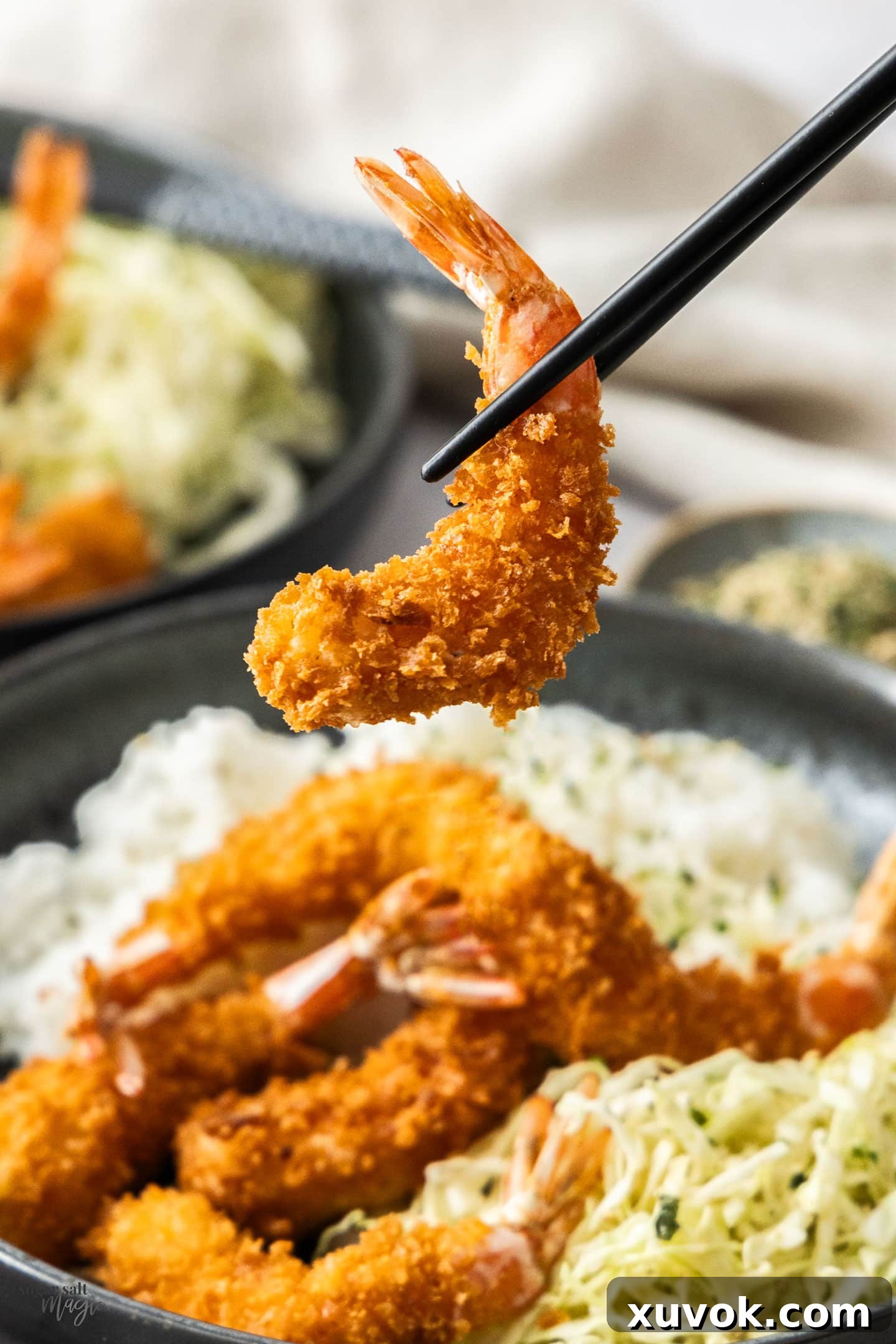
If you’re a devoted fan of succulent prawns or shrimp, prepare to fall in love with this exceptionally crispy Japanese Prawn Katsu recipe, famously known as Ebi Fry. These exquisite Japanese prawns are expertly coated in light, airy panko breadcrumbs and then fried to a perfect deep golden-brown hue. The resulting flavor is simply sensational, delivering an irresistible crunch followed by tender, juicy prawn meat. What’s even better? They are surprisingly straightforward to prepare in your own kitchen, allowing you to enjoy an authentic taste of Japan anytime you desire.
While deep-frying might seem daunting to some, there are certain culinary masterpieces that absolutely warrant the indulgence. This exquisite Japanese Panko Fried Prawns recipe is undeniably one of them, earning its place alongside other beloved crispy delights. If you appreciate the golden perfection of these fried prawns, you’ll also adore my Karaage Chicken (another iconic Japanese fried favorite), crispy Chinese Fried Chicken Wings, and the tantalizing Salt and Pepper Calamari. Each offers a unique fried experience, yet all share that satisfying crunch that makes them utterly addictive.
What is Ebi Fry (Prawn Katsu)?
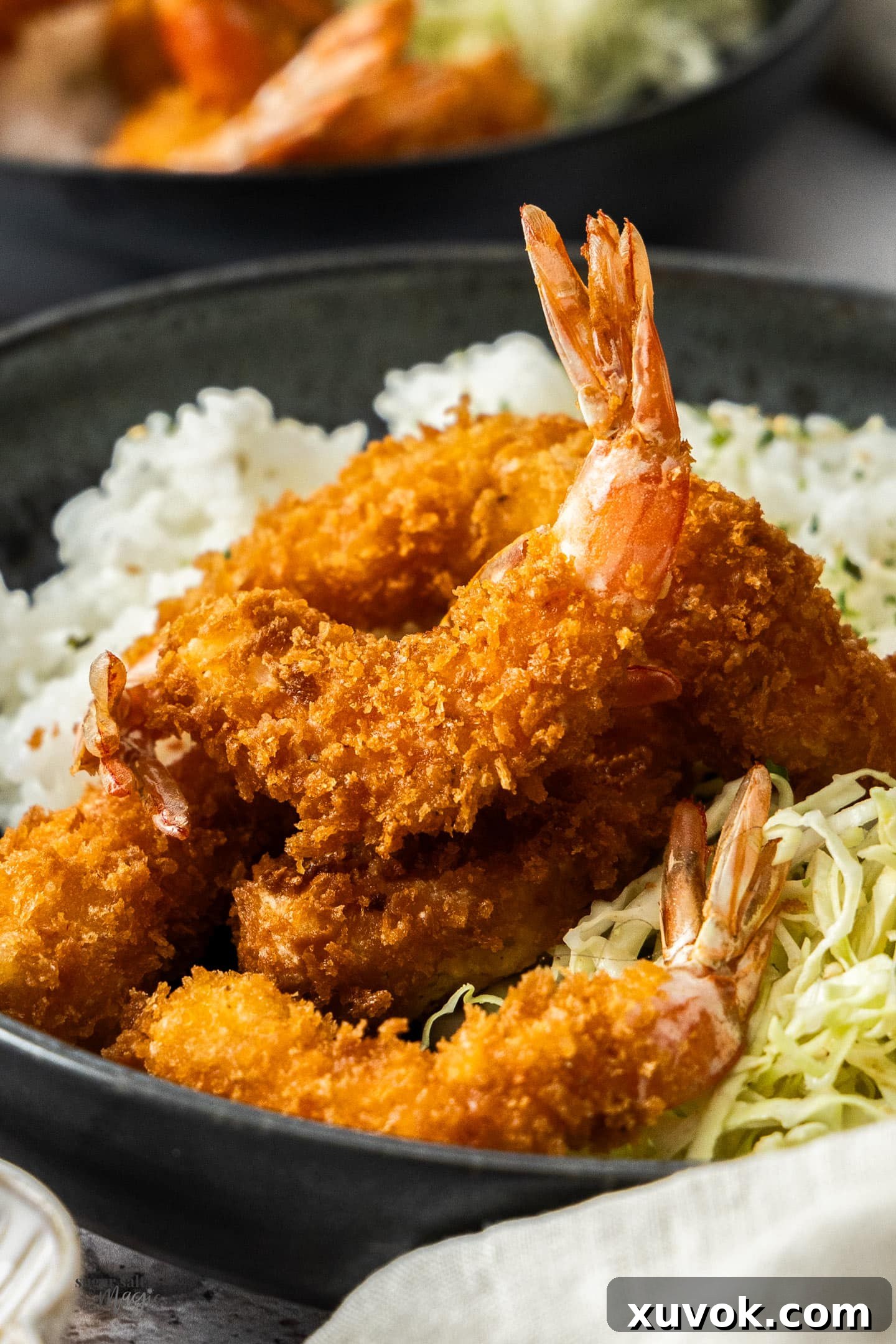
Ebi Fry, often referred to as Prawn Katsu, is a popular Japanese dish featuring deep-fried prawns coated in light, crispy panko breadcrumbs. The term “ebi” (海老) is the Japanese word for shrimp or prawn, while “furai” (フライ) simply means “fry.” Therefore, “Ebi Furai” translates directly to “fried prawns.” The name “Prawn Katsu” draws a clear parallel to other famous Japanese “katsu” dishes, such as Tonkatsu (fried pork cutlet) or Chicken Katsu (fried chicken cutlet), all characterized by their distinctive panko crust.
This culinary technique involves a simple yet effective three-step breading process: dusting the prawns in flour, dipping them in beaten egg, and finally coating them generously with panko breadcrumbs. This meticulous method ensures a perfectly golden and incredibly crunchy exterior that locks in the succulence of the prawn meat within. Ebi Fry is a staple in Japanese cuisine, enjoyed in various settings from home-cooked meals to restaurant menus and bento boxes. If you’re a fan of this delightful prawn katsu, you’ll undoubtedly appreciate the equally delicious Chicken Katsu.
Why Make Prawn Katsu at Home?
Creating Prawn Katsu at home offers a multitude of benefits that elevate your dining experience beyond what store-bought or restaurant versions can often provide. Firstly, you have complete control over the quality and freshness of your ingredients. Sourcing premium, sustainably caught prawns ensures the best flavor and texture. Secondly, the satisfaction of preparing a dish from scratch, especially one as universally loved as Ebi Fry, is immensely rewarding. You can tailor the seasoning to your exact preference and ensure a perfect, even coating of panko every time.
Furthermore, homemade Prawn Katsu often proves more cost-effective than dining out, allowing you to enjoy this Japanese delicacy more frequently. While deep-frying requires some attention, the process itself is quite straightforward, making it an accessible recipe for cooks of all levels. The aroma of freshly fried panko and prawns filling your kitchen is an experience in itself, promising a meal that is not only delicious but also a true labor of love. It’s an opportunity to impress guests, delight your family, or simply treat yourself to a comforting and authentic Japanese favorite.
Table of Contents
- What is Ebi Fry (Prawn Katsu)?
- Why Make Prawn Katsu at Home?
- Ingredients for Perfect Ebi Fry
- How to Master Prawn Katsu
- Expert Tips for Crispy Prawn Katsu
- What to Serve with Ebi Fry?
- Delicious Variations and Serving Ideas
- More Irresistible Recipes You’ll Love
Never Miss a Recipe!
Get the latest delicious recipes straight to your inbox!
Ingredients for Perfect Ebi Fry
Creating these delightful panko-crusted prawns at home is incredibly simple, requiring only common kitchen equipment and a handful of basic ingredients. The beauty of Ebi Fry lies in its simplicity; the delicate flavor of the prawns is allowed to shine through, complemented by a light and perfectly seasoned coating. You’ll primarily need fresh prawns and a few pantry staples to achieve this authentic Japanese taste.
Jump to the full recipe card for precise measurements and detailed instructions.
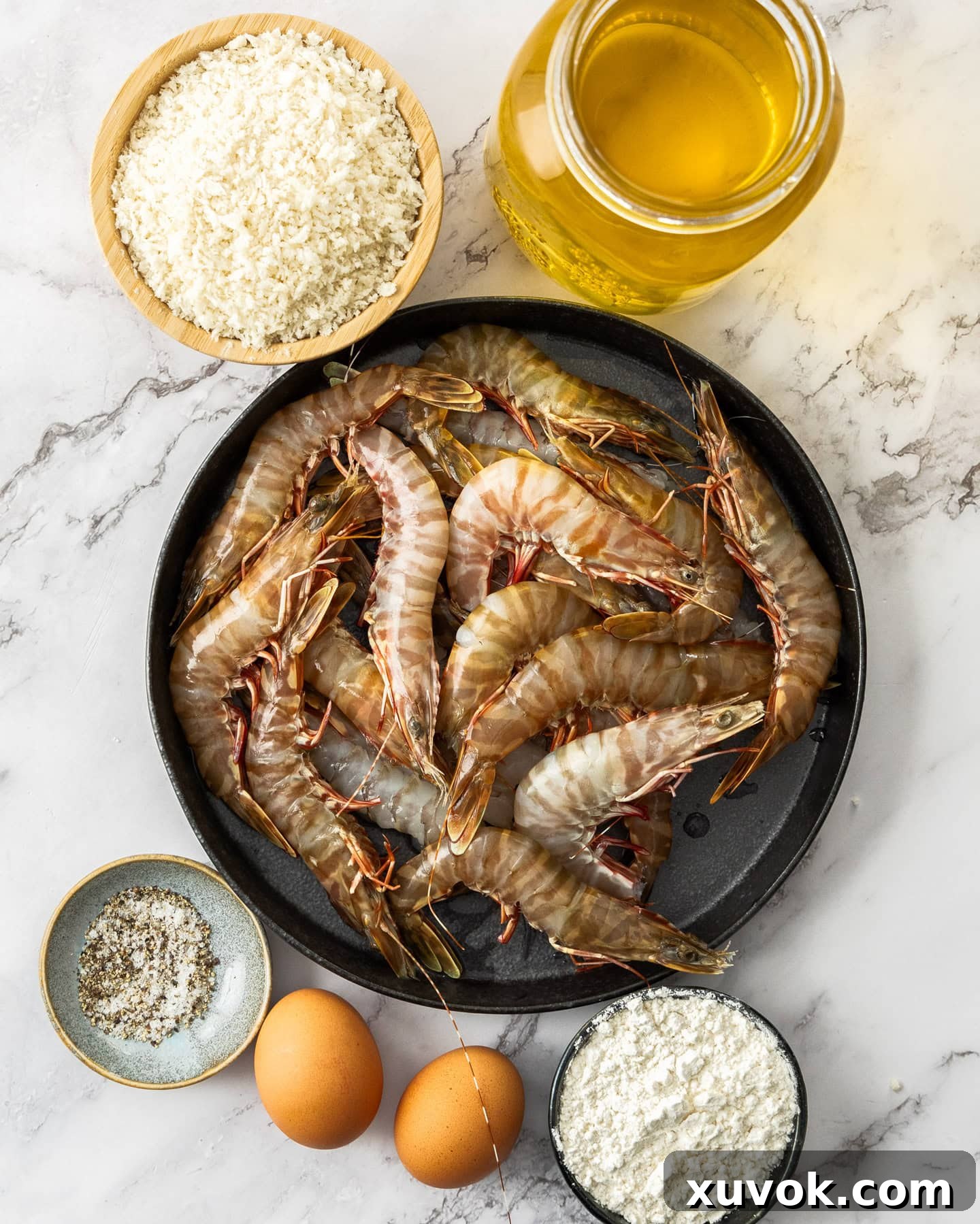
- Prawns / Shrimp: While often used interchangeably, “prawns” and “shrimp” generally refer to similar crustaceans, with regional differences in terminology. For the best results in this recipe, always opt for sustainably caught options.
- Raw is Key: It’s crucial to use raw prawns or shrimp for this katsu recipe. Pre-cooked prawns will become tough and rubbery when fried.
- Type and Species: I typically use large tiger prawns or king prawns for their impressive size and firm texture, which holds up well to frying. However, feel free to use your preferred variety; just ensure they are fresh and of good quality.
- Size Matters: This recipe is designed for large or extra-large prawns. The grading (e.g., 16/20) indicates how many pieces are in a pound (or approximately 500g). A 16/20 count means there are 16 to 20 prawns per pound, offering an ideal balance of crispy katsu coating to succulent prawn meat. Larger grades like 13/15 or even 9/12 will yield an even more impressive Ebi Fry, cooking beautifully with only minor adjustments to frying time.
- Panko Breadcrumbs: These are non-negotiable for authentic Prawn Katsu. Japanese panko breadcrumbs are distinct from regular breadcrumbs; they are coarser, flakier, and made from crustless white bread. This unique texture results in an exceptionally light, airy, and incredibly crispy coating that absorbs less oil, making your Ebi Fry perfectly crunchy without being greasy.
- Flour: Simple plain flour (or all-purpose flour) is used to create the initial dry layer, helping the egg wash adhere effectively to the prawns.
- Eggs: Beaten eggs act as the binding agent, allowing the panko breadcrumbs to stick firmly to the prawns, creating that perfect crispy crust.
- Salt and Pepper: A generous seasoning of fine sea salt and freshly cracked black pepper is essential to enhance the natural sweetness of the prawns, adding depth to the overall flavor profile.
- Oil: For deep-frying, select a neutral-flavored vegetable oil with a high smoke point, such as canola oil, sunflower oil, or peanut oil. The quantity will depend on your saucepan size, but aim for enough oil to submerge the prawns adequately, typically around 2 liters (or quarts) for a standard deep saucepan.
How to Master Prawn Katsu
This Prawn Katsu recipe is not only incredibly easy to follow but also light and delightful enough to become a regular fixture in your meal rotation. The steps are designed to be straightforward, ensuring a perfect crispy texture and tender prawn interior every time. Achieving restaurant-quality Ebi Fry at home is well within your reach!
Jump to the full recipe card for precise measurements and detailed instructions.
1. Prepare the Prawns with Precision
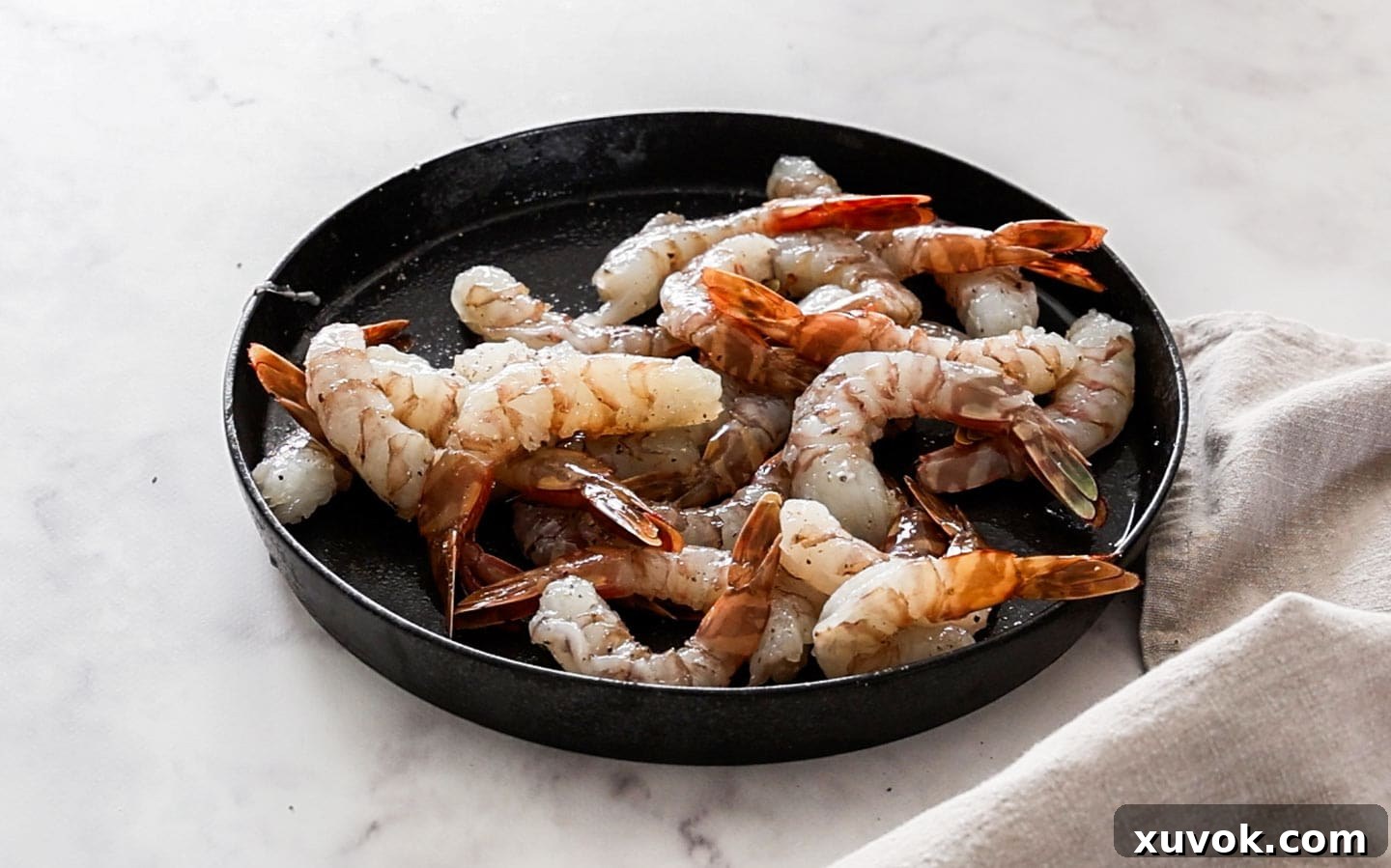
Proper prawn preparation is key to the success of your Ebi Fry. Begin by peeling off the head and all body shells, but leave the tail segment completely intact. This tail serves a dual purpose: it acts as a convenient handle for both handling the prawns during the breading and frying process, and for eating them later! Next, carefully make a shallow cut along the back of each prawn, just deep enough to expose and scrape out the dark digestive tract (the “vein”). You might find that with a bit of practice, you can often remove this vein simultaneously when detaching the head.
Once deveined, flip each prawn onto its belly. To prevent the prawns from curling excessively during frying, make several small, shallow scores (2-3 cuts) across the underside of the belly. These scores help to gently straighten the prawn, ensuring a more elegant presentation and even cooking. After scoring, gently press each prawn flat to further enhance its elongated shape. This small but important step makes a significant difference in the final appearance and texture of your Ebi Fry.
*TIP: For an extra-clean finish, after scoring, gently press on the back of the prawn with your thumb to hear a slight ‘pop’. This further straightens the prawn and ensures it stays flat during frying.
2. Season and Dry the Prawns
Before applying the coating, it’s crucial to dry the prepared prawns thoroughly. Pat them very well with paper towels to remove any excess moisture. This step is vital because moisture can prevent the flour and egg from adhering properly, leading to a less crispy crust. Once dry, place the prawns in a bowl and toss them with a generous amount of salt and freshly cracked black pepper. Seasoning the prawns directly ensures that every bite is flavorful, not just the outer coating. Allow them to sit for a few minutes while you set up your breading station.
3. Create the Crispy Coating (Breading Station)
While you set up your breading station, start heating your oil so it’s ready when your first batch of prawns is perfectly coated. Arrange three shallow bowls or dishes in a production line: one for the all-purpose flour, one for the lightly beaten eggs, and one for the panko breadcrumbs. This organized setup is often referred to as a “breading station” and makes the process much more efficient and less messy.
Working one prawn at a time, hold it by the tail and first dredge it completely in the flour, shaking off any excess. Next, dip it into the beaten egg, ensuring the entire surface (excluding the tail) is covered. Finally, transfer the prawn to the panko breadcrumbs, pressing gently to make sure the crumbs adhere well and form an even, thick coating. Lay the coated prawns on a clean plate or baking sheet as you go, ready for frying. Don’t let them sit for too long before frying to maintain the panko’s crispness.
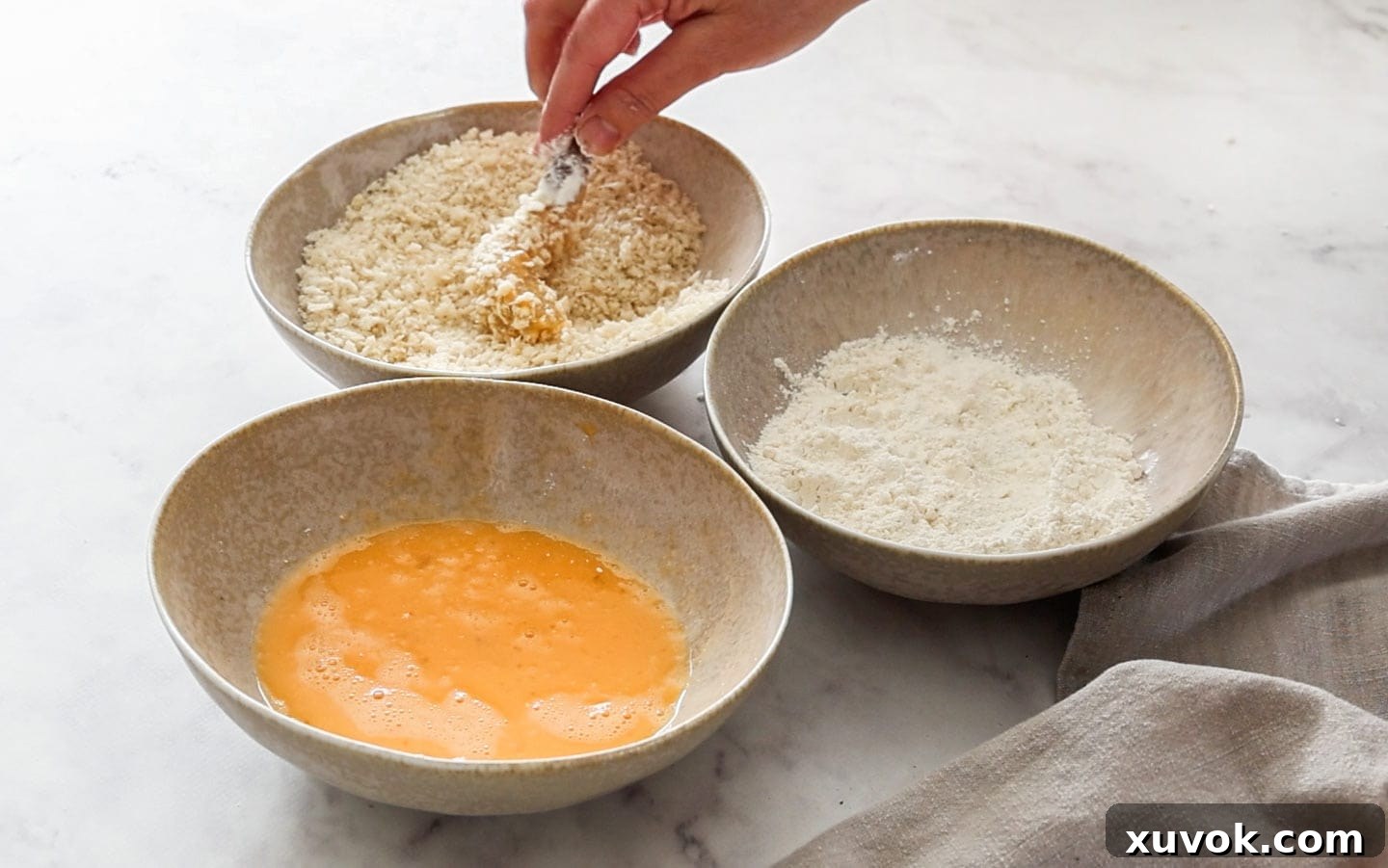
4. Deep-Fry to Golden Perfection
Once your oil reaches the ideal temperature of 180ºC (350ºF), you can begin frying your prawns. I cannot emphasize enough the importance of using a deep-fry thermometer. This essential tool allows you to accurately monitor and maintain the oil’s temperature, which is critical for evenly cooked, crispy results. Oil temperature naturally fluctuates as you add ingredients, so having a thermometer helps you adjust the heat quickly.
Carefully lower the breaded prawns into the hot oil, holding them by the tail and gently releasing them away from you. Fry the prawns in small batches to avoid overcrowding the pan, which would drastically lower the oil temperature and lead to soggy, greasy results. For large (16/20 count) prawns, cook for approximately 2 minutes until they achieve a beautiful deep golden-brown color and are visibly crunchy. Larger prawns (e.g., 9/12 count) might require an extra 30 seconds to 1 minute, but be careful not to overcook, as prawns cook quickly and can become rubbery if left in too long. While one batch is frying, you can continue breading the next to optimize your cooking time.
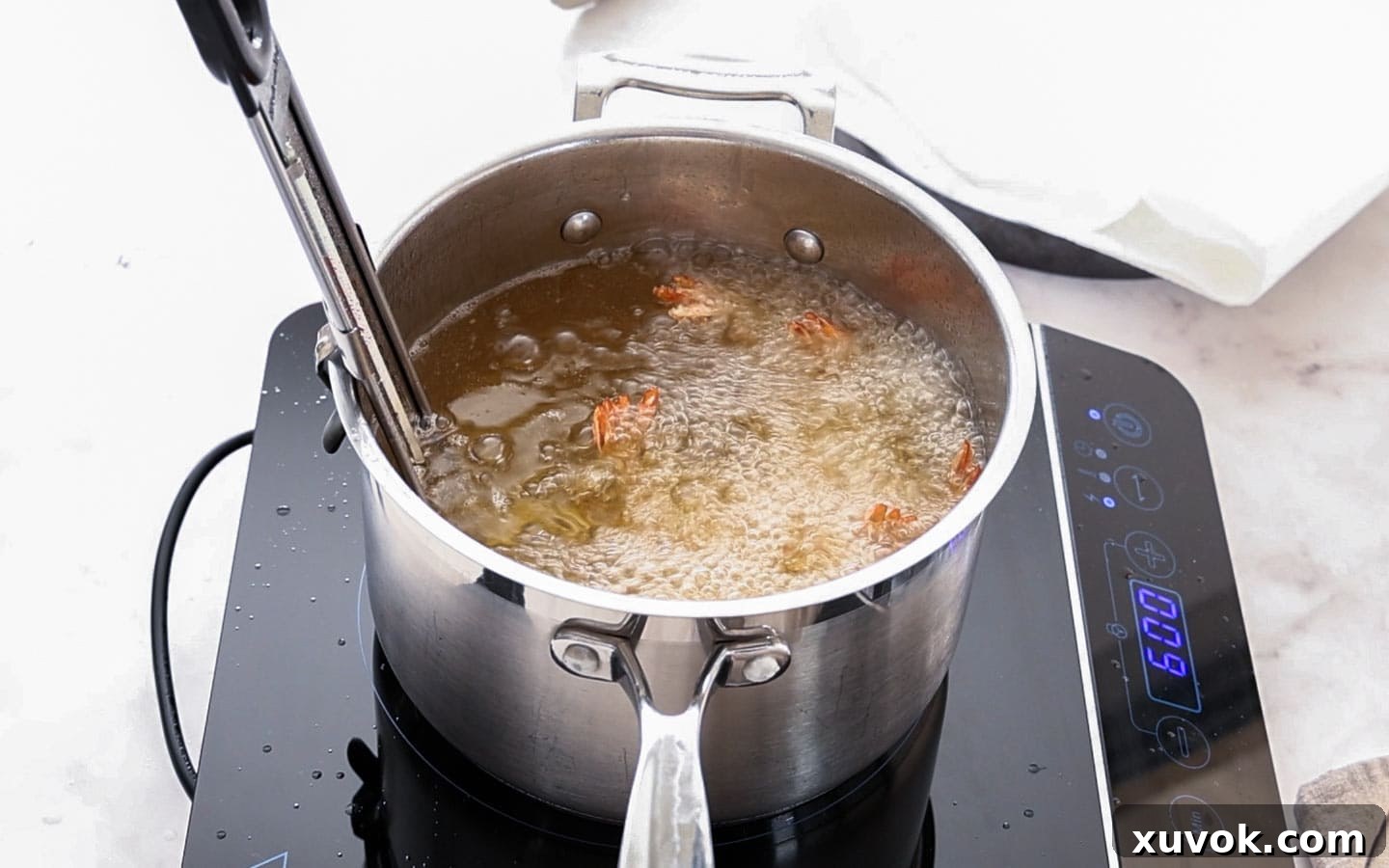
Once cooked, use a wire spider or a slotted spoon to carefully lift the prawns from the hot oil. Allow any excess oil to drain back into the pan for a few seconds before transferring them to a plate lined with paper towels. The paper towels will absorb any remaining surface oil, ensuring your Ebi Fry stays wonderfully crisp. Serve immediately for the best flavor and texture.
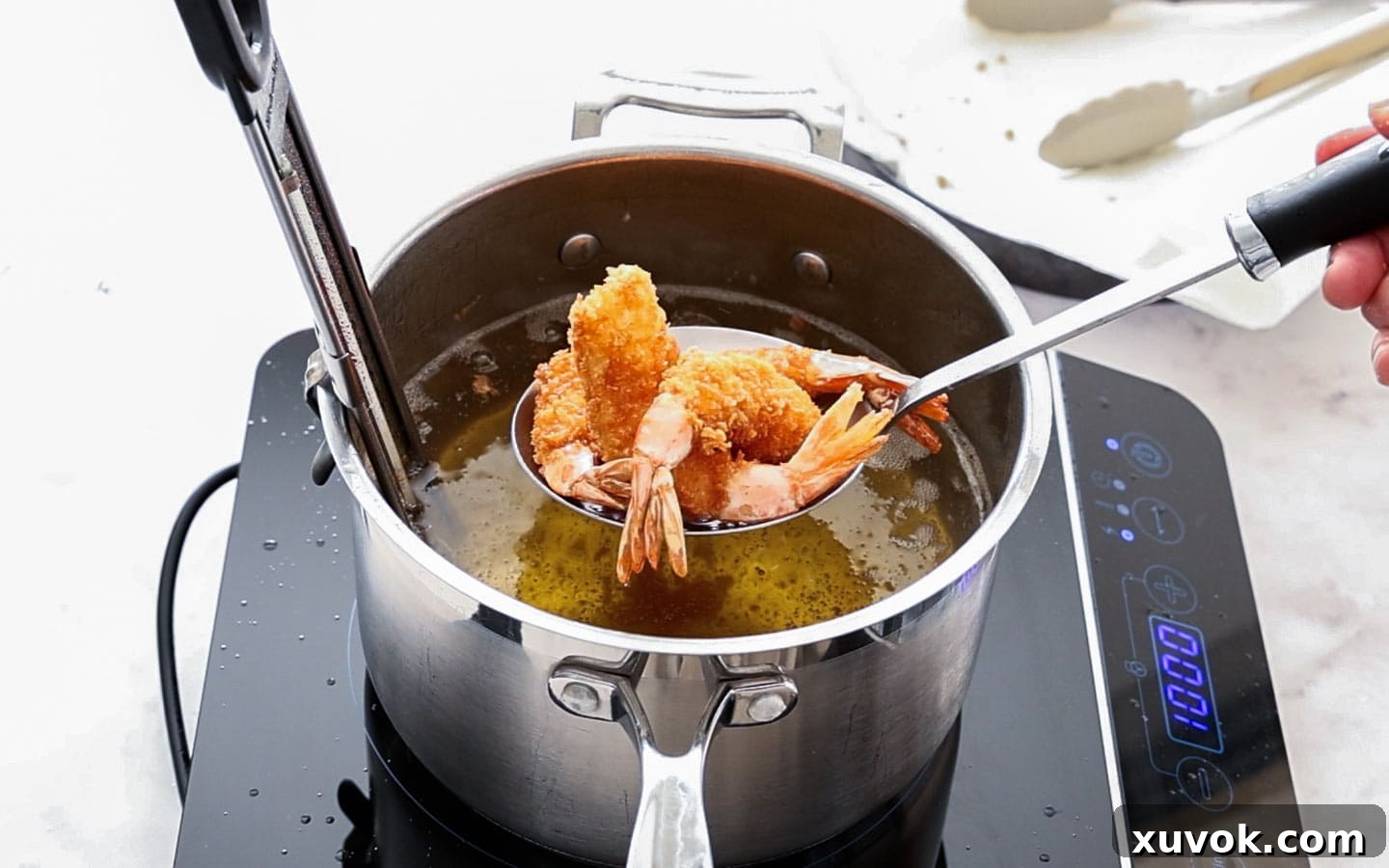
Expert Tips for Crispy Prawn Katsu
- Master Oil Temperature with a Thermometer: This is arguably the most crucial tip for perfect deep-frying. Consistently monitoring your oil temperature with a deep-fry thermometer prevents a multitude of issues. If the oil is too hot, the exterior will burn before the prawn cooks through. If it’s too cool, the prawns will absorb too much oil and become greasy and soggy. The ideal temperature range is 175ºC-185ºC (350ºF-365ºF). Remember, the temperature will drop when food is added, so be ready to adjust the heat to bring it back up quickly.
- Embrace Batch Frying: Never overcrowd your pan. Frying in small batches (typically 6-8 prawns at a time, depending on your pan size) is essential. Overcrowding significantly lowers the oil temperature, leading to less crispy results and uneven cooking. It also allows each prawn to have ample space to cook evenly and achieve that desired golden-brown crust.
- Keep Prawns Dry: Before breading, pat your prawns thoroughly dry with paper towels. Any excess moisture will prevent the flour and egg from adhering properly, compromising the crispness of the panko coating.
- Straighten Your Prawns: Don’t skip the step of scoring the belly and pressing the prawns flat. This prevents them from curling up into a tight ball when fried, ensuring a better presentation and more even cooking.
- The Right Pan and Oil Level: Use a deep, heavy-bottomed saucepan or Dutch oven for frying. Fill it with enough oil to submerge the prawns, but never more than two-thirds full to prevent boil-overs.
- Regulating Oil Temperature: If your oil gets too hot, carefully remove the pan from the heat for a moment, or add a small amount of fresh, cool oil (be very cautious not to add too much at once). If it’s too cool, increase the heat gradually.
- Drain Properly: After frying, transfer the prawns to a wire rack set over a baking sheet lined with paper towels. This allows air to circulate around them, preventing the bottoms from becoming soggy while absorbing any excess oil. Avoid stacking them directly on paper towels.
- Serve Immediately: Ebi Fry is best enjoyed fresh out of the fryer when it’s at its crispiest. While they can be reheated, the texture will never be quite the same as when freshly made.
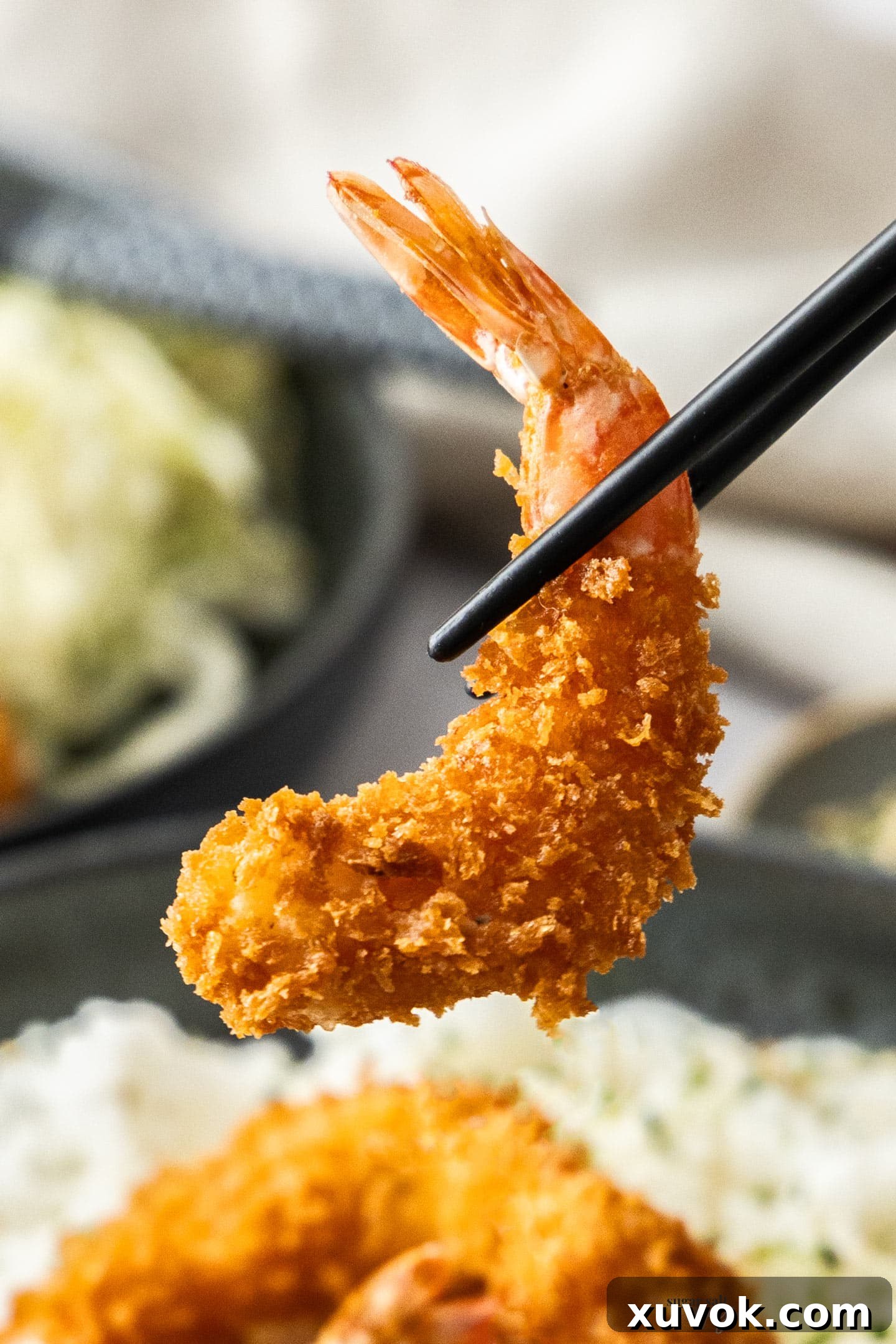
What to Serve with Ebi Fry?
Ebi Fry is incredibly versatile and pairs wonderfully with a variety of accompaniments, whether you’re serving it as a delightful appetizer or transforming it into a complete, satisfying meal. Traditionally, it’s often served with a choice of classic Japanese sauces. Popular options include a tangy tartare sauce, a rich and savory katsu sauce (often fruit and vegetable-based with a Worcestershire-like flavor profile), or a comforting Japanese curry sauce. Personally, I find them irresistible with a dollop of creamy Kewpie mayonnaise or a light tempura dipping sauce, sometimes even both!
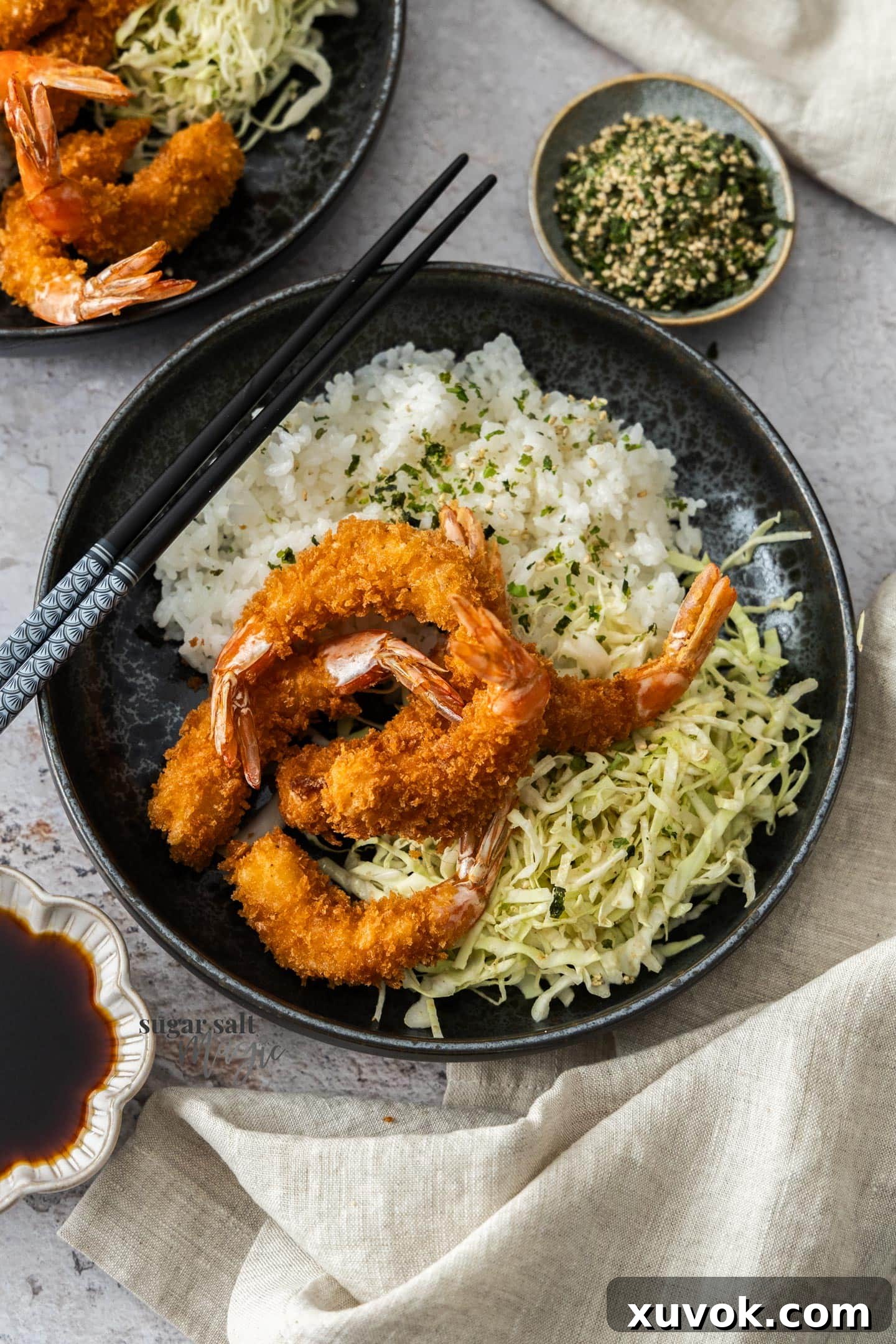
While these crispy katsu prawns shine on their own with just a dipping sauce, they are effortlessly elevated into a full and balanced meal. A traditional Japanese meal often features katsu served alongside fluffy plain rice and a generous mound of finely shredded cabbage. To enhance this, I often dress the cabbage with a very light sesame dressing, adding a touch of nutty flavor and freshness. A sprinkle of furikake, a dry Japanese seasoning, also adds an extra layer of umami and texture. For a refreshing counterpoint to the rich fried prawns, I love to include thinly sliced cucumber, providing a cool and crisp element that cleanses the palate.
For those who enjoy a heartier dish, transforming Ebi Fry into a Prawn Katsu Curry is a fantastic option. Simply prepare your favorite Japanese curry sauce – readily available in convenient curry block form in the Asian aisle of most grocery stores – and serve it generously over the crispy prawns and rice. This creates a deeply flavorful and satisfying dish that’s a true comfort food experience.
Delicious Variations and Serving Ideas
Beyond traditional plating, Ebi Katsu (Prawn Katsu) offers exciting variations that cater to different tastes and meal occasions. One incredibly popular and delicious twist is to transform them into a Prawn Katsu Burger. To achieve this, finely blitz raw prawns in a food processor with some chopped spring onions, a spoonful of Kewpie mayonnaise, and a generous pinch of salt and pepper. For an extra layer of Japanese flavor, consider adding a dash of soy sauce and a few drops of sesame oil to the mixture. Form the mixture into patties, coat them in panko breadcrumbs, and shallow fry until golden all over and cooked through.
These crispy panko-crusted prawn patties make phenomenal burgers. Serve them in soft brioche buns, slathered with more Kewpie mayonnaise, and topped with crisp shredded cabbage and carrots for a delightful textural contrast. You can also incorporate Ebi Fry into a Japanese bento box for a delicious packed lunch, serve them atop a fresh green salad for a lighter meal, or even slice them into rounds for unique sushi rolls. The possibilities are truly endless once you master this versatile Japanese delicacy!
More Irresistible Recipes You’ll Love
- Crispy Prawns (Crispy Shrimp)
- Sizzling Garlic Prawns
- Butterflied Prawns (with Nam Jim Dressing)
- Salt and Pepper Prawns
- Prawn Spring Rolls
- Crumbed Lamb Cutlets
⭐⭐⭐⭐⭐
Did you try this Japanese prawns recipe? Show it some love in the comments below.
Hungry for more? Subscribe to the newsletter for free recipes straight to your inbox. Also, follow along on Facebook, Pinterest and Instagram.
Prawn Katsu (Ebi Fry)
4
serves
10 minutes
8 minutes
20 minutes
Rate
Pin
Ingredients
-
24
large
tiger prawns
or extra large, see notes -
2
large
eggs
beaten -
1 ½
cups
panko breadcrumbs -
½
cup
plain flour (all-purpose flour) -
½
teaspoon
salt -
¼
teaspoon
finely cracked black pepper -
~2
litres/quarts
vegetable oil like canola oil or sunflower oil
For best results, always weigh ingredients where a weight is provided
Equipment
-
Bowls for breading -
Deep large saucepan -
Deep frying thermometer -
Spider or slotted spoon
Instructions
-
PREPARE THE PRAWNS:
Peel the prawns by removing the head and body shells, ensuring the tail remains intact. Lay each prawn on its belly and make a thin slice down the back to carefully scrape out the digestive tract. With practice, you might be able to pull this out when removing the head. Next, flip each prawn onto its back and make 4-5 shallow slits across the belly. This technique helps prevent the prawns from curling excessively when fried.
-
Thoroughly dry the prepared prawns with paper towels, then season them evenly with salt and pepper by tossing them in a bowl. Set the seasoned prawns aside in the fridge while you prepare your frying oil and breading station.
-
PREPARING TO FRY:
In a large, deep saucepan, pour enough vegetable oil to reach about 2 inches up the sides, but never more than two-thirds full. Attach a deep-fry thermometer to the side of the pan and heat the oil over high heat until it reaches 180ºC (350ºF).
-
Set up your breading station: place the panko breadcrumbs into one high-sided bowl, the plain flour into a second bowl, and beat the eggs in a third bowl. Lay a few sheets of paper towel onto a plate nearby to drain the fried prawns.
-
BREADING:
Once the oil is nearing temperature, begin breading your prawns. Work in batches of 6-8 prawns at a time to avoid overcrowding the oil, which can cause the temperature to drop too much. Hold each prawn by the tail, first dip it into the flour, shaking off excess. Next, immerse it in the beaten egg, ensuring full coverage. Finally, coat it thoroughly in the panko breadcrumbs, pressing gently for even adhesion.
-
DEEP FRYING:
Gently lower the breaded prawns into the hot oil, letting the tail fall away from you. Fry for approximately 2 minutes, or until they turn a crispy, golden brown.
-
Remove the fried prawns from the oil using a wire spider or slotted spoon, allowing excess oil to drip off before placing them on the paper towel-lined plate to drain.
-
Repeat the frying process with the remaining prawns, working in batches. Serve immediately with your preferred dipping sauces and side dishes. See the main article for serving ideas.
-
Please take a moment to leave a comment & rating. It’s appreciated and so helpful.
Notes
- Prawns/Shrimp: This recipe uses large tiger prawns, but extra-large prawns also work beautifully with no other changes. King prawns or other large varieties are also suitable; the larger the prawn, the more visually impressive the dish. If using jumbo prawns/shrimp, you might reduce the quantity slightly (e.g., to 20 prawns) and they may require an additional 30 seconds of cooking time.
- Serving suggestions: In the accompanying photos, the prawns are served with fluffy Japanese rice, finely shredded cabbage, and a sprinkle of furikake. Refer to the blog post above for a wider array of serving suggestions.
- Nutrition details provided are approximate only and derived from an online calculator. The specific brands and types of ingredients you use may cause variations in nutritional content.
DISCOVER MORE ASIAN-INSPIRED RECIPES!
241
kcal
Marie Roffey
Appetizer, Dinner
Japanese
Have you tried this recipe?
Don’t forget to leave a rating and comment below and let me know how it was! I love hearing from you. Nutrition information is approximate and derived from an online calculator. The brands you use may cause variations.
Calories from Fat 72
12%
13%
49%
32%
4%
10%
4%
2%
26%
4%
8%
11%