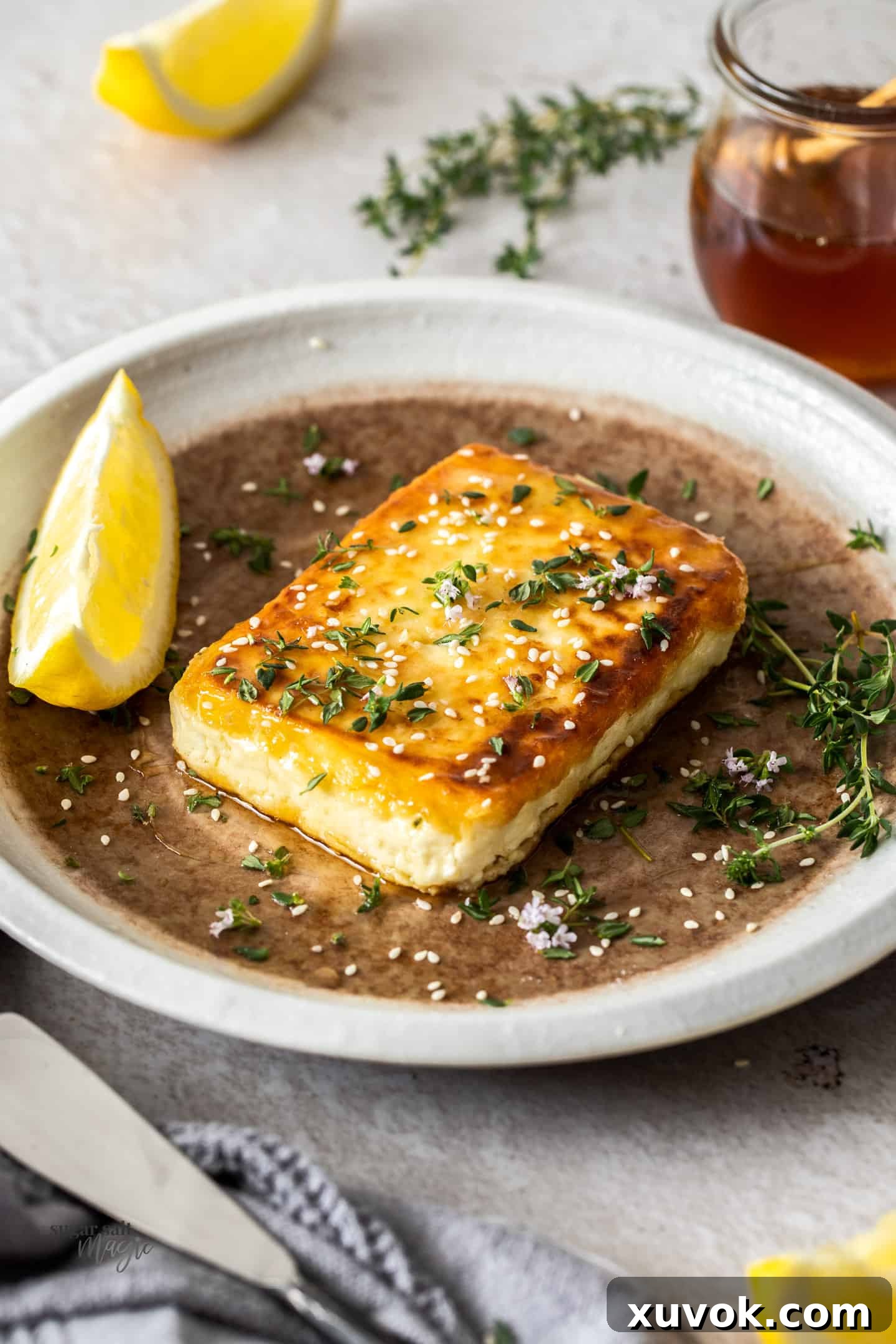
Golden Crusted Feta Saganaki: Your New Favorite Greek Appetizer
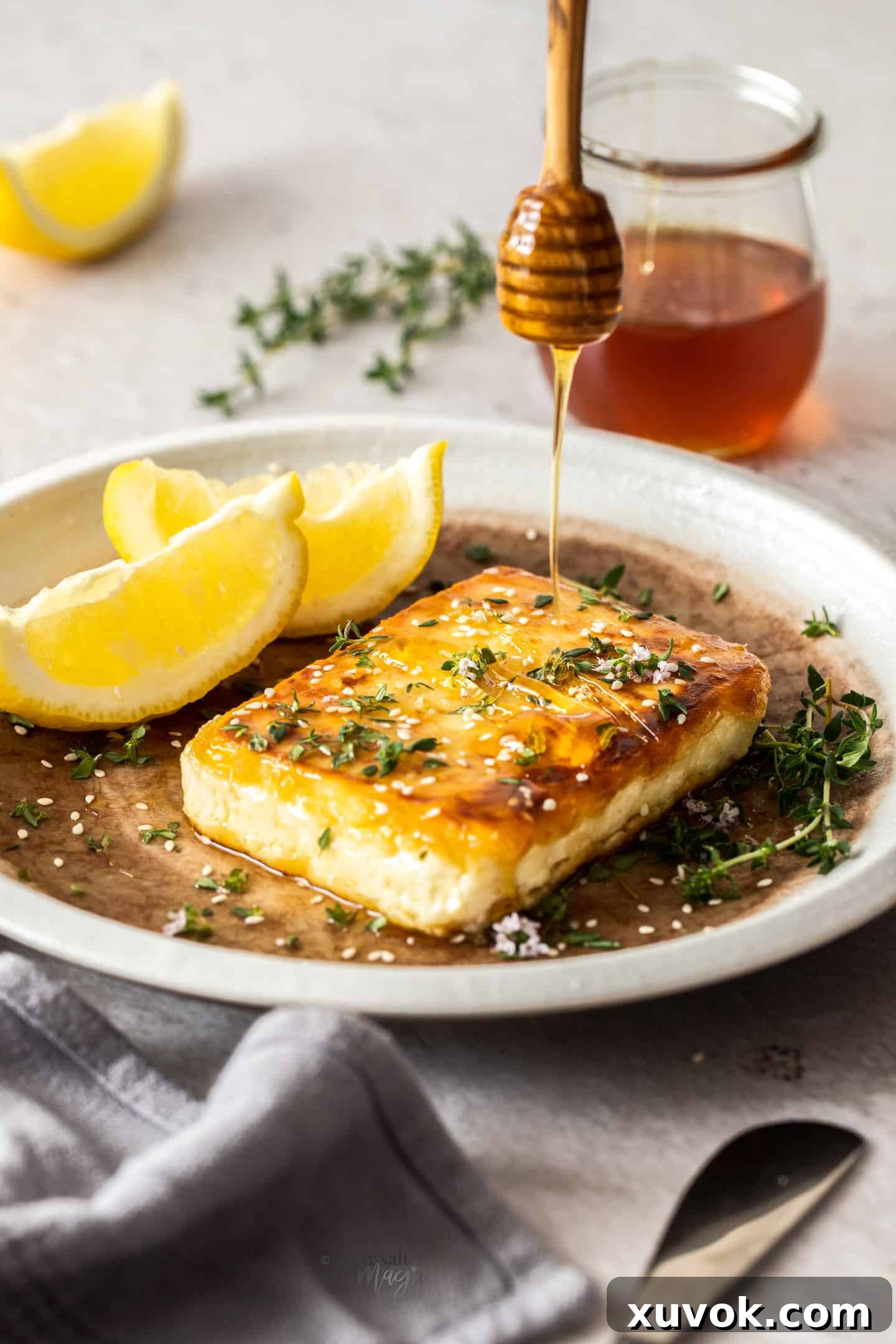
Prepare to be amazed by the ultimate quick and delicious appetizer: Feta Saganaki. This pan-fried feta cheese dish boasts a beautiful golden crust, a creamy, salty interior, and is elevated to perfection with a drizzle of sweet honey, a squeeze of fresh lemon, fragrant thyme, and a sprinkle of sesame seeds. It’s the ideal salty-sweet combination that will captivate your taste buds and impress your guests, all while being ready in mere minutes.
This Feta Saganaki recipe offers an incredible balance of flavors and textures, making it a stellar choice for any gathering or a delightful treat for yourself. It’s remarkably fast to prepare, requiring just a handful of staple ingredients. For an even more satisfying experience, serve it alongside homemade Crostini, perfect for scooping up every delicious bite.
Craving more cheesy delights or authentic Greek flavors? Explore our other fantastic appetizer recipes, such as this airy Whipped Goat Cheese with Peppered Honey, savory Chorizo Arancini, or the classic Spinach and Feta Filo Triangles. Each offers a unique taste experience that will surely become a favorite.
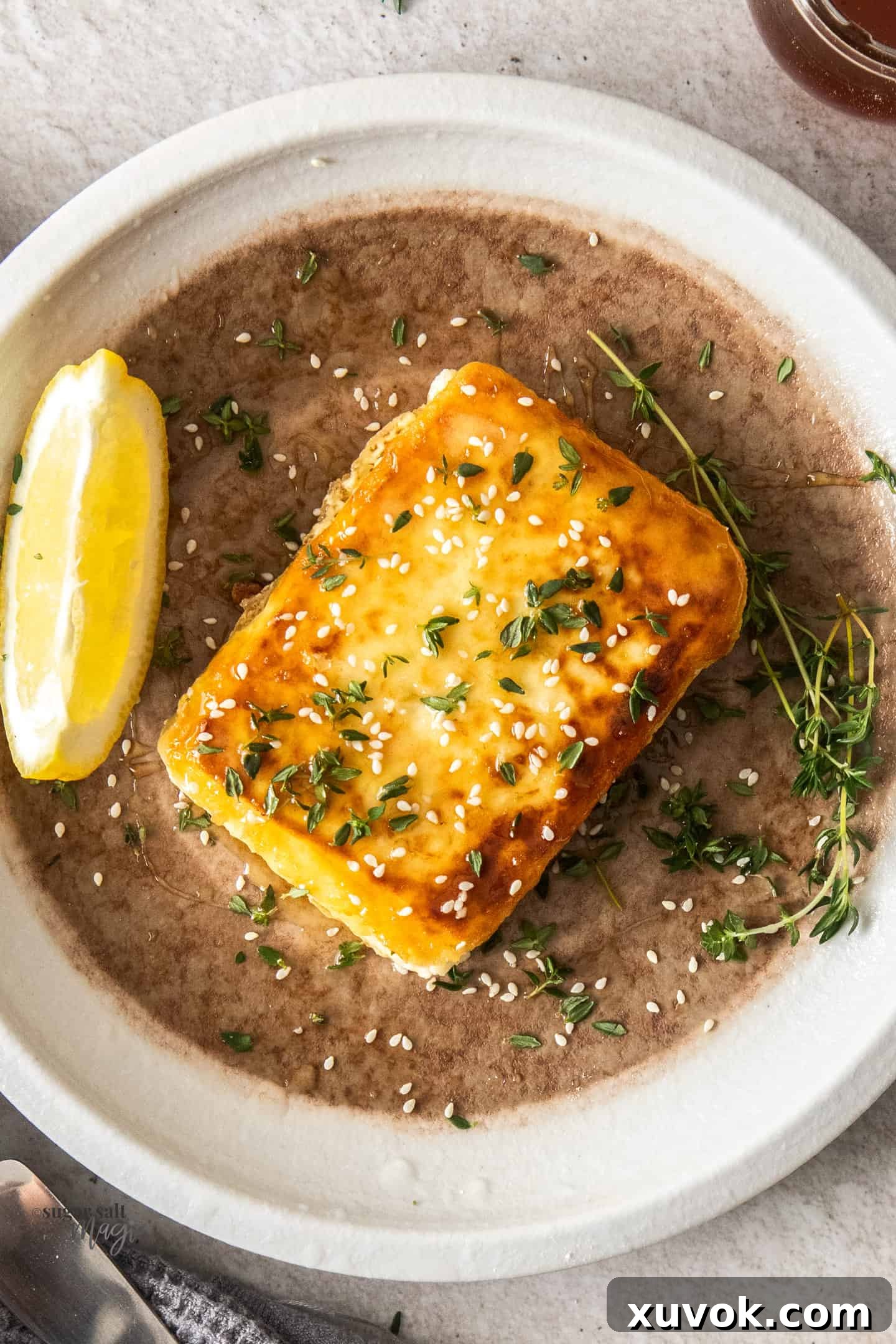
Table of Contents
- What is Saganaki? Unveiling the Greek Fried Cheese Tradition
- Why You’ll Love This Feta Saganaki Recipe
- Essential Tools for Pan-Fried Feta
- Key Ingredients for the Perfect Feta Saganaki
- How to Make Feta Saganaki: A Step-by-Step Guide
- Choosing the Best Cheese for Saganaki
- Expert Tips & Tricks for Feta Saganaki Success
- Should Cheese Saganaki Be Flambéed? The Flambé Debate
- What to Serve with Saganaki: Perfect Pairings
- Frequently Asked Questions (FAQ)
- More Appetizer Recipes You’ll Love
Never Miss a Recipe!
Get the latest recipes straight to your inbox and elevate your home cooking!
Sign up for our newsletter to receive delicious recipes and cooking tips directly to your inbox. You won’t want to miss our next culinary adventure!
Subscribe Now!
What is Saganaki? Unveiling the Greek Fried Cheese Tradition
Saganaki is a quintessential **classic Greek mezze dish**, celebrated for its simplicity and incredible flavor. Its name, “saganaki,” actually refers to the small, two-handled frying pan or skillet in which it’s traditionally cooked. This unique pan isn’t just for cheese; it also lends its name to other popular Greek dishes, such as prawn or shrimp saganaki, highlighting its versatility in Greek cuisine.
Historically, authentic cheese saganaki is crafted using specific Greek cheeses like Kefalotyri or Kefalograviera. These particular cheeses are chosen for their unique properties: when fried, they transform into a beautifully soft and gooey texture, creating a truly melt-in-your-mouth experience. The dish is typically served immediately after frying, simply dressed with a generous squeeze of fresh lemon juice, which cuts through the richness of the cheese and adds a bright, tangy note.
While traditional saganaki often calls for these semi-hard, meltable cheeses, using feta, as we do in this recipe, offers a delightful twist. The type of feta plays a crucial role in the final texture. For this recipe, we recommend a smooth, firm block of feta, ideally about 1 to 1 ½ centimeters (roughly ½ to 2/3 inch) thick. This firmness allows it to hold its shape beautifully during frying, developing a soft, creamy interior rather than a gooey one, while still achieving that irresistible crispy crust. Experiment with your favorite feta, but be mindful that softer varieties may require a gentler touch when turning to prevent them from breaking apart in the pan.
Why You’ll Love This Feta Saganaki Recipe
Beyond its ancient Greek origins, this Feta Saganaki recipe is destined to become a staple in your culinary repertoire. Here’s why:
- Incredibly Quick & Easy: From start to finish, this dish takes approximately 10 minutes. It’s the perfect solution for last-minute appetizers or a speedy, satisfying snack.
- Irresistible Flavor & Texture Combination: The magic lies in the contrast: a golden, crispy exterior gives way to a warm, salty, and creamy feta interior. Topped with sweet honey, tangy lemon, aromatic thyme, and crunchy sesame seeds, it’s a symphony of flavors and textures in every bite.
- Perfect for Entertaining: Whether you’re hosting a dinner party, a casual get-together, or simply enjoying a quiet evening, Feta Saganaki is an impressive yet effortless dish that always garners compliments.
- Minimal Ingredients, Maximum Impact: You only need a few basic pantry staples to create this gourmet-level appetizer, proving that sometimes the simplest ingredients yield the most extraordinary results.
- Versatile Serving Options: Enjoy it on its own, as part of a traditional Greek mezze platter, or with crusty bread for dipping. It’s a versatile dish that adapts to any occasion.
Essential Tools for Pan-Fried Feta
Making delicious Feta Saganaki requires minimal equipment. You’ll likely already have these kitchen essentials:
- Small Skillet or Frying Pan: A good quality, non-stick skillet is ideal. The size should allow your feta block to fit comfortably without overcrowding, ensuring even cooking.
- Flat Spatula (like a fish slice): This is crucial for carefully lifting and turning the delicate feta without breaking it. A thin, wide spatula provides the best support.
- Optional: Fork: A fork can be used in conjunction with the spatula for extra stability when flipping the cheese.
Key Ingredients for the Perfect Feta Saganaki
While the essence of Feta Saganaki can be captured with just four core ingredients – good quality oil, firm feta cheese, all-purpose flour, and fresh lemon – we’ve added a few optional toppings to elevate the flavor profile and add a delightful texture dimension. These additions transform a simple fried cheese into an unforgettable culinary experience.
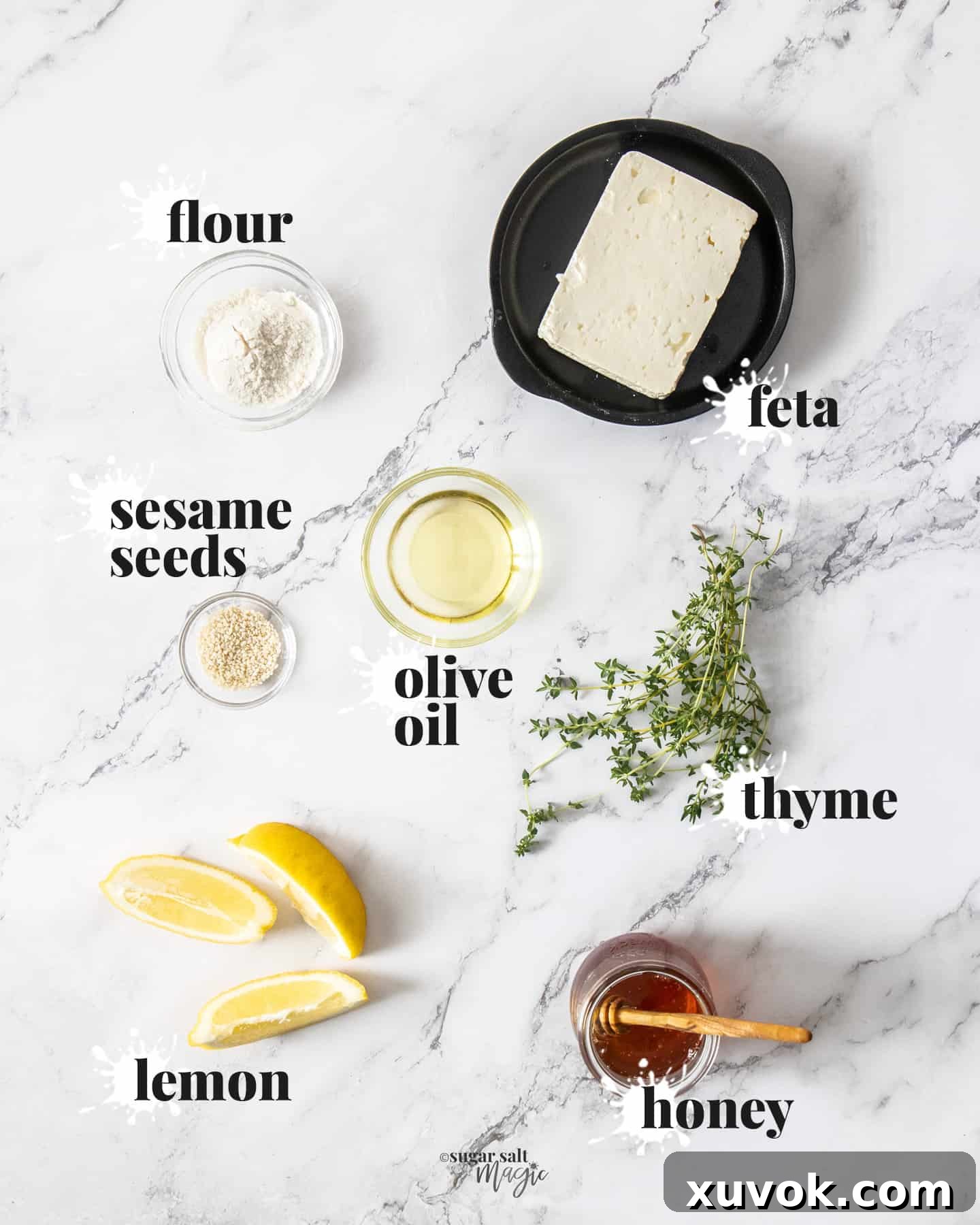
For precise quantities and detailed instructions, please refer to the complete recipe card below.
- Extra Virgin Olive Oil: Don’t skimp on quality here. A good extra virgin olive oil not only provides the perfect medium for frying, ensuring a golden, crisp crust, but also infuses the dish with its characteristic Mediterranean flavor.
- Feta Cheese: The star of our show! We highly recommend a smooth, firm block of feta, ideally cut or chosen to be around 1 to 1 ½ cm (1/2 to 2/3 inch) in thickness. This density helps it maintain its shape and achieve that desired creamy-soft interior without becoming too brittle. If your feta is in brine, you might consider a quick rinse to reduce excess saltiness.
- Plain (All-Purpose) Flour: Just a small amount of flour is essential for creating that signature crispy, golden crust. It coats the feta, forming a protective barrier that helps the cheese brown beautifully and prevents it from sticking to the pan.
- Fresh Lemon: An absolute must for traditional saganaki. A generous squeeze of fresh lemon juice is typically drizzled over the hot cheese. Its bright acidity acts as a perfect counterpoint to the salty richness of the feta, balancing the flavors and adding a refreshing zest.
- Honey: This is where our feta saganaki gets its delightful salty-sweet twist. A light drizzle of honey over the hot feta introduces a wonderful sweetness that harmonizes beautifully with the cheese’s saltiness. This ingredient is entirely optional, so feel free to adjust the amount to your personal preference.
- Fresh Thyme: While optional, a sprinkle of fresh thyme leaves adds an aromatic, herbaceous note that complements both the feta and honey beautifully. Its subtle flavor enhances the overall experience without overpowering.
- Sesame Seeds: Often used as a coating for saganaki before frying, we’ve opted for a lighter touch here. A final scattering of toasted sesame seeds over the top provides a pleasant nutty crunch and an appealing visual finish.
How to Make Feta Saganaki: A Step-by-Step Guide
Creating this irresistible Feta Saganaki is incredibly simple and takes just minutes, making it an ideal choice for a quick yet impressive appetizer. The entire process, from coating the feta to serving it hot and crispy, can be completed in approximately 10 minutes. Get ready to enjoy a taste of Greece without the fuss!
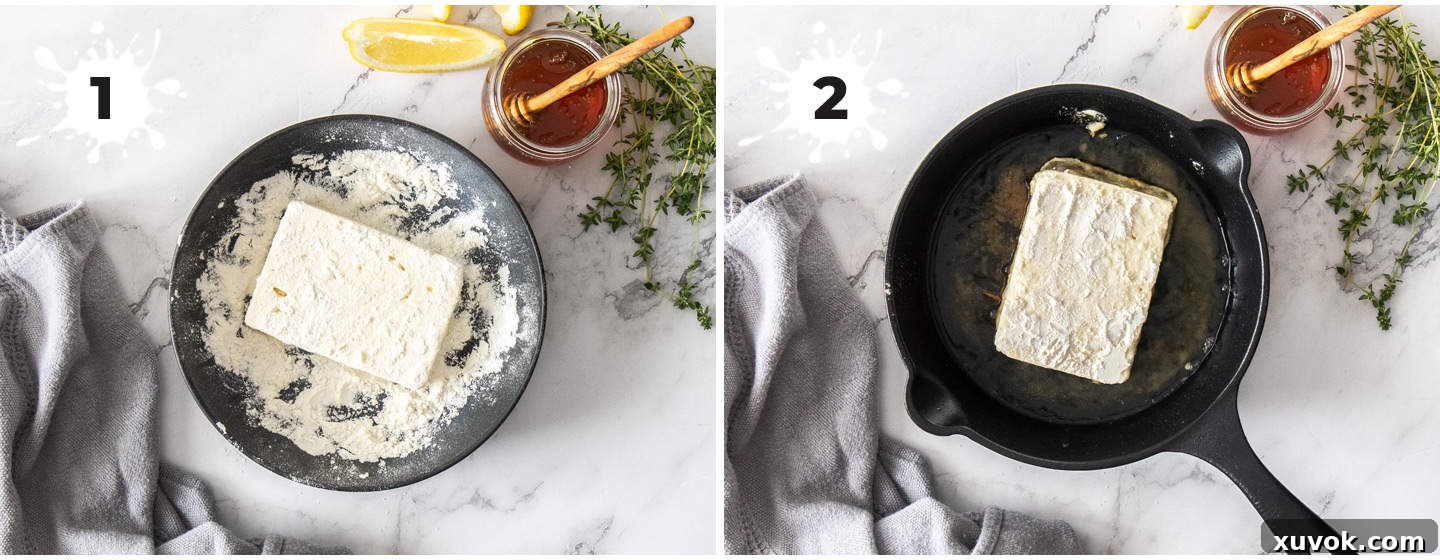
You’ll find detailed measurements and instructions in the comprehensive recipe card below.
- Prepare the Feta for Coating: Begin by carefully removing the feta from its packaging. If your feta was stored in brine, a quick rinse under cold water can help reduce excessive saltiness, though it’s not strictly necessary. Crucially, do not pat it dry; the natural moisture on the surface of the feta will help the flour adhere better. Place the slightly moist feta into a shallow bowl with the plain flour. Gently toss and press the flour onto all sides of the feta, ensuring it’s thoroughly coated. This flour coating is key to achieving that beautiful golden crust and preventing the cheese from sticking to the pan (photo 1).
- Pan-Fry to Golden Perfection: Heat a small amount of extra virgin olive oil in your skillet or frying pan over medium heat. Once the oil is shimmering and hot (but not smoking), carefully place the flour-coated feta into the pan. Be cautious to avoid splashing the hot oil. You should hear a gentle sizzle as the feta hits the pan. Allow it to cook undisturbed for 3-4 minutes, or until the underside develops a deep, golden-brown crust. Using a flat spatula (like a fish slice) and, if needed, a fork for extra support, carefully flip the feta to the other side. Repeat the cooking process for another 3-4 minutes, until that side is also beautifully golden and crispy. If you notice the cheese browning too quickly, slightly reduce the heat. Serve immediately to enjoy its warm, creamy texture (photo 2).
Once fried, transfer the Feta Saganaki to a warm serving plate. The final touches elevate this simple dish: generously squeeze fresh lemon juice over the top, then artfully drizzle with honey to your desired sweetness. Garnish with a sprinkle of fresh thyme leaves and toasted sesame seeds for added aroma and crunch. This dish is designed to be served piping hot, allowing you to experience the full contrast of its crispy exterior and soft, warm interior.
While some adventurous establishments might deep-fry saganaki, there’s absolutely no need for such extremes in your home kitchen. Shallow frying yields equally fantastic results—a perfectly crisp crust and creamy center—with the added benefit of much easier cleanup. This simple method ensures a delightful appetizer every time.
Choosing the Best Cheese for Saganaki
When it comes to authentic Greek saganaki, the choice of cheese is paramount to achieving the desired texture and flavor. Traditionally, several hard or semi-hard Greek cheeses are favored for their ability to soften and become delightfully gooey when fried. These include:
- Kefalotyri: A traditional, hard, salty yellow cheese made from sheep’s or goat’s milk.
- Kefalograviera: Similar to Kefalotyri but slightly milder and creamier, often considered a premium saganaki cheese.
- Kasseri: A medium-hard, pale yellow cheese made from sheep’s milk with a tangy flavor, known for its good melting properties.
- Graviera: A versatile hard cheese, often made from sheep’s milk, offering a nutty and slightly sweet flavor.
While these cheeses are the traditional stars, **feta cheese** (as used in this recipe) is also a very popular and widely accepted alternative for saganaki, particularly for its distinct salty tang and creamy texture. It’s important to understand the textural difference:
- Traditional saganaki cheeses (Kefalotyri, etc.) will become wonderfully melty and gooey, stretching as you pull them apart.
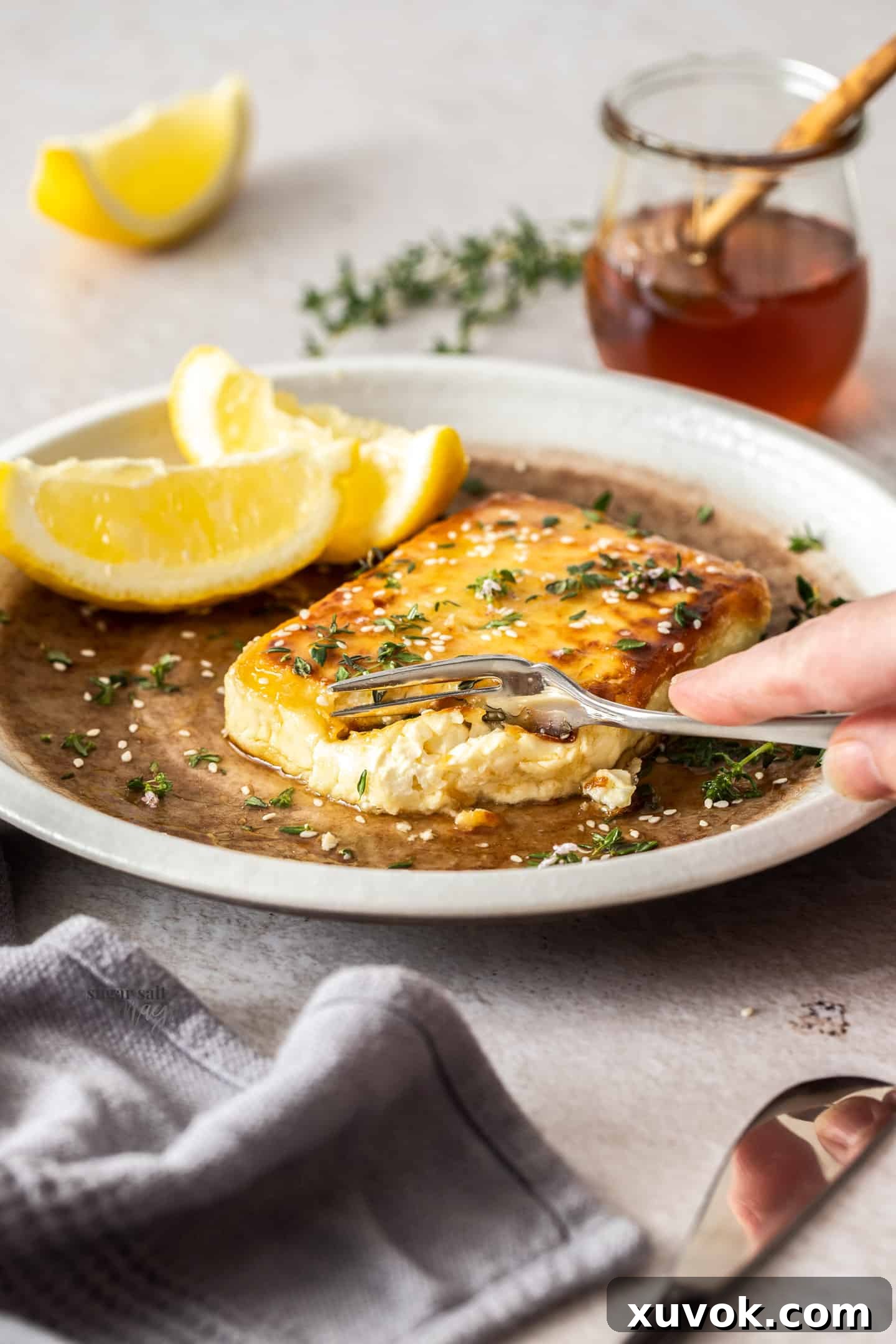
- Feta, on the other hand, will not achieve that stretchy, gooey consistency. Instead, when fried, it transforms into a beautifully soft, warm, and creamy texture within its crispy crust. This contrast of crunchy exterior and luscious interior is what makes feta saganaki so utterly delicious.
It’s also worth noting that while some variations might use halloumi, it’s a different experience altogether. Halloumi is a non-melting cheese that retains its firm, squeaky texture when cooked. While delicious in its own right, it won’t offer the soft, creamy center that defines classic saganaki or even the unique creaminess of feta saganaki. For the authentic saganaki experience – whether gooey or creamy – sticking to traditional Greek cheeses or good quality feta is key.
Expert Tips & Tricks for Feta Saganaki Success
Achieving perfectly crispy and creamy Feta Saganaki is easy with these insider tips:
- Don’t Dry the Feta: Unlike many frying recipes, there’s absolutely no need to pat your feta dry. Just let any excess liquid from its packaging drip off. The natural moisture on the cheese’s surface will act as a natural adhesive, helping the flour coating stick firmly and ensuring a flawless crust.
- Rinse Brine-Packed Feta: If your feta comes packed in brine, it can be quite salty. To prevent an overly salty dish, give the feta a quick rinse under cold water before coating. Then, allow the excess water to drip off, and proceed with the flour coating.
- Safety First When Frying: Hot oil can be dangerous. Always exercise extreme caution when adding the feta to the pan and especially when turning it. Use a flat spatula, like a fish slice, to gently slide under the feta, and consider using a fork or another spatula on the opposite side for added stability and control while flipping. This prevents splashing hot oil and helps keep the feta intact.
- Serve Immediately: This is a crucial tip for enjoying Feta Saganaki at its best. As the cheese cools, its interior will firm up. To experience that delightful warm, soft, and creamy texture contrasted with the crispy crust, serve it piping hot straight from the pan.
- Even Thickness is Key: Aim for a feta block that is consistently 1 to 1 ½ cm (1/2 to 2/3 inch) thick. This ensures even cooking and helps the feta soften perfectly throughout without burning the exterior.
- Don’t Overcrowd the Pan: Fry only one or two pieces of feta at a time, depending on your pan size. Overcrowding can lower the oil temperature, leading to soggy feta rather than crispy.
- Adjust Heat as Needed: Keep a close eye on the heat. If your feta is browning too quickly, lower the heat slightly. If it’s not crisping up, you might need to increase it a touch. Medium heat is generally ideal.
Should Cheese Saganaki Be Flambéed? The Flambé Debate
For many, the image of saganaki is synonymous with a dramatic, flaming presentation, often witnessed in bustling Greek restaurants, particularly in tourist-heavy areas. While undeniably spectacular and a memorable part of the dining experience, it’s important to understand that this flamboyant practice of igniting the cheese at the table is actually **not traditional** to authentic Greek saganaki. It’s largely a theatrical addition created for diners, adding flair rather than flavor.
Beyond its non-traditional nature, attempting to flambé saganaki at home can be genuinely dangerous. Working with open flames and hot oil in a kitchen environment carries significant risks. If you were to consider it, which we strongly advise against, **never use the same pan the cheese was cooked in**, especially if it contains residual oil. Introducing alcohol to hot oil can instantly lead to a dangerous oil fire, which can quickly get out of control. Your safety is paramount, so we highly recommend enjoying your delicious Feta Saganaki without the pyrotechnics. The dish is perfectly flavorful and impressive on its own!
What to Serve with Saganaki: Perfect Pairings
Traditional Greek **saganaki is often enjoyed as part of a mezze platter**, a delightful selection of small dishes, much like Spanish tapas. While mezze is typically served as appetizers, these flavorful bites can easily combine to create a satisfying and varied meal. If you’re serving Feta Saganaki on its own, here are some fantastic accompaniments to complete your experience:
- Breads and Crackers: Essential for scooping up the warm, creamy feta. Serve with crisp crostini, warm pita bread (cut into triangles), toasted pita chips, or a crusty loaf of artisanal bread.
- Fresh Vegetables: Complement the richness of the cheese with refreshing elements. Sliced cucumber, juicy tomatoes, colorful bell peppers, and Kalamata olives are excellent choices. A simple Greek salad on the side would also be perfect.
- Dips: Enhance your mezze experience with classic Greek dips. Creamy hummus, smoky Greek eggplant dip (Melitzanosalata), or refreshing tzatziki (cucumber and yogurt dip) would all pair wonderfully.
- Other Mezze Favorites: Expand your platter with more traditional Greek small plates. Consider savory Dolmades (stuffed grape leaves), tender grilled octopus, flavorful meatballs (Keftedes), or even a simple bowl of marinated artichoke hearts.
- As a Starter: Feta Saganaki makes an exceptional starter before a heartier main course. It pairs beautifully with classic Greek dishes like these succulent Greek Lamb Kebabs (Lamb Souvlaki) or a baked fish dish.
- Drinks: For an authentic Greek experience, pair your saganaki with a glass of crisp white wine (like Assyrtiko or Sauvignon Blanc), a shot of ouzo (anise-flavored aperitif), or a cold Greek beer.
No matter how you choose to serve it, Feta Saganaki is a versatile and incredibly satisfying dish that truly embodies the spirit of Greek hospitality and flavor.
Frequently Asked Questions (FAQ)
Here are some common questions about making and enjoying Feta Saganaki:
- What is the difference between saganaki and feta saganaki?
“Saganaki” generally refers to any dish cooked in a small, two-handled pan called a “saganaki.” When it specifically refers to fried cheese, traditional saganaki usually uses cheeses like Kefalotyri or Kefalograviera, which become gooey and stretchy when fried. Feta saganaki, on the other hand, uses feta cheese, which becomes soft and creamy (but not gooey) with a crispy crust when pan-fried. Both are delicious Greek appetizers! - Can I use a different type of cheese if I don’t have feta?
You can experiment, but be aware of textural differences. Halloumi is a popular choice for frying due to its high melting point, but it will remain firm and “squeaky” rather than becoming creamy. For a gooey texture, look for traditional Greek cheeses like Kefalotyri or Kefalograviera, or even a firm provolone. - How do I prevent my feta from breaking when flipping?
The key is a firm piece of feta, a thorough flour coating, and a gentle technique. Use a wide, flat spatula (like a fish slice) to support the entire piece of feta, and if needed, use a fork or another spatula to steady it from the other side as you flip. Ensure the crust is well-formed and golden before attempting to turn it. - Is Feta Saganaki gluten-free?
As this recipe uses plain (all-purpose) flour for coating, it is not gluten-free. To make it gluten-free, you can try coating the feta in a gluten-free all-purpose flour blend or simply fry it without flour for a slightly different, though still delicious, texture. - Can I prepare Feta Saganaki in advance?
Feta Saganaki is truly best enjoyed immediately after frying when it’s hot, crispy, and creamy. It does not store or reheat well, as the cheese will firm up and the crust will lose its crispness. It’s a quick dish, so it’s best to make it just before serving.
More Appetizer Recipes You’ll Love
If you enjoyed the simplicity and flavor of this Feta Saganaki, you’re in for a treat with our other fantastic appetizer recipes:
- Baked Feta and Tomatoes: A vibrant, savory dish that’s perfect for dipping crusty bread.
- Mini Lasagna Cupcakes: Individual portions of comfort food, ideal for parties.
- Sesame Prawn Toast (Shrimp Toast): Crispy, flavorful, and incredibly satisfying.
- Olive Pesto: A rich, briny spread that’s versatile and easy to make.
- Spinach Cob Loaf Dip: A crowd-pleasing warm dip served in an edible bread bowl.
- Prosciutto Wrapped Dates: A delightful combination of sweet and savory, perfect for an elegant bite.
⭐⭐⭐⭐⭐
Did you try this Feta Saganaki recipe? We’d love to hear from you! Please take a moment to leave a rating and comment below to share your experience.
Hungry for more? Subscribe to our newsletter for free recipes delivered straight to your inbox. Also, connect with us on Facebook, Pinterest, and Instagram for daily inspiration and delicious ideas.
Feta Saganaki
Rate
Pin
Ingredients
- 200 g smooth firm feta (about 1 – 1 ½ cm thick)
- 1 ½ tablespoons plain (all-purpose) flour (see notes)
- 2 tablespoons extra virgin olive oil (see notes)
- 1 teaspoon fresh thyme leaves
- ½ teaspoon sesame seeds, toasted
- 1-2 tablespoons honey, to taste (optional)
- 2 lemon wedges
For best results, always weigh ingredients where a weight is provided
Equipment
-
small skillet or frying pan
-
Flat spatula, like a fish slice and a fork for turning.
Instructions
-
Take the feta out of the package. If it was stored in brine, you can rinse it first to reduce saltiness, but do not dry it off. Place the slightly moist feta in a shallow bowl with the flour and turn to coat, pressing the flour onto it as much as possible to ensure a good crust.
-
In a small skillet or frying pan, heat the olive oil over medium heat until it shimmers.
-
Carefully place the flour-coated feta into the hot oil. It should sizzle immediately. Cook for 4-5 minutes until the underside is deep golden-brown and crispy. Using a flat spatula and fork for support, carefully turn the feta over and repeat the cooking process on the other side until it’s also golden. If the feta is browning too quickly, slightly reduce the heat.
-
Once golden on both sides, transfer the Feta Saganaki to a warmed serving plate. Squeeze fresh lemon juice generously over the top, then sprinkle with fresh thyme leaves and toasted sesame seeds. Drizzle with honey to taste (if using) and serve immediately to enjoy its warm, creamy interior and crispy crust.
Notes
- I use a standard Australian 20ml tablespoon (equal to 4 teaspoons).
- Be very careful when turning the feta so as not to splash the hot oil. Slide a flat spatula underneath the feta and hold it steady with a fork or another spatula on the opposite side as you flip.
- Serve immediately. Feta saganaki will firm up as it cools, so for the best experience of its warm, soft interior and crispy crust, serve it straight from the pan.
EXPLORE MORE APPETIZERS AND SNACKS!