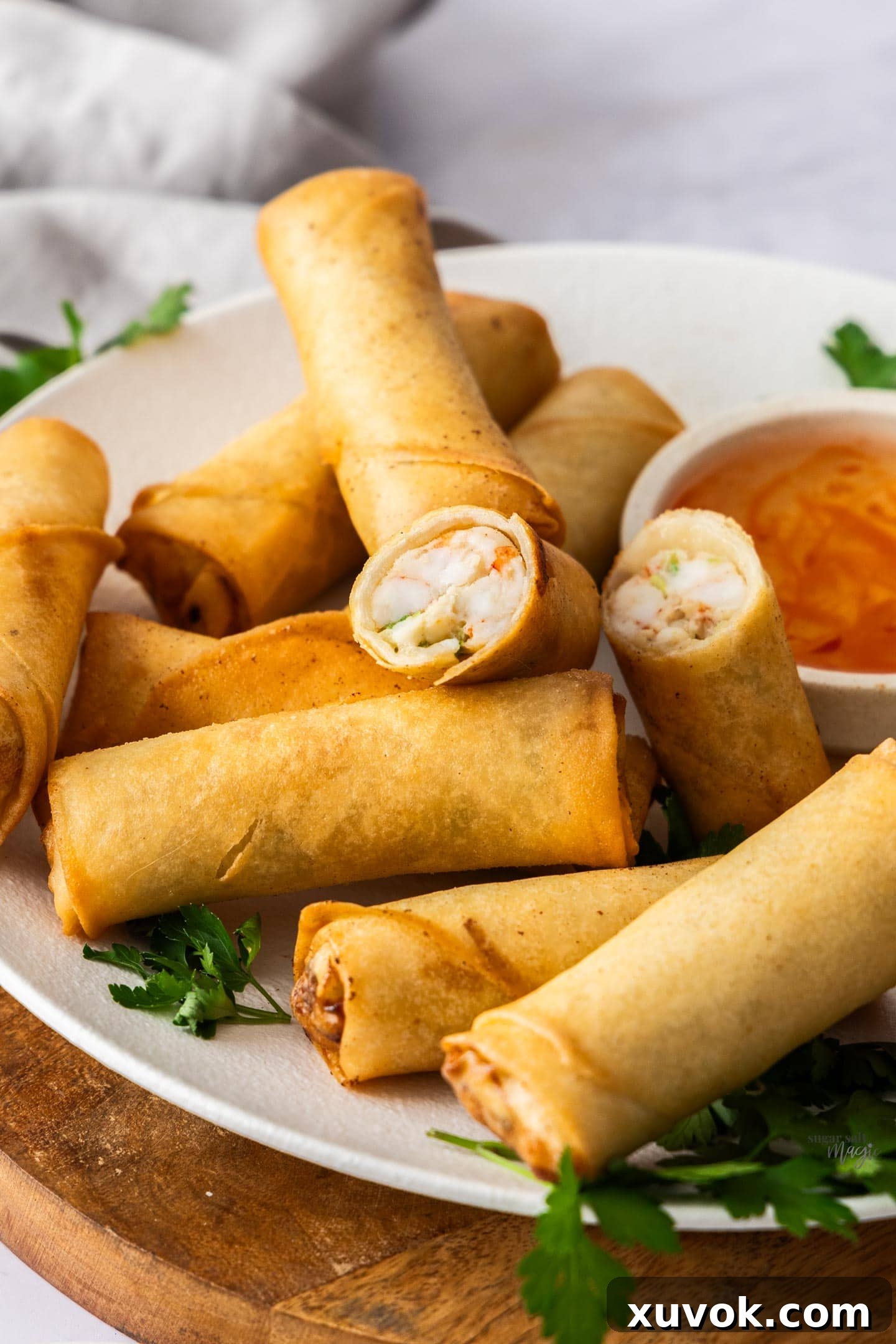
Crispy Prawn Spring Rolls: Your Guide to Perfect Homemade Goodness
There’s something truly irresistible about a perfectly golden, crispy spring roll, and when it’s filled with succulent prawns, it’s an absolute culinary delight. These homemade prawn spring rolls (also known as shrimp spring rolls) are not only incredibly flavorful but surprisingly simple to prepare, making them a fantastic alternative to your favorite Chinese takeaway. Forget greasy, bland imitations; this recipe promises a crunchy exterior, a tender, savory filling, and a taste that truly lets the natural sweetness of the prawns shine through.
Whether you’re hosting a gathering, looking for a satisfying snack, or preparing an impressive appetizer, these crispy spring rolls are guaranteed to be a crowd-pleaser. The filling is intentionally kept simple, allowing the fresh taste of prawns to be the star, complemented by aromatic garlic, ginger, fresh spring onions, a hint of savory soy sauce, and fragrant sesame oil. While many spring roll recipes incorporate various vegetables, our focus here is on celebrating the unadulterated flavor and exquisite texture of the prawns. We’ve tested versions with finely shredded carrots and cabbage, which are delicious, but for pure prawn perfection, this streamlined approach is unmatched.
If you’re a fan of these delightful morsels, you’ll also adore our traditional sesame prawn toast – another classic that’s perfect for sharing. And for those who enjoy a variety, don’t miss our classic pork and vegetable spring rolls.
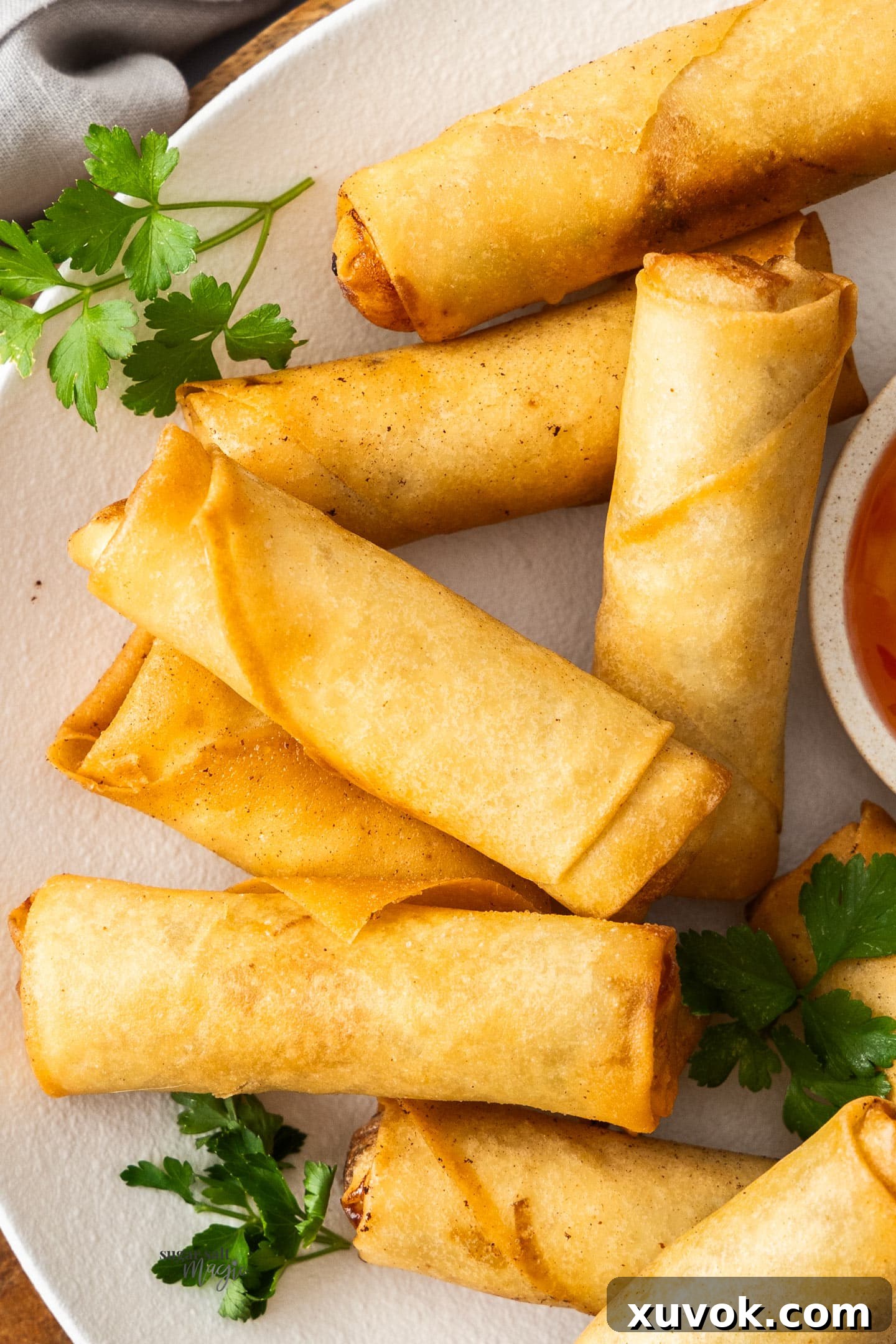
Table of Contents
- Why You’ll Love These Prawn Spring Rolls
- Essential Ingredients for Prawn Spring Rolls
- How to Master Homemade Prawn Spring Rolls
- Pro Tips for Perfect Crispy Spring Rolls
- Serving Suggestions: What to Pair with Prawn Spring Rolls
- Storage and Make-Ahead Options
- More Irresistible Prawn Recipes You’ll Love
Never Miss a Recipe!
Get the latest recipes straight to your inbox!
Why You’ll Love These Prawn Spring Rolls
These prawn spring rolls are more than just a dish; they’re an experience. Imagine the delight of biting into a golden, crisp wrapper, followed by the burst of tender, savory prawn filling. They strike the perfect balance between texture and flavor, making them an instant favorite for any occasion. They’re incredibly versatile – whether you need a quick party appetizer, a satisfying snack, or a delightful component of a larger meal, these spring rolls fit the bill perfectly. They disappear remarkably fast at any gathering, especially when accompanied by a flavorful dipping sauce. Making them at home means you control the freshness and quality of ingredients, ensuring a superior taste that often surpasses what you might find at a restaurant.
Essential Ingredients for Prawn Spring Rolls
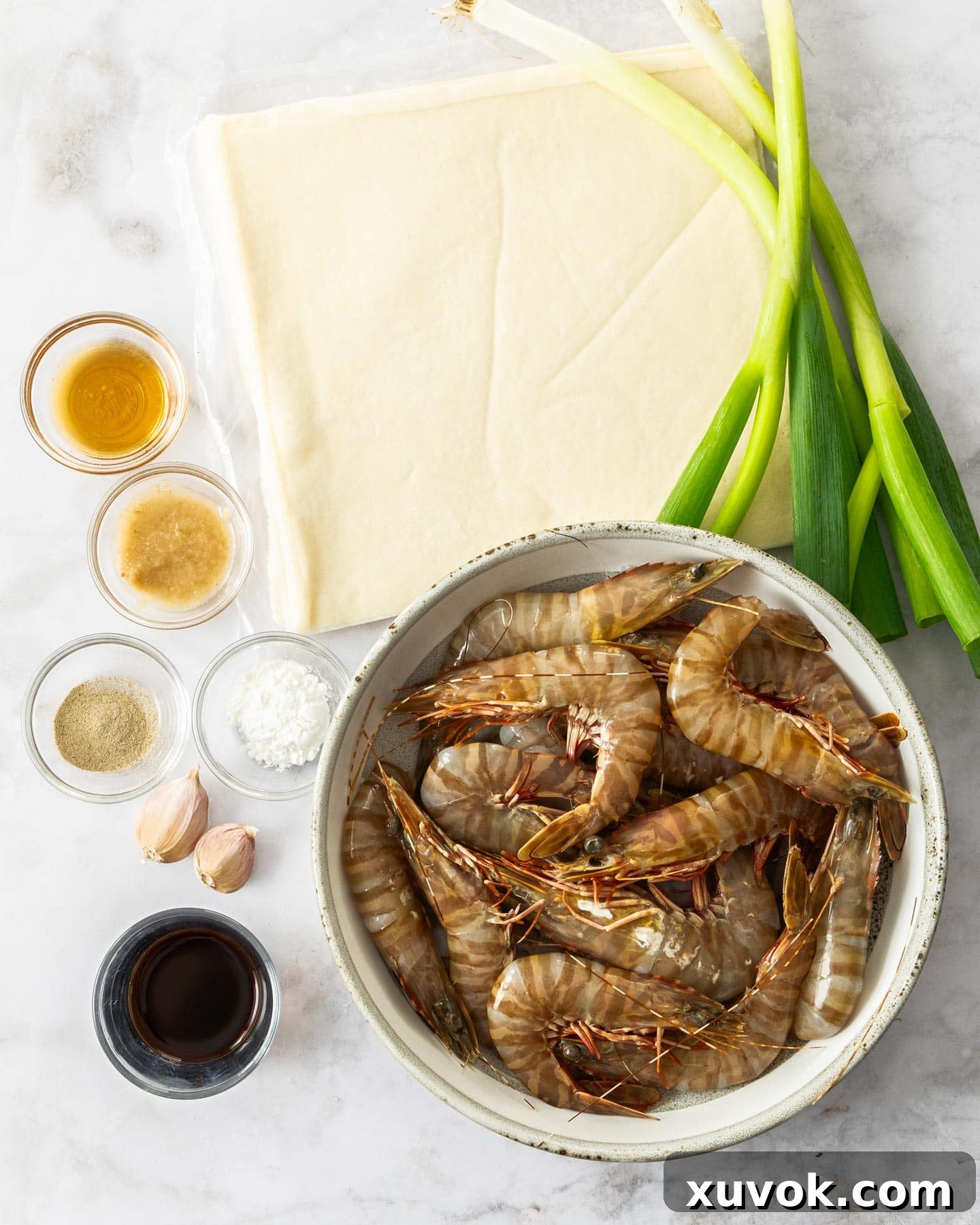
For the precise measurements and detailed instructions, please jump to the full recipe card at the bottom of this article.
- Prawns (or Shrimp): The star of our show! For the absolute best texture and flavor, I highly recommend buying raw prawns with their shells on and peeling them yourself. While it takes a few extra minutes, the difference in the final product is truly remarkable. Prawns shelled and frozen often develop a slightly firm or “squeaky” texture when cooked. However, fresh prawns, or those you shell yourself, retain a beautifully soft yet meaty texture. Any size or type of prawn will work, but larger prawns are generally quicker to peel. I often use tiger prawns for their robust flavor and size. Raw prawns are always preferred over pre-cooked for this recipe, as they cook perfectly within the spring roll wrapper, remaining juicy and tender.
- Spring Roll Wrappers: The canvas for our delicious filling. Standard 8.5-inch square spring roll pastry sheets are ideal for making about 12 medium-sized spring rolls, roughly 4 inches in length. If you prefer smaller, bite-sized appetizers, you can opt for mini spring roll wrappers. The brand TYJ spring roll pastry is widely available and performs excellently, yielding wonderfully crispy results. Ensure your wrappers are properly thawed according to package instructions before use.
- Garlic and Ginger: This dynamic duo forms the aromatic backbone of countless Asian dishes, and they infuse our prawn filling with an irresistible fragrance and depth of flavor. Freshly minced garlic and grated ginger are always best for maximum impact.
- Spring Onions (Green Onions/Scallions): Adding a delicate, subtle oniony flavor that complements the prawns without overpowering them. Finely chopped green parts also add a lovely pop of color to the filling.
- Soy Sauce: This not only seasons the prawn mixture but also contributes a crucial umami depth. I use light soy sauce for its balanced flavor. For a bolder, more pungent flavor, you can substitute soy sauce with about 2 teaspoons of fish sauce.
- Sesame Oil: A fragrant finishing oil that imparts a distinctive nutty, savory aroma that is simply divine with prawns and soy. A little goes a long way in elevating the overall flavor profile.
- White Pepper: While subtle, white pepper adds a nuanced warmth and slight kick that is characteristic of many East Asian dishes. It’s an essential seasoning that truly enhances the flavor of the prawns; don’t skip it!
- Cornflour (Cornstarch): This finely milled white flour serves two important functions. Firstly, it helps to absorb any excess moisture released by the prawns or spring onions, preventing a soggy filling. Secondly, it acts as a binder, helping the soy sauce and other seasonings adhere to the prawn meat, ensuring every bite is packed with flavor and nothing is left behind in the mixing bowl.
Optional Vegetable Additions
While our recipe emphasizes the pure prawn flavor, you can certainly add vegetables if you wish to extend the filling or add more dietary fiber. Classic additions include finely shredded carrot, cabbage, and bean sprouts. If incorporating these, ensure they are shredded very thinly to cook quickly and evenly with the prawns. Keep in mind that adding vegetables will subtly dilute the intense prawn flavor. Another popular addition to some spring rolls is rehydrated vermicelli noodles, which can add a pleasant chewiness and bulk to the filling.
How to Master Homemade Prawn Spring Rolls
Crafting these delectable seafood spring rolls is a rewarding process that takes less than an hour from start to finish, even accounting for the time spent peeling prawns. The most time-consuming part for many is carefully separating the delicate spring roll wrappers without tearing them. If you have an extra set of hands to assist with peeling wrappers while you roll, you’ll find the process even quicker and more enjoyable.
A key advantage of this recipe is that there’s absolutely no need to pre-cook the prawn filling. The raw prawn meat, finely chopped and seasoned, will cook perfectly through as the spring roll wrappers turn that beautiful light golden-brown in the hot oil. This simplifies the process significantly and helps maintain the prawns’ tender texture.
Detailed steps, ingredient quantities, and full instructions are available in the recipe card below.
1. Prepare the Prawn Filling
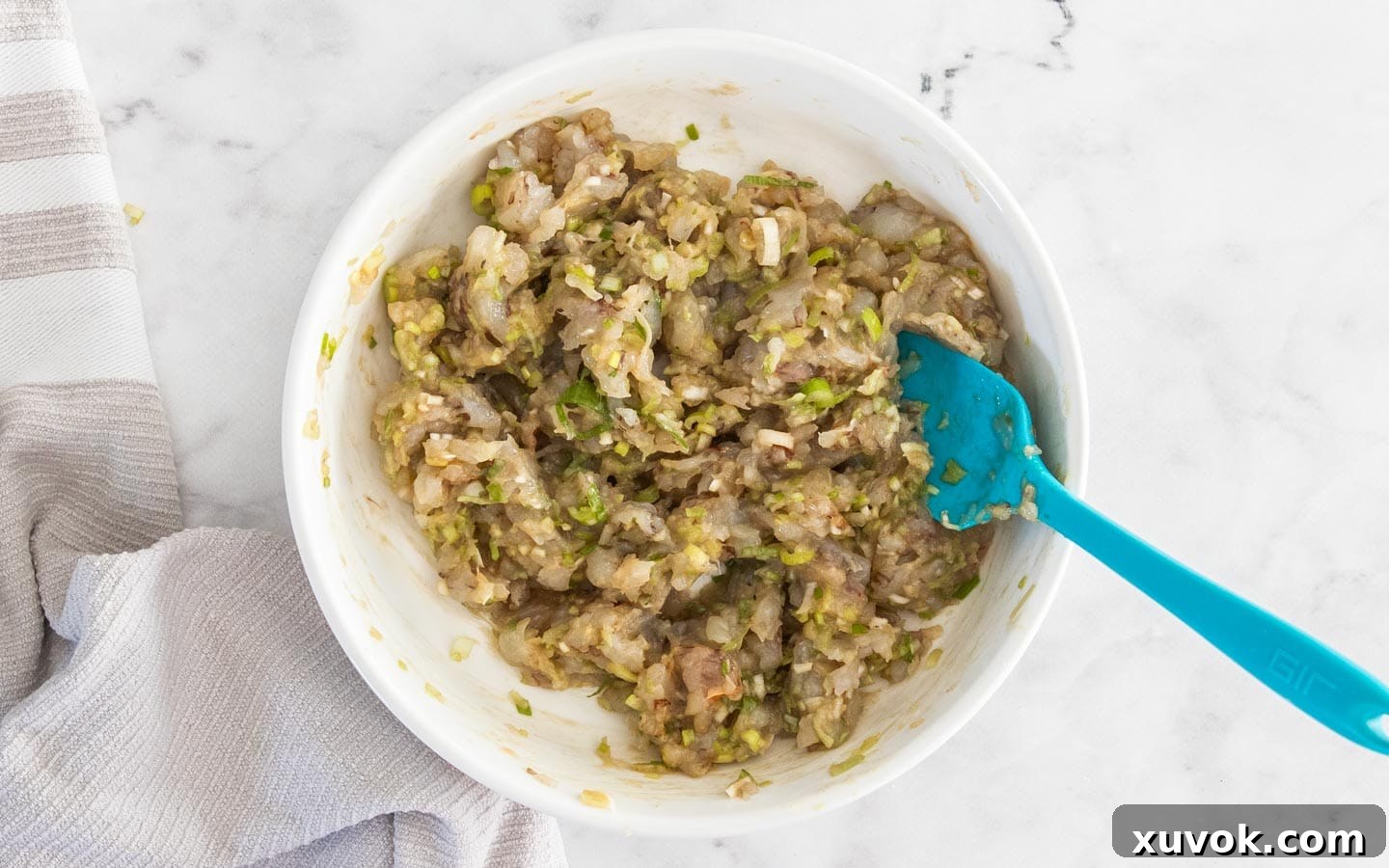
Begin by meticulously peeling and deveining your raw prawns. Once cleaned, finely chop the prawn flesh. For efficiency and consistency, a food processor can be incredibly helpful here. Pulse the prawns just until they are chopped into small, uniform chunks, ideally no larger than your pinky fingernail. While you could process them into a smooth paste, having small pieces of prawn provides a more satisfying bite and allows you to truly appreciate the texture of the seafood when you enjoy the spring roll.
Once your prawns are prepared, transfer them to a mixing bowl. Add all the remaining seasonings – spring onions, ginger, garlic, soy sauce, sesame oil, cornflour, and white pepper. Mix everything thoroughly, ensuring all ingredients are evenly distributed throughout the prawn meat. This step is crucial for achieving a balanced and flavorful filling in every single spring roll.
2. Roll the Spring Rolls
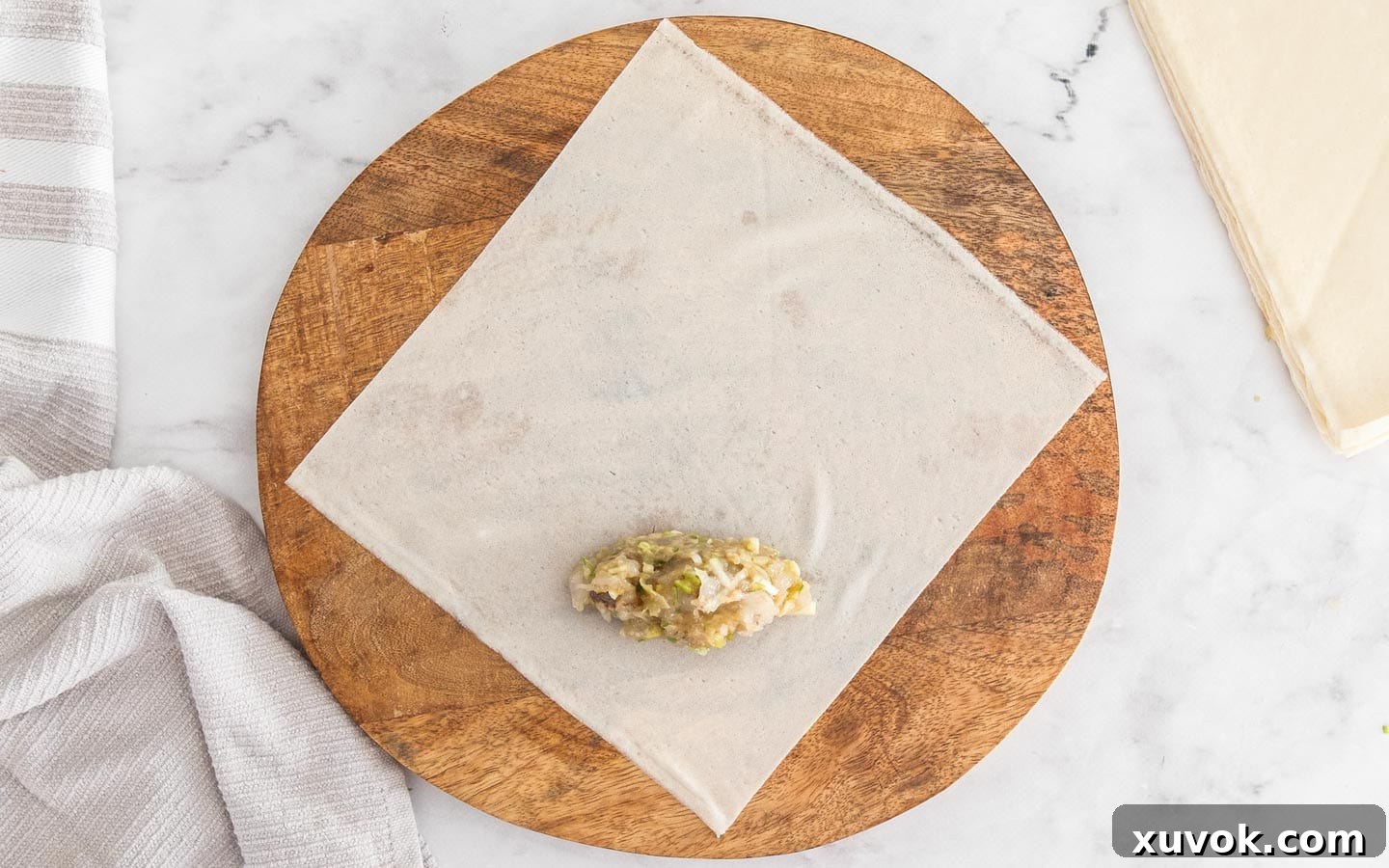
Rolling spring rolls is an art that becomes easy with a little practice. Lay a spring roll wrapper on your clean work surface so that one corner points directly towards you, forming a diamond shape. Take a heaped tablespoon of the prepared prawn mixture and place it about one-third of the way up from the bottom point of the wrapper. Gently press and shape the filling into a rough log, approximately 8cm (3 ¼ inches) in length, ensuring it’s not too thick to allow for even cooking.
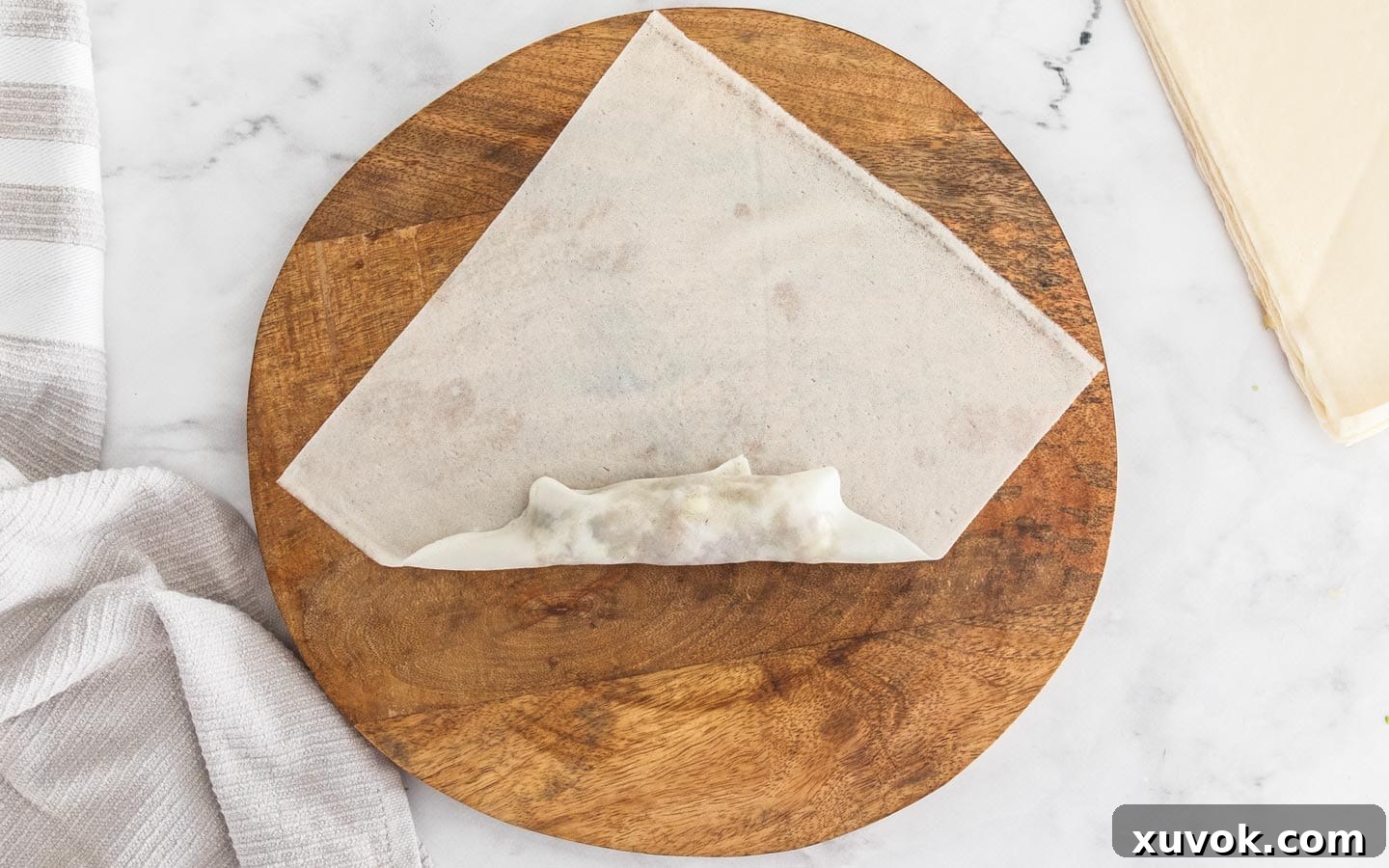
Carefully fold the bottom corner of the wrapper up and over the filling, tucking it in snugly. Gently press down along the length of the filling to ensure it’s compact and no air pockets remain. This initial fold creates the base of your spring roll.
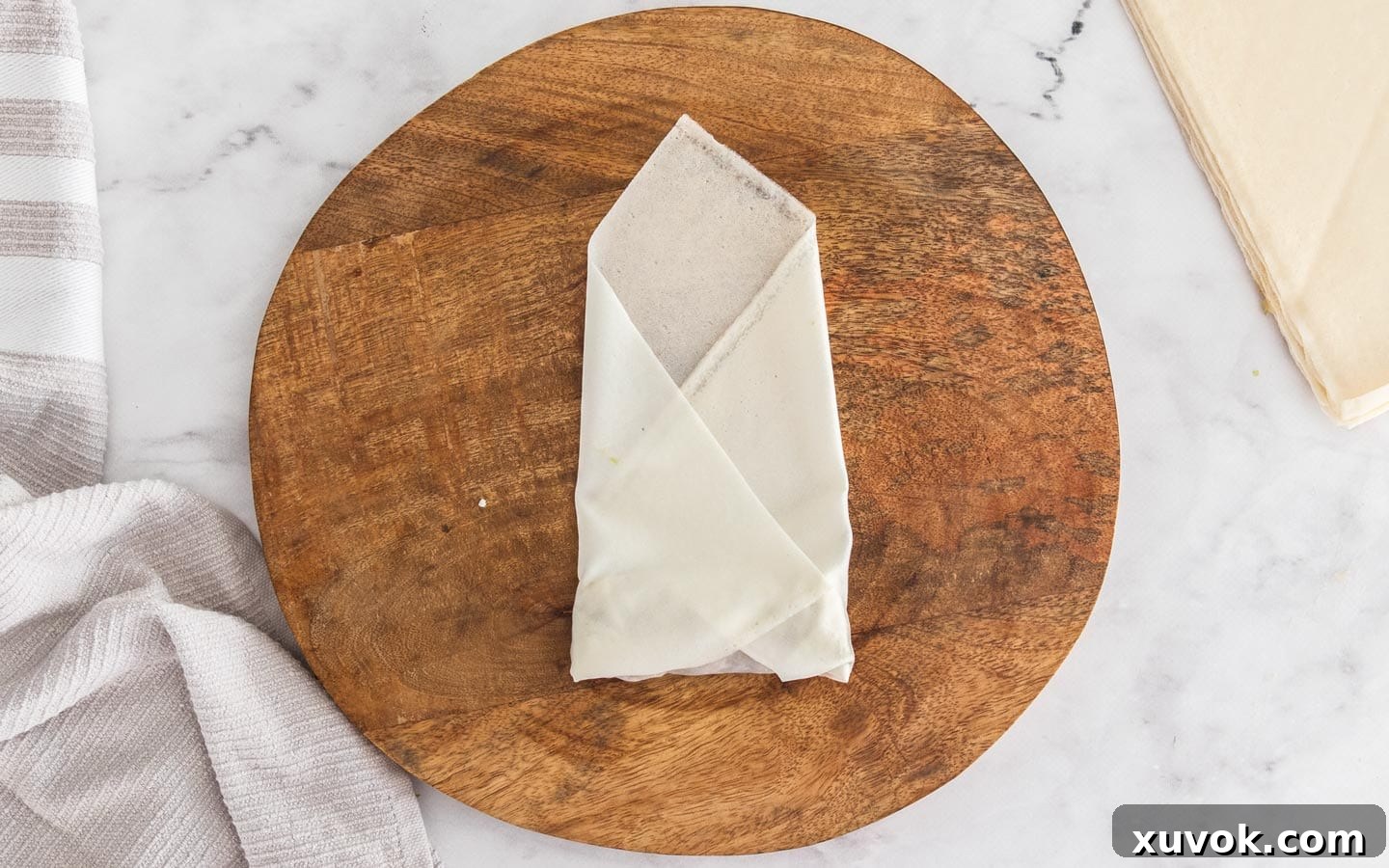
Next, take one of the side corners and fold it inwards towards the center. Repeat this step with the other side corner, creating an envelope shape around the filling. Ensure these folds are tight and neat to prevent any filling from escaping during frying.
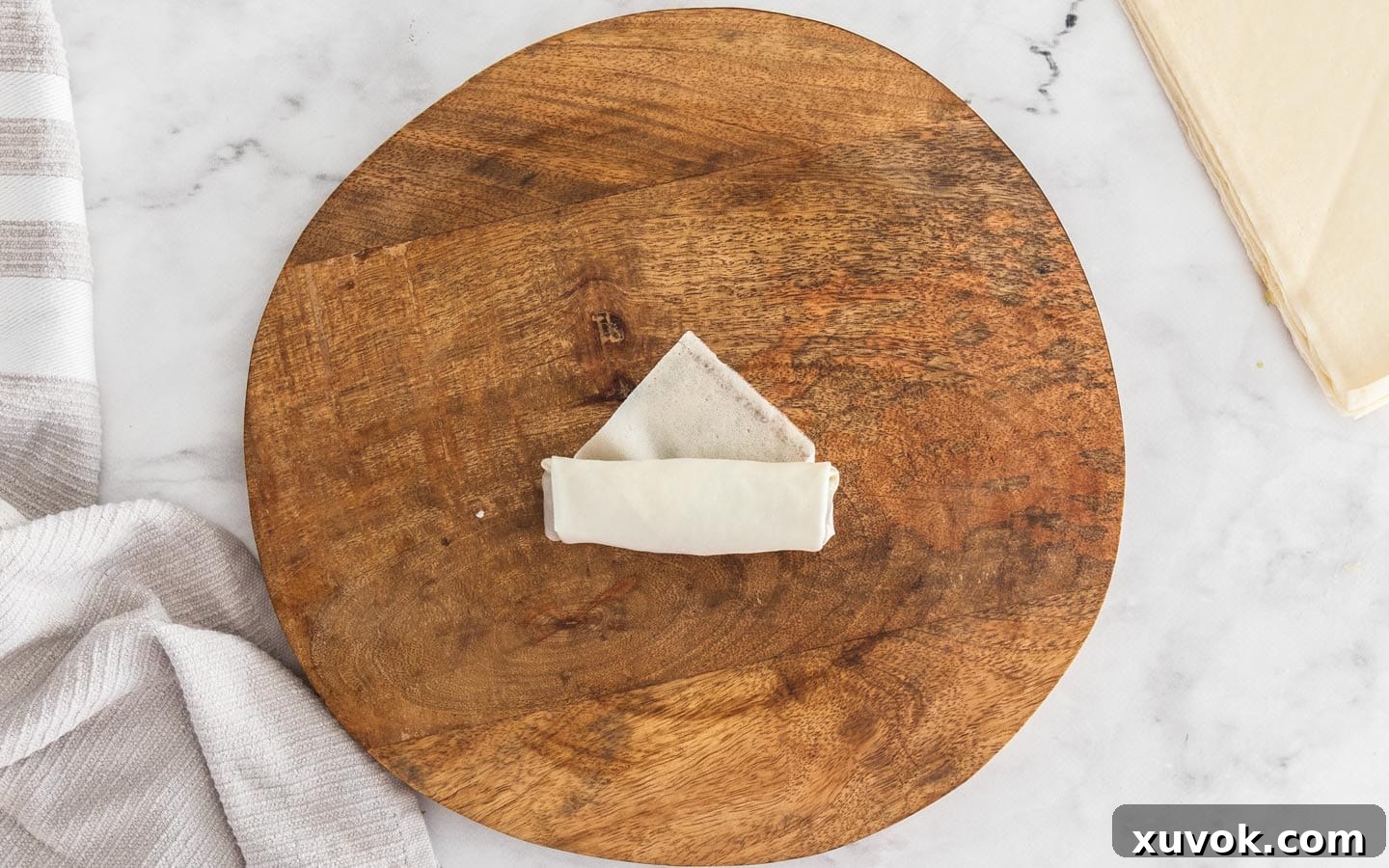
Now, simply roll the spring roll upwards, away from you, keeping the roll as tight and even as possible. Before you reach the final top corner, lightly moisten it with a dab of water. This creates a natural seal. Finish rolling so the moistened corner tucks underneath the roll, securing it in place. If you find that water alone isn’t enough to seal your pastry firmly, you can prepare a simple slurry by mixing a small amount of flour with water to create a paste; this acts as an excellent edible glue. Place the finished spring rolls seam-side down on a baking tray or plate while you prepare the rest.
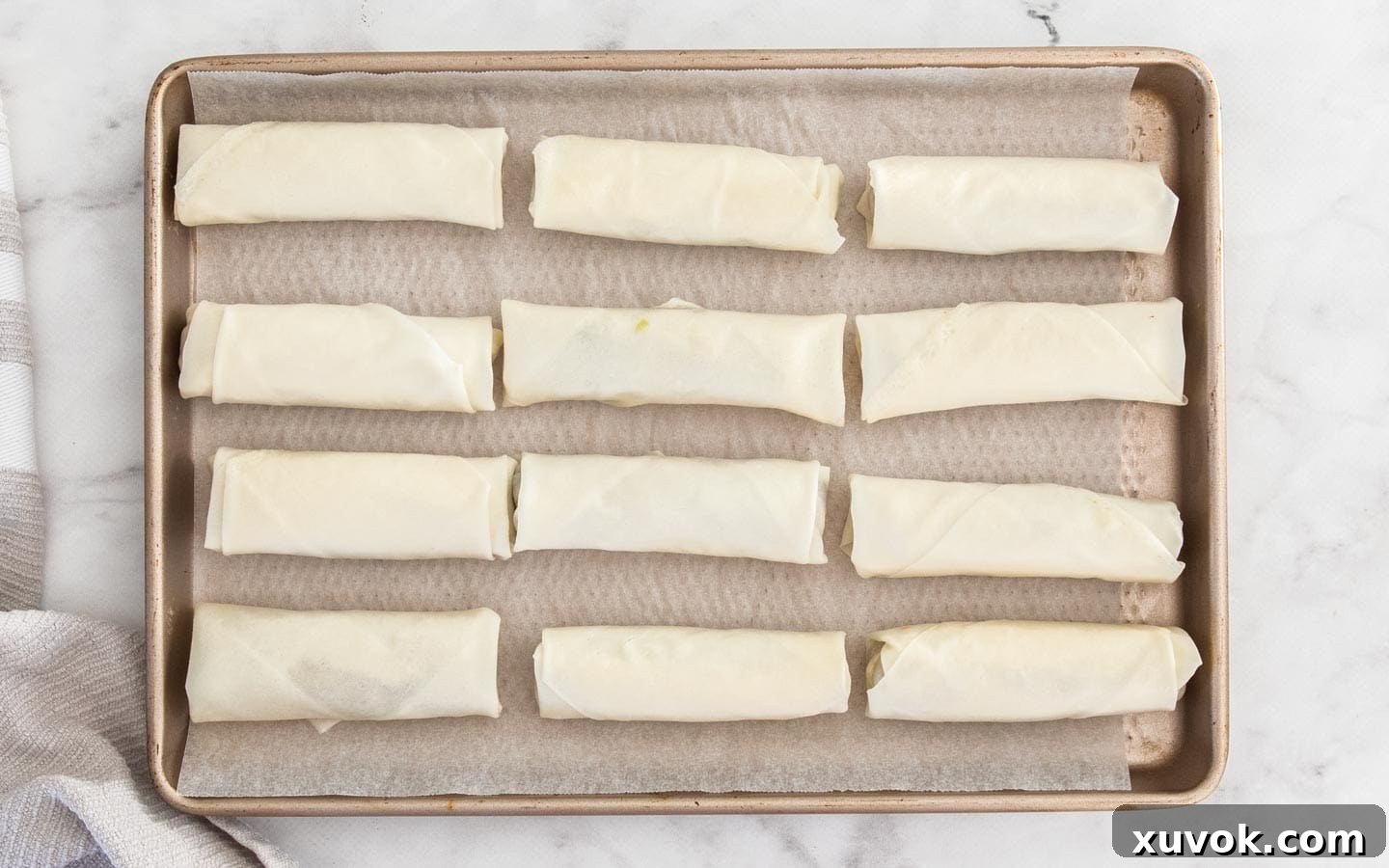
3. Fry the Spring Rolls
For deep frying, heat approximately two inches (5cm) of neutral vegetable oil (such as sunflower, canola, or peanut oil) in a medium or large heavy-based saucepan or a deep fryer. Use a deep fry thermometer to monitor the oil temperature, aiming for a steady 180°C (350°F). Once the oil reaches the correct temperature, carefully lower the prawn spring rolls in batches, ensuring you don’t overcrowd the pan. Frying in batches is essential to maintain the oil temperature and achieve even cooking. Fry for 3-4 minutes, or until they are beautifully golden brown and intensely crispy. The filling will cook perfectly during this time.
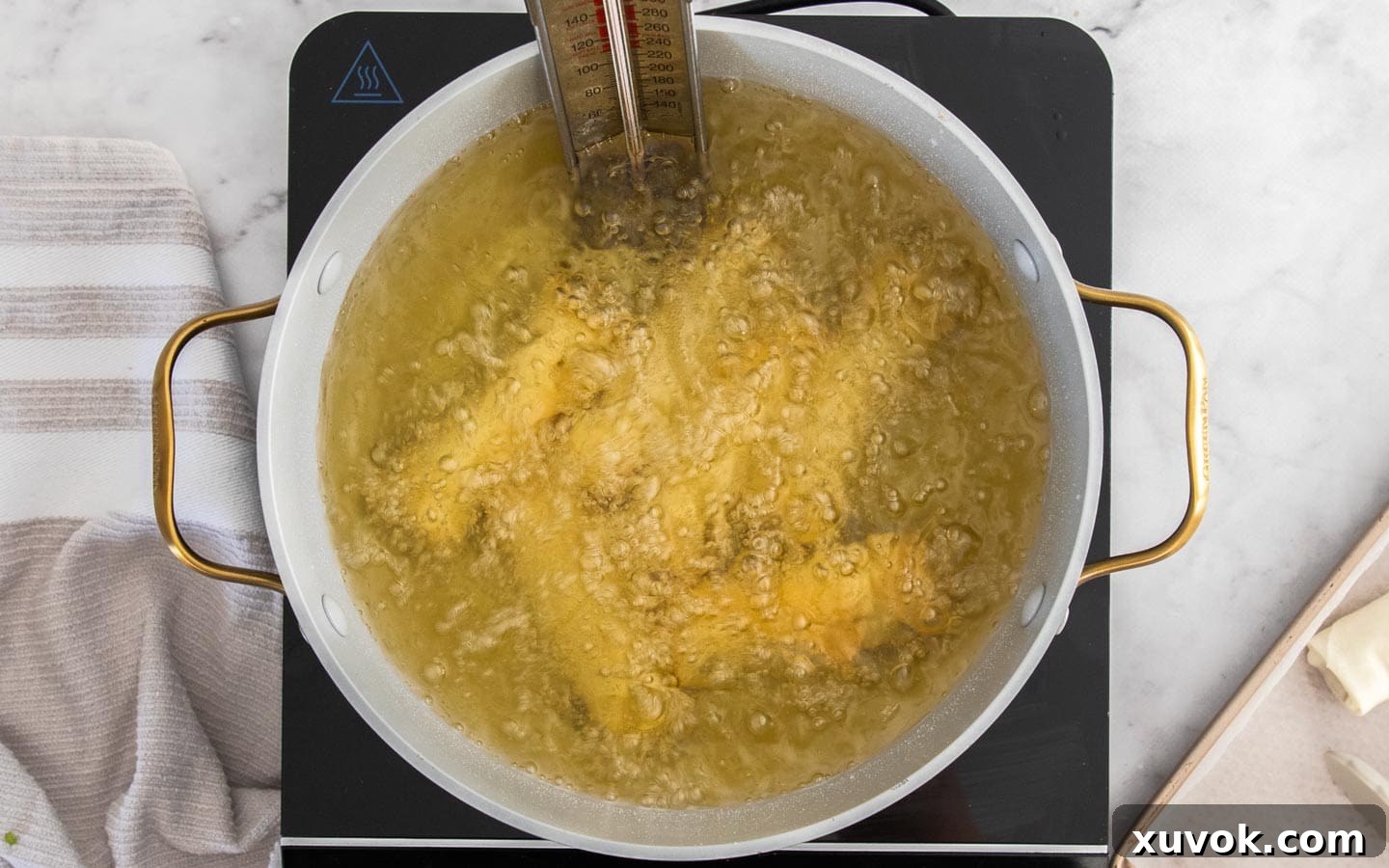
If you prefer to shallow fry your spring rolls, heat about 1cm (¼ inch) of oil in a large skillet, frying pan, or wok over medium-high heat for a few minutes. Cook the spring rolls for 3-4 minutes per side, turning them at least once to ensure even browning and prevent burning. While shallow frying works, deep frying generally yields a more uniformly crispy result.
Once fried, use tongs or a slotted spoon to transfer the hot spring rolls to a plate lined with paper towels. This will help drain any excess oil, ensuring they remain perfectly crisp. Allow them to cool slightly for a minute or two before serving, as the filling will be very hot.
Pro Tips for Perfect Crispy Spring Rolls
- Chop the Prawn Meat Consistently: Aim for small, even chunks, roughly the size of your little fingernail. If the pieces are too large, they can create air pockets within the spring roll, leading to uneven cooking or a less dense filling. If chopped too finely (like a puree), you might lose some of that delightful, firm prawn texture. Consistency is key for uniform cooking and a pleasant mouthfeel.
- Monitor Oil Temperature with a Thermometer: This is perhaps the most crucial tip for frying. A deep-fry thermometer is an invaluable tool. Without one, your oil can easily become too hot, causing the spring rolls to burn quickly on the outside while the inside remains undercooked. Conversely, oil that isn’t hot enough will result in greasy, soggy spring rolls that absorb too much oil. Maintain the temperature between 170-180°C (340-350°F) for optimal crispiness and even cooking.
- Choose the Right Oil: Always use a neutral-flavored vegetable oil with a high smoke point for frying. Sunflower oil, canola oil, and peanut oil are excellent choices. Avoid olive oil, which has a lower smoke point and can impart an undesirable flavor. Your oil should never be smoking; if it is, it’s too hot and needs to cool down slightly before you add the spring rolls.
- Don’t Overcrowd the Pan: Frying in small batches is essential. Overcrowding the pan will drastically lower the oil’s temperature, leading to greasy, less crispy spring rolls. It also makes them harder to flip and manage. Allow enough space around each spring roll for even cooking and browning.
- Handle with Care: Use tongs or a slotted spoon to gently place spring rolls into the hot oil and to retrieve them once cooked. This prevents splashing and ensures safety.
- Ensure Wrappers are Fresh and Thawed Correctly: If using frozen wrappers, ensure they are fully thawed in the refrigerator overnight or at room temperature for a few hours. A dry, brittle wrapper will crack when you try to fold it, while an overly moist one might stick.
- Seal Them Tightly: A proper seal is vital to prevent the filling from leaking out during frying. Don’t hesitate to use a flour-and-water slurry if plain water isn’t sufficient to keep the edges stuck down.
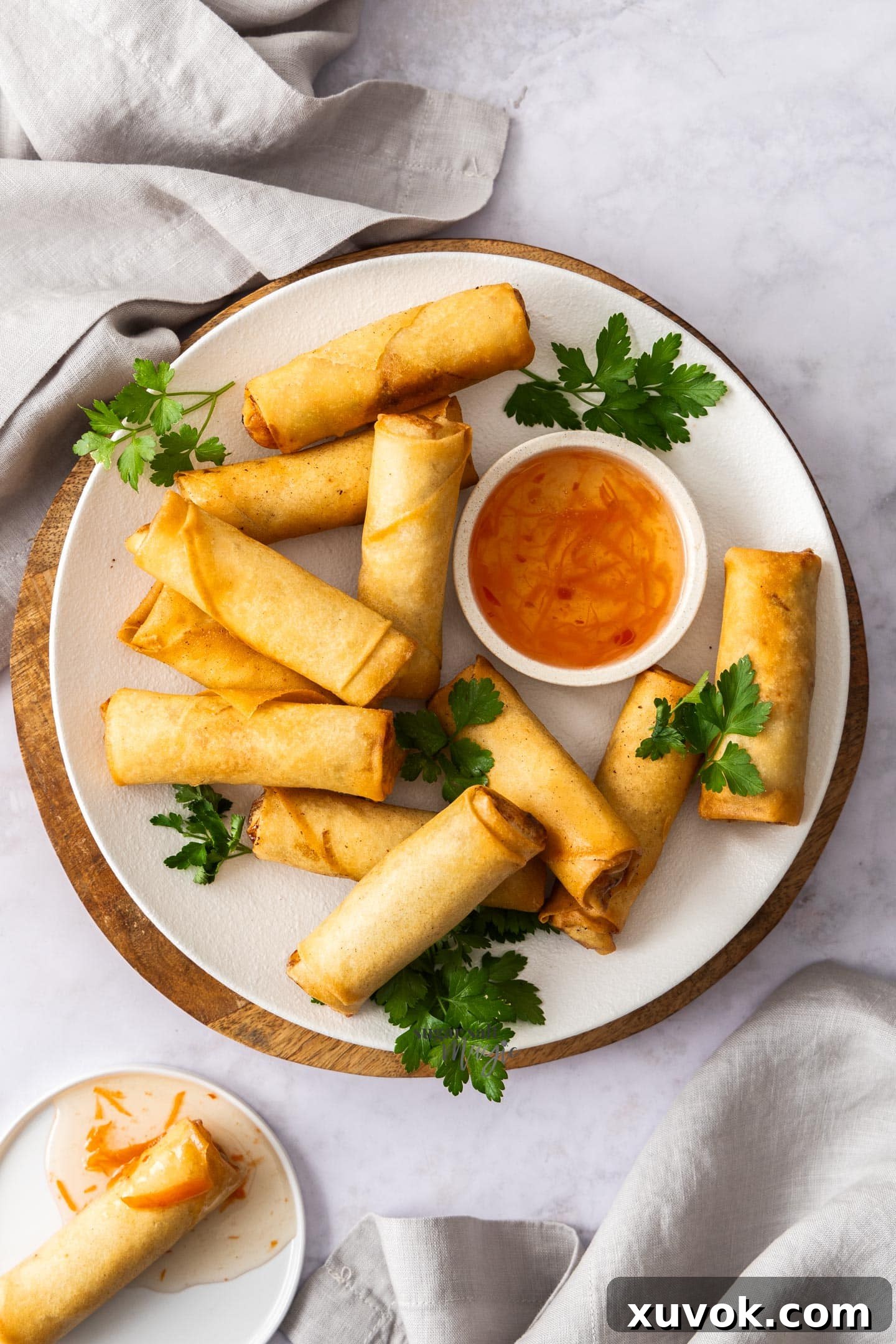
Serving Suggestions: What to Pair with Prawn Spring Rolls
These versatile prawn spring rolls are delightful on their own as a finger food starter or appetizer, but they truly shine when paired with the right accompaniments. Here are some of our favorite ways to serve them:
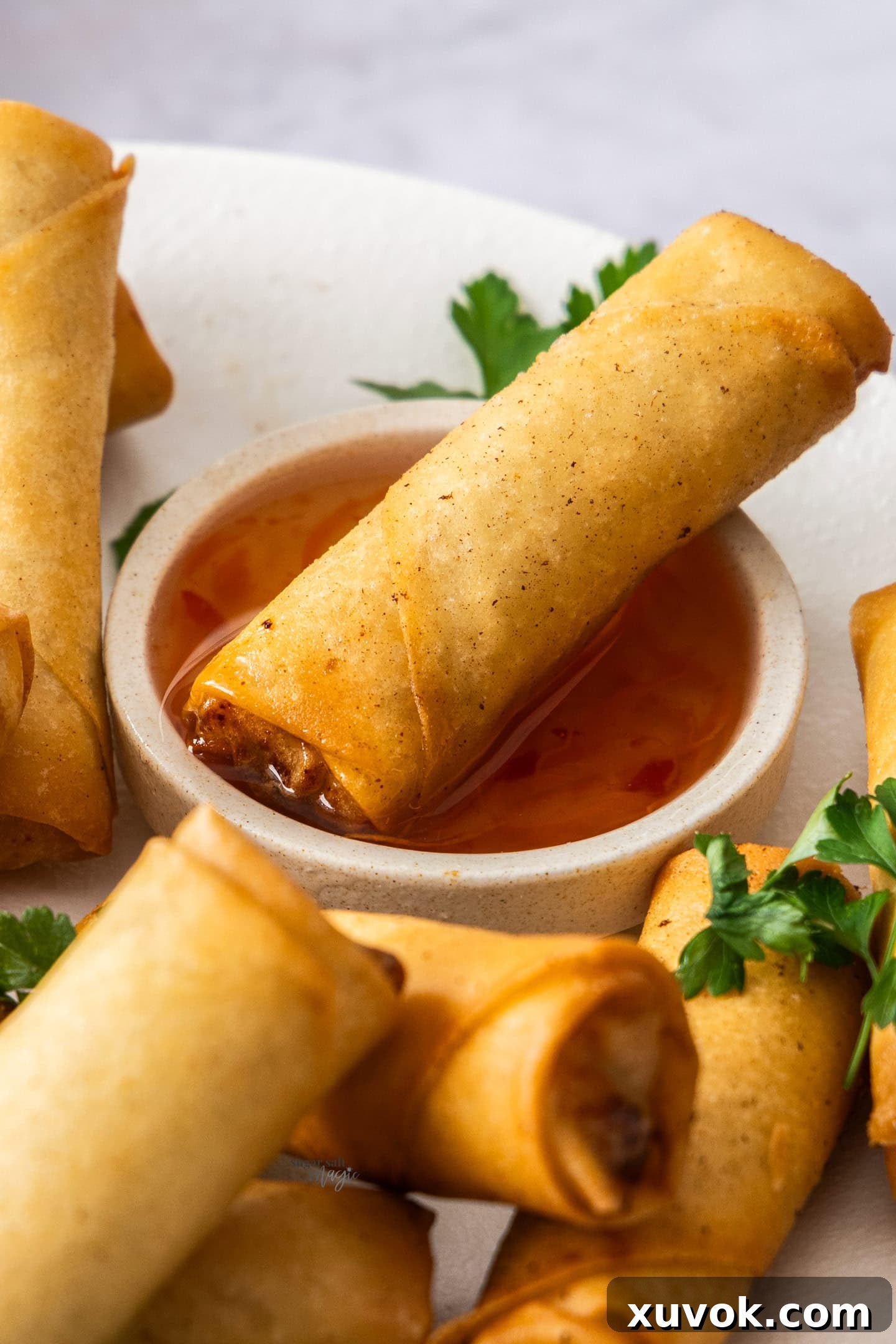
- Classic Dipping Sauces: For a traditional Chinese takeaway experience, sweet chili sauce is an undeniable favorite. Our homemade sweet and sour sauce also offers that perfect tangy and sweet counterpoint to the savory spring rolls. For those who appreciate Southeast Asian flavors, a vibrant Vietnamese Nước chấm or our zesty Thai nam jim sauce offer a refreshing, spicy, and herbaceous kick. Don’t forget the crispness of our ajaad (Thai cucumber chili relish) for a fresh contrast.
- As Part of a Main Meal: Elevate your spring rolls from appetizer to main course by serving them alongside steamed jasmine rice and a vibrant stir-fry. They also pair wonderfully with our flavorful Chinese prawn fried rice for a more substantial and satisfying dinner.
- Lettuce Wraps with Peanut Sauce: One of my personal favorite ways to enjoy these is by serving them with fresh, crisp lettuce leaves (such as butter lettuce or iceberg). Use the lettuce as a cup to wrap around a warm spring roll, then drizzle generously with a rich, creamy peanut sauce. Our peanut dipping sauce, typically served with chicken satay, is absolutely divine with these spring rolls, adding a layer of nutty, savory goodness. The combination of warm, crispy, savory spring roll with cool, crisp lettuce and luscious peanut sauce is simply sensational.
Storage and Make-Ahead Options
Planning ahead can make serving these delicious spring rolls even easier!
- Freezing Uncooked Spring Rolls: If you’ve started with prawns that have never been frozen, you can assemble your prawn spring rolls and freeze them uncooked for up to 2 months. To do this, arrange the rolled spring rolls in a single layer on a baking sheet and freeze until solid. Once frozen, transfer them to an airtight freezer-safe bag or container, separating layers with parchment paper to prevent sticking. When ready to cook, fry them directly from frozen, adding a few extra minutes to the cooking time and ensuring the oil temperature is carefully maintained.
- Freezing Cooked Spring Rolls: If your prawns were previously frozen before you bought them (which is common), it’s best to cook the prawn meat first before freezing. However, for these spring rolls, we use raw prawns in the filling, so if you must freeze them ahead, it’s generally recommended to cook them fully first. Freezing cooked spring rolls can sometimes affect the texture of the prawn filling, but they can still be good.
- Refrigeration (Uncooked): You can prepare and roll the spring rolls a day or so in advance, provided your prawns are very fresh. Store them in an airtight container in the refrigerator, separating layers with parchment paper. Fry them fresh on the day of serving for the best results.
- Refrigeration (Cooked Leftovers): Leftover cooked spring rolls should be stored in an airtight container in the refrigerator for up to 2-3 days. While they won’t be as crispy as when fresh from the fryer, they can be easily reheated.
- Reheating Cooked Spring Rolls: For best results, reheat cooked spring rolls in an air fryer or a conventional oven.
- Air Fryer: Preheat your air fryer to 180°C (350°F). Place the spring rolls in a single layer in the basket and air fry for 5-8 minutes, or until heated through and crispy again. The air fryer excels at bringing back their crunch.
- Oven: Preheat your oven to 190°C (375°F). Arrange spring rolls on a baking sheet and bake for 10-15 minutes, or until hot and re-crisped.
Microwaving is generally not recommended as it will make them soggy.
More Irresistible Prawn Recipes You’ll Love
If you have a passion for prawns, explore these other fantastic recipes:
- Butterflied Prawns (with Nam Jim)
- Prawn Katsu (Ebi Fry)
- Crispy Prawns
- Sizzling Garlic Prawns
- Salt and Pepper Prawns
⭐⭐⭐⭐⭐
Did you try this prawn spring rolls recipe? Share your thoughts and show it some love in the comments below!
Hungry for more? Subscribe to our newsletter for free recipes straight to your inbox. Also, follow along on Facebook, Pinterest and Instagram for daily inspiration.

Prawn Spring Rolls
12
spring rolls
30
minutes
8
minutes
38
minutes
Rate
Pin
Ingredients
- 400 g raw prawn meat (14oz) (notes 2)
- 3 medium spring onions finely chopped
- 1 teaspoon ginger paste or finely grated fresh ginger
- 2 small cloves garlic minced
- 4 teaspoons light soy sauce
- 1 teaspoon sesame oil
- 1 teaspoon cornflour (US cornstarch)
- ¼ teaspoon white pepper
- 12 spring roll wrappers
- vegetable oil for frying
For best results, always weigh ingredients where a weight is provided
Equipment
-
food processor helpful but not essential
-
mixing bowl
-
Large deep heavy-based saucepan
-
Deep fry thermometer
Instructions
-
Dice the prawn meat into very small pieces (about the size of your little finger nail) or use a food processor to pulse just until chopped finely (not pureed).
-
In a bowl, mix together the chopped prawns, spring onions, ginger, garlic, soy sauce, sesame oil, salt, cornflour and white pepper until well combined.
-
With a point facing towards you, place a slightly heaped tablespoon of prawn mixture (or 40g/1 ½ oz) onto the spring roll wrapper about ⅓ of the way in from the point. Fold the point over the top and gently spread the mixture out to about 8cm/3 ¼in log.
-
Fold in the sides. Wet the corner on the opposite side with just a dab of water, then roll the spring roll up then leave it sitting on top of the corner seal to hold it. If you find your points are staying stuck, add a little flour to water to form a slurry and use that as a glue.
-
Heat 5cm/2in of oil in a deep large saucepan to 180C/350F and fry in 2 batches for 3-4 minutes until golden brown.
Keep the temperature of the oil between 170-180C/340-350F the whole time and bring it back up to 180C/350F before placing the next batch in. Don’t overcrowd the pan – if you’re using a smaller pan, fry less spring rolls in a batch).
-
Transfer to a plate lined with paper towel to drain for a couple of minutes before serving.
-
Please take a moment to leave a comment & rating. It’s appreciated and so helpful.
Notes
- Tablespoons: I use a standard Australian 20ml tablespoon (equal to 4 teaspoons). Check yours before measuring.
- Prawns with their shell on, that you shell and devein yourself, will always give you the best texture and flavor – by a long, very noticeable, shot. You’ll need roughly 800g/28oz of prawns in their shells to get 400g/14oz of prawn meat. Larger prawns will be quicker to prepare.
- Nutrition details are approximate only – scroll below the recipe to find the full nutritional information.
MORE APPETISERS AND SNACKS
106
kcal
Marie Roffey
Appetizer
American/Australian, Chinese
Have you tried this recipe?
Don’t forget to leave a rating and comment below and let me know how it was! I love hearing from you. Nutrition information is approximate and derived from an online calculator. The brands you use may cause variations.
Calories from Fat 27