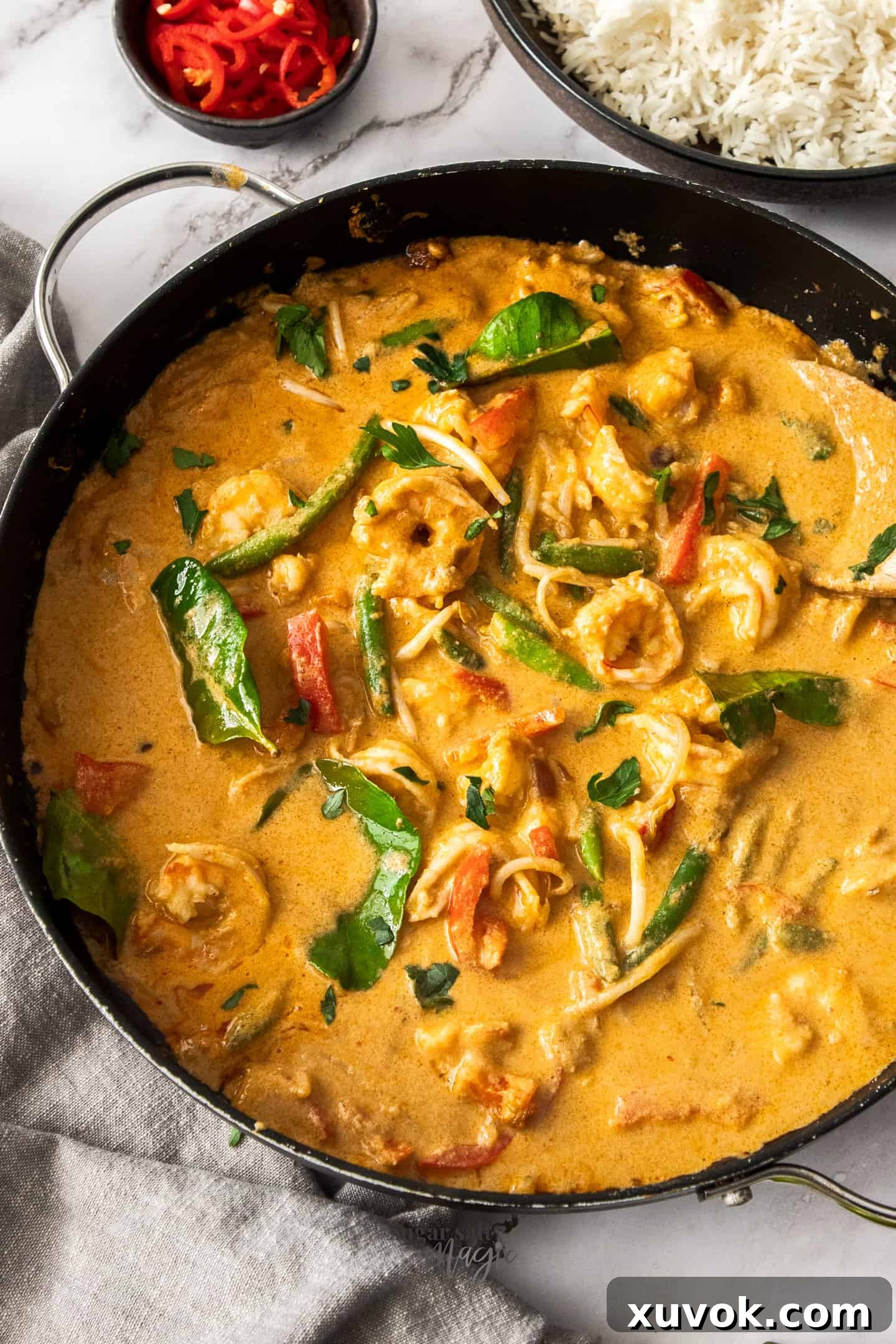
Welcome to a culinary journey where convenience meets authentic Thai flavor! Prepare to elevate your weeknight dinner with this incredibly quick and easy Thai Panang Curry featuring succulent prawns (shrimp). Served with a side of fragrant steamed jasmine rice, this dish is a vibrant symphony of sweet, salty, spicy, and tangy notes, making it an instant favorite for anyone who appreciates the rich tapestry of Asian cuisine.
If you’re as passionate about Asian flavors as we are, you’ll also adore these other irresistible recipes: for a crispy, flavorful appetizer, try our Salt and Pepper Prawns, or dive into the aromatic depths of this Lime Coconut Chicken.
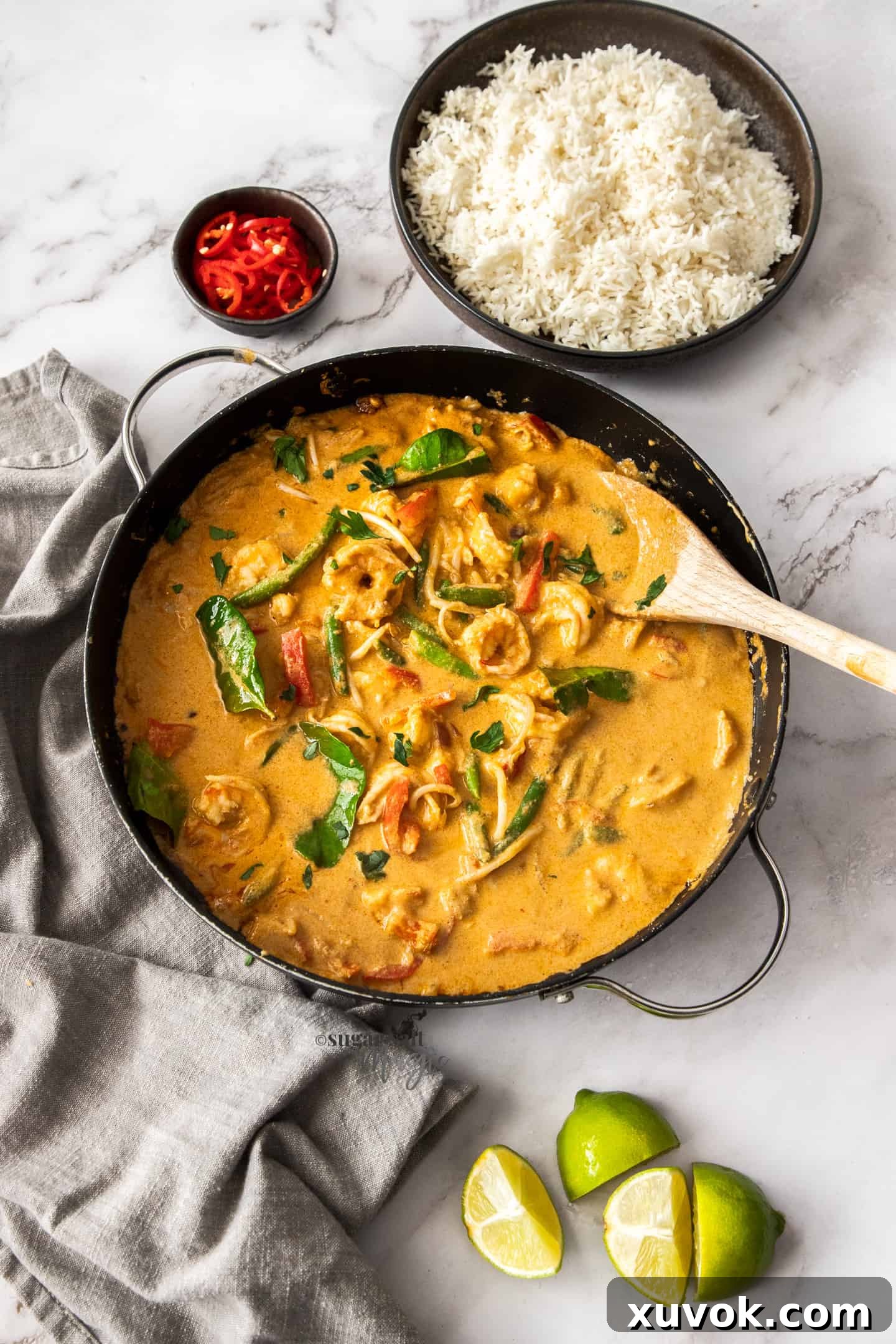
Table of Contents
- Why This Prawn Panang Curry is a Must-Try
- What Defines Thai Panang Curry?
- The Secret to Great Panang Curry Paste
- Essential Ingredients for Your Panang Prawn Curry
- Step-by-Step: How to Make Prawn Panang Curry
- Prepping for Success
- Expert Tips and Tricks for the Perfect Panang
- Serving Suggestions and Variations
- Storage and Reheating Panang Curry
- Frequently Asked Questions About Panang Curry
Why This Prawn Panang Curry is a Must-Try
This Panang Curry recipe isn’t just another dish; it’s a culinary experience designed for both the novice cook and the seasoned home chef. Here’s why you’ll want to add it to your regular rotation:
- Unbelievably Quick & Easy: Perfect for busy weeknights, this recipe comes together in under 30 minutes from start to finish. Fast food just got a gourmet upgrade!
- Luxuriously Creamy & Flavorful Sauce: Indulge in a rich, velvety sauce that perfectly balances sweetness, tang, and a subtle kick of spice. Each spoonful is a delight.
- Juicy, Succulent Prawns: Large, plump prawns (shrimp) absorb all the incredible flavors of the curry, offering a tender bite in every mouthful.
- Highly Adaptable: While prawns are exceptional, this curry base is incredibly versatile. Feel free to substitute with chicken, tofu for a vegetarian option, or even beef for a heartier meal.
Whether you’re hosting a dinner party or simply craving a comforting, aromatic meal, this Panang curry delivers on all fronts.
What Defines Thai Panang Curry?
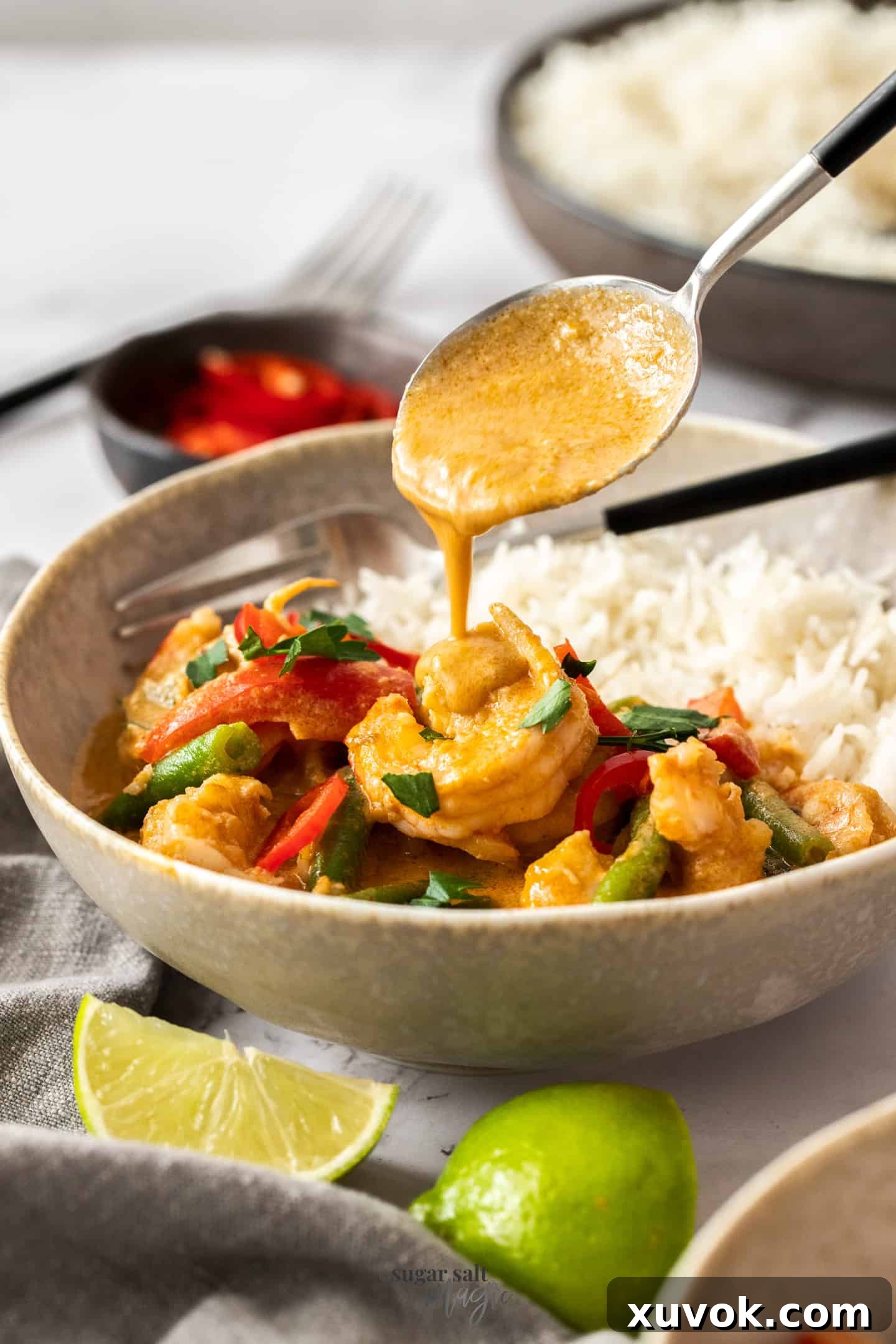
Panang curry stands out in the vibrant world of Thai cuisine with its distinctive characteristics. Often compared to Thai red curry, Panang curry boasts a thicker, richer sauce and a more pronounced nutty, sweet, and sour profile, setting it apart. Unlike a typical red curry, Panang traditionally incorporates peanuts or peanut butter, which contribute to its signature creamy texture and unique depth of flavor.
You’ve likely encountered Panang curry on the menu of your favorite Thai restaurant – and for good reason! Its complex yet perfectly balanced taste, featuring notes of coconut, lime, and a gentle spice, makes it incredibly appealing. The sauce is a creamy embrace, beautifully coating every ingredient and delivering an authentic taste of Thailand right to your table. Originating from the Malaysian state of Penang (hence “Panang”), this curry beautifully merges regional influences into a globally beloved dish.
The Secret to Great Panang Curry Paste
For this convenient recipe, we embrace the simplicity of a high-quality store-bought Panang curry paste. Most well-stocked grocery stores or Asian markets will carry it in their international foods section. While a homemade curry paste, brimming with fresh ingredients, offers unparalleled satisfaction, it can be time-consuming and requires a wide array of specific ingredients that aren’t always readily available.
Panang curry paste is characterized by its aromatic blend of tangy elements such as lemongrass, galangal, kaffir lime zest, and often a touch of citrus. These vibrant flavors are harmoniously balanced by the richness of dried chilies, shrimp paste, and, crucially, peanuts and coconut, which mellow the spice and add a creamy depth. Even with a store-bought paste, I always recommend adding a little extra fresh onion and garlic to “oomph” up the flavor profile and make it taste even more authentic and homemade.
If Panang paste is hard to find, a good quality Thai red curry paste can be a close substitute. To nudge it closer to Panang’s unique tang, consider adding a touch of very finely chopped lemongrass or a squeeze of fresh lime juice to your red curry paste blend.
Essential Ingredients for Your Panang Prawn Curry
Crafting an authentic and delectable Panang curry relies on a few key ingredients. Here’s a closer look at what you’ll need and how each component contributes to the final masterpiece:
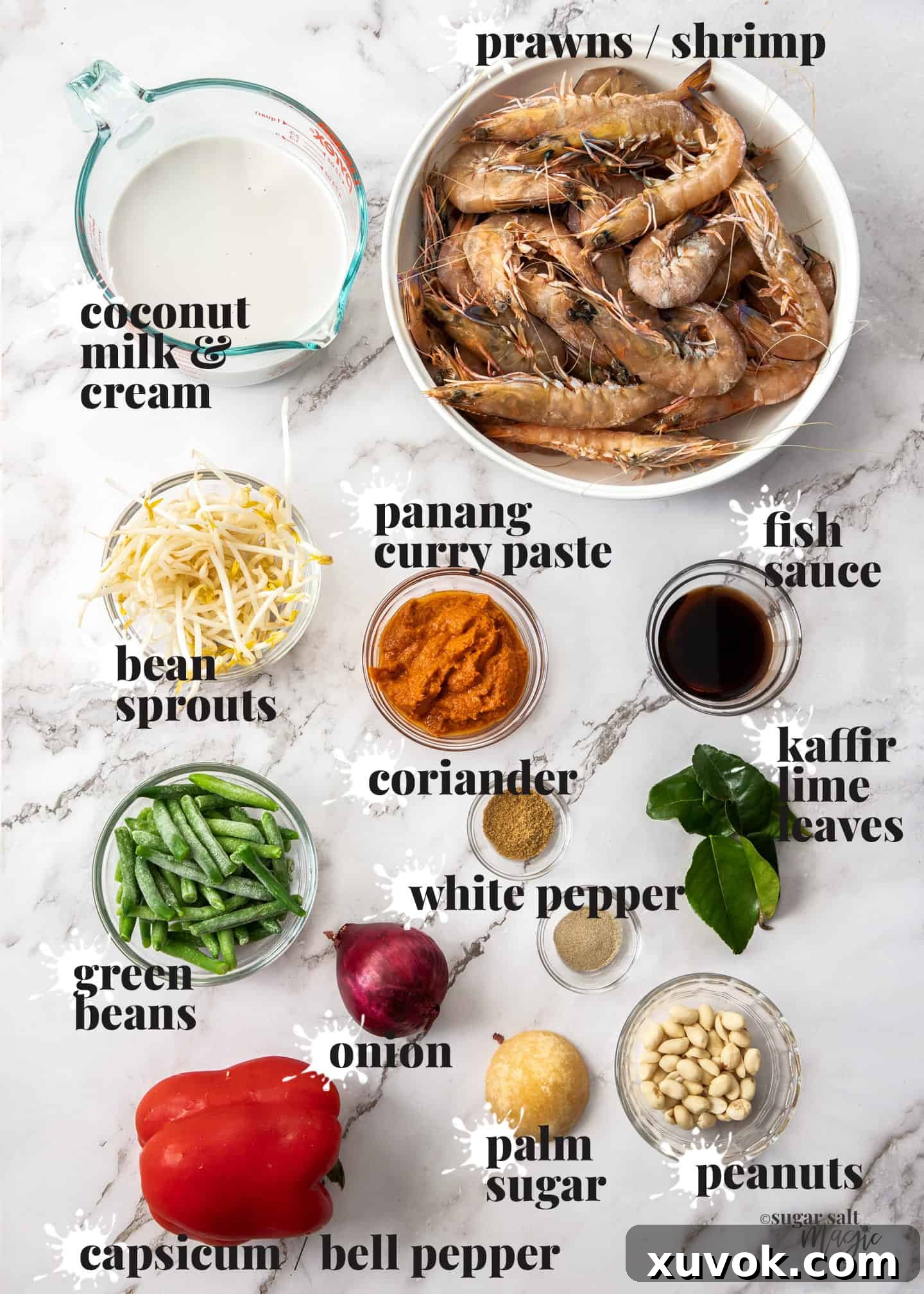
- Panang Curry Paste: This is the heart of your curry. As mentioned, a good quality store-bought paste works wonders for convenience. If you’re in a pinch, a red curry paste can be a decent stand-in; just remember to boost its tang with some finely minced lemongrass or fresh lime. You could even experiment with green curry paste for a different flavor profile!
- Prawns / Shrimp: For the best texture and flavor, I highly recommend using raw prawns with their shells on. Shelling them yourself just before cooking ensures the delicate meat remains firm and juicy, unlike pre-shelled, frozen options which can sometimes be watery. If prawns aren’t your preference, this recipe is incredibly adaptable to chicken, beef, or even tofu for a delightful vegetarian alternative.
- Fresh Vegetables: To add color, texture, and nutrition, I love incorporating green beans, vibrant red capsicum (bell pepper), and crisp bean sprouts into this curry. Other excellent additions include tinned bamboo shoots, sliced carrots, or even snow peas.
- Fish Sauce: An absolute cornerstone of Thai cooking, fish sauce (Nam Pla) provides an essential salty, savory, umami depth that is irreplaceable. While its aroma can be pungent raw, it magically transforms into a rich, complex seasoning once cooked into the sauce. Adjust to taste, as different brands vary in saltiness.
- Coconut Milk and Cream: These provide the signature creamy base and rich, slightly sweet coconut flavor characteristic of Thai Panang curry. Using full-fat coconut milk and especially coconut cream is key to achieving that luscious, thick sauce texture that Panang is famous for.
- Palm Sugar: Authentic Thai cooking often uses palm sugar, which comes in block form and needs to be grated. It offers a mellow, caramel-like sweetness that is distinct from white granulated sugar. If palm sugar is unavailable, light brown sugar can be used as a substitute, but use slightly less as brown sugar tends to be sweeter.
- Peanuts: Essential for that characteristic nutty flavor and slight crunch in Panang curry. While some recipes use natural peanut butter for ease, I prefer to toast raw peanuts and grind them myself. This simple step significantly enhances their nutty aroma and flavor, making a noticeable difference to the finished dish.
- Kaffir Lime Leaves: These fragrant leaves are quintessential to Southeast Asian cuisine, imparting a uniquely bright, citrusy, and floral aroma. They are often found in the fresh herb section of grocery stores or in Asian markets. Their flavor is truly unique, so while a bruised lemongrass stalk or a few strips of lime peel can offer a hint of citrus, there’s no perfect substitute for kaffir lime leaves. Be sure to “scrunch” them before adding to release their aromatic oils.
Discover more about crafting delicious Thai meals by checking out my guide to Essential Thai Ingredients.
Step-by-Step: How to Make Prawn Panang Curry
Prepping for Success:
Thai curries come together quickly, so “mise en place” (everything in its place) is crucial. Have all your ingredients chopped, measured, and ready to go before you even turn on the stove. If serving with rice, start cooking that first so it’s ready when the curry is.
First, prepare your peanuts: Toast the raw peanuts in a dry pan over medium heat, stirring frequently, until they become lightly golden and wonderfully fragrant. This step deepens their nutty flavor, which is vital for the Panang curry’s distinctive taste.

- Once toasted, grind the peanuts into fine crumbs using a blender or spice grinder. Then, add your Panang curry paste, roughly chopped red onion, ground coriander, and white pepper. A tablespoon of water will help it blend into a smooth, aromatic paste.
- Heat your chosen oil (peanut or coconut oil works beautifully) in a large skillet or wok over medium-high heat. Add the prepared curry paste mixture and sauté, stirring constantly, for about 2 minutes until it becomes incredibly fragrant. This step is crucial for blooming the spices.
- Next, pour in the combined coconut milk and coconut cream. Stir thoroughly to incorporate the paste into the liquids. Bring the mixture to a gentle boil, then reduce heat and allow it to simmer for a couple of minutes until it visibly thickens to a rich, creamy consistency (similar to photo 1 in the collage).
- Add your firmer vegetables, such as green beans and sliced red capsicum. Continue to cook for another 1-2 minutes until they start to soften slightly but retain a pleasant bite (similar to photo 2).
- Now it’s time for the star of the show: the prawns! Add the raw prawns to the simmering curry. Cook for just 2-3 minutes, stirring gently, until they begin to curl and turn opaque. Be careful not to overcook them, as prawns cook very quickly and can become rubbery (similar to photo 3).
- Stir in the remaining ingredients: grated palm sugar, scrunched kaffir lime leaves, a handful of bean sprouts, and half of the fish sauce. Continue to cook for another 1-2 minutes, just until the prawns are fully cooked through and the bean sprouts are slightly wilted (similar to photo 4).
- Perform a final taste test. This is your moment to adjust the balance of flavors. If it needs more saltiness, add another splash of fish sauce. For extra sweetness, a touch more palm sugar will do the trick. A squeeze of fresh lime juice can add a wonderful zing if the curry feels too rich. If the sauce is too thick, thin it out with a little water or chicken broth.
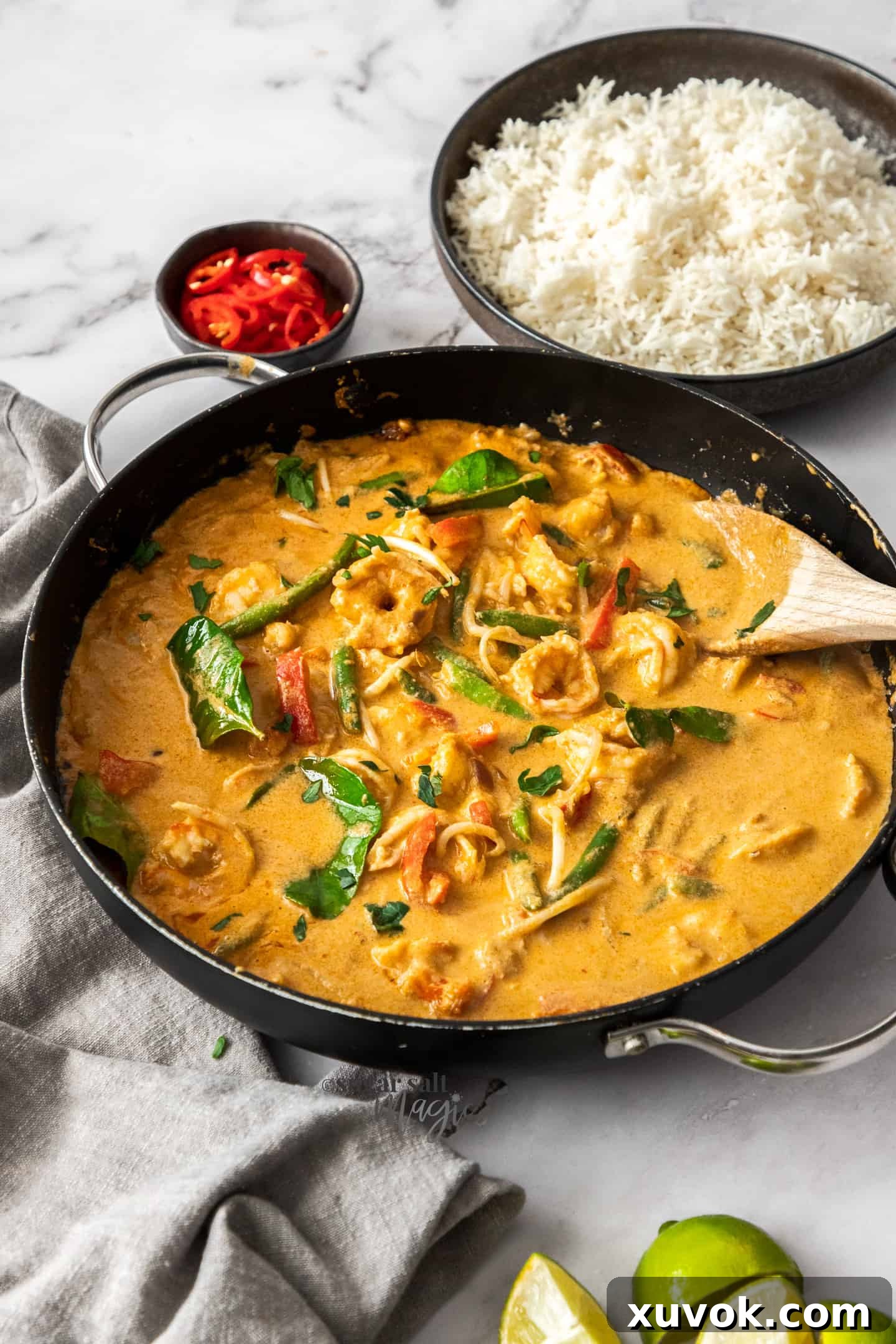
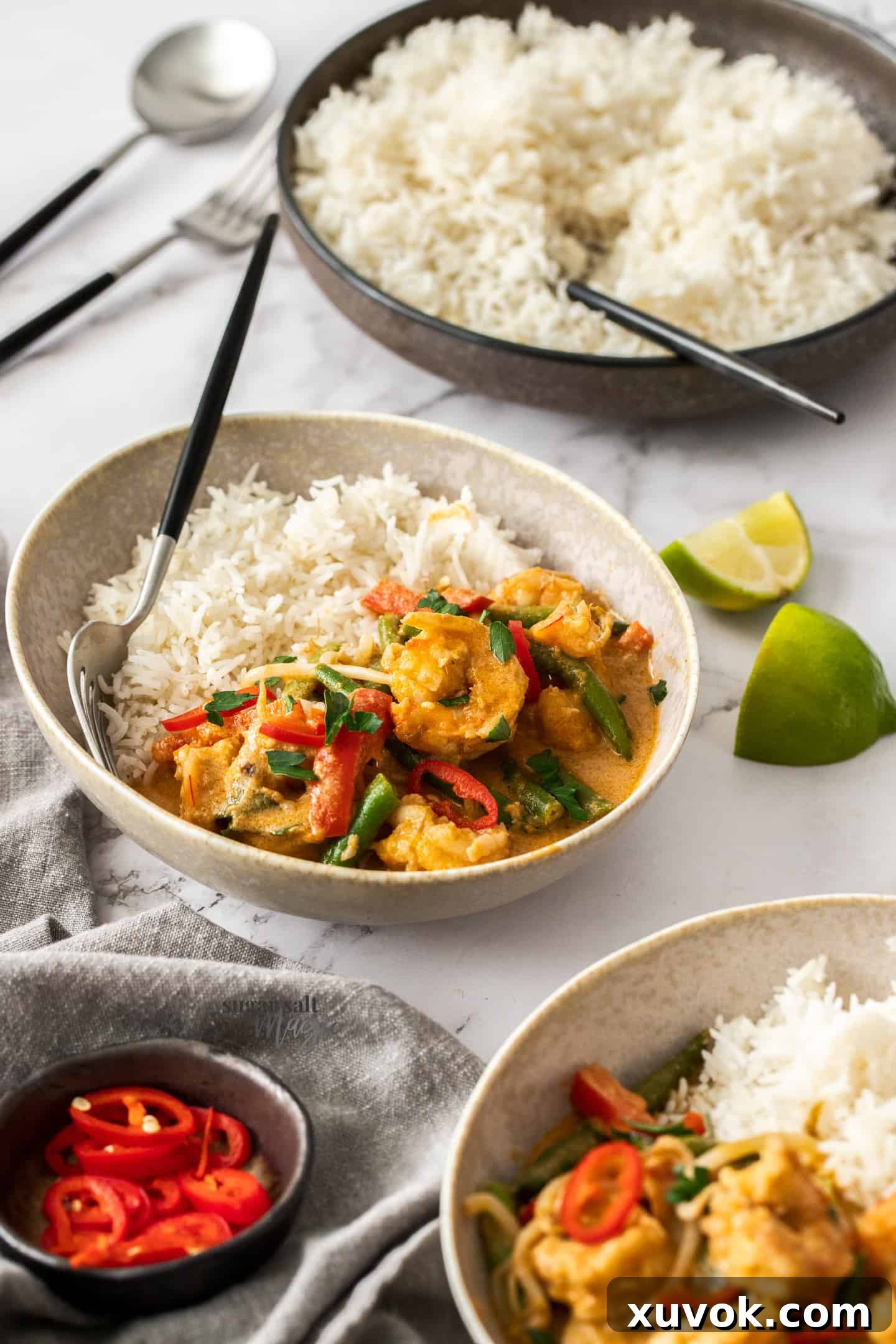
- Before serving, remember to remove the kaffir lime leaves. Serve your exquisite Panang curry immediately over fluffy steamed jasmine rice, garnished with fresh lime wedges, sliced red chilies, and a sprinkle of fresh coriander or Thai basil.
Pro-Tip for Chicken: If you’re using chicken instead of prawns, add the sliced chicken when you add the vegetables. Cook until the chicken is almost done before adding the remaining ingredients, ensuring it’s cooked through but still tender.
Expert Tips and Tricks for the Perfect Panang
- Shell Your Own Prawns: It might seem like an extra step, but trust me, the texture of prawns you shell yourself is vastly superior. The shells protect the delicate meat during freezing, resulting in a much firmer and more flavorful prawn. Shell them ahead of time to save precious minutes when dinner time rolls around.
- Embrace Full-Fat Coconut: For the most luxurious flavor and ideal thickness, always opt for full-fat coconut milk and coconut cream. They contribute significantly to the rich mouthfeel that defines an authentic Panang curry.
- Activate Kaffir Lime Leaves: Before adding kaffir lime leaves to your curry, gently bruise or “scrunch” them. This simple action helps release their intensely fragrant oils, infusing your curry with their unique, citrusy aroma. Any unused leaves can be frozen for later use, preventing waste.
- Taste and Adjust Seasoning: Thai cooking is all about balance. Always taste your curry before serving and adjust the seasoning as needed. Add more fish sauce for salt, palm sugar for sweetness, or a squeeze of fresh lime juice for an extra zing and brightness. Different curry pastes and fish sauces can vary in intensity, so trusting your palate is key.
- Don’t Overcook the Prawns: Prawns cook very quickly. Overcooking can make them tough and rubbery. Add them towards the end of the cooking process and remove the curry from the heat as soon as they turn opaque.
PIN IT:
Click to PIN this recipe for later!
Serving Suggestions and Variations
This Thai Panang Curry with Prawns is a truly versatile dish that pairs beautifully with several accompaniments. Beyond the classic steamed jasmine rice, here are some ideas to enhance your meal:
- Classic Steamed Rice: A must-have! Fluffy jasmine rice is perfect for soaking up every last drop of the rich, creamy sauce.
- Fresh Garnishes: Elevate the presentation and flavor with a sprinkle of fresh coriander (cilantro), Thai basil leaves, thinly sliced red chilies for a touch of heat, and crunchy toasted peanuts. Lime wedges on the side allow everyone to add a burst of fresh citrus.
- Flatbreads: For a delightful alternative to rice, serve with a warm, soft flatbread like this easy 3-ingredient flatbread. It’s perfect for mopping up all that delicious, savory sauce!
- Noodles: Rice noodles or even egg noodles can be a great base for this curry, especially if you prefer a noodle dish.
- Add More Vegetables: Don’t hesitate to incorporate more of your favorite vegetables. Broccoli florets, snap peas, bok choy, mushrooms, or even chunks of sweet potato would all be fantastic additions. Add harder vegetables earlier in the cooking process to ensure they cook through.
Storage and Reheating Panang Curry
Leftover Panang curry is just as delicious, if not more so, the next day as the flavors have more time to meld. Here’s how to store and reheat it:
- Storage: Allow the curry to cool completely, then transfer it to an airtight container. Store in the refrigerator for up to 3-4 days. You can also freeze it for up to 2-3 months. If freezing, portion it into individual servings for easier thawing and reheating.
- Reheating:
- Stovetop: Gently reheat the curry in a saucepan over medium-low heat, stirring occasionally, until heated through. If the sauce has thickened too much, add a splash of coconut milk or water to reach your desired consistency.
- Microwave: For individual servings, microwave on medium power, stirring every minute, until piping hot.
Note: If you froze the curry with prawns, they might become slightly tougher upon reheating. For best results when freezing, you can cook the curry sauce separately and add freshly cooked prawns when serving, or accept a slight change in prawn texture.
Frequently Asked Questions About Panang Curry
- Is Panang curry very spicy?
Panang curry typically has a moderate level of spice. It’s generally milder than Thai green curry but spicier than Massaman curry. The heat level can be adjusted by adding more or less curry paste, or by including fresh chilies as a garnish. - What makes Panang curry different from Red curry?
The main differences lie in their texture, sweetness, and the inclusion of peanuts. Panang curry is usually thicker and sweeter than red curry, and it traditionally contains ground peanuts, which give it a distinct nutty flavor and creamy consistency. Red curry is typically thinner and focuses more on the chili heat and aromatic herbs. - Can I make this vegetarian or vegan?
Absolutely! For a vegetarian version, substitute prawns with firm tofu, tempeh, or a mix of hearty vegetables like cauliflower or mushrooms. For a vegan version, ensure your curry paste is free of shrimp paste (most store-bought pastes will specify), and use vegetable oil instead of peanut oil if preferred. - What if I can’t find kaffir lime leaves?
While kaffir lime leaves offer a unique flavor, if you can’t find them, you can try substituting with a bruised stalk of lemongrass or the zest of one lime. The flavor won’t be identical, but it will provide a similar aromatic, citrusy note.
I proudly present to you this delectable Thai Panang Curry with Prawns. It’s an absolute triumph of flavors and textures, promising a satisfying and memorable meal. Now, ‘curry-up’ and give it a try – you won’t regret it!
If you try this prawn Panang curry recipe, be sure to come back and leave a rating and comment below. I love hearing from you and seeing your culinary creations!
More Asian Flavors You’ll Love
- Thai Satay Chicken
- Thai Fish Cakes
- Crispy Asian Chilli Beef Mince
- Honey Pepper Pork Stir Fry
- Thai Green Chicken Curry
- Thai Green Curry Paste
- Turkey San Choy Bow
Never Miss a Recipe!
Get the latest recipes straight to your inbox!
Sign up for our newsletter to receive new recipes directly in your inbox!

Thai Panang Curry with Prawns (Shrimp)
Rate
Pin
Ingredients
- ⅓ cup unsalted peanuts
- ⅓ cup Panang Curry paste
- 1 small red onion, roughly chopped
- 1 tsp ground coriander
- ½ tsp ground white pepper
- 1 ½ tablespoons peanut or coconut oil (notes 1)
- 1 ½ cups coconut milk (375ml) (notes 3)
- 1 cup coconut cream (250ml) (notes 3)
- 1 medium red capsicum (bell pepper), sliced
- 1 cup green beans, trimmed, fresh or frozen
- 1.2 kg raw prawns, shell on (or 600g prawn meat) (2.5lb shell on / 1.3lb shelled) (notes 2)
- 1 tablespoon grated palm sugar (notes 1)
- 1-2 tablespoons fish sauce (notes 1&5)
- 4-5 kaffir lime leaves, scrunched (notes 4)
- 1 handful of bean sprouts
- steamed rice, sliced red chilli and wedges of lime, to serve
- Fresh coriander (cilantro) or Thai basil, to serve
For best results, always weigh ingredients where a weight is provided
Instructions
-
Toast the peanuts in a dry pan over medium heat, stirring often until turning golden.
-
Grind the peanuts to crumbs in a blender or spice grinder. Add the curry paste, onion, pepper and coriander and 1 tablespoon of water and blend to combine.
-
Heat the oil in a large pan or skillet over medium-high heat. Add the curry paste mixture to the pan. Cook stirring often for 2 minutes until fragrant.
-
Add the combined coconut milk and cream. Stir to combine, then bring to a boil for a couple of minutes until slightly thickened,
-
Add the beans and capsicum and bring back to a simmer. Cook for 1 minute.
-
Add the prawns and cook for 2-3 minutes until starting to curl up and turn white.
-
Add the rest of the ingredients – palm sugar, kaffir lime leaves, bean sprouts and half of the fish sauce. Stir and cook for a further 1-2 minutes until the prawns are fully cooked.
-
Add a little water if you want to thin out the sauce, then taste for seasoning. Add more fish sauce for saltiness, more palm sugar for sweetness or a squeeze of lime for zing.
-
Remove the kaffir lime leaves then serve immediately over rice. Add lime wedges, sliced chilli and herbs.
Notes
- I use an Australian standard 20ml tablespoon (= 4 teaspoons worldwide).
- Shell the prawns yourself: I know it’s not for everyone but I promise, prawns / shrimp with their shells on when you buy them will always have a much better texture than those already shelled. As most are frozen before they’re sold, the shells protect that delicate meat when freezing. It’s great to peel the prawns ahead of time to speed up dinner time 🙂
- Full fat coconut milk and cream: Full fat will give the best flavour and thicken up nicely.
- Kaffir lime leaves: Give these a scrunch before you add them in as it will release their fragrant oils. Any leftover kaffir lime leaves will keep in the freezer well, so no need to throw away the ones you don’t use.
- Fish sauce: Different curry pastes will have different levels of salt already in them. I use Valcom brand and find the 2 tablespoons of fish sauce perfect but reader Vishnu uses Mae Ploy and suggests the 2Tbs is too much. Just add half to begin with, then adjust right at the end after tasting if required.
- Serve it with: Plain steamed rice works best but add some wedges of lime and a sprinkle of fresh herbs like coriander (cilantro) or Thai basil. Some whole toasted peanuts are also great for some crunch.
MORE ASIAN INSPIRED RECIPES!
Lime Chilli Coconut Chicken
Golden Sesame Prawn Toast