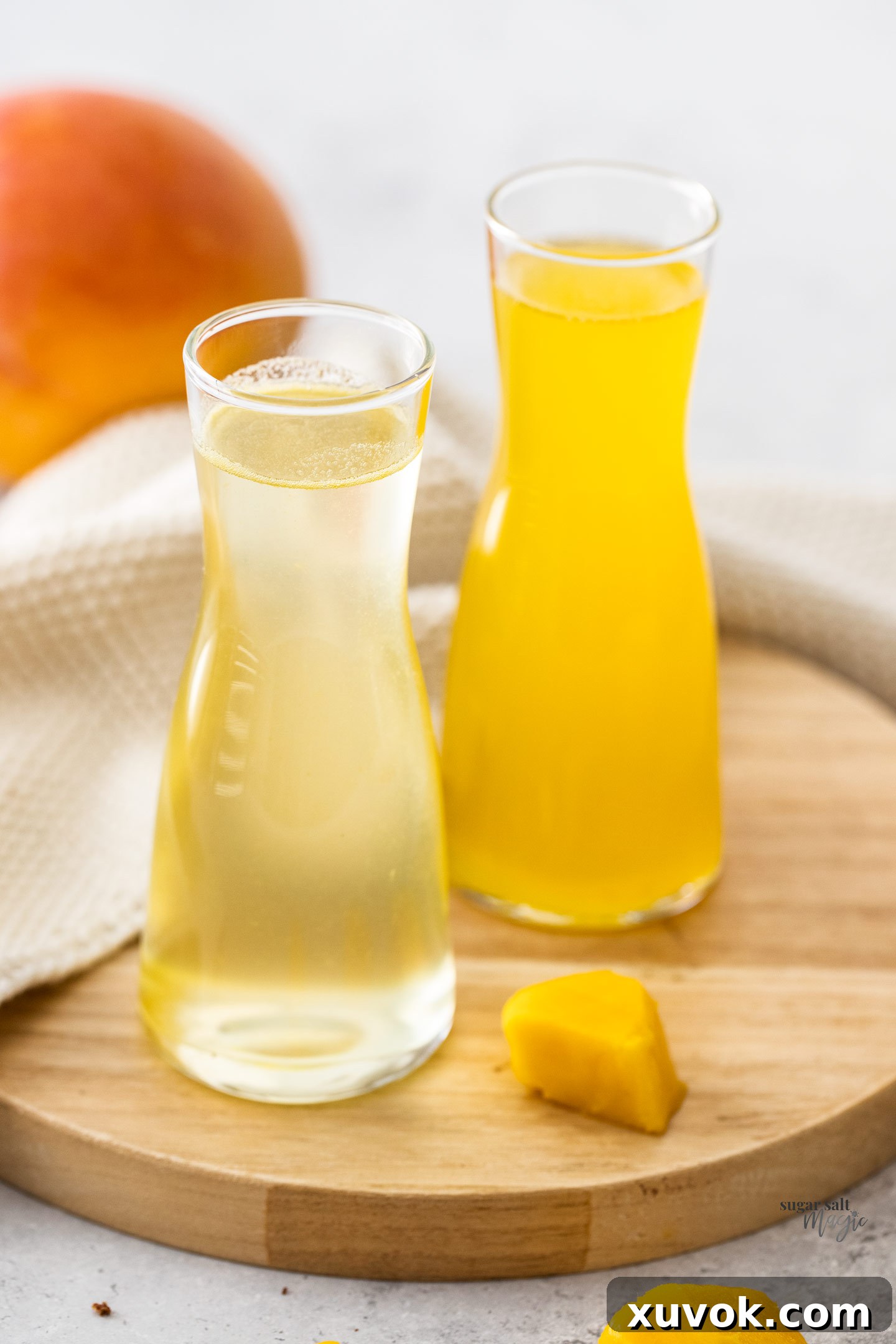
Are you ready to transform your ordinary meals and drinks into an extraordinary tropical escape? Look no further than homemade mango syrup. This vibrant, intensely flavorful simple syrup is your secret ingredient for adding a burst of sunshine to virtually anything. Forget artificial flavors and store-bought options; crafting your own mango syrup at home is surprisingly simple, requires minimal ingredients, and delivers an unparalleled fresh, fruity taste that’s perfect for drinks, desserts, and breakfast delights alike.
Imagine drizzling golden, luscious mango syrup over fluffy pancakes, stirring it into a refreshing iced tea, or crafting an exotic cocktail that transports you to a sandy beach. This versatile sweetening agent offers a delightful tropical twist that will make your taste buds sing. It’s not just a sweetener; it’s an experience, bringing the sweet, aromatic essence of ripe mangoes directly to your kitchen.
- Requires only 3 simple ingredients.
- Effortless and quick to prepare at home.
- Delivers an authentic, sweet, and tropical flavor.
- Excellent for meal prep, keeps well, and makes a wonderful homemade gift.
Elevate your beverage game with this enchanting mango syrup. It’s absolutely divine in iced tea, sparkling soda water, homemade lemonade, and a variety of refreshing mocktails and cocktails. For breakfast, a generous drizzle over pancakes, waffles, or a bowl of warm oatmeal is pure bliss. Don’t stop there – for dessert, spoon it over creamy ice cream, delicate panna cotta, or comforting rice pudding to infuse a truly sunshiny, tropical vibe into every bite. The possibilities are as endless as your imagination!
If you’re a connoisseur of tropical flavors, you’ll also adore our passionfruit syrup for another taste of paradise.
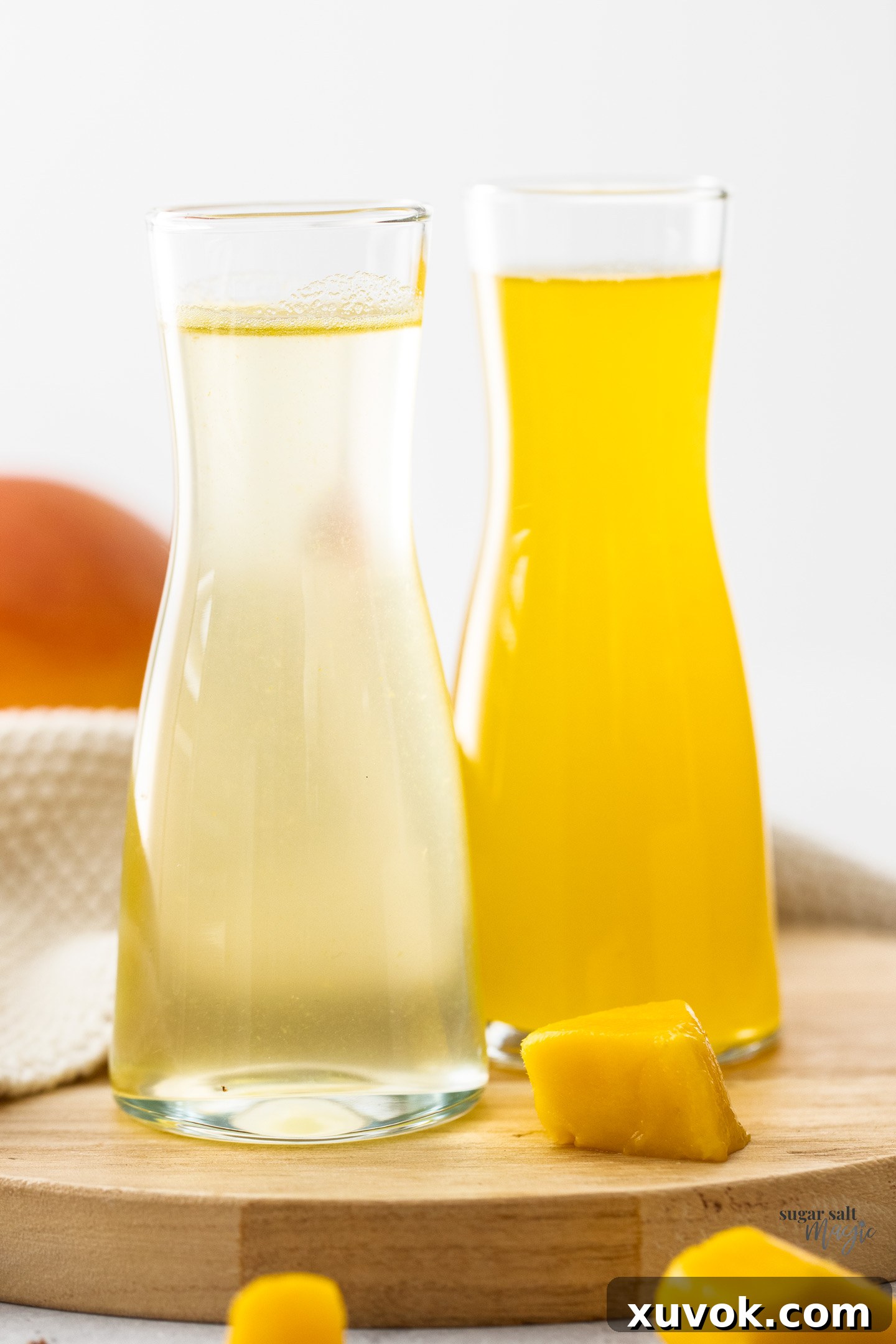
Table of Contents
- Why Choose Homemade Mango Syrup?
- Ingredients for Your Tropical Mango Syrup
- How to Make Mango Syrup (Step-by-Step)
- Creative Ways to Enjoy Mango Syrup
- Frequently Asked Questions (FAQs) About Mango Syrup
- Proper Storage for Longevity
- More Tropical Recipes You’ll Love
Never Miss a Recipe!
Get the latest delightful recipes straight to your inbox and infuse more flavor into your life!
Why Choose Homemade Mango Syrup?
In a world brimming with store-bought options, the decision to make your own mango syrup is a testament to your appreciation for fresh, authentic flavors. Commercial syrups often rely on artificial colorings, flavor enhancers, and preservatives to mimic the taste of real fruit. However, these additions can detract from the genuine, nuanced sweetness and vibrant aroma of ripe mangoes. Homemade mango syrup, on the other hand, puts you in complete control.
With just a handful of natural ingredients, you can create a syrup that bursts with the true essence of the tropics. The process is incredibly rewarding, filling your kitchen with an intoxicating fragrance as the mangoes gently infuse their goodness into the sweet liquid. Not only is it a healthier alternative, free from unnecessary additives, but it also allows for customization. You can adjust the sweetness level, the intensity of the mango flavor, and even add subtle hints of other spices or citrus to tailor it precisely to your palate. This dedication to fresh, simple ingredients elevates your culinary creations, offering a depth of flavor that a bottle from the supermarket simply cannot match. Plus, the satisfaction of making something so delicious from scratch is a joy in itself, making every drizzle and every sip feel extra special.
Ingredients for Your Tropical Mango Syrup
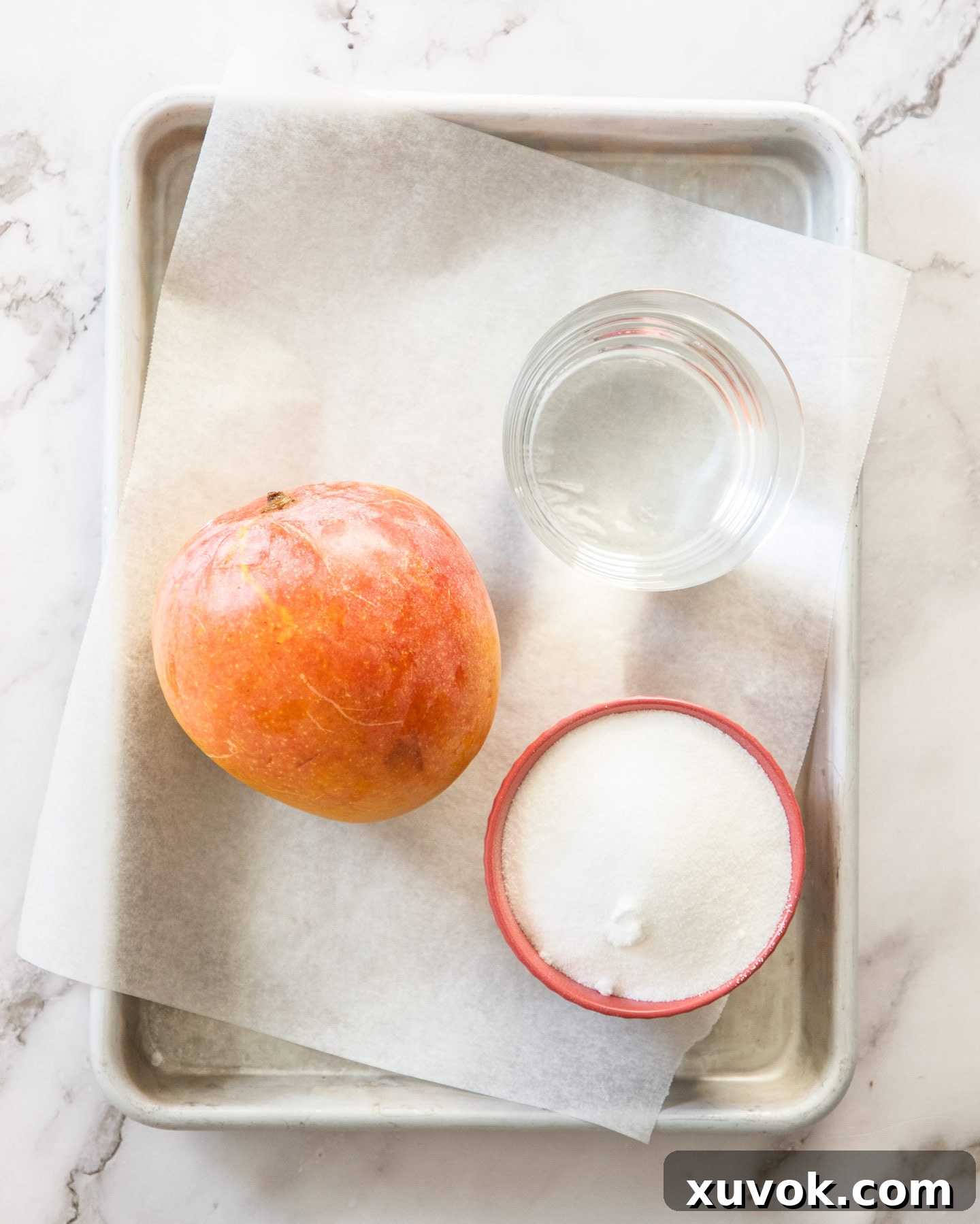
For detailed quantities and comprehensive instructions, please refer to the complete recipe card below.
Crafting this exquisite mango simple syrup requires only three basic ingredients and minimal effort, making it an accessible and enjoyable kitchen project. The foundation of any simple syrup consists of just two components: sugar and water, typically combined in a 1:1 ratio. This fundamental syrup is widely used to sweeten cold beverages, where granulated sugar might otherwise struggle to dissolve completely, resulting in a gritty texture.
Now, let’s introduce the star of our show: mango. The beauty of this recipe is its flexibility – you can confidently use either fresh or frozen mango, ensuring you can enjoy this tropical delight at any time of the year. If opting for frozen mango, it’s crucial to thaw it completely before use. You can achieve this by letting it sit in the refrigerator for a few hours or by gently warming it in the microwave for 30-40 seconds. For those using fresh mango, selecting a perfectly ripe, juicy specimen is key to maximizing flavor. A good indicator of ripeness is when the mango yields slightly to a gentle squeeze and emits a wonderfully sweet, fragrant aroma from its stem end. This ensures your syrup will be imbued with the richest, most authentic mango essence.
Beyond the core ingredients, consider the type of sugar. While regular white granulated sugar provides a clean sweetness that allows the mango to shine, you could experiment with light brown sugar for a deeper, slightly caramel-like undertone, though this might slightly alter the syrup’s color. The water quality also plays a subtle role; filtered water can ensure the purest taste, free from any tap water impurities. The simplicity of these ingredients belies the incredible depth of flavor they create when combined and cooked with care.
How to Make Mango Syrup (Step-by-Step)
You’ll be amazed at how incredibly simple it is to create this luscious, tropical mango syrup, bringing an exotic touch to all your culinary endeavors. The process is straightforward, allowing anyone to achieve perfect results.
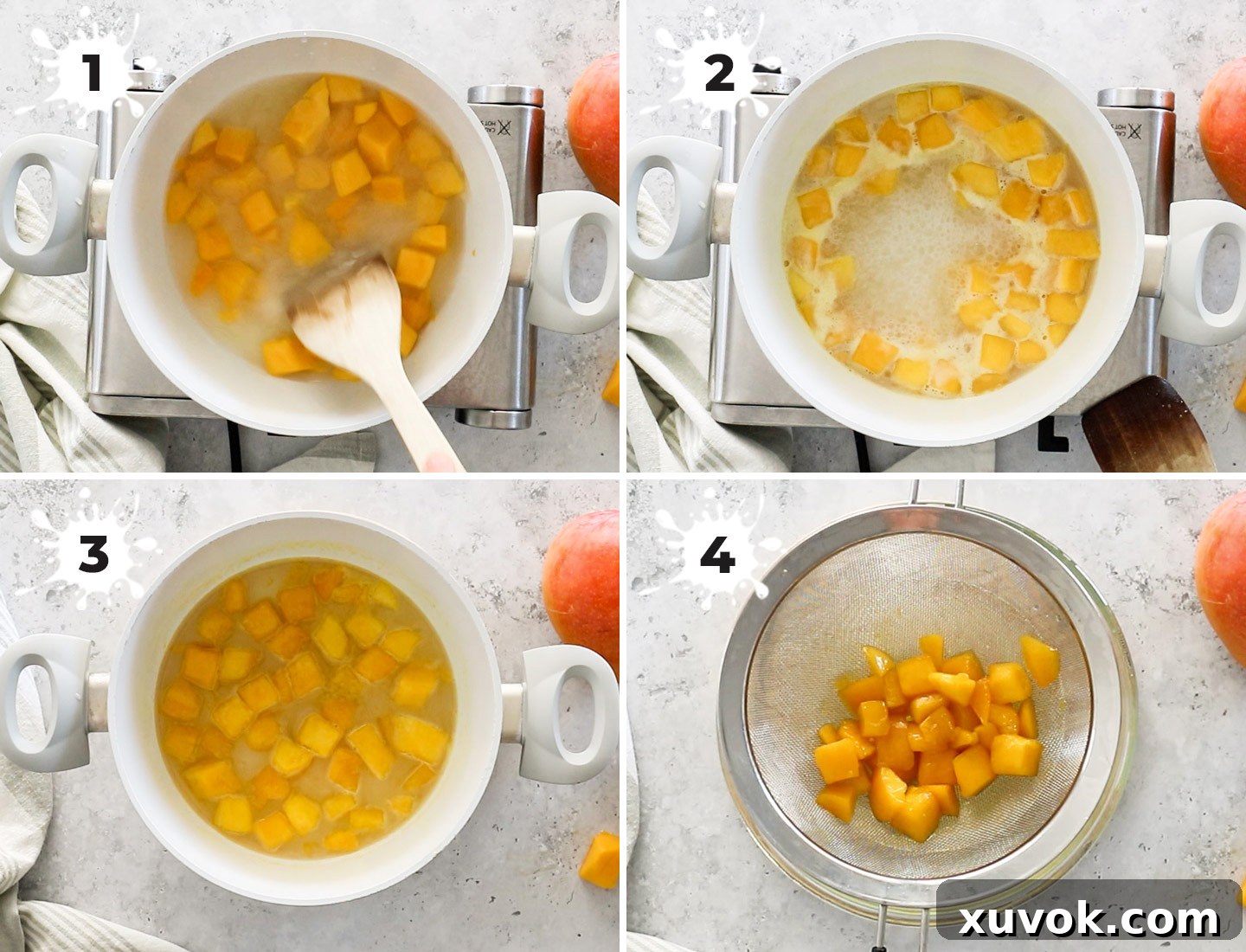
For the precise quantities and full detailed instructions, please consult the complete recipe card provided below.
- Dissolve the Sugar: Begin by combining the sugar, water, and mango pieces in a small, heavy-bottomed saucepan. Place the saucepan over low heat. Gently stir the mixture continuously until all the sugar crystals have completely dissolved. This initial step is crucial to prevent the sugar from crystallizing later, ensuring a smooth syrup.
- Bring to a Gentle Boil: Once the sugar is fully dissolved, increase the heat slightly and bring the mixture to a rolling boil. Allow it to boil for approximately 90 seconds. This brief boiling period is essential for slightly thickening the syrup, giving it that desirable viscous consistency that coats your spoon beautifully. For a thicker syrup, perfect for drizzling over desserts, you can extend the boil to 2 minutes.
- Steep for Maximum Flavor: Immediately remove the saucepan from the heat. Now comes the magic: let the mango pieces steep in the hot syrup. Just like a teabag infusing flavor into hot water, the residual heat will continue to draw out the deep, sweet, and aromatic essence from the mango into the syrup. For the best flavor extraction, allow it to steep for at least 45 minutes, or even longer for a more intense mango taste.
- Strain and Clarify: Once steeped, carefully strain the syrup mixture through a fine-mesh sieve into a clean jug or bowl. Press very gently on the mango pulp with the back of a spoon to extract any remaining liquid, but avoid pressing too firmly or crushing the fruit, as this can force pulp through the sieve and result in a cloudy syrup. The goal is a clear, bright liquid.
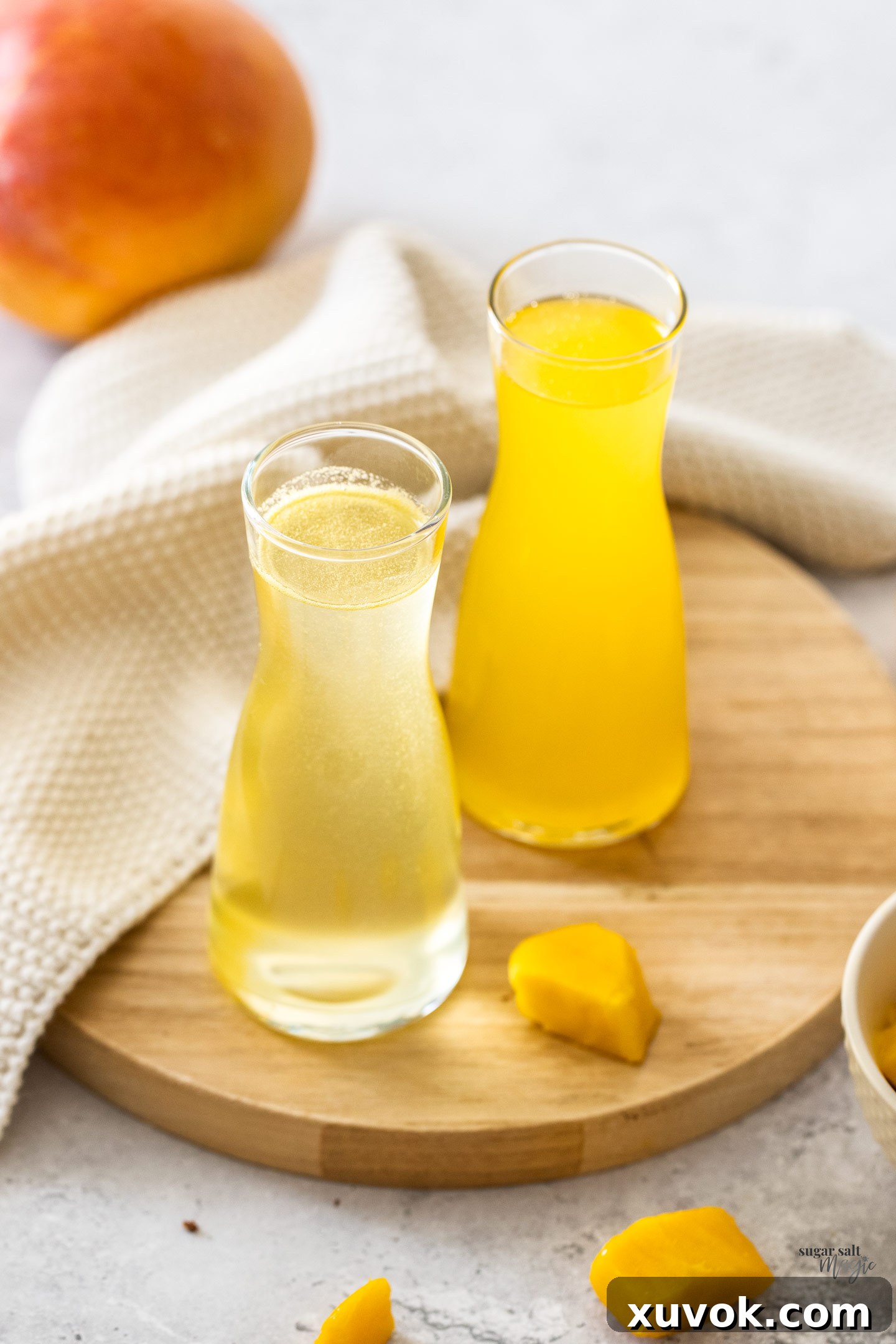
At this point, your exquisite mango fruit syrup is technically ready to use. It will possess a delicate, translucent pale yellow hue, reminiscent of a fine white wine. However, for those who desire a richer color and an even more pronounced mango punch, you can take one additional, optional step. Observe the striking difference in vibrancy and depth of color this extra step provides, as seen in the image below, enhancing both visual appeal and flavor intensity.
- Puree the Reserved Mango: Take the mango pieces that were strained from the syrup. Using a blender or food processor, puree them until smooth.
- Enhance Color and Flavor: Next, push 2-3 tablespoons of this fresh mango puree through a fine-mesh strainer directly into your prepared syrup. This ensures only the smoothest, most concentrated mango essence is added, preventing any fibrous bits from entering your syrup. Whisk the mixture thoroughly until the puree is fully combined, transforming your syrup into a richer, more opaque golden yellow.
- Store and Chill: Transfer your beautifully colored and flavored mango syrup into a clean, airtight glass bottle or jar. Allow it to cool completely to room temperature before placing it in the refrigerator. Chilling it not only preserves its freshness but also enhances its consistency, making it perfectly ready for all your culinary applications.
Don’t let that delicious, steeped mango go to waste! The leftover mango pulp, still wonderfully flavorful, can be stored in an airtight container in the fridge for up to 2 days. It’s fantastic eaten as is, or you can stir it into yogurt, oatmeal, or even rice pudding for an extra fruity treat.
Creative Ways to Enjoy Mango Syrup
The versatility of homemade mango syrup extends far beyond just sweetening drinks. Its vibrant flavor and alluring aroma make it a fantastic addition to a myriad of dishes, transforming ordinary moments into tropical delights.
- To Sweeten and Flavor Drinks: Just like traditional simple syrup, mango syrup is exceptional for sweetening a variety of beverages while simultaneously infusing them with an irresistible tropical character and fragrant aroma. Try stirring it into your daily iced tea for an exotic twist, mixing it with plain soda water for a sparkling refresher, or use it as a key ingredient in vibrant cocktails and refreshing mocktails. It’s also a superb way to naturally sweeten and enhance the flavor of your morning smoothies, milkshakes, or even a glass of plain water for a subtle fruit infusion.
- As a Delicious Breakfast Syrup: Any breakfast item that typically welcomes a drizzle of honey or maple syrup will be wonderfully elevated by a generous pour of mango syrup. Imagine it cascading over your morning yogurt and granola, fluffy pancakes, crispy waffles, or even warm crumpets and delicate scones. It adds a fruity sweetness that is both comforting and invigorating, perfect for starting your day on a high note.
- For Exquisite Desserts: In the realm of desserts, simple syrups are often employed to both sweeten and moisten cake layers, ensuring a wonderfully tender and flavorful crumb. Lightly brush a little mango syrup on each cake layer before adding buttercream and stacking additional layers. Beyond cakes, it’s a fantastic finishing touch when drizzled simply over classic vanilla ice cream, shaved ice, creamy rice pudding, or even a light and airy pavlova. It can also be used to sweeten fruit salads, glazes for fruit tarts, or as a base for refreshing fruit sorbets.
- Beyond Sweet: Savory Applications: Don’t limit mango syrup to just sweet dishes. Its fruity sweetness can provide a delicious counterpoint in savory recipes. Consider using it as a glaze for grilled chicken or pork, adding a touch to salad dressings for a tropical zing, or even incorporating it into marinades for a unique flavor profile that balances sweetness with savory notes.
Frequently Asked Questions (FAQs) About Mango Syrup
Homemade mango syrup is a delightful and straightforward combination of just three natural ingredients: water, granulated sugar, and fresh or frozen mango fruit. In contrast, many store-bought versions frequently rely on artificial flavorings, colorings, and preservatives to achieve their taste and appearance.
While homemade mango syrup uses natural fruit, it is fundamentally a treat and not a health food. Its primary components are sugar and water, and as some of the water evaporates during cooking, the sugar becomes more concentrated. It should be enjoyed in moderation as part of a balanced diet, similar to other sweet condiments.
If your mango isn’t sweet, it’s highly probable that it wasn’t fully ripe when selected. To choose a perfectly ripe mango, gently squeeze it; it should yield slightly to the pressure, much like a ripe avocado or peach. Additionally, a ripe mango will often emit a distinctively sweet and fragrant aroma from its stem end. Avoid hard, unripe mangoes for syrup making, as they lack the desired sweetness and depth of flavor.
Absolutely! The basic simple syrup method (sugar and water) can be adapted for a wide variety of fruits. Berries, peaches, passionfruit, lemons, oranges, and even ginger can be steeped to create unique and delicious flavored syrups. The key is to choose ripe, flavorful fruit for the best results, adjusting steeping times as needed.
To achieve a thicker mango syrup, you can simply extend the boiling time. After the sugar has dissolved and the mixture comes to a boil, let it simmer for an additional 1-2 minutes beyond the recommended time. Be careful not to overcook it, as it will thicken further as it cools. For a very thick, almost jam-like consistency, you’d be moving into a different type of preserve, but for syrup, a slightly longer boil is usually sufficient.
Proper Storage for Longevity
To ensure your homemade mango syrup remains fresh, flavorful, and safe to enjoy, proper storage is essential. Once prepared and cooled, transfer the syrup into a clean, airtight glass jar or bottle. Store it promptly in the refrigerator, where it will maintain its quality for up to 1 week. Always check for any signs of spoilage, such as unusual smells, mold, or discoloration, before use.
For those who wish to extend its shelf life considerably, homemade mango syrup is perfectly suitable for freezing. A convenient method is to pour the cooled syrup into ice cube trays. Once completely frozen solid, transfer the mango syrup cubes to an airtight container or a heavy-duty freezer-safe ziplock bag. This allows you to easily grab just the amount you need without thawing the entire batch. Frozen mango syrup can be stored in the freezer for up to 3 months, ensuring you have a taste of the tropics whenever the craving strikes.
Remember to label your containers with the date of preparation to keep track of freshness. Always allow frozen syrup to thaw in the refrigerator before using, then shake or stir well before serving to reincorporate any separated components.
More Tropical Recipes You’ll Love
If the exotic allure of mango syrup has captivated your palate, you’re in for a treat! Explore more delightful recipes that bring tropical sunshine and vibrant flavors into your kitchen. These culinary adventures are perfect for expanding your repertoire of homemade syrups and fruit-infused delights.
- Passionfruit Syrup: Another sensational tropical syrup that’s bursting with tangy-sweet goodness. Perfect for cocktails and desserts.
- Orange Simple Syrup: A bright and citrusy syrup, ideal for adding a zesty kick to drinks and baked goods.
- Lemon Simple Syrup: The classic, refreshing syrup that’s a staple for any home bartender or baker, offering pure, clean lemon flavor.
- Homemade Mango Curd: A rich, creamy, and intensely flavored spread that’s perfect on toast, scones, or as a cake filling.
- Easy Creamy Mango Sorbet: A naturally sweet and cooling dessert that perfectly captures the fresh taste of mango in every spoonful.
Did you try this homemade mango syrup recipe?
We’d love to hear your thoughts! Leaving a rating and comment below the recipe is incredibly helpful and appreciated!
Hungry for more culinary inspiration? Subscribe to our newsletter for a continuous flow of free, delicious recipes delivered straight to your inbox. Additionally, follow along on Facebook, Pinterest and Instagram for daily doses of sweet and savory magic!
Mango Syrup
This homemade mango syrup, made with just 3 simple ingredients, is incredibly easy to prepare. It’s the perfect simple syrup to infuse a tropical essence into your favorite drinks and cocktails, moisten cake layers, and enhance pancakes and ice cream with a burst of vibrant flavor. A true taste of paradise, made in your kitchen.
Rate This Recipe
Pin Recipe
Ingredients
- 1 cup white sugar (210g / 7.4oz)
- 1 cup water (250ml)
- 1 cup mango flesh, cubed (fresh or frozen) (Note 1)
For best results, always weigh ingredients where a weight is provided.
Equipment
- Small heavy based saucepan
- Wooden spoon
- Glass bottle or preserving jar (We recommend Weck preserving jars)
- Mini carafes (Optional, but a charming way to serve for dessert)
Instructions
- In a medium saucepan over low-medium heat, combine the sugar, water, and cubed mango.
- Stir continuously until the sugar has fully dissolved. Once dissolved, allow the mixture to come to a boil.
- As soon as the first bubbles appear, start a timer for 90 seconds if you’re making syrup primarily for drinks, or 2 minutes for a slightly thicker syrup ideal for drizzling over desserts and pancakes.
- Remove the saucepan from the heat and allow the mango to steep in the hot syrup for at least 45 minutes to fully infuse its flavor.
- Strain the syrupy mango mixture through a fine-mesh sieve into a clean bowl or jug. Press lightly on the mango pulp to extract maximum flavor, but be careful not to crush it too firmly, as this can make the syrup cloudy.
- Pour the finished syrup into a tightly sealed glass jar or bottle and refrigerate once completely cooled.
- OPTIONAL: For an enhanced flavor and a richer, more vibrant yellow color, puree the strained mango pulp. Then, push 2-3 tablespoons of this fresh puree through the strainer into the syrup. Use a balloon whisk to ensure it’s completely mixed in.
- Please consider taking a moment to leave a comment and rating below. Your feedback is truly appreciated and helps us immensely!
Notes
- Mango Selection: If you are using frozen mango, ensure it is fully thawed before measuring, as thawed mango will occupy a different volume than frozen. For fresh mango, always choose very ripe fruit to guarantee the best, sweetest flavor.
- Nutritional Information: The nutritional values provided are an estimate based on a single serving of approximately 30ml (one nip) of syrup. Please note that these figures are approximate and may vary depending on the specific brands of ingredients used and any alterations to the recipe.
More Information
These links will navigate you to relevant sections within this post. Scroll back down to return to the recipe card.
EXPLORE MORE SWEET CONDIMENTS & SAUCES!
Don’t forget to leave a rating and comment below and let me know how it was! Your feedback is invaluable, and I love hearing from you. Please note that nutrition information provided is approximate and derived from an online calculator. Variations may occur based on the specific brands of ingredients you choose.
Calories from Fat 1