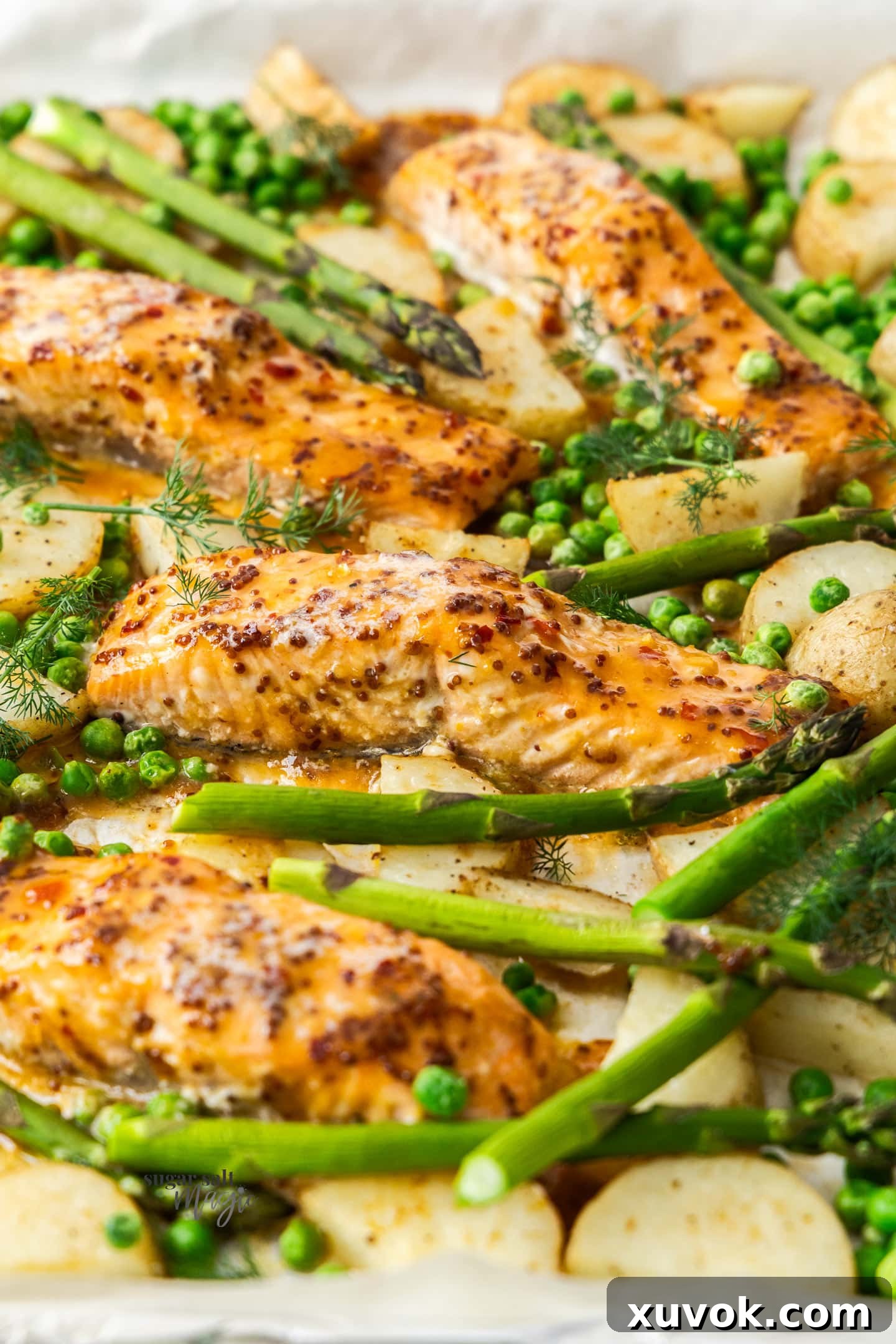
Honey Mustard Salmon Tray Bake: Your Ultimate One-Pan Weeknight Dinner
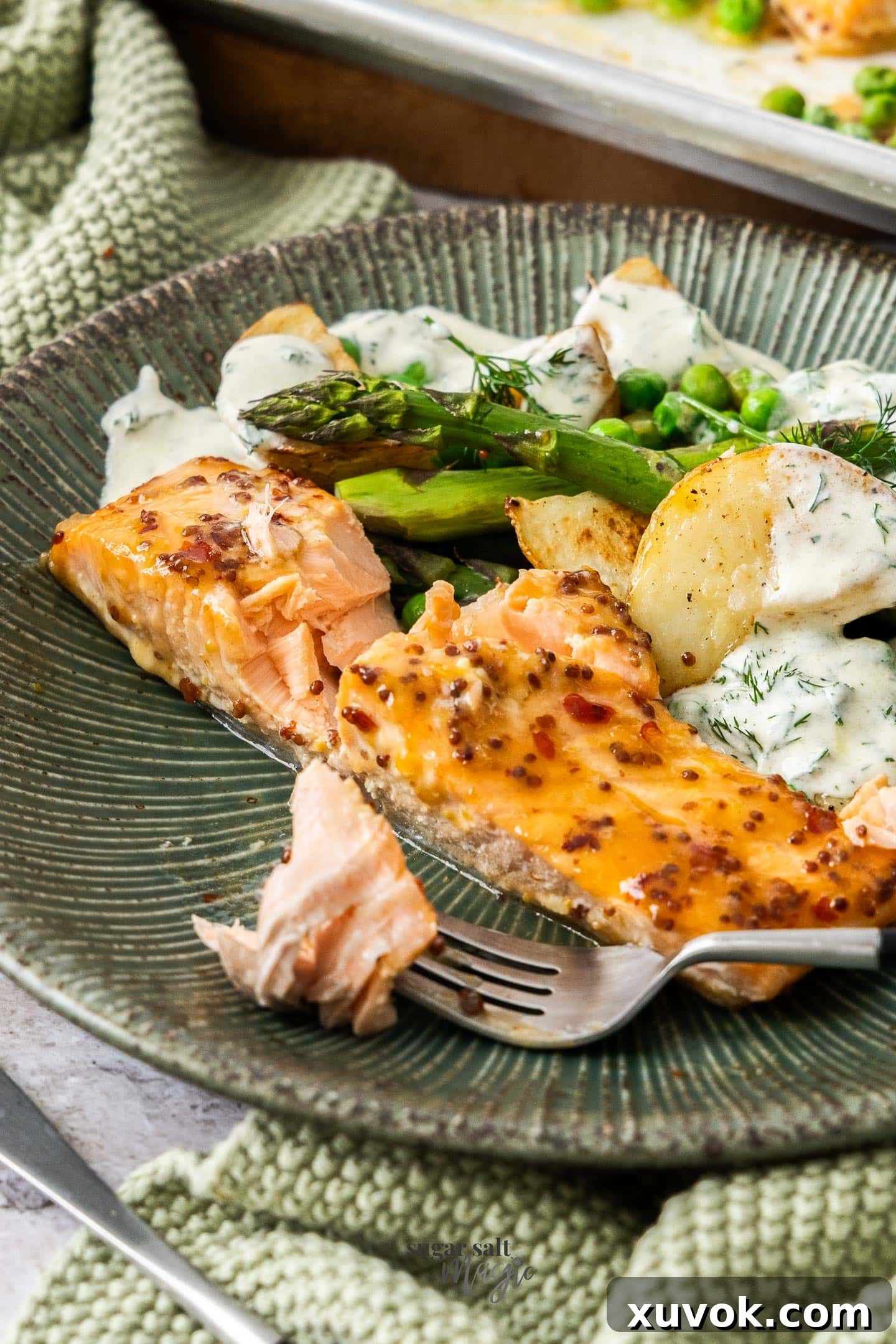
Discover the delightful simplicity of our Honey Mustard Salmon Tray Bake – a truly effortless and incredibly flavorful meal that’s perfect for any night of the week. This recipe masterfully blends the rich, buttery texture of salmon with a tangy, sweet, and savory honey mustard glaze, all while cooking your main dish and vibrant vegetables together on a single baking sheet. Imagine tender, flaky salmon fillets alongside perfectly roasted potatoes and crisp-tender asparagus, all infused with a harmonious array of flavors.
What makes this Honey Mustard Salmon Tray Bake a standout recipe? Let’s dive into why it’s about to become a staple in your culinary repertoire:
- Unbeatably Quick & Easy: Designed for convenience, this recipe streamlines your cooking process, making it ideal for busy weeknights or when you want to impress guests without spending hours in the kitchen. Minimal prep, maximum flavor!
- Explosively Flavorful: The dynamic combination of sweet honey, sharp Dijon, and grainy mustard creates a glaze that’s both vibrant and deeply satisfying, transforming simple salmon into a gourmet experience you’ll crave repeatedly.
- One-Pan Wonder: Say goodbye to mountains of dishes! Everything – from the succulent salmon and its exquisite sauce to the hearty potatoes and fresh veggies – cooks together on one pan, ensuring an easy cleanup.
- Perfectly Balanced Taste Profile: This dish strikes an exquisite balance between tangy and sweet, with savory undertones that elevate every bite. It’s a delightful symphony of flavors that caters to a wide range of palates.
- Healthy & Wholesome: Packed with lean protein from the salmon and essential nutrients from the diverse vegetables, this meal is not only delicious but also a wholesome choice for a nutritious dinner.
While this honey mustard salmon recipe shines brightest when baked as a full tray bake, offering a complete meal with delightful sides, you can certainly adapt it. Should you prefer to cook just the salmon on the stovetop, it’s a quick alternative, though you’ll miss out on the incredible convenience and integrated flavors of the one-pan method. However, for a truly harmonious and hassle-free dinner, the tray bake approach is highly recommended.
If you’re a fan of the simplicity and efficiency of tray bakes, you’ll love exploring other similar recipes. Don’t miss out on our delectable Italian chicken tray bake or the comforting baked pork chops with potatoes for more easy and delicious meal ideas.
This recipe was originally published on July 17th, 2022, and has since been enhanced with a new, simplified tray bake cooking method for an even better culinary experience.
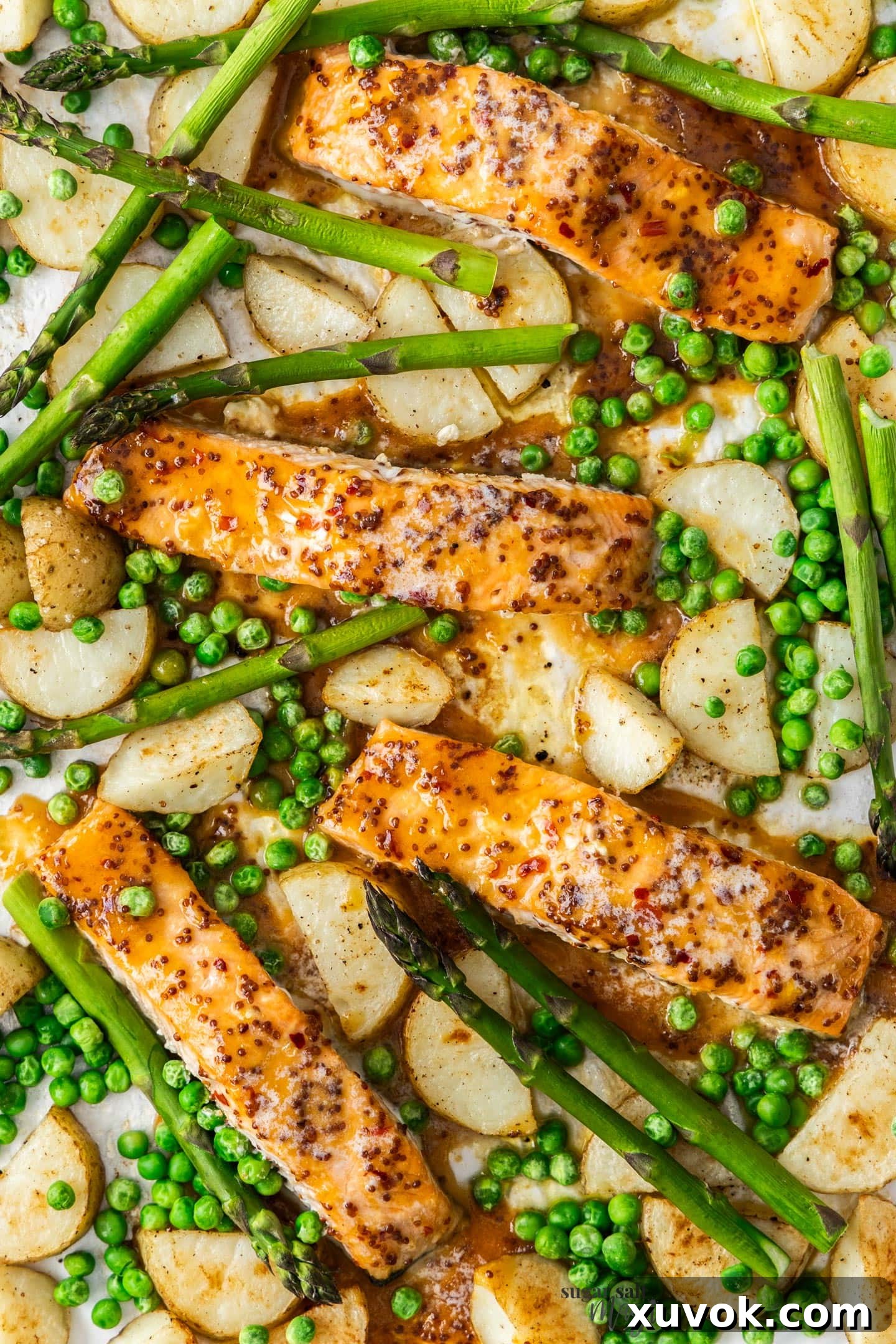
Table of Contents
- Ingredients You’ll Need
- How to Make Honey Mustard Salmon (Step-by-Step)
- When is Salmon Cooked?
- Expert Tips and Variations
- Yield and Storage
- Frequently Asked Questions (FAQs)
- More Recipes You’ll Love
Never Miss a Recipe!
Get the latest recipes straight to your inbox and elevate your cooking!
Sign up for our newsletter to receive delicious recipes and cooking tips directly to your email.
Ingredients You’ll Need
Crafting this Honey Mustard Salmon Tray Bake involves two key sets of ingredients: those for the star of the show, the salmon with its luscious glaze, and those for the accompanying vibrant side dishes. While the honey mustard salmon is truly magnificent on its own, the beauty of this tray bake lies in its comprehensive nature, bringing together a full, balanced meal on a single pan.
For the Irresistible Honey Mustard Salmon
The heart of this dish is undoubtedly the perfectly cooked salmon bathed in a glorious honey mustard sauce. Here’s what you’ll need to create that magic:
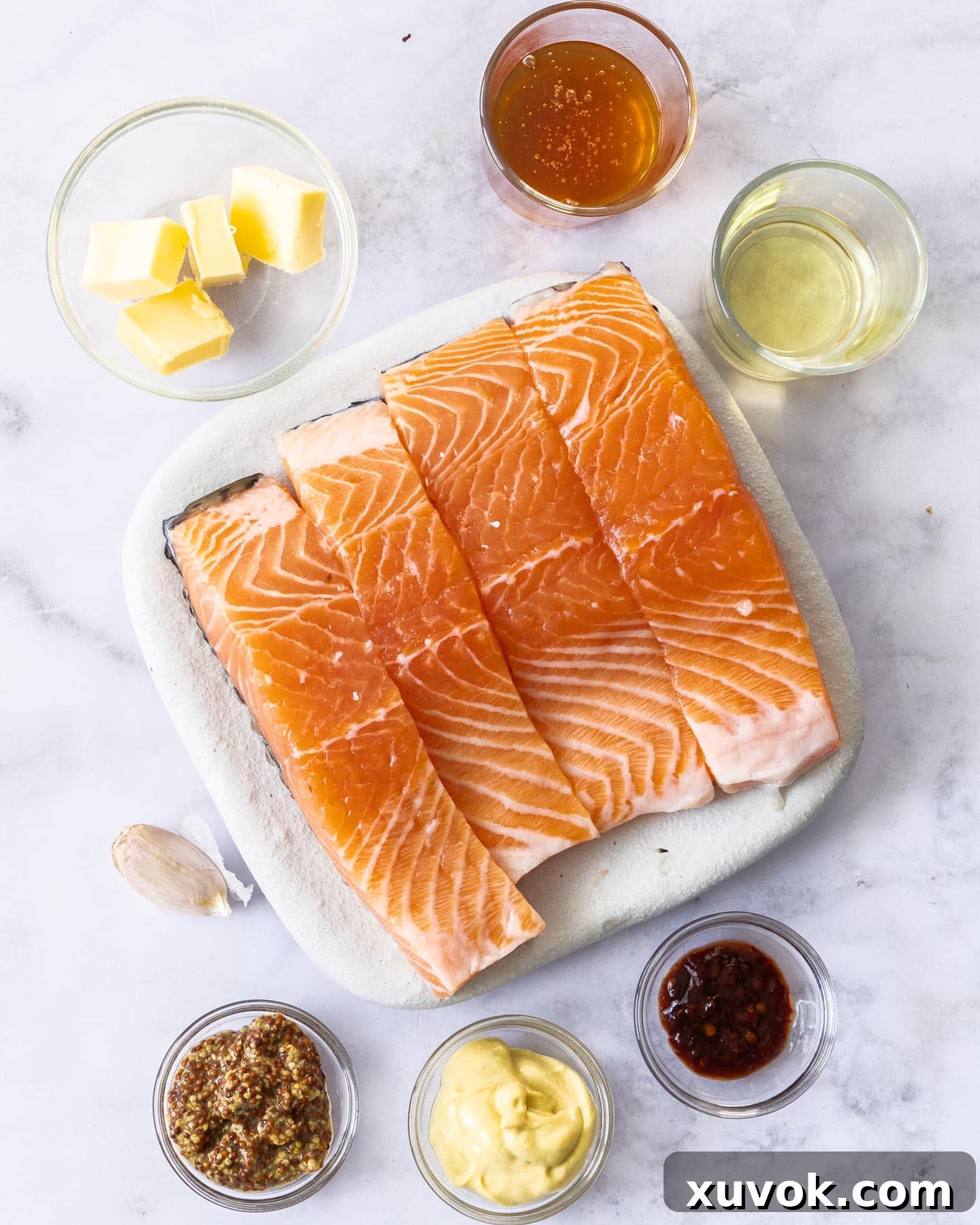
For precise measurements and detailed instructions, please refer to the full recipe card below.
- Salmon Fillets: Opt for high-quality salmon fillets, ideally between 1 to 1½ inches thick (approximately 125-150g or 4.4-5.3oz each). This ensures they cook evenly and remain incredibly moist. Fresh or frozen (and properly thawed) wild-caught salmon often offers a richer flavor profile.
- Mustard Medley: We utilize a thoughtful combination of both Dijon mustard and wholegrain mustard. Dijon provides that classic sharp, tangy kick, while wholegrain mustard adds a delightful texture and a slightly milder, more complex mustard flavor.
- Fresh Garlic: Minced fresh garlic is essential for its pungent aroma and robust flavor, which truly permeates the glaze. While jarred minced garlic can be a convenient substitute, we recommend steering clear of garlic powder as it won’t deliver the same fresh, vibrant punch.
- Sweet Honey: Any good quality runny honey will work perfectly here. Its natural sweetness beautifully balances the tanginess of the mustards and contributes to the glaze’s desirable stickiness. Feel free to use your favorite local variety.
- A Hint of Chilli (Optional): A touch of chilli paste introduces a subtle warmth and gentle heat, enhancing the overall complexity without being overpowering. If you prefer a bolder spice, consider a pinch of red pepper flakes or a dash of sriracha. For those sensitive to heat, simply omit it.
- Butter: A small amount of butter (either salted or unsalted, depending on your preference) is melted into the sauce, adding a luxurious silkiness and richness to the glaze, ensuring it clings beautifully to the salmon.
For the Wholesome & Flavorful Sides
The beauty of this salmon tray bake lies in its ability to bring together all elements of a satisfying dinner onto a single pan. These side ingredients are chosen not only for their taste but also for their ability to cook harmoniously with the salmon.
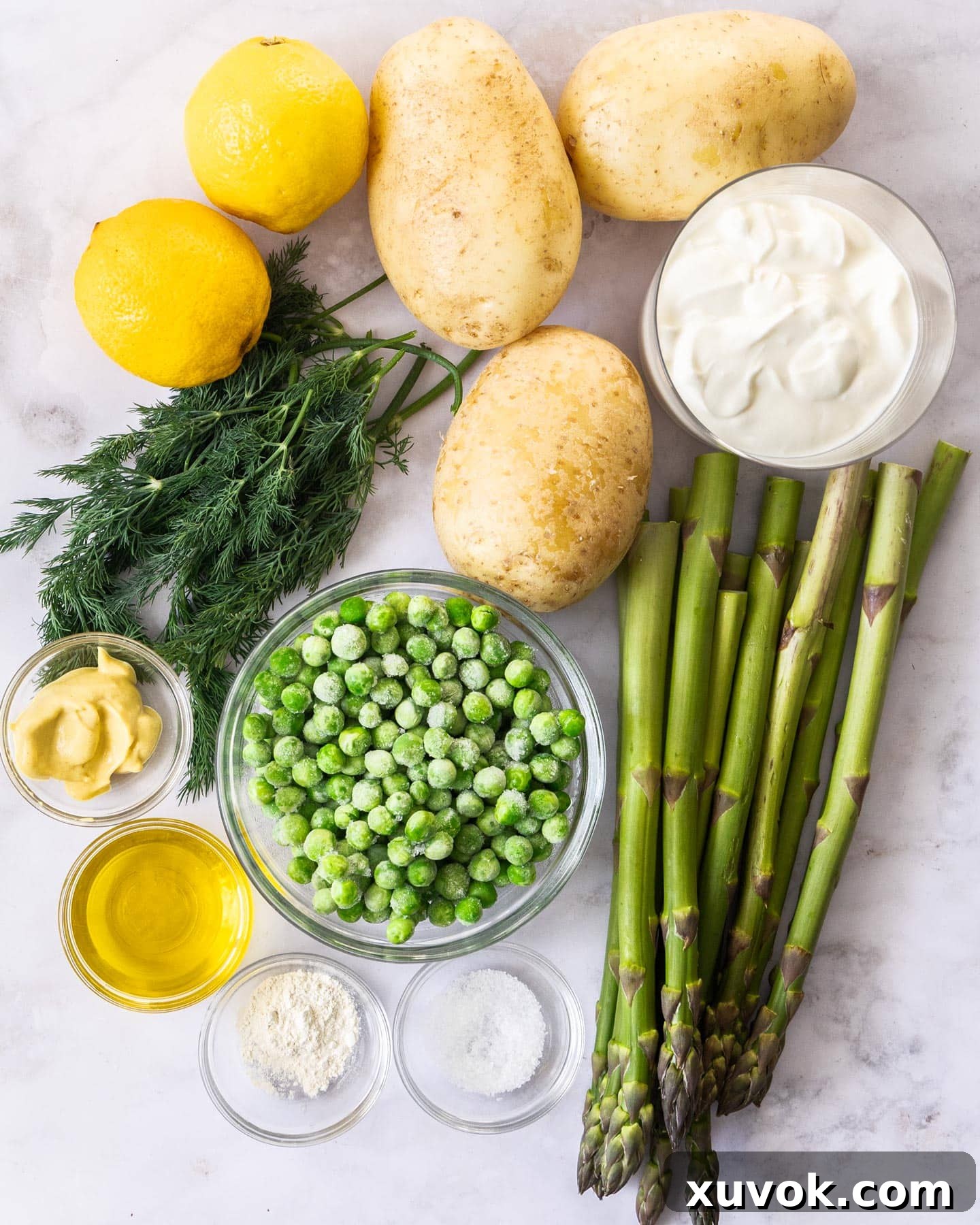
For precise measurements and detailed instructions, please refer to the full recipe card below.
- Potatoes: We recommend 3-4 small to medium potatoes, cut into wedges or chunky cubes. Varieties like Yukon Gold, red potatoes, or new potatoes work wonderfully, becoming deliciously tender and slightly crispy when roasted.
- Asparagus: Salmon and asparagus are a classic pairing for a reason – their flavors complement each other beautifully. Asparagus spears roast quickly and absorb some of the pan juices. If asparagus isn’t in season or to your taste, feel free to substitute with other quick-cooking vegetables like green beans, bell peppers (capsicum), or broccoli florets.
- Frozen Peas: A simple yet effective addition, frozen peas add a pop of color and a touch of sweetness to the tray bake. They are added towards the end of cooking to retain their vibrant green hue and fresh texture. Frozen corn or a mixed frozen vegetable medley can also be used.
- Greek Yogurt: While entirely optional, the accompanying Greek yogurt dressing adds a refreshing, creamy counterpoint to the rich salmon. Opt for plain, low-fat Greek yogurt for a light yet satisfying base.
- Dijon Mustard, Onion Powder, & Salt: These ingredients are vital for seasoning the Greek yogurt dressing, providing depth, tang, and a savory kick that enhances the overall flavor profile.
- Fresh Dill: The fresh dill is the secret ingredient for the dressing, elevating it to another level. Its delicate, anise-like flavor pairs exceptionally well with both salmon and potatoes, adding a burst of freshness.
- Lemon Juice & Extra Virgin Olive Oil: These complete the dressing, adding brightness and a silky texture.
How to Make Honey Mustard Salmon (Step-by-Step)
Creating this Honey Mustard Salmon Tray Bake is a straightforward process, designed for ease and maximum flavor with minimal effort. Whether you opt for the complete one-pan experience with roasted vegetables or choose to prepare the honey mustard salmon fillets as a stand-alone dish, the steps are simple and yield fantastic results. The full tray bake transforms this into a truly complete and satisfying dinner, perfect for any weeknight.
If you decide to prepare just the salmon fillets without the suggested sides, the entire cooking time can be as little as 20 minutes, making it an exceptionally fast meal. However, the inclusion of the roasted potatoes and vegetables elevates it into a simple yet gourmet complete dinner that caters to all your cravings.
For precise measurements and detailed instructions, please refer to the full recipe card below.
1. Prep and Partially Bake the Potatoes
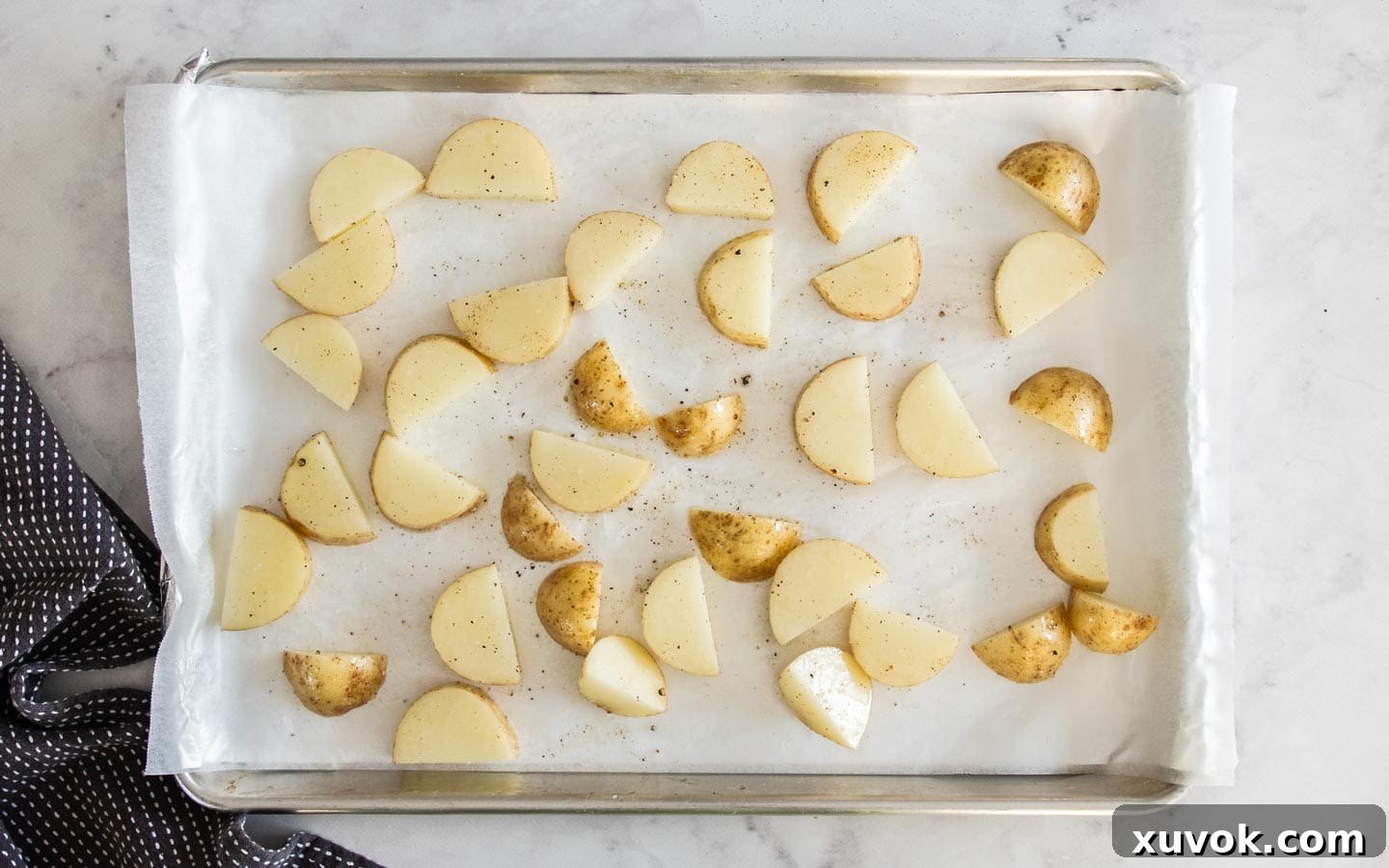
Begin by preheating your oven to 200°C (395°F). Wash and thoroughly dry your chosen potatoes, then cut them into uniform wedges or 1cm (approximately 1/3 inch) slices. The key here is consistency in size for even cooking. Line a large baking sheet with baking paper to prevent sticking and aid in cleanup. Toss the potato pieces with about half of the vegetable oil, ensuring they are lightly coated, then season generously with salt and freshly ground black pepper. Spread them out in a single layer on the prepared baking sheet, giving them ample space. Bake for an initial 25 minutes to get them tender and slightly golden before the salmon is added.
2. Prepare and Marinate the Salmon
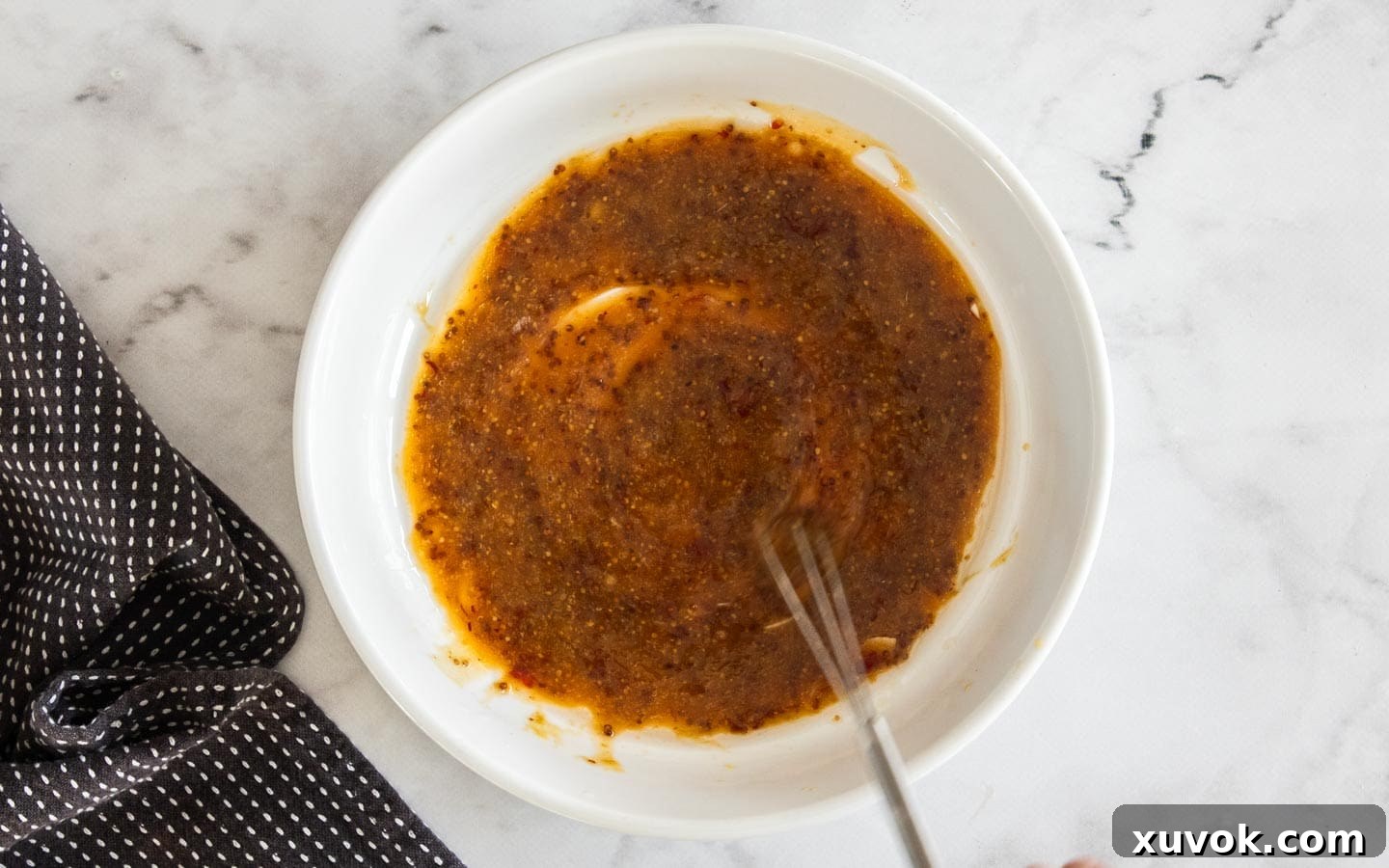
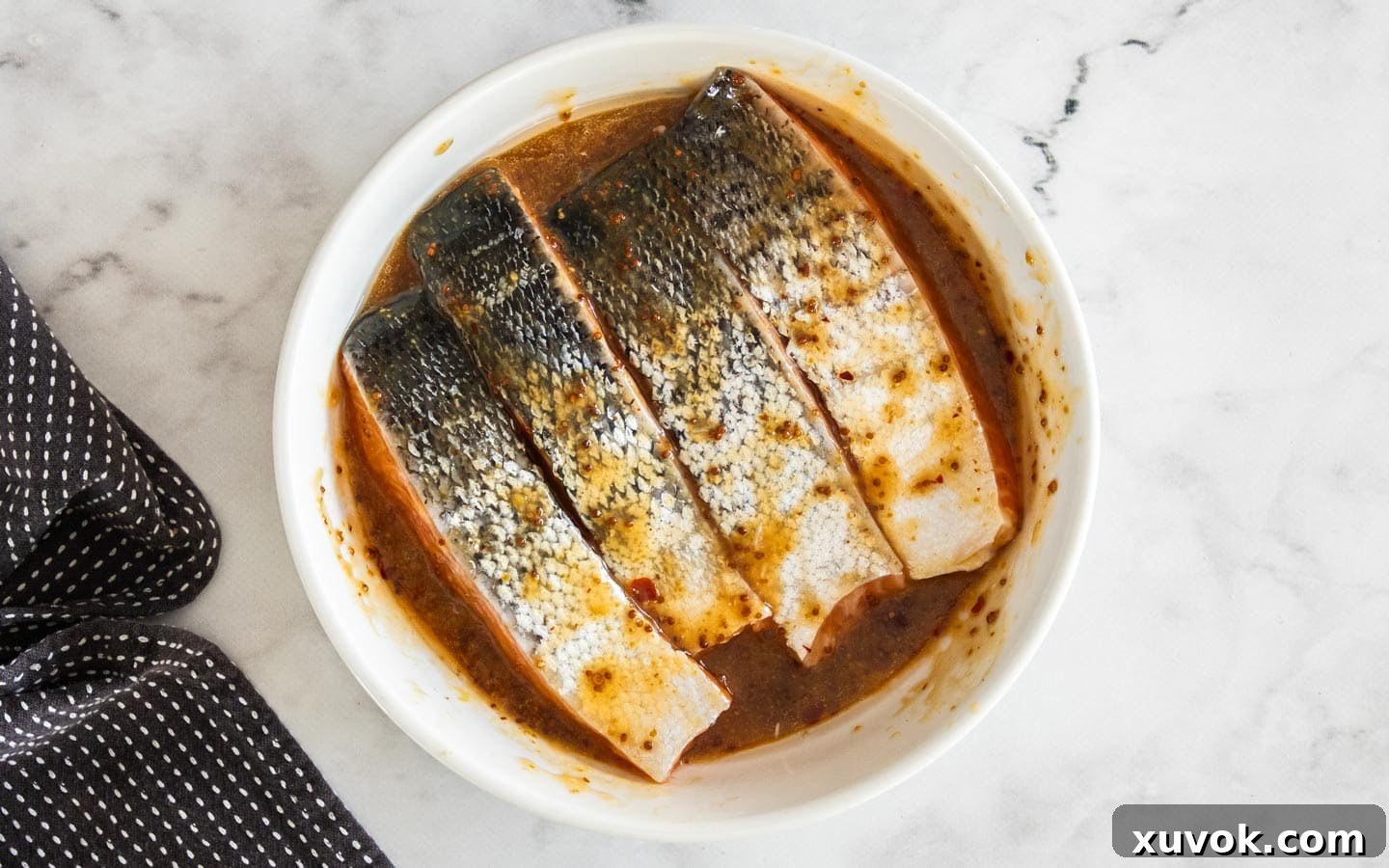
While the potatoes are getting a head start in the oven, it’s time to prepare our star ingredient. In a wide bowl, whisk together the Dijon mustard, wholegrain mustard, honey, chilli paste (if using), minced garlic, and the remaining tablespoon of vegetable oil. Mix until all ingredients are thoroughly combined, creating a thick, fragrant honey mustard glaze. Add your salmon fillets to this bowl, ensuring each piece is completely coated in the marinade. For optimal flavor infusion, leave the salmon flesh-side down in the marinade. This resting period allows the flavors to truly penetrate the fish while you wait for the potatoes to finish their initial bake.
3. Whisk Together the Greek Yogurt Dressing
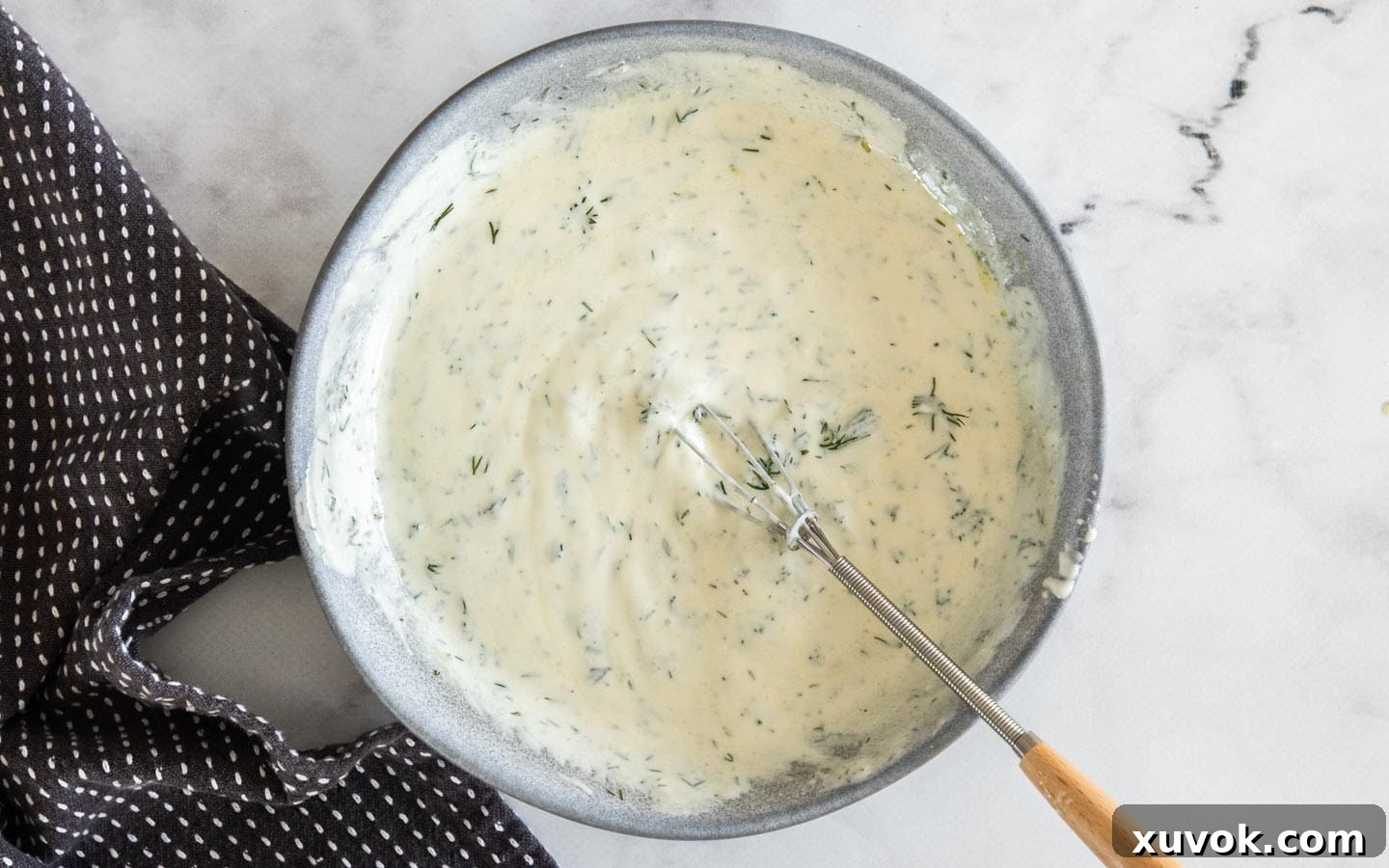
While the potatoes bake and the salmon marinates, you can get a head start on the refreshing Greek yogurt dressing. In a small bowl, combine the plain Greek yogurt, fresh lemon juice, Dijon mustard, extra virgin olive oil, finely chopped fresh dill, onion powder, and a pinch of fine sea salt. Whisk all the ingredients together vigorously until they are well combined and smooth. This creates a light, tangy, and herbaceous dressing that will perfectly complement the richness of the salmon and potatoes. Set it aside, ideally in the refrigerator, until you’re ready to serve.
4. Assemble and Bake the Salmon and Remaining Veggies
Once the potatoes are fork-tender and have had their 25 minutes in the oven, carefully remove the baking sheet. Flip the potatoes over and gently make some space among them. Now, arrange the marinated salmon fillets, skin-side down, onto the baking sheet. Spoon any remaining honey mustard sauce from the bowl generously over the top of each salmon fillet. For extra richness and moisture, place a small pat of butter on top of each fillet. Scatter the asparagus spears around the salmon and potatoes, ensuring they are in a single layer for even roasting. Return the baking sheet to the oven and bake for 6 minutes.
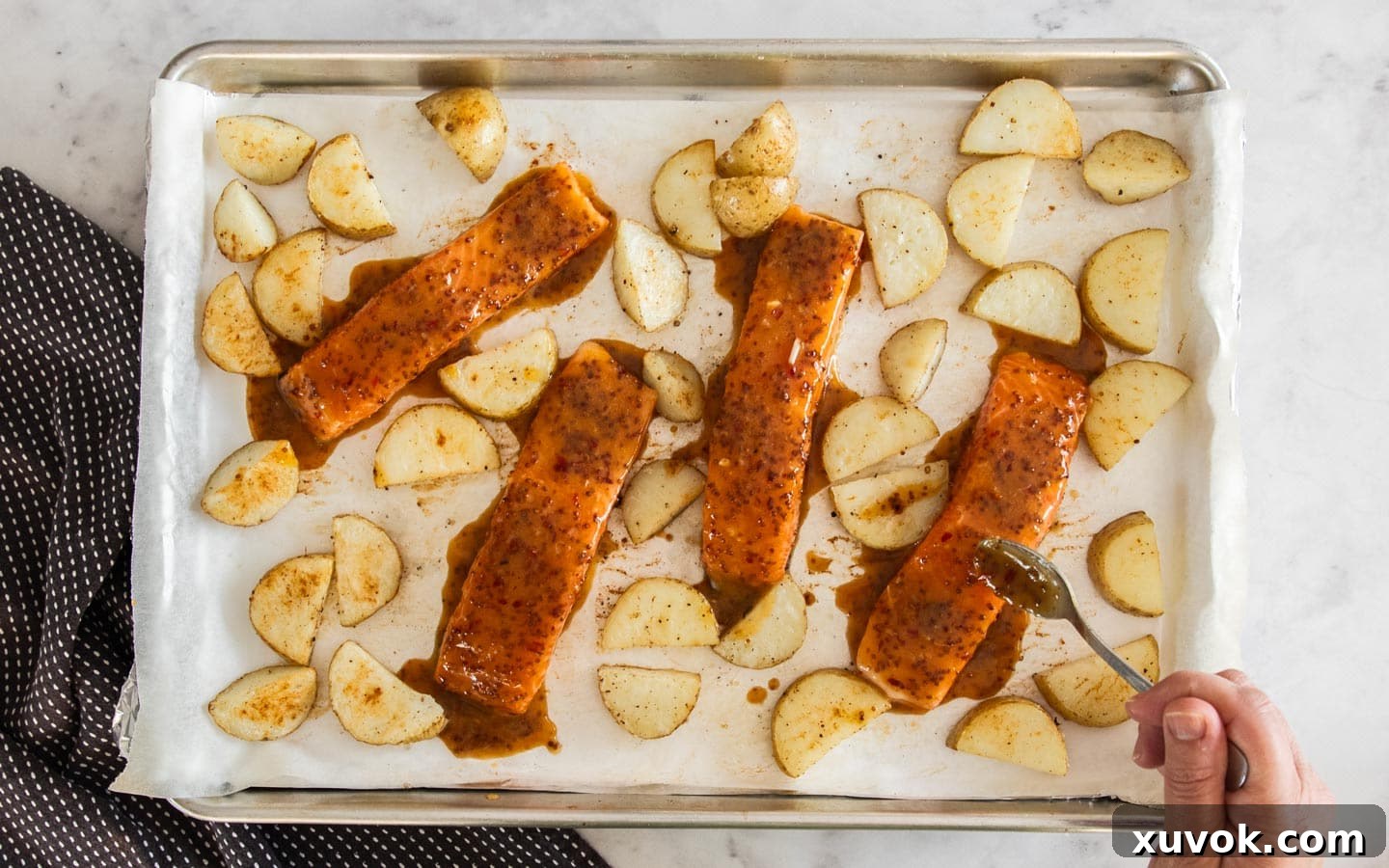
After the initial 6 minutes, carefully pull out the baking sheet again. Now, scatter the frozen peas evenly around the pan. The residual heat will help them cook quickly. Return the tray to the oven for a final 6-8 minutes, or until the salmon is cooked to your preferred doneness and the vegetables are tender-crisp. Keep a close eye on the salmon, as cooking times can vary based on thickness and your desired level of doneness.
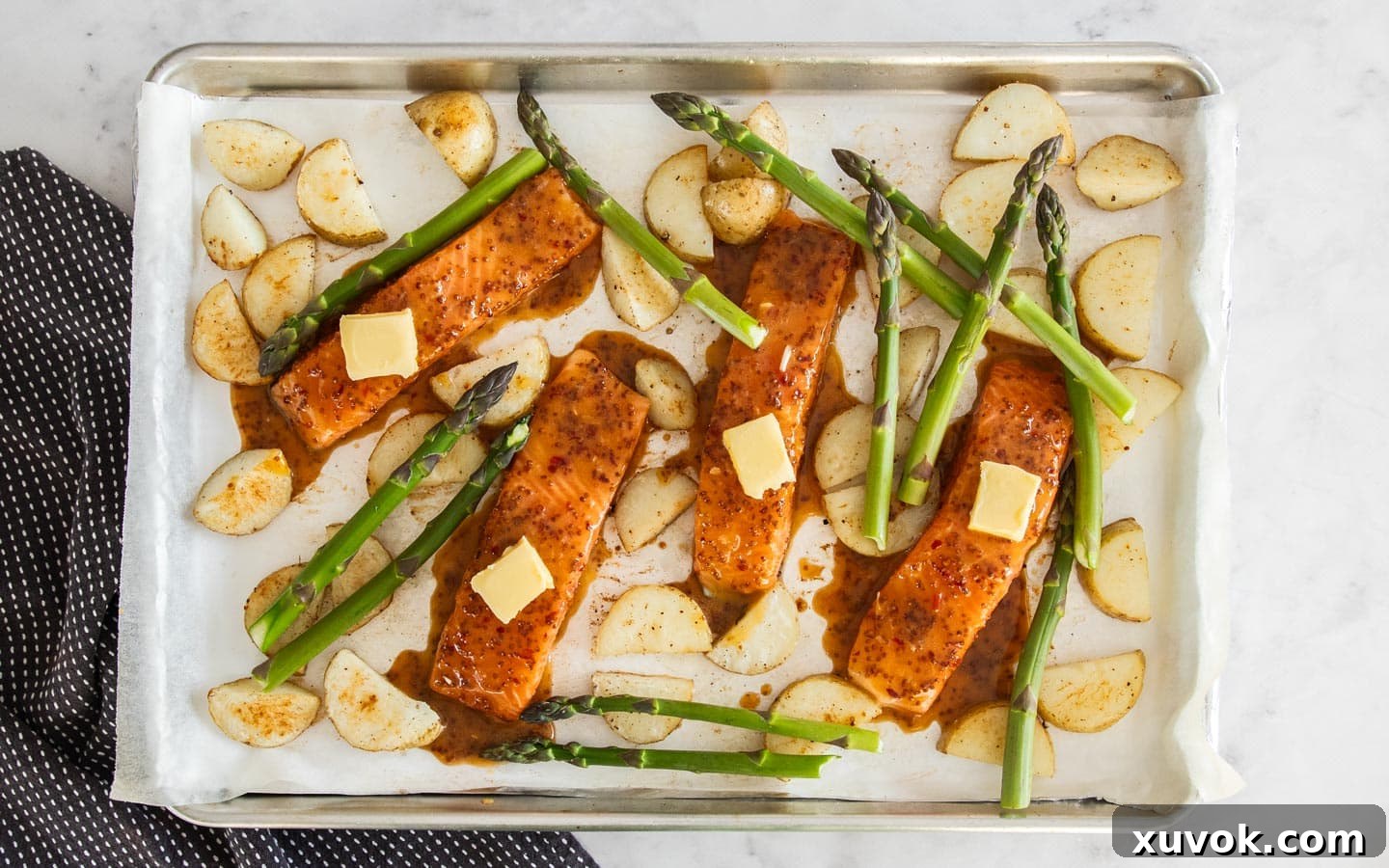
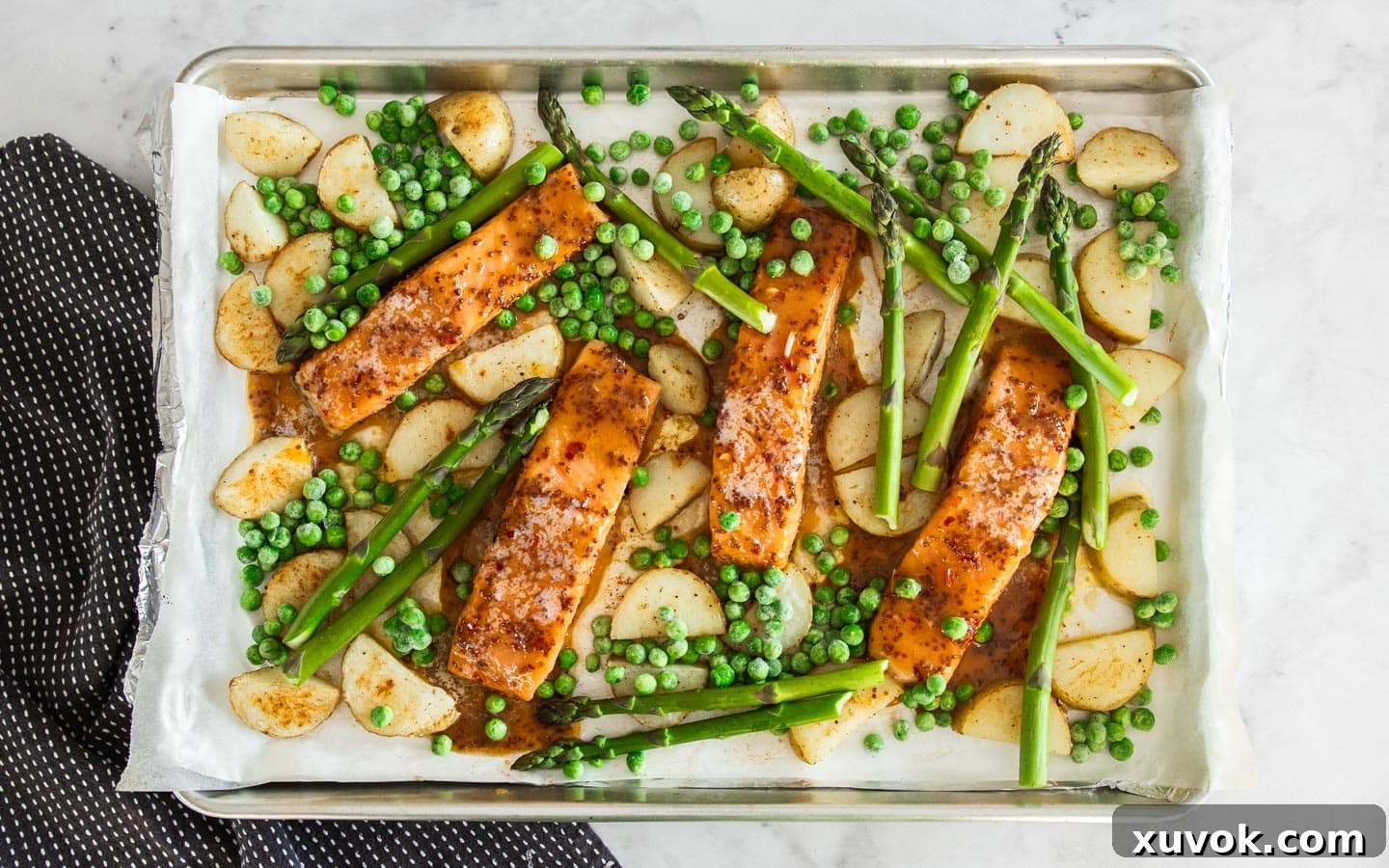
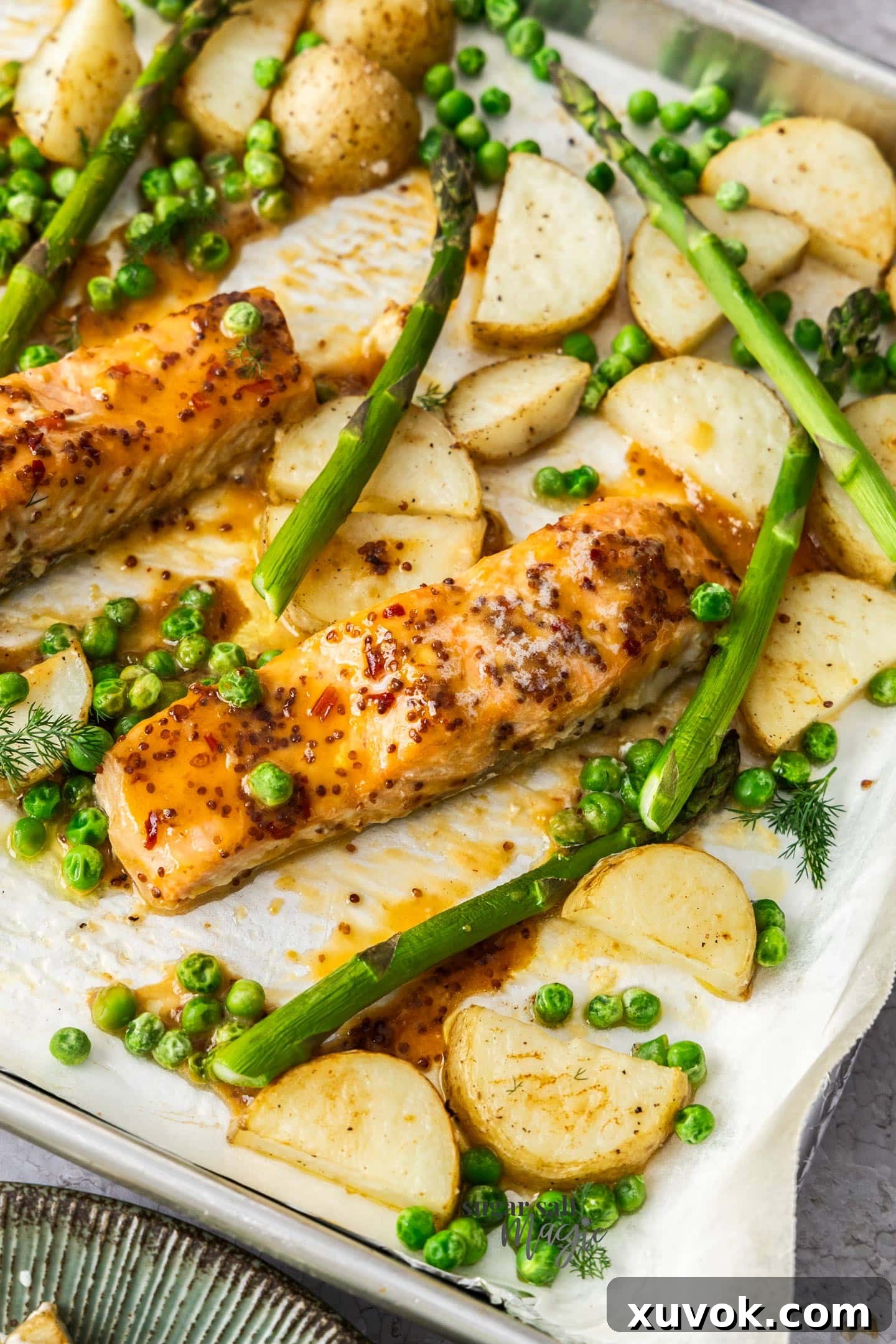
Once baked to perfection, remove the tray from the oven. Serve immediately, making sure to scrape every last bit of that irresistible honey mustard glaze from the pan and spoon it over the salmon and vegetables. A final drizzle of the Greek yogurt dressing and a sprinkle of fresh dill will complete this delightful one-pan feast.
Achieving Perfectly Cooked Salmon Every Time
Knowing when your salmon is perfectly cooked is key to enjoying its tender, flaky texture and rich flavor. Undercooked salmon can be unappetizing, while overcooked salmon becomes dry and less enjoyable. Here’s how to ensure your honey mustard salmon is just right:
- Internal Temperature Guidelines:
- The USDA recommends an internal temperature of 63°C (145°F) for cooked fish, making it safe to eat.
- Food safety authorities in Australia suggest cooking fish fillets to around 69°C (155°F) or until the flesh flakes easily.
- However, many home cooks find salmon cooked to these higher temperatures to be dry and overdone, as the flesh often flakes well before these points are reached.
- Personal Preference for Doneness:
- Medium-Rare: Many enthusiasts prefer salmon cooked to 49-54°C (120-130°F), which results in a very moist, almost translucent center.
- Medium: An internal temperature of 55-60°C (130-140°F) is often considered ideal, yielding salmon that flakes easily but remains wonderfully moist and tender throughout. This is generally my preferred doneness.
- Well-Done: While safe at 63°C (145°F) or above, salmon can start to lose its moisture and become firmer beyond this point.
- The Essential Tool: A Meat Thermometer: The most accurate way to gauge salmon doneness is with an instant-read meat thermometer. Insert it into the thickest part of the salmon fillet, avoiding the skin or bone. This simple tool takes the guesswork out of cooking and ensures consistent results every time.
- Visual Cues: Beyond temperature, look for these visual signs:
- The flesh should turn from translucent to opaque.
- It should flake easily with a fork in the thickest part.
- A little bit of albumin (white protein) may appear on the surface; this is normal and indicates the fish is cooking.
- Carryover Cooking: Remember that salmon will continue to cook for a few minutes after it’s removed from the oven, so it’s often best to pull it out when it’s a few degrees shy of your target temperature.
By understanding these guidelines and using a reliable thermometer, you’ll be able to cook perfectly moist and delicious honey mustard salmon, tailored exactly to your liking.
Expert Tips & Recipe Variations
Elevate your Honey Mustard Salmon Tray Bake with these helpful tips and creative variations:
Customizing Your Vegetables
- Seasonal Swaps: While asparagus and peas are fantastic, feel free to use other seasonal vegetables. Broccoli florets, sliced bell peppers, cherry tomatoes, green beans, or even Brussels sprouts can be excellent additions. Adjust cooking times as needed; denser vegetables might need to be added with the potatoes, while softer ones can go in with the salmon.
- Root Vegetables: If you love roasted root vegetables, consider carrots, parsnips, or sweet potatoes. Just ensure they are cut into similar sizes as the regular potatoes to promote even cooking.
Spice It Up or Tone It Down
- Heat Control: The chilli paste in the honey mustard glaze is optional. If you prefer more heat, increase the amount or add a pinch of cayenne pepper. For a milder flavor, omit it entirely.
- Herbal Freshness: Beyond dill, fresh parsley, chives, or even a sprig of thyme can be lovely garnishes or additions to the yogurt dressing, adding an extra layer of freshness.
Stand-Alone Salmon Options
- Pan-Seared Salmon: If you’re short on time or prefer a crispy skin, pan-frying the salmon is a great alternative. Sear the salmon flesh-side down in a hot skillet with a dash of oil for about 4 minutes, then flip and cook skin-side down for another 4-6 minutes, or until cooked through. In the last 2 minutes, add the honey mustard sauce ingredients, including the butter, to the pan, spooning the glaze over the salmon as it cooks.
- Serving Suggestions for Solo Salmon: When preparing the salmon on its own, it pairs wonderfully with a simple green salad, steamed rice, quinoa, or roasted broccoli. A squeeze of fresh lemon and a sprinkle of chopped fresh parsley make a beautiful finish.
Batch Cooking & Meal Prep
- Make Ahead: The honey mustard glaze can be prepared up to 2-3 days in advance and stored in an airtight container in the refrigerator. The Greek yogurt dressing also holds well in the fridge for a couple of days.
- Meal Portions: This recipe is excellent for meal prepping. Divide the cooked salmon and vegetables into individual airtight containers for quick, healthy lunches or dinners throughout the week.
Essential Cooking Tips
- Don’t Overcrowd the Pan: Ensure your potatoes, salmon, and vegetables have enough space on the baking sheet. Overcrowding leads to steaming instead of roasting, resulting in less crispy vegetables and unevenly cooked salmon. Use two pans if necessary.
- Pat Salmon Dry: Before marinating, gently pat your salmon fillets dry with paper towels. This helps the marinade adhere better and can contribute to a slightly crispier exterior.
- Resting the Salmon: Just like with other meats, letting the salmon rest for a few minutes after cooking allows the juices to redistribute, resulting in a more tender and moist fillet.
With these tips and variations, you can confidently customize this Honey Mustard Salmon Tray Bake to suit your preferences and impress everyone at your dinner table!
Yield and Storage
This delightful Honey Mustard Salmon Tray Bake recipe is perfectly portioned to serve 4 individuals, based on salmon fillets weighing approximately 125g – 150g (4.4oz – 5.3oz) each. Should you use larger portions of salmon, please note that the cooking times may need to be slightly extended to ensure thorough cooking.
Storing Leftovers:
Any leftover salmon and accompanying vegetables are a treat the next day! They will keep beautifully in the refrigerator for 2-3 days when stored in an airtight container. Allow the meal to cool completely before transferring it to storage containers to maintain freshness and prevent bacterial growth.
Reheating Instructions:
- Microwave: For a quick reheat, place individual portions in the microwave. Reheat on a lower setting for a couple of minutes, checking periodically until warmed through. Be cautious not to overcook, as salmon can dry out quickly.
- Stovetop/Pan: For best results, especially for the salmon, gently reheat in a pan over low heat until it reaches your desired temperature. This method helps maintain the moisture and texture of the fish.
- Oven: If reheating a larger quantity, you can spread the leftovers on a baking sheet and warm in a preheated oven at a low temperature (around 150°C / 300°F) for 10-15 minutes, or until heated through.
Creative Uses for Cold Leftovers:
Don’t limit yourself to just reheating! Cold leftover salmon can be flaked and added to a fresh salad for a light and healthy lunch. It’s also delicious mixed into a pasta dish, served on crackers, or used as a filling for wraps or sandwiches. The robust honey mustard flavor makes it a versatile ingredient for various cold applications.
Frequently Asked Questions (FAQs)
Can I use frozen salmon for this recipe?
Yes, you can absolutely use frozen salmon fillets. Just make sure they are thoroughly thawed in the refrigerator overnight or under cold running water before marinating and cooking. Pat them dry with paper towels to remove excess moisture.
What if I don’t have whole grain mustard?
If you don’t have whole grain mustard, you can substitute with an equal amount of Dijon mustard for the sauce. However, you’ll miss the textural element and the slightly milder, earthier flavor that whole grain mustard provides. A little extra honey could help balance the increased sharpness from more Dijon.
Can I prepare this meal ahead of time for meal prep?
Yes, this recipe is fantastic for meal prep! You can prepare the honey mustard glaze and the Greek yogurt dressing a day or two in advance. Once cooked, the salmon and vegetables can be portioned into airtight containers and stored in the refrigerator for 2-3 days, making for quick and easy meals throughout the week.
What are good alternatives to asparagus and peas?
Great alternatives include broccoli florets, green beans, sliced bell peppers, cherry tomatoes, or zucchini. For heartier vegetables like carrots or Brussels sprouts, consider adding them with the potatoes at the beginning to ensure they cook through.
How can I tell if my salmon is cooked without a thermometer?
While a meat thermometer is the most reliable method, you can also check for visual cues. Cooked salmon will turn from translucent to opaque and will flake easily with a fork at its thickest part. A small amount of white albumin may appear on the surface, which is a normal sign of cooked salmon.
Is this recipe spicy?
The recipe includes optional chilli paste, which adds a very subtle touch of heat rather than intense spiciness. If you prefer no heat at all, simply omit the chilli paste. For those who enjoy more spice, feel free to add a bit more chilli paste or a pinch of red pepper flakes.
More Recipes You’ll Love
If you enjoyed this honey mustard salmon, be sure to explore more of our delicious and easy-to-make recipes:
- Oven Baked Teriyaki Salmon
- Furikake Salmon
- Honey Lemon Pepper Wings
- Honey Pepper Pork Stir Fry
- Sticky Honey Soy Chicken Wings
- Honey Garlic Ribs
- Crispy Salmon Bites
⭐⭐⭐⭐⭐⭐
Did you try this honey mustard salmon recipe? We’d love to hear from you! Leaving a rating and comment below the recipe is incredibly helpful and appreciated!
Hungry for more? Subscribe to our newsletter for free recipes straight to your inbox. Also, connect with us on Facebook, Pinterest, and Instagram for daily inspiration and updates!
Honey Mustard Salmon (Tray Bake)
This honey mustard salmon is a quick and easy family meal loaded with flavor. Baked with potatoes and veggies, this one-pan meal is a winner!
Rate This Recipe
Pin Recipe
Ingredients
Honey Mustard Salmon Tray Bake
- 420 g small/medium potatoes (~1lb / about 130g each, 4 small/3 medium), cut into wedges
- 2 tablespoons vegetable oil
- 4 salmon fillets (125-150g / 4.4-5.3oz each)
- 1 tablespoon Dijon mustard
- 1 tablespoon whole grain mustard
- 2 tablespoons honey
- 1 teaspoon chilli paste (optional, or swap for sriracha)
- 1 clove garlic, minced
- 28 g butter in 4 pieces (2 tablespoons, 1oz)
- 12 stalks asparagus, trimmed
- 1 cup frozen peas
Greek Yogurt Dressing
- 1 cup plain low fat Greek yogurt
- 1 ½ tablespoons lemon juice
- 2 teaspoons Dijon mustard
- 1 tablespoon extra virgin olive oil
- 2 tablespoons fresh dill, finely chopped
- ½ teaspoon onion powder
- ½ tsp fine sea salt
For best results, always weigh ingredients where a weight is provided
Equipment
- Large baking sheet
- Mixing bowls
- Whisk
Instructions
- Preheat the oven to 200°C (395°F).
- Wash and dry the potatoes. Cut them in half, then slice into 1cm (~1/3 inch) slices or wedges.
- Line a large baking sheet with baking paper and add your potatoes. Drizzle over half the oil, and season well with salt and pepper. Toss well to coat, then arrange in a single layer and bake for 25 minutes.
- While the potatoes bake, in a wide bowl, combine both mustards, honey, chilli paste (if using), minced garlic, and the remaining 1 tablespoon of oil. Mix well. Add the salmon fillets and turn them to coat well in the marinade, leaving them flesh side down. Set aside.
- Make the dressing: In a small bowl, combine the Greek yogurt, lemon juice, Dijon mustard, olive oil, fresh dill, onion powder, and salt. Whisk well until combined. Set aside.
- After 25 minutes, remove the potatoes from the oven. Flip them over and make some room on the baking sheet. Add the salmon fillets, skin side down. Spoon all the remaining marinade over the top of the salmon pieces. Place a small pat of butter on top of each fillet. Arrange the asparagus spears around the outside.
- Return the baking sheet to the oven for 6 minutes.
- After 6 minutes, remove the tray again and scatter the frozen peas around the outside of the pan.
- Return to the oven for a further 6-8 minutes, or until the salmon is cooked to your liking (internal temperature of 55-60°C / 130-140°F for medium doneness).
- Serve immediately, drizzling any pan juices and the prepared Greek yogurt dressing over the salmon and vegetables. Please take a moment to leave a comment & rating on the recipe! It’s greatly appreciated and helps others discover this delicious meal.
Notes
- Tablespoons: This recipe uses a standard Australian 20ml tablespoon (equal to 4 teaspoons). Please check your measuring spoons for accuracy.
- Stovetop Salmon: If you prefer not to make a tray bake, you can pan-fry the salmon. Heat a dash of oil in a frying pan or skillet over medium-high heat. Cook salmon flesh-side down for 4 minutes, then flip and cook skin-side down for 4-6 minutes, or until cooked through. In the last 2 minutes, add the honey mustard sauce ingredients (mustards, honey, chilli, garlic, butter) to the pan and spoon it over the salmon as it cooks. Serve with your preferred sides.
- Serving Suggestions: Salmon cooked on its own is lovely served with a simple fresh salad and steamed rice or quinoa. Steamed broccoli and green beans also pair wonderfully. Garnish with lemon wedges or a sprinkle of fresh parsley for an extra touch of elegance.
- Cooking times will vary depending on the thickness of your salmon fillets and your oven’s calibration. Using a meat thermometer is highly recommended for best results.
- Leftovers: Cooked salmon and vegetables can be stored in an airtight container in the refrigerator for 2-3 days. Reheat gently in the microwave on a lower setting, or in a pan over low heat until warmed through.
- Nutrition Details: The nutritional information provided is approximate and derived from an online calculator. Variations may occur depending on the specific brands and quantities of ingredients used.
EXPLORE MORE QUICK DINNERS!
Have you tried this recipe?
Don’t forget to leave a rating and comment below and let me know how it was! I love hearing from you. Please note: Nutrition information is approximate and derived from an online calculator. The brands you use may cause variations.
Calories from Fat 261