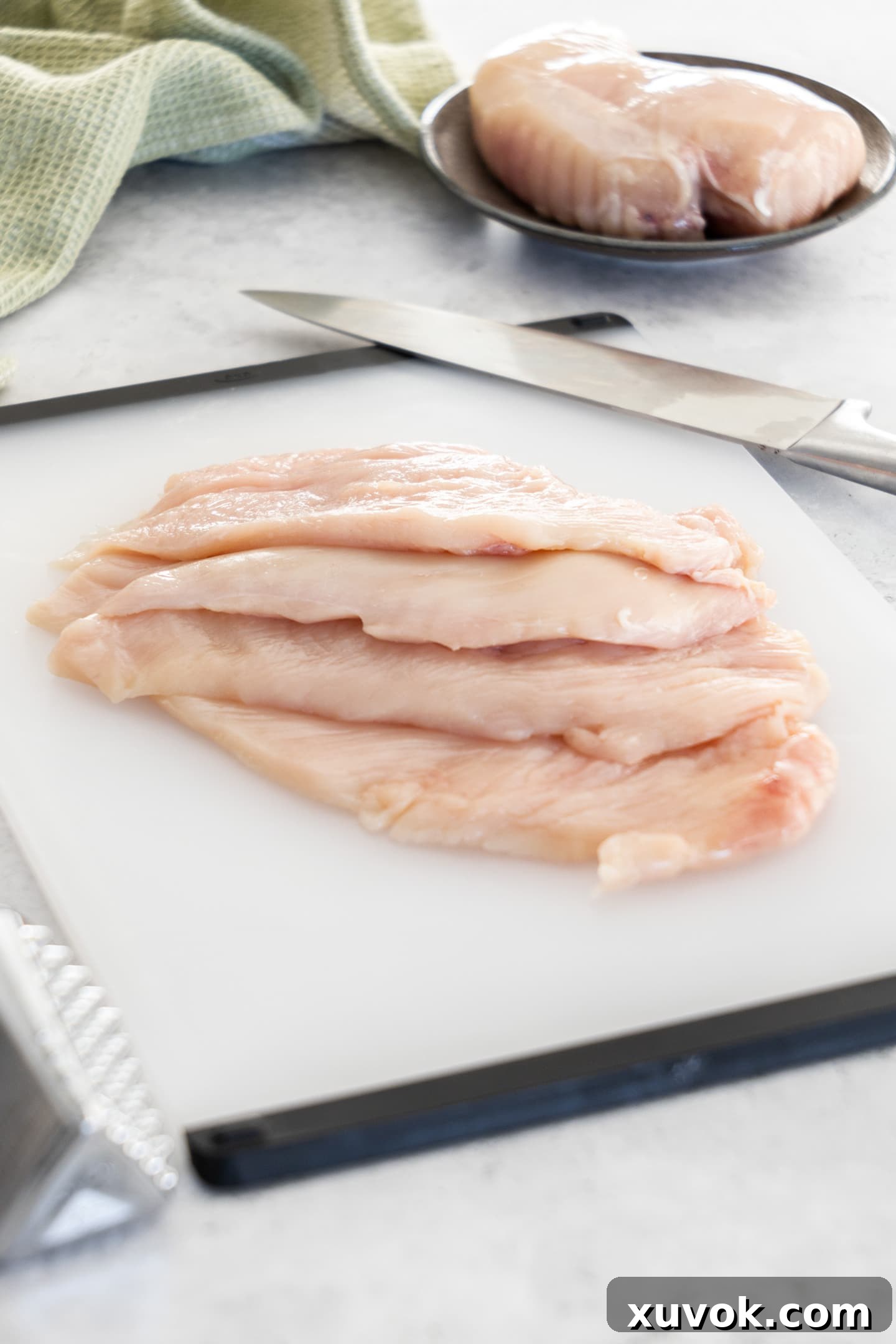
An absolute staple for quick, flavorful, and versatile weeknight dinners, the humble chicken cutlet is a culinary hero in kitchens worldwide. But what exactly defines a chicken cutlet? How do you prepare them from scratch, and what are the best ways to cook them to perfection? This comprehensive guide will demystify everything you need to know about chicken cutlets, from their origin and preparation to a variety of delicious cooking methods and storage tips. Get ready to elevate your chicken dishes and discover why these thinly sliced chicken breasts are an essential ingredient for any home cook.
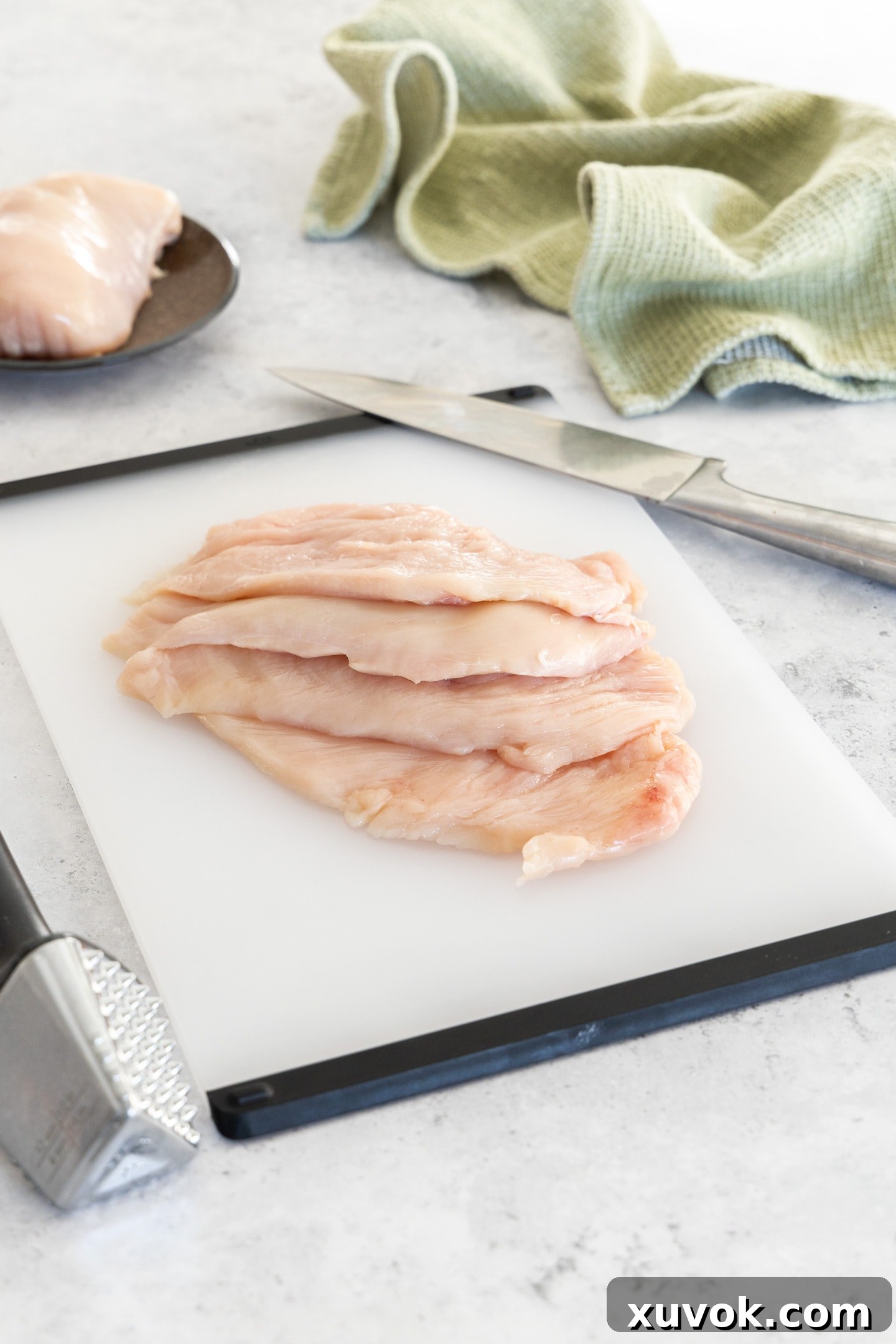
Table of contents
- What are Chicken Cutlets?
- Defining Chicken Breast Cutlets
- The Advantages of Using Chicken Cutlets
- Chicken Breast vs. Tenderloin: Understanding the Difference
- What are Chicken Thigh Cutlets?
- Can You Substitute Chicken Breast for Chicken Cutlet?
- How to Make Chicken Cutlets (Step-by-Step)
- Essential Tools You’ll Need
- How to Slice Chicken Breast into Cutlets
- How to Flatten Chicken Breast for Perfect Cutlets
- How to Cook Chicken Cutlets
- Pan-Fried Chicken Cutlets: Quick and Easy
- How to Fry Chicken Cutlets for Crispy Results
- Oven Baked Chicken Cutlets: A Healthier Option
- Grilling Chicken Cutlets for Smoky Flavor
- Air-Fried Chicken Cutlets for Ultimate Crispness
- Broiled Chicken Cutlets: Caramelized and Tender
- How to Reheat Chicken Cutlets Without Drying Them Out
- Seasoning Chicken Cutlets to Perfection
- Storing Chicken Cutlets: Fresh or Frozen
- Nutritional Information for Chicken Cutlets
- Delicious Recipes Featuring Chicken Cutlets
What are Chicken Cutlets?
Defining Chicken Breast Cutlets
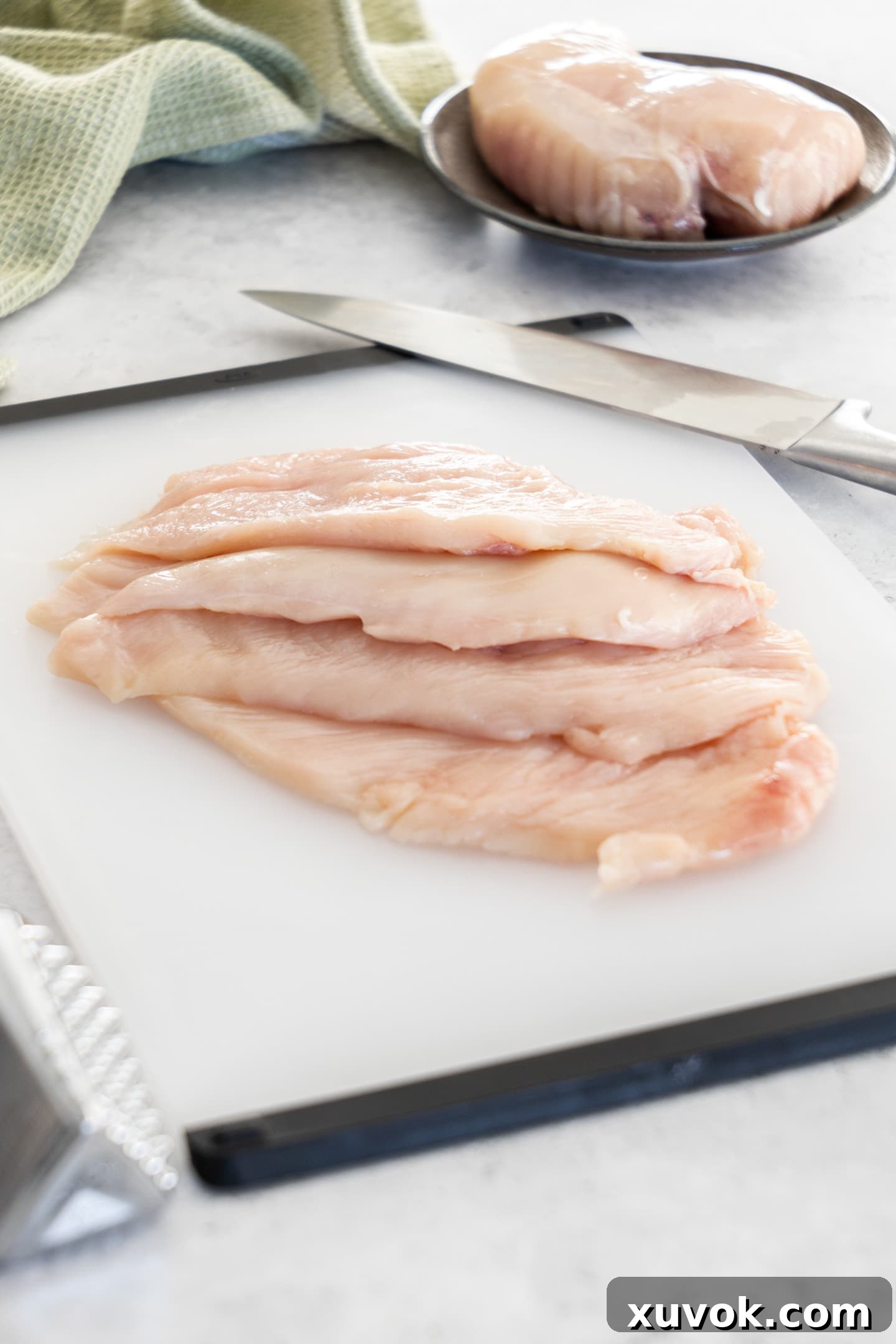
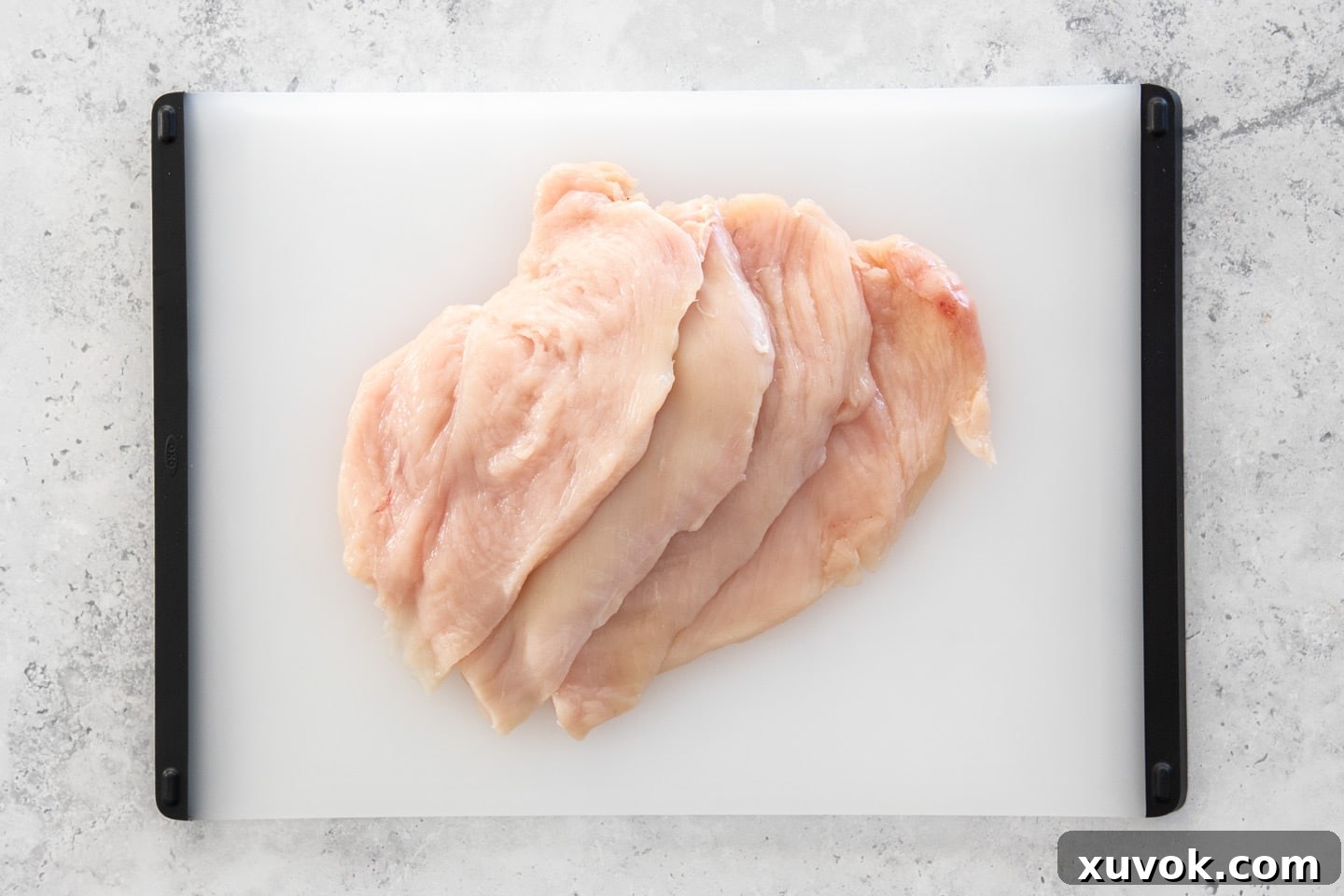
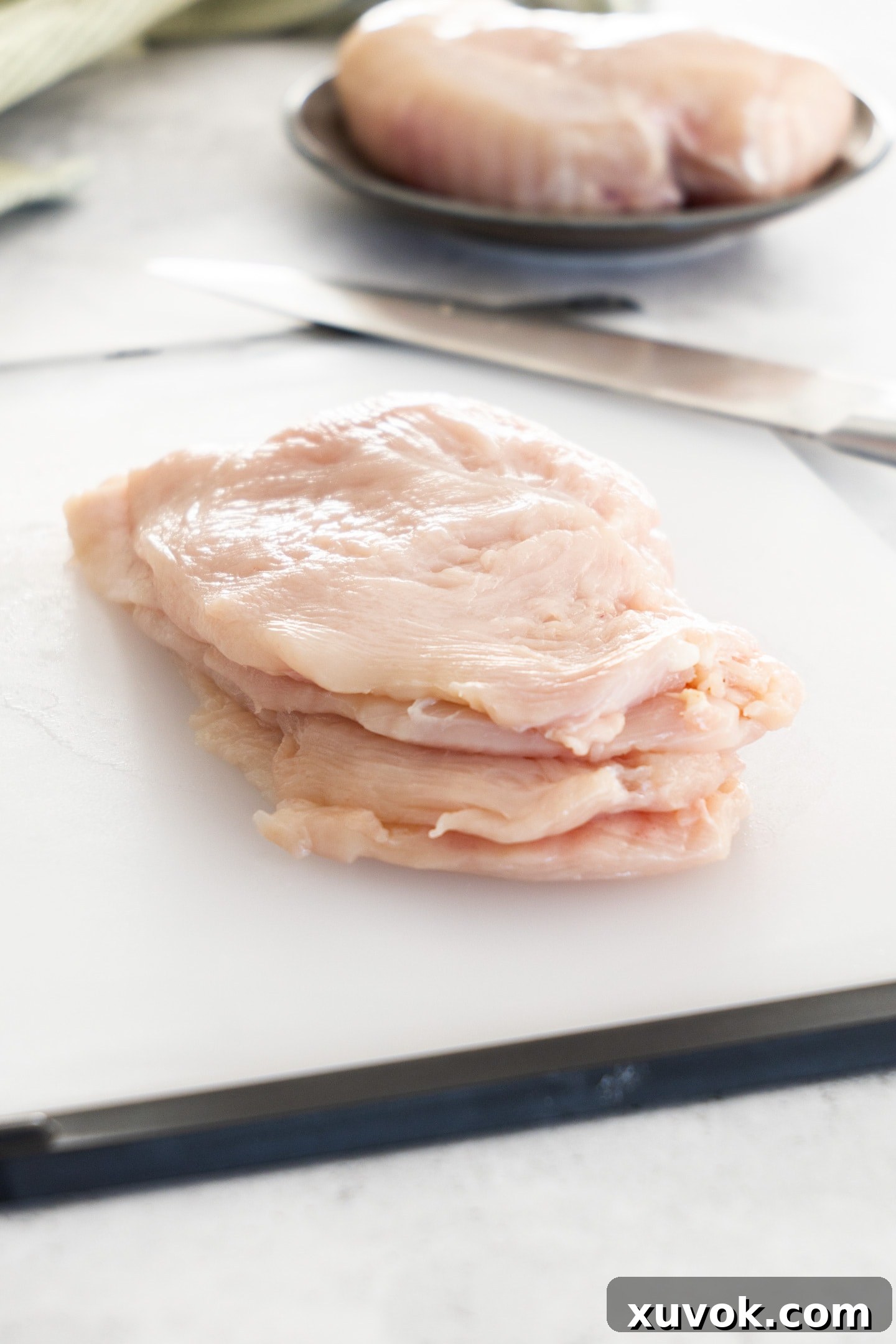
At its core, a chicken cutlet is a skinless, boneless chicken breast fillet that has been sliced horizontally through its thickest part to create two or sometimes three thinner, more manageable pieces. Unlike a whole chicken breast which can be up to an inch thick and uneven, a chicken cutlet offers a uniform, slender profile, typically around 1/4 to 1/2 inch thick. This simple preparation transforms a thick chicken breast into quick-cooking, evenly proportioned pieces, ideal for a myriad of recipes.
The Advantages of Using Chicken Cutlets
Once you understand what a chicken cutlet is, the “why” behind their popularity becomes clear. There are several compelling reasons to incorporate chicken cutlets into your cooking repertoire:
- Effortless Portion Control: Chicken cutlets are inherently portion-friendly, making meal planning and serving a breeze. Each cutlet typically represents a single serving, allowing for precise control and easy plating without the need to cut up larger pieces after cooking.
- Lightning-Fast Cooking Times: As the undisputed heroes of weeknight dinners, chicken cutlets cook incredibly quickly. Their thin profile means they can be fully cooked in as little as 6-8 minutes, depending on their exact thickness and cooking method. This speed is invaluable for busy schedules.
- Superior Even Cooking: A common challenge with thicker chicken breasts is achieving even cooking throughout. Chicken cutlets, especially when pounded to a uniform thickness, ensure that every part of the meat cooks at the same rate. This eliminates the risk of dry edges and undercooked centers, resulting in consistently tender and juicy chicken.
- Remarkable Versatility: While perfect for classic breaded and shallow-fried dishes like these chicken schnitzels, chicken cutlets are equally brilliant without a coating, shining in recipes such as this delightful lime coconut chicken. Their neutral flavor profile and quick cooking time make them adaptable to virtually any cuisine or cooking style.
Chicken Breast vs. Tenderloin: Understanding the Difference
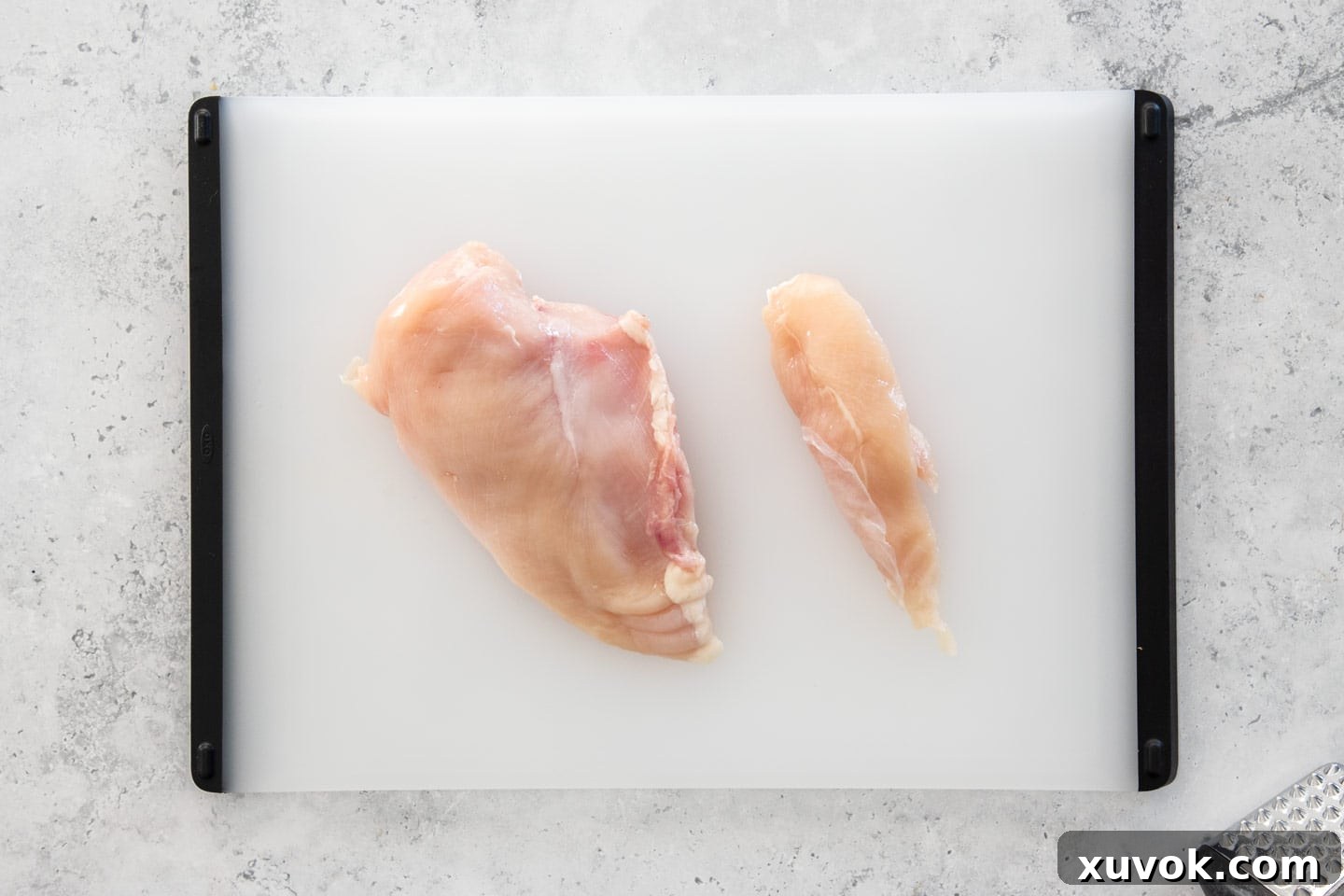
It’s important to differentiate between a chicken breast cutlet and a chicken tenderloin. The chicken tenderloin, often referred to simply as chicken tenders, is a distinct, smaller strip of meat that is loosely attached to the underside of the chicken breast. This muscle is naturally more tender than the main breast. While chicken breasts are sometimes sold with the tenderloin still attached, it’s very common for tenders to be removed and packaged separately.
Chicken tenders, true to their name, are exceptionally tender and cook even faster than cutlets due to their smaller size. They are fantastic when breaded and fried, creating crispy, bite-sized pieces, but are equally delicious simply seasoned and grilled or pan-fried. They are a great option for quick snacks, salads, or kid-friendly meals.
What are Chicken Thigh Cutlets?
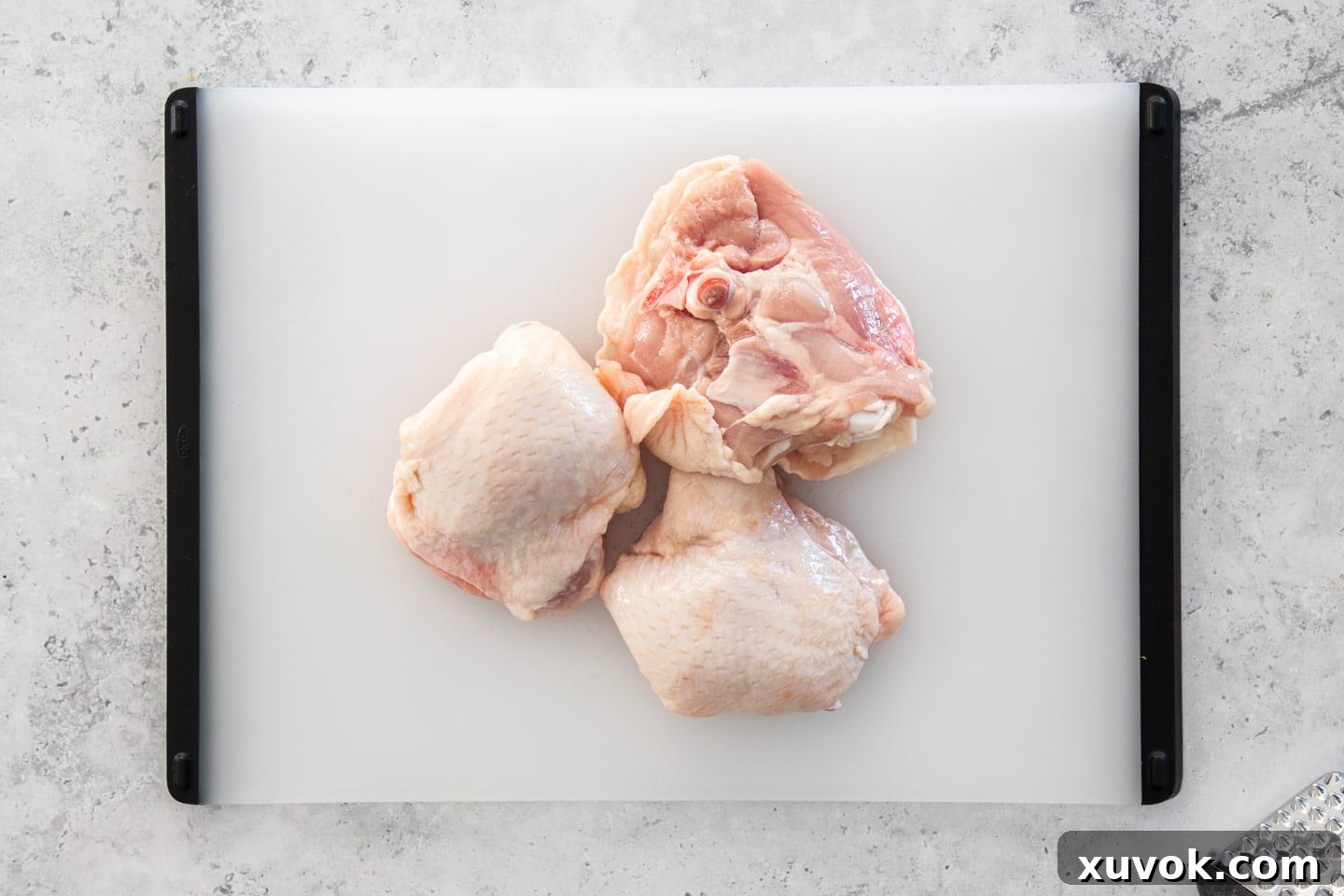
Here’s where the terminology can get a little tricky. While a “chicken cutlet” typically refers to thinly sliced breast meat, a “chicken thigh cutlet” is a different cut altogether. It refers to the thigh meat, often still on the bone, and it may or may not have the skin attached. Unlike breast cutlets, thigh cutlets are not usually sliced thinner; the “cutlet” designation often refers to their boneless or partially boned nature.
Chicken thigh cutlets are celebrated for their richer flavor and higher fat content, which contributes to their incredible succulence. They are particularly wonderful when seared until the skin is irresistibly crispy, delivering a moist and tender result every time. Thigh meat is often more forgiving than breast meat, making it a favorite for those who prefer a juicier, more robust chicken flavor.
Can You Substitute Chicken Breast for Chicken Cutlet?
Technically, chicken breast and chicken cutlets are derived from the same part of the chicken. However, they are not directly interchangeable in recipes without adjustment. If a recipe specifically calls for chicken cutlets, it’s implying a thinner, faster-cooking piece of meat. Using a full, thicker chicken breast in its place will significantly alter the cooking time, potentially leading to undercooked centers or overcooked, dry exteriors if you don’t adjust accordingly. For best results, if you only have whole chicken breasts, it’s highly recommended to slice and pound them into cutlets as described below.
Never Miss a Recipe!
Get the latest recipes straight to your inbox!
How to Make Chicken Cutlets (Step-by-Step)
Crafting your own chicken cutlets at home is a straightforward process, primarily involving slicing a chicken breast in half horizontally. The key to perfection lies in achieving an even thickness, a skill that improves with practice. Don’t be discouraged if your first few attempts aren’t flawless; consistency will come with time.
For beginners, a helpful trick is to place your chicken breasts in the freezer for about 10-15 minutes before slicing. This brief chill firms up the meat slightly, making it much easier to cut cleanly and evenly, reducing the chances of tearing or uneven slices.
Essential Tools You’ll Need
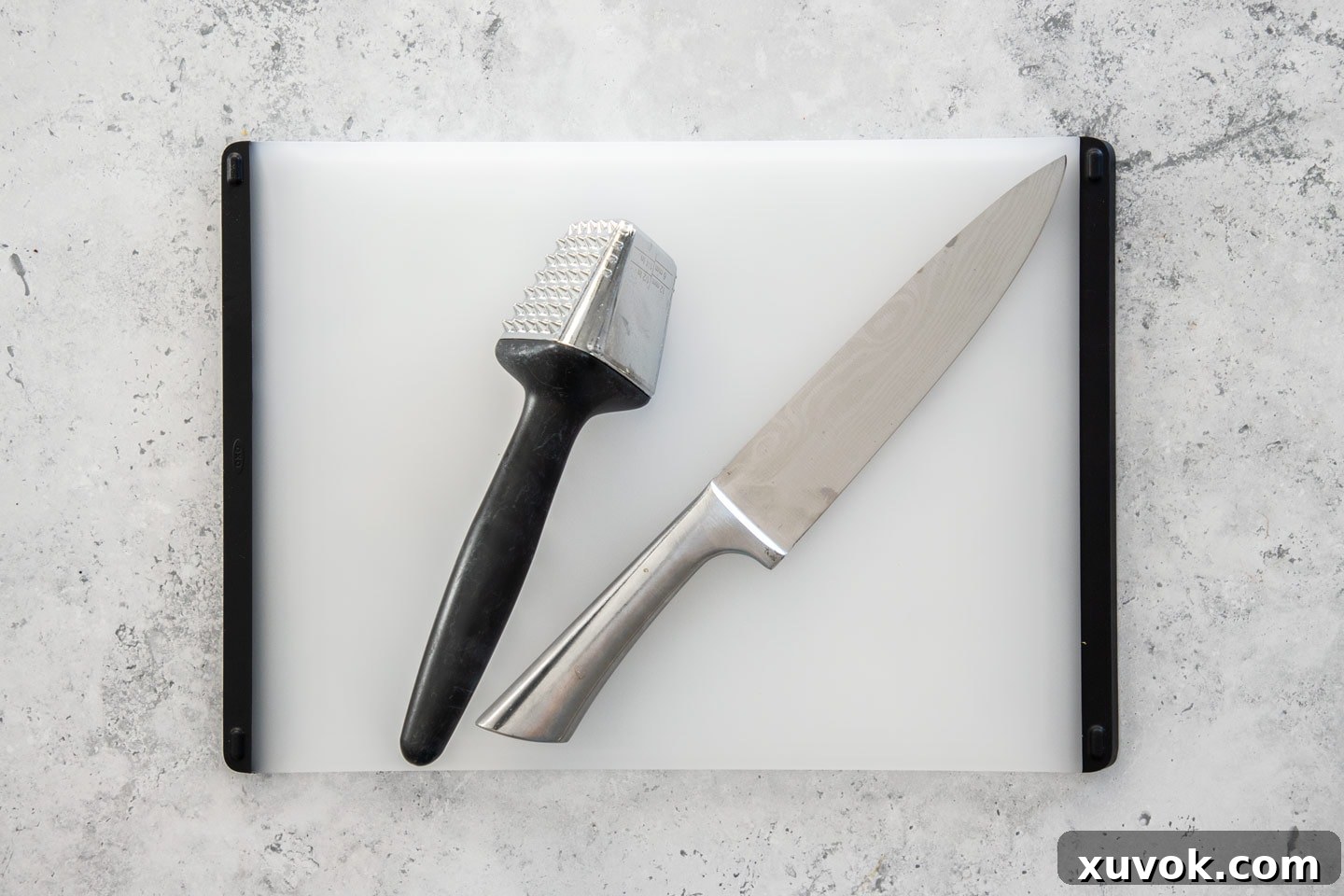
- Chopping board: A stable, non-slip surface is crucial for safety and precision.
- Sharp chefs knife or filleting knife: A very sharp knife is paramount for clean, smooth cuts. A filleting knife offers greater flexibility for thin slices.
- Meat tenderizer / meat mallet: Essential for pounding chicken to an even thickness. If you don’t have one, a rolling pin or the base of a heavy saucepan or skillet can work in a pinch.
How to Slice Chicken Breast into Cutlets
- Prepare the Breast: If your chicken breast has a tenderloin attached, gently pull it off and save it for another recipe. Place the chicken breast on your chopping board with the smoother, flatter side facing up.
- Secure the Meat: Place the palm of your non-knife hand firmly on top of the chicken breast to hold it steady and prevent it from sliding during slicing.
- Initiate the Cut: Starting at the thicker end of the chicken breast, carefully insert your sharp chef’s knife or filleting knife. Aim to slice through the chicken breast horizontally, keeping your blade parallel to the cutting board.
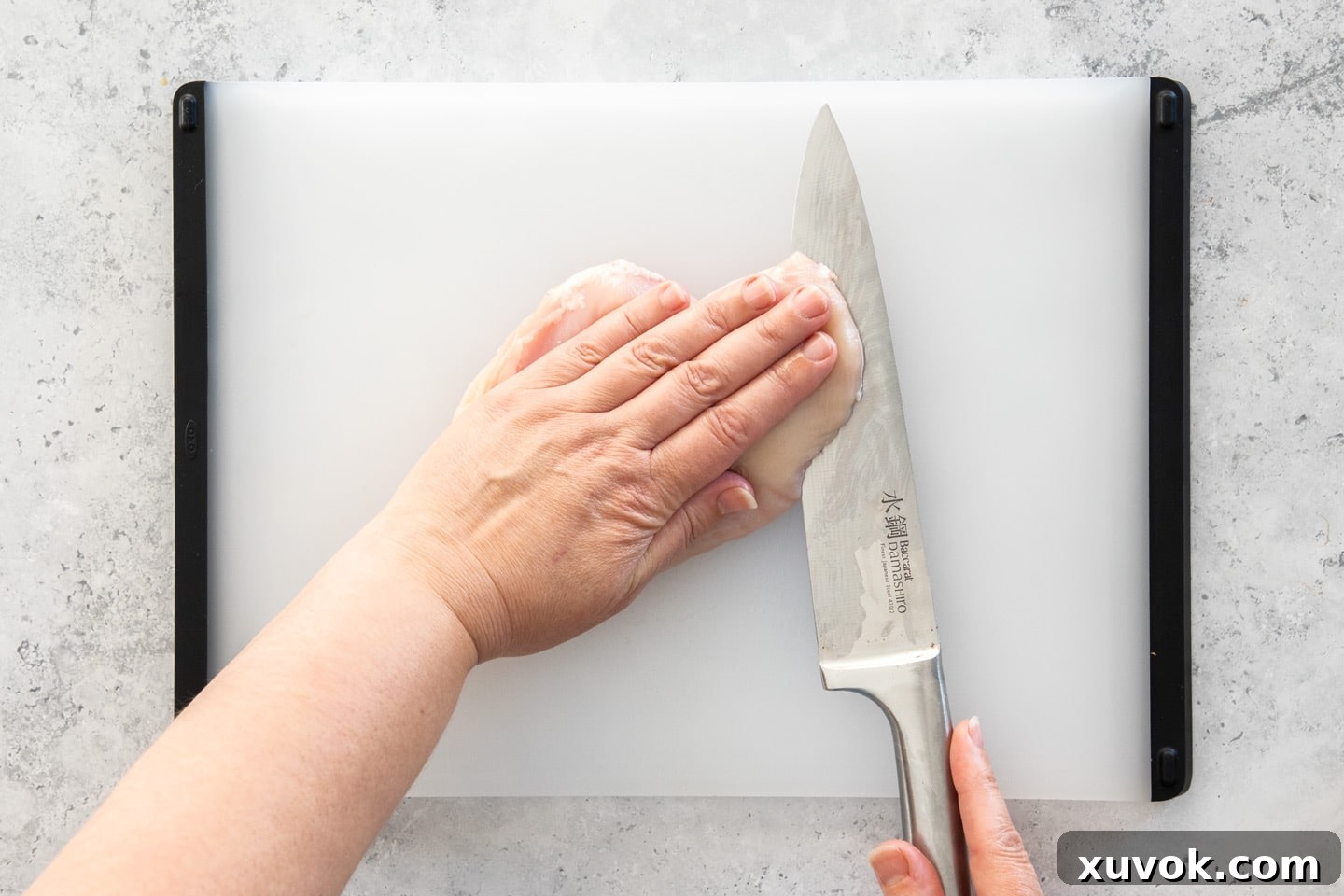
- Complete the Slice: Continue to slice the chicken breast cleanly in half, maintaining an even thickness as you move towards the thinner end. Use long, smooth strokes rather than a sawing motion for the cleanest cut.
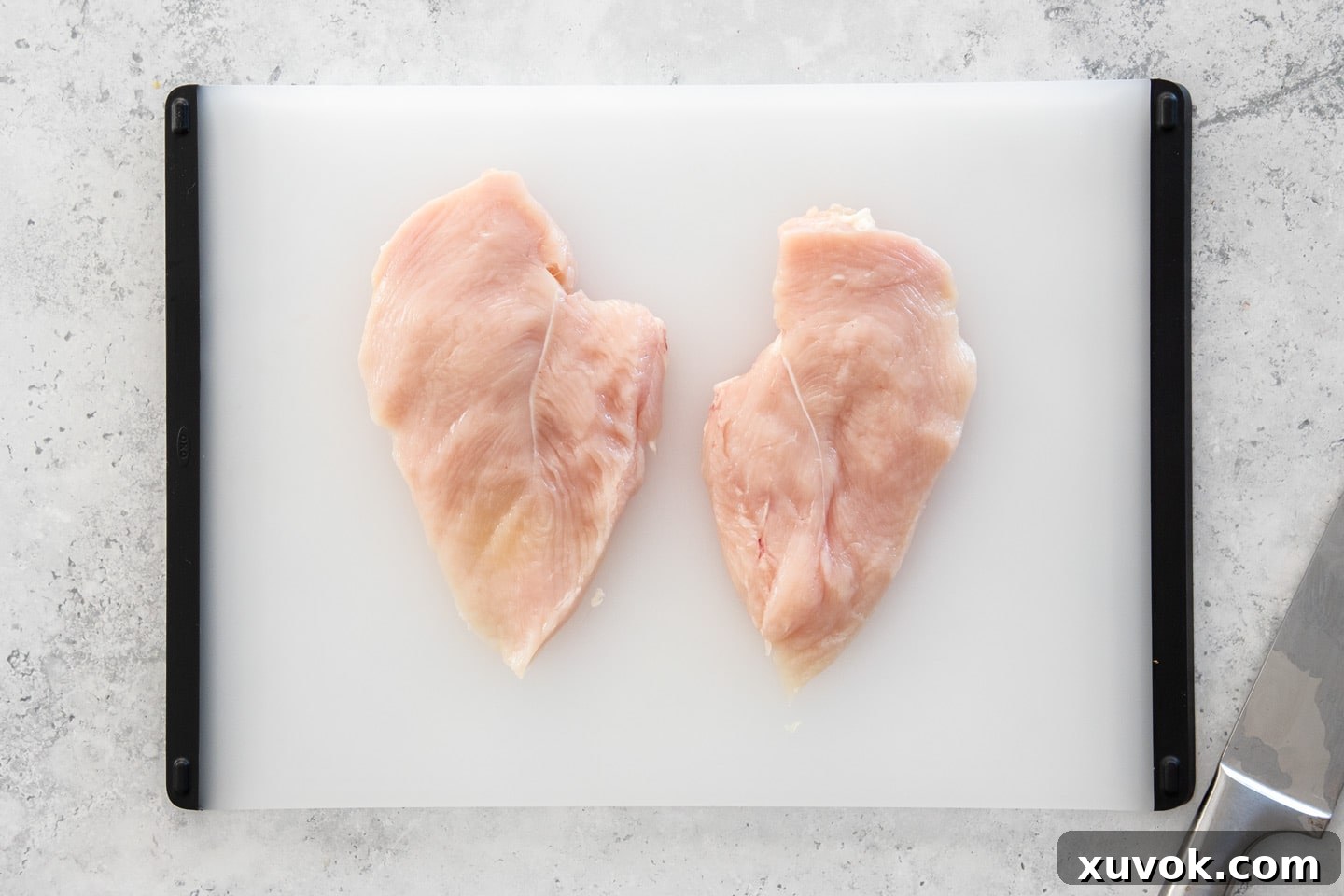
- Reveal Your Cutlets: Gently peel the two pieces apart to admire your two freshly made chicken cutlets.
Expert Tip: Slice slowly and deliberately. This allows you to monitor your cut and make subtle adjustments to ensure an even thickness all the way through. Patience in this step pays off for perfectly cooked results!
How to Flatten Chicken Breast for Perfect Cutlets
While slicing creates thinner pieces, flattening (or pounding) chicken cutlets is an additional step that significantly contributes to faster, more uniform cooking and can also help tenderize the meat. It ensures the cutlet has a consistent thickness from edge to edge, which is especially beneficial for quick-cooking methods. Here’s how to pound chicken for ideal cutlets:
- Prepare for Pounding: Lay a large piece of plastic wrap or parchment paper onto your chopping board. Place one or two chicken cutlets on top, ensuring they have enough space. Cover the chicken with another sheet of plastic wrap or parchment paper. This prevents splattering and keeps your mallet clean.
- Select Your Tool: Grab your meat tenderizer or meat mallet. If you don’t have one, a heavy object like the bottom of a small (6-8 inch) skillet, a sturdy rolling pin, or even a robust glass bottle can be used.
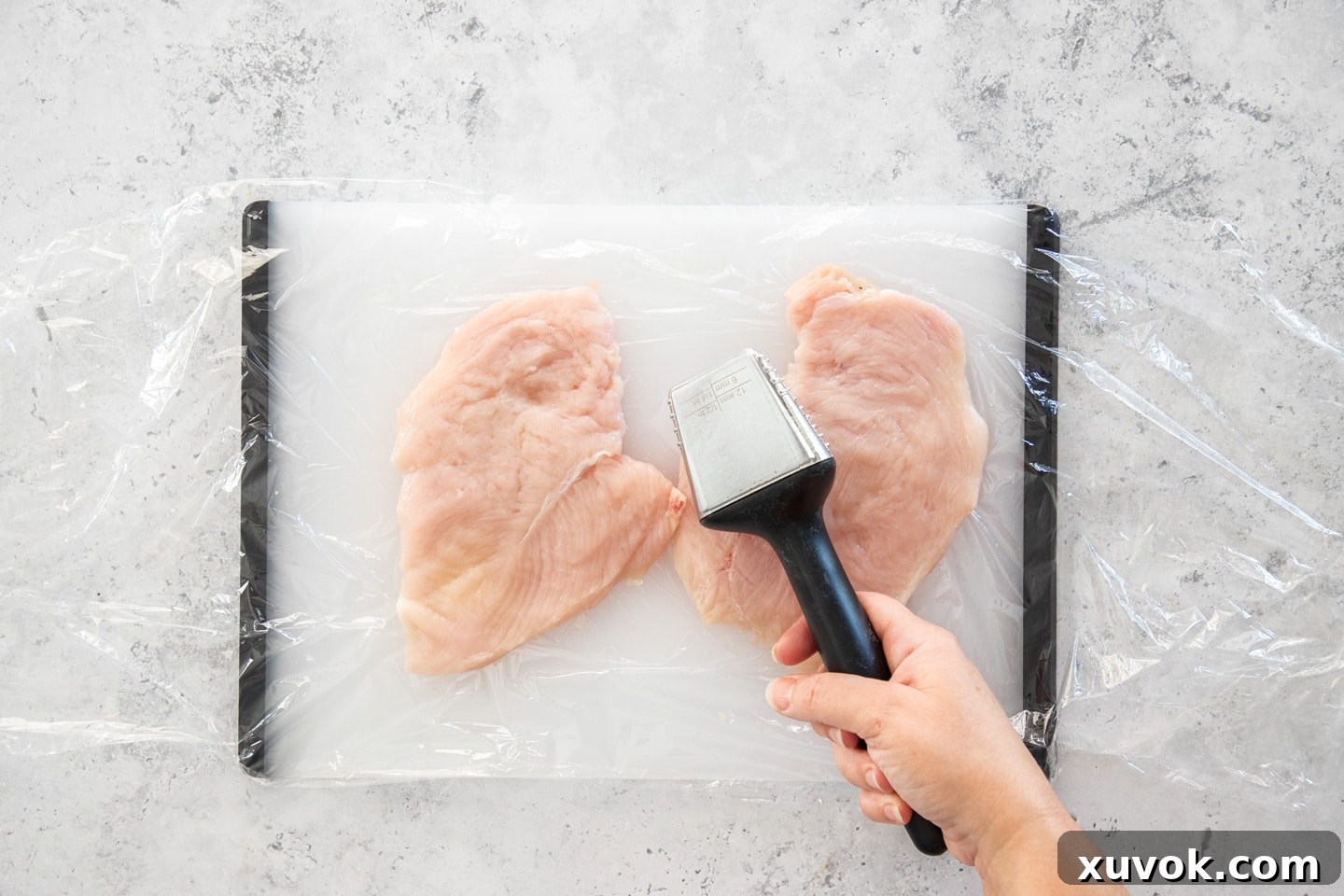
- Pound Evenly: Using the flat side of your meat mallet (or chosen tool), gently and consistently pound the chicken, starting from the thicker parts and working your way outwards. Apply even pressure and use a slight pushing motion to help spread the meat rather than just smashing it down. Continue until the entire cutlet is uniformly thin, aiming for about ¼ inch (6-7mm) thickness, taking care not to create holes.
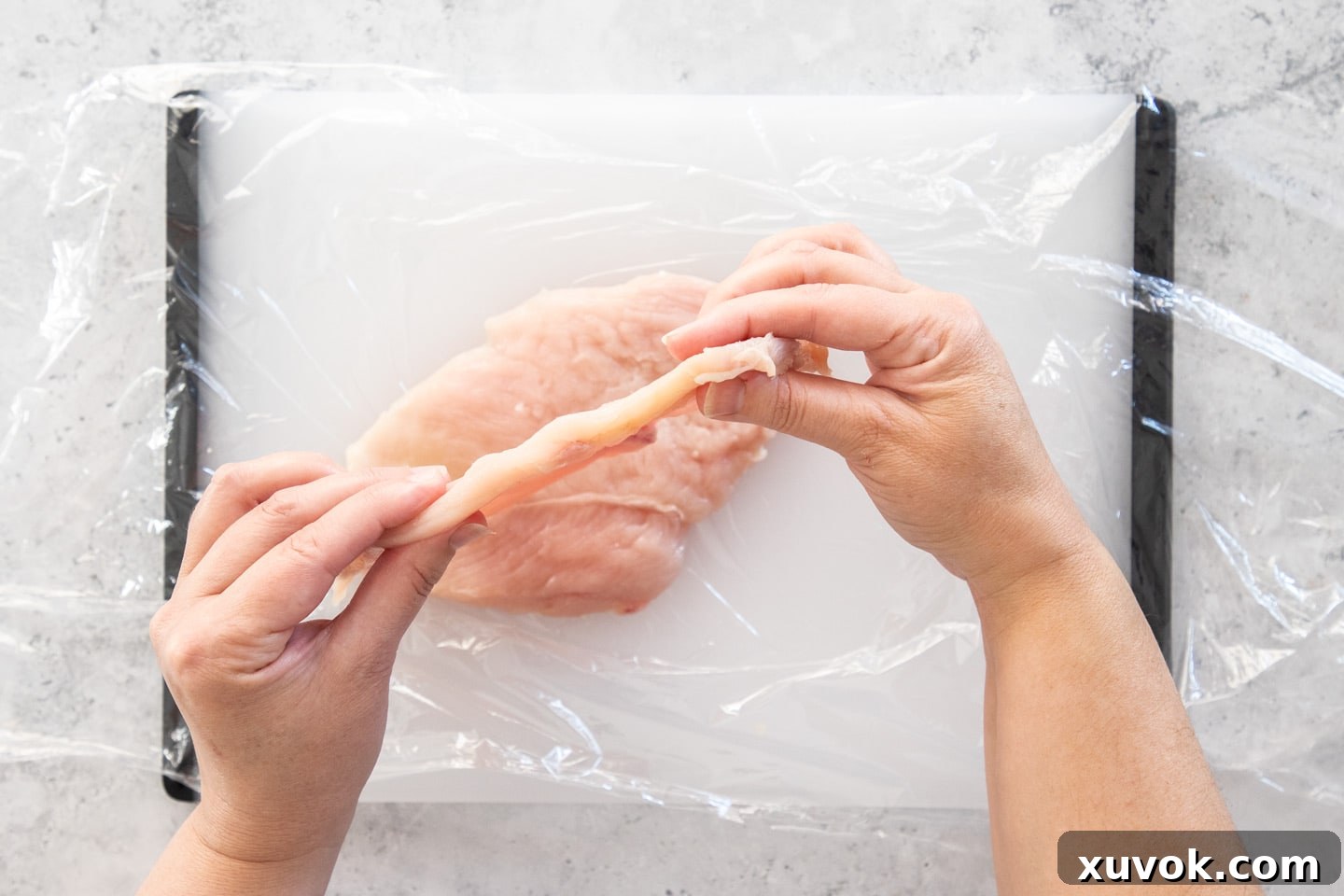
Crucial Pounding Technique: Instead of simply bashing straight down, incorporate a gentle, outward pushing motion with each strike. This helps to evenly spread the chicken meat, preventing tears and ensuring a uniform, tender result. Remember, the goal is to gently persuade the meat into shape, not to aggressively pulverize it. Be patient and gentle!
How to Cook Chicken Cutlets
Chicken cutlets are incredibly versatile and can be cooked using almost any method you’d apply to a regular chicken breast. However, their defining characteristic – their thinness – means they cook significantly faster. Always keep an eye on them to prevent overcooking, which can lead to dry chicken.
Pan-Fried Chicken Cutlets: Quick and Easy
Pan-frying is arguably the easiest and most common way to cook chicken cutlets, making it ideal for lightning-fast weeknight meals. Simply season your cutlets, then cook them in a little oil or butter in a hot skillet for just 3-4 minutes per side. This method creates a lovely golden crust while keeping the interior tender and juicy. Pan-fried cutlets are also perfect for one-pan dinners, absorbing flavors beautifully when cooked directly in a rich sauce, as demonstrated by this delicious creamy Tuscan chicken or a comforting creamy peppercorn chicken.
How to Fry Chicken Cutlets for Crispy Results
For ultimate crispiness, shallow-frying or deep-frying chicken cutlets is the way to go, especially when they are breaded. Shallow frying involves cooking the cutlets in enough hot oil to come halfway up their sides, while deep frying completely submerges them. For shallow frying breaded cutlets, a non-stick pan, a large frying pan, or a large skillet works best.
Frying creates an unparalleled golden-brown, crunchy exterior, perfect for schnitzels like these delicious saltimbocca schnitzels or classic Italian breaded chicken cutlets, both of which are excellent shallow-fried. While deep frying offers even faster cooking, it tends to absorb more oil. Whichever method you choose, ensure your oil is at the correct temperature (around 350-375°F or 175-190°C) for the best results, preventing soggy or greasy chicken.
Oven Baked Chicken Cutlets: A Healthier Option
Baking is another straightforward and often healthier method for cooking chicken cutlets. It’s particularly effective for breaded cutlets, where placing them on a wire rack over a baking sheet will allow air to circulate, resulting in a wonderfully crispy coating. Bake them at 200°C/400°F for approximately 14-18 minutes, flipping halfway through. Baking is also excellent for cooking chicken cutlets directly in a sauce, allowing them to absorb flavors beautifully, as seen in this comforting baked salsa chicken. This method offers hands-off convenience and even cooking.
Grilling Chicken Cutlets for Smoky Flavor
Much like pan-frying, grilling chicken cutlets is incredibly fast and imparts a delicious smoky flavor. Simply brush your cutlets with a little oil, season them well, and cook them over medium-high heat on an oiled grill for about 3-4 minutes per side. The exact grilling time will depend on the cutlet’s thickness and the grill’s temperature, so keep a close watch to prevent drying out. Grilling is perfect for a light, healthy meal, especially when paired with fresh vegetables, and marinades shine particularly well with this cooking method.
Air-Fried Chicken Cutlets for Ultimate Crispness
The air fryer is a fantastic appliance for achieving maximum crispiness with minimal oil, making it especially good for breaded chicken cutlets. To ensure the best results, lightly toss your breading mixture with a touch of oil before coating the chicken, and don’t forget to lightly brush or spray the air fryer basket with oil to prevent sticking. Air fry at 200°C/400°F for 12-15 minutes, flipping the cutlets halfway through. The circulating hot air will create a golden, crunchy exterior that rivals traditional frying.
Broiled Chicken Cutlets: Caramelized and Tender
Broiling (also known as overhead grilling) is an often underutilized but highly effective method for cooking chicken cutlets. It delivers a beautiful caramelized exterior, similar to pan-frying, but without the need for added oil. The intense direct heat from above cooks the chicken quickly and creates a delicious browned crust. Broil for approximately 3-4 minutes per side, keeping a very close eye on them to prevent burning, especially if using seasonings that can blacken quickly. This method is best for unbreaded cutlets and results in wonderfully tender, flavorful chicken.
How to Reheat Chicken Cutlets Without Drying Them Out
Reheating chicken cutlets can sometimes be tricky, as they can easily dry out. For the best results, reheat them in the oven. Place the cooked cutlets on a wire rack set over a baking sheet at 180°C/350°F for about 8-10 minutes. This method allows the heat to circulate evenly, helping them retain moisture and tenderness. Avoid reheating in the microwave if possible, as it can make chicken rubbery.
Regardless of the cooking method, always ensure your chicken is fully cooked by checking its internal temperature. Chicken is safe to eat when it reaches 74°C/165°F, measured with a meat thermometer inserted into the thickest part. If you don’t have a thermometer, cut into the thickest part – the juices should run clear, and there should be no pink visible, though it should still be moist and tender.
Seasoning Chicken Cutlets to Perfection
Chicken cutlets are a blank canvas for flavor. Their thinness means they readily absorb seasonings and marinades, making them incredibly versatile. Here are some fantastic ideas to season your chicken cutlets:
- The Classic Duo: Salt and Pepper: Sometimes, simplicity is key. A generous sprinkle of salt and freshly ground black pepper is all you need for a delicious, straightforward chicken cutlet. Pan-fried, they’ll develop a beautiful savory crust that highlights the chicken’s natural flavor.
- Ready-Made Flavorful Seasoning Blends: Keep a collection of your favorite pre-made spice blends on hand for instant flavor. Think bold cajun seasoning for a spicy kick, aromatic taco seasoning for a Mexican-inspired meal, earthy Moroccan spices, or vibrant fajita seasoning. These blends make whipping up flavorful weeknight dinners, like my seriously tasty fajita chicken in these nachos, incredibly easy and fuss-free.
- Flavorful Marinades: Marinades are excellent for infusing chicken cutlets with deep, complex flavors and also contribute to tenderizing the meat. Prepare a marinade ahead of time – like this zesty Greek marinade – and let your cutlets soak up the goodness for at least 30 minutes (or up to a few hours) before pan-frying, grilling, or broiling.
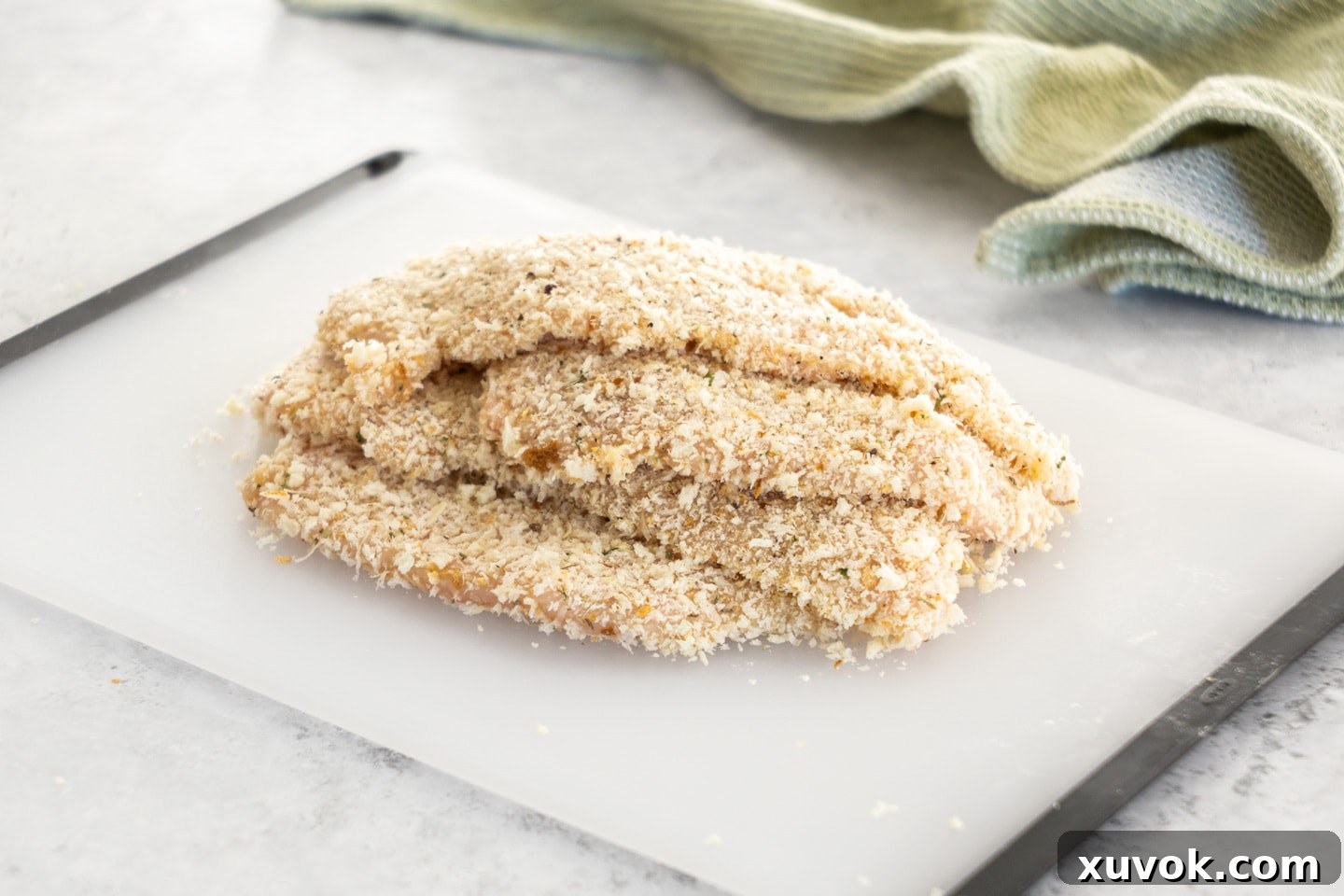
- Crispy Breading: For a truly satisfying meal, dredge your chicken cutlets first in all-purpose flour, tapping off any excess. Then, dip them in beaten egg, allowing any drips to fall away. Finally, coat them thoroughly in a seasoned crumb mixture. Elevate your breading by adding fresh herbs, grated garlic, or parmesan cheese to panko bread crumbs for an extra layer of flavor and crunch. This method is perfect for creating schnitzels and other crispy fried or baked chicken dishes.
Serve your perfectly seasoned chicken cutlets with a diverse range of accompaniments, from a fresh and vibrant asparagus, rocket, and parmesan salad to hearty roasted vegetables, irresistibly crunchy roasted potatoes, fluffy rice, or comforting pasta. Chicken’s incredible versatility and ability to absorb flavors make it easy to customize a dish that the entire family will love. Explore all our side dishes and salads to find the perfect pairing for your next chicken cutlet creation.
Storing Chicken Cutlets: Fresh or Frozen
Proper storage is essential to maintain the freshness and safety of your chicken cutlets. Whether you’re preparing them in advance or saving leftovers, here’s how to store them effectively:
- In the Fridge (Raw): If you slice your chicken breasts into cutlets immediately after purchasing, store them in an airtight container or wrap them tightly in plastic wrap. Refrigerate them promptly and use them by the “use by” date indicated on the original packaging. Raw chicken should be consumed within 1-2 days.
- In the Freezer (Raw): Chicken cutlets can be frozen for longer-term storage, provided they haven’t been previously frozen and thawed. Arrange raw cutlets in a single layer on a baking sheet to freeze individually, then transfer them to a freezer-safe bag or airtight container. This prevents them from sticking together. They will keep well for up to 3 months. Thaw overnight in the refrigerator before cooking.
- Breaded and Ready: You can prepare your chicken cutlets by breading them (try the fantastic breading from my Italian chicken cutlets recipe), then chill or freeze them. When freezing breaded cutlets, place a piece of parchment paper between each one to prevent sticking. Once frozen, they are best thawed overnight in the fridge. Having a stash of pre-breaded cutlets means you’ll have delicious schnitzels ready to go any night of the week with minimal effort!
- Cooked Leftovers: Cooked chicken cutlets should be stored in an airtight container in the refrigerator for up to 3-4 days. For longer storage, cooked cutlets can also be frozen for up to 2-3 months.
Nutritional Information for Chicken Cutlets
Chicken breast is widely recognized as a lean protein source, making it a healthy choice for many diets. It is rich in protein, low in fat compared to many other meat options, and contains essential vitamins and minerals. Furthermore, chicken breast has been associated with contributing to higher levels of serotonin, often referred to as the “feel-good hormone,” which can play a role in mood regulation.
Here’s a general nutritional breakdown per 100g of cooked chicken breast (cutlet):
Per 100g: Calories 165 | Total Fat 3.6g | Saturated fat 1g | Cholesterol 85mg | Sodium 74mg | Potassium 256mg | Total Carbohydrate 0g | Dietary fiber 0g | Sugar 0g | Protein 31g
Delicious Recipes Featuring Chicken Cutlets
Now that you’re an expert on chicken cutlets, it’s time to put your knowledge to delicious use! These recipes are perfect for showcasing the versatility and quick-cooking nature of chicken cutlets:
- How to make chicken schnitzel: Crispy, golden, and utterly satisfying.
- Lime coconut chicken: A vibrant, aromatic, and quick Thai-inspired dish.
- Baked salsa chicken: An easy, cheesy, and flavorful one-pan meal.
- Creamy Tuscan chicken: Rich, indulgent, and packed with Mediterranean flavors.
- Creamy lemon thyme chicken: A bright and herbaceous dish that’s both comforting and elegant.
Hungry for more culinary inspiration? Subscribe to our newsletter for free, delicious recipes delivered straight to your inbox. You can also follow along and connect with us on Facebook, Pinterest, and Instagram for daily updates and kitchen tips!
Watch the web story for a quick visual guide.