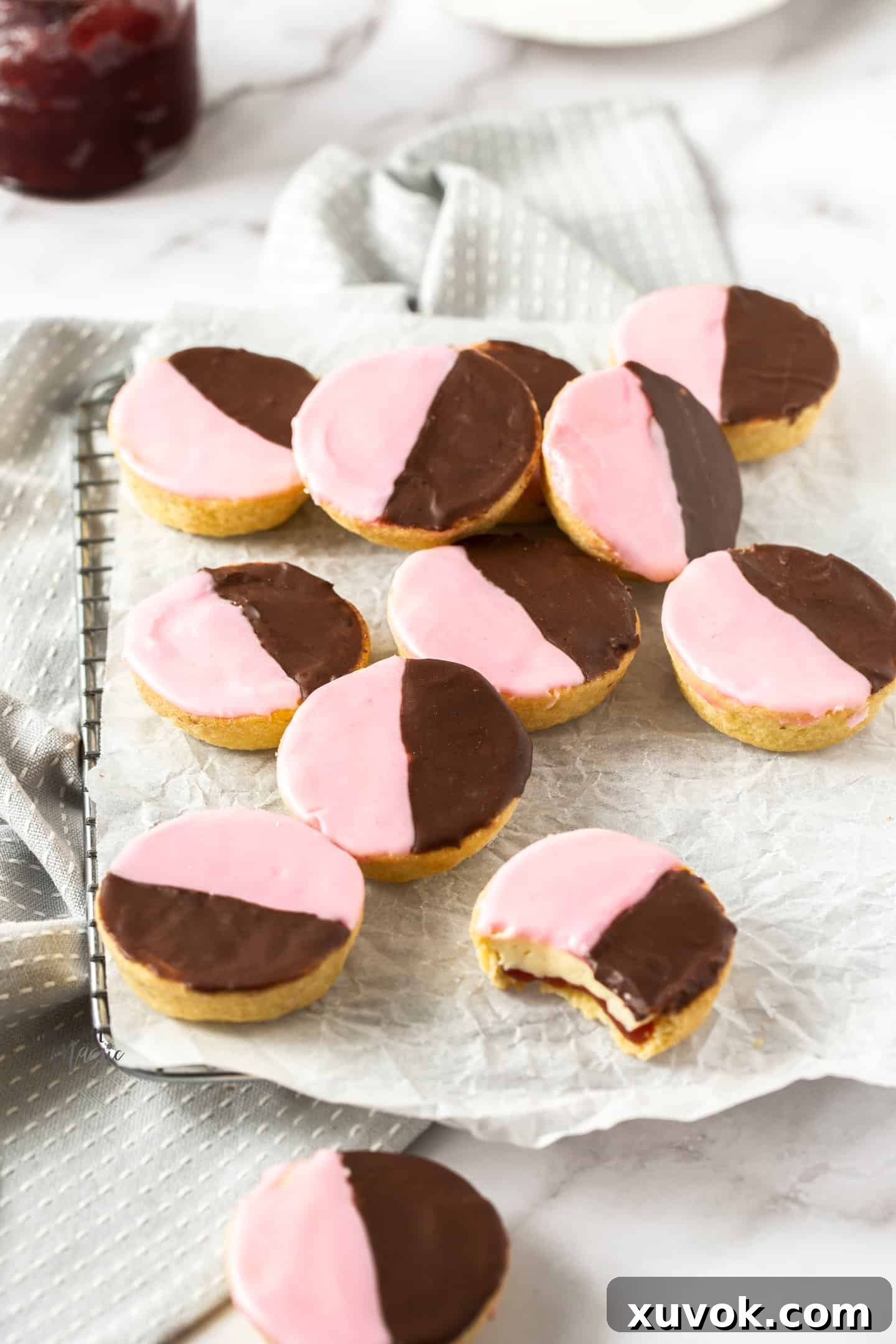
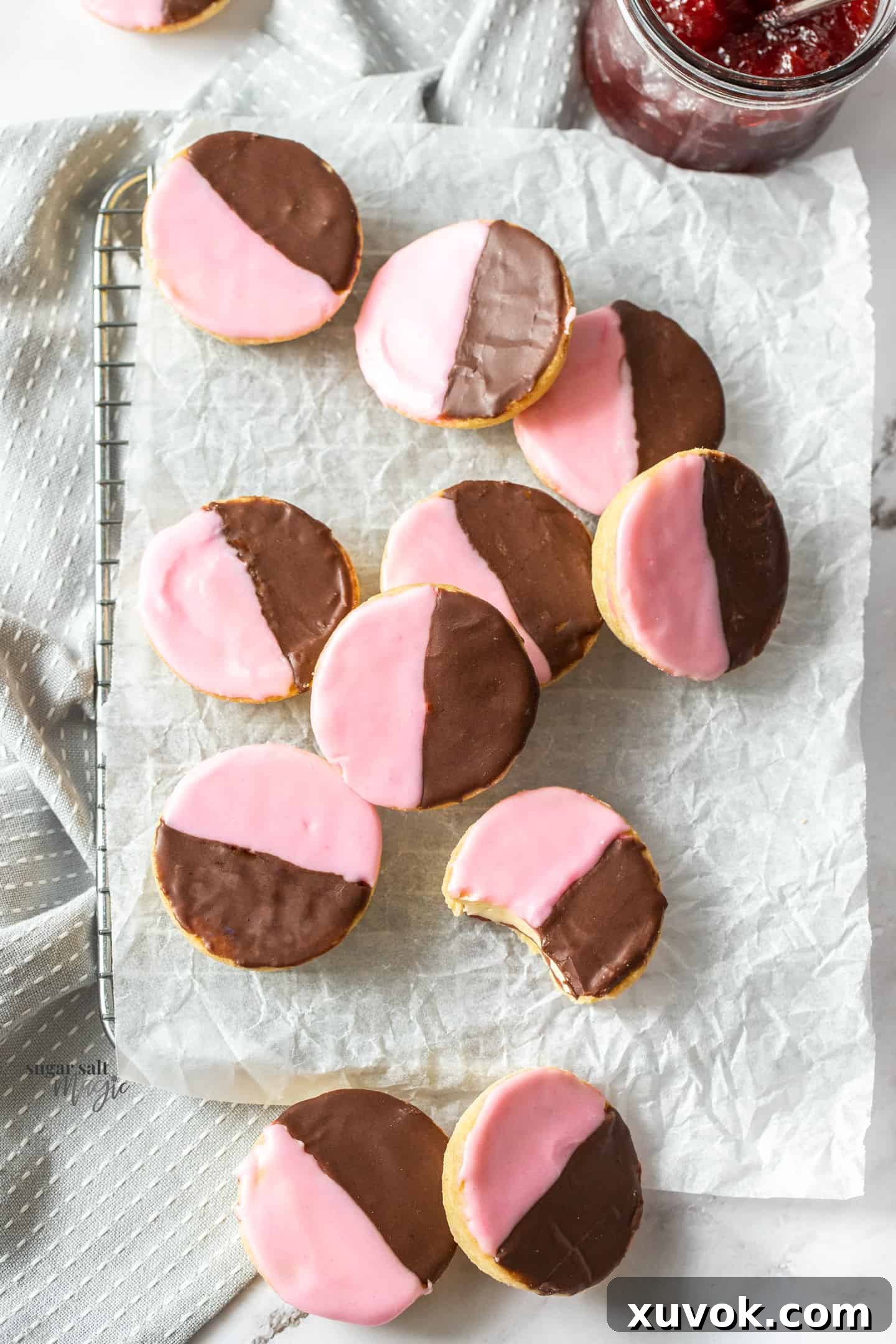
Step into the delightful world of Australian baking with the classic Neenish Tart. Far more than just a simple tart, this beloved sweet treat offers a captivating experience with its hidden cream filling and its signature two-tone icing. Imagine a perfectly crisp, buttery pastry shell cradling layers of sweet jam and a rich, velvety mock cream, all topped off with an iconic dual-colored glaze. It’s a truly decadent Aussie delight that has charmed generations.
If your taste buds are eager for more iconic Australian desserts, be sure to explore these incredibly fluffy Australian Lamingtons or indulge in the creamy, zesty goodness of this Lemon Vanilla Custard Slice. Each offers a unique flavour of Australia’s rich culinary heritage.
Never Miss a Recipe!
Get the latest recipes straight to your inbox and never miss out on delicious inspiration!
What Exactly is a Neenish Tart?
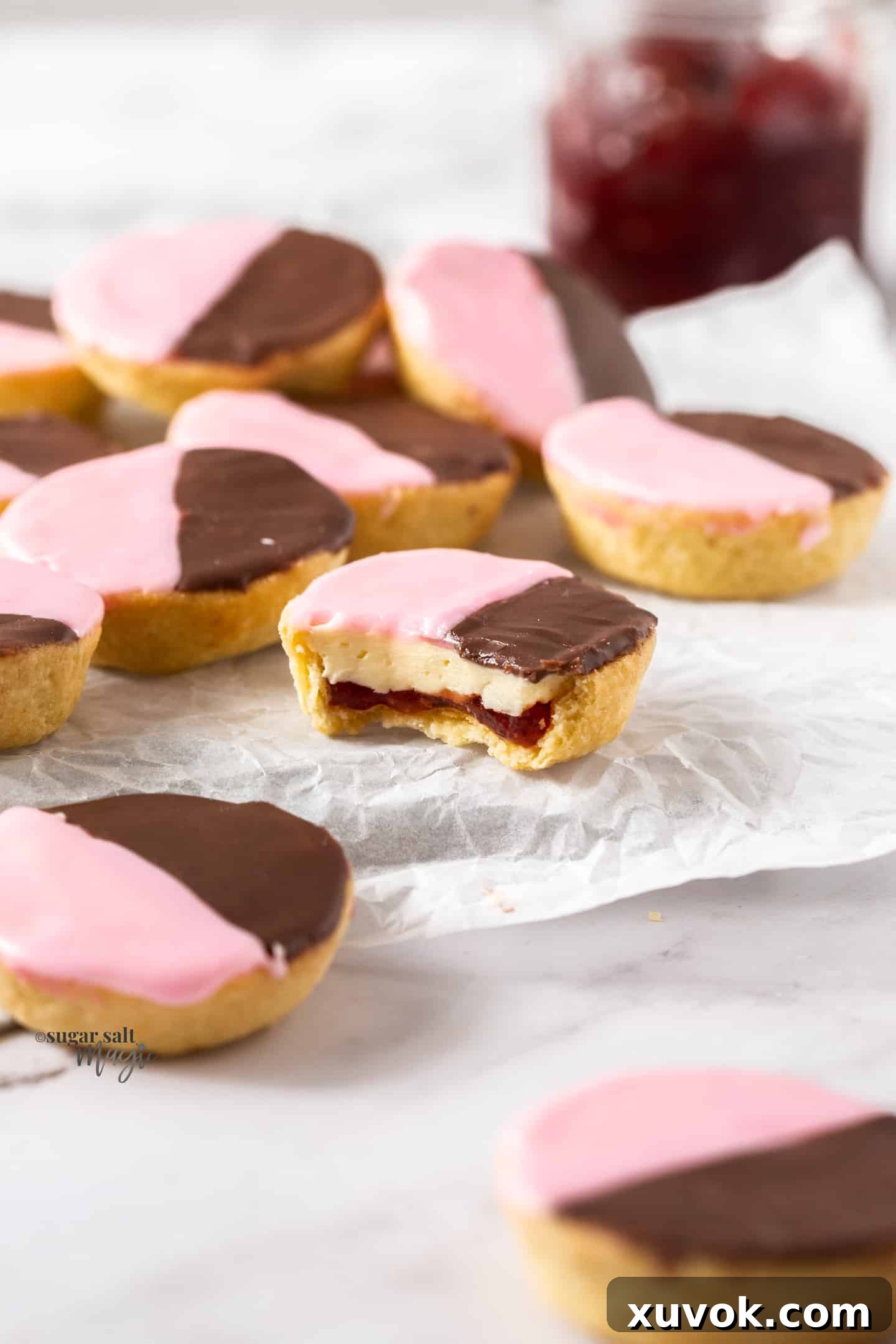
A Neenish Tart is a quintessential Australian sweet pastry, instantly recognizable by its compact size, distinctive two-tone icing, and its delightful layered filling. At its heart, it features a small, round tart shell, generously filled with a layer of fruit jam and a rich, creamy mock cream, all crowned with its signature dual-colored glaze – typically chocolate and either white or pink. The foundation is a wonderfully crisp, buttery pastry, baked just deep enough to perfectly cradle the decadent contents within.
Don’t let their modest size fool you; Neenish Tarts are intensely sweet and incredibly satisfying. Often, just one of these delicious little parcels is enough to curb your sweet cravings, though resisting a second can be a real challenge!
- The Crispy Crust: A Perfect Foundation
Every exceptional Neenish Tart begins with a flawless, buttery, and flaky tart crust. This recipe delivers a pastry so good, you might find yourself tempted to eat the shells on their own! The delicate balance of crispness and tenderness provides the ideal contrast to the creamy filling. Traditionally, the crust is filled with raspberry jam, offering a classic tart-sweet counterpoint. However, I highly recommend using a homemade strawberry jam if you have access to one – it adds a truly special touch. My mum’s sweet strawberry jam certainly elevated these tarts to a new level, and I encourage you to experiment with your favourite high-quality jam. - Understanding Mock Cream: The Silky Surprise
You might be wondering, “What exactly is mock cream?” It’s a unique and traditional filling that shares some characteristics with buttercream but achieves a distinctive smooth, stable, and creamy texture through a simple combination of butter, milk, sugar, and a touch of gelatine. It’s essentially a hybrid, offering the stability of buttercream with a lighter, smoother consistency that resembles whipped cream but holds its shape much better, especially in warmer climates. Its unparalleled smoothness and rich, buttery flavour are key to the Neenish Tart experience. Given the inherent sweetness of Neenish Tarts, my mock cream recipe is designed to be slightly less sweet, ensuring each bite is a perfect harmony of flavours rather than an overpowering sugar rush. - The Iconic Two-Tone Icing: A Visual Signature
The two-tone icing isn’t just a decoration; it’s an absolute requirement that defines the visual identity of a Neenish Tart. Without it, it simply wouldn’t be a Neenish Tart. This iconic topping always features a dark chocolate icing on one half, paired with either a pristine white or a delicate pink icing on the other. This visual contrast is as integral to the tart as its flavour, making it instantly recognizable and a true delight for the eyes as well as the palate.
The Mysterious Origins of Neenish Tarts
The exact origins of the Neenish Tart are delightfully shrouded in mystery, adding to their enduring charm. Despite the lack of a definitive creation story, these beloved tarts have firmly established themselves as an undeniable Australian culinary icon. The earliest known reference to them dates back to an Australian newspaper advertisement in 1895, suggesting a long and cherished history within the country’s kitchens. It’s a romantic thought to imagine a resourceful home baker, perhaps a “Mrs. Neenish” or a similar figure, inventing these unique tarts in her own kitchen over a century ago, forever imprinting them onto the Australian palate.
The pastry shells used in this recipe are a slight, perfected variation of my highly acclaimed tartlet shells recipe, ensuring a consistent and delicious base every time. Understanding their history, however vague, only deepens the appreciation for this humble yet iconic dessert.
Gathering Your Ingredients for Perfect Neenish Tarts
Creating these delightful Neenish Tarts requires only a handful of simple ingredients, many of which you likely already have stashed away in your pantry. The beauty of this recipe lies in how these basic components transform into something truly extraordinary.
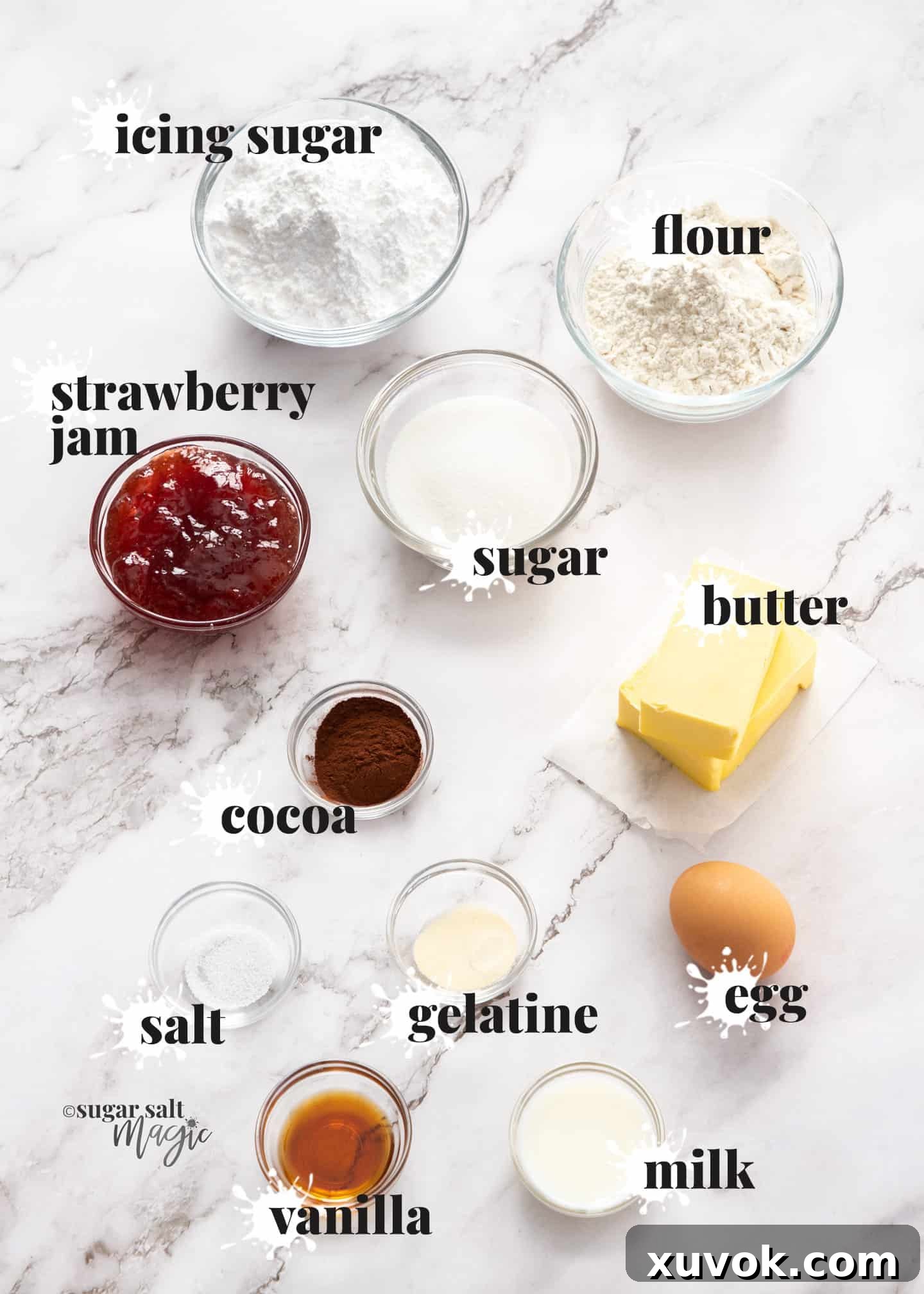
- For the Flaky Pastry: You’ll need standard baking staples like **all-purpose flour, cold unsalted butter, granulated sugar, a pinch of salt, and a single egg yolk** along with a little cold water. These elements combine to create that essential, delicate, and buttery tart crust that forms the foundation of our Neenish Tarts. Using cold butter is key to achieving the desired flaky texture.
- The Jam Layer: A crucial component is the **strawberry jam**. While raspberry is traditional, a good quality strawberry jam offers a wonderful sweetness and vibrant colour. Feel free to use your favourite store-bought brand or, for an extra special touch, use homemade. See our substitution section below for other delicious jam ideas.
- Crafting the Mock Cream: This unique filling requires **milk, caster (superfine) sugar, gelatine powder, unsalted butter, and vanilla extract**. The gelatine is what gives the mock cream its incredible stability and smooth, almost silky texture, differentiating it from a standard buttercream or whipped cream. The vanilla extract enhances its overall sweetness and aroma.
- The Iconic Two-Tone Icing: For the signature topping, gather **icing (powdered) sugar, milk, and Dutch cocoa powder**. While one side of the icing is always chocolate, the other can be left white or tinted pink with a touch of **pink food colouring (optional)**. This provides the classic visual appeal that makes Neenish Tarts so distinctive.
Crafting Your Own Traditional Neenish Tarts: A Step-by-Step Guide
Making Neenish Tarts might seem intricate, but by following these detailed steps, you’ll achieve perfect results every time. Remember, the key is patience and attention to detail, especially with the pastry and cooling times.
The Perfect Pastry Shells
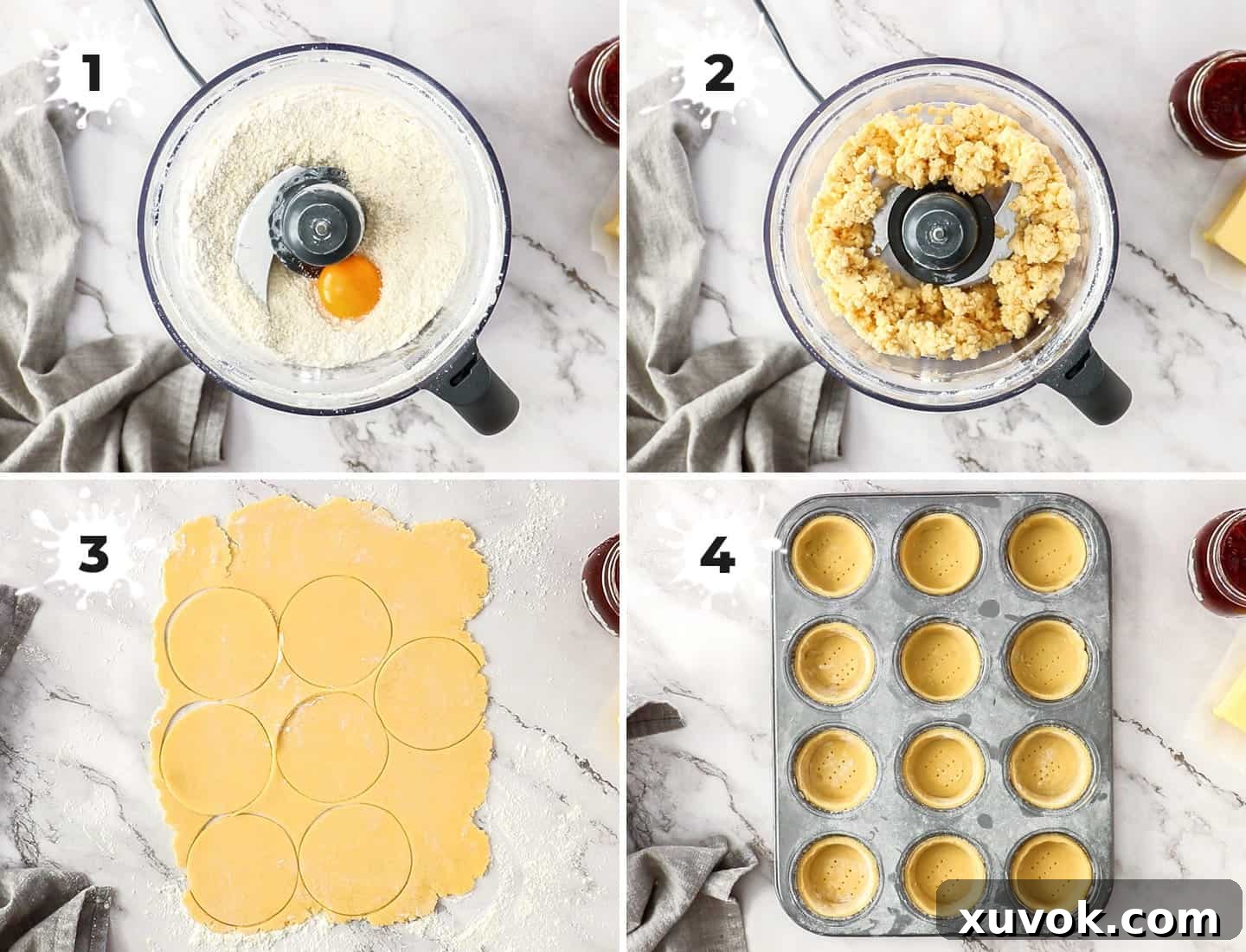
- Creating the Dough: Begin by placing your all-purpose flour, cold, cubed unsalted butter, granulated sugar, and a pinch of salt into a food processor. Pulse these ingredients intermittently until the mixture resembles coarse, wet sand. This quick process ensures the butter remains cold, which is crucial for a flaky crust. Next, add the egg yolk and pulse briefly until just combined. Finally, introduce cold water, about ½ tablespoon at a time, pulsing after each addition. Stop the moment the dough begins to clump together, indicating it has just enough moisture to hold. Overworking the dough at this stage can lead to a tough pastry. (Photo 1 & 2)
- Chilling and Shaping: Once your dough has come together, turn it out onto a lightly floured surface and gently knead it just until it forms a smooth, cohesive disk. Avoid excessive kneading to prevent developing the gluten too much. Wrap the dough tightly in plastic wrap and refrigerate it for at least 30 minutes. This chilling period is essential as it allows the gluten to relax, which prevents the tart shells from shrinking excessively during baking. After chilling, roll out the dough to an even thickness of approximately 3mm. Use a round cookie cutter (roughly 8.5cm / 3.5in diameter) to cut out large rounds. Carefully press these rounds into a greased and lightly floured 12-hole muffin tin, ensuring they fit snugly and extend about 2cm up the sides of each hole. Prick the bottoms of the pastry with a fork – this helps prevent air bubbles and ensures even baking. Chill the filled muffin tin for another 15 minutes before baking. (Photo 3 & 4) Bake in a preheated oven (200C / 400F / 180C fan forced) for 10-12 minutes, or until the edges are beautifully golden. Allow them to cool completely on a wire cooling rack before filling.
The Luscious Filling and Iconic Icing
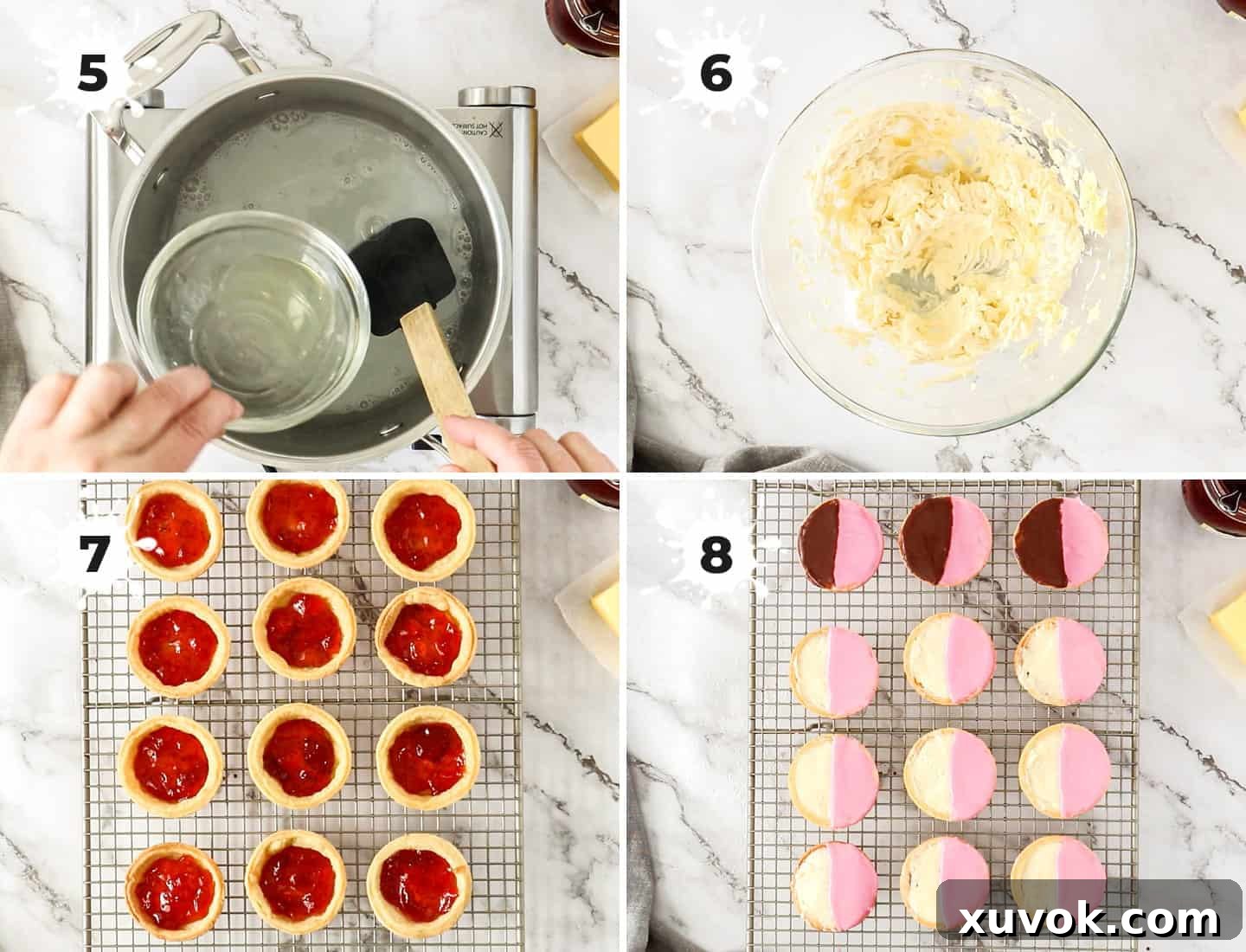
- Preparing the Mock Cream Base: To begin your mock cream, dissolve the gelatine powder in boiling water in a small dish, mixing with a fork, and let it bloom for 5 minutes. In a small saucepan, gently heat the milk and caster sugar over very low heat, stirring until the sugar completely dissolves. Once dissolved, pour in the bloomed gelatine mixture and stir continuously until the gelatine is fully incorporated and dissolved into the warm milk. (Photo 5) Allow this milk and gelatine mixture to cool completely to room temperature before proceeding. This step is crucial for achieving the correct texture in your mock cream.
- Whipping the Mock Cream: In a separate bowl, beat the softened unsalted butter with vanilla extract until it becomes light, pale, and incredibly creamy. With your mixer running on a low speed, slowly pour in the cooled milk and gelatine mixture. Continue beating until the mixture transforms into a light, airy, and whipped consistency. It should be smooth and able to hold its shape beautifully. (Photo 6)
- Assembling the Tarts: Once your tart cases are fully cooled, spread approximately 1.5 teaspoons of your chosen jam evenly over the base of each tart. This layer provides a burst of fruity sweetness. Next, generously pipe or spread the prepared mock cream over the jam, using a small spatula to create a smooth, level top. (Photo 7)
- The Two-Tone Icing: For the iconic finish, combine sifted icing sugar with milk, adding milk gradually until you achieve a smooth, spreadable consistency that isn’t too runny (refer to the notes for consistency test). Divide this white icing equally into two separate bowls. Into one bowl, sift in the cocoa powder and mix thoroughly to create your chocolate icing. In the other bowl, add a tiny amount of pink food colouring (if desired) and mix well to create a pale pink icing. Carefully spread the pink icing over half of each tart, ensuring a clean, straight line down the middle. Allow this pink icing to set slightly at room temperature for about 10-15 minutes. Once partially set, repeat the process with the chocolate icing, spreading it neatly over the remaining half of each tart. This creates the signature two-tone effect. (Photo 8)
Essential Tips and Tricks for Neenish Tart Perfection
Achieving perfectly crisp pastry and smooth, luscious fillings for your Neenish Tarts is easy with these expert tips:
- Handle the Dough with Care: When making the pastry, avoid over-blitzing or over-kneading the dough. You only need to work it just enough for it to come together into a smooth-ish disk. Excessive handling, especially with warm hands, can melt the butter, which is detrimental to achieving those desirable flaky layers. Quick and gentle is the way to go for a tender crust.
- Never Skip the Chilling Process: Chilling the dough is absolutely vital. As you process and handle dough, the gluten in the flour starts to develop, making it more elastic and tougher. Allowing the dough to rest and chill in the refrigerator gives these gluten strands time to relax. This relaxation is key to preventing your pastry cases from shrinking dramatically and losing their shape during baking, ensuring they maintain their size and integrity.
- Roll Out a Thin, Even Pastry: For optimal space for your delicious fillings, aim to roll out the dough quite thin, ideally to about 3mm (approximately 1/8 inch) thick. Remember that pastry will puff up as it bakes, increasing its thickness by about 1½ times. Rolling it thin initially ensures that you’ll have ample room for both the jam and mock cream layers, creating a balanced and satisfying tart.
- Achieving the Right Icing Consistency: The icing should be smooth and spreadable but not too runny, otherwise, it will drip messily down the sides of your tarts. A good test for consistency is to give your icing a thorough mix, then let it sit for a moment. It should take about 7-8 seconds for the surface to completely smooth out again. If it’s too thick, add a tiny drop more milk; if too thin, add a little more sifted icing sugar.
- Grease and Flour Your Muffin Tin: To guarantee that your perfectly baked pastry cases release easily without sticking, it’s a good practice to grease and lightly flour your muffin tin before pressing in the dough. This creates a non-stick barrier, ensuring pristine tart shells every time.
Storage Solutions for Your Neenish Tarts
To keep your freshly baked Neenish Tarts at their best, store them in an airtight container in the refrigerator. They will maintain their quality for approximately 3-4 days. While the pastry may soften slightly over time due to the moisture from the filling, they will still be utterly delicious.
For serving, Neenish Tarts are often enjoyed chilled, straight from the refrigerator, which helps maintain the mock cream’s firmness. Alternatively, you can take them out a little while before serving to allow them to come just off-chilled, which can enhance their flavour profile.
Creative Substitutions for Your Neenish Tarts
While Neenish Tarts are traditionally made with raspberry or strawberry jam, feel free to get creative with your flavour combinations. The core components of a Neenish Tart — the pastry, mock cream, and two-tone icing — remain consistent, but the jam layer offers a fantastic opportunity for personalization.
You could easily swap out the classic fruit jam for another favourite flavour. Imagine the delightful tang of a homemade apricot jam, or the rich sweetness of a fig preserve. And while they might technically stray from “traditional” Neenish Tarts without the jam, there’s absolutely no harm in experimenting with other luscious fillings. Consider using a vibrant lemon curd for a bright, zesty contrast, or a rich blackberry curd for a deeper, fruitier note. These alternatives can create equally irresistible treats, offering a fresh take on a beloved classic.
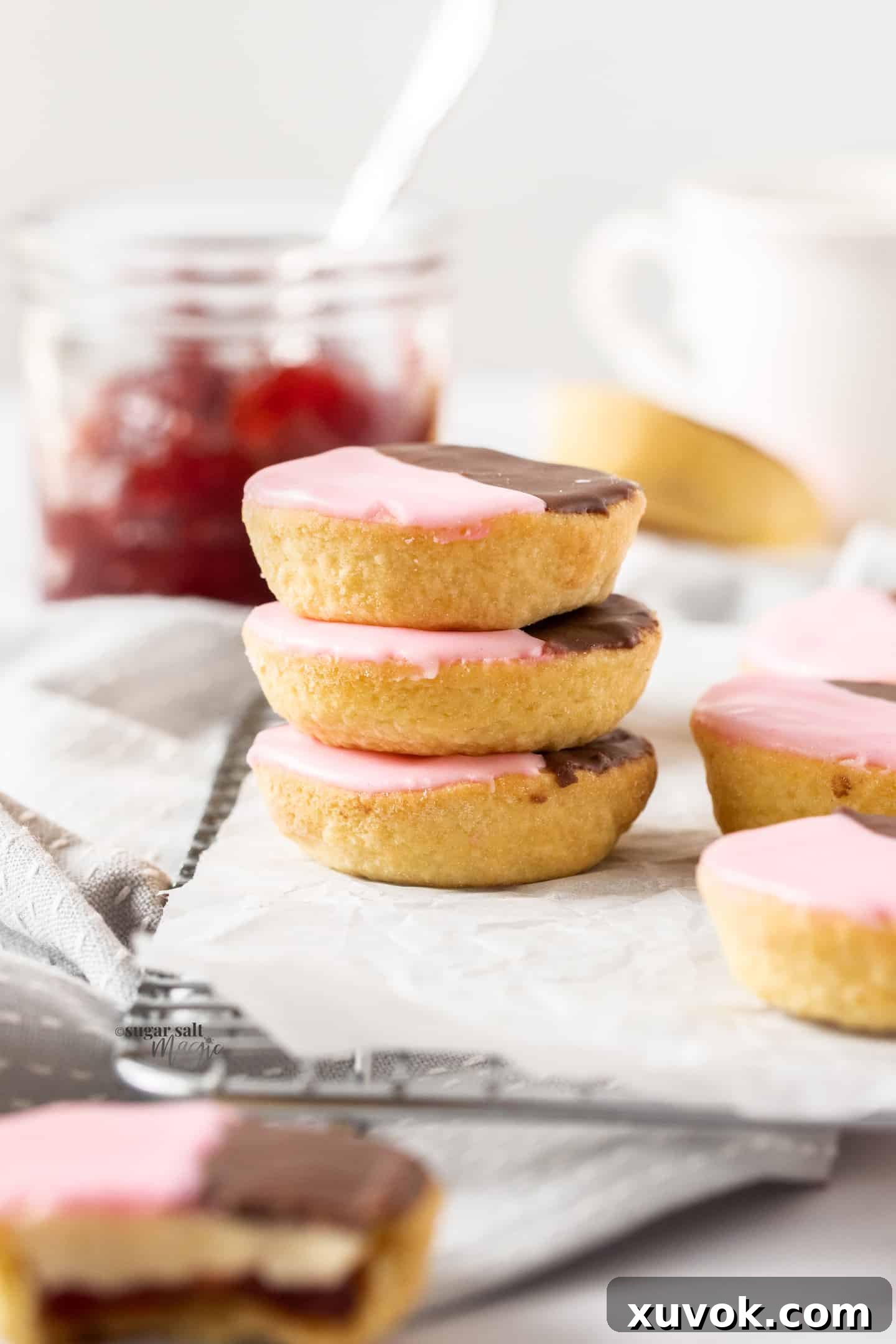
All in all, Neenish Tarts are a truly sweet and decadent indulgence, offering a perfect balance of textures and flavours in a charmingly petite package. Their small size makes them ideal for an afternoon tea spread, a celebratory occasion, or simply as a delightful treat to brighten your day. And since they are quite small, you can certainly afford to enjoy a couple… or maybe even a few, right?
If you embark on the delightful journey of making this Neenish Tarts recipe, we’d be thrilled to hear about your experience! Please make sure to come back and leave a rating and comment below. Your feedback is incredibly valuable and helps our community of bakers. We truly love hearing from you!
Explore More Great Aussie Desserts
- No-Bake Chocolate Meringue Pie (featuring an incredible Tim Tam base!)
- Lamington Cupcakes
- Fudgy Tim Tam Brownies
- Milo Mars Bar Slice
- My Golden Gaytime Slice
- Mini Wagon Wheels
If you made this neenish tarts recipe,
be sure to leave a ⭐⭐⭐⭐⭐ rating below. Thank you!
Hungry for more delicious recipes? Subscribe to our newsletter for free recipes delivered straight to your inbox. Also, follow along on Facebook, Pinterest and Instagram for daily inspiration and updates!
Traditional Neenish Tarts
Rate
Pin
Ingredients
For the Pastry
- 130 g plain (all-purpose) flour (1 cup / 4.6oz)
- 85 g unsalted butter, cubed and cold (3oz / 3/4 stick)
- 2 tablespoons granulated sugar (note 1)
- Pinch of salt
- 1 egg yolk
- 1 ½ tablespoons cold water (note 1)
- ½ cup strawberry jam (155g / 5.5oz)
For the Mock Cream
- 1 tablespoon boiling water (note 1)
- ½ teaspoon gelatine powder
- 2 tablespoons milk (note 1)
- ¼ cup caster (superfine) sugar
- 113 g unsalted butter, softened
- 1 teaspoon vanilla extract
For the Icing
- 130 g icing (powdered) sugar (1 cup / 4.6oz)
- 4-5 teaspoons milk
- 2 teaspoons Dutch cocoa (natural is also fine)
- Pink food colouring (optional)
For the most accurate results in baking, always weigh ingredients when a weight is provided.
Equipment
-
A regular 12-hole muffin tin
-
I use a small offset spatula to spread the icing over
-
A round cookie cutter to cut the bases
Instructions
To make the pastry:
-
Place the measured flour, cold butter, granulated sugar, and salt into a food processor. Pulse these ingredients until the mixture resembles coarse, wet sand. This quick process helps to keep the butter cold, which is vital for a flaky crust. Next, add the egg yolk and pulse just until it is evenly incorporated. Finally, add the ice water, ½ tablespoon at a time, pulsing briefly after each addition until the dough just begins to clump together into a ball. Be careful not to overmix.
-
Turn the dough out onto a lightly floured surface and gently knead it just until it comes together smoothly. Avoid overworking it. Form the dough into a flat disk, wrap it tightly in plastic wrap, and refrigerate for at least 30 minutes. This chilling period is crucial for preventing shrinkage during baking.
-
While the dough is chilling, preheat your oven to 200°C / 400°F (180°C fan forced). Prepare a 12-hole muffin tin by greasing and lightly flouring each cup (see notes for tips on this).
-
Once chilled, roll out the dough on a lightly floured surface to an even thickness of about 3mm (approximately 1/8 inch). Use a large round cookie cutter (about 8.5cm / 3.5in diameter) to cut out 12 pastry rounds. Gently place each pastry round into the prepared muffin tin holes, ensuring they are level and extend approximately 2cm up the sides. Return the filled muffin tin to the fridge for another 15 minutes to chill.
-
Prick the base of each pastry case several times with a fork to prevent air bubbles from forming. Bake for around 10-12 minutes, or until the pastry cases are beautifully golden brown and cooked through. Carefully transfer the baked tart shells to a wire cooling rack and allow them to cool completely before proceeding with the filling.
-
Once the tart cases are fully cooled, spread about 1.5 teaspoons of your chosen strawberry jam evenly over the base of each tart shell.
To make the mock cream:
-
In a small, heatproof dish, add the boiling water and then sprinkle the gelatine powder over the top. Stir it immediately with a fork to combine, then set it aside for 5 minutes to allow the gelatine to bloom and soften.
-
Combine the caster sugar and milk in a small saucepan. Heat this mixture over very low heat, stirring constantly until the sugar has completely dissolved. Once dissolved, give the bloomed gelatine another quick stir, then pour it into the hot milk mixture. Stir until the gelatine is fully dissolved and the liquid is smooth.
-
It is crucial to let the milk and gelatine mixture cool completely to room temperature before you proceed to the next step. This prevents the butter from melting and ensures the mock cream achieves the correct whipped texture.
-
In a separate bowl, beat the softened unsalted butter along with the vanilla extract until it is light, pale, and wonderfully creamy. With your mixer running on low speed, slowly and steadily pour in the cooled milk and gelatine mixture. Continue to beat until the mock cream becomes light, fluffy, and has a beautifully whipped consistency.
-
Carefully spread the prepared mock cream over the jam layer in each tart. Use a small spatula or the back of a spoon to create a smooth, level top.
For the icing:
-
In a bowl, mix the sifted icing (powdered) sugar with the milk, adding the milk gradually, a teaspoon at a time, until you achieve a smooth, spreadable consistency. It should be thick enough to hold its shape but fluid enough to spread easily (refer to the notes for checking consistency).
-
Divide the white icing mixture into two separate bowls. To one half, add the Dutch cocoa powder and mix thoroughly until you have a smooth, dark chocolate icing.
-
In the other half of the icing mixture, if desired, add just a very small amount of pink food colouring. Mix well until you achieve your desired shade of pink.
-
Using a small offset spatula or the back of a spoon, carefully spread the pink icing over one half of each tart, creating a neat, straight line down the middle. Allow the pink icing to set slightly at room temperature for about 10-15 minutes. This will prevent the colours from bleeding when you apply the second icing.
-
Once the pink icing is lightly set, repeat the process with the chocolate icing, carefully spreading it over the remaining half of each tart. This completes the signature two-tone look. Allow the icing to fully set before serving.
-
We love hearing from you! Please take a moment to leave a comment & rating below after trying this recipe. Your feedback is greatly appreciated and helps fellow bakers.
Notes
- Tablespoon Measurements: Please note that I use a standard Australian 20ml tablespoon in my recipes, which is equivalent to approximately 4 teaspoons. It’s always a good idea to check your own tablespoon measurement before you begin to ensure accuracy.
- Greasing and Flourishing the Tin: To ensure that your beautifully baked pastry cases come out of the muffin tin easily without sticking, I highly recommend both greasing and lightly flouring each hole. This extra step provides a crucial non-stick layer.
- Icing Consistency is Key: For the perfect two-tone icing that doesn’t run down the sides of your tarts, consistency is vital. The icing should be smooth and spreadable, but not too thin. A great way to test this is to stir the icing thoroughly, then let it sit. If the surface completely smooths out again within approximately 7-8 seconds, you’ve hit the sweet spot. Adjust with a tiny bit more milk if too thick, or a small amount of sifted icing sugar if too runny.
MORE AUSSIE DESSERTS
Calories from Fat 126