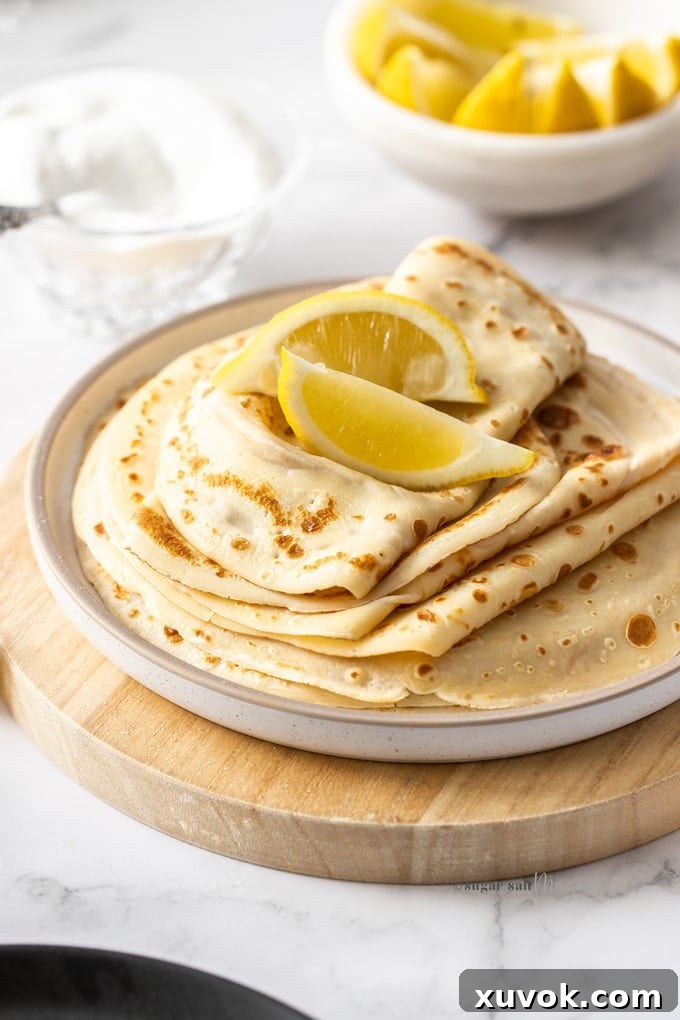
There’s something uniquely comforting and deeply nostalgic about a plate of freshly made English Pancakes, also affectionately known as British pancakes. For many of us, including myself, these delicate, golden treats aren’t just a meal; they’re a cherished memory, a taste of childhood simplicity. Every time I whisk up a batch of the thin, flowing batter and watch it transform on the pan, I’m instantly transported back to my mum’s kitchen, where we, as kids, would eagerly gather to load them up with our favourite toppings.
The traditional method of serving involves a generous squeeze of fresh lemon juice and a sprinkle of granulated sugar – a combination that delivers a delightful balance of sweet and tart. While my personal ratio of lemon to sugar has evolved over the years, the pure joy and satisfaction remain just as potent now as they did then. These versatile pancakes are not only a fantastic standalone breakfast but also make a splendid addition to a comprehensive breakfast charcuterie board, offering a light and sweet contrast to other morning delights.
What Exactly Are English Pancakes? A Thin, Delicious Tradition
English pancakes, often simply called British pancakes, are distinct from their thicker, fluffier American counterparts. They are characterized by their remarkably thin, soft, and pliable texture, bearing a closer resemblance to French crêpes, though they can often be slightly more substantial than the most delicate crêpes. The key difference lies in the absence of any rising or leavening agent, such as baking powder or baking soda, in the batter. This is precisely what gives them their signature flat shape and delicate chewiness, making them an ideal vehicle for a myriad of toppings.
These effortless pancakes hold a significant place in British culinary traditions, most notably served on Shrove Tuesday, universally known as Pancake Day (or Fat Tuesday). This traditional feast day historically precedes Ash Wednesday and the commencement of Lent in the Christian calendar. It was a day for households to use up rich ingredients like eggs, milk, and sugar before a period of fasting, transforming them into these delightful treats. Their simple preparation makes them one of the easiest pancake recipes you’ll ever master.
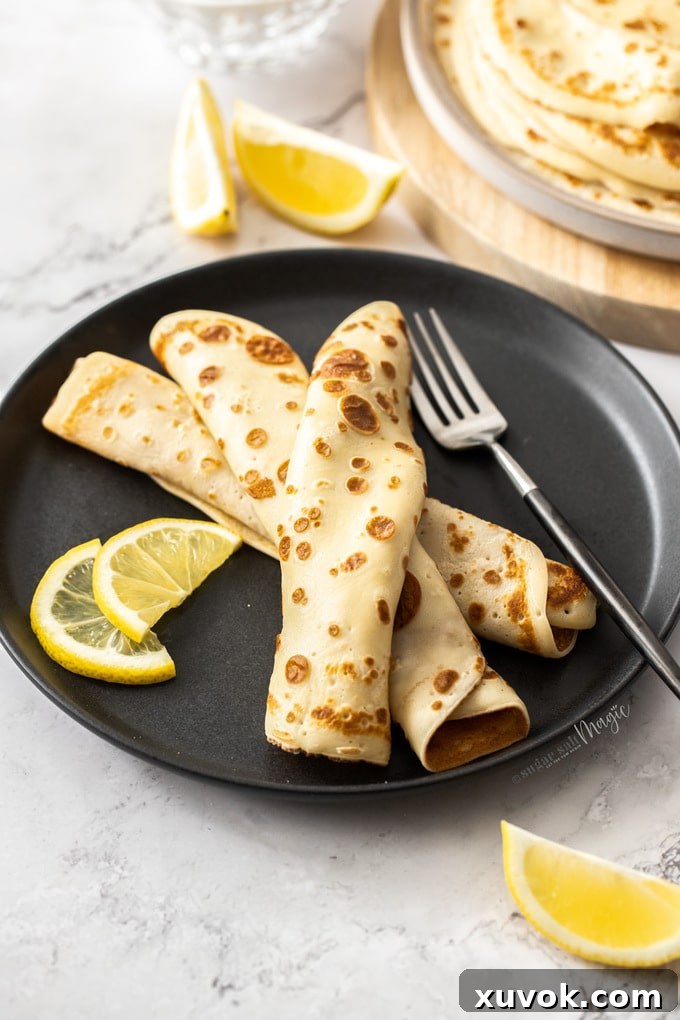
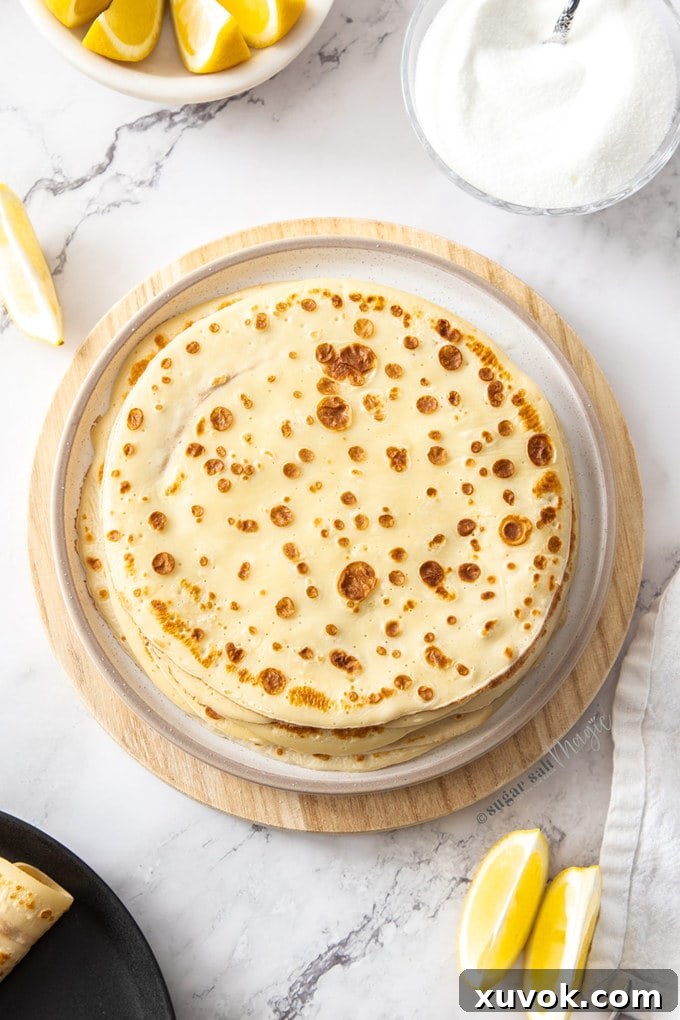
Because of their naturally flat and flexible form, English pancakes are enjoyed in a manner similar to crêpes. They are typically filled – most famously with a sprinkle of granulated sugar and a generous splash of fresh lemon juice – then artfully rolled or folded into neat parcels. When cooked to perfection, they boast a lightly golden hue on both sides, often with charming, slightly crispy edges that add to their allure. While deeply rooted in UK tradition, variations of these thin, griddle-cooked delights, similar or identical in form, are celebrated across many European cultures, speaking to their universal appeal.
Why You’ll Fall in Love with This English Pancake Recipe
Beyond their rich history and nostalgic charm, these thin British pancakes are a weeknight-friendly marvel and an impressive star for any weekend brunch. This specific recipe stands out for its incredible simplicity, minimal ingredient list, and the sheer speed with which you can have a delicious breakfast, brunch, or even dessert on the table. Here’s why this recipe will become a firm favourite:
- Effortless Preparation: With just three core ingredients and a single bowl, the batter comes together in mere minutes. No complicated steps, no lengthy resting times.
- Lightning-Fast Cooking: From mixing the batter to stacking a fresh batch of golden pancakes, you can go from zero to breakfast hero in under 30 minutes. Perfect for busy mornings or an impromptu treat.
- Incredible Versatility: While the classic lemon and sugar combination is undeniably delicious, the neutral flavour of these pancakes makes them a blank canvas for an endless array of toppings, both sweet and savoury.
- Nostalgic Comfort: Recreate cherished childhood memories or start new family traditions with a dish that evokes warmth, simplicity, and joy.
- Perfect Texture: Achieve perfectly thin, pliable pancakes with delightfully crisp edges that are ideal for rolling and holding any filling you desire.
The Simple Ingredients You’ll Need for Authentic English Pancakes
One of the many charms of traditional English pancakes is their incredibly short and accessible ingredient list. You’ll likely have everything you need in your pantry and fridge right now, making them an ideal last-minute treat. This recipe relies on just three everyday staples to create a beautifully light and flavourful batter. You’ll find detailed quantities and precise instructions in the recipe card below.
- Plain Flour (All-Purpose Flour): This is the foundational ingredient. Unlike American pancakes, we deliberately use plain flour (without any leavening agents) because we want our pancakes to be thin, flat, and flexible, not thick and fluffy. This allows them to cook quickly and achieve that distinctive crêpe-like texture perfect for rolling.
- Large Eggs: Eggs serve multiple crucial roles in this batter. They act as a binding agent, holding the ingredients together and providing structure. They also contribute to the richness of the pancake and help achieve that desirable golden colour during cooking. Ensure your eggs are large for the best consistency.
- Milk: Whole milk is highly recommended for the richest flavour and the best overall texture in your English pancakes. The higher fat content contributes to a tender, more luxurious result. However, if preferred, semi-skimmed milk or even a non-dairy alternative like almond or oat milk can be used, though the final texture might vary slightly.
You may have noticed a significant omission: there is no sugar in the pancake batter itself. This is entirely intentional and traditional! English pancakes are almost always topped with sweet additions, most commonly lemon juice and sugar, which provide the desired sweetness and zing. This neutral base is what makes them so incredibly versatile, allowing them to pair perfectly with any of your favourite sweet pancake toppings, but also making them suitable for creative savoury combinations. They’re so delicious, they can easily cross over from breakfast to a delightful dessert, or even a fun breakfast-for-dinner option!
How to Make English Pancakes: A Step-by-Step Guide to Perfection
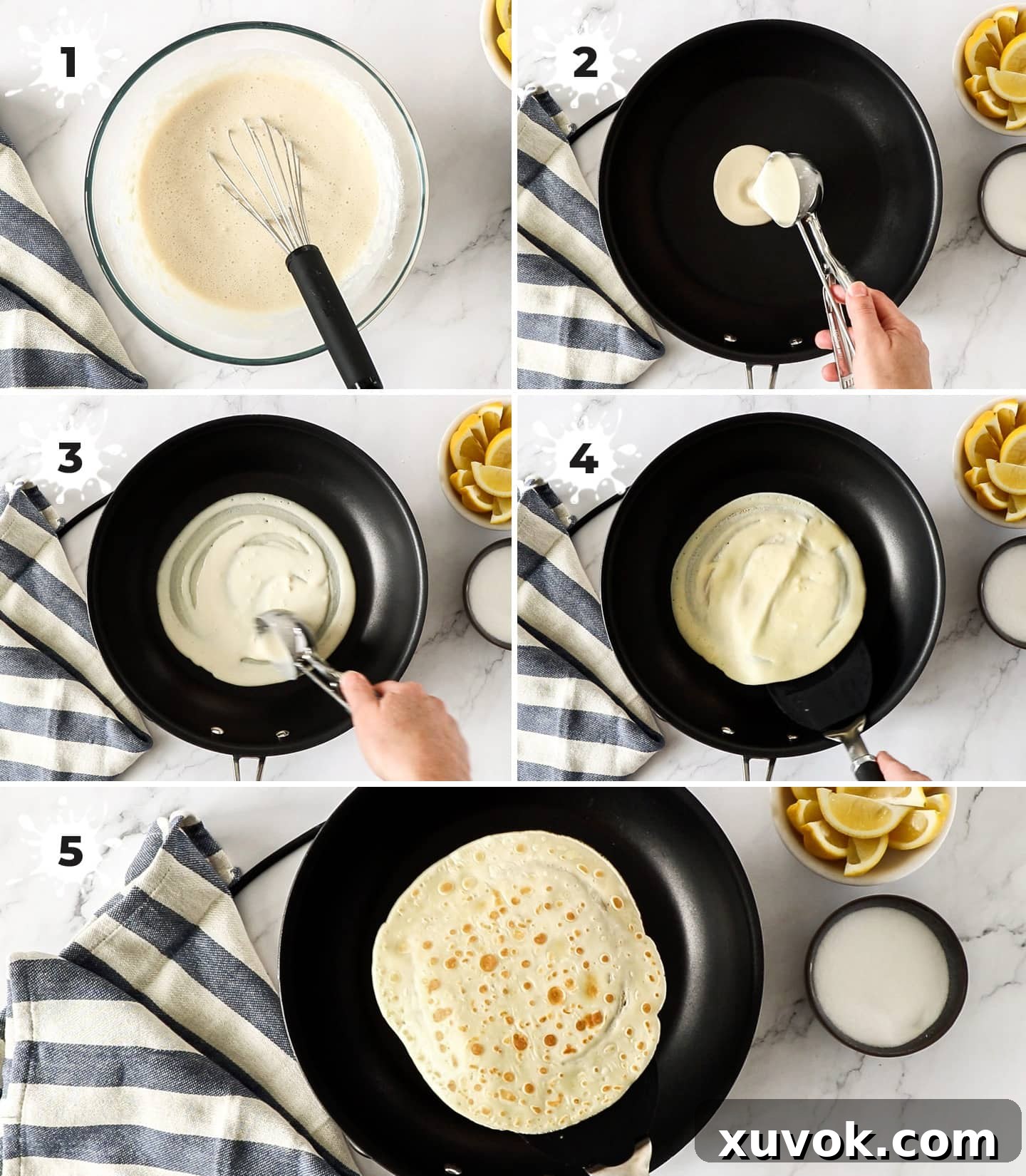
For detailed quantities and comprehensive instructions, please refer to the recipe card below.
Creating these delightful English pancakes is remarkably straightforward. With just three ingredients, a single mixing bowl, and no requirement for the batter to rest, you can jump straight into cooking and have a delicious breakfast on the table in about half an hour. Here’s a simple breakdown of the process:
- Prepare the Batter: In a medium-sized bowl or a large jug, combine the plain flour, large eggs, and milk. Whisk these ingredients together gently until the mixture is smooth and all lumps of flour have disappeared. The resulting batter should have a thin, pouring consistency, similar to cream.
- Heat the Pan: Place a good quality non-stick frying pan over medium to medium-high heat. Allow it to heat thoroughly for a minute or two. A properly heated pan is crucial for achieving an even cook and preventing sticking.
- Cook the Pancakes: Once the pan is hot, pour approximately ¼ cup of the thin batter into the centre of the pan. Immediately tilt and swirl the pan in a circular motion to spread the batter out evenly across the bottom, aiming for a thin, round pancake about 20cm (8 inches) in diameter.
- First Side: Cook the pancake for about 1 to 2 minutes, or until the underside turns a beautiful golden brown and the edges begin to look set and slightly crispy. You might see a few small bubbles appear on the surface.
- Flip and Finish: Using a wide, thin spatula or fish slice, carefully flip the pancake over. Cook the second side for a shorter duration, typically another 30 to 40 seconds, until golden dots appear all over and it’s cooked through.
- Serve Immediately: Transfer the cooked pancake to a warmed plate. Sprinkle generously with granulated sugar and squeeze fresh lemon juice over it. Roll the pancake up and devour it while it’s still warm!
Remember that the very first pancake often serves as a “tester.” Don’t worry if it’s not perfect! Use it to gauge if your pan temperature needs adjusting or if your batter consistency is just right. This initial trial will help you get into the rhythm for making consistently perfect pancakes for the rest of the batch.
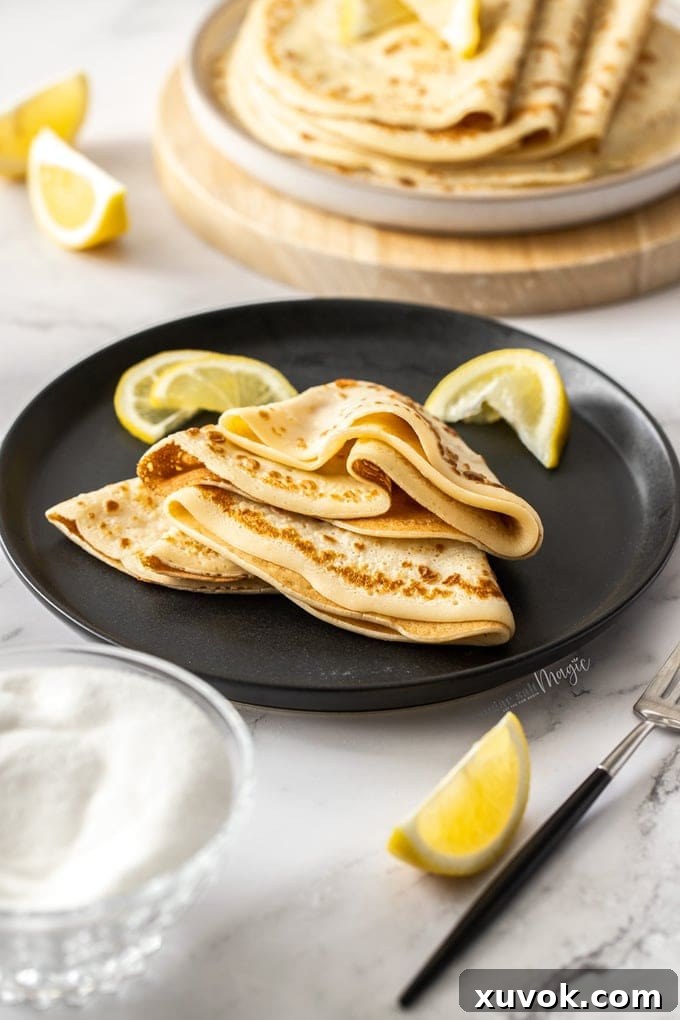
Essential Tips for Flawless Thin English Pancakes
Achieving consistently perfect thin pancakes is easier than you think, especially with a few insider tips and tricks to guide you:
- Whisk Gently: While a whisk is excellent for combining ingredients and breaking up flour lumps, avoid over-vigorous beating. You’re not aiming to aerate the batter; just mix until smooth. Overmixing can develop the gluten too much, leading to tougher pancakes.
- Embrace a Non-Stick Pan: A good quality non-stick pan is your best friend for these pancakes. It ensures easy flipping and means you won’t need to add any oil or fat to the pan between pancakes, resulting in cleaner, crispier edges. For extra efficiency, consider having two pans on the go simultaneously!
- Maintain Consistent Heat: Medium heat is ideal. Too low, and your pancakes will be pale and rubbery; too high, and they’ll burn before cooking through. Don’t be afraid to adjust the heat slightly as you cook to find the sweet spot for your stove.
- Measure Batter Accurately: Using an ice cream scoop, a standard ¼ cup measuring cup, or a small ladle helps ensure that each pancake is of a uniform size and thickness, promoting even cooking.
- The Swirl Technique: After pouring the batter, immediately lift and gently roll the pan around in circular motions. This technique allows the thin batter to spread out evenly across the entire base of the pan, typically to about 20cm (8 inches) in diameter, creating that signature thin pancake.
- Master the Flip: Patience is key here. Wait until the edges of the pancake look set and slightly lifted, and the surface appears mostly dry with a few small bubbles, before attempting to flip. A good, wide, flat spatula or a fish slice makes flipping much easier without tearing the delicate pancake. Slide it underneath firmly and confidently.
- Prepare Toppings in Advance: While the pancakes are cooking, take a moment to chop lemon wedges and pour granulated white sugar into a small bowl. Having your toppings ready ensures you can serve the pancakes immediately once cooked.
- Keep Them Warm: As you cook each pancake, stack them on a warmed plate. Covering the stack with a clean tea towel will help to keep them wonderfully warm and soft until all are cooked and ready to be served. If making a very large batch, a low oven (around 100°C / 200°F) can also be used to keep them toasty.
English Pancake Topping Ideas: From Classic to Creative
While I am undeniably a purist when it comes to English pancakes, always gravitating towards the timeless combination of lemon and sugar, the beauty of these thin delights lies in their incredible adaptability. Their neutral flavour profile makes them a superb canvas for an endless array of toppings, allowing you to explore both traditional sweet indulgences and surprisingly delicious savoury combinations. Here are some ideas to inspire your next pancake feast:
- The Unbeatable Classic: Lemon & Sugar: This is the default for a reason. A generous squeeze of fresh lemon juice cuts through the sweetness of granulated white sugar, creating a perfectly balanced sweet and zingy flavour that melts beautifully into the warm pancake. It’s pure simple perfection.
- Sweet Sensations:
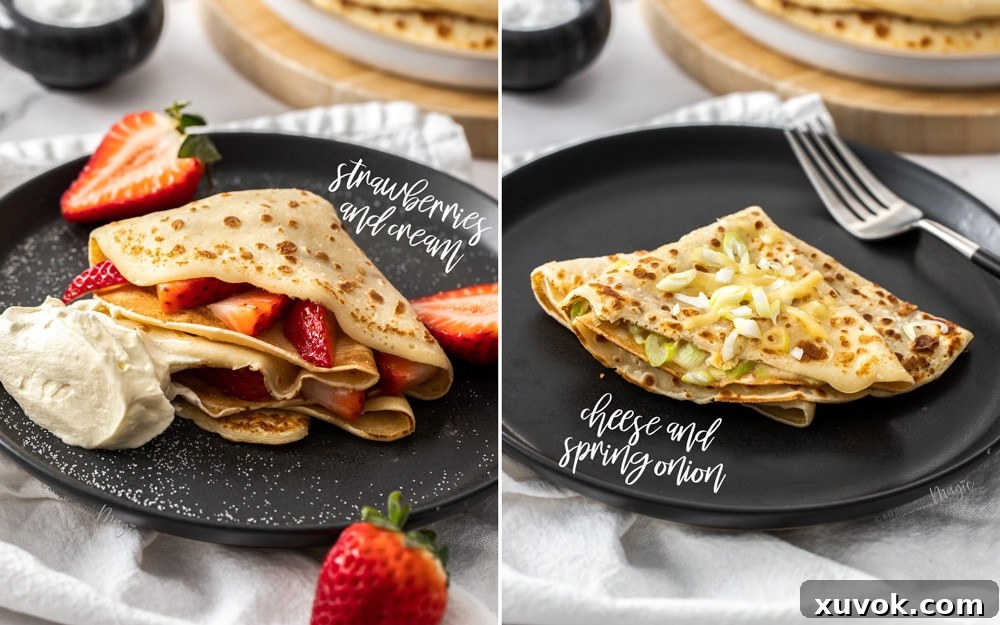
- Fresh Berries and Cream: Elevate your pancakes with a medley of fresh chopped strawberries, raspberries, or blueberries. Serve with a dollop of freshly whipped cream for a classic dessert-like treat, or even a scoop of vanilla ice cream for true indulgence.
- Luscious Syrups: Drizzle your pancakes with golden syrup (a British favourite), rich maple syrup, or warm honey. For a citrus twist, try a homemade orange syrup, perhaps even paired with a dollop of creamy Maple Butter.
- Fruit Jams & Tangy Curds: Spread a thin layer of your favourite fruit jam (strawberry, raspberry, apricot) or a vibrant fruit curd. Lemon curd is a popular choice, but don’t shy away from experimenting with blood orange curd, passionfruit curd, pineapple curd, or even blackberry curd for a delightful burst of flavour.
- Chocolate Spreads: For the ultimate sweet craving, a generous spread of Nutella or any other chocolate-hazelnut spread is always a winning choice.
- Savory Surprises: Because the batter itself is unsweetened, English pancakes are surprisingly versatile for savoury fillings.
- Cheese and Spring Onion: A wonderfully simple yet incredibly satisfying combination. Sprinkle finely chopped spring onions (scallions) and grated cheddar cheese over the warm pancake. A pinch of salt and pepper enhances the flavours beautifully.
- Ham and Cooked Mushrooms: Sautéed mushrooms and diced ham make for a hearty and delicious filling. Add a dash of Worcestershire sauce for extra depth.
- Smoked Salmon and Cream Cheese: For a sophisticated brunch option, spread with a thin layer of cream cheese, top with slices of smoked salmon, and garnish with fresh dill or chives.
- Spinach and Feta: A simple vegetarian option with wilted spinach and crumbled feta cheese.
Can I Make English Pancakes Ahead of Time? Storage and Reheating Tips
While English pancakes are undeniably at their absolute best when served fresh, warm, and straight from the pan, there are ways to prepare ahead or manage leftovers if you find yourself with extra. Their delicate texture makes them a bit trickier to reheat perfectly than their thicker counterparts, but it’s certainly doable!
- Preparing the Batter Ahead: You can definitely get a head start by preparing the pancake batter up to 2-3 days in advance. Simply whisk together the ingredients, pour the batter into an airtight container or a jug covered with plastic wrap, and store it in the refrigerator. Give it a good whisk again just before you’re ready to cook to ensure everything is well combined. This small step can save you a precious few minutes on a busy morning!
- Storing Cooked Pancakes: If you have any leftover cooked pancakes, allow them to cool completely. Then, store them on a plate covered tightly with plastic wrap or in an airtight container in the refrigerator for 2-3 days. For longer storage, you can freeze them. To do this, place a piece of parchment paper between each pancake to prevent them from sticking together. Stack them in a freezer-safe bag or container and freeze for up to 1-2 months.
- Reheating Cooked Pancakes: The texture of cold English pancakes isn’t quite as pleasant as when they are warm. Fortunately, they reheat well!
- Pan Reheating: The best method for reheating is gently in a dry non-stick pan over medium heat. Reheat them one at a time for about 30 seconds to 1 minute per side, until warmed through and pliable again. This method helps to restore some of their crispness.
- Microwave Reheating: For a quicker option, you can stack 4 or 5 pancakes on a microwave-safe plate. Heat them in 15-20 second increments until they are hot and pliable. Be careful not to overheat, as they can become tough.
Reheating pancakes can be a great option for a breakfast platter, as showcased in this Breakfast Charcuterie Board, allowing for variety without last-minute cooking stress.
PIN IT:
Click to Pin this recipe for later!
IF YOU TRY THIS RECIPE for English pancakes, please take a moment to leave a rating and comment below. I love hearing from you, and your feedback helps other readers too!
Frequently Asked Questions About English Pancakes
Here are some common questions you might have about making and enjoying English pancakes:
- Q: What’s the main difference between English and American pancakes?
A: The primary difference lies in their leavening. English pancakes are thin and flat, similar to crêpes, because their batter contains no raising agents like baking powder or soda. American pancakes, on the other hand, are thicker and fluffier due to the inclusion of these leavening agents, which create air bubbles in the batter.
- Q: Can I make these pancakes gluten-free?
A: Yes, you can typically substitute plain (all-purpose) flour with a 1:1 gluten-free all-purpose flour blend. Be aware that the texture might be slightly different; some gluten-free blends can result in a slightly less pliable pancake. Experimentation is key!
- Q: My first pancake always goes wrong – why?
A: This is a very common phenomenon, often affectionately called the “tester pancake!” The first pancake helps you gauge if your pan temperature is perfectly calibrated and if your batter consistency is just right. Don’t be discouraged; subsequent pancakes are almost always perfect once you’ve made these minor adjustments.
- Q: How do I prevent the pancakes from sticking to the pan?
A: The best way to prevent sticking is to use a high-quality non-stick frying pan. Ensure the pan is properly preheated before adding the batter. If you’re not using a non-stick pan, or if you find sticking an issue, you can lightly grease the pan with a tiny bit of vegetable oil or melted butter between each pancake, using a paper towel to wipe away any excess.
- Q: Can I add sugar directly to the pancake batter?
A: Traditionally, English pancake batter contains no sugar, as they are meant to be topped with sweet ingredients like lemon and sugar after cooking. This also preserves their versatility for savoury toppings. However, if you prefer a slightly sweeter pancake base, you can certainly add a tablespoon or two of granulated sugar to the batter when mixing.
More Delicious Breakfast & Brunch Recipes You’ll Love
- Easy Fluffy American-Style Pancakes
- Decadent Double Chocolate Pancakes
- Warm Apple Cinnamon Pancakes
- How to Make Homemade Maple Butter
- Easy Homemade Maple Granola
- Simple Blueberry Topping (Compote)
- Homemade Strawberry Sauce
- Easy Blackberry Compote
- Rich Homemade Chocolate Sauce
- Authentic Homemade Crumpets
Never Miss a Recipe!
Get the latest, delicious recipes straight to your inbox!
(Email signup form would appear here)
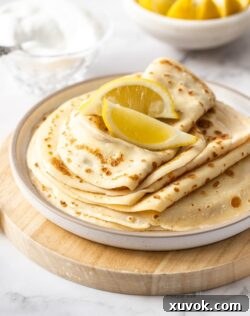
English Pancakes with Lemon and Sugar
12
pancakes
3 minutes
25 minutes
28 minutes
Rate
Pin
Video
(Video content would normally be here.)
Ingredients
-
195 g plain (all-purpose) flour (1 ½ cups / 7oz) -
2 large eggs -
2 ¼ cups milk (560ml) -
2 lemons, cut into 8 wedges, for serving -
¼ cup white granulated sugar, to serve
For best results, always weigh ingredients where a weight is provided.
Instructions
-
In a medium bowl, whisk together the flour, eggs and milk until there are no lumps left. The batter will have a thin consistency.
-
Heat a non-stick pan over medium to medium-high heat. When hot, pour or ladle in ¼ cup of batter. Immediately tilt and swirl the pan to spread the batter out into a thin, even circle about 20cm (8 inches) wide.
-
Cook for 1 ½ to 2 minutes, or until the underside is golden brown. Carefully flip the pancake and cook the other side for another 30-60 seconds, until golden spots appear all over and it is cooked through.
-
Transfer the cooked pancake to a warmed plate and cover it with a clean tea towel to keep warm. Repeat the process with the remaining batter. If making a double batch, you can keep them warm in a very low oven.
-
To serve, take one warm pancake, squeeze fresh lemon juice all over one side, then sprinkle a little granulated sugar over it (adjust to your taste). Roll or fold the pancake up and enjoy immediately with a spoon or knife and fork.
-
Please take a moment to rate this recipe after trying it. I truly appreciate your feedback as it helps me create more delicious recipes for you!
Notes
- A non-stick frying pan is highly recommended for the best results. If you don’t have one, lightly grease the bottom of your pan with a tiny bit of vegetable oil or melted butter before cooking each pancake. Wipe off any excess.
- For even quicker cooking, use two pans simultaneously.
- Avoid overbeating the batter; whisk just until there are no lumps left to ensure tender pancakes.
- These pancakes are best enjoyed fresh, but leftovers can be stored and gently reheated.
DISCOVER MORE BREAKFAST AND BRUNCH RECIPES!
117kcal
Marie Roffey
Breakfast, Brunch
British, English
Have you tried this recipe?
Don’t forget to leave a rating and comment below and let me know how it was! I love hearing from you. Nutrition information is approximate and derived from an online calculator. The brands you use may cause variations.