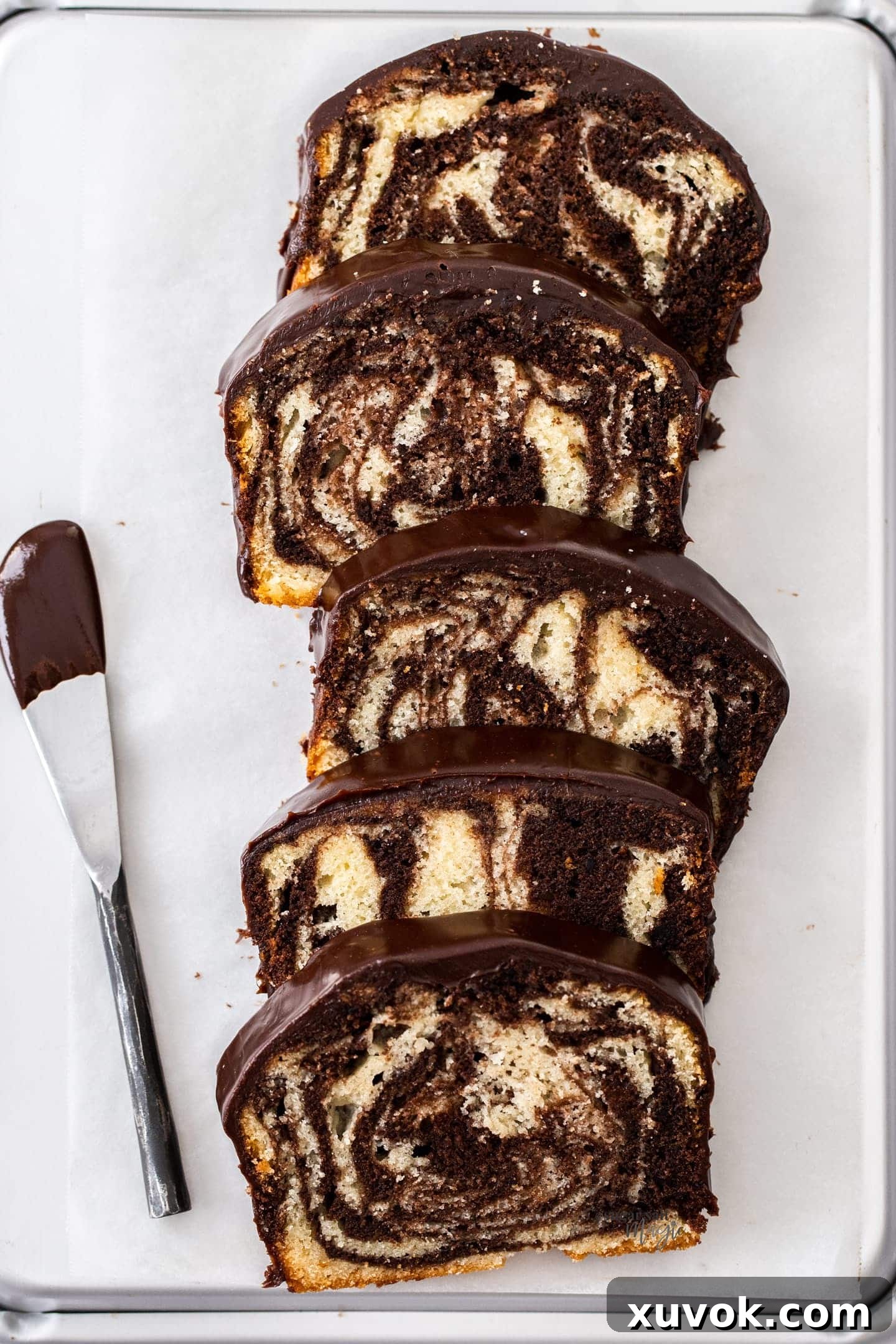
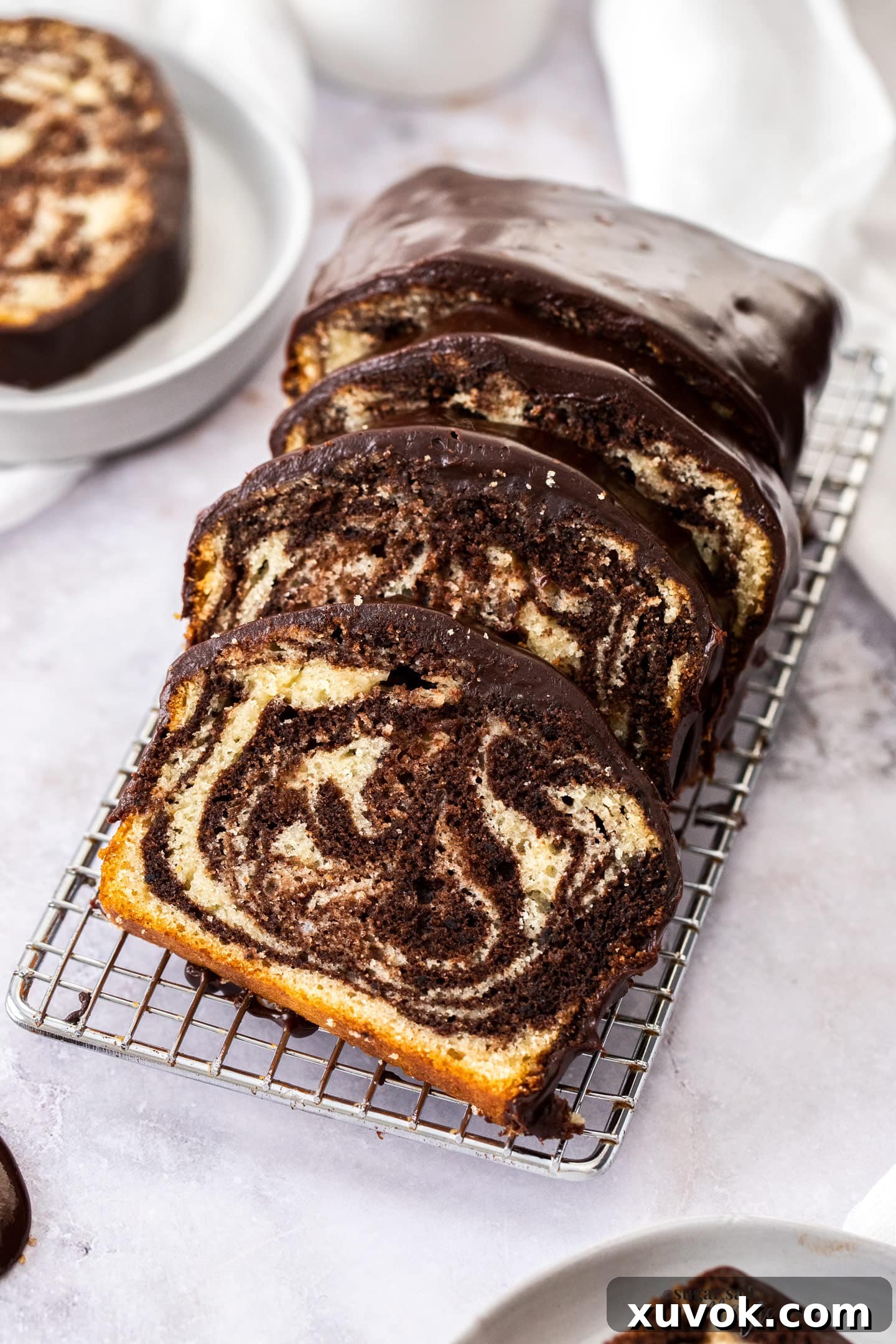
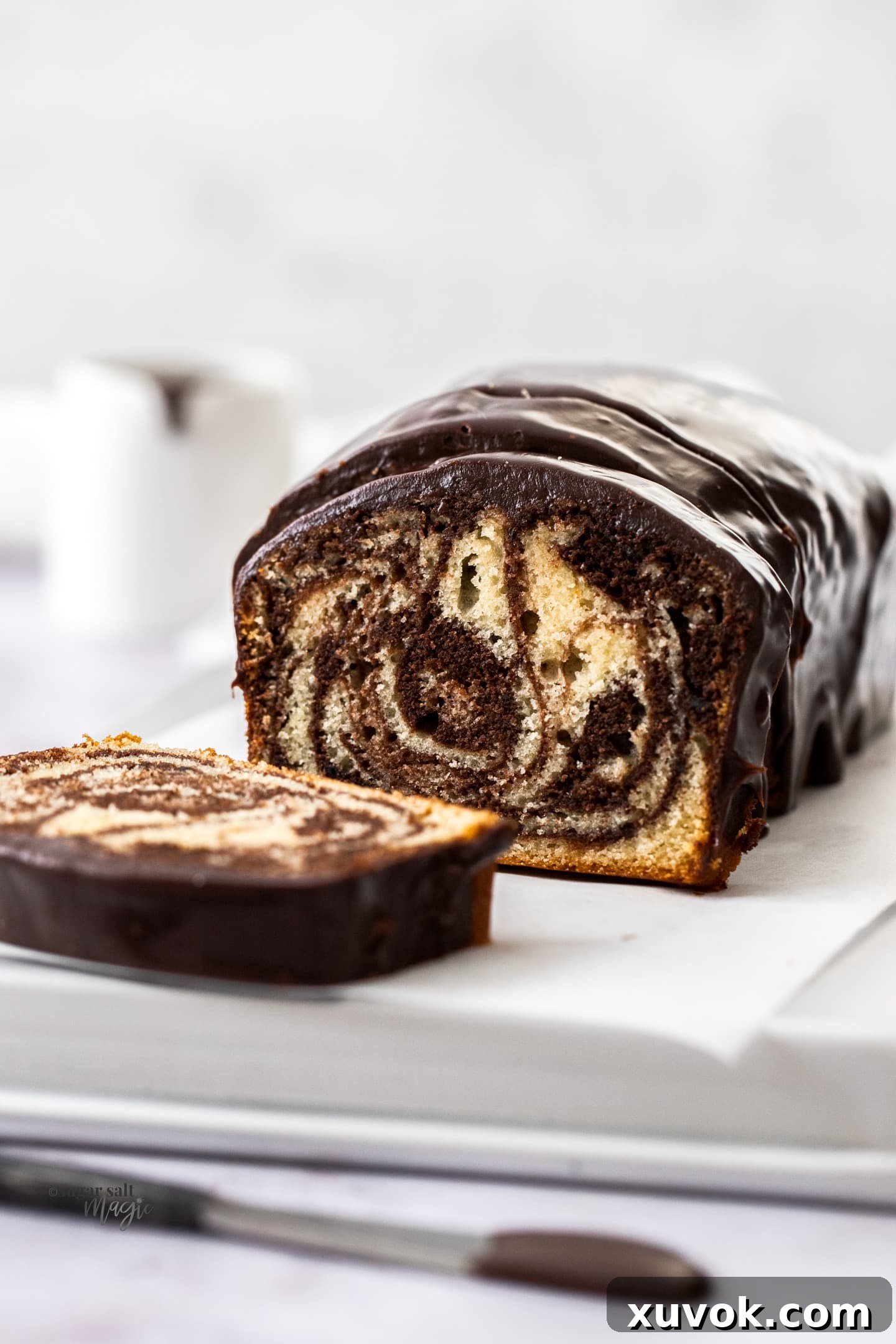
Forget the complexities of towering layer cakes or the large footprint of a sheet cake. This exquisite, moist, and tender marble loaf cake offers all the visual appeal and rich flavors you crave, with a fraction of the effort. Perfectly portioned and stunningly swirled with vanilla and chocolate, it’s a baking masterpiece that’s surprisingly simple to create. Featuring a delightful balance of buttery richness, sweet vanilla, and deep chocolate notes, this classic loaf cake is an essential addition to any home baker’s repertoire, promising pure indulgence in every slice.
Why You’ll Adore This Marble Loaf Cake Recipe
This isn’t just another cake; it’s a testament to indulgent simplicity. Here’s what makes this marble loaf cake an absolute must-try:
- Effortless Preparation: Unlike many intricate desserts, this cake requires no special equipment. Everything comes together beautifully by hand in a simple mixing bowl, making it accessible for bakers of all skill levels.
- Minimal Cleanup: With just two bowls needed for the batter, your kitchen will stay tidy, allowing you to enjoy your delicious creation without the dread of a pile of dishes.
- Beginner-Friendly: The process is incredibly straightforward. You start with one versatile vanilla batter, then effortlessly transform half of it into a rich chocolate batter. Achieving those gorgeous swirls is much easier than it looks!
- Unforgettable Flavor Profile: Each bite delivers a harmonious blend of classic flavors. The rich, creamy butter forms the perfect base, beautifully complemented by the warm sweetness of vanilla and the intense depth of chocolate. It’s a taste sensation that truly shines.
- Superior Texture: Experience a loaf cake that’s tender and wonderfully moist, yet firm enough to slice cleanly. Its crumb is lighter than a traditional pound cake, offering a delightful mouthfeel that melts in your mouth.
- Simple, Elegant Decoration: A decadent chocolate ganache provides the easiest yet most impressive finishing touch. It elevates the cake’s appearance and adds an extra layer of chocolatey goodness without requiring advanced decorating skills.
This marble loaf cake epitomizes indulgent simplicity. Not only is it incredibly easy to bake and even easier to adorn, but it also boasts a flavor depth that surpasses expectations. Both the vibrant vanilla and the robust chocolate notes are prominent, and the rich butter flavor ensures every mouthful is a luxurious experience.
If you, like me, find yourself captivated by the charm and convenience of loaf cakes, you’re in for a treat. Be sure to explore my widely celebrated Chocolate Bread and this visually stunning Coconut and Raspberry Cake for more delightful baking adventures.
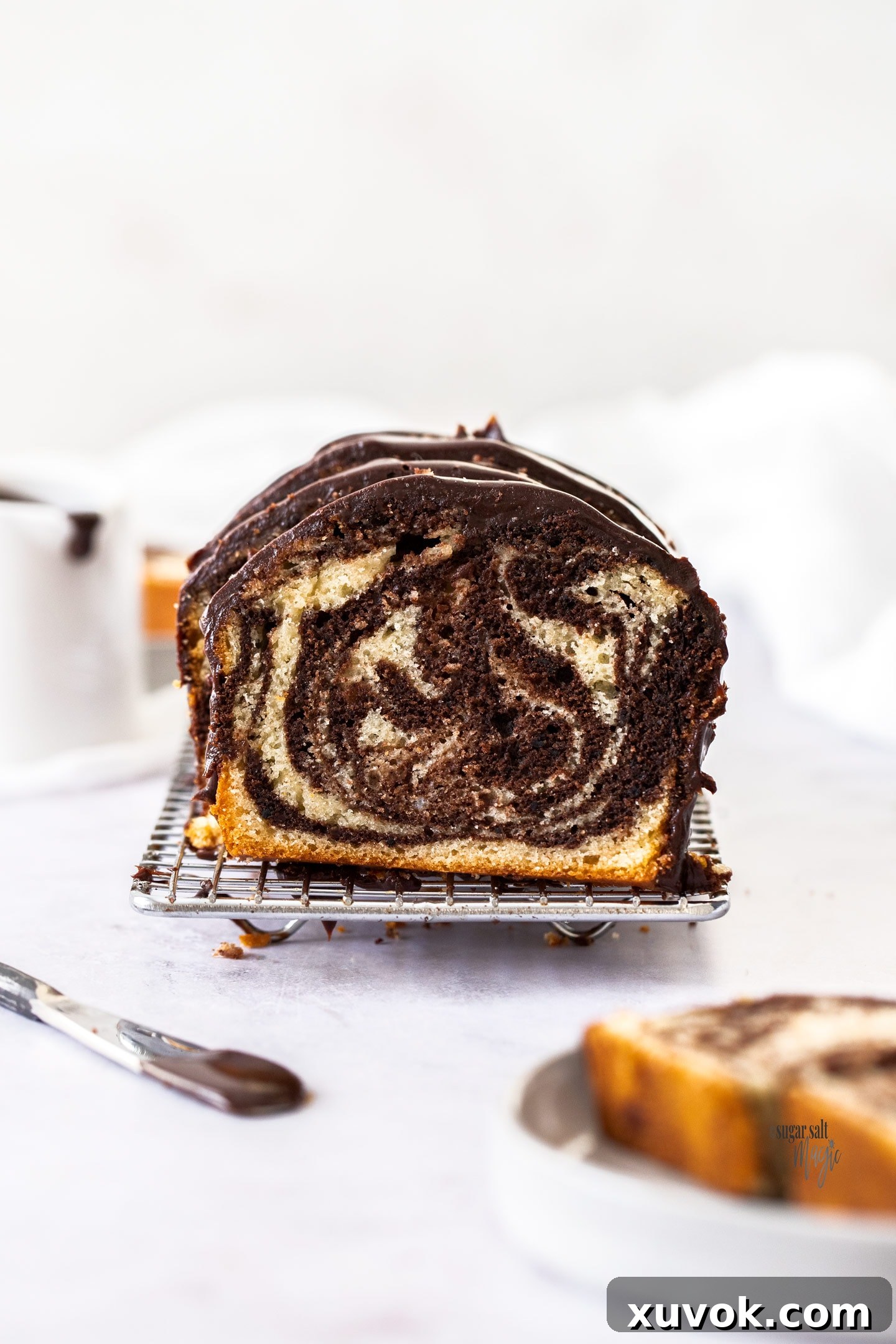
Table of Contents
- Ingredients for the Perfect Marble Loaf Cake
- Step-by-Step Guide to Baking Marble Loaf Cake
- Preparing the Cake Batter
- Crafting the Chocolate Ganache
- Expert Baking Tips and Tricks
- Frequently Asked Questions About Marble Loaf Cake
- Storage and Freshness
- More Irresistible Loaf Cake Recipes You’ll Love
Never Miss a Recipe!
Get the latest recipes straight to your inbox and elevate your baking game!
Ingredients for the Perfect Marble Loaf Cake
Crafting this delightful marble loaf cake begins with a selection of high-quality ingredients. Here’s a comprehensive look at what you’ll need to achieve that perfect balance of flavor and texture:
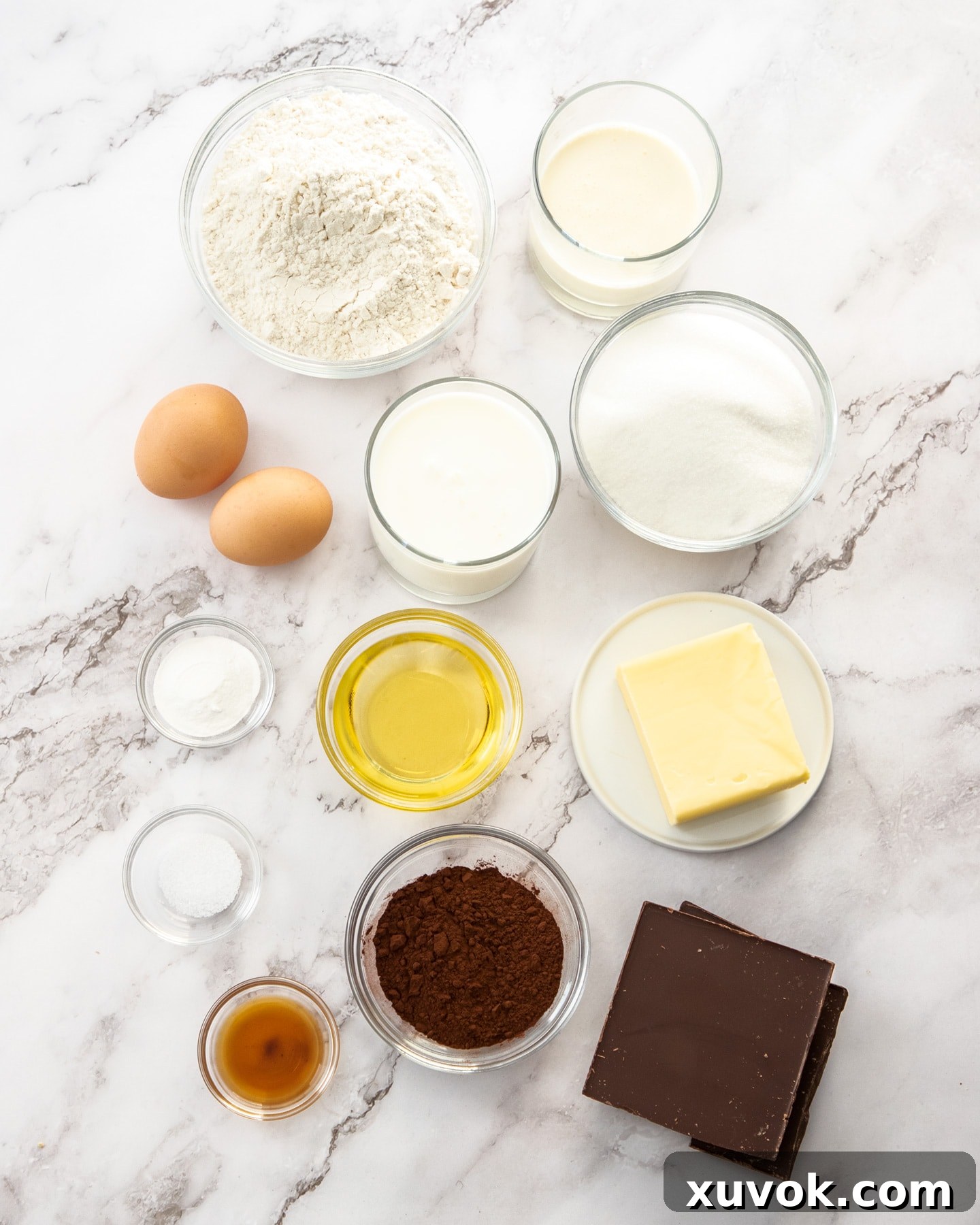
For precise quantities and detailed instructions, please refer to the complete recipe card below.
- All-Purpose Flour: The foundational ingredient for the cake’s structure. Use standard plain flour, carefully measured to ensure the right consistency.
- Granulated Sugar: Provides sweetness and contributes to the cake’s tender crumb. White granulated or superfine (caster) sugar will work beautifully here.
- Unsalted Butter: Essential for a rich, buttery flavor and a moist texture. Using unsalted butter allows you to control the overall salt content of the recipe. Ensure it’s melted and slightly cooled before incorporating.
- Baking Powder: Our primary leavening agent, responsible for the cake’s light and airy lift. Do not confuse it with baking soda, as they react differently.
- Salt: A small but mighty ingredient that enhances all other flavors, bringing balance and depth to both the vanilla and chocolate elements.
- Large Eggs: Bind the ingredients together, providing crucial structure and richness to the cake batter. Ensure they are at room temperature for optimal mixing.
- Buttermilk: A key player in achieving the cake’s exceptional tenderness and moisture. Its acidity reacts with the baking powder, creating a wonderfully soft texture. Avoid substituting with regular milk, as the results will not be the same.
- Vegetable Oil: A touch of oil further contributes to the cake’s moistness, keeping it tender for longer. Any neutral-flavored oil will suffice.
- Pure Vanilla Extract: Opt for a high-quality pure vanilla extract to infuse the cake with its classic, aromatic flavor. Synthetic vanilla essence will not deliver the same depth.
- Dutch Processed Cocoa Powder: For the chocolate swirl, I highly recommend Dutch-processed cocoa powder. It has a smoother, less bitter, and more balanced chocolate flavor compared to natural unsweetened cocoa, resulting in a richer chocolate component.
- Boiling Water (for cocoa): A small amount of boiling water helps “bloom” the cocoa powder, intensifying its chocolate flavor and ensuring it disperses smoothly into the batter.
- Dark Chocolate (50% cocoa) for Ganache: For the luscious ganache, a dark chocolate with about 50% cocoa solids strikes the perfect balance – intensely chocolatey without being overly bitter. High-quality baking chocolate works best.
- Heavy Cream (Thickened Cream): This forms the base of our velvety ganache. Known as thickened cream in Australia, it’s equivalent to heavy cream, whipping cream, or double cream in other regions. Its high fat content ensures a smooth, stable ganache.
Gathering these ingredients and having them ready at room temperature will set you up for baking success!
Step-by-Step Guide to Baking Marble Loaf Cake
While this cake’s beautiful marbled effect and dual flavors might suggest a complex baking process, you’ll be pleasantly surprised by its simplicity. Follow these easy steps to create your own show-stopping marble loaf cake.
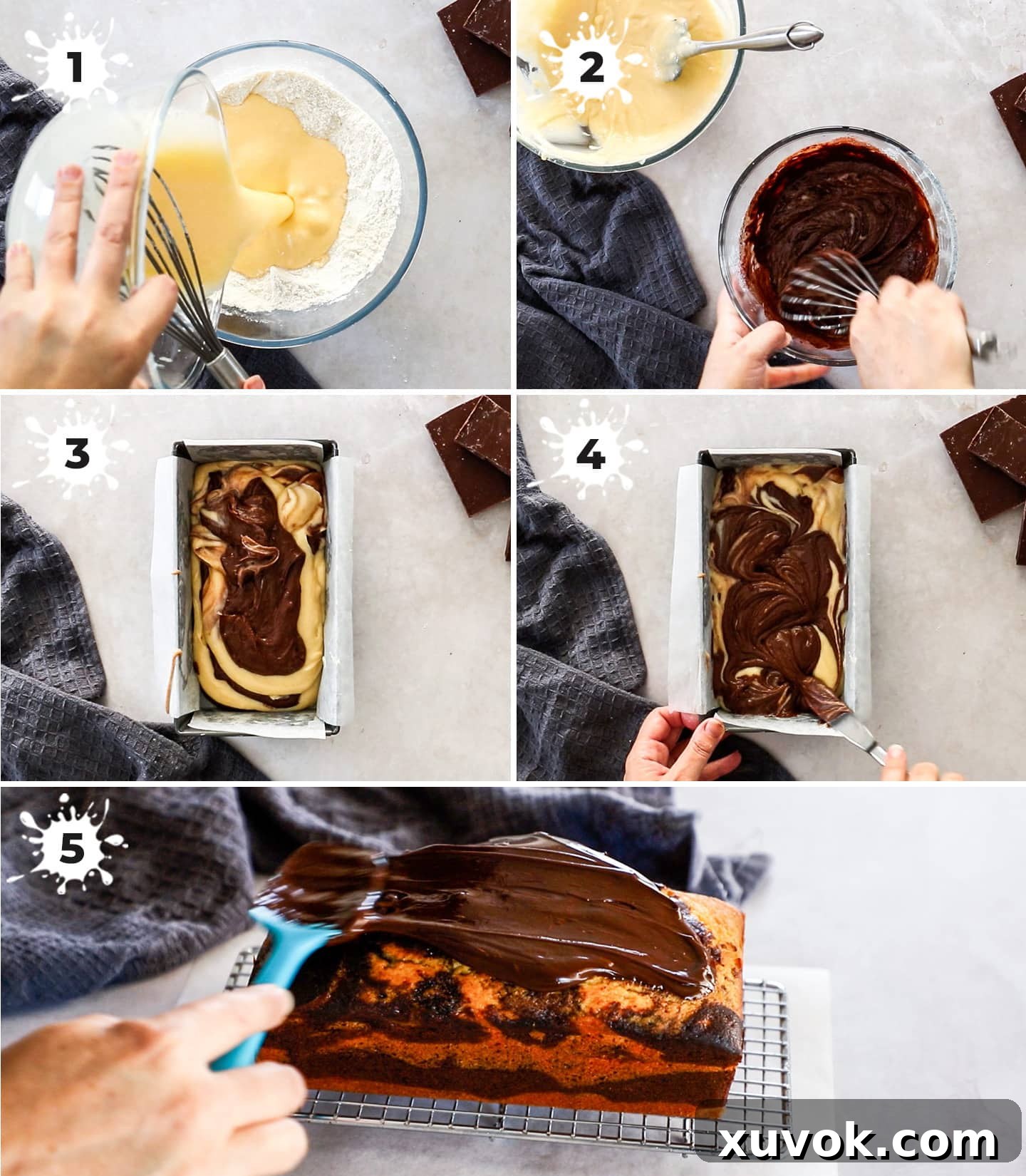
For detailed quantities and specific temperatures, please consult the complete recipe card below.
Preparing the Cake Batter
- Prepare Your Butter: Begin by melting the butter in a microwave-safe mixing bowl until it’s just liquid. Set it aside to cool slightly while you prepare the other ingredients. This ensures it doesn’t scramble the eggs later.
- Combine Dry Ingredients: In a large mixing bowl, whisk together the all-purpose flour, granulated sugar, baking powder, and salt. Whisking not only combines them but also aerates the flour, contributing to a lighter cake texture.
- Mix Wet Ingredients: In a separate bowl (the one where your butter cooled works perfectly), combine the cooled melted butter, room-temperature eggs, buttermilk, vegetable oil, and pure vanilla extract. Whisk thoroughly until well combined and smooth.
- Gently Combine Wet and Dry: Create a shallow well in the center of your dry ingredients. Pour the whisked wet ingredients into this well. Using a silicone spatula, gently fold the ingredients together. Mix just until no streaks of flour remain and the batter is smooth. Be very careful not to overmix, as this can lead to a tough, dry cake.
- Divide and Flavor the Batter: Carefully transfer approximately half of the prepared batter into the second bowl. To this half, add the Dutch-processed cocoa powder and the boiling water. Gently stir until the cocoa is fully incorporated and the chocolate batter is smooth and uniformly colored.
- Layer for the Marble Effect: Line your chosen loaf pan with baking paper, ensuring some overhang on the long sides for easy removal. Start by dolloping about half a cup of the vanilla batter into the prepared pan. Next, dollop an equal amount of the chocolate batter directly on top of the vanilla layer. Continue alternating these layers, one on top of the other, until all the batter is used. Once all batter is in the pan, take a knife and gently swirl it through the batter a few times in an “S” or figure-eight pattern. The goal is to create beautiful swirls, not to fully mix the batters.
- Bake to Perfection: Place the loaf pan in your preheated oven and bake for approximately 45-55 minutes. The cake is ready when a wooden skewer or toothpick inserted into the center comes out with a few moist crumbs attached, but no wet batter. Keep a close eye on it towards the end of the baking time, as loaf cakes can quickly go from perfectly baked to overbaked and dry.
IMPORTANT BAKING NOTE! It is crucial not to overbake this cake. Loaf cakes, due to their tall and narrow shape, retain a significant amount of heat. Overbaking can quickly lead to a dry, crumbly texture. Begin checking for doneness with a toothpick a few minutes before the suggested baking time. It should emerge with a few moist, sticky crumbs, not wet batter. Remember that oven temperatures can vary, and different loaf tin materials (glass vs. metal) can affect baking times. Always trust your toothpick test!
Crafting the Chocolate Ganache
- Prepare the Chocolate: Finely chop your dark chocolate. Smaller pieces will melt more evenly and quickly, ensuring a smooth ganache. Place the chopped chocolate in a heatproof bowl.
- Heat the Cream: In a small saucepan, gently heat the heavy cream over medium heat. Stir or swirl the pan occasionally to prevent scorching. Remove from heat just as small bubbles begin to form around the edges of the pan – do not bring to a rolling boil.
- Combine and Create Ganache: Pour the hot cream directly over the finely chopped chocolate in the heatproof bowl. Give the bowl a gentle shake to submerge the chocolate under the cream. Allow it to sit undisturbed for 1 minute; this gives the chocolate time to soften. After one minute, slowly stir the mixture from the center outwards until it transforms into a smooth, glossy, and uniform ganache. Let the ganache cool for at least 10-15 minutes at room temperature before pouring it over the cooled cake. This slight cooling period prevents it from sliding right off the cake.
Expert Baking Tips and Tricks
Achieving a perfectly moist and beautifully marbled loaf cake is easy with these essential tips:
- Always Grease and Line Your Pan: Even if your loaf pan boasts non-stick properties, it’s always best practice to grease it thoroughly and then line it with baking paper. Greasing helps the paper adhere, preventing it from shifting when you pour in the batter. The baking paper is your secret weapon for effortless cake removal – simply let the paper overhang the sides slightly to create “handles” for lifting the cooled cake.
- Avoid Overmixing the Batter: This is a golden rule in baking, especially for cakes. Overmixing develops the gluten in the flour, which can lead to a tough, dense, and dry cake. Mix only until the ingredients are just combined and no visible streaks of dry flour remain. A few small lumps are preferable to a rubbery texture.
- Do Not Overbake: As highlighted earlier, loaf cakes are prone to overbaking due to their shape. They retain heat exceptionally well and will continue to cook slightly even after being removed from the oven. The moment your toothpick test yields moist crumbs, pull that cake out! Trust the “sticky crumb” indicator over a completely clean toothpick for optimal moisture.
- Allow Ample Cooling Time: Patience is a virtue when it comes to loaf cakes. They hold onto heat much longer than flatter layer cake rounds. While it’s tempting to slice into a warm cake, resist! Let it cool in the pan for about 10-15 minutes, then transfer it to a wire rack to cool completely. This slow cooling process allows the cake to set properly and prevents it from becoming gummy or falling apart. For quicker cooling, you can transfer it to the fridge after the initial room temperature cooling.
- Chill the Cake Before Ganache: To ensure your chocolate ganache adheres beautifully and creates that desirable drip effect, the cake must be completely cool. Applying ganache to a warm cake will result in it melting and sliding right off the sides. Similarly, allow your prepared ganache to cool for 10-15 minutes (or until it’s slightly thickened but still pourable) before drizzling it over the cooled cake. This ensures it sets properly and doesn’t become too runny.
- Room Temperature Ingredients: For a smooth, emulsified batter and uniform baking, ensure your cold ingredients like eggs and buttermilk are brought to room temperature before mixing. This helps them combine more easily with other ingredients, creating a more cohesive batter.
By following these expert tips, you’ll be well on your way to baking a truly exceptional marble loaf cake every time.
Frequently Asked Questions About Marble Loaf Cake
While I haven’t personally sampled the Starbucks marble cake, many readers have noted its similar appearance and delightful flavor profile. Regardless of whether it’s an exact replica, I’m confident you’ll find this recipe utterly delicious and satisfying.
I strongly advise against substituting buttermilk with regular milk in this recipe. Buttermilk’s unique acidity is crucial for achieving the tender, moist crumb that makes this cake so special. Its interaction with the baking powder is key to the cake’s lift and texture. If authentic buttermilk is unavailable, you can create a homemade version by mixing 1 cup of whole milk with 1 tablespoon of white vinegar or lemon juice. Let it sit for 5-10 minutes until it slightly curdles, then measure out the quantity required for the recipe. This DIY buttermilk will yield much better results than plain milk.
Absolutely! For an extra burst of chocolatey goodness, feel free to fold up to 1 cup of your favorite chocolate chips (mini or regular-sized work well) into the batter before layering. You can add them to either the vanilla or chocolate portion, or both, for a truly decadent treat.
The key to distinct swirls is gentle handling. When layering the batters, try to spoon them carefully on top of each other. When swirling with a knife, make only 2-3 passes through the batter in an ‘S’ or figure-eight motion. Avoid overworking it, as this will cause the colors to blend completely rather than creating beautiful, defined swirls. Think of it as painting a pattern, not stirring a pot.
Yes, this marble loaf cake is an excellent make-ahead option! It actually tends to taste even better the next day as the flavors have more time to meld. You can bake the cake a day or two in advance, keep it well-wrapped, and then prepare the ganache and decorate it just a few hours before serving. This allows for stress-free entertaining.
Dutch-processed cocoa powder has been treated with an alkali to neutralize its acidity. This results in a cocoa that is darker in color, milder in flavor, and less bitter than natural unsweetened cocoa. For this marble cake, Dutch-processed cocoa provides a wonderfully smooth and rich chocolate flavor that complements the vanilla beautifully, creating a more balanced and nuanced taste without any harshness.
Storage and Freshness
Proper storage is key to keeping your vanilla and chocolate marble loaf cake tasting fresh and delicious for days. Once cooled and topped with ganache, this cake will maintain its excellent quality in an airtight container at room temperature (like your pantry) for 3-4 days. If you choose to store it in the refrigerator, remember to remove it about 30 minutes to an hour before serving to allow it to come back to room temperature. This ensures the cake is at its most tender and the flavors are fully developed. Cold temperatures can slightly dull the flavors and firm up the crumb.
For longer storage, this marble cake freezes beautifully. Without the ganache, wrap the cooled loaf tightly in several layers of plastic wrap, then an additional layer of aluminum foil, or place it in a freezer-safe airtight container. It can be frozen for up to 3 months. When you’re ready to enjoy, thaw it overnight in the refrigerator, then bring it to room temperature before preparing and adding the fresh ganache. This method allows you to have a delicious homemade treat ready whenever the craving strikes!
More Irresistible Loaf Cake Recipes You’ll Love
If you’ve fallen in love with the ease and deliciousness of loaf cakes, then you’re in for a treat! There’s a whole world of delightful loaf cake recipes waiting to be explored. Here are some of my other favorite variations that I know you’ll adore:
- Chocolate Zucchini Cake: A wonderfully moist and secretly healthy cake that’s packed with chocolate flavor.
- Chocolate Pound Cake: Rich, dense, and intensely chocolatey – a true classic for chocolate lovers.
- Coffee and Walnut Loaf: The perfect companion for your morning coffee or an afternoon tea, with a delightful crunch.
- Ginger Loaf Cake: Warm and spicy, this loaf cake is incredibly comforting, especially during cooler months.
- Blood Orange Loaf Cake: A bright and zesty cake featuring the unique, sweet-tart flavor of blood oranges.
- Blueberry Lemon Yoghurt Cake: Light, fluffy, and bursting with fresh blueberry and tangy lemon notes.
- Red Velvet Pound Cake: All the classic charm of red velvet, in a convenient and delicious pound cake form.
Each of these recipes offers a unique flavor experience while retaining the beloved simplicity and comforting appeal of a loaf cake. Happy baking!
If you try this marble loaf cake recipe, please take a moment to leave a rating and comment below. I love hearing from you, and your feedback helps other readers too!
Hungry for more? Subscribe to the newsletter for free recipes straight to your inbox. Also, follow along on Facebook, Pinterest and Instagram.
Marble Loaf Cake
10
slices
20
50
1
10
Video
Ingredients
-
260
g
plain (all-purpose) flour
(2 cups / 9.1oz) -
1
cup
white granulated sugar
(200g / 7oz) -
2
teaspoons
baking powder -
¼
teaspoon
salt -
113
g
unsalted butter, melted & cooled slightly
(½ cup / 4oz) -
2
large eggs, room temperature -
1
cup
buttermilk, room temperature
(250ml) -
¼
cup
vegetable oil
(60ml) -
2
teaspoons
vanilla extract -
¼
cup
Dutch processed cocoa powder
(27g / 1oz) -
2
tablespoons
boiling water
(8 tsp, notes 1)
FOR THE GANACHE
-
150
g
dark (50%) chocolate
(finely chopped) -
½
cup
thickened (heavy) cream
For best results, always weigh ingredients where a weight is provided.
Equipment
-
2 mixing bowls
-
Balloon whisk and silicone spatula
-
8×4 inch loaf pan
Instructions
-
Make sure to melt your butter (in a medium mixing bowl) in the microwave first until just melted and set aside to cool.
-
Preheat the oven to 180C / 350F / 160C fan forced. Grease then line an 8×4 inch loaf tin with baking paper, ensuring overhang on the long sides.
-
FOR THE CAKE: In a large mixing bowl, add the flour, sugar, baking powder and salt and whisk well using a balloon whisk, to aerate and disperse.
-
In a separate bowl, combine the cooled melted butter, eggs, buttermilk, oil and vanilla extract and whisk well.
-
Make a well in the centre of the dry ingredients and pour in the wet ingredients. Use a spatula to gently combine just until there are no lumps left. Be careful not to overmix.
-
Transfer about 1 ½ cups of the batter back to the wet ingredients bowl. Add the cocoa powder and the boiling water – stir gently until just combined.
-
Drop about ½ cup of the vanilla batter into your prepared tin. Add ½ cup of the chocolate batter directly on top. Repeat these alternating layers until all batter is in the tin. Run a knife through to swirl the batters a couple of times – not so much that you completely mix them.
-
Bake for around 45-55 minutes (see notes below for guidance) or until a toothpick comes out with a sticky crumb or two attached. Watch it carefully towards the end as loaf cakes can have a tendency to over-bake quickly.
-
Let the cake cool in the tin for 10 minutes, before using the edges of the baking paper on the long sides to lift it out. Finish cooling completely on a wire rack.
-
Let the cake cool completely before preparing and topping with ganache.
-
FOR THE GANACHE: Finely chop the dark chocolate and place it in a heatproof bowl. Heat the cream in a small saucepan over low-medium heat until it starts to bubble around the edges. Pour the hot cream over the chopped chocolate and give the bowl a gentle shake to settle the chocolate under the cream. Let it sit for 1 minute.
-
Stir the ganache from the center outwards until smooth and glossy. Let it cool for 10-15 minutes before pouring over the completely cooled cake.
-
Please take a moment to rate this recipe after trying it. Your feedback is greatly appreciated and helps fellow bakers!
Notes
- I use a standard Australian 20ml tablespoon (equal to 4 teaspoons). Please adjust if your measuring spoons are different.
- For the most accurate results, it is always recommended to weigh ingredients like flour and sugar using kitchen scales. If you don’t have scales, use the spoon-and-level method (gently spoon flour into the cup and level with a straight edge, rather than scooping directly from the bag).
- All ovens vary: Baking times are approximate. Always test for doneness 5-7 minutes before the recipe suggests.
- Baking time will also depend on your loaf pan material and size. Glass or ceramic pans generally require longer baking times. For example, my 8×4 inch metal loaf tin takes around 52 minutes, while a slightly larger 8.5×4.5 inch tin takes about 47 minutes. Always check early and adjust as needed.
- Loaf cakes retain a significant amount of heat due to their compact shape, so do not let it overbake. The cake will continue to cook slightly (carry-over baking) after it’s removed from the oven.
- Cooling the cake: Loaf cakes can take a couple of hours to cool completely at room temperature. To speed up the process, allow it to cool for about 30 minutes at room temperature, then transfer it to the refrigerator.
- This cake is best enjoyed at room temperature. It can be stored in an airtight container in a cool place (like a pantry) for 3-4 days. If refrigerated, ensure you take it out at least half an hour before serving to allow it to warm up and soften.
- You can use a darker chocolate for the ganache, such as 70% cocoa solids. However, you will need a slightly smaller amount, typically around 115g or 4oz, as darker chocolate is more potent.
EXPLORE MORE CAKES AND CUPCAKES!
440
kcal
Marie Roffey
Dessert
American
Have you tried this recipe?
Don’t forget to leave a rating and comment below and let me know how it was! I love hearing from you. Nutrition information is approximate and derived from an online calculator. The brands you use may cause variations.