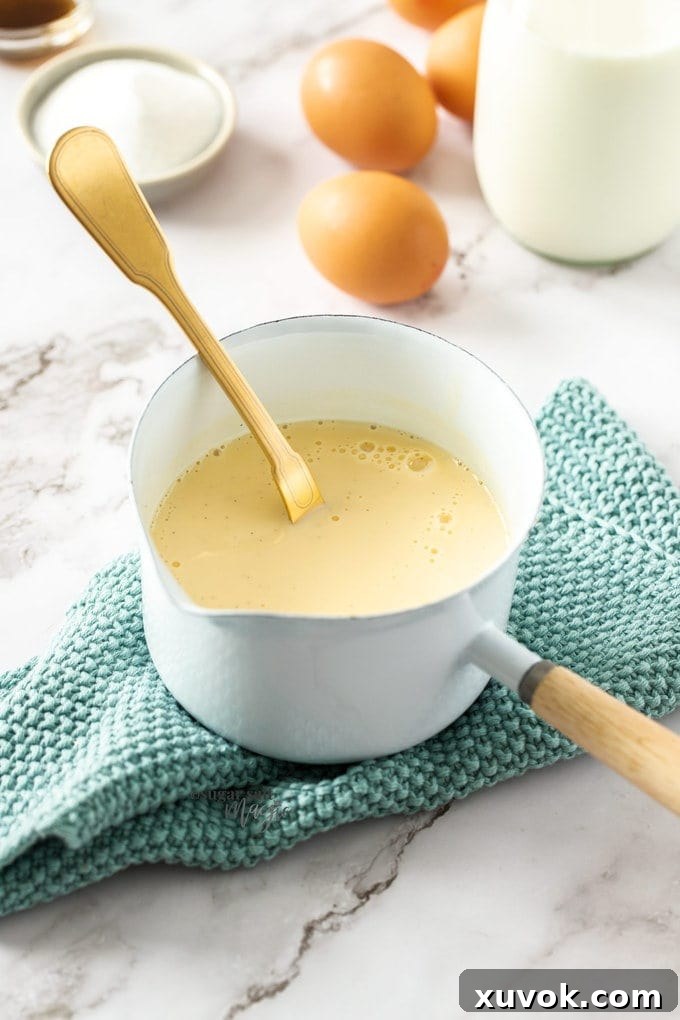
There’s nothing quite like the silky, smooth embrace of a truly exquisite sauce to elevate a simple dessert into an unforgettable experience. For lovers of classic sweets, this **Crème Anglaise**, often known simply as **pouring custard** or **vanilla sauce**, is the undisputed champion. Forget a mere scoop of ice cream; this creamy concoction transforms any slice of apple pie, crumble, or pudding into a luxurious treat that’s deeply comforting and utterly addictive.
While ice cream has its place – and yes, I admit to having indulged in it myself, as seen with my Chocolate Brownie Pie or served alongside a rich Chocolate Self-Saucing Pudding – when it comes to a warm, comforting dessert, nothing compares to the velvety texture and rich vanilla flavor of homemade custard. It’s the accompaniment I invariably reach for, capable of being enjoyed on its own by the bowlful (a confession I’m not sorry for!), especially when served warm.
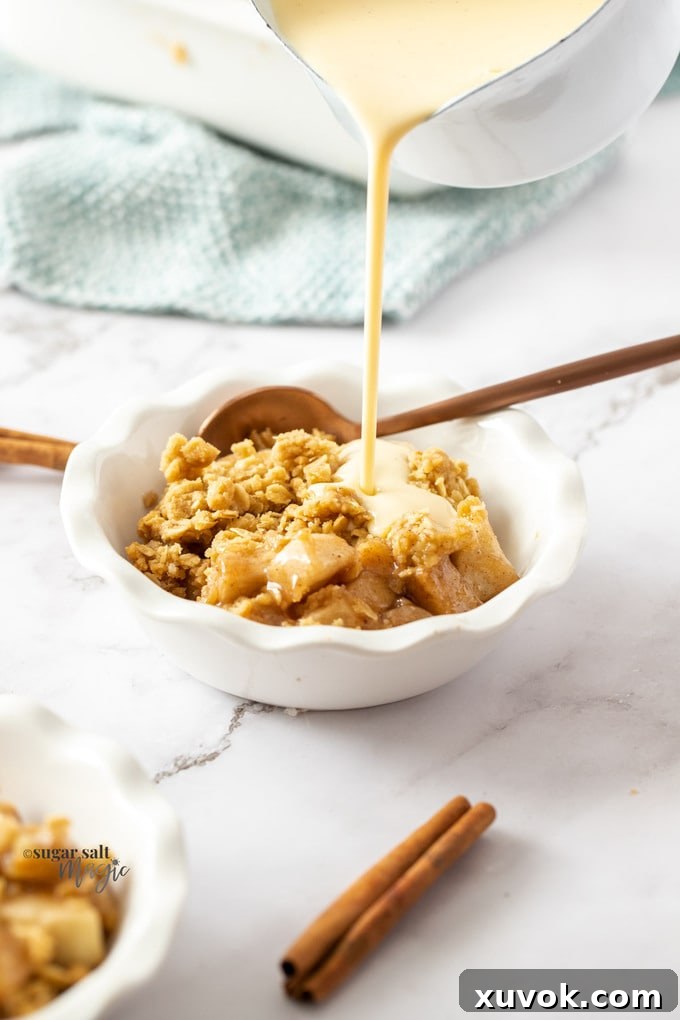
Table of Contents
- What is Crème Anglaise?
- Essential Ingredients for Crème Anglaise
- How to Make Crème Anglaise – Step by Step
- Expert Tips and Tricks for Perfect Custard
- Serving Suggestions for Vanilla Custard
- Storage and Make-Ahead Tips
- Desserts That Pair Perfectly with Crème Anglaise
Never Miss a Recipe!
Get the latest recipes straight to your inbox and unlock exclusive cooking tips!
Sign up for our newsletter to receive new recipes directly in your inbox!
What is Crème Anglaise?
**Crème Anglaise** is a classic French dessert sauce, renowned for its exquisitely smooth, silky, and creamy texture, enriched with a delicate vanilla flavor. Literally translating to “English cream,” it is a light pouring custard that serves as a luxurious accompaniment to a vast array of desserts. Unlike thicker custards, Crème Anglaise boasts a pourable consistency, making it perfect for drizzling over warm fruit desserts like cobblers and apple crumbles, as showcased in the image above.
Originating in Europe, this versatile sauce is fundamentally similar in flavor profile to pastry cream (crème pâtissière), which you might find filling a fruit tart or eclair. However, the key distinction lies in its lighter, more fluid consistency, designed to be poured rather than spooned as a thick filling. This unique characteristic also makes it an excellent base for other indulgent creations, such as a rich chocolate cremeux.
While my mother often made her custard using traditional custard powder – a shortcut I still appreciate and have even created a recipe for, ensuring pantry readiness for any “custard emergencies” – mastering **homemade Crème Anglaise from scratch** is a truly rewarding culinary endeavor. It allows for unparalleled control over flavor and texture, resulting in a sauce that far surpasses any store-bought alternative. This article will guide you through crafting this elegant, homemade vanilla sauce.
Essential Ingredients for Crème Anglaise
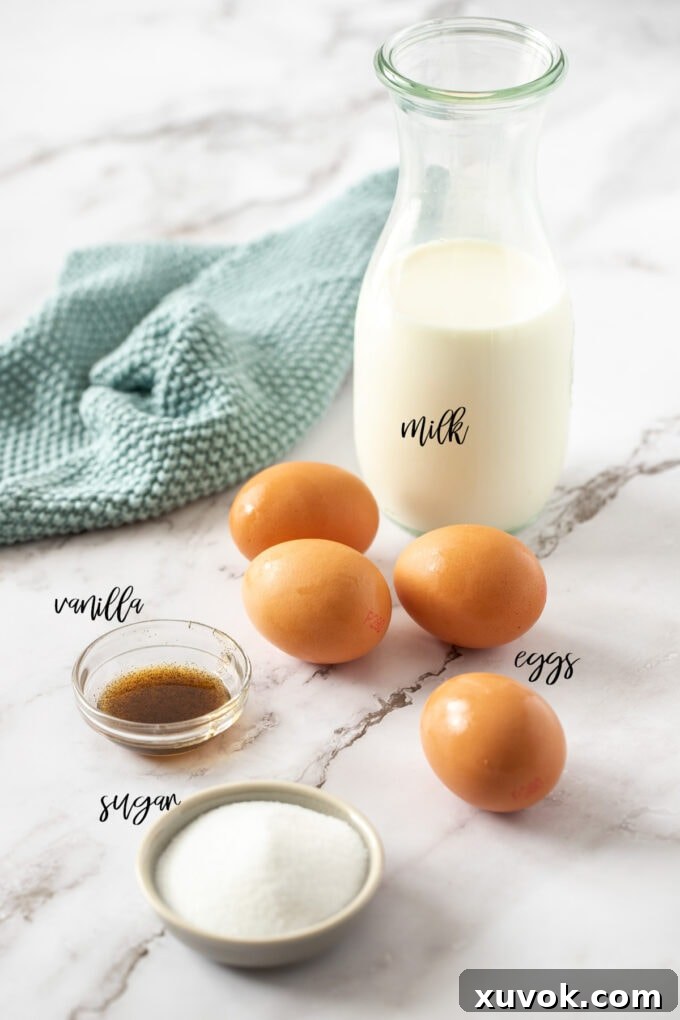
At its heart, **Crème Anglaise** is a testament to the magic that can be created with just a few high-quality, simple ingredients. This classic **vanilla sauce** typically requires only four to five staples from your pantry and fridge:
- **Egg Yolks:** These are crucial for both thickening the custard and providing its characteristic rich, smooth texture and golden hue. They are the backbone of this luxurious sauce.
- **Milk:** The primary liquid base. Whole milk is recommended for the best flavor and creaminess, but you can adjust for dietary preferences.
- **Cream:** Optional, but often used to add extra richness and a slightly thicker consistency. You can use light cream or heavy cream depending on your preference for indulgence.
- **Sugar:** Granulated white sugar sweetens the sauce to perfection, balancing the richness of the egg yolks and dairy.
- **Vanilla:** The star flavor! Use good quality vanilla extract, vanilla bean paste, or even a whole vanilla bean for an intensely aromatic custard.
Personally, I often prepare my **homemade custard** with just milk, omitting the cream, as I prefer a slightly thinner consistency that generously coats desserts without being too heavy. However, this recipe provides comprehensive guidance and tips to help you achieve the exact consistency you desire, whether you crave a delicate pour or a more substantial, spoonable sauce.
How to Make Crème Anglaise – Step by Step
**Homemade custard** might sound intimidating, but it is remarkably simple to prepare. This elegant **Crème Anglaise recipe** comes together in just about 15 minutes, offering a rewarding culinary experience. It’s adapted from my popular crème pâtissière recipe, streamlined for that perfect pouring consistency.
For precise quantities and detailed instructions, please refer to the comprehensive recipe card below.
- **Heat the Milk:** Begin by gently heating your milk in a heavy-based saucepan over medium-low heat. The goal is to bring it to a point where it’s vigorously steaming, and you observe the very first bubble just breaking the surface. This indicates it’s hot enough but not boiling. Immediately remove it from the heat to prevent scorching.
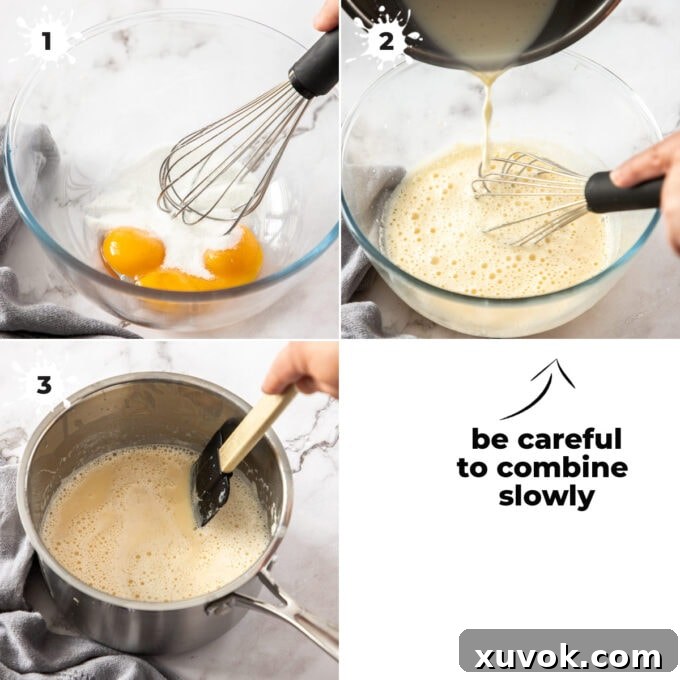
- **Whisk Yolks and Sugar:** In a separate medium bowl, combine your egg yolks and granulated sugar. Use a hand whisk to whisk them together until they are just combined and have a smooth, pale yellow appearance. Do this right before tempering to avoid the sugar “cooking” the yolks.
- **Temper the Eggs:** This crucial step prevents the eggs from scrambling. While continuously whisking the egg yolk and sugar mixture, slowly and gradually drizzle the hot milk into the bowl in a thin, steady stream. Maintain constant whisking throughout to slowly raise the temperature of the egg yolks, gently integrating them with the warm milk.
- **Thicken the Custard:** Pour the tempered egg and milk mixture back into the same saucepan. Return it to low heat, stirring constantly with a spatula or wooden spoon. Continue to cook, scraping the bottom and sides of the pan, until the custard thickens sufficiently to coat the back of a spoon. When you draw a line through the custard on the back of the spoon with your finger, the line should hold and not run. This typically occurs around 70°C (158°F). Once thickened, stir in your vanilla extract or paste.
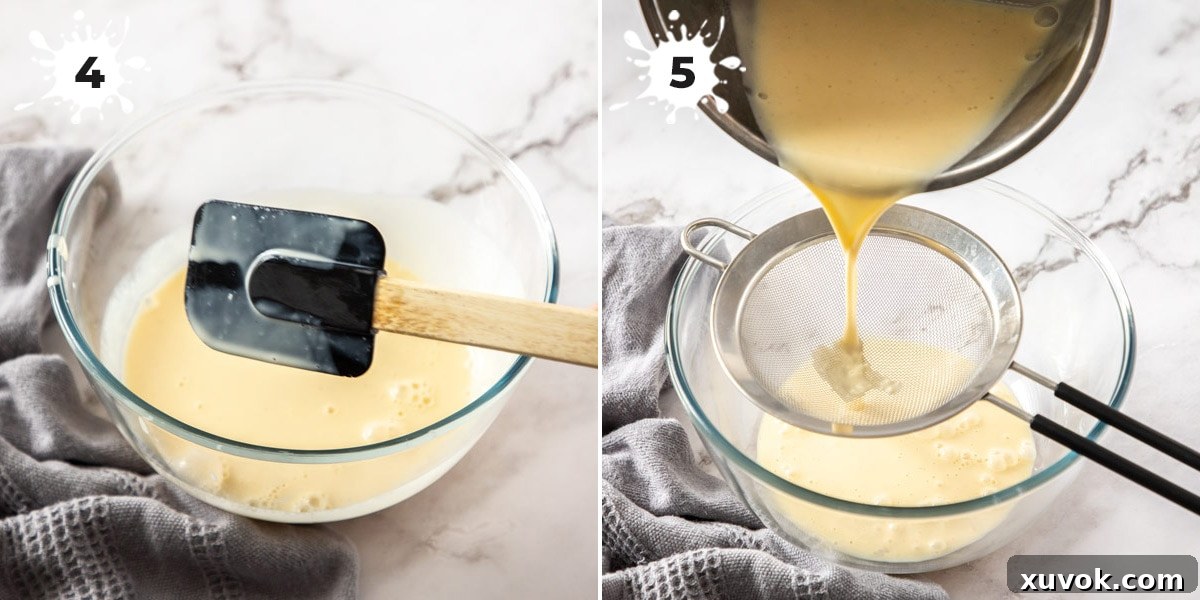
- **Strain and Serve:** Immediately pour the finished **vanilla custard** through a fine-mesh sieve or strainer into a clean bowl. This crucial step catches any potential lumps or bits of cooked egg, ensuring your Crème Anglaise is flawlessly smooth and silky. Allow it to cool for a few minutes before serving warm, or chill it for later enjoyment. I personally love serving it almost immediately, while it’s still wonderfully warm.
Expert Tips and Tricks for Perfect Custard
Achieving a perfectly silky and smooth **Crème Anglaise** is all about technique. Follow these expert tips to ensure your homemade custard is flawless every time:
- **Timing is Key for Sugar and Yolks:** Do not add the sugar to the egg yolks until you are ready to begin whisking them and tempering. If sugar sits with egg yolks for too long, it can “cook” or denature the egg proteins, causing them to coagulate and become lumpy. This chemical reaction is fascinating but undesirable for a smooth custard!
- **Avoid Boiling the Milk:** The milk only needs to be heated until it’s steaming heavily and a single bubble just breaks the surface. Boiling the milk can scorch it, imparting an unpleasant flavor, and also make it too hot for effective tempering, increasing the risk of scrambling the eggs.
- **Use a Heavy-Based Saucepan:** A heavy-bottomed saucepan distributes heat more evenly, which is critical for preventing the custard from sticking and burning on the bottom as it thickens. This even heating also helps prevent hot spots that can lead to scrambled egg bits.
- **Stabilize Your Bowl:** When whisking and tempering, place your mixing bowl on a damp tea towel or a non-slip mat. This simple trick will hold the bowl securely in place, freeing up both your hands to pour the hot milk slowly with one hand and whisk continuously with the other.
- **Master the Tempering Process:** Slowly drizzling the hot milk into the egg yolks while whisking vigorously is known as “tempering.” This technique gradually raises the temperature of the cold egg yolks, allowing them to gently combine with the hot milk without cooking instantly and curdling. It’s an essential step for a smooth **vanilla sauce**.
- **Gentle and Constant Heat for Thickening:** Once the mixture is back in the saucepan, maintain a low to medium-low heat. Stir constantly, scraping the bottom and sides of the pan, until the custard thickens to the desired consistency. This constant motion prevents lumps and ensures even cooking. The perfect point is when the custard coats the back of a spoon and you can draw a clean line through it with your finger. If you have a thermometer, this typically occurs around 70°C (158°F), indicating the eggs have cooked sufficiently without overcooking.
- **Adjusting Consistency for Your Preference:**
- **For a Richer, Thicker Custard with Cream:** If you desire a slightly thicker and richer **Crème Anglaise**, simply replace half of the milk with an equal amount of heavy (thickened) cream. The higher fat content of the cream will naturally yield a denser, more indulgent sauce.
- **For an Even Thicker, More Robust Custard with Cornflour/Cornstarch:** For a significantly thicker **pouring custard** that borders on a spoonable consistency (similar to what some might prefer with a hearty crumble), you can incorporate a thickening agent. Whisk 2-3 teaspoons of cornflour (cornstarch) directly into the egg yolks and sugar mixture before you begin tempering. This will create a much more viscous sauce than the cream-only version.
Serving Suggestions for Vanilla Custard
**Crème Anglaise** is incredibly versatile, making it a beloved staple in many dessert repertoires. While I am a staunch advocate for serving this **vanilla sauce** hot over pies, crumbles, crisps, and puddings throughout the year, its charm extends to being served cold as well. Interestingly, my husband’s family prefers their custard chilled, whereas I always give mine a quick warm-up in the microwave for that extra touch of cozy comfort.
Beyond traditional hot desserts, **homemade custard** also shines when poured simply over fresh fruit or a vibrant mix of berries, transforming them into an effortlessly elegant dessert. Imagine it cascading over ripe peaches, strawberries, or a medley of seasonal fruits – a truly delightful and light option.
Remember, the thickness of your custard can be customized. As mentioned in the tips above, you can adjust the recipe to achieve a consistency ranging from a delicate, thin pour to a richer, more substantial sauce, catering to all palates and preferences.
For those looking to explore more decadent creations, **Crème Anglaise** also serves as the perfect foundation for other gourmet desserts. It can be easily infused with chocolate to create a luxurious chocolate cremeux, or even used as a base for ice cream or Bavarian creams. Its adaptability makes it an invaluable addition to any dessert enthusiast’s culinary toolkit.
Storage and Make-Ahead Tips
One of the many benefits of **Crème Anglaise** is its excellent keeping quality, making it a fantastic make-ahead option for entertaining or simply to have on hand for a spontaneous dessert craving. Once prepared and cooled, your **vanilla sauce** will keep beautifully in the refrigerator for up to 1 week.
To ensure optimal freshness and prevent it from absorbing any refrigerator odors, transfer the cooled custard to an airtight container. I often use charming Weck preserving jars, which not only look lovely but also provide a reliable seal. Before storing, it’s a good practice to place a piece of plastic wrap directly on the surface of the custard. This prevents a skin from forming as it chills, ensuring it remains perfectly smooth.
When you’re ready to serve chilled custard, simply remove it from the refrigerator. If you prefer it warm, gently reheat it over low heat on the stovetop, stirring constantly, or in the microwave in short bursts, stirring between each interval, until it reaches your desired temperature. Avoid boiling, as this can cause the custard to curdle. A quick whisk after reheating will restore its smooth texture.
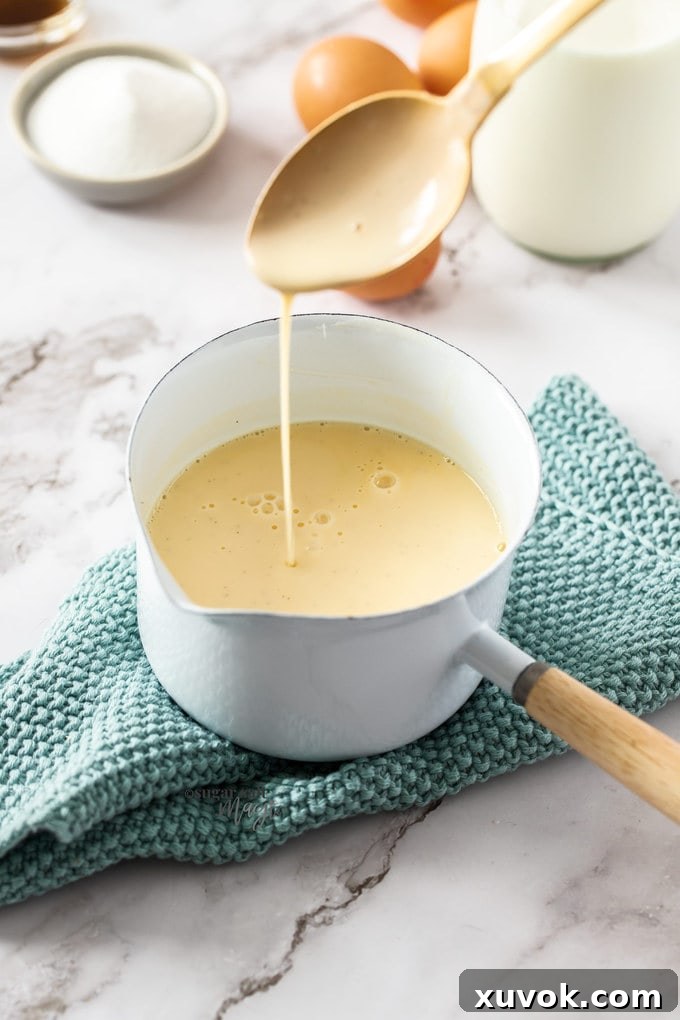
So there you have it: the ultimate guide to creating the perfect **vanilla custard** to serve alongside any pie, pudding, or fruit dessert. This classic **Crème Anglaise** is more than just a sauce; it’s a cozy, rich, and sophisticated indulgence that is far more delicious and comforting than the sum of its simple parts. Master this recipe, and you’ll unlock a new level of dessert enjoyment!
Desserts That Pair Perfectly with Crème Anglaise
The versatility of **homemade custard** makes it an ideal companion for a wide variety of desserts. Here are some of my favorite pairings that are truly elevated by a generous drizzle of warm Crème Anglaise:
- **Self-Saucing Lemon Pudding:** The tangy lemon beautifully contrasts with the creamy, sweet vanilla sauce.
- **Chocolate Self-Saucing Pudding:** A warm chocolate lava cake experience made even more decadent with vanilla custard.
- **Chocolate Brownie Pie:** The rich, fudgy brownie pie becomes incredibly luscious with a pouring of smooth custard.
- **Apple and Plum Cobbler:** The warm, spiced fruit and soft biscuit topping are a match made in heaven with vanilla custard.
- **Simple Apple Crumble:** A classic pairing where the crisp topping and tender apples are perfectly complemented by the silky sauce.
- **Fresh Fruit Salads:** Transform a simple bowl of berries or mixed fruit into a delightful dessert.
- **Pancakes or Waffles:** Elevate your breakfast or brunch with a drizzle of warm custard instead of syrup.
- **Bread Pudding:** A comforting dessert that practically begs for a generous serving of Crème Anglaise.
Did you try this irresistible Crème Anglaise recipe?
We would love to hear from you! Leaving a rating and comment below the recipe is incredibly helpful and makes our day!
Hungry for more delicious recipes? Subscribe to our newsletter for free, exclusive recipes delivered straight to your inbox. Also, connect with us and follow along on Facebook, Pinterest, and Instagram for daily inspiration and behind-the-scenes content!
How to Make Crème Anglaise (Homemade Custard)
Rate
Pin
Ingredients
- 1 ½ cups whole milk (375ml)
- 4 large egg yolks
- 2 tablespoons white granulated sugar (notes)
- 1 teaspoon vanilla extract or vanilla bean paste
For best results, always weigh ingredients where a weight is provided
Equipment
-
small or medium heavy-based saucepan
-
instant-read thermometer
Instructions
-
In a medium heavy-based saucepan, heat the whole milk over low-medium heat until it is heavily steaming and very hot to the touch, just before it begins to simmer (look for the first tiny bubble breaking the surface). Remove from heat immediately.
-
In a separate medium bowl, use a hand whisk to whisk together the granulated sugar and egg yolks until they are just combined and appear smooth and pale yellow. Ensure you do this just before the next step to prevent the sugar from affecting the egg yolks.
-
While continuously whisking the egg yolk mixture, slowly and gradually drizzle the hot milk into the bowl in a thin, steady stream. This process, known as tempering, gently raises the temperature of the yolks and prevents them from scrambling.
-
Pour the entire tempered egg and milk mixture back into the saucepan. Heat over low heat, stirring constantly with a spatula or wooden spoon, ensuring you scrape the bottom and sides of the pan. Continue cooking until the custard thickens enough to coat the back of a spoon, and when you draw a line through it with your finger, the line holds. This usually happens around 70°C (158°F) if using a thermometer. Remove from heat and stir in the vanilla extract or vanilla bean paste.
-
Immediately pour the cooked custard through a fine-mesh strainer into a clean bowl. This step is essential to catch any small lumps and ensures a perfectly smooth, silky **Crème Anglaise**. Allow it to cool for a few minutes before serving warm, or chill it to serve cold.
-
Please take a moment to leave a comment & rating below if you enjoyed this recipe. Your feedback is greatly appreciated and very helpful!
Notes
- This recipe yields approximately 2 cups of delicious Crème Anglaise.
- Please note that I use a standard Australian 20ml tablespoon, which is equivalent to 4 teaspoons (worldwide standard). Adjust accordingly if using a 15ml tablespoon.
- For a richer, thicker consistency, you can swap half of the milk for an equal amount of thickened (heavy) cream. For an even more robustly thick custard, whisk 2-3 teaspoons of cornflour (cornstarch) into the egg yolks and sugar mixture before tempering.
- To infuse a deeper vanilla flavor, consider using two whole vanilla pods instead of vanilla extract. Split them lengthwise, scrape the seeds into the milk, and add the pods to steep while the milk heats. Remove the pods before tempering.
EXPLORE MORE SWEET SAUCE RECIPES
Calories from Fat 72