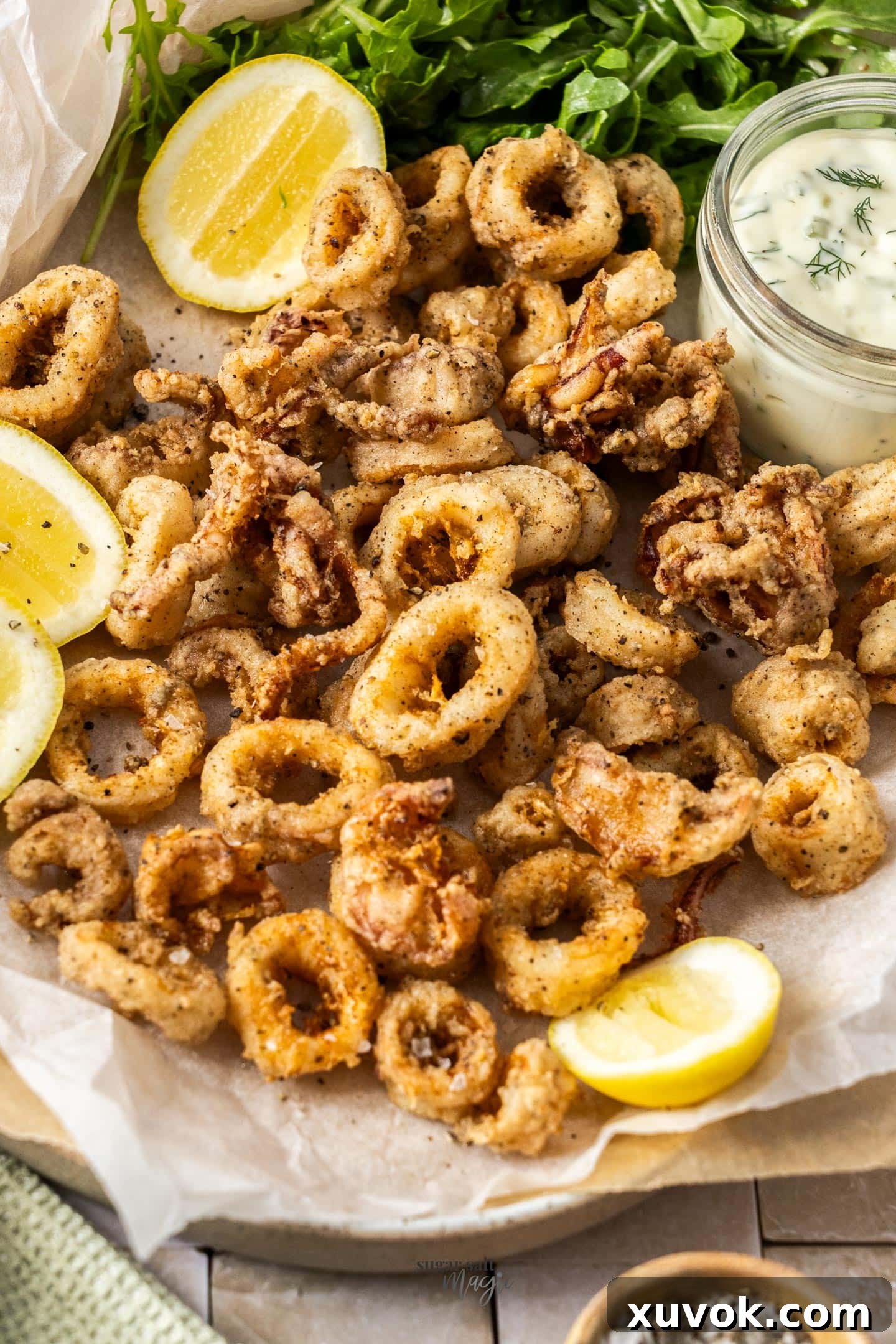
Crispy & Tender Salt and Pepper Calamari: Your Ultimate Homemade Guide
There are few dishes as universally beloved as perfectly cooked salt and pepper calamari. With its irresistibly crispy coating and melt-in-your-mouth tender squid, it’s a staple on restaurant menus, from casual pubs to upscale bistros. But what if we told you that achieving this restaurant-quality dish is not only possible but surprisingly simple to master in your own kitchen? This comprehensive guide will walk you through creating the ultimate salt and pepper squid recipe, ensuring every bite is packed with exquisite flavor and delightful texture.
Often, when ordering this classic, one might find it slightly underwhelming in the seasoning department – despite “salt and pepper” being right there in the name! This recipe changes that, delivering a flawlessly seasoned calamari that truly lives up to its name. Each succulent piece of squid is enveloped in a thin, crunchy crust, seasoned to perfection so you can savor every aromatic note.
Before you dive into the frying process, ensure your calamari is prepped correctly. If you’re starting with whole squid, our detailed guide on how to clean squid at home will make the process straightforward and easy to follow. Preparing fresh squid yourself ensures the best texture and flavor, a crucial step for truly exceptional results.
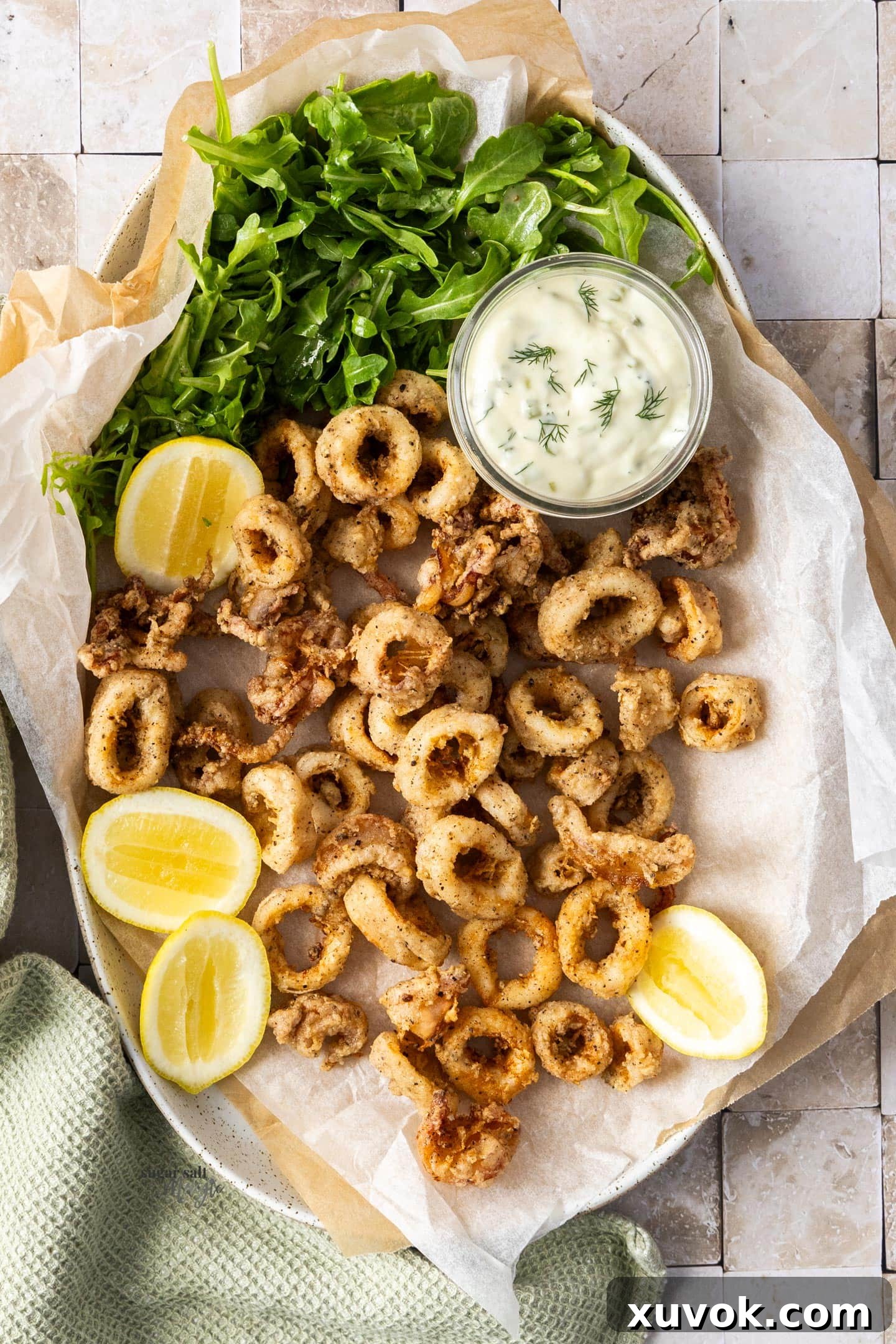
Table of Contents
- Chinese vs. Western Salt and Pepper Squid: Understanding the Difference
- Essential Ingredients for Perfect Calamari
- Step-by-Step Guide to Making Salt and Pepper Calamari
- Air Fryer Salt and Pepper Squid: A Healthier Crisp
- What to Serve with Salt and Pepper Squid
- Frequently Asked Questions About Calamari
- More Seafood Recipes You’ll Love
- Salt and Pepper Calamari Recipe Card
Never Miss a Recipe!
Get the latest, most delicious recipes straight to your inbox and elevate your home cooking!
Chinese vs. Western Salt and Pepper Squid: Understanding the Difference
It’s important to clarify that this particular recipe focuses on the classic Western-style fried calamari, seasoned simply and exquisitely with salt and pepper. While both versions share the name, their flavor profiles and preparation methods are distinct.
The Chinese rendition of salt and pepper squid is celebrated for its aromatic complexity. It typically incorporates a vibrant blend of ingredients such as fresh garlic, thinly sliced spring onions, a touch of chili for heat, and often a hint of five-spice powder. After an initial deep-fry to achieve crispiness, the squid is then stir-fried rapidly in a hot wok with these aromatics, infusing it with a unique, savory, and subtly spicy flavor. If you’re keen to explore this variation, you would typically coat the squid solely in flour before frying, then toss it with the stir-fried aromatics, similar to how one might prepare a Chinese salt and pepper prawns recipe.
In contrast, our Western-style salt and pepper calamari recipe emphasizes the natural flavor of the tender squid, enhanced purely by a well-balanced crispy coating of flour, salt, and pepper. It’s a testament to how simple ingredients, when perfectly combined and cooked, can create an incredibly satisfying dish. The focus here is on the pristine texture of the squid and the satisfying crunch of its exterior, with a bright squeeze of lemon as its perfect accompaniment. Both styles are delicious in their own right, but this guide will ensure you master the elegant simplicity of the Western classic.
Essential Ingredients for Perfect Calamari
Creating truly exceptional crispy calamari doesn’t require a long list of exotic ingredients. In fact, just a handful of simple components, combined with precise technique, are all you need to achieve culinary perfection. Alongside the core ingredients, fresh lemon wedges are indispensable for serving, adding that crucial bright, acidic counterpoint.
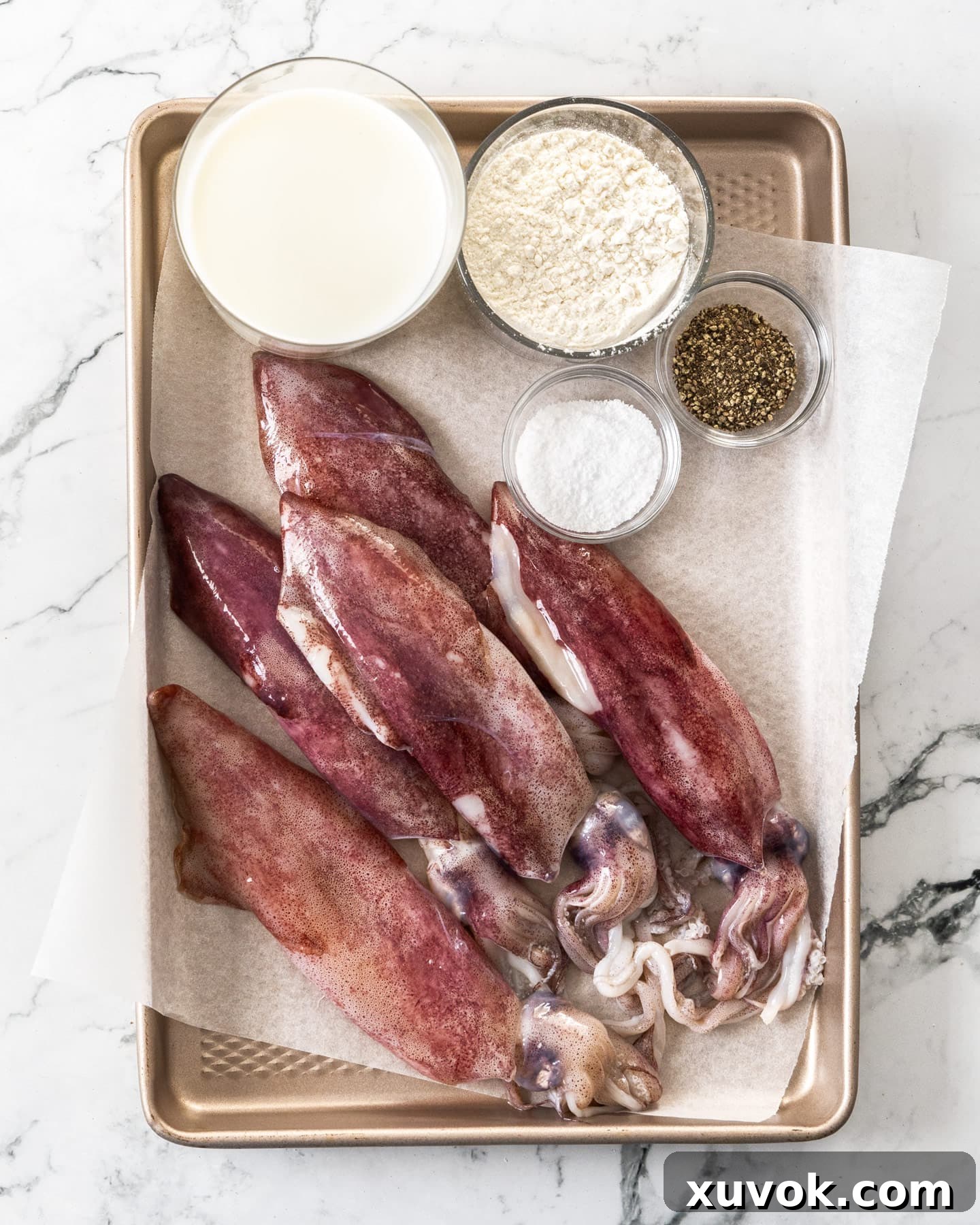
For the precise measurements and detailed instructions, please jump directly to the full recipe card.
- Squid / Calamari: Let’s clear up a common misconception right away: “calamari” is simply the Italian word for “squid.” So, whether you call it salt and pepper squid or calamari, you’re referring to the same delightful mollusk! For the absolute best flavor and texture, we highly recommend using fresh squid. If you’re comfortable with the process, cleaning it yourself ensures prime freshness. Alternatively, most good fishmongers will gladly clean it for you. When selecting squid, look for firm, glistening bodies and a fresh, oceanic scent – never fishy. You can use larger tubes sliced into rings or smaller whole squid bodies.
- Salt: The “salt” in salt and pepper calamari is not just a flavor enhancer; it’s a star ingredient! This recipe calls for fine sea salt, which disperses evenly and provides a clean, briny taste. If you opt for sea salt flakes, you’ll need to use at least double the quantity due to their lighter, less dense structure. For kosher salt, an extra teaspoon typically balances the flavor. Remember, you can always offer additional salt on the side for those who prefer a little extra sprinkle.
- Pepper: Freshly cracked black peppercorns are crucial for that distinct peppery bite and aroma. While black peppercorns keep things classic and simple, don’t hesitate to experiment! Substituting some of the black pepper with pink peppercorns will introduce a subtle fruitiness and visual appeal, while Sichuan peppercorns can add a unique citrusy, numbing sensation for a more adventurous flavor profile. Always use freshly ground pepper for maximum impact.
- Flour: Simplicity is key. Just one type of flour is all you need here: plain flour, also known as all-purpose flour. This creates a light, crisp coating that adheres beautifully to the squid. For an even crispier texture, some chefs blend plain flour with a small amount of rice flour or cornstarch, though it’s not strictly necessary for fantastic results.
- Milk: This might seem like an unusual ingredient for seafood, but milk plays a vital role in tenderizing the squid. The lactic acid in milk helps to break down the connective tissues, ensuring your calamari remains incredibly tender after cooking, rather than becoming rubbery. A minimum of half an hour marination is beneficial, but you can marinate the squid in milk for up to 24 hours in the refrigerator for truly superior tenderness.
- Oil: For deep frying, selecting the right oil is paramount. You need a neutral-flavored vegetable oil with a high smoke point. Excellent choices include canola oil, sunflower oil, or simply oil labeled as “vegetable oil.” Avoid olive oil or butter, as they have lower smoke points and will burn, imparting an unpleasant flavor to your calamari.
Step-by-Step Guide to Making Salt and Pepper Calamari
The secret to perfectly fried calamari lies in preparation and execution. Whenever you’re deep frying, the golden rule is to have all your ingredients and equipment ready before you even turn on the heat. This ensures a smooth, stress-free cooking process and the best possible results. For this quick-cooking squid recipe, it’s particularly important to be organized, as the calamari cooks in a flash and is best served immediately. Have your draining rack, serving platter, and any chosen sides prepped and ready to go.
For a complete list of ingredients and detailed instructions, refer to the full recipe card at the bottom of this post.
- Prepare the Calamari: If you purchased whole squid or if your fishmonger hasn’t already done so, the first step is to clean and prepare the squid. This involves separating the tentacles from the body, removing the beak, discarding the internal organs, pulling out the transparent “pen” or backbone, and peeling away the skin. Our comprehensive guide on cleaning squid provides a step-by-step visual aid. Once cleaned, slice the body tubes into rings about 8mm (⅓ inch) thick. You can leave the tentacles and fins whole or cut larger tentacles in half lengthwise.
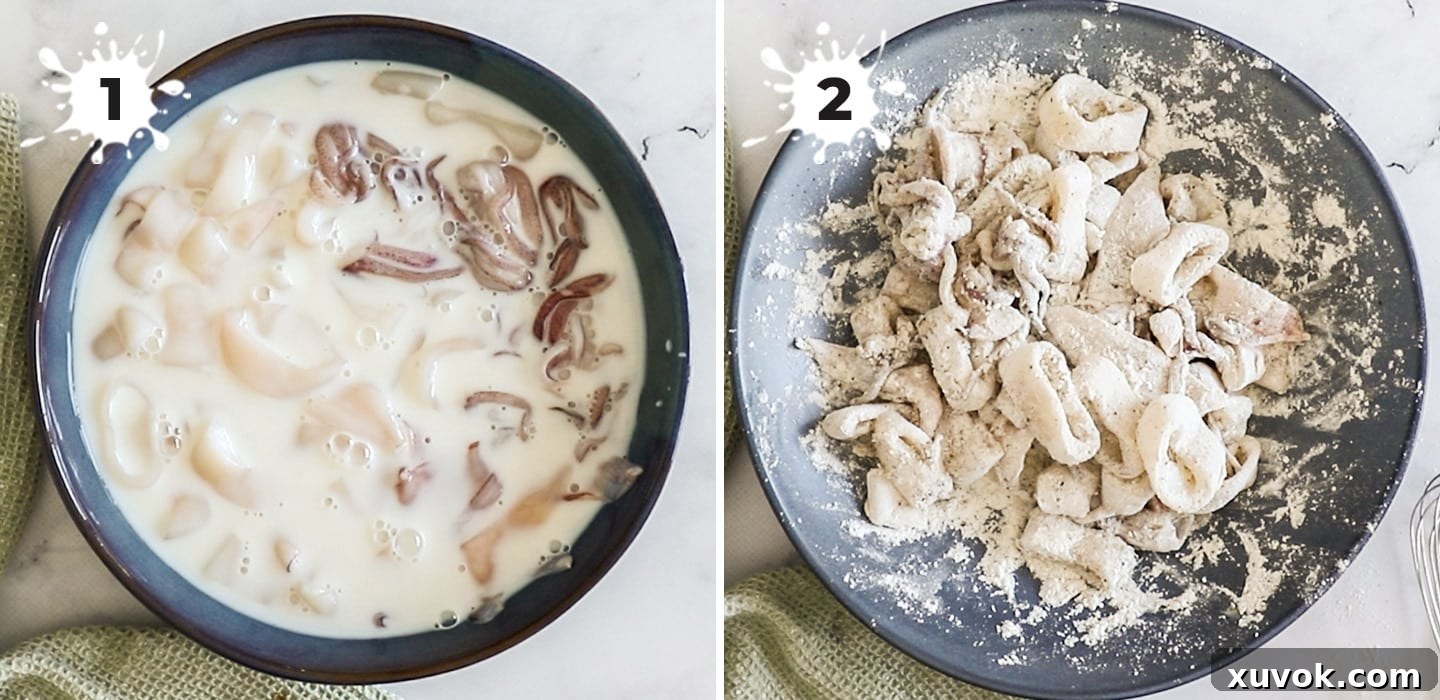
- Marinate for Tenderness: To achieve that coveted tender calamari texture, marinate the prepared squid pieces in milk. Place the calamari and milk in a medium bowl and refrigerate for at least 30 minutes. This short soak works wonders, with the lactic acid gently tenderizing the squid. For even greater tenderness, you can extend this marination period up to 24 hours.
- Drain the Calamari: Before coating, it’s crucial to remove any excess milk from the squid. Simply grasp handfuls of the calamari and gently squeeze out the liquid. This step ensures the flour coating adheres properly and crisps up beautifully during frying.
- Prepare the Salt and Pepper Coating: In a large mixing bowl, combine the all-purpose flour with the fine sea salt and freshly cracked black pepper. Whisk these ingredients together thoroughly to ensure the seasoning is evenly distributed. Add the drained calamari to this flour mixture. Toss everything together vigorously, making sure each piece of squid is fully and evenly coated in the seasoned flour. Shake off any excessive flour.
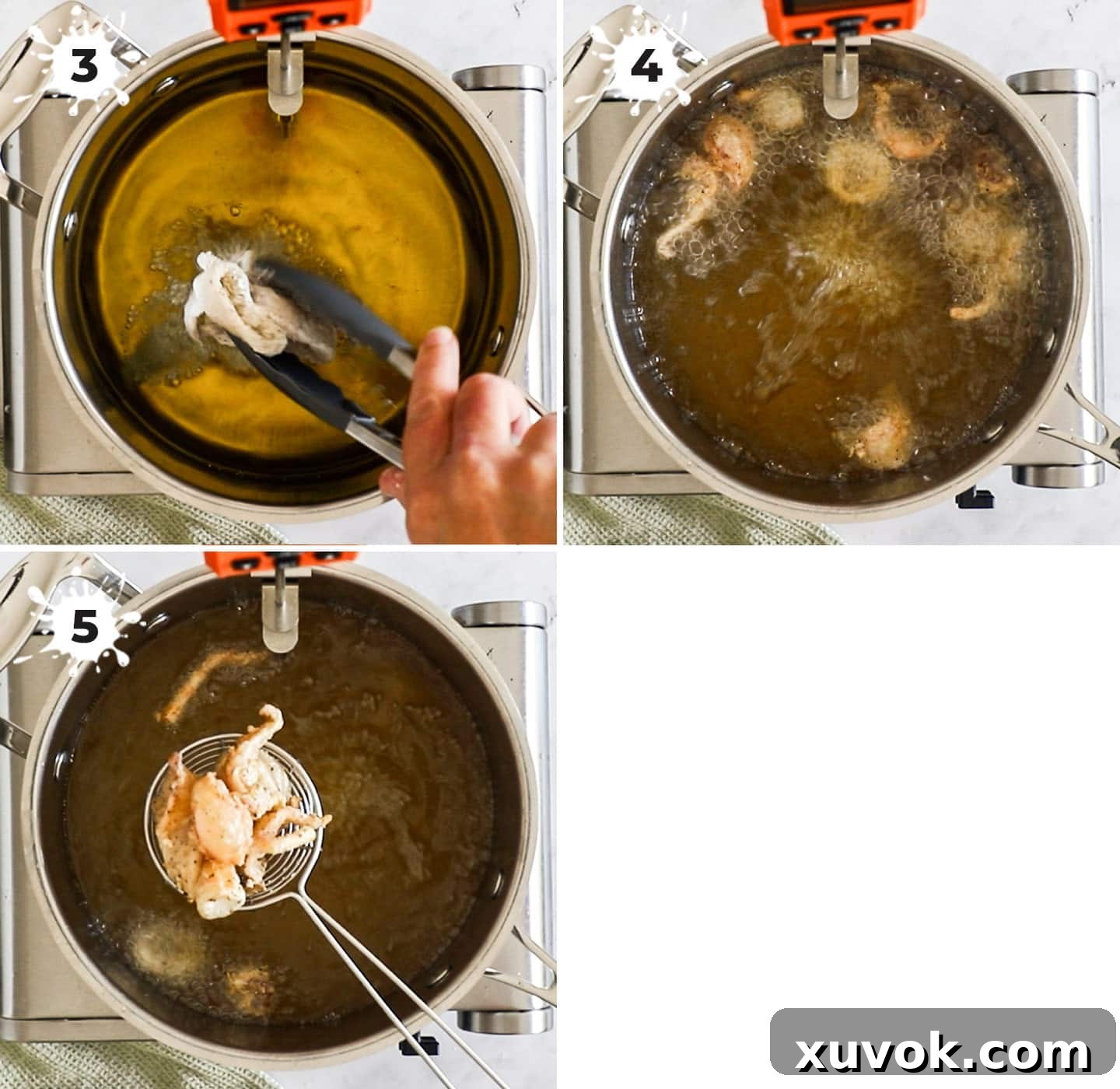
- Deep Fry in Batches: Heat a deep, heavy-based saucepan with vegetable oil, filling it no more than one-third full. Attach a deep-frying thermometer to the side and heat the oil over medium-high heat until it reaches a precise 180°C (350°F). Maintaining the correct oil temperature is vital for calamari crispy results without being greasy.
- Fry Until Golden and Tender: Carefully add the flour-coated calamari to the hot oil in small batches. Overcrowding the pan will lower the oil temperature, leading to soggy, oily calamari. Fry each batch for a very short duration, typically 1 to 1 ½ minutes. The squid cooks incredibly fast! You’re looking for a light golden-brown color and an opaque, firm-but-still-tender texture. Use a wire skimmer or slotted spoon to remove the fried calamari from the oil. It’s crucial not to overcook the squid, as even a minute too long can turn it rubbery and tough.
- Drain and Serve Immediately: As each batch finishes frying, transfer the calamari to a prepared baking sheet lined with paper towels and topped with a wire rack. The paper towels will absorb excess oil, while the wire rack allows air to circulate, keeping the calamari crisp. Serve your sensational salt and pepper squid immediately with fresh lemon wedges and your preferred dipping sauce.
Air Fryer Salt and Pepper Squid: A Healthier Crisp
If you’re looking for a lighter, less oil-intensive way to enjoy salt and pepper calamari without sacrificing too much crunch, your air fryer can be a fantastic alternative. While deep frying delivers the ultimate crisp, the air fryer offers a delicious, healthier version with significantly less mess. Here’s how to make air fryer salt and pepper squid:
- Follow the recipe instructions through to coating the calamari with the seasoned flour mixture. The milk tenderization and flour coating steps remain the same.
- Preheat your air fryer to 200°C (400°F) for 3-5 minutes to ensure it’s hot enough to crisp the calamari quickly.
- Lightly spray the flour-dusted calamari generously with a neutral cooking oil spray. This is key to achieving a golden, crispy exterior in the air fryer.
- Lightly spray the air fryer basket with oil as well to prevent sticking.
- Arrange the calamari in the air fryer basket in a single layer, ensuring not to overcrowd it. You’ll likely need to work in two or three batches, depending on the size of your air fryer.
- Cook the squid for 4 minutes, then flip each piece. Continue cooking for another 2-3 minutes, or until the calamari is light golden-brown and cooked through. Keep a close eye on it, as air fryers can vary, and overcooking will still lead to rubbery squid.
Serve your air fryer salt and pepper squid immediately with lemon wedges and your favorite dipping sauce for a satisfying, lighter meal or appetizer.
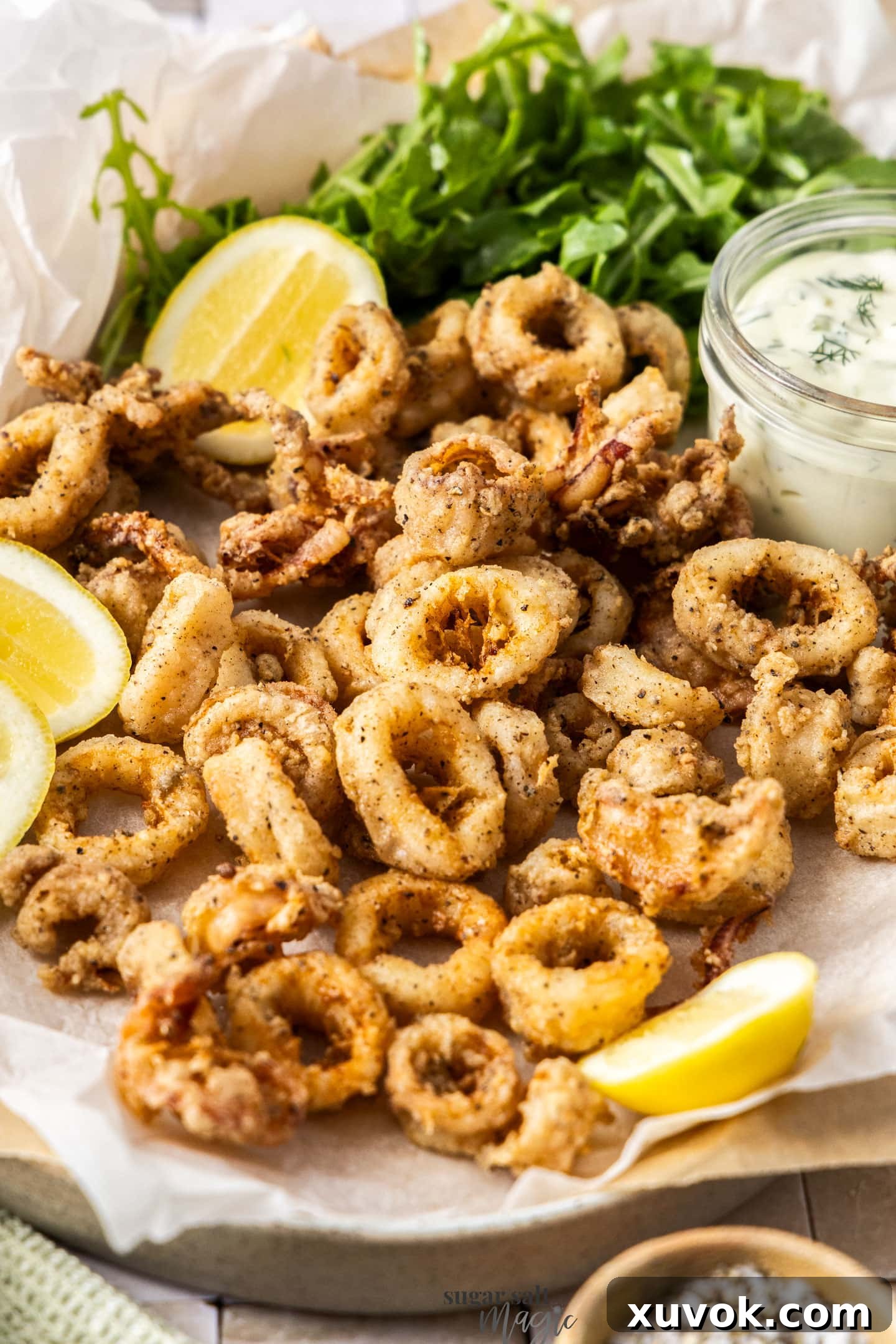
What to Serve with Salt and Pepper Squid
Salt and pepper calamari is incredibly versatile and can be enjoyed as a tantalizing appetizer or a delightful main course. Its crispy, savory profile pairs wonderfully with a variety of sides, creating a balanced and satisfying meal. Here are some serving suggestions to elevate your homemade calamari experience:
- Fresh Lemon Wedges: An absolute non-negotiable! A generous squeeze of fresh lemon juice over the hot calamari cuts through the richness of the fried coating, brightens the flavor, and adds a refreshing zing that is simply essential.
- Creamy Dipping Sauces: The crunchy texture of calamari calls for a smooth, creamy counterpoint.
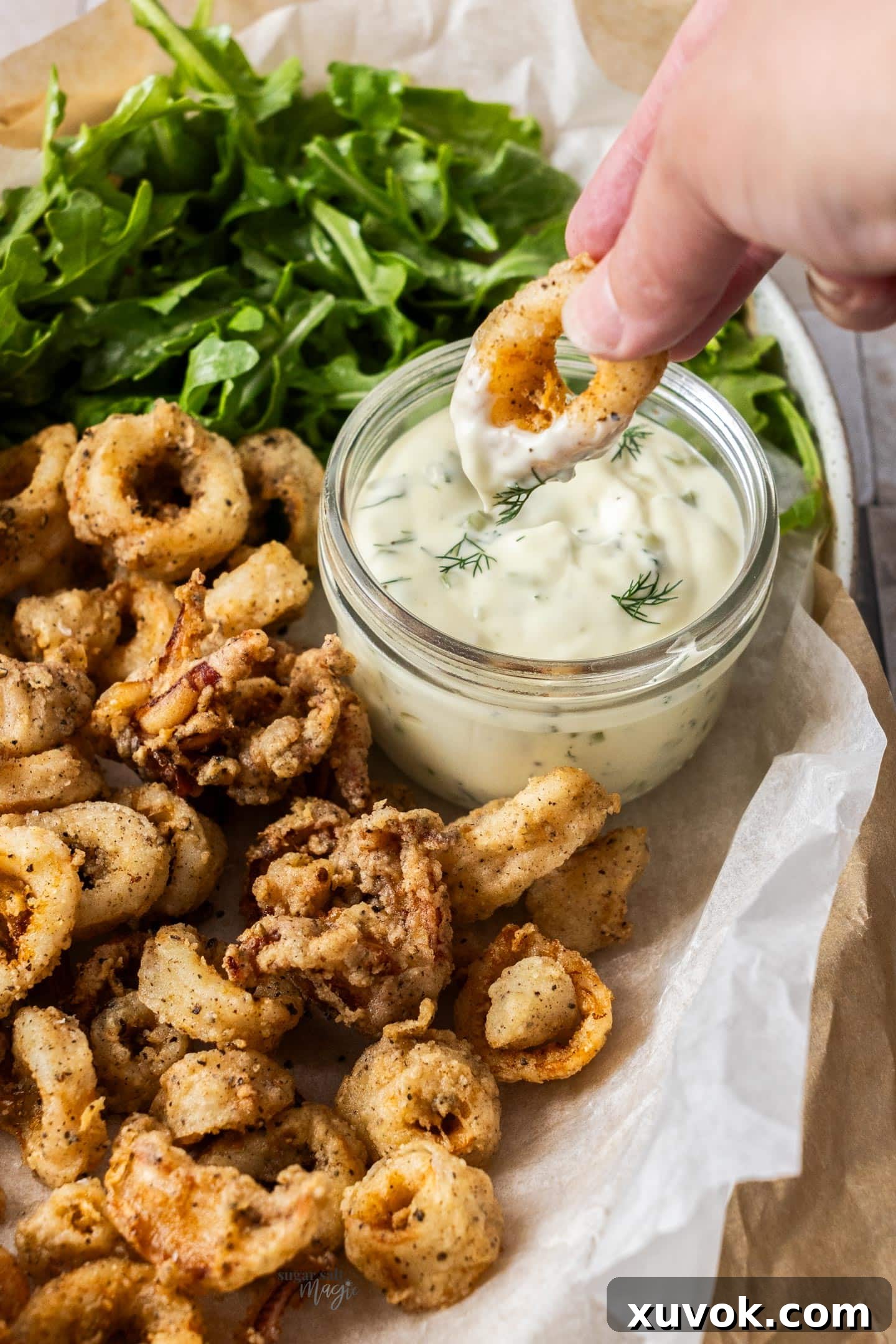
- Dill Mayonnaise: This recipe includes a fantastic homemade dill mayonnaise in the recipe card – a vibrant blend of mayo, sweet pickles, lemon juice, fresh dill, and a touch of Dijon mustard. It’s a match made in heaven.
- Aioli: A classic garlic mayonnaise or a zesty lemon aioli is another superb choice.
- Spicy Mayo: For those who love a kick, mix sriracha or your favorite hot sauce into mayonnaise.
- Ranch Dip: A homemade ranch dip offers a savory, herby creaminess that complements the squid beautifully.
- Sweet Chili & Sour Cream: A simple yet incredibly popular combination of sweet chili sauce and cool sour cream provides a delightful balance of sweet, spicy, and tangy notes.
- Light Salads: Anything deep-fried benefits from the freshness of a light salad. A simple green salad with a vinaigrette, or a rocket (arugula) salad dressed with olive oil and balsamic glaze, provides a refreshing contrast to the richness of the calamari.
- Fries or Chips: For a classic pub-style meal, serve your calamari alongside a pile of golden, crispy fries. Sweet potato fries also make a delicious alternative.
- Rice: For a more substantial meal, especially if you’ve leaned into Asian-inspired dipping sauces, a side of steamed jasmine rice can be a lovely accompaniment.
No matter how you choose to serve it, remember that tender squid is best enjoyed hot and fresh, straight from the pan!
Frequently Asked Questions About Calamari
The most effective and simple way to tenderize calamari is to marinate it in milk. A soak for as little as 30 minutes, or up to 24 hours in the refrigerator, allows the lactic acid in the milk to gently break down the squid’s connective tissues, resulting in a significantly more tender texture after cooking.
There is no difference! The term “calamari” is simply the Italian word for “squid” (specifically, the plural of calamaro). So, whether you see it listed as fried squid or fried calamari on a menu, you’re enjoying the same delicious dish.
Yes, you absolutely can use frozen squid. Ensure it is completely thawed in the refrigerator overnight before use. Pat it very dry with paper towels to remove any excess moisture, then proceed with the milk marinade as directed in the recipe. Thorough drying is crucial for a crispy coating.
Rubbery calamari is almost always due to overcooking. Squid cooks very quickly – typically just 1 to 1.5 minutes when deep-fried. The key is high heat and short cooking times. The milk marinade also plays a significant role in tenderizing the squid before it even hits the oil. Cook in small batches to maintain oil temperature, and remove as soon as it’s opaque and lightly golden.
Calamari is always best enjoyed fresh. Reheating can sometimes make it lose its crispiness and potentially become a bit tougher. However, if you must reheat, the best method is in an air fryer or oven at a high temperature (around 200°C/400°F) for a few minutes until heated through and re-crisped. Avoid the microwave, which will make it soggy.
Absolutely! This recipe focuses on classic salt and pepper, but you can easily add heat. Incorporate a pinch of cayenne pepper or chili powder into the flour mixture, or serve with a spicy dipping sauce like sriracha mayo. For a Chinese-inspired kick, add finely minced red chilies to your dipping sauce.
More Seafood Recipes You’ll Love
If you enjoyed making this salt and pepper calamari recipe, explore these other delicious seafood and fried recipes:
- Salt and Pepper Prawns: Another fantastic, crispy delight.
- Salt and Pepper Wings: Apply the same seasoning magic to chicken!
- Karaage Chicken (Japanese Fried Chicken): Crispy, juicy, and full of umami.
- Sesame Prawn Toast (Shrimp Toast): A classic appetizer, perfect for sharing.
- Crispy Prawns: Simple and utterly addictive.
Did you try this recipe for salt and pepper calamari?
Leaving a rating and comment below the recipe is so helpful!
Hungry for more? Subscribe to the newsletter for free recipes straight to your inbox. Also, follow along on Facebook, Pinterest and Instagram.

Salt and Pepper Calamari
4
serves
25
10
30
1
5
Rate
Pin
Ingredients
- 700 g fresh squid (1 ½ lb)
- 1 cup milk
- ½ cup plain flour (all-purpose flour)
- 2 ½ teaspoons fine sea salt
- 2 teaspoons freshly cracked black pepper (notes)
- vegetable oil for deep frying (1-2 litres/quarts)
- Lemon wedges and mayo to serve
For best results, always weigh ingredients where a weight is provided
Equipment
-
Deep, heavy based saucepan
-
Deep frying thermometer
-
Wire skimmer or slotted spoon
-
Baking sheet with rack
Instructions
-
Prepare the squid: Cut the tentacles off below the eyes, then squeeze the beak out of the centre of the tentacle section and discard the beak. Set the tentacles aside. Grab just above the head and pull away from the body/tube to remove. Scoop anything else out from inside the tube and discard it all. Grab hold of the pen/back bone inside the tube and pull it out. Discard. Pinch the skin and peel away from the tube all over. Discard. Peel the fins away from the body and set aside with the tentacles.
-
Cut the body / tube into 8mm (⅓inch) rings. Cut the tentacles in half lengthwise or leave them whole. Leave the fins whole.
-
In a medium bowl, combine the squid and milk and chill in the fridge for 30 minutes to tenderize (or up to 24 hours).
-
Combine the flour, salt and pepper in a large bowl, making sure it’s all well mixed.
-
Using a large, deep heavy based saucepan, pour oil in no more than ⅓ up the side. Heat oil in pan with an oil thermometer attached to the side, over medium-high heat until it reaches 180C / 350F.
-
While that’s happening, prepare draining rack. Cover a large baking sheet with paper towel and place a wire rack over the top.
-
When the oil is hot, squeeze the excess milk off of the squid pieces and transfer them to the flour mixture. Give it a good mix, making sure to separate all the pieces.
-
With a wire skimmer or slotted spoon add the squid, in batches, to the hot oil and fry for 1- 1 ½ minutes bringing the oil back to temperature between each batch until they’re pale golden brown. I do 4-5 batches.
Exact frying time will depend on the size of your squid but do a tester and check. It should be opaque but still tender when cooked. Take care not to overcook or the squid will become rubbery or tough.
-
Transfer to the wire rack to drain, then serve.
-
Please take a moment to leave a comment & rating. It’s appreciated and so helpful.
Notes
- Tablespoons: I use a standard Australian 20ml tablespoon (equal to 4 teaspoons). Check yours before measuring.
- Pepper: For a little twist in the flavour profile, try swapping half of the ground black peppercorns for ground Sichuan peppercorns or pink peppercorns.
- Served here with lemon cheeks, dressed rocket (arugula) and my dill mayonnaise with pickles:
- 1/2 cup mayonnaise
- 1 tablespoon finely chopped sweet pickles (or gherkin relish)
- 1 tablespoon lemon juice
- 1 tablespoon chopped fresh dill
- 1/2 teaspoon dijon mustard
- Salt and pepper to taste, if desired
- Nutrition details are approximate only – scroll below the recipe to find the full nutritional information.
MORE SEAFOOD RECIPES!
257
kcal
Marie Roffey
Main Course
Australian, World
Have you tried this recipe?
Don’t forget to leave a rating and comment below and let me know how it was! I love hearing from you. Nutrition information is approximate and derived from an online calculator. The brands you use may cause variations.
Calories from Fat 45