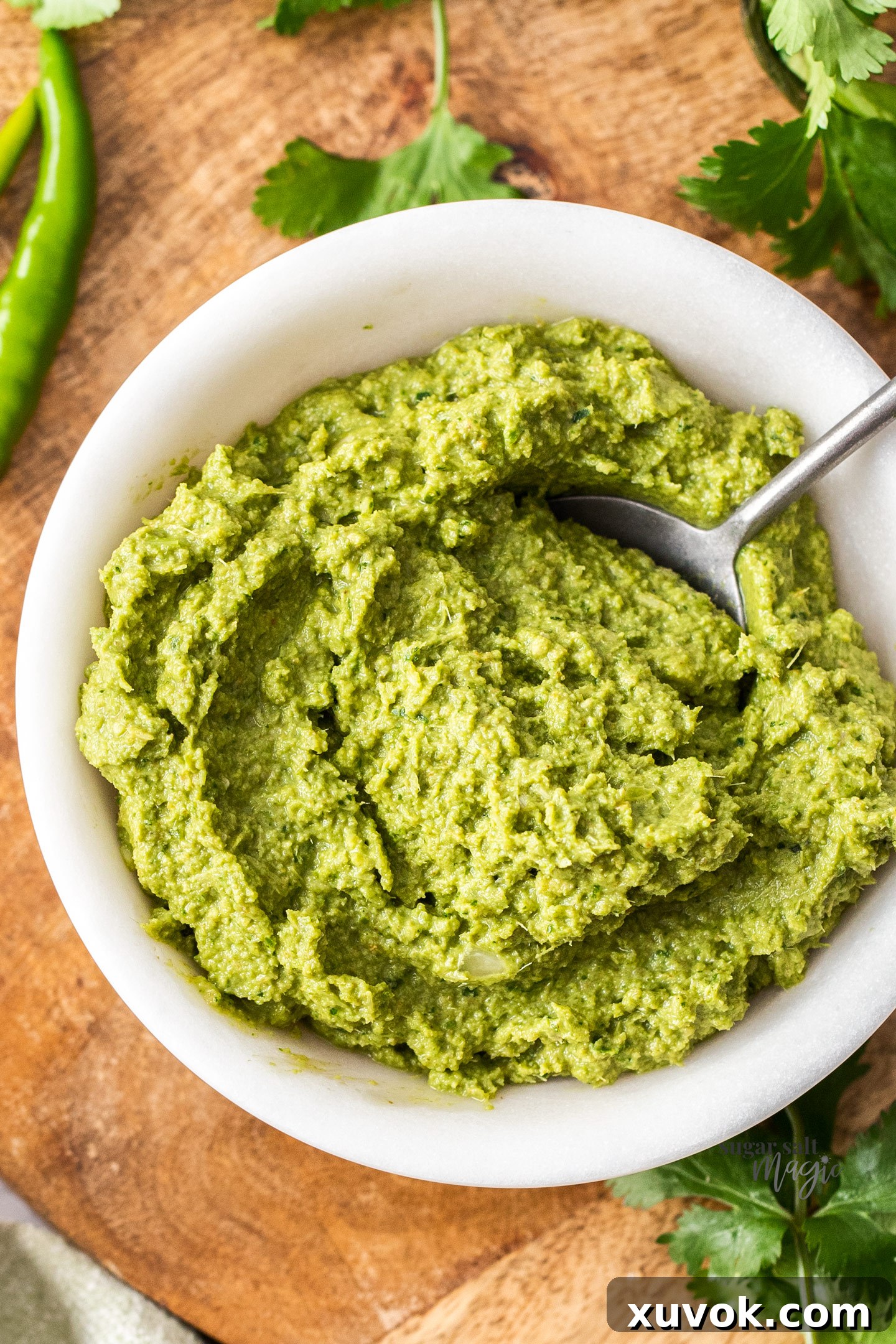
Unlocking Authentic Thai Flavors at Home: The Ultimate Guide to Homemade Green Curry Paste
There’s an undeniable magic to Thai cuisine, a vibrant symphony of sweet, sour, salty, and spicy notes that captivates palates worldwide. At the heart of many beloved Thai dishes lies a meticulously crafted curry paste, and none is perhaps as iconic as the Thai green curry paste. While convenient jars line supermarket shelves, creating your own homemade version is a culinary revelation. It’s simpler than you might imagine, incredibly rewarding, and offers an unparalleled depth of fresh, authentic flavor that truly elevates your cooking.
Imagine a paste so fragrant, so bursting with fresh herbs and spices, that it transforms an ordinary meal into an extraordinary culinary journey. This comprehensive guide will walk you through crafting your own authentic Thai green curry paste from scratch. You’ll discover how easy it is to achieve that perfect balance of heat and aroma, all while enjoying complete control over the ingredients. Plus, with the ability to freeze batches, you can effortlessly whip up a truly homemade Thai green curry whenever the craving strikes.
- Explosive Flavor & Authentic Heat: Experience the true taste of Thailand with a paste made from the freshest ingredients.
- Full Control: Customize the spice level and flavor profile to perfectly suit your preferences, something jarred pastes simply can’t offer.
- Make Ahead & Freeze: Prepare a large batch and store it, ensuring a quick and easy homemade Thai meal is always within reach.
- Versatile Culinary Base: More than just for curry, this paste is a foundational ingredient for a variety of delicious Thai dishes.
- No Preservatives or Artificial Flavors: Enjoy a healthier, all-natural option free from unnecessary additives.
My passion for Thai food led me to perfect my own Thai green chicken curry recipe, and a truly exceptional curry demands an equally exceptional paste. This fragrant, vibrant blend is the secret to creating comforting curries in a hurry, infusing your dishes with a freshness and complexity that no store-bought alternative can match. Get ready to embark on a flavorful adventure that will transform your kitchen into a Thai culinary haven.
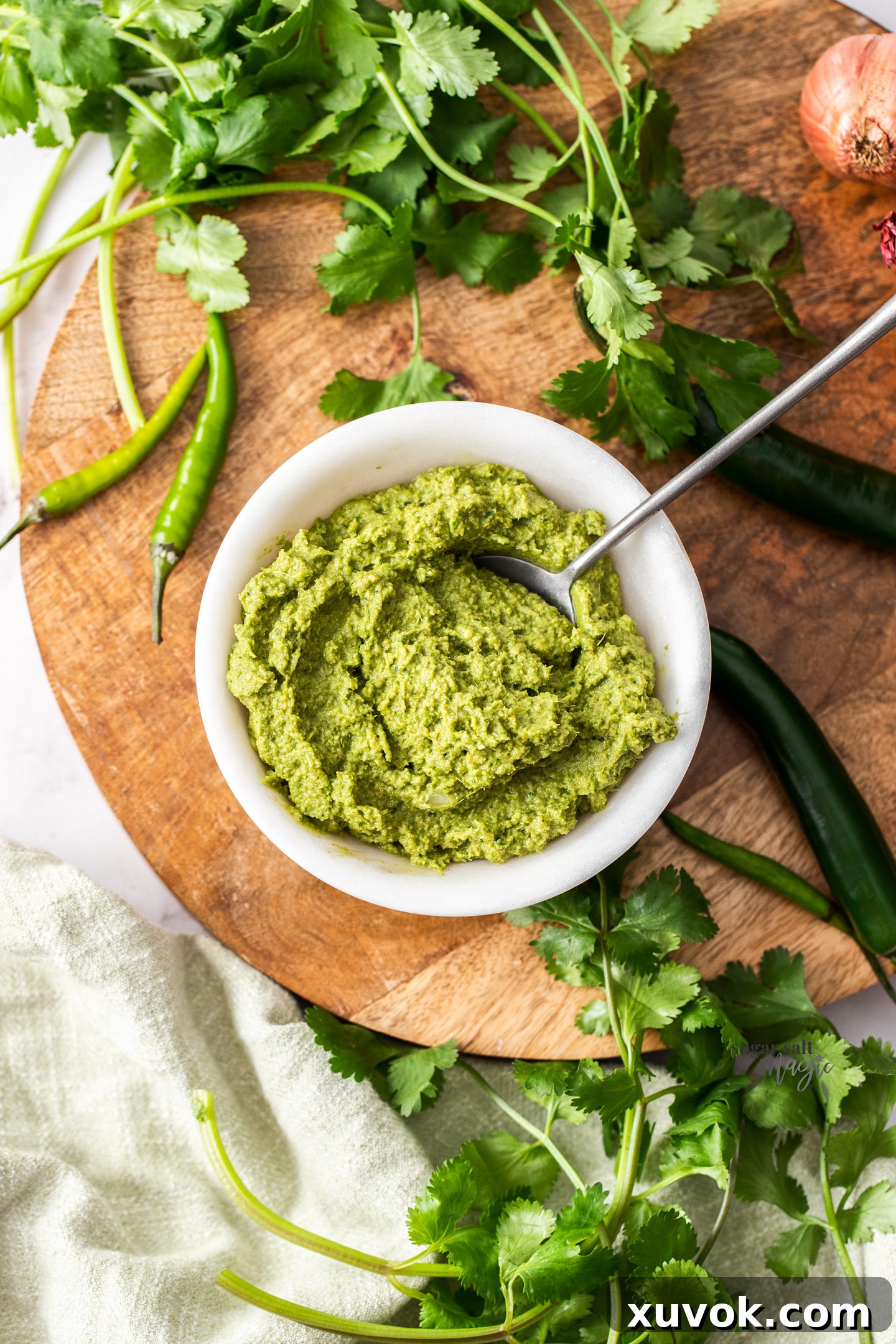
Table of Contents
- What is Thai Green Curry Paste?
- Why Make Your Own Green Curry Paste?
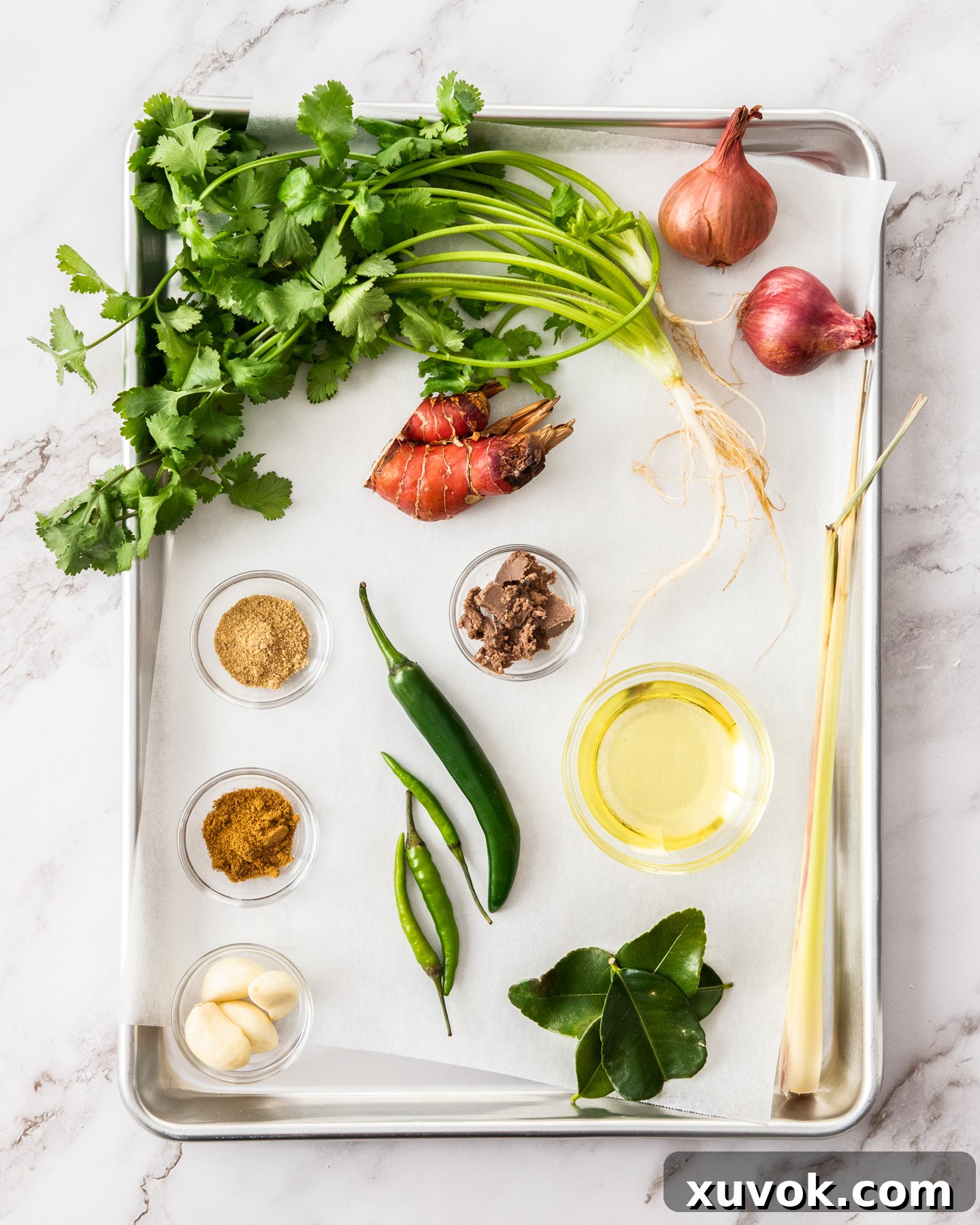
- Essential Ingredients for Authentic Thai Green Curry Paste
- Shallots and Garlic
- Spices: Coriander and Cumin
- Coriander (Cilantro): Roots and All
- Fragrant Lemongrass
- The Heat: Green Chillies
- Aromatic Makrut Lime Leaves
- Distinctive Galangal
- Umami-Rich Dried Shrimp Paste
- How to Make Thai Green Curry Paste (Step-by-Step)
- Creative Uses for Green Curry Paste
- Frequently Asked Questions (FAQs)
- Storage Tips and Yield
- Can You Freeze Curry Paste?
- More Thai-Inspired Recipes to Love
Never Miss a Recipe!
Get the latest recipes straight to your inbox and elevate your home cooking with our delicious creations.
Join our community for exclusive recipes and cooking tips: Subscribe Here
What is Thai Green Curry Paste?
Thai green curry paste, known in Thailand as prik gaeng keow wan, is the aromatic foundation of the universally loved Thai green curry. Originating from central Thailand, this vibrant paste is a masterful blend of fresh herbs, roots, and spices, characterized by its distinctive green hue and a powerful spicy kick. The verdant color primarily comes from the generous use of fresh green chillies and coriander (cilantro), setting it apart visually and flavor-wise from its red and yellow counterparts.
Beyond its color, the green curry paste boasts a complex flavor profile: intensely aromatic, herbaceous, subtly citrusy, and deeply savory. When combined with creamy coconut milk, it creates a rich, fragrant sauce that is both comforting and exhilarating. Understanding this paste is key to unlocking the authentic flavors of Thai cuisine, as it serves as a versatile base for a multitude of dishes, not just curries.
Why Make Your Own Green Curry Paste?
While jarred green curry pastes offer undeniable convenience, opting for a homemade version unlocks a world of flavor, freshness, and customization that simply cannot be replicated. Here are compelling reasons why making your own paste is a game-changer:
- Unrivaled Freshness: The most significant advantage of homemade paste is the vibrant freshness of its ingredients. Freshly pounded or blended herbs and spices release their essential oils and aromas much more intensely than those that have been processed and preserved in a jar. This translates directly to a more aromatic, flavorful, and authentic final dish.
- Complete Flavor Control: Store-bought pastes often contain added salt, sugar, or preservatives to extend shelf life and appeal to a broader market. Traditional Thai green curry paste contains neither, allowing you to add these elements to your final dish precisely to your taste. With homemade, you dictate the balance of sweet, sour, salty, and spicy, ensuring it perfectly aligns with your culinary vision.
- Adjustable Heat Levels: Craving a fiery kick or a milder warmth? When you make your own, you can easily adjust the quantity and type of chillies to achieve your preferred spice level. This flexibility is invaluable, especially for households with varying heat tolerances.
- Transparency in Ingredients: You know exactly what goes into your paste. No mysterious additives, artificial colors, or unpronounceable ingredients. This makes it ideal for those with dietary restrictions or simply anyone who prefers clean eating.
- Cost-Effectiveness (Long Term): While the initial purchase of fresh ingredients might seem like an investment, a large batch of homemade paste can be frozen and used over several months, often proving more economical than continuously buying smaller jars of commercial paste.
Many popular jarred brands, like Ayam, can lean sweet, while others, such as Maesri, might be noticeably salty. By crafting your own paste, you reclaim control over these crucial flavor elements, ensuring a truly authentic and balanced base for your Thai culinary creations.
The journey begins with gathering your ingredients. Many are readily available in major supermarkets, but a visit to your local Asian grocery store will guarantee you find everything you need in one place, often at peak freshness. Once your ingredients are assembled, all you need is a reliable blender and about 15 minutes to create this incredible homemade paste.
Essential Ingredients for Authentic Thai Green Curry Paste
Crafting the perfect Thai green curry paste relies on a specific blend of fresh, aromatic ingredients. Each component plays a vital role in creating that signature complex flavor. Let’s explore the key players:
Shallots and Garlic
- Shallots: Traditionally, smaller Asian shallots are used, similar to French shallots. These provide a delicate sweetness and mild onion flavor, forming a crucial aromatic base. If Asian shallots are hard to find, French shallots are an excellent substitute.
- Garlic: A universal flavor enhancer, garlic contributes its robust, pungent, and slightly sweet notes, deepening the overall savory profile of the paste.
Spices: Ground Coriander and Ground Cumin
- Ground Coriander and Ground Cumin: Authentically, coriander seeds and cumin seeds would be toasted whole to release their essential oils, then laboriously pounded into the paste using a mortar and pestle. For convenience without sacrificing much flavor, high-quality dried, pre-ground versions are excellent. Just ensure your spices are fresh, as they lose potency quickly once ground. These spices add an earthy warmth and subtle complexity.
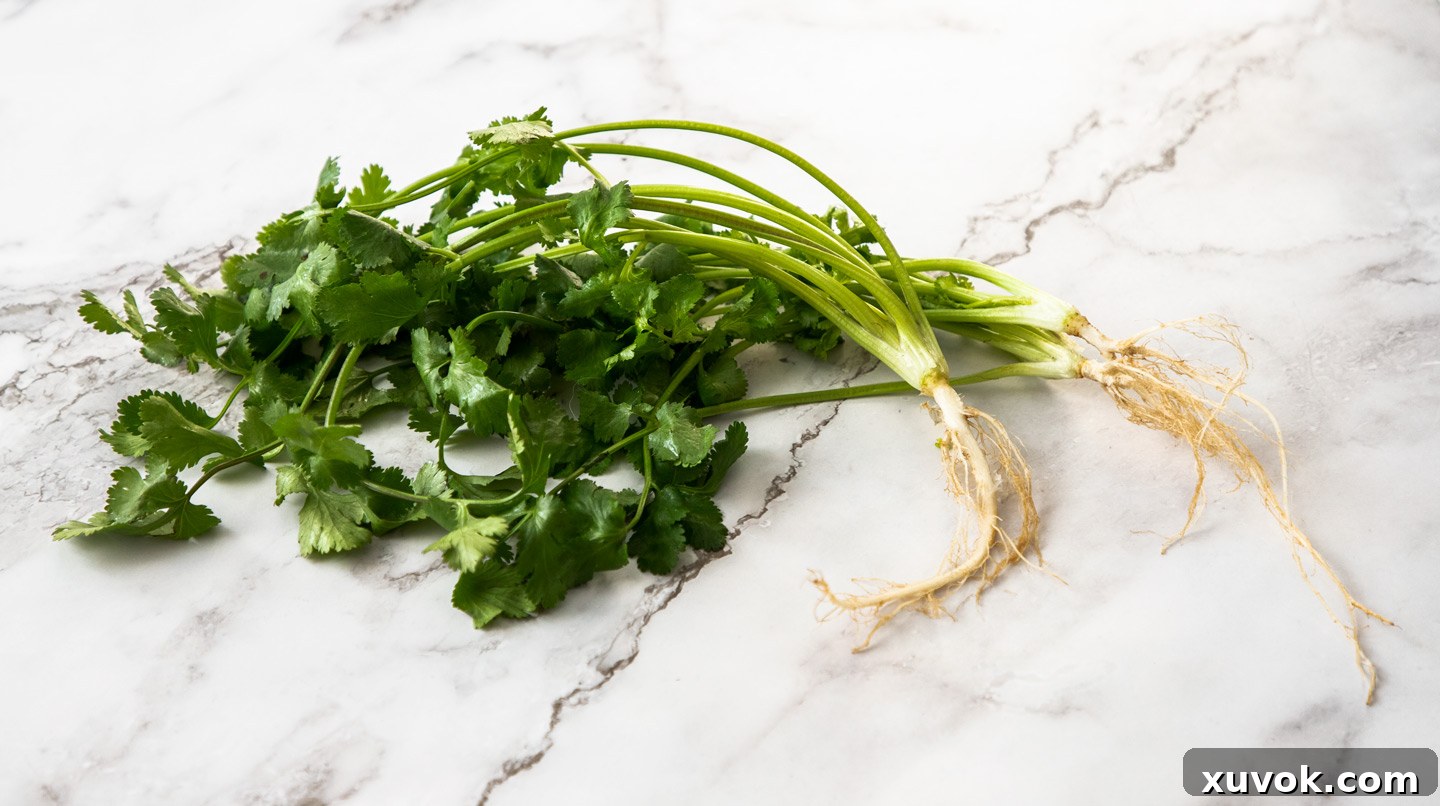
I’ve included images for the remaining, potentially less familiar, ingredients to help you identify them at the store.
-
Coriander (Cilantro): Roots and All
Most people are familiar with coriander leaves, but for an authentic Thai green curry paste, the entire herb—roots included—is essential. The roots possess an incredibly intense, peppery, and earthy flavor that is vital to the paste’s character. Don’t discard them; simply wash them thoroughly to remove any soil and add them to your blend. They contribute a depth of flavor that leaves alone cannot provide.
-
Fragrant Lemongrass
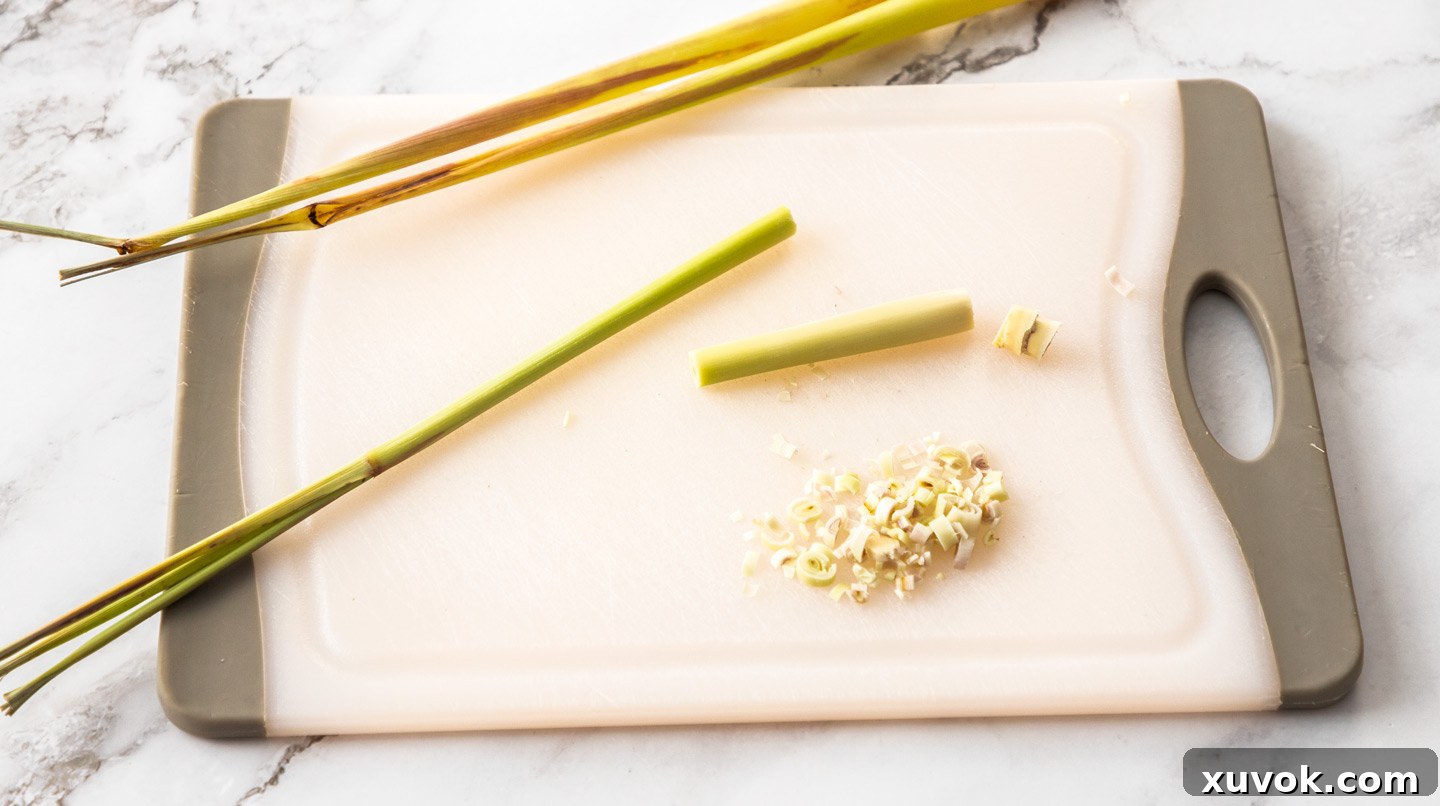
Lemongrass stalks impart a phenomenal, bright, and citrusy aroma with distinct floral undertones, making it a hallmark ingredient in Thai cuisine. For the paste, you’ll need to peel away the tough outer layers to reveal the pale, tender white portion of the stalk (the bottom 8-10cm). This part is quite fibrous, so it’s crucial to chop it finely before blending. The upper, green section of the stalk can be saved and frozen; it’s perfect for infusing flavor into Asian-style soups, broths, or even added to rice during cooking for a subtle fragrance.
-
The Heat: Green Chillies
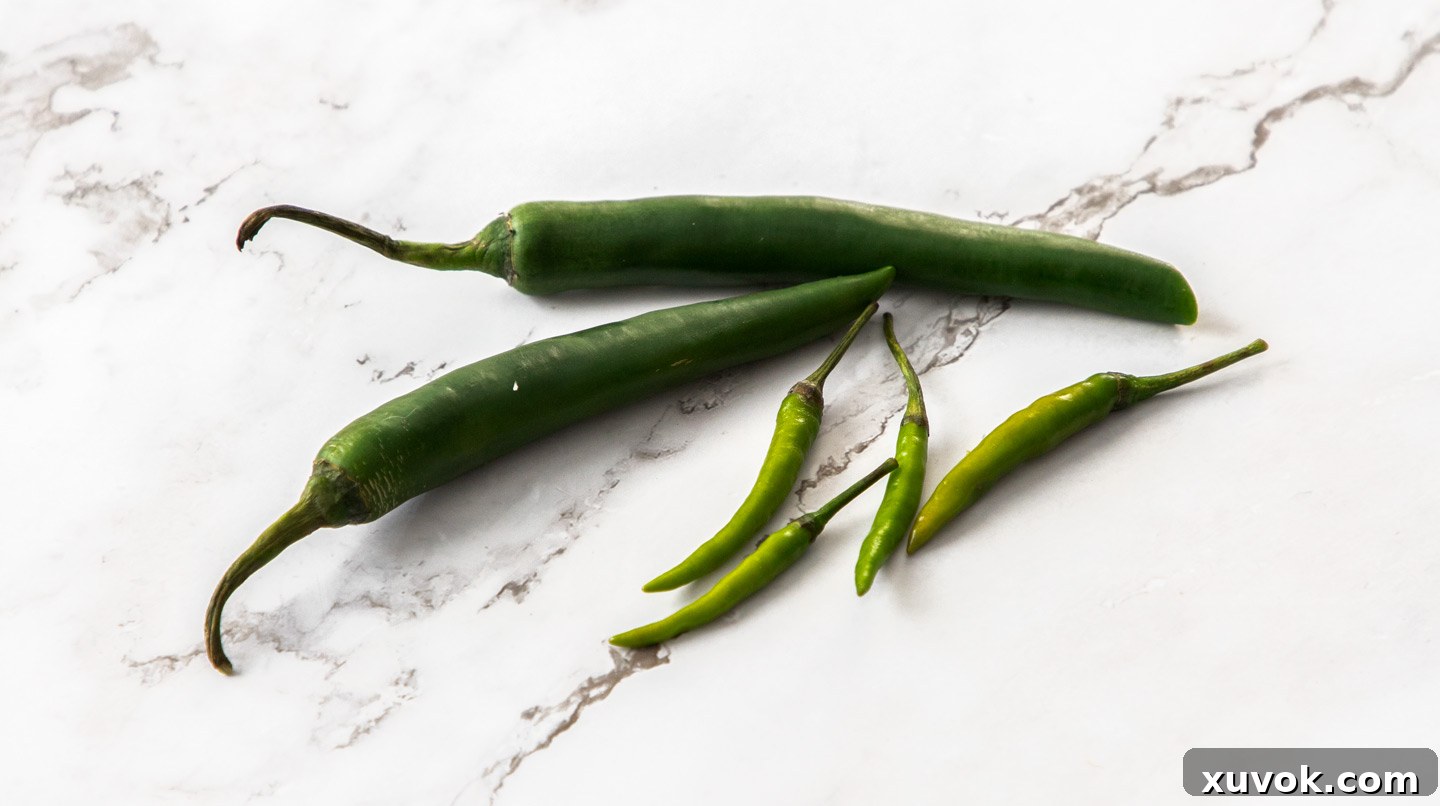
Green chillies are fundamental to both the color and the characteristic heat of Thai green curry paste.
- Hot Thai Green Chillies (Bird’s Eye Chillies): These small, potent chillies are miniature in size but pack a serious punch. They are the primary source of intense heat in the paste. Adjust their quantity to control your desired spice level.
- Long Green Chillies: Larger and typically milder than their smaller counterparts, long green chillies contribute more to the paste’s vibrant green color and a nuanced flavor, alongside a touch of additional heat.
This recipe wisely combines both types to achieve a balanced flavor, color, and controllable heat. Remember to remove the seeds if you prefer a milder paste, as most of the heat resides there.
-
Aromatic Makrut Lime Leaves
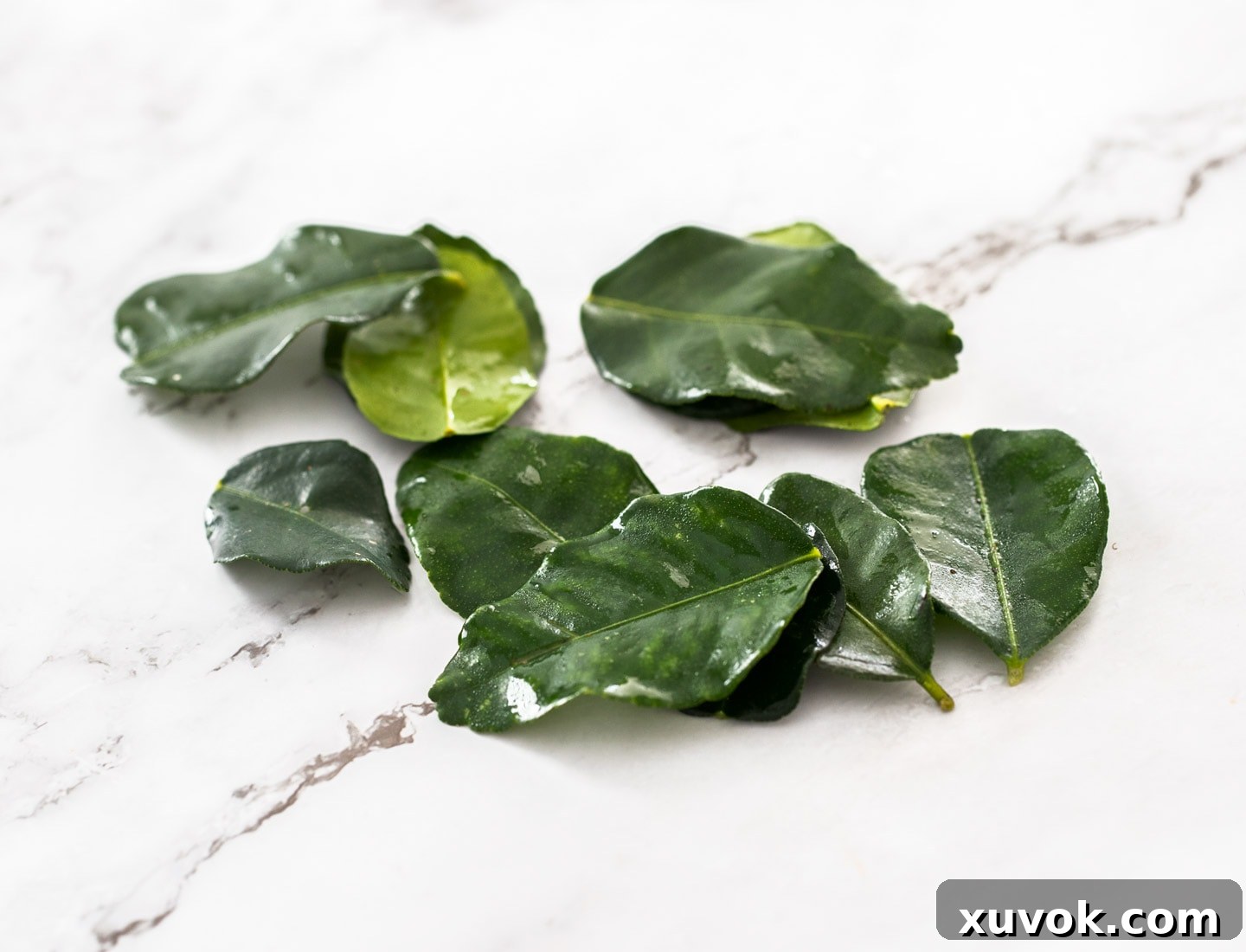
Also widely known as Kaffir lime leaves, Makrut lime leaves are an indispensable ingredient, lending a distinct, highly aromatic, and intensely citrusy fragrance that is uniquely Thai. They are always a part of an authentic Thai green curry paste. When measuring, note that these leaves can vary in size; to ensure consistency, roughly chop the leaves and measure them to fill one tablespoon without packing them too tightly. Their bright, zesty notes are irreplaceable.
-
Distinctive Galangal
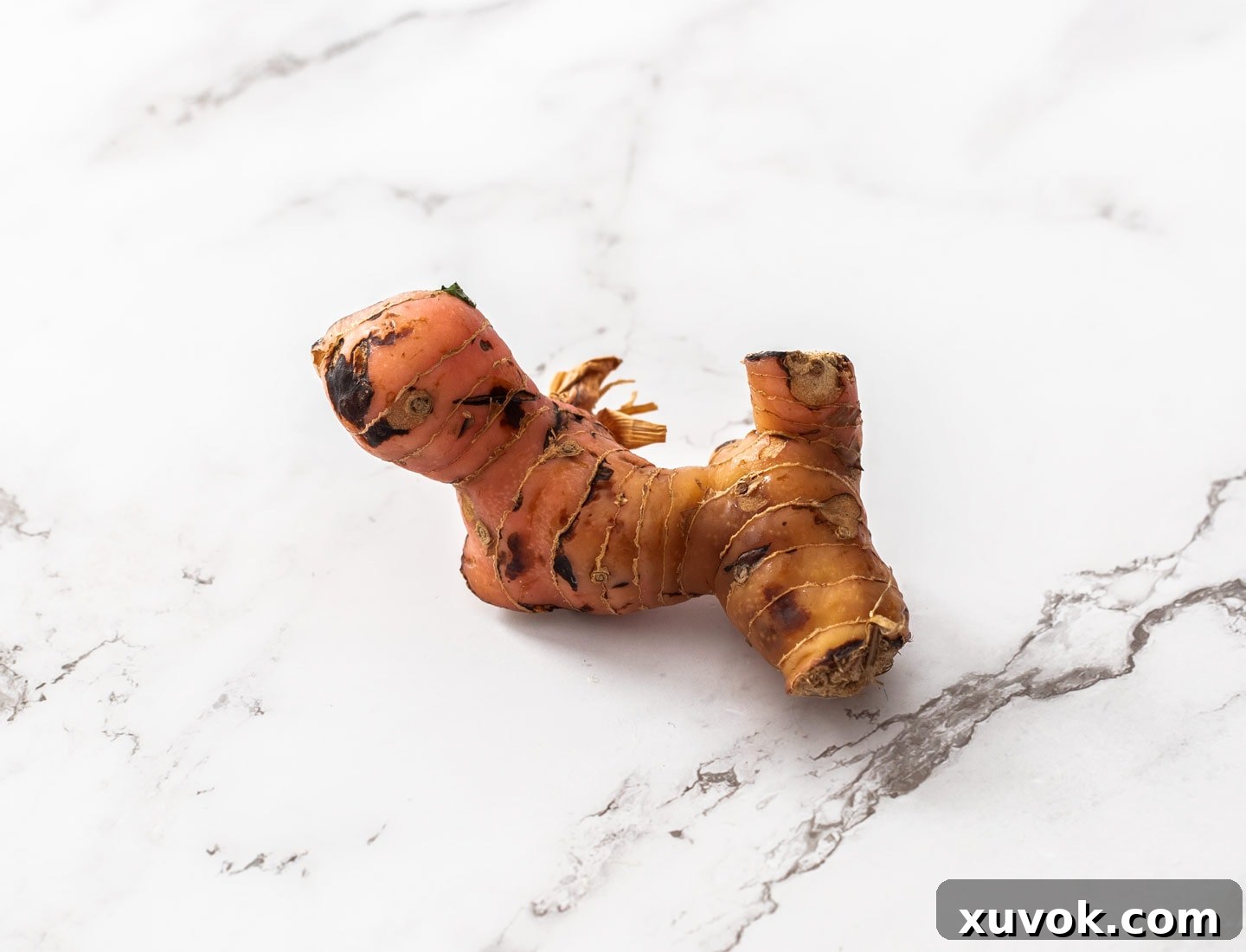
This fragrant root, a cousin to ginger, is visually similar but possesses a unique flavor profile: simultaneously more citrusy, floral, and slightly piney than ginger, with a subtle sweetness and bitterness. It’s often distinguishable by its pale pinkish hue. Galangal is crucial for the authentic taste of Thai green curry. If you absolutely cannot find it, a decent substitute can be made by combining ginger with a touch more lemongrass and a squeeze of fresh lime juice, though the flavor won’t be identical.
-
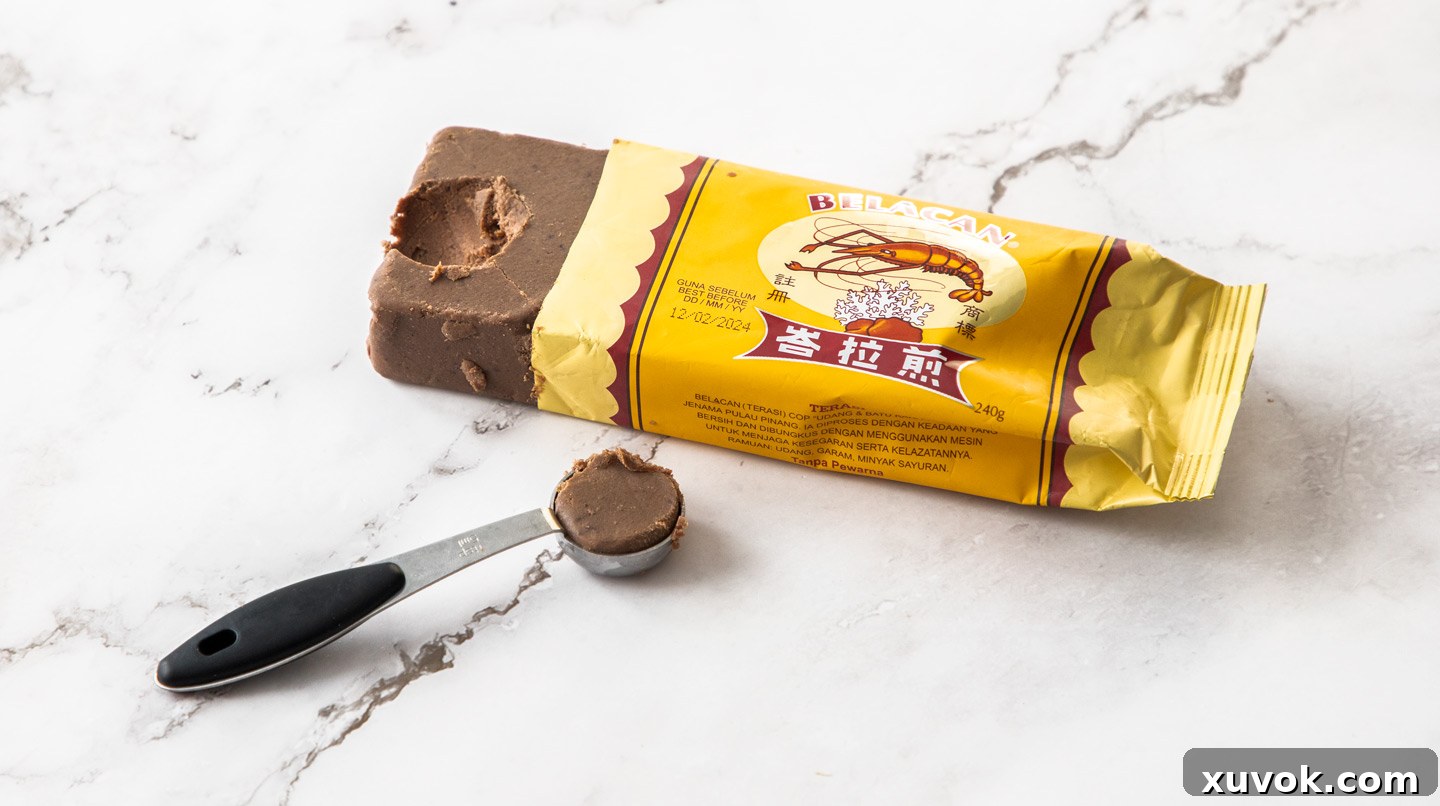
Umami-Rich Dried Shrimp Paste (Belachan / Belacan)
This ingredient is the secret to the profound savory depth and umami richness in Thai curries. Dried shrimp paste, also known as Belachan or Belacan, is a fermented, salted shrimp product typically found in a dense, block-like form. While its raw smell can be quite pungent (much like fish sauce, which some find off-putting), its flavor transforms dramatically during cooking, adding an indispensable layer of savory complexity without a strong ‘shrimp’ taste. It often comes pre-roasted, eliminating the need for pre-cooking before blending. Do not omit this ingredient if you seek authentic flavor; it contributes significantly to the paste’s character. If absolutely unavailable, a teaspoon of fish sauce can be used as a last resort substitute for a touch of umami, but it won’t fully replicate the depth of shrimp paste. You can often find high-quality dried shrimp paste in Asian grocery stores or online.
As highlighted, most of these specialized ingredients are becoming increasingly available in well-stocked major supermarkets. However, for the best selection and freshest quality, your local Asian grocery store remains an invaluable resource. For a deeper dive into these and other essential components of Thai cooking, explore my detailed guide on essential Thai ingredients.
How to Make Thai Green Curry Paste (Step-by-Step)
Once you’ve gathered all your fresh, aromatic ingredients, the process of making homemade Thai green curry paste is remarkably straightforward. Forget about hours of tedious work; with the right tools, you’ll have a vibrant, fragrant paste in no time.
Essential Tools: Aside from a sharp chef’s knife and a sturdy chopping board for preparation, the star of the show is a powerful blender or food processor. Given that green curry paste contains several fibrous and woody ingredients (like lemongrass and galangal), a robust machine is crucial to achieve the desired smooth, fine consistency. While traditionally made with a mortar and pestle, a modern blender offers significant time and effort savings.
The Simple Process:
- Preparation: Begin by thoroughly washing all your herbs and roots. Pay special attention to the coriander roots, scrubbing them well to remove any soil. Roughly chop all ingredients as specified in the recipe card – this helps your blender break them down more efficiently.
- Combine: Place all the prepared ingredients – chopped coriander (roots and all), shallots, lemongrass, green chillies, makrut lime leaves, galangal, garlic, dried shrimp paste, ground coriander, ground cumin, and the peanut or vegetable oil – into your high-speed blender or food processor.
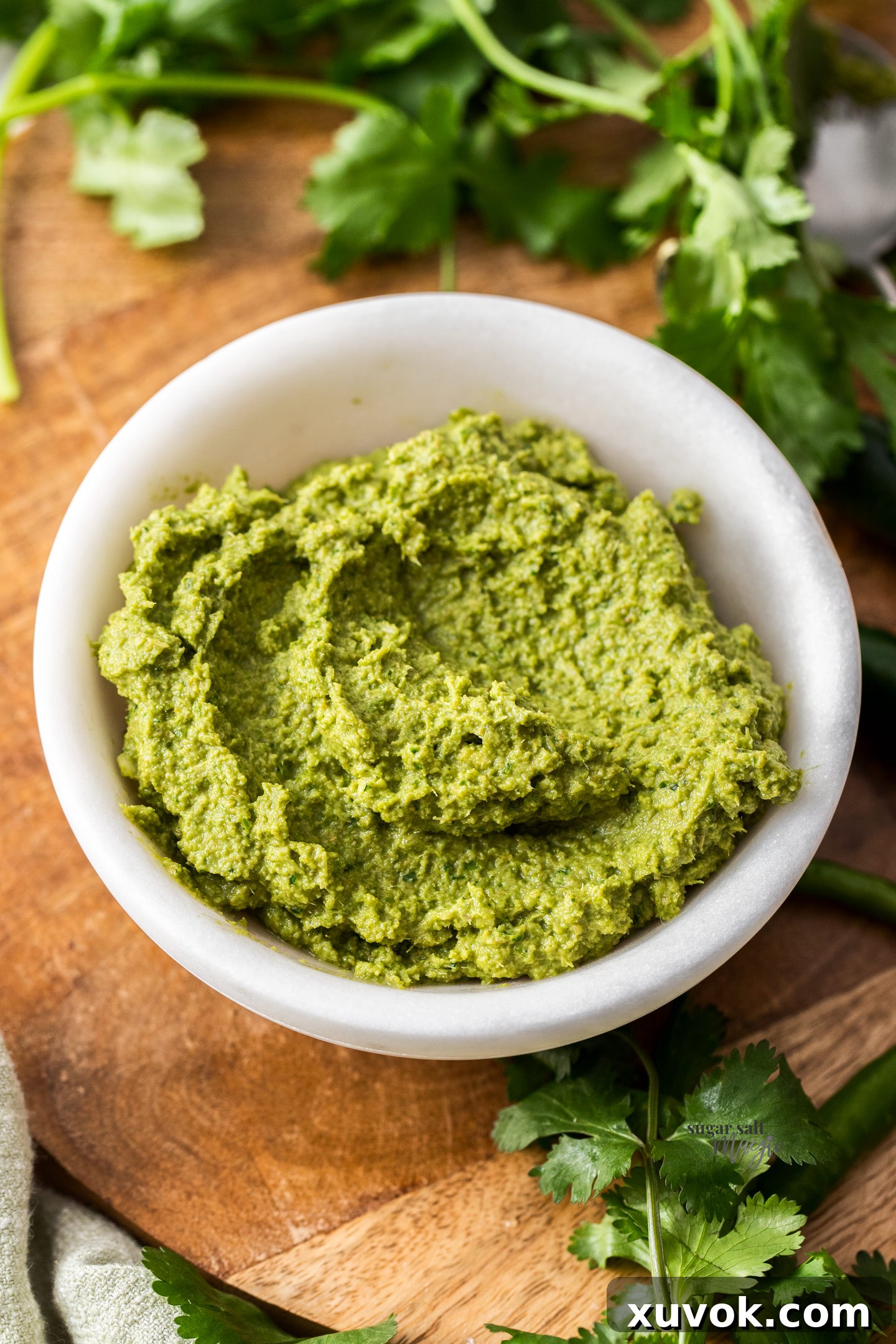
- Blend to Perfection: Secure the lid and begin to blend. You may need to start with short pulses to break down the larger pieces. Periodically stop the blender, remove the jug, and use a spatula to scrape down the sides, ensuring all ingredients are incorporated and processing evenly. Continue blending until you achieve a smooth, homogenous paste. This might take 5-7 minutes, depending on the power of your appliance. The goal is to eliminate any large, fibrous chunks.
For those who enjoy a traditional approach and have the time, a mortar and pestle will produce an incredibly fine paste by gradually grinding each ingredient. However, be prepared for a significant arm workout!
Creative Uses for Green Curry Paste
While Thai green curry is the most obvious and beloved application, your homemade green curry paste is a remarkably versatile ingredient that can infuse a taste of Thailand into countless dishes. Its complex, aromatic, and spicy profile makes it a secret weapon in the kitchen.
Beyond the Classic Curry:
- Stir-fries: Add a teaspoon or two to your favorite stir-fry base for an instant flavor boost. It pairs wonderfully with chicken, shrimp, or tofu and a medley of vegetables.
- Marinades and Rubs: Use it as a marinade for grilled chicken, pork, or seafood. Combine it with a little coconut milk or yogurt for a tenderizing and flavorful rub that will caramelize beautifully.
- Soups and Broths: Swirl a small amount into clear broths or creamy coconut-based soups for an aromatic depth. It’s fantastic in noodle soups or even a simple vegetable broth.
- Rice Dishes: Transform plain rice into an exotic side dish by stirring a tablespoon of paste into the cooking liquid. Or, try my Thai green curry fried rice for a complete meal.
- Appetizers: My Thai fish cakes wouldn’t be the same without this vibrant paste. It’s also excellent in spring roll fillings or added to mini quiches for an Asian twist.
- Dressings and Dips: Whisk a tiny bit into salad dressings for an unexpected spicy and herbaceous kick. It can also be incorporated into mayonnaise or a yogurt dip for crudités.
- Roasted Vegetables: Toss vegetables like cauliflower, broccoli, or sweet potatoes with a little paste and oil before roasting for a flavorful and aromatic side dish.
Experiment with this dynamic paste, and you’ll discover endless ways to add a unique Thai flair to your everyday cooking.
Frequently Asked Questions (FAQs)
Yes, this homemade Thai green curry paste recipe is naturally gluten-free, as all its core ingredients are free from gluten. Always double-check labels of any pre-ground spices or shrimp paste if you have severe gluten sensitivities.
No, traditional Thai green curry paste, including this homemade version, is not vegan or vegetarian due to the inclusion of dried shrimp paste. For a vegan or vegetarian alternative, you can substitute the shrimp paste with a high-quality fermented miso paste or a fermented soy bean paste to achieve a similar umami depth. Ensure all other ingredients, like fish sauce if used as a substitute for shrimp paste, are also omitted for a fully plant-based version.
The spice level of your homemade Thai green curry paste is entirely customizable! This recipe provides a balanced heat, but you can increase or decrease the number of hot Thai green chillies (bird’s eye chillies) to suit your preference. Always start with a conservative amount and taste-test a tiny bit of the paste before cooking, then adjust by adding more chillies if you prefer more heat.
Storage Tips and Yield
This recipe yields approximately ⅔ cup of fresh, vibrant Thai green curry paste, which is enough for several delicious meals. Proper storage ensures its freshness and flavor last, making it a convenient staple in your kitchen.
Refrigeration: Freshly made paste can be stored in an airtight container in the refrigerator for up to 3-4 days. Ensure it’s tightly sealed to maintain its aroma and prevent it from absorbing other odors.
Can You Freeze Curry Paste?
Absolutely! Freezing is an excellent way to extend the shelf life of your homemade green curry paste, allowing you to have authentic Thai flavors on hand whenever you need them. It’s incredibly convenient for meal prep.
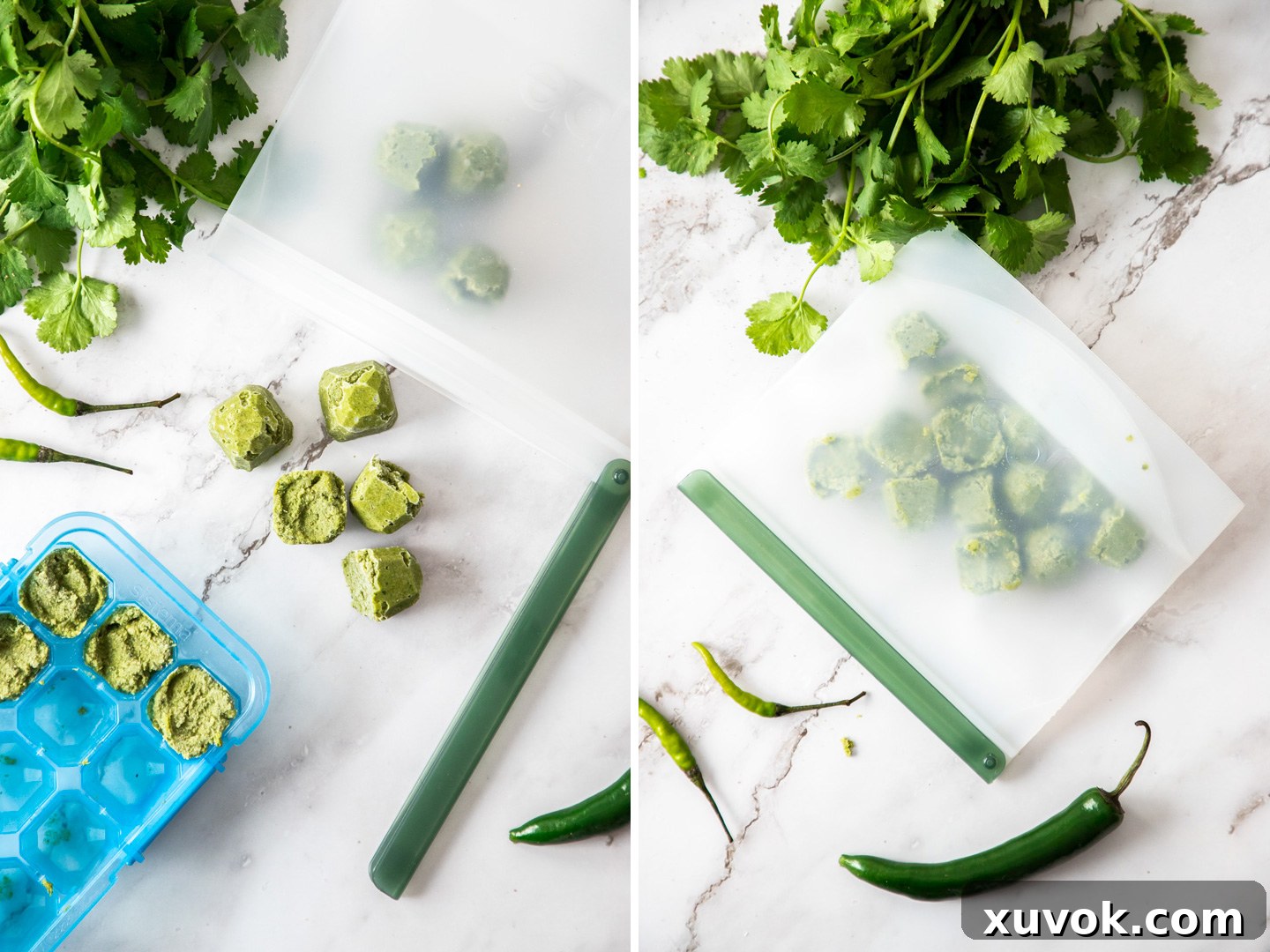
Freezing Method: The easiest and most efficient way to freeze the paste is by portioning it into ice cube trays. Once the paste cubes are solid (this usually takes a few hours), transfer them to an airtight freezer-safe container or a resealable freezer bag. This prevents freezer burn and makes it easy to grab individual portions. Frozen paste can be stored for up to 2-3 months without significant loss of flavor. I highly recommend using reusable silicone bags for this purpose, like these Joie Silicone Bags on Amazon, or checking your local stores like Aldi when they have similar items on sale.
When ready to use, simply drop a frozen cube directly into your hot pan with a little oil to bloom, or let it thaw in the refrigerator for a few hours. This makes preparing a quick, delicious Thai meal incredibly simple!
More Thai-Inspired Recipes to Love
Once you’ve mastered this essential Thai green curry paste, you’ll be well-equipped to explore a myriad of other delightful Thai and Asian-inspired dishes. Here are some fantastic recipes that will allow your culinary journey to continue:
- Thai Green Chicken Curry: The quintessential dish to showcase your freshly made paste.
- Thai Green Curry Fried Rice: A flavorful twist on a classic, perfect for a quick and satisfying meal.
- Thai Fish Cakes: Spiced with green curry paste, these are irresistible appetizers or a light meal.
- Thai Satay Chicken: Explore another popular Thai flavor profile with this delightful dish.
- Thai Panang Curry with Prawns: Dive into the richer, milder cousin of green curry.
- Lime and Coconut Chicken: A lighter, brighter dish that perfectly complements the zesty notes of Thai cuisine.
- Prawn Fried Rice: While not strictly Thai, this Chinese-inspired dish shares the vibrant, quick-cooking spirit.
Keep experimenting and enjoy the incredible flavors you can create right in your own kitchen!
Did you try this homemade Thai green curry paste recipe?
We’d love to hear from you! Leaving a rating and comment below the recipe is incredibly helpful and appreciated.
Hungry for more culinary inspiration? Subscribe to our newsletter for free recipes and cooking tips delivered straight to your inbox. Also, connect with us and share your creations on Facebook, Pinterest and Instagram.
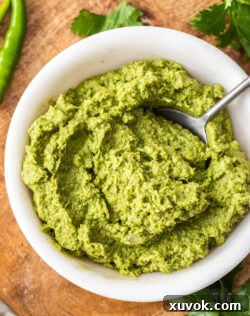
Thai Green Curry Paste Recipe
8 servings
15 minutes
0 minutes
15 minutes
Rate Recipe
Pin Recipe
Ingredients
- 2 bunches coriander (cilantro), with their roots (roughly 1 cup)
- 1 extra coriander (cilantro) root
- 3 Asian or small French shallots (1/3 cup roughly chopped)
- 2 stalks lemongrass (bottom 8-10cm only), roughly chopped
- 3 hot Thai green chillies, seeds removed (2 teaspoons roughly chopped or more to taste)
- 1 long green chilli, seeds removed
- 3 finely chopped makrut lime leaves (kaffir lime leaves), finely sliced (1 tablespoon finely sliced, NOT packed)
- 1 inch square piece galangal, roughly peeled then finely chopped
- 4 cloves garlic, peeled
- 2 teaspoons dried shrimp paste
- 1 teaspoon ground coriander
- 1 teaspoon ground cumin
- 2 tablespoon peanut oil or vegetable oil
For best results, always weigh ingredients where a weight is provided.
Instructions
- Prepare Coriander: Wash the coriander thoroughly, paying special attention to scrubbing the roots clean to remove any dirt. Roughly chop the entire plant (leaves, stems, and roots) and place it into a powerful blender or food processor.
- Add Remaining Ingredients: To the blender, add the roughly chopped shallots, lemongrass, hot Thai green chillies, long green chilli, finely sliced makrut lime leaves, finely chopped galangal, peeled garlic cloves, dried shrimp paste, ground coriander, ground cumin, and peanut or vegetable oil.
- Blend to a Paste: Secure the lid and blend until a smooth, homogenous paste forms. This process may take 5-7 minutes. You will likely need to stop the blender periodically, open it, and scrape down the sides with a spatula to ensure all ingredients are evenly processed and no fibrous chunks remain. Continue blending until the desired smooth consistency is achieved.
- Store: Transfer the fresh paste to an airtight container. Store in the refrigerator for 3-4 days. For longer storage, freeze the paste in ice cube trays. Once solid, transfer the cubes to an airtight freezer-safe container or bag. Frozen paste can be stored for up to 2-3 months.
Notes
- Blender vs. Mortar & Pestle: A powerful blender is recommended for efficiency. If using a mortar and pestle for a truly traditional texture, add ingredients one at a time, starting with the toughest roots and working towards softer herbs, grinding each thoroughly before adding the next.
- Thai Green Chillies: The small Thai green chillies (bird’s eye) are very hot. Adjust the quantity to your preferred spice level. If you desire less heat, remove more seeds or use fewer hot chillies. You might find these specific chillies at Asian grocery stores.
- Makrut Lime Leaves: Also known as Kaffir lime leaves, these are available in many larger supermarkets or Asian markets. They provide a unique citrusy aroma.
- Galangal: This root, related to ginger but with a distinct citrusy, piney, and slightly bitter flavor, is essential for authenticity. If unavailable, use ginger and add the zest of one lime for a similar aromatic profile.
- Dried Shrimp Paste: Ensure you use dried shrimp paste (Belachan/Belacan), typically a firm block, not a jarred wet paste. It’s a key umami ingredient. If you cannot find it, a teaspoon of good quality fish sauce can be used as a last resort, though the flavor will differ.
- Oil Usage: Use only the specified amount of oil. Adding too much oil to facilitate blending can result in a greasy paste. Scrape down the blender sides frequently to help the ingredients combine without excess liquid.
- Blooming the Paste: For most recipes, it’s best to ‘bloom’ the paste by frying it gently in a little oil for 1-2 minutes before adding other liquids or ingredients. This process releases and intensifies its full aromatic potential.
- Yield: This recipe makes approximately ⅔ cup of green curry paste, sufficient for several cooking sessions.
54 kcal
Marie Roffey
Condiment, Dinner
Thai