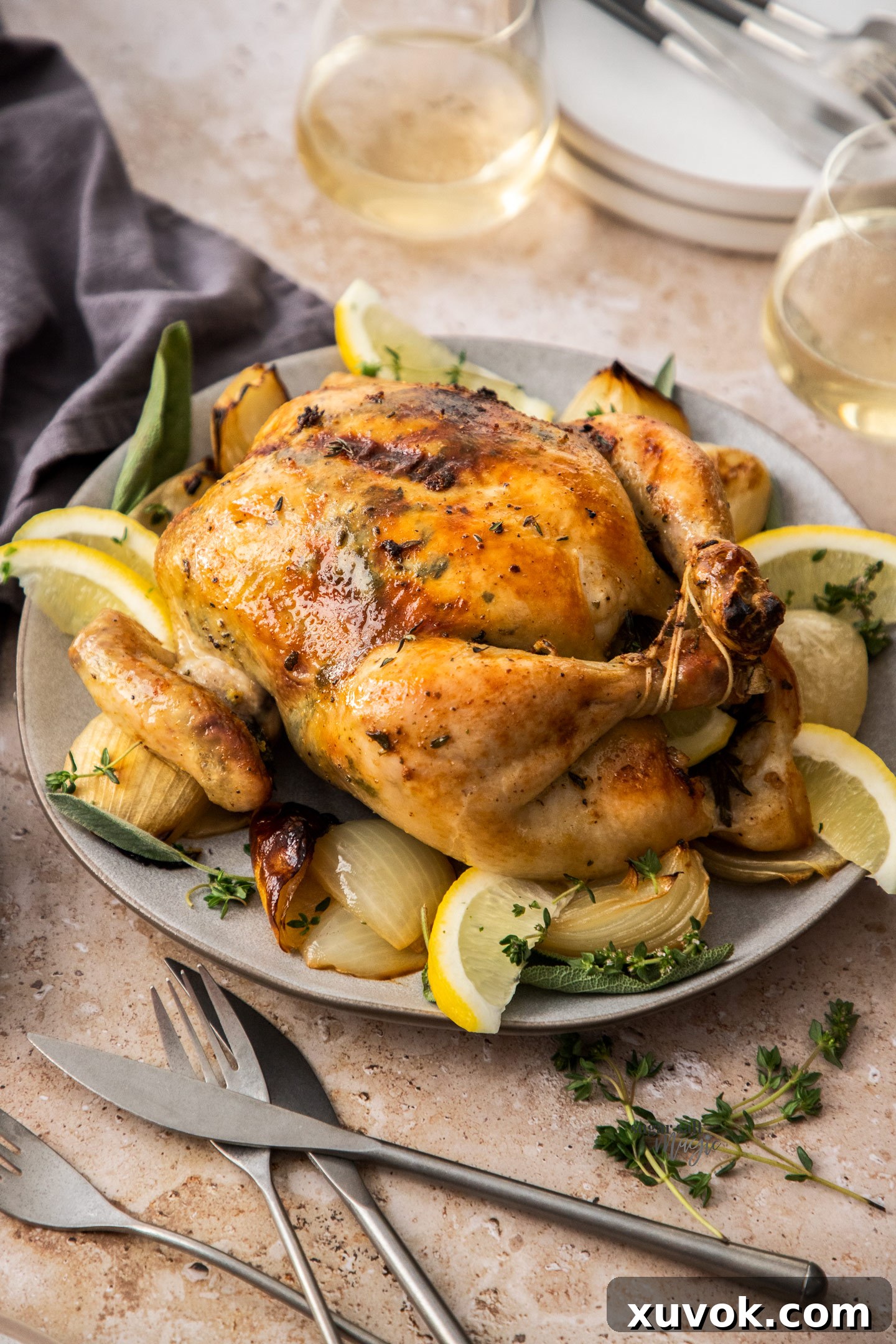
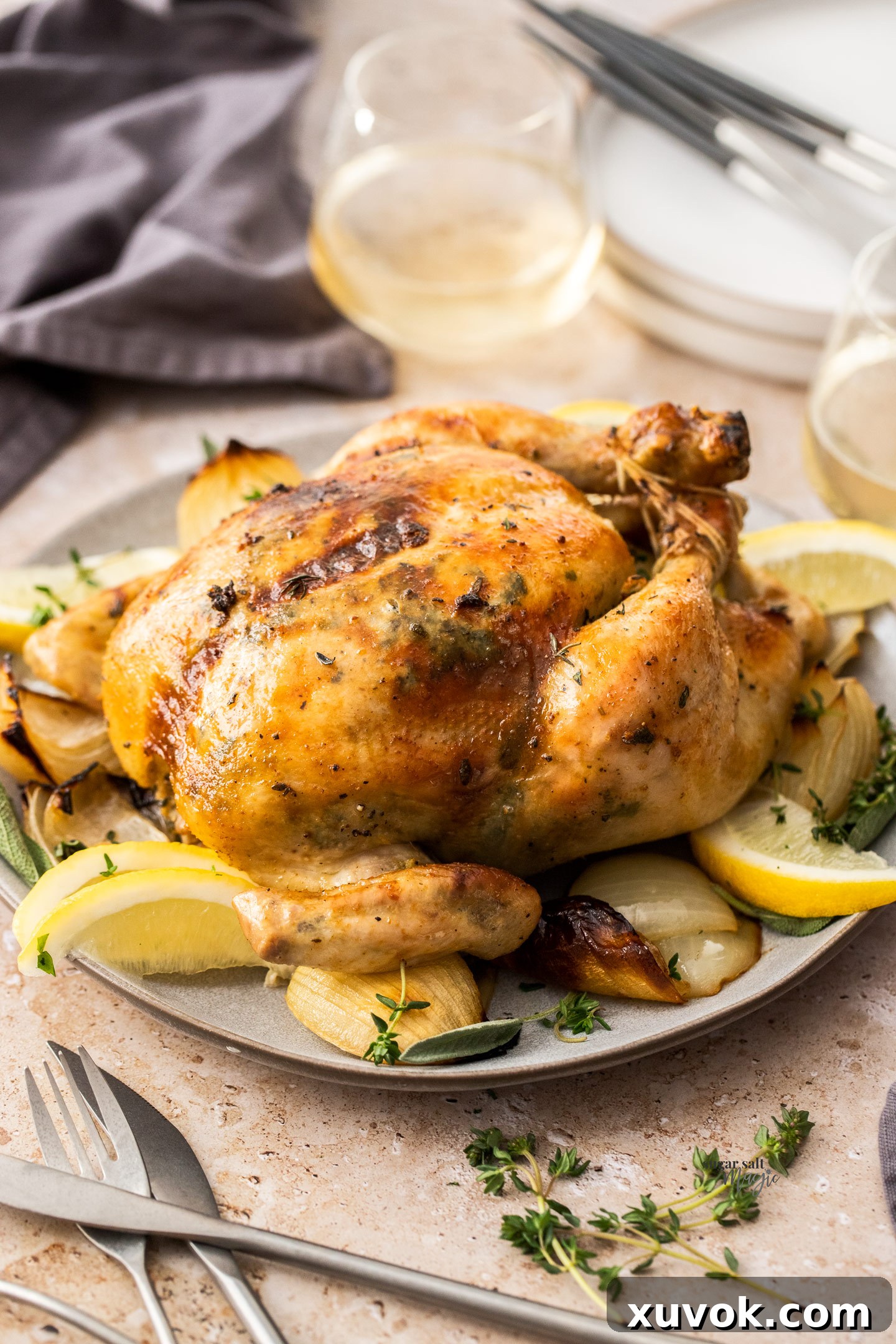
Imagine the irresistible aroma filling your kitchen, the anticipation building as a perfectly golden-brown bird emerges from the oven. When you crave truly unforgettable flavor paired with sumptuously juicy meat and irresistibly crispy skin, this herb roasted chicken recipe is the culinary masterpiece you’ve been searching for. It’s more than just a meal; it’s an experience that promises comfort, warmth, and pure satisfaction with every bite.
- Succulent, Tender Meat: Achieved through careful preparation and ideal roasting temperatures.
- Golden Crispy Skin: The hallmark of a truly great roast chicken, promising a delightful crunch.
- Perfectly Seasoned: A harmonious blend of fresh herbs, garlic, and butter for maximum, aromatic flavor.
Roasting a whole chicken at home has never been easier or more delicious than with my detailed recipe for flavorful, juicy, and tender herbed roasted chicken. I’ve distilled years of cooking knowledge into a set of straightforward tips and techniques, ensuring that even a novice cook can achieve spectacular results. From selecting the right bird to mastering the two-temperature roasting method, every step is designed to guide you towards poultry perfection. Plus, with a solid understanding of the basics, you’ll feel confident enough to experiment with your own unique combination of herbs and spices, truly making this recipe your own.
If you savor the rich flavors of a beautifully roasted meal, you’ll also adore my crispy roasted pork belly. And for those who love the convenience and speed of modern cooking, don’t miss this unbeatable air fryer roast chicken, offering similar incredible results with less time.
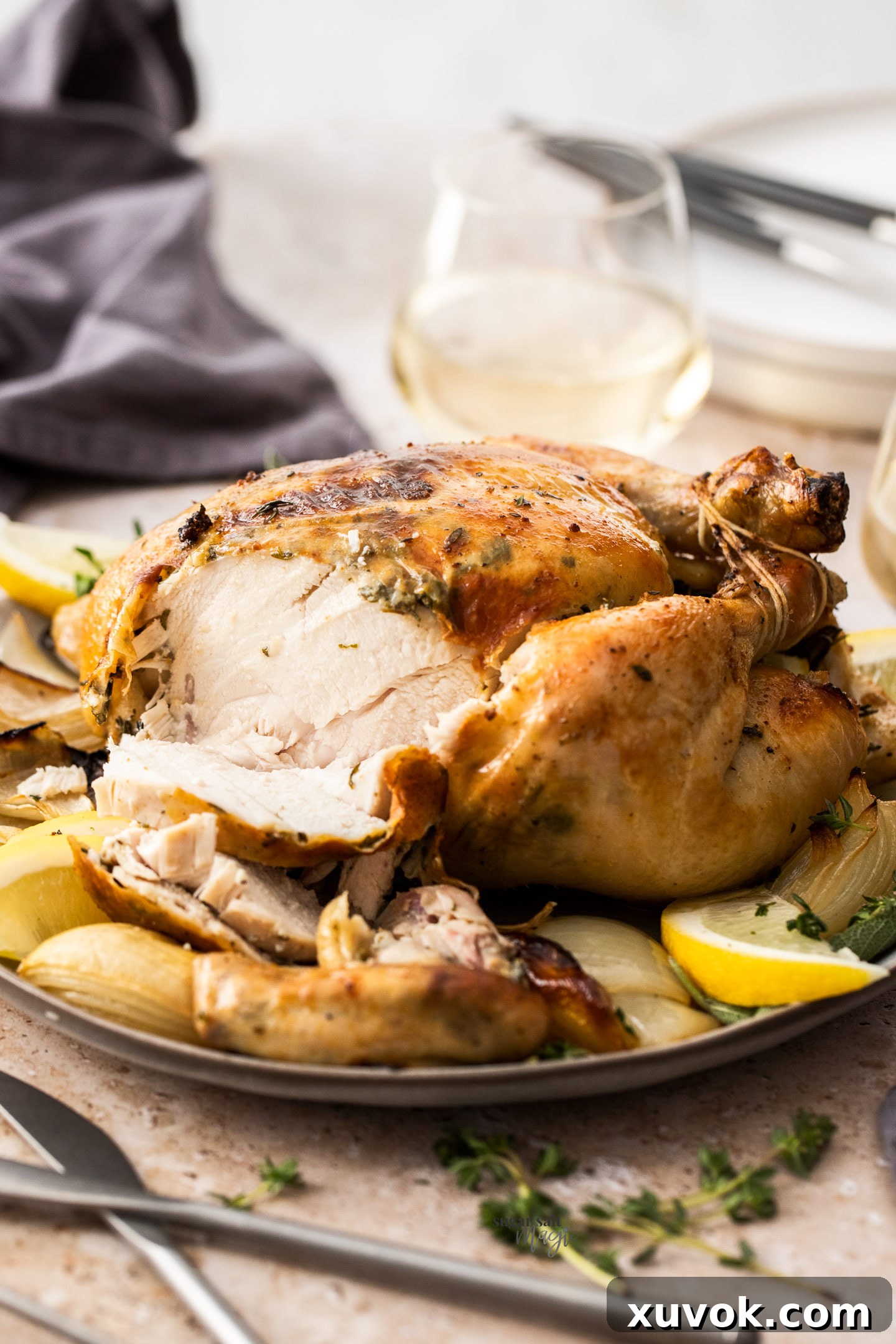
Table of Contents
- Essential Ingredients for Your Herb Roasted Chicken
- How to Roast a Chicken: A Step-by-Step Guide
- What is the Best Temperature to Roast a Chicken?
- Should You Roast a Chicken Covered or Uncovered?
- Expert Tips for Foolproof Roast Chicken Every Time
- Exploring More Flavor Variations
- What to Serve with Your Perfect Roast Chicken
- Creative Ways to Use Leftover Roast Chicken
- More Delicious Recipes You’ll Love
Never Miss a Recipe!
Get the freshest, most delicious recipes straight to your inbox and elevate your home cooking!
Essential Ingredients for Your Herb Roasted Chicken
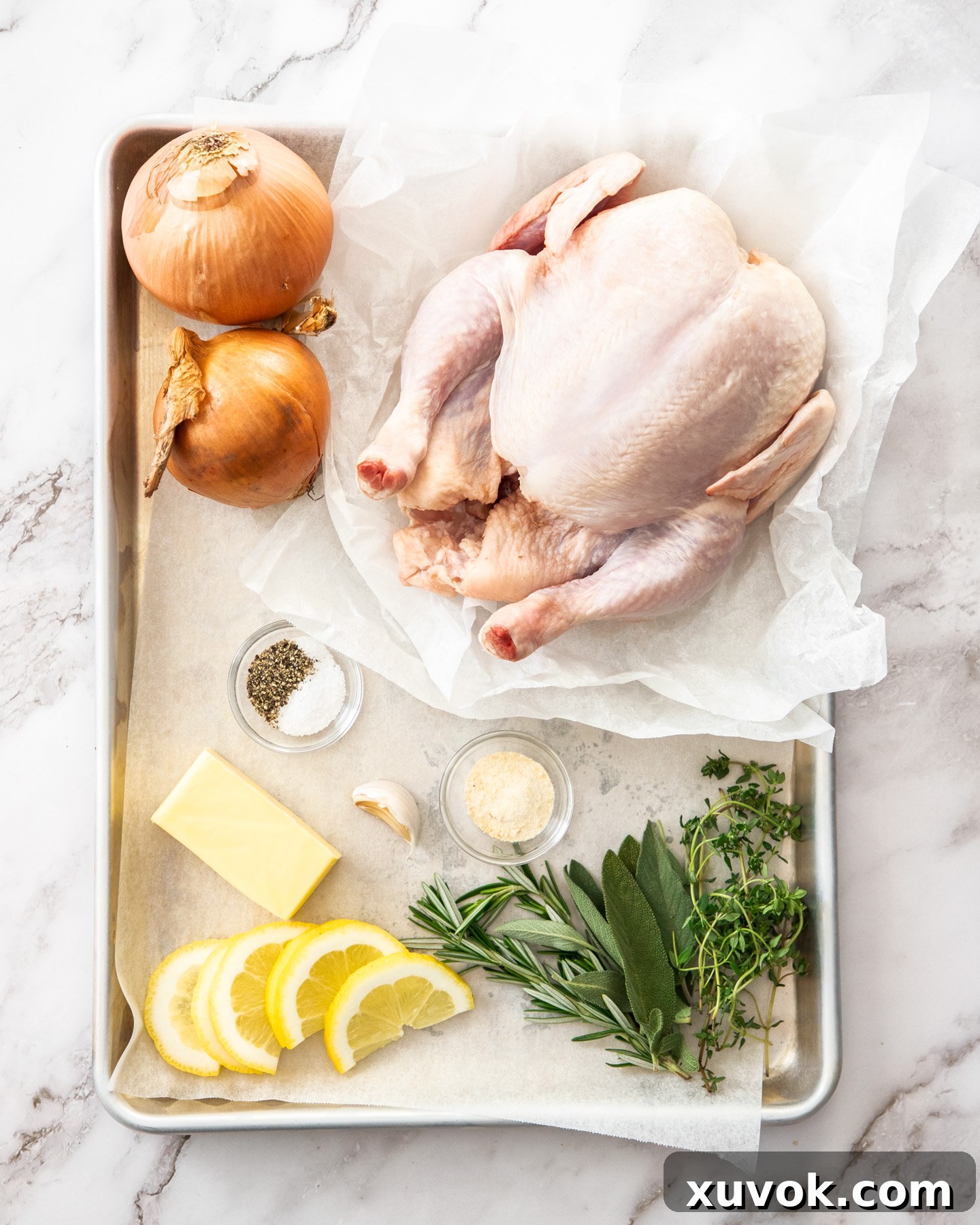
For precise quantities and detailed instructions, please refer to the complete recipe card at the bottom of this page.
- Whole Chicken: The foundation of our meal! For the most exquisite flavor and tender texture, I wholeheartedly recommend choosing a free-range chicken. These birds often have a richer taste and better texture due to their diet and activity. Aim for a chicken weighing approximately 1.8kg (around 4lb), which is an ideal size for even roasting and serving 4-6 people. Always ensure your chicken is thoroughly defrosted if frozen, and pat it dry rigorously before seasoning for that coveted crispy skin.
- Unsalted Butter: Butter is crucial here, acting as a rich flavor carrier and an agent for achieving beautiful browning. Since we will be adding salt to the chicken separately and precisely, using unsalted butter gives you complete control over the seasoning level. This ensures your chicken is perfectly seasoned, not overly salty. The butter also helps tenderize the meat and contributes to its juicy interior.
- Fresh Herbs: This recipe’s unbeatable comforting flavor comes from a classic trio of fresh herbs: rosemary, thyme, and sage. Rosemary offers a fragrant, piney note; thyme provides an earthy, subtle sweetness; and sage adds a warm, slightly peppery depth. These herbs are the heart of the “herb roasted” experience. While dried herbs can be used in a pinch, fresh herbs deliver a vibrancy and aroma that truly elevates the dish.
- Garlic: You can adjust the amount of garlic cloves to suit your personal taste. I suggest using just one minced clove to impart a delicate hint of garlic, ensuring it complements the herbs without overpowering the natural chicken flavor. For a more intense garlic flavor, feel free to add another clove or two.
- Lemon: Just a few slices of fresh lemon tucked inside the chicken’s cavity work wonders in two distinct ways. First, they infuse a subtle, bright citrusy flavor into the meat as it roasts. Second, and equally important, the lemon juice steams from the inside, helping to keep the chicken wonderfully moist and succulent throughout the cooking process.
- Onion Powder: Often overlooked, onion powder is a secret weapon in my seasoning arsenal. Even half a teaspoon adds a concentrated, savory depth that perfectly harmonizes with the fresh herbs, rich butter, and natural chicken flavors. It offers a mellow onion essence without the added moisture of fresh onion inside the rub.
- Onions: Chopped brown onions strategically placed around the chicken in the roasting pan serve a dual purpose. As they roast, they release their aromatic juices, subtly perfuming the chicken. More delightfully, they caramelize and soften into sweet, tender morsels that make a fantastic accompaniment to the finished dish, soaking up all those delicious pan drippings.
- Salt and Pepper: These fundamental seasonings are critical for enhancing all the other flavors. Use fine sea salt for even distribution and freshly cracked black pepper for its aromatic bite.
How to Roast a Chicken: A Step-by-Step Guide
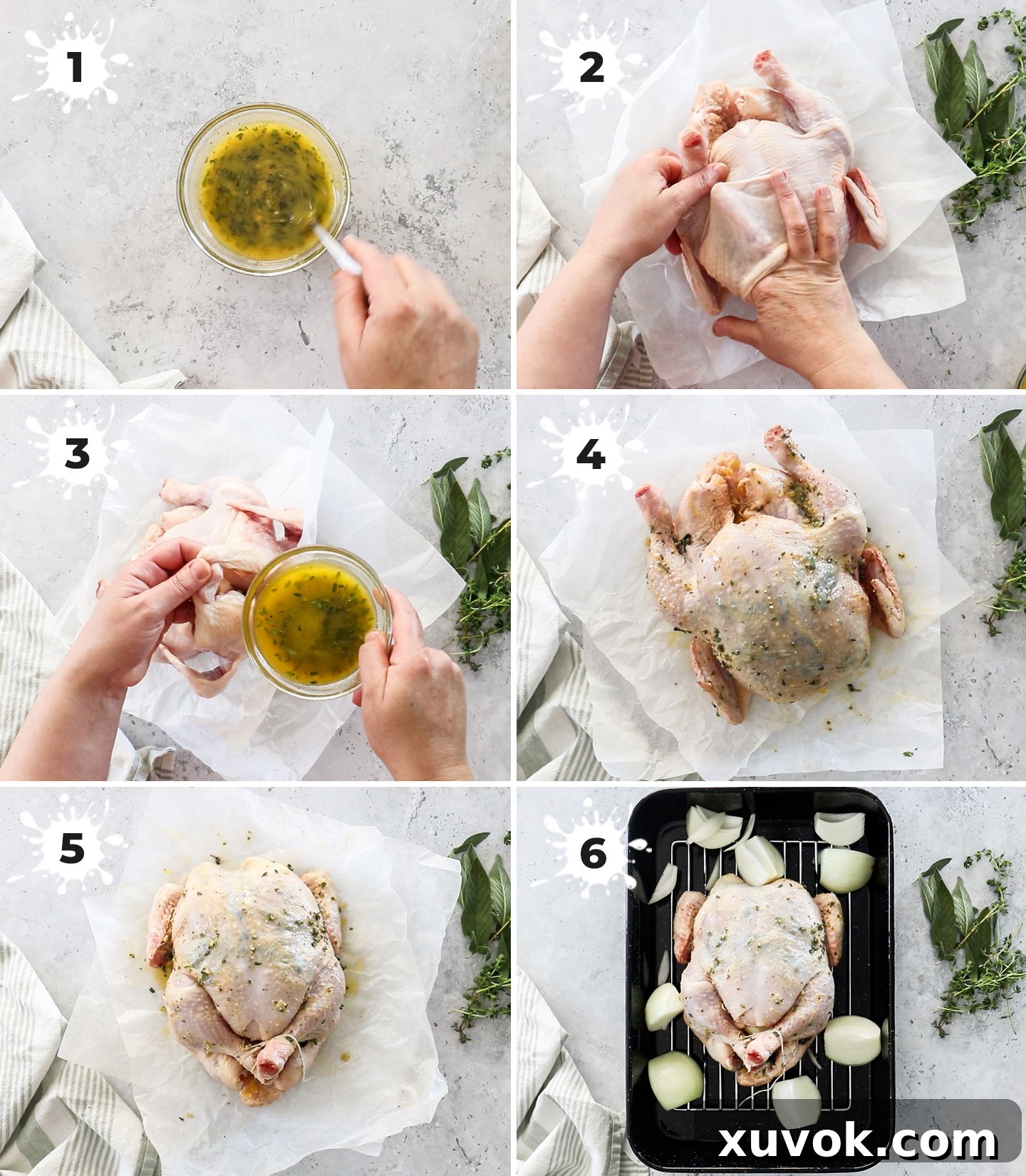
For a precise breakdown of quantities and detailed cooking instructions, please consult the comprehensive recipe card located further down the page.
- Prepare the Chicken: Achieving perfectly crispy skin begins with a dry bird. Start by thoroughly drying the chicken all over – inside and out – using paper towels. This crucial step removes excess moisture, which is the enemy of crispiness. Next, clear out the cavity; many whole chickens come with giblets (the neck, heart, liver, gizzards) tucked inside. Remove these and set them aside if you plan to use them for gravy or stock later. Now, for maximum flavor and moisture, you’ll want to create a pocket under the skin over the breast meat. From the neck end of the chicken, gently use your fingers or the back of an upturned spoon to carefully push up under the skin, detaching it from the meat without tearing it. This space is where the herb butter magic happens!
- Make the Aromatic Herb Butter: The secret to our incredibly flavorful herb roasted chicken lies in the richly aromatic herb butter. In a small bowl, combine your melted unsalted butter with the finely chopped fresh rosemary, thyme leaves (stripped from their stems), minced garlic, onion powder, salt, and freshly ground black pepper. Stir these ingredients until they are thoroughly combined, forming a fragrant, seasoned butter mixture.
- Dress the Chicken with Herb Butter: Now it’s time to generously coat your chicken with the flavorful butter. Spoon or pour about two-thirds of the herb butter mixture (making sure to get most of the solid seasonings, like herbs and garlic, into this portion) under the loosened skin from the neck end. Gently work the butter all over the breast meat using your hands or the upturned spoon. This method ensures the butter melts directly into the breast, keeping it incredibly moist and flavorful from the inside out. Use the remaining butter to thoroughly massage the entire outside of the chicken – concentrating on the breast, drumsticks, thighs, and wings. This external coating helps with browning and contributes to the crispy skin. For a more compact bird that cooks evenly and looks beautiful, you might also consider lightly trussing the chicken by tying the legs together.
- Roast to Perfection: Place the prepared chicken into your roasting tin. I highly recommend using a roasting rack within the pan if you have one, as it elevates the chicken, allowing hot air to circulate all around and ensuring the skin crisps evenly. Scatter the chopped brown onions around the chicken in the pan. Begin by roasting the chicken at a high temperature of 220°C (425°F) for the initial 20 minutes. This high heat jump-starts the browning process and renders the fat, leading to that desirable crispy skin. After 20 minutes, gently baste the chicken with any pan juices that have accumulated. Then, reduce the oven temperature to 180°C (350°F) and continue roasting for another 40-50 minutes, or until the chicken is cooked through and the juices run clear when the thickest part of the thigh is pricked with a skewer. For ultimate accuracy and safety, always confirm doneness with a digital meat thermometer.
What is the Best Temperature to Roast a Chicken?
Achieving the perfect roast chicken—one with gloriously crispy skin and unbelievably juicy meat—is largely dependent on mastering the roasting temperature. My preferred method involves a two-temperature approach. You start by roasting at a higher temperature, specifically 220°C (425°F), for the first 20 minutes. This initial burst of high heat is crucial for two reasons: it rapidly renders the fat beneath the skin, creating a beautifully golden and crispy exterior, and it helps to seal in the juices. After this initial searing, the temperature is then lowered to 180°C (350°F) for the remainder of the cooking time. This lower temperature ensures that the chicken cooks gently and evenly all the way through without drying out the delicate breast meat, allowing it to become tender and succulent.
Should You Roast a Chicken Covered or Uncovered?
For the absolute best crispy, golden skin, it is always recommended to roast your chicken uncovered. Covering the chicken traps steam, which can prevent the skin from crisping up and instead lead to a soggy texture. To ensure the chicken remains moist and flavorful without covering, rely on internal aromatics like lemon or onion slices inside the cavity. The gentle steam released from these ingredients from within will keep the meat succulent, while the exposed skin can achieve that perfect crunch. If you notice the skin browning too quickly during the later stages of cooking, you can loosely tent it with foil, but avoid a tight seal that would trap moisture.
Expert Tips for Foolproof Roast Chicken Every Time
Achieving a perfectly roasted chicken, with its enticing aroma, glistening golden skin, and tender, juicy meat, is simpler than you might think. Just a few key tips will empower you to deliver a flawless bird every single time, regardless of the specific flavors you choose to infuse.
- Bring it to Room Temperature: This is a game-changer! Take the chicken out of the refrigerator and let it sit at room temperature for about 30 minutes to an hour before you plan to roast it. A cold chicken placed directly into a hot oven will cook unevenly, with the outside potentially overcooking before the inside reaches the desired temperature. Allowing it to warm up slightly ensures more consistent and even cooking throughout the bird.
- Pat the Skin Dry, Thoroughly: I cannot stress this enough! Moisture is the enemy of crispy skin. Use plenty of paper towels to pat the entire surface of the chicken, including underneath the wings and legs, until it is as dry as possible. This step removes surface moisture, allowing the skin to crisp up beautifully in the oven rather than steam.
- Separate the Skin from the Meat at the Neck End: When creating a pocket under the skin for the herb butter, always start from the neck end of the chicken. The skin here tends to be thicker and more robust, making it less likely to tear compared to trying to lift the skin from the leg or breast end. Gentle handling is key to keeping the skin intact for an even butter distribution.
- Add Fat Directly to the Breast Meat: Chicken breast is notoriously leaner than the darker leg and thigh meat, making it prone to drying out. Since fat equals flavor and moisture, it’s essential to incorporate some directly. In this recipe, we apply a generous amount of herb butter directly under the skin and then externally. As the chicken roasts, this butter melts and permeates the breast meat, actively basting it from within and ensuring it remains incredibly moist, tender, and flavorful.
- Never Skip the Seasoning: While herbs and butter add wonderful flavor, a foundational seasoning of salt and pepper is absolutely non-negotiable. Salt enhances all the other flavors, drawing out the natural deliciousness of the chicken, while pepper adds a subtle warmth and bite. Be generous – seasoning from a distance ensures an even coat.
- Don’t Cram the Cavity with Stuffing: While traditional, a densely packed cavity with breadcrumb stuffing can actually hinder even cooking. A tightly stuffed chicken will take longer to cook through, potentially leading to overcooked outer meat. Instead, lightly “stuff” the cavity with aromatics like the lemon slices and rosemary sprigs used in this recipe. These additions infuse flavor from the inside out while still allowing hot air to circulate freely within the cavity, promoting more even cooking. If you desire a bread-based stuffing, it’s best baked separately on the side.
- Utilize a Digital Meat Thermometer: For consistently perfect results, every single time, consider investing in a good quality digital meat thermometer. This inexpensive tool will last a lifetime and is the single most reliable way to ensure your chicken is cooked to a safe temperature without overcooking. Chicken is perfectly cooked when the thermometer, inserted into the thickest part of the thigh (avoiding bone), registers 74°C (165°F).
- Always Rest the Chicken: This is perhaps one of the most crucial, yet often skipped, steps. After removing the chicken from the oven, resist the urge to carve it immediately. Instead, loosely tent it with foil and let it rest on a wooden chopping board for at least 10-15 minutes. This resting period allows the juices, which have been drawn to the surface during cooking, to redistribute back into the meat, resulting in an incredibly moist and tender roast. Cutting too soon will cause all those precious juices to run out onto your board.
Exploring More Flavor Variations for Your Roast Chicken
While the classic herb combination of rosemary, thyme, and sage is truly divine, one of the joys of roasting a whole chicken is its incredible versatility. Don’t hesitate to unleash your culinary creativity and experiment with other flavor profiles to suit your mood or pantry. Here are some ideas to inspire you:
- Alternate Herb Blends: Beyond our staple trio, many other fresh herbs can elevate your roast chicken. Consider incorporating tarragon for its subtle licorice notes, oregano for a Mediterranean twist, fresh parsley for a bright, clean finish, or marjoram for a delicate sweetness. A blend of chives and dill can also offer a lovely freshness. When using fresh herbs, always aim to get most of them under the skin to prevent burning during roasting.
- Zesty Citrus Infusions: For an extra burst of brightness, add some finely grated lemon zest to your butter mixture. This concentrates the lemon flavor beautifully. Remember to incorporate most of the zest under the skin, as it can blacken quickly on the exterior. Don’t limit yourself to just lemon; other citrus fruits like orange, lime, or even grapefruit can provide unique and delicious aromatic qualities. Imagine a roast chicken with orange slices and star anise for an exotic twist!
- Vibrant Roasted Vegetables: Transform your roasting pan into a complete meal by surrounding the chicken with an assortment of vegetables. Peeled baby potatoes, tossed with a little olive oil and salt, will roast beautifully in the chicken drippings, becoming wonderfully crispy and infused with chicken flavor. Carrots and parsnips, added during the last 30 minutes of cooking, will caramelize to a sweet tenderness. Other excellent additions include bell peppers, sweet potatoes, Brussels sprouts, or even hearty root vegetables like celery root, all benefiting from the savory chicken fats.
- Spice Rubs and Marinades: For a departure from the traditional, explore various spice rubs. Paprika (smoked or sweet), cumin, chili powder, and even a touch of curry powder can create entirely different flavor experiences. You can mix these with a little oil or butter and rub them directly onto the chicken. For deeper flavor, consider a quick marinade (30 minutes to an hour) with yogurt and spices for a tandoori-inspired chicken, or a soy-ginger blend for an Asian-style roast.
- Mustard or Honey Glazes: A simple glaze can add a beautiful sheen and extra layer of flavor. Whisk together Dijon mustard, a touch of honey or maple syrup, and a splash of apple cider vinegar, then brush it on the chicken during the last 20-30 minutes of roasting. This creates a slightly sweet and tangy crust that is simply irresistible.
With these suggestions, your herb roasted chicken can become a different culinary adventure every time you cook it!
What to Serve with Your Perfect Roast Chicken
A classic roast chicken is the epitome of comfort food, making it incredibly versatile for pairing with a wide array of side dishes. Whether you’re aiming for a cozy family dinner or a more elegant gathering, here are some fantastic accompaniments that will perfectly complement your herb roasted chicken:
- Classic Potato Sides: For the ultimate hearty and comforting meal, nothing beats potatoes. Pair your chicken with my renowned crunchy roast potatoes, which boast an incredibly crispy exterior and fluffy interior. Alternatively, serve it alongside classic fluffy mashed potatoes for a creamy contrast, or elevate them with these decadent cheesy mashed potatoes. For a touch of sophistication, try these roasted mini potatoes with sage butter sauce—they are truly special.
- Roasted Vegetables: Adding vibrant, caramelized vegetables brings both color and nutrition to your plate. Consider serving mustard maple roasted carrots for a sweet and savory crunch, tender roasted shallots for a mellow oniony flavor, or impressive hasselback butternut squash to glam up your meal. Other great options include roasted asparagus, green beans, or broccoli florets.
- Fresh and Light Salads: For a lighter dinner, or to balance the richness of the chicken, a crisp salad is an excellent choice. This asparagus, rocket, and parmesan salad offers a refreshing bitterness and peppery kick. A vibrant roasted beetroot and feta salad adds beautiful color and earthy sweetness, while my creamy apple coleslaw provides a delightful crunch and tangy counterpoint.
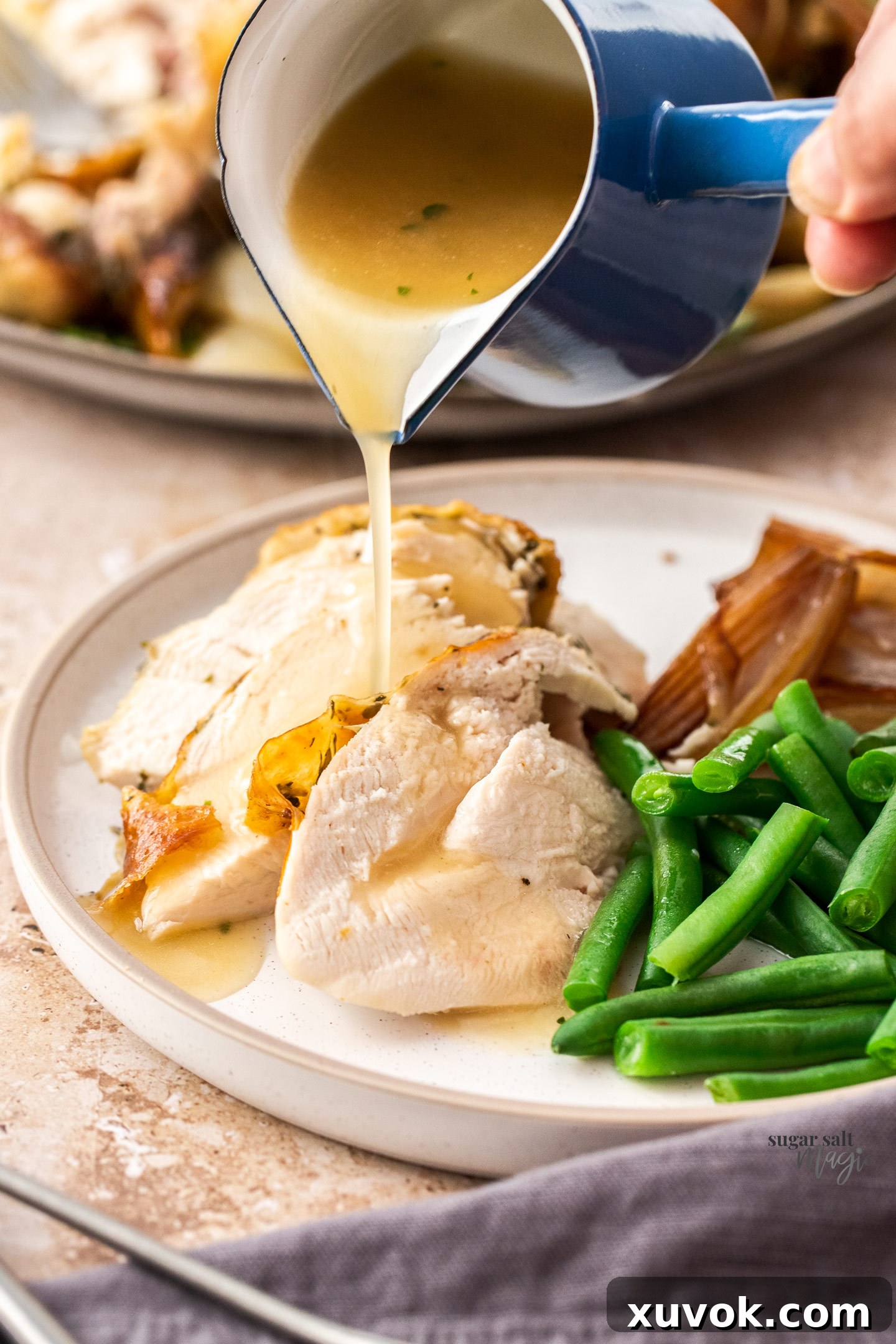
- Savory Sauces and Gravies: A delicious sauce can truly complete your roast chicken experience. This rich mushroom sauce is absolutely amazing with roast chicken, adding an earthy, umami depth. Roast chicken also pairs beautifully with the smoky, nutty notes of romesco sauce. Don’t forget the flavorful pan drippings from your chicken can easily be turned into a simple, homemade gravy – a truly classic pairing!
- Bread: A crusty loaf of bread or dinner rolls are perfect for soaking up any leftover juices and gravy.
With so many delightful options, you can tailor your roast chicken dinner to any occasion or preference, ensuring a perfectly harmonious and satisfying meal.
Creative Ways to Use Leftover Roast Chicken
Chicken, in my opinion, is simply the best meat because of its incredible versatility and robust flavor. And a beautiful herb roasted chicken is no exception! Once you’ve enjoyed the initial feast, the possibilities for transforming your leftovers into exciting new meals are virtually endless. Don’t get me started, or I might turn into Bubba from Forest Gump with all my chicken ideas!
While a delicious cold chicken sandwich is always a comforting classic, let’s explore some more creative and exciting ways to give your leftover roast chicken a delicious second life:
- Asian-Inspired Dishes: Chop up the chicken roughly and use it in place of turkey for my vibrant turkey san choy bow. The succulent chicken works wonderfully with the fresh, crisp lettuce wraps. Alternatively, shred it and add to a flavorful fried rice dish with vegetables and soy sauce.
- Pizza and Flatbreads: Leftover roast chicken is a fantastic pizza topping. Try it on my exotic tandoori chicken pizza for a burst of Indian flavors, or a simpler pesto chicken flatbread with fresh basil and mozzarella.
- Soups and Stews: Shredded chicken is a natural fit for hearty soups and stews. Add it to a creamy chicken noodle soup, a flavorful tortilla soup, or a comforting creamy corn chowder for an extra layer of protein and flavor. Don’t forget to use the leftover carcass to make a rich, homemade chicken stock for future soups!
- Pasta Dishes: Stir shredded chicken into your favorite pasta recipes. It’s excellent in a creamy Alfredo sauce, a light lemon-garlic pasta, or baked into a cheesy pasta casserole. It’s also a wonderful addition to a chicken pesto pasta salad for a quick lunch.
- Tacos, Quesadillas & Wraps: Quickly assemble flavorful chicken tacos or quesadillas with cheese, salsa, and avocado. The seasoned roast chicken makes for an incredibly quick and satisfying filling. Similarly, it can be rolled into a wrap with fresh greens and a zesty dressing.
- Chicken Pot Pie: For the ultimate comfort food, dice your leftover chicken and incorporate it into a rich, creamy chicken pot pie filling, topped with a flaky pastry crust.
- Salads: From a simple green salad with chicken to a hearty Cobb salad or a creamy chicken salad sandwich filling, cold roasted chicken is perfect.
- Freezing for Later: Cooked chicken freezes exceptionally well. Shred any leftover bits of meat (remove from bones first) and store it in airtight containers or freezer bags in the freezer for up to 3 months. This is a brilliant meal prep hack – thaw it whenever you need a quick protein boost for stir-fries, casseroles, or emergency lunches. Do the same with leftover rice, and you’ll always have the components for a quick fried rice ready to go!
With these ideas, you’ll never let a single delicious morsel of your herb roasted chicken go to waste!
More Delicious Recipes You’ll Love
- Whole Roast Turkey
- Air Fryer Roast Chicken
- Slow Cooker Turkey Breast
- Crispy Oven Roasted Pork Belly
- Crispy Chicken Burgers
- Creamy Tuscan Chicken
- How to Make Crunchy Roasted Potatoes
Did you try this irresistible herb roasted chicken recipe?
Your feedback is invaluable! Leaving a rating and comment below the recipe is incredibly helpful and allows me to improve future content for you!
Hungry for more culinary inspiration? Subscribe to our newsletter for free, delicious recipes delivered straight to your inbox. Also, make sure to follow along on Facebook, Pinterest and Instagram for daily cooking tips, behind-the-scenes glimpses, and mouth-watering food photography.
Herb Roasted Chicken: The Ultimate Recipe
Leave a Review
Pin Recipe
Ingredients
- 1.8 kg whole chicken (approx. 4lb, preferably free-range)
- ¼ lemon, cut into slices
- 2 sprigs fresh rosemary
- 85 g unsalted butter, melted
- 2 teaspoons finely chopped fresh sage
- 2 teaspoons fresh thyme leaves, stems stripped & discarded
- 1 clove garlic, minced (or to taste, for a subtle hint)
- ½ teaspoon onion powder
- 1 teaspoon fine sea salt
- ½ teaspoon freshly ground black pepper
- 2 medium brown onions, peeled and quartered
For the most accurate and best results, always weigh ingredients where a weight is provided.
Equipment
-
Roasting pan (large enough for your chicken)
-
Roasting rack (optional, but highly recommended for crispy skin)
-
Digital meat thermometer (for accurate doneness)
-
Paper towels
-
Small bowl (for herb butter mixture)
-
Kitchen twine (optional, for trussing)
Instructions
-
Prepare for Roasting: Take the whole chicken out of the fridge approximately 30-60 minutes before you plan to roast it, allowing it to come closer to room temperature for more even cooking. Meanwhile, preheat your oven to 220°C (200°C fan) / 425°F. Line a sturdy roasting pan with aluminum foil for easier cleanup. If you have one, place a roasting rack inside the lined pan; this helps with air circulation and crispier skin.
-
Season the Cavity: Thoroughly dry the chicken all over, inside and out, with paper towels. This step is critical for achieving crispy skin. Carefully push the lemon slices and fresh rosemary sprigs into the chicken cavity. These aromatics will infuse the meat with subtle flavor and contribute to moisture.
-
Make the Herb Butter: In a small bowl, combine the melted unsalted butter, finely chopped fresh sage, fresh thyme leaves (stems discarded), minced garlic, onion powder, fine sea salt, and freshly ground black pepper. Stir all these ingredients together until well combined.
-
Apply Herb Butter Under the Skin: Gently work an upturned spoon or your hand under the chicken skin from the neck end, carefully separating the skin from the breast meat. This end is generally less prone to tearing. Once a pocket is formed, drizzle about two-thirds of the herb butter mixture under the skin. Ensure most of the solid seasonings (herbs, garlic) go under the skin to prevent them from burning on top. Use your hand or spoon again to carefully push and spread the butter all over the breast meat, ensuring even coverage.
-
Coat the Exterior: Massage the remaining herb butter all over the top of the breast, wings, and legs until the chicken is evenly coated. Don’t worry too much about the back as it won’t crisp up as effectively.
-
Truss (Optional but Recommended): For a more compact bird that cooks evenly and looks great, fold the wing tips under the chicken. Then, use some kitchen twine to tie the legs together at the end knuckle.
-
Arrange for Roasting: Place the chicken breast-side up onto the roasting rack in your prepared pan. Scatter the quartered brown onions around the chicken in the pan; these will roast and caramelize beautifully while flavoring the drippings.
-
Initial High-Heat Roast: Roast the chicken for 20 minutes at the initial high temperature of 220°C (425°F). This blast of heat helps to brown the skin and begin rendering the fat. After 20 minutes, carefully remove the pan from the oven and baste the chicken generously with the flavorful pan juices.
-
Lower Temperature Roast to Finish: Reduce the oven temperature to 180°C (350°F) and immediately place the chicken back in the oven. Continue to roast for another 40-50 minutes, or until the juices run clear when you prick the thickest part of the thigh with a skewer. The most accurate way to check for doneness is with a digital meat thermometer: it should register 74°C (165°F) when inserted into the thickest part of the meat, avoiding any bone. If the skin is browning too quickly, you can loosely tent it with foil.
-
Rest Before Carving: Once the chicken is cooked, remove it from the oven and transfer it to a clean cutting board. Loosely tent it with foil and let it rest for at least 10-15 minutes before carving. This crucial resting period allows the juices to redistribute throughout the meat, ensuring every slice is incredibly moist and tender.
-
Please take a moment to leave a comment & rating on this recipe once you’ve tried it. Your feedback is truly appreciated and incredibly helpful to other home cooks!
Notes
- Preparation Ahead of Time: This herb roasted chicken recipe is wonderfully forgiving and can be prepared in advance. You can rub the chicken with the butter mixture, place it on the roasting rack in the pan, and then cover it loosely with plastic wrap before refrigerating. When ready to cook, take it out of the fridge at least half an hour before you plan to roast it to allow it to come closer to room temperature, then proceed with the roasting instructions.
- Homemade Gravy: Don’t let those delicious pan drippings go to waste! They are the perfect base for a rich, homemade gravy. After removing the chicken from the pan, pour off most of the fat, leaving about 2 tablespoons of drippings. Place the roasting pan (or transfer drippings to a saucepan) over medium heat. Whisk in 2 tablespoons of all-purpose flour and cook, stirring constantly, for 1-2 minutes to create a roux. Gradually pour in about 2-3 cups of chicken stock (chicken broth), whisking vigorously to incorporate. Bring the mixture to a simmer, allowing it to thicken and reduce to your desired consistency. Season with additional salt and pepper to taste.
DISCOVER MORE DELICIOUS CHICKEN RECIPES!