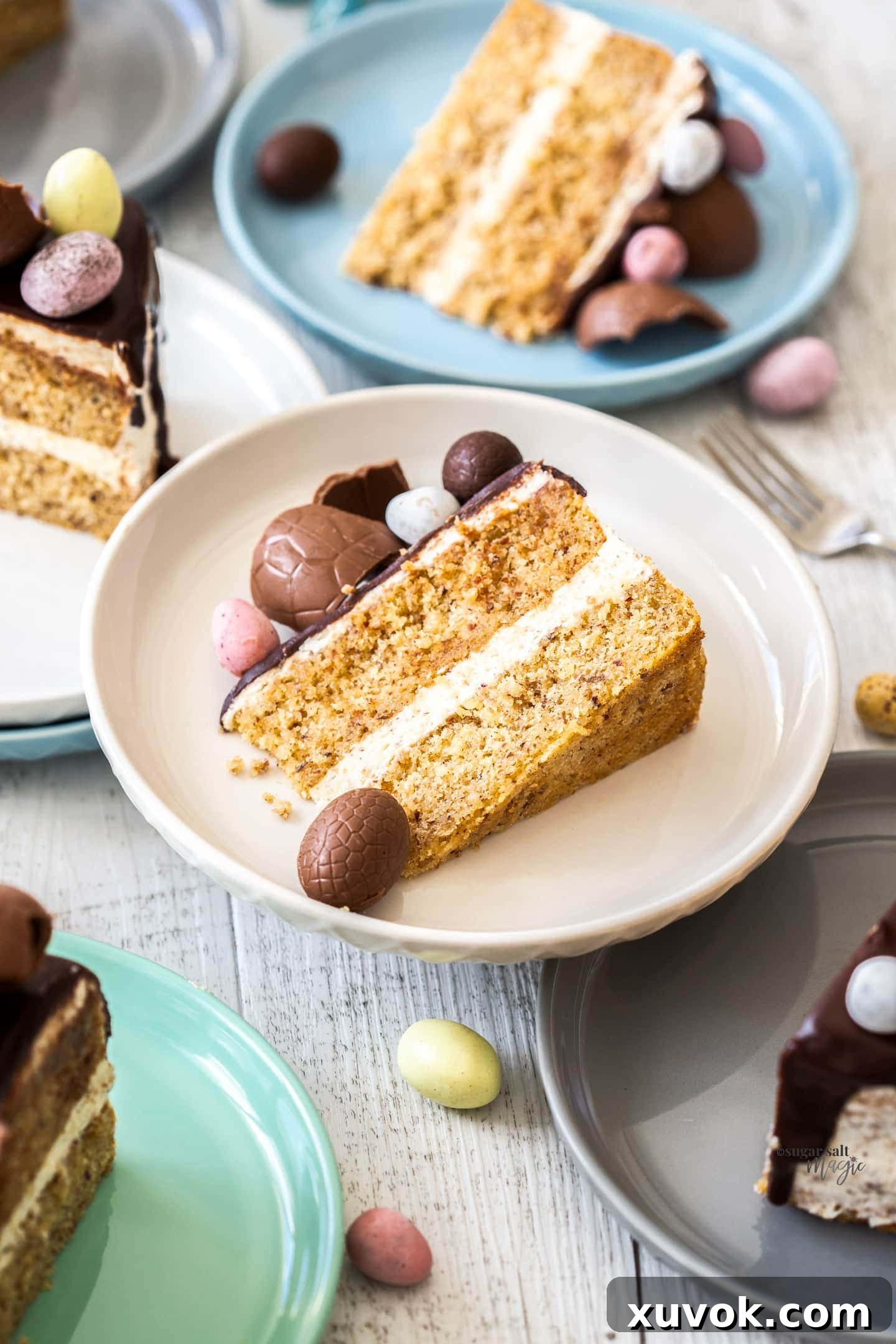
Irresistible Hazelnut Easter Cake: A Decadent Celebration Centerpiece
This magnificent Hazelnut Cake isn’t just a dessert; it’s an experience, perfectly poised to become the star of your Easter celebrations. While we’ve adorned it with festive Easter eggs, transforming it into a delightful holiday treat, its rich, nutty flavor and exquisite texture make it a versatile showstopper for any occasion. Imagine serving this beautifully crafted cake at a birthday party, a sophisticated baby shower, or simply enjoying a slice with your afternoon coffee. Its inherent elegance and profound taste transcend seasonal boundaries, making it a truly universal delight.
We recently revisited this beloved recipe, meticulously refining it and capturing stunning new photographs, and it remains as enchanting as ever. The intense, deep flavor of roasted hazelnuts permeates every layer of the cake and the luxurious whipped buttercream. Crowned with a glorious, easy-to-make chocolate ganache and an assortment of colorful Easter eggs, this cake is not only a feast for the eyes but also a fantastic and delicious way to utilize any leftover Easter chocolate, giving them a glorious second life and preventing waste!
Planning a memorable Easter feast? Complement this Hazelnut Easter Cake with these other delightful treats, perfect for rounding out your holiday dessert spread:
- No Bake Marshmallow Easter Egg Slice
- Easy Easter Sugar Cookies
- Carrot Cake Bars
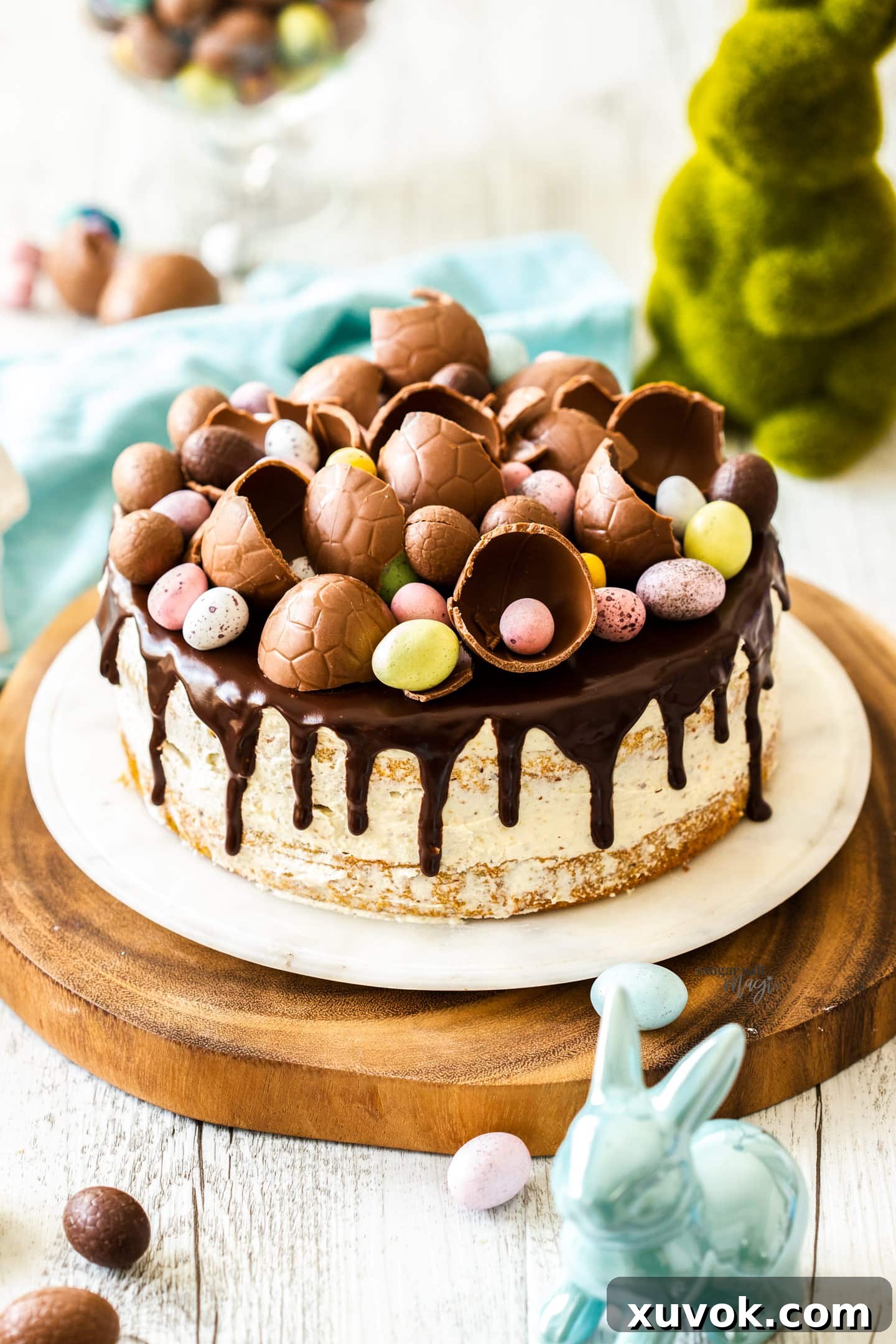
Table of Contents
- The Unique Texture and Flavor of Hazelnut Cake
- Mastering the Hazelnut Cake Layers
- Crafting the Whipped Hazelnut Buttercream
- Pro Tips for the Perfect Buttercream
- Essential Baking Tips for Success
- Versatile Variations for Your Hazelnut Cake
- Decorate Your Easter Masterpiece
- More Celebratory Cake Recipes
Never Miss a Recipe!
Get the latest, most delectable recipes straight to your inbox and be the first to discover your next favorite bake!
The Unique Texture and Flavor of Hazelnut Cake
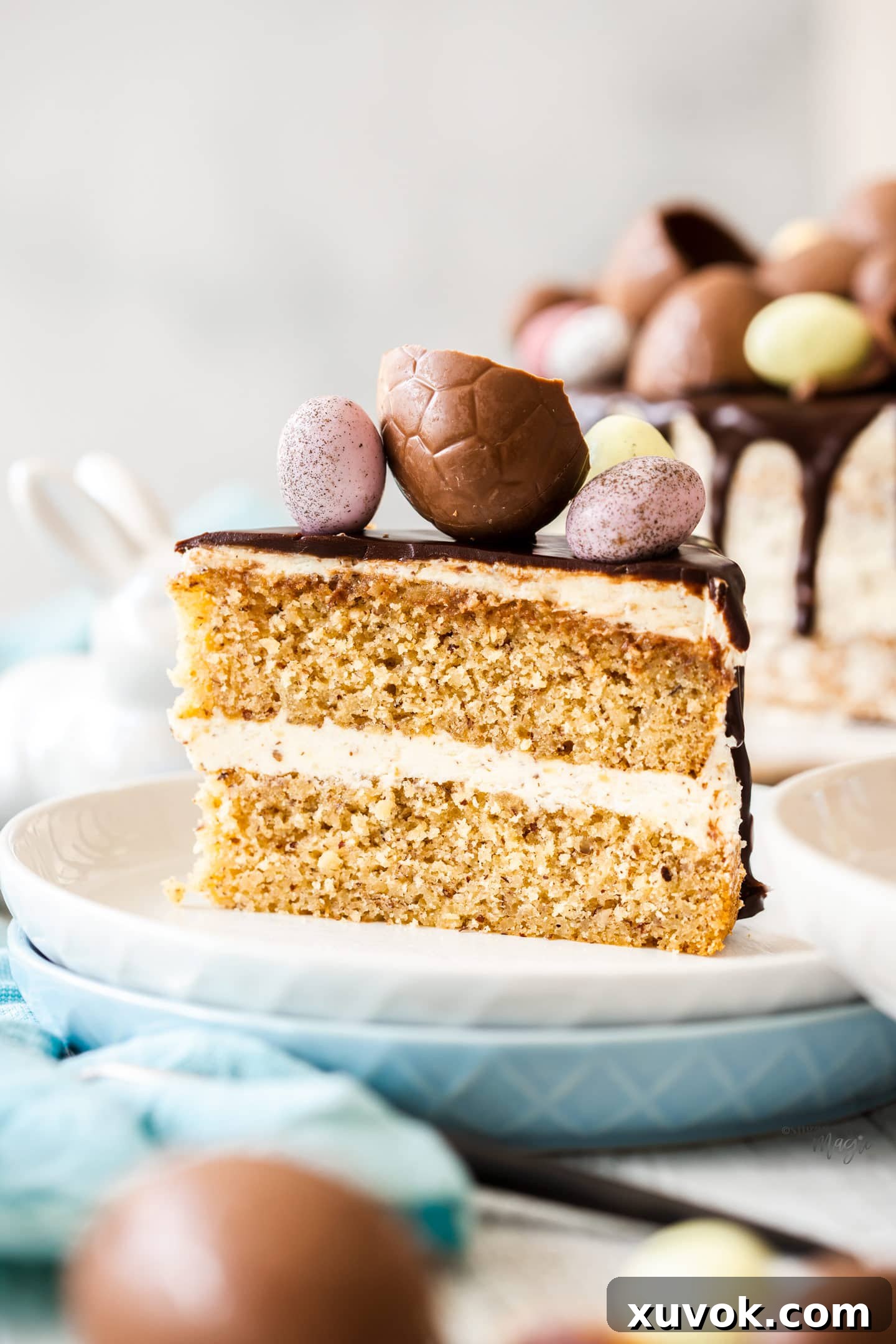
This hazelnut cake truly stands apart from any other cake you’ve ever baked or tasted. Its defining characteristic is its incredible texture, a delightful symphony that will captivate your palate from the very first bite. The secret lies in the generous inclusion of finely ground hazelnuts directly into the cake batter. This isn’t just a flavor enhancer; it’s a textural game-changer, imparting a subtle chewiness and a wonderfully rustic crumb that sets it miles apart from traditional sponge cakes. Each mouthful delivers a gorgeous, earthy nutty flavor, deepening the overall richness of the cake and making it undeniably unique.
But the textural journey doesn’t stop there. Even the frosting, a dreamy whipped hazelnut buttercream, maintains this appealing characteristic. It’s undeniably creamy and light, thanks to extensive whipping, yet those tiny, delightful pieces of hazelnut still peek through, adding another layer of intrigue and ensuring that the hazelnut experience is front and center. It’s a harmonious blend of smooth and slightly coarse, creating an incredibly satisfying mouthfeel that leaves a lasting impression.
Much like our popular Flourless Chocolate Hazelnut Cake, this recipe yields a cake that is ever so slightly dense, but in the most desirable way. It’s not heavy; rather, it’s deeply moist and sumptuously rich, making it the quintessential treat for an elegant afternoon tea or a celebratory dessert. The magic behind its profound richness comes from the strategic combination of brown sugar and eggs, which contribute depth of flavor and a tender crumb. Meanwhile, the addition of buttermilk ensures that the cake remains exquisitely tender and moist, preventing any dryness and elevating it to a truly luxurious dessert that will impress even the most discerning palates.
The earthy aroma of toasted hazelnuts fills your kitchen as this cake bakes, building anticipation for the deliciousness to come. This cake isn’t just a dessert; it’s an invitation to savor, to experience the profound flavors and textures that only a carefully crafted hazelnut cake can offer. It’s a testament to simple ingredients coming together to create something truly extraordinary and unforgettable.
Mastering the Hazelnut Cake Layers
Creating the perfect hazelnut cake layers is a straightforward process that yields incredibly flavorful and moist results. Precision and attention to detail at each step ensure a successful bake. Here’s a detailed guide to achieving those delightful, tender cake layers:
- Cream Butter and Sugar: Begin by creaming together the softened unsalted butter with both white granulated sugar and light brown sugar. This initial step is crucial for incorporating air into the mixture, which contributes significantly to the cake’s light and airy texture. Beat them together using an electric mixer until the mixture is visibly lightened in color, fluffy, and smooth, a process that typically takes around 3-4 minutes. Remember to pause and scrape down the sides of the bowl occasionally to ensure all ingredients are evenly mixed and no pockets of uncreamed butter remain.
- Incorporate Eggs and Vanilla: Next, add the large eggs, one at a time, beating thoroughly after each addition until fully incorporated. This gradual approach allows the eggs to emulsify properly with the butter-sugar mixture, preventing curdling and ensuring a smooth, cohesive batter. After the eggs, stir in the vanilla extract, a key flavor enhancer that beautifully complements and brightens the deep hazelnut notes.
- Alternate Dry and Wet Ingredients: In a separate medium bowl, whisk together the dry ingredients: plain flour (all-purpose flour), ground hazelnuts (or hazelnut meal), salt, and baking powder. This crucial step ensures they are evenly distributed throughout the dry mix, preventing clumps and ensuring even leavening. Now, gently add one-third of this dry mixture to your wet batter, folding it in carefully with a silicone spatula until just combined. Overmixing at this stage can develop the gluten in the flour, leading to a tough, dense cake. Follow this by gently mixing in half of the buttermilk, just until smooth. Repeat the process with another third of the dry ingredients, then the remaining buttermilk, and finally, the last third of the dry ingredients. This alternating method helps to maintain the delicate balance of the batter, ensuring maximum moisture and tenderness in the finished cake.
- Prepare Pans and Bake: Divide the perfectly blended cake batter evenly between your two prepared 20cm / 8-inch sandwich cake tins. Ensure your tins are properly greased and the bottoms lined with baking paper; this meticulous preparation is vital to prevent sticking and ensure your beautiful cake layers release easily after baking. Bake in your preheated oven for approximately 25-30 minutes. You’ll know they’re done when a wooden skewer or toothpick inserted into the center of the cakes comes out clean, with no wet batter clinging to it.
- Cool Completely: Once baked, resist the urge to immediately remove the cakes from their tins. Allow them to cool in their tins for about 10-15 minutes on a wire rack. This period allows the delicate cake structure to set and firm up slightly, making them much easier to handle without breaking. After this initial cooling, gently invert them onto the wire rack to cool completely to room temperature. Patience here is absolutely key; attempting to frost warm cakes will inevitably result in a melting, sliding, and messy disaster. Ensure they are fully cooled before proceeding with the delicious buttercream and ganache.
Crafting the Whipped Hazelnut Buttercream
This whipped hazelnut buttercream is an absolute dream, a truly indulgent frosting that perfectly crowns our hazelnut cake. We’ve previously used it to top these incredible Chocolate Hazelnut Brownies, and its popularity is well-deserved. It possesses a flavor profile strikingly similar to those beloved Kinder Bueno bars, offering a sophisticated blend of rich chocolate and toasted hazelnut. However, unlike a perfectly smooth, silky buttercream, this version features a delightful, subtle texture from the finely ground hazelnuts running through it, all while maintaining an incredibly creamy and fluffy consistency. This luxurious texture is achieved through generous whipping, which incorporates air and creates a light, ethereal feel that melts in your mouth.
Should you desire a perfectly smooth buttercream, simply omit the ground hazelnuts from the recipe. The buttercream will still be wonderfully flavorful with hints of vanilla and white chocolate, just without the added textural element, appealing to those who prefer a purely silky finish.
Here’s how to create this irresistible whipped hazelnut buttercream, step-by-step:
- Start with Butter and Sugar: In the bowl of your stand mixer fitted with the paddle attachment (or using a handheld mixer), beat the softened unsalted butter on its own for about a minute until it’s smooth and slightly lightened. Then, gradually add the icing (powdered) sugar, starting with a small amount and beating until smooth. Continue adding the sugar, about a quarter cup at a time, with the mixer on a low speed to prevent a cloud of sugar from engulfing your kitchen and ensure proper incorporation. Once about half the sugar is in, increase the speed to medium and beat until the mixture is light and fluffy.
- Infuse Flavor and Moisture: Reduce the mixer speed to low and add the thickened cream, Frangelico liqueur (if using), and vanilla extract. The Frangelico adds a wonderful depth and authentic hazelnut essence, providing a subtle warmth and complexity; however, it’s entirely optional and can be omitted for an alcohol-free version. If you’re including them, now is the ideal time to add the finely ground hazelnuts. Beat everything together thoroughly until all the ingredients are well combined and the mixture begins to thicken and achieve a uniform consistency.
- Whip to Perfection with White Chocolate: Finally, add the cooled, melted white chocolate. This ingredient is key to both the creamy flavor of the buttercream and its stable structure, helping it to set beautifully without needing an excessive amount of sugar. The white chocolate contributes a luscious sweetness and helps to firm up the frosting. Once added, increase the mixer speed to medium-high and beat for a good 3-5 minutes. This extended whipping is what truly transforms the buttercream into a fluffy, soft, and luxuriously whipped consistency, full of air and ready to be spread onto your cooled cake layers.
Pro Tips for the Perfect Buttercream
Achieving a flawless whipped hazelnut buttercream is simpler than you think with these expert tips, ensuring a smooth, stable, and deliciously flavorful frosting every time:
- Gradual Sugar Addition is Key: Always add the icing (powdered) sugar slowly, ideally with your mixer on a low setting or even by hand with a spatula initially. This crucial step prevents the sugar from creating a dusty cloud in your kitchen, saving you from a messy cleanup. More importantly, it ensures the sugar incorporates smoothly and fully into the butter, resulting in a perfectly consistent and lump-free buttercream texture.
- The White Chocolate Advantage: The inclusion of melted white chocolate is a game-changer for this buttercream recipe. Not only does it impart a wonderfully creamy, rich flavor that perfectly complements the hazelnuts and vanilla, but it also significantly aids in the setting process. This means you’ll need less powdered sugar to achieve a stable, pipeable or spreadable consistency, resulting in a less overwhelmingly sweet and more balanced frosting that holds its shape beautifully. Always ensure the white chocolate is melted and then slightly cooled (not hot) before adding it to avoid melting the butter and creating a soupy mess.
- Flavor Adaptability for All Tastes: This buttercream recipe is incredibly versatile and can be easily adapted to suit different dietary preferences or desired flavor profiles. If you prefer a classic vanilla frosting or wish to avoid alcohol, both the ground hazelnuts and the Frangelico liqueur can be entirely omitted. Without them, you’ll be left with a delightfully whipped vanilla frosting that’s equally delicious and versatile for pairing with various cake flavors. Consider adding a different extract, like almond, for another nutty twist.
- The Importance of Room Temperature Butter: Just like with the cake batter, ensuring your butter for the buttercream is at the right room temperature is essential. It should be soft enough to easily indent with your finger but not melted or greasy. Butter at this consistency creams properly with the powdered sugar, creating a smooth, aerated, and stable base for your frosting, which is crucial for achieving that light, whipped texture.
- Don’t Skimp on Whipping Time: The “whipped” in whipped buttercream isn’t just for show! Beating the buttercream for the full recommended 3-5 minutes (especially after adding the white chocolate) is vital. This extended process incorporates a significant amount of air, transforming the frosting into an incredibly light, fluffy, and voluminous texture. It also helps to fully dissolve any remaining sugar crystals, ensuring a silky-smooth finish and a delightful mouthfeel.
Essential Baking Tips for Success
Baking is both an art and a science, and a few key practices can dramatically improve your results, transforming a good cake into a truly spectacular one. Follow these essential tips for a perfect Hazelnut Easter Cake every time, ensuring consistency and deliciousness:
- Room Temperature Ingredients are Non-Negotiable: This is arguably one of the most critical rules in baking, especially for cakes. Ensure all chilled ingredients, particularly eggs and buttermilk, are brought to true room temperature before you begin mixing. Room temperature butter should be soft enough to easily indent with a finger, but not so soft that it appears greasy or starts to melt. Ingredients at the same, warmer temperature emulsify more effectively, creating a smoother, more uniform batter and a perfectly textured, lighter cake. Cold ingredients can cause the batter to curdle or become lumpy.
- Understanding Sandwich Pans / Tins: These pans are specifically designed for baking layered cakes and are invaluable for achieving even layers. Typically 1.75 to 2 inches deep, they feature a solid bottom and are ideally suited for baking relatively thin cake layers that stack beautifully to create an impressive multi-tiered cake. Always ensure they are properly prepared (greased and floured, or greased and lined with baking paper on the bottom) to prevent any sticking and ensure your cake layers release intact.
- Know Your Oven’s Personality: Every oven has its quirks, and relying solely on its thermostat can sometimes lead to inconsistent results. The temperature displayed might not accurately reflect the actual internal temperature, as many ovens run a little hot or cold, or have specific hot spots. What bakes perfectly in 25 minutes in one oven might take 22 or 27 minutes in yours. To ensure consistent and accurate results, we highly recommend keeping an oven-safe thermometer attached to one of your oven racks. This allows you to monitor and adjust your oven’s temperature accurately throughout the baking process, preventing frustrating instances of under-baking or over-baking.
- Embrace the Kitchen Scale for Accuracy: When a recipe provides weight measurements for ingredients like flour, sugar, or ground nuts, always use them if you can. Measuring by volume (cups) can vary significantly, particularly for dry ingredients. For instance, the “scoop and level” method for flour can result in vastly different amounts depending on how compactly you fill the cup, which can drastically alter the cake’s texture, making it dry or too dense. Kitchen scales are affordable, incredibly accurate, and will last a lifetime, ensuring precision in your baking and consistently perfect outcomes.
- Don’t Rush the Cooling Process: After baking, resisting the urge to immediately remove your cakes from their tins is crucial. Let them cool in the tins on a wire rack for about 10-15 minutes. This brief period allows the cake structure to set and firm up, making it much easier to handle and less likely to break or crumble when you transfer it. Once out of the tins, ensure they cool completely on the wire rack before you even think about frosting them. Attempting to frost a warm cake will inevitably result in a sliding, melting mess, as the buttercream will simply liquify.
- Quality Ingredients Matter: Especially with a cake that highlights a core flavor like hazelnut, using high-quality ingredients can make a noticeable difference in the final taste and texture. Opt for fresh, good quality hazelnuts, premium unsalted butter, and a rich, pure vanilla extract. These superior ingredients will elevate the taste of your cake from merely good to truly exceptional and memorable.
Versatile Variations for Your Hazelnut Cake
While this Hazelnut Cake is absolutely perfect for Easter, its incredible flavor profile and appealing texture make it adaptable for a multitude of celebrations throughout the year. Don’t limit its potential to just one holiday; this cake is a versatile canvas for your culinary creativity!
- Beyond Easter: Easily transform this into a show-stopping birthday cake, an elegant baby shower centerpiece, or simply a sophisticated dessert to enjoy with your daily cup of coffee. The key is in the topping! Swap out the Easter eggs for any of your favorite chocolate candies or confections. Think rich Ferrero Rocher, creamy Lindt balls, colorful chopped chocolate bars like Smarties or M&M’s, or even fresh seasonal berries and a delicate dusting of cocoa powder for a different aesthetic and flavor profile.
- Enhanced Nuttiness or Alternative Nut Flavors: For those who truly adore nutty flavors, consider adding a touch of almond extract to the cake batter or buttercream to complement the existing hazelnuts, creating a more complex and aromatic profile. Alternatively, for a different twist, you can substitute a portion or all of the ground hazelnuts with ground almonds, creating a delightful almond-hazelnut blend or a pure almond cake. This allows for a subtle yet distinct shift in flavor while retaining that wonderful textural element. You could even experiment with a small amount of finely ground pistachios for a vibrant color and unique taste.
- Coffee & Caramel Pairing Perfection: Hazelnuts pair exquisitely with the deep, rich notes of coffee and the sweet, buttery allure of caramel. Consider infusing a little espresso powder (about 1-2 teaspoons) into the cake batter for a subtle mocha-hazelnut flavor. For an extra layer of decadence, add a generous swirl of homemade or store-bought salted caramel sauce between the layers of buttercream. A beautiful caramel drizzle over the chocolate ganache topping would also be absolutely divine and visually stunning.
- Boozy Bliss for Adults: If you enjoy a hint of liqueur in your desserts, experiment with other additions to the buttercream. Besides Frangelico, a touch of Kahlua (for a coffee-hazelnut mocha twist), a splash of dark rum, or even a subtle orange liqueur like Grand Marnier could elevate the flavor profile, adding a sophisticated, adult dimension to your cake.
- Seasonal Fruit Additions: Introduce a burst of freshness by incorporating seasonal fruits. In summer, consider gently folding a handful of fresh raspberries or blueberries into the cake batter for a vibrant counterpoint to the rich hazelnuts. For a more autumnal or wintery feel, thinly sliced poached pears could be elegantly layered between the cake and buttercream, or even arranged on top for a rustic touch.
This cake is a truly versatile blank canvas for your culinary creativity. With a few simple tweaks and a dash of imagination, you can tailor it to any season, any occasion, and any flavor preference, ensuring it always receives rave reviews and becomes a beloved staple in your recipe collection.
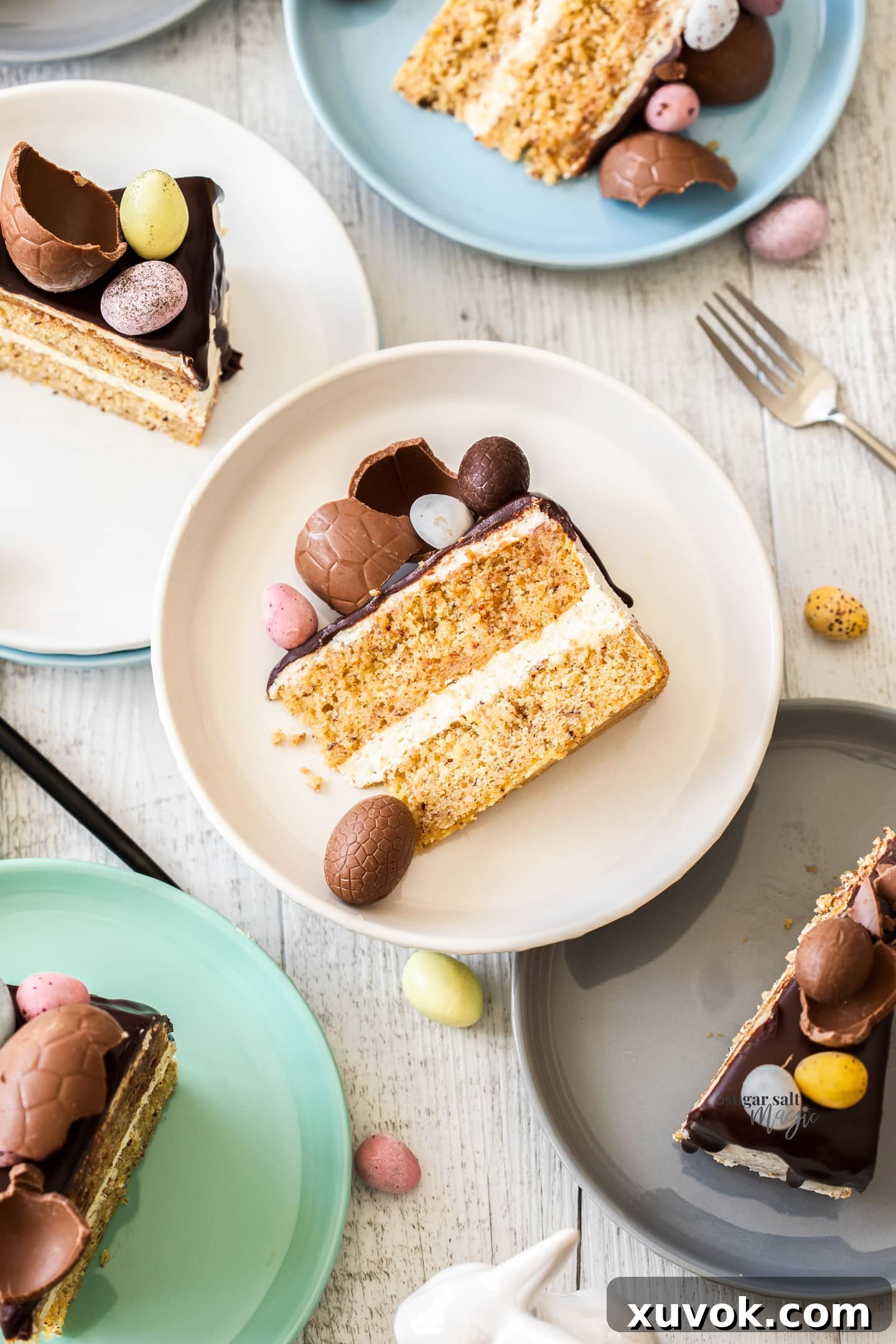
Decorate Your Easter Masterpiece
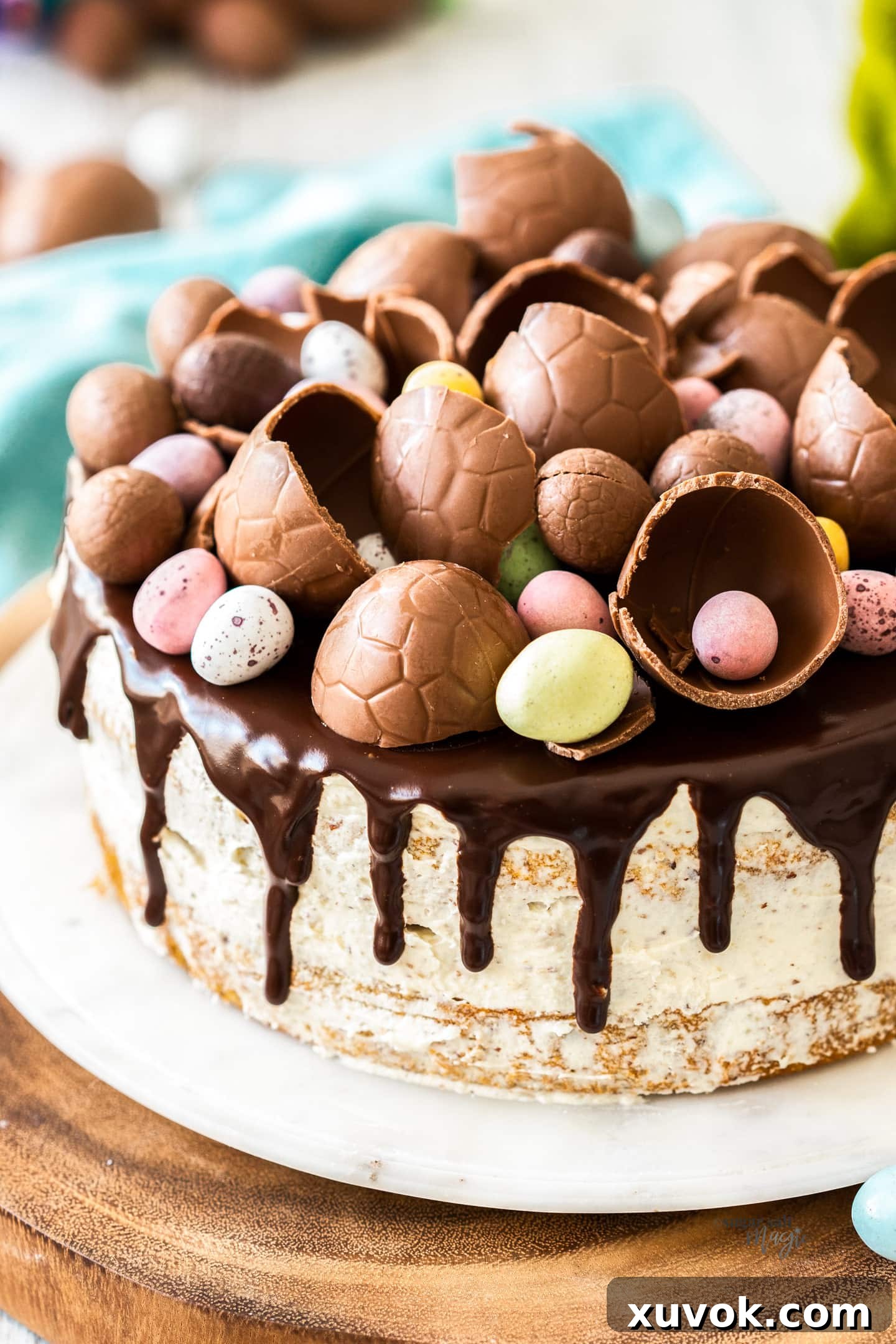
The final touch for your Hazelnut Easter Cake is the stunning chocolate ganache and festive Easter egg topping. This step not only adds visual appeal but also introduces another layer of rich chocolate flavor, perfectly balancing the nutty notes of the cake and buttercream.
- Prepare the Ganache: Place the finely chopped dark chocolate into a small, heatproof bowl. It’s important to chop the chocolate finely to ensure it melts evenly and quickly. In a separate very small saucepan, gently heat the thickened cream over low heat until it just begins to bubble around the edges – do not let it come to a rolling boil, as this can scorch the cream and affect the ganache’s texture.
- Create a Silky Ganache: Immediately pour the hot cream directly over the chopped chocolate, ensuring all chocolate pieces are fully submerged in the hot cream. Let it sit undisturbed for about 5 minutes; this allows the residual heat from the cream to melt the chocolate gently. After 5 minutes, stir the mixture gently from the center outwards with a whisk or spatula until it transforms into a smooth, glossy, and luscious ganache. If any lumps remain, you can gently heat the bowl over a double boiler or in short bursts in the microwave, stirring constantly, until smooth.
- Apply and Drip: Once the ganache is smooth and slightly cooled (but still pourable), pour or spread it evenly over the top of your chilled, buttercream-frosted cake. Work quickly but carefully, using an offset spatula to guide it. Allow some of the rich ganache to elegantly drip down the sides of the cake for a beautiful, rustic, and inviting effect.
- Festive Topping: While the ganache is still wet and pliable, generously arrange a variety of your favorite chocolate Easter eggs on top of the cake. You can use mini eggs, larger foiled eggs, or even crushed chocolate bars for a varied and appealing look. This is where you can let your creativity shine! If you’re making this cake for a different occasion, substitute with other candies, fresh fruit like berries, or even edible flowers for a distinct theme.
- Chill to Set: Place the decorated cake back into the refrigerator. Allow it to chill for at least 30 minutes to an hour, or until the chocolate ganache has fully set. This ensures the ganache is firm to the touch and all your beautiful decorations are secure before serving, making it easier to slice and present.
More Celebratory Cake Recipes
No matter what you have planned for Easter, make sure this show-stopping Hazelnut Easter Cake is on your menu. After a day filled with savory delights and chocolate overload, this sophisticated and beautifully balanced cake offers a refreshing and utterly delicious change. Its unique flavor and texture are guaranteed to impress your guests and become a cherished part of your holiday tradition, eagerly anticipated year after year.
Looking for more dessert inspiration to complete your special occasions, impress your guests, or simply satisfy your sweet tooth? Explore these other fantastic cake recipes, each offering its own unique charm and flavor profile:
- How to Make Perfect Pavlova (A light, airy, and naturally gluten-free alternative)
- Fluffy Lemon Vanilla Butter Cake (Bright, zesty, and wonderfully comforting)
- Black Magic Cake (A deeply rich, moist, and intensely chocolatey indulgence)
- Flourless Chocolate Pear Upside Down Cake (Elegant, sophisticated, and naturally gluten-free with a hint of fruit)
- Chocolate Roll Cake (An impressive, decadent, and surprisingly simple dessert)
- Fluffy Vanilla Cake (A timeless classic, perfect for any celebration or just because)
⭐⭐⭐⭐⭐
Did you try this hazelnut cake recipe? Show it some love in the comments below! We love hearing from you and seeing your beautiful creations.
Hungry for more irresistible recipes? Subscribe to our newsletter for free recipes delivered straight to your inbox. Also, connect with us and find more inspiration on Facebook, Pinterest, and Instagram!
Easter Hazelnut Cake
16
serves
25
30
0
55
Rate
Pin
Ingredients
FOR THE HAZELNUT CAKE
- 226 g unsalted butter, softened (1 cup / 2 sticks)
- ½ cup white granulated sugar (100g / 3.5oz)
- ½ cup light brown sugar (100g / 3.5oz)
- 3 large eggs
- 2 teaspoons vanilla extract
- 1 cup plain flour (all-purpose flour) (130g / 4.5oz)
- 1 ½ cups ground hazelnuts / hazelnut meal (150g / 5.3oz)
- ¼ teaspoon salt
- 2 teaspoons baking powder
- ¾ cup buttermilk, room temp (180ml)
FOR THE HAZELNUT BUTTERCREAM
- 113 g unsalted butter, softened (1 stick / ½ cup)
- 1 ½ cups icing sugar (powdered sugar) (195g/7oz)
- 100 g white chocolate, chopped (3.5oz )
- 2 tablespoons thickened cream (heavy cream) (notes 1)
- 1 tablespoon Frangelico liqueur, optional (notes 1)
- 1 teaspoon vanilla extract
- ½ cup ground hazelnuts / hazelnut meal (50g / 2oz)
FOR THE TOPPING
- ⅓ cup thickened cream (heavy cream)
- 100 g dark chocolate (70%), finely chopped (½ cup / 3.5oz)
- variety of Easter eggs
For best results, always weigh ingredients where a weight is provided.
Equipment
-
Handheld mixer or stand mixer with paddle attachment are helpful
-
silicone spatula
-
20cm / 8 inch sandwich tins / cake pans
-
mixing bowls
Instructions
FOR THE HAZELNUT CAKE LAYERS
-
Preheat your oven to 180°C / 350°F (160°C fan forced). Thoroughly grease two 20cm / 8-inch sandwich cake tins / pans, then line the bottoms with baking paper. This preparation ensures your cakes release easily after baking.
-
In a medium mixing bowl, whisk together the plain flour, ground hazelnut meal, baking powder, and salt until they are well combined. Set this dry mixture aside.
-
In a large bowl, using an electric mixer, beat the softened unsalted butter with both the white granulated sugar and light brown sugar. Beat for approximately 3 minutes, or until the mixture is visibly lightened in color and fluffy. Periodically scrape down the sides of the bowl to ensure all ingredients are evenly incorporated.
-
Add the large eggs one at a time, beating well after each addition until fully combined. Follow with the vanilla extract, mixing until just incorporated. Scrape down the bowl after each egg addition.
-
Gradually add the dry ingredients to the wet batter in three parts, alternating with the buttermilk. Start by folding in one-third of the flour mixture with a silicone spatula until just combined.
-
Next, gently mix in half of the buttermilk. Repeat with the second third of the flour mixture, then the remaining buttermilk, and finally the last third of the flour mixture. Mix only until no dry streaks remain to avoid overworking the gluten.
-
Divide the cake batter evenly between your two prepared cake pans. Bake for 25-30 minutes, or until a toothpick inserted into the center of the cakes comes out clean. Once baked, allow them to cool slightly in their tins for about 10-15 minutes before carefully turning them out onto wire racks to cool completely to room temperature. This is crucial before frosting.
FOR THE WHIPPED HAZELNUT BUTTERCREAM
-
Melt the white chocolate gently in a microwave in 30-second bursts, stirring well after each interval until completely smooth. Set it aside to cool slightly while you prepare the rest of the buttercream ingredients.
-
In a clean mixing bowl, beat the softened unsalted butter until it is light and creamy. Gradually add the icing (powdered) sugar, starting on low speed to avoid a mess, then increasing to medium once combined. Beat until the mixture is fluffy. Now, add the vanilla extract, thickened cream, Frangelico liqueur (if using), and the ground hazelnut meal. Beat thoroughly until all ingredients are well incorporated and the buttercream starts to thicken.
-
Pour in the slightly cooled melted white chocolate. Increase the mixer speed to medium-high and beat for a full 3-5 minutes. This extended whipping will transform the buttercream into a light, airy, and wonderfully creamy consistency.
-
To assemble the cake, spread half of the hazelnut buttercream evenly over one of the cooled cake layers. Carefully place the second cake layer on top. Spread the remaining buttercream over the top surface and gently around the sides, creating a rustic ‘naked’ cake look if desired. Transfer the frosted cake to the fridge to allow the buttercream to set for at least 30 minutes.
TO DECORATE YOUR EASTER CAKE
-
Place the finely chopped dark chocolate in a small, heatproof dish or bowl.
-
In a very small saucepan, heat the thickened cream over low heat until it just begins to bubble around the edges. Immediately pour the hot cream over the chopped dark chocolate, ensuring all chocolate is submerged. Let it sit undisturbed for 5 minutes to allow the chocolate to melt. Then, stir gently until you achieve a smooth, glossy chocolate ganache.
-
Carefully spread the ganache over the top of the chilled cake, allowing some to artfully drip down the sides for a beautiful presentation.
-
While the ganache is still warm and unset, artfully arrange a variety of chocolate Easter eggs on top of the cake. This is where you can let your creativity shine!
-
Place the decorated cake back into the fridge until the ganache has completely set, ensuring a stable and beautiful finish before serving. Please take a moment to rate this recipe after you’ve tried it! Your feedback is invaluable and helps us create more delicious content.
Notes
- Our recipes typically use a standard Australian 20ml tablespoon (which is equivalent to 4 teaspoons in many other regions). Always check your measuring spoons for accuracy.
- For superior baking accuracy, especially with ingredients like flour and sugar, it is highly recommended to weigh them using a kitchen scale. If you must use cup measures, employ the “spoon and level” method: spoon flour into the cup until overflowing, then level it off with a straight edge (do not scoop directly from the bag). This prevents compaction and inaccurate measurements, which can significantly impact your baking results.
- If you are starting with whole hazelnuts instead of pre-ground hazelnut meal, you will need to process them. Use a food processor to grind them down as fine as possible without turning them into a paste (which would happen if you over-process them and release their oils). Pulse in short bursts and check frequently.
- This cake’s versatility shines beyond Easter! To transform it into a decadent birthday cake or a special occasion dessert, simply swap the Easter eggs for your favorite chocolate candy toppings. Popular choices include Ferrero Rocher, Lindt balls, chopped Smarties, M&M’s, or even fresh berries and a light dusting of cocoa powder for a varied and appealing presentation.
- Storage: To maintain its freshness and delightful texture, store this cake in an airtight container at room temperature for up to 2-3 days. For longer storage, you can refrigerate it for up to 5 days. If refrigerated, allow it to come to room temperature for at least 30 minutes before serving for the best flavor and texture.
- Make Ahead: The cake layers can be baked a day in advance. Once completely cooled, wrap them tightly in plastic wrap and store at room temperature. The buttercream can also be made a day ahead and stored in an airtight container in the fridge; just bring it to room temperature and re-whip briefly with an electric mixer until fluffy again before frosting. This makes assembly on the day of serving much quicker.
- Nutrition details provided below the recipe are approximate only and derived from an online calculator. Please note that the specific brands and types of ingredients you use, as well as any variations or additions, may cause discrepancies in the final nutritional information.
EXPLORE MORE CAKE RECIPES!
513
kcal
Marie Roffey
Afternoon Tea, Dessert, Snack, Sweets
American, Australian, Easter
Have you tried this recipe?
Don’t forget to leave a rating and comment below and let me know how it was! I love hearing from you. Nutrition information is approximate and derived from an online calculator. The brands you use may cause variations.
Calories from Fat 324