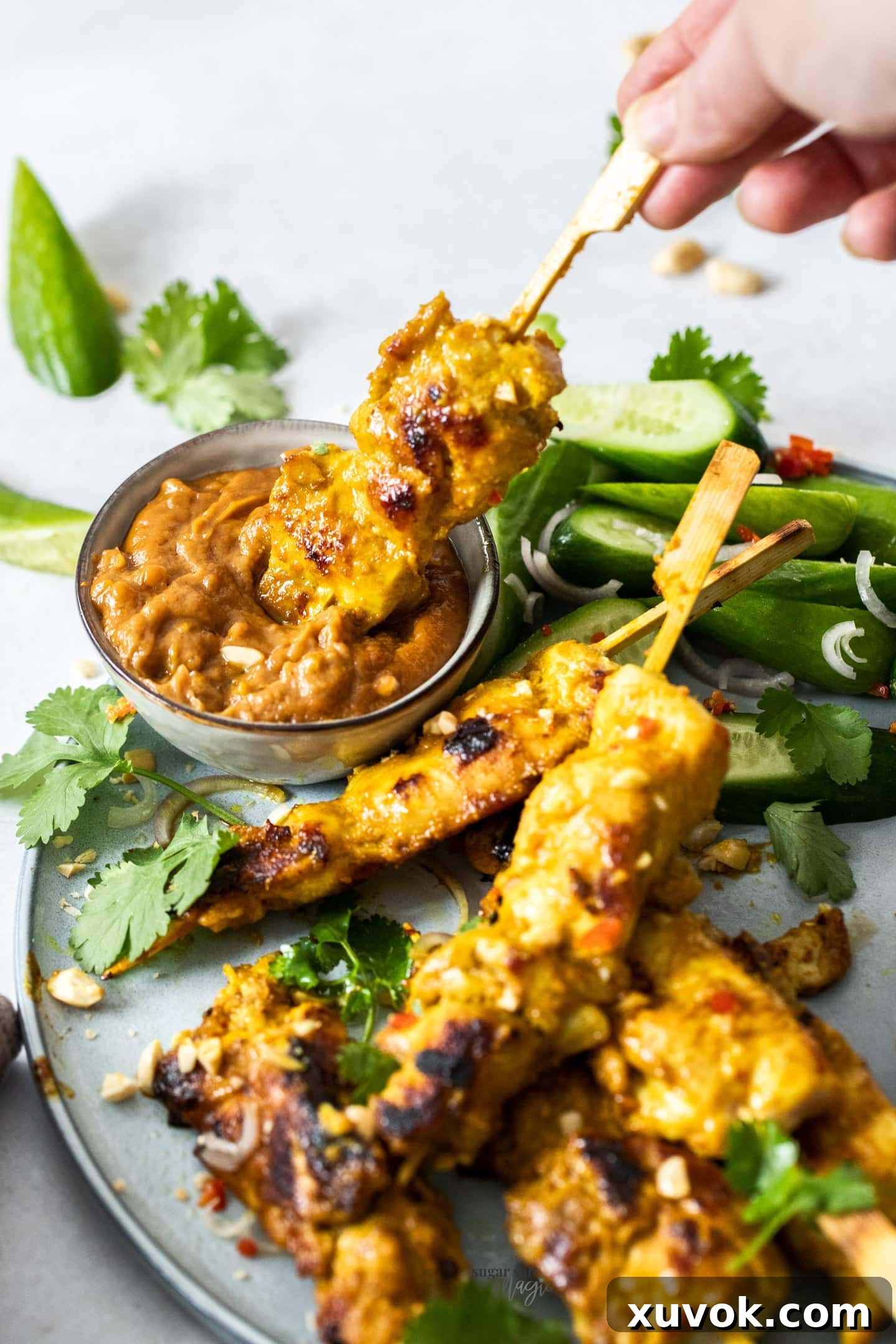
Welcome to the ultimate guide for crafting the most incredible Thai Chicken Satay right in your own kitchen! Forget waiting for takeout; this recipe promises a meal that’s not only incredibly delicious but also surprisingly simple and faster to prepare than you might imagine. Over the years, I’ve perfected this recipe, balancing authentic Thai flavors with convenient, readily available ingredients. The result is a vibrant, aromatic dish that tastes even better than your favorite restaurant version, complete with tender, perfectly grilled chicken skewers and an irresistibly rich, homemade peanut satay sauce.
What makes this homemade Thai chicken satay recipe truly special?
- Effortlessly Easy: Don’t let the exotic name fool you; this dish is remarkably straightforward to make, perfect for both novice cooks and seasoned chefs.
- Lightning-Fast Skewering: Discover a clever technique that makes skewering chicken unbelievably quick, saving you precious time in the kitchen.
- Flavor-Packed Marinade: While a short marinating time yields fantastic results, you can even speed it up when you’re pressed for time, without sacrificing taste.
- Authentic Takeout Taste, Elevated: Enjoy the classic flavors of Thai satay that rival, if not surpass, your local Thai eatery.
- Addictive Homemade Peanut Sauce: Paired with a creamy, deeply flavorful Thai peanut satay sauce made from scratch, this dish is a true culinary delight.
- Smart Ingredient Choices: Our recipe artfully combines traditional Thai spices with convenient pantry staples, ensuring an authentic taste without the hassle of hunting for obscure ingredients.
Craving more Thai-inspired goodness? Explore this comforting slow cooker satay chicken for a hands-off meal, or tantalize your taste buds with these delightful Thai fish cakes, a perfect appetizer.
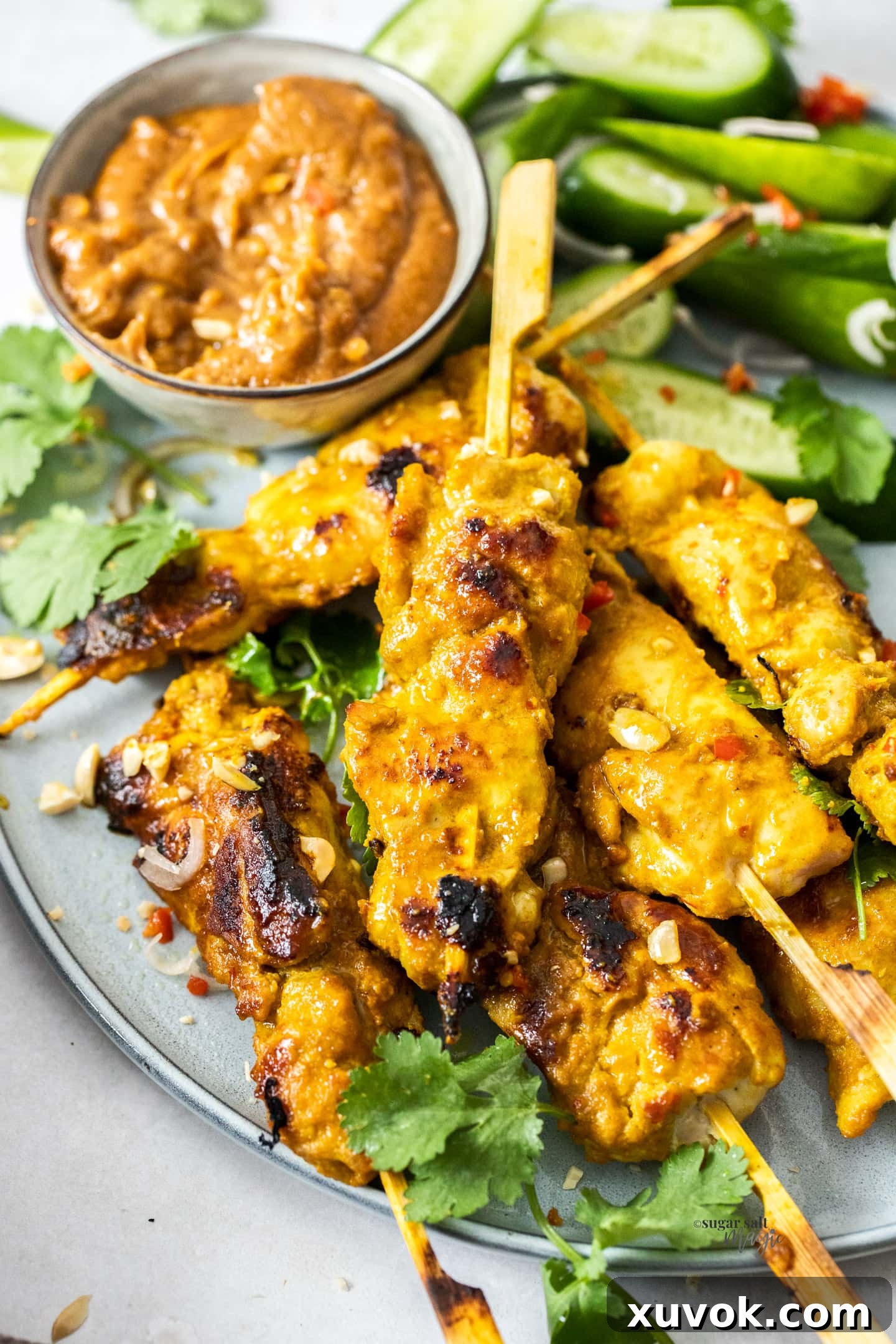
Table of Contents
- The Essence of Satay: What is it?
- Mastering the Ingredients for Thai Satay
- Step-by-Step Guide to Perfect Thai Chicken Satay
- Pro Tips and Tricks for Satay Success
- Serving Suggestions: What to Pair with Thai Satay
- Yield, Storage, and Make-Ahead Options
- More Thai and Asian-Inspired Recipes You’ll Love
The Essence of Satay: What is it?
Satay, often spelled Sate in its country of origin, is a beloved Southeast Asian culinary masterpiece. This iconic dish features marinated and skewered meat, expertly grilled, often over an open flame, and almost always accompanied by a flavorful sauce. While its roots trace back to Indonesia, where it’s considered a national dish, countless variations have emerged across Asia, each boasting unique spice blends and preparation methods. From the bustling street food stalls of Malaysia to the vibrant markets of Singapore and the lively eateries of Thailand, satay has woven itself into the fabric of regional cuisines.
Given the global popularity of Thai restaurants, Thai chicken satay has become particularly well-known, often leading to the misconception that Thailand is its birthplace. In Thailand, this delicious dish is traditionally called “sate kai” (kai meaning chicken). Regardless of its specific origin, the appeal of satay lies in its irresistible combination of smoky, tender meat and a luscious dipping sauce, making it a universally cherished dish that brings people together over delicious food.
Never Miss a Recipe!
Get the latest recipes straight to your inbox and elevate your home cooking!
Mastering the Ingredients for Thai Satay
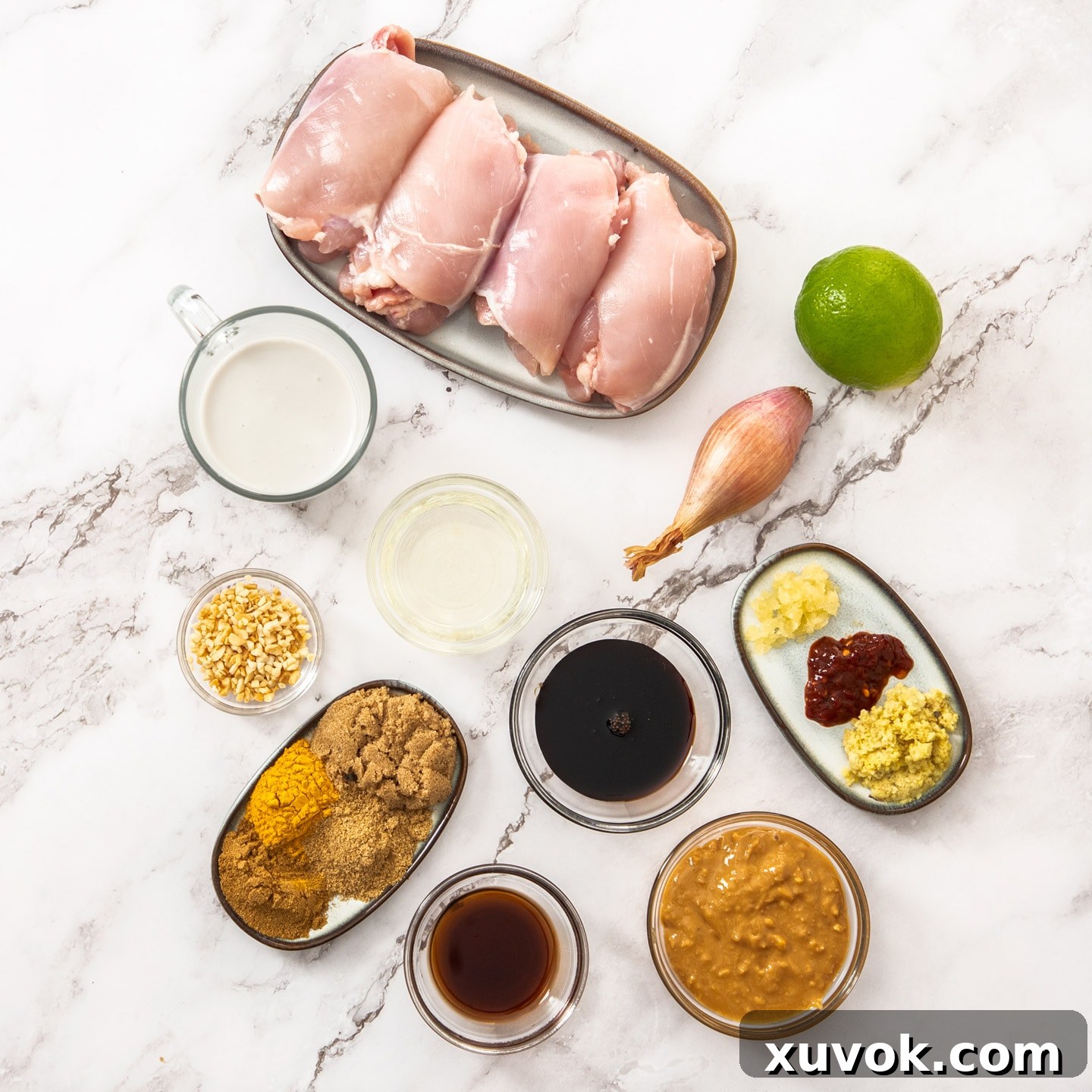
While my recipe might offer a slightly more accessible twist than what you’d find at a remote Thai street vendor, it captures the essence and authentic flavor profile that rivals, and in my humble opinion, often surpasses, your local Thai restaurant’s offering. I’ve carefully curated a blend of classic Thai staples with a few convenient swaps, ensuring that you can easily find all the necessary ingredients at your local grocery store without compromising on taste or quality.
Find exact quantities and detailed instructions in the recipe card below.
For the Flavorful Chicken Satay Skewers:
- Chicken Thighs: I prefer boneless, skinless chicken thighs for their juicy texture and rich flavor, which holds up beautifully during grilling. However, chicken breast can be used if you prefer a leaner option, simply cut it into similar-sized pieces. Satay is incredibly versatile; feel free to experiment with pork or beef for equally delicious results.
- Shallot: We use the more commonly available French shallot. While Thai shallots are smaller and have a slightly more intense flavor, French shallots provide a wonderful aromatic base that’s easy to find.
- Fresh Garlic and Ginger: These two aromatics are non-negotiable for true Thai flavor. Always opt for fresh garlic and ginger, minced finely. Their pungent, zesty notes are crucial for the marinade and cannot be replicated by dried or ground versions.
- Fish Sauce: A cornerstone of Thai cuisine, fish sauce (Nam Pla) delivers essential saltiness and a deep umami flavor. Its strong aroma might be surprising at first, but it transforms into an indispensable, rich flavor enhancer when cooked. Don’t skip it!
- Aromatic Spices: Ground coriander, ground turmeric, and ground cumin form the quintessential spice trio for our satay marinade. Turmeric lends its characteristic golden hue and earthy warmth, while coriander and cumin add complex, savory notes.
- Sugar: Brown sugar provides a molasses-like sweetness that perfectly balances the savory and tangy elements. For a more traditional touch, palm sugar (which comes in solid blocks and needs to be grated) can be used, offering a slightly richer caramel note.
- Chilli: Traditionally, fiery Bird’s Eye chilies (Thai chilies) are used for their intense heat. To keep things convenient and allow for easy heat adjustment, I opt for jarred chili paste. Sambal oelek is also an excellent substitute. Adjust the amount to your personal spice preference.
- Lime Juice: While lemongrass or tamarind paste are often found in authentic satay for their sour tang and depth, fresh lime juice is a readily available and equally effective alternative that provides a bright, zesty counterpoint to the rich flavors. If using tamarind paste, use an equal amount. If opting for lemongrass, finely chop about one stalk before blending.
- Oil: Peanut oil is my choice for its subtle nutty flavor that complements the satay. However, any neutral-flavored vegetable oil, like canola or sunflower oil, works perfectly well.
For the Irresistible Satay Peanut Sauce:
- Natural Peanut Butter: This is our secret weapon for a quick and authentic sauce. It’s crucial to use natural peanut butter (one that contains only peanuts, and perhaps salt). This is essentially ground peanuts, saving you the time and effort of grinding raw peanuts from scratch. Both smooth and crunchy varieties work beautifully, depending on your preferred texture.
- Coconut Milk: A staple in Thai cooking, coconut milk adds creamy richness and an authentic flavor to the sauce, giving it that luxurious, velvety consistency.
- Kecap Manis: Also known as sweet soy sauce, kecap manis is a thick, syrupy condiment found in the Asian section of most grocery stores. It provides a unique sweet and savory depth that is integral to the sauce’s flavor profile.
- Chopped Peanuts: Entirely optional, but a sprinkling of crushed toasted peanuts adds a wonderful textural contrast and an extra layer of nutty flavor to the sauce.
- Essential Flavor Balancers: As with the marinade, you’ll also need fish sauce for saltiness, lime juice for brightness, and a touch of brown sugar to achieve that perfect sweet-sour-salty balance that defines Thai cuisine.
This recipe is the culmination of years of experimentation, starting with my favorite store-bought satay seasoning as inspiration and meticulously refining the marinade to achieve its unparalleled flavor. The peanut sauce has also undergone numerous tweaks to reach its current state of thick, creamy perfection – it’s truly an addictive condiment you’ll want to dollop on everything!
Passionate about Thai cooking? Dive deeper with my guide to Essential Thai Ingredients.
Step-by-Step Guide to Perfect Thai Chicken Satay
For precise measurements and detailed cooking times, please refer to the full recipe card below.
The Flavor-Packed Satay Marinade:
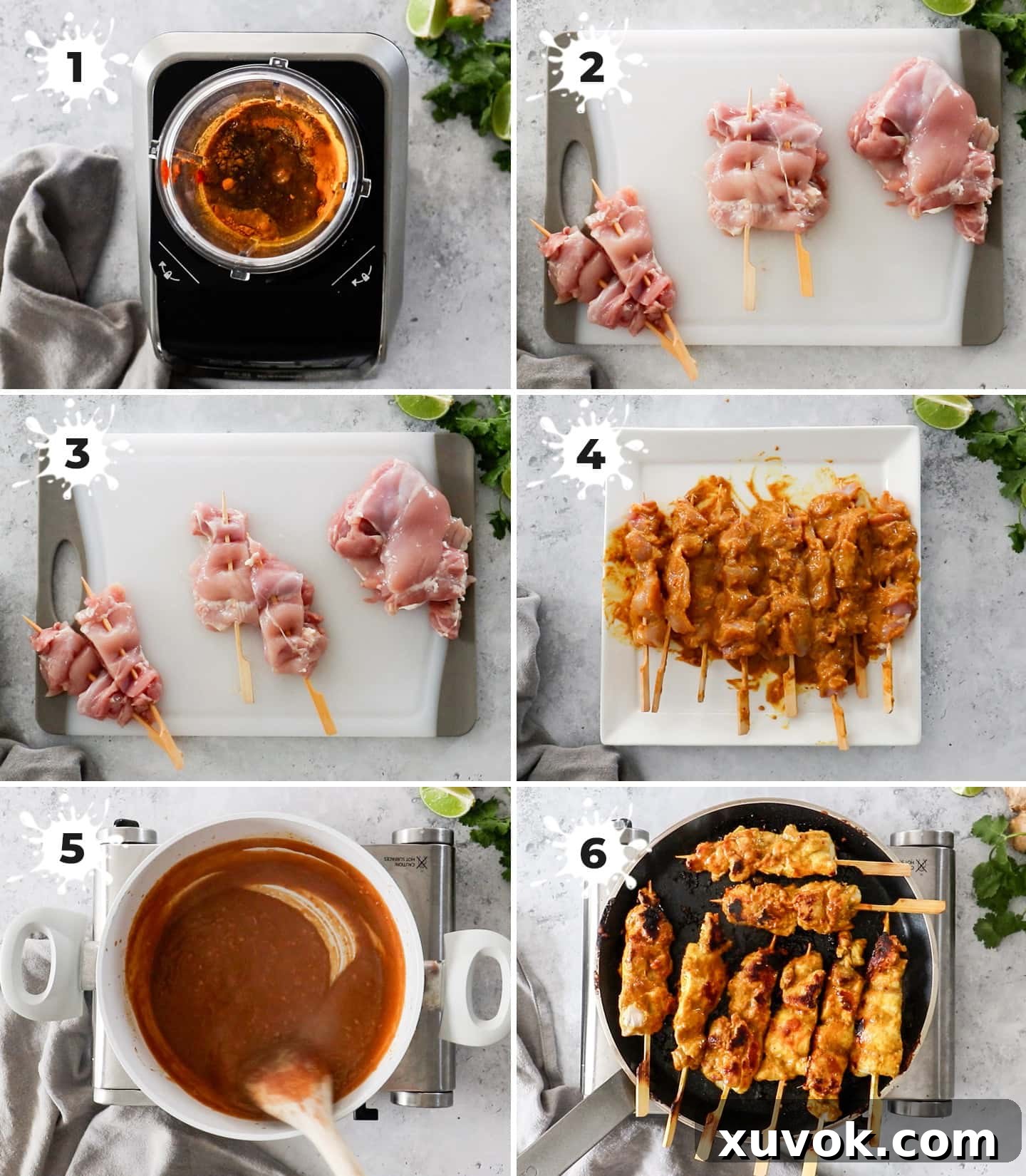
Creating this rich marinade is incredibly straightforward. Simply combine all the marinade ingredients – shallot, garlic, ginger, fish sauce, sugar, ground cumin, ground coriander, ground turmeric, chili paste, lime juice, and oil – in an electric blender. Process until the mixture is completely smooth and creamy (photo 1). You’ll be left with a vibrant, thick, yellowish-orange sauce. Give it a taste; you should immediately discern a harmonious balance of sweetness, tanginess, and a noticeable aromatic punch from the shallots. Adjust seasoning if desired.
Marinating and Skewering the Chicken:
Before you begin, if using bamboo skewers, it’s a good practice to soak them in water for at least 30 minutes. This prevents them from charring or burning excessively on the grill, ensuring even cooking and easier handling.
Now, for the absolute easiest and quickest method to skewer chicken! Take one boneless chicken thigh and orient it with its shortest side facing you. Approximately 1.5 cm (about ½ inch) in from one edge, thread a skewer all the way through the chicken, weaving it up and down slightly rather than pushing it straight through. Repeat this process on the opposite side of the chicken thigh (photo 2). Next, take a sharp knife and slice straight down the middle of the chicken thigh, between the two skewers. Voila! You now have two perfectly skewered chicken satay pieces, ready for marinating (photo 3).
Once skewered, place the chicken into a mixing bowl and generously pour the prepared satay marinade over it, ensuring every piece is thoroughly coated (photo 4). Allow the chicken to marinate for at least 30 minutes in the refrigerator. While even 10 minutes will infuse some flavor, a slightly longer marinating period (up to an hour) will result in a deeper, more robust flavor profile that truly sings.
The Creamy Homemade Satay Sauce:
This delectable peanut sauce is just as easy to prepare as the marinade. In a medium saucepan, combine all the sauce ingredients: coconut milk, water, natural peanut butter, kecap manis, fish sauce, lime juice, brown sugar, and chopped peanuts (if using). Whisk or stir continuously over medium heat until all ingredients are well combined and smooth. Bring the mixture to a gentle bubble, then reduce the heat and let it simmer for a couple of minutes (photo 5).
The longer you allow the sauce to simmer, the thicker it will become. I personally love a rich, thick sauce that’s perfect for generous dolloping onto the satay skewers. However, if you prefer a thinner consistency, you can easily adjust it by stirring in a little extra coconut milk or water until it reaches your desired pourable or dipping texture.
Grilling the Perfect Satay Chicken:
For grilling your chicken satay skewers, a flat cooking surface is essential. I frequently use a flat grill plate that fits over my stovetop, but a crepe pan or a large, flat griddle also works wonderfully. The key is to use something without tall edges, as skewers resting against a high side might prevent the chicken closest to the skewer ends from cooking properly. If using a standard skillet or frying pan, ensure the skewers lie completely flat within it, allowing for even heat distribution across the entire chicken piece.
Grill the skewered chicken over medium heat for approximately 8-10 minutes, turning them regularly to ensure all sides cook evenly and develop a beautiful char (photo 6). The char adds a wonderful smoky depth of flavor. Cook until the chicken is thoroughly cooked through, with an internal temperature of 165°F (74°C).
Pro Tips and Tricks for Satay Success
- Always Soak Wooden Skewers: This simple step is crucial! Soaking bamboo or wooden skewers in water for at least 30 minutes before use prevents them from burning and splintering on the grill, ensuring your chicken cooks perfectly.
- Consider Metal Skewers: Metal skewers are a fantastic alternative. They conduct heat, cooking the chicken from both the inside and outside, which can speed up cooking time. Just be cautious when handling them as they get very hot.
- Customize Your Sauce Consistency: Our household loves a thick, rich peanut sauce perfect for lavish dolloping. However, you can easily thin your sauce to a dipping consistency by adding a little more coconut milk or water, one tablespoon at a time, until it meets your preference.
- Skip the Skewers for Convenience: If you’re short on time or simply prefer not to skewer, you can still enjoy all the amazing flavors. Just cut chicken tenders or chicken breast into bite-sized pieces, marinate them, and then pan-fry or grill in a basket. They make fantastic additions to salads or rice bowls!
- Marinate Longer for Deeper Flavor: While 30 minutes is sufficient, allowing the chicken to marinate for 2-4 hours (or even overnight) will intensify the flavors significantly, making your satay even more delicious.
- Achieving the Perfect Char: Don’t be afraid to let a little char develop on the chicken. This smoky caramelization adds incredible depth and authenticity to your satay.
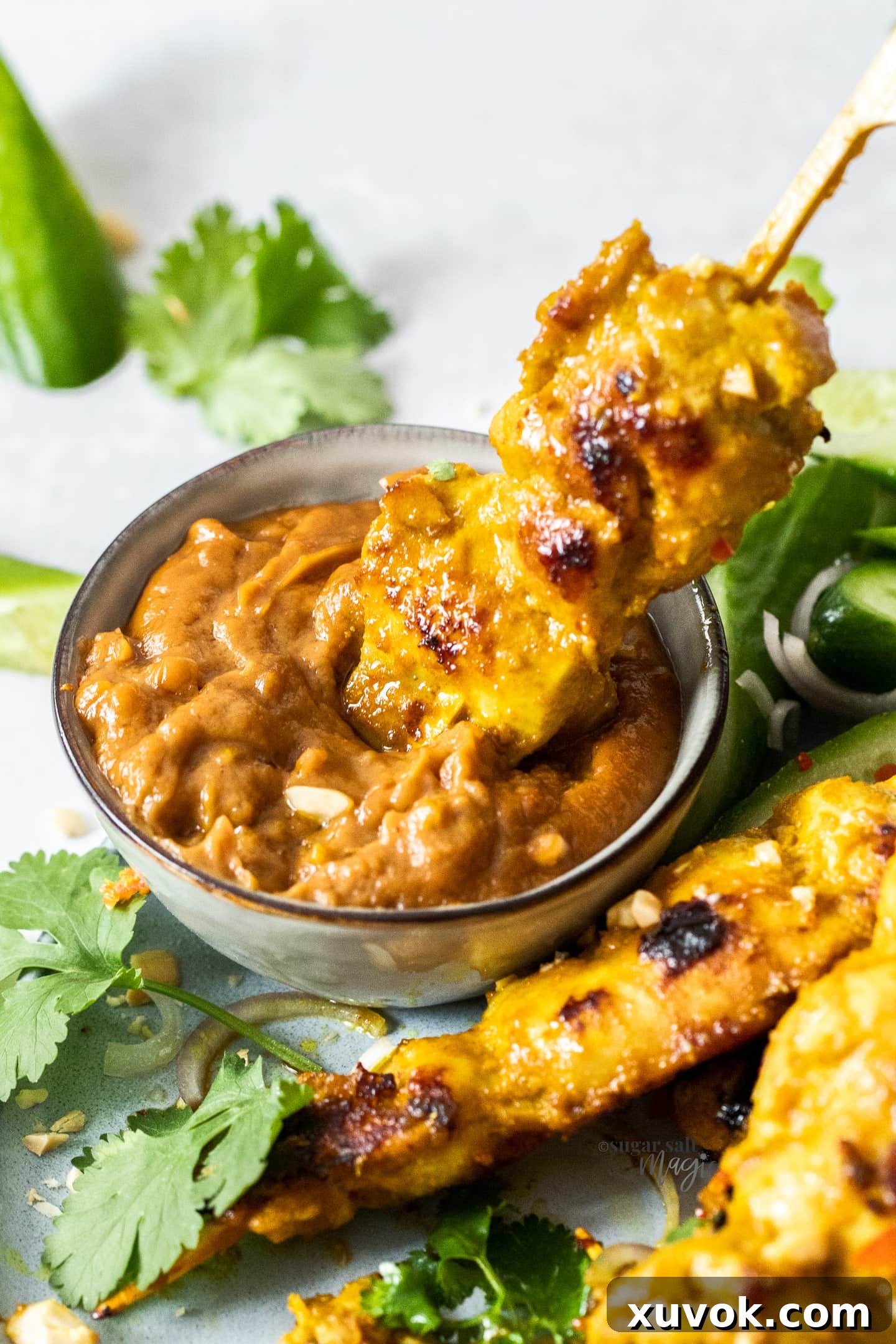
Serving Suggestions: What to Pair with Thai Satay
Thai chicken satay is wonderfully versatile and can be served either as a delightful appetizer or a satisfying main course. Traditionally, it’s often accompanied by Ajaat (a refreshing Thai cucumber relish) or a zesty Nam Jim dressing. My simple Ajaat recipe, which is a fantastic sweet, spicy, and tangy condiment, can be found in my sesame prawn toast post – it’s incredibly quick to whip up and complements the richness of the satay beautifully.
If you prefer to let the homemade peanut sauce be the star, consider pairing your grilled skewers with a simple, refreshing cucumber salad. Cube some crisp cucumber, sprinkle with chopped peanuts for crunch, thinly sliced shallots for a mild oniony bite, and a generous scattering of fresh coriander (cilantro). This provides a lovely textural and flavor contrast. Of course, a mound of perfectly steamed jasmine rice or creamy coconut rice is an essential accompaniment for making satay a fulfilling meal.
Whether served as an appetizer alongside crisp cucumber chunks or as a hearty main with fragrant rice, this Thai chicken satay is guaranteed to impress and satisfy.
Yield, Storage, and Make-Ahead Options
This Thai chicken satay recipe typically yields 3-4 servings, with each person enjoying two generously sized skewers. The exact yield can vary slightly depending on the size of your chicken thighs. Rest assured, there is ample marinade provided, so feel free to add an extra chicken thigh if you wish to prepare more skewers to feed a larger crowd or ensure everyone gets an extra stick.
For convenience, satay can be partially prepared in advance. You can make the marinade and the peanut sauce a day or two ahead and store them in airtight containers in the refrigerator. The chicken can also be marinated for up to 24 hours, allowing the flavors to deepen even further. When ready to cook, simply skewer and grill!
Any leftover cooked chicken satay should be stored promptly in an airtight container in the refrigerator and will remain fresh for 2-3 days. Reheating is straightforward; you can gently warm the skewers in the microwave or, for best results, briefly grill them again on a flat grill plate to regain some of that delicious char and crispness.
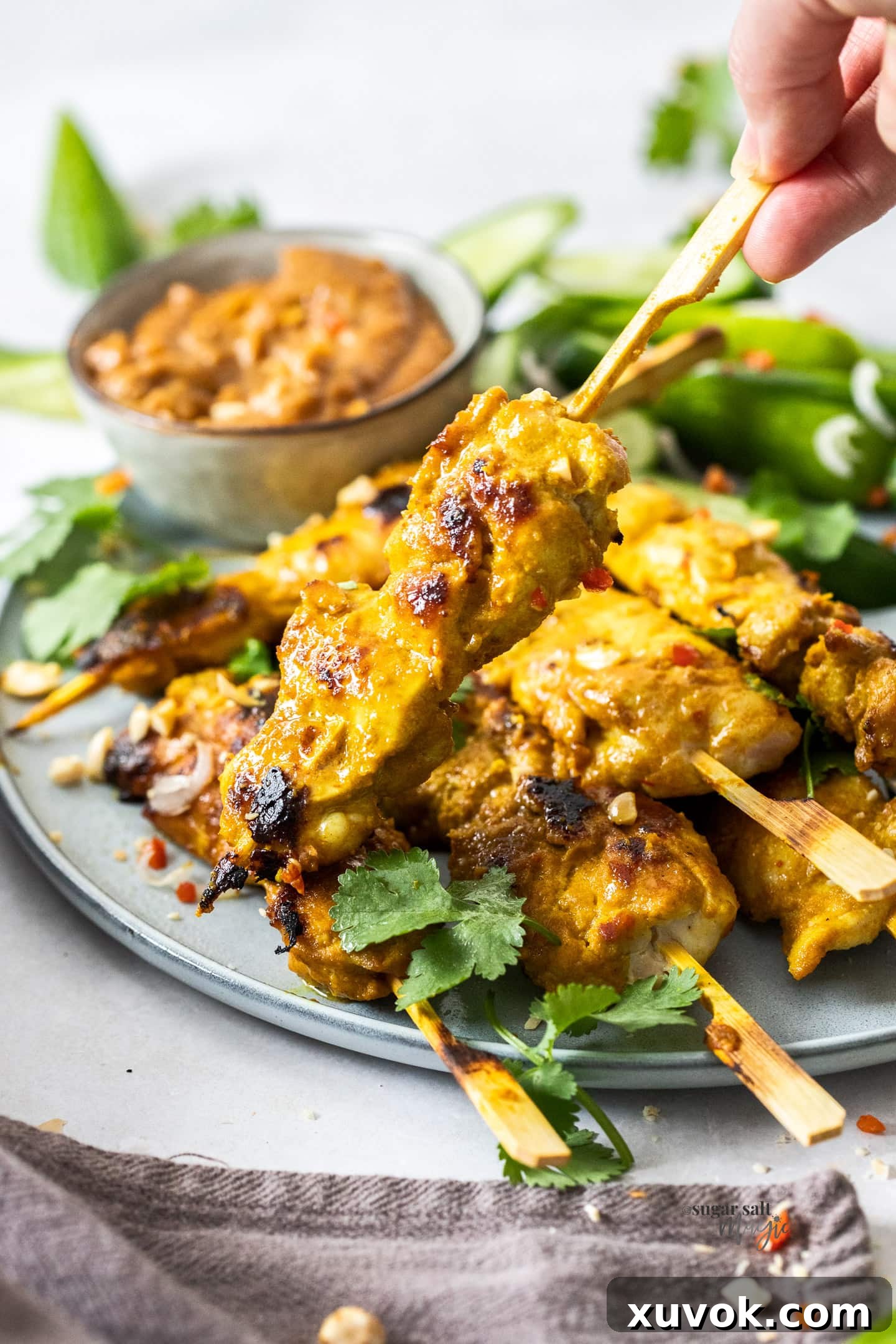
More Thai and Asian-Inspired Recipes You’ll Love
- Exquisite Thai Panang Curry with Prawns
- Classic Thai Green Chicken Curry
- Homemade Thai Green Curry Paste
- Sweet & Savory Honey Pepper Pork Stirfry
- Authentic Chinese Prawn Fried Rice
- Crispy Salt and Pepper Prawns (Shrimp)
- Flavorful Thai Red Curry Chicken Meatballs
Did you try this Thai Chicken Satay recipe?
Your feedback is invaluable! Please leave a rating and comment below the recipe card.
Hungry for more delicious inspiration? Subscribe to our newsletter for free recipes delivered straight to your inbox. You can also follow along on Facebook, Pinterest, and Instagram for daily culinary adventures.

Thai Satay Chicken
Rate
Pin
Ingredients
FOR THE CHICKEN & MARINADE
- 1 medium shallot, roughly chopped
- 3-4 cloves garlic, minced
- 1 tablespoon freshly grated ginger (notes 1)
- 3 teaspoons fish sauce
- 1 tablespoon brown sugar (notes 1)
- 2 teaspoons ground cumin
- 2 teaspoons ground coriander
- 2 teaspoons ground dried turmeric
- 1 teaspoon chilli paste
- 1 tablespoon lime juice (roughly 1 lime) (notes 1 & 3)
- 2 tablespoons peanut oil (or vegetable oil)
- 500 g boneless skinless chicken thighs (notes 2)
THE THAI PEANUT SAUCE
- ¾ cup tinned coconut milk (not coconut cream)
- ⅓ cup water
- ⅓ cup crunchy natural peanut butter (MUST be natural PB) (notes 4)
- 2 tablespoons kecap manis (sweet soy sauce) (notes 1 & 5)
- 1 tablespoon fish sauce (notes 1)
- 1 tablespoon lime juice (roughly 1 lime) (notes 1)
- 1 tablespoon crushed toasted peanuts (notes 1)
- 1 teaspoon brown sugar
FOR SERVING
- lime wedges, fresh coriander (cilantro), cucumber, and steamed rice
For best results, always weigh ingredients where a weight is provided
Equipment
-
Flat grill or crepe pan
-
Bamboo skewers
Instructions
-
FOR THE SATAY SKEWERS: Soak 8 wooden skewers in water for a minimum of 30 minutes to prevent burning during grilling.
-
Place the shallot, garlic, ginger, fish sauce, brown sugar, ground cumin, ground coriander, ground turmeric, chilli paste, lime juice, and peanut oil into an electric blender. Blend until the mixture is completely smooth. Taste the marinade: it should have a prominent sweet and salty profile. Adjust with a touch more fish sauce for saltiness or sugar for sweetness if desired. Set aside.
-
Trim any excess fat from the chicken thighs. Lay one thigh flat on a chopping board with the shortest end facing you. About 1.5 cm (½ inch) from one side, thread a skewer through the chicken, starting from the end closest to you and weaving it up and down as you push it to the other end. Repeat this threading on the opposite side of the chicken thigh. Use a sharp knife to carefully cut down the center of the chicken thigh, effectively creating two separate chicken skewers from a single thigh. Repeat for all chicken thighs.
-
In a large mixing bowl, combine the skewered chicken with the prepared marinade. Toss well to ensure every piece of chicken is thoroughly coated, taking care to keep the marinade away from the ends of the skewers. Cover the bowl and chill in the refrigerator for 30 minutes to 1 hour (or longer for enhanced flavor).
-
Preheat a flat grill, griddle, or crepe pan over medium heat (ensure your cooking surface has low or no edges). Grill the marinated chicken skewers, turning them regularly, for approximately 8-10 minutes, or until the chicken is cooked through and shows a light char on the outside. Pay close attention to the chicken pieces near the ends of the skewers, as they may be slightly lifted from the pan depending on your cooking surface and might require extra attention to cook evenly.
-
FOR THE PEANUT SAUCE: In a medium saucepan, combine all the peanut sauce ingredients: coconut milk, water, natural peanut butter, kecap manis, fish sauce, lime juice, brown sugar, and crushed toasted peanuts (if using). Cook over medium heat, stirring frequently, until the sauce thickens to your desired consistency. Taste the sauce and adjust seasoning as needed: add more lime juice for tang, brown sugar for sweetness, or fish sauce for saltiness. If the sauce is too thick, thin it with a little extra coconut milk or water.
-
Serve the grilled Thai chicken satay immediately with generous dollops of the homemade peanut sauce. Garnish with fresh lime wedges, a sprinkle of fresh coriander leaves (cilantro), refreshing cucumber slices, and accompany with a side of perfectly steamed rice.
-
We would love to hear from you! Please take a moment to leave a comment & rating below the recipe. Your feedback is truly appreciated and helps us grow.
Notes
- Tablespoons: Please note that I use a standard Australian 20ml tablespoon in this recipe, which is equivalent to 4 teaspoons worldwide. Many countries use a 15ml tablespoon, so it’s advisable to check your spoon’s capacity before measuring to ensure accuracy.
- Chicken Selection: For superior flavor and tenderness, I highly recommend using boneless, skinless chicken thighs. However, if you prefer, you can substitute chicken tenderloins or chicken breast cut into similarly sized pieces.
- Lime Juice vs. Traditional Flavors: While traditional satay often uses lemongrass and tamarind paste for their distinctive tang and depth, fresh lime juice offers a more convenient and equally delicious alternative, providing an authentic bright, sour note. If you opt for tamarind paste, use the same quantity as the lime juice. Alternatively, roughly chopped lemongrass (about 1 stalk) can also be blended into the marinade.
- Peanut Butter Pointers: The key to a great peanut sauce is using natural peanut butter (containing only peanuts and salt, no added sugars or oils). If the oil has separated and settled on top, be sure to stir it thoroughly before measuring to achieve the correct consistency and flavor.
- Kecap Manis (Sweet Soy Sauce): This thick, syrupy sweet soy sauce is readily available in the Asian foods aisle of most major grocery stores. If you find yourself without kecap manis, a simple substitute can be made by combining 2 tablespoons of brown sugar with 1 tablespoon of regular soy sauce (refer to note 1 regarding tablespoon measurements).
- Yield Adjustment: This recipe typically yields 3-4 servings (approximately 2 skewers per person), but this can vary with the size of your chicken thighs. The marinade is generously portioned, so feel free to add an extra chicken thigh if you wish to prepare more skewers without needing to adjust the marinade quantity.
EXPLORE MORE ASIAN-INSPIRED MEALS HERE!